What’s in this guide
- Bromine vs. Chlorine Hot Tub Comparison
- How Each Sanitizer Affects Your Skin and Health
- How to Start Your Hot Tub with Bromine or Chlorine
- Troubleshooting Common Hot Tub Water Problems
- Essential Hot Tub Sanitizer Products
- Bromine vs. Chlorine for Inflatable Hot Tubs
- The Sanitizer Fit Test: Which Is Right?
- Common Mistakes When Choosing Hot Tub Chemicals
- Frequently Asked Questions
- The Final Verdict: Your Hot Tub, Your Chemistry
“Just found this group a week ago. Wish I’d found it before our research, purchase and installation. I would’ve done things a little differently. We chose bromine instead of chlorine. Decision based on smell only. Was that a good choice or not?”
— Real hot tub owner, r/hottub community
Most hot tub owners make this exact decision on gut instinct. Then they spend the next few months second-guessing every chemical they add, wondering if they made a mistake.
Here’s the good news: there’s no catastrophic wrong answer. But there is a better answer for your specific situation. In this guide, you’ll learn the real differences between bromine vs. chlorine hot tub chemistry — including monthly costs, skin effects, a step-by-step switching guide, and a simple decision test — so you can stop guessing and start soaking. Bromine and chlorine are both chemical sanitizers that kill bacteria in your hot tub water; the difference is in how they perform at high temperatures and how they feel on your skin.
When comparing bromine vs. chlorine for hot tubs, bromine handles high heat better and irritates sensitive skin less — making it the preferred choice for most hot tub owners. Chlorine costs less upfront and works well for budget-conscious owners with good water turnover.
- Bromine stays stable above 98°F; chlorine breaks down faster in hot water
- Chlorine costs less upfront — roughly 20–30% cheaper per month in most cases
- “The Sanitizer Fit Test” — a 3-factor framework (Skin + Maintenance + Budget) — tells you exactly which one fits your lifestyle
- Switching sanitizers requires a full drain and flush — you cannot simply add the other chemical on top
Bromine vs. Chlorine Hot Tub Comparison
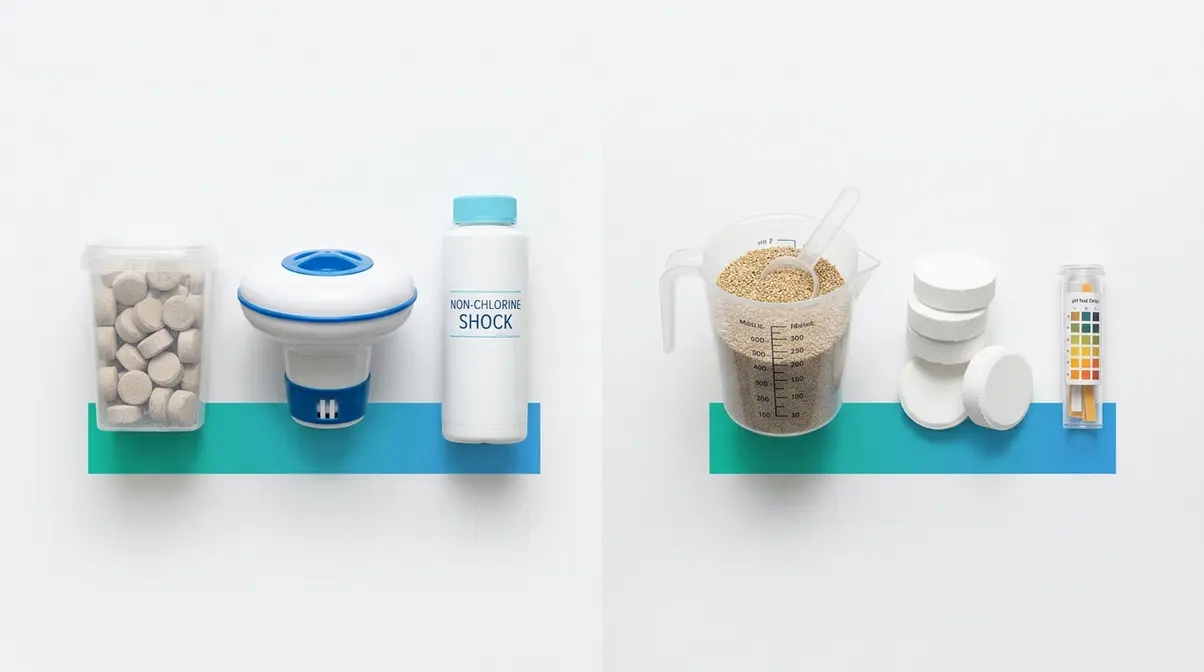
Both bromine and chlorine sanitize your water by killing bacteria and other harmful microorganisms. However, they behave very differently in the hot, high-pH environment of a hot tub. When deciding on a bromine vs chlorine hot tub system, understanding these differences upfront will save you money, skin irritation, and a lot of frustrated Google searches at midnight. For a deeper dive into the chemical properties, see our definitive guide to choosing the right hot tub sanitizer.
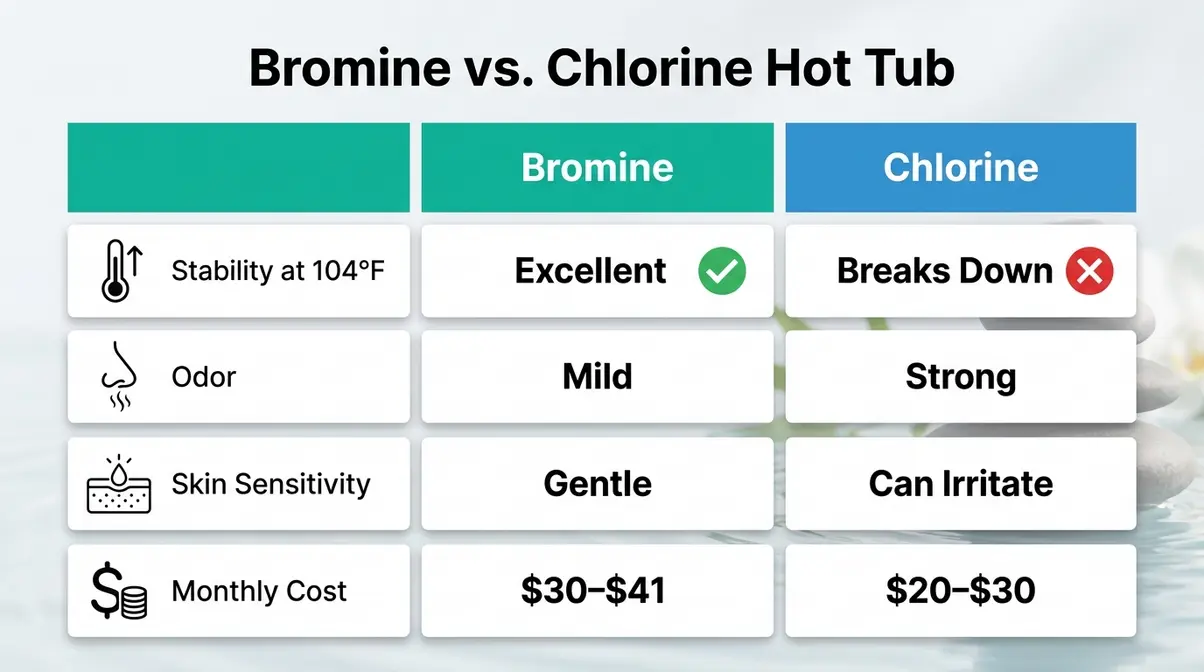
At a Glance: Key Differences
The table below covers the five factors hot tub owners ask about most. Use it as your quick reference before diving into the details.
| Factor | Bromine | Chlorine |
|---|---|---|
| Heat Stability (above 98°F) | Excellent — stays active longer | Poor — breaks down quickly |
| Odor | Mild, less “chemical” smell | Stronger chlorine smell |
| Skin & Eye Irritation | Gentler on sensitive skin | Can cause more irritation |
| Monthly Cost (avg. 300-gal tub) | ~$25–$40/month | ~$15–$25/month |
| Ease of Use | Slightly more steps (feeder/floater) | Simple — dissolves quickly |
| UV Sunlight Stability | Not affected (indoor/covered tubs) | Degrades without stabilizer |
| Availability | Most pool/spa stores | Widely available everywhere |
According to Leslie’s Pool Supply, bromine is particularly well-suited for spas because it remains effective at higher pH levels — a common challenge in hot tub water that sees little dilution between uses.
Bromine for Hot Tubs: Pros and Cons
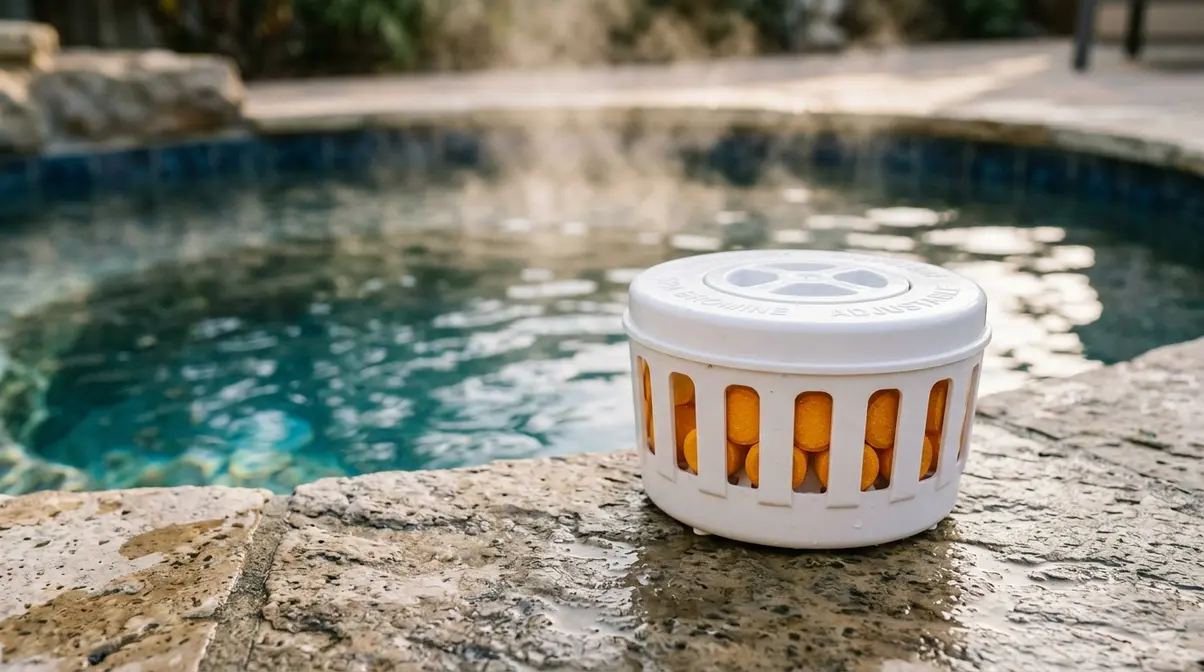
Bromine (chemical symbol: Br) is a halogen sanitizer that works by releasing hypobromous acid into the water, which destroys bacteria cell walls. Unlike chlorine, bromine doesn’t “burn off” as quickly in hot water. It also re-activates after being “used up” by contaminants — a property called bromamine activity — which means it keeps working longer per dose.
- +Stays active at temperatures above 98°F (the average hot tub temperature)
- +Gentler on skin and eyes — fewer reports of redness or irritation
- +Less harsh chemical odor compared to chlorine
- +Works effectively across a wider pH range (7.0–8.0)
- +Bromamines (used-up bromine) still sanitize — unlike chloramines (used-up chlorine), which just smell bad
- −Costs more per month than chlorine
- −Not UV-stable — breaks down in direct sunlight (less of an issue for covered tubs)
- −Requires a feeder or floater for tablet delivery; granules dissolve unevenly
- −Cannot be “shocked” with non-chlorine shock as effectively — requires specific oxidizers
- −Harder to find at general retailers; specialty pool stores usually carry it
Community consensus from r/hottub suggests that owners with sensitive skin almost universally prefer bromine once they make the switch, even if the upfront cost surprised them.
Chlorine for Hot Tubs: Pros and Cons
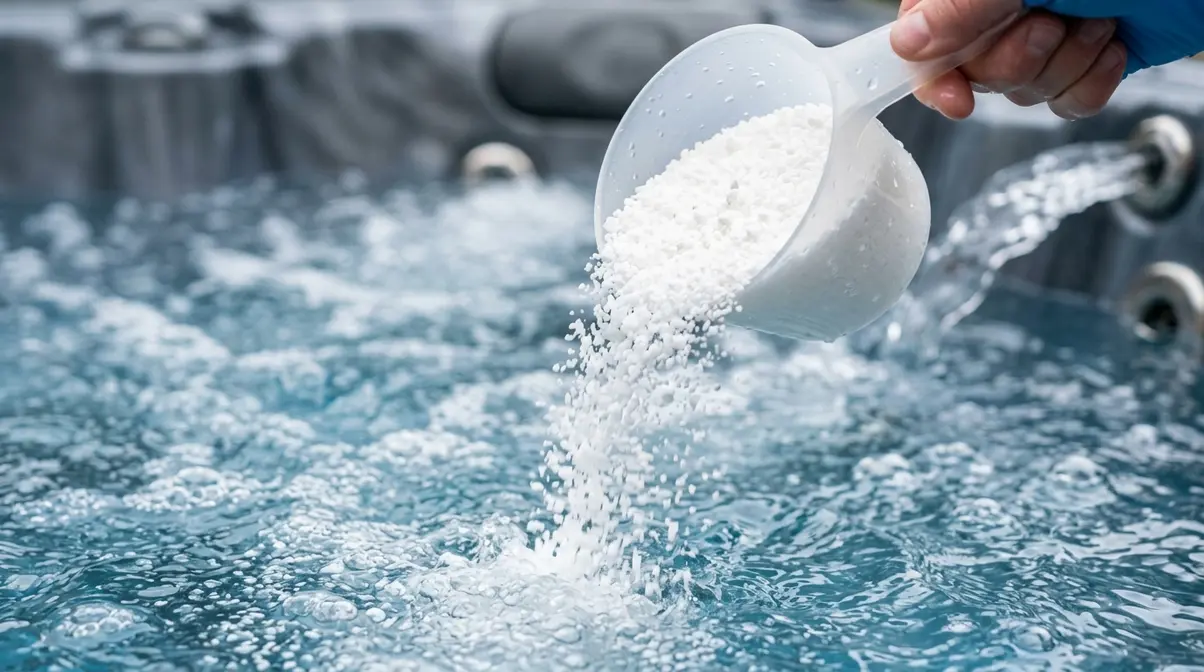
Chlorine (chemical symbol: Cl) is the most widely recognized pool and spa sanitizer. In hot tubs, it’s typically used as dichlor granules (sodium dichloroisocyanurate — a stabilized form of chlorine that dissolves quickly) or trichlor tablets. The CDC recommends maintaining chlorine levels between 3–10 ppm (parts per million — the unit used to measure chemical concentration in water) in hot tubs to prevent bacterial growth, including the bacteria that cause hot tub rash (CDC, Healthy Swimming). If you decide to go this route, check out our complete guide to hot tub chlorine.
- +Lower upfront cost — granules and tablets are widely available
- +Fast-dissolving granules make dosing straightforward
- +Familiar to most people who’ve owned a pool
- +Easy to find at grocery stores, big-box retailers, and hardware stores
- +Works well in well-ventilated outdoor tubs with good water turnover
- −Breaks down rapidly at temperatures above 95°F — requires more frequent dosing
- −Chloramines (the byproduct when chlorine reacts with sweat and oils) cause that sharp “pool smell” and can irritate eyes and skin
- −Requires a stabilizer (cyanuric acid) for outdoor use — adds cost and complexity
- −Less effective at higher pH levels — hot tub water tends to drift alkaline
- −Can bleach swimsuits and accessories over time
Cal Spas notes that chlorine’s faster breakdown in hot water means owners often need to test and dose more frequently — sometimes daily — to maintain safe levels.
Monthly Cost Breakdown: What You’ll Actually Spend
Last Verified: January 2026 — based on current retail pricing at major pool supply retailers.
Cost is one of the biggest decision factors for new owners. The table below estimates what a typical 300-gallon hot tub owner spends monthly on each sanitizer system. Actual costs vary by water hardness, bather load, and local pricing.
| Item | Bromine System | Chlorine System |
|---|---|---|
| Primary Sanitizer | Bromine tablets (~2 lbs/mo): ~$18–$22 | Dichlor granules (~1.5 lbs/mo): ~$10–$14 |
| Shock Treatment | Non-chlorine oxidizer (monthly): ~$5–$8 | Chlorine shock (monthly): ~$3–$5 |
| Test Strips | 50-strip pack (lasts ~2 months): ~$4–$6 | 50-strip pack (lasts ~2 months): ~$4–$6 |
| pH Balancers | pH Up/Down (monthly share): ~$3–$5 | pH Up/Down (monthly share): ~$3–$5 |
| Monthly Total (est.) | ~$30–$41/month | ~$20–$30/month |
| Annual Total (est.) | ~$360–$492/year | ~$240–$360/year |
The gap is real but manageable: bromine costs roughly $10–$15 more per month. For many owners with sensitive skin or an indoor tub, that premium is worth it. For budget-focused owners, chlorine’s lower cost adds up to meaningful savings over a year.
How to Switch from Bromine to Chlorine (Step-by-Step)
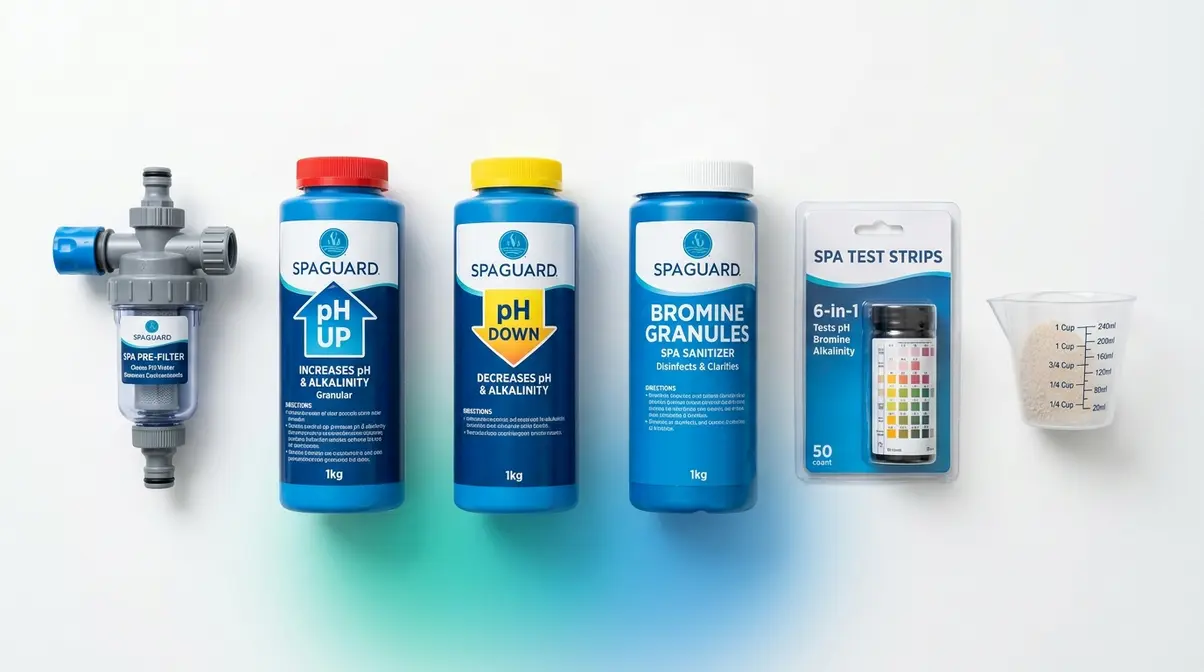
This is the question no competitor guide answers — and it’s critical. You cannot simply add chlorine to a bromine tub. Bromine and chlorine interact chemically, and residual bromine will convert any chlorine you add back into bromine. Your chlorine will effectively disappear and your sanitizer level will stay dangerously low.
The only safe way to switch is a full drain and refill. Here’s how:
- Turn off the heater and jets. Allow water to cool to below 90°F before draining to protect your pipes and lawn.
- Add a line flush product (like Ahh-Some or a similar biofilm cleaner) and run the jets for 30 minutes. This purges biofilm — a slimy layer of bacteria that hides in your plumbing — from the pipes before you drain.
- Drain completely. Open the drain valve and let all water exit. Use a wet-vac to remove standing water from the footwell.
- Wipe down the shell. Use a clean cloth and diluted white vinegar or a spa surface cleaner to remove any bromine residue from the shell and jets.
- Refill and start fresh with chlorine. Fill with fresh water, balance your pH first (target: 7.4–7.6), then add your dichlor granules to reach 3–5 ppm chlorine. Test before your first soak.
Master Spas advises that switching sanitizer systems without a full drain is one of the most common beginner mistakes — and one of the most avoidable.
How Each Sanitizer Affects Your Skin and Health

Your skin and health are where the bromine vs. chlorine decision gets personal. Both chemicals are safe when used correctly. But they interact with your body differently — and for some owners, that difference is the deciding factor.
Bromine vs. Chlorine for Sensitive Skin
Bromine is generally considered gentler on skin and eyes. This is because bromine operates at a lower effective concentration — you need less of it to achieve the same sanitizing effect — and its byproducts (bromamines) are less irritating than chloramines. Across hot tub owner communities, people with eczema, rosacea, or general chemical sensitivity consistently report fewer flare-ups with bromine.
Chlorine irritation usually comes from chloramines — not chlorine itself. Chloramines form when chlorine reacts with sweat, body oils, urine, and cosmetics. They cause the stinging eyes and strong smell most people associate with over-chlorinated water. Showering before you soak significantly reduces chloramine formation by removing the organic compounds chlorine would otherwise react with.
If you have sensitive skin, the CDC recommends rinsing off immediately after hot tub use and avoiding tubs with a strong chemical odor — which typically signals high chloramine levels, not high chlorine levels (CDC, Healthy Swimming).
Bromine Hot Tub Dangers and Side Effects
Bromine is safe at recommended levels. However, misuse or overexposure carries real risks that every owner should understand.
At correct levels (3–5 ppm bromine): No significant health risks for most people. Some individuals with thyroid conditions should consult their doctor, as bromine is a halogen that can interact with iodine metabolism — though absorption from hot tub water is minimal.
At excessive levels (above 10 ppm): Skin redness, itching, and eye irritation become likely. Prolonged skin contact with high-bromine water can cause a rash similar to hot tub folliculitis (learn more about the prevention of hot tub folliculitis and understanding hot tub rash symptoms). Ironically, both over-sanitizing and under-sanitizing can cause rashes — just for different reasons.
Inhalation: Bromine vapors in an enclosed indoor spa room can cause respiratory irritation. Ensure adequate ventilation if your hot tub is indoors. The Pool & Hot Tub Alliance (PHTA) recommends testing water before every use and maintaining bromine between 3–5 ppm for routine soaking.
Bromine poisoning from hot tub exposure is extremely rare at normal dosing levels. The risk comes from handling concentrated bromine products improperly — not from soaking in correctly dosed water.
Should you shower before using a hot tub?
Yes — showering before soaking significantly improves water quality and reduces sanitizer consumption. A quick rinse (no soap required) removes body oils, sweat, lotions, deodorant, and cosmetics from your skin. These organic compounds react with your sanitizer to form chloramines or bromamines — the byproducts responsible for strong odor and skin irritation. The CDC recommends rinsing off before entering any treated recreational water. For hot tub owners, this single habit reduces how often you need to shock your water and extends the life of your sanitizer dose.
Safe Chemical Handling: What Every Hot Tub Owner Must Know
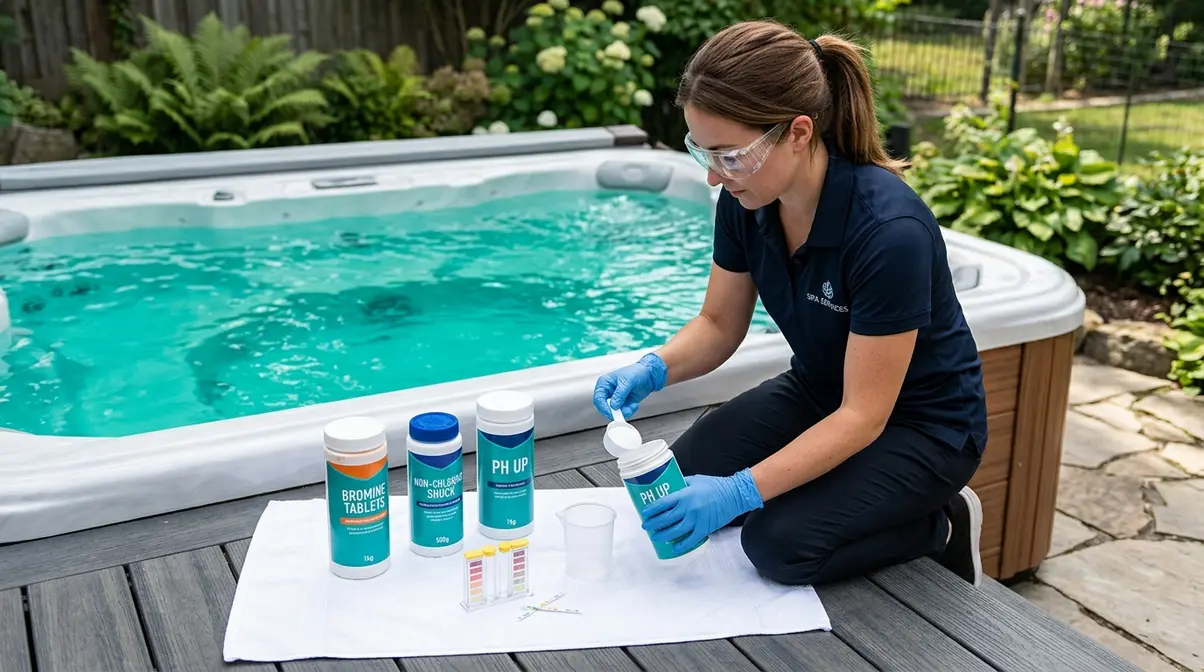
⚠️ Safety Disclaimer: Hot tub chemicals are concentrated substances that can cause serious burns, respiratory irritation, or fire if mishandled. Always read and follow manufacturer label instructions before adding any chemical to your water. Never mix chemicals together outside of water. Store chemicals in a cool, dry place away from children and pets.
Follow these practices every time you handle sanitizers:
- Wear gloves and eye protection when measuring or adding chemicals
- Add chemicals to water — never water to chemicals (this prevents dangerous splashback reactions)
- Never mix bromine and chlorine products directly — add one, wait 15 minutes, then test before adding anything else
- Measure first, then add — always pre-measure your dose before approaching the tub
- Ventilate — add chemicals with the cover off and jets running to disperse them quickly
How to Start Your Hot Tub with Bromine or Chlorine
Setting up your water chemistry correctly from day one prevents most of the problems new owners encounter. A proper startup takes about 30–45 minutes and saves you hours of troubleshooting later. If you need a broader overview, refer to our beginner’s guide to hot tub water care.
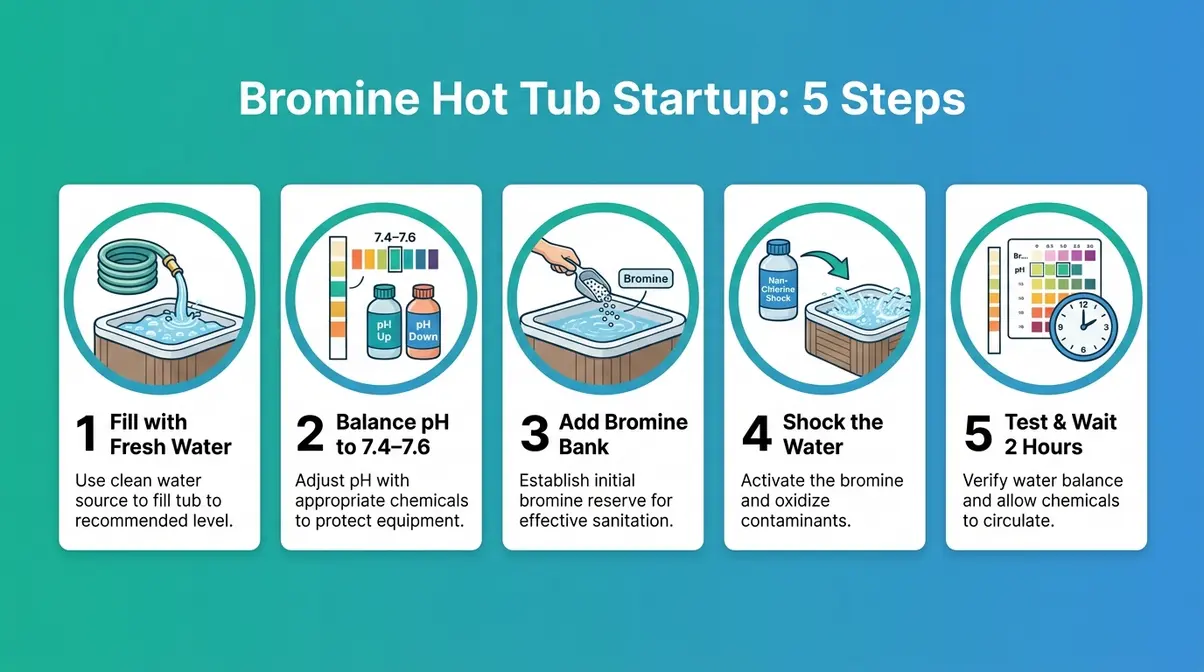
Bromine Hot Tub Startup: 5 Steps for First-Time Users
Tools you’ll need: Test strips (bromine-specific or 5-in-1 spa strips), bromine granules or tablets + feeder/floater, pH Up and pH Down solutions, and a clean bucket. Make sure you have your essential hot tub chemicals for startup ready. Estimated time: 45 minutes active, 2–4 hours wait before first soak.
- Fill your tub with fresh water. Use a hose filter if your tap water is hard (high in calcium or minerals) — this prevents scale buildup on your heater element.
- Balance your pH first. Test the water and adjust pH to 7.4–7.6 using pH Up (sodium carbonate) or pH Down (sodium bisulfate). Why this matters: Bromine only works efficiently in this pH range. Skipping this step wastes chemicals and leaves your water undertreated.
- Add your bromine “bank.” Add a bromine granule dose to establish a bromide reserve in the water — typically 2 tablespoons per 300 gallons. This creates the foundation that your ongoing bromine maintenance will activate. Load your feeder or floater with bromine tablets set to a medium-open position.
- Shock the water. Add a non-chlorine oxidizer (potassium monopersulfate, or MPS) at the label-recommended dose. This activates your bromide bank and jumpstarts sanitizer production. Run jets for 15 minutes to circulate.
- Test and wait. Test your water after 2 hours. Target: bromine 3–5 ppm, pH 7.4–7.6, total alkalinity 80–120 ppm. Don’t soak until levels are in range.
How Much Bromine to Add to Your Hot Tub the First Time
Dosing depends on your tub’s volume. The table below gives starting doses for the initial bromide bank — this is a one-time startup dose, not your ongoing maintenance amount.
| Tub Size | Initial Bromide Bank (Granules) | Ongoing Tablet Feeder Setting |
|---|---|---|
| 150–200 gallons | 1 tablespoon | Low-medium position |
| 250–350 gallons | 2 tablespoons | Medium position |
| 400–500 gallons | 3 tablespoons | Medium-high position |
| 500+ gallons | 1 tablespoon per 100 gallons | High position; test daily first week |
⚠️ Always follow your specific product’s label dosing instructions. The amounts above are general starting guidelines based on community consensus from r/hottub and manufacturer recommendations. Water hardness, bather load, and temperature all affect how quickly bromine depletes.
Test your water daily for the first week. Once your levels stabilize at 3–5 ppm with your feeder setting, you can move to testing every 2–3 days.
Troubleshooting Common Hot Tub Water Problems
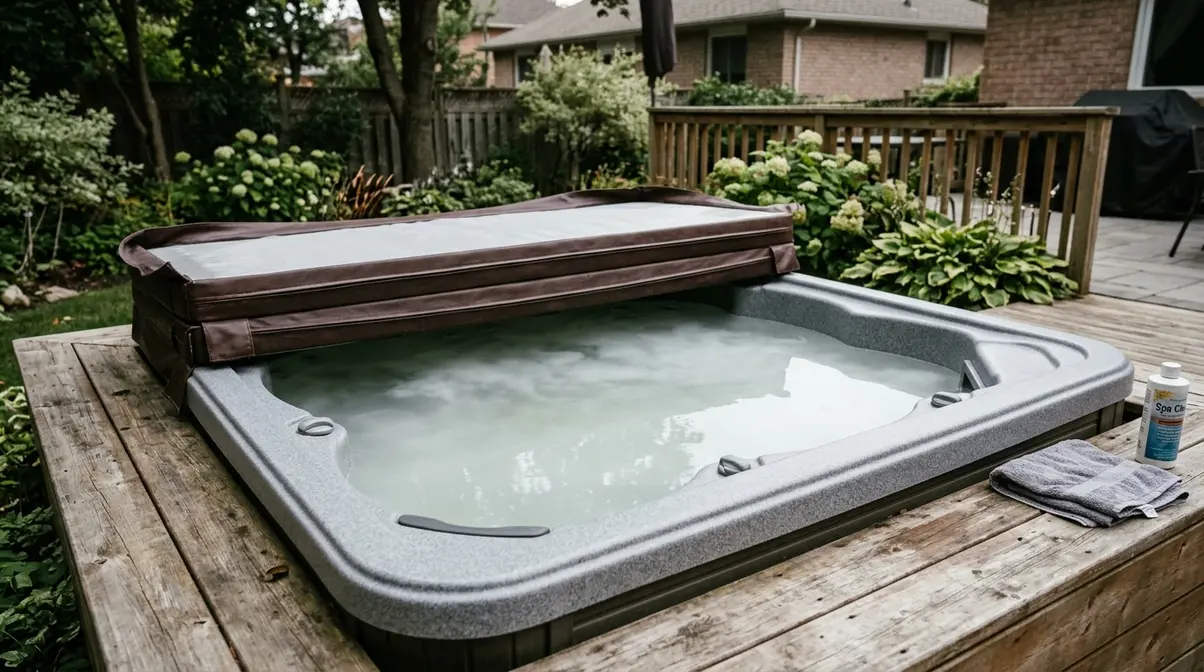
Even when you do everything right, water problems happen. Here’s how to diagnose and fix the three most common issues bromine tub owners face.
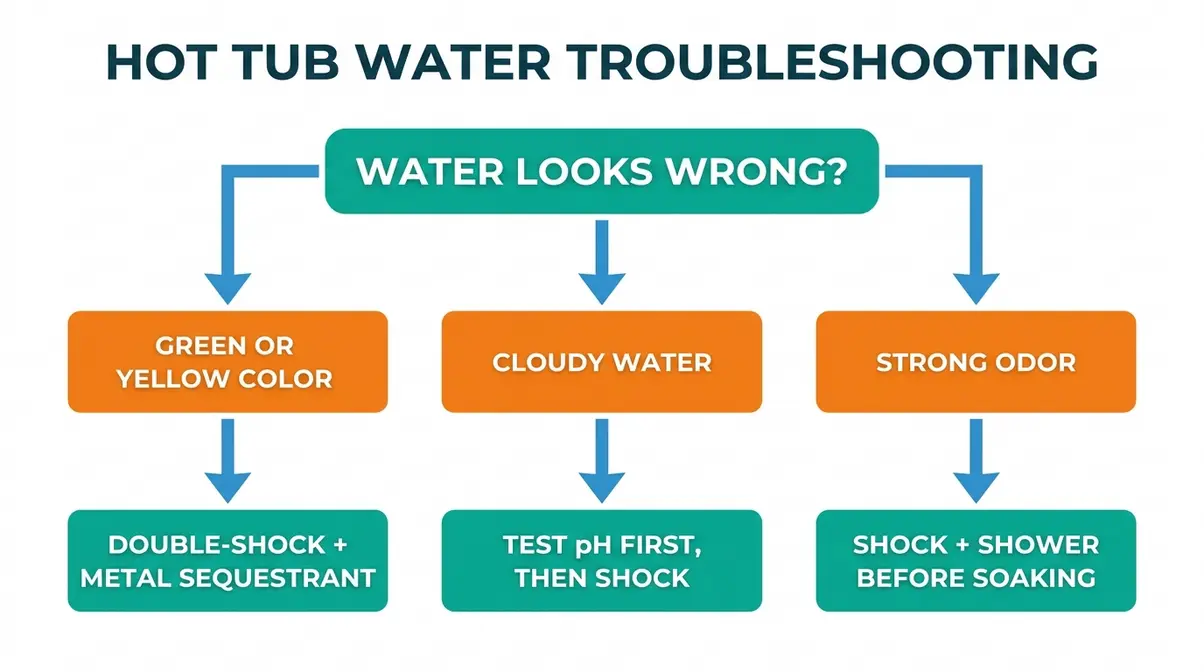
How to Fix Low Bromine Levels in Your Hot Tub
Low bromine (below 2 ppm) is the most common maintenance issue. Your water isn’t being sanitized properly, which creates a bacterial risk. Conversely, if you accidentally add too much, you’ll need to know how to lower bromine in a hot tub.
Common causes: Heavy use (more bathers = faster bromine consumption), feeder set too low, hot weather causing faster chemical breakdown, or a depleted bromide bank.
- Fix it in 3 steps:
- Shock the water with a non-chlorine oxidizer (MPS) at double the standard dose. This reactivates any bromide reserve in the water and boosts your active bromine level quickly.
- Open your feeder or floater to a higher setting to increase the bromine tablet dissolution rate.
- Retest after 4 hours. If levels are still below 3 ppm, add a small dose of bromine granules directly to the water (1 teaspoon per 200 gallons) and retest after 2 more hours.
If your bromine levels are consistently low despite these steps, your bromide bank may be exhausted. Add a dedicated bromide booster product (sodium bromide) to rebuild the reserve, then shock again.
Shocking a Bromine Hot Tub: When and How to Do It
Shocking your hot tub is not optional — it’s maintenance. Shock treatment oxidizes the organic waste (sweat, oils, lotions) that your sanitizer reacts with, clearing the water and reactivating your bromine. This is especially important when shocking your hot tub after refilling.
- When to shock:
- After heavy use (more than 2–3 bathers)
- After a party or extended soaking session
- When water looks cloudy or smells off
- Weekly as preventive maintenance
- Immediately after filling with fresh water
How to shock a bromine tub:
Use a non-chlorine shock (potassium monopersulfate/MPS) — not chlorine shock. Adding chlorine shock to a bromine tub can disrupt your bromide bank and cause erratic readings. Add MPS with the cover off and jets running. Wait 15–20 minutes before closing the cover. You can usually soak 15–30 minutes after a non-chlorine shock treatment (check your product label for specific wait times).
Green or Yellow Water in a Bromine Tub: Causes and Fixes
Discolored water looks alarming but is usually fixable within 24 hours.
Green water in a bromine tub typically signals algae growth — which means your bromine level dropped too low and bacteria/algae took hold. Fix: Shock with a double dose of MPS, add bromine granules to bring levels to 5–6 ppm (slightly above normal), run jets continuously for 4 hours, then drain and refill if the color doesn’t clear.
Yellow or brown water usually indicates metals in your fill water (iron or manganese), not a sanitizer problem. Fix: Add a metal sequestrant product, run the filter for 24 hours, then test again. If the problem persists, consider a hose pre-filter for refills.
Why do people put tennis balls in a hot tub?
Tennis balls absorb oils and lotions from hot tub water. The fuzzy felt exterior of a tennis ball acts like a sponge for body oils, sunscreen, and cosmetics that bathers introduce to the water. These organic compounds are a primary driver of chloramine and bromamine formation — the byproducts that cause irritation and odor. Tossing 2–3 tennis balls into your hot tub (or filter basket) reduces the chemical load your sanitizer has to handle. It’s a genuine maintenance trick, not a myth — community consensus from r/hottub consistently supports it as a cost-free water clarity aid.
Essential Hot Tub Sanitizer Products
You don’t need a chemistry lab — just a few reliable tools. Here’s what actually matters.
Test Strips and Water Testing Kits
Testing your water is the single most important maintenance habit. Without it, you’re dosing blind. Test strips are the easiest option for most beginners: dip one in the water for 15 seconds, compare colors to the chart, and dose accordingly. For a full breakdown of options, check out our reviews of the best hot tub water testing kits.
Look for a 5-in-1 or 6-in-1 spa test strip that measures: bromine or chlorine, pH, total alkalinity, calcium hardness, and cyanuric acid (for chlorine tubs). Brands like AquaChek and Leisure Time are widely available and trusted across hot tub communities.
For more precise readings — especially if you’re troubleshooting a persistent problem — a liquid drop test kit (like the Taylor K-2106 for bromine tubs) gives more accurate results than strips. Many hot tub retailers also offer free water testing if you bring in a sample.
Bromine Feeders, Starter Kits, and Chemical Forms
Bromine comes in three main forms, each with trade-offs:
| Form | How It Works | Best For |
|---|---|---|
| Tablets (in feeder/floater) | Slow-dissolving; consistent release | Most owners — set-and-forget |
| Granules | Fast-dissolving; added directly to water | Boosting low levels quickly |
| 2-Part System (sodium bromide + activator) | Builds a bromide bank; activated by shock | Owners who want maximum control |
A bromine floater (the “crappy screw-in contraption” some owners mention) works fine for most tubs — the key is adjusting the dial to control how much tablet surface is exposed to the water. An inline bromine feeder (installed in your plumbing) offers more consistent delivery but requires professional installation.
Starter kits (like the Leisure Time Spa Bromine Kit or Clorox Spa Bromine Kit) bundle tablets, shock, and test strips — a good value for first-time owners who want everything in one purchase.
Bromine vs. Chlorine for Inflatable Hot Tubs
Inflatable hot tubs — like those featured in our guide to the best inflatable hot tubs — have smaller water volumes (typically 150–250 gallons) and less robust filtration than hard-shell tubs. This changes the chemical math slightly. You will also need to maintain proper filtration, such as knowing how to clean your Lay-Z-Spa filter.
Chlorine is often recommended for inflatable hot tubs by manufacturers, primarily because it’s easier to dose precisely in smaller volumes and the tablets are more universally available. Many inflatable tub manufacturers specifically list chlorine tablets (trichlor, 1-inch tablets) in their care instructions.
Bromine works well in inflatables too, with one caveat: the smaller water volume means chemical levels can spike or crash faster. You’ll need to test more frequently — every day or two — especially during the first month.
For inflatable tubs, avoid large 3-inch trichlor tablets designed for full-size pools — they can overdose a 200-gallon tub rapidly. Use 1-inch tablets or granules and dose conservatively, starting at the low end of the recommended range.
The core rule for inflatable hot tubs: test more, dose less. The smaller the tub, the more sensitive the chemistry. Whether you choose bromine or chlorine, consistency matters more than which chemical you pick.
The Sanitizer Fit Test: Which Is Right?
Every guide tells you “it depends.” This one tells you on what — and gives you a concrete answer.
The Sanitizer Fit Test is a 3-factor decision framework. Answer these three questions honestly, and your sanitizer choice becomes obvious.
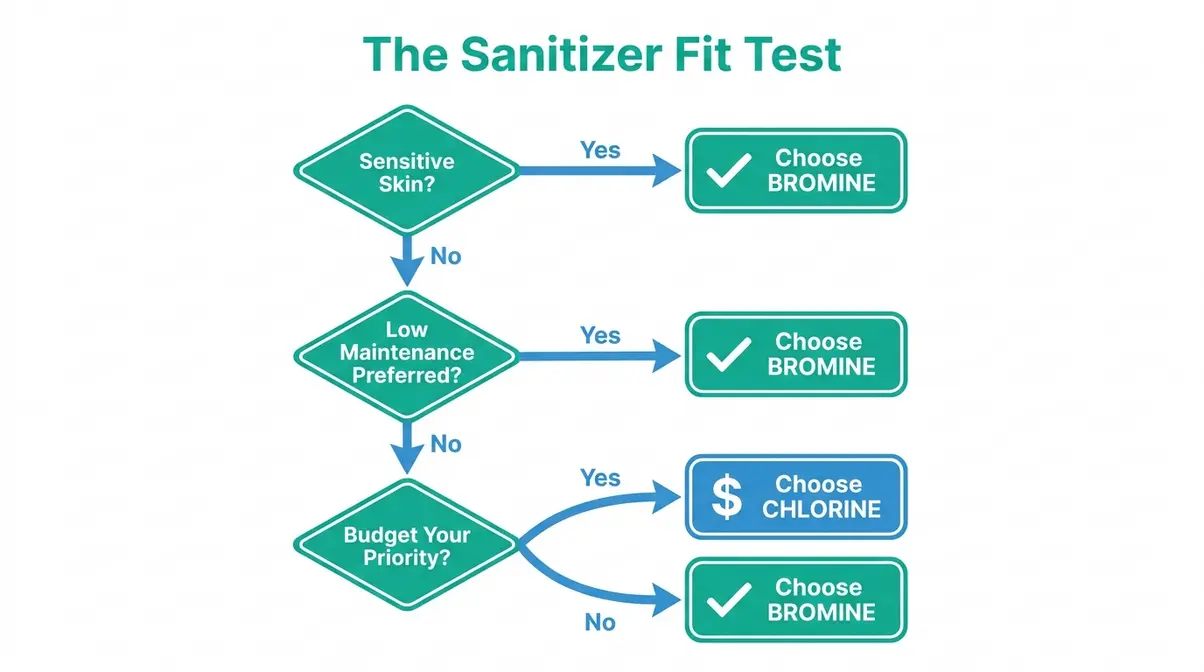
| Your Priority | Your Answer | Best Fit |
|---|---|---|
| Skin Sensitivity | You have sensitive skin, eczema, or react to pools | → Bromine |
| Maintenance Tolerance | You want to test less often and dose less frequently | → Bromine |
| Budget Priority | You want to minimize monthly chemical spend | → Chlorine |
If two or three of your answers point to bromine: Choose bromine. The higher cost is offset by fewer skin problems and less frequent dosing.
If cost is your primary driver and your skin handles pools fine: Choose chlorine. Just commit to testing 3–4 times per week and dosing consistently.
If you’re still unsure: Bromine is the safer default for hot tubs specifically — its heat stability alone makes it the more forgiving choice for beginners.
Common Mistakes When Choosing Hot Tub Chemicals
Common Pitfalls to Avoid
1. Choosing based on smell alone. As the r/hottub community quote at the top of this guide shows, smell is the most common — and least reliable — decision factor. Both chemicals smell less when your water is balanced correctly.
2. Adding chemicals without testing first. Dosing without knowing your current levels is how you end up with 10 ppm bromine and an itchy rash. Always test before you add anything.
3. Skipping the pH balance step. Neither bromine nor chlorine works efficiently outside the 7.2–7.8 pH range. If your sanitizer “isn’t working,” check your pH before adding more sanitizer.
4. Mixing sanitizer systems without draining. Swapping from chlorine to bromine (or vice versa) without a full drain creates chemical interference. Your sanitizer readings will be inaccurate and your water won’t be properly protected.
5. Over-relying on the feeder and never shocking. Bromine feeders maintain your baseline — but they don’t oxidize organic waste. Skipping weekly shock treatments leads to cloudy water and rising chloramine or bromamine levels.
When to Choose a Salt Water System Instead
Salt water hot tub systems use electrolysis to generate chlorine from dissolved salt — they’re not truly “chemical-free,” but they reduce the need to handle and store concentrated chemicals directly.
- Consider a salt system if:
- You want the lowest possible chemical-handling burden
- You have severe chlorine sensitivity and bromine still causes reactions
- You’re willing to invest $300–$800 upfront for the salt cell unit
Salt systems still require pH balancing and occasional shocking. They’re not maintenance-free — but they do simplify the routine for owners who find chemical dosing stressful. The ongoing cost of salt is lower than tablets or granules, though the cell unit needs replacement every 2–4 years.
Frequently Asked Questions
What are the disadvantages of bromine in a hot tub?
Bromine’s main disadvantages are higher cost and UV sensitivity. Bromine tablets cost roughly $10–$15 more per month than chlorine for a standard 300-gallon tub, according to retail pricing averages. Because bromine breaks down in direct sunlight, it’s less effective for uncovered outdoor tubs without a UV stabilizer. Additionally, bromine requires a two-part system (bromide bank plus activator) that has a steeper learning curve than simply adding chlorine granules. For budget-focused owners with outdoor, uncovered tubs, these disadvantages can outweigh bromine’s benefits.
Why is there a 15-minute hot tub rule?
The 15-minute rule limits your exposure to heat-related stress. Hot tubs held at 104°F (the maximum safe temperature per the Consumer Product Safety Commission) raise your core body temperature quickly. After 15 minutes at maximum temperature, most adults begin experiencing lightheadedness, dizziness, or nausea — early signs of heat exhaustion. The rule isn’t about chemicals; it’s about cardiovascular safety. Children, pregnant women, and people with heart conditions should limit soaks to 5–10 minutes at lower temperatures (98–100°F). Taking a cool-down break and re-entering is safer than one long continuous soak.
What is better for your hot tub, bromine or chlorine?
Bromine is generally better for hot tubs specifically because of heat stability. Hot tubs operate at 98–104°F — temperatures that cause chlorine to break down rapidly, requiring more frequent dosing. Bromine remains active at these temperatures and works across a wider pH range. For owners with sensitive skin or an indoor tub, bromine is the clear winner. Chlorine is a reasonable choice for budget-focused owners with outdoor tubs who are willing to test and dose more frequently. Use The Sanitizer Fit Test framework in this guide to find your personal answer.
Why should you not put your head under water in a hot tub?
Hot tub water carries a higher bacterial risk than a properly maintained pool. The smaller water volume and high temperature create conditions where bacteria — particularly Pseudomonas aeruginosa, which causes hot tub folliculitis — can multiply rapidly if sanitizer levels drop even briefly. Submerging your head exposes your ears, sinuses, and eyes to this water. Hot tub folliculitis typically affects skin, but ear infections (swimmer’s ear) and rare cases of Naegleria fowleri (brain-eating amoeba, associated with warm freshwater) have been documented in inadequately maintained water. Keep sanitizer levels in range and avoid submerging your head as a standard precaution, per CDC guidance.
What happens if you are in a hot tub for 4 hours?
Four hours in a hot tub carries serious health risks, including heat exhaustion, dehydration, and dangerous drops in blood pressure. The Consumer Product Safety Commission links prolonged hot tub exposure to dozens of drowning deaths annually, often involving impaired judgment from heat, alcohol, or medication. Even at moderate temperatures (100°F), extended soaking raises core body temperature, dilates blood vessels, and stresses your cardiovascular system. The safe approach: soak in 15–20 minute intervals, exit to cool down between sessions, drink water throughout, and never use a hot tub while impaired by alcohol or sedating medications.
The Final Verdict: Your Hot Tub, Your Chemistry
For most hot tub owners — especially first-timers with a covered indoor or outdoor tub — bromine is the better default choice. Its heat stability, skin-friendliness, and wider pH tolerance make it more forgiving for beginners learning the chemistry as they go. Chlorine is a legitimate, lower-cost alternative for owners who test consistently and don’t have sensitive skin. Ultimately, choosing the best bromine vs chlorine hot tub setup doesn’t have one universal winner — it has a winner for you, based on your skin, your schedule, and your budget.
The Sanitizer Fit Test cuts through the noise: if sensitive skin or low-maintenance living is your priority, start with bromine. If budget is your primary constraint and you’re willing to test more frequently, chlorine works. Both sanitizers keep your water safe when used correctly — the difference is in how much effort and cost they require from you.
When configuring your bromine vs chlorine hot tub maintenance routine, remember your next step: grab a 5-in-1 test strip kit, test your current water, and compare those numbers to the target ranges in this guide. If you’re starting fresh, follow the 5-step bromine startup guide above. If you’re switching from one sanitizer to the other, don’t skip the drain-and-flush — it’s the step that saves you weeks of chemistry frustration.

Dave King
Hot tub tester and writer at One Hot Tub.