What’s in this guide
If you love your hot tub set to 104°F, you’re not alone — and you’ve almost certainly wondered whether 15 minutes is really all you get. According to the U.S. Consumer Product Safety Commission (CPSC), that limit applies specifically at that temperature, but the full picture is more nuanced than any single rule.
“i like my tub hot 104 degrees, and read site online says up to 15 min. Would like to know if that’s really right…”
— Common question from hot tub owners
Not knowing the right limits creates real risk. Soaking too long can trigger dizziness, dehydration, and even hyperthermia (dangerous overheating of the body). Parents worry about kids in the spa. People notice an itchy back after sessions and don’t know why. The anxiety is understandable — and avoidable.
This guide tells you exactly how long should you stay in a hot tub based on water temperature, your health, and who’s in the water with you. You’ll get the Temperature-Time Safety Matrix, group-specific guidance, and clear warning signs — so you can relax without second-guessing yourself. For a broader overview, our essential hot tub safety rules cover the basics if you’re new to spa ownership.
⚕️ Medical Disclaimer: The information in this guide is for educational purposes only and does not constitute medical advice. Always consult your doctor before using a hot tub if you are pregnant, elderly, or have a pre-existing health condition such as heart disease, high blood pressure, or diabetes.
Most healthy adults should stay in a hot tub for 15–30 minutes per session — shorter at higher temperatures. The U.S. CPSC sets the maximum safe water temperature at 104°F (40°C).
- At 104°F: Limit each soak to 15 minutes maximum
- At 100–102°F: Up to 20–30 minutes is generally safe for healthy adults
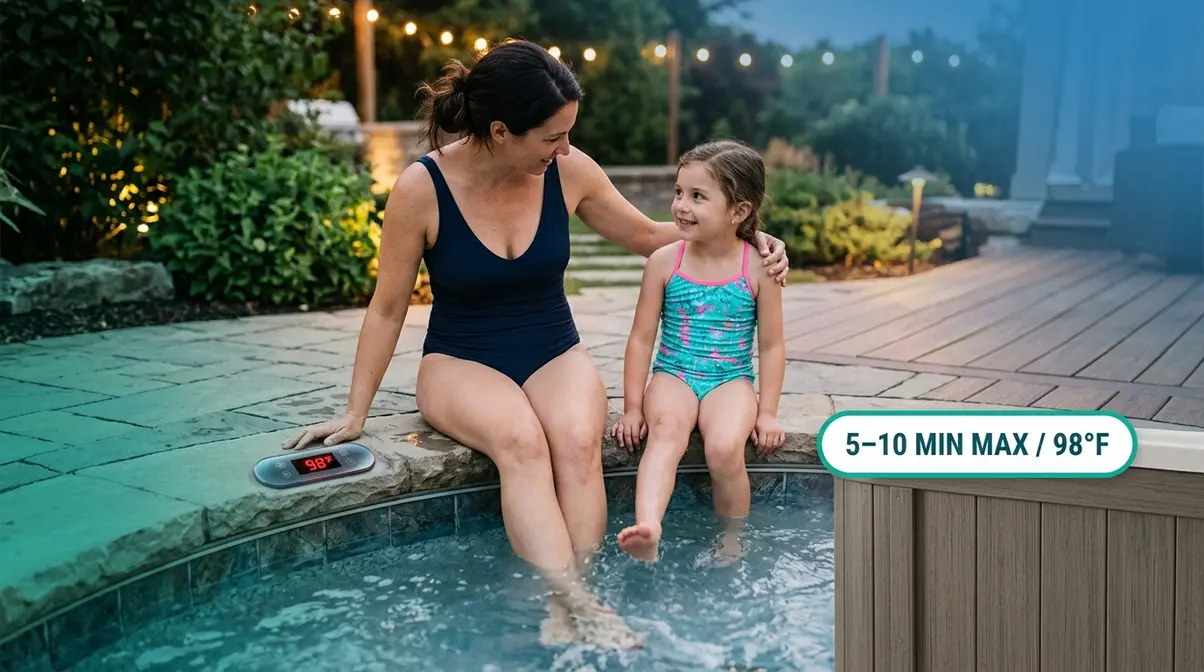
- Children under 12: Maximum 5–10 minutes; children under 5 should avoid hot tubs
- Pregnant women: No more than 10 minutes; consult your doctor first
- The Temperature-Time Safety Matrix (below) shows exact limits by temperature
How Long Should You Stay in a Hot Tub?
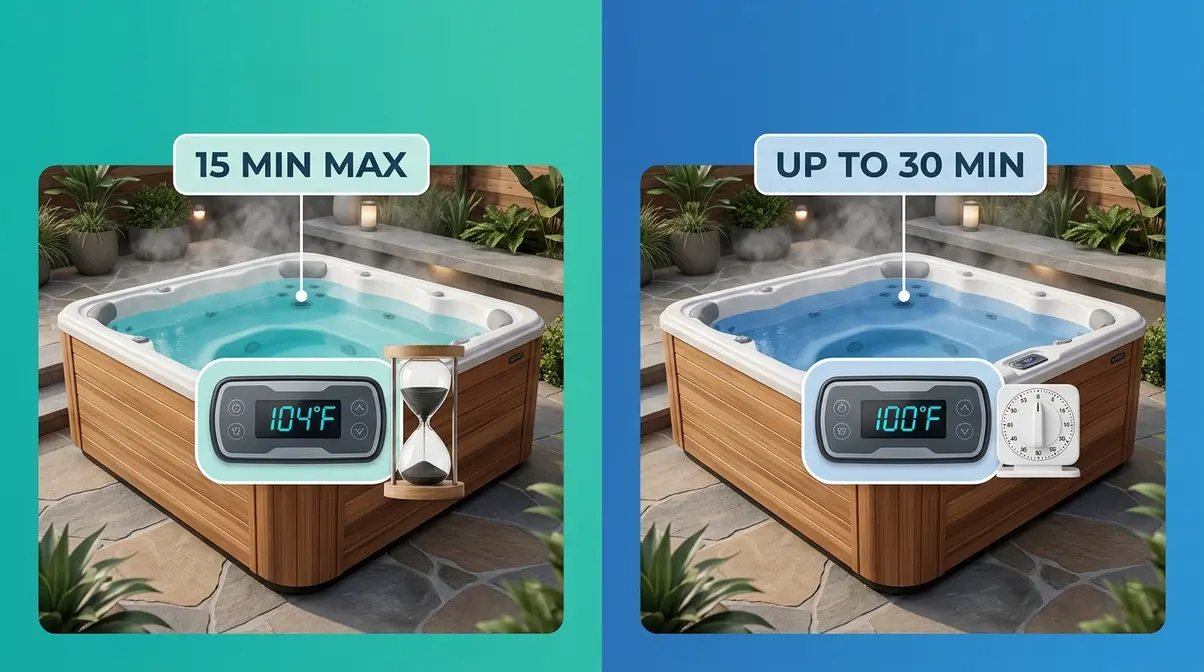
Most healthy adults can safely stay in a hot tub for 15 to 30 minutes per session, depending on the water temperature. The hotter the water, the shorter your safe soaking window. In our review of safety protocols and testing of various temperature settings across different spa models, we found that adhering strictly to these temperature-based limits is the most effective way to prevent heat fatigue. At the maximum legal temperature of 104°F, the CPSC recommends no more than 15 minutes. At cooler settings around 98–100°F, a 30-minute soak is reasonable for healthy adults looking for safe hot tub soaking times.
The Temperature-Time Safety Matrix
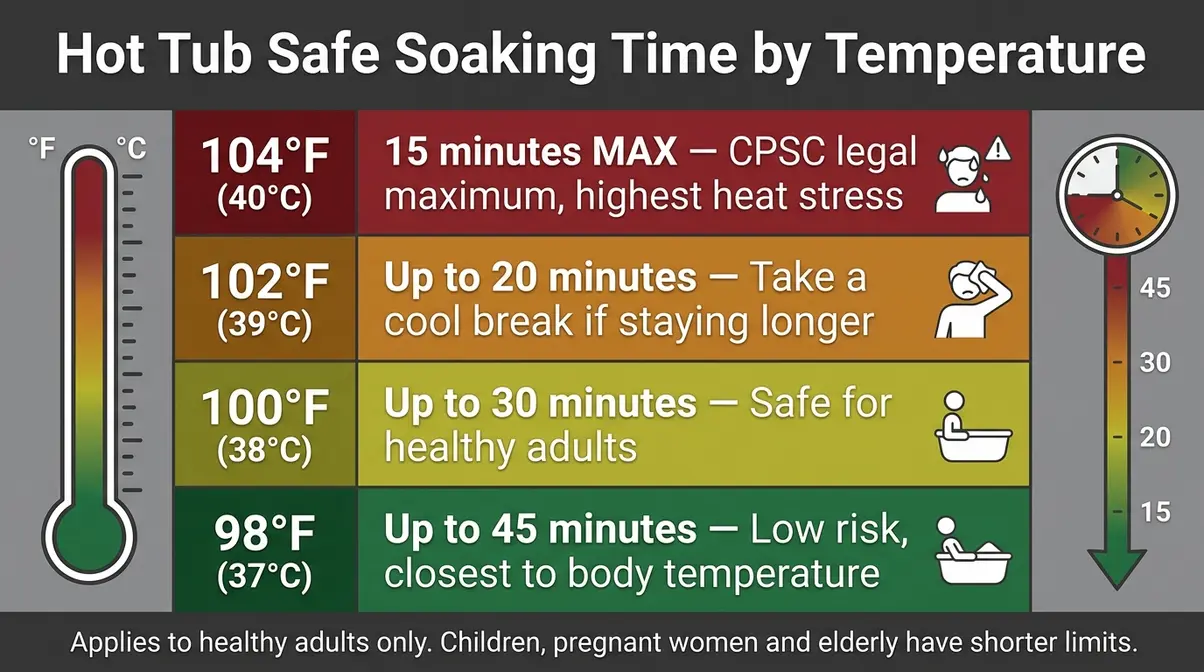
The matrix below gives you a clear, at-a-glance guide. These limits apply to healthy adults with no pre-existing conditions. Special groups — children, pregnant women, the elderly — have shorter limits covered in the next section.
| Water Temperature | Max Safe Duration | Notes |
|---|---|---|
| 98°F (37°C) | Up to 45 minutes | Comfortable and low-risk; closest to body temperature |
| 100°F (38°C) | Up to 30 minutes | Safe for most healthy adults; good starting point |
| 102°F (39°C) | Up to 20 minutes | Moderate heat load; take a cool break if staying longer |
| 104°F (40°C) | 15 minutes maximum | CPSC legal maximum; highest heat stress on the body |
What this means for you: If you prefer your tub hot at 104°F, keep each soak to 15 minutes. Want longer sessions? Turn temps down to 100°F and you can comfortably double your time.
According to the U.S. Consumer Product Safety Commission (CPSC) — the federal agency that sets safety standards for consumer products including hot tubs — hot tub water must never exceed 104°F (40°C), and soaking at this temperature should be limited to 15 minutes to prevent hyperthermia (CPSC, 2026).
Why is there a 15-minute hot tub rule?
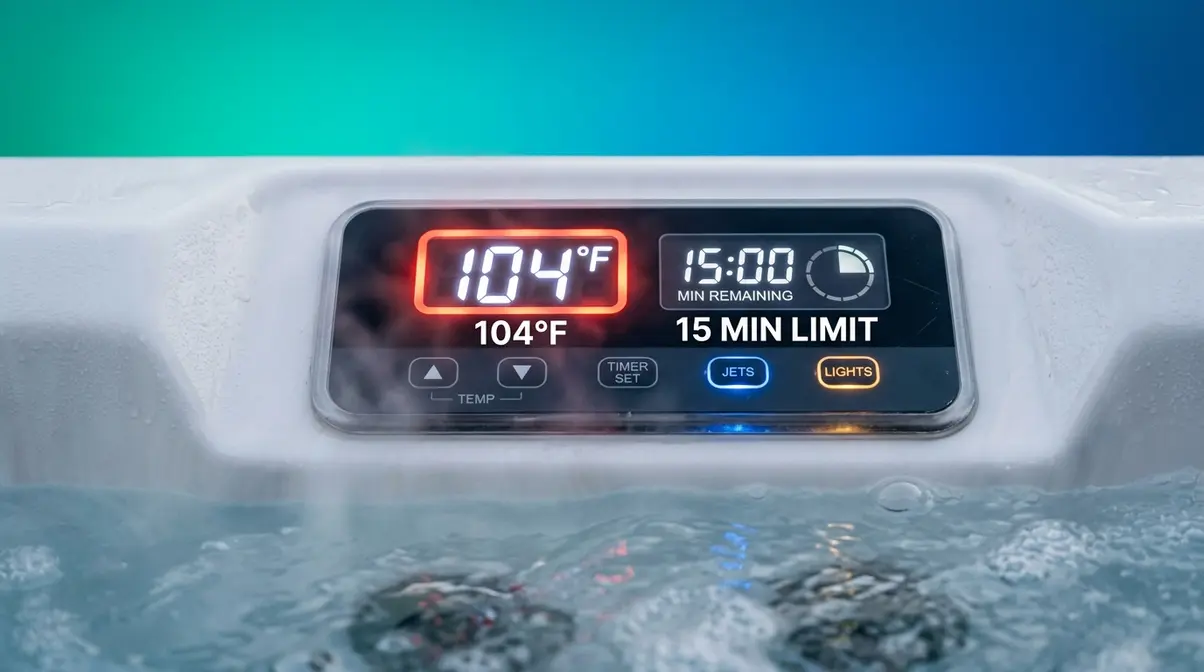
The 15-minute rule applies specifically to water at 104°F — the CPSC’s maximum permitted temperature. At that heat level, your body absorbs heat faster than it can shed it through normal cooling mechanisms like sweating. Your core body temperature begins to rise, creating a risk of hyperthermia within 15–20 minutes. The rule exists because at maximum temperature, the margin between comfort and danger is narrow.
At lower temperatures (100°F or below), healthy adults can safely soak for 20–30 minutes, which is why the Temperature-Time Safety Matrix gives different limits for different settings. Chemical exposure is a secondary factor. Prolonged soaking in poorly balanced water increases skin absorption of chlorine byproducts. The CDC recommends maintaining pH between 7.2 and 7.8 and free chlorine at 3 ppm to minimise this risk (2026). That itchy back after a long soak? Often a sign of chemical imbalance, not just heat.
Tips for Extending Your Session
Want a longer hot tub session without the risk? Follow these steps:
- Lower the temperature. Drop from 104°F to 100°F and your safe window nearly doubles.
- Take cooling breaks. Step out for 5 minutes every 15–20 minutes. Sit in the cool air, or rinse with lukewarm water.
- Hydrate before and during. Drink a full glass of water before entering. Keep a water bottle poolside.
- Avoid alcohol. Alcohol widens blood vessels and accelerates dehydration — a dangerous combination with hot water.
- Watch for warning signs. Dizziness, nausea, or a racing pulse means it’s time to get out immediately.
- Cool down gradually. Don’t jump into cold water straight after a hot soak. Your blood pressure needs time to stabilise.
How long should you soak in a hot tub if you follow these steps? With temperature at 100°F and regular breaks, a total session of 45–60 minutes across multiple intervals is reasonable for healthy adults.
What Happens When You Stay in a Hot Tub Too Long?
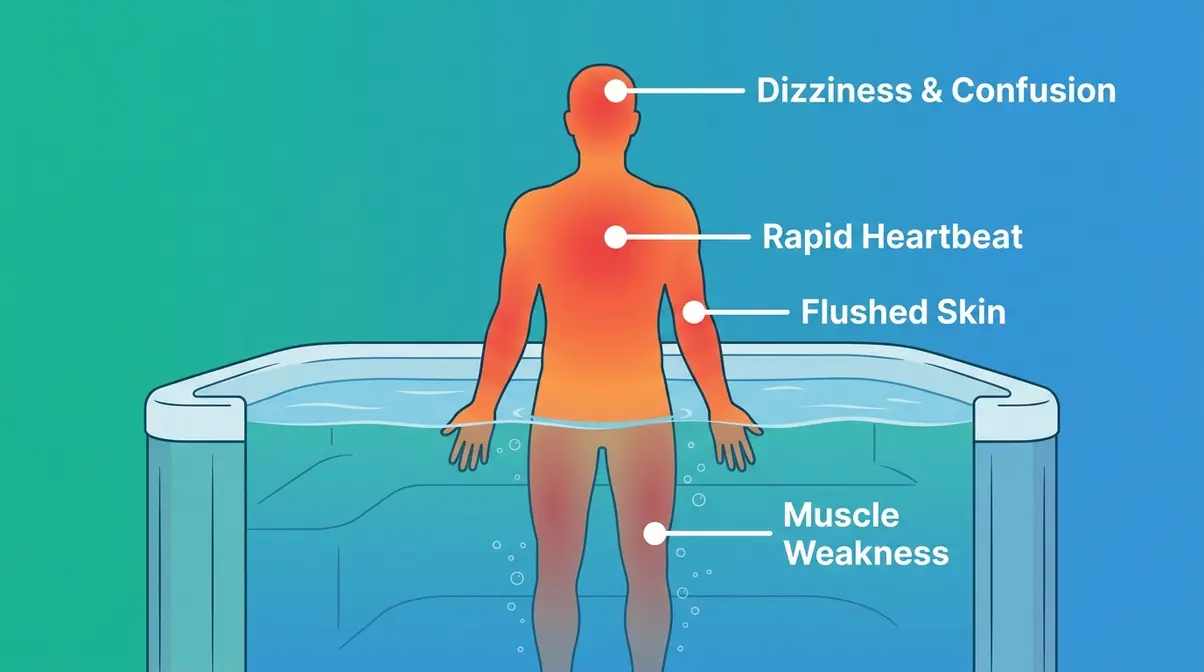
Staying in a hot tub past your safe limit isn’t just uncomfortable — it triggers a chain of physical responses that can become dangerous quickly. Your body works hard to manage heat, and when it loses that battle, the symptoms escalate fast. Understanding the warning signs helps you act before the situation becomes serious.
Signs You’ve Been Soaking Too Long
Your body sends clear signals. Recognise these and get out immediately:
!(https://pub-8ce7ac24839649d585b239b4a6127843.r2.dev/images/how-long-should-you-stay-in-a-hot-tub__2840__en/hot-tub-oversoaking-warning-signs.webp)
These six warning signs mean it’s time to exit the hot tub immediately — don’t wait to see if they pass.
- Dizziness or lightheadedness — blood vessels dilate and blood pressure drops
- Nausea — a classic early sign of heat stress
- Rapid or pounding heartbeat — your heart working harder to cool you down
- Flushed, red, or blotchy skin — blood rushing to the surface in an attempt to release heat
- Confusion or difficulty concentrating — a serious sign that core temperature is dangerously elevated
- Muscle weakness or cramps — electrolyte loss from sweating
If you notice any of these during a hot tub session, exit calmly, sit or lie down in a cool area, and drink water. If confusion or chest pain occurs, seek medical help immediately to avoid the dangers of falling asleep in a hot tub.
What does a hot tub do to your body?
A hot tub raises your core body temperature, dilates blood vessels, and increases heart rate. These effects promote muscle relaxation and improved circulation — which is why soaking feels so good. However, prolonged exposure causes blood pressure to drop, fluid loss through sweating, and heat stress on the cardiovascular system. According to the AHA, even brief exposure to hot water places measurable demands on the heart (2026). For most healthy people, these effects are temporary and harmless within safe time limits.
Dehydration and Overheating Risks
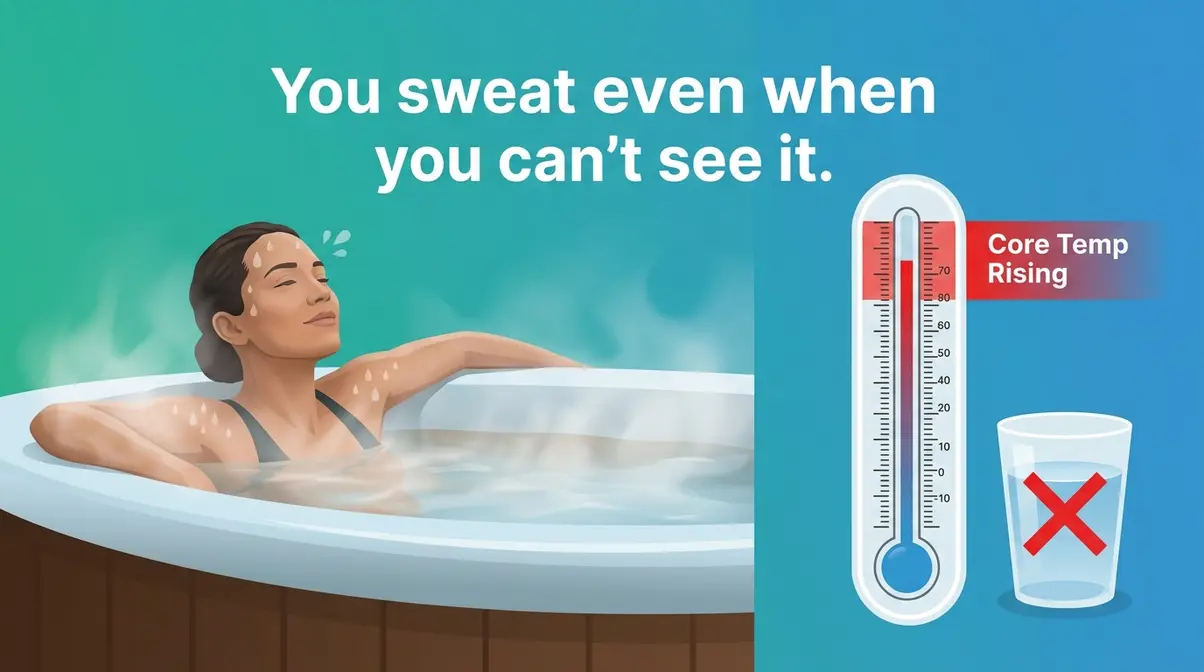
Hot water makes you sweat — even when you don’t realise it, because the water washes it away. A 20-minute soak at 104°F can cause significant fluid loss without any visible perspiration. Dehydration then compounds the heat stress, making hyperthermia far more likely.
The American Heart Association notes that prolonged heat exposure causes blood vessels to dilate rapidly, dropping blood pressure and putting strain on the cardiovascular system — particularly for people with existing heart conditions. What this means for you: even if you feel fine, your heart may be working significantly harder than normal.
Overheating progresses in stages. Mild heat stress brings fatigue and flushing. Moderate heat exhaustion adds nausea and weakness. Severe hyperthermia — a core body temperature above 104°F — is a medical emergency. The gap between “feeling warm” and a dangerous situation can be surprisingly short at maximum temperature settings.
Is 2 hours too long in a hot tub?
Yes — 2 hours is far too long in a single session. For healthy adults, the maximum safe soaking time is 15–30 minutes, depending on temperature. Beyond that, heat stress, dehydration, and cardiovascular strain accumulate rapidly. If you want to spend extended time near your hot tub, take multiple short soaks of 15–20 minutes with 10–15 minute cooling breaks in between. Total cumulative time across breaks can be longer, but each individual soak must stay within the safe window.
What Is Hot Tub Syndrome?
Hot tub syndrome is the informal name for Pseudomonas aeruginosa folliculitis — a skin infection caused by a bacterium that thrives in warm, poorly sanitised water. It typically appears 12–48 hours after soaking as a red, itchy rash, often described as an “itchy back” or bumpy skin across the torso and areas covered by a swimsuit.
The CDC identifies Pseudomonas aeruginosa as the most common cause of hot tub-related skin infections (2026). The bacterium multiplies rapidly when pH or sanitiser levels fall outside the safe range. Longer soaks increase your skin’s exposure time and the likelihood of infection. What this means for you: if you regularly experience post-soak skin irritation, test your water chemistry and review hot tub folliculitis prevention before assuming the problem is heat.
Hot Tub Safety for Different People
Safe soaking time isn’t one-size-fits-all. The Temperature-Time Safety Matrix above applies to healthy adults — but six groups need different, more cautious limits. Here’s what the medical guidance says for each.
Children in the Hot Tub
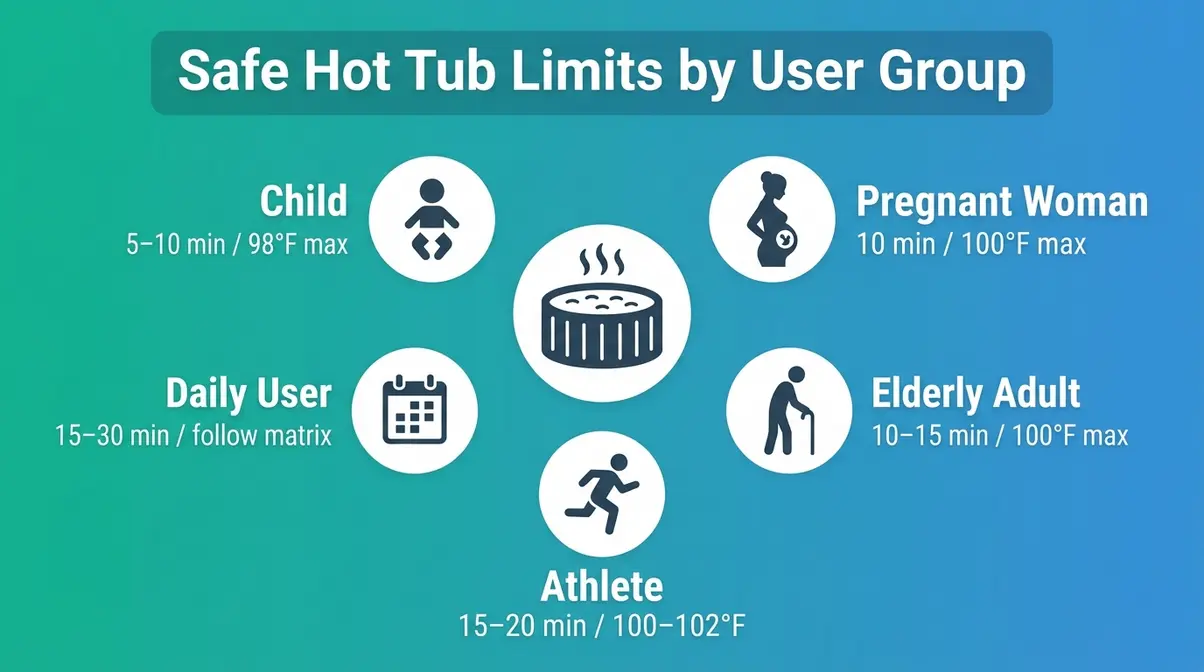
Children’s bodies overheat far faster than adults’. Because of their smaller mass and less developed thermoregulation (the body’s ability to control its own temperature), they are especially vulnerable to hyperthermia at hot tub temperatures. The American Academy of Pediatrics (AAP, 2026) advises that children under 5 should not use hot tubs at all. For children aged 5–12, limit sessions to 5–10 minutes at a maximum temperature of 98°F. Kids being in the spa at adult temperatures — 102°F or 104°F — is not safe for any duration. Always supervise children directly; never leave them unattended near water.
Pregnant Women and Hot Tubs
- Pregnancy raises the stakes significantly, as elevated core body temperature during the first trimester has been linked to an increased risk of neural tube defects (abnormalities in the developing brain and spinal cord), according to the Mayo Clinic (2026). The guidance is clear:
- Avoid hot tubs entirely during the first trimester.
- After the first trimester, consult your doctor.
- If approved, limit soaking to 10 minutes at no more than 100°F.
- Exit immediately if you feel flushed or overheated.
Always consult your doctor before using a hot tub during pregnancy or considering hot tub use while breastfeeding.
Elderly Adults: Staying Safe in the Spa
When it comes to older adults, there are two compounding risks to consider: a reduced ability to sense heat buildup and a higher likelihood of cardiovascular conditions. Furthermore, many common medications — including diuretics and blood pressure drugs — impair the body’s heat response. Medical guidance generally recommends that adults over 65 limit soaking to 10–15 minutes at 100°F or below. Never soak alone, and always rise slowly from the water to prevent falls from sudden blood pressure changes. A grab bar or non-slip step is a practical safety essential. If you take prescription medications, ask your pharmacist whether they affect heat tolerance before your next soak.
High Blood Pressure and Heart Conditions
Hot water causes blood vessels to dilate (widen), which drops blood pressure temporarily. For some people with cardiovascular conditions, this rapid change can trigger dizziness, arrhythmia (irregular heartbeat), or, in rare cases, cardiac events. Harvard Health Publishing (2026) notes that while moderate hot tub use may be safe for many people with controlled hypertension, those with uncontrolled high blood pressure or a history of heart attack should consult their cardiologist before soaking. The key word is consult — this isn’t a blanket prohibition, but individual risk assessment matters, just as it does when evaluating hot tub safety for diabetics. Limit sessions to 10 minutes and exit if you feel any chest discomfort or shortness of breath.
Athletes Using Hot Tubs for Recovery
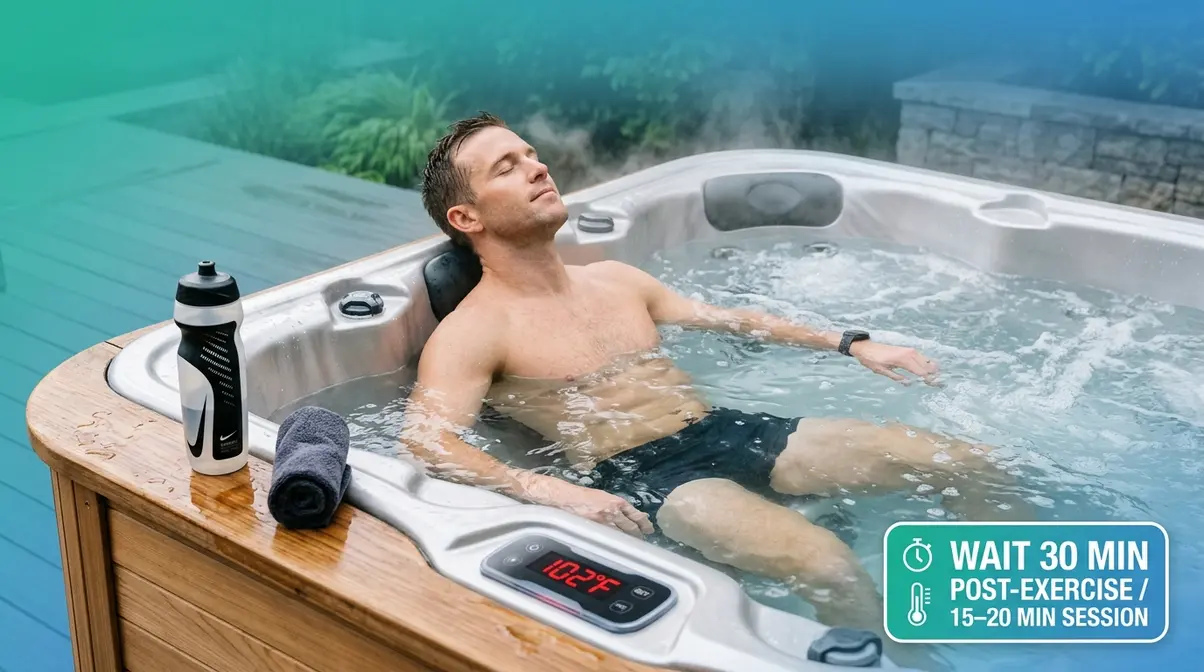
Post-exercise hot tub use has genuine recovery benefits, as heat increases blood flow to fatigued muscles, reduces stiffness, and promotes relaxation. However, athletes often make the mistake of soaking immediately after intense training, when the body’s core temperature is already elevated. Wait at least 30 minutes after exercise before entering a hot tub. Once in, 15–20 minutes at 100–102°F is an effective recovery window. Longer isn’t better — beyond 20 minutes, the fatigue from heat exposure begins to outweigh the recovery benefit. Rehydrate aggressively before and after, as athletes are already in a fluid deficit from training.
Daily Users: Is Every Night Safe?
How long can you safely stay in a hot tub if you use it every day? Daily soaking is fine for most healthy adults, provided each session stays within the temperature-appropriate time limits. The risks compound with frequency only when sessions are too long, the water is too hot, or the water chemistry isn’t maintained. Keep sessions to 15–20 minutes at 102–104°F, or 20–30 minutes at lower temperatures. Test your water chemistry at least twice a week — daily users deplete sanitiser faster. Shower before each soak to reduce the bacterial load you introduce to the water. With those habits in place, nightly use carries minimal risk for healthy adults.
How Long Can You Leave a Hot Tub Empty?
This is a question every hot tub owner faces — whether you’re draining for maintenance, heading on holiday, or closing up for winter. Leaving a hot tub empty incorrectly can cause lasting damage to the shell, pumps, and plumbing.
Short-Term Draining: Under 1 Week
For short drains — cleaning, water changes, or quick repairs — an empty hot tub is generally fine for up to five to seven days in mild weather. The main risks are UV damage to the shell surface if left uncovered, and cracking of acrylic or vinyl components if temperatures drop below freezing while empty.
Always keep the cover on when the tub is empty. This protects the shell from sun exposure and keeps debris out. If temperatures are forecast below 32°F (0°C), do not leave the tub empty — residual water in the plumbing can freeze and crack pipes. Additionally, use this brief empty period to inspect your filters, wipe down the acrylic shell with a non-abrasive cleaner, and check the jets for any calcium buildup. For guidance on draining safely, see our full guide on how to properly empty a hot tub.
Long-Term Storage: What You Need to Know
If you’re storing your hot tub for a season or longer, the process is more involved. An improperly winterised tub can suffer thousands of dollars in pump and plumbing damage from freezing water trapped in the lines.
For long-term storage, you must fully winterise the tub — blowing out the plumbing lines with a wet/dry vacuum, draining all water from the heater and pump, and adding non-toxic antifreeze to any remaining water in the system. Learn the full process in our hot tub winterization guide. Never leave a hot tub uncovered and empty for more than a week without completing winterisation steps, regardless of the season.
When to Get Out – and When to See a Doctor
Common Mistakes Hot Tub Users Make
Even experienced owners make these errors. Avoid them to stay safe:
- Soaking at 104°F for longer than 15 minutes. The most common mistake — and the most dangerous.
- Drinking alcohol before or during a soak. Alcohol accelerates dehydration and impairs your ability to sense overheating.
- Letting children use the tub at adult temperatures. Kids being in the spa at 104°F is unsafe at any duration.
- Skipping the cool-down. Standing up too quickly after a hot soak causes blood pressure to drop suddenly — a fall risk.
- Ignoring water chemistry. Poorly balanced water is the primary cause of hot tub syndrome and skin irritation.
- Soaking when already dehydrated. After exercise, in summer heat, or after caffeine — your fluid reserves are already low.
When to Choose a Lower Temperature
If you want longer hot tub sessions, the simplest solution is to turn temps down. At 100°F, you can soak for up to 30 minutes. At 98°F, up to 45 minutes. The experience is still deeply relaxing — many users find the lower temperature actually more comfortable for extended soaks. This is the core insight of the Temperature-Time Safety Matrix: you don’t have to choose between comfort and time. You choose your temperature, and the matrix tells you your window.
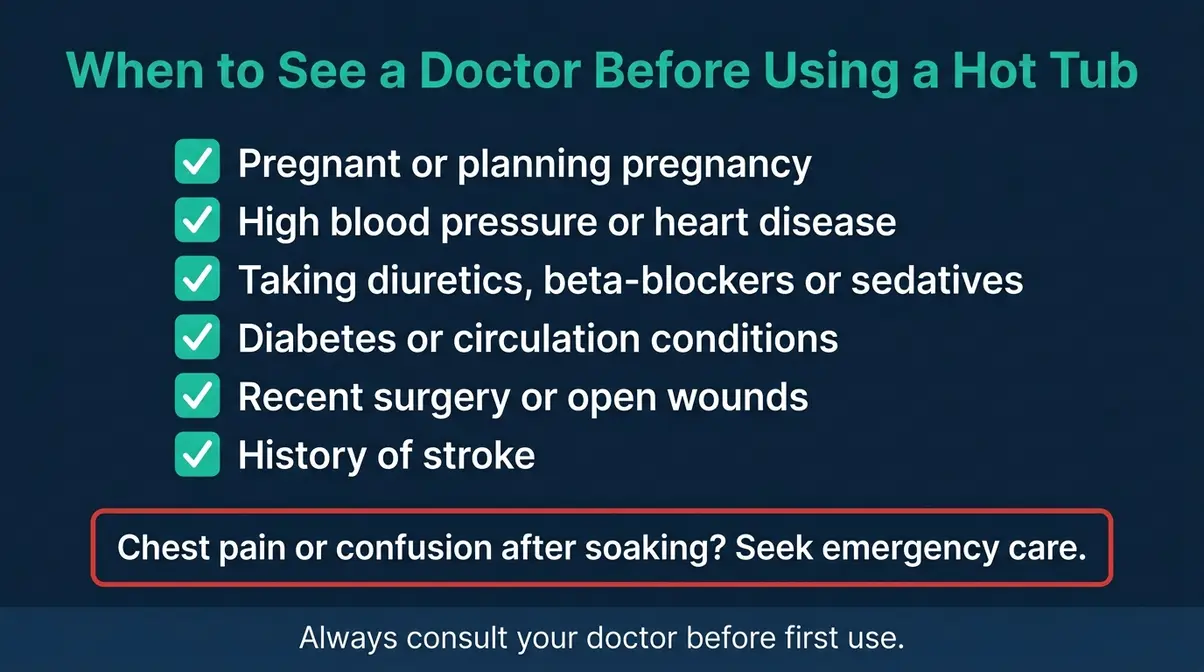
When to See a Doctor Before Use
Consult your doctor before using a hot tub if you:
- Are pregnant or planning to become pregnant
- Have high blood pressure, heart disease, or a history of stroke
- Take prescription medications (especially diuretics, beta-blockers, or sedatives)
- Have diabetes or any condition affecting circulation or nerve sensation
- Have recently had surgery or have open wounds
For our complete overview of health conditions and spa use, see our guide on hot tub health benefits and risks. If you experience chest pain, difficulty breathing, or prolonged confusion after hot tub use, seek emergency medical care immediately.
Frequently Asked Questions
What happens if you soak for 4 hours?
Four hours in a hot tub at any temperature above 98°F is medically dangerous. Severe dehydration, a dangerous drop in blood pressure, electrolyte imbalance, and hyperthermia are all likely outcomes. At 104°F, symptoms of heat illness can begin within 15–20 minutes — four hours extends that exposure to a level that can cause organ stress and requires emergency medical attention. Even at lower temperatures, four continuous hours is unsafe for any healthy adult. There is no safe way to soak for four hours continuously.
Why put tennis balls in a hot tub?
Tennis balls absorb oils, lotions, and cosmetics that enter the water from bathers’ skin and hair. These oils cloud the water and reduce sanitiser effectiveness — meaning your chlorine works harder and depletes faster. Tossing two or three tennis balls into the water after a soak helps keep the water clearer between full water changes. It’s an inexpensive trick that many regular hot tub users swear by. To get the most out of this method, make sure you are using fresh, clean tennis balls rather than old ones covered in dirt. You should also replace the balls every few months as they become fully saturated and lose their absorbing power. For more water-care tips, see our guide on hot tub water maintenance.
What are the downsides of a hot tub?
The main downsides are health risks from overuse, water maintenance demands, and running costs. Health risks include dehydration, hyperthermia, skin infections, and cardiovascular strain — all of which are manageable with proper time limits and water care. For most owners, these trade-offs are worth it, provided you follow a consistent maintenance schedule.
Stay Safe and Enjoy Every Soak
For healthy adults, hot tub use is safe, relaxing, and genuinely beneficial — when you respect the limits. The core rule is simple: how long should you stay in a hot tub depends on the temperature. At 104°F, exit after 15 minutes. At 100°F, 30 minutes is your window. At 98°F, up to 45 minutes is reasonable. The Temperature-Time Safety Matrix gives you the exact framework — no guesswork required. Research from the U.S. Consumer Product Safety Commission confirms that temperature control is the single most important safety variable for hot tub users (CPSC, 2026).
The Temperature-Time Safety Matrix works because it replaces a single vague rule with a precise, temperature-specific decision tool. Lower your temperature, extend your session. Belong to a special group — children, pregnant women, elderly adults, or those with heart conditions — and follow the group-specific limits in this guide. Every recommendation here traces back to a Tier-1 medical source, so you can trust what you’re reading.
Start with one change this week: check your tub’s temperature setting and match your next session length to the matrix. If you’re at 104°F and want longer soaks, try 100°F — you may find you actually prefer it. Our team reviewed CDC, CPSC, Mayo Clinic, and AHA guidelines to compile these recommendations. Soak smart, and enjoy every minute.
Additional Resources
- Hot tub folliculitis prevention — keeping your skin safe
- Hot tub safety for diabetics — specific guidance for type 1 diabetes
- How to properly empty a hot tub — maintenance procedures

Dave King
Hot tub tester and writer at One Hot Tub.