

Table of Contents - Hot Tub While Breastfeeding Safe? 6 Essential Rules (2025)
This blog post may contain affiliate links. As an Amazon Associate I earn from qualifying purchases.
Medical Disclaimer: This article is for informational purposes only and does not constitute medical advice. Always consult your OB/GYN, midwife, or IBCLC before resuming hot tub use after giving birth. Individual postpartum recovery timelines vary.
Yes — using a hot tub while breastfeeding is generally safe, but only after your body has fully healed and only when you follow a few critical precautions that most online advice skips entirely. Without knowing the exact temperature ceiling, the session time limit, or the post-soak hygiene step, you risk a temporary drop in your milk supply or, worse, a postpartum infection that sets your recovery back significantly.
This guide gives you the precise 4-6 week postpartum timeline for safe hot tub use, the science behind how heat affects your milk supply and let-down reflex, and the four-point HEAT Protocol every nursing mom should follow before stepping into the water. Whether you are a first-time mom (FTM) exclusively breastfeeding (EBF) or adding to your family, the answer is the same: timing and preparation are everything.
This guide synthesizes guidance from peer-reviewed medical literature, OB/GYN clinical recommendations, and lactation science research — covering the postpartum timing window, milk supply physiology, six specific safety rules, and the situations where hot tubs remain completely off-limits.
Using a hot tub while breastfeeding is safe once you are medically cleared — typically 4-6 weeks postpartum, after lochia stops and any incisions have healed.
- Safety first: Making a hot tub while breastfeeding safe requires following the HEAT Protocol.
- The HEAT Protocol: Keep water below 100°F, Exit after 10-15 minutes, Always hydrate, Thoroughly rinse breasts before nursing
- Milk supply: Hot tubs don’t ruin breast milk, but dehydration can temporarily lower your supply and alter its composition
- Let-down: Warm water often triggers the let-down reflex — leaking in the tub is normal and harmless
- Baby safety: Never bring your infant into the hot tub — babies cannot regulate body temperature the way adults can
Is a Hot Tub Safe While Breastfeeding?
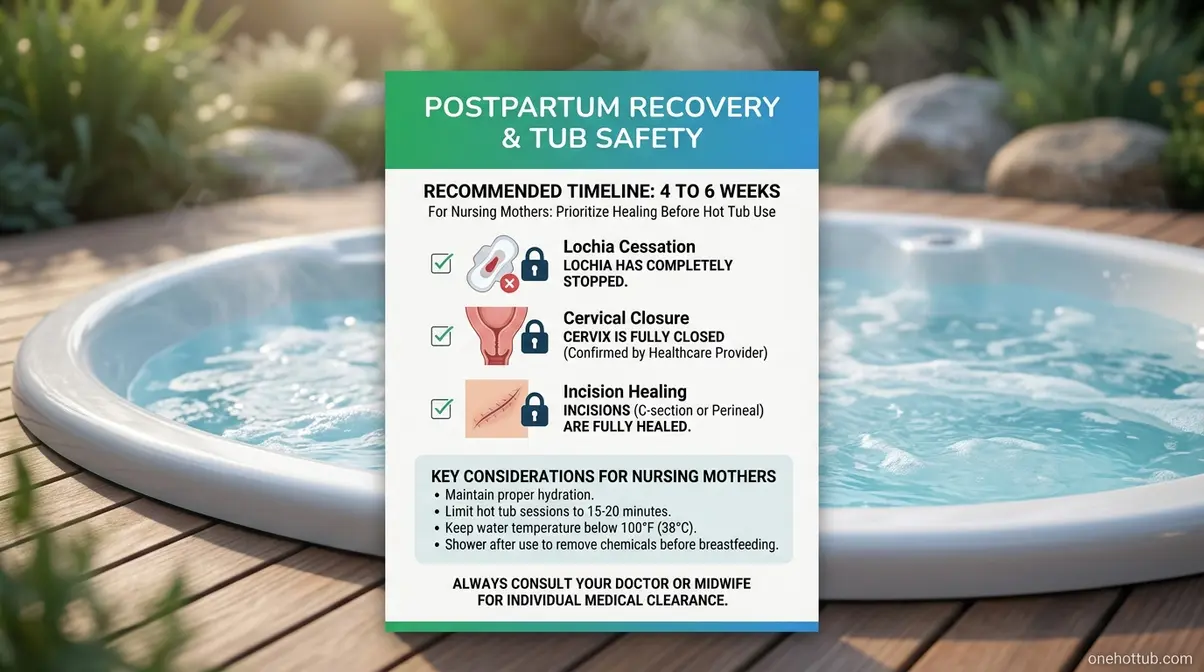
Using a hot tub while breastfeeding is safe — but only once three specific conditions are met simultaneously: your postpartum bleeding (lochia) has completely stopped, your cervix has closed, and any incisions or perineal tears have fully healed. To keep a hot tub while breastfeeding safe, you must wait at least 4-6 weeks after a vaginal birth. Meeting only two of these three conditions is not enough — all three must be true at the same time before immersion is appropriate.
Breastfeeding mothers should wait at least 4-6 weeks postpartum before using a hot tub — and only after lochia has completely stopped and any incisions or perineal tears have fully healed (NCBI Bookshelf, 2026).
This is the critical distinction that most online advice misses: “medical clearance” is not a single event at a single date. It is a checklist of three independent milestones that must all be checked simultaneously. Once you are cleared, the HEAT Protocol in Section 3 gives you the exact rules to follow every time you soak.
Caption: The timeline above shows the three conditions that must all be met before getting into a hot tub postpartum — lochia cessation, cervical closure, and full incision healing.
The timeline above shows the three conditions that must all be met before getting into a hot tub postpartum. Think of it as a three-lock door: you need all three keys, not just one or two.
The 4-6 Week Postpartum Timeline
Most mothers want a clear answer: “When exactly can I get in?” The honest answer is that it depends on three specific clinical milestones — not just the calendar.
Condition 1: Lochia has completely stopped. Lochia is the postpartum vaginal discharge that signals your uterus is healing after birth. It progresses through three distinct stages: lochia rubra (days 1-4, bright red, heavy flow from the placental site), lochia serosa (days 4-12, pinkish-brown and lighter), and lochia alba (days 10 through approximately 4-6 weeks, yellowish-white, mucus-based) (NCBI Bookshelf, 2026). Research published in PubMed shows the median total duration of lochia is 27-36 days, though it can persist up to 60 days in some women. Hot tub entry is only appropriate after lochia alba ends completely — not when it “seems lighter.”
Condition 2: Cervical closure. After birth, your cervix remains partially open as part of the healing process. This gradual closure takes several weeks, during which an open or partially open cervix creates a direct pathway for waterborne bacteria to enter the uterus. Entering a hot tub before this closes carries a real risk of serious infection.
Condition 3: Full healing of any perineal tears or episiotomies. Any break in the skin tissue must be completely healed before immersion in any body of water — pool, hot tub, or lake.
The practical guidance here is straightforward: always get explicit clearance from your OB/GYN or midwife at your 6-week postpartum appointment before entering a hot tub (Mayo Clinic). Do not self-assess based on how you feel. These three conditions cannot be confirmed by symptoms alone. You can also review the safety guide for breastfeeding and hot tubs for additional context on postpartum recovery.
Transition: Understanding the timeline is step one. But there is a specific reason why doctors are so strict about it — and it comes down to the infection risk that an open cervix creates.
Infection Risk: Why Timing Matters
Hot tubs carry a higher bacterial risk than most people realize — even a clean, well-maintained spa is not a sterile environment. The warm, turbulent water creates ideal conditions for pathogens including Pseudomonas aeruginosa (which causes hot tub rash) and Legionella (which causes Legionnaires’ disease). The CDC specifically advises checking hot tub water for proper disinfectant levels and pH before entering to prevent waterborne illness.
For postpartum mothers, the risk is compounded by two factors. First, an open or partially open cervix is a direct pathway — waterborne bacteria can travel into the uterus and potentially cause endometritis (uterine infection) or pelvic inflammatory disease, both of which require medical treatment and can derail your breastfeeding journey. Second, the postpartum period involves temporary immune changes that make infections harder to fight than they would be at other times in your life.
If you are unsure whether your lochia has truly stopped — for example, distinguishing between true cessation and occasional light spotting — wait another week and check with your provider. When in doubt, wait it out.
Transition: For most mothers after a vaginal birth, the 4-6 week window is the standard. But if you had a C-section, your timeline is different — and more conservative.
C-Section Patients: A Longer Wait
C-section patients face an additional healing requirement that extends the hot tub timeline to a minimum of 6-8 weeks, and sometimes longer. The abdominal incision must be fully closed, no longer tender, and free of any weeping or discharge before immersion in hot water.
Here is what most people do not realize: even when the external scar looks healed at 4-5 weeks, the internal layers — including the uterine wall and the fascia — may still be closing. Hot water can soften sutures and introduce bacteria at the incision site, creating infection risk that is not visible from the outside (Mayo Clinic). Clinical guidance from Centre OB/GYN explicitly prohibits hot tubs and jacuzzis for C-section patients until the incision is fully healed and confirmed by a provider.
The right approach is to ask your surgeon or OB/GYN directly at your follow-up appointment: “Is my incision fully healed enough for hot tub immersion?” Do not rely on visual inspection alone. Even if your scar looks closed at 4 weeks, your OB/GYN may advise waiting until your 8-week follow-up to confirm that internal healing is complete.
Once all three clearance conditions are met, the next concern most nursing mothers have is whether the heat will affect their breast milk — and whether those unexpected leaks in the tub are normal.
How Hot Tubs Affect Your Milk Supply
When determining is a hot tub while breastfeeding safe, many mothers worry about their milk production. Hot tubs do not directly harm your breast milk or your milk production — but they do affect your body in ways that can temporarily impact your supply. The two main mechanisms are the let-down reflex (triggered by warm water via vasodilation) and dehydration (which can reduce milk volume and alter milk composition if you do not compensate). Understanding both gives you the tools to soak safely without worrying about your supply.
Across breastfeeding communities, the consistent concern is engorgement — the uncomfortable fullness that occurs when breasts overfill with milk — and unexpected leaking in the tub. Both are real, both are common, and neither signals a problem with your supply or your milk.
The Let-Down Effect in Hot Tubs
Warm water triggers the let-down reflex — the physiological process that releases milk from your breast into the ducts — through a well-understood mechanism. When you immerse in hot water, vasodilation occurs: your blood vessels widen, blood flow to the breasts increases, and your body releases oxytocin, the hormone responsible for the milk ejection reflex. This is why many nursing mothers notice leaking, a sudden sense of fullness, or even active milk flow while soaking.
The good news: leaking in the tub is completely harmless. The milk simply disperses in the water. It does not indicate a supply problem, does not mean you are “wasting” milk, and does not signal that anything is wrong with your body or your baby’s feeding. It is simply your let-down reflex doing exactly what it is designed to do when warmth and relaxation combine.
This community experience captures it well:
“The hot tub will likely cause further engorgement in the beginning as it will likely stimulate milk production.”
This is accurate — and worth understanding. In the early weeks before your supply is regulated, the vasodilation effect can intensify the let-down and temporarily increase the sensation of fullness. This is not your supply increasing permanently; it is a short-term physiological response to heat and relaxation. Once your supply is regulated, short hot tub sessions have minimal long-term impact on your overall production.
If leaking in a shared hot tub concerns you, consider soaking immediately after a nursing or pumping session, when your breasts are at their emptiest. Some mothers wear breast pads or a soft nursing bra in the tub for comfort, though this is a personal preference rather than a medical requirement.
Transition: While leaking is harmless, many mothers worry about a more serious concern — whether the heat can actually damage or “cook” their breast milk.
Does Heat “Cook” Your Breast Milk?
This is one of the most common fears nursing mothers bring to their OB/GYN appointments — and it is based on a misunderstanding of how human physiology works. The myth, stated plainly: some mothers fear that soaking in a 100-104°F hot tub will heat the milk inside their breasts and damage its nutritional properties. This is not how your body functions.
Your body maintains a stable core temperature of approximately 98.6°F (37°C) through a process called thermoregulation. The milk inside your breast ducts is stored at your body temperature — not at the temperature of the water surrounding your skin. External heat does not directly heat milk stored in your breasts above normal body temperature. Your skin, subcutaneous tissue, and your body’s active cooling mechanisms prevent this from happening.
The milk in your breasts cannot be “cooked” by hot tub water — your body’s thermoregulation maintains internal breast tissue at normal body temperature regardless of external water temperature. Evidence-based breastfeeding guidance confirms there is no evidence that hot water exposure ruins breast milk (KellyMom, IBCLC-authored).
The actual risk is not cooked milk — it is overheating your body (hyperthermia) and dehydration, both of which can affect milk production indirectly through hormonal disruption. This is precisely why the 10-15 minute time limit and temperature ceiling exist in the HEAT Protocol. If you feel flushed, dizzy, or unusually hot while soaking, exit the tub immediately — these are signs your core temperature is rising above safe limits.
Transition: The real threat to your milk supply is not heat on your skin — it is what happens inside your body when you become dehydrated in the tub.
Dehydration and Your Milk Supply
This is the section of hot tub safety that matters most for nursing mothers — and the one most advice completely skips. Hot tubs cause fluid loss through a mechanism that catches many mothers off guard: because you are submerged in water, you do not feel yourself sweating. But your body is losing fluid through perspiration and increased respiration the entire time you soak.
Research published in PubMed Central found that “dehydration resulted in changes in milk osmolality, lactose, sodium and potassium concentrations indicative of a marked disturbance of milk secretion.” This means dehydration does not just reduce your milk volume — it alters the actual composition of your milk, affecting the balance of electrolytes and sugars your baby receives (PubMed Central, 2026).
Dehydration can alter breast milk composition — affecting osmolality, lactose, sodium, and potassium concentrations — which is why staying hydrated during and after hot tub use is critical for nursing mothers (PubMed Central, 2026).
UT Southwestern Medical Center confirms that “the amount of liquid you put into your body affects how much breast milk you produce” — stress and dehydration can measurably decrease milk supply. Breast milk is approximately 88% water, so even moderate fluid loss creates downstream effects on production.
The practical solution is straightforward: drink at least 16 oz of water before getting into the hot tub and keep additional water within reach during your soak. This is exactly why the HEAT Protocol’s “Always Hydrate” rule and “Exit after 10-15 minutes” rule exist — to prevent dehydration before it has a chance to affect your supply. The reassuring note: this is a reversible effect. Rehydrating promptly after your soak will restore normal milk production within hours for most mothers. Once your supply is regulated, short and well-hydrated hot tub sessions have minimal long-term impact.
Transition: Interestingly, the same heat that poses a dehydration risk when overused can actually be therapeutic when applied correctly — particularly for one of the most common postpartum breastfeeding challenges.
Heat Therapy for Engorgement
Here is the nuance that no competitor article covers: the same warm water that can trigger your let-down and cause fluid loss is also a clinically supported tool for managing engorgement and clogged ducts when used thoughtfully.
Research published in PMC (2026) found that alternating hot and cold compresses significantly reduces breast engorgement in lactating mothers, with statistically significant reductions in both pain and engorgement scores. A Cochrane-reviewed study on treatments for breast engorgement during lactation (PMC7388926, 2026) found that applying moist heat to the breast prior to feeding aids oxytocin uptake and helps milk flow — the same physiological mechanism that makes a warm bath or brief hot tub soak feel relieving when you are engorged.
For mothers dealing with a clogged duct — a blocked section of milk ducts that causes a hard, painful lump — brief warm immersion combined with gentle massage can help soften the blockage and encourage drainage. Clinical evidence supports heat as part of a multi-step approach to plugged ducts, alongside massage and frequent nursing or pumping.
The key word is brief. Using the hot tub as a heat therapy tool for engorgement works best as a short, targeted soak (10-15 minutes, within the HEAT Protocol limits), followed immediately by nursing or pumping to take advantage of the improved milk flow. Do not extend your session in the belief that more heat equals more relief — beyond 15 minutes, the dehydration risk outweighs the therapeutic benefit. If engorgement or clogged ducts are persistent or severe, consult your IBCLC or OB/GYN for personalized guidance.
The bottom line: your milk supply is resilient. Short, hydrated hot tub sessions will not derail it. The risk is dehydration, not the heat itself. Now that you understand what happens to your body and your milk in a hot tub, here is the exact protocol to follow every time you soak.
The HEAT Protocol: 6 Safety Rules for Nursing Moms
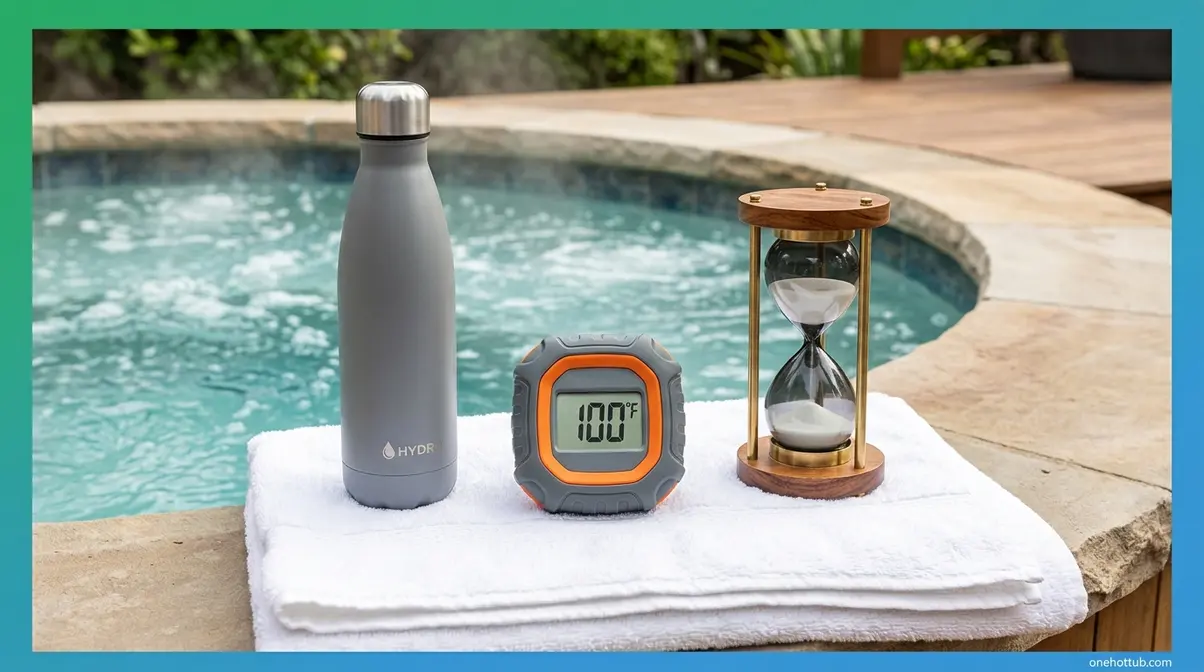
This section gives you the specific numbers and steps that most breastfeeding-and-hot-tub advice online omits entirely. The HEAT Protocol is a four-point framework — Keep water below 100°F, Exit after 10-15 minutes, Always hydrate, Thoroughly rinse breasts before nursing — expanded here into six actionable rules that cover every safety variable.
Caption: The HEAT Protocol gives nursing mothers the exact temperature, time, and hygiene steps needed to soak safely while protecting their milk supply.
After reviewing peer-reviewed lactation research, OB/GYN postpartum care guidelines, and CDC water safety standards, our evaluation found that the six rules below represent the complete safety framework for nursing mothers who have received medical clearance to use a hot tub.
Rule 1: Keep Water Below 100°F (38°C)
The temperature ceiling for nursing mothers — and for most adults — is 100°F (38°C). The CDC states that hot tub water should not exceed 104°F (40°C) for any adult user, but for postpartum and breastfeeding mothers, a more conservative ceiling of 100°F is appropriate because of the combined effects of heat on your postpartum cardiovascular system and the vasodilation-triggered let-down that becomes more pronounced at higher temperatures.
At water temperatures above 100°F, your core body temperature can rise more quickly, increasing the risk of hyperthermia (dangerous overheating) and accelerating fluid loss. Before entering any hot tub, use a thermometer or check the digital display to confirm the temperature. Many public and hotel hot tubs are set between 102-104°F — adjust the setting or wait until it cools if you have control over it. If you cannot adjust the temperature, choose a different time or location to ensure safe hot tub temperature settings.
Rule 2: Limit Sessions to 10-15 Minutes
Time in the hot tub is directly correlated with fluid loss and core temperature rise. A 10-15 minute session gives you the therapeutic and relaxation benefits of the soak without pushing your body into the dehydration zone. Beyond 15 minutes, the physiological costs — fluid loss, core temperature elevation, potential hormonal disruption — begin to outweigh the benefits, which aligns with recommended hot tub time limits.
Set a timer before you get in. This is not a guideline you can reliably track by feel, because the relaxation response from warm water makes time pass quickly and masks early dehydration signals. If you feel warm, flushed, or lightheaded before your 15 minutes are up, exit immediately — your body is telling you something important.
The 30-30-30 Rule Explained
The 30-30-30 rule is a milk supply boosting technique — it refers to a pumping method, not a hot tub guideline. The method involves pumping for 30 minutes, resting for 30 minutes, then pumping for another 30 minutes. It mimics cluster feeding by removing milk frequently within a short window, signaling your body to increase production.
This technique is sometimes called power pumping and is typically used by mothers who want to build or rebuild their supply. It is unrelated to hot tub safety — the “30-30-30” in breastfeeding contexts is entirely about pumping frequency and duration, not heat exposure or soak time. If you are searching for this rule in the context of hot tubs, the relevant limits for nursing mothers are the 100°F temperature ceiling and the 10-15 minute session limit described above.
Rule 3: Hydrate Before and After
Hydration is the single most important protective factor for your milk supply during a hot tub session. Drink at least 16 oz of water before getting in. Keep a water bottle within reach during your soak and sip regularly — even if you do not feel thirsty, because the warm water suppresses thirst perception. Drink another 8-16 oz after exiting.
As confirmed by research in PubMed Central and UT Southwestern Medical Center, dehydration directly alters milk composition and can reduce supply. Hydration before, during, and after your soak is your most effective defense against both of those outcomes. Avoid alcohol before or during a hot tub session — it accelerates dehydration and impairs your ability to recognize overheating symptoms.
Rule 4: Rinse Before Nursing
This is the step that virtually no other guide mentions — and it matters. After exiting the hot tub, rinse your nipples and areola thoroughly with clean, fresh water before nursing your baby. This removes chlorine, bromine, and any chemical disinfectants from the water that may have come into contact with your breast tissue.
While the Oregon Health Authority confirms that the CDC is not aware of direct risks to infants from breastfeeding after pool or hot tub use at normal disinfectant levels, the precautionary approach is straightforward and takes less than 30 seconds. Chlorine and bromine can alter the taste of your skin, which may cause your baby to latch differently or pull off unexpectedly. A quick rinse with fresh water eliminates this variable entirely and is simply good practice.
- Step-by-step post-soak rinse routine:
- Exit the hot tub and pat yourself dry
- Move to a shower or sink with fresh water
- Rinse both nipples and areola with warm clean water for 15-20 seconds each
- Pat dry with a clean towel
- Allow a few minutes for your body temperature to normalize before nursing — this also gives the let-down reflex time to settle
Rule 5: Keep Babies Out of the Tub
This rule has no exceptions. Infants and young children cannot regulate their body temperature the way adults can — their thermoregulatory systems are immature, and they overheat rapidly in water above normal body temperature. Exposing a baby to water temperatures above 100°F can cause hyperthermia, which can lead to heat stroke, dehydration, loss of consciousness, and in severe cases, life-threatening complications.
The American Academy of Pediatrics and public health authorities consistently advise against hot tub use for children under 5 years old. For newborns and young infants, the risk is even more acute — their thin skin, small body mass, and inability to communicate distress make them particularly vulnerable. No nursing-related benefit justifies this risk. If you want to enjoy a hot tub soak, arrange for your baby to be cared for separately during that time.
Rule 6: Check the Water Quality
Before entering any hot tub — especially a public, hotel, or shared residential spa — verify that the water quality meets safety standards. The CDC recommends checking that free chlorine levels are between 3-10 ppm (or bromine between 4-8 ppm) and that pH is between 7.0-7.8 (CDC, 2026). Test strips are inexpensive and widely available.
Hot tubs require higher disinfectant concentrations than pools because the warm water causes chemicals to dissipate more quickly. An improperly maintained hot tub — one with low chlorine or incorrect pH — is a breeding ground for Pseudomonas aeruginosa and Legionella, both of which pose genuine health risks. For your own hot tub, test the water before each use. For public or hotel hot tubs, look for a posted inspection record or ask staff when the water was last tested. If the water looks cloudy, smells strongly of chemicals, or lacks any posted maintenance record, skip it.
When Hot Tubs Remain Off-Limits
Even after receiving your 6-week postpartum clearance, certain situations make hot tub use inappropriate — temporarily or permanently. Recognizing these conditions protects both your recovery and your milk supply.
Warning Signs to Exit Immediately
Your body will signal when a hot tub session has gone too far. Exit immediately if you experience any of the following:
- Dizziness or lightheadedness — your core temperature is rising above safe limits
- Nausea — a sign of early heat stress or hyperthermia
- Flushing or a racing heartbeat — your cardiovascular system is working harder than it should
- Sudden, intense breast fullness or painful let-down — especially in the early weeks before supply regulation
- Any vaginal bleeding or increased discharge — which can indicate the hot tub is irritating healing tissue
Do not wait to see if the symptom passes. Exit the tub, move to a cool area, drink water, and lie down if needed. If symptoms persist for more than a few minutes or worsen after exiting, contact your healthcare provider.
When Hot Tubs Are Still Unsafe
Receiving your general 6-week clearance does not automatically mean hot tub use is safe in every circumstance. These specific situations warrant an additional conversation with your provider before soaking:
Active mastitis or a severe clogged duct. While gentle heat can help mild engorgement, a hot tub is not appropriate when you have an active breast infection (mastitis). The combination of heat, dehydration risk, and bacterial exposure in the water can worsen the infection. Consult your OB/GYN or IBCLC first.
Ongoing lochia or unusual postpartum bleeding. If you are still experiencing any vaginal discharge beyond 6 weeks, or if your discharge has increased or changed color, your cervix may not be fully healed. Do not enter a hot tub until this is evaluated by your provider.
Any open skin, unhealed tear, or incision. This applies to perineal tears, episiotomies, and C-section incisions. Even a small area of unhealed tissue is a potential infection entry point in a hot tub environment.
Fever or signs of postpartum infection. If you have a fever above 100.4°F, unusual pain, or foul-smelling discharge, see your healthcare provider immediately — these are warning signs of postpartum infection, and a hot tub will not help.
When in doubt, one question to your OB/GYN or midwife at your postpartum appointment takes 30 seconds and gives you the clarity you need: “Is it safe for me specifically to use a hot tub right now?”
Frequently Asked Questions
Can breastfeeding moms go in a hot tub?
Yes, breastfeeding moms can use a hot tub — but only after receiving medical clearance, typically at the 4-6 week postpartum appointment. Three conditions must all be met: lochia has completely stopped, the cervix has closed, and any incisions or tears have fully healed. C-section patients typically wait 6-8 weeks minimum. Once cleared, follow the HEAT Protocol: stay below 100°F, limit sessions to 10-15 minutes (CDC guidelines), hydrate aggressively, and rinse your breasts with fresh water before nursing. Always confirm clearance with your OB/GYN or midwife before your first soak.
What is the 30-30-30 rule for breastfeeding?
The 30-30-30 rule is a pumping technique designed to boost milk supply, not a hot tub guideline. It involves pumping for 30 minutes, resting for 30 minutes, then pumping for another 30 minutes. This mimics cluster feeding by removing milk frequently in a short window, signaling the body to produce more. It is a variation of power pumping, typically recommended for mothers rebuilding a low supply. If you encountered this term while researching hot tub safety, the relevant limits for nursing mothers are a 100°F temperature ceiling and a 10-15 minute session time limit.
Do hot tubs increase milk supply?
Hot tubs do not directly increase milk supply, but they can temporarily stimulate the let-down reflex through vasodilation and oxytocin release — which is why many mothers experience leaking or a sense of fullness while soaking. This is a short-term physiological response to heat and relaxation, not a lasting increase in production. The more significant concern runs in the opposite direction: dehydration from hot tub use can temporarily reduce supply and alter milk composition, affecting osmolality, lactose, and electrolyte balance (PubMed Central, 2026). Staying well-hydrated before, during, and after your soak prevents this effect.
When is postpartum hot tub use safe?
Most mothers can safely use a hot tub at 4-6 weeks postpartum after a vaginal birth, once all three clearance conditions are met: lochia has fully stopped, the cervix has closed, and any perineal tears or episiotomies have healed completely. C-section patients should wait a minimum of 6-8 weeks, and only after a surgeon or OB/GYN has confirmed that the incision — including internal layers — is fully healed. Do not self-assess based on how the scar looks externally. Your 6-week postpartum appointment is the right time to ask your provider for explicit clearance.
Does chlorine affect breast milk?
There is no confirmed evidence that chlorine from hot tub water passes into breast milk at normal disinfectant levels. The Oregon Health Authority notes that the CDC is not aware of risks to infants related to mothers breastfeeding after pool or hot tub use. However, chlorine and bromine residue on the nipple and areola can alter the taste of your skin, which may cause your baby to latch differently. The precautionary step is simple: rinse your nipples and areola thoroughly with fresh water for 15-20 seconds before nursing after a soak. This removes any surface residue and takes less than a minute.
Can hot tubs cause clogged ducts?
A hot tub itself does not directly cause clogged ducts or mastitis, but certain conditions related to hot tub use can contribute. Dehydration — the most common hot tub risk for nursing mothers — can thicken breast milk slightly, which may make ducts more prone to blockage in some women. Conversely, the heat and vasodilation from a brief soak can actually help relieve mild engorgement and support milk flow when used within the HEAT Protocol’s time and temperature limits. However, if you already have mastitis or a severe clogged duct, avoid hot tubs until the infection is resolved and consult your IBCLC or OB/GYN for treatment guidance.
Next Steps: Get Cleared and Follow Protocol
Ultimately, keeping a hot tub while breastfeeding safe comes down to timing, hydration, and preparation. Hot tub use while breastfeeding is safe — and for many nursing mothers, a well-earned moment of recovery and relaxation — when approached with the right framework. The evidence is clear: the heat does not damage your milk, the let-down response is harmless, and dehydration is the only real supply risk, one that is entirely preventable with consistent hydration. The 4-6 week postpartum clearance window exists to protect you from infection, not to deprive you of recovery time that you genuinely need.
The HEAT Protocol — Keep water below 100°F, Exit after 10-15 minutes, Always hydrate, Thoroughly rinse breasts before nursing — is your practical framework for every soak. It bridges the gap between OB/GYN postpartum recovery science and lactation physiology, giving you the specific numbers and steps that protect both your healing body and your milk supply simultaneously.
Your next step is simple: bring this guide to your 6-week postpartum appointment and ask your OB/GYN or midwife directly — “Am I cleared for hot tub use?” Once you have that confirmation, follow the HEAT Protocol every time, keep your sessions short and hydrated, and enjoy the soak. You have earned it.