

Table of Contents - Falling Asleep in a Hot Tub: 5 Dangers You Must Know
This blog post may contain affiliate links. As an Amazon Associate I earn from qualifying purchases.
⚕️ Medical Disclaimer: The information in this article is for educational purposes only and does not constitute medical advice. Always consult a qualified healthcare provider before using a hot tub if you have any underlying health condition, take medications, or have concerns about your cardiovascular health. In an emergency, call 911 immediately.
Medically Reviewed by a Board-Certified Emergency Medicine Physician
Every year, dozens of people die in hot tub-related drownings in the United States — and a significant number of those deaths involve someone who simply fell asleep (U.S. Consumer Product Safety Commission, 2026). If you’ve ever nodded off in the warm water, you’re not alone. The risk is far more serious than most people realize.
The problem with falling asleep in a hot tub isn’t just that it feels risky — it’s that most people don’t understand why it’s dangerous until something goes wrong. The heat, the jets, and the buoyancy create a uniquely sedating environment that can suppress the warning signals your body normally relies on to keep you safe.
By the end of this guide, you’ll understand the exact physiological dangers of falling asleep in a hot tub, identify whether you’re in a high-risk group, and have a simple safety framework you can act on immediately. This guide covers five core dangers, four high-risk medical conditions, and a practical 15-minute safety system — all backed by Tier-1 sources from the CDC, CPSC, and NIH. This guide is for anyone who owns a hot tub, recently used one, or wants to understand the falling asleep in hot tub dangers before their next soak. If you are currently experiencing a medical emergency, stop reading and call 911.
Key Takeaways: Falling Asleep in a Hot Tub Dangers
Falling asleep in a hot tub can be fatal — the U.S. Consumer Product Safety Commission links hot tub drownings to water-induced drowsiness and unconsciousness (CPSC, 2026).
- Drowning is the most immediate risk: unconsciousness can cause your head to slip underwater in seconds, even in shallow water
- Hyperthermia (dangerous overheating) can occur in as little as 15–20 minutes at 104°F — the maximum legal hot tub temperature
- Cardiovascular strain is especially dangerous for adults over 50 or those on blood pressure medications
- The Four Outcomes Framework: When you doze off in a hot tub, you either jolt awake, wake up dizzy, wake up relaxed — or never wake up
- The 15-Minute Rule is the single most important safety guideline for any hot tub soak
The Real Dangers of Falling Asleep in a Hot Tub
Falling asleep in a hot tub exposes you to four life-threatening dangers: drowning, hyperthermia (a dangerous rise in core body temperature), cardiovascular strain, and severe dehydration. The U.S. Consumer Product Safety Commission (CPSC) documents dozens of hot tub-related drowning fatalities annually, many directly linked to water-induced drowsiness and unconsciousness. Understanding exactly what happens to your body — and why — is the first step toward preventing a tragedy.
Safety data from the CPSC confirms that these aren’t theoretical risks. They appear in real fatality reports, year after year, involving real people who believed they were simply relaxing.
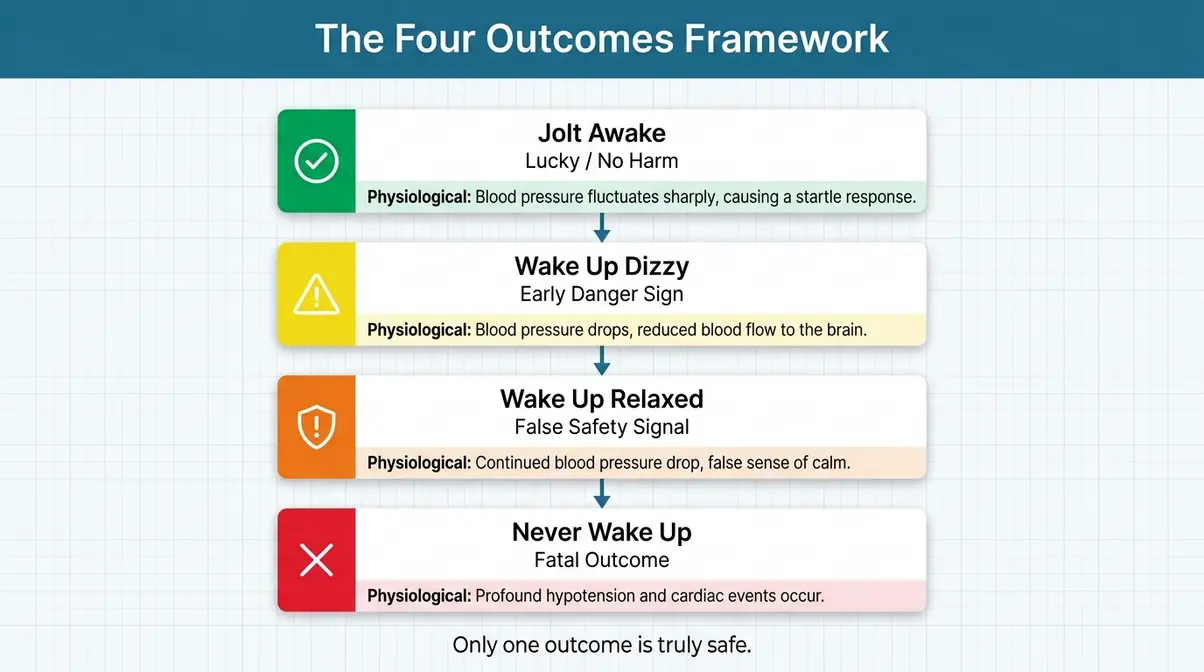
“Either You Jolt Awake, Wake Up Dizzy, Wake Up Relaxed, Or Never Wake Up.”
— A description shared widely among hot tub users and safety experts
These four outcomes represent the real spectrum of risk when you doze off in hot water — and only one of them is safe. This is The Four Outcomes Framework: a way of understanding that falling asleep in a hot tub is never a controlled, neutral event. Here’s what each outcome means physiologically, and why the difference between them is often not a matter of fitness or health — it’s a matter of timing and luck.
Drowning: The Fastest Immediate Threat
Most people assume drowning requires deep water. It doesn’t. Drowning can occur in as little as 2 inches of water — a fact that stuns many hot tub owners who believe the shallow depth (typically 3.5 to 4 feet) provides some protection. It does not.
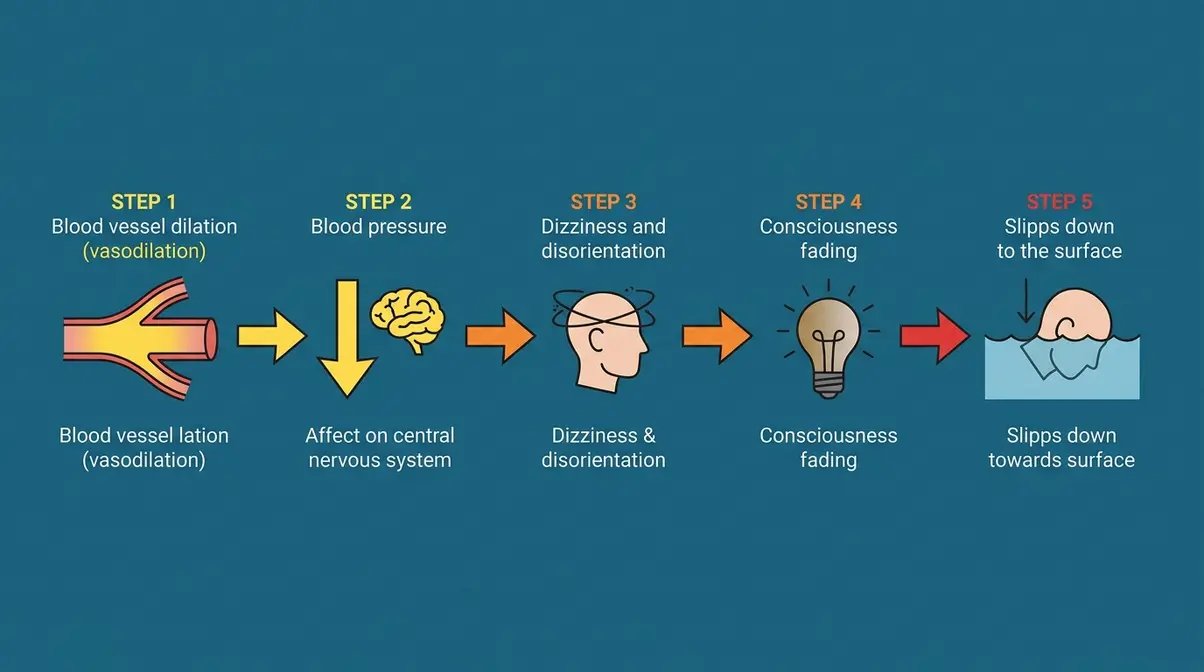
Here is the physiological sequence that leads to drowning when you fall asleep in a hot tub:
- Heat causes vasodilation — your blood vessels dilate (widen) to release heat through the skin, and blood pools toward your extremities.
- Blood pressure drops — with blood redistributed away from your brain, blood pressure falls.
- Dizziness and disorientation follow — this is the “wake up dizzy” outcome from The Four Outcomes Framework.
- Consciousness becomes unreliable — at this stage, the body can slip into a microsleep or full unconsciousness.
- Your head can slip underwater — without muscular control, there is nothing to stop it.
What makes hot tubs uniquely dangerous compared to a warm bath is the jets. The constant jet stimulation masks the sensation of discomfort — the aching muscles, the rising heat — that would normally wake you. A warm bath becomes uncomfortable quickly. A hot tub, by design, keeps you comfortable long past the point of safety. CPSC warnings on hot tub drowning risks confirm that water temperatures exceeding 104°F can induce drowsiness and lead to unconsciousness, significantly increasing drowning risk (CPSC, 2026).
The CPSC notes that many hot tub fatalities involve compounding factors: alcohol use, sleep deprivation, or prescription medications that lower blood pressure or increase sedation. These factors dramatically shorten the window between “feeling relaxed” and “losing consciousness.” This isn’t hypothetical — the CPSC documents these outcomes in real fatality reports.
Hyperthermia: Core Temperature Spikes
“Hot tubs set to 104°F — the maximum allowed temperature — can raise your core body temperature to dangerous levels in as little as 15 minutes” (Mayo Clinic, 2026). That sentence deserves to sit on its own.
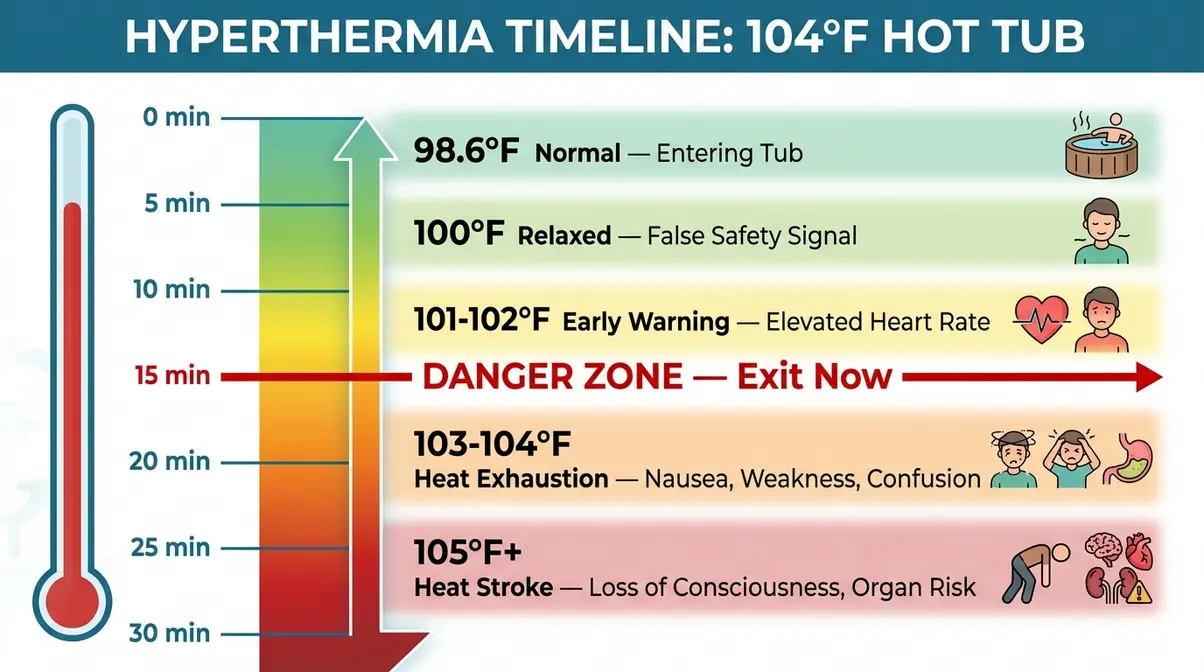
Hyperthermia (a dangerous rise in core body temperature) is the second major danger of falling asleep in a hot tub. Your core body temperature (the temperature of your internal organs, normally around 98.6°F) begins to rise the moment you enter hot water. In a tub set to 104°F, research suggests core temperature rises approximately 1°F every 5 minutes.
Here is why that timeline matters:
- At 100°F core temperature: You feel warm and relaxed — this is the false safety signal
- At 101–102°F: Sweating increases, heart rate elevates, early fatigue sets in
- At 103–104°F: Heat exhaustion begins — nausea, weakness, confusion
- At 105°F and above: Heat stroke (a medical emergency) — confusion, loss of consciousness, organ damage
NIH peer-reviewed study on hot tub fatalities documents the pathophysiology of heat stroke, the cardiovascular response to hot water immersion, and the toxicological factors that accelerate hyperthermia in hot tub fatalities (2026). If you fall asleep and remain in the water past the 15–20 minute mark, your core temperature may already be in the danger zone — and you won’t feel it, because the heat suppresses the very warning signals designed to protect you.
Cardiovascular Strain on Your Heart
Hot water immersion forces your heart to work significantly harder than it does at rest. As your blood vessels dilate (vasodilation), your heart must pump faster and with more force to maintain adequate circulation to your brain and vital organs. This overtaxes the cardiovascular system — a phrase that has real physiological meaning.
For healthy adults, this increased cardiac workload is manageable for short periods. But when you fall asleep and lose the ability to monitor how you feel, the strain continues unchecked. Research published in peer-reviewed journals indicates that blood pressure can drop by 10–20 mmHg (millimeters of mercury, the unit used to measure blood pressure) during hot water immersion — a significant drop that can cause dizziness, fainting, or cardiac stress in susceptible individuals.
The National Institute on Aging reports that adults over 50 face compounded risk because aging naturally reduces the cardiovascular system’s ability to adapt to rapid temperature and pressure changes. The heart has less reserve capacity, blood vessels are less elastic, and the autonomic nervous system (the part of your nervous system that regulates heart rate and blood pressure automatically) responds more slowly. Falling asleep removes the last safeguard — your conscious ability to get out.
Dehydration and Electrolyte Loss
Dehydration is the most underestimated of the falling asleep in hot tub dangers — partly because being surrounded by water makes it feel impossible. But your body loses fluid rapidly through sweating in a hot tub, even though you can’t see the sweat washing away.
In a 104°F hot tub, the body can lose a meaningful amount of fluid through perspiration in as little as 15–20 minutes. Electrolytes (minerals like sodium and potassium that regulate nerve and muscle function) are lost alongside that fluid. When electrolyte levels drop, the consequences include muscle cramps, confusion, rapid heartbeat, and in severe cases, loss of consciousness.
The danger compounds when you fall asleep: you lose the awareness to recognize thirst, the ability to exit the water, and the muscle control that keeps your head above the surface. Dehydration also lowers blood pressure, which accelerates the drowning risk described above. According to the CDC, dehydration significantly impairs cognitive function and physical coordination — two capabilities you critically need to exit a hot tub safely (falling asleep dangers).
Who Faces the Highest Risk of Hot Tub Dangers
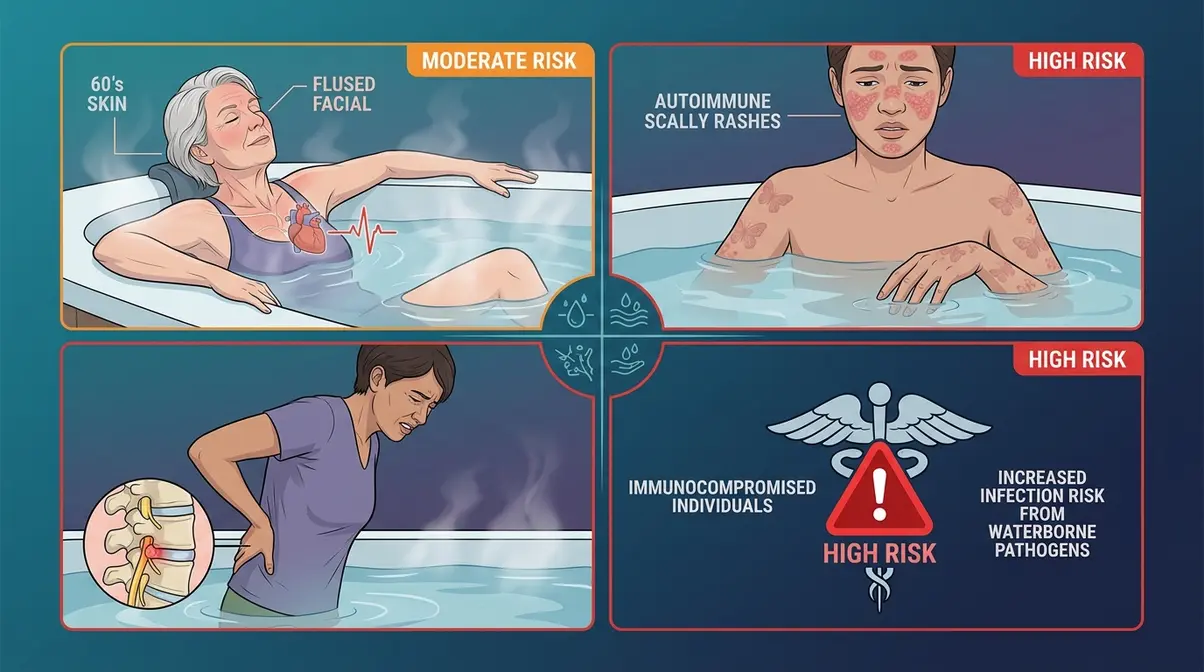
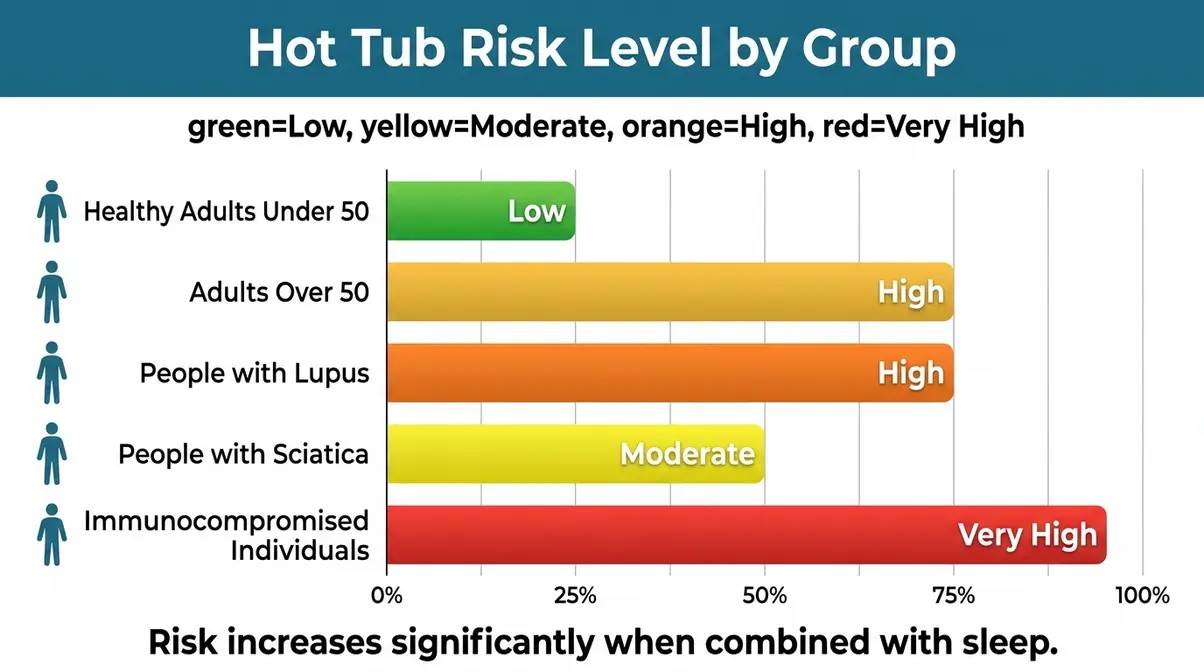
Certain groups face dramatically elevated risk when using a hot tub — and that risk multiplies if they fall asleep. Safety data from the CPSC and peer-reviewed medical literature consistently identify four high-risk populations. If you belong to any of these groups, consult a qualified healthcare provider before using a hot tub.
Adults Over 50: Cardiovascular Risks
The cardiovascular system changes with age in ways that make hot tub use genuinely more risky after 50. The National Institute on Aging reports that aging reduces the heart’s maximum pumping capacity, stiffens arterial walls, and slows the autonomic responses that regulate blood pressure. In practical terms: a hot tub that a healthy 30-year-old tolerates for 20 minutes may push a 65-year-old into cardiovascular distress in 10.
Adults over 50 are also more likely to take medications — antihypertensives (blood pressure drugs), diuretics (water pills), or beta-blockers — that interact dangerously with heat exposure. These medications can amplify blood pressure drops, increase dehydration risk, and blunt the physical warning signals that would normally prompt someone to exit the water. The American Heart Association advises that people with known cardiovascular conditions consult their physician before hot tub use.
Hot Tubs and Lupus: Heat Trigger Risks
Lupus (systemic lupus erythematosus, or SLE) is an autoimmune disease in which the immune system attacks the body’s own tissues. Heat is a well-documented trigger for lupus flares — episodes in which symptoms suddenly worsen. For people with lupus, a hot tub soak can trigger a flare that includes joint pain, extreme fatigue, skin rashes, and in serious cases, inflammation of the heart or kidneys.
The Lupus Foundation of America notes that many lupus patients also experience photosensitivity and circulatory issues that make hot water immersion particularly dangerous. Falling asleep in this context is especially risky because a flare can begin subtly — with fatigue that feels like relaxation — before escalating. Medical consensus indicates that people with lupus should avoid prolonged hot tub use and should always consult their rheumatologist before soaking.
Will a Hot Tub Help a Sciatic Nerve?
Sciatica (pain caused by irritation of the sciatic nerve, which runs from the lower back down each leg) is one of the most common reasons people use hot tubs therapeutically. A hot tub can provide short-term relief from sciatica pain, but prolonged soaking carries real risks. Heat relaxes the surrounding muscles and temporarily reduces nerve irritation, which is why it feels so effective. However, this relief creates a false sense of security.
Prolonged heat exposure can increase inflammation around an already irritated nerve, potentially worsening symptoms after the soak. More critically, the pain relief from heat means people with sciatica are more likely to stay in the hot tub longer than is safe — and more likely to fall asleep, because the relief itself reduces discomfort cues. Research suggests that heat therapy for sciatica is most beneficial in short, controlled sessions (10–15 minutes), not extended open-ended soaks. Always consult a healthcare provider or physical therapist before using a hot tub to manage sciatica.
Is a Hot Tub Bad for Folliculitis?
Yes — hot tubs are both a cause and a worsening factor for folliculitis. Hot tub folliculitis is a skin infection caused by Pseudomonas aeruginosa (a bacteria that thrives in inadequately sanitized hot tubs) infecting the hair follicles. It presents as a red, itchy rash — often called “hot tub rash” or “hot tub syndrome” — that appears 12–48 hours after exposure.
The CDC identifies this pathogen as the primary cause of hot tub-related skin infections, noting that the warm, turbulent water creates ideal conditions for bacterial growth if chlorine or bromine levels are not properly maintained (CDC, 2026). If you already have folliculitis or an open skin wound, soaking in a hot tub introduces additional bacterial exposure and can significantly worsen the infection. Falling asleep in a hot tub dramatically increases exposure time — and therefore the likelihood of infection. Immunocompromised individuals, including those with lupus or diabetes, face the highest risk of severe or systemic infection. Do not use a hot tub if you have active folliculitis without medical clearance, and always verify water chemistry before soaking.
The 15-Minute Rule and How to Soak Safely
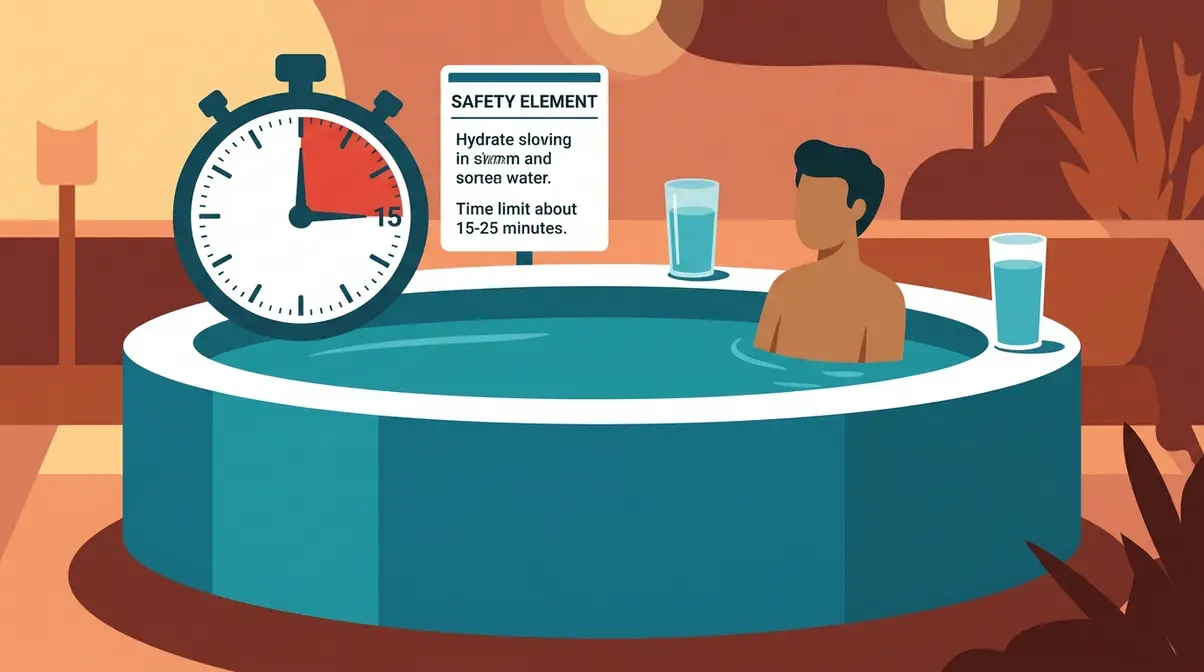
The good news: hot tub use is genuinely safe when you follow a few clear, evidence-based guidelines. The same physiological mechanisms that make falling asleep dangerous become manageable when you control time, temperature, and your physical state. Here is exactly how to do that.
Why Is There a 15-Minute Hot Tub Rule?
The 15-minute rule exists because your core body temperature rises approximately 1°F every 5 minutes in a 104°F hot tub. This is the single most cited hot tub safety guideline — and it exists for a precise physiological reason, not an arbitrary one. At that rate, 15 minutes of immersion raises your core temperature by roughly 3°F — from a normal 98.6°F to approximately 101.6°F, approaching the threshold where early heat exhaustion symptoms begin.
The CPSC and most major health organizations recommend limiting soaks to 15 minutes at maximum temperature, or up to 20 minutes at lower temperatures (below 100°F). After exiting, allow your core temperature to return to normal before re-entering. This is a physiologically grounded safety ceiling. Beyond 15 minutes, the risk of hyperthermia, cardiovascular strain, and drowsiness increases significantly. Peer-reviewed research confirms that exceeding this window significantly increases hyperthermia risk, particularly for individuals with cardiovascular conditions or those who have consumed alcohol (NIH peer-reviewed study on hot tub fatalities, 2026). Lower water temperatures (98–100°F) allow for slightly longer soaks, but the 15-minute rule remains the safest default for all users.
Alcohol, Medications, and Hot Tubs
Alcohol and hot tubs are one of the most dangerous combinations in recreational safety. Alcohol is a vasodilator — it causes blood vessels to widen, exactly as heat does. The two together create a compounded blood pressure drop that can cause sudden dizziness or unconsciousness far faster than either factor alone.
Alcohol also impairs judgment and suppresses the arousal response — the mental alert that wakes you when something is wrong. This means that someone who has been drinking is not only more likely to fall asleep in a hot tub, but also less likely to jolt awake before their head slips underwater. The CPSC’s fatality data consistently shows alcohol as a contributing factor in a significant proportion of hot tub drowning deaths.
Certain prescription medications carry similar risks:
- Antihypertensives (blood pressure medications): Amplify the blood pressure drop from heat, increasing fainting risk
- Sedatives and sleep aids (benzodiazepines, antihistamines): Directly increase drowsiness and suppress the arousal response
- Diuretics (water pills): Accelerate dehydration in a hot tub environment
- Muscle relaxants: Compound the muscle relaxation from heat, increasing risk of positional loss of consciousness
If you take any of these medications, consult your prescribing physician before using a hot tub. Do not assume that a brief soak is safe without medical guidance.
Temperature, Hydration, Soaking Alone
Three additional factors significantly affect hot tub safety:
Temperature: The maximum legal hot tub temperature in the United States is 104°F. Setting your tub to 98–100°F meaningfully reduces hyperthermia risk while still providing therapeutic benefit. Lower temperatures extend the safe soak window and are strongly recommended for older adults and those with medical conditions.
Hydration: Drink 8–16 ounces of water before entering a hot tub and keep water accessible during your soak. Avoid alcohol, caffeine, and sugary drinks as pre-soak hydration — they accelerate fluid loss rather than preventing it.
Soaking alone: Never soak alone if you are in a high-risk group. A companion can recognize early warning signs — slurred speech, unusual stillness, disorientation — and respond before a situation becomes fatal. The CPSC specifically recommends that hot tub users never soak alone, particularly at night.
Your 5-Point Hot Tub Safety Checklist
Follow this checklist before every soak to reduce your risk to a manageable level:
- Set a timer for 15 minutes — exit the tub when it goes off, regardless of how you feel
- Drink a glass of water before entering and keep water within reach
- Avoid alcohol and sedating medications for at least 2 hours before soaking
- Check the water temperature — stay at or below 104°F; consider 100°F if you are over 50 or have a medical condition
- Never soak alone at night — always have someone aware of your location and soak duration
What to Do If You Start Feeling Drowsy
Drowsiness in a hot tub is not a sign that you’re relaxing well — it is an early warning signal from your body that your core temperature and blood pressure are shifting into a dangerous range. Recognizing it and acting immediately is the difference between “woke up dizzy” and a far worse outcome. To avoid the worst falling asleep in hot tub dangers, you must treat drowsiness as an immediate medical alert.
If you feel drowsy, dizzy, or unusually heavy-limbed, follow these steps immediately:
- Tell someone — if you are not alone, alert your companion before attempting to exit
- Grip the edge of the tub firmly — vasodilation may have reduced your coordination more than you realize
- Exit slowly — stand up gradually to avoid orthostatic hypotension (a sudden blood pressure drop when you rise from hot water that can cause fainting)
- Sit on the edge for 30–60 seconds before attempting to stand fully upright
- Move to a cool, shaded area — do not lie down in direct sun, which can worsen overheating
- Drink cold water immediately — small sips, not a large amount at once
- If symptoms persist or worsen — nausea, confusion, chest pain, or loss of coordination — call 911
Common mistakes people make at this stage:
- Deciding to “just rest for a minute” with their head back against the tub edge — this is how people slip underwater
- Assuming dizziness will pass on its own if they stay still in the water — it will not; the heat continues to affect your body
- Exiting too quickly and standing upright immediately — the blood pressure drop from rapid position change can cause a blackout at the tub edge
The CPSC’s safety guidance emphasizes that drowsiness in hot water is a medical signal, not a comfort indicator. Trust it, and exit.
When to Skip the Hot Tub Entirely
Some situations call for avoiding hot tub use altogether — not just modifying how you use it. Recognizing these scenarios is a core part of responsible hot tub ownership.
Avoid hot tub use entirely if:
- You are pregnant — heat exposure above 101°F has been associated with neural tube defects in early pregnancy (American College of Obstetricians and Gynecologists). Consult your OB-GYN before any hot tub use during pregnancy.
- You have active folliculitis, an open wound, or a skin infection — hot tub water can worsen existing infections and introduce new bacterial pathogens
- You are currently experiencing a lupus flare — heat is a documented flare trigger; soaking during active symptoms can significantly worsen the episode
- You are severely sleep-deprived — sleep deprivation impairs the arousal response, meaning you are far more likely to fall into a deep sleep in the tub and far less likely to wake up in time
- You have recently consumed alcohol — wait at least 2–3 hours after drinking before considering a soak, and even then, keep it brief and supervised
- You are taking new medications — any new prescription, particularly one that affects blood pressure, sedation, or fluid balance, requires a conversation with your doctor before hot tub use
- You are alone and it is late at night — fatigue, reduced alertness, and the absence of a companion dramatically increase risk
A note on the “I’ve done it before” reasoning: Many people who have fallen asleep in a hot tub and woken up fine believe the experience proves it is safe. It doesn’t. It means they experienced the “jolt awake” or “wake up relaxed” outcome from The Four Outcomes Framework — which is largely a matter of timing, not safety. Every additional time increases cumulative risk.
Frequently Asked Questions
What Happens If I Fall Asleep?
Falling asleep in a hot tub triggers a dangerous physiological chain reaction that can lead to drowning, hyperthermia, or cardiovascular collapse. As your body temperature rises and blood pressure drops from heat-induced vasodilation, your ability to maintain consciousness becomes unreliable. Your head can slip underwater without any warning. The CPSC documents dozens of hot tub-related fatalities annually linked to water-induced unconsciousness (CPSC, 2026). The outcome depends on how quickly these processes advance — which is why the risk is never trivial, even for healthy adults.
Are Hot Tubs Bad for Lupus?
Hot tubs are generally not recommended for people with lupus (systemic lupus erythematosus). Heat is a well-documented trigger for lupus flares — episodes in which immune activity spikes and symptoms worsen significantly. The Lupus Foundation of America notes that heat, UV exposure, and physical stress can all initiate flares. Even a brief hot tub soak can trigger joint inflammation, extreme fatigue, and in serious cases, cardiac or renal involvement. People with lupus should consult their rheumatologist before any hot tub use, and should avoid soaking during active flares entirely.
What Is Hot Tub Syndrome?
“Hot tub syndrome” refers to hot tub folliculitis, a skin infection caused by Pseudomonas aeruginosa bacteria in poorly maintained hot tub water. It presents as a red, bumpy, itchy rash — typically appearing 12–48 hours after exposure — concentrated in areas covered by a swimsuit. The warm, turbulent water of a hot tub creates ideal conditions for bacterial growth when chlorine or bromine levels drop below safe thresholds. The CDC recommends regular water chemistry testing and maintaining proper sanitizer levels to prevent it. Most cases resolve on their own within 7–10 days, but immunocompromised individuals may require antibiotic treatment.
Why Should People Over 50 Avoid Use?
People over 50 are not prohibited from hot tubs, but they face significantly elevated risk that requires additional precautions. Aging reduces the heart’s maximum pumping capacity, stiffens blood vessels, and slows the autonomic responses that regulate blood pressure during temperature changes. The National Institute on Aging notes these changes make cardiovascular stress from hot water immersion harder to manage. Additionally, many adults over 50 take medications — antihypertensives, diuretics, or sedatives — that amplify heat-related blood pressure drops. The recommendation is not to avoid hot tubs entirely, but to use lower temperatures (98–100°F), shorter sessions (under 15 minutes), and always with a companion present.
What Are the 7 Signs of Lupus?
The seven most common signs of lupus include: (1) a butterfly-shaped facial rash across the cheeks and nose, (2) joint pain and swelling, (3) extreme fatigue, (4) skin rashes that worsen with sun exposure, (5) fever without an obvious cause, (6) chest pain during deep breathing (pleuritis), and (7) hair loss. The Lupus Foundation of America notes that symptoms vary widely between individuals and often come and go in flares (Lupus Foundation of America, 2026). If you recognize these symptoms in yourself, consult a rheumatologist — lupus requires professional diagnosis and management. Hot tub use should be discussed with your doctor as part of your overall treatment plan.
Can Hot Tubs Cause Dehydration?
Yes, falling asleep in a hot tub can cause severe dehydration. The hot water induces heavy sweating, which you may not notice while submerged. If you are asleep, you cannot respond to the body’s natural thirst signals. This rapid fluid loss drops your blood pressure and increases the risk of fainting or cardiovascular strain. Always hydrate before soaking and keep water nearby.
How to Spot High Core Temperature?
Early signs that your core temperature is rising dangerously include dizziness, nausea, extreme fatigue, and a rapid heartbeat. If you feel unusually heavy-limbed or confused, your body is entering heat exhaustion. Because the hot tub’s jets and warmth can mask these symptoms, it is critical to adhere strictly to the 15-minute rule rather than relying solely on how you feel.
Does Water Prevent Fainting?
Drinking water helps maintain your blood volume, which can reduce the risk of fainting, but it is not a foolproof preventative measure. Fainting in a hot tub is primarily caused by heat-induced vasodilation—where blood vessels widen and drop your blood pressure—combined with the sudden gravity shift when you stand up. Staying hydrated mitigates this, but you must still exit the water slowly.
The Bottom Line on Hot Tub Sleep Dangers
For most healthy adults, hot tubs are safe and genuinely therapeutic — when used correctly. The dangers of falling asleep in a hot tub are real, documented, and preventable. The CPSC’s fatality data shows these deaths are not random acts of bad luck; they follow predictable patterns involving heat exposure beyond the 15-minute window, alcohol or medication use, and the absence of a companion.
The Four Outcomes Framework puts the risk in plain terms: every time you doze off in a hot tub, you are entering a scenario with four possible endings. Three of them involve waking up — but only one is truly safe. The other two are warning signs of a near-miss your body may not give you again.
The 15-minute rule, proper hydration, avoiding alcohol, and never soaking alone are not overcautious restrictions. They are the difference between a relaxing experience and a preventable tragedy. Start there — set a timer before your next soak, drink a glass of water first, and make sure someone knows you’re out there. Those three steps cost you nothing and protect everything. Understanding the falling asleep in hot tub dangers is the first step to protecting yourself and your loved ones.