What’s in this guide
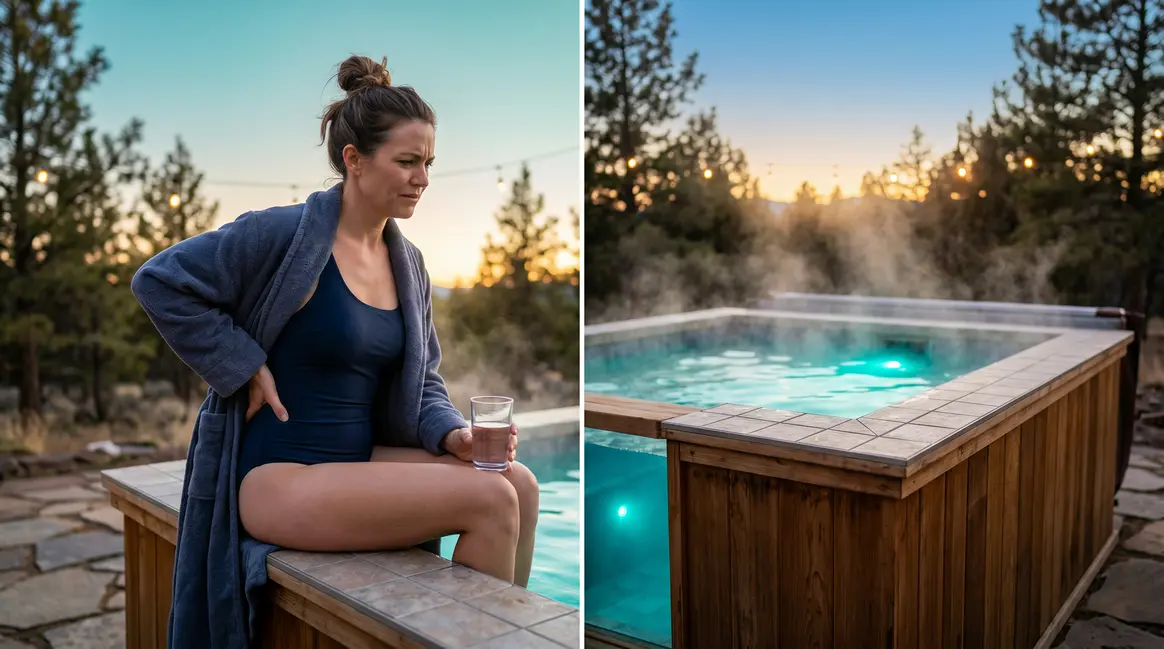
You stepped out of a steaming hot tub expecting to feel loose and refreshed — and woke up the next morning with that achy, heavy feeling you couldn’t quite explain. Your muscles were stiff, your joints felt tender, and the relaxation session that was supposed to help you unwind had somehow left you feeling worse. Sound familiar?
If you’re wondering why does body ache after hot tub sessions happen, the frustrating truth is that without understanding the root cause, you’ll keep repeating the same mistake every soak. Most articles blame “basic dehydration” and leave it there — but that explanation only covers a fraction of what’s actually happening inside your body. The real picture is more complex, and more fixable, than that.
By the end of this guide, you’ll know exactly why your body aches after a hot tub — whether it’s a simple hydration fix or a sign to call your doctor — so you can soak safely every time. We cover the five physiological causes, a three-phase prevention protocol, serious warning signs to watch for, and answers to the most common hot tub health questions.
⚠️ MEDICAL DISCLAIMER: The information in this article is for educational purposes only and does not constitute medical advice. Always consult a qualified healthcare professional before using a hot tub if you have a pre-existing health condition, including cardiovascular disease, lupus, arthritis, or pregnancy. If you experience severe pain, difficulty breathing, skin rash, or fever after hot tub use, seek medical attention promptly.
If you’ve ever asked why does body ache after hot tub, it’s usually caused by dehydration, vasodilation-related muscle fatigue, or post-soak muscle contraction — all preventable with the right protocol.
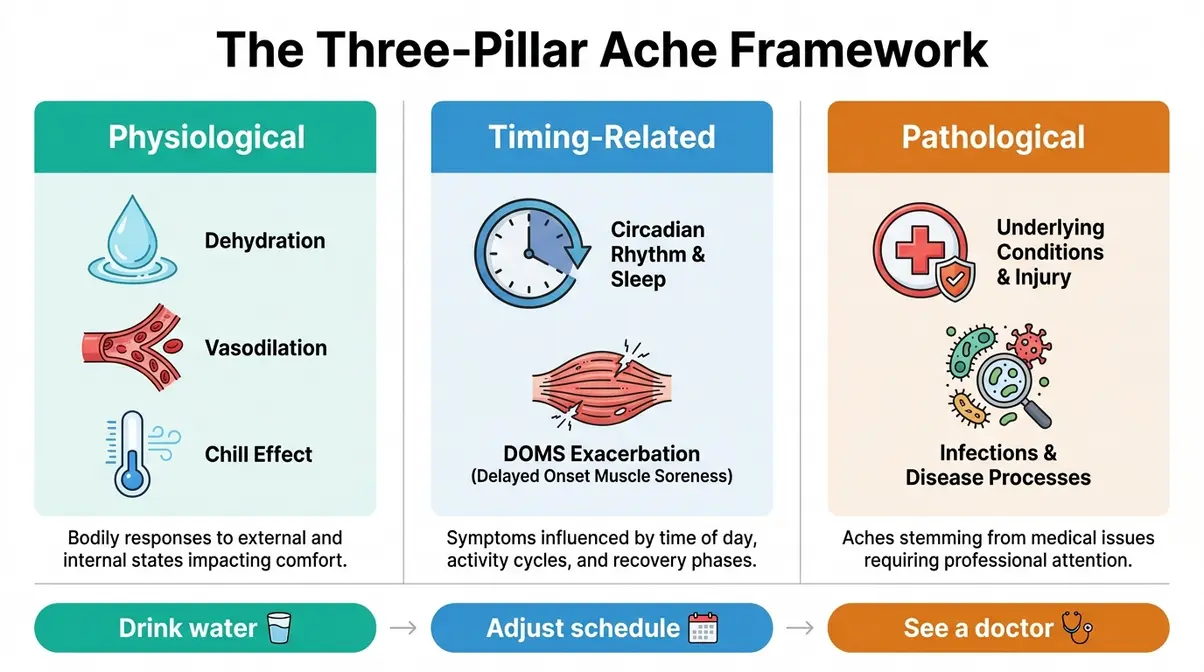
- The Three-Pillar Ache Framework categorizes causes as physiological, timing-related, or pathological — helping you self-diagnose quickly
- Dehydration is the #1 cause: Sweating in hot water depletes sodium and potassium, triggering muscle cramps (Mayo Clinic)
- Soak safely: Limit sessions to 15–20 minutes at 100–104°F to prevent vasodilation crashes
- Serious warning signs (rash, fever, breathing difficulty) require a doctor — not just rest
- Hot tubs do not detox the body: The liver and kidneys handle detoxification, not heat
Why Your Body Aches After a Hot Tub: 5 Causes
Your body aches after a hot tub for five interconnected reasons — and dehydration is only the beginning. Using The Three-Pillar Ache Framework, these causes fall into three categories: physiological (dehydration and vasodilation), timing-related (DOMS exacerbation), and pathological (infection or underlying condition). Knowing which pillar your ache falls under tells you whether to drink water, rest, or call a doctor.
One overlooked reason people are surprised by post-soak soreness is that hot water actually masks pain signals while you’re in the tub. The heat and buoyancy reduce your perception of muscle tension and joint load — the ache only surfaces once your body cools and muscles re-tighten. This “masking effect” explains why you feel fine stepping out, then wake up stiff the next morning.
This sentiment, echoed widely in hot tub communities, captures the most common culprit — but it’s only part of the picture:
“Hot tubs can actually dehydrate you a bit. Make sure you’re staying hydrated, as dehydration can contribute to muscle soreness.”
Here are all five causes, explained.
Dehydration and Electrolyte Loss
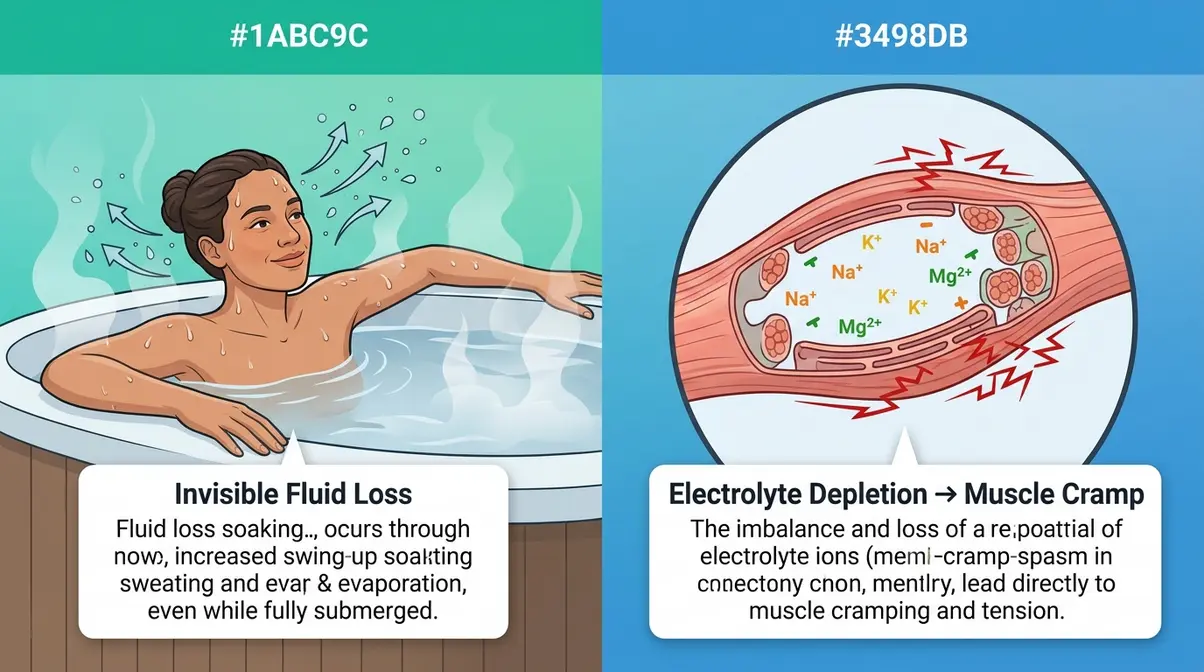
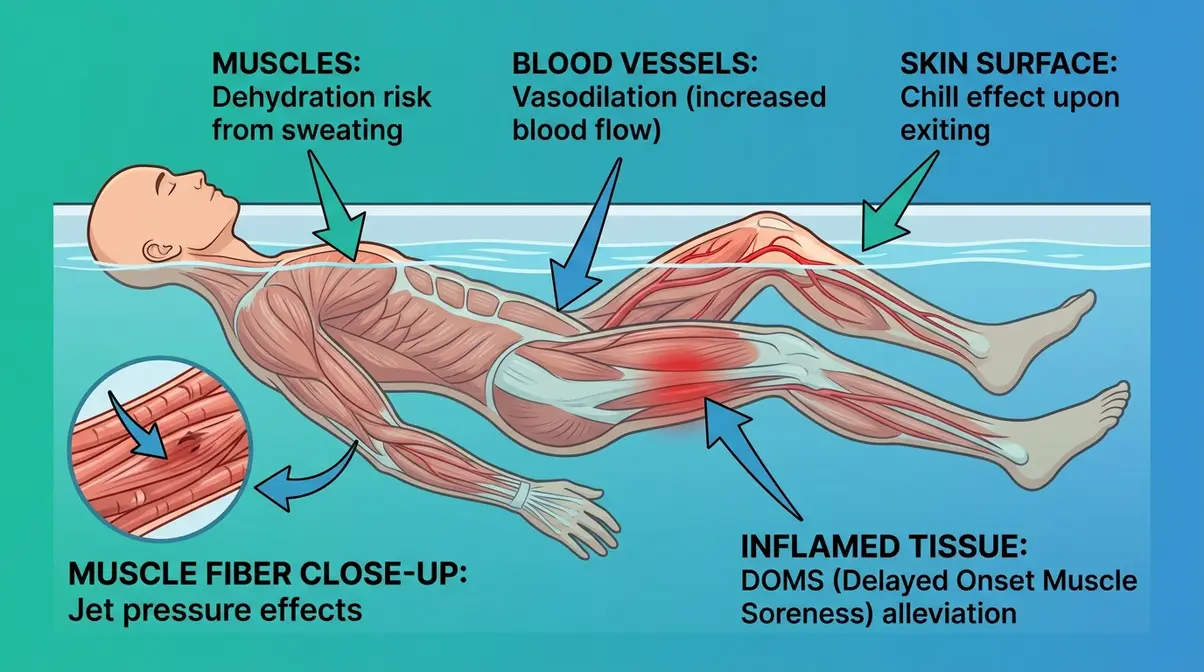
When people ask why does body ache after hot tub, dehydration is the first and most significant answer. Hot tub water temperatures between 100–104°F cause your body to sweat substantially — even though you never feel it, because you’re already surrounded by water. That sweat strips your body of sodium and potassium, the two electrolytes that regulate muscle contraction and nerve signaling.
When electrolyte levels fall, muscles begin to misfire. They contract when they shouldn’t, fail to fully relax between contractions, and produce that characteristic achy, heavy feeling that hits hours after your soak. According to the Mayo Clinic overview of dehydration and muscle cramps, electrolyte depletion from sweating is a primary cause of muscle cramps — and the hot tub environment accelerates this process because users rarely feel thirsty (Mayo Clinic, 2026).
Heavy sweating in a hot tub depletes sodium and potassium — the primary electrolytes that prevent muscle cramps — making dehydration the leading cause of post-soak body aches.
The effect is amplified significantly when alcohol is involved. Alcohol is a diuretic — it accelerates fluid loss through urine — so combining a glass of wine with a 30-minute soak creates a compounding dehydration effect. Common reports from hot tub users indicate that post-soak soreness is notably worse after drinking, even when soak time is identical. If you soaked for 30 minutes without drinking water, research on exercise physiology suggests you may have lost 0.5–1 litre of fluid through sweat, depending on water temperature and ambient conditions — enough to trigger measurable electrolyte depletion (National Institutes of Health, 2026).
But dehydration isn’t working alone — it’s compounded by a second process happening simultaneously inside your blood vessels.
Vasodilation & Blood Pressure Rebound
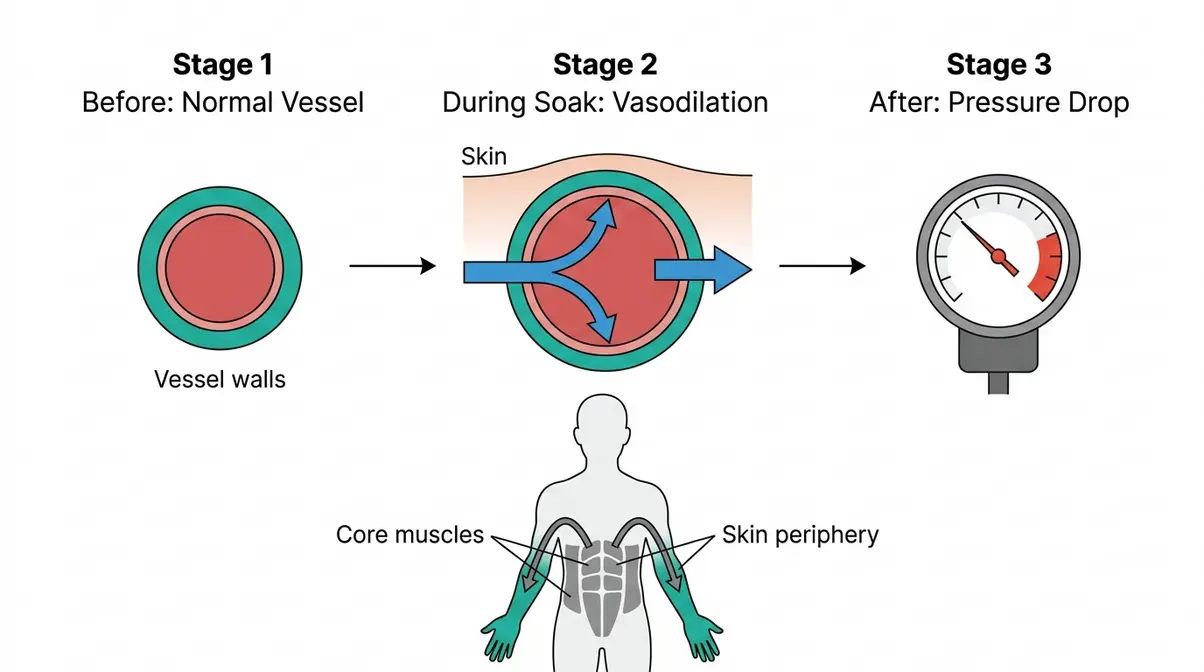
Hot water triggers vasodilation — the widening of blood vessels — as your body attempts to regulate its core temperature by moving heat toward the skin’s surface. Think of it like opening every valve in a plumbing system at once: pressure drops throughout. Blood flow is redirected away from your muscles and toward the skin, which is why your face flushes red and you feel that characteristic warmth and looseness during a soak.
The problem arrives when you step out. The moment cooler air hits your skin, those same blood vessels constrict rapidly in response to the temperature change. This sudden vascular shift causes a temporary drop in blood pressure, leaving your muscles under-perfused — receiving less oxygen-rich blood than they need to function optimally. The result is the stiff feeling and heavy fatigue that many users mistake for relaxation-induced soreness.
This vasodilation rebound is why some people feel more sore after a hot tub than after a workout. The effect is most pronounced when users exit a very hot tub (above 104°F) and immediately sit or lie down — the blood pressure drop is sharpest in this scenario, and the muscles of the lower back and legs are most affected. Research on hydrotherapy physiology confirms that rapid transitions from hot immersion to ambient temperature create measurable cardiovascular responses, including transient hypotension (Cleveland Clinic, 2026).
No competitor article explains this mechanism — which is why so many readers are left confused when “just drinking more water” doesn’t eliminate their post-soak soreness. The vasodilation rebound operates independently of hydration status.
Once vasodilation has relaxed your muscles deeply, what happens next — when cold air hits — creates a third layer of discomfort.
Muscle Contraction: The Chill Effect

Why do muscles tighten after a hot tub? Heat relaxes muscle fibers by raising their temperature and increasing local blood flow — a genuine therapeutic benefit. However, that relaxation is entirely conditional on the thermal environment. The moment you exit into cooler air, your nervous system sends a rapid signal to contract muscle fibers and generate heat, protecting your core body temperature from dropping.
For users who already carry baseline tightness — desk workers, people with chronic back tension, or post-workout users — this rapid re-contraction can produce a “rebound tightness” that feels worse than their pre-soak baseline. The tense back sensation that appears the morning after a soak is often this chill effect, not a sign that the hot tub damaged anything.
The effect is notably worse at night. Your body’s core temperature naturally drops during sleep as part of its circadian rhythm. If you soak within 30 minutes of going to bed, your muscles contract from the chill effect and then remain tight through the night as your temperature continues to decline. Users who soak immediately before sleep often report the worst morning stiffness — their muscles contracted from the chill effect, then held that tension for six to eight hours. If you’re wondering why your body aches specifically after a nighttime hot tub session, this timing mechanism is frequently the answer.
Beyond the thermal effects on your muscles, the physical pressure of the jets themselves can create a fourth type of soreness.
The Deep Tissue Effect of Hot Tub Jets
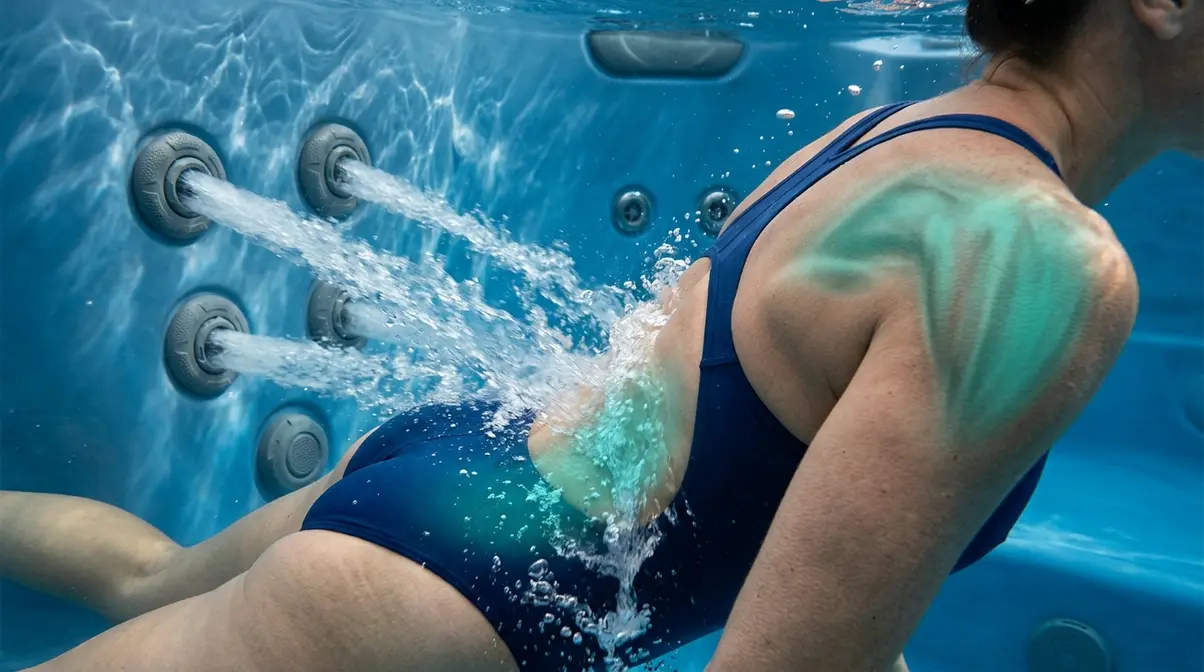
Hot tub jets deliver pressurized water directly to muscle tissue — particularly the back, shoulders, and legs. This mimics the action of deep-tissue massage, which is clinically understood to cause temporary soreness 12–24 hours after treatment as muscle fibers repair micro-disruptions caused by the mechanical pressure. The phrase that hot tub users often use — “pushing the water” — describes this sensation of direct jet pressure on muscle groups.
Users who position themselves directly in front of high-pressure jets, or who target the same muscle group repeatedly throughout a session, are most likely to experience this localized soreness. Unlike the systemic aches of dehydration or vasodilation rebound, jet-induced soreness is specific: it follows the exact anatomy of wherever the jets were aimed.
This type of muscle soreness is benign and typically resolves within 24–48 hours — the same recovery timeline as post-massage soreness. If your soreness is localized to your lower back or shoulders (wherever the jets were targeting), jet pressure is likely the cause — not dehydration or systemic illness. No medical intervention is required; rest and gentle movement are sufficient.
The fifth and final cause affects people who use hot tubs after exercise — and it can turn mild soreness into a full-body ache.
Inflammation and DOMS Exacerbation
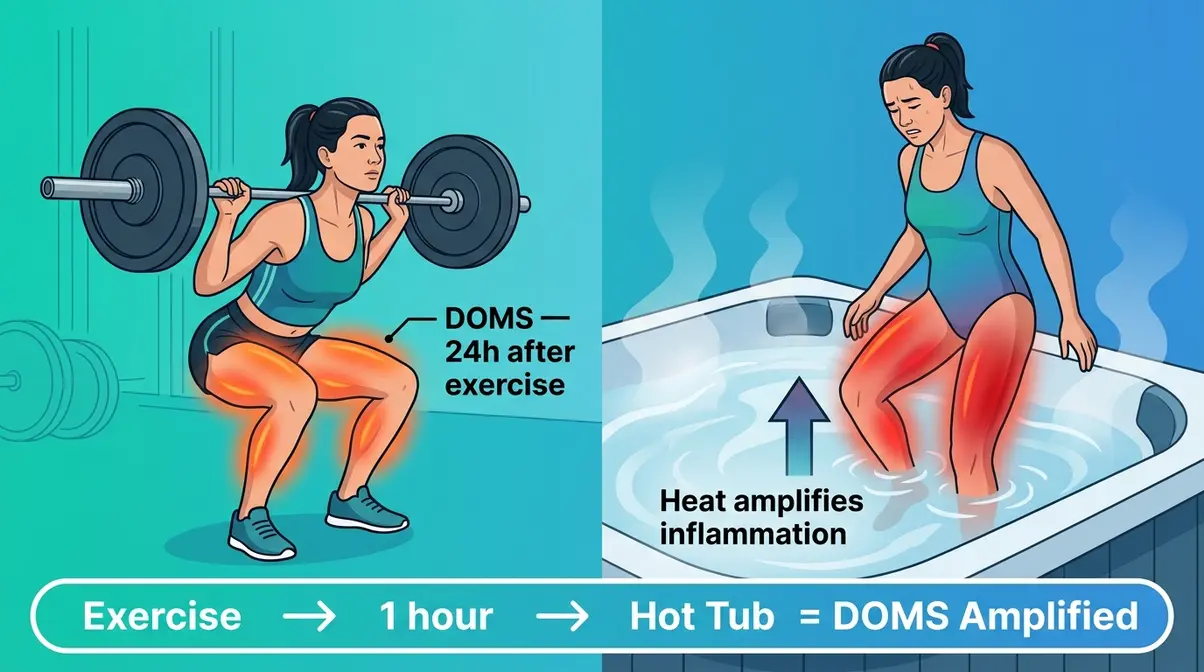
Delayed-onset muscle soreness (DOMS) — the stiffness that peaks 24–48 hours after intense exercise — involves microscopic tears in muscle fibers that trigger a localized inflammatory response. Under normal circumstances, this inflammation is a healthy part of the adaptation process. The trouble begins when heat is added too soon.
Soaking in hot water within one to two hours of intense exercise increases blood flow to already-inflamed tissue, amplifying the inflammatory response rather than calming it. The result: DOMS that should have been mild becomes a full-body ache. This is the timing pillar of The Three-Pillar Ache Framework — the cause isn’t the hot tub itself, it’s the timing of the soak relative to your training.
Research on exercise recovery suggests waiting at least 24–48 hours after intense exercise before using heat therapy, or employing contrast therapy — alternating brief hot immersion with a 30-second cold-water rinse — to reduce the pro-inflammatory effect of heat on acutely damaged tissue. For the science on when hot tubs genuinely do support recovery, explore how hot tubs can relieve muscle soreness. If you soaked after leg day and woke up barely able to walk, this timing-related mechanism is almost certainly the culprit — not the hot tub itself.
Now that you understand why your body aches, the logical next question is: what can you do before, during, and after your next soak to prevent it?
Preventing Hot Tub Body Aches: 3 Phases
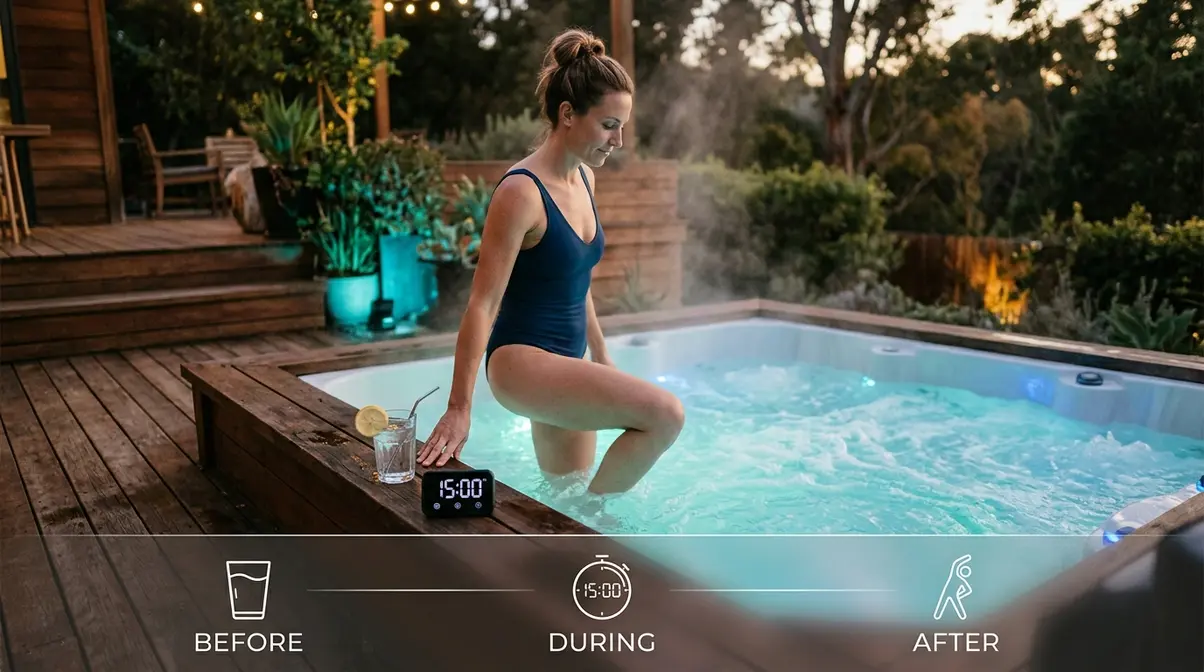
Preventing body aches after a hot tub comes down to three phases: preparation before you get in, discipline while you’re soaking, and a deliberate recovery routine after you exit. The Three-Pillar Ache Framework’s physiological and timing pillars are both addressed here — follow this protocol and you eliminate the most common causes before they start.
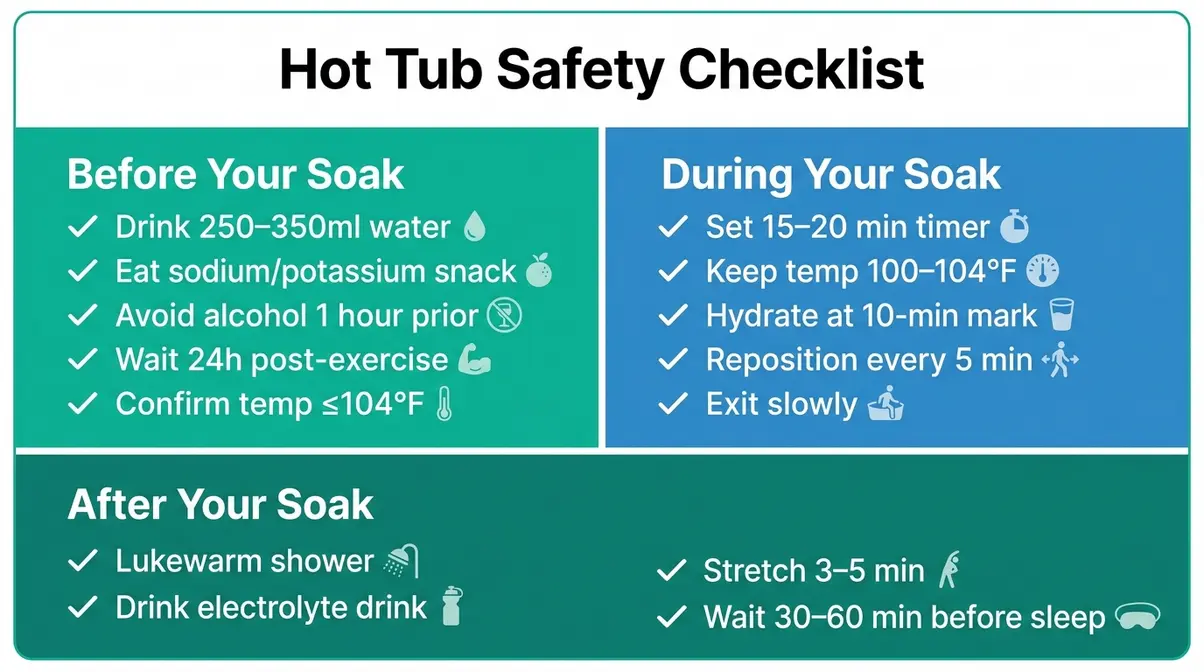
For arthritis relief, the Arthritis Foundation recommends warm water therapy between 92 and 100°F — staying below this threshold prevents dangerous overheating while maximizing joint relaxation (Arthritis Foundation, 2026).
Before Your Soak: Hydrate and Prepare
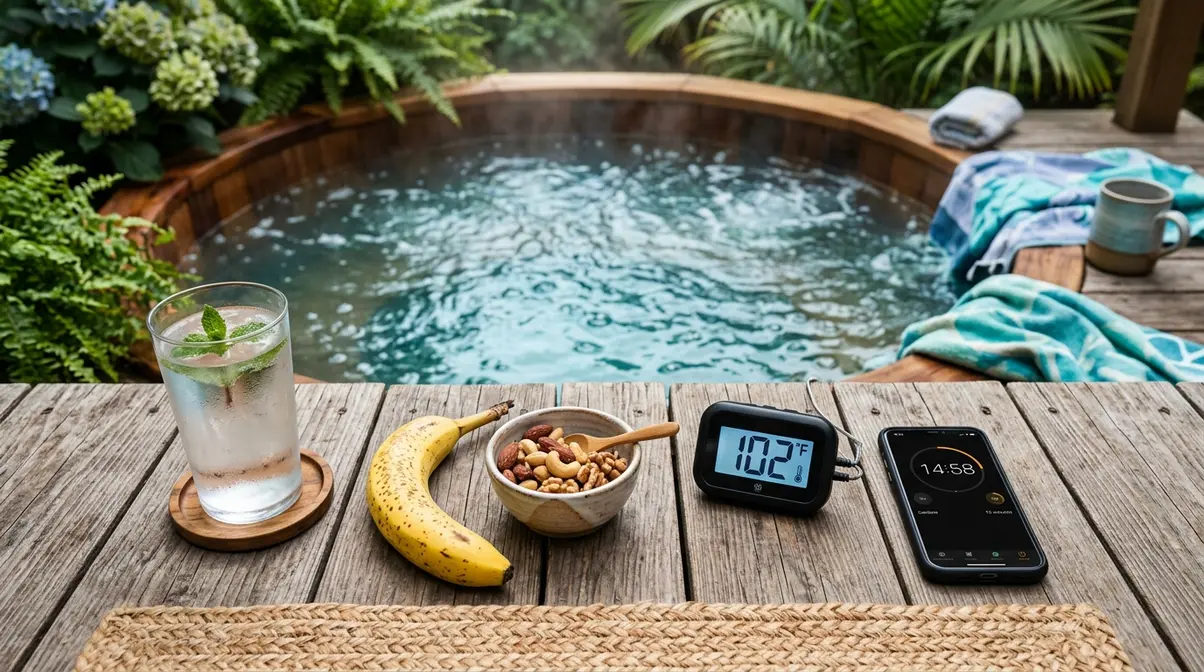
Preparation is the highest-leverage phase — most post-soak soreness is set in motion before you even enter the water. Following a proper hot tub safety guide ensures your body is ready for the thermal shift. Follow these steps every time:
- Drink a full glass of water (250–350ml) 30 minutes before soaking. Do not substitute coffee, alcohol, or juice — both caffeine and alcohol are diuretics that accelerate fluid loss. Plain water or an electrolyte drink is ideal.
- Eat a light snack containing sodium and potassium if you haven’t eaten in 3+ hours. A banana, a small handful of salted nuts, or a sports drink with electrolytes helps maintain the mineral balance your muscles need.
- Avoid alcohol for at least one hour before soaking. Alcohol combined with heat-induced vasodilation creates a significant blood pressure drop risk, compounding both dehydration and the vasodilation rebound effect covered above.
- Wait at least 24 hours after intense exercise before a hot soak. If you trained hard that day, either skip the hot tub or use the contrast therapy method: a brief 5-minute warm soak followed by a 30-second cool rinse, repeated once.
- Check the water temperature before entering. The Consumer Product Safety Commission recommends a maximum of 104°F (40°C) for healthy adults; the Arthritis Foundation recommends 92–100°F for users with joint conditions (Arthritis Foundation, 2026).
| Preparation Step | Why It Matters |
|---|---|
| Drink 250–350ml water before soaking | Offsets fluid loss from sweating in hot water |
| Eat a sodium/potassium snack if needed | Maintains electrolyte balance during sweating |
| Avoid alcohol 1+ hour before | Reduces diuretic + vasodilation compounding effect |
| Wait 24h post-intense exercise | Prevents DOMS amplification from heat |
| Confirm water temp ≤104°F (or ≤100°F for joint conditions) | Limits vasodilation severity and overheating risk |
During Your Soak: Temp & Time Limits
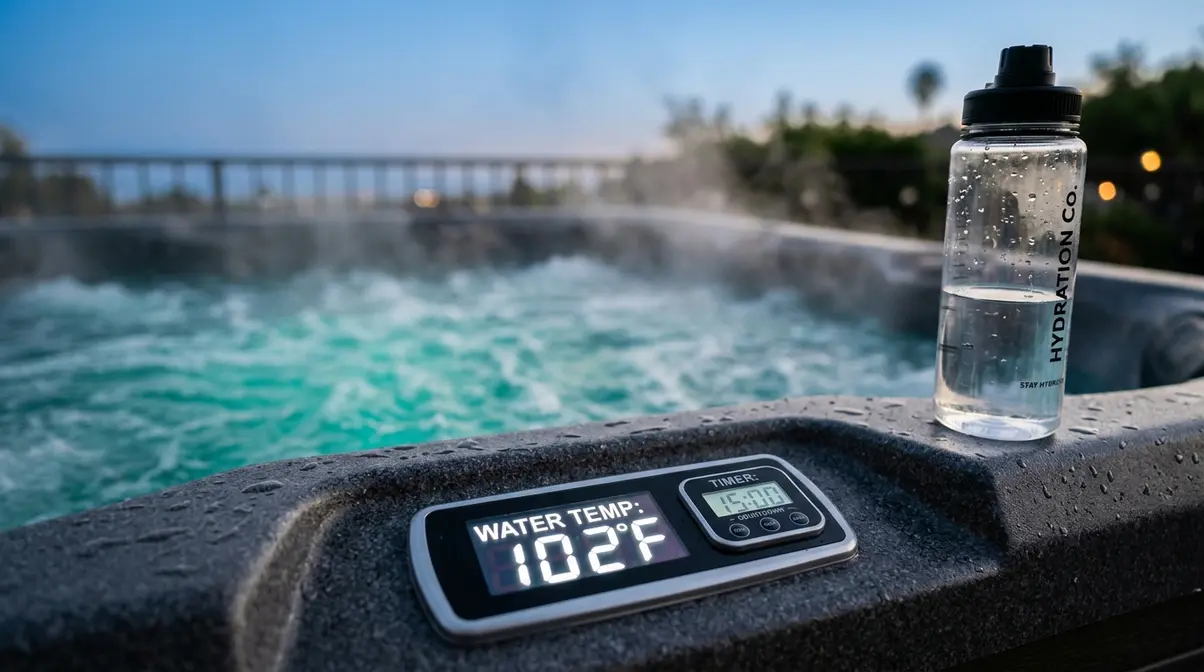
Discipline during the soak itself prevents the two most severe physiological responses: dangerous overheating and excessive vasodilation. Understanding exactly how long you should stay in a hot tub is critical for preventing crashes.
- Set a timer for 15–20 minutes. This is the evidence-based maximum for a single hot tub session in water above 100°F. Beyond 20 minutes, core body temperature rises to a level where electrolyte loss and vasodilation effects become difficult to reverse with post-soak hydration alone.
- Keep water temperature between 100–104°F for healthy adults. At 104°F, you’re at the safety ceiling — even brief overexposure at this temperature can cause dizziness and nausea. If you have cardiovascular concerns or joint conditions, target 92–100°F.
- Take a hydration break at the 10-minute mark. Keep a glass of water or electrolyte drink at the tub’s edge. Sip 150–200ml midway through your session to partially offset ongoing fluid loss.
- Reposition every 5 minutes if using jets. Keeping a single muscle group in front of a high-pressure jet for your entire session increases the risk of jet-induced soreness. Rotate positions to distribute the pressure effect.
- Exit slowly. Stand up gradually, pause for 10–15 seconds before stepping out, and hold a stable surface. Rapid standing after vasodilation can cause a head rush or momentary dizziness as blood pressure adjusts.
After Your Soak: Cool Down and Recover
The post-soak phase is where most users make their biggest mistake — they wrap up in a towel and go straight to bed. A brief recovery routine takes under five minutes and prevents the chill effect and vasodilation rebound from setting in.
- Take a 30-second lukewarm (not cold) shower immediately after exiting. This gradual temperature transition helps blood vessels constrict progressively rather than suddenly, softening the vasodilation rebound. Avoid ice-cold water immediately after a hot soak — the thermal shock can cause muscle cramping.
- Drink 350–500ml of an electrolyte drink within 15 minutes of exiting. Plain water is helpful, but an electrolyte-containing drink — one with sodium (300–500mg) and potassium (100–200mg) per serving — addresses the mineral depletion that plain water cannot. Note that drinking large amounts of plain water without electrolytes can in rare cases worsen hyponatremia (abnormally low blood sodium), particularly after long soaks.
- Do 3–5 minutes of gentle stretching — particularly for the lower back, hamstrings, and shoulders — while your muscles are still warm. This prevents the rapid re-contraction of the chill effect from locking muscles into a shortened position overnight.
- Wait 30–60 minutes before going to sleep after a hot soak. This allows your core body temperature to begin its natural decline before bed, reducing the overnight muscle contraction cycle that causes morning stiffness.
- If you feel dizzy or unusually fatigued, sit down immediately, drink fluids, and rest until symptoms pass. These are signs of mild heat exhaustion — if they persist beyond 30 minutes or worsen, seek medical attention.
When Hot Tub Aches Signal More Serious
Most post-soak body aches are benign and resolve within 24–48 hours. However, some symptoms point to the pathological pillar of The Three-Pillar Ache Framework — infections, underlying conditions, or physiological responses that require medical attention. Knowing the difference between normal soreness and a warning sign is the most important health skill a hot tub user can develop.
⚠️ Medical Note: If you have a pre-existing condition such as lupus, rheumatoid arthritis, or cardiovascular disease, consult your doctor before using a hot tub. The information in this section is educational and does not replace professional medical evaluation.
Use this diagnostic table to identify which category your symptoms fall into:
| Symptom | Likely Benign | Potentially Serious |
|---|---|---|
| Onset | 12–24 hours after soaking | During or within 2 hours of soaking |
| Location | Generalized or follows jet placement | Concentrated at skin, lungs, or lymph nodes |
| Skin changes | Mild redness that fades within 1 hour | Rash, bumps, or pustules lasting 24+ hours |
| Fever | None | 100.4°F (38°C) or higher |
| Breathing | Normal | Shortness of breath, cough, chest tightness |
| Duration | Resolves in 24–48 hours | Persists or worsens after 48 hours |
| Gastrointestinal | None | Nausea, vomiting, diarrhea |
| Joint swelling | Mild stiffness, no visible swelling | Visible swelling, warmth, or redness at joint |
What is Hot Tub Syndrome?
Hot Tub Syndrome refers to two distinct conditions: Hot Tub Folliculitis and Hot Tub Lung. Hot Tub Folliculitis is a skin infection caused by Pseudomonas aeruginosa, a bacterium that thrives in warm, inadequately chlorinated water. It produces a distinctive red, itchy rash of small bumps or pustules — typically appearing on areas covered by a swimsuit — within 12–48 hours of exposure. The rash often looks like acne and is frequently mistaken for a heat reaction.
According to the CDC, Pseudomonas aeruginosa is one of the most common causes of recreational water illness, and hot tubs present a particularly high-risk environment because warm water degrades chlorine more rapidly than cooler pool water (CDC, 2026). The infection is usually self-limiting — it resolves within 7–10 days without treatment — but severe or widespread cases of hot tub folliculitis may require topical or oral antibiotics. If you develop a rash after hot tub use, avoid re-entering the water until the tub has been properly sanitized and the rash has cleared.
Hot Tub Lung is a separate and more serious condition caused by inhaling steam or aerosols contaminated with Mycobacterium avium complex (MAC) — a group of bacteria that can colonize hot tub water and biofilm. Symptoms include a persistent dry cough, shortness of breath, fever, and fatigue appearing days to weeks after exposure. Hot Tub Lung is a form of hypersensitivity pneumonitis and requires medical diagnosis — typically involving imaging and pulmonary function testing. If you develop a lingering cough or breathing difficulty after hot tub use, see a doctor and mention your hot tub exposure explicitly (NIH, National Library of Medicine, 2026).
Legionnaires’ Disease & Pontiac Fever
Legionnaires’ disease is a severe form of pneumonia caused by Legionella pneumophila bacteria — and hot tubs are one of the most commonly cited sources of community-acquired Legionella outbreaks. The bacteria proliferate in warm water (77–113°F) when disinfection is inadequate, and infection occurs through inhaling contaminated water droplets — not through swallowing water.
Symptoms of Legionnaires’ disease include high fever (104°F or higher), severe muscle aches, headache, cough, and shortness of breath, typically appearing 2–10 days after exposure. The disease can be life-threatening, particularly for adults over 50, smokers, and immunocompromised individuals. The CDC estimates that approximately 10,000 cases of Legionnaires’ disease are reported annually in the United States, with hot tubs and cooling towers as the primary sources (CDC, 2026).
Pontiac Fever is a milder, flu-like illness caused by the same bacteria. It does not progress to pneumonia and typically resolves within 2–5 days without treatment. However, because it is clinically indistinguishable from early Legionnaires’ disease, anyone with fever and muscle aches following hot tub exposure should seek medical evaluation — particularly if symptoms worsen after 48 hours.
Are Hot Tubs Bad for Lupus?
Systemic lupus erythematosus (SLE) is an autoimmune disease in which the immune system attacks the body’s own tissues, causing inflammation, joint pain, and skin sensitivity. Heat is a documented trigger for lupus flares — elevated body temperature can activate immune responses that worsen symptoms.
For people with lupus, hot tub use carries specific risks. The combination of heat-induced vasodilation and systemic inflammation can trigger or amplify joint swelling and pain, skin rashes (including the characteristic lupus “butterfly rash”), and fatigue. According to Johns Hopkins Medicine, many lupus patients find that heat exposure — including hot baths, saunas, and hot tubs — worsens their symptoms and should be approached with caution or avoided during active flares (Johns Hopkins Medicine, 2026).
If you have lupus, consult your rheumatologist before using a hot tub. If you choose to soak, keep sessions short (under 10 minutes), water temperatures at the lower end of the safe range (92–98°F), and exit immediately if you notice increased joint pain, skin changes, or fatigue. The aches you experience after a hot tub soak may not be standard post-soak soreness — they may represent a lupus flare requiring medical management.
Arthritis Relief: Sauna vs. Hot Tub
Both hot tubs and saunas are commonly used for arthritis pain relief, but they work through different mechanisms and carry different risk profiles. Understanding which is better for your specific condition can prevent unnecessary soreness and joint irritation.
| Feature | Hot Tub | Sauna |
|---|---|---|
| Primary benefit | Buoyancy reduces joint load during movement | Dry heat relaxes muscles and improves circulation |
| Temperature range | 92–104°F (water) | 150–195°F (air) |
| Arthritis Foundation recommendation | 92–100°F for joint conditions | Not specifically recommended; caution for RA |
| Best for | Osteoarthritis, joint mobility exercises | Muscle tension, fibromyalgia-related pain |
| Risk | Bacterial exposure, overheating | Dehydration, cardiovascular stress |
| Post-session soreness | Possible (vasodilation rebound) | Less common (gradual cool-down easier to manage) |
For most people with osteoarthritis, warm water therapy in a hot tub is the more beneficial option. The Arthritis Foundation explicitly endorses warm water exercise (aquatic therapy) for joint pain relief, noting that buoyancy reduces the compressive load on joints while heat improves range of motion (Arthritis Foundation, 2026). Saunas offer effective muscle relaxation but lack the buoyancy benefit that makes movement easier for arthritic joints.
For rheumatoid arthritis (RA), the evidence is more nuanced. During active flares — when joints are acutely inflamed — both heat modalities may worsen symptoms. Outside of flares, gentle warm water therapy can be beneficial. Consult your rheumatologist for guidance specific to your disease activity. To understand the causes of post-hot tub body aches in the context of joint conditions, our dedicated resource covers the overlap between arthritis, inflammation, and post-soak soreness in greater depth.
Hot Tub Myths Debunked: Quick Answers
Not all post-soak concerns are about pain. Several widely circulated claims about hot tubs — from detoxification to tennis ball tricks — deserve a direct, evidence-based answer. Here are the facts.
Does a Hot Tub Detox Your Body?
No — hot tubs do not detox your body, and this is one of the most persistent myths in wellness culture. The human body’s detoxification system is managed entirely by the liver and kidneys, which filter waste products from the bloodstream and excrete them through urine. Sweating in a hot tub eliminates water, sodium, and trace minerals — not metabolic waste products or “toxins.”
According to Harvard Health Publishing, the concept of “sweating out toxins” is not supported by clinical evidence. Sweat is composed primarily of water (99%) and electrolytes — it is a temperature regulation mechanism, not a detoxification pathway (Harvard Health, 2026). Hot tubs do offer genuine health benefits: improved circulation, reduced muscle tension, and the ability to burn calories in a hot tub through elevated heart rate. But these benefits come from heat and buoyancy, not any detoxifying effect.
Signs of Toxins Leaving Your Body
The premise of this question reflects the same detox myth addressed above. There are no reliable physical signs that “toxins are leaving your body” through a hot tub, because hot tubs don’t remove toxins in the first place. Symptoms sometimes attributed to “detox” — such as fatigue, headache, or light-headedness after a soak — are actually signs of dehydration, electrolyte loss, or mild heat exhaustion, all of which are preventable with proper hydration and session limits.
If you consistently feel unwell after hot tub use, the appropriate response is not to attribute it to toxin release — it’s to drink more fluids, shorten your sessions, and consult a healthcare provider if symptoms persist. Genuine metabolic waste removal happens continuously through your liver, kidneys, and gastrointestinal system, regardless of whether you put Epsom salts in a hot tub or soak in plain water.
Why Put Tennis Balls in a Hot Tub?
Tennis balls in a hot tub serve a practical water-quality purpose: they absorb body oils, lotions, cosmetics, and hair products that accumulate in the water during use. The fuzzy felt exterior of a tennis ball acts like a sponge, trapping these oils before they can form a greasy ring around the waterline or clog the filter system.
This is a genuine maintenance tip, not a wellness hack. Dropping two to four tennis balls into the hot tub during or after a session can meaningfully reduce the oil load on your filtration system, extending filter life and keeping the water cleaner between chemical treatments. Replace the tennis balls every few weeks as they become saturated. Note that this tip does not affect water chemistry — you still need to maintain proper sanitizer levels regardless of whether you use tennis balls.
Limitations, Risks & Common Mistakes
Common Pitfalls
Pitfall 1: Soaking immediately after intense exercise. This is the single most common timing error. Users assume that heat will speed recovery — but soaking within one to two hours of a hard workout amplifies DOMS rather than reducing it. The fix is straightforward: wait at least 24 hours, or use a brief contrast therapy protocol (5 minutes warm, 30-second cool rinse).
Pitfall 2: Drinking alcohol before or during soaking. Alcohol and hot tub heat create a dangerous compounding effect — alcohol dilates blood vessels independently, amplifying the vasodilation rebound, while simultaneously accelerating dehydration through its diuretic action. Common reports from hot tub users indicate this combination is the most frequent cause of next-day soreness and dizziness.
Pitfall 3: Staying in longer than 20 minutes. Extended sessions above 20 minutes in water over 100°F cause core body temperature to rise beyond the point where post-soak hydration can fully compensate for electrolyte loss. Set a timer — the feeling of warmth and relaxation makes time difficult to judge accurately.
Pitfall 4: Skipping post-soak electrolytes. Drinking plain water after a soak helps, but it does not replace the sodium and potassium lost through sweat. In frequent soakers, consistently replacing fluids with plain water alone can gradually deplete electrolyte stores over time.
Pitfall 5: Ignoring skin symptoms. A rash appearing 12–48 hours after a soak is not a normal post-soak reaction — it is a potential sign of folliculitis or another waterborne infection. Many users dismiss it as a heat rash and re-enter the tub, potentially worsening the infection.
When to Choose Alternatives
If you have an active lupus flare or RA flare: Skip the hot tub entirely during acute inflammation periods. Gentle warm (not hot) baths at 92–95°F are a safer alternative that provides some muscle relaxation without the systemic heat load of a full hot tub session.
If you are pregnant: The American College of Obstetricians and Gynecologists advises against hot tub use during pregnancy, particularly in the first trimester, due to the risk of hyperthermia (overheating) affecting fetal development. Consult your OB-GYN before any hot tub use during pregnancy.
If you have cardiovascular disease or uncontrolled hypertension: The vasodilation rebound effect described in this article represents a genuine cardiovascular stressor. Consult your cardiologist — some patients are cleared for brief, lower-temperature soaks; others are not.
When to Seek Expert Help
- Seek medical attention if you experience any of the following after hot tub use:
- A skin rash, bumps, or pustules that persist beyond 24 hours
- Fever above 100.4°F (38°C)
- Shortness of breath, persistent cough, or chest tightness
- Muscle aches accompanied by nausea, vomiting, or diarrhea
- Joint swelling and pain that worsens rather than improves over 48 hours
- Dizziness or confusion that does not resolve within 30 minutes of exiting the tub
These symptoms may indicate Hot Tub Folliculitis, Hot Tub Lung, Legionnaires’ disease, or a flare of an underlying condition — all of which require professional diagnosis and treatment.
Frequently Asked Questions
Why do I ache after being in a hot tub?
Body aches after a hot tub are most commonly caused by dehydration, vasodilation rebound, and post-soak muscle contraction — three physiological mechanisms that operate together. Hot water causes significant sweating that depletes sodium and potassium, triggering muscle cramps and that achy, heavy feeling. Simultaneously, blood vessels dilate during the soak and constrict rapidly upon exit, leaving muscles temporarily under-oxygenated. For most users, proper hydration before and after soaking — combined with limiting sessions to 15–20 minutes — resolves the problem entirely (Mayo Clinic, 2026).
Can hot tubs cause muscle cramps?
Yes, hot tubs can directly trigger muscle cramps through rapid electrolyte depletion. When you sweat heavily in water temperatures exceeding 100°F, your body loses critical sodium and potassium reserves that regulate muscle function. If these electrolytes aren’t replenished during or immediately after your soak, the muscles begin to misfire and involuntarily contract. This is why drinking an electrolyte-enhanced beverage is far more effective at preventing post-soak cramps than drinking plain water alone.
Does a hot tub detox your body?
No — hot tubs do not detox the body, despite the widespread popularity of this claim. Sweat is composed of approximately 99% water and trace electrolytes — not metabolic waste products. The liver and kidneys are the body’s actual detoxification organs, filtering toxins from the bloodstream continuously and excreting them through urine and bile. Harvard Health Publishing confirms there is no clinical evidence supporting the idea that sweating removes meaningful quantities of toxins (Harvard Health, 2026). Hot tubs do provide genuine benefits — improved circulation and muscle relaxation — just not detoxification.
Should you stretch after a hot tub?
Stretching immediately after a hot tub soak is highly recommended to prevent the “chill effect” muscle contraction. While your muscles are still warm and pliable from the heat, performing 3 to 5 minutes of gentle stretching helps maintain the increased range of motion. It also prevents your nervous system from rapidly locking the muscle fibers into a shortened, tense position as your core temperature drops. Focus primarily on the lower back, hamstrings, and shoulders, as these areas are most prone to post-soak stiffness.
What are the 7 signs of lupus?
The seven most commonly recognized signs of lupus include: (1) butterfly-shaped facial rash across the cheeks and nose, (2) photosensitivity (skin reactions to sunlight), (3) joint swelling and pain in multiple joints, (4) fatigue that is disproportionate to activity level, (5) fever without obvious infection, (6) kidney involvement (indicated by swelling, changes in urine output), and (7) chest pain with deep breathing (pleuritis). These signs vary significantly between individuals — lupus is often called “the great imitator” because its symptoms overlap with many other conditions (Johns Hopkins Medicine, 2026). A formal diagnosis requires blood tests and clinical evaluation.
Which is better for arthritis – sauna or hot tub?
For most arthritis patients, a hot tub is the better choice, primarily because water buoyancy reduces compressive load on inflamed joints while heat improves range of motion simultaneously. The Arthritis Foundation endorses warm water therapy (aquatic therapy) at 92–100°F as beneficial for joint pain and mobility (Arthritis Foundation, 2026). Saunas provide effective muscle relaxation through dry heat but lack buoyancy, making movement more difficult. However, during active rheumatoid arthritis flares, both modalities may worsen symptoms — consult your rheumatologist for personalized guidance based on your current disease activity.
What are the signs that toxins are leaving your body?
There are no reliable physical signs that toxins are “leaving your body” through a hot tub, because hot tubs do not remove toxins. Symptoms sometimes attributed to detox — fatigue, light-headedness, or headache after soaking — are actually signs of dehydration and mild heat exhaustion. These are warning signals, not indicators of a beneficial process. If you consistently feel unwell after soaking, the appropriate response is to improve hydration, shorten sessions, and rule out waterborne infection if skin or respiratory symptoms appear. Genuine waste removal happens through your liver, kidneys, and digestive system around the clock.
Why put tennis balls in a hot tub?
Tennis balls absorb body oils, lotions, and hair products that accumulate in hot tub water during use. The felt exterior acts as a sponge, trapping these oils before they form a greasy film on the waterline or reduce filter efficiency. Using two to four tennis balls during or after a session is a simple, low-cost maintenance strategy that extends filter life and keeps water visually cleaner between chemical treatments. Replace them every few weeks as they become saturated with oils. This tip addresses water quality only — it does not replace proper sanitizer maintenance or affect the chemical balance of the water.
Soaking Smart: Body Signals
Post-hot-tub body aches are rarely a mystery once you understand the three pillars driving them. The Three-Pillar Ache Framework gives you a clear diagnostic lens: physiological causes (dehydration, vasodilation rebound, and the chill effect) are the most common and the most preventable; timing-related causes (DOMS exacerbation from soaking too soon after exercise) require only a schedule adjustment; and pathological causes (folliculitis, Legionnaires’ disease, lupus flares) are the rarest but the most important to recognize quickly. Knowing which pillar your ache falls under — within minutes of reading this guide — is the difference between reaching for a glass of water and reaching for your phone to call a doctor.
The prevention protocol in this article addresses the first two pillars directly. Drink before you soak, respect the 15–20 minute limit at 100–104°F, and take three minutes to cool down and hydrate after you exit. These aren’t complicated steps — they’re the difference between a genuinely restorative soak and waking up stiff and confused the next morning.
Your next step is simple: before your next hot tub session, run through the three-phase checklist — hydrate, set a timer, and plan your post-soak cool-down. If you have a pre-existing condition like lupus, arthritis, or cardiovascular disease, schedule a conversation with your healthcare provider before your next soak. And if you’re already experiencing symptoms that fall in the “potentially serious” column of the diagnostic table above, don’t wait — contact a healthcare professional today. For a complete look at how hot tub use affects muscle recovery more broadly, explore how hot tubs can relieve muscle soreness when the timing and conditions are right.

David King
Hot tub tester and writer at One Hot Tub.