
What’s in this guide
“I was soaking this morning while the rain was falling and had a thought…my tub is under a 12×12 gazebo but I wondered for those that have yours in the open, does the weather (rain) dictate when you use your tub? Just curious.” — Hot tub owner, r/hottub
If you’ve had this same thought mid-soak, you’re not alone — and the answer to is it safe to use a hot tub in the rain is yes, with one absolute exception. The answer matters more than you might think: one type of rain is perfectly fine for soaking, while another could be life-threatening. By the end of this guide, you’ll know exactly when it’s safe to soak in the rain, how to protect your water chemistry afterward, and which health conditions require extra caution — so you can enjoy every rainy-day soak with complete confidence. We’ll cover lightning safety, water chemistry recovery, and the health questions most guides never touch.
If you are wondering, is it safe to use a hot tub in the rain, the answer is yes for light rain, but lightning is an immediate exit signal.
- Lightning = immediate exit: Never soak during a thunderstorm; water conducts electricity and the risk is severe
- The Rain Risk Framework: Green (light rain, no thunder), Yellow (heavy rain, distant thunder), Red (active storm/lightning) — know your tier before every soak
- Post-rain chemistry check: Rainwater is acidic and can lower your hot tub’s pH — test after any heavy downpour
- Health check: If you have heart conditions, high blood pressure, or skin infections, read the health section before soaking
Can You Use a Hot Tub in the Rain?

Yes, you can use a hot tub in the rain — light rainfall poses no direct danger to you or your hot tub. The one true exception is lightning. Water conducts electricity, and an open hot tub during a lightning storm puts you at severe risk of electrocution, even if the lightning strikes some distance away. Rain alone? That’s just atmosphere. Lightning? That’s a hard stop.
Hot tub owners consistently report that soaking in a gentle drizzle is one of the most relaxing experiences the hobby offers — the contrast between warm water below and cool rain above is genuinely enjoyable. Whether your tub is under a 12×12 gazebo or fully in the open, the same rule applies: watch the sky, not just the clouds.
Light Rain vs. Thunderstorms
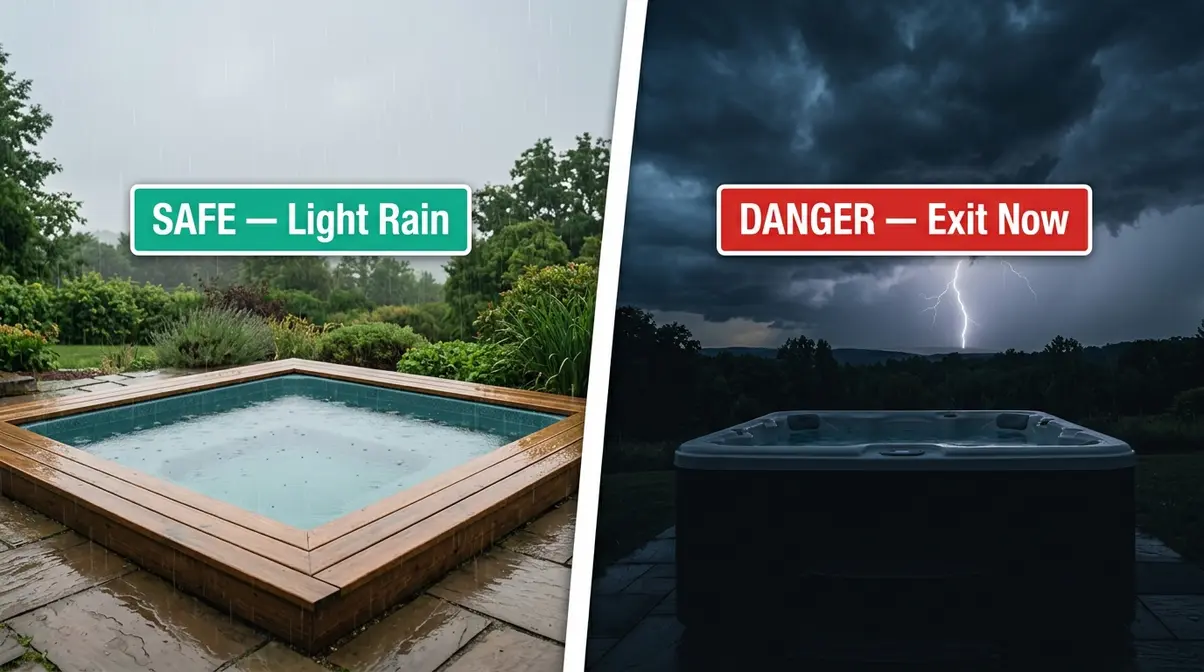
You can use a hot tub in the rain safely when conditions qualify as “light rain” — a steady drizzle or gentle rainfall with no thunder, no visible lightning, and no strong wind gusts. A practical way to think about it: if you’d comfortably walk to your car without an umbrella, that’s light rain territory.
A thunderstorm is a different matter entirely. Any rain accompanied by thunder or lightning — even if the lightning appears distant — qualifies as a thunderstorm. Lightning can strike up to 10 miles from a storm’s center, well outside the area of visible rain. Many fellow tubbers make the mistake of thinking “it’s raining over there, I’m fine here.” That reasoning is dangerous.
Here’s the reassuring part: rain itself does not conduct electricity through the air. Your hot tub’s electrical system is properly grounded. The risk is lightning directly striking nearby — or the ground current that spreads outward from a strike point. “If you can see patches of blue sky and hear no thunder, you’re in light rain territory — Green Light. The moment you hear a rumble, that’s your cue to get out.”
The easiest way to know where you stand? The National Weather Service has a rule that takes all the guesswork out of it.
The NWS 30/30 Lightning Rule
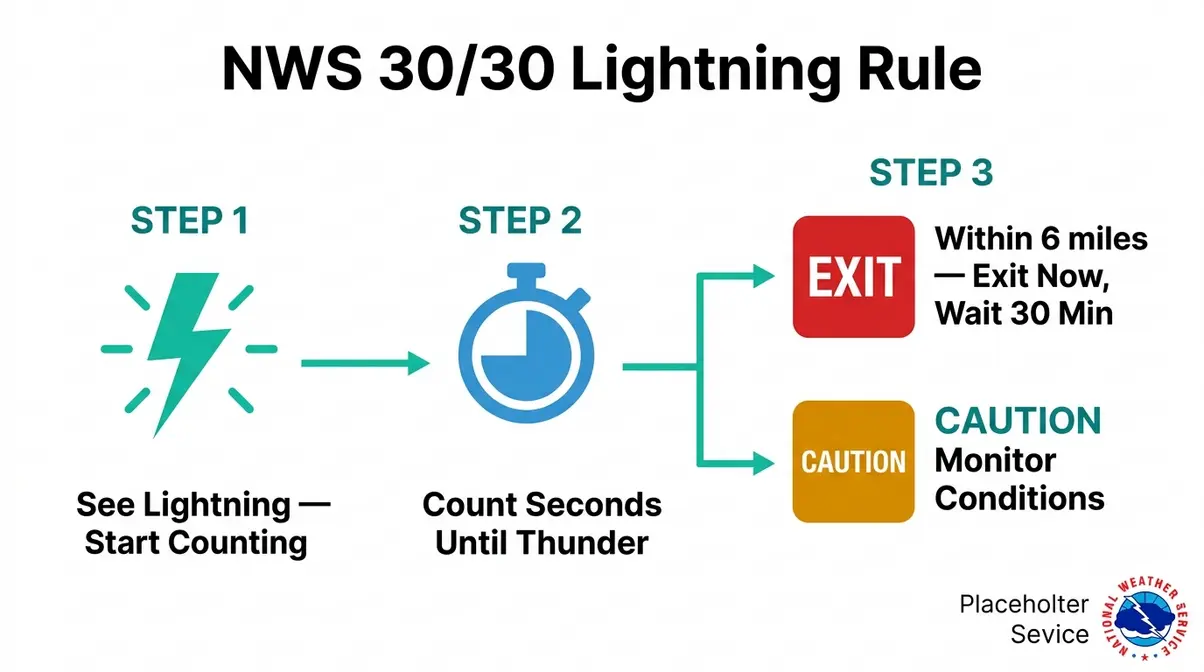
The National Weather Service (NWS) provides one of the clearest lightning safety protocols available, and it applies directly to hot tub use. Lightning is the only true danger when using a hot tub in the rain — light rain alone poses no electrical risk (National Weather Service lightning safety guidelines, NWS, 2026). Here’s the 30/30 Rule in plain terms:
- See lightning — the moment you spot any flash, start counting.
- Count the seconds — say “one-one-thousand, two-one-thousand…” until you hear thunder.
- Act on the number — if thunder arrives within 30 seconds of the flash, you are within 6 miles of the strike. Exit the water immediately and move indoors. Wait a full 30 minutes after the last clap of thunder before returning.
Why 30 minutes? Lightning storms can linger and redevelop. The NWS confirms that water is an excellent conductor of electricity, and hot tub users face significant risk during any active thunderstorm activity. The 30-minute wait isn’t arbitrary — it accounts for storm movement and the possibility of a second cell developing nearby.
Practical scenario: You’re soaking on a cloudy afternoon. You see a flash. You count to 15 and hear thunder. That’s within 30 seconds — exit now, dry off, and wait 30 minutes indoors before going back out. Want more detail on safe practices? You can learn how to safely use a hot tub in the rain with our full safety guide.
Now that you know the hard rule, here’s a simple framework to categorize every rain scenario you’ll ever encounter.
The Rain Risk Framework Tiers
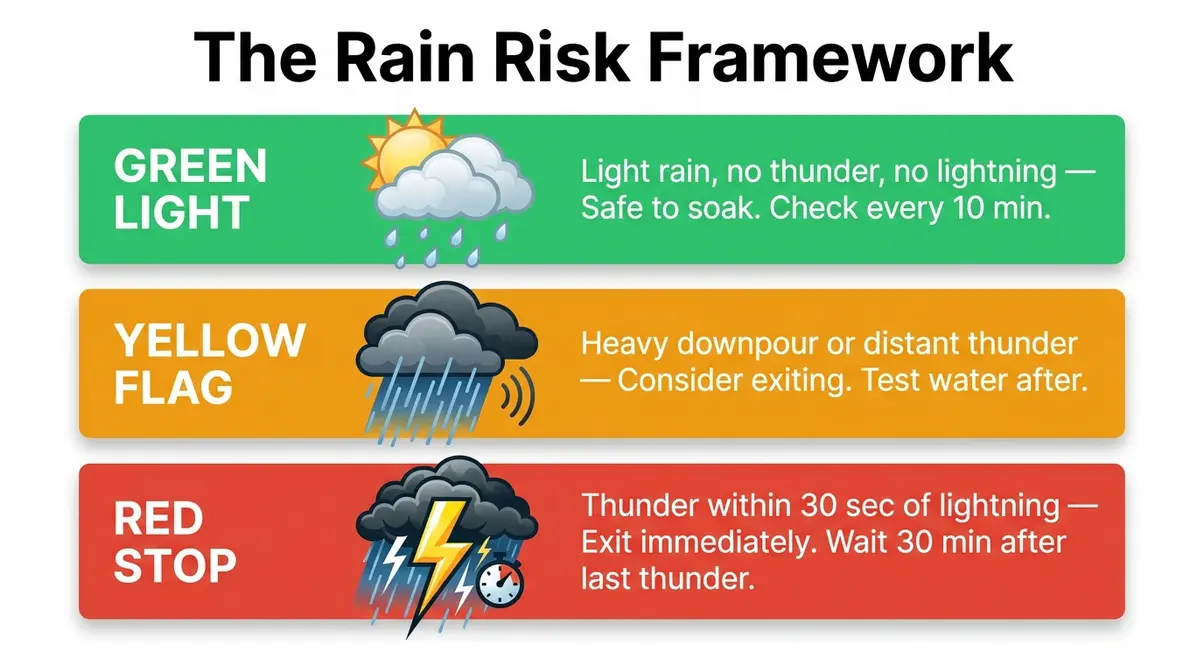
The Rain Risk Framework — a three-tier system designed to help you assess any rain scenario in seconds — removes all the guesswork from rainy-day soaking. Before every soak when rain is present, run through these three tiers:
| Condition | Tier | Action |
|---|---|---|
| Light rain, no thunder, no lightning, no strong wind | 🟢 Green Light | Safe to soak. Check conditions every 10 minutes. |
| Heavy downpour, dark clouds, or distant thunder (>30 sec away) | 🟡 Yellow Flag | Consider exiting. Chemistry impact likely — test water after. |
| Thunder within 30 seconds of lightning, active storm, hail, or strong wind | 🔴 Red Stop | Exit immediately. Wait 30 minutes after last thunder. |
The Rain Risk Framework answers the question “is it safe to use a hot tub in the rain” in every scenario you’ll face — not just the easy ones. Bookmark this table or screenshot it for your next cloudy afternoon.
5 Tips for Enjoying Your Tub
Once you’ve confirmed Green Light conditions, here’s how to make the most of a rainy soak:
- Use a gazebo or pergola — a 12×12 covered structure keeps the worst of the rain off your face while leaving you fully immersed. It also reduces the amount of rainwater entering your tub, which helps protect your water chemistry.
- Lower the water temperature slightly — cooler ambient air during rain can feel refreshing, so dropping your tub temperature 1–2°F lets you stay in longer comfortably.
- Keep a towel and dry robe nearby — the transition from warm water to cool rain is enjoyable; the walk back inside is less so.
- Monitor the sky actively — set a 10-minute phone reminder to glance at conditions. Weather can shift quickly, and the Rain Risk Framework only works if you check it regularly.
- Test your water after — even light rain adds slightly acidic water to your tub. A quick chemistry check after a long soak in the rain costs two minutes and protects weeks of water balance.
How Rain Affects Your Hot Tub’s Water Chemistry
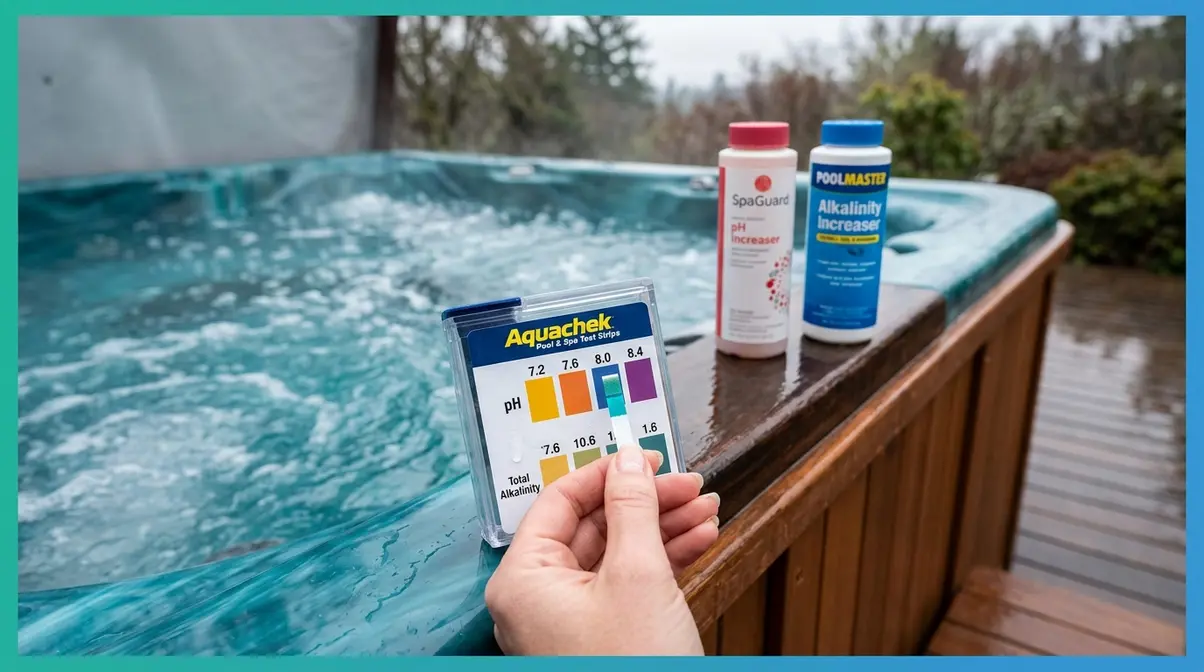
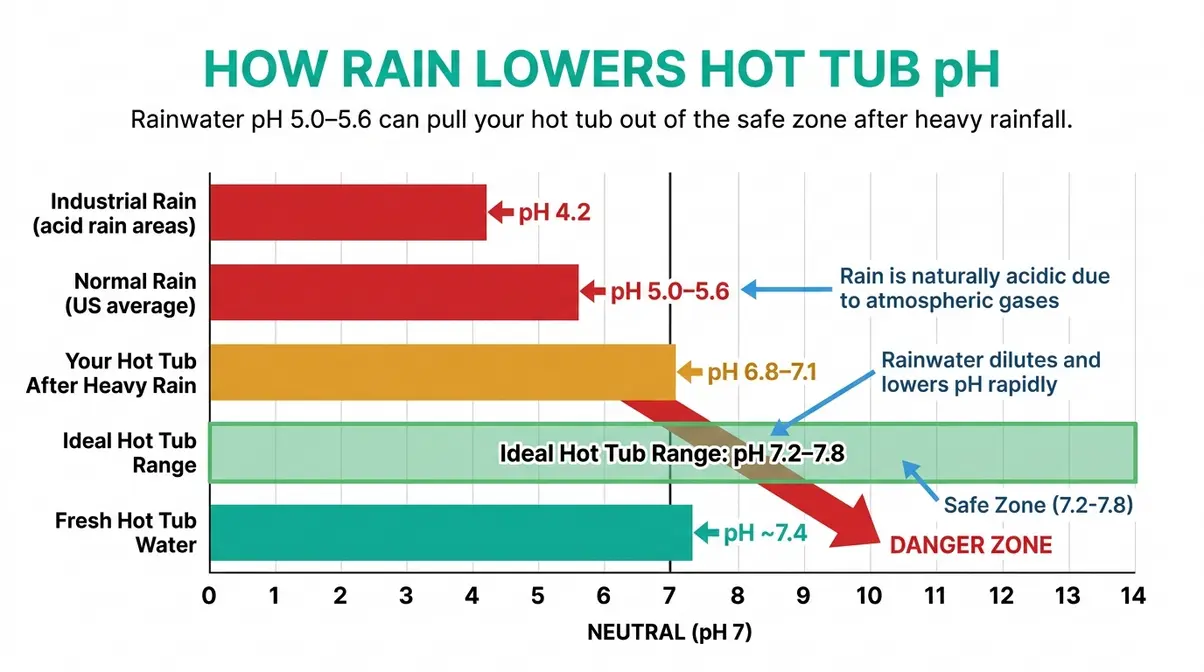
When asking is it safe to use a hot tub in the rain, you must also consider the aftermath on your water chemistry. Here’s the data point most guides skip: rainwater has an average pH of 5.0–5.6, making it meaningfully acidic compared to your hot tub’s ideal range of 7.2–7.8. Every drop of rain that lands in your tub nudges your chemistry toward the danger zone. The EPA’s acid rain monitoring data confirms that even “normal” rain in many U.S. regions measures well below neutral pH, and industrial areas can see rain as acidic as pH 4.2 (EPA acid rain research, EPA, 2026).
This matters because unbalanced water doesn’t just feel uncomfortable — it accelerates corrosion of your equipment, irritates skin and eyes, and reduces the effectiveness of your sanitizer (the chemical that keeps harmful bacteria at bay).
Why Rainwater Lowers Your pH
pH (a measure of how acidic or alkaline your water is) works on a scale of 0–14, with 7 being neutral. Your hot tub needs to stay between 7.2 and 7.8 to be safe and comfortable. Rainwater sits well below that range. When rain dilutes your tub water, it pulls the pH down and simultaneously lowers total alkalinity (TA) — the buffer that stabilizes pH and prevents wild swings.
Low pH causes two immediate problems. First, it makes your sanitizer less effective, meaning bacteria can survive at levels that would normally be eliminated. Second, acidic water corrodes metal fittings, pump seals, and your heater element over time — repairs that cost hundreds of dollars. A single heavy storm can shift your pH by 0.3–0.5 points, enough to push you out of the safe range.
Post-Rain Water Testing Steps
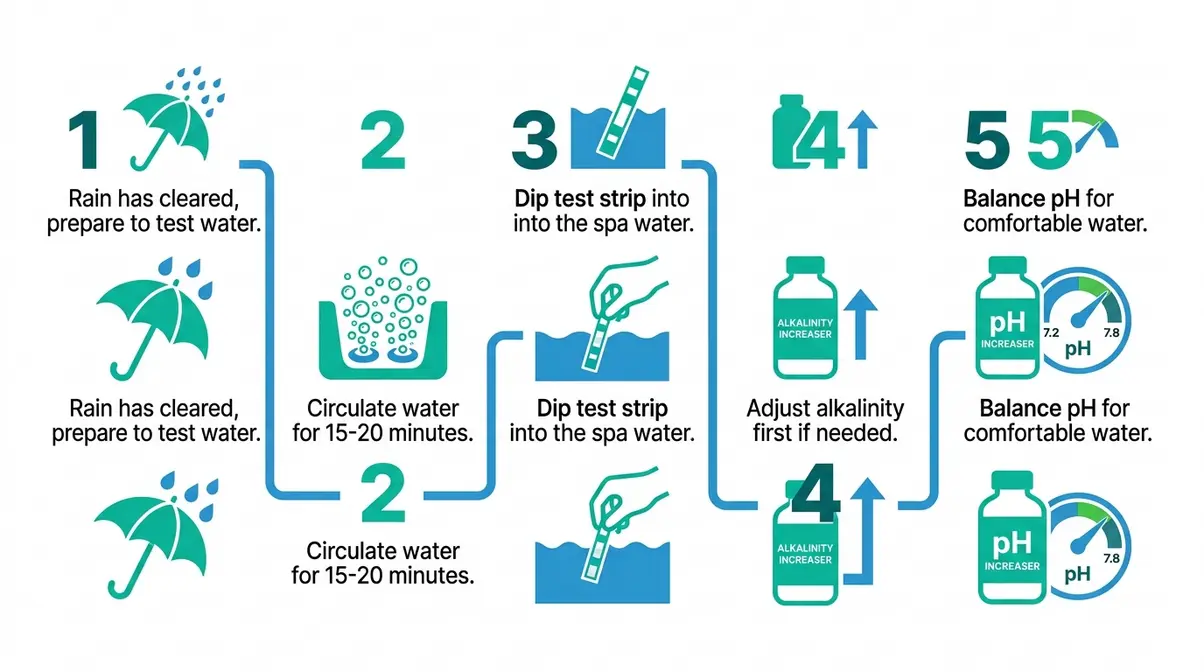
Tools needed: Test strips or a liquid test kit, pH increaser (sodium carbonate), alkalinity increaser (sodium bicarbonate), and approximately 15 minutes. Check our comprehensive water maintenance guide for more detailed chemical balancing tips.
- Wait for the rain to stop — testing during active rainfall gives you a moving target. Wait until precipitation has fully ceased.
- Run the jets for 5 minutes — this circulates the water fully so your test sample is representative of the entire tub, not just the surface.
- Test pH and total alkalinity — dip a test strip for 15 seconds, then read against the color chart. Ideal pH: 7.2–7.8. Ideal TA: 80–120 ppm (parts per million — a measure of chemical concentration).
- Adjust alkalinity first — if TA is below 80 ppm, add alkalinity increaser per the product label. Alkalinity stabilizes pH, so always correct it before addressing pH directly.
- Adjust pH second — if pH reads below 7.2 after adjusting TA, add pH increaser in small doses. Retest after 30 minutes. Repeat until stable.
Maintenance professionals recommend testing within 2 hours of any heavy downpour, especially in summer when storms are frequent. Catching the imbalance early prevents bacteria from establishing a foothold.
Protecting Cover & Equipment
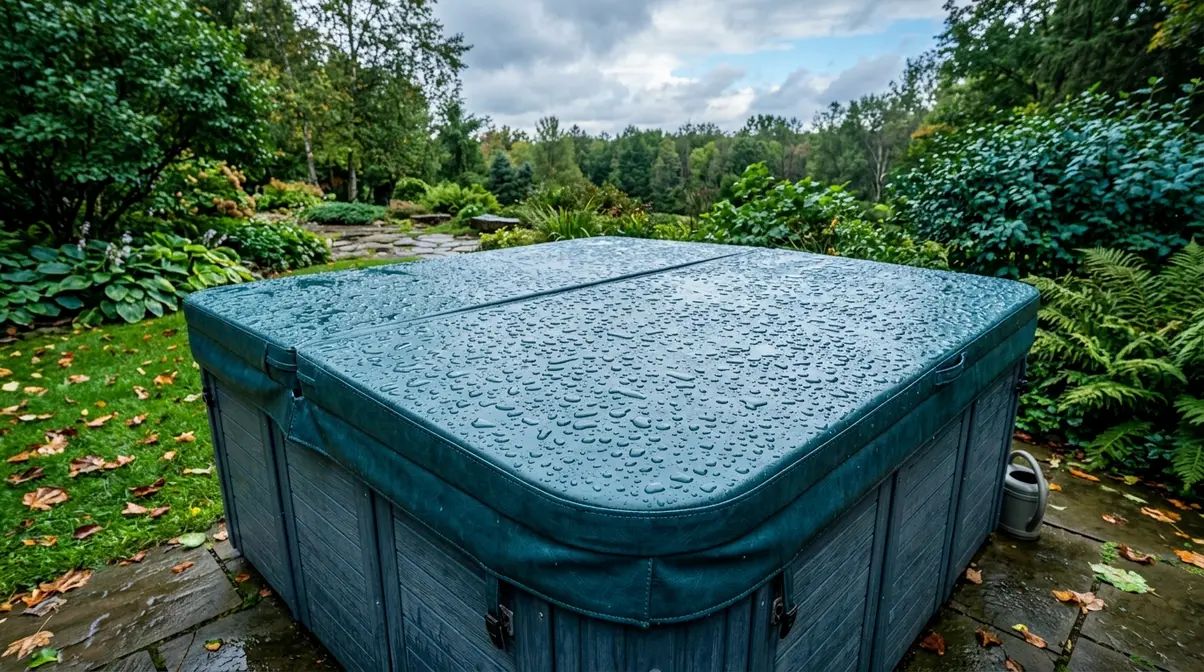
Your hot tub cover takes the brunt of storm damage — and most owners don’t realize how much abuse a heavy rain event delivers. Hot tub owners report that UV-degraded covers absorb water over time, eventually becoming waterlogged and heavy enough to strain the cover lifter mechanism and allow cold air infiltration. Learning how to properly winterize a hot tub can also help protect your cover from severe seasonal storms.
After any significant storm, check your cover for standing water pooling in the center — this indicates the foam core is beginning to saturate. Wipe the cover surface with a vinyl protectant every 60–90 days to maintain its water-shedding ability. If water has entered the foam core, replacement is typically more cost-effective than repair.
For equipment, inspect the cabinet panels after heavy rain to ensure no water has pooled near the equipment bay. Most modern hot tubs are weather-sealed, but older units or those with cracked cabinet panels can allow moisture near the pump and heater — a potential short-circuit hazard.
Hot Tub Health Risks You Should Know About
⚠️ Medical Disclaimer: The health information in this section is for general educational purposes only and does not constitute medical advice. Consult your physician before using a hot tub if you have any pre-existing medical condition, including cardiovascular disease, atrial fibrillation (AFib), high blood pressure, diabetes, skin conditions, or if you are pregnant. Individual health circumstances vary significantly.
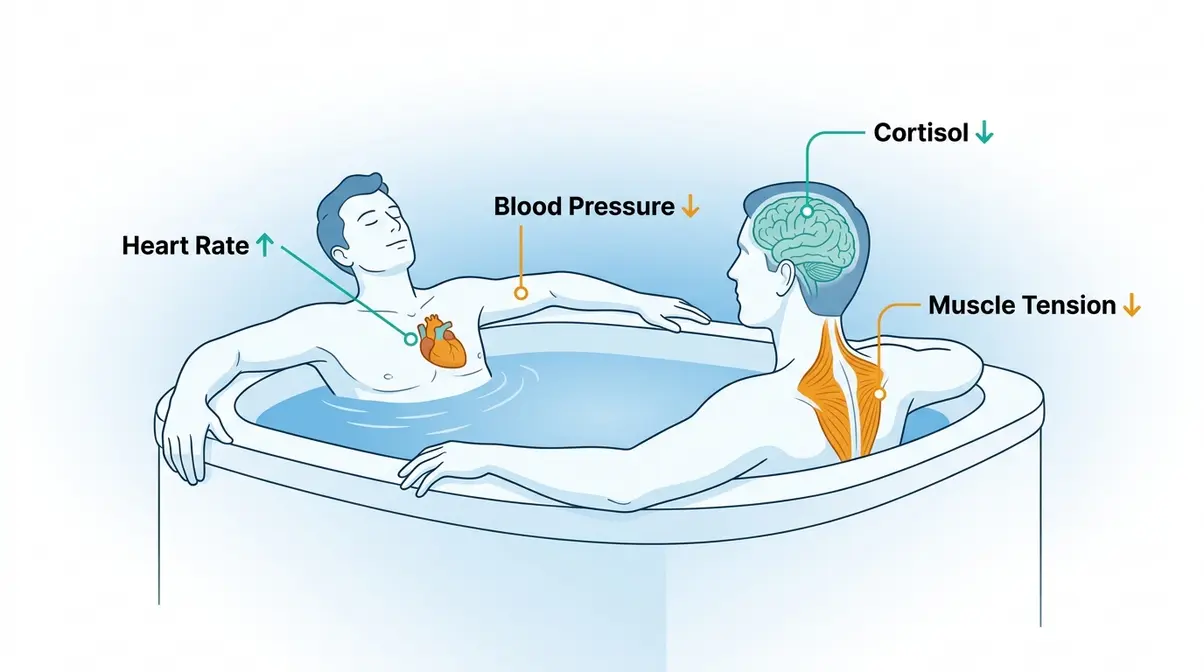
Most guides stop at lightning. This one doesn’t. Hot tubs create a physiologically intense environment — heat, pressure, and buoyancy all affect your body in ways worth understanding. The good news: for most healthy adults, the effects are overwhelmingly positive. The cautions are specific, not universal.
Cardiovascular Risks & 15-Min
Research from PubMed shows that hot water immersion raises core body temperature and dilates blood vessels, which causes a measurable drop in blood pressure. For healthy adults, this is relaxing and even therapeutic. For people with cardiovascular conditions, the same response can trigger complications. A recent study published in Heart journal found that regular hot tub use was associated with reduced cardiovascular mortality in healthy individuals — but the keyword is “healthy.”
The 15-minute rule exists because prolonged heat exposure progressively stresses the cardiovascular system. Most cardiologists and spa safety guidelines recommend limiting continuous soaking sessions to 15 minutes at temperatures above 104°F (40°C), particularly for anyone over 50. After 15 minutes, exit, cool down for a few minutes, and re-enter if desired.
Why should people over 50 exercise extra caution? Blood pressure regulation becomes less efficient with age, and the sudden vasodilation (widening of blood vessels) from hot water can cause dizziness or fainting upon standing. Always rise slowly from a hot tub, and never soak alone if you have any cardiovascular concerns. If you have a specific heart device, you should learn if you can use a hot tub with a pacemaker before getting in.
Can a hot tub trigger AFib?
A hot tub can trigger AFib in susceptible individuals, particularly those with existing heart rhythm abnormalities. Heat causes rapid heart rate increases and significant blood pressure changes through vasodilation. Research suggests that for people with undiagnosed or managed AFib, this cardiovascular stress can precipitate an irregular rhythm episode. If you have any history of heart arrhythmia, consult your cardiologist before using a hot tub — even in normal, non-rainy conditions.
Hot Tub Folliculitis Causes
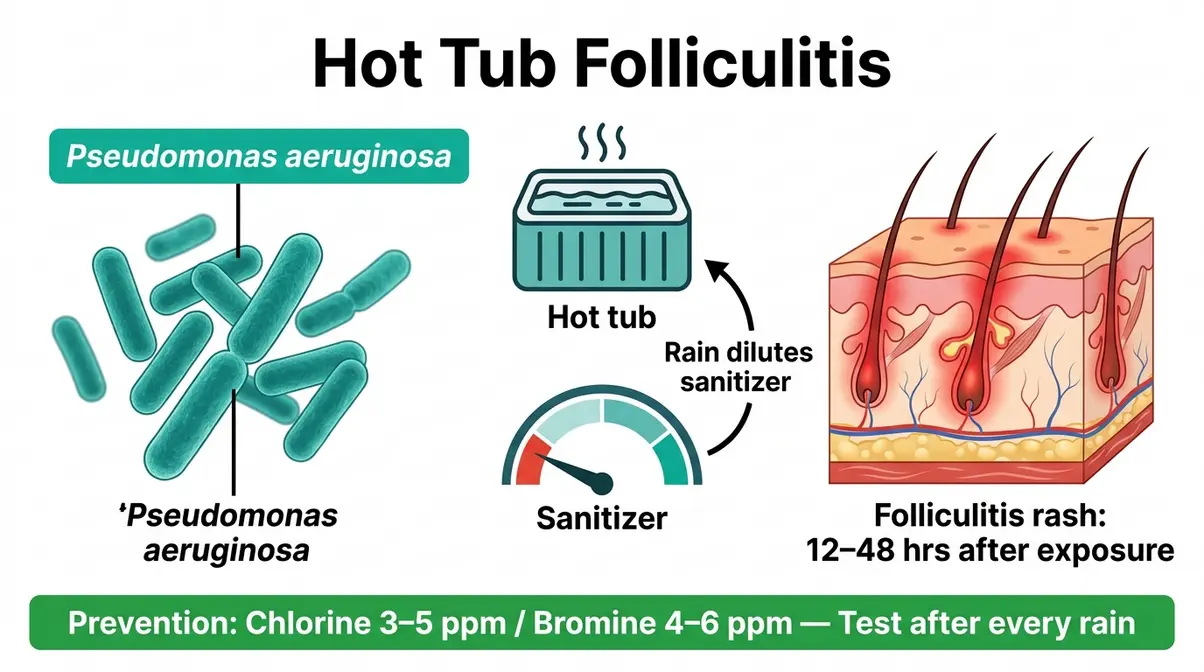
Hot tub folliculitis is a skin infection caused by Pseudomonas aeruginosa, a bacterium that thrives in warm, inadequately sanitized water. The CDC confirms that Pseudomonas aeruginosa is the primary pathogen responsible for hot tub-related skin infections, presenting as a red, itchy rash — usually appearing 12–48 hours after exposure — concentrated around hair follicles on the torso and limbs (CDC healthy swimming guidelines, CDC, 2026).
Rain complicates this because it dilutes your sanitizer (chlorine or bromine), reducing its ability to kill Pseudomonas and other pathogens. A post-storm tub with low sanitizer levels is precisely the environment where folliculitis risk climbs. Prevention is straightforward: maintain free chlorine at 3–5 ppm (parts per million) or bromine at 4–6 ppm, and always test sanitizer levels after rain. If levels have dropped, shock treat the water before your next soak to prevent hot tub folliculitis.
Is hot tub bad for folliculitis?
Soaking in a hot tub with active folliculitis is not recommended and can worsen the infection. Hot water opens pores and increases circulation to the skin, which may spread Pseudomonas aeruginosa bacteria to unaffected follicles. The CDC identifies hot tubs with inadequate sanitizer levels as the primary source of Pseudomonas folliculitis outbreaks. Wait until the rash has fully cleared before returning to the tub, and consult a dermatologist if symptoms persist beyond a week.
Benefits: Sciatica & Cortisol
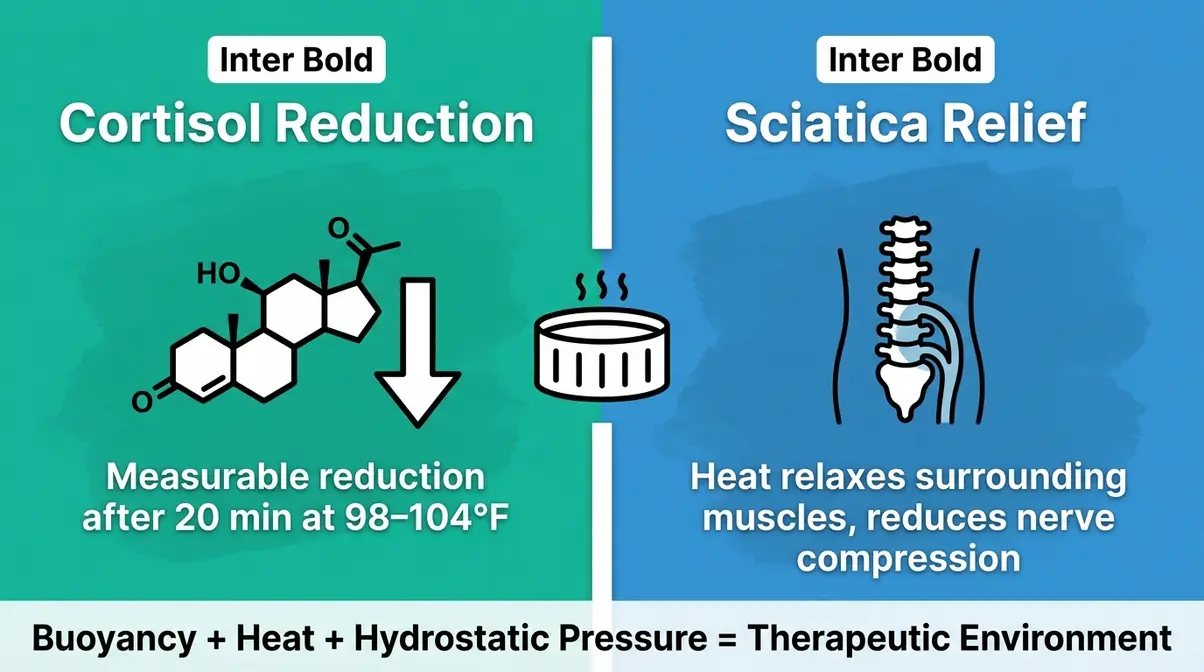
The health story isn’t all caution — research from PubMed Central shows that warm water immersion significantly reduces cortisol levels (your body’s primary stress hormone), with measurable effects after sessions as short as 20 minutes. Hot tub owners consistently report improved sleep quality, reduced muscle tension, and lower perceived stress after regular soaking.
Will a hot tub help a sciatic nerve? According to Mayo Clinic guidance on heat therapy for back pain, warm water immersion can reduce sciatic nerve pain by relaxing the surrounding muscles and improving circulation to the affected area. This isn’t a cure — it’s temporary relief — but for chronic sciatica sufferers or those dealing with lower back pain, a 15-minute soak can meaningfully reduce discomfort between flare-ups.
The combination of buoyancy (which reduces spinal compression), heat (which relaxes muscle spasm), and hydrostatic pressure (the gentle pressure of water against your body) creates a therapeutic environment that’s difficult to replicate outside a clinical setting.
Who Should Consult a Doctor
Certain groups should speak with their physician before any hot tub use — rainy day or otherwise:
- People with heart conditions or AFib — heat stress and blood pressure changes require individual medical assessment
- Those with high blood pressure — vasodilation effects can interact unpredictably with blood pressure medications
- Pregnant individuals — core temperature elevation above 101°F poses documented fetal risks, particularly in the first trimester
- People with active skin infections — open wounds or active folliculitis can worsen with hot water exposure
- Individuals on certain medications — blood thinners, diuretics, and sedatives interact with heat-induced vasodilation
Why should people over 50 not use a hot tub without precautions? The concern isn’t that hot tubs are dangerous for older adults — it’s that age-related cardiovascular changes mean the same water temperature that feels comfortable can stress the system more than a younger person would experience. The 15-minute rule, lower temperatures (under 102°F), and never soaking alone are the key precautions for this group.
Common Mistakes and When to Skip the Soak
Knowing whether is it safe to use a hot tub in the rain requires avoiding common pitfalls. The Rain Risk Framework makes decisions easier, but hot tub owners regularly make a handful of predictable mistakes in rainy weather. Knowing them in advance means you won’t repeat them.
3 Mistakes in Rainy Weather
Mistake 1: Ignoring distant thunder. The most common error is treating distant thunder as “not my problem.” Thunder that you can hear means lightning is within 10 miles. That’s close enough. The Rain Risk Framework classifies any audible thunder — regardless of distance — as at minimum a Yellow Flag, and thunder within 30 seconds of a flash as a Red Stop.
Mistake 2: Skipping the post-rain chemistry test. It feels like a small amount of rain couldn’t matter much. Community consensus across hot tub forums indicates that even a 30-minute light shower can shift pH by 0.2–0.3 points in smaller tubs (under 350 gallons). Over three or four rainy days without testing, that drift compounds into a genuine water quality problem.
Mistake 3: Staying in “just a little longer” during a Yellow Flag. Yellow Flag conditions are a signal to prepare to exit, not a license to linger. Weather can escalate from distant thunder to an active storm in minutes. The safest habit is to exit proactively at Yellow, rather than reactively at Red.
When Rain Makes It a Bad Idea
Even with Green Light conditions, some situations call for skipping the soak entirely:
- You haven’t tested your water in more than 72 hours — especially after recent rain. Low sanitizer levels combined with rain dilution create a bacteria-friendly environment.
- Your cover is damaged or waterlogged — a compromised cover means rain has likely been entering your tub unfiltered, potentially introducing debris and organic matter that feed bacterial growth.
- You have an active skin condition — folliculitis, open cuts, or eczema can worsen with chemically unbalanced water.
- A storm is forecast within the hour — Green Light conditions can shift to Red Stop quickly. If radar shows a cell approaching, save the soak for tomorrow.
- You’re alone and have any cardiovascular concerns — never soak alone if there’s any possibility of dizziness or a medical event.
Frequently Asked Questions
Why is there a 15-minute rule?
The 15-minute rule exists because prolonged heat exposure progressively stresses the cardiovascular system. At temperatures above 104°F (40°C), according to cardiovascular guidelines, your core body temperature rises continuously, forcing your heart to work harder to maintain normal function. After approximately 15 minutes, this effort becomes significant enough to cause dizziness, nausea, or fainting — particularly in older adults or those with cardiovascular conditions. Exiting after 15 minutes, cooling briefly, then re-entering is safer than one continuous long session.
Will a hot tub help sciatica?
A hot tub can provide meaningful temporary relief from sciatic nerve pain. Mayo Clinic guidance on heat therapy for back pain supports warm water immersion as a method for relaxing the muscles surrounding the sciatic nerve, reducing spasm-related compression. Buoyancy also reduces spinal loading, which decreases pressure on the nerve root. Hot tub owners with sciatica report that 15-minute sessions at 100–102°F offer noticeable short-term relief, though heat therapy is not a substitute for medical treatment of the underlying cause.
What causes hot tub folliculitis?
**Pseudomonas aeruginosa is the bacterium responsible for hot tub folliculitis.* It thrives in warm water environments where chlorine or bromine levels have dropped below effective sanitizing thresholds — which is exactly what happens when rain dilutes your hot tub’s chemistry. The CDC confirms Pseudomonas* as the primary pathogen in hot tub-related skin infections. The rash typically appears 12–48 hours after exposure as red, itchy bumps concentrated around hair follicles on the torso, buttocks, and limbs.
Does a hot tub lower cortisol?
Research from PubMed Central confirms that warm water immersion measurably reduces cortisol, the body’s primary stress hormone. Studies show significant cortisol reduction after sessions as short as 20 minutes in water between 98–104°F. The mechanism involves both the parasympathetic nervous system activation from heat and the psychological effect of sensory relaxation. Hot tub owners consistently report improved mood and reduced anxiety after regular soaking, which aligns with the documented cortisol-lowering effect.
Why avoid hot tubs over 50?
People over 50 can use hot tubs safely with specific precautions — the concern is cardiovascular, not a blanket prohibition. Age-related changes reduce the efficiency of blood pressure regulation, meaning the vasodilation caused by hot water can trigger dizziness or fainting upon standing. Cardiologists recommend that adults over 50 limit sessions to 15 minutes, keep water temperature at or below 102°F, rise slowly when exiting, and never soak alone. Anyone with diagnosed heart conditions should consult their doctor first.
Signs Your Heart is Failing
The four key warning signs of early heart failure are: unexplained fatigue or weakness during normal activity, shortness of breath (especially when lying down or during mild exertion), swelling in the legs, ankles, or feet (edema), and a persistent dry cough or wheezing. If you experience any of these symptoms, consult a physician before using a hot tub. Heat-induced cardiovascular stress can exacerbate early-stage heart failure, and a hot tub soak is not an appropriate environment for someone with unmanaged cardiac symptoms.
Can you get electrocuted?
Yes, if lightning is present, the risk of electrocution in a hot tub is severe. While rain itself does not conduct electricity, water is a highly effective conductor for lightning strikes. Even if lightning strikes the ground nearby, the electrical current can travel through the water and plumbing systems. This is why the National Weather Service mandates exiting all bodies of water immediately at the first sign of a thunderstorm.
Should you cover it in rain?
Yes, keeping your hot tub covered during heavy rain is highly recommended. A good cover prevents acidic rainwater from diluting your carefully balanced water chemistry and lowering your sanitizer levels. It also keeps out debris like leaves and dirt that storms often blow around. If you are not actively soaking, securing the cover protects your equipment and saves you from having to rebalance the water the next day.
The Rain Risk Framework: Next Steps
For most hot tub owners, soaking in the rain is one of the hobby’s great pleasures. Light rain poses no danger, creates a genuinely atmospheric experience, and — under a gazebo or in the open — feels like a reward for living well. The data backs this up: the NWS 30/30 Rule gives you a precise, science-based exit signal, and the Rain Risk Framework turns a moment of uncertainty into a 10-second decision. The only absolute rule is the one that was always true: lightning ends the soak, full stop.
The Rain Risk Framework — Green for light rain, Yellow for heavy downpour or distant thunder, Red for any active storm — is a tool you can use for every soak, not just rainy ones. It builds the habit of sky-awareness that keeps you safe year-round.
Your next step: bookmark the Rain Risk Framework table, run a chemistry test after your next rainy soak, and if you have any cardiovascular concerns, have a quick conversation with your doctor. Ultimately, is it safe to use a hot tub in the rain? Yes, as long as you respect the weather. Then get back in the water — because a warm tub in a gentle rain is genuinely one of life’s better moments.

David King
Hot tub tester and writer at One Hot Tub.