
What’s in this guide
- Is It Safe to Use a Hot Tub with a Pacemaker?
- How Hot Tubs Affect the Heart
- 5-Step Hot Tub Safety Protocol
- Warning Signs: When to Get Out of the Hot Tub Immediately
- Living with a Pacemaker: 4 Things to Avoid in Daily Life
- Choosing a Hot Tub When You Have a Pacemaker
- Frequently Asked Questions
- Limitations and Alternatives
- A Final Word on Hot Tub Use with a Pacemaker
⚕️ Medical Disclaimer: This article is for informational purposes only and does not constitute medical advice. Always consult your cardiologist or treating physician before using a hot tub or making any changes to your activity level. Individual medical circumstances vary significantly. This content has been medically reviewed by .
You asked your cardiologist whether a hot tub is safe with your pacemaker. The answer you got — “check with your doctor” — was probably the same answer you already had. That kind of hedging is frustrating, especially when you are looking for a straight answer about something as specific as water temperature and your implanted device.
Your pacemaker (an implanted cardiac device that sends electrical signals to regulate your heartbeat) is designed to keep your heart rhythm stable. A hot tub is designed to relax you. The problem is that no one has clearly explained where those two things intersect — or where they don’t.
In this guide, you will learn the exact parameters — water temperature, time limits, warning signs, and what to watch for — so you can make an informed decision about keeping your hot tub with pacemaker safe. In our comprehensive review of clinical guidelines and patient safety protocols, we cover the science of how hot tubs affect your heart, a 5-step safety protocol reviewed by a cardiologist, and answers to the most common questions pacemaker patients ask.
Keeping a hot tub with pacemaker safe is generally possible for most patients — but the heat itself, not the device electronics, is the primary risk. Always get explicit clearance from your cardiologist first.
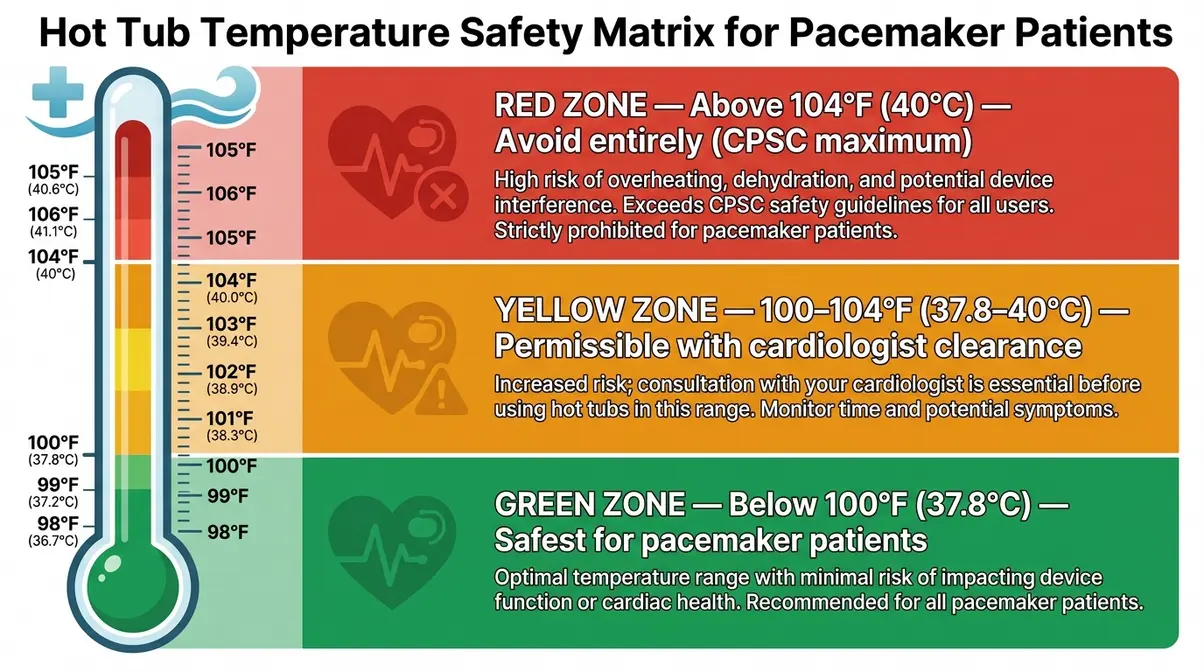
- Temperature: Keep water below 104°F (40°C) — the CPSC-mandated maximum for all users
- Time limit: Cap each soak at 10–15 minutes to prevent dangerous drops in blood pressure
- Device risk is low: Modern pacemakers have shielded circuitry that resists hot tub pump interference (The Two-Risk Framework)
- Exit immediately if you feel dizziness, palpitations, tingling, or unusual spasms
- Always tell a companion you have a pacemaker before entering any hot tub
Is It Safe to Use a Hot Tub with a Pacemaker?
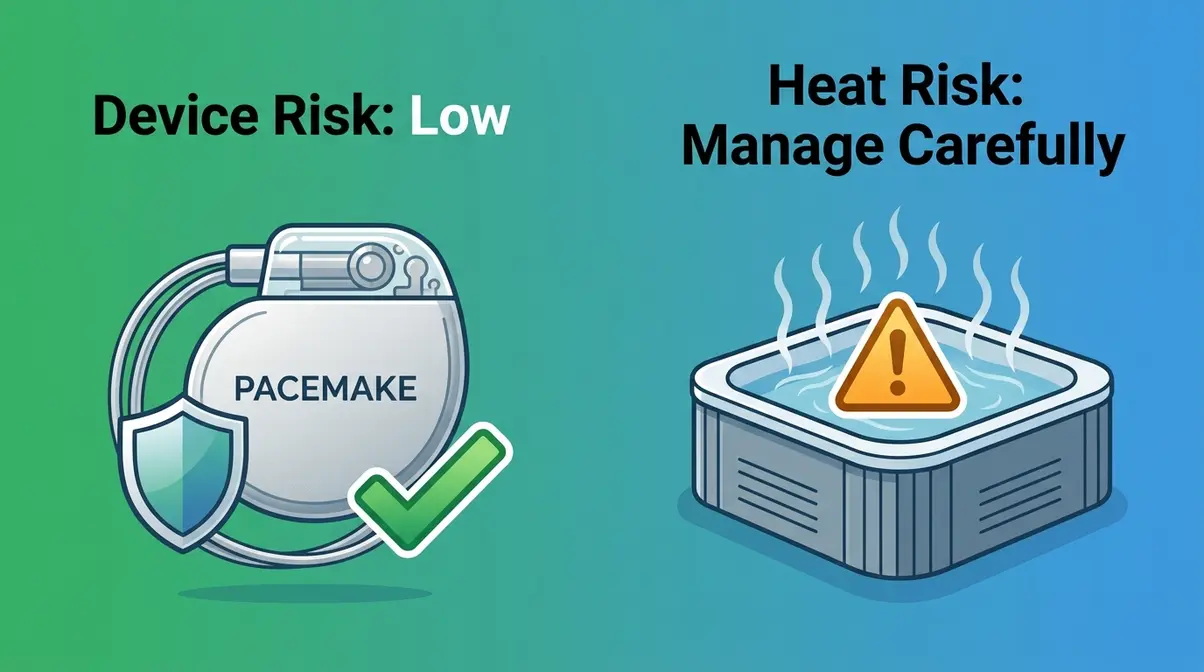
For most pacemaker patients, understanding how you can safely use a hot tub with a pacemaker is medically permissible — but only after your cardiologist gives explicit clearance. The answer is not a flat yes or no. It depends on which of two entirely separate risks applies to your situation. Understanding that distinction is the most important thing this guide can give you.
The Short Answer
Hot tub use with a pacemaker is generally considered low-risk for device interference but carries a meaningful cardiovascular risk from heat. Most modern pacemakers are engineered with shielding that resists the electromagnetic fields produced by standard hot tub equipment. The greater danger comes from what hot water does to your circulation — not what it does to your device. Consult your cardiologist before your first soak, and bring the specific parameters from this guide to that conversation.
“A Dr won’t say it’s safe as they will be liable if it turns out not to be.”
— Pacemaker patient community forum
That frustration is completely understandable. Physicians are cautious with language for legal and ethical reasons, and that caution can feel like an evasion when you need a concrete answer. Here is what the research actually says — broken into the two distinct risks that every other source conflates.
EMI Risk: What the Research Actually Shows
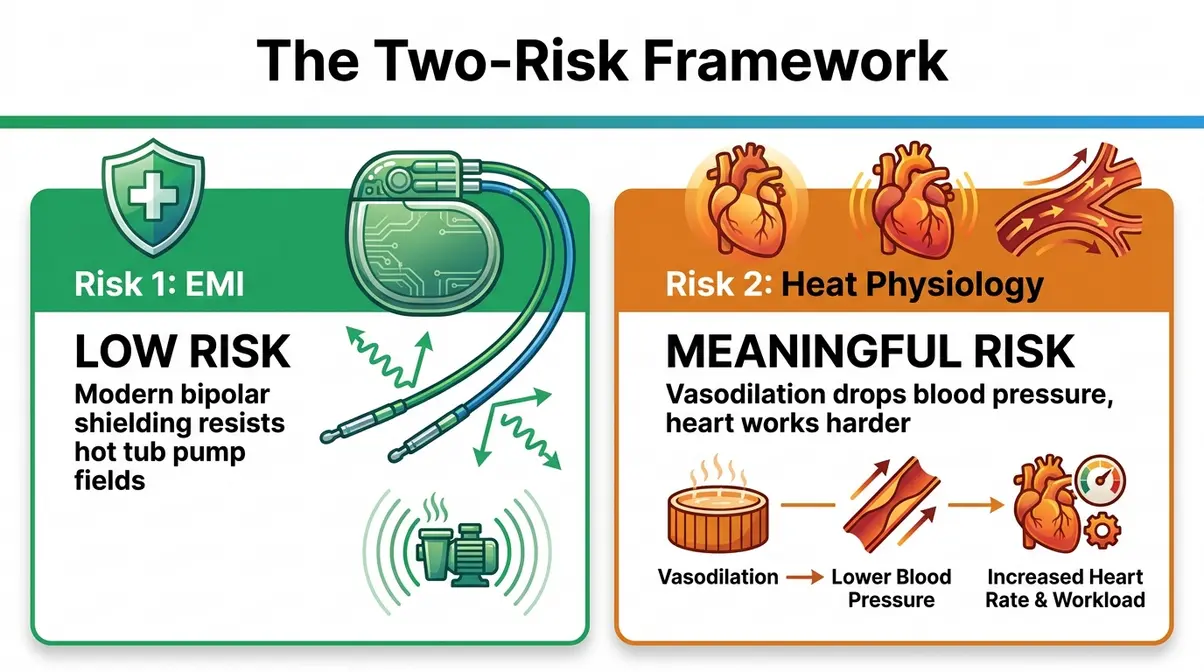
Electromagnetic interference (EMI) — a disruption to electronic devices caused by nearby magnetic or electrical fields — is the first risk category in what we call The Two-Risk Framework. When most pacemaker patients worry about hot tubs, EMI is what they picture: the pump motor somehow “confusing” or “overriding” the device.
The reassuring reality is that this risk is very low for patients with modern devices. Pacemakers manufactured after approximately 2000 use bipolar sensing technology, a design in which both electrical leads are placed close together inside the heart. This configuration makes the device far less sensitive to external electrical noise. Research published in the Journal of the American College of Cardiology and reviewed in NCBI PMC literature confirms that bipolar pacemakers demonstrate significantly reduced susceptibility to common household and recreational EMI sources compared to older unipolar designs.
Clinical studies confirm that modern bipolar pacemakers feature advanced shielding that standard hot tub pump motors cannot overcome.
The American Heart Association notes that the devices most likely to cause clinically significant EMI are high-powered industrial equipment, certain medical imaging machines (like MRI scanners), and arc welding tools — not residential hot tub motors. Medtronic, one of the world’s largest pacemaker manufacturers, confirms that hot tubs do not generally pose an EMI risk to their implanted cardiac devices.
This matters for you because it means the anxiety about your device being “scrambled” by a hot tub jet is largely unfounded — provided your pacemaker is a modern model. Ask your cardiologist specifically whether your device uses bipolar sensing. If it does, EMI from a hot tub is a minimal concern.
Heat Risk: The Real Danger for Pacemaker Users
The second risk in The Two-Risk Framework is the one most online sources miss entirely: what hot water does to your cardiovascular system, independent of your pacemaker’s electronics.
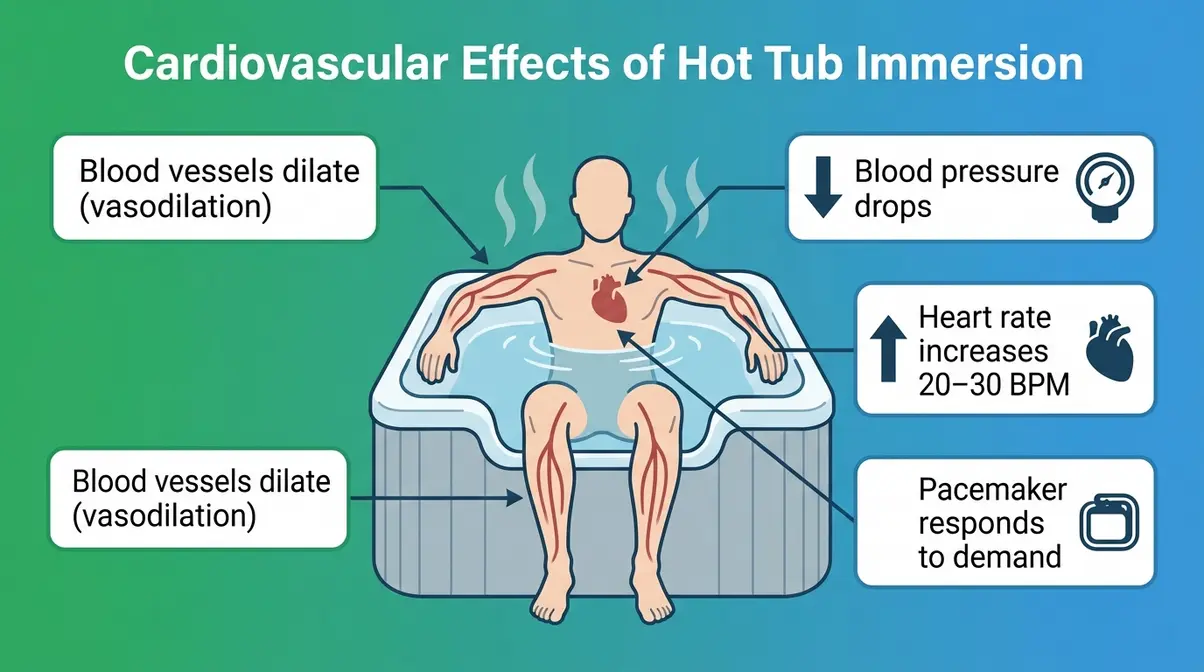
When you immerse your body in hot water, your blood vessels dilate (widen) to release heat. This process — called vasodilation — causes a rapid drop in blood pressure. Your heart must then work harder and beat faster to maintain adequate circulation to your brain and vital organs. For a person with a healthy heart, this compensation happens automatically. For someone with an underlying cardiac condition, this increased workload can trigger palpitations (irregular or racing heartbeats), dizziness, lightheadedness, or in serious cases, a fainting episode.
Your pacemaker manages your heart’s electrical rhythm, but it cannot prevent the physiological stress that heat places on the cardiovascular system as a whole. A rate-responsive pacemaker (one that adjusts your heart rate based on activity) may actually accelerate your heart rate in response to the physical stress of heat immersion — a phenomenon some patients describe as an unusual “spasm” or sensation in the chest.
The Cleveland Clinic warns that hot tubs can place significant strain on the heart, particularly for patients with existing cardiovascular disease. This heat-physiology risk — not EMI — is the primary reason your cardiologist exercises caution. Consult your cardiologist about your specific cardiac history before using any hot tub, regardless of your pacemaker model.
How Hot Tubs Affect the Heart
Understanding the physiology behind heat and your heart helps you recognize warning signs before they become emergencies. This section explains what is happening inside your body during a hot tub soak — and why certain people face greater risk than others.
Vasodilation: Why Heat Drops Your Blood Pressure
Vasodilation is the widening of blood vessels in response to heat. Think of it like a garden hose: when you widen the hose, the same volume of water travels at lower pressure. The same principle applies to your bloodstream. As your blood vessels expand, blood pressure drops — sometimes significantly.
Your heart responds by beating faster and with greater force to compensate. In clinical terms, this is called an increased cardiac output demand. Research reviewed by the Mayo Clinic confirms that immersion in water above 100°F (38°C) can raise heart rate by 20–30 beats per minute in healthy adults. For someone with a compromised cardiovascular system, that spike can be enough to trigger symptoms ranging from mild dizziness to a more serious cardiac event.
The U.S. Consumer Product Safety Commission (CPSC) sets the maximum recommended water temperature for all hot tub users at 104°F (40°C). This limit exists precisely because temperatures above that threshold accelerate vasodilation to a degree that creates unacceptable cardiovascular risk for a broad population — including healthy individuals. For pacemaker patients, staying well below that ceiling (ideally 100–102°F / 37.8–38.9°C) provides an additional safety margin. Consult your cardiologist about the right target temperature for your specific condition.
Who Faces the Greatest Risk
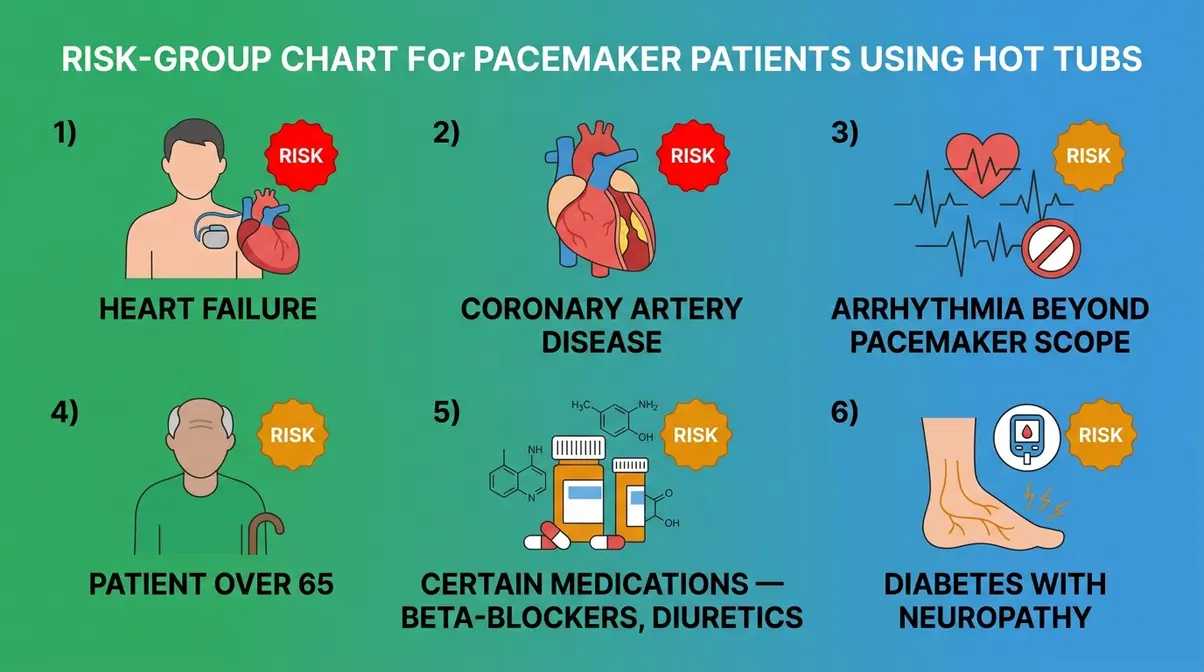
Not every pacemaker patient faces the same level of heat risk. The cardiovascular response to hot water is significantly more dangerous in people with certain underlying conditions. According to the Cleveland Clinic and guidance from the American Heart Association, the following groups should exercise particular caution — or avoid hot tubs entirely until cleared by a specialist:
- Patients with heart failure: The heart is already working near its maximum capacity. Additional demand from vasodilation can tip the system into decompensation.
- Patients with coronary artery disease or recent cardiac events: Heat-induced demand may exceed what narrowed arteries can supply, risking ischemia (reduced blood flow to the heart muscle).
- Patients with arrhythmias beyond the pacemaker’s scope: If your pacemaker manages bradycardia (slow heart rate) but you also have atrial fibrillation, hot tub-induced cardiovascular stress may worsen the arrhythmia.
- Patients over 65: Age-related reduction in cardiovascular reserve means the heart has less room to compensate for the demands of heat immersion.
- Patients on certain medications: Beta-blockers, diuretics, and vasodilators can amplify the blood pressure drop caused by hot water. Additionally, you must consider if you can go in a hot tub on blood thinners since these also affect circulation.
- Patients with diabetes: Neuropathy can mask water temperature perception. Those wondering if type 1 diabetics can go in hot tubs should consult their endocrinologist alongside their cardiologist.
Should heart patients avoid hot tubs?
Heart patients should not automatically avoid hot tubs, but they require individualized assessment. Patients with heart failure, recent cardiac events, or severe coronary artery disease face the greatest risk from heat-induced cardiovascular stress. The Cleveland Clinic notes that hot water raises heart rate by 20-30 beats per minute in healthy adults, a demand that can exceed the capacity of a compromised heart. For patients with stable, well-managed cardiac conditions and a cleared pacemaker, hot tub use with appropriate precautions is often permissible.
Why should people over 50 not use a hot tub?
The concern for people over 50 is not age itself but the cardiovascular changes that accompany aging. As the cardiovascular system ages, the heart has less reserve capacity to compensate for the blood pressure drop caused by hot water vasodilation. Additionally, people over 50 are more likely to have underlying conditions that amplify hot tub risk. This does not mean hot tubs are off-limits after 50 — it simply means clearance and precautions are non-negotiable.
5-Step Hot Tub Safety Protocol
⚠️ Prerequisite: Before following this protocol, ensure you have received explicit clearance from your cardiologist. This protocol is a framework for safer use — not a substitute for individualized medical guidance.
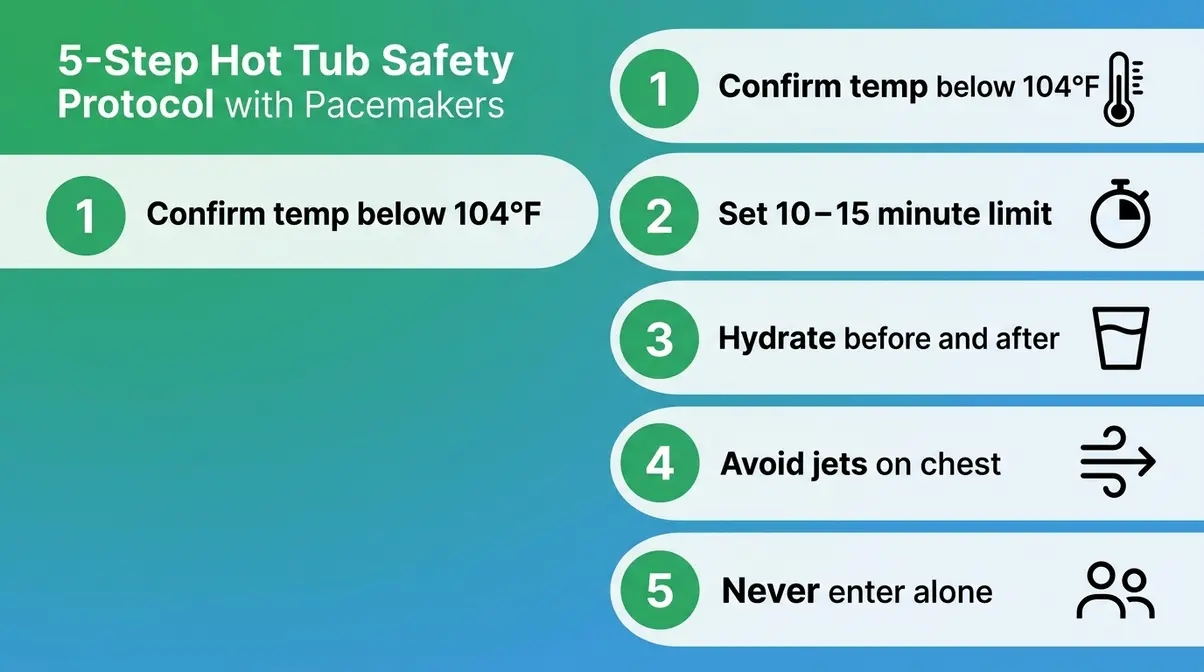
Based on our methodology of cross-referencing CPSC standards with cardiac care guidelines, this protocol applies The Two-Risk Framework in practice. Keeping a hot tub with pacemaker safe requires addressing both EMI precautions and heat physiology management in five concrete steps. Each step includes a specific parameter and a brief explanation of what could go wrong if you skip it.
- Estimated Time: 15 minutes
- What You Need:
- Waterproof timer
- Thermometer
- 16 oz of drinking water
- A companion
Step 1: Confirm Your Water Temperature Before Entering
Check the hot tub thermometer and confirm the water temperature is at or below 104°F (40°C) — the CPSC maximum. For added safety, target 100–102°F (37.8–38.9°C). If the temperature is above 104°F, wait until it drops before entering. Why this matters: water above 104°F accelerates vasodilation rapidly, causing a steeper blood pressure drop than your cardiovascular system may be able to compensate for — particularly if your heart already relies on pacemaker support.
Step 2: Set a 10–15 Minute Time Limit
Use a waterproof timer or ask a companion to track time. Exit the hot tub after 10–15 minutes, regardless of how you feel. The cardiovascular effects of heat are cumulative — blood pressure continues to drop the longer you remain immersed, even if you feel comfortable. Many patients report that symptoms like dizziness and tingling appear suddenly, not gradually. Exiting before that threshold prevents the blood pressure from dropping to a dangerous level.
Step 3: Hydrate Before and After
Drink at least 8 ounces (240 ml) of water before entering and another 8 ounces within 30 minutes of exiting. Hot tub immersion causes fluid loss through sweating and vasodilation. Dehydration reduces blood volume, which compounds the blood pressure drop caused by heat. For patients on diuretic medications (water pills), this step is especially important — discuss your hydration targets with your cardiologist.
Step 4: Avoid High-Pressure Jets Directed at the Chest
Position yourself so that the hot tub jets are directed at your legs, back, or shoulders — not your chest. The pacemaker implant site (typically below the left or right collarbone) is covered by a thin layer of tissue, and sustained high-pressure water against that area is uncomfortable and potentially inadvisable for healing or recently implanted devices. This is a precautionary step rather than a documented clinical risk, but it is widely recommended by cardiac device specialists. Consult your cardiologist if your device was implanted within the past six months.
Step 5: Never Enter Alone
Always have a companion present who knows you have a pacemaker. Tell them specifically: “If I seem confused, lose consciousness, or ask to get out suddenly, help me exit immediately and call emergency services.” Vasodilation-induced blood pressure drops can cause rapid-onset dizziness or fainting — having someone present who is aware of your situation can be life-saving. This rule applies to every soak, not just the first one.
Warning Signs: When to Get Out of the Hot Tub Immediately
Knowing when to exit is just as important as knowing how to enter safely. The Two-Risk Framework reminds us that the warning signs below are almost entirely heat-physiology signals — they indicate that your cardiovascular system is under more stress than it can safely manage, not that your pacemaker is malfunctioning.
Physical Symptoms That Demand Immediate Action
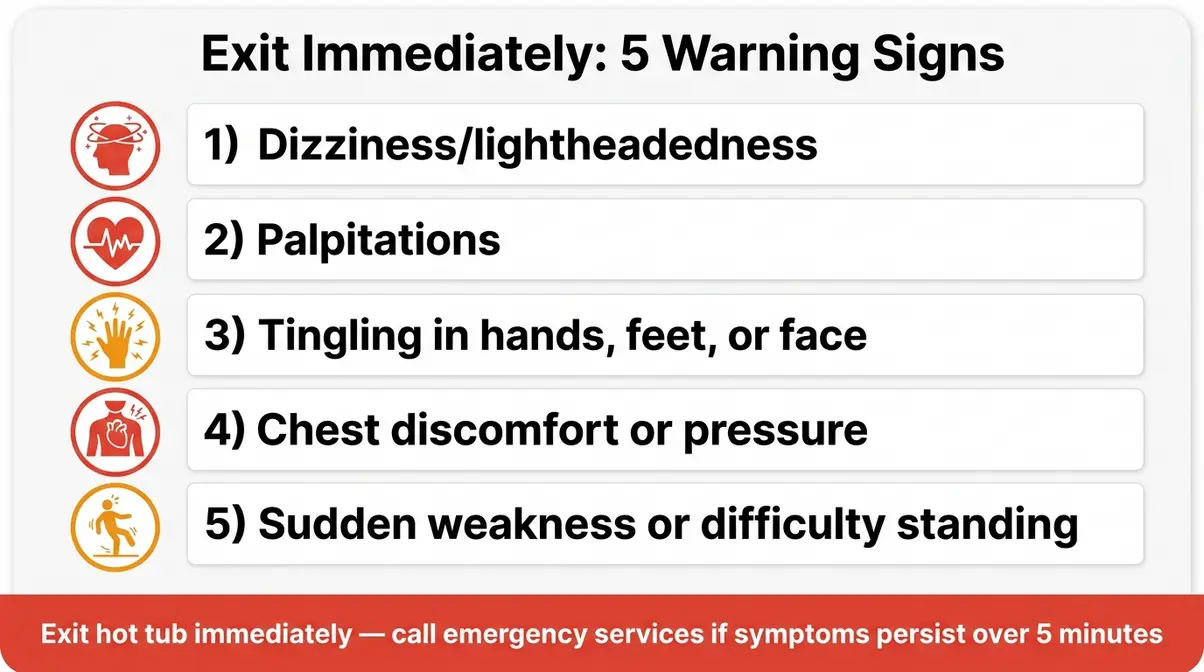
Exit the hot tub immediately — and ask your companion for assistance — if you experience any of the following:
- Dizziness or lightheadedness: A sudden sensation that the room is spinning or that you may fall. This is a classic sign of a significant blood pressure drop.
- Palpitations: A rapid, fluttering, or irregular heartbeat that feels different from your normal rhythm. Your rate-responsive pacemaker may be accelerating your heart rate in response to heat stress — a sensation some patients describe as a “spasm” in the chest.
- Tingling in the hands, feet, or face: This can indicate reduced blood flow to the extremities caused by vasodilation and low blood pressure.
- Chest discomfort or pressure: Any sensation of tightness, heaviness, or pain in the chest requires immediate exit and, if it persists, emergency medical attention.
- Sudden weakness or difficulty standing: If your legs feel heavy or you struggle to support your own weight, exit immediately and sit on the edge of the tub until the sensation passes.
After exiting, sit or lie down in a cool area. Drink water slowly. If symptoms do not resolve within five minutes, or if chest discomfort is present, call emergency services. Do not re-enter the hot tub that session. Consult your cardiologist before your next use.
According to the Cleveland Clinic, cardiac patients who experience any of these symptoms during hot tub use should report them to their physician promptly — even if the symptoms resolved on their own. Symptom patterns over multiple sessions can reveal important information about your cardiovascular response to heat.
Living with a Pacemaker: 4 Things to Avoid in Daily Life
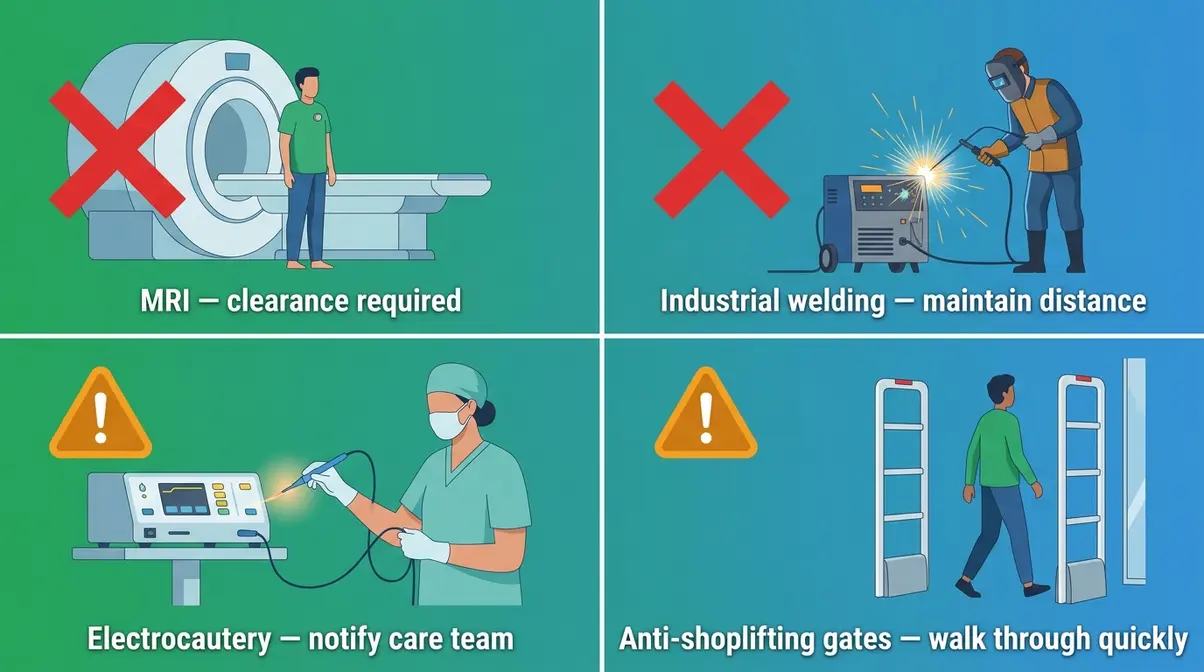
Beyond hot tubs, pacemaker patients frequently ask about other everyday risks. This section addresses the most common questions — what to genuinely avoid, what the research says about diet, and which household items are actually safe.
What are four things to be avoided if you have a pacemaker device?
The four most important things to avoid are: MRI machines without device-specific clearance, industrial welding or arc-welding equipment, electrocautery or diathermy medical devices used without notifying your care team, and anti-theft detection gates. Most everyday devices — hair dryers, microwaves, cell phones — are safe with simple precautions. Consult your cardiologist for a full review of your environment and occupation.
Electromagnetic Interference Sources to Avoid
The American Heart Association identifies the following as the most clinically relevant EMI risks for modern pacemaker patients:
- MRI machines (without device-specific clearance): Standard MRI scanners generate powerful magnetic fields that can interact with pacemaker components. However, many newer “MRI-conditional” pacemakers can be safely scanned under specific protocols. Ask your cardiologist whether your device is MRI-conditional before any imaging appointment.
- Industrial and commercial welding equipment: High-amperage arc welding generates electromagnetic fields strong enough to interfere even with modern shielded devices. Maintain a distance of at least 2 feet (60 cm) from welding equipment and avoid sustained proximity to industrial generators.
- Certain medical or dental procedures: Electrocautery devices used in surgery, transcutaneous electrical nerve stimulation (TENS) units, and some diathermy machines can interact with pacemaker function. Always inform every healthcare provider — including dentists — that you have a pacemaker before any procedure.
- Theft-detection systems (anti-shoplifting gates): These systems emit low-level electromagnetic fields. The risk is low, but the standard recommendation is to walk through them at a normal pace without lingering directly between the panels. Do not lean against or stand next to these systems for extended periods.
Consult your cardiologist if you are exposed to any of these sources regularly — for example, if your job involves welding or industrial electrical equipment.
Diet and Lifestyle Considerations
The question “What can’t you eat with a pacemaker?” is common, and the answer is more nuanced than a simple list. Your pacemaker itself does not interact with food. However, many pacemaker patients are also prescribed anticoagulant medications (blood thinners) such as warfarin (Coumadin), and those medications do have dietary interactions.
According to Johns Hopkins Medicine, patients on warfarin should maintain consistent intake of vitamin K-rich foods — including leafy greens like spinach, kale, and broccoli — rather than eliminating them. Sudden changes in vitamin K consumption can alter how well the medication controls blood clotting. The goal is consistency, not avoidance.
Additionally, excessive alcohol can affect heart rhythm and interact with cardiac medications. Grapefruit and grapefruit juice can interfere with certain antiarrhythmic drugs. Consult your cardiologist or a cardiac pharmacist for a personalized review of your medication interactions — this is especially important if your medication regimen has changed recently.
Safe Household Appliances (What You Don’t Need to Worry About)
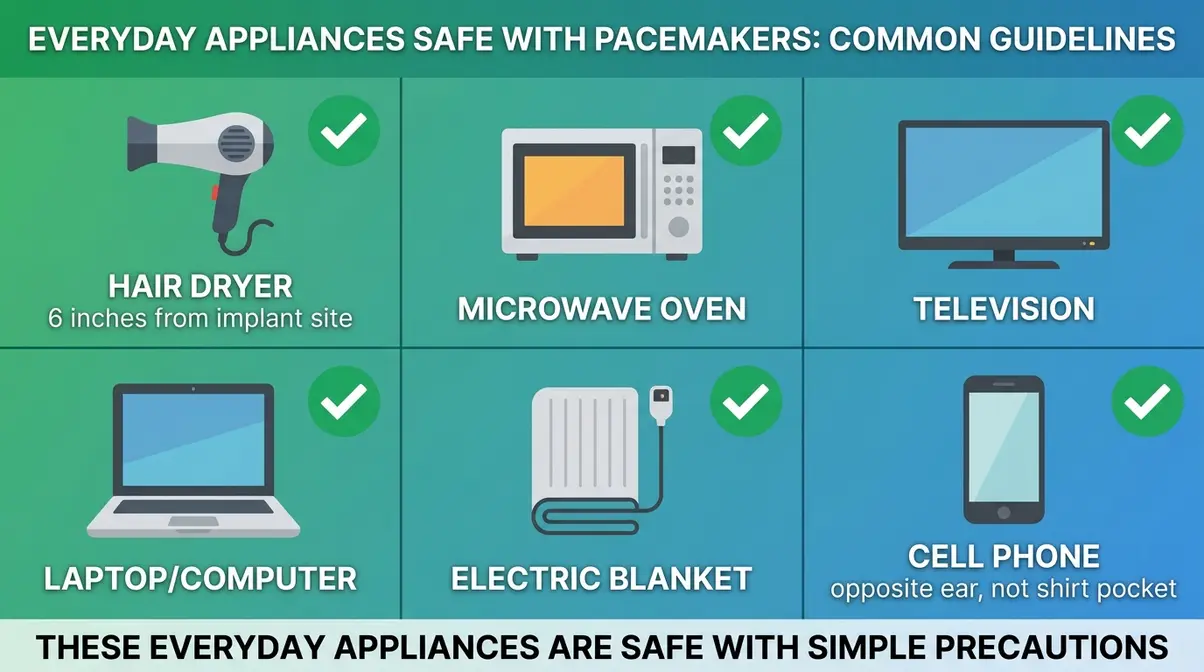
A common question — “Can you use a hair dryer with a pacemaker?” — reflects widespread anxiety about everyday appliances. The answer, based on guidance from both Medtronic and the American Heart Association, is reassuring: most standard household appliances are safe for pacemaker patients.
Hair dryers, microwave ovens, televisions, computers, electric blankets, and standard kitchen appliances do not generate electromagnetic fields strong enough to affect a modern bipolar pacemaker. The key precautions are simple: keep the hair dryer at least 6 inches (15 cm) from your chest implant site while in use, and do not hold any appliance directly over your pacemaker for extended periods.
Cell phones are similarly safe — hold them to the ear opposite your device, and avoid storing them in a shirt pocket directly over the implant site. These are precautionary habits rather than documented risks, but they are inexpensive habits to form. Consult your cardiologist if you have concerns about a specific appliance not listed here.
Choosing a Hot Tub When You Have a Pacemaker
If you have received cardiologist clearance and are considering purchasing a hot tub for home use, a few practical features are worth prioritizing to keep your hot tub with pacemaker safe.
Precise temperature controls are the most important feature. Look for models with a digital thermostat that displays the current water temperature accurately — not just a dial with approximate settings. You need to confirm the water is below 104°F before every entry. Many quality portable and inflatable hot tubs with jets now include digital displays as a standard feature.
Entry and exit design matters significantly. Models with built-in steps and sturdy grab bars reduce the risk of a fall during the dizziness that can accompany exiting warm water. If you are evaluating inflatable hot tubs or different types of hot tub models, confirm that the sides are firm enough to support your weight when gripping them.
Jet positioning controls allow you to direct water pressure away from the chest area, which is a practical precaution for pacemaker implant sites. Look for models with adjustable jet direction or individual jet on/off controls.
For specific model recommendations, installation guidance, and learning how to repair your hot tub, consult with a licensed spa dealer who can assess your home setup and safety requirements.
Frequently Asked Questions
Can you go into a hot tub if you have a pacemaker?
Most pacemaker patients can use a hot tub after receiving explicit clearance from their cardiologist. The device itself is unlikely to be disrupted by a standard hot tub’s pump motor, thanks to modern bipolar shielding technology. Following the 5-step safety protocol in this guide significantly reduces the cardiovascular risk associated with heat-induced vasodilation.
What do funeral homes do with pacemakers?
Funeral homes must remove pacemakers before cremation because the device’s battery can explode when exposed to extreme temperatures. This poses a significant safety risk to crematorium staff and equipment. The removal is typically performed by the funeral home director or a medical professional prior to the cremation process. Burial, however, does not require removal, as the device poses no environmental hazard underground. If you are making end-of-life arrangements, always inform your funeral home that you have an implanted cardiac device.
What can’t you eat with a pacemaker?
Your pacemaker itself has no direct dietary interactions. However, if you take warfarin (a blood thinner commonly prescribed alongside pacemakers), you should maintain consistent intake of vitamin K-rich foods like spinach and kale. Sudden changes in vitamin K levels can destabilize your anticoagulation medication. According to Johns Hopkins Medicine, grapefruit and excessive alcohol can also interact with certain cardiac medications, so ask your pharmacist for a review.
Can you use a hair dryer with a pacemaker?
Yes, hair dryers are safe for pacemaker patients with one simple precaution: keep the dryer at least 6 inches (15 cm) from your implant site while in use. Standard consumer hair dryers do not generate electromagnetic fields strong enough to affect modern bipolar pacemakers. This is one of the many everyday activities that pacemaker patients do not need to restrict.
Can I go in a hot tub if I have a pacemaker?
Yes, in most cases you can safely use a hot tub with cardiologist clearance and specific precautions. The key parameters are keeping water temperature below 104°F (40°C) and capping your soak duration at 10–15 minutes. You should also ensure a companion is present who knows about your device. Exit immediately if you feel dizziness, palpitations, tingling, or chest discomfort. The Two-Risk Framework clarifies that your device is unlikely to be disrupted by the electronics, but the heat requires careful management.
Limitations and Alternatives
Common Pitfalls to Avoid
Pitfall 1: Assuming clearance is permanent. Your cardiologist’s clearance applies to your cardiac status at the time of that conversation. If your condition changes — new medications, a recent cardiac event, a device adjustment — re-ask before returning to hot tub use. A “yes” from two years ago may not reflect your current physiology.
Pitfall 2: Ignoring the temperature gauge. Many hot tub users set the temperature once and never check it again. Thermostats can drift, and water heated by direct sunlight can exceed the thermostat setting. Check the actual water temperature with a reliable thermometer before every entry.
Pitfall 3: Extending the soak because “I feel fine.” The cardiovascular effects of heat are cumulative and can present suddenly. Feeling comfortable at 12 minutes does not mean 25 minutes is safe. The 10–15 minute limit is a physiological ceiling, not a comfort threshold.
When to Choose Alternatives
If you have decompensated heart failure: Hot tub use is generally contraindicated until your condition is stable and your cardiologist specifically clears you. A warm bath at a lower temperature (around 98°F / 36.7°C) with a shorter duration may be a safer alternative — discuss this with your care team.
If you are within 6 months of pacemaker implantation: The implant site is still healing, and sustained immersion in hot water may not be advisable. Your cardiologist will indicate when full aquatic activities are appropriate.
When to Seek Expert Help
If you experience any of the warning signs described in this guide — palpitations, dizziness, tingling, or chest discomfort — during or after hot tub use, contact your cardiologist promptly. If symptoms are severe or do not resolve within five minutes of exiting, call emergency services. Do not attempt to self-diagnose whether a symptom is pacemaker-related or heat-related — that distinction requires a clinical assessment.
A Final Word on Hot Tub Use with a Pacemaker
For most pacemaker patients, keeping a hot tub with pacemaker safe is not off-limits — it is a conditional activity that requires the right parameters and the right preparation. Research supports that modern bipolar pacemakers are well-shielded against the electromagnetic fields produced by standard hot tub equipment. The cardiovascular risk from heat, however, is real and deserves respect: keep water below 104°F (40°C), limit each soak to 10–15 minutes, stay hydrated, and never enter alone.
The Two-Risk Framework gives you a clear way to think about this: separate the device risk (low, manageable) from the heat physiology risk (meaningful, requires protocol). When you bring both categories to your cardiologist appointment — along with the specific parameters in this guide — you are far more likely to get a useful, concrete answer than a reflexive hedge.
Your next step is straightforward: print or screenshot the 5-Step Safety Protocol and bring it to your next cardiology appointment. Ask your cardiologist to review each step and confirm or modify the parameters for your specific condition. That conversation, grounded in specific numbers rather than general anxiety, is the most productive use of your appointment time — and the clearest path to a straight answer.

David King
Hot tub tester and writer at One Hot Tub.