What’s in this guide
The best hot tubs for couples in the UK solve three problems at once: they fit a small garden, cost less than £60 a month to run, and make a Tuesday evening feel like a weekend away. By the end of this guide, you’ll know exactly which 2-person hot tub fits your garden and your budget — and when it makes more sense to book a romantic getaway instead.
Most buying guides compare brands without giving you a single running cost figure or a footprint dimension. They leave you guessing whether a 175cm × 208cm spa fits your patio, or whether you’ll be facing a £100-a-month energy bill you didn’t plan for. This guide answers both questions with hard numbers.
“Hey guys does anyone have any recommendations for a hot tub holiday in the UK? Im north West England, so somewhere ideally within like 3 hours…”
Sound familiar? Some couples want to buy — others want to book. This guide covers both, but leads with buying. We’ll walk through the top 7 models covering the best hot tub for couples uk buyers are actually searching for, explain the features that matter for two people, and flag when a romantic break makes more financial sense than ownership.
When choosing the best hot tub for couples uk wide, you must balance a compact footprint, manageable running costs, and intimate two-person seating — three criteria that most buying guides ignore entirely.
- Freeflow Tristar is the top compact pick: plug-and-play, 178×178cm footprint, no electrician required
- Sundance Dover leads for therapeutic luxury with 23 targeted hydrotherapy jets for two
- Running costs range from approximately £30–£90/month depending on model type and insulation quality, based on the current Ofgem electricity rate of 24.67p/kWh (April–June 2026, Ofgem)
- The Couples’ Footprint Formula — Physical, Energy, and Romance Footprint — is the fastest way to compare any two models side by side
Quick Picks: Best Hot Tub for Couples by Use Case
- Small garden / first-time buyer: Freeflow Tristar (~£3,500–4,500)
- Luxury therapeutic soak: Sundance Dover (~£8,000–10,000)
- Premium brand investment: Jacuzzi® J-LX® Collection (~£7,000–9,000)
- Best UK brand with local support: Blue Whale Spa (~£5,000–8,000)
- Budget couples / renters: Lay-Z-Spa Helsinki (~£500–800)
All prices are estimates — verify with UK retailers before purchase.
How We Chose the Best Hot Tubs for Couples
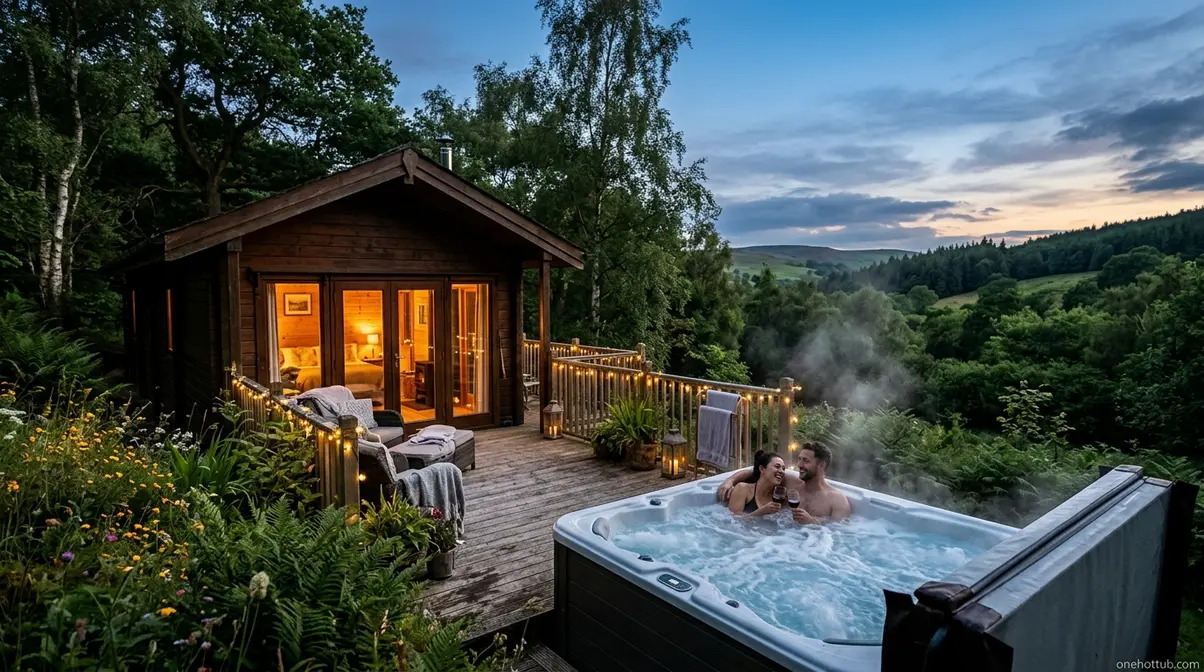
Every hot tub in this guide was evaluated against three criteria that matter specifically to UK couples: garden space, monthly running costs, and features built for two. That framework is what we call The Couples’ Footprint Formula — a three-dimensional evaluation covering Physical Footprint (exact garden dimensions required), Energy Footprint (real monthly running costs calculated against the current Ofgem price cap), and Romance Footprint (seating, jets, and ambience features designed for intimate use). All models were verified as currently available from UK retailers or brands with active UK warranty support in 2026.
The three metrics that matter most to UK couples — garden footprint, monthly running costs, and romantic features — are the criteria absent from every other buying guide in this space.
Our five evaluation criteria were:
- Physical Footprint — Exact dimensions (cm × cm) verified from manufacturer specifications. We cross-referenced against a typical UK patio to give you a real-world size comparison.
- Energy Footprint — Estimated monthly running cost calculated against the Ofgem electricity unit rate of 24.67p/kWh (April–June 2026). No competitor provides this per-model breakdown.
- Romance Footprint — Seating configuration for two, jet count and placement, lounger options, LED ambience, and headrests.
- UK Availability — Purchasable from UK retailers or brands with active UK warranty and after-sales support.
- Brand Reliability — Based on verified UK buyer reviews and BISHTA membership where applicable. BISHTA (the British and Irish Spa and Hot Tub Association) is the UK trade body that sets standards for spa and hot tub retailers — membership signals commitment to quality and buyer protection.
Cleveland Clinic research confirms that regular hydrotherapy in a hot tub can reduce stress, relieve muscle tension, and improve sleep quality (Cleveland Clinic, 2024) — making the Romance Footprint more than a marketing consideration.
The 7 Best Hot Tubs for Couples in the UK
The UK compact hot tub market has grown steadily as couples seek private garden alternatives to expensive spa breaks — and the 7 models below were selected through the Couples’ Footprint Formula to represent the full spectrum of what’s available. Compact plug-and-play hot tubs — requiring no electrician and fitting gardens from 178cm × 178cm — have become the most popular entry point for UK couples, costing as little as £3,500 to own outright (based on verified UK retailer listings, 2026). Here’s how each model scores across the three footprint dimensions.
Our evaluation covered energy efficiency, garden footprint, hydrotherapy quality, UK retailer availability, and warranty support. Brands like Marquis Spas consistently rank highly for reliability and warranty coverage across ConsumerAffairs verified reviews (ConsumerAffairs, 2026).
Best Hot Tub for a Small UK Garden?
The Freeflow Tristar is the best plug-and-play hot tub for couples with limited garden space. Its 178×178cm footprint fits most UK patios, it runs on a standard 13-amp outdoor socket with no electrician required, and it delivers 17 hydrotherapy jets across two intimate seats. Based on verified UK retailer specifications, it typically costs £3,500–4,500. The main trade-off is running costs — approximately £52–67/month at current Ofgem rates — which are higher than insulated hard-shell alternatives.
| Model | Type | Est. Price (UK) | Footprint (approx.) | Jets | Best For |
|---|---|---|---|---|---|
| Freeflow Tristar | Plug-and-play | ~£3,500–4,500 | 178×178cm | 17 | Small gardens, first-time buyers |
| Sundance Dover | Hard-shell luxury | ~£8,000–10,000 | 175×208cm | 23 | Therapeutic luxury |
| Jacuzzi® J-LX® | Hard-shell premium | ~£7,000–9,000 | ~226×226cm | 41 | Brand investment, couples + guests |
| Blue Whale Spa | UK-made hard-shell | ~£5,000–8,000 | Verify with retailer | Verify | Local support, UK warranty |
| H2O Hot Tubs | UK-made hard-shell | ~£5,000–8,000 | Verify with retailer | Verify | Cold UK climates |
| Lay-Z-Spa Helsinki | Inflatable | ~£500–800 | 180cm diameter | 180 AirJets | Budget couples, renters |
| Marquis Celebrity | Hard-shell premium | ~£7,000+ | Verify with retailer | Verify | Frequent use, durability |
All prices are estimates from UK retailers as of Q2 2026 — verify before purchase. Dimensions and jet counts from manufacturer specifications.
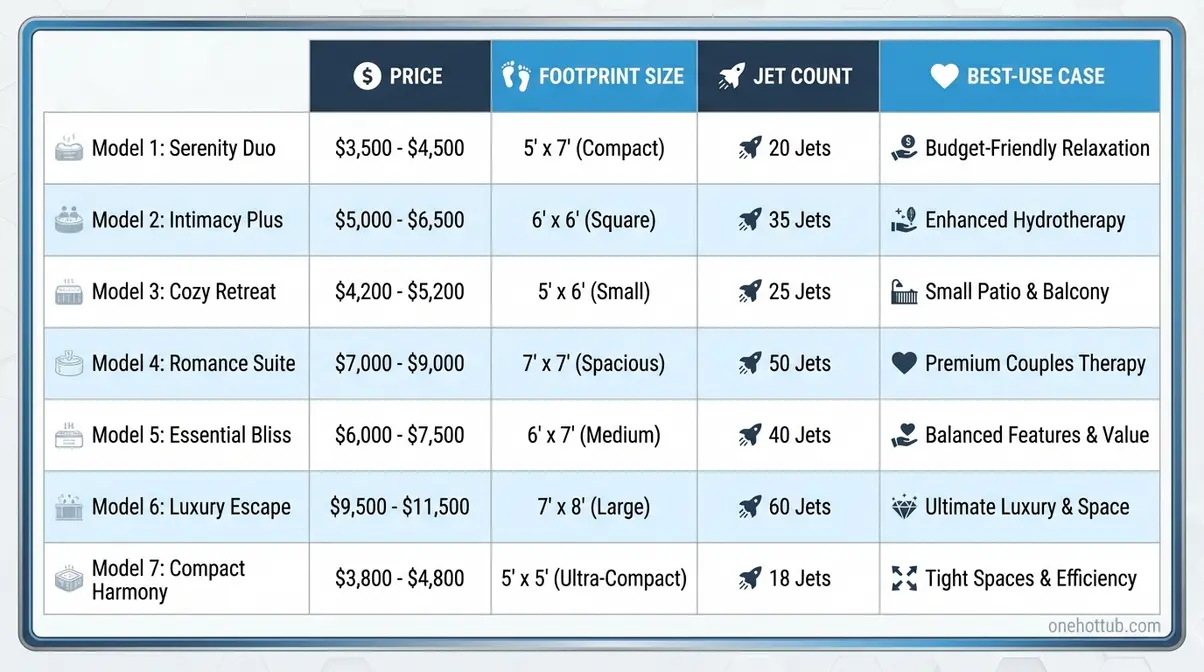
Caption: The Couples’ Footprint Formula applied across all 7 models — Physical, Energy, and Romance scores at a glance.
1. Freeflow Tristar: Best Compact Spa
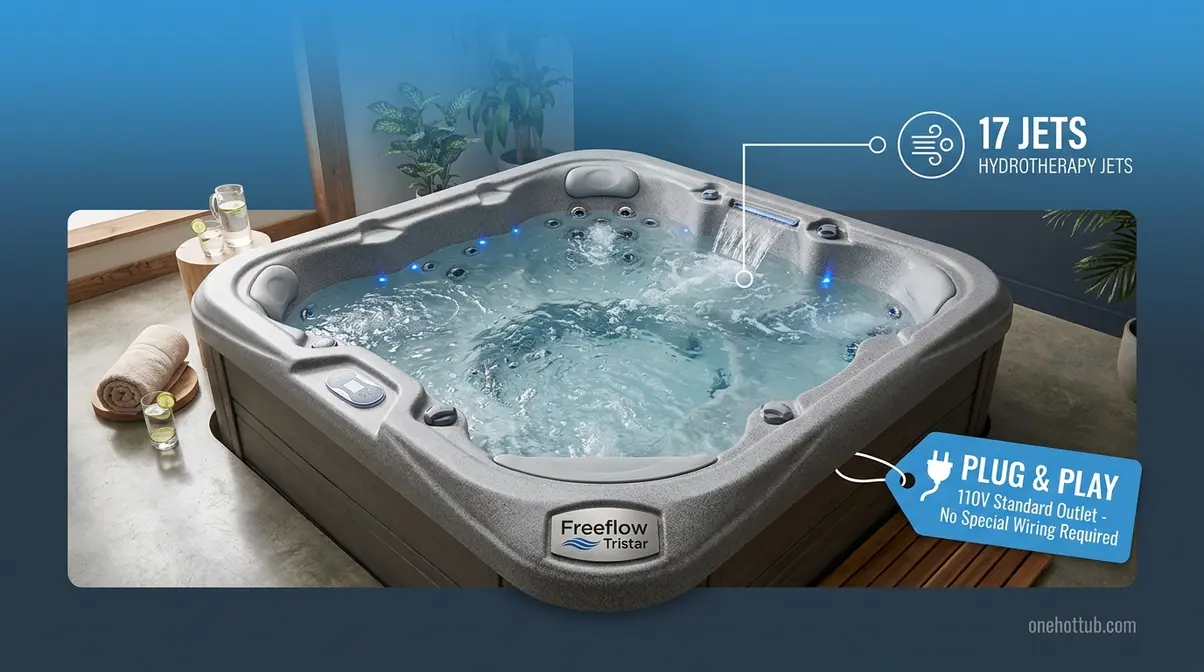
The Freeflow Tristar is the Freeflow Tristar, a compact plug-and-play spa designed for two — and it’s the most practical starting point for UK couples who want a genuine hot tub experience without the complexity of a permanent installation. It runs on a standard 13-amp outdoor socket (a plug-and-play hot tub requires no dedicated circuit and no electrician), fits gardens from approximately 178cm × 178cm, and delivers 17 precisely placed hydrotherapy jets across two deep seats (Freeflow manufacturer specifications, Hot Spring UK, 2026).
Physical Footprint: 178cm × 178cm × 79cm — roughly the same footprint as a standard garden dining table for four. It fits comfortably on most UK patios with space to spare for a side table and towel storage.
Energy Footprint: At 24.67p/kWh (Ofgem, April–June 2026), a plug-and-play model consuming approximately 8–10 kWh per day costs around £60–75/month at average use. Plug-and-play models heat less efficiently than full-foam insulated hard-shells, so insulation quality directly affects your monthly bill. A quality thermal cover is essential.
Romance Footprint: Two deep seats with 17 jets targeting shoulders, back, and legs. Multi-colour LED mood lighting and a waterfall feature add genuine ambience. The intimate two-seat layout means no wasted space — every jet is designed for one of you.
- +No installation cost — plug into an outdoor socket and you’re ready within hours
- +178×178cm footprint suits even modest UK patios
- +Affordable entry price with a 5-year shell warranty
- +Easy to relocate if you move house
- −Higher per-unit running costs than full-foam insulated hard-shell models
- −17 jets is modest compared to luxury alternatives
- −Less effective at retaining heat in very cold UK winters without a high-quality cover
Real-World Usage: Across UK buyer communities, the consistent feedback is that plug-and-play models like the Tristar excel for couples who want a hot tub experience without committing to a permanent installation. The trade-off is running costs — budget an extra £15–20/month in winter versus summer.
Choose Freeflow Tristar if: Your garden is under 200cm × 200cm and you want to be soaking within 24 hours of delivery, no trades required.
Skip Freeflow Tristar if: You plan to use your hot tub year-round through cold northern UK winters — the Sundance Dover’s full-foam insulation will save you meaningfully on monthly running costs.
Price estimated from UK retailers as of Q2 2026 — verify before purchase.
Looking for a dedicated comparison of compact two-person models? Discover the best 2-person hot tubs available for a deeper breakdown of footprint and feature options.
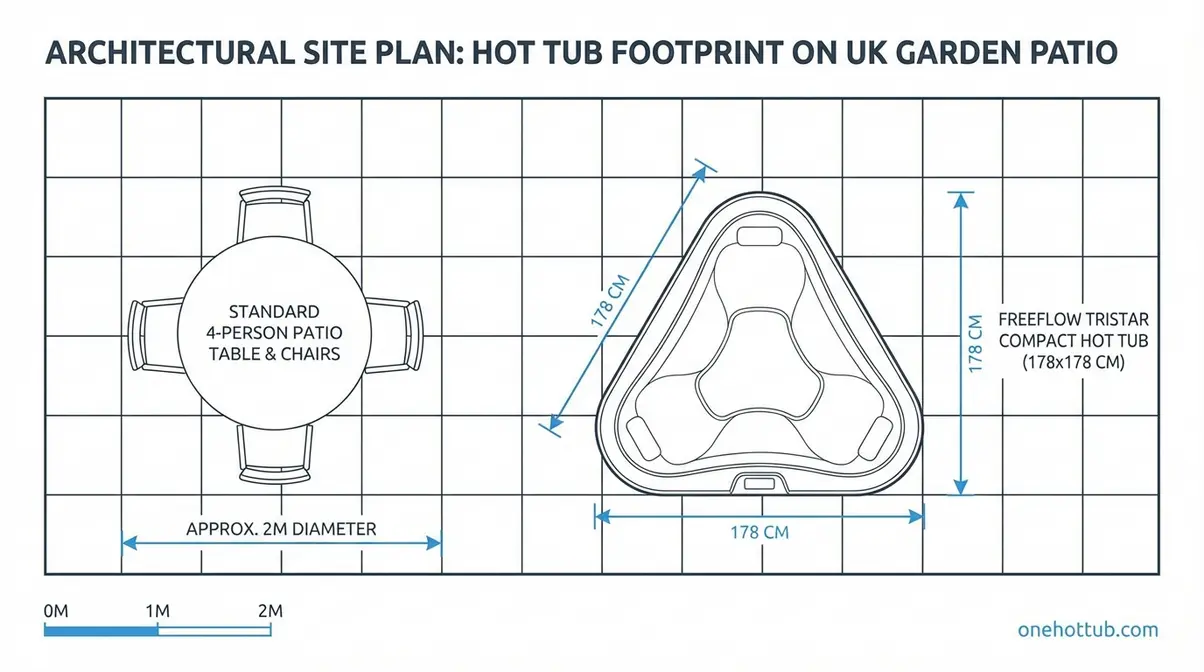
Caption: The Freeflow Tristar’s 178×178cm footprint compared to a standard UK garden patio table — ideal for compact outdoor spaces.
For couples willing to invest more for a therapeutic upgrade, the Sundance Dover delivers a step-change in hydrotherapy quality — at the cost of a larger footprint and higher price point.
2. Sundance Dover: Best Luxury Spa
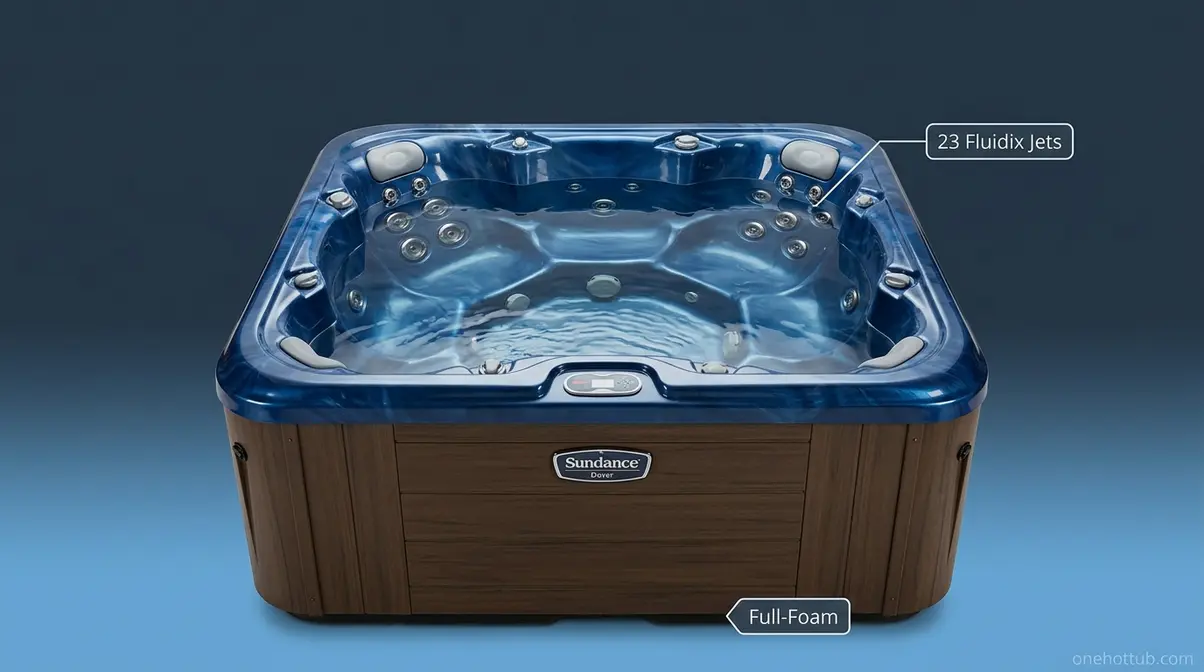
The Sundance Dover is a premium two-person therapeutic spa from Sundance Spas — specifically engineered for couples who want full-body hydrotherapy with targeted jet placement covering neck, back, and legs. Where the Tristar prioritises simplicity, the Dover prioritises depth of experience.
Physical Footprint: 175cm × 208cm × 77.5cm (Sundance Spas manufacturer specifications). Larger than a plug-and-play model, it requires a solid, level base — a concrete pad or decking rated for a filled weight of approximately 1,150kg. Plan for a footprint zone of roughly 200cm × 240cm including access clearance.
Energy Footprint: Sundance’s full-foam insulation significantly reduces heat loss versus uninsulated plug-and-play models. At 24.67p/kWh, a well-insulated hard-shell like the Dover typically costs £35–50/month at average use — meaningfully less than the Tristar despite the higher purchase price. Over five years, that difference compounds. The Dover requires a dedicated 32-amp circuit, compliant with BS 7671 wiring regulations — factor in £500–£800 for a certified electrician (IET electrical guidance, IET, 2021).
Romance Footprint: 23 Fluidix® jets, open seating for 2–3 adults, CLEARRAY® Active Oxygen water care, LED ambience lighting, and a low-profile design for easy entry. The seating layout places both partners in full-body jet coverage simultaneously — a genuine couples’ design rather than a scaled-down family tub.
- +23 targeted hydrotherapy jets — genuine therapeutic quality
- +Full-foam insulation delivers lower monthly running costs than plug-and-play
- +Sundance’s established UK dealer network for warranty and servicing
- +Low-profile entry — easier to get in and out than taller hard-shell models
- −Significantly higher purchase price than compact alternatives
- −Requires professional installation and a dedicated 32-amp circuit
- −175×208cm footprint excludes the smallest UK gardens and terraces
Real-World Usage: Sundance Spas notes that the Dover’s seating and headrests are specifically engineered to enhance relaxation for two (Sundance Spas, 2026). Across UK buyer communities, Sundance models are consistently cited as a top choice for couples prioritising therapeutic quality over compact convenience.
Choose Sundance Dover if: You want the best hydrotherapy quality available at this price point and have a solid base ready to install.
Skip Sundance Dover if: Your garden is under 200cm in either dimension — the Freeflow Tristar is a better physical fit and eliminates the installation cost entirely.
Price estimated from UK retailers as of Q2 2026 — verify before purchase.
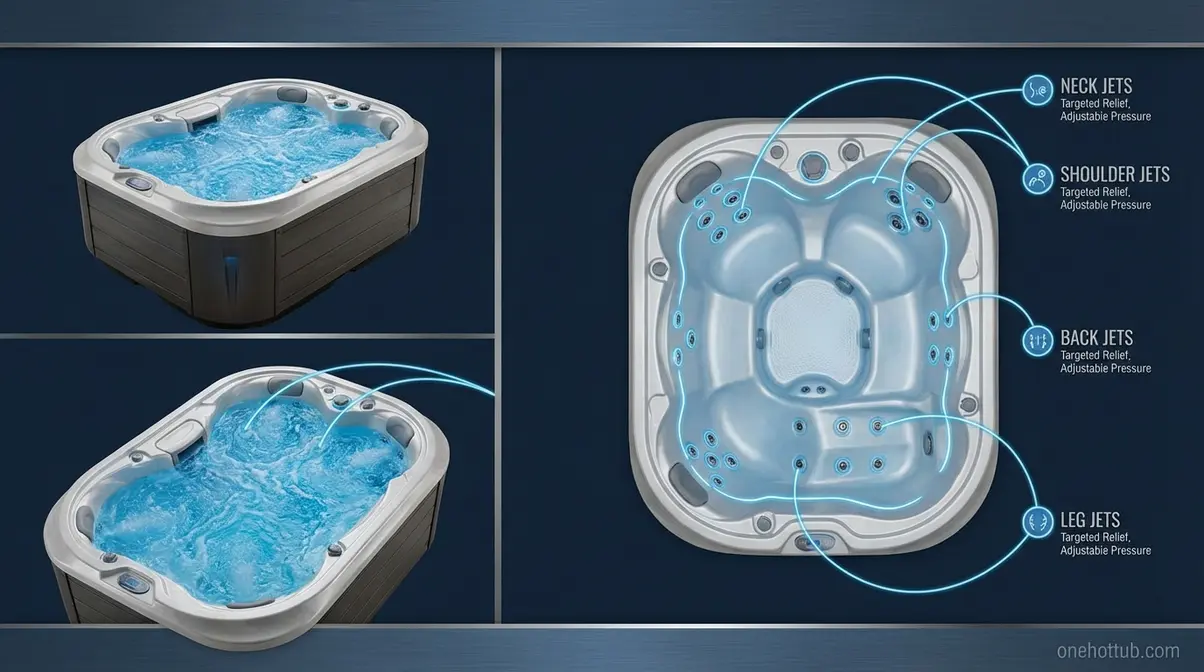
Caption: The Sundance Dover’s 23-jet Fluidix® layout covers neck, shoulder, back, and leg zones simultaneously for both occupants.
Where the Sundance Dover focuses on therapeutic depth, the Jacuzzi® J-LX® Collection offers the prestige of the world’s most recognised hot tub brand — with a larger-capacity format that suits couples who also entertain.
3. Jacuzzi® J-LX®: Premium Investment
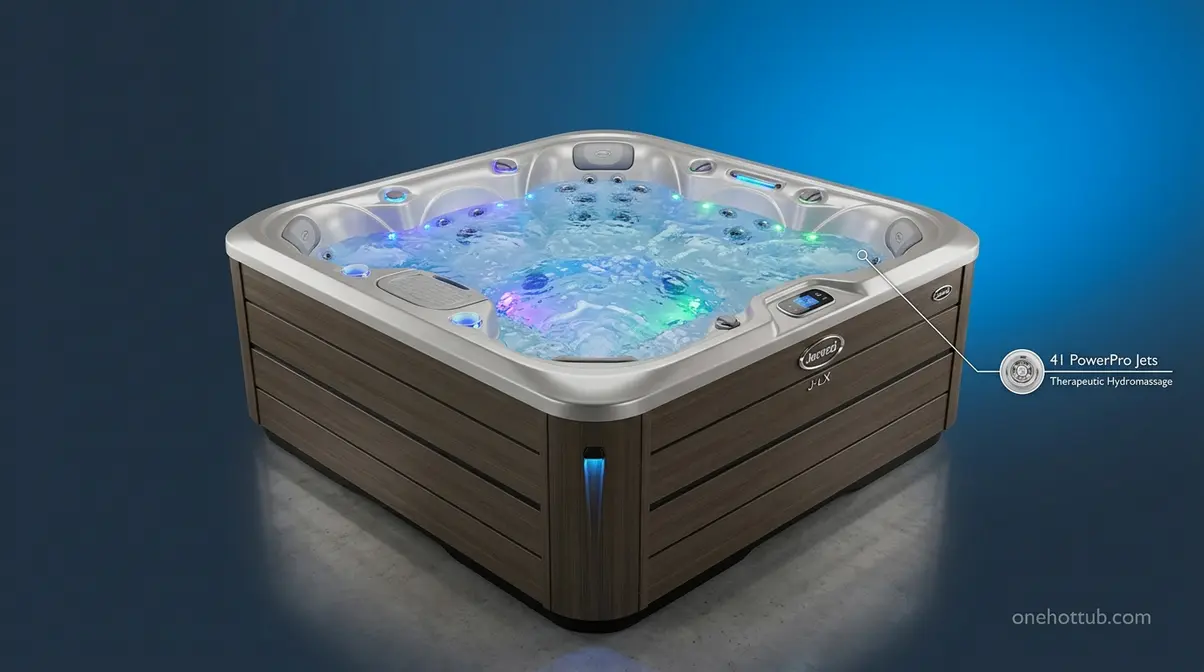
The Jacuzzi® J-LX® Collection is the brand’s flagship hard-shell spa range — and the Jacuzzi name carries the strongest brand recognition in the hot tub market, which has a measurable impact on resale value. The J-LX® is a larger model (approximately 226cm × 226cm × 86cm, seating 6–7 adults with 41 jets) that suits couples who want a private hot tub or jacuzzi for two but also plan to host family or friends (Jacuzzi manufacturer specifications, 2026).
Physical Footprint: At approximately 226cm × 226cm, this model requires a meaningful garden space and a reinforced base rated for its filled weight. It is not a compact choice — but for couples with the space, it offers flexibility that smaller two-person models cannot match.
Energy Footprint: Jacuzzi’s ProLast™ shell and full-foam insulation deliver excellent heat retention. At 24.67p/kWh, expect running costs of approximately £40–60/month at average use, depending on usage frequency and cover quality. A dedicated electrical circuit (240V, 50A) is required — budget for professional installation.
Romance Footprint: 41 PowerPro® jets, LED ambience lighting, FreshWater® Salt System for low-maintenance water care, and the brand’s signature ProFinish™ cabinet. For couples, the larger seating area allows genuinely comfortable face-to-face soaking — a different experience from a tightly configured two-seat model.
- +Industry-leading brand recognition — strongest UK resale value in this category
- +41 jets deliver full-body coverage across multiple seating positions
- +ClearRay™ UV-C water management reduces chemical use
- +Comprehensive warranty and wide UK dealer network
- −Premium price — higher than most comparable hard-shell models
- −Requires a dedicated electrical circuit and professional installation
- −226cm × 226cm footprint is too large for smaller UK gardens
Real-World Usage: Jacuzzi models consistently rank among the highest for long-term reliability in verified UK buyer reviews (ConsumerAffairs verified reviews, ConsumerAffairs, 2026). The J-LX® Collection’s advanced water management system is particularly valued by couples who want minimal maintenance alongside maximum enjoyment.
Choose Jacuzzi® J-LX® if: You have the garden space, the budget, and plan to use the tub regularly for 10+ years — the resale value and warranty support make it the strongest long-term investment.
Skip Jacuzzi® J-LX® if: Your garden is under 250cm × 250cm or you’re a first-time buyer uncertain about usage frequency — the Freeflow Tristar lets you test hot tub ownership at a fraction of the commitment.
Price estimated from UK retailers as of Q2 2026 — verify before purchase.
Caption: The Jacuzzi® J-LX® Collection’s 41-jet layout suits couples who want spa-grade coverage with room for occasional guests.
The top three picks above represent the best of global brands available in the UK. The next two models make the case for buying British — with local support, strong warranties, and insulation built for the UK climate.
Looking for a dedicated comparison of couples-specific features and seating configurations? Explore top-rated hot tubs for couples on our dedicated couples’ guide.
4. Blue Whale Spa: Best UK-Made Spa
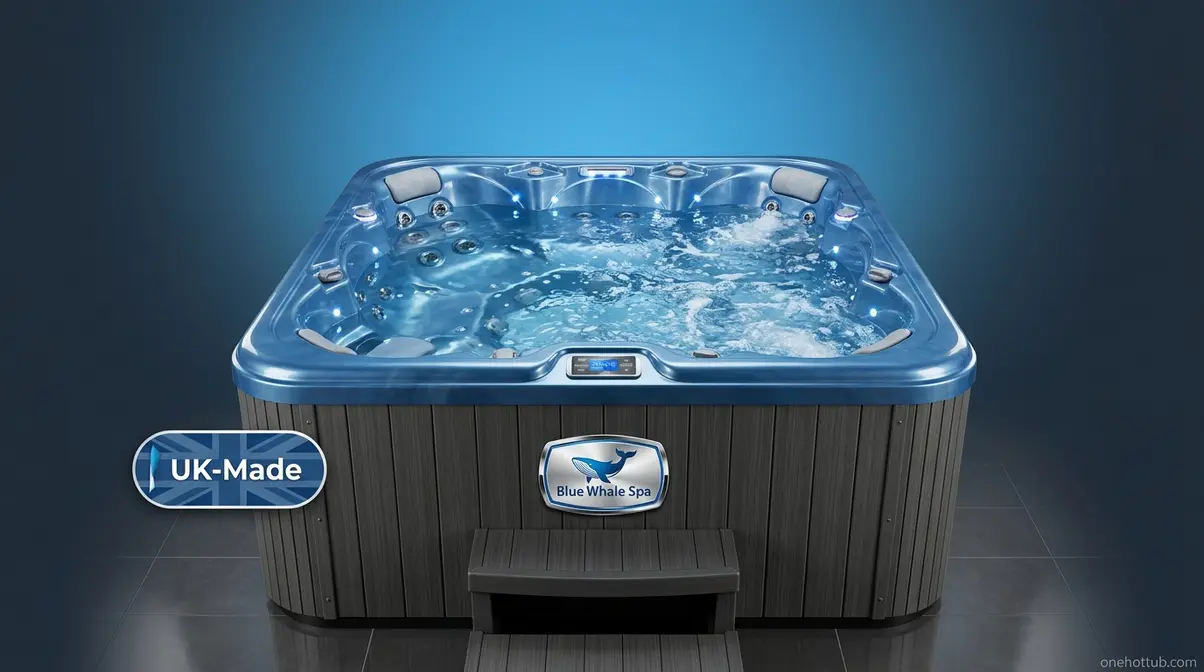
Blue Whale Spa is the UK’s leading domestic spa manufacturer with thousands of satisfied customers (Blue Whale Spa, 2026). Blue Whale Spa, a UK-based manufacturer, produces a range of compact 2–3 person spas with a strong emphasis on local after-sales support — and that UK-first approach is its clearest differentiator.
What sets Blue Whale apart is manufacturing provenance. Faster warranty claims, local engineers, and parts availability without long international waits make a genuine difference when something needs attention. For couples who want peace of mind alongside their purchase, that local infrastructure is worth a meaningful premium over imported alternatives.
Key Specs: ~£5,000–8,000 | Footprint: verify with retailer | Jets: verify with retailer | Full-foam insulation standard
Best for: Couples who prioritise local support, a UK-based warranty, and a brand with a proven track record in the British market — particularly valuable if you’re outside a major city where international brand service networks can be slow.
Not for: Buyers seeking the lowest possible entry price or the most advanced therapeutic jet technology.
Verify current pricing directly with Blue Whale Spa UK.
H2O Hot Tubs takes a similar UK-first approach but differentiates on insulation performance — making it a strong contender for couples in colder northern regions of the UK.
5. H2O Hot Tubs: Best for Cold Climates
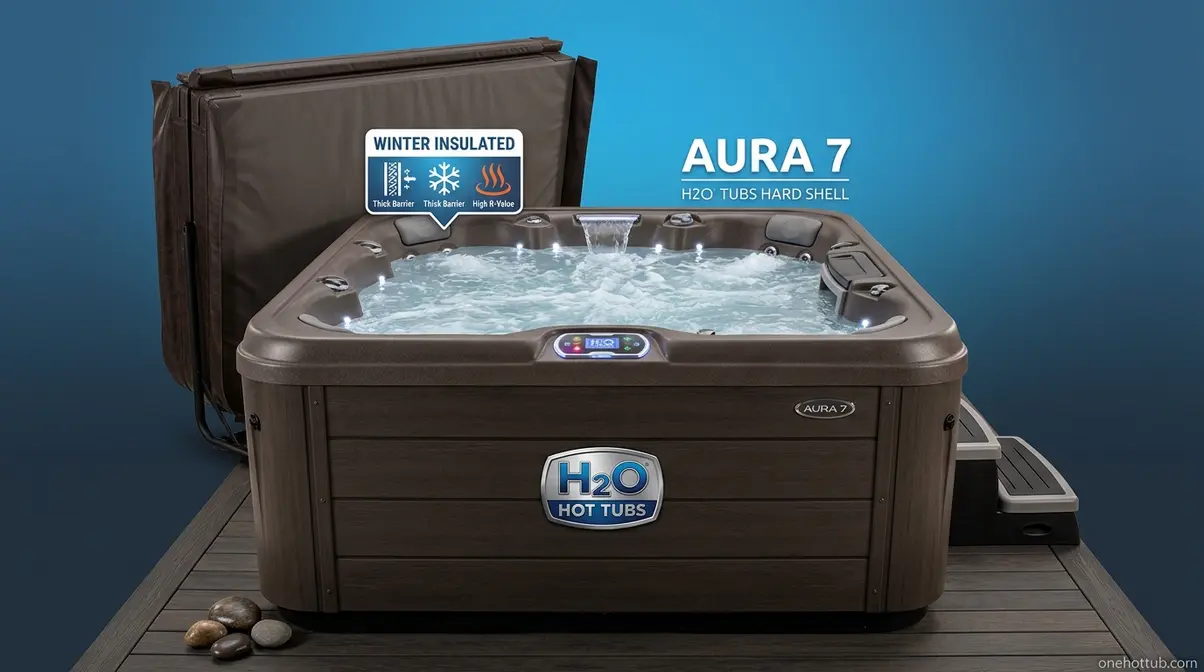
H2O Hot Tubs, one of the UK’s most highly rated domestic spa brands, is specifically noted for its energy-efficient insulation systems that perform well in colder UK climates. According to H2O Hot Tubs’ own running cost data, most 13-amp models cost approximately £2–3 per day to run — with their insulated hard-shell models performing significantly better in winter (H2O Hot Tubs, 2026).
This model is particularly well-suited for couples in northern England, Scotland, or Wales where winter temperatures can significantly increase heating costs. H2O’s insulation approach directly reduces the Energy Footprint during the coldest months — a practical advantage that generic brand roundups consistently overlook.
Key Specs: ~£5,000–8,000 | Footprint: verify with retailer | Jets: verify with retailer | Enhanced winter insulation
Best for: Couples in colder UK regions who plan to use their hot tub year-round and want to minimise winter running costs — the insulation investment pays back fastest in Scotland, northern England, and exposed rural locations.
Not for: Couples in milder southern UK climates where the insulation premium may not justify the cost difference versus similarly priced alternatives.
Verify current pricing directly with H2O Hot Tubs UK.
The final two models in this guide — the Lay-Z-Spa Helsinki and Marquis Celebrity Series — appear in the comparison table above. They represent opposite ends of the spectrum: one for budget-conscious couples, one for frequent users who want the best.
For a deeper dive into couple-specific features and seating configurations, explore top-rated hot tubs for couples on our dedicated couples’ guide.
Across these 7 models, the Physical, Energy, and Romance Footprint scores vary dramatically — from the Tristar’s 178cm footprint to the J-LX®’s 226cm presence, and from £30/month insulated running costs to £75/month for an uninsulated plug-and-play. The Couples’ Footprint Formula makes those trade-offs visible before you commit.
What to Look for When Buying a Hot Tub
Which features actually make a hot tub better for two people — and which are marketing noise? The next step in applying the Couples’ Footprint Formula is understanding which features actually matter for two people. This section covers the four decisions that affect your Physical Footprint, Energy Footprint, and Romance Footprint most directly: seating, materials, running costs, and heating technology.
Is a Lounger Better for Couples?
For couples, a hot tub with at least one lounger provides full-body hydrotherapy from neck to feet — but a double-lounger model takes up significantly more space, so the right choice depends on your garden dimensions and how you actually use the tub together.
The lounger case for couples: A reclining lounger delivers full-body jet coverage simultaneously — neck, shoulders, back, hips, calves, and feet — while your partner sits upright in an adjacent seat. Healthline’s medically reviewed guide confirms that the combination of warm water and massage jets can improve muscle relaxation and support cardiovascular health, making hydrotherapy position particularly important for therapeutic benefit (Healthline, 2024). For couples where one partner has back pain or muscle tension, a lounger is a meaningful upgrade.
The double-lounger consideration: Both partners recline side by side — genuinely romantic, but it requires a footprint typically 200cm or more in one dimension. Height compatibility matters: loungers are designed for roughly 5’4″–6’0″. If either partner is significantly outside that range, test before buying. A double-lounger in a tub under 200cm × 200cm will feel cramped rather than luxurious.
The non-lounger case: More seating positions, better face-to-face conversation, and a smaller Physical Footprint. Jet-rich non-lounger seats — as found on the Sundance Dover — can deliver comparable hydrotherapy to a lounger without the space penalty. For couples who socialise in their tub as much as they soak, non-lounger configurations often work better.
Our recommendation for couples: Most couples find that one lounger plus one upright seat is the ideal configuration — it maximises the Romance Footprint without sacrificing garden space. The double-lounger is worth considering only if your footprint allowance exceeds 210cm × 210cm.
Caption: Lounger vs. non-lounger seating — footprint and hydrotherapy trade-offs for couples at a glance.
Once you’ve settled on a seating configuration, the next decision is the tub’s shell material — which has a bigger impact on long-term durability and maintenance than most buyers realise.
Is Roto-Molded Better Than Acrylic?
The shell material of your hot tub determines how long it lasts, how easy it is to maintain, and how well it retains heat — three factors that directly affect both your Energy Footprint and your long-term ownership cost.
Roto-molded shells are formed as a single-piece moulded unit with no seams — which means no seam-based leak points. According to the Association of Rotational Molders, the rotomolding process creates stress-free, highly durable parts with superior impact resistance compared to traditional acrylic shells (ARM, 2023). Roto-molded tubs are typically lighter and more impact-resistant, making them easier to deliver and position in UK gardens with narrow access. The Freeflow Tristar uses roto-molded construction — one reason it handles garden relocation better than heavier acrylic alternatives.
Acrylic shells offer a premium look and feel, a wide range of colours and finishes, and excellent heat retention when backed by full-foam insulation. Luxury models like the Sundance Dover and Jacuzzi® J-LX® use acrylic construction — and the full-foam insulation layer behind the shell is what delivers the lower Energy Footprint running costs. Acrylic is prone to cracking if struck hard or if water chemistry is poorly managed, so routine chemical testing is essential. For a comprehensive overview of material types, compare different hot tub materials and types on our dedicated guide.
Inflatable shells (Lay-Z-Spa Helsinki and similar) are affordable and portable but deliver significantly lower insulation performance and shorter lifespans — typically 3–5 years with careful maintenance versus 10–20 years for a quality hard-shell.
Our recommendation: For long-term UK garden use, acrylic with full-foam insulation is the most durable and energy-efficient choice. Roto-molded is the best mid-range option — particularly where garden access is tight or relocation is likely.
Understanding your material choice helps predict long-term durability — but for most UK couples, the bigger financial question is what the tub will actually cost to run each month.
Real-World UK Running Costs
Running costs are the most under-reported aspect of hot tub ownership in the UK — and the most important for couples making a long-term financial decision. Here are 6 real-world monthly estimates, all calculated using the current Ofgem electricity unit rate of 24.67p/kWh (April–June 2026, Ofgem) and assuming average daily use of approximately 30–45 minutes with the cover on otherwise.
Calculation methodology: kWh consumption per day × 30 days × 24.67p/kWh = monthly cost. Consumption figures are based on published UK retailer data and verified industry estimates (H2O Hot Tubs, 2026; Checkatrade, 2026).
- Inflatable (e.g., Lay-Z-Spa Helsinki): ~10–12 kWh/day to maintain temperature. Estimated £74–89/month. Inflatables lose heat rapidly and have no meaningful insulation — they cost the most per month despite being the cheapest to buy.
- Plug-and-play roto-molded (e.g., Freeflow Tristar): ~7–9 kWh/day. Estimated £52–67/month. Better insulation than an inflatable, but still higher than a full-foam hard-shell. Essential: use a quality thermal cover at all times when not in use.
- Mid-range acrylic hard-shell (uninsulated or partial foam): ~5–7 kWh/day. Estimated £37–52/month. A meaningful step down from plug-and-play, particularly in winter.
- Luxury hard-shell with full-foam insulation (e.g., Sundance Dover): ~3–5 kWh/day. Estimated £22–37/month. Full-foam insulation is the single biggest factor in reducing running costs — this is where the premium purchase price starts to pay back.
- Premium hard-shell with Air Source Heat Pump (ASHP): ~1.5–3 kWh/day equivalent electrical input. Estimated £11–22/month. An ASHP delivers 3–4 units of heat for every 1 unit of electricity consumed — dramatically reducing the Energy Footprint for year-round users.
- Seasonal variance — same model, summer vs. winter: A well-insulated hard-shell costs approximately £22–30/month in summer versus £40–55/month in winter in northern UK regions. The ambient temperature difference between July and January can double your heating demand.
Key insight: Better insulation directly reduces your Energy Footprint. The price premium of a well-insulated hard-shell model over a plug-and-play can pay back in running cost savings within 3–5 years — making the more expensive model the cheaper long-term choice. For a complete breakdown of installation costs and what to expect from UK electricians, read our ultimate hot tub buying guide.
According to IET electrical guidance, hard-shell hot tubs require a dedicated electrical circuit compliant with BS 7671 wiring regulations — a key cost factor in the total cost of UK installation (IET, 2021).
These figures are estimates based on current energy rates — actual costs will vary based on usage patterns, garden exposure, and insulation quality. Verify the current Ofgem unit rate at ofgem.gov.uk before purchasing.
Caption: Monthly running cost estimates across 6 hot tub types at 24.67p/kWh — the Couples’ Energy Footprint comparison most guides never publish.
If running costs are a concern, an Air Source Heat Pump (ASHP) can dramatically reduce your monthly bill — but the upfront investment requires careful ROI analysis.
Air Source Heat Pump ROI
An Air Source Heat Pump (ASHP) extracts heat from outdoor air to warm your hot tub water — using roughly 3–4 units of heat energy for every 1 unit of electricity consumed. That efficiency ratio (known as the Coefficient of Performance, or CoP) is what makes ASHPs so compelling for year-round hot tub users.
How it works in practice: A dedicated hot tub ASHP replaces or supplements the standard electric heater in your tub. It installs alongside the existing unit, connects to your tub’s plumbing, and runs quietly in the background — most couples notice it only through their lower energy bills.
The ROI calculation: A dedicated hot tub ASHP typically costs £800–£2,000 installed in the UK (based on UK hot tub retailer data, 2026). According to WhatSpa.co.uk, an air source heat pump is typically expected to save around £300–£500 per year in reduced electricity costs for hot tub owners (WhatSpa, 2026). At £400/year average savings, the break-even point on a £1,200 installed unit is approximately 3 years — well within the lifespan of a quality hot tub.
A worked example: If your hard-shell runs at £55/month without an ASHP, adding one could reduce that to approximately £20–25/month — a saving of £30–35/month or £360–420/year. At £1,500 installed, break-even arrives in roughly 3.5–4 years.
UK climate consideration: ASHPs perform most efficiently in temperatures above 7°C. In Scotland or northern England during winter, efficiency drops — your CoP may fall from 4.0 to 2.5 on the coldest days. Couples in colder regions should factor a 20–30% winter efficiency reduction into their calculations. Even so, the annual saving remains strongly positive across most UK locations.
Our verdict: For couples planning to use their hot tub year-round for 5+ years, ASHP ROI is strongly positive. For occasional summer-only users, the break-even may not be reached before the unit needs servicing. If your hot tub budget is £6,000 or more, allocate £1,000–£1,500 of that to an ASHP from the outset — retrofitting later is more expensive than including it in the initial installation.
Caption: ASHP break-even timeline for UK couples — at £400/year average savings, most units pay back within 3–4 years.
Now that you understand the three footprint dimensions, the next step is matching your specific situation to the right model — use the Decision Matrix below.
Which Hot Tub is Right for You?
Applying the Couples’ Footprint Formula to your specific situation means answering three questions: How much garden space do you have? What monthly running cost is acceptable? And which Romance Footprint features matter most to you?
| User Type | Best Choice | Why | Starting Price |
|---|---|---|---|
| Small garden, first-time buyer | Freeflow Tristar | Plug-and-play, 178×178cm, no electrician | ~£3,500 |
| Therapeutic luxury seeker | Sundance Dover | 23 jets, full-foam insulation, lower running costs | ~£8,000 |
| Long-term home investor | Jacuzzi® J-LX® | Brand heritage, resale value, 41 jets | ~£7,000 |
| UK-first buyer wanting local support | Blue Whale Spa | UK manufacturing, local engineers, fast warranty | ~£5,000 |
| Cold-climate year-round user | H2O Hot Tubs | Superior winter insulation, lower seasonal costs | ~£5,000 |
| Budget couple or renter | Lay-Z-Spa Helsinki | Inflatable, portable, no commitment | ~£500 |
| Frequent user wanting durability | Marquis Celebrity | Hard-shell premium, built for regular use | ~£7,000 |
All prices are estimates from UK retailers as of Q2 2026 — verify before purchase.
Romantic UK Hot Tub Breaks
Not every couple is ready to commit to ownership — and for many, the right answer is a secluded hot tub holiday first.
“Hey guys does anyone have any recommendations for a hot tub holiday in the UK? Im north West England, so somewhere ideally within like 3 hours…”
This question comes up constantly in UK travel communities — and it reflects a genuine dual intent. Some couples want to own; others want to experience a private hot tub or jacuzzi first and decide from there. Both are completely valid starting points.
A romantic UK hot tub break costs approximately £150–£400 per night for a private hot tub cottage or lodge, depending on location and season. For couples who use a hot tub two or three weekends a year, the economics of ownership rarely stack up against the flexibility of booking. You get a luxurious, maintained experience — without the running costs, chemical management, or installation headaches.
The most popular regions for secluded hot tub holidays in the UK include the Lake District (ideal for North West England couples), the Yorkshire Dales, the Scottish Highlands, the Peak District, and the Cotswolds. Booking platforms like Canopy & Stars, Sykes Cottages, and Hoseasons all have dedicated hot tub property filters.
When does booking beat buying? If you’d use a home hot tub fewer than three times a month, the annual running cost of ownership (£400–£900/year) plus the purchase investment rarely delivers better value than three or four carefully chosen breaks per year. For a comprehensive guide to the best UK romantic hot tub destinations, explore our UK hot tub breaks guide — covering the top regions, booking platforms, and what to look for in a private hot tub property.
This section intentionally covers the secluded hot tub holiday question at summary level. If you’ve already decided you want to own, the product sections above have everything you need. If you’re still weighing both options, the breaks guide gives you a full comparison.
Safety and Limitations Before Buying
Hot tub ownership involves real financial commitments and genuine safety considerations. Here’s what to know before you sign anything.
Common Buying Mistakes to Avoid
Based on verified UK retailer specifications and buyer community feedback, these are the most common mistakes UK couples make:
Underestimating total installation cost. The purchase price is only part of the story. Hard-shell models typically require a concrete base (£300–£800), a dedicated electrical circuit installed by a Part P/BS 7671 compliant electrician (£500–£1,500), and delivery/crane fees if garden access is restricted (£200–£500). Budget 20–30% above the purchase price for total first-year costs.
Ignoring the weight of a filled tub. A 700-litre hot tub weighs approximately 1,000kg when filled. Many UK decked gardens are not rated for this load without reinforcement — consult a structural engineer before assuming your decking will hold.
Buying based on jet count alone. More jets does not mean better hydrotherapy. Jet placement and water pressure matter more than raw numbers. A well-designed 17-jet layout (like the Freeflow Tristar) can outperform a poorly designed 30-jet configuration for two people.
Skipping the water chemistry learning curve. Hot tubs require regular chemical testing and balancing. Poorly managed water chemistry is the leading cause of acrylic shell damage and skin irritation. Factor in approximately £15–30/month for chemicals and testing supplies.
Overlooking the electrical requirement. The HSE recommends that all hot tub electrical installations comply with BS 7671 (IET Wiring Regulations) and be carried out by a competent electrician. Never connect a hard-shell hot tub to an extension lead or non-dedicated circuit.
Prices and features verified as of Q2 2026.
When to Book Instead of Buy?
Booking beats buying if you’d use a home hot tub fewer than 3 times per month. Annual ownership costs — running costs (£400–900/year), chemicals (£180–360/year), and maintenance — typically exceed the cost of 3–4 well-chosen romantic breaks per year if usage is genuinely occasional. Couples who are renting, planning to move, or want to test the experience before committing should book first. A secluded hot tub holiday in the UK — Lake District, Yorkshire Dales, Scottish Highlands — costs approximately £150–400 per night for a private hot tub property.
If you’re in any doubt about electrical installation requirements, consult a certified electrician (Part P/BS 7671 compliant) before purchasing any hard-shell model.
Frequently Asked Questions
How much does a hot tub cost to run per month in the UK in 2026?
Monthly running costs range from approximately £22 to £89, depending on the model type and insulation quality. At the current Ofgem electricity rate of 24.67p/kWh (April–June 2026), an inflatable costs around £74–89/month, a plug-and-play roto-molded model around £52–67/month, and a well-insulated hard-shell like the Sundance Dover around £22–37/month. Adding an Air Source Heat Pump can reduce costs further, to approximately £11–22/month for the most efficient setups.
Do I need an electrician for a 2-person hot tub?
Plug-and-play models run on a standard 13-amp socket, meaning no electrician is needed. However, premium hard-shell models require a dedicated 32-amp circuit installed by a certified electrician to comply with UK safety regulations.
How long does a hot tub take to heat up?
A standard plug-and-play hot tub typically takes 12-24 hours to reach optimal temperature. In contrast, a 32-amp hard-shell model heats up much faster, usually taking 8-12 hours depending on the ambient outdoor temperature.
Finding Your Perfect Couples’ Hot Tub
When searching for the best hot tub for couples uk residents can buy, the right choice balances three dimensions simultaneously: the Physical Footprint that fits your garden, the Energy Footprint that fits your budget, and the Romance Footprint that fits your lifestyle. At the current Ofgem rate of 24.67p/kWh, monthly running costs range from £22 for a well-insulated hard-shell with ASHP to £89 for an inflatable — a spread that makes insulation quality the single most important long-term financial variable. The Freeflow Tristar remains the strongest compact starting point; the Sundance Dover delivers the best therapeutic experience for two.
The Couples’ Footprint Formula exists because no other buying framework asks these three questions together. Physical Footprint without Energy Footprint leaves you with a tub that looks great but costs more than you planned. Energy Footprint without Romance Footprint gives you an efficient appliance that doesn’t feel special. All three together give you a hot tub you’ll actually use — and enjoy — for years.
Your next step is straightforward: measure your garden space, set your monthly running cost ceiling, and match those numbers to the Decision Matrix above. If you’re between the Freeflow Tristar and the Sundance Dover, request quotes from both UK retailers this week — lead times on hard-shell models can run 4–8 weeks, so the sooner you decide, the sooner you’re soaking. For a complete walkthrough of the purchase process, read our ultimate hot tub buying guide covering installation, electrical requirements, and what to expect from your first year of ownership.

David King
Hot tub tester and writer at One Hot Tub.