
What’s in this guide
- Recommended Products
- Your Step-by-Step Hot Tub Buying Guide
- Understanding Hot Tub Costs and Budgeting
- Key Hot Tub Features and Technical Specifications
- Hot Tub Installation and Site Preparation
- When and Where to Buy a Hot Tub
- First-Time Buyer Mistakes and Pro Tips
- Frequently Asked Questions About Buying a Hot Tub
- What You Now Know - and What to Do Next
If you’ve spent the last hour clicking between articles looking for a definitive how to buy a hot tub guide and feel more confused than when you started — you’re not alone. Most guides skip the hard parts: the electrician fees, the concrete pad, the delivery crane, and the monthly energy bill that no one mentions until after you’ve signed.
“I am a newish home owner and was looking to buy a hot tub in the next month or so. I literally don’t know anything about them, but I have a spot that’s …” — r/hottub community member
If that sounds like you, you’re in the right place. First-time buyers who skip the installation planning stage routinely pay $500–$2,000 more than they needed to — not because the tub was overpriced, but because the hidden costs blindsided them. This guide was written to prevent exactly that.
By the end, you’ll know what type of hot tub fits your space and budget — and how to avoid every hidden cost that catches first-timers off guard. We’ll cover the five key buying stages: budgeting, features, installation, where to buy, and the mistakes experienced owners wish they’d avoided.
Recommended Products
| # | Image | Product | Best For | Buy |
|---|---|---|---|---|
| 1 |  | Coleman Hawaii Inflatable Hot Tub | Large groups (4–6) | Buy on Amazon |
| 2 |  | POOLTOHOT Inflatable Spa with Heat Pump | Feature-packed budget pick | Buy on Amazon |
| 3 |  | Comfort Hot Tubs 6-Person Portable Spa | Luxury portable upgrade | Buy on Amazon |
| 4 |  | Bestway SaluSpa Hawaii Square Spa | Trusted brand reliability | Buy on Amazon |
| 5 |  | Bestway SaluSpa Hawaii Energy-Efficient | Energy-conscious buyers | Buy on Amazon |
| 6 |  | Coleman Miami 2–4 Person Round Spa | Couples and small spaces | Buy on Amazon |
Using a comprehensive how to buy a hot tub guide as a first-time purchaser is manageable when you follow a clear, five-stage process — and budget for the hidden costs most guides ignore.
- Budget realistically: A mid-range hot tub costs $6,000–$10,000 — plus $500–$3,000 in installation extras
- 110v vs. 220v matters: Your electrical choice determines installation cost and heating speed
- The Cost Iceberg is real: Delivery, foundation, and electrician fees can add 20–40% to your purchase price
- Buy from a local dealer: Online savings disappear when you need service and warranty support
- Timing saves money: Fall and winter purchases often unlock the best dealer discounts
Your Step-by-Step Hot Tub Buying Guide
This section covers how to buy a hot tub from scratch — who it’s for, what the process looks like, and what to do before you ever visit a showroom. The U.S. hot tub and spa market generates over $1.7 billion annually (Pool & Hot Tub Alliance, 2026), yet most first-time buyers enter the process without a clear framework. That’s exactly what this guide gives you.
Here’s what every first-time purchaser needs to know:
- Set a realistic budget — including hidden installation costs
- Choose between 110v plug-and-play or 220v hardwired power
- Select the right size, jets, and insulation for your needs
- Prepare your site with a foundation before delivery day
- Buy from a local dealer for service and warranty support
- Schedule regular water chemistry maintenance from day one
What Is a Hot Tub and Do You Need One?
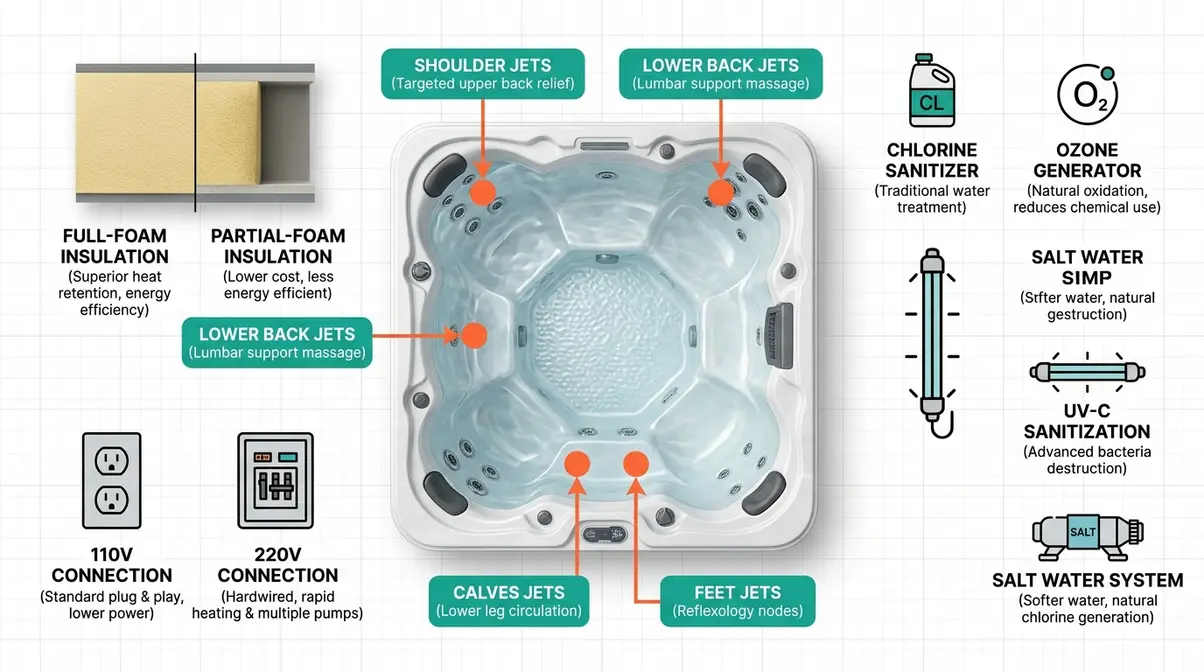
A hot tub — also called a spa or jacuzzi — is a large, insulated tub of heated water (typically 100–104°F) powered by electricity, used for relaxation, hydrotherapy (water-based therapy for muscles and joints), or socializing. Three main types exist for first-time buyers: inflatable hot tubs (portable, air-filled models that plug into a standard 110v outlet), portable hard-shell spas (acrylic-shell tubs powered by a dedicated 220v circuit), and in-ground spas (permanent, custom-built installations that are the most expensive option).
People buy hot tubs for different reasons. Families use them as a social focal point. People with muscle soreness, arthritis, or chronic back pain use them for regular hydrotherapy. Homeowners use them to increase daily enjoyment of their outdoor space. There is no single “right” reason — but knowing yours helps you choose the right type.
A 4-person inflatable hot tub like the Coleman Hawaii suits a renter who wants flexibility and easy setup. A 6-person acrylic spa with 40+ jets suits a homeowner planning to entertain year-round and willing to invest in a permanent installation. Knowing which category fits your life is the first decision you’ll make — and it shapes every decision that follows.
For safety standards that apply to all hot tub types, CPSC safety guidelines for spas cover compliant drain covers required under the Virginia Graeme Baker Pool and Spa Safety Act — a non-negotiable for any installation.
For a deeper dive into the full selection process, our complete hot tub buying guide walks through every decision point in detail.
Now that you know what a hot tub is, let’s walk through the five stages of buying one — in the order that actually makes sense.
The 5 Stages of Buying a Hot Tub
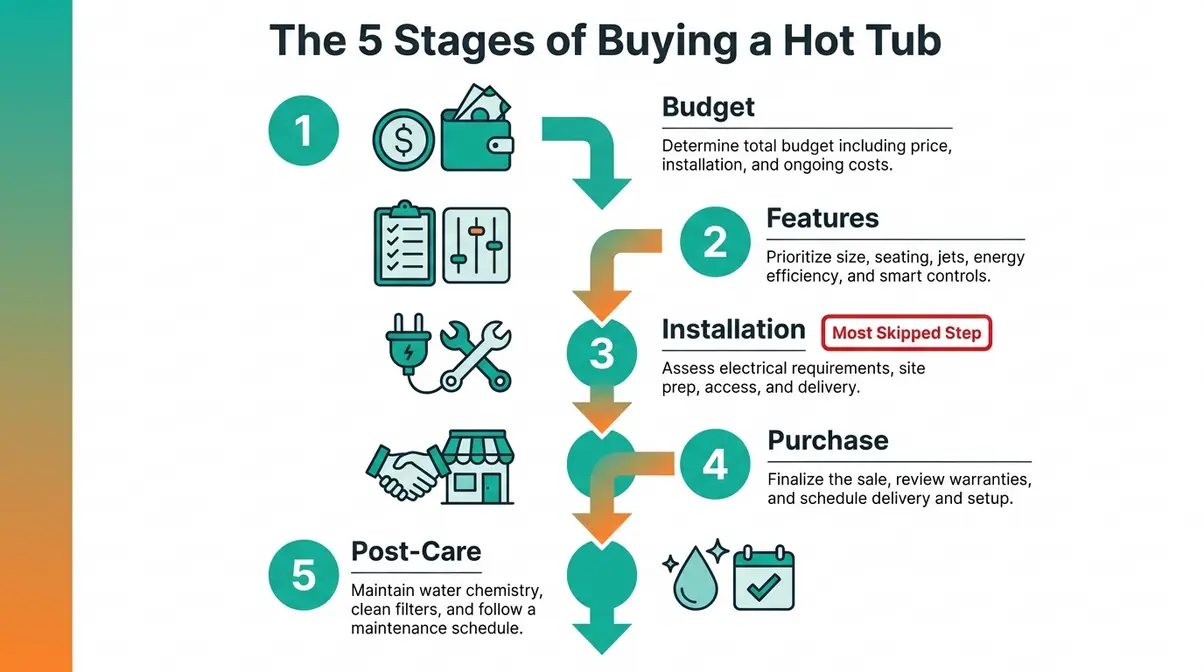
Most first-time buyers jump straight to Stage 4 — they walk into a showroom, fall in love with a tub, and buy it. Then they discover they need a $1,500 electrician, a $1,000 concrete pad, and a $500 crane. Doing the stages in the right order prevents that. Here’s the framework:
1. Budget
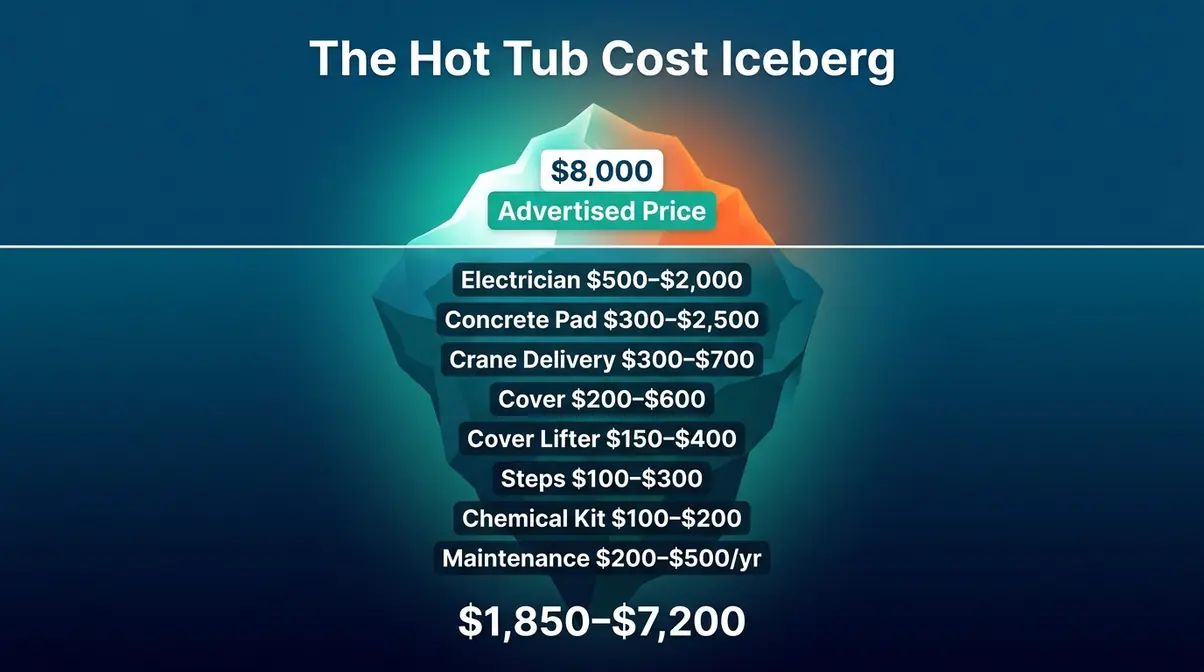
Set your total budget: purchase price plus installation costs plus ongoing monthly expenses. The sticker price is only part of what you’ll pay. This is where The Hot Tub Cost Iceberg comes in — the purchase price you see advertised is just the tip; the real costs of hot tub ownership run deeper beneath the surface. We’ll unpack every hidden fee in the next section.
2. Features
Decide on size, voltage (110v vs. 220v), number of jets, insulation type, and water care system. Each choice affects your long-term comfort and energy bill.
3. Installation
Plan your foundation, electrical work, and delivery access before you shop. This is the stage most people skip — and the one that causes the most expensive surprises.
4. Purchase
Choose your dealer, compare warranties, negotiate, and time your purchase for maximum savings. The best time to buy a hot tub is often fall or winter, when dealers offer their deepest discounts.
5. Post-Care
Learn water chemistry basics (pH, alkalinity, sanitizer levels) and your maintenance schedule before the tub arrives. Starting right prevents costly repairs later.
Why does the order matter? A buyer who skips Stage 3 discovers on delivery day that their deck can’t support the tub’s full weight — then pays $800–$2,500 to pour a concrete pad on an emergency basis. The five stages exist to protect you from that kind of surprise.
Stage 1 is always budget — and it’s more complex than most first-time purchasers expect. Let’s break down exactly what you’ll pay.
Before You Visit a Showroom
Every first-time buyer should complete this checklist before stepping into a dealership. Arriving prepared means you won’t be pressured into a decision your space or panel can’t support.
1. Measure your available space.
A hot tub needs at least 24 inches of clearance on all sides for maintenance access. Write down the exact dimensions of your planned location — length, width, and any overhead obstructions like pergolas or roof overhangs.
2. Check your electrical panel.
A 220v hot tub requires a dedicated 50–60 amp GFCI (Ground Fault Circuit Interrupter — a safety device that cuts power if it detects an electrical fault) circuit. If your panel is at capacity or underpowered, budget $500–$2,000 for an upgrade (HomeAdvisor, 2026).
3. Know your access route.
Measure every gate, side passage, and narrow point between the street and your planned location. Hot tubs weigh 400–800 lbs empty and up to 6,000 lbs filled with water. If a crane is required to lift the tub over a fence or roofline, budget an additional $300–$700 (Angi, 2026).
4. Set your total budget with a 25% buffer.
Write down: (1) available space dimensions, (2) your panel’s amperage, (3) the narrowest access point to your yard, and (4) your maximum spend — including a 25% cushion for surprises.
Arriving at a showroom with this information puts you in control of the conversation. Without it, salespeople will make decisions for you.
With your pre-shopping checklist in hand, the next step is understanding what everything actually costs — including the fees most buyers don’t find out about until it’s too late.
Understanding Hot Tub Costs and Budgeting
Hot tub pricing is straightforward on the surface — but The Hot Tub Cost Iceberg is real, and it catches nearly every first-time purchaser off guard. The advertised price covers the tub itself. It rarely covers the electrician, the foundation, the delivery, the cover, the chemicals, or the monthly energy bill.
Our team at onehottub.com has evaluated hundreds of buyer journeys, and the pattern is consistent: first-timers underestimate their total budget by 20–40% because they price the tub but not the installation ecosystem around it.
Hot Tub Price Tiers Explained
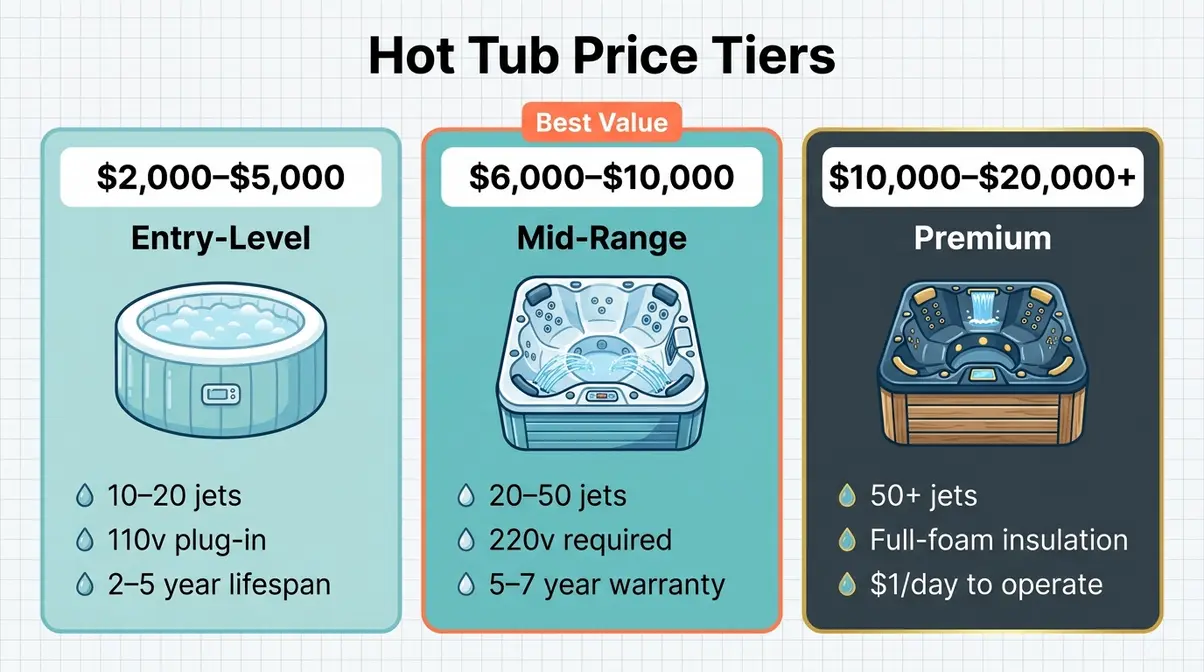
Hot tubs fall into three clear price tiers. Knowing which tier fits your needs prevents both overspending and buying a tub that won’t last.
| Tier | Price Range | Who It’s For | What You Get |
|---|---|---|---|
| Entry-Level | $2,000–$5,000 | Renters, first-timers, small budgets | Inflatable or basic acrylic shell, fewer jets (10–20), 110v plug-in option available |
| Mid-Range | $6,000–$10,000 | Homeowners wanting quality + features | Durable acrylic shell, 20–50 jets, better insulation, 220v required, 5–7 year warranty |
| Premium | $10,000–$20,000+ | Buyers wanting spa-grade luxury | Full-foam insulation, 50+ jets, advanced water care, built-in lighting, 10+ year warranty |
Entry-level tubs ($2,000–$5,000) include inflatable models and basic portable spas. Inflatable hot tubs like the Coleman Hawaii and Bestway SaluSpa series are ideal for renters or buyers who want a low-commitment first experience. They heat slowly (8–12 hours to reach temperature) and are less energy-efficient than hard-shell models, but they require zero installation beyond a flat surface and an outdoor outlet.
Mid-range tubs ($6,000–$10,000) are where most homeowners land. These are hard-shell acrylic spas with real hydrotherapy jets, better insulation, and warranties that actually mean something. They require a 220v dedicated circuit — which means an electrician — and a solid foundation. The investment is meaningfully higher upfront, but the running costs are significantly lower than entry-level models over a 5–10 year lifespan.
Premium tubs ($10,000+) from brands like Jacuzzi, Hot Spring, and Bullfrog deliver spa-grade performance. According to Jacuzzi’s cost-of-ownership data, premium models with full-foam insulation can cost as little as $1/day to operate — a meaningful long-term saving compared to poorly insulated entry-level units that can run $3–$5/day.
The Hidden Cost Iceberg
The Hot Tub Cost Iceberg is the pattern our team sees repeatedly: a buyer budgets $8,000 for a mid-range tub and ends up spending $11,500 because the installation costs were invisible until the last moment. Here is every hidden cost, itemized with real dollar ranges.
| Hidden Cost | Typical Range | Notes |
|---|---|---|
| Licensed electrician (220v install) | $500–$2,000 | Required for all hard-shell 220v tubs |
| Concrete pad or reinforced deck | $300–$2,500 | Required if no existing solid foundation |
| Crane delivery (if needed) | $300–$700 | Required when access is blocked |
| Hot tub cover | $200–$600 | Essential for heat retention and safety |
| Cover lifter | $150–$400 | Prevents cover damage and back strain |
| Steps/entry stairs | $100–$300 | Often not included with the tub |
| Initial chemical startup kit | $100–$200 | Bromine, chlorine, pH balancer, test strips |
| First-year maintenance supplies | $200–$500/year | Ongoing filter replacements, chemicals |
Total hidden costs: $1,850–$7,200 on top of the tub’s purchase price. For a mid-range $8,000 tub, your real total could be $9,850–$15,200. That’s the iceberg. Budget for it before you shop, not after.
The electrician fee is the most consistently underestimated. Every 220v hot tub requires a dedicated 50–60 amp GFCI circuit run from your main electrical panel. This is not optional — it’s required by the National Electrical Code (NEC). The cost varies by distance from panel to tub location and local labor rates, but $800–$1,200 is a realistic mid-range figure for most installations (HomeAdvisor, 2026).
For a detailed breakdown of what to expect from the installation process, Hot Tub University’s installation guide covers the full scope of site preparation requirements with regional cost variations.
Monthly Running Costs
After the purchase and installation, the tub keeps costing money every month. Understanding your ongoing expenses before you buy prevents “ownership regret” — the feeling that the tub is too expensive to run.
A well-insulated 220v hot tub costs approximately $20–$50/month to run in moderate climates (Pool & Hot Tub Alliance, 2026). A poorly insulated entry-level model in a cold climate can cost $75–$150/month. The difference adds up to $660–$1,200/year — often more than the savings you made buying a cheaper tub.
Three factors drive your monthly energy cost:
1. Insulation quality
Full-foam insulation (cavity filled completely with spray foam) retains heat far better than perimeter-only insulation. More on this in the Features section.
2. Cover quality
A high-density foam cover (4–6 inches thick with a vapor barrier) prevents heat loss when the tub isn’t in use. Cheap covers lose heat rapidly and spike your electricity bill.
3. Set temperature
Every degree above 100°F increases energy consumption. Many experienced owners set their tubs to 100°F rather than 104°F and report no meaningful comfort difference — but a noticeable drop in monthly costs.
Water chemistry maintenance adds roughly $200–$500/year in chemicals (chlorine or bromine, pH adjusters, alkalinity balancers, shock treatments). Neglecting water chemistry doesn’t just make the water unsafe — it degrades the shell, jets, and pump faster, leading to expensive repairs.
Where you buy your tub affects running costs too. Local dealers often provide free water testing and discounted chemical programs that online buyers don’t access. That ongoing relationship matters — especially in year two when the pump needs servicing.
Key Hot Tub Features and Technical Specifications
When consulting any how to buy a hot tub guide, understanding hot tub features before you shop means you won’t be dazzled by jet counts and LED lights while missing the specs that actually matter: voltage, insulation, and water care.
The Wirecutter hot tub buying guide emphasizes that most buyers focus on aesthetics when they should be comparing insulation ratings and pump warranties. Our evaluation of dozens of first-timer buying journeys confirms the same finding.
110v vs. 220v Hot Tubs
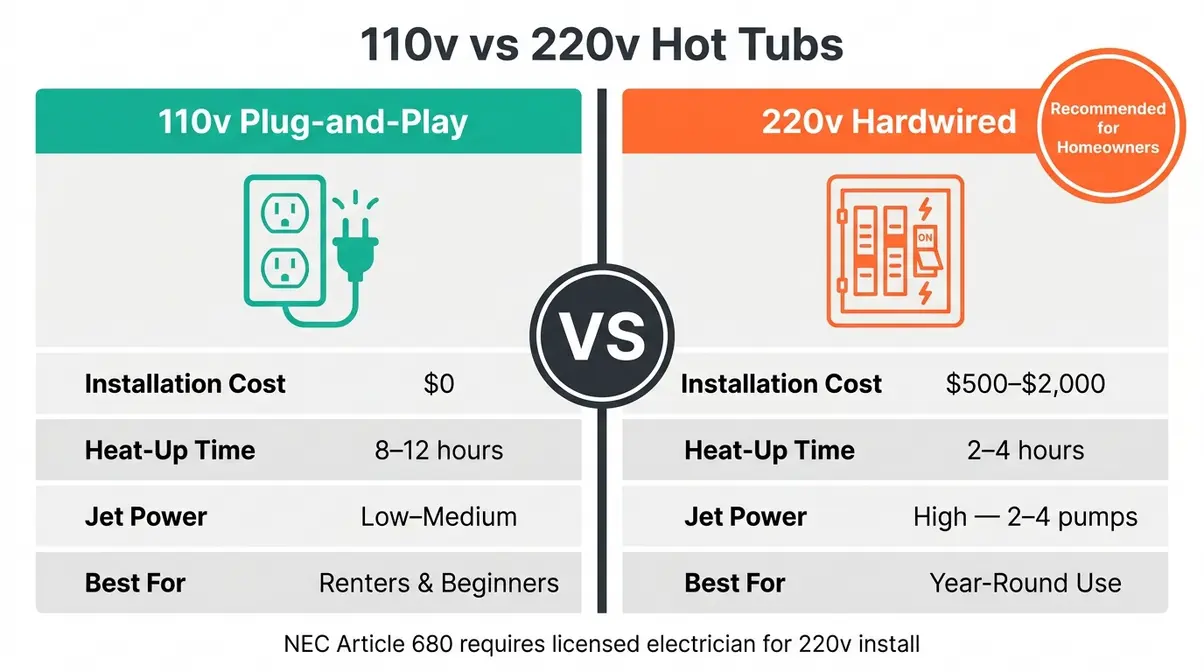
The voltage question is the single most important technical decision a first-time buyer makes — and it determines your installation cost, heating speed, and long-term performance. Here’s the direct answer: if you own your home and plan to use the tub regularly, choose 220v. If you rent, or want zero installation hassle, start with 110v.
| Feature | 110v (Plug-and-Play) | 220v (Hardwired) |
|---|---|---|
| Installation | Plug into standard outlet | Licensed electrician required |
| Installation Cost | $0 | $500–$2,000 |
| Heat-Up Time | 8–12 hours | 2–4 hours |
| Max Temperature | 104°F (slower to reach) | 104°F (faster, holds better) |
| Jet Power | Low–medium (1–2 pumps) | High (2–4 pumps) |
| Monthly Energy Cost | Higher per hour of use | Lower per hour of use |
| Best For | Renters, first-timers, portability | Homeowners, year-round use |
| Typical Models | Inflatable, small portables | Mid-range and premium hard-shell |
110v tubs (plug-and-play) run on a standard 15–20 amp household outlet. No electrician. No dedicated circuit. You simply place the tub, fill it with a garden hose, plug it in, and wait. The trade-off: heating is slow, jet power is limited, and running the jets while heating simultaneously is often not possible. For renters or buyers testing the hot tub lifestyle before committing, 110v is a sensible starting point.
220v tubs (hardwired) require a dedicated 50–60 amp GFCI circuit installed by a licensed electrician. The upfront installation cost is real — but the performance difference is substantial. A 220v tub heats in 2–4 hours versus 8–12 hours, maintains temperature more efficiently in cold weather, and runs multiple high-pressure pumps simultaneously. For homeowners planning year-round use, the electrician fee pays for itself within the first winter.
For guidance on timing your electrical upgrade alongside your tub purchase, Hot Spring’s buying decision guide includes a useful section on planning your site and electrical prep in parallel.
Insulation Types Explained
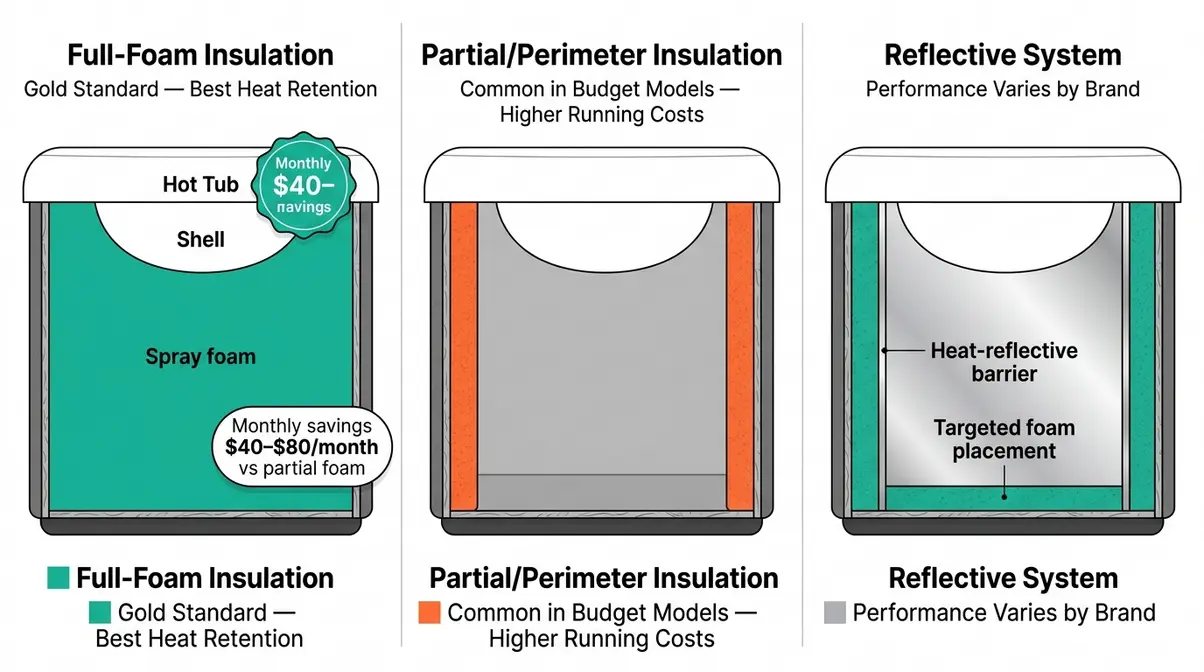
Insulation is one of the most overlooked specs in hot tub shopping — and one of the most consequential for your monthly energy bill. Most buyers compare jet counts and shell colors. Experienced owners compare insulation types.
Three main insulation approaches exist:
1. Full-foam insulation
The entire cavity between the shell and the cabinet is filled with spray foam. This is the gold standard for heat retention. Full-foam tubs lose minimal heat overnight and are significantly cheaper to run in cold climates. Most premium and upper mid-range tubs use this approach.
2. Partial or perimeter insulation
Foam is applied only around the perimeter of the cabinet, leaving the interior cavity largely empty (or filled with fiberglass batting). Heat escapes more readily. Common in entry-level and budget mid-range tubs.
3. Reflective insulation systems
Some manufacturers (notably Bullfrog and certain Hot Spring models) use heat-reflective barriers and targeted foam placement. These can perform comparably to full-foam when engineered well, but quality varies significantly by brand.
In a cold climate (average winter below 40°F), a full-foam tub can save $40–$80/month in electricity compared to a partial-foam model of the same size. Over five years, that’s $2,400–$4,800 in savings — often more than the price difference between insulation tiers. The right insulation isn’t a luxury feature. It’s a long-term financial decision.
Ask every dealer you visit: “What insulation system does this tub use, and what is the R-value of the cabinet?” An R-value (resistance to heat flow — higher is better) above 12 is a reasonable minimum for cold-climate buyers.
Shells, Jets, and Water Care
Shell material determines durability and longevity. Nearly all mid-range and premium hot tubs use acrylic shells — a hard, UV-resistant surface bonded to a fiberglass backing. Acrylic is durable, easy to clean, and resists fading. Entry-level inflatable tubs use reinforced PVC or vinyl, which is comfortable and portable but won’t last as long under heavy use.
Beyond acrylic, rotomolded plastic shells offer a highly durable, lightweight, and budget-friendly alternative. While they lack the glossy finish of acrylic, rotomolded tubs are virtually indestructible and excellent for harsh climates.
Jets are the most marketed feature — and the most misunderstood. More jets do not automatically mean better hydrotherapy. What matters is jet placement (targeting shoulders, lower back, calves, and feet), adjustability (the ability to direct and restrict flow), and pump power (measured in horsepower, or HP). A well-designed 20-jet system with two 3HP pumps delivers better hydrotherapy than a poorly designed 60-jet system with underpowered pumps.
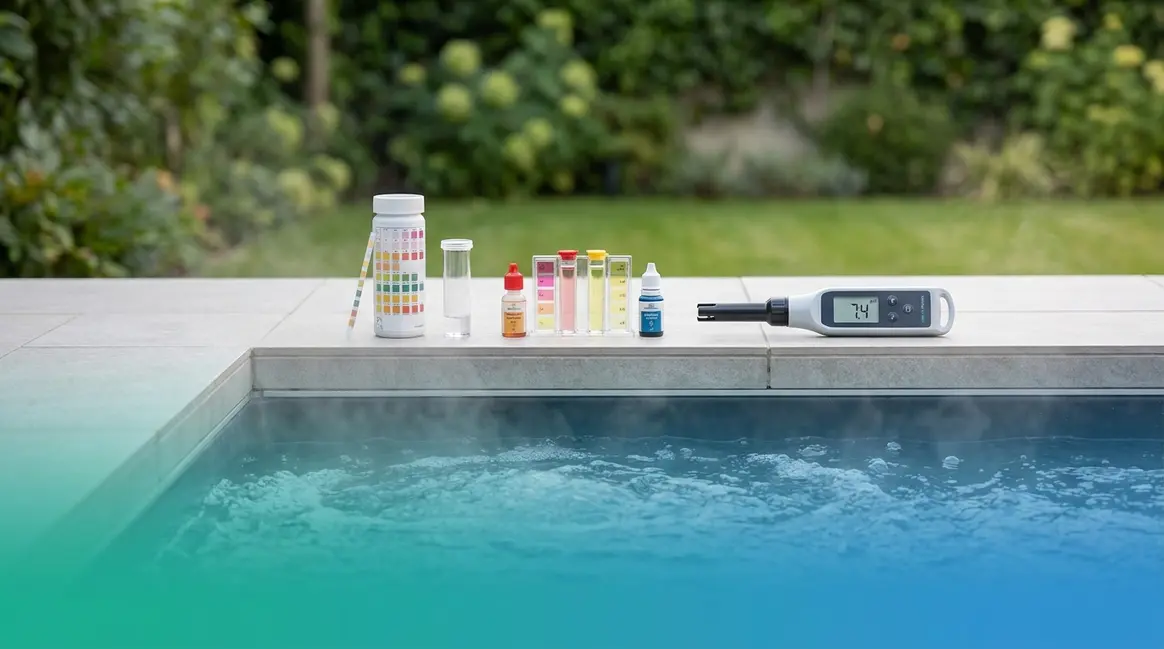
Water care systems determine how much time you spend maintaining your tub. Technology has advanced significantly beyond basic chemical maintenance:
- Chlorine & Bromine: The most common sanitizers. Effective, affordable, and widely available. Requires weekly testing and adjustment of pH, alkalinity, and sanitizer levels. Bromine is gentler on the skin and works better in hot water.
- Ozone Systems: These inject ozone gas into the water to oxidize contaminants, reducing your overall chlorine or bromine needs by up to 50%.
- UV-C Systems: Ultraviolet light chambers neutralize bacteria and viruses as water passes through the plumbing. When paired with ozone, this creates an advanced oxidation process (AOP) that keeps water crystal clear with minimal chemical use.
- Salt Water Systems: Use a salt chlorinator (a device that generates chlorine from dissolved salt) to reduce the need for manual chemical additions. Lower maintenance burden, softer water feel. Higher upfront cost ($500–$1,500 for the system), but many owners consider it worth the investment.
Across r/hottub community threads, the consensus is clear: beginners consistently underestimate the time required for water chemistry maintenance and are caught off guard when their water turns green or foamy in week two. Budgeting 15–20 minutes per week for water testing and chemical adjustment is realistic for most tubs.
Hot Tub Installation and Site Preparation
Installation is the stage where the most expensive surprises happen — and where the Hot Tub Cost Iceberg hits hardest. Our team at onehottub.com consistently finds that buyers who plan their installation before choosing their tub avoid the emergency costs that catch unprepared buyers on delivery day. Think of this section as your installation prerequisite checklist.
Choosing the Right Foundation
A hot tub filled with water and occupants can weigh up to 6,000 lbs. That weight needs a foundation that can support it — permanently, without shifting, settling, or cracking. The wrong foundation is one of the top causes of voided warranties and structural damage.
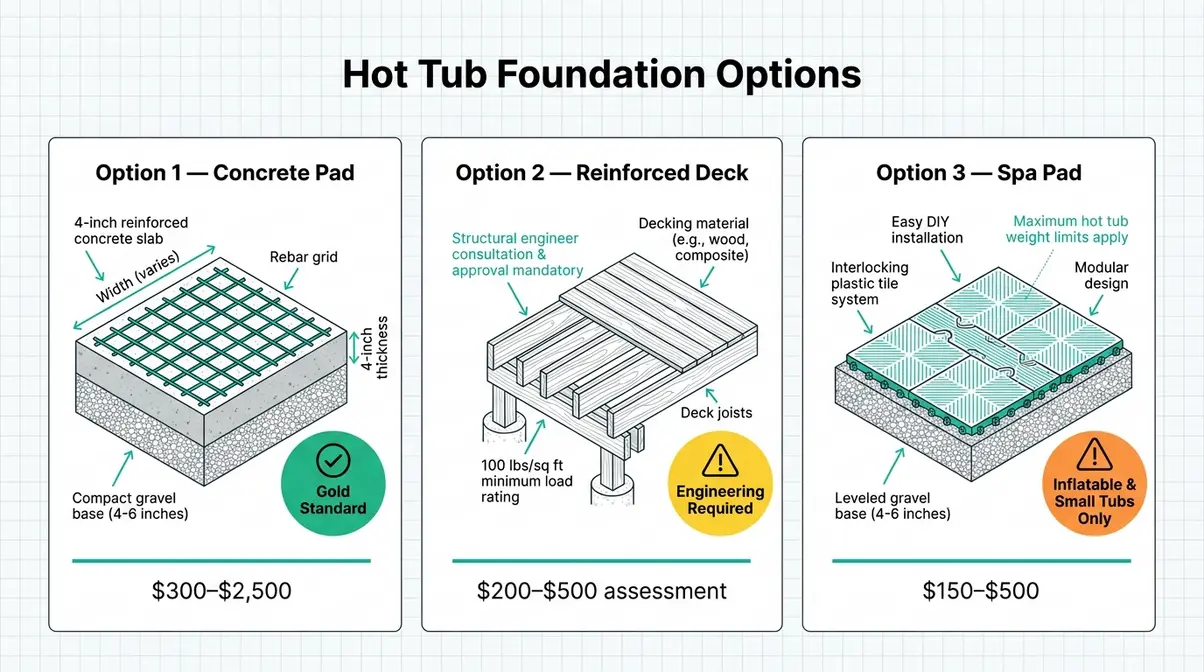
Three foundation options exist:
1. Concrete pad
The gold standard. A 4-inch reinforced concrete pad (minimum 4,000 PSI — pounds per square inch of compressive strength) provides a permanent, level, and stable base. Cost: $300–$2,500 depending on size and local labor rates (HomeAdvisor, 2026). Best for: any permanent hard-shell installation.
2. Reinforced deck
An existing deck can work if it’s engineered to support the load. A filled hot tub requires a minimum of 100 lbs per square foot of structural support. Most standard residential decks are built for 40–60 lbs/sq ft. A structural engineer assessment ($200–$500) is strongly recommended before placing any hot tub on a deck.
3. Spa pads (pre-formed plastic or composite pads)
An interlocking system of high-density plastic tiles designed specifically for hot tubs. Cost: $150–$500. Easier and faster than concrete, adequate for lighter inflatable and small portable tubs. Not recommended for large hard-shell tubs in freeze-thaw climates.
Never place a hot tub on grass, gravel, or a standard wood deck without engineering confirmation. The consequences range from a sunken, unlevel tub (unusable within months) to structural deck failure.
Electrical Requirements
This is non-negotiable: every 220v hot tub requires installation by a licensed electrician. This is not a DIY task. The National Electrical Code (NEC) Article 680 governs all outdoor spa and hot tub wiring and requires a licensed professional for compliant installation.
Here’s what the electrician will do:
1. Run a dedicated circuit
A 50–60 amp, 240-volt circuit from your main electrical panel to the tub’s disconnect box (a weatherproof shutoff switch located within sight of the tub but at least 5 feet away from the water).
2. Install a GFCI breaker
A GFCI (Ground Fault Circuit Interrupter) breaker at the panel is required by code. This device cuts power within milliseconds if it detects a ground fault — a critical safety feature around water.
3. Mount the disconnect box
A weatherproof disconnect box must be installed within sight of the tub but at least 5 feet away, per NEC 680.12.
4. Permit and inspection
A licensed electrician will pull the required permits and schedule an inspection. Unpermitted electrical work can void your homeowner’s insurance and complicate a home sale.
Typical cost: $500–$2,000, depending on the distance from panel to tub, whether a panel upgrade is needed, and local labor rates (HomeAdvisor, 2026). Budget toward the higher end if your panel is far from the installation site or if your home has an older 100-amp service panel.
For comprehensive guidance on the permit process, check a verified hot tub shopping guide to review a checklist of questions to ask your electrician before work begins.
Delivery Day Preparation
Hot tub delivery is not like furniture delivery. A filled hot tub weighs up to 6,000 lbs, and the empty shell is large, awkward, and fragile. Most delivery crews use specialized equipment — but you need to prepare your site before they arrive.
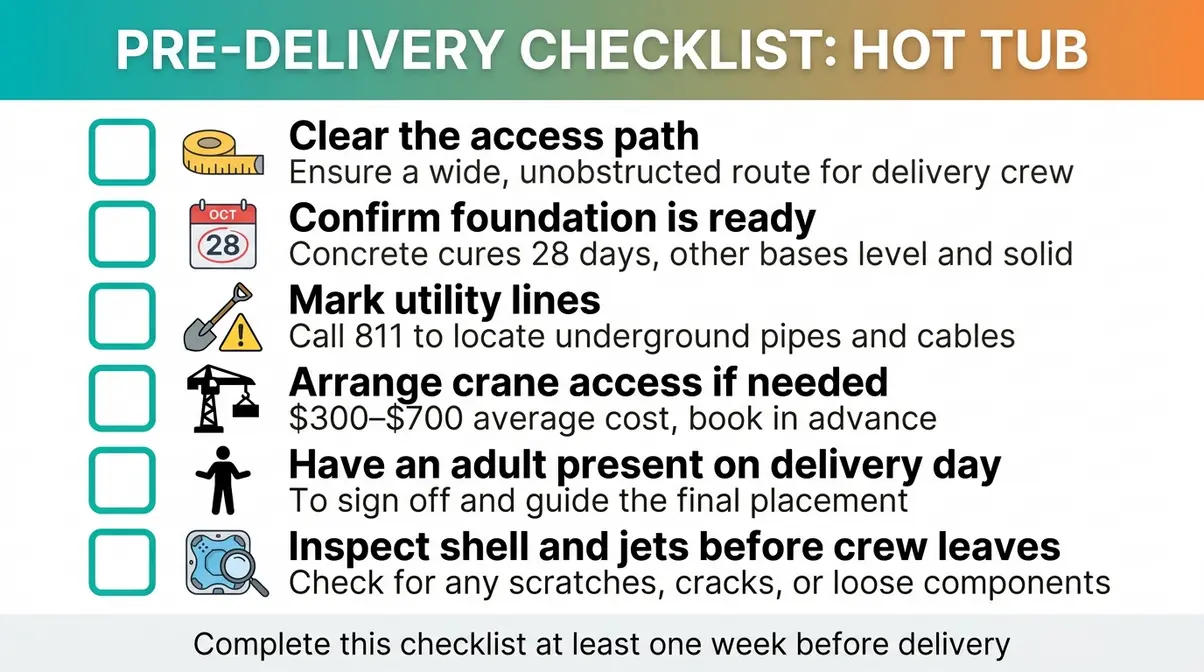
Pre-Delivery Checklist:
1. Clear the access path.
Remove gates, fence sections, or obstacles along the route from the street to your installation site. Measure every chokepoint — the tub needs to fit through with a few inches of clearance.
2. Confirm the foundation is ready.
Concrete must cure for at least 28 days before a tub is placed on it. If your pad was poured late, delivery day will need to be rescheduled.
3. Mark utility lines.
Call 811 (the national “Call Before You Dig” service) if any ground work was done for the pad or electrical conduit.
4. Arrange for crane access (if needed).
If the access path is too narrow or blocked, a crane lift over the fence or roofline costs $300–$700. Confirm this with your dealer at least a week before delivery.
5. Have an adult present.
Someone must be home to direct the delivery crew, confirm the tub’s position, and sign off on delivery condition before the crew leaves.
6. Inspect before they leave.
Check the shell for cracks or chips, verify all jets are present, and confirm the control panel powers on. Any damage must be noted on the delivery receipt before the crew departs.
When and Where to Buy a Hot Tub
Knowing when and where you buy can save you $500–$2,000 on the same tub. Timing and channel choice are two of the most actionable levers a first-time buyer controls — and most guides skip them entirely. Our team at onehottub.com has tracked dealer pricing patterns across multiple seasons and consistently finds that buyers who plan their purchase timing save meaningfully compared to impulse buyers.
When is the best time to buy a hot tub?
Hot tub pricing is seasonal — and buyers who understand the calendar save real money. The industry follows a predictable pattern:
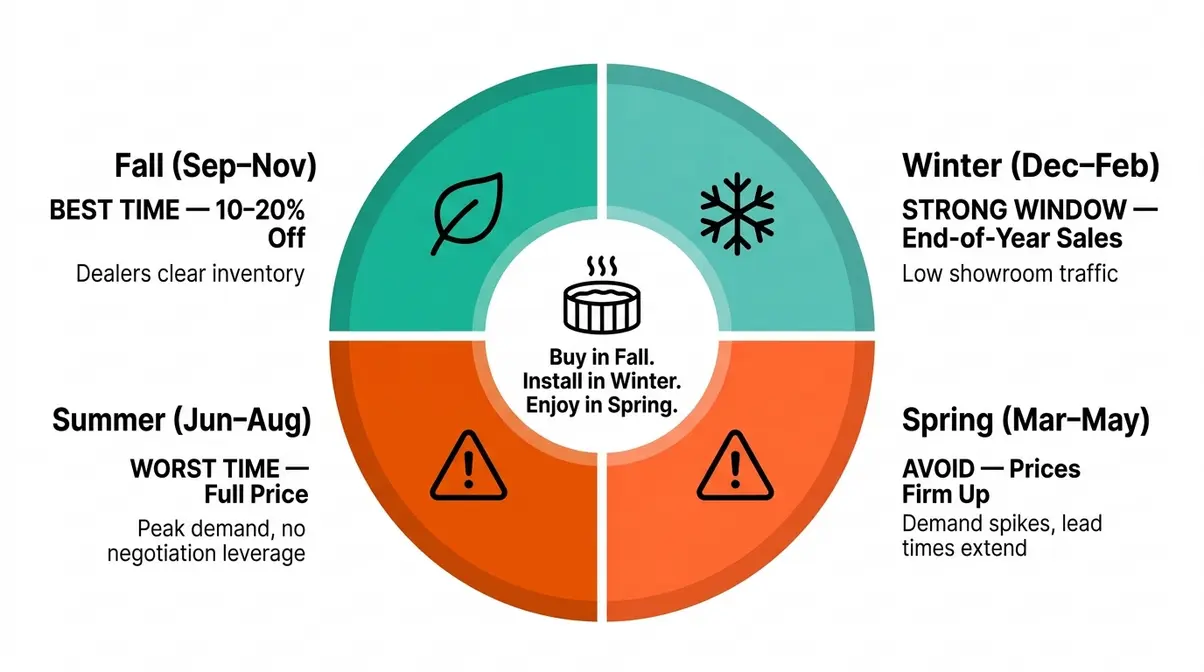
- Fall (September–November): Dealers push to clear inventory before the slow season. This is historically the best time to buy, with discounts of 10–20% common on current-year models. Manufacturers release new model lines in fall, motivating dealers to move existing stock.
- Winter (December–February): Counter-intuitively, winter is also a strong buying window. Showroom traffic is low, dealers are motivated, and the tub will be ready for spring use — when you actually want it. End-of-year sales events (Black Friday, end-of-December clearances) can yield significant savings.
- Spring (March–May): Demand spikes. Prices firm up. Lead times extend. This is the worst time to buy if price is a priority — you’ll pay full price and wait longer for delivery.
- Summer (June–August): Demand peaks further. Dealers have less incentive to negotiate. Avoid if possible.
The practical advice: decide in August, visit showrooms in September, and close your purchase by November. You’ll get the best selection of current-year models at the best prices.
Local Dealer vs. Online: Which Is Safer?
For first-time buyers, a local authorized dealer is almost always the safer choice — even if an online retailer appears cheaper. Here’s why the math doesn’t favor online purchasing for most buyers.
Online savings on a $7,000 tub might be $300–$800. But consider what you lose:
- Warranty service — Most manufacturers require warranty claims to be serviced through authorized dealers. An online purchase may leave you without local service coverage, meaning you pay out-of-pocket for pump repairs ($200–$600) or heater replacements ($300–$800).
- Water chemistry support — Local dealers typically offer free water testing and ongoing chemical advice. This is worth $100–$300/year in chemical savings alone for a first-timer who doesn’t yet know their water chemistry.
- Delivery and setup — Local dealers include professional delivery, placement, and initial setup in their pricing. Online retailers often deliver curbside only — leaving you to arrange installation separately.
- Ongoing relationship — When something goes wrong in year three (and something always does), a local dealer who sold you the tub is motivated to help. An online retailer has no such incentive.
When buying from a local dealer, understanding the warranty structure is critical. A strong warranty covers the shell structure for 5–10 years, the shell surface for 3–5 years, and plumbing/equipment for 2–3 years. However, labor is often only covered for the first year. Online purchases frequently require you to ship parts back to the manufacturer, leaving your tub unusable for weeks.
Furthermore, mastering negotiation tactics at a local dealership can save you hundreds. Dealers typically operate with tight margins on the hot tub itself, but they have significant flexibility with the “ecosystem” of accessories. Instead of haggling aggressively over the base price, ask them to throw in a premium cover lifter, a set of matching steps, or a six-month chemical startup kit. These additions cost the dealer very little wholesale but provide massive retail value to you.
One exception: Inflatable hot tubs. For entry-level inflatable models like the Coleman Hawaii or Bestway SaluSpa series, online purchasing is entirely reasonable. These tubs don’t require professional installation, and warranty service is simpler. For hard-shell 220v tubs, stick with a local dealer.
Should I buy a new or used hot tub?
A used hot tub can be a genuine bargain — or an expensive mistake. The difference comes down to how carefully you inspect it before buying. Experienced owners report that the most common used-tub horror stories involve hidden pump failures, cracked shells, and outdated electrical systems that require full rewiring.
Potential savings: A used mid-range tub that originally cost $8,000 might sell for $2,000–$4,000. That’s a real saving — if the tub is in good condition.
Used hot tub inspection checklist:
- Fill it and run it before buying. Never buy a used hot tub “dry.” Insist on seeing it filled, heated to temperature, and running all jets. This is the single most important rule.
- Check the shell for cracks. Run your hand along the entire interior surface. Even hairline cracks will worsen under thermal cycling and are expensive to repair ($300–$1,500).
- Test every jet. Each jet should have strong, even flow. Weak or non-functioning jets indicate pump issues or blocked plumbing.
- Inspect the cabinet exterior. Rotting cabinet wood or warped panels indicate water intrusion — often a sign of plumbing leaks.
- Check the control panel. All functions (jets, lights, heat settings, blower) should respond correctly.
- Ask for service records. A well-maintained used tub will have records of filter changes, pump servicing, and water chemistry logs.
- Verify the electrical system. Confirm the tub’s voltage requirements and that the existing wiring is up to current NEC code.
If the seller won’t let you run the tub before buying, walk away. That’s the do’s and don’ts rule experienced owners cite most often.
First-Time Buyer Mistakes and Pro Tips
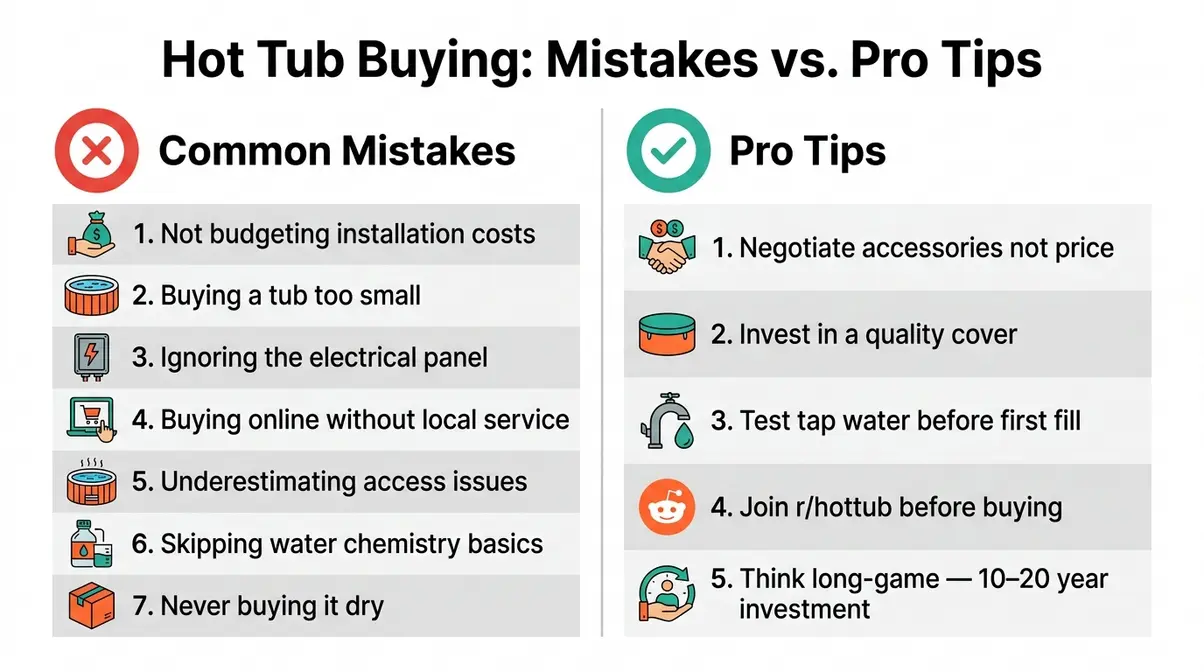
This section covers what you wish you had known — the specific errors that experienced owners made and want to save you from making. Across r/hottub community threads and our own buyer consultations, the same seven mistakes appear with striking regularity.
The 7 Biggest Hot Tub Buying Mistakes
Mistake 1: Not budgeting for installation costs.
The most common and most expensive mistake. A buyer budgets $7,000 for a tub and has $7,000 in the bank. Then they discover they need $1,200 for an electrician, $800 for a concrete pad, and $400 for a cover lifter. The tub sits in their driveway for three weeks while they scramble for funds. Always budget installation costs before choosing your tub.
Mistake 2: Buying a tub that’s too small.
First-timers routinely underestimate how often they’ll want to share the tub. A couple who buys a 2-person tub often wishes they had a 4-person model within the first year. When in doubt, size up by one tier.
Mistake 3: Ignoring the electrical panel.
Discovering your panel needs a $1,500 upgrade after you’ve already bought a 220v tub is a painful and avoidable surprise. Have an electrician assess your panel before you shop.
Mistake 4: Buying online without local service support.
As covered above, online savings on hard-shell tubs evaporate quickly when you need warranty service or water chemistry support.
Mistake 5: Underestimating access issues.
A tub that can’t fit through the side gate requires a crane. A crane that wasn’t budgeted for adds $300–$700 and delays delivery. Measure your access route before you finalize your purchase.
Mistake 6: Skipping the water chemistry learning curve.
Many first-timers assume the tub will “take care of itself.” It won’t. Neglected water chemistry leads to green water, foam, bacterial growth (including Legionella — a serious respiratory illness risk), and premature equipment damage. Budget 15–20 minutes per week and learn the basics before your tub arrives.
Mistake 7: Never buying it dry.
This applies to both new and used tubs. For used tubs, never purchase without seeing it filled and running. For new tubs from dealers, insist on a “wet test” — sitting in a filled, running demo model before you commit. What feels comfortable in the showroom may feel completely different once you’re actually in the water.
Pro Tips from Experienced Owners
These are the insights that experienced hot tub owners consistently share — the things they wish they had known before making their first purchase.
“Negotiate everything except the tub.”
Dealers rarely discount the tub price significantly, but they’ll often throw in a free cover, steps, chemical starter kit, or extended warranty if you ask. These extras are worth $400–$1,000 — and they’re often easier to negotiate than a price reduction.
“Your cover is as important as your tub.”
A high-quality 4–6 inch tapered foam cover with a vapor barrier (a waterproof inner layer that prevents foam saturation) can save $30–$60/month in heating costs. Budget at least $400 for a quality cover. The cheap covers that come bundled with entry-level tubs are often replaced within 18 months.
“Get the water tested before your first fill.”
Your local dealer will test your tap water for free. Hard water (high calcium and magnesium content) requires balancing before the tub is filled — otherwise you’ll get scale buildup on the shell and jets within weeks.
“Join r/hottub before you buy.”
The community is genuinely helpful and brutally honest about brand reliability, dealer experiences, and the real costs of ownership. Experienced owners report that 20 minutes of reading Reddit threads before buying was more valuable than 2 hours of manufacturer websites.
“Plan for the long game.”
A quality mid-range hot tub, properly maintained, lasts 10–20 years. The upfront investment is meaningful — but the per-use cost over a decade is surprisingly low. Think of it as a long-term wellness investment, not a one-time purchase.
Frequently Asked Questions About Buying a Hot Tub
How much does it actually cost to own a hot tub?
Owning a hot tub costs $6,000–$15,000 upfront for a mid-range model once installation is included. Beyond the purchase price, budget $500–$2,000 for an electrician and $300–$2,500 for a foundation, according to HomeAdvisor estimates. Monthly running costs average $20–$50 for a well-insulated 220v model in a moderate climate. First-time buyers who budget only the sticker price consistently face the Cost Iceberg, adding 20–40% to the real total.
What’s the difference between a 110v and 220v hot tub?
A 110v hot tub plugs into a standard household outlet, meaning no electrician is required, but heating is slow (8–12 hours) and jet power is limited. A 220v hot tub requires a dedicated 50–60 amp GFCI circuit installed by a licensed electrician, per National Electrical Code standards. It heats in 2–4 hours, runs multiple high-pressure pumps simultaneously, and is significantly more energy-efficient in cold climates. For homeowners planning year-round use, 220v is the right investment.
Does a hot tub need a concrete pad?
A hot tub does not require a concrete pad specifically, but it does need a solid, level foundation capable of supporting up to 6,000 lbs when filled, based on Pool & Hot Tub Alliance structural guidelines. A reinforced concrete pad ($300–$2,500) is the most reliable option. A structurally engineered deck confirmed to support 100 lbs/sq ft is also acceptable. Grass, gravel, or standard residential decks are not safe foundations for hard-shell hot tubs.
How long do hot tubs usually last?
A high-quality, well-maintained acrylic hot tub typically lasts 10 to 20 years. Entry-level inflatable models generally have a shorter lifespan of 2 to 5 years, depending on usage and climate exposure. The longevity of a hard-shell spa heavily depends on consistent water chemistry maintenance, as unbalanced water can degrade the shell and internal plumbing components prematurely. According to Forbes Home data, replacing the cover every 3-5 years also significantly extends the unit’s lifespan by protecting the acrylic from UV damage.
Can you put a hot tub on grass or dirt?
No, you should never place a hard-shell hot tub directly on grass or bare dirt. The ground will inevitably settle unevenly under the immense weight of the filled tub, which can warp the frame and cause the acrylic shell to crack. Furthermore, moisture from the soil will accelerate rot in wooden cabinet frames and invite pests into the insulation cavity. Always use a concrete pad, engineered deck, or specialized spa pad installed over a properly leveled gravel base.
What You Now Know – and What to Do Next
Buying a hot tub as a first-time purchaser doesn’t have to be overwhelming. The five-stage framework — Budget, Features, Installation, Purchase, Post-Care — gives you a clear path from confusion to confident decision. Most importantly, The Hot Tub Cost Iceberg is now visible to you: the electrician, the foundation, the delivery crane, and the monthly running costs are all knowable in advance.
Buyers who budget for the full iceberg before they shop avoid the most common and most expensive first-timer mistakes. A well-insulated mid-range 220v tub, purchased from a local dealer in fall, installed on a proper foundation with a quality cover, will deliver 10–20 years of reliable use for a real total cost of $9,000–$15,000 — or roughly $2–4 per day over a decade. The Cost Iceberg framework also gives you a tool to evaluate every tub you consider: add up the advertised price plus all the installation and running costs before you compare models. That full-picture number is what actually matters.
Your next step is simple: complete the pre-showroom checklist from this guide (measure your space, check your panel, map your access route, set your total budget with a 25% buffer), then visit two or three local authorized dealers in September or October. Bring your numbers. Ask for a wet test. Negotiate the accessories. And if you have questions along the way, the team at onehottub.com is here to help — as is the r/hottub community, which remains one of the most genuinely useful resources for first-time purchasers navigating every stage of this process. We hope this how to buy a hot tub guide has given you a clear path from confusion to confident decision.

David King
Hot tub tester and writer at One Hot Tub.