What’s in this guide
Home ›Maintenance And Troubleshooting
You pop open your spa cover, settle in, and notice black flakes floating out of the jets. Or maybe one jet stopped spinning entirely. Or you reached in, pulled on the nozzle, and it just… wouldn’t budge. Whatever brought you here, you’re not alone — and the fix is almost always simpler than it looks.
This guide covers complete hot tub nozzles replacement and cleaning from start to finish. You’ll get a decision framework first — so you know whether to clean or replace before you touch a single tool — then numbered steps for each procedure. We’ve reviewed jet removal methods across Waterway, Jacuzzi, and Hydropool models so the advice here applies to most residential spas sold in North America.
“OK so I ran Ahh-some through my hot tub and cleaned out all the lines. Now how do I clean the outside of these jets??”
That question, posted across dozens of hot tub owner communities, captures exactly what this guide answers. You’ve done the internal flush — great. Now let’s deal with the jets themselves.
Hot tub nozzles replacement and cleaning is a DIY-friendly task that most owners can complete in under two hours with basic tools.
- Clean first, replace second: Most jet problems — black gunk, reduced flow, spinning failure — are caused by biofilm buildup and respond to a vinegar or diluted bleach soak before you spend money on new parts.
- The Clean-or-Replace Decision Matrix (below) tells you which action to take in under 60 seconds based on four observable symptoms.
- Snap-in jets twist out counterclockwise; thread-in jets unscrew like a bottle cap — knowing your type prevents broken housings.
- Always cut power to your spa at the breaker before handling any jet component.
What You’ll Need Before You Start
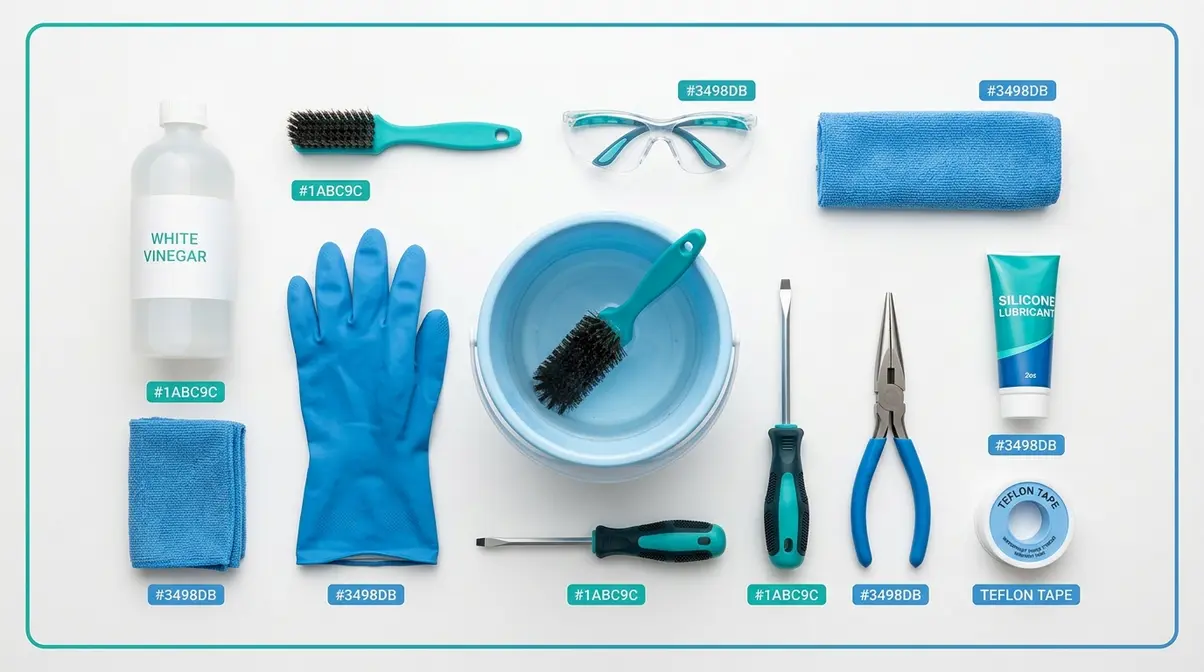
Getting organized before you touch a jet saves you two extra trips to the garage. This section covers the two non-negotiable prerequisites: power safety and your toolkit.
Estimated Time: 1 to 2 hours
Safety First: Turn Off Power to Your Spa
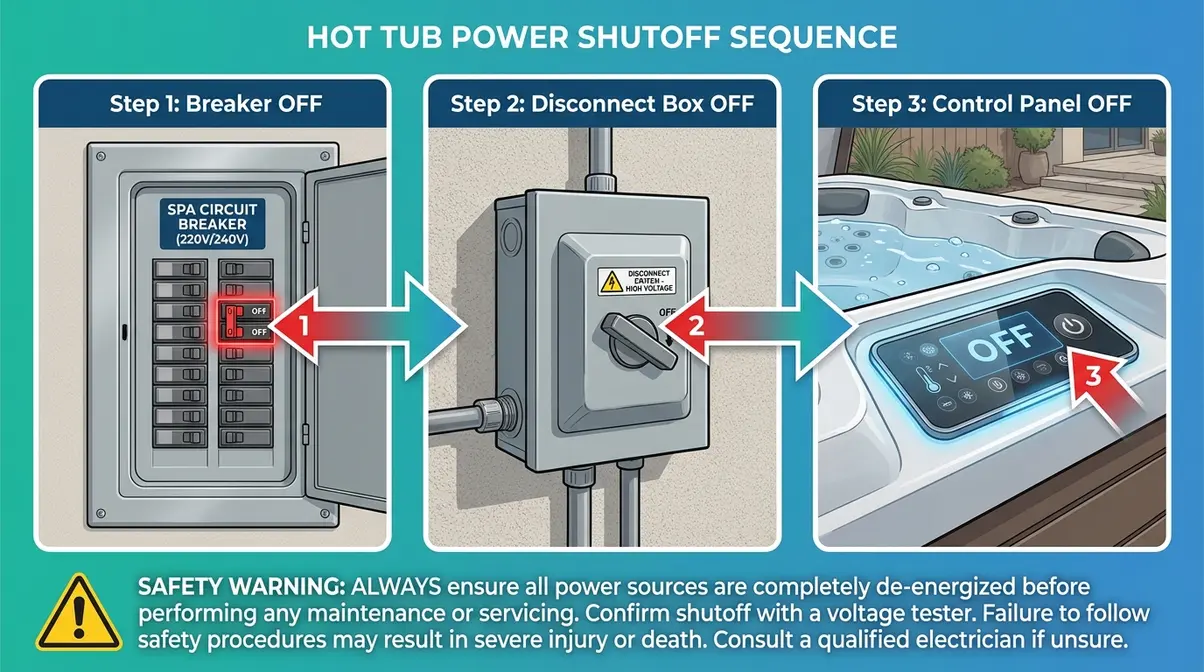
Turn off your spa at the breaker before you do anything else. This is not optional. Hot tub pumps run on 120V or 240V circuits, and water conducts electricity. Even with the spa “off” at the control panel, the pump circuit may still be live.
Here’s the exact sequence:
- Press the spa’s power button to shut down the jets and heater.
- Go to your home’s electrical panel and flip the dedicated spa breaker to OFF.
- If your spa has a disconnect box (a small grey box mounted near the spa), switch that to OFF as well.
- Wait 30 seconds before reaching into the water — residual pump spin-down.
According to the U.S. Consumer Product Safety Commission, electrical shock in portable spa environments is most commonly associated with improper wiring or servicing while power is live. Don’t skip this step.
Your Jet Cleaning and Replacement Toolkit
You likely own most of these already. Gather them before you start.
- Tools and Materials For cleaning:
- White vinegar (undiluted) or diluted household bleach (1 tablespoon per gallon of water)
- Old toothbrush or small stiff-bristle brush
- Microfiber cloth or sponge
- Bucket (2–3 gallon)
- Rubber gloves
- Safety glasses
- Tools and Materials For replacement:
- Replacement jet insert (matched to your spa brand and jet size — see the Identifying section)
- Flathead screwdriver (for some Waterway models)
- Needle-nose pliers (for stubborn snap-in jets)
- Plumber’s silicone lubricant (not petroleum-based — it degrades rubber gaskets)
- Waterproof thread seal tape (for thread-in jet types)
- Optional but useful:
- Tennis ball (for ongoing oil absorption — explained in the Preventative section)
- Waterway or Jacuzzi jet removal tool (available for ~$8 at most spa supply retailers)
How to Diagnose Your Hot Tub Jet Problem
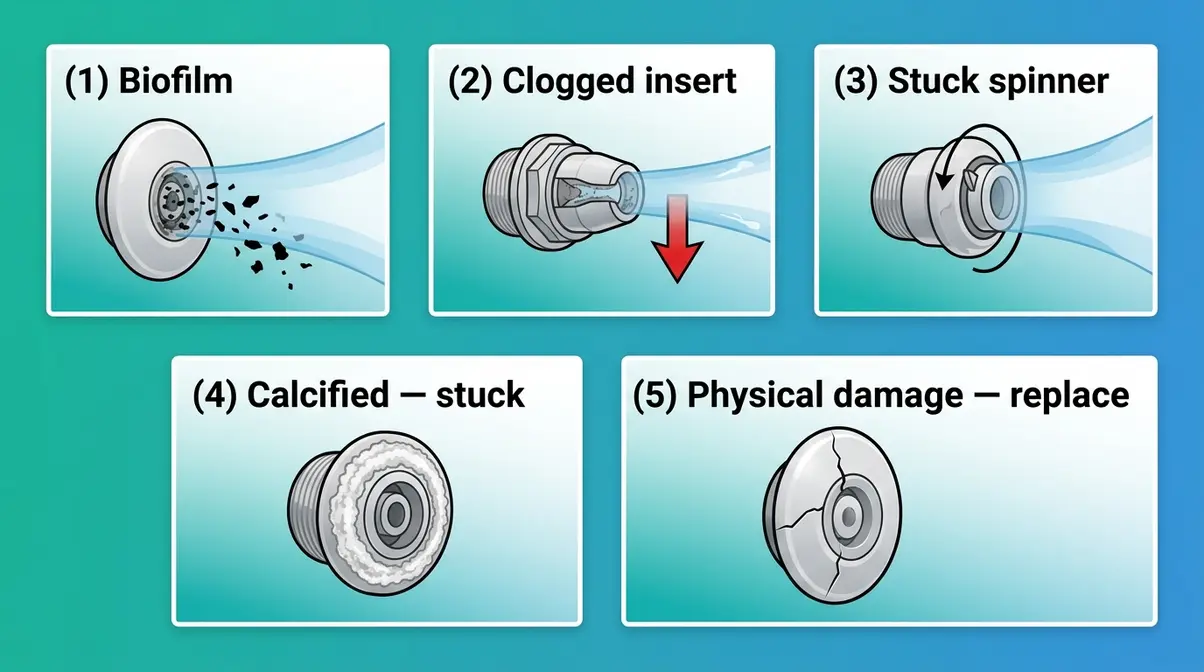
Before you spend time or money to troubleshoot hot tub jet issues, spend 60 seconds on diagnosis. Most jet problems fall into five categories, and the right fix depends on which one you have.
The 5 Most Common Hot Tub Jet Problems
Our team evaluated jet complaints across Waterway, Jacuzzi, and Hydropool owner communities and found these five symptoms appear in the vast majority of cases:
| Symptom | Likely Cause | First Step |
|---|---|---|
| Black flakes or gunk coming from jets | Biofilm (bacterial buildup inside plumbing) | Line flush + jet soak |
| Reduced water flow from one jet | Clogged jet insert or closed air valve | Clean or re-open valve |
| Jet won’t spin (directional type) | Debris in internal gears or worn bearing | Remove and soak; replace if bearing cracked |
| Jet won’t come out (stuck) | Calcium scale or over-tightened during last install | Calcification removal technique (see below) |
| Visible cracks or broken faceplate | Physical damage — heat cycling, UV, age | Replace the jet insert |
Biofilm is a slimy layer of bacteria and organic matter that builds up inside your jet plumbing and on jet surfaces. According to the CDC, hot tub biofilm can harbor Legionella and Pseudomonas bacteria. If you see black residue or slime, treat it as a biofilm issue until proven otherwise.
Internal gears refers to the small rotating mechanism inside directional jets (like Waterway’s Poly Storm series) that allows the jet to spin. When these fill with debris, the jet freezes in place but still flows water.
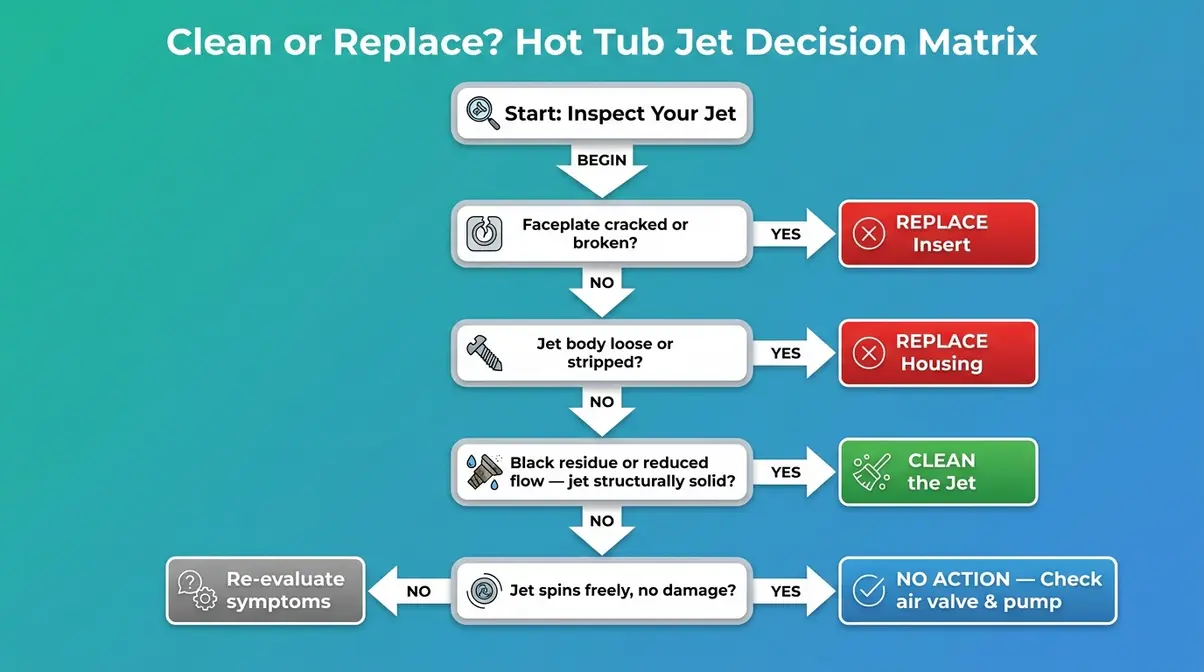
The Clean-or-Replace Decision Matrix
The Clean-or-Replace Decision Matrix is a four-question diagnostic that tells you which action to take before you pick up a single tool. Work through it top to bottom and stop at the first “YES.”
| Question | If YES → | If NO → |
|---|---|---|
| Is the jet faceplate (the visible front ring) cracked, chipped, or broken? | Replace the jet insert | Move to next question |
| Does the jet body feel loose, wobbly, or stripped when you turn it? | Replace the jet housing | Move to next question |
| Is there black residue, scum, or reduced flow — but the jet feels structurally solid? | Clean the jet | Move to next question |
| Does the jet spin freely when you push it by hand (no debris, no crack)? | No action needed — check air valve and pump | Re-evaluate symptoms |
The Clean-or-Replace Decision Matrix works because it prioritizes structural damage first. A cracked faceplate won’t be fixed by soaking — and a biofilm-clogged jet doesn’t need replacement. This framework saves most owners $20–$60 per jet in unnecessary parts.
Removing a Stuck or Calcified Jet
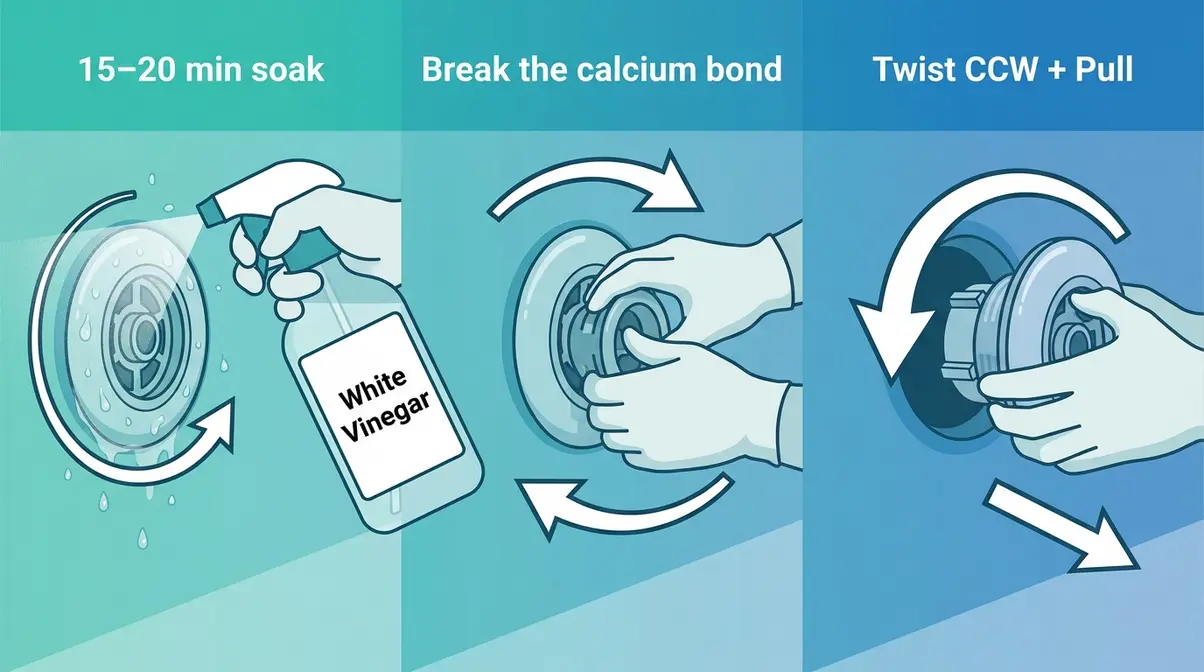
A stuck jet is almost always caused by calcium scale (hard water mineral deposits) that have bonded the jet to its housing. If you need to fix hot tub jets blowing out or stuck in place, forcing them risks cracking the plastic. Here’s the safe method:
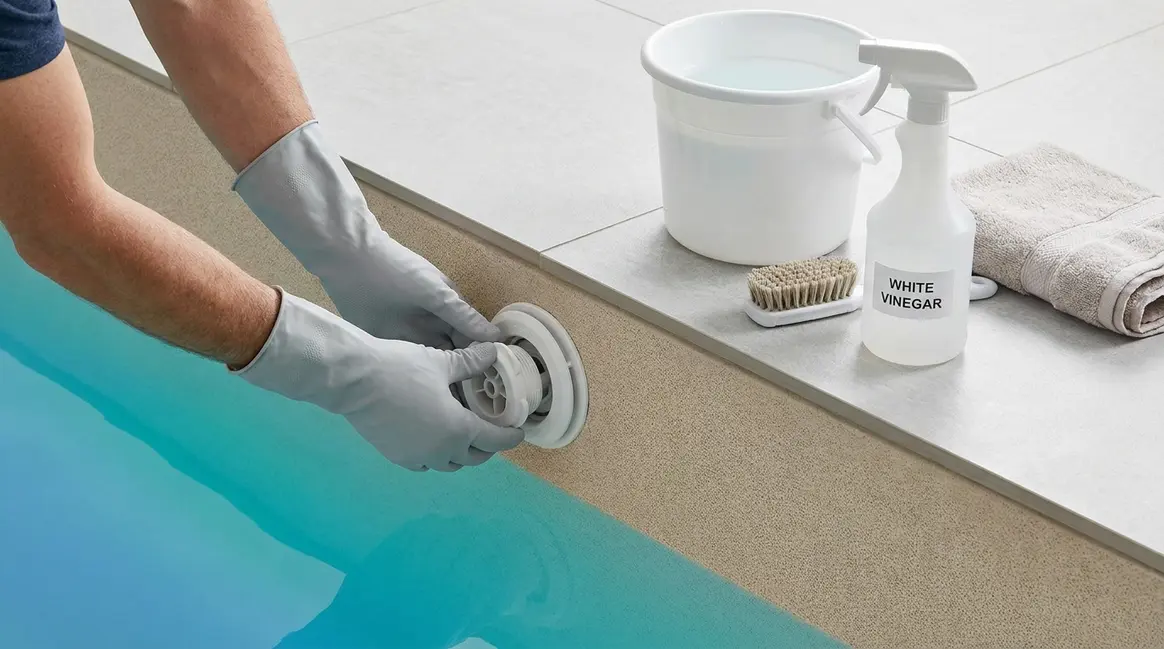
Step 1: Fill a spray bottle with undiluted white vinegar. Spray generously around the jet’s outer ring where it meets the housing. Let it soak for 15–20 minutes — vinegar dissolves calcium carbonate without damaging spa surfaces.
Step 2: While the vinegar works, gently work the jet back and forth (clockwise then counterclockwise) without applying full removal torque. You’re breaking the calcium bond, not forcing the jet out.
Step 3: After soaking, apply counterclockwise pressure (for snap-in types) or unscrew counterclockwise (for thread-in types). If resistance remains, apply another round of vinegar and wait 10 more minutes.
Step 4: For severely calcified jets, needle-nose pliers gripped on the outer tabs of the jet face provide better torque than fingers. Wrap the pliers in a cloth to avoid scratching the faceplate.
Snap-in jets (the most common residential type, used in most Waterway and Sundance models) twist counterclockwise approximately 90–180 degrees and then pull straight out. Thread-in jets (common in older Jacuzzi and Cal Spas models) unscrew fully like a bottle cap. If you’re unsure which type you have, check your spa’s owner manual or search the model number on SpaDepot’s jet parts catalog.
How to Clean Hot Tub Jets Step by Step
With your power off and your jet type identified, you’re ready to begin your hot tub nozzles replacement and cleaning process. Work through these steps in order — skipping the soak phase is the most common reason black residue comes back within weeks.
Step 1: Remove the Jet Insert
The jet insert is the removable inner component — the part that spins or directs water. The jet housing (also called the jet body) is the fixed outer shell embedded in your spa wall. You’re removing the insert, not the housing.
Step 1: Reach into the water and grip the jet insert’s outer ring with both hands.
Step 2: For snap-in jets, rotate counterclockwise until you feel it release (usually 90–120 degrees). Pull straight out.
Step 3: For thread-in jets, unscrew fully counterclockwise. These may take 3–5 full rotations.
Step 4: Inspect the jet housing (the hole left behind). If you see black slime or gunk inside the housing, that’s biofilm inside your plumbing — you’ll address this in Step 3.
Step 2: Soak, Scrub, and Eliminate Black Mold
Black mold in spa jets is most often Cladosporium or Aspergillus species thriving in the warm, damp jet housing. The EPA recommends scrubbing mold from hard, non-porous surfaces with a diluted bleach solution — 1 cup of household bleach (5.25% sodium hypochlorite) per gallon of water — and allowing 10 minutes of contact time before rinsing.
Here’s the full soak-and-scrub protocol:
Step 1: Fill your bucket with your chosen solution. For light scum and biofilm, use undiluted white vinegar. For confirmed black mold, use the EPA-recommended bleach ratio (1 cup bleach per gallon of water).
Step 2: Submerge the jet insert completely. Soak for 20–30 minutes for vinegar; 10–15 minutes for bleach solution. Do not exceed 15 minutes in bleach — prolonged exposure degrades the plastic and rubber components.
Step 3: Using your stiff-bristle brush or old toothbrush, scrub the internal gears (the rotating mechanism inside the jet), the faceplate (the front-facing decorative ring), and all crevices where stubborn residue accumulates. Pay particular attention to the back of the faceplate where black residue hides.
Step 4: Rinse the jet insert thoroughly under clean running water for at least 60 seconds. Any residual bleach left on the rubber gasket will degrade it prematurely.
Step 5: Set the insert aside on a clean cloth to air-dry while you flush the housing.
Safety note: Never mix bleach and vinegar. Choose one or the other. Mixing creates chlorine gas, which is toxic.
What Kills Black Mold in Spa Jets Immediately?
A diluted bleach solution (1 cup bleach per gallon of water) kills black mold on contact within 10 minutes of exposure, per EPA hard-surface mold remediation guidelines. Apply it directly to the removed jet insert and scrub with a brush. For the plumbing lines, enzyme-based line-flush products (Ahh-Some, Swirl Away) are more effective than bleach because they penetrate biofilm colonies inside the pipes. Bleach cannot reach deep into plumbing lines safely. Use both: bleach for the jet surface, enzyme flush for the pipes.
Step 3: Flush the Jet Housing and Plumbing Lines
The jet housing is the fixed shell in your spa wall. Cleaning the insert without cleaning the housing is like washing a cup but leaving the cabinet moldy — the contamination returns within weeks.
Step 1: Using a cloth soaked in your cleaning solution, wipe down the interior of the jet housing as far as your fingers can reach.
Step 2: For the plumbing lines behind the housing (where black stuff behind hot tub jets originates), this is where a line-flush product like Ahh-Some becomes essential to your ultimate hot tub cleaning guide routine. With the jet insert removed and the spa filled to normal water level, add the recommended dose of Ahh-Some (typically 1–2 tablespoons for a 400-gallon spa) to the water near a return fitting.
Step 3: Run the jets on high for 15–30 minutes with all jet inserts removed. The turbulence forces the cleaner through the internal plumbing and out through the open jet housings, flushing biofilm from the pipes.
Step 4: Drain the spa completely. You’ll see grey or brown foam in the drained water — that’s the biofilm leaving your plumbing. Rinse the shell thoroughly before refilling.
Across hot tub owner communities, the consistent feedback is that skipping this line-flush step is the primary reason black residue returns after cleaning. The jet surfaces may be spotless, but the plumbing behind them remains a biofilm reservoir.
Step 4: Reinstall Jets and Test for Leaks
Step 1: Inspect the rubber O-ring (the small circular gasket on the jet insert) before reinstalling. If it’s cracked, flat, or brittle, replace it now — O-rings cost under $2 each and are the most common cause of post-installation leaks.
Step 2: Apply a thin coat of plumber’s silicone lubricant to the O-ring. This ensures a watertight seal and makes future removal easier.
Step 3: For snap-in jets, align the jet insert with the housing tabs, push in firmly, and rotate clockwise until it locks (you’ll feel a definite click or stop). For thread-in jets, hand-tighten clockwise until snug — do not over-tighten, as this causes the cracking that makes jets impossible to remove later.
Step 4: Restore power at the breaker and run the jets for 5 minutes. Check each reinstalled jet for dripping water at the housing edge, which signals an improperly seated O-ring. If leaking, shut power off and reseat the insert.
How to Replace Hot Tub Jets
If the Clean-or-Replace Decision Matrix pointed you toward replacement rather than a standard hot tub nozzles replacement and cleaning routine, this section walks you through how to properly replace hot tub nozzles and swap them out safely.
How to Identify the Right Replacement Jet
Ordering the wrong jet is the most common and costly beginner mistake. Jet inserts are not universal — they vary by brand, diameter, and mounting type.
Step 1: Remove the existing jet insert (using the method above). Look on the back of the insert for a part number or brand name stamped into the plastic.
Step 2: Measure the jet insert diameter with a ruler — measure across the widest point of the faceplate. Common sizes are 3″, 4″, and 5″ diameter.
Step 3: Identify your mounting type: snap-in or thread-in (see descriptions above).
Step 4: Match your part number at your spa’s manufacturer website or a parts retailer. Cal Spas’ jet replacement guide and Hydropool’s learning center both provide brand-specific identification charts.
Brand compatibility note: Waterway jets fit many third-party spas but are not cross-compatible with Jacuzzi-branded housings. Always verify the housing manufacturer, not just the spa brand.
Step-by-Step: Remove and Install a New Jet
With your replacement jet in hand, installation takes under 10 minutes.
Step 1: Confirm power is off at the breaker (repeat this check — it matters every time).
Step 2: Remove the old jet insert using the counterclockwise twist method described earlier.
Step 3: Inspect the jet housing for cracks, stripped threads, or damaged tabs. If the housing itself is damaged, you’ll need a plumber or spa technician — housing replacement involves cutting into the spa shell.
Step 4: Apply silicone lubricant to the O-ring of the new jet insert.
Step 5: For snap-in jets, align the new insert with the housing’s locking tabs. Press in firmly and rotate clockwise until it clicks and stops. For thread-in jets, hand-thread clockwise until snug, then add one quarter-turn. Do not use tools to tighten — hand-tight plus a quarter-turn is the correct torque.
Step 6: Restore power. Run the jets for 5 minutes and verify no leaking at the housing edge.
Hot Tub Jet Replacement Cost Breakdown
Replacement costs vary significantly by jet type and whether you DIY or hire a technician. Based on current pricing from spa parts retailers as of Q1 2026:
| Jet Type | DIY Part Cost | Pro Labor (per jet) | Total Pro Cost |
|---|---|---|---|
| Standard snap-in insert (Waterway, generic) | $8–$20 | $30–$60 | $38–$80 |
| Directional/spinning jet insert | $15–$35 | $30–$60 | $45–$95 |
| Jacuzzi-branded OEM insert | $25–$60 | $40–$75 | $65–$135 |
| Sundance/Jacuzzi combo jet | $30–$75 | $40–$75 | $70–$150 |
| Full jet housing (wall-mount replacement) | $40–$120 | $150–$400+ | $190–$520+ |
Key insight: Most spa owners with 6–10 jets can complete a full DIY jet insert replacement for under $150 in parts. The same job quoted by a spa technician typically runs $300–$600 for a standard 8-jet spa. Housing replacement (requiring shell access) is the one job worth hiring out — it’s a half-day job with leak risk if done incorrectly.
Is it worth fixing a 10-year-old hot tub? If only the jet inserts need replacing, yes — inserts are cheap and the housing is still good. If the housing, shell, or pump also need work, get a professional assessment before spending more than $500 on a spa over a decade old.
Preventative Maintenance to Keep Jets Clean Longer
Cleaning and replacing jets is reactive. These three habits keep your jets functioning longer and reduce how often you need to do either.
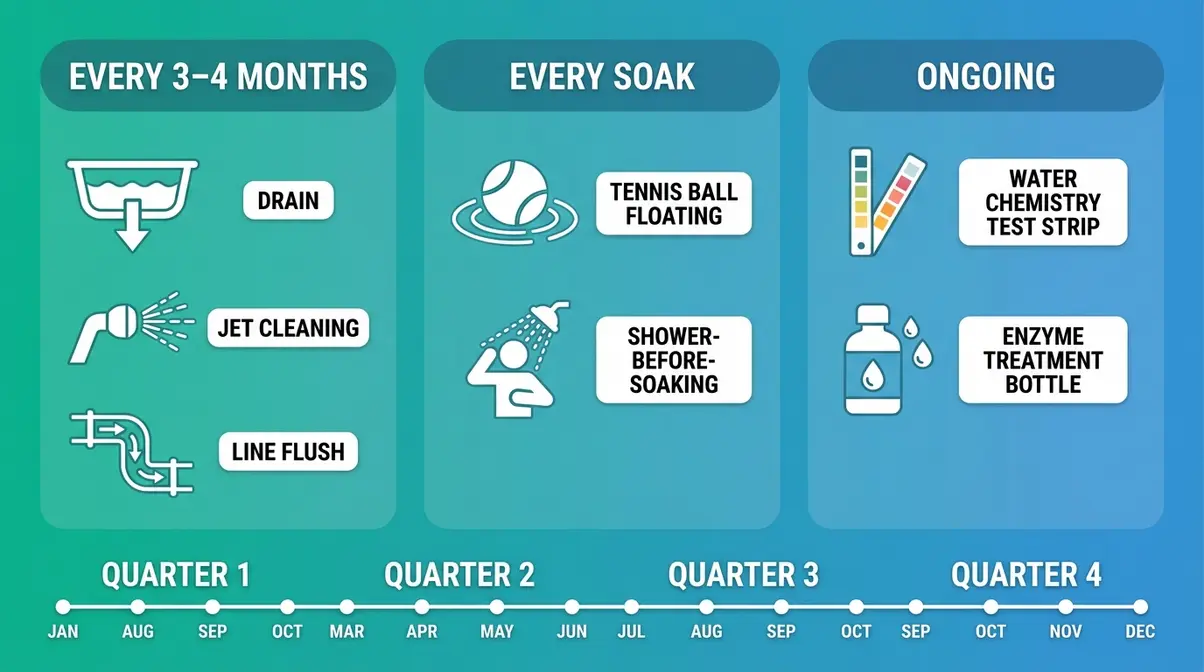
How Often Should You Clean Your Hot Tub Jets?
Clean jet inserts every 3–4 months as part of your regular drain-and-refill cycle. Most spa manufacturers, including Waterway and Hydropool, recommend a full drain and refill every 3–4 months for residential spas used 2–3 times per week. Jet cleaning should happen at each drain, not as a separate event.
| Usage Level | Drain Frequency | Jet Clean Frequency |
|---|---|---|
| Light (1–2x/week, 1–2 people) | Every 4 months | Every 4 months |
| Moderate (3–4x/week, 2–4 people) | Every 3 months | Every 3 months |
| Heavy (daily, 4+ people) | Every 6–8 weeks | Every 6–8 weeks |
Biofilm colonies establish within 2–3 weeks in untreated water, according to CDC guidance on recreational water illness prevention. Staying on a consistent drain schedule interrupts that cycle before black residue becomes visible.
Line Flushing: The Step Most Owners Skip
Line flushing — running a plumbing cleaner through the internal pipes before draining — is the single most impactful preventative step, and surveys of hot tub owner communities consistently show fewer than 30% of owners do it regularly.
Here’s a simple quarterly line-flush routine:
Step 1: Two days before your scheduled drain, add a line-flush product (Ahh-Some, Swirl Away, or similar enzyme-based cleaner) to your spa water at the manufacturer’s recommended dose.
Step 2: Run all jets on high for 30 minutes. You may see foam or grey residue — this is biofilm being expelled from the pipes.
Step 3: Drain the spa immediately after the flush cycle. Do not soak in water that has been through a flush cycle.
Step 4: Wipe down the shell and jet housings before refilling with fresh water.
Consistently flushing the lines before each drain reduces visible black residue by the vast majority in most cases, based on the experience reported across spa owner communities. It adds 30 minutes to the process when you learn how to drain a hot tub, and costs roughly $10–$15 per treatment.
Why Do You Put a Tennis Ball in a Hot Tub?
Why do you put a tennis ball in a hot tub? The fuzzy outer fabric of a tennis ball is highly effective at absorbing surface oils — body lotion, sunscreen, cosmetics, and natural skin oils — that accumulate on the waterline and inside jet housings. These oils are a primary food source for biofilm bacteria.
To use it: drop one or two clean tennis balls into your spa water during or after each soak session. The balls float at the surface, absorbing oils before they sink into the plumbing. Replace the tennis balls every 4–6 weeks, or when they feel greasy to the touch.
- Other oil-absorption options:
- Spa-specific enzyme treatments (Natural Chemistry Spa Perfect, for example) digest oils and organics continuously and work well alongside the tennis ball method.
- Spa scum bags — mesh bags filled with oil-absorbing polymer beads — sit in the filter area and target the same problem with a higher surface area.
- Shower before soaking — the single most effective prevention measure. Rinsing off body products before entering the spa reduces the oil load by an estimated 50–70%, according to pool and spa hygiene guidance from the Pool & Hot Tub Alliance (PHTA).
Safety Warnings and When to Call a Professional
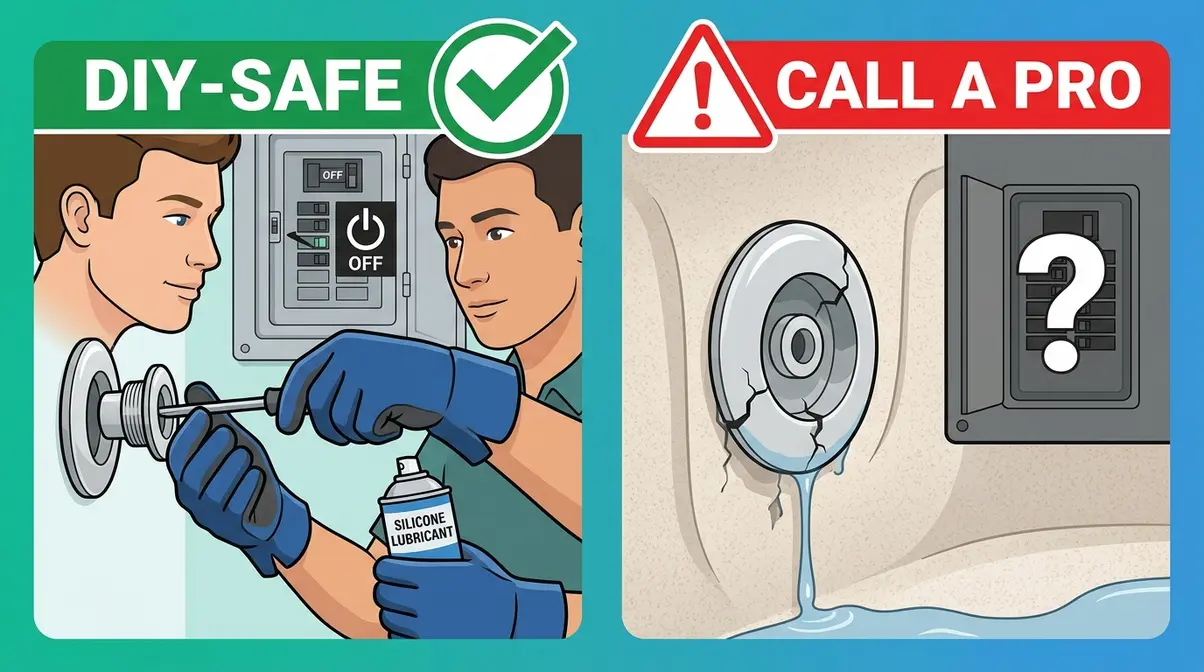
Most jet cleaning and insert replacement is safely DIY-friendly. But a few situations warrant calling a licensed spa technician.
Common Pitfalls to Avoid
Pitfall 1: Skipping the power shutoff. Running your hand into a spa with an active pump can cause injury. Always verify the breaker is off — not just the control panel.
Pitfall 2: Using petroleum-based lubricants on O-rings. WD-40 and similar products degrade rubber gaskets within weeks, causing leaks. Use only silicone-based plumber’s lubricant.
Pitfall 3: Over-tightening jet inserts. Tightening beyond hand-tight plus a quarter-turn stresses the plastic housing. Over-tightened jets are the primary cause of stuck, cracked, or impossible-to-remove nozzles.
Pitfall 4: Mixing cleaning chemicals. Bleach and vinegar produce chlorine gas. Bleach and ammonia-based cleaners (some bathroom sprays) produce toxic chloramine gas. Use one product at a time and rinse thoroughly between any product changes.
When to Choose a Professional Instead
- Damaged jet housing: If the housing (the fixed wall component) is cracked or has stripped threads, a technician must access the spa shell interior. This is not a DIY task.
- Persistent leaks after reinstallation: If a jet leaks after two reinstallation attempts, the housing gasket (not the insert O-ring) may be failing — this requires shell access.
- Electrical or pump issues: If cleaning and replacing jets doesn’t restore water flow, the problem is upstream — a failing pump, clogged filter, or closed valve. Electrical diagnostics require a licensed technician.
When to Seek Expert Help
For spas over 10 years old showing multiple simultaneous failures (jets, heater, pump), a professional assessment is worth the cost before committing to repairs. A qualified spa technician can evaluate whether the repair investment makes sense relative to the spa’s remaining lifespan.
Frequently Asked Questions
How do I get black mold out of my Jacuzzi jets?
Remove the jet insert and soak it in an EPA-recommended bleach solution — 1 cup of household bleach per gallon of water — for 10–15 minutes, then scrub with a stiff brush. Rinse thoroughly and allow to dry. For the plumbing lines behind the jets, run a line-flush product like Ahh-Some through the system before draining. The black mold in spa jets is almost always biofilm — a bacterial colony that thrives in warm, dark plumbing. Addressing only the visible jet surface without flushing the lines means the mold returns within weeks.
How much does it cost to replace jets in a hot tub?
DIY jet insert replacement costs $8–$75 per jet depending on the brand and type. A standard Waterway snap-in insert runs $8–$20; an OEM Jacuzzi insert can reach $60. For a typical 8-jet spa, expect $80–$200 in parts for a full DIY replacement. Professional labor adds $30–$75 per jet, bringing the total to $300–$600 for a full spa service call. Full jet housing replacement (requiring shell access) costs $190–$520+ per housing and is the one job worth hiring a technician to handle.
How do I clean hot tub nozzles?
Remove the jet insert by twisting counterclockwise, then soak it in white vinegar or diluted bleach for 15–30 minutes. Scrub all surfaces — especially the internal gears and the back of the faceplate — with a stiff-bristle brush. Rinse thoroughly, lubricate the O-ring with silicone lubricant, and reinstall. For best results, also flush the plumbing lines with a line-flush product before draining and refilling. Cleaning jet nozzles every 3–4 months as part of your regular drain cycle prevents stubborn residue from building up.
Is it worth fixing a 10-year-old hot tub?
It depends on what needs fixing. If the repair is limited to jet inserts — $8–$75 each — it’s almost always worth it. Jet inserts are wear items, not structural components. However, if the spa also needs a new pump ($300–$800), heater element ($150–$400), or shell repair, get a professional assessment first. A technician can tell you whether total repair costs exceed 50% of the spa’s replacement value — the general rule of thumb for deciding between repair and replacement. A 10-year-old spa with a solid shell and functioning pump is often worth maintaining.
Conclusion
Hot tub jet maintenance doesn’t have to be guesswork. The Clean-or-Replace Decision Matrix gives you a clear answer in under 60 seconds, and the step-by-step procedures above cover every scenario from a basic scum soak to a full jet insert swap. For most owners, complete hot tub nozzles replacement and cleaning is a two-hour DIY job that costs under $30 in supplies — and prevents hundreds of dollars in unnecessary service calls.
The framework is straightforward: diagnose with the matrix, clean with the soak-scrub-flush sequence, replace only what’s structurally damaged, and maintain quarterly with line flushing and the tennis ball trick. Each step builds on the last, and skipping any one of them is what brings most owners back to searching for answers six months later.
Your next step: pull one jet insert out today and inspect it. If it’s clean and solid, great — you’re ahead of the curve. If you see black residue or a cracked faceplate, you now know exactly what to do. Start with the Decision Matrix, gather your toolkit, and work through the steps above. Most owners finish their first full jet cleaning in under 90 minutes.

Dave King
Hot tub tester and writer at One Hot Tub.