

Table of Contents - How Do Hot Tub Jets Work? Complete Guide for Owners
This blog post may contain affiliate links. As an Amazon Associate I earn from qualifying purchases.
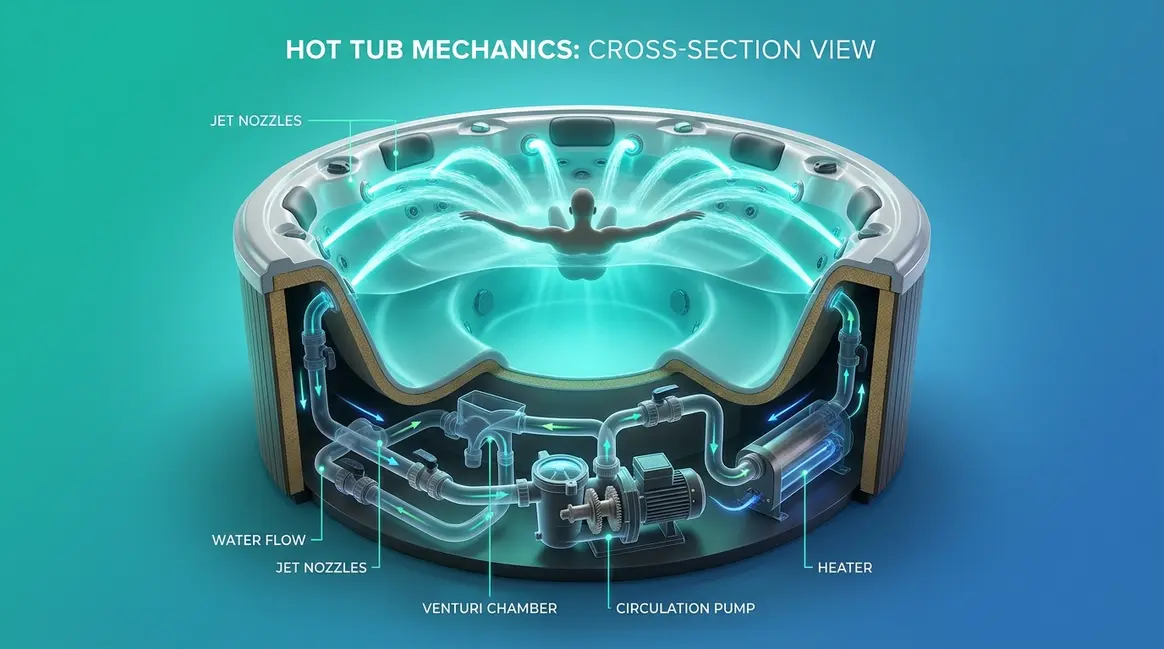
Understanding how hot tub jets work comes down to one elegant physics principle: pressurized water rushes past an air intake, creating a low-pressure zone that pulls air into the stream — and the resulting aerated jet delivers a massage far more powerful than water alone could produce. Most manufacturer pages bury this explanation in paragraph five; this guide puts it front and center.
If you’ve ever thought:
“I know the general idea that there is some sort of combination of water passing by air in the internal pipes but it seems lost on me.”
You’re not alone — and that confusion is completely understandable. The mechanics involve fluid dynamics, pump engineering, and some counterintuitive physics. This guide cuts through all of it.
By the end, you’ll understand the exact step-by-step mechanics, know how to control every dial on your hot tub, diagnose common problems yourself, and have the evidence you need to decide whether hydrotherapy can help with conditions like sciatica or neuropathy. We’ll cover core mechanics, jet types and controls, energy efficiency, troubleshooting, and health benefits — in that order.
What You Need to Know First: No engineering background is required. You should have a basic sense of what a pump and a filter do — that’s it. If you’d like deeper background on the pump system before diving in, our hot tub pump systems guide covers the hardware in detail.
Key Takeaways: How Hot Tub Jets Work
If you are wondering how do hot tub jets work, the answer lies in forcing pressurized water past an air intake — the Venturi effect — to create a powerful, aerated massage stream you can fully customize.
- The PAD Formula governs every jet: Pressure (pump output), Air (Venturi ratio), Direction (jet face angle) — master these three variables and you control your entire soak
- Four jet types — directional, rotary, pulsating, and combination — each target different muscle groups with distinct massage patterns
- Running jets while heating slows warm-up time; turn them off to heat 15–20% faster
- Three fixes solve 90% of jet problems: clear the filter, purge an air lock, or check the pump
- 15 minutes is the recommended maximum soak time at 104°F (40°C), per CDC safety guidelines
Jet Pressure and the Venturi Effect
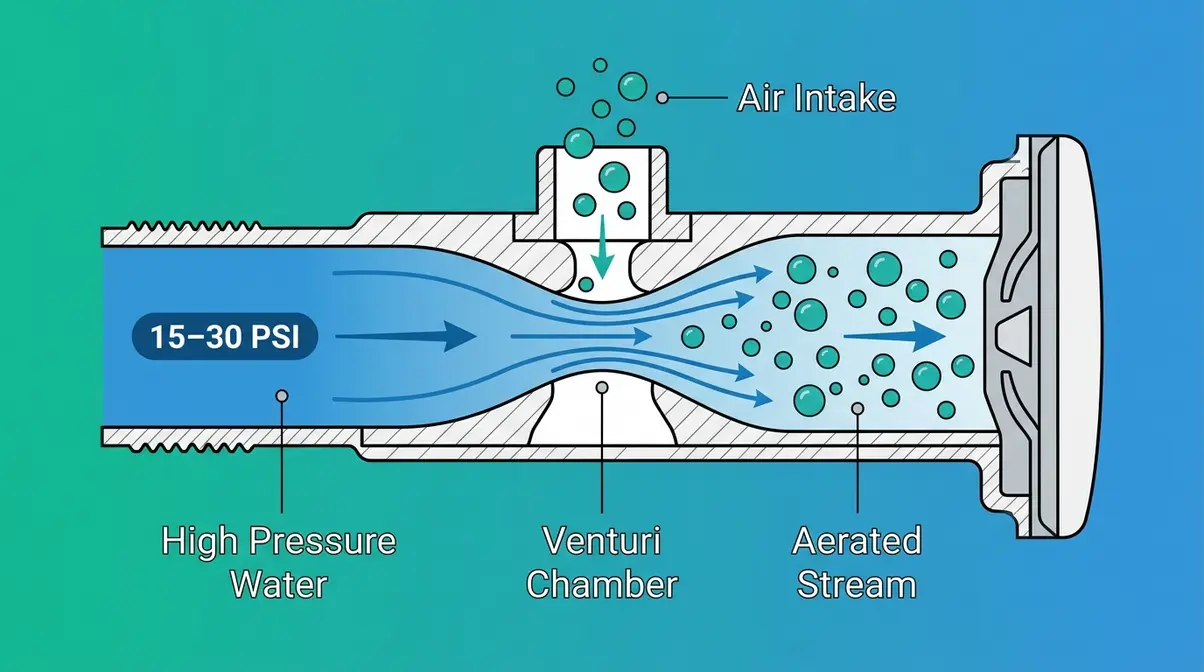
Hot tub jets work by using a circulation pump to push pressurized water through a network of internal pipes, then past a small air intake port built into each jet body. To fully grasp how do hot tub jets work, we must look at the Venturi effect. At typical operating pressure — generally between 15 and 30 PSI depending on pump size and jet count — this fast-moving water stream creates a localized low-pressure zone that literally pulls surrounding air into the flow. The result is a turbulent, aerated stream that exits the jet face with significantly more force than water alone could deliver.
The Pump System: Pressure Origins
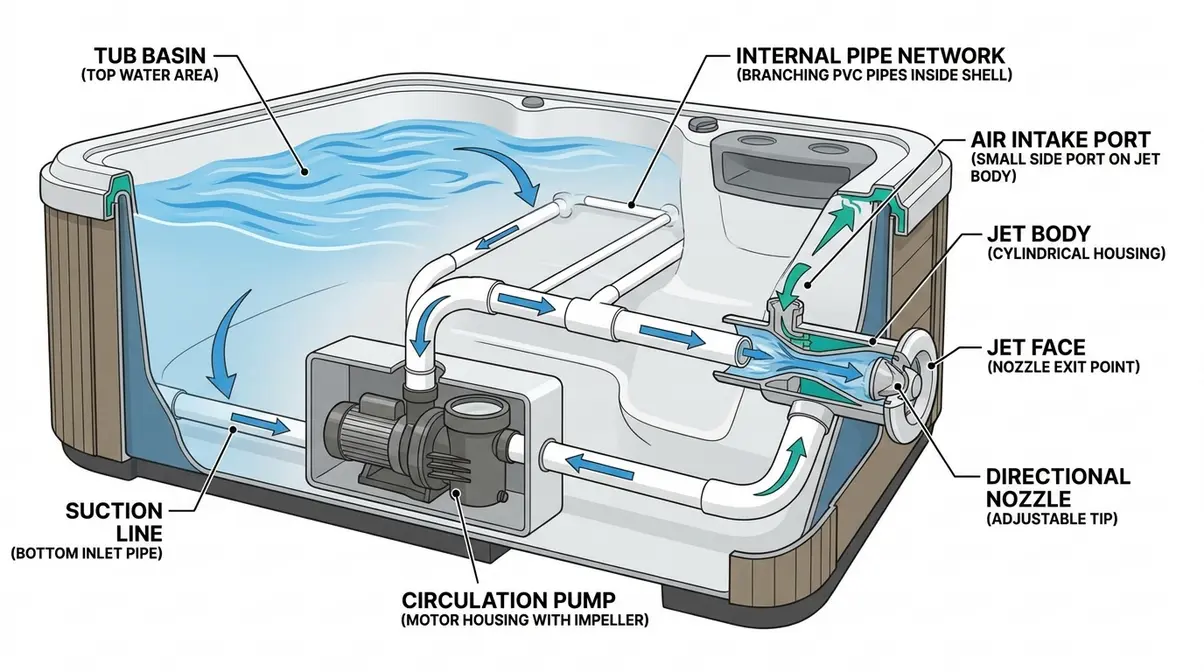
The circulation pump — the motor that drives water through your hot tub’s internal pipes — is the origin of every jet experience. Water is drawn from the tub basin through the suction line, the inlet pipe that pulls water from the tub basin into the pump, filtered to remove debris, then pushed back out under pressure. Most residential hot tubs run single-speed or two-speed pumps rated between 1.5 and 5 horsepower, generating the 15–30 PSI of pressure that powers the jets.
A critical safety component here is the suction line cover. The U.S. Consumer Product Safety Commission (CPSC) mandates compliant drain covers on all residential spas to prevent entrapment — a real hazard when pumps pull water at high velocity. Check yours annually for cracks or loosening.
One thing many owners don’t realize: the pump doesn’t just push water to jets — it also circulates water through the heater and filter. When jets are running at full blast, they draw more pump capacity, which is why high-jet operation affects both heating speed and energy consumption. We’ll return to that in H2 #3.
The Venturi Effect: Adding Air
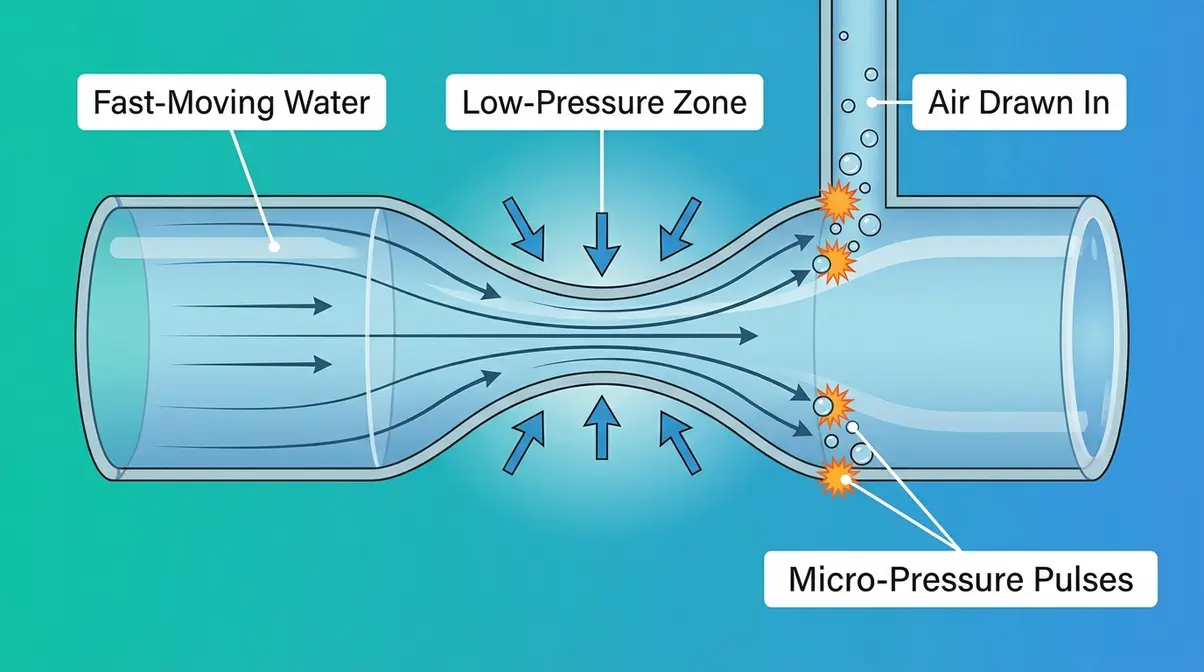
Here’s where the physics gets interesting. The Venturi effect is a fluid dynamics principle — derived from Bernoulli’s principle — where a fluid (water, in this case) moving rapidly through a constricted pipe creates a zone of lower pressure around it. Think of it like holding your thumb over a garden hose: the water speeds up through the narrowed gap, and anything near the stream gets pulled toward it. Hot tub jets exploit this exact behavior, but in reverse configuration.
Each jet body contains a small air intake port connected to an air channel running to the spa’s air control valves at the surface. As pressurized water rushes through the jet’s internal venturi chamber, it creates a low-pressure zone that draws air in through this port. The air doesn’t just mix passively — it’s actively pulled into the stream, increasing the volume of the flow without requiring any additional pump energy.
The result matters more than most guides acknowledge. When those air bubbles exit the jet face and contact your skin, they don’t just add volume — they collapse on impact, creating micro-pressure pulses across the surface. This cavitation-adjacent effect is the actual mechanism behind the massage sensation: not just water pressure, but hundreds of tiny pressure events per second. That’s why an aerated jet feels fundamentally different from a plain water stream at the same PSI.
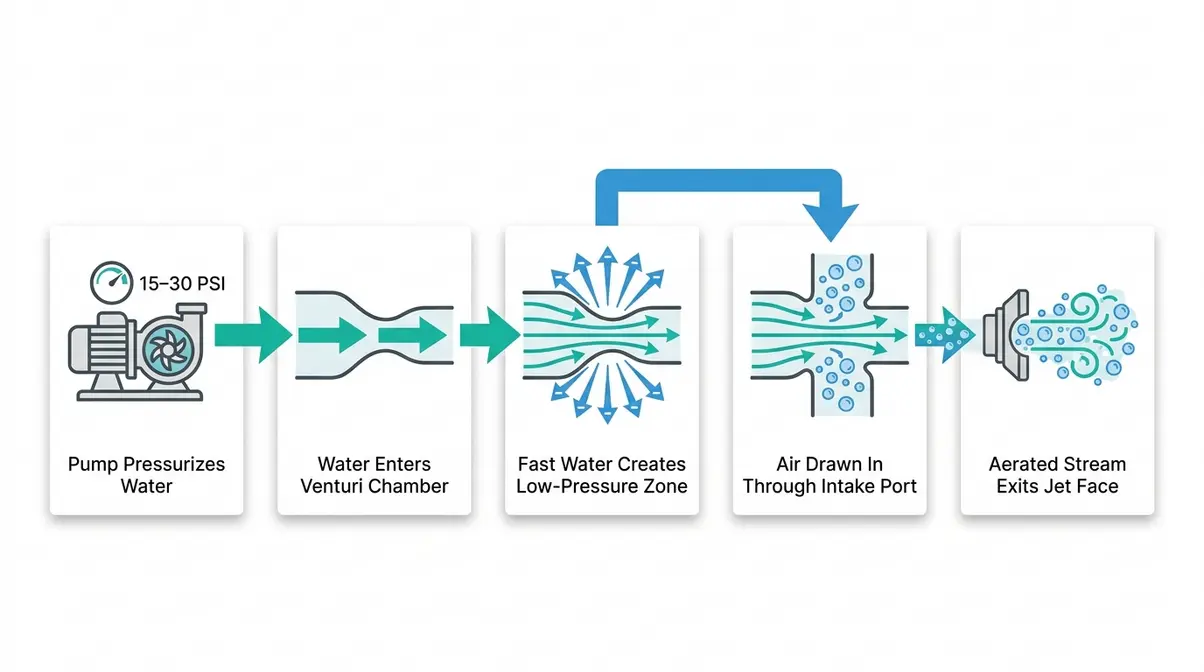
Water’s Journey to the Jet Face
Understanding this sequence is the clearest way to see how jet mechanics connect. Our team reviewed technical documentation from multiple hot tub manufacturers to map this path accurately.
Estimated Time: 10 minutes to inspect and understand the flow
Tools/Materials: None required for basic observation; hot tub owner’s manual for reference
Step 1: Water Enters the Suction Line
The pump draws water from the tub basin through a filtered inlet. Any debris caught here reduces flow to every downstream jet.
Step 2: The Pump Pressurizes the Water
Depending on pump speed, water exits the pump at 15–30 PSI and enters the internal pipe network routed through the spa shell.
Step 3: Water Reaches the Jet Body
Each jet has its own feed line branching from the main manifold. The jet body houses the venturi chamber and the air intake port.
Step 4: The Venturi Effect Draws in Air
As water accelerates through the venturi chamber, it pulls air in from the spa’s air channels. The air-to-water ratio is adjustable via the air control valve at the surface — typically achieving a 50/50 mix at full open.
Step 5: The Aerated Stream Exits the Jet Face
The nozzle directs the mixture outward at the angle set by the jet face. Rotary nozzles spin this stream; directional nozzles hold it fixed.
Step 6: Water Returns to the Basin
The spent water rejoins the tub, gets filtered, reheated, and the cycle continues.
This six-step cycle is the mechanical foundation of The PAD Formula: Pressure (what the pump delivers in steps 1–2), Air (what the Venturi effect adds in step 4), and Direction (how the jet face shapes the stream in step 5). Every jet adjustment you make — turning an air valve, repositioning a nozzle, switching pump speed — is a modification to one of these three variables. Keep this model in mind as we move through the rest of the guide.
For a deeper look at pump specifications and maintenance intervals, read our guide on how hot tub jets explained function over time.
Types of Hot Tub Jets and How to Control Them
Once you understand the mechanics, jet types become easy to decode — each design simply emphasizes a different aspect of the PAD Formula. Hydropool’s guide to hot tub jets identifies distinct jet categories based on their nozzle geometry and intended muscle targeting. Across hot tub owner communities, the consistent feedback is that most buyers don’t realize how much variety exists until they start comparing models side by side.
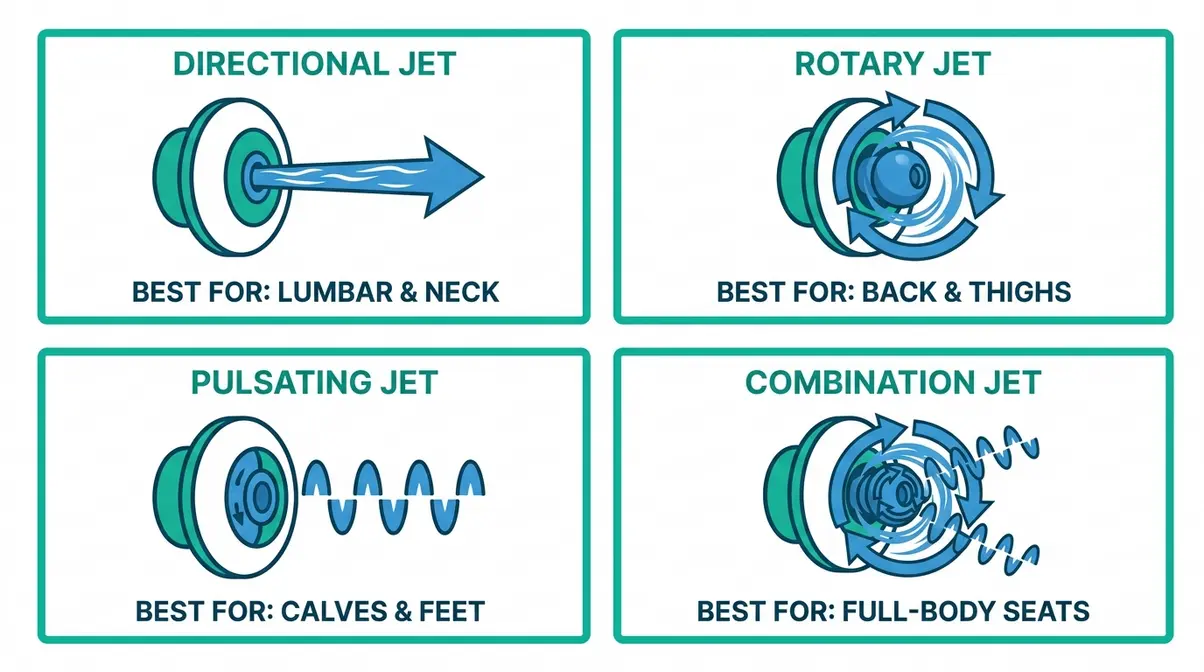
The Four Main Types of Hot Tub Jets
Directional jets are the most common type. A fixed or manually adjustable nozzle delivers a concentrated, linear water-air stream. Because the direction is stable, directional jets excel at targeting specific knots — the lower lumbar, the base of the neck, or a single shoulder blade. You point them where it hurts and leave them there.
Rotary jets (also called spinning jets) use a nozzle mounted on a ball-and-socket fitting that rotates continuously, driven by the water pressure itself. The spinning or rotating jets create a circular massage pattern that mimics the kneading motion of a hand massage. These work particularly well for large muscle groups like the upper back and thighs where broad, sweeping pressure is more effective than pinpoint force.
Pulsating jets interrupt the water flow rhythmically, creating an alternating pressure pattern. This on-off pulse stimulates circulation more aggressively than a steady stream, making pulsating jets a common choice for calf and foot wells. Some hot tub models achieve pulsation mechanically through the nozzle design; others use a secondary valve in the jet manifold.
Combination jets merge two of the above functions — typically rotation plus pulsation — in a single nozzle. They’re the most mechanically complex jet type and generally found in premium spa seats. The trade-off: more moving parts mean more potential wear points over time.
| Jet Type | Motion Pattern | Best For | PAD Variable Emphasized |
|---|---|---|---|
| Directional | Fixed stream | Spot targeting (lumbar, neck) | Direction |
| Rotary | Circular spin | Large muscle groups (back, thighs) | Direction + Air |
| Pulsating | Rhythmic on/off | Circulation (calves, feet) | Pressure |
| Combination | Spin + pulse | Full-body premium seats | All three |
Air Valves and Diverter Controls
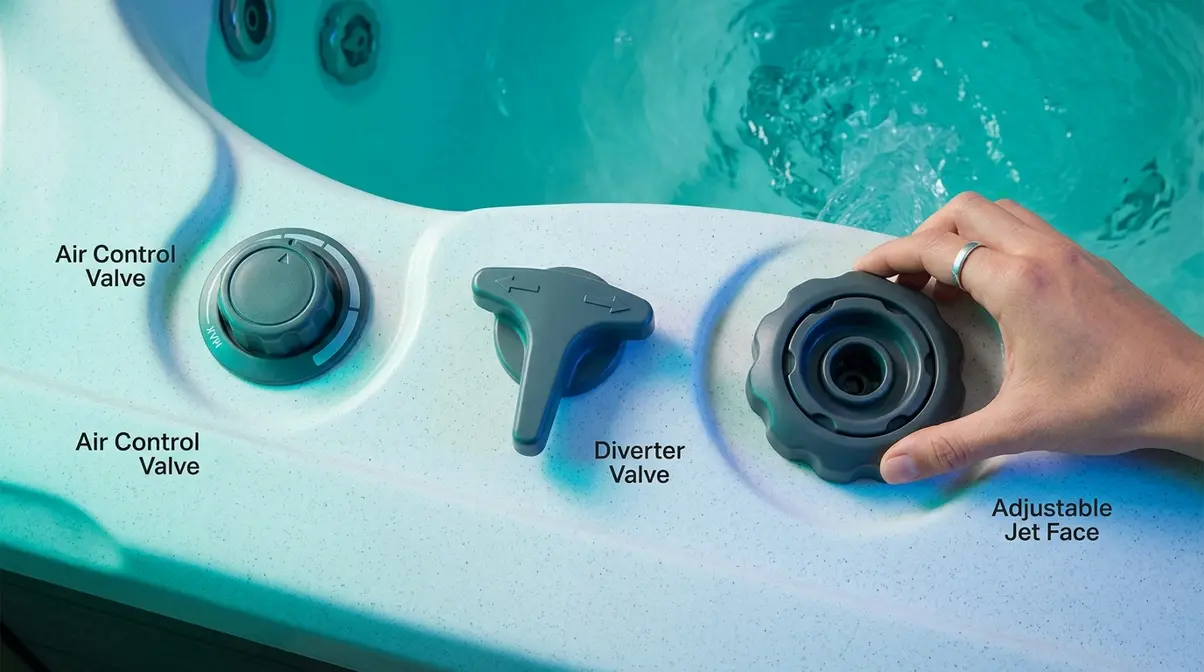
Those dials and knobs on the hot tub shell aren’t decorative — each controls a specific PAD variable.
Air control valves (sometimes called air injectors) are the rotary knobs, usually located at the spa’s waterline. Turning one open increases airflow into the venturi chamber for that jet zone, making the stream feel softer and more voluminous. Closing it concentrates the stream to pure water pressure, which feels harder and more penetrating. This is the most immediate way to change massage intensity without touching the pump.
Diverter valves redirect pump output between different jet zones — for example, routing full pressure to the back jets or splitting it between the foot well and the seat jets. If your hot tub has a diverter, you’ll notice that maximizing one zone slightly reduces pressure in others. That’s not a malfunction; it’s the pump’s fixed output being redistributed.
Adjustable jet faces allow you to physically rotate or tilt the nozzle within its housing. Most directional jets offer a 360-degree swivel range. Rotary jets can often be locked in place or released to spin freely. To adjust, grip the outer ring of the jet face and turn — clockwise typically locks direction, counter-clockwise releases it for rotation.
For a full breakdown of valve types, see our guide to the most powerful hot tub jets.
Jet Placement and Targeted Massage Zones
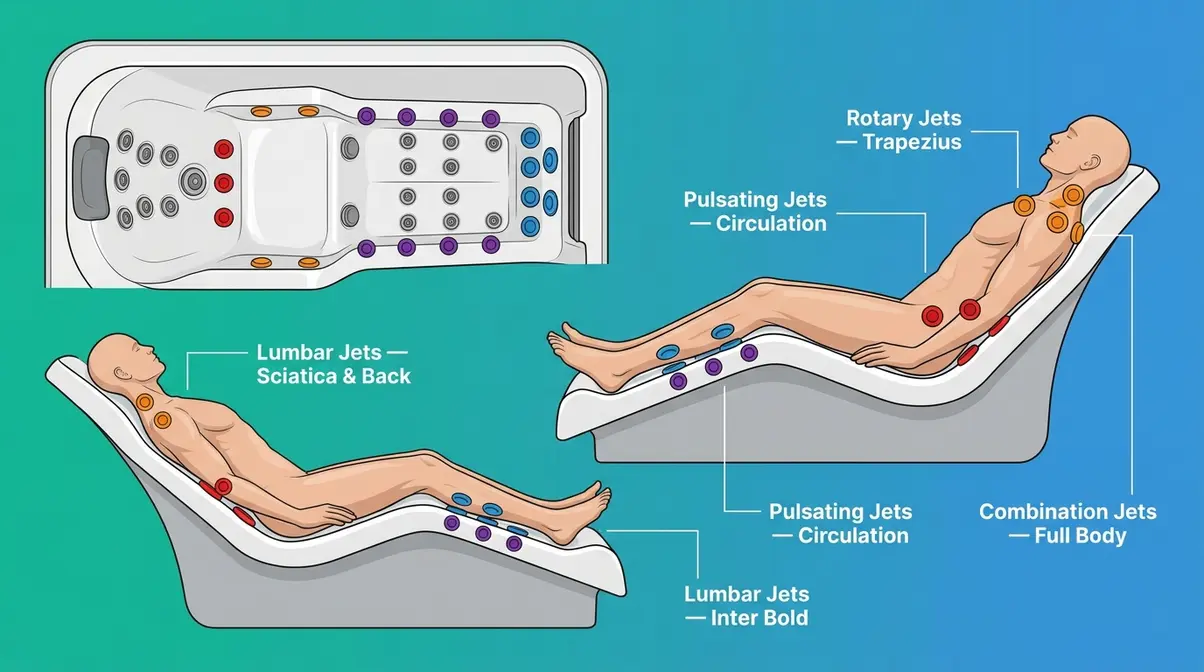
Spa manufacturers engineer jet placement around the body positions typical for that seat. Understanding the logic helps you get more from each soak.
Lumbar seats concentrate directional or combination jets at two heights: one targeting the sacral region (base of spine) and one at mid-back. These are the jets most relevant to sciatica and lower-back tension — more on that in H2 #5.
Shoulder and neck zones typically use rotary jets aimed upward and outward, positioned to reach the trapezius muscle when you’re seated upright. Leaning slightly forward or backward by an inch or two can shift the contact point significantly.
Calf and foot wells favor pulsating jets placed at ankle and mid-calf height. The intermittent pressure aids venous return — the process by which blood is pushed back toward the heart — which is why foot soaks often reduce swelling after a long day of standing.
Lounge seats (full-recline positions) combine all three zones across the full body length, with additional jets at the hamstrings and hip flexors. These seats deliver the most comprehensive hydrotherapy experience but also draw the most pump output.
See our guide on hot tub electricity costs and efficiency for more details on how pump output affects your wallet.
Jet Efficiency, Heating, and Costs
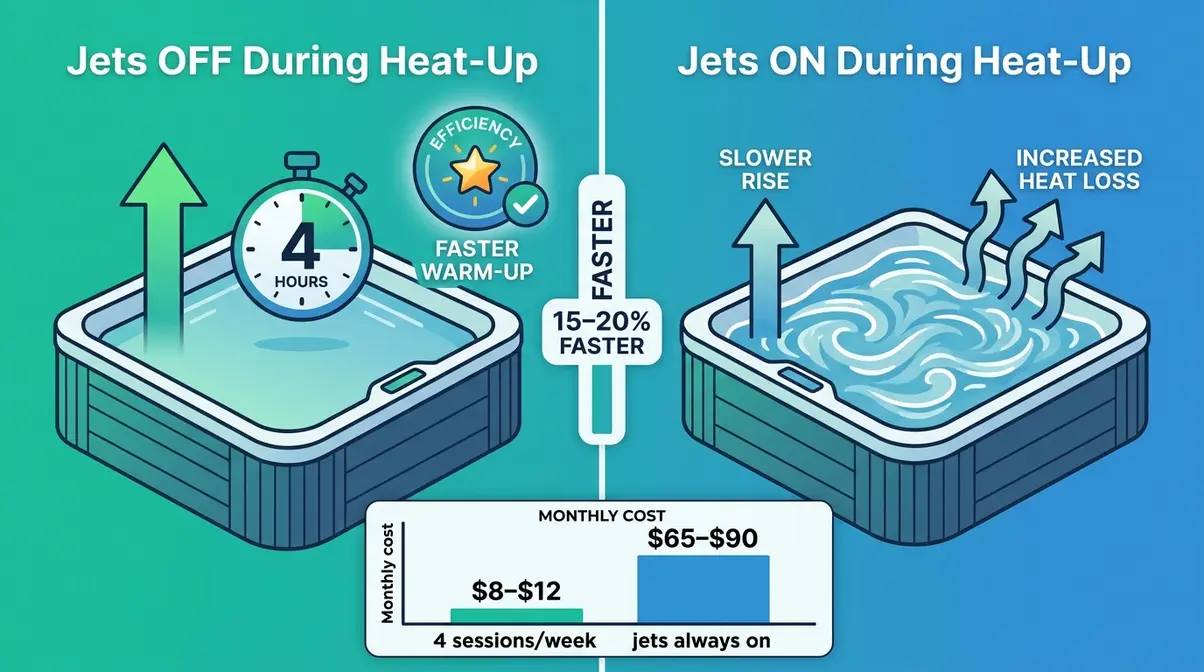
The PAD Formula isn’t just about massage quality — it directly affects your energy bill. Jet operation, pump speed, and air volume all influence how hard your heater works. Sundance Spas’ guidance on jet selection notes that jet count and pump size are the primary drivers of long-term operating cost — a detail worth understanding before you buy or before you change your usage habits.
Heating Faster: Jets On or Off?
Will a hot tub heat faster with jets on or off? The short answer: off. Running jets while heating actually slows the process. Here’s why.
When jets are active, the pump circulates water rapidly and introduces air into the stream. That air-water mixture increases surface agitation, which accelerates heat loss to the surrounding air — particularly in cooler ambient temperatures. Additionally, high-speed pump operation draws significant electrical power, some of which contributes heat to the water indirectly, but this effect is small compared to the heat lost through increased surface turbulence.
User consensus across hot tub owner forums consistently confirms this: turning jets off during initial heat-up reduces warm-up time by an estimated 15–20% compared to running jets at full speed. For a cold-fill scenario (heating from roughly 60°F to 104°F), that difference can mean 30–45 fewer minutes of heater run time. If you’re heating from cold before a party, jets off is the right call.
The one nuance: the low-speed circulation pump (the small pump that runs continuously for filtration) should remain on during heating. It’s designed to move water past the heater element efficiently. It’s the high-speed jet pumps you want off.
Should hot tub jets always be on?
Running jets continuously is unnecessary and expensive. The circulation pump — not the jet pumps — handles the water quality and temperature maintenance your hot tub needs between uses. Jet pumps are designed for active soaking sessions, typically 15–30 minutes, not 24/7 operation.
Most manufacturers recommend running jet pumps only during use. Leaving them on continuously accelerates wear on pump seals and bearings, increases electricity consumption substantially, and creates unnecessary surface agitation that can affect chemical balance by off-gassing sanitizer faster. Our guide on do hot tub jets turn off automatically covers the full recommended run-time protocol.
The exception: some hot tubs have a “jet circulation mode” where jets run at low speed for a short filtration cycle (typically 2–4 hours per day). This is different from full-speed soaking operation and is normal and recommended.
How Jets Affect Your Electricity Bill
A hot tub’s energy cost depends heavily on how often and how long you run the jet pumps. According to data from the Department of Energy and energy monitoring studies, a typical residential hot tub costs between $20 and $50 per month to operate under normal use patterns — but that range widens significantly based on jet usage frequency, pump horsepower, climate, and insulation quality.
The jet pump is the single largest electrical draw in the system. A 2-horsepower pump running at full speed draws roughly 1,500 watts — meaning one hour of full-jet operation costs approximately $0.18–$0.22 at average U.S. electricity rates (as of 2026). Four 30-minute sessions per week adds roughly $8–$12/month in jet-specific costs. Upgrading to a variable-speed pump, which modulates output based on demand, can reduce that figure by 30–50% according to manufacturer efficiency data.
| Usage Pattern | Estimated Monthly Jet Cost | Notes |
|---|---|---|
| 4 × 30-min sessions/week | ~$8–$12 | Typical residential use |
| Daily 30-min sessions | ~$16–$22 | Heavy personal use |
| Jets left running 24/7 | ~$65–$90 | Not recommended |
| Variable-speed pump upgrade | 30–50% reduction | Significant long-term savings |
Fixing Jets That Aren’t Working
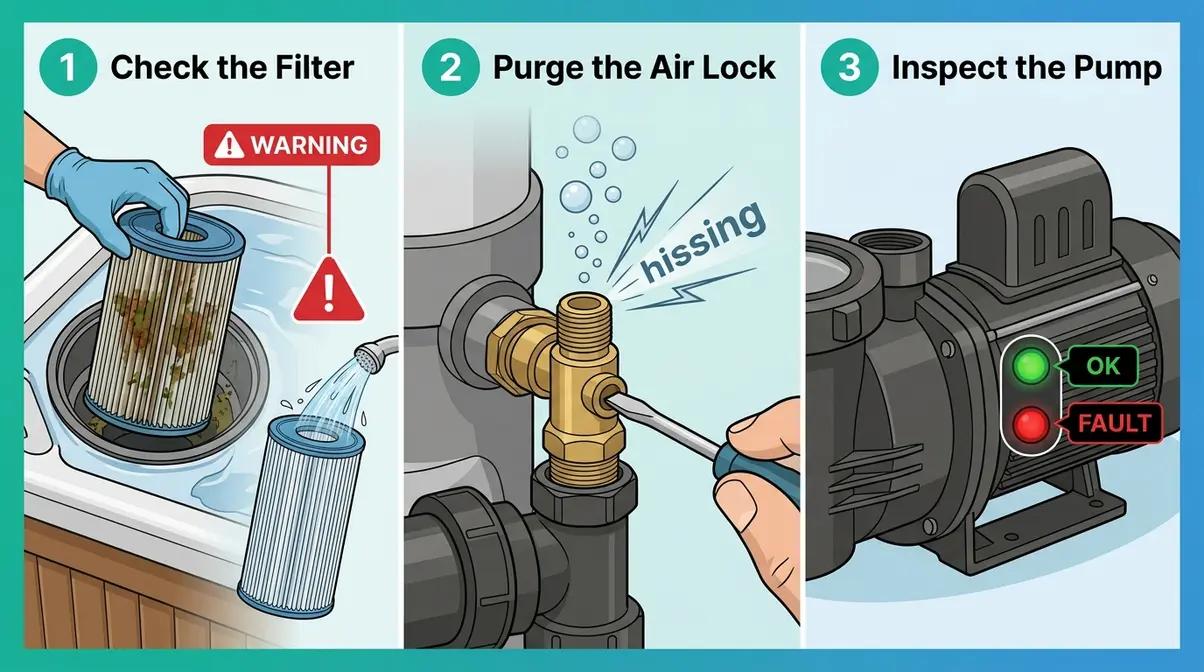
Weak jets are one of the most common complaints among hot tub owners — and in most cases, the fix is straightforward. Master Spas Parts’ troubleshooting resource identifies the same three root causes that come up repeatedly across service records: restricted water flow, trapped air, and pump issues. Before calling a technician, work through this diagnostic sequence systematically — it mirrors a PAD analysis: check Pressure first, then Air, then Direction (the jet face itself).
Jets Have No Pressure or Weak Flow
If you are dealing with hot tub jets not working, weak flow from all jets simultaneously almost always points to a restriction in the water intake side of the system — before the pump, not after it. Work through these steps in order:
- Check the filter. A clogged filter is the single most common cause of reduced jet pressure. Remove the filter cartridge and inspect it — if it’s visibly dirty or hasn’t been cleaned in the past 4–6 weeks, rinse it thoroughly with a garden hose (top to bottom, not circular) and reinstall. Many owners are surprised how dramatically a clean filter restores pressure.
- Check the water level. The suction line needs adequate water above it to avoid drawing in air. Water level should sit at the midpoint of the skimmer opening — roughly at the waterline tiles. Low water is a fast, overlooked fix.
- Inspect the diverter valve position. If a diverter valve is partially closed or stuck mid-position, it restricts flow to the affected zone. Turn it fully to one position and test.
- Check for closed air valves. Counterintuitively, fully closed air valves can make jets feel weak because the stream becomes dense but narrow. Open the air valves slightly to see if flow improves.
For persistent weak pressure after these steps, the issue is likely downstream — either an air lock or pump-related.
Air Lock: The Most Common Culprit
An air lock occurs when air becomes trapped in the plumbing lines, blocking water flow. It’s especially common after a water change or when the hot tub has been drained and refilled. The symptom is distinctive: jets produce little or no water flow despite the pump running normally — sometimes accompanied by a gurgling or sputtering sound.
Estimated Time: 5-10 minutes
Tools/Materials: Flathead screwdriver, towels
Step 1: Locate the Air Bleed Valve
Find the small brass or plastic screw fitting on the pump or filter housing, usually near the pump body.
Step 2: Loosen the Valve
With the pump running, loosen the air bleed valve slowly (counter-clockwise) using a flathead screwdriver. You’ll hear a hissing sound as trapped air escapes.
Step 3: Tighten the Valve
Secure the valve once a steady stream of water (not air) emerges from the fitting.
Step 4: Test the Jets
In most cases, flow restores immediately.
If no air bleed valve is present, an alternative method is to turn the jets on and off rapidly (5–10 cycles) to force water through the air pocket. Some manufacturers also recommend briefly loosening a union fitting on the pump inlet — do this only if you’re comfortable with basic plumbing and have towels ready.
Water intake issues from air locks are entirely DIY-fixable in the majority of cases. The key is acting promptly: a persistent air lock puts the pump under strain as it tries to move air instead of water.
Clogged Filter or Blocked Intake
If cleaning the filter cartridge didn’t fully restore pressure, the cartridge itself may be past its service life. Hot tub filter cartridges typically need replacement every 12–18 months under normal use. A chemically degraded cartridge can look clean but still restrict flow at the microscopic level.
- Filter maintenance schedule:
- Weekly: Visual inspection; rinse if visibly dirty
- Monthly: Full rinse with garden hose, soak in filter cleaning solution overnight
- Every 12–18 months: Replace cartridge entirely
Beyond the filter, check the water intake covers (skimmer basket and main drain cover). A leaf, a hairpin, or a silicone seal fragment can partially block the intake and reduce flow to every jet simultaneously. Remove and clean both intake covers as part of any pressure troubleshooting routine.
For guidance on filter selection and replacement to fix hot tub jet pressure issues, check your cartridge sizing.
Circulation Pump Issues
If weak pressure persists after addressing the filter, water level, air lock, and intake covers, the faulty circulation pump becomes the likely culprit. Signs that the pump is the problem include:
- No sound from the pump when jets are switched on (motor failure or electrical fault)
- Humming without flow (pump motor running but impeller jammed or seized)
- Intermittent pressure that varies without any control input (failing capacitor or worn bearings)
- Error codes on the control panel referencing flow or pump faults (consult your spa’s manual for specific codes)
A pump diagnosis requires checking voltage at the pump terminals and inspecting the impeller for debris — tasks that require comfort with basic electrical safety. If you’re not confident with electrical work, this is the right point to call a certified spa technician. Pump replacement costs vary by model but typically run $200–$600 for parts, plus labor.
Hydrotherapy Benefits and Safety
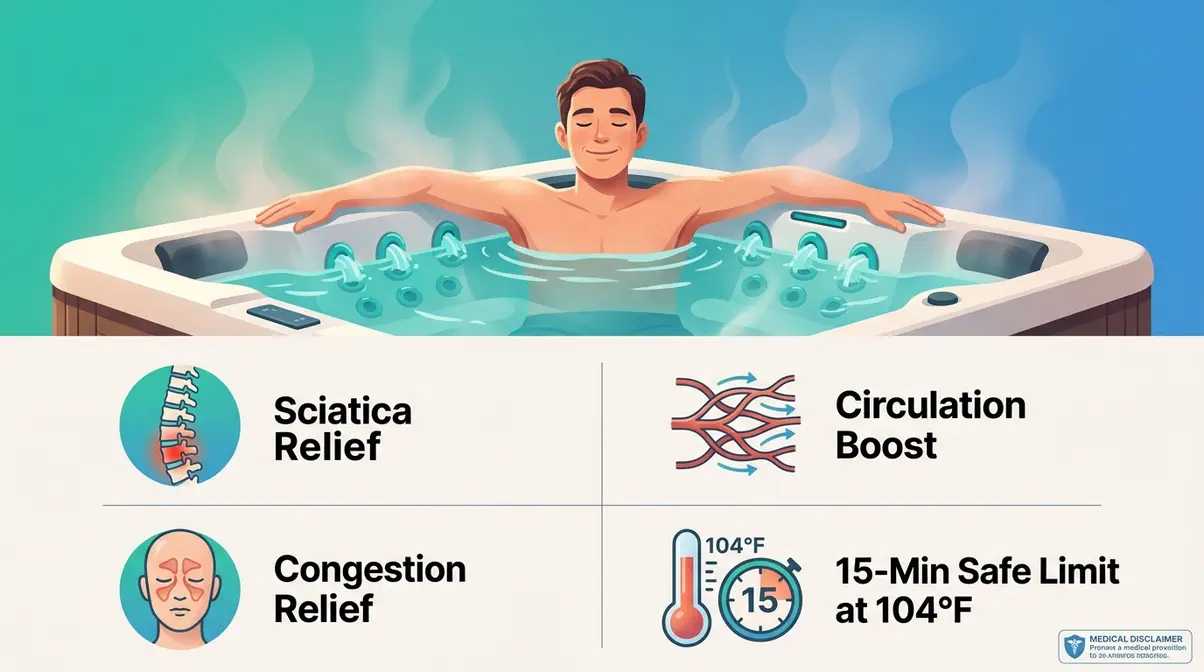
Hot tub jets do more than feel good — the combination of heat, buoyancy, and targeted water pressure produces measurable physiological effects. However, the strength of the evidence varies by condition, and individual health circumstances matter significantly.
Medical Disclaimer: The information in this section is for general educational purposes only and does not constitute medical advice. Consult your physician before using hydrotherapy if you have cardiovascular disease, diabetes, peripheral neuropathy, pregnancy, or any condition affecting skin sensation or blood pressure regulation. Hot tub use carries real risks when underlying health conditions are present.
Research from multiple institutions supports the health benefits of hot tub use in pain management and circulation improvement — but the mechanisms, appropriate usage patterns, and contraindications differ by condition.
Hot Tub Jets for Sciatica and Back Pain
Sciatica — compression or irritation of the sciatic nerve, which runs from the lower back through the buttocks and down each leg — responds well to warm water immersion combined with targeted jet pressure. The mechanism involves two parallel effects: heat reduces muscle tension around the nerve root, while jet pressure stimulates circulation and may reduce localized inflammation.
Research published in the Journal of Alternative and Complementary Medicine found that balneotherapy (warm water therapy) produced statistically significant reductions in pain scores for patients with chronic low back pain. A 2026 review of hydrotherapy interventions for musculoskeletal pain, referenced by the National Institutes of Health (NIH), concluded that warm water immersion “may help reduce pain and improve function” in patients with lumbar-related conditions — with the qualification that effects are typically short-term relief rather than structural treatment.
For sciatica specifically, direct jet pressure on the piriformis muscle (the deep buttock muscle that frequently compresses the sciatic nerve) can provide meaningful relief. Position the lumbar seat jets to target the mid-gluteal region and run them at moderate pressure — high-intensity pressure directly on an inflamed nerve root can worsen symptoms. Wait until the acute phase subsides before using jets on the affected area.
Neuropathy and Circulation
Peripheral neuropathy — nerve damage causing numbness, tingling, or burning sensations, often in the hands and feet — requires a more cautious approach to hot tub use. The challenge is that neuropathy frequently impairs the ability to accurately sense temperature, which creates a burn risk even at standard hot tub temperatures.
A study cited by the NIH’s National Institute of Neurological Disorders and Stroke found that warm water hydrotherapy can improve peripheral circulation and may reduce neuropathic pain scores in some patients — but researchers consistently note that patients with significant sensory impairment should use water temperatures below 100°F (38°C) and limit sessions to 10 minutes until temperature sensitivity is confirmed. Mayo Clinic guidance similarly recommends that diabetic patients — who account for a large proportion of neuropathy cases — consult their care team before regular hot tub use, given the dual risks of temperature insensitivity and cardiovascular stress.
If neuropathy is mild and your physician has cleared hot tub use, the pulsating jets in the foot well are the most targeted option: the rhythmic pressure aids venous return and may reduce the “heavy leg” sensation associated with poor circulation.
Do hot tubs help with sinuses?
Hot tub steam can temporarily relieve sinus congestion by loosening mucus and reducing nasal passage inflammation — the same mechanism as steam inhalation therapy. Jets increase water agitation and steam production, amplifying this effect. The warm, humid air provides passive relief without any specific technique required. For best results, breathe slowly and deeply while keeping your face above the waterline. This provides short-term comfort but does not treat underlying sinus infections or structural issues.
Safe Hot Tub Soaking Durations
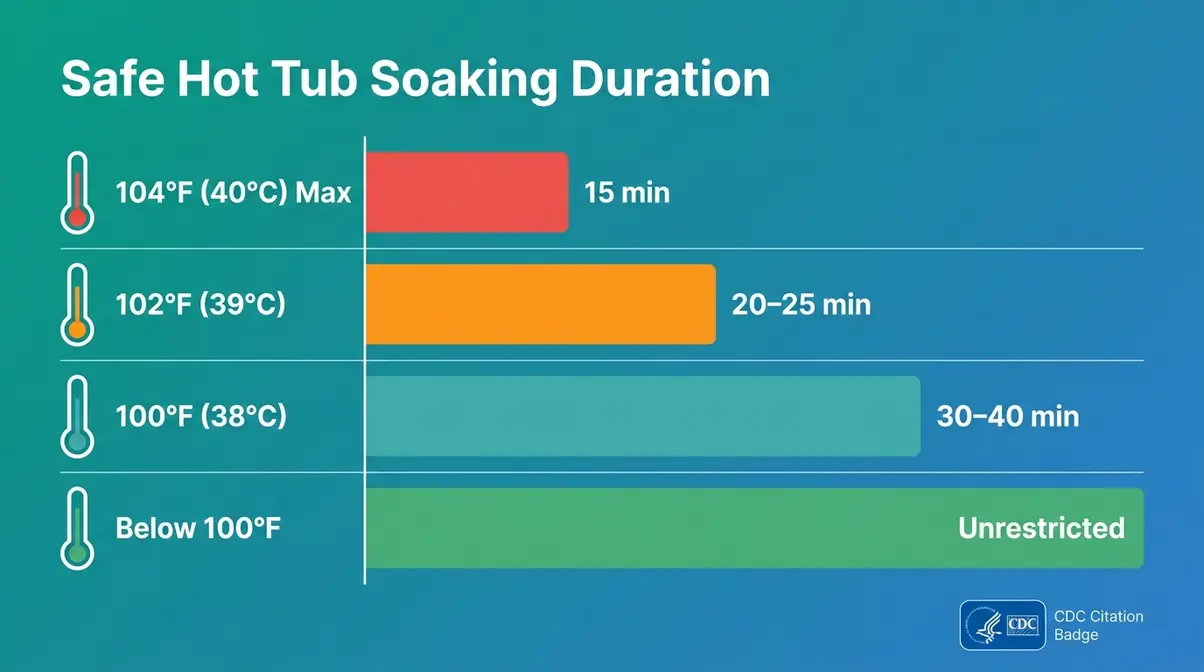
15 minutes is the recommended maximum single soak at 104°F (40°C), according to CDC guidelines on hot tub safety. The reason is hyperthermia risk: at maximum temperature, your core body temperature rises continuously, and extended exposure can cause dizziness, nausea, and in severe cases, loss of consciousness.
The CDC and CPSC recommend the following temperature and time limits:
| Water Temperature | Recommended Maximum Session |
|---|---|
| 104°F (40°C) — max allowed | 15 minutes |
| 102°F (39°C) | 20–25 minutes |
| 100°F (38°C) | 30–40 minutes |
| Below 100°F (38°C) | Generally unrestricted for healthy adults |
Pregnant women, young children, and individuals with cardiovascular conditions should use temperatures at or below 100°F and consult a physician before any hot tub use. The 15-minute guideline assumes a healthy adult — if you feel dizzy, lightheaded, or overheated at any point, exit the tub immediately. For more details on safe hot tub soaking duration, consult our extended safety guide.
Limitations and Professional Help
Understanding how hot tub jets work gives you real diagnostic power — but there are clear limits to DIY intervention.
Common Pitfalls to Avoid
Ignoring weak pressure for weeks. A slow decline in jet pressure almost always signals a filter issue or early pump wear. Letting it go means the pump works harder to compensate, accelerating wear and increasing energy costs. Address it within the first week of noticing the change.
Overtightening jet face components. When reinstalling a jet nozzle or adjusting a directional fitting, finger-tight is correct. Using tools to torque jet faces cracks the housing — a common, expensive mistake that voids warranties on many spa models.
Running jets during a chemical shock treatment. High concentrations of chlorine or non-chlorine shock can degrade jet seals and O-rings when circulated at high speed. Follow chemical instructions for circulation time before switching to high-speed jet operation.
When to Choose an Alternative Approach
If you’re troubleshooting a complete loss of jet function — no pressure from any jet, no pump sound, and no error codes — the problem may be electrical rather than mechanical. A tripped GFCI breaker is the first thing to check (reset it once; if it trips again immediately, call an electrician). Don’t attempt to bypass safety breakers.
For neuropathy patients who cannot reliably sense water temperature, a swim spa with a lower temperature zone may be a safer alternative to a standard hot tub set at 104°F.
When to Seek Expert Help
Call a certified spa technician when: the pump hums but produces no flow (impeller jam or capacitor failure), error codes appear and persist after a power cycle, water chemistry is consistently unstable despite correct dosing (may indicate a heater element issue), or any electrical component shows signs of corrosion or moisture intrusion. The investment in a professional diagnosis — typically $75–$150 for a service call — almost always costs less than the compounding damage from running a compromised system.
Frequently Asked Questions
Will a hot tub help a sciatic nerve?
Hot tub use may help relieve sciatic nerve pain through a combination of heat and targeted jet pressure on the piriformis and lumbar muscles. Warm water immersion reduces muscle tension around the nerve root, while directional jets can address localized inflammation. A 2026 NIH-referenced review found warm water therapy produced measurable pain reductions in lumbar conditions. However, avoid jet pressure during acute flares (first 48–72 hours) when inflammation is at its peak — this can worsen symptoms rather than relieve them.
Why Only 15 Minutes in a Hot Tub?
The 15-minute limit at 104°F (40°C) exists to prevent hyperthermia, the dangerous overheating of your core body temperature. At maximum temperature, your body continuously gains heat faster than it can dissipate it through sweating (sweating is ineffective when you’re submerged). The CDC recommends this limit for healthy adults. At lower temperatures — 100°F or below — sessions of 30–40 minutes are generally safe. Exit immediately if you feel dizzy, nauseous, or unusually hot.
Worst Hot Tub Practices for Sciatica
The worst approach is applying intense heat or jet pressure directly to an inflamed nerve during an acute flare. In the first 48–72 hours after a sciatica episode, inflammation is at its peak — heat dilates blood vessels and can increase swelling around the nerve root, worsening pain. High-pressure jets aimed directly at the lower spine during this phase can similarly aggravate symptoms. Wait until the acute phase subsides, then use moderate heat (100–102°F) and gentle jet pressure targeting the surrounding muscle tissue, not the spine itself.
Does a hot tub help neuropathy?
Warm water hydrotherapy may help mild peripheral neuropathy by improving circulation and temporarily reducing neuropathic pain signals. An NIH-cited study found that warm water immersion can improve peripheral blood flow and reduce pain scores in some neuropathy patients. However, neuropathy often impairs temperature sensation, creating a significant burn risk at standard hot tub temperatures. Patients with neuropathy should use water at or below 100°F (38°C), limit sessions to 10 minutes initially, and always consult their physician before starting regular hot tub use.
Hot Tub Impact on Electric Bills
A hot tub typically adds $20–$50 per month to your electricity bill under normal use patterns (4–5 sessions per week, 30 minutes each). According to the Department of Energy, the jet pump is the largest single draw — a 2 HP pump at full speed consumes roughly 1,500 watts. Leaving jets running continuously can push monthly costs to $65–$90 in jet-specific consumption alone. Variable-speed pumps and good insulation covers are the two highest-impact ways to reduce operating costs, with potential savings of 30–50% compared to older single-speed systems.
Heating Faster: Jets On or Off?
A hot tub heats faster with jets off. Running jets at high speed increases surface agitation, which accelerates heat loss to the surrounding air — particularly in cooler weather. User consensus across hot tub owner communities confirms that turning jets off during heat-up reduces warm-up time by an estimated 15–20%. Keep the low-speed circulation pump running (it moves water past the heater element efficiently), but switch off the high-speed jet pumps until the water reaches your target temperature.
Can I use soap in hot tub jets?
No, using regular soap or bubble bath will cause massive foaming due to the high-pressure aeration from the jets. The Venturi effect rapidly mixes air into the soapy water, creating an overflow of suds that can clog filters and damage pump seals. If you want aromatherapy or bubbles, only use products specifically formulated for hot tub use that are designed not to foam under high pressure.
How often should I clean the jets?
You should perform a deep clean of your hot tub plumbing and jets every 3 to 4 months using a specialized line flush product. Biofilm, oils, and minerals can build up inside the internal pipes and venturi chambers, eventually reducing jet pressure and harboring bacteria. Add the line flush cleaner before draining the tub, run the jets on high for 20-30 minutes to circulate the cleaner through all the lines, and then drain and refill with fresh water.
The PAD Formula in Practice
When someone asks how do hot tub jets work, you now have the complete answer. It runs from a pump pressurizing water at 15–30 PSI, through the Venturi effect drawing air into the stream, to a jet face directing that aerated mixture at a specific muscle group. The PAD Formula — Pressure, Air, Direction — is the mental model that connects all three: change any one variable and you change the entire massage experience. Research consistently supports hydrotherapy’s role in pain management, with NIH-referenced studies showing measurable benefits for lumbar pain and circulation improvement when used correctly and safely.
The PAD Formula gives you something no manufacturer brochure does: a diagnostic lens. When jets feel weak, you’re diagnosing a Pressure problem. When the stream feels flat, you’re adjusting the Air ratio. When the massage misses the target, you’re correcting Direction. That three-variable framework applies equally to optimizing a soak, reducing your energy bill, and troubleshooting any malfunction before reaching for the phone.
Your next step is practical: the next time you’re in your hot tub, run a deliberate PAD audit. Adjust each air valve from fully closed to fully open and feel the difference. Reposition one directional jet and compare. Switch pump speed and note the pressure change. That 10-minute experiment will make everything in this guide concrete — and it will make you a genuinely more capable hot tub owner.