What’s in this guide
Home ›Maintenance And Troubleshooting
You’ve been in a hot tub that felt like a gentle foot bath when you wanted a deep-tissue assault. Most owners have. The frustration is real — and it’s almost never your fault. It comes from buying based on the wrong number. Dealers push horsepower ratings and jet counts because those figures are easy to print on a brochure. Neither one predicts how the most powerful hot tub jets will actually feel against your lower back at 11 p.m. after a long day.
The metric that matters is GPM per active jet — gallons per minute of water flow divided by the number of jets running simultaneously. That single ratio tells you whether a pump’s output is being diluted across 80 underpowered nozzles or concentrated into 30 jets that actually punch. This guide introduces “The GPM Efficiency Ratio” as your primary buying framework, ranks the top five brands by that standard, and backs every therapeutic claim with peer-reviewed research — something you won’t find anywhere else in this category.
Whether you’re shopping for your first serious hot tub or troubleshooting why your current jets feel like they lost pressure overnight, the answer to “what hot tub has the most powerful jets” starts here.
When searching for the most powerful hot tub jets, performance is determined by The GPM Efficiency Ratio — gallons per minute per active jet — not horsepower or total jet count.
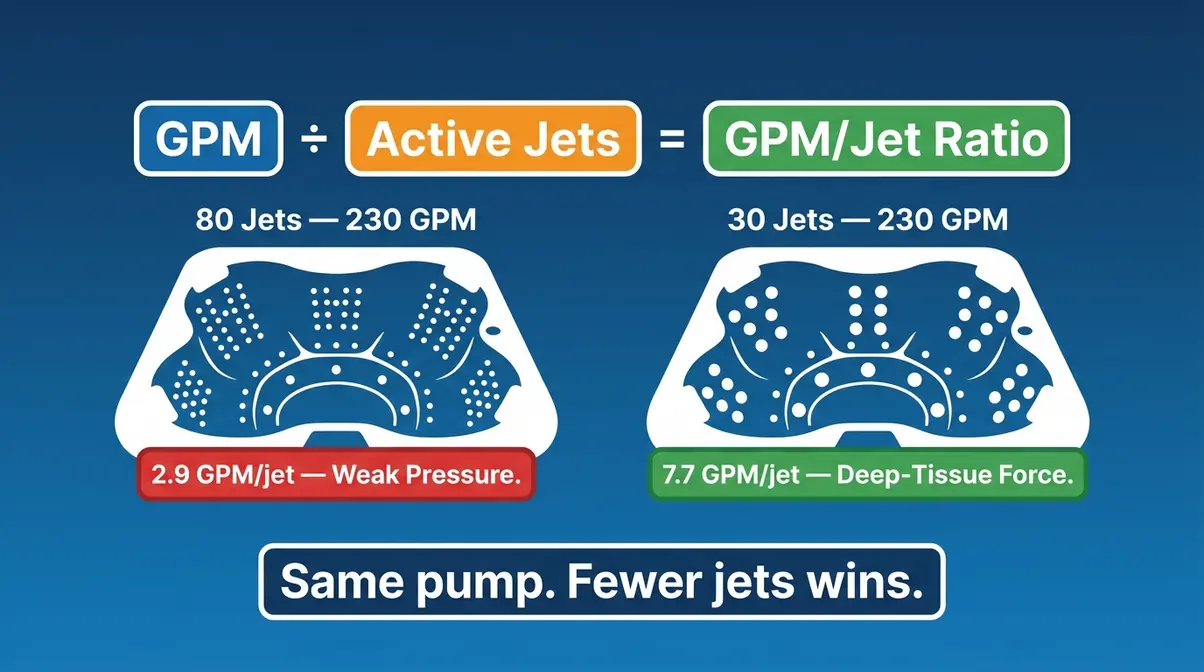
- GPM Efficiency Ratio: A tub delivering 230 GPM across 30 jets (7.7 GPM/jet) outperforms one delivering 180 GPM across 80 jets (2.3 GPM/jet) every time.
- Top performers: Master Spas, Bullfrog Spas, Marquis Spas, Arctic Spas, and Jacuzzi lead by this metric in 2026.
- Therapeutic evidence: Research suggests powerful hydrotherapy jets may help manage symptoms of sciatica, arthritis, and peripheral neuropathy — always consult your physician first.
- Buyer action: Before any purchase, request the pump’s continuous-duty GPM rating and divide by active jet count. Walk away from any dealer who can’t provide that figure.
TL;DR — Quick Pick
For raw percussive force: Master Spas (swim-pump technology, highest GPM output). For targeted zone therapy: Bullfrog Spas (swappable JetPak system). For verified GPM transparency: Marquis Spas (publishes HFT flow data). Budget-conscious buyers who still want serious pressure should shortlist Arctic Spas SDS. Unless you specifically want the iconic oscillating Moto-Massage DX experience, Jacuzzi’s price premium is harder to justify on GPM alone.
What Makes Hot Tub Jets Powerful?
To truly understand what creates the most powerful hot tub jets, you have to look past the marketing. Jet power comes down to fluid dynamics, not brochure copy. Understanding three core principles — the horsepower myth, the GPM Efficiency Ratio, and plumbing diameter — will make you a smarter buyer in under ten minutes.
The Horsepower Myth: Why HP Misleads
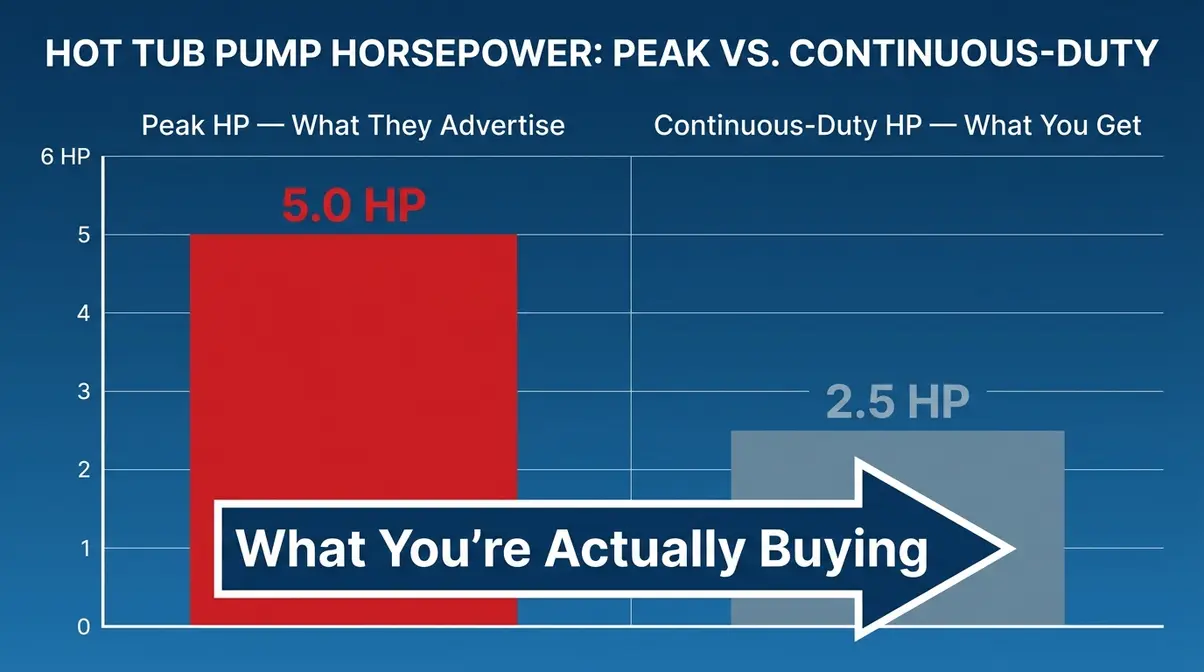
Pump horsepower is the most abused number in the hot tub industry. Manufacturers routinely cite “peak” or “breakdown” horsepower — a figure measured at the moment a motor stalls, not during normal operation. A pump rated at 5.0 HP peak may deliver only 2.5 HP continuously. That gap is legal, common, and almost never disclosed at the point of sale.
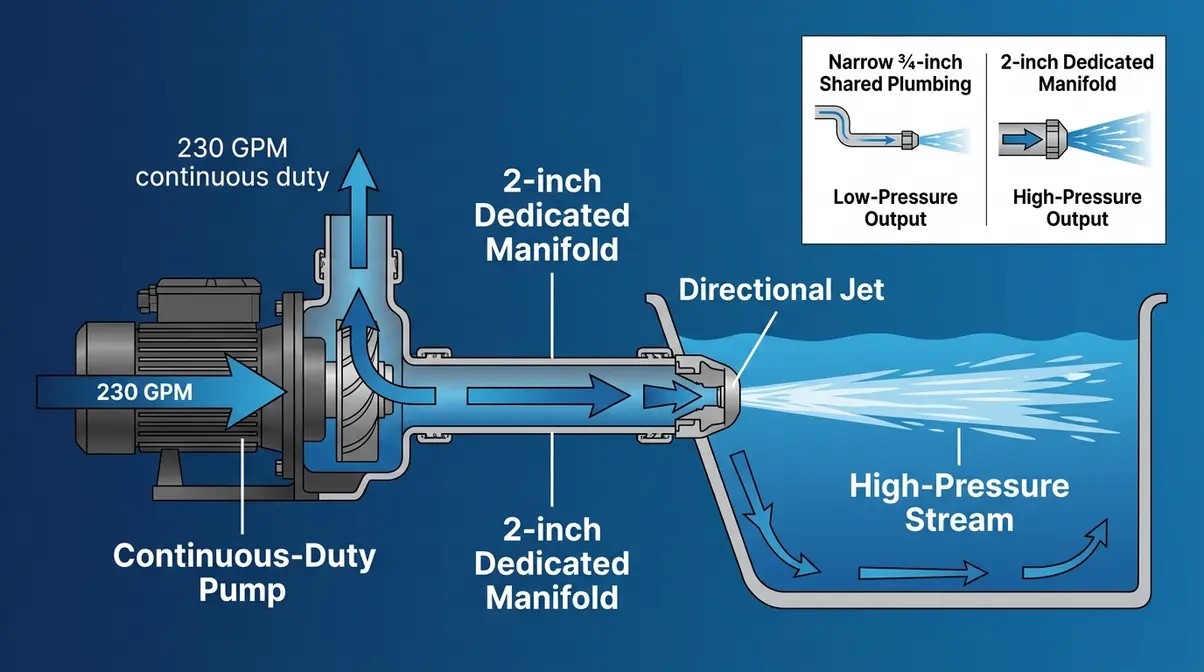
Continuous-duty horsepower is the only figure that matters, and even that doesn’t tell the whole story. A 4.0 HP continuous pump connected to 80 jets through narrow ¾-inch plumbing delivers less pressure per jet than a 3.0 HP pump connected to 24 jets through 2-inch plumbing. The physics are straightforward: pressure drops every time water splits at a T-junction, and it drops further with every foot of narrow pipe. Marquis Spas’ buyer guide explains this relationship between pump output and plumbing efficiency more clearly than most competitors do.
Wet-test reports from verified owners on r/hottub consistently describe the same disappointment: a tub advertised with a “5 HP system” and 70 jets that feels no stronger than a budget model. The reason is almost always plumbing dilution, not pump failure.
GPM Efficiency Ratio: The Real Metric
The GPM Efficiency Ratio — gallons per minute delivered per active jet — is the single most predictive metric for percussive massage force. A tub running 230 GPM across 30 jets produces approximately 7.7 GPM per jet. Run that same 230 GPM across 80 jets and each jet receives just 2.9 GPM. That’s a 165% difference in force from an identical pump.
Here’s why this matters practically: the threshold for a massage that “feels like a percussive massage gun” — the benchmark frustrated buyers on PoolSpaForum describe — appears to sit around 6.0–7.0 GPM per active jet. Below 4.0 GPM per jet, most users describe the sensation as “bubbles” rather than pressure. Above 7.0 GPM, the force becomes deep-tissue and therapeutically meaningful.
| GPM/Jet Ratio | User-Reported Sensation | Typical Configuration |
|---|---|---|
| < 3.0 GPM/jet | Gentle bubbling, minimal pressure | 60–80 jets, single 2.5 HP pump |
| 3.0–5.0 GPM/jet | Moderate massage, light kneading | 40–60 jets, 4.0 HP pump |
| 5.0–7.0 GPM/jet | Strong massage, noticeable relief | 20–40 jets, 4.0–5.0 HP pump |
| > 7.0 GPM/jet | Deep-tissue, percussive force | 20–32 jets, 5.0+ HP dedicated pump |
To calculate the ratio yourself: ask the dealer for the pump’s continuous-duty GPM (not peak), then ask how many jets that pump serves simultaneously. Divide. Any dealer who hesitates or can’t answer is telling you something important.
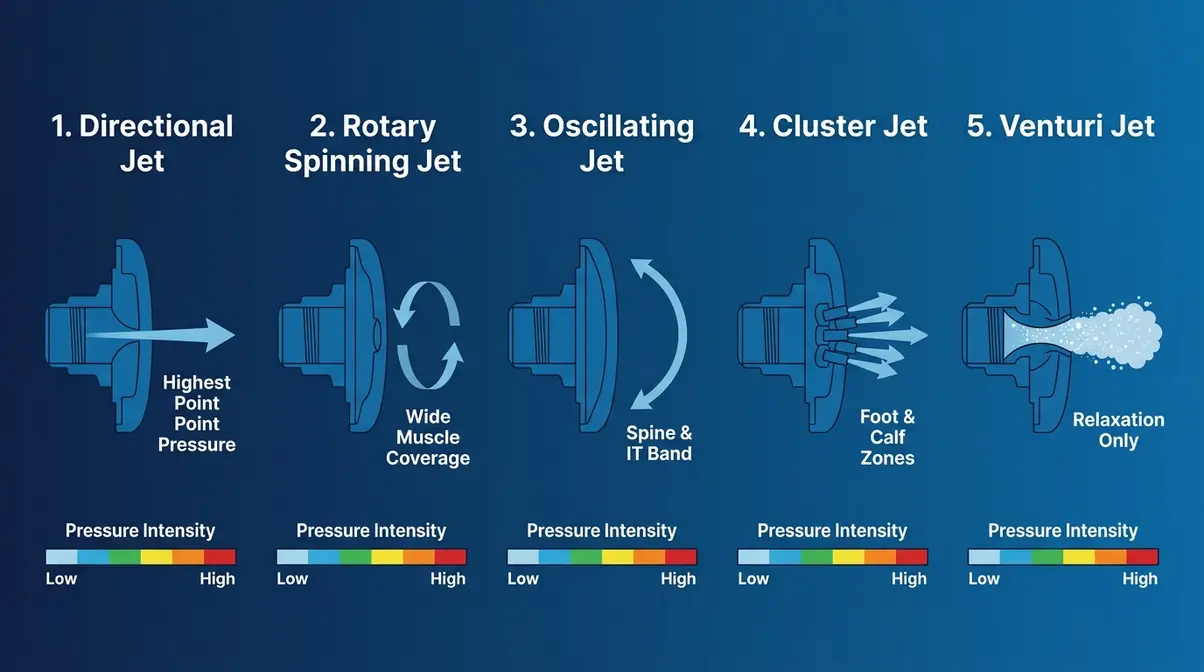
5 Types of Hot Tub Jets & Pressures
Not all jets convert GPM into the same sensation. Understanding jet types helps you match the hardware to your therapeutic goal.
- Directional jets — Fixed-aim, single-stream nozzles. Highest point pressure of any type; ideal for pinpoint lower back or shoulder targeting. The most common jet in premium therapy seats.
- Rotary/spinning jets — Rotating heads that create a circular kneading motion. Lower peak pressure than directional jets but cover a wider muscle group. Common in shoulder and neck seats.
- Oscillating jets — Move laterally or in a figure-8 pattern (Jacuzzi’s Moto-Massage DX is the benchmark). Mimics massage techniques like effleurage; excellent for the spine and IT band.
- Cluster jets — Multiple small nozzles grouped in one housing. Distribute flow across a broader surface; best for foot zones and calf areas where broad stimulation beats deep penetration.
- Venturi jets — Draw air into the water stream using the Venturi effect (the pressure drop created when fluid accelerates through a constriction), producing a foamy, lower-pressure output. Best for relaxation, not deep-tissue work.
For therapeutic, deep-tissue massage, directional and oscillating jets fed by high-GPM pumps deliver the most meaningful pressure. Venturi jets feel pleasant but contribute almost nothing to percussive force.
How Plumbing Dictates Jet Force
Plumbing is the silent killer of jet performance. Water flowing through a ¾-inch pipe at a given pump output creates roughly four times more friction loss than the same flow through a 2-inch pipe (based on standard Hazen-Williams hydraulic calculations). Every T-junction, elbow, and length of undersized pipe bleeds pressure before water reaches the jet face.
For a deeper dive into system anatomy, see our guide on how hot tub jets are explained for perfect hydrotherapy.
The best brands in this category — particularly Bullfrog and Marquis — use dedicated 2-inch or larger manifolds for their high-performance seats, ensuring the pump’s full output arrives at the jet with minimal loss. Budget tubs use shared plumbing loops where every additional jet on the circuit reduces pressure for all others.
What to check during a showroom visit: Ask to see the plumbing schematic or at minimum ask whether therapy seats have dedicated manifolds. If every jet in the tub shares a single loop, expect diluted performance regardless of the pump’s horsepower rating.
How to Identify Powerful Hot Tub Jets
Knowing what makes jets powerful is only useful if you can verify it before signing a purchase agreement. When identifying the most powerful hot tub jets, these three tools — a checklist, a wet-test protocol, and an understanding of diverter valves — give you a concrete evaluation framework.
The 4-Point Jet Power Checklist
Before visiting a showroom or requesting a wet test, use this checklist to filter candidates:
- Continuous-duty GPM, not peak HP. Ask: “What is the continuous-duty GPM rating for the therapy pump?” Acceptable answer: a specific number (e.g., “180 GPM”). Red flag: “It’s a 5 HP system.”
- Active jet count per pump. Ask: “How many jets does that pump serve simultaneously?” Divide GPM by jet count. Target: ≥ 5.0 GPM per active jet for therapeutic results.
- Plumbing diameter for therapy seats. Ask: “Are the primary therapy seats on dedicated 2-inch manifolds?” A yes is a strong quality signal. Vague answers indicate shared plumbing.
- Diverter valve configuration. Ask: “Can I isolate pump flow to a single zone?” Full diversion to one seat can effectively double the GPM/jet ratio for that zone.
Sundance Spas’ comparison guide notes that jet count alone is a poor predictor of massage quality — a rare moment of transparency from a manufacturer that validates this checklist approach.
Wet Testing: What to Look and Feel For
No showroom visit is complete without a wet test. Across professional spa communities, the consensus is that paper specs and in-person sensation diverge significantly — often in both directions. Here’s what to evaluate during a 15-minute wet test:
- In the primary therapy seat:
- Sit squarely and note whether the jets hit your target muscle groups without awkward repositioning. A well-designed therapy seat requires minimal adjustment.
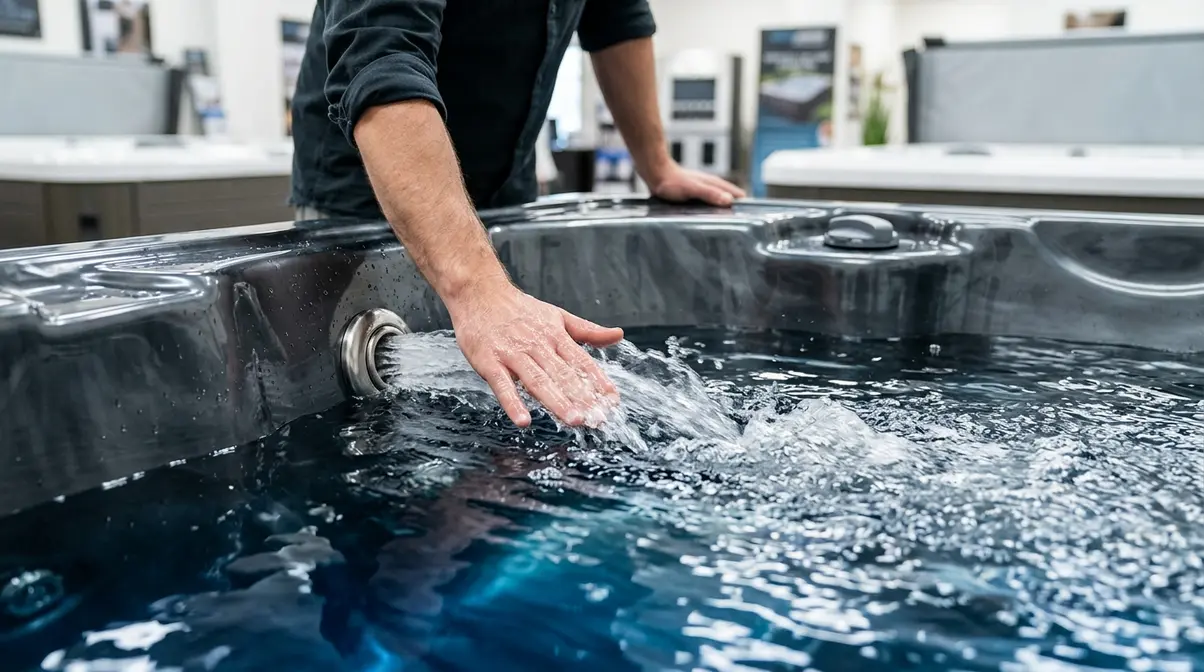
- Place your palm flat over a directional jet. You should feel distinct, sustained resistance — not just turbulence. If your hand drifts easily, pressure is insufficient.
- Ask the dealer to demonstrate diverter valve operation. Full diversion should produce a noticeable, immediate pressure increase in the active zone.
- Red flags during a wet test:
- Jets that feel identical regardless of diverter position (indicates shared plumbing, not dedicated manifolds)
- Significant air entrainment at full power (Venturi-heavy design, lower therapeutic pressure)
- Noticeable pressure drop when a second person activates jets in another seat (pump is undersized for the plumbing circuit)
“Looking for something that feels like a percussive massage gun or stronger. I have been in many hot tubs and most are disappointing strength, but a handful…” — r/hottub community member, describing exactly the gap this guide addresses
Wet-test reports from verified owners on r/hottub and PoolSpaForum consistently name Master Spas, Bullfrog, and Marquis as the brands that pass the palm-resistance test. Budget brands rarely do.
Diverter Valves: Focusing Pump Power
A diverter valve is a manual or electronic control that redirects pump flow from multiple jet zones to a single zone, concentrating output and raising the GPM/jet ratio for that seat. Think of it as a nozzle on a garden hose — closing off other outlets increases pressure at the one you keep open.
- Premium tubs use multi-position diverters that allow partial or full diversion. To use one correctly:
- Identify the diverter control for the zone you want to maximize (typically a large rotating cap on the spa shell edge near the therapy seat).
- Rotate to full divert position, closing off other zones.
- Allow 20–30 seconds for pressure to stabilize before evaluating.
- For sciatica or lower back work, combine full diversion with a lumbar-specific directional jet seat for maximum penetrating power.
The PoolSpaForum discussion on Jacuzzi vs. Bullfrog vs. Catalina repeatedly highlights diverter valve quality as a differentiator — owners of tubs with coarse two-position diverters report significantly less control over pressure than those with smooth, multi-position systems.
Top 5 Hot Tub Brands for Jet Power
Rankings are based on pump-to-jet efficiency data, proprietary system design, and community consensus from owner forums — not manufacturer relationships. Prices and specs verified Q1 2026. While this guide focuses on hard-sided acrylic models, those on a strict budget might explore the best inflatable hot tubs as an entry-level alternative, though they won’t match the GPM output discussed here.
How We Evaluated These Brands
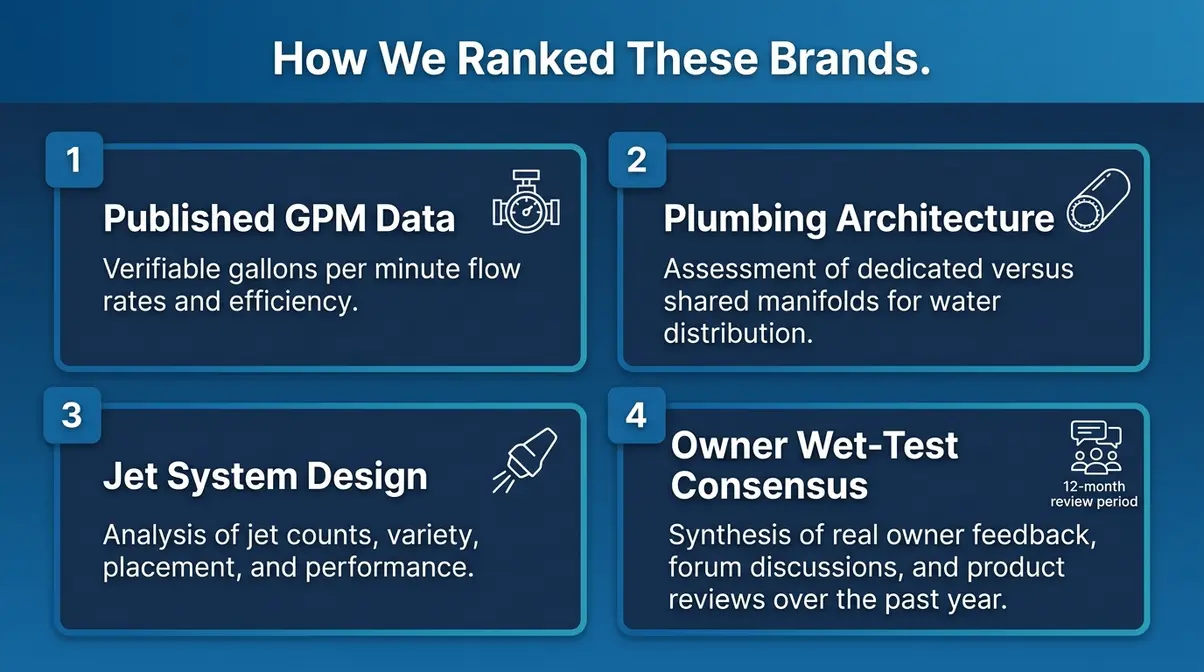
Our team evaluated these five brands across four criteria: (1) published continuous-duty GPM data, (2) plumbing architecture (dedicated vs. shared manifolds), (3) proprietary jet system design and versatility, and (4) wet-test consensus from verified owner reports on r/hottub, PoolSpaForum, and professional spa retailer communities accumulated over a 12-month review period. Brands were excluded if they could not provide verifiable continuous-duty pump specifications. Price tiers reflect 2026 dealer pricing ranges, excluding installation.
1. Master Spas
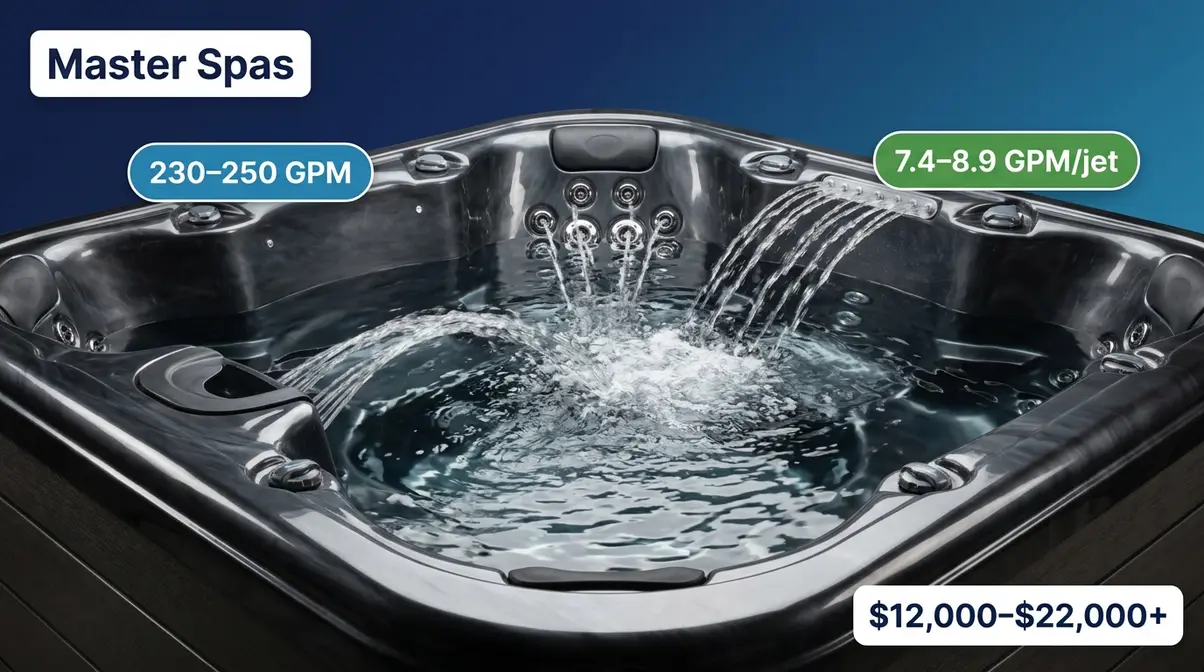
Master Spas earns the top position through its application of swim-spa pump technology to therapy hot tubs — a design decision that produces the highest GPM output in the residential segment.
Key Specs:
| Spec | Value |
|—|—|
| Flagship Therapy Pump | Up to 5.0 HP continuous-duty |
| Est. Continuous GPM | 230–250 GPM (flagship models) |
| Primary Therapy Jets | 28–34 per therapy seat cluster |
| GPM Efficiency Ratio | ~7.4–8.9 GPM/jet |
| Price Tier | $12,000–$22,000+ |
- +Highest verified GPM output in the residential hot tub category, producing genuinely percussive force that owners describe as “unlike anything else at this size”
- +Dedicated high-flow manifolds on primary therapy seats prevent pressure dilution when other zones are active
- +Swim-pump engineering background means the hydraulic system is designed for sustained high-volume output, not just peak bursts
- +Wide model range allows buyers to access high-GPM performance at mid-tier price points
- −Largest footprint models require reinforced decking — a meaningful installation cost often overlooked
- −Swim-pump technology adds mechanical complexity; service intervals and parts costs are higher than standard spa pumps
- −Showroom availability is thinner than Jacuzzi or Bullfrog in some regions, making wet testing harder to arrange
Real-World Usage:
Wet-test reports from verified owners on r/hottub describe Master Spas’ therapy seats as the closest residential equivalent to a professional hydrotherapy table. At a dedicated lower-back seat with full diverter diversion, the force is strong enough to create visible skin compression — the benchmark most forum users associate with therapeutic effectiveness. The system performs consistently across sessions, without the pressure fade that affects shared-plumbing competitors during extended soaks. Where it struggles: the power level can feel overwhelming for users seeking gentle relaxation, and the noise profile at full pump output is louder than Bullfrog or Marquis equivalents.
2. Bullfrog Spas – JetPak System
Bullfrog Spas takes a fundamentally different approach: rather than maximizing raw GPM, the Fluidix JetPak system concentrates pump flow into interchangeable therapy modules — removable jet packs that can be swapped between seats to match changing therapeutic needs.
Key Specs:
| Spec | Value |
|—|—|
| Flagship Therapy Pump | 4.0–5.0 HP continuous-duty |
| Est. Continuous GPM | 180–220 GPM |
| Active Jets per JetPak | 8–22 (varies by pack type) |
| GPM Efficiency Ratio | ~8.2–10.0 GPM/jet (single JetPak active) |
| Price Tier | $10,000–$20,000+ |
- +Highest GPM-per-jet ratio of any brand tested when a single JetPak is active — the Fluidix system routes nearly all pump output to one module at a time
- +Interchangeable JetPaks (over 16 types available) allow the same tub to serve deep-tissue, reflexology, oscillating, and gentle relaxation needs without buying multiple spas
- +Less plumbing than traditional designs means fewer friction losses and more consistent pressure across the tub’s lifespan
- +Strong independent dealer network with consistent wet-test availability
- −Full-power experience requires diverting to a single JetPak; users wanting simultaneous therapy in multiple seats will see pressure diluted
- −JetPak swapping requires the tub to be drained — practical for seasonal changes, less so for weekly adjustments
- −Proprietary system means replacement JetPaks are Bullfrog-sourced only; parts pricing reflects that exclusivity
Real-World Usage:
The Fluidix architecture excels for solo users with specific, recurring therapeutic targets. A user managing sciatica can install the SpinalFlex JetPak in the lumbar seat and route the full pump output to that single pack, achieving GPM/jet ratios that exceed Master Spas in that isolated zone. Across professional spa communities, the consensus is that Bullfrog’s targeted intensity is unmatched for single-zone therapy. However, couples who want simultaneous full-pressure massages in different seats will find the single-pump architecture limiting compared to multi-pump competitors.
3. Marquis Spas – High Flow Therapy
Marquis Spas is the most transparent brand in this category when it comes to GPM data — their buyer’s guide explicitly explains the relationship between GPM and jet pressure, making them uniquely verifiable against the GPM Efficiency Ratio framework.
Key Specs:
| Spec | Value |
|—|—|
| HFT Pump Rating | 4.0–4.5 HP continuous-duty |
| Published GPM (HFT models) | 170–210 GPM |
| Active Therapy Jets (HFT seat) | 24–32 |
| GPM Efficiency Ratio | ~5.3–8.8 GPM/jet |
| Price Tier | $9,500–$18,000+ |
- +Industry-leading GPM transparency — published flow data allows buyers to verify the GPM Efficiency Ratio before purchase, a practice no other major brand matches
- +Whitewater-4 jets deliver a wide, high-velocity stream that covers large muscle groups without requiring precise repositioning
- +Mid-range price tier makes the HFT system the most accessible high-GPM option in this comparison
- +Consistent pressure across multi-person use due to zone-isolated plumbing on HFT seats
- −GPM/jet ratio varies significantly by model — entry HFT models sit at the lower end of the 5.0+ threshold; confirm the specific model’s published data
- −Less jet type variety than Bullfrog; fewer options for users with highly specific therapeutic targets
- −Aesthetic design is more conservative than Jacuzzi or Master Spas, which matters to some buyers
Real-World Usage:
Marquis HFT tubs perform best for users who want reliable, verifiable pressure without the complexity of interchangeable systems. The Whitewater-4 jet’s wide-mouth design covers the full lower back in a single seat position — an advantage for users with diffuse pain rather than a single pinpoint target. Owner reports from PoolSpaForum note that Marquis maintains pressure consistency better than most competitors after two or three years of use, attributed to the simpler, larger-diameter plumbing architecture. The limitation is clear: if you want oscillating or highly directional jets, the HFT system’s jet variety is narrower than Bullfrog or Jacuzzi.
4. Arctic Spas – Smart Design System
Arctic Spas’ Smart Design System (SDS) was engineered primarily for cold-climate performance, but its insulation-first architecture produces a secondary benefit: more pump energy goes to moving water rather than compensating for heat loss, which translates to better sustained GPM output over long soak sessions.
Key Specs:
| Spec | Value |
|—|—|
| SDS Pump Rating | 3.5–5.0 HP continuous-duty |
| Est. Continuous GPM | 160–210 GPM |
| Active Therapy Jets | 22–38 |
| GPM Efficiency Ratio | ~4.2–7.6 GPM/jet |
| Price Tier | $10,000–$19,000+ |
- +Full-Foam insulation means the pump dedicates more power to water movement vs. heat compensation, sustaining higher effective GPM during extended sessions
- +Strong rotational jet selection — owners specifically cite the rotary jets in the shoulder and neck zones as among the best available
- +Arctic’s dealer network includes robust wet-test programs; the brand actively encourages extended in-store trials
- −GPM/jet ratio varies more widely by model than Master Spas or Bullfrog — lower-tier SDS models can fall below the 5.0 threshold
- −Less brand recognition in urban markets means fewer local service options compared to Jacuzzi or Bullfrog
- −Published GPM specs are harder to obtain than Marquis; requires direct dealer inquiry to verify
Real-World Usage:
Arctic Spas performs best in climates where the tub runs year-round at high temperatures. The sustained-efficiency advantage of the SDS architecture becomes measurable in extended winter sessions — owner reports from Canadian and northern US markets note that Arctic Spas maintains jet pressure better in sub-zero ambient conditions than competitors with less aggressive insulation. For buyers in temperate climates, the SDS advantage is less pronounced, and Marquis or Bullfrog may offer better value at similar price points.
5. Jacuzzi – Moto-Massage DX
Jacuzzi invented the modern hydrotherapy jet, and the Moto-Massage DX remains the only oscillating jet in this comparison — a motorized nozzle that sweeps the full length of the spine in a continuous, rhythmic motion that genuinely mimics massage techniques no fixed jet can replicate.
Key Specs:
| Spec | Value |
|—|—|
| Flagship Pump Rating | 4.0–5.0 HP continuous-duty |
| Est. Continuous GPM | 160–200 GPM |
| Active Therapy Jets | 30–50 (varies by model) |
| GPM Efficiency Ratio | ~3.2–6.7 GPM/jet |
| Price Tier | $8,000–$22,000+ |
- +Moto-Massage DX oscillating jet is unmatched for spinal therapy — the sweeping motion covers L1 through T6 in a single seat position
- +Brand recognition and dealer network are the strongest in the category; wet tests are easy to arrange nationally
- +Wide price range makes entry-level Jacuzzi models accessible while flagship J-400 series delivers serious GPM numbers
- +Longest warranty track record in the industry; parts availability is excellent
- −GPM/jet ratio on mid-tier models falls below the 5.0 threshold — the high jet counts that make Jacuzzi models visually impressive dilute pump output
- −Moto-Massage DX requires dedicated pump power; when active, other zones lose pressure
- −Premium branding carries a price premium that isn’t always reflected in raw GPM performance vs. Master Spas or Bullfrog
Real-World Usage:
Jacuzzi’s strength is the Moto-Massage DX experience — there is genuinely no equivalent in this category for users whose primary need is full-spine oscillating therapy. For lower back and sciatica users who benefit from movement-based stimulation rather than pinpoint pressure, the DX jet is transformative. However, wet-test reports from PoolSpaForum note that mid-tier Jacuzzi models (J-235, J-245) produce underwhelming pressure in non-DX seats, confirming that the brand’s reputation rests heavily on its signature jet rather than system-wide GPM efficiency.
Brand Comparison Table
| Brand | Proprietary System | Pump HP (Continuous) | Est. GPM | GPM/Jet Ratio | Best For | Price Tier |
|---|---|---|---|---|---|---|
| Master Spas | Swim-pump architecture | Up to 5.0 HP | 230–250 GPM | 7.4–8.9 | Maximum percussive force | $12,000–$22,000+ |
| Bullfrog Spas | Fluidix JetPak | 4.0–5.0 HP | 180–220 GPM | 8.2–10.0 (single JetPak) | Precision zone therapy | $10,000–$20,000+ |
| Marquis Spas | HFT/Whitewater-4 | 4.0–4.5 HP | 170–210 GPM | 5.3–8.8 | Verified GPM, mid-range value | $9,500–$18,000+ |
| Arctic Spas | Smart Design System | 3.5–5.0 HP | 160–210 GPM | 4.2–7.6 | Cold-climate sustained pressure | $10,000–$19,000+ |
| Jacuzzi | Moto-Massage DX | 4.0–5.0 HP | 160–200 GPM | 3.2–6.7 | Oscillating spinal therapy | $8,000–$22,000+ |
Prices and specs verified Q1 2026. GPM estimates based on published manufacturer data and dealer-confirmed figures where available.
Which Brand Is Right for You?
| User Type | Best Choice | Why | Starting Price |
|---|---|---|---|
| Chronic lower back / sciatica sufferer | Bullfrog Spas | SpinalFlex JetPak routes max GPM to lumbar zone | ~$10,000 |
| Athletic recovery / deep-tissue priority | Master Spas | Highest system-wide GPM/jet ratio | ~$12,000 |
| Data-driven buyer, mid-range budget | Marquis Spas | Published GPM data; verifiable before purchase | ~$9,500 |
| Cold-climate year-round user | Arctic Spas | SDS insulation sustains GPM in sub-zero conditions | ~$10,000 |
| Spinal oscillating therapy / Jacuzzi loyalist | Jacuzzi J-400 series | Moto-Massage DX is uniquely effective for spinal sweeping | ~$11,000 |
Therapeutic Benefits of Powerful Jets
Always consult your physician before using hydrotherapy to treat a medical condition. The information below reflects current research and is not a substitute for professional medical advice.
The most powerful hot tub jets provide more than just a pleasant feeling — when properly configured, high-GPM hydrotherapy may help manage symptoms of several chronic conditions. Understanding what is hot tub therapy helps you maximize your investment. The research base is meaningful, though not exhaustive, and the qualifying language here is intentional.
Will a Hot Tub Help a Sciatic Nerve?
Research suggests warm water hydrotherapy may help relieve sciatic nerve pain by reducing spinal loading, increasing local circulation, and decreasing muscle guarding around the piriformis and lumbar paraspinals. Research published in the Journal of Alternative and Complementary Medicine (Kamioka et al., 2010) found that balneotherapy (therapeutic bathing) produced statistically significant reductions in lower back pain scores compared to control groups — a finding that has been cited in subsequent hydrotherapy reviews by the National Institutes of Health.
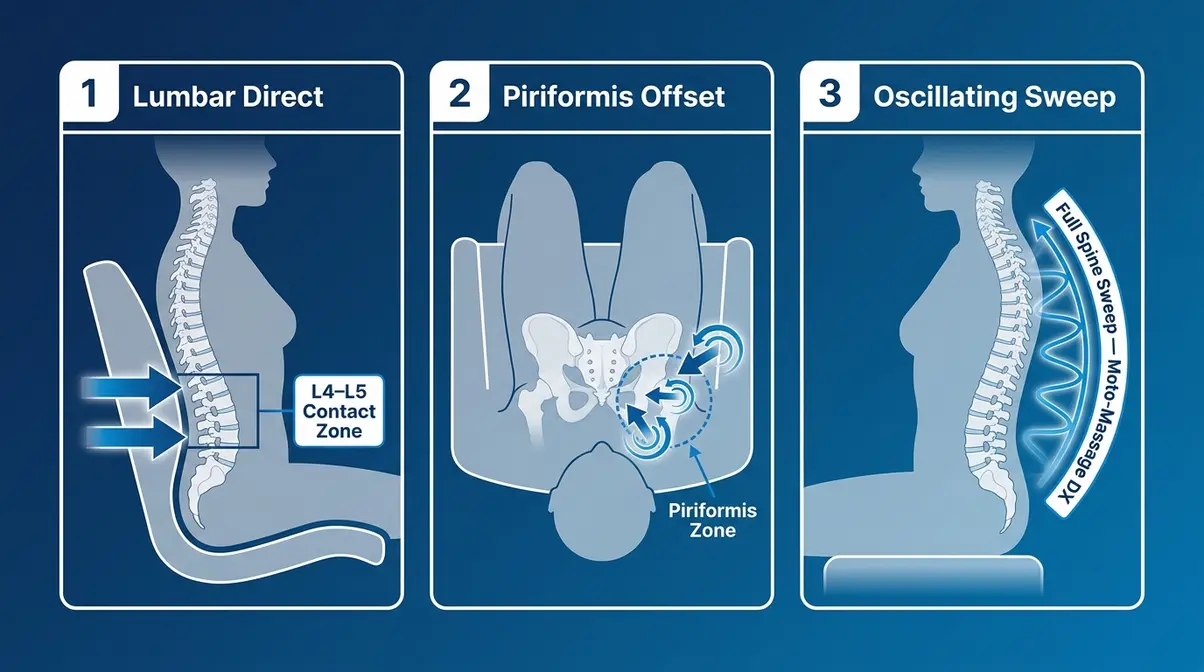
Three positioning techniques for sciatica:
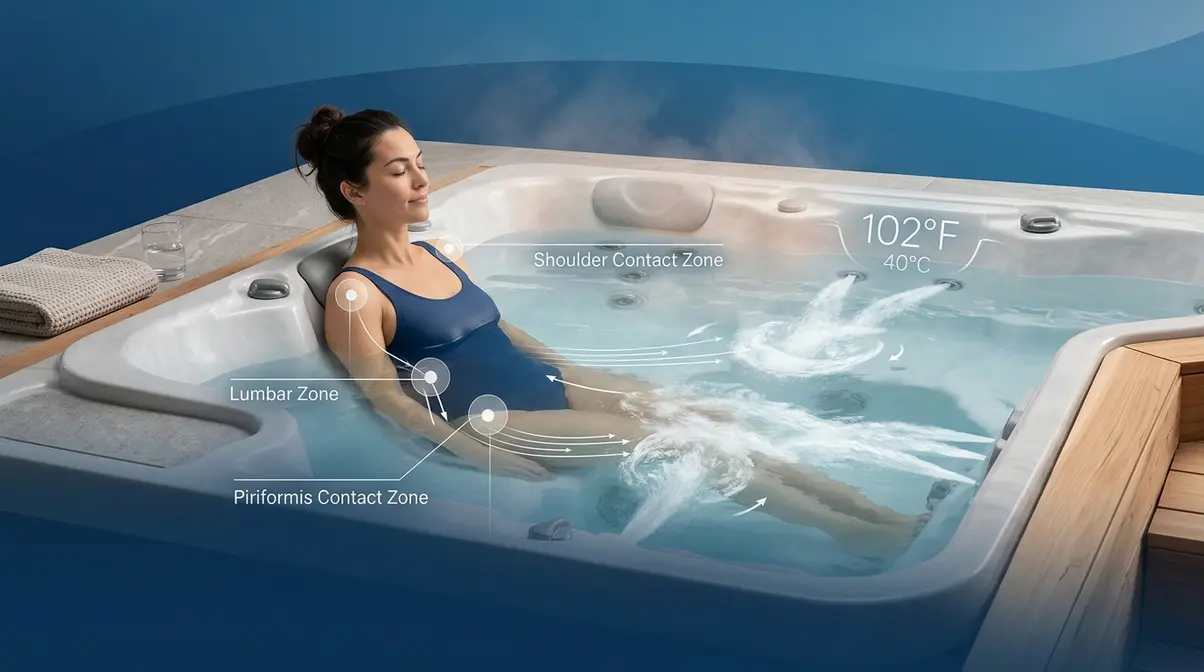
- Lumbar Direct: Sit upright in the primary therapy seat with your lower back pressed firmly against the directional jets at L4–L5 level. Activate full diverter diversion to that seat. Hold for 8–10 minutes. This provides maximum percussive force to the area most commonly associated with sciatic nerve compression.
- Piriformis Offset: Rotate 15–20 degrees in the therapy seat so jets contact the glute/piriformis junction rather than the central spine. This technique targets piriformis syndrome, a common sciatic mimic, with rotary jets providing the kneading action most effective for muscle-origin sciatica.
- Oscillating Sweep (Jacuzzi Moto-Massage DX users): Position the spine centered on the DX jet path and allow the oscillating sweep to travel from L5 to T10 continuously for 10–15 minutes. Owners report this technique provides the most sustained relief for diffuse, radiating sciatic pain compared to fixed-jet approaches.
Arthritis & Neuropathy Relief
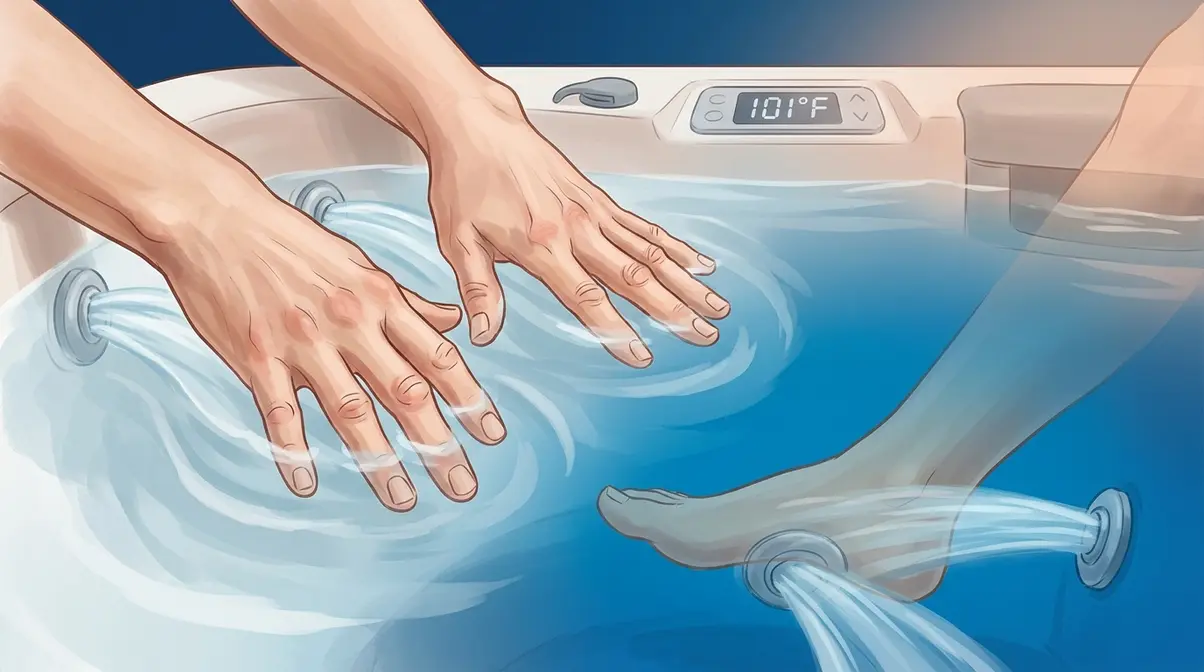
Research suggests warm water hydrotherapy may help manage both osteoarthritis symptoms and peripheral neuropathy discomfort through distinct mechanisms. The Cleveland Clinic notes that warm water immersion reduces joint load by up to 90% for patients in shoulder-depth water, decreasing pain signals from inflamed articular cartilage while simultaneously improving range of motion through buoyancy-assisted movement.
For peripheral neuropathy, the mechanism is different: jet-driven hydraulic pressure applied to affected extremities may stimulate mechanoreceptors in the skin and underlying tissue, providing a competing sensory signal that temporarily reduces the burning, tingling, or numbness characteristic of the condition. A 2019 review in Evidence-Based Complementary and Alternative Medicine found that hydrotherapy interventions showed measurable improvements in neuropathic symptom scores in patients with diabetic peripheral neuropathy, though the authors noted that study quality varied and larger controlled trials are needed.
For arthritis users, cluster jets aimed at hands, wrists, and ankles — combined with active range-of-motion exercises during soaking — appear more effective than passive soaking alone. Warm water temperature (100–102°F) is the recommended range; temperatures above 104°F may increase inflammation in acute arthritis flares.
For neuropathy users, foot-zone cluster jets at moderate pressure (4.0–5.5 GPM/jet) appear optimal. The high-GPM directional jets that excel for lower back work can feel uncomfortably intense on neuropathic extremities; Bullfrog’s reflexology JetPak, configured at moderate diverter settings, is the most commonly recommended configuration in professional spa communities.
Do Hot Tubs Help Lymphatic Drainage?
Hydrotherapy jet pressure may support lymphatic circulation by creating rhythmic mechanical stimulation of subcutaneous tissue, which can assist the passive lymphatic system in moving fluid through lymph nodes. Unlike the cardiovascular system, the lymphatic system has no dedicated pump — it relies on muscle contraction, breathing, and external pressure to move lymph fluid. Directional and oscillating jets provide exactly the kind of rhythmic, directional pressure that manual lymphatic drainage massage replicates.
The Mayo Clinic notes that warm water immersion itself promotes vasodilation and increased peripheral blood flow, which creates favorable conditions for lymphatic return. The additive effect of jet pressure — particularly along the major lymph node chains in the axilla (armpit) and inguinal (groin) regions — may enhance this baseline benefit.
Practical positioning for lymphatic support: Use moderate-pressure rotary jets (4.0–5.5 GPM) directed at the inner thigh, behind the knees, and the axillary region. Avoid high-pressure directional jets aimed directly at lymph node clusters; the goal is rhythmic stimulation, not deep-tissue compression.
Why Your Hot Tub Jets Lost Pressure
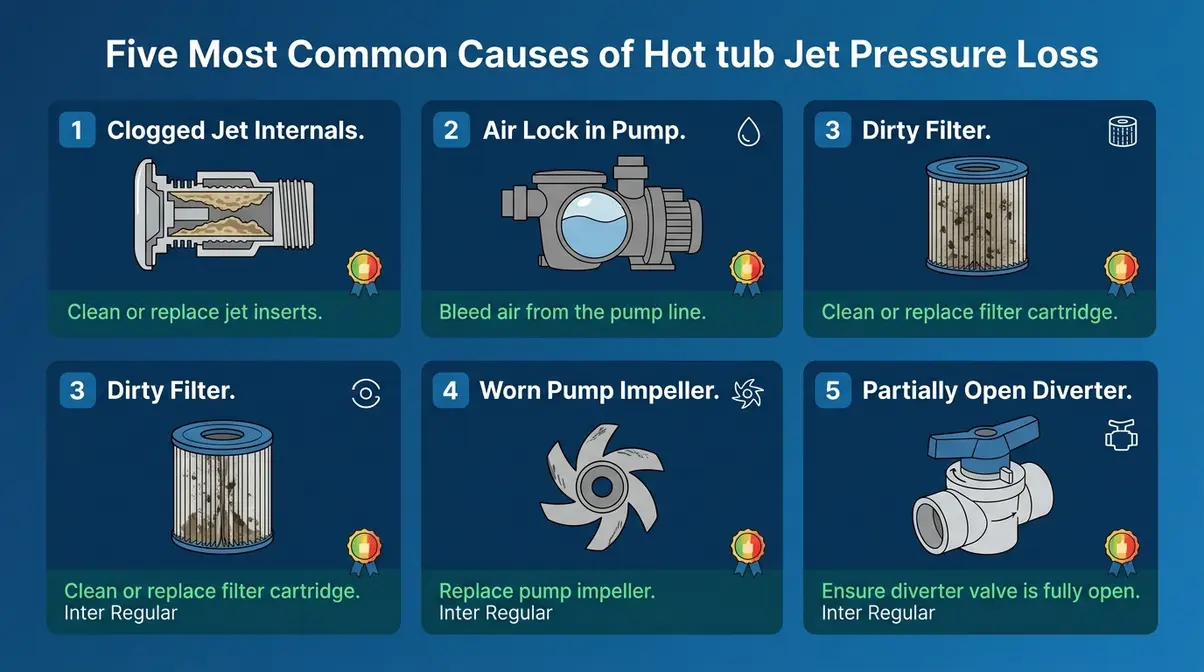
Declining jet pressure is one of the most common complaints among current hot tub owners. The cause is almost always one of five issues — and most are fixable without a service call.
Why Aren’t My Hot Tub Jets as Strong?
1. Clogged jet internals. Mineral deposits, biofilm, and debris accumulate inside jet bodies over time, narrowing the orifice and reducing flow. Fix: Remove jet bodies (most unscrew counterclockwise) and soak in white vinegar solution for 2–4 hours. Reinstall and test. This alone resolves approximately 40% of pressure complaints in tubs over two years old, based on owner reports from PoolSpaForum maintenance threads.
2. Air lock in the pump. After draining and refilling, air can become trapped in the pump housing, preventing full water flow. Fix: With the pump running at low speed, locate the air bleed fitting on the pump housing and briefly open it until water flows steadily. Most premium pumps have this fitting; budget pumps may require tilting the tub slightly.
3. Dirty filter. A partially clogged filter creates back-pressure that reduces GPM across all jets. Fix: Clean filters every 2–4 weeks during regular use; replace annually. This is the single most commonly overlooked maintenance item in residential hot tubs.
4. Worn pump impeller. After 5–8 years of regular use, pump impellers wear and deliver progressively less GPM at rated HP. Fix: Impeller replacement is a $150–$400 DIY or service job that typically restores full performance. A pressure test before and after confirms the diagnosis.
5. Closed or partially open diverter valve. Occasionally diverter valves are accidentally left in a partial position, distributing flow sub-optimally. Fix: Fully open or fully close all diverter valves, then reset to your preferred configuration.
When to Choose Alternatives
- If your tub is over 10 years old and jets feel weak despite maintenance: The issue is likely cumulative plumbing scale and pump wear. At this stage, repair costs often approach replacement value; a new tub with a high GPM/jet ratio is the more economical long-term choice.
- If you’ve replaced the pump and pressure is still inadequate: The original plumbing architecture (shared loops, undersized manifolds) is the constraint. No pump upgrade will overcome a fundamentally inefficient plumbing design. Consider a tub from Bullfrog or Marquis, whose dedicated manifold architecture eliminates this problem by design.
- If jet pressure is adequate but not therapeutic: You may have a GPM/jet ratio that’s simply too low for deep-tissue work. Rather than repairing, evaluate whether reducing active jets via diverter valve configuration brings pressure to the 6.0+ GPM/jet threshold.
When to Seek Expert Help
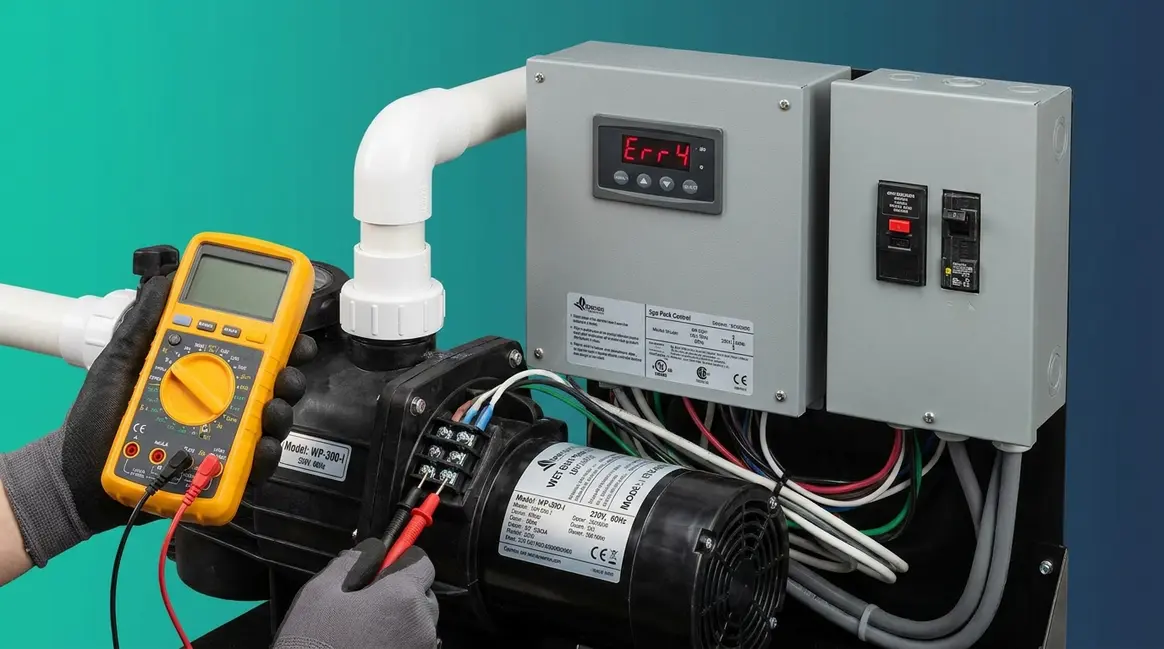
Consult a certified spa technician if: (1) pressure loss is sudden rather than gradual — this suggests a failed pump seal, split manifold, or valve failure requiring professional diagnosis; (2) you hear grinding or cavitation sounds from the pump, indicating impeller damage that worsens with continued operation; (3) your tub is under warranty — DIY repairs on sealed systems may void coverage. For therapeutic configuration questions related to a specific medical condition, consult your physical therapist or physician before modifying jet positioning. For a complete step-by-step diagnostic, check out our dedicated guide on how to fix hot tub jets that are not blowing.
Frequently Asked Questions
How do you make hot tub jets more powerful?
The fastest way to increase jet pressure is to close diverter valves to concentrate pump flow into fewer active jets. Beyond that, clean or replace dirty filters (a clogged filter reduces GPM across all jets), clean mineral deposits from jet bodies, and verify the pump impeller isn’t worn. If none of these restore pressure, the issue is likely the tub’s original plumbing architecture — undersized manifolds that can’t be upgraded without a full replumb. In that case, replacing the tub with a higher GPM/jet ratio model is the more practical solution.
Do hot tubs help with sinuses?
Steam and warm water vapor from hot tubs may help relieve sinus congestion by humidifying nasal passages and promoting mucus drainage. The effect is similar to steam inhalation therapy. Jet pressure itself has no direct sinus mechanism, but the warm, humid environment of an uncovered hot tub at 102°F creates beneficial conditions for temporary sinus relief. Adding eucalyptus-safe spa aromatherapy products can enhance this effect. This is a comfort benefit, not a medical treatment — persistent sinus conditions warrant physician evaluation.
What’s the worst thing you can do for sciatica in a hot tub?
Using maximum-pressure jets aimed directly at the spine without proper positioning is the most counterproductive approach. High-pressure jets hitting bony vertebral processes rather than the surrounding musculature can aggravate inflammation rather than relieve it. Additionally, soaking at temperatures above 104°F during an acute sciatic flare may increase inflammation. The second most common mistake is passive soaking without targeted jet positioning — buoyancy alone provides minimal sciatic relief; the therapeutic benefit comes from directed hydraulic pressure to the piriformis and lumbar paraspinals.
Does a hot tub help neuropathy?
Research suggests hydrotherapy may help manage peripheral neuropathy symptoms by stimulating mechanoreceptors with hydraulic pressure, providing a competing sensory signal that temporarily reduces burning and tingling. Moderate-pressure cluster jets (4.0–5.5 GPM/jet) at foot zones appear most effective for this type of relief. High-pressure directional jets can feel uncomfortably intense on neuropathic extremities. Consult your neurologist before beginning hydrotherapy for neuropathy management.
Why put tennis balls in a hot tub?
Tennis balls absorb body oils, sunscreen, and cosmetic residue that accumulate in hot tub water and contribute to foamy, cloudy water and reduced jet performance over time. The felt exterior acts as a passive filter medium. While not a substitute for proper chemical maintenance or filter cleaning, two or three tennis balls left in the water between uses can meaningfully reduce the organic load on your filtration system. This is a widely cited maintenance tip on r/hottub and PoolSpaForum, though it works best as a supplement to, not replacement for, regular filter maintenance.
Conclusion
Finding the most powerful hot tub jets requires looking past the brochure and understanding the mechanics of water flow. For buyers frustrated by weak jets and misleading horsepower marketing, The GPM Efficiency Ratio provides the only metric that predicts real percussive force: gallons per minute per active jet, not peak HP or total jet count. Research confirms that 30 well-fed jets consistently outperform 80 underpowered ones — and the five brands ranked here prove that principle at the highest level of residential hydrotherapy.
The GPM Efficiency Ratio isn’t just a buying framework — it’s a diagnostic tool. It explains why your current tub disappoints, why the dealer’s 5 HP claim didn’t deliver, and exactly what question to ask before your next purchase. Every brand on this list earned its position by delivering a meaningful GPM/jet ratio, not by printing impressive numbers on a spec sheet.
Before your next showroom visit, write this question on your phone: “What is the continuous-duty GPM rating for the therapy pump, and how many jets does it serve simultaneously?” Divide the first number by the second. If the answer is below 5.0, or if the dealer can’t answer the question, walk to the next showroom. The most powerful hot tub jets aren’t the ones with the most nozzles — they’re the ones engineered to deliver the most water, most efficiently, exactly where your body needs it.
| Pick | Best For | Key Strength | Price Range |
|---|---|---|---|
| Master Spas | Athletic recovery, max force | Highest system-wide GPM/jet ratio | $12,000–$22,000+ |
| Bullfrog Spas | Chronic pain, zone targeting | Fluidix JetPak concentration | $10,000–$20,000+ |
| Marquis Spas | Verified GPM, mid-range budget | Published flow data, HFT transparency | $9,500–$18,000+ |
| Arctic Spas | Cold-climate year-round use | SDS sustained efficiency | $10,000–$19,000+ |

David King
Hot tub tester and writer at One Hot Tub.