
What’s in this guide
- Do You Need a Hot Tub Dolly?
- The 4 Types of Hot Tub Dollies
- Buying Criteria & Dolly Selector Matrix
- How to Move a Hot Tub with a Dolly
- Buying a Used Hot Tub: What to Check
- Essential Hot Tub Accessories: Covers and Beyond
- Safety Warnings and When to Hire a Professional
- Frequently Asked Questions
- Choosing the Right Dolly for Your Move
Picture this: your new 450 lb hot tub is sitting at the end of the driveway, and there are 40 feet of grass between it and the backyard pad. With the right dolly, that’s a 2-hour Saturday job. With the wrong one — or none at all — it becomes a 2-day ordeal involving pulled muscles, a frustrated neighbor, and a tub that’s going nowhere.
“I’m a little too stubborn to hire movers and looking to move a new 450lb hot tub from the driveway around the backyard through the grass.”
— r/hottub community member
The risks of under-equipping for this job are real. A frame that buckles under 800 lbs, solid wheels that sink into soft ground, or — worst case — a tipped spa and a trip to urgent care. These are not hypothetical scenarios; they are the most common complaints reported in DIY moving communities. This hot tub dolly buying guide walks you through every decision — dolly type, weight capacity, tire choice, and terrain — so you can move your spa safely without overpaying for equipment you don’t need. You’ll also find a Dolly Selector Matrix in Section 3 that turns a three-hour research spiral into a three-minute decision.
⚠️ Safety Note: Moving a 400–1,000 lb hot tub carries a real risk of back injury, crush injury, and equipment failure. Always recruit at least 2–3 helpers and read the safety section before you begin.
A purpose-built hot tub dolly rated for 1,000+ lbs is the single most important tool for a safe DIY spa move — standard appliance dollies are not rated for the weight (based on manufacturer specifications from CasterHQ).
- Weight capacity: Choose a dolly rated at least 200 lbs above your hot tub’s dry weight
- Tire type: Pneumatic (air-filled) or foam-filled tires are essential for grass, gravel, and soft ground
- The Dolly Selector Matrix: Match your dolly to your terrain, weight, and budget — see Section 3
- Used hot tubs: Always inspect jets, shell, and plumbing before committing to a move
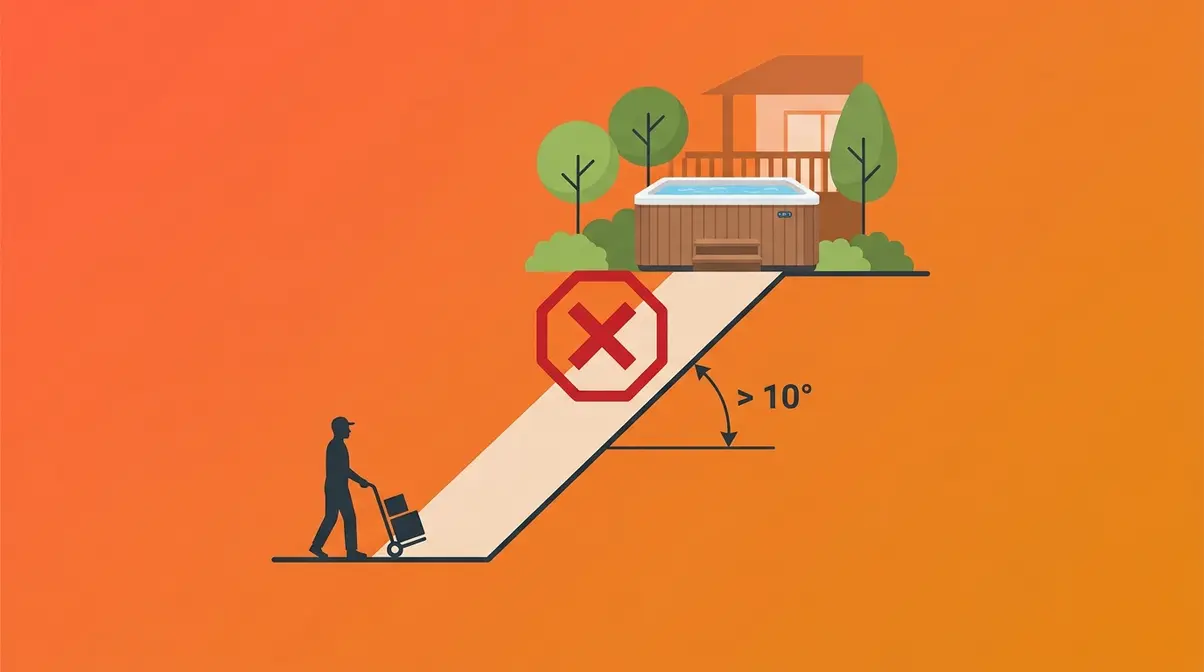
- Know the limit: If your path includes stairs or a slope >10°, hire a professional
Do You Need a Hot Tub Dolly?
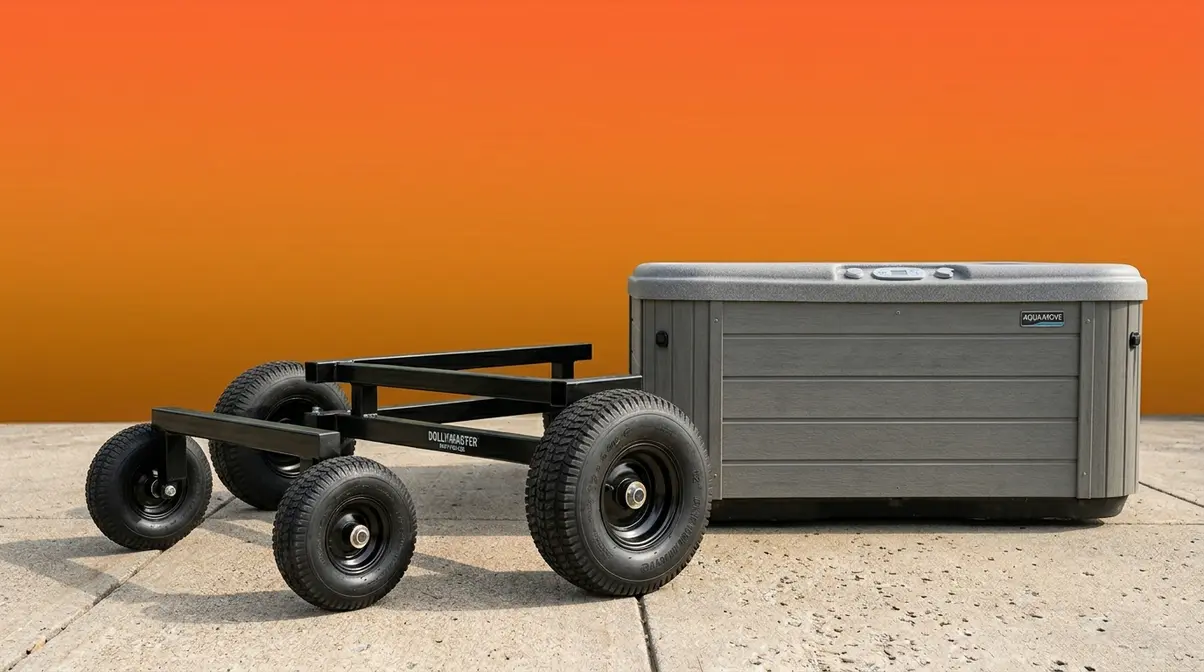
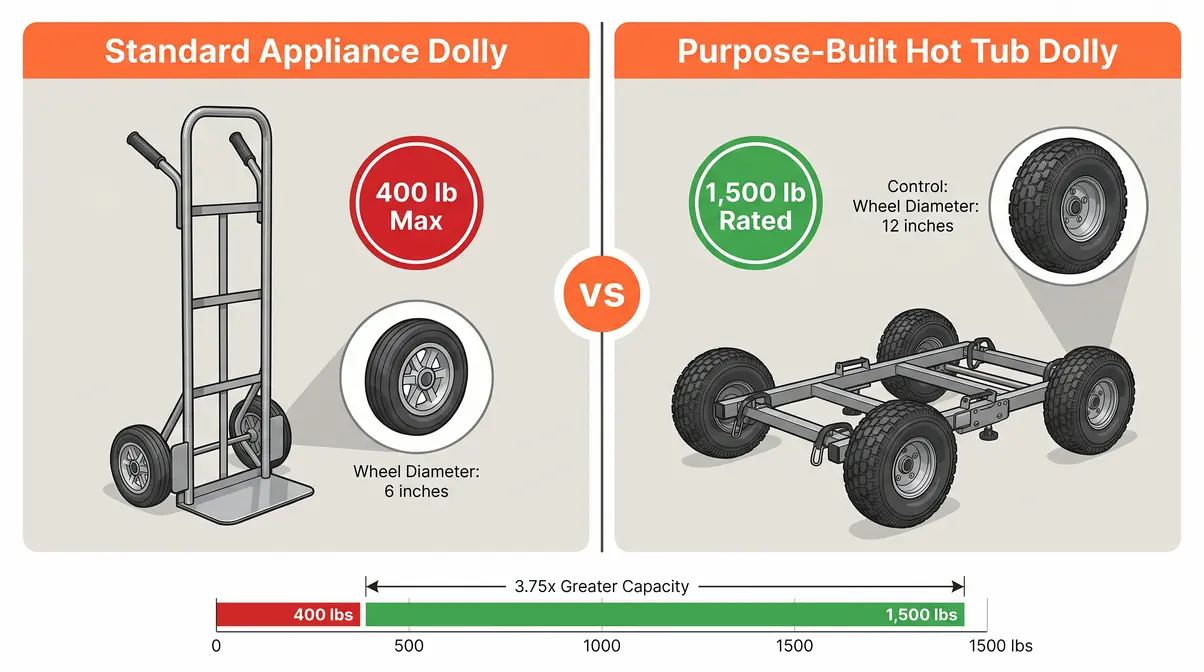
Yes, you can move a hot tub with a dolly — but it must be a purpose-built hot tub dolly, not a standard appliance model. Most hot tubs weigh between 500 and 900 lbs empty; standard appliance dollies are typically rated for 300–400 lbs (based on manufacturer specifications from major equipment retailers). Using an undersized dolly risks frame failure, wheel collapse, and serious injury to everyone involved.
Can I Use a Regular Appliance Dolly?
No — a standard appliance dolly is not rated for hot tub weights and should not be used. Standard two-wheel appliance dollies are typically rated for 300–400 lbs; even a small 2-person hot tub weighs 400–600 lbs empty. The math simply doesn’t work. Using an undersized dolly risks frame failure, axle collapse, and sudden load drop, which can cause crush injuries and spa damage.
Beyond the raw weight mismatch, standard wheels compound the problem. Most appliance dollies run on 6–8 inch solid rubber wheels. On grass, gravel, or a soft backyard, those narrow wheels sink under load, creating uneven weight distribution that dramatically increases the risk of tipping. The spa shifts. The helpers scramble. That’s the most commonly reported failure mode in DIY moving communities on r/hottub and Pool Spa Forum.
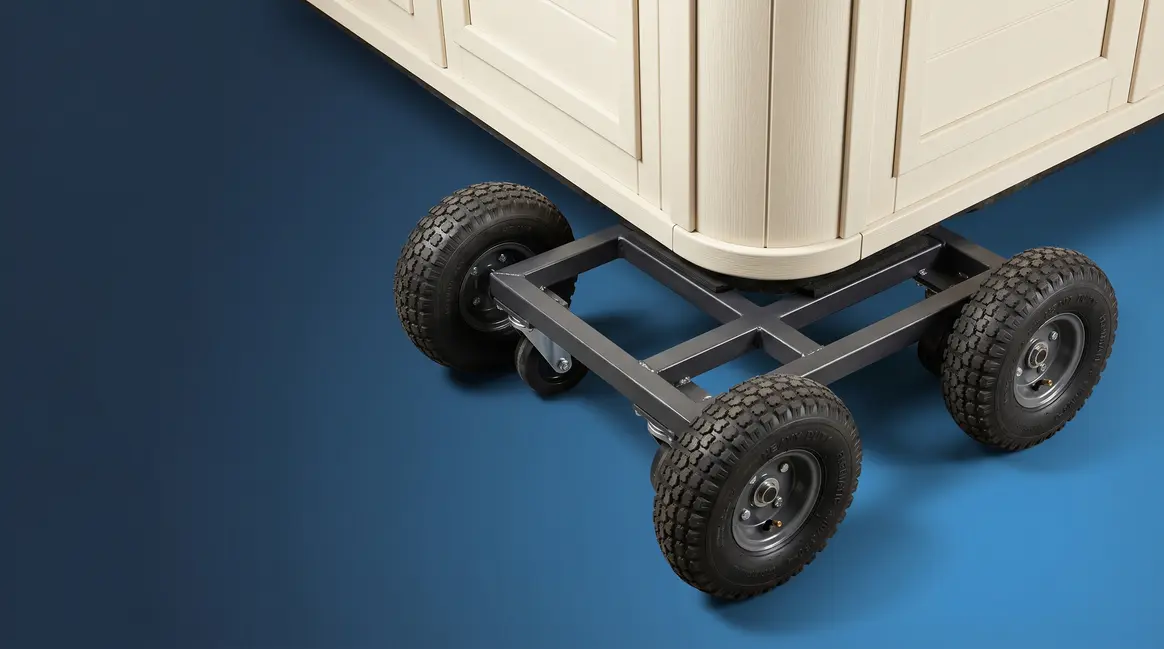
Purpose-built hot tub dollies solve both problems at once: they use a wide-base frame (sled or 4-wheel configuration) to cradle the tub’s flat bottom and distribute weight across a larger footprint, and they run on significantly larger wheels — typically 10–16 inches in diameter — that roll over soft ground rather than sinking into it.
“A standard appliance dolly is rated for 300–400 lbs — less than half the weight of an average hot tub.” That gap is why using the wrong tool is one of the most common — and most preventable — DIY moving mistakes.
What Purpose-Built Dollies Do
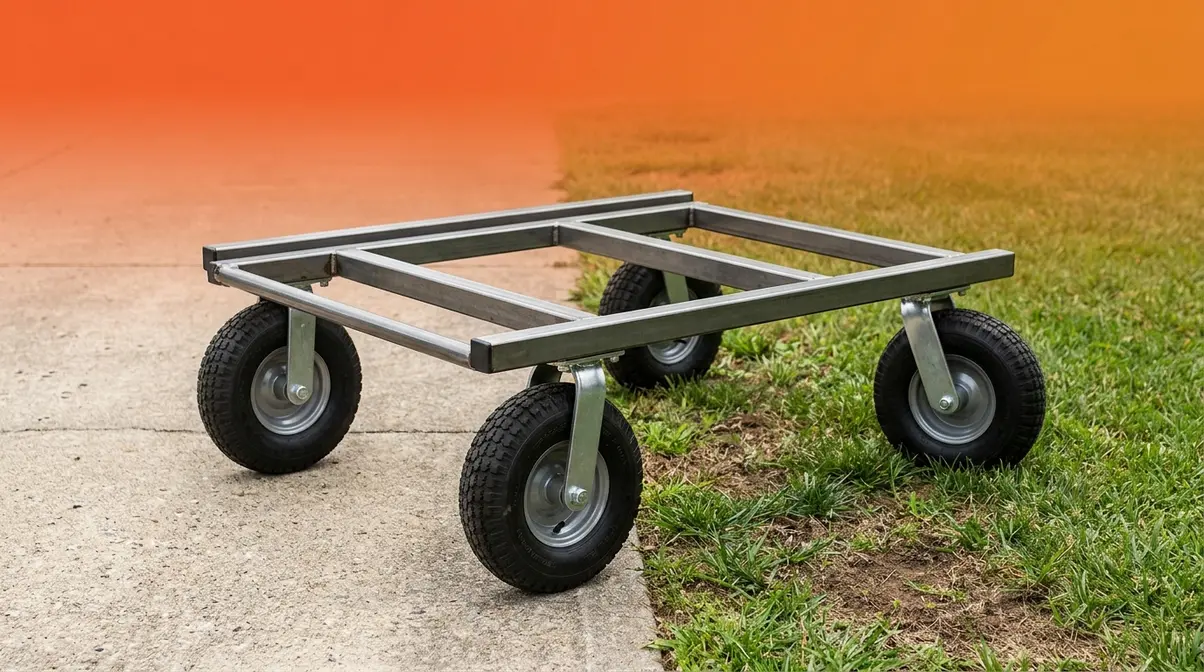
So what does spa moving equipment actually deliver that a standard dolly cannot? Three things make the difference:
- Higher weight ratings: Purpose-built hot tub dollies are typically rated 1,000–2,000 lbs, providing a meaningful safety margin above even the heaviest 8-person spa.
- Larger wheel diameter (10–16 inches): Critical for rolling over grass, gravel, and uneven patio surfaces without sinking. Bigger wheels distribute load over more ground contact area and require less push force on soft terrain.
- Wide-base frame design: Sled or 4-wheel configurations cradle the tub’s flat bottom and keep it stable throughout the move, even around corners.
For reference, CasterHQ’s heavy-duty hot tub dolly line illustrates these specs in practice — their models are rated 1,200–2,000 lbs with 12-inch pneumatic tires, designed specifically for residential spa moves. OSHA guidelines for material handling state that mechanical aids are essential when moving loads exceeding 50 lbs to prevent severe musculoskeletal injuries.
We’ll use The Dolly Selector Matrix in Section 3 to match your specific move to the right equipment — but first, you need to understand the four types of hot tub dollies and when each one makes sense.
The 4 Types of Hot Tub Dollies
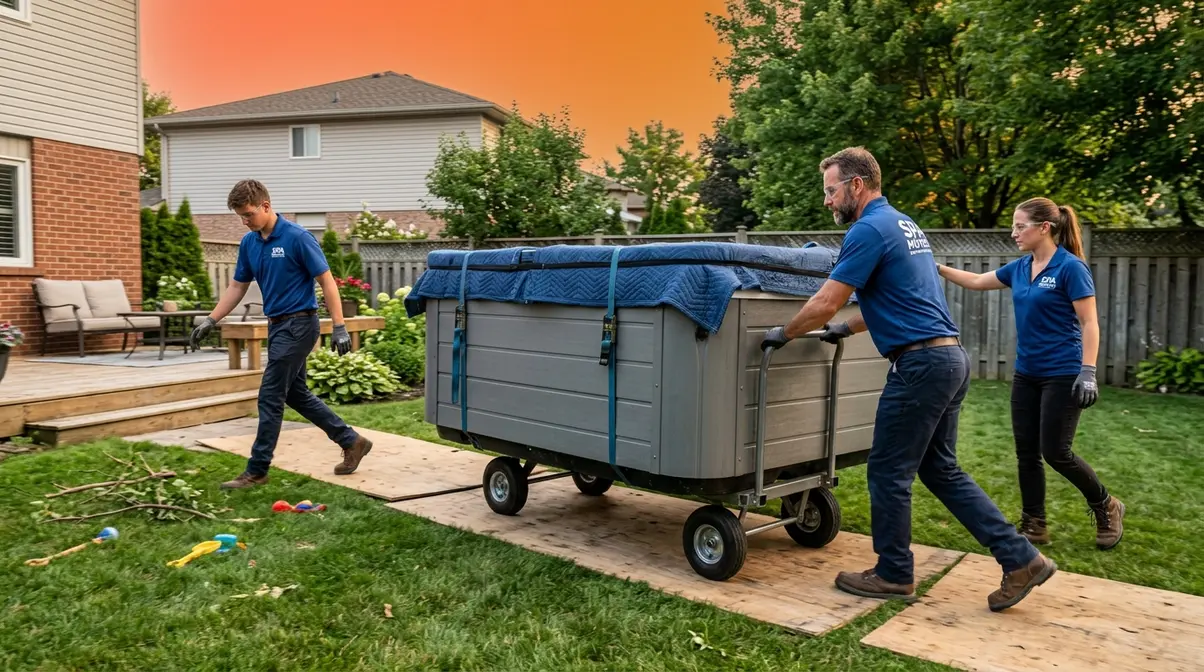
Four-wheel spa dollies handle mixed terrain — grass, concrete, gravel — and are the most versatile choice for the majority of residential hot tub moves. But they’re not the only option, and the right choice depends on your terrain, weight, and how often you’ll use the equipment. The four types below cover the full spectrum from budget-friendly DIY alternatives to professional-grade motorized solutions.
How We Evaluated: The dolly types below are assessed based on manufacturer weight ratings, wheel specifications, and real-world terrain performance reported by the DIY moving community on r/hottub, Pool Spa Forum, and verified equipment retailer data from CasterHQ and SawTrax. Prices are approximate and subject to change — always verify current pricing with retailers before purchasing.
CCOHS recommendations for manual material handling confirm that pneumatic tires significantly reduce the push/pull force required by the operator on uneven terrain — a key specification to understand before choosing your dolly type.
The four main categories of hot tub dollies, at a glance:
- Sled-style hot tub movers — low-profile frame, slides under the tub
- Four-wheel spa dollies — most versatile, best for mixed terrain
- Inflatable moving rollers — budget-friendly DIY alternative
- Motorized all-terrain dollies — professional-grade, highest cost
Sled-Style Hot Tub Movers
A sled-style hot tub mover is a low-profile frame that slides under the tub’s base, typically made from heavy-gauge steel with two or more rollers or wheels at the front. The mover sits beneath the spa and allows a team to push or pull the tub in a single direction — most sled designs work best on flat, hard surfaces like concrete driveways and garage floors.
Best for: Short moves on flat concrete or pavers — getting a spa off a truck bed and onto a pad, or repositioning a tub within a garage.
Weight capacity: Most sled movers are rated 1,000–1,500 lbs (based on CasterHQ product specifications).
Approximate price: $80–$200 for rental or purchase.
Limitation: Sled designs struggle on grass and gravel. The low-profile frame provides minimal ground clearance, and without rotating wheels, you can’t make sharp turns. For anything beyond a straight-line move on a hard surface, a four-wheel design is more practical.
Four-Wheel Spa Dollies
A four-wheel spa dolly is the most versatile category for mixed-terrain moves. Four independent casters (typically 10–14 inches in diameter) allow the tub to be steered in any direction — including through tight corners around the back of the house — without needing to lift and reposition the frame. This matters enormously when navigating around landscaping, fence gates, and uneven yard transitions.
Best for: Residential moves involving mixed terrain — concrete driveway, grass yard, gravel path — especially routes with turns and elevation changes up to about 5°.
Weight capacity: Typically 1,200–2,000 lbs depending on the model and caster grade (based on CasterHQ and Lone Star Dollies specifications).
Approximate price: $150–$500 for purchase; $50–$100/day for rental.
Terrain performance on grass: Pneumatic-tired four-wheel dollies perform significantly better on soft ground than solid-wheel models. With 12–14 inch air-filled tires, ground pressure is distributed across a wider contact patch — reducing the sinking problem that plagues standard appliance dollies.
For most DIY homeowners tackling a residential spa move, a four-wheel pneumatic dolly is the single best investment in this category.
Inflatable Moving Rollers
Inflatable moving rollers are a budget-friendly DIY alternative — essentially heavy-duty air-filled tubes (similar to large cylindrical balloons) that you place under the spa’s base to roll it across a surface. No frame, no casters, no straps. You inflate them with a standard pump, place them in a row beneath the tub, and push.
Best for: Flat, hard surfaces (concrete, hardwood) where you need a low-cost, one-time solution and don’t want to rent or buy a wheeled dolly.
Weight capacity: Quality inflatable rollers are rated for 1,000–1,500 lbs when used in sets of 3–4 (based on manufacturer specifications from major tool retailers).
Approximate price: $40–$120 for a set of 3–4 rollers.
Critical limitation: Inflatable rollers do not work on grass, gravel, or any surface with significant texture. They require a smooth, flat path. They also require constant repositioning — as the tub rolls forward, the rearmost roller must be moved to the front. On a 40-foot move, this means repositioning the rollers 15–20 times. It’s manageable on concrete, but slow. Treat this as a backup option, not a primary solution for outdoor moves.
Motorized All-Terrain Dollies
A motorized all-terrain dolly is the professional-grade option for steep or complex routes. These units use an electric motor (or sometimes gas) to drive the wheels, requiring far less human push force — critical when the path includes an incline, a gravel driveway, or a route longer than 50 feet. The SawTrax motorized hot tub dolly is one of the most referenced models in this category, with all-terrain tires and a powered drive system designed specifically for spa moving.
Best for: Long routes (50+ feet), inclines, rough terrain, or commercial/professional movers who move multiple spas per week.
Weight capacity: Motorized models are typically rated 1,500–3,000 lbs.
Approximate price: $800–$3,000+ for purchase; $150–$300/day for rental.
Honest assessment: For a one-time residential move on relatively flat terrain, a motorized dolly is almost certainly overkill. The rental cost alone often rivals hiring a professional mover for a half-day. However, if your route involves a 15° slope, a long gravel path, or you’re a contractor moving spas regularly, the motorized option pays for itself in safety and time.
Dolly Type Comparison Table
| Dolly Type | Weight Capacity | Best Terrain | Approx. Price | Pros | Cons |
|---|---|---|---|---|---|
| Sled-Style Mover | 1,000–1,500 lbs | Flat concrete/pavers | $80–$200 | Simple, low-profile | No steering; poor on soft ground |
| Four-Wheel Spa Dolly | 1,200–2,000 lbs | Mixed (concrete, grass, gravel) | $150–$500 | Steerable, versatile | Higher cost than sled |
| Inflatable Rollers | 1,000–1,500 lbs (set) | Flat, smooth hard surfaces only | $40–$120/set | Very low cost | Constant repositioning; no terrain tolerance |
| Motorized All-Terrain | 1,500–3,000 lbs | All terrain, inclines | $800–$3,000+ | Minimal push force needed | High cost; overkill for one-time moves |
Prices approximate. Always verify current pricing before purchasing.
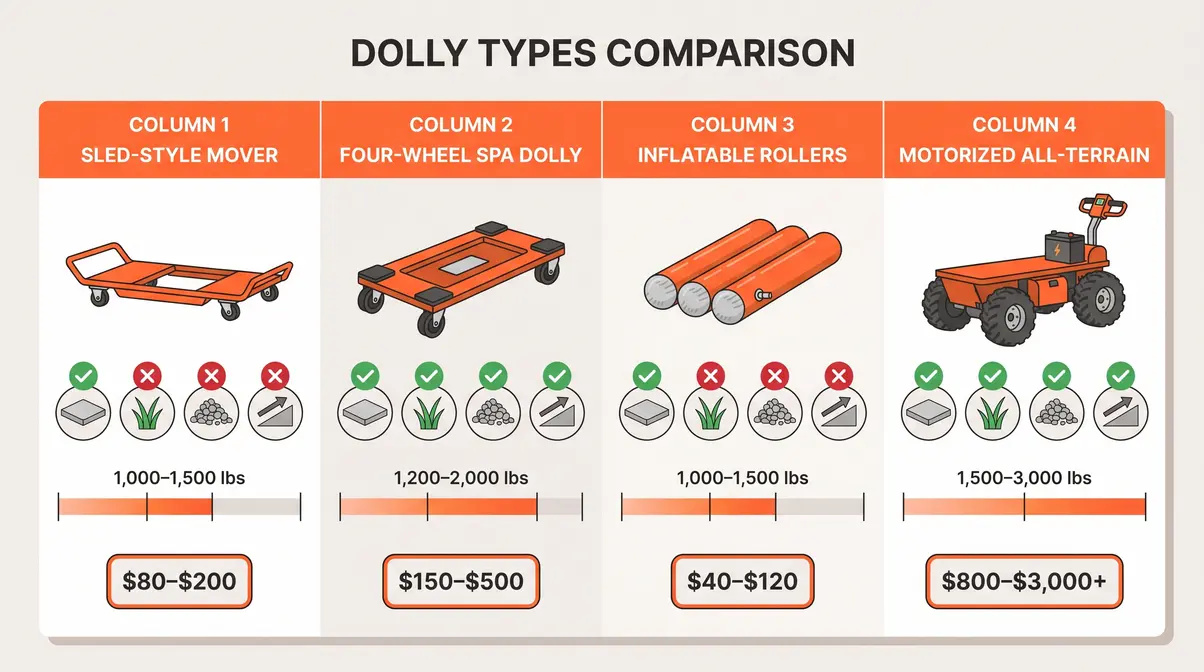
Now that you have a clear picture of the four categories, the next step is matching those types to your specific move. That’s exactly what The Dolly Selector Matrix does.
Buying Criteria & Dolly Selector Matrix
Choosing the right hot tub dolly comes down to three variables: weight capacity, terrain type, and budget. Every other specification — frame material, wheel diameter, strap type — flows from those three. This section walks through each criterion individually, then consolidates them into The Dolly Selector Matrix, a practical framework for making your buying decision in minutes rather than hours.
What Weight Capacity Do I Need?
Weight capacity is the one specification in this entire hot tub dolly buying guide where there is no acceptable compromise. Exceed it by even 10%, and you risk frame deformation, axle failure, or sudden load drop — any of which can injure a helper or damage the spa.
Choose a hot tub dolly rated at least 200 lbs above your spa’s dry weight. Most residential hot tubs weigh between 500 and 900 lbs empty; a dolly rated 1,000–1,200 lbs covers the majority of 2–6 person spas with a safe working margin.
Here’s why the margin matters. A 500 lb spa doesn’t just weigh 500 lbs during a move. Dynamic loads — tilting around a corner, hitting a bump, a helper stumbling — can create momentary force spikes 20–30% above the static weight, so the buffer is not optional. Consult your hot tub’s owner’s manual or manufacturer website for the exact dry weight before purchasing any equipment.
Hot tub weight ranges by size (approximate):
| Tub Size | Dry Weight Range | Recommended Minimum Dolly Rating |
|---|---|---|
| 2–3 person | 400–600 lbs | 800 lbs |
| 4–5 person | 600–750 lbs | 950 lbs |
| 6–7 person | 750–900 lbs | 1,100 lbs |
| 8+ person | 900–1,200 lbs | 1,400 lbs |
Weight ranges based on manufacturer specifications across major spa brands (Bullfrog, Hot Spring, Jacuzzi). Verify your model’s exact dry weight before selecting equipment.
Never rely on a dolly’s stated “maximum” rating as your operating target. Treat it as a ceiling, not a goal. Operating at 80–85% of rated capacity is the safe working range for most heavy-duty moving equipment (based on standard equipment safety margins from major manufacturers).
Tire Types: Pneumatic vs. Solid
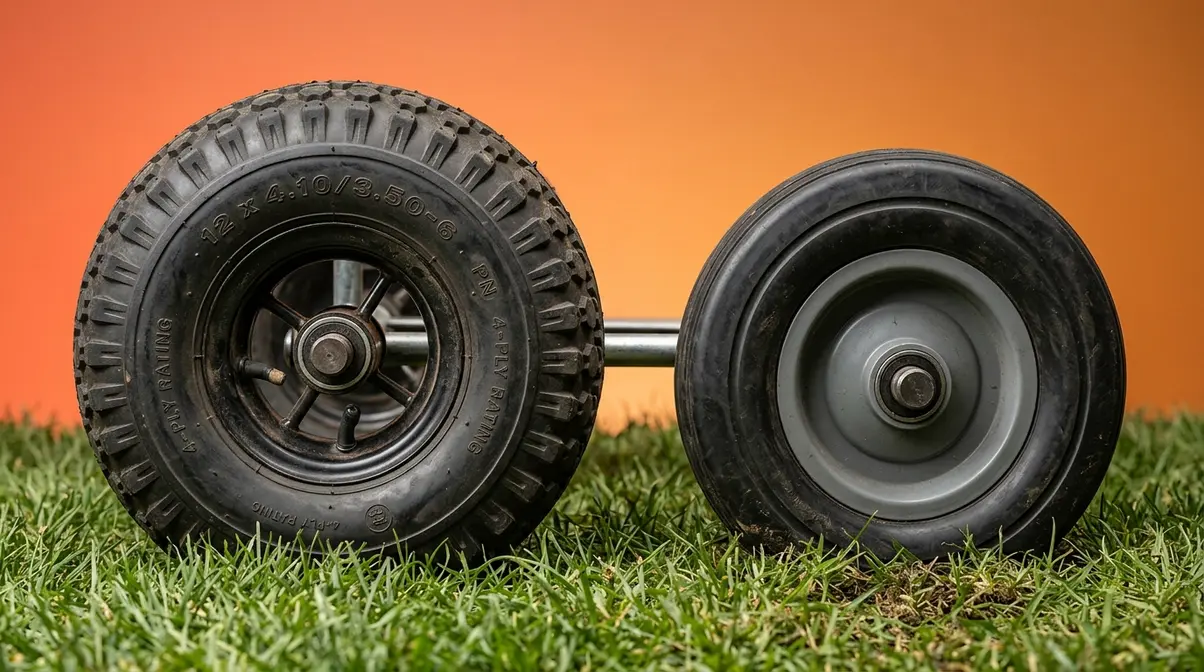
Tire type is the second most important buying criterion — and the most commonly misunderstood. Your terrain determines your tire. Get this wrong and you’ll spend the entire move fighting the equipment instead of moving the spa.
Pneumatic (air-filled) tires are the gold standard for outdoor moves on grass, gravel, or uneven ground. The air-filled chamber absorbs surface irregularities, maintains ground contact across bumps, and distributes load across a wider contact patch. As the CCOHS recommendations for manual material handling note, pneumatic tires on uneven terrain significantly reduce the push/pull force required — a meaningful advantage when you’re moving 700 lbs across a backyard. The tradeoff: pneumatic tires can go flat, particularly on rough gravel with sharp edges.
Solid rubber tires are puncture-proof and maintenance-free — ideal for flat concrete, smooth pavers, or indoor moves where the surface is predictable and level. On grass or gravel, solid tires sink rather than float, increasing push resistance and tipping risk. If your entire move is on a hard, flat surface, solid tires are perfectly adequate and more durable long-term.
Foam-filled tires are the middle ground: they look and perform like pneumatic tires on uneven terrain, but the foam core eliminates flat-tire risk. They’re slightly heavier and more expensive than pneumatic, but they’re the best choice if your route crosses rough gravel where a flat would be a serious problem. Many professional moving crews favor foam-filled tires for exactly this reason.
Quick selection guide:
| Surface Type | Recommended Tire |
|---|---|
| Flat concrete / pavers | Solid rubber |
| Grass (firm) | Pneumatic or foam-filled |
| Grass (soft / recently watered) | Foam-filled (pneumatic if budget-limited) |
| Gravel | Foam-filled |
| Mixed (concrete + grass) | Pneumatic or foam-filled |
Frame Material and Build Quality
Frame material is less glamorous than tire type, but it determines whether your dolly survives the move — especially at the weight extremes.
Heavy-gauge steel (typically 10–12 gauge) is the standard for hot-tub-rated dollies. At 1,000–2,000 lb capacity, you need a frame that won’t flex or weld-crack under dynamic loading. Inspect welds at the corner joints and axle mounts — these are the highest-stress points on any dolly frame. Clean, full-penetration welds indicate quality construction; thin, spatter-heavy welds are a red flag.
Powder-coated steel is preferable to bare steel for any dolly that will be used outdoors or stored in a garage. The coating prevents rust from compromising structural integrity over time.
Aluminum frames appear in some lighter-duty dollies but are generally not recommended for hot tub weights above 800 lbs unless the manufacturer explicitly rates the model for that load. Aluminum is lighter but has lower fatigue resistance under repeated heavy loading.
What to check before buying: Look for the manufacturer’s rated capacity (stamped or labeled on the frame, not just in the listing title), weld quality in product photos, and whether the frame has reinforced corner gussets. Based on manufacturer specifications from CasterHQ and SawTrax, the best hot tub dollies use 10-gauge tubular steel frames with gusseted corners and rated axles — not box steel with sheet-metal welds.
The Dolly Selector Matrix
The Dolly Selector Matrix is a three-variable framework — weight capacity × terrain type × budget — that eliminates the guesswork from your buying decision. Find your hot tub’s weight range in the left column, cross-reference your terrain, and the matrix gives you a specific dolly category recommendation.
| Hot Tub Weight | Terrain | Budget | Recommended Dolly Type |
|---|---|---|---|
| Under 600 lbs | Flat concrete/pavers | Under $150 | Inflatable rollers (set of 4) or sled mover |
| Under 600 lbs | Flat concrete/pavers | $150–$400 | Four-wheel spa dolly, solid or pneumatic tires |
| Under 600 lbs | Grass or gravel | Any | Four-wheel spa dolly, pneumatic or foam-filled |
| 600–850 lbs | Flat concrete/pavers | Under $200 | Sled mover (rated 1,500 lbs+) |
| 600–850 lbs | Flat concrete/pavers | $200–$500 | Four-wheel spa dolly, solid tires |
| 600–850 lbs | Grass or gravel | Any | Four-wheel spa dolly, pneumatic or foam-filled (1,200 lb+ rating) |
| 850–1,200 lbs | Any hard surface | Under $400 | Heavy-duty sled mover (rated 2,000 lbs+) |
| 850–1,200 lbs | Grass, gravel, mixed | $400–$800 | Heavy-duty four-wheel dolly, foam-filled tires |
| 850–1,200 lbs | Incline or 50+ ft route | $800+ | Motorized all-terrain dolly (rent if one-time) |
| Any weight | Stairs or slope >10° | — | ⚠️ Hire a professional mover |
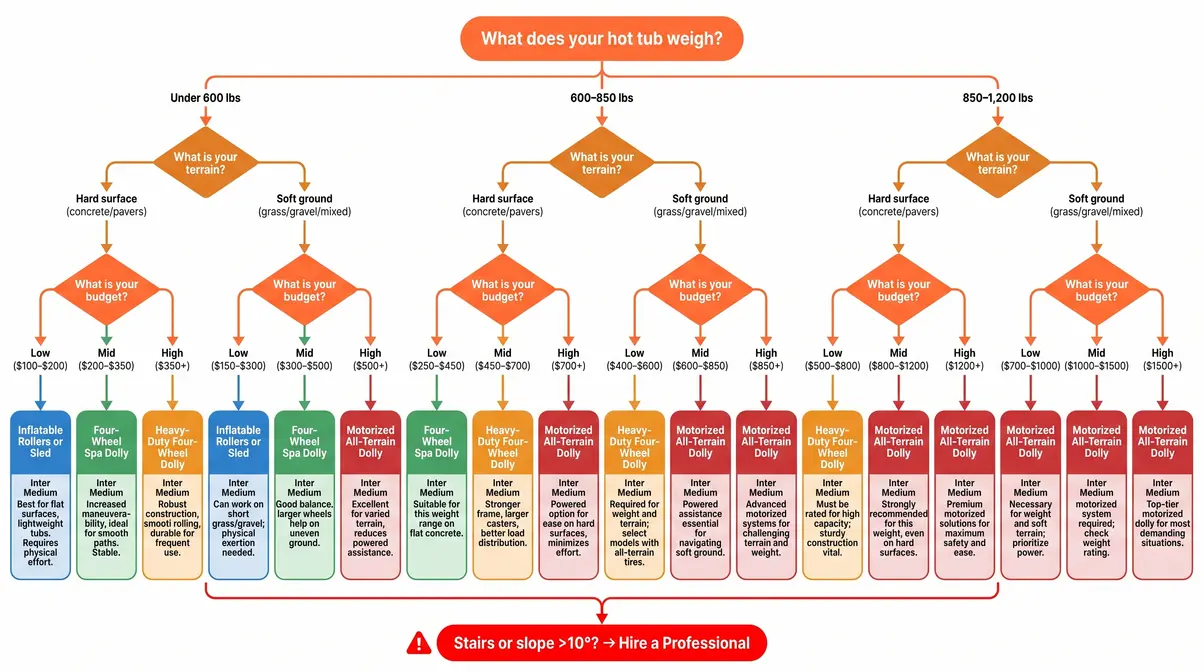
How to use this matrix: Weigh your hot tub (check the owner’s manual for dry weight, or find the model number and look it up on the manufacturer’s site). Identify your terrain — the worst surface you’ll cross, not the best. Set a realistic budget that includes any straps, plywood sheets, or rental fees. The matrix intersection gives you your category. Then shop within that category for the best-rated model at your price point.
How to Move a Hot Tub with a Dolly
Moving a hot tub safely requires more than just the right dolly. It requires preparation, the right team size, and a clear path before the first wheel turns. This section provides an essential overview; for the complete step-by-step walkthrough with diagrams, see our full hot tub moving guide.
⚠️ Safety Reminder: Never attempt to move a hot tub alone. Always recruit at least 2–3 helpers. Two Men and a Truck professional moving guidelines recommend a minimum of 4 people for spas over 600 lbs and advise against DIY moves on any route with stairs or a slope exceeding 10°.
The essential pre-move checklist:
- Drain the tub completely — water adds 800–1,200 lbs on top of the dry weight. Every gallon of water weighs 8.3 lbs; a standard spa holds 300–500 gallons.
- Disconnect all utilities — electricity, gas, and water lines. Never move a plugged-in hot tub.
- Remove the cover and any accessories — reduce the load and eliminate items that can shift during the move.
- Lay plywood sheets on soft ground — This Old House advises placing plywood sheets along the route to create a stable rolling surface over grass and gravel, reducing ground sinkage and improving directional control.
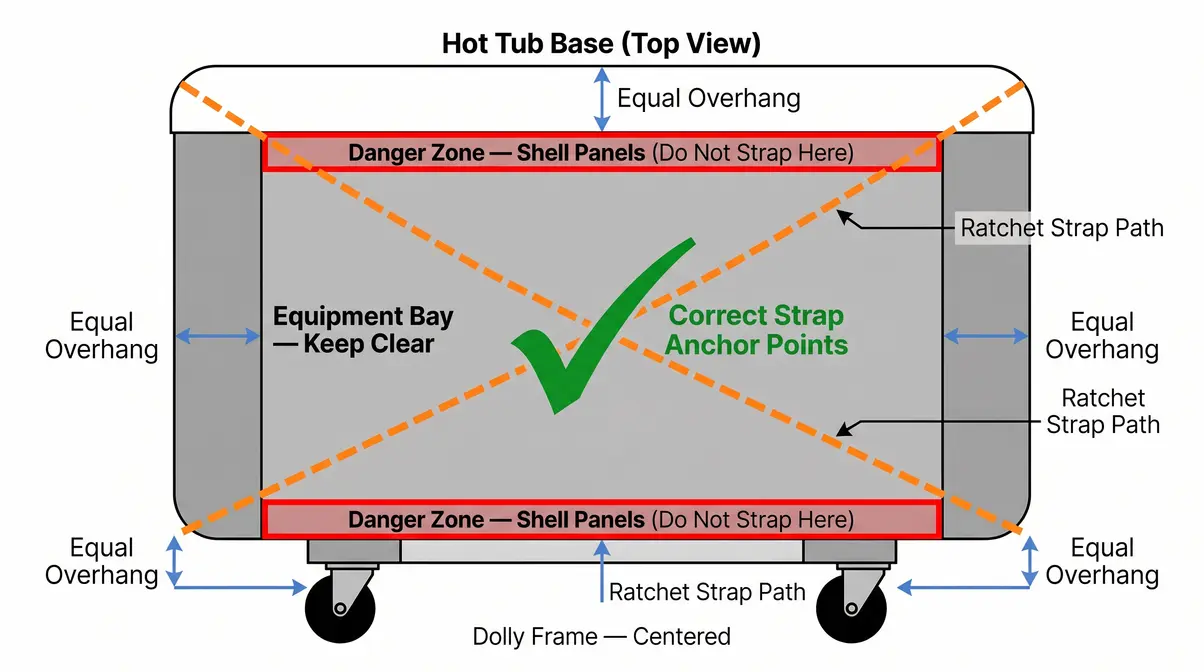
- Position the dolly correctly — center the dolly under the tub’s base. Off-center placement creates uneven load distribution and dramatically increases tip risk.
- Use ratchet straps — secure the tub to the dolly frame before moving. Straps should cross the tub’s base, not the shell or cabinet panels.
- Move slowly and communicate — designate one person to call direction changes. On soft ground, take 12-inch steps. Never rush.
Buying a Used Hot Tub: What to Check
A used hot tub is one of the best-value purchases in backyard leisure — but only if you know what you’re buying before you agree to move it. Committing to a move before inspecting the tub is one of the most expensive mistakes in the DIY spa community. You can end up hauling a 700 lb paperweight. If you are unsure about the value, check our guide on how much a second-hand hot tub is worth before committing to the move.
The Pre-Purchase Inspection Checklist
Based on community-reported data from r/hottub and Pool Spa Forum, combined with guidance from professional spa technicians, these are the non-negotiable inspection points before any used hot tub purchase:
- Shell and cabinet:
- Inspect the acrylic shell for cracks, crazing (spider-web surface fractures), or delamination — these signal structural weakness that worsens with use
- Check cabinet panels for rot, warping, or missing sections — damaged panels often indicate water intrusion and potential equipment damage beneath
- Jets and plumbing:
- Ask the seller to run the tub with water before you visit — jets that don’t fire, air pockets in the lines, or pump noise indicate plumbing problems
- Look for water stains or mineral deposits around fittings, which signal slow leaks
- Equipment bay:
- Open the equipment access panel and inspect the pump, heater, and control pack — look for corrosion on electrical connections, burned components, or water staining on the pump housing
- A pump replacement runs $300–$600; a heater element runs $100–$300. Factor these into your offer price if you spot issues.
- Electrical:
- Verify the spa has a GFCI-protected 240V circuit at the installation site and that the tub’s wiring matches your home’s panel capacity — mismatched electrical is a common hidden cost
Hidden Costs and Red Flags to Watch For
The purchase price of a used hot tub is rarely the total cost. Before you move it, budget for these common hidden expenses:
| Item | Typical Cost | Red Flag Threshold |
|---|---|---|
| Pump replacement | $300–$600 | Any pump noise or no-flow condition |
| Heater element | $100–$300 | Tub that won’t heat above ambient temp |
| Control pack / circuit board | $200–$600 | Error codes that won’t clear |
| Shell crack repair | $150–$500 | Any crack deeper than surface crazing |
| Re-plumbing fittings | $50–$200 | Multiple leak points visible |
| New cover | $200–$500 | Waterlogged, cracked, or torn cover |
Hard pass scenarios: Walk away from any used tub where the seller won’t let you run it with water before purchase, where the shell shows through-cracks (not just surface crazing), or where the equipment bay shows signs of flooding. These are not negotiating points — they’re disqualifiers.
Community Insights from Real Buyers
Based on community-reported data from r/hottub and Pool Spa Forum, the most consistent advice from experienced used-tub buyers comes down to three themes:
“Test it wet, not dry.” Multiple forum members report purchasing tubs that looked fine on inspection but revealed leaks only after filling. A 30-minute wet test before purchase is non-negotiable.
“Price the repairs before you price the tub.” The r/hottub community consensus is that a used tub priced under $500 with known pump issues is often worth less than zero once you factor in parts, labor, and the move itself.
“The move cost is part of the purchase cost.” Whether you’re renting a dolly ($50–$100/day), buying straps and plywood ($40–$80), or hiring helpers, the logistics of a used tub purchase add $100–$300 to the real cost. Budget for it before you commit.
Essential Hot Tub Accessories: Covers and Beyond
Once your spa is in place, the right accessories determine how much you’ll actually use it — and how long it lasts. This section covers the essentials; for a complete breakdown of every accessory category, see our hot tub buying and accessories guide. For more details on materials and features, check our guide on choosing the right hot tub cover.
The non-negotiable accessories:
Hot tub cover: A well-fitted cover is the single highest-ROI accessory for any spa owner. It prevents heat loss (accounting for 60–70% of a tub’s energy consumption when uncovered), keeps debris out, and provides a safety barrier for children and pets. Covers are rated by their insulation R-value — look for R-12 or higher for cold climates. Budget $200–$500 for a quality replacement cover; avoid the cheapest options, which tend to waterlog within 18 months.
Cover lifter: A mechanical cover lifter reduces the daily friction of uncovering the spa from a two-person chore to a 10-second solo task. For a cover that weighs 40–80 lbs when dry (and significantly more when waterlogged), a lifter is a practical necessity, not a luxury. Hydraulic and pivot-arm models run $100–$300.
Spa steps: Stable, slip-resistant steps are both a safety and convenience item — particularly important for tubs recessed into a deck or sitting at cabinet height. Look for steps with non-slip tread surfaces and a load rating that exceeds the heaviest person who will use the tub.
Chemical starter kit: New spa owners consistently underestimate chemical management costs. A quality starter kit ($50–$100) covering pH balancer, sanitizer (bromine or chlorine), alkalinity increaser, and a test strip supply prevents the most common water quality problems in the first 90 days.
Thermal floating blanket: A secondary insulating layer that sits on the water surface under the hard cover. At $30–$60, it’s one of the highest-ROI accessories for cold-climate spa owners — reducing surface heat loss by an additional 15–25%.
Safety Warnings and When to Hire a Professional
⚠️ YMYL Safety Disclaimer: Moving a 400–1,000 lb hot tub poses a genuine risk of severe back injury, crush injury, and equipment failure. The information in this section is based on OSHA material handling guidelines and professional moving industry standards. If you have any doubt about your ability to complete this move safely, hire a licensed professional mover with spa moving experience. No money saved is worth a serious injury.
5 Common DIY Hot Tub Moving Mistakes
Based on OSHA guidelines for material handling and community-reported data from r/hottub and Pool Spa Forum, these five mistakes account for the vast majority of DIY hot tub moving injuries and equipment failures:
1. Moving with fewer than 3 helpers. A 700 lb spa on a dolly still requires 2–3 people to push, steer, and spot. One person handles the dolly; at least one person guides from the opposite side to prevent tipping; a third person manages obstacles and calls direction changes. Solo or two-person moves on heavy spas are a leading cause of crush injuries in the DIY community.
2. Skipping the drain step. Water weighs 8.3 lbs per gallon. A spa holding 400 gallons adds 3,320 lbs to the load — more than the dolly is rated for. Always drain completely and let the tub sit for 30 minutes to allow water to exit the plumbing lines before moving.
3. Using a dolly rated below the tub’s weight. This is the single most common equipment failure mode. Always confirm the dolly’s rated capacity exceeds the spa’s dry weight by at least 200 lbs before the move begins.
4. Attempting to move on a slope without additional equipment. A loaded spa dolly on a 10° slope can generate enough momentum to be uncontrollable. Slopes above 5° require additional restraint systems (rope guides, wheel chocks) and ideally a motorized dolly. Slopes above 10° should be handled by professionals.
5. Rushing through corners. Tight turns — particularly around fence posts, deck corners, or gate frames — are where most tip events occur. Slow down to a near-stop before any directional change. On a four-wheel dolly, lock the rear casters and pivot the front casters through the turn before re-engaging all four wheels.
When the Right Call Is to Hire a Pro
Not every hot tub move is a DIY job, and recognizing the line before you start is a sign of good judgment, not weakness. Professional spa movers at companies like Two Men and a Truck have the equipment, insurance, and experience to handle situations that put DIY movers at serious risk.
Hire a professional if any of these apply:
- Your route includes any stairs (even a single step up or down)
- The slope along any part of your path exceeds 10°
- Your hot tub weighs over 900 lbs and you cannot confirm your dolly rating
- You cannot recruit at least 2–3 helpers with the physical capacity for this work
- Your path requires navigating through a gate or doorway with less than 6 inches of clearance on either side
- The ground is saturated (after heavy rain) and you cannot lay plywood along the full route
Professional spa movers typically charge $300–$600 for a standard residential move within 50 feet. That cost is a fraction of an emergency room visit, a cracked spa shell, or a landscaping repair bill. For complex moves, it’s the right call.
Frequently Asked Questions
What type of tires are best for moving a hot tub over grass?
Pneumatic (air-filled) or foam-filled tires are the best choice for moving a hot tub over grass. Solid rubber tires sink into soft ground under heavy load, dramatically increasing push resistance and tipping risk. Pneumatic tires maintain a wider ground contact patch that distributes weight and allows the dolly to roll rather than dig in. Foam-filled tires offer the same terrain performance as pneumatic with no flat-tire risk — the preferred choice for gravel or rough terrain.
How do I safely load a hot tub onto a dolly?
Drain the tub completely first, then center the dolly under the spa’s base before lifting. Off-center placement creates uneven load distribution and is the primary cause of tip events during loading. Use a pry bar or lever boards at the tub’s corners to raise it just enough to slide the dolly frame underneath — never tilt the spa more than 15° during placement. Once the dolly is positioned, secure the tub with ratchet straps crossing the base (not the shell panels). Confirm the strap tension is even on both sides before moving. Always have at least one helper stabilizing the tub during loading.
How heavy is a 6-person hot tub?
A 6-person hot tub typically weighs 750–900 lbs empty (dry weight) according to industry weight benchmarks. Filled with water and occupied, the same tub can exceed 3,000–4,000 lbs — which is why all moving calculations use dry weight only. Specific models vary; always verify your tub’s exact dry weight on the manufacturer’s spec sheet or owner’s manual before selecting moving equipment. For a 6-person spa at 800 lbs dry, the Dolly Selector Matrix recommends a four-wheel spa dolly with pneumatic or foam-filled tires rated at a minimum of 1,100 lbs.
What is the most trouble-free hot tub to own?
Hot tubs from brands with robust dealer networks and in-stock parts — including Hot Spring, Bullfrog, and Jacuzzi — tend to generate the fewest long-term maintenance headaches. The most trouble-free hot tub for any individual owner, however, is the one that matches their maintenance commitment level: saltwater-compatible systems require less chemical management than traditional chlorine/bromine setups, and well-insulated full-foam models retain heat more efficiently in cold climates. For a deeper comparison of brands and what to look for when buying new or used, see our complete hot tub buying guide.
How much does it cost to rent a hot tub dolly?
Renting a purpose-built hot tub dolly typically costs between $50 and $100 per day based on major equipment rental rates. This is a highly cost-effective alternative to purchasing a dolly for a one-time residential move. When renting, always verify that the specific model provided meets the weight capacity and tire type requirements for your unique terrain.
Can you move a hot tub on its side?
Yes, many hot tubs can be moved on their side to fit through narrow gates or pathways. However, you must consult your manufacturer’s guidelines, as some models have internal components that can be damaged if tilted incorrectly. If you must move the tub on its side, ensure you use a specialized spa sled or dolly designed for lateral transport, and always pad the resting edge to prevent shell damage.
Choosing the Right Dolly for Your Move
This hot tub dolly buying guide brings structure to what is otherwise an overwhelming set of specifications: weight capacity, tire type, frame material, and terrain suitability. For most DIY homeowners, the right hot tub dolly is a four-wheel spa dolly with pneumatic or foam-filled tires, rated at least 200 lbs above the spa’s dry weight. That single decision — made correctly before the move begins — is what separates a successful 2-hour Saturday job from a dangerous, equipment-destroying ordeal. Based on community-reported data from r/hottub and professional mover guidelines, the most preventable move failures all trace back to one root cause: the wrong equipment for the terrain and weight combination. The right dolly, matched to your specific move using The Dolly Selector Matrix, eliminates that risk before you ever touch the tub.
Run your hot tub’s dry weight, your terrain type, and your budget through the matrix, and the answer is a specific dolly category — not a vague “it depends.” That’s the framework this guide is built around, and it’s the reason you don’t need to spend three hours comparing product listings to make a confident decision.
Your next step is straightforward: find your hot tub’s dry weight in the owner’s manual or on the manufacturer’s site, identify the worst surface on your route, and use the Dolly Selector Matrix table in Section 3 to confirm your category. Then shop within that category from a reputable retailer — CasterHQ’s heavy-duty hot tub dolly line and SawTrax are strong starting points for comparing specifications and current pricing. If your move involves stairs, a steep slope, or any condition in the “hire a professional” list above, make that call before you buy equipment. A well-planned move is a safe move.

Dave King
Hot tub tester and writer at One Hot Tub.