What’s in this guide
“Woke up the next morning and every part of my body that was submerged in the water in the hot tub was covered by the rash.”
— Reddit user, r/tifu
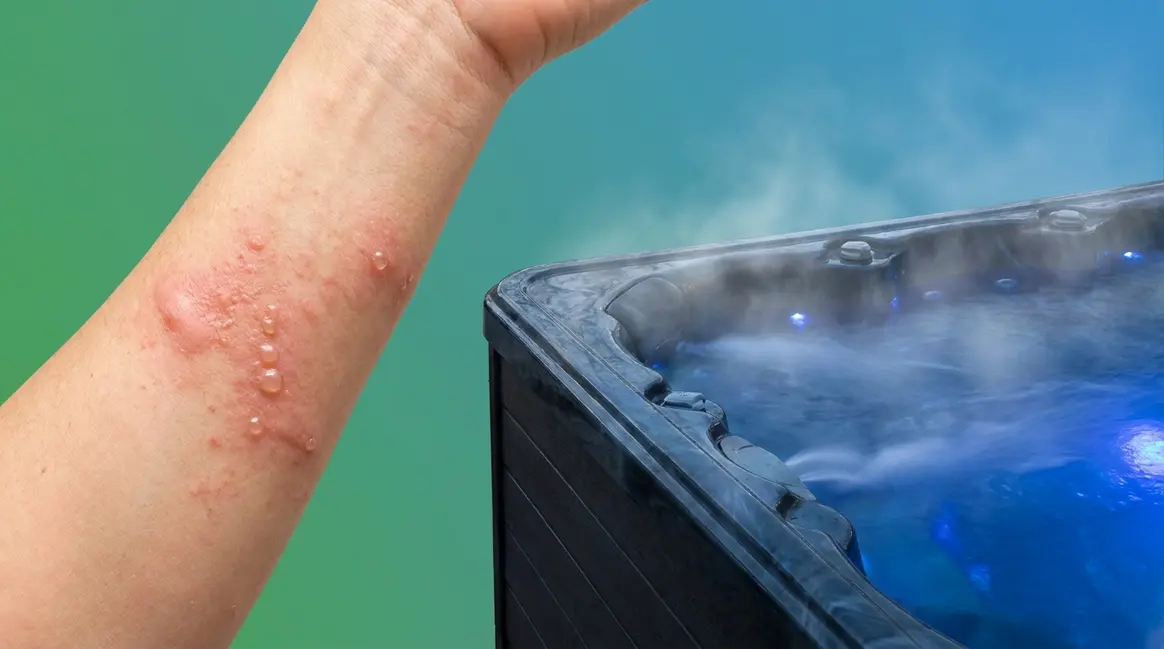
What felt like soothing relief turned into a full-body nightmare overnight. If you’re wondering, is a hot tub with poison ivy rash safe, the short answer is no — and the reason is hiding inside your own skin chemistry.
The culprit is urushiol (the oily resin found in poison ivy that triggers the allergic reaction). Once urushiol touches your skin, your immune system releases histamine (a chemical your body produces during allergic reactions that causes itching, redness, and swelling). Hot water doesn’t calm that process — it accelerates it. Understanding this mechanism is the difference between a rash that heals in a week and one that worsens for days.
In this guide, you’ll learn exactly why hot water makes a poison ivy rash worse, whether the rash can spread to others in your hot tub, and what actually provides fast, safe relief. We’ll cover the science, a decontamination protocol for hot tub owners, and the best dermatologist-recommended treatments available right now.
Is a hot tub with poison ivy rash safe? Absolutely not — hot water triggers “The Heat-Itch Rebound Effect,” causing your body to release more histamine and worsening itching within minutes of stepping out.
- Avoid hot tubs entirely until the rash has fully healed — heat inflames the rash and delays healing
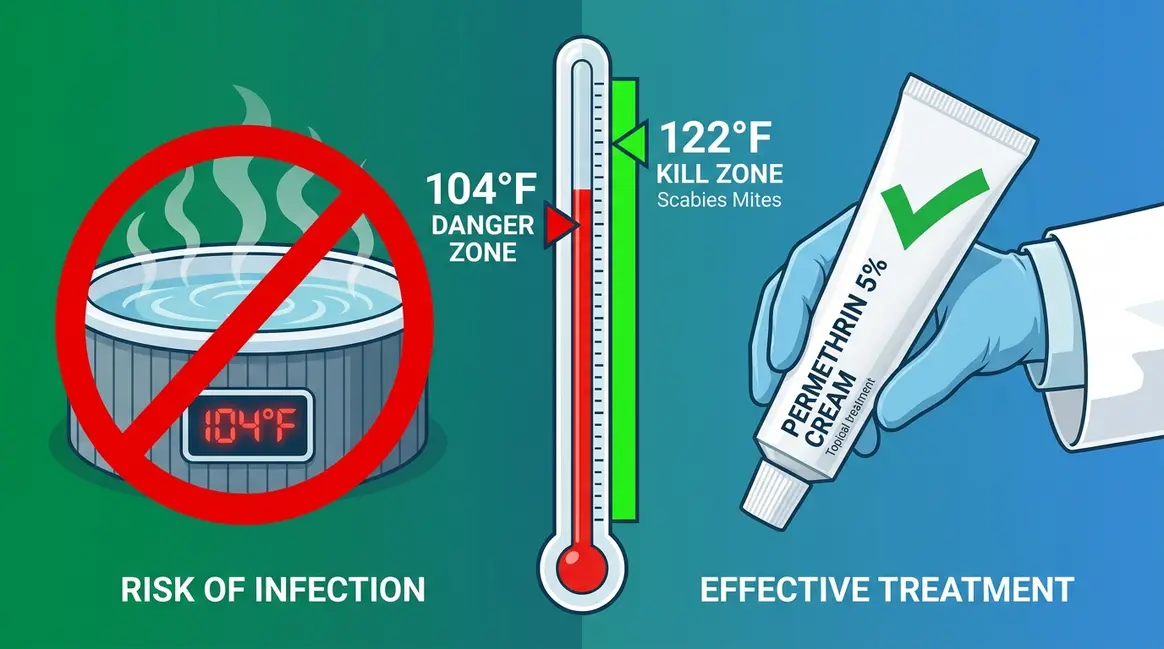
- The rash itself won’t spread to others in the water, but the oil (urushiol) can linger on surfaces for up to 5 years (CDC)
- Chlorine does not neutralize urushiol — the oil can contaminate your hot tub’s filter and recontaminate you later
- Best relief options: cool compresses, oatmeal baths, and calamine lotion — all recommended by dermatologists (AAD)
- See a doctor immediately if the rash covers large areas of your body, affects your face, or causes breathing difficulty
⚠️ Medical Disclaimer: This article is for informational purposes only and is not a substitute for professional medical advice, diagnosis, or treatment. If your poison ivy rash is severe, widespread, affects your face or airway, or does not improve within 1–2 weeks, consult a dermatologist or visit an urgent care clinic immediately.
Is a Hot Tub Safe With a Poison Ivy Rash?
To answer the question: is a hot tub with poison ivy rash safe? No — using a hot tub with an active poison ivy rash is not safe. The FDA advises against hot baths or showers for anyone with a poison ivy rash, recommending short, lukewarm baths instead (FDA, 2026). Hot tub water typically sits between 100–104°F — well above the temperature threshold that opens skin pores, accelerates histamine release, and intensifies inflammation. Getting in risks turning a manageable rash into a days-long ordeal of heightened discomfort.
Medical experts at the Cleveland Clinic confirm that hot water irritates the skin and intensifies itching associated with poison ivy (Cleveland Clinic, 2026). Before you consider stepping into your hot tub for relief, it’s worth understanding the exact mechanism at work — because the science explains why something that feels good in the moment can worsen irritation for days afterward.
The Heat-Itch Rebound Effect
Here is what happens inside your skin when you lower yourself into a hot tub with an active poison ivy rash.
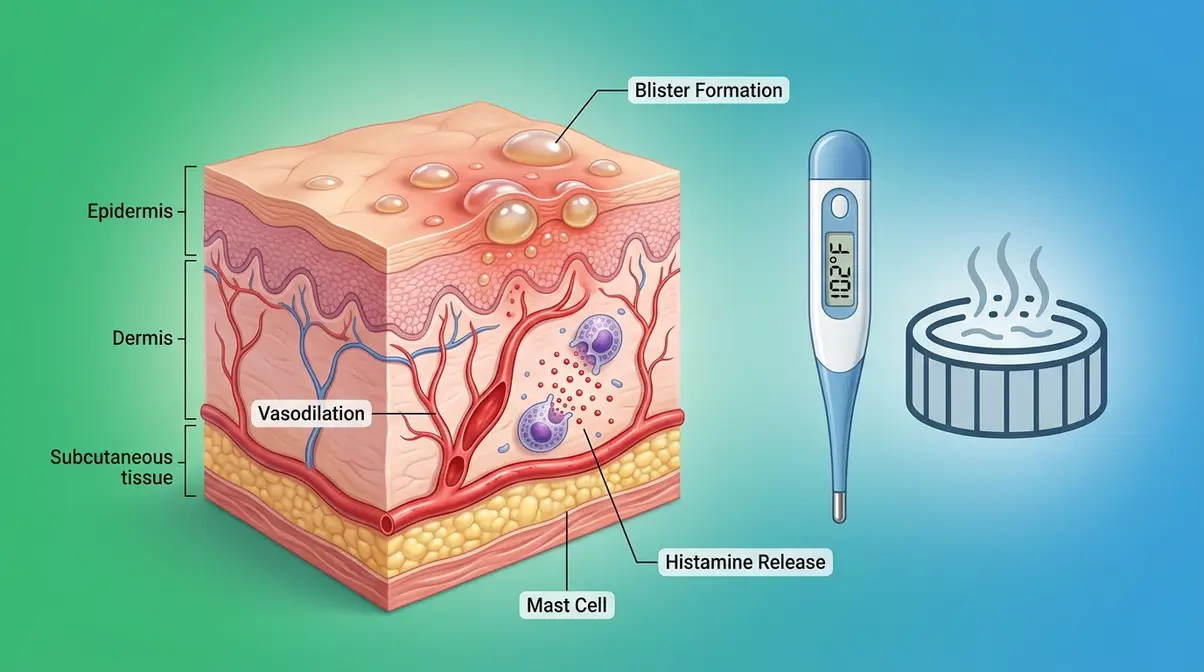
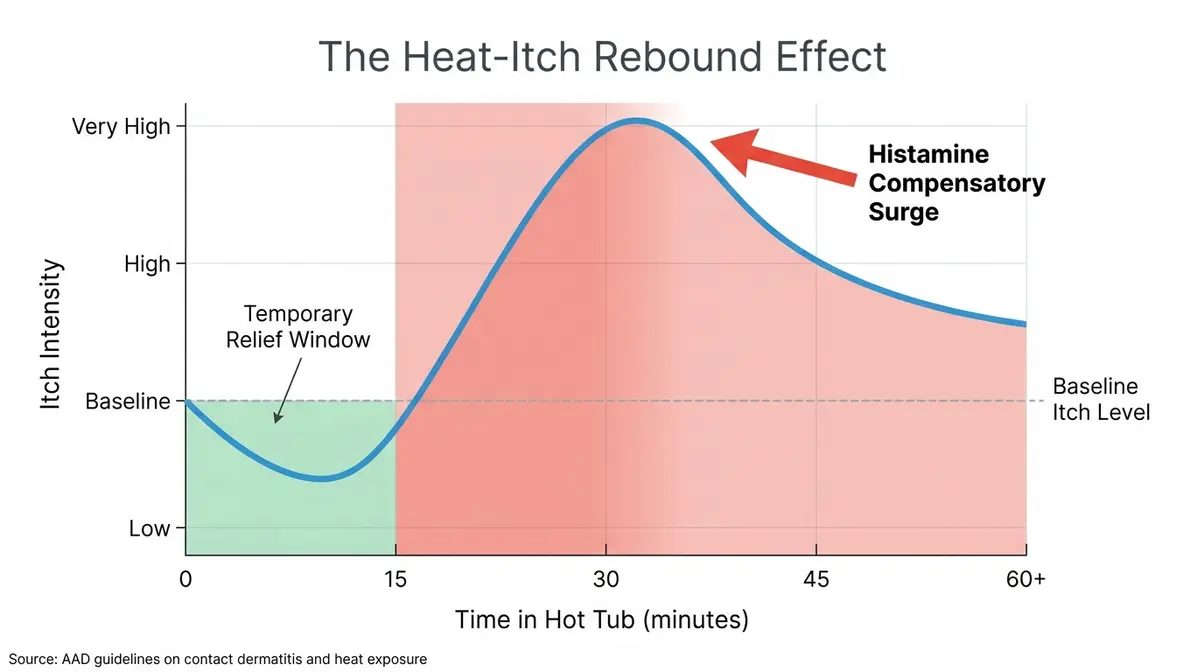
Your immune system is already in overdrive. Urushiol has triggered a type IV hypersensitivity reaction (a delayed allergic response driven by immune cells rather than antibodies). Your skin is releasing histamine — the chemical responsible for the maddening itch, redness, and swelling you’re experiencing. Hot water at 100–104°F does something counterintuitive: it causes a rapid, temporary depletion of histamine at the skin’s surface. For roughly 5–15 minutes, the itch fades. It feels like relief.
That feeling is your body tricking you.
This is “The Heat-Itch Rebound Effect” — the counterintuitive cycle where hot water briefly depletes your skin’s histamine reserves, producing a short window of relief, then triggers a compensatory surge of histamine that intensifies itching and inflammation for hours afterward. Dermatologists describe this rebound as significantly worse than the baseline itch you started with. Your body, sensing that histamine levels dropped suddenly, overcorrects.
Think of it like pressing down a spring. The harder you press (the hotter the water, the longer you soak), the stronger the rebound when you let go.
Why this matters for you: That moment of relief in the hot tub is not healing. It is your immune system depleting its local defenses and preparing a larger counterattack. Every minute of soaking extends the duration and intensity of the rebound that follows.
Medical research from the American Academy of Dermatology (AAD) supports the principle that heat exposure worsens inflammatory skin conditions by increasing blood flow and histamine activity at the affected site (AAD, 2026). The hot tub environment — with its sustained high temperature and jet-driven water circulation — creates the most aggressive version of this effect.
The Temporary Relief Trap
Understanding why hot water feels good is just as important as knowing why it’s harmful. This is where many people — understandably — make the mistake of reaching for the hot tub.
Hot water at high temperatures activates TRPV1 receptors (the same nerve receptors your body uses to process pain and heat). When these receptors fire intensely, they temporarily override the itch signal being sent by histamine. Your nervous system can only process so many signals at once. The itch doesn’t go away — it gets drowned out for a few minutes by an even stronger sensation.
This is the same reason people with eczema, hives, and other itchy skin conditions report that a hot shower provides momentary relief. The dermatology community refers to this as “itch substitution” — replacing one sensory signal with a more intense one. It is not treatment. It is distraction.
The Heat-Itch Rebound Effect then kicks in once the water cools or you step out. Your TRPV1 receptors return to baseline. Your histamine surge begins. Many users report that the rebound itch is far more intense and covers a wider area than the original discomfort — exactly as described in the Reddit account that opened this article.
The practical takeaway: The better the hot tub feels on your rash, the worse the rebound is likely to be. Temporary relief is the trap, not the cure.
Hot Tub Temperatures & Skin
Standard hot tubs operate between 100–104°F (38–40°C). The Consumer Product Safety Commission recommends a maximum of 104°F for healthy adults. For skin that is already inflamed, blistered, and compromised by a poison ivy rash, these temperatures create a specific cascade of problems beyond just histamine rebound.
Vasodilation: Heat causes blood vessels near the skin’s surface to dilate (widen). In healthy skin, this is normal. In skin already inflamed by urushiol, vasodilation increases blood flow to the already-irritated area, delivering more immune cells and amplifying the inflammatory response. The rash becomes redder, more swollen, and more painful.
Skin barrier breakdown: Hot water strips the skin’s natural lipid barrier (the protective layer of oils that keeps moisture in and irritants out). A compromised rash already has a weakened skin barrier. Extended hot water exposure makes this worse, allowing urushiol residue — if any remains — deeper access to skin tissue.
Blister rupture risk: Poison ivy rashes frequently produce fluid-filled blisters. Hot water and jet pressure from a hot tub can rupture these blisters prematurely. Ruptured blisters expose raw skin, significantly increasing the risk of secondary bacterial infection.
The UVA Health guidance on poison ivy consistently recommends cool or lukewarm water for rash management — not hot (UVA Health, 2026). The specific temperature range of a hot tub makes it one of the worst environments possible for an active rash.
Hot water provides only temporary relief, but the harm it causes — extended inflammation, weakened skin barrier, blister rupture — can delay healing by days. Now that you understand why heat is the problem, let’s address a separate concern: can the rash actually spread to other people who share the hot tub?
Can Poison Ivy Spread in a Hot Tub?
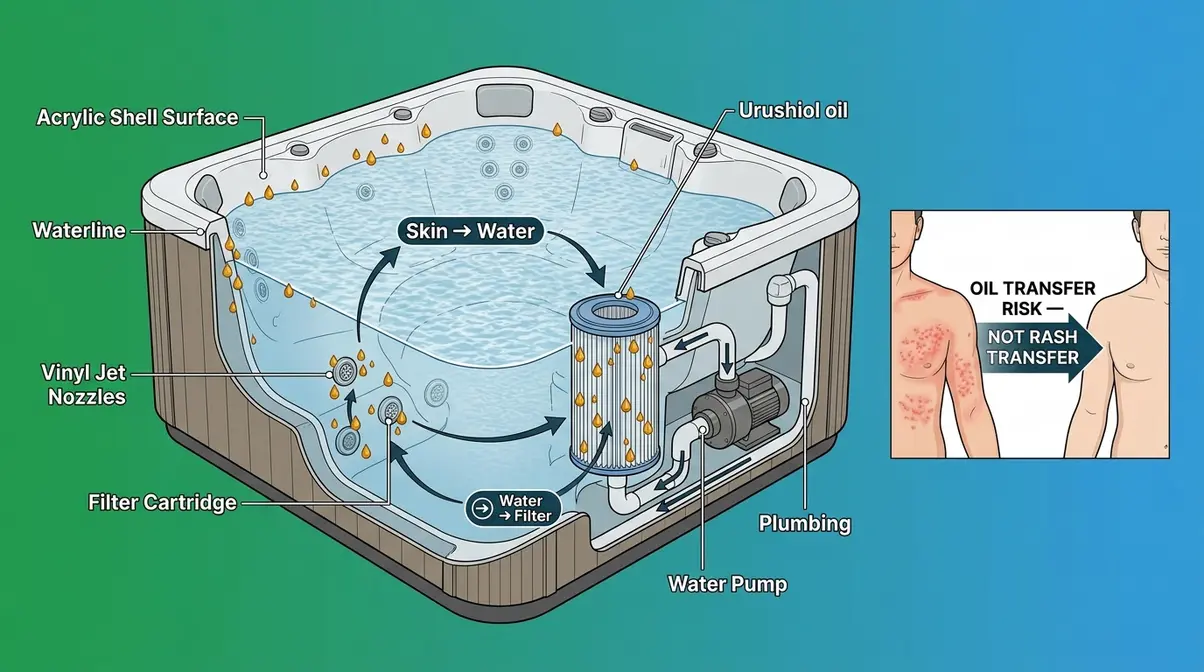
The rash itself cannot spread from person to person in a hot tub. However, urushiol — the oil that caused the rash — can. This distinction is critical for anyone who shares a hot tub with others, and it’s a nuance that most sources fail to explain clearly. While you might wonder if keeping a hot tub with poison ivy rash safe is possible through chemical means, chlorine alone isn’t enough.
Rash vs. Oil: Urushiol Explained
Your poison ivy rash is not contagious. It is an allergic reaction happening inside your own immune system. The fluid in your blisters does not contain urushiol. It contains lymphatic fluid — a byproduct of your immune response. Someone who touches your blisters or shares water with you will not develop a rash from that contact alone.
What can spread is urushiol itself.
Urushiol (the oily resin found in poison ivy, oak, and sumac) is one of the most potent contact allergens known to dermatology. According to the CDC, urushiol can remain active and capable of causing a reaction for up to 5 years on surfaces, clothing, and tools — even after the plant material has dried and decomposed (CDC, 2026). This means:
- If you entered your hot tub before washing off the urushiol, residue may have transferred to the water, the shell, the seats, and the filter
- Anyone who uses that hot tub afterward could be exposed to active urushiol
- You yourself could be recontaminated during a subsequent soak
Why this matters for you: The rash won’t spread. The oil will. If there is any chance you entered your hot tub before thoroughly washing with soap and water, treat the tub as potentially contaminated.
Does Chlorine Kill Urushiol?
This is one of the most common misconceptions among hot tub owners. The logic seems reasonable: hot tub water contains chlorine, chlorine kills bacteria and neutralizes many contaminants, so surely it would neutralize urushiol too.
It does not.
Urushiol is a lipophilic resin (an oil-based compound that repels water). Chlorine is a water-soluble oxidizing agent. These two substances do not interact effectively in the diluted concentrations found in a residential hot tub. The CDC’s guidance on urushiol confirms that standard water treatment does not neutralize the oil (CDC, 2026). Decontamination of urushiol requires a degreasing agent — specifically, a detergent or soap that can break down oil-based compounds.
Furthermore, urushiol does not simply float in the water column where chlorine can act on it. It adheres to surfaces. In a hot tub, this means the resin can bind to:
- The acrylic or fiberglass shell
- Vinyl headrests and jets
- Most critically, the filter cartridge — which traps oils and particulates from the water
A contaminated filter is especially problematic. Every time you run the filtration system, water passes through a filter that may be holding active urushiol. The oil can then be redistributed back into the water. Routine chlorine shock treatments will not resolve this. Physical filter replacement or a dedicated degreasing protocol is required.
Hot Tub Decontamination Protocol
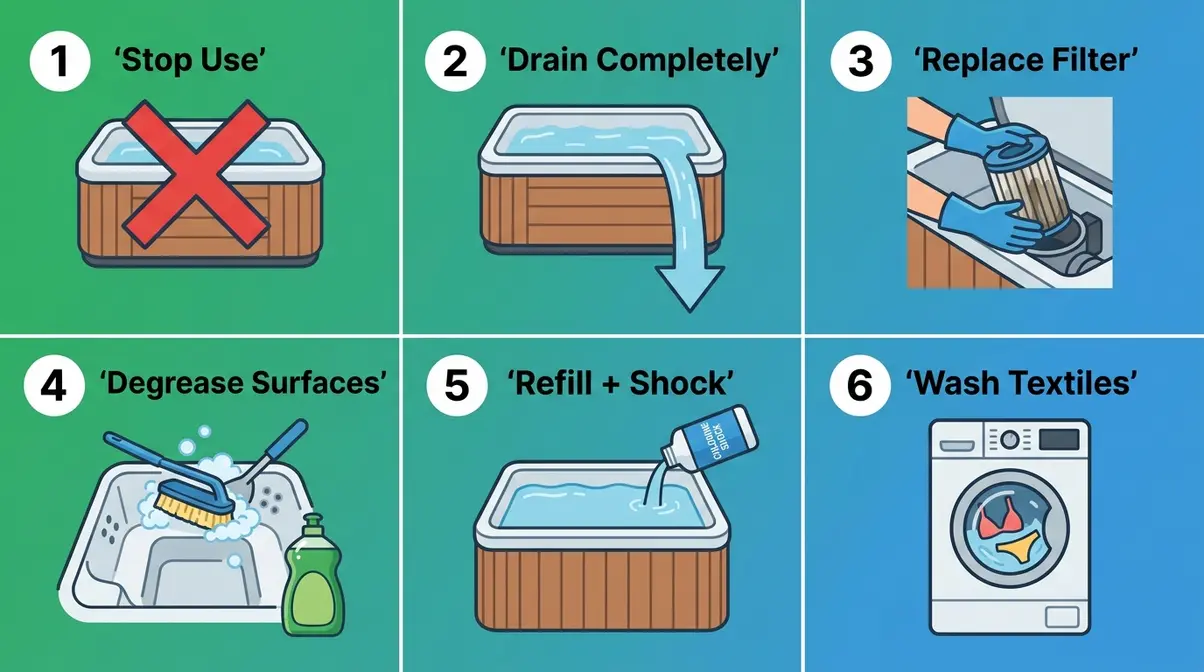
If you believe you entered your hot tub before washing off urushiol, take the following steps immediately. This protocol is based on the decontamination principles recommended by dermatologists and occupational health authorities for urushiol exposure.
What you’ll need: Rubber gloves, dish soap or a dedicated degreaser (like Tecnu), a garden hose or outdoor rinse station, a replacement filter cartridge (recommended), and approximately 45–60 minutes.
Step 1: Do not use the hot tub again until decontamination is complete. Post a clear warning if others share the tub. Estimated time: immediate.
Step 2: Drain the hot tub completely. Do not run the jets or circulation system again before draining — this will further distribute urushiol through the plumbing. (~20–30 minutes)
Step 3: Remove and replace the filter cartridge. Wear rubber gloves. The filter may contain concentrated urushiol residue. Do not attempt to clean and reuse the cartridge — replace it. Dispose of the old filter in a sealed bag. (~5 minutes)
Step 4: Scrub all interior surfaces with a degreasing dish soap or Tecnu. Pay special attention to the waterline, jets, seats, and headrests. Rinse thoroughly with fresh water. (~15–20 minutes)
Step 5: Refill the hot tub and run a shock treatment per your chemical manufacturer’s instructions. Allow the tub to circulate for at least 24 hours before anyone uses it again. (~2 minutes active work, 24-hour wait)
Step 6: Wash all towels, swimwear, and clothing that came into contact with the hot tub water in hot water with detergent. Urushiol on fabric can cause a rash weeks later.
| Step | Action | Time Required |
|---|---|---|
| 1 | Stop use immediately | Immediate |
| 2 | Drain completely (no jets) | 20–30 min |
| 3 | Replace filter cartridge | 5 min |
| 4 | Degrease all interior surfaces | 15–20 min |
| 5 | Refill + shock treatment | 24-hr wait |
| 6 | Wash all textiles | Per machine cycle |
Now that you know how to protect your hot tub and others from urushiol exposure, let’s focus on what actually works to relieve your rash and speed healing.
What Dries Up a Poison Ivy Rash Fast
The fastest path to healing a poison ivy rash is reducing inflammation, controlling itch without heat, and protecting the skin barrier while your immune system completes its work. Dermatologists consistently recommend a combination of cool topical treatments and over-the-counter medications — none of which involve heat. Here are the options that evidence and clinical guidance support.
Cool Compresses and Oatmeal Baths
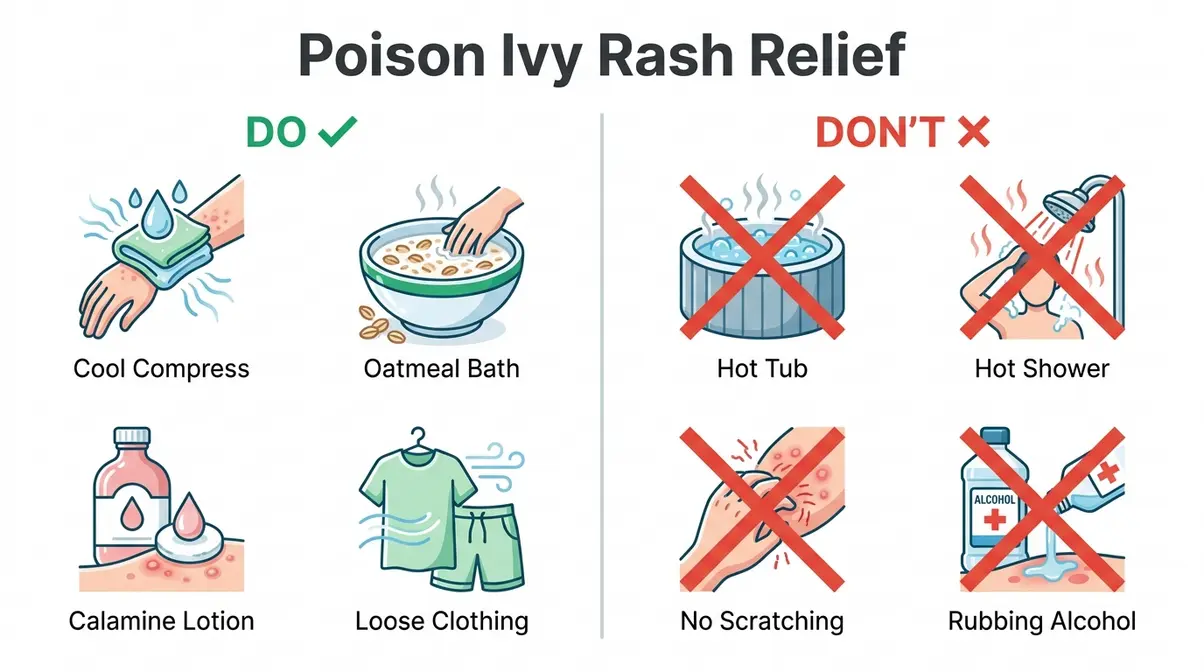
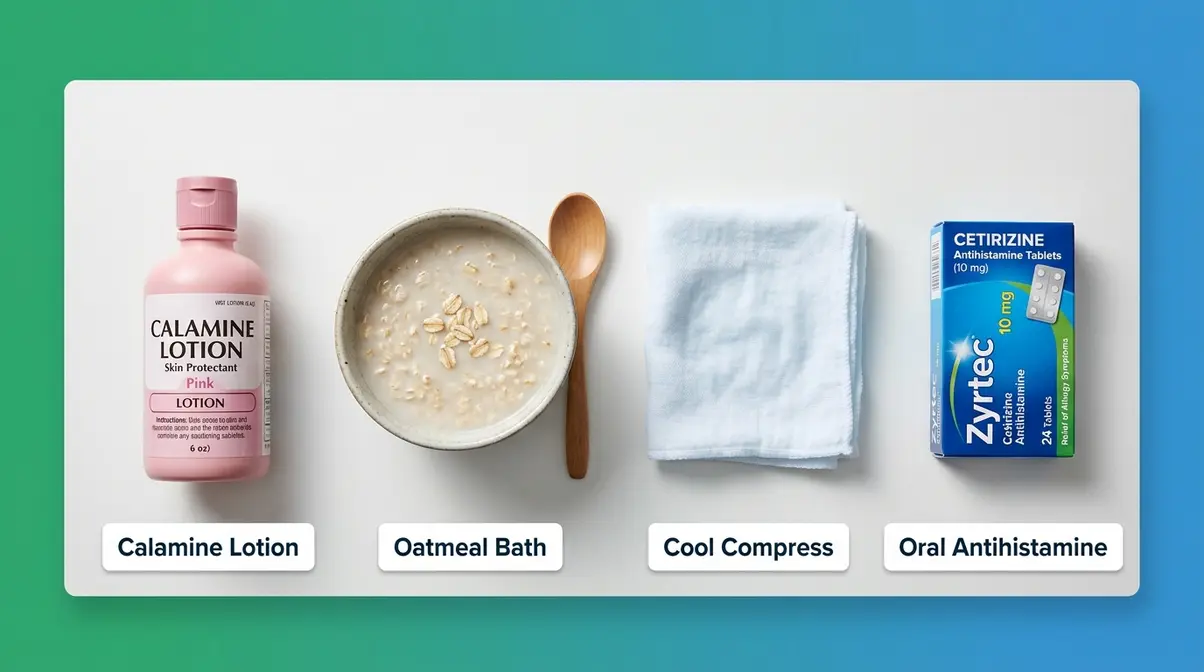
Cool water is the opposite of hot water — and it works in your favor for exactly the same physiological reasons. Instead of triggering vasodilation and histamine rebound, cool water causes mild vasoconstriction (narrowing of blood vessels), which reduces blood flow to the inflamed area, lowers local temperature, and temporarily calms histamine activity without triggering a rebound surge.
Cool compresses: Apply a clean cloth soaked in cool water directly to the affected area for 15–20 minutes at a time, several times per day. The AAD recommends this as a first-line comfort measure for contact dermatitis (AAD, 2026). Change the compress as it warms to body temperature.
Oatmeal baths: Colloidal oatmeal (finely ground oats suspended in water) has well-documented anti-inflammatory and anti-itch properties. The FDA has approved colloidal oatmeal as an over-the-counter skin protectant (FDA, 2026). For a poison ivy rash, fill your bathtub with cool or lukewarm water — not hot — and add 1–2 cups of colloidal oatmeal (available as Aveeno or store-brand packets). Soak for 15–20 minutes. Pat dry gently — do not rub.
Why cool works where hot fails: Cool water does not trigger The Heat-Itch Rebound Effect. It provides genuine, sustained relief without the histamine compensatory surge. The itch reduction lasts significantly longer than hot water relief, and it does not delay healing.
using a hot tub safely with skin conditions
Over-the-Counter Treatments That Work
Several over-the-counter (OTC) products are recommended by the AAD and FDA for managing poison ivy rash symptoms at home. Use these in combination with cool compresses for the most effective relief.
Calamine lotion: The classic pink lotion contains zinc oxide and ferric oxide, which dry out weeping blisters and create a mild cooling sensation. The AAD recommends calamine lotion as a primary OTC option for poison ivy itch relief (AAD, 2026). Apply a thin layer directly to the rash 3–4 times daily. Let it dry completely before covering with clothing.
Hydrocortisone cream (1%): Low-dose topical corticosteroids reduce the inflammatory response in the skin. The FDA approves 1% hydrocortisone cream for temporary relief of itching associated with minor skin irritations, including contact dermatitis (FDA, 2026). Apply a thin layer twice daily. Do not use on open blisters or broken skin.
Oral antihistamines: Diphenhydramine (Benadryl) or cetirizine (Zyrtec) work systemically to reduce histamine activity throughout the body. While topical antihistamines are not recommended for poison ivy (they can cause their own contact reaction), oral antihistamines are a useful complement to topical treatments, especially at night when itching tends to intensify.
| Treatment | How It Works | Application |
|---|---|---|
| Calamine lotion | Dries blisters, cooling effect | 3–4x daily, let dry |
| 1% Hydrocortisone cream | Reduces skin inflammation | 2x daily, avoid open skin |
| Oral antihistamines (Benadryl/Zyrtec) | Reduces systemic histamine | Per package directions |
| Colloidal oatmeal bath | Anti-inflammatory, skin protectant | 15–20 min in cool water |
| Cool compress | Vasoconstriction, itch relief | 15–20 min, several times daily |
What to avoid: Topical anesthetics like benzocaine, topical antihistamines like diphenhydramine cream, and topical antibiotics like neomycin. All three have a documented risk of causing additional contact dermatitis on already-sensitized skin (AAD, 2026).
Historical Herbal Remedies
Long before calamine lotion or hydrocortisone, Indigenous peoples across North America developed practical remedies for urushiol exposure. The most well-documented is jewelweed (Impatiens capensis), a plant that grows naturally in moist woodland areas — often near poison ivy itself.
According to the U.S. Forest Service, jewelweed has been used by numerous Indigenous nations as a topical treatment for poison ivy rash (U.S. Forest Service, 2026). The plant’s stems contain compounds including lawsone that may help reduce inflammation and itching when applied as a poultice or juice to the affected skin.
Modern research on jewelweed is mixed. Some small studies suggest it may be comparable to 1% hydrocortisone cream for itch relief. Others show more modest effects. The UVA Health resource on poison ivy notes that jewelweed remains a popular folk remedy with limited but plausible scientific support (UVA Health, 2026).
- Other traditional remedies documented by the U.S. Forest Service include:
- Mugwort leaves (Artemisia vulgaris) — applied as a poultice to reduce inflammation
- Sweet fern (Comptonia peregrina) — leaves boiled and applied as a wash
- Plantain (Plantago major) — crushed leaves applied directly to the skin
These historical remedies reflect centuries of practical knowledge. While none replace modern OTC treatments for severe cases, they demonstrate that cool, plant-based topical applications have been the consistent approach across cultures — not heat.
When to See a Doctor About Your Rash
Most poison ivy rashes resolve on their own within 1–3 weeks with proper at-home care. However, some situations require professional medical evaluation. Consult a dermatologist or visit urgent care if you experience any of the following:
- Seek care immediately if:
- The rash covers a large area of your body (more than 25% of skin surface)
- The rash affects your face, eyes, lips, or genitals
- You experience swelling of the face, throat, or difficulty breathing (this may indicate anaphylaxis — call 911)
- You develop a fever above 100°F (38°C)
- Seek care within 1–2 days if:
- The rash is not improving after 1 week of OTC treatment
- Blisters are oozing yellow or green fluid (signs of secondary bacterial infection)
- The itching is so severe it is preventing sleep or daily function
- Prescription options your doctor may offer:
- Oral corticosteroids (prednisone) — the most effective treatment for severe poison ivy reactions; typically a 2–3 week tapering course
- Prescription-strength topical steroids for localized severe patches
- Antibiotics if secondary infection is confirmed
hot tub rash symptoms and causes
The AAD emphasizes that self-treatment is appropriate for mild to moderate cases, but that severe or widespread reactions — including those affecting the face or airway — require same-day medical attention (AAD, 2026). This article is not a substitute for that professional care.
Frequently Asked Questions
Is a hot tub with poison ivy rash safe?
No — you should not go in a hot tub with an active poison ivy rash. Hot tub water at 100–104°F triggers The Heat-Itch Rebound Effect, causing a temporary drop in histamine that feels like relief, followed by a compensatory surge that intensifies itching and inflammation for hours. Additionally, if urushiol oil is still present on your skin, you risk contaminating the hot tub’s filter and surfaces, potentially exposing others. Dermatologists recommend waiting until the rash has fully healed before resuming hot tub use (AAD, 2026).
Does chlorine make poison ivy worse?
Chlorine does not neutralize urushiol, and it does not make the rash directly worse — but it does not help either. Urushiol is an oil-based resin, and chlorine is a water-soluble oxidizer; the two do not interact effectively at residential hot tub concentrations (CDC, 2026). The real risk is that hot, chlorinated water still triggers histamine rebound and can strip the skin’s protective barrier, worsening irritation. Decontaminating urushiol from surfaces requires a degreasing soap or product like Tecnu, not chlorine.
Is a warm bath bad for poison ivy?
Warm baths are less harmful than hot tubs, but still not ideal. The AAD recommends cool or lukewarm baths — specifically colloidal oatmeal baths — for poison ivy relief (AAD, 2026). The key threshold is temperature: water warm enough to trigger vasodilation and histamine release will worsen the rash. A truly lukewarm bath (below 85°F / 29°C) with colloidal oatmeal can provide genuine relief. A bath approaching hot tub temperatures will trigger the same rebound effect. Keep bath water cool and limit soaking to 15–20 minutes.
What dries up the rash fastest?
The fastest combination is calamine lotion plus oral antihistamines plus cool compresses, applied consistently throughout the day. Calamine lotion (zinc oxide) dries weeping blisters and provides a cooling effect. Oral antihistamines like cetirizine (Zyrtec) reduce systemic histamine activity, including nighttime itch. Cool compresses provide immediate, rebound-free relief for up to 20 minutes per application. For severe cases, prescription oral corticosteroids (prednisone) are the most effective option available and can shorten total rash duration significantly (AAD, 2026).
Will a hot tub make a rash worse?
Yes — a hot tub will make a poison ivy rash measurably worse. The combination of high temperature (100–104°F), extended soaking time, and jet pressure creates the most aggressive version of The Heat-Itch Rebound Effect. Hot water causes vasodilation that increases inflammation, strips the skin’s protective barrier, and risks rupturing blisters — exposing raw skin to potential bacterial infection. Cleveland Clinic medical experts confirm that hot water intensifies itching and delays healing in contact dermatitis cases like poison ivy (Cleveland Clinic, 2026).
Native American poison ivy remedies?
Indigenous peoples across North America primarily used jewelweed (Impatiens capensis) as a topical remedy for poison ivy exposure. According to the U.S. Forest Service, the plant’s juice or crushed stems were applied directly to affected skin to reduce itching and inflammation (U.S. Forest Service, 2026). Other traditional remedies included sweet fern leaf washes and plantain leaf poultices. Modern research suggests jewelweed may have modest anti-inflammatory properties comparable to low-dose hydrocortisone, though results vary across studies. These remedies consistently relied on cool, plant-based topical applications — never heat.
Can poison ivy spread in a hot tub?
The rash itself cannot spread in a hot tub — but urushiol oil can. The blisters and fluid from a poison ivy rash contain lymphatic fluid, not urushiol, so direct contact with another person’s rash will not cause a new reaction. However, if urushiol oil was present on your skin when you entered the tub, it can transfer to the water, shell, seats, and filter. The CDC reports that urushiol remains active on surfaces for up to 5 years (CDC, 2026). Anyone using a contaminated hot tub could develop a full reaction — even days or weeks later.
What to Do Next: Your Safe Path Forward
A hot tub feels like the obvious solution when your skin is screaming for relief. The science, unfortunately, works against that instinct. Hot water at hot tub temperatures triggers The Heat-Itch Rebound Effect — a brief window of histamine depletion followed by a compensatory surge that intensifies itching for hours. The FDA and Cleveland Clinic both advise against hot water exposure for poison ivy, and the specific temperature range of a hot tub (100–104°F) makes it one of the worst environments for an active rash. Urushiol contamination of your filter adds a secondary risk that affects everyone who uses the tub.
The good news is that effective, evidence-backed relief is accessible and inexpensive. Cool compresses, colloidal oatmeal baths, calamine lotion, and oral antihistamines address the same histamine-driven itch without triggering a rebound. These are the tools dermatologists actually recommend — and they work with your immune system, not against it.
Start with a cool oatmeal bath today. Apply calamine lotion after patting dry. Take an oral antihistamine before bed to manage nighttime itch. If you used your hot tub before washing off urushiol, follow the decontamination protocol in this guide before anyone else uses the tub. And if your rash is severe, spreading, or affecting your face — consult a dermatologist or urgent care provider right away. Your skin will heal. Give it the conditions it needs.
managing skin conditions and hot tub use

David King
Hot tub tester and writer at One Hot Tub.