
What’s in this guide
Home ›Maintenance And Troubleshooting
Estimated Time: 1-2 days
If you’re reading this right now, someone just had an accident in your hot tub — and you need to know exactly what to do. Take a breath. The situation is serious, but it is completely manageable if you follow the right steps.
Here’s what makes a fecal incident in a hot tub more dangerous than in a backyard pool: your spa holds roughly 300–500 gallons of warm, recirculating water — compared to a typical pool’s 10,000–20,000 gallons. That smaller volume concentrates bacteria and parasites far more quickly. The jets push contaminated water through every plumbing line in the system, spreading pathogens to places a surface wipe will never reach.
In this guide, you’ll learn the CDC-backed, step-by-step protocol to safely clean poop from your hot tub — and exactly what to do differently depending on whether it was solid stool or diarrhea. We’ll walk you through immediate containment, chemical disinfection with exact dosing math, filter cleaning, plumbing line purging, and a complete drain-and-refill procedure. This is your complete guide to poop in hot tub how to clean — done safely and thoroughly.
When figuring out poop in hot tub how to clean protocols, remember that cleaning requires immediate action: remove the waste, shock the water with chlorine, clean or replace the filter, and drain and refill for complete safety — following the CDC’s two-track Fecal Incident Protocol.
- Solid stool: Raise free chlorine to 2 ppm and hold for 30 minutes
- Diarrhea: Raise free chlorine to 20 ppm and hold for 13 hours (Cryptosporidium risk)
- Always clean or replace your filter after any fecal incident
- Draining and refilling is the safest option — especially after any diarrheal incident
- The Fecal Incident Protocol separates these two responses because the health risks — and the required chemical responses — are vastly different
⚠️ Health & Safety Disclaimer
Fecal matter in water is a biohazard. Before handling contaminated water or chemicals, put on disposable waterproof gloves and eye protection. Never mix chlorine products with other chemicals. All chlorine concentrations referenced in this guide must be measured with a calibrated test kit — do not estimate. If the contamination was severe, if anyone has since become ill, or if you are unsure about any step, consult a certified pool and spa professional. This guide is for informational purposes only and is not a substitute for professional advice.
Step 1: Evacuate the Hot Tub
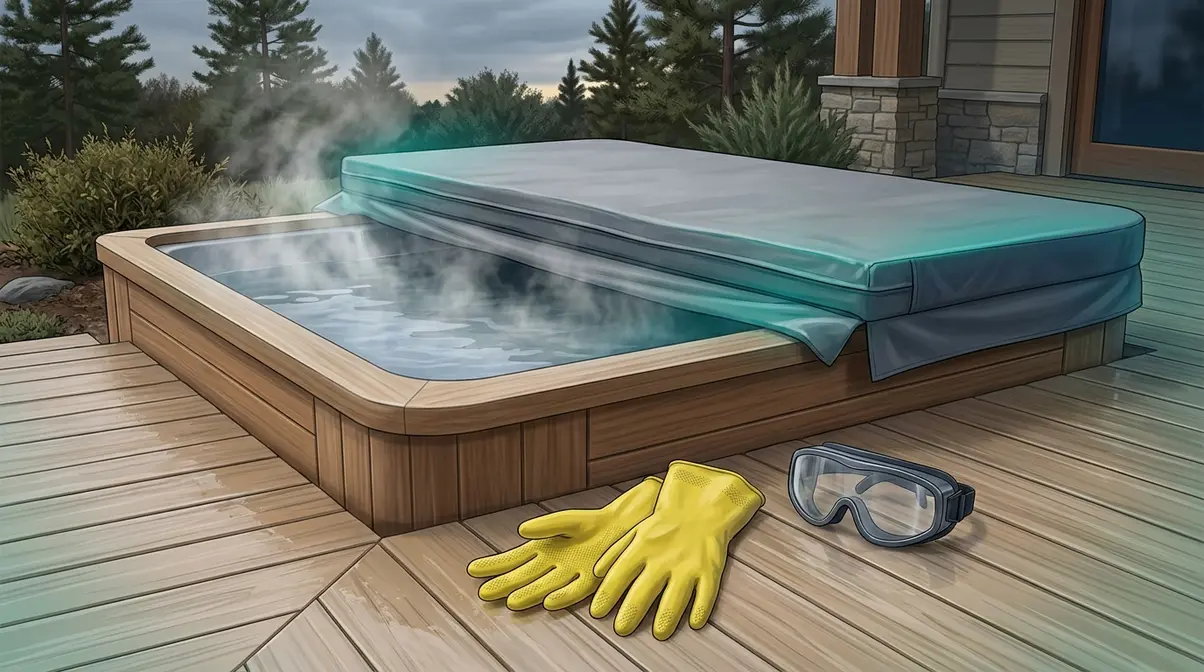
The very first thing you need to do is get everyone out of the water and shut the system down. Every second the jets keep running, contaminated water is cycling through the plumbing lines and spreading bacteria deeper into the system.
The Fecal Incident Protocol — a two-track response framework based on CDC guidelines that separates solid and diarrheal incidents — starts the same way for both tracks: immediate evacuation and containment. Your actions in the next two minutes determine how much of the plumbing you’ll need to purge later. For a deeper dive into routine maintenance, you can also review our comprehensive hot tub cleaning guide.
Turn Off Jets and Cover Tub
Turn off the jets immediately. This stops the water from recirculating through the plumbing lines, which limits how far the contamination spreads. In a hot tub with 300–500 gallons of warm water, fecal bacteria can reach every jet nozzle and internal pipe within minutes of the jets running — so stopping circulation fast is critical (World Health Organization, Guidelines for Safe Recreational Water Environments).
Once the jets are off, close the cover. This prevents birds, insects, or debris from entering and reduces the chance of anyone accidentally touching or entering the water before you’ve completed the protocol.
No one should re-enter the hot tub until every step in this guide is complete.
Gear Up: Protective Equipment
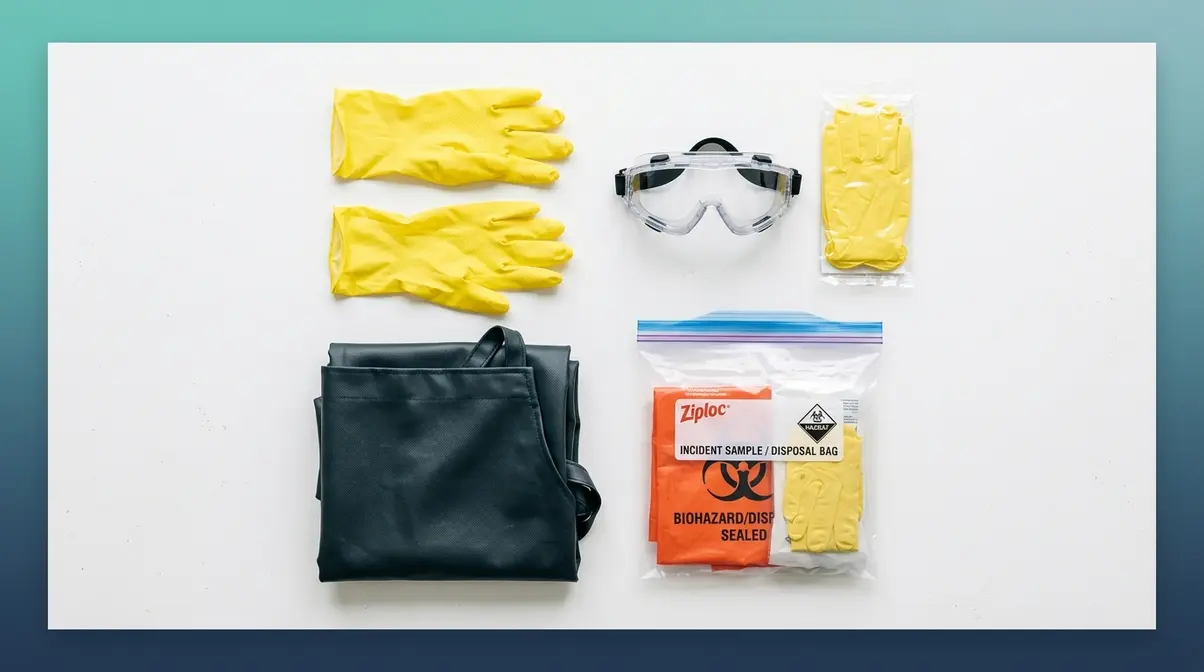
Before you go any further, protect yourself. You’ll need:
- Disposable waterproof gloves (nitrile or rubber — at least two pairs)
- Eye protection (safety glasses or goggles)
- Old clothing or an apron you don’t mind discarding or washing immediately after
Put everything on before you touch the water, the waste, or any equipment. Fecal matter can contain E. coli, Cryptosporidium, Giardia, and other pathogens that cause serious illness through skin contact or accidental ingestion. The CDC recommends treating all fecal material in recreational water as a potential infectious biohazard (CDC, Fecal Incident Response Recommendations). Additionally, the American Academy of Dermatology warns that contaminated water left on the skin can quickly lead to severe rashes and infections.
Step 2: Identify Incident Type
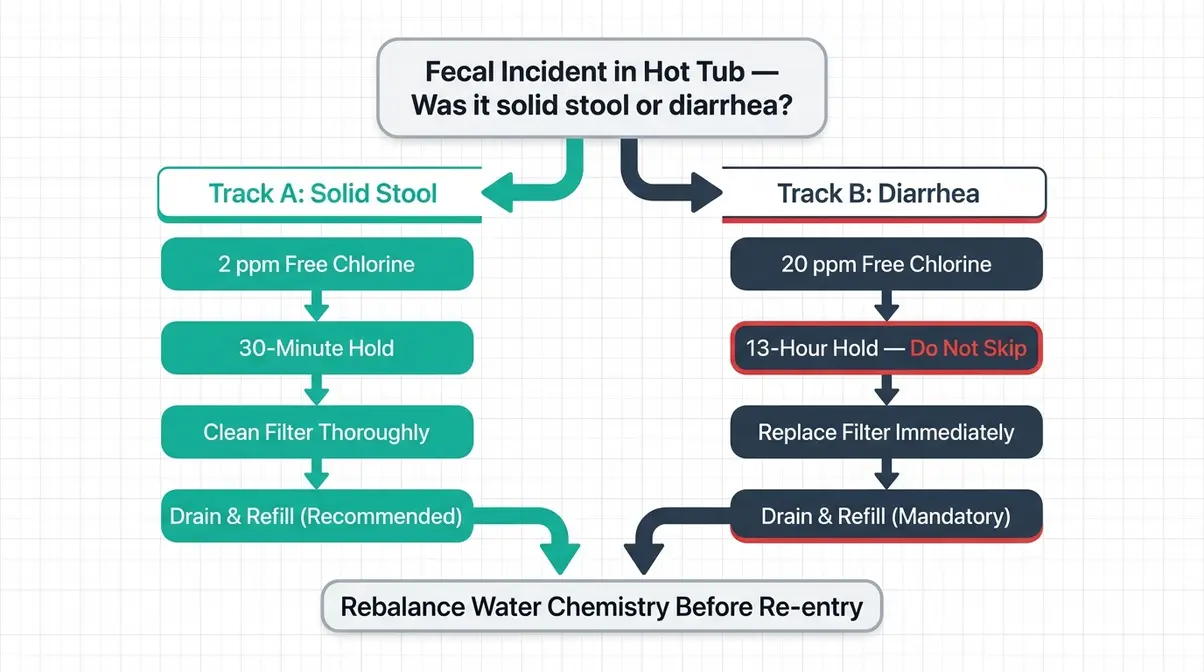
Not all fecal incidents are the same — and the difference between solid stool and diarrhea determines your entire chemical response. This is the core of The Fecal Incident Protocol: two distinct tracks with different chlorine targets, hold times, and urgency levels.
“The easy answer is: shock it to 30 ppm chlorine with liquid chlorine, run it for a day, and drain and refill.”
— Hot tub owner community consensus
That instinct is understandable — and for diarrheal incidents, it’s close to right. But for a solid stool incident, it’s overkill. Knowing which track you’re on saves time, chemicals, and stress.
Solid Stool: Manageable Scenario
If the fecal matter is formed and solid, you’re dealing with a serious but more straightforward situation. Solid stool is less likely to contain Cryptosporidium (a chlorine-resistant parasite) in significant concentrations, and it hasn’t dispersed through the water the same way diarrhea does.
The CDC’s guidance for solid fecal incidents in recreational water calls for raising free chlorine to 2 ppm and holding it there for at least 30 minutes before anyone re-enters. For a hot tub — with its smaller volume and higher water temperature — draining and refilling afterward is still the safest choice, even for solid incidents.
Diarrhea: A Serious Threat
Diarrhea in a hot tub is a different category of problem entirely. Diarrheal fecal matter is far more likely to contain Cryptosporidium parvum, a microscopic parasite that is highly resistant to standard chlorine levels. At a typical hot tub chlorine level of 1–3 ppm, Cryptosporidium can survive for days. Swallowing even a small amount of contaminated water can cause severe gastrointestinal illness lasting weeks.
According to the CDC, a diarrheal fecal incident requires raising free chlorine to 20 ppm and holding it for a minimum of 13 hours to inactivate Cryptosporidium — followed by a complete drain and refill (CDC, Cryptosporidium Parasite Guidelines). This is non-negotiable. Do not skip or shorten the hold time.
Comparison: Two Response Tracks
| Factor | Solid Stool | Diarrhea |
|---|---|---|
| Primary pathogen concern | E. coli, enteric bacteria | Cryptosporidium, Giardia |
| Chlorine target (free) | 2 ppm | 20 ppm |
| Required hold time | 30 minutes | 13 hours |
| Drain and refill? | Strongly recommended | Mandatory |
| Filter replacement? | Clean thoroughly; replace if damaged | Replace immediately |
| Urgency level | High | Critical |
Step 3: Remove Fecal Matter
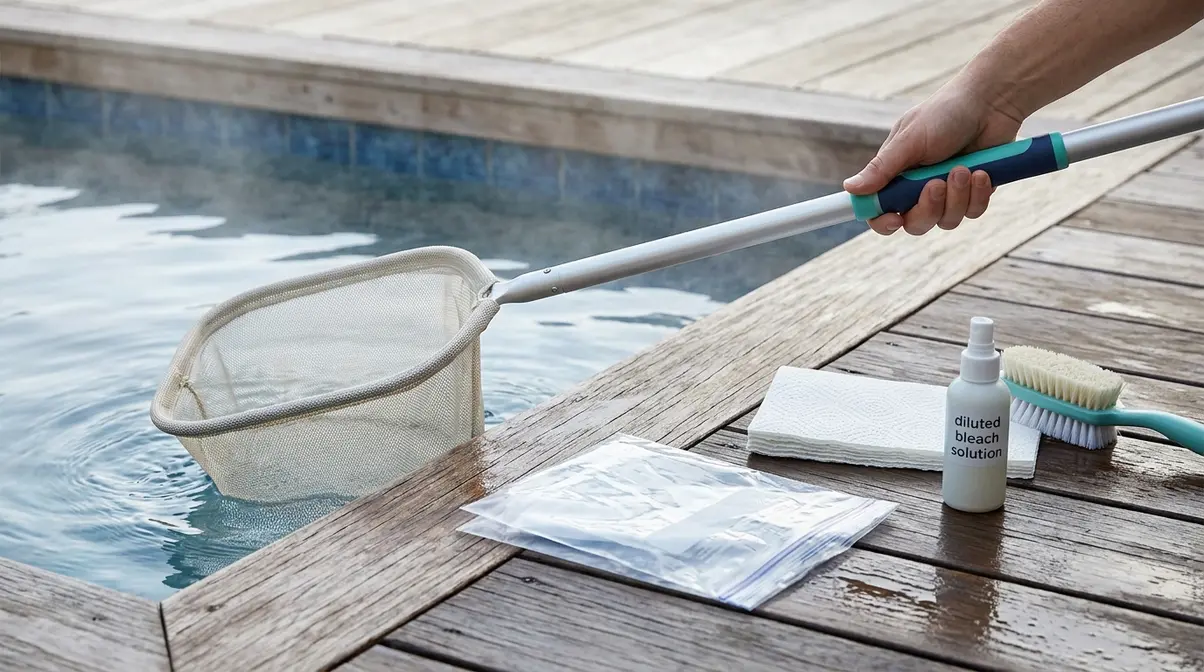
Before you add any chemicals, you need to physically remove as much fecal matter from the water as possible. Adding chlorine before removal is less effective — organic material consumes chlorine rapidly, reducing its disinfecting power. Mastering the poop in hot tub how to clean process starts with this safe physical removal.
What You Need: Removal Kit
Gather these items before you approach the water:
- A fine-mesh net or “pooper scooper” — ideally one you’ll use only for this purpose
- Sealed plastic bag or bucket for waste disposal
- Paper towels or disposable cloths for surface wiping
- A spray bottle with a diluted bleach solution (1 tablespoon of unscented household bleach per quart of water) for surface disinfection
- A soft scrub brush for any residue on the shell
- Your test kit — you’ll need this in the next step
Do not use your bare hands. Do not use your regular skimmer net and then put it back in your pool supply closet. Cross-contamination is a real risk.
How to Scoop and Dispose Safely
Follow these steps carefully to ensure you do not spread pathogens further:
- Use the net to lift the fecal matter out of the water. Move slowly and deliberately — avoid splashing, which spreads contaminated droplets.
- Transfer the waste directly into a sealed plastic bag. Double-bag it for safety, as recommended by EPA guidelines for safe waste disposal.
- Dispose of it in an outdoor trash bin. Do not flush large amounts of solid waste down a household toilet — it can cause blockages.
Once the bulk of the waste is removed, you must sanitize the immediate surfaces:
- Wipe any residue from the tub shell using disposable cloths. Discard immediately into the same trash bag.
- Spray the tub shell surface with your diluted bleach solution and let it sit for 1–2 minutes before wiping clean, following CDC general hygiene recommendations.
- Remove your gloves carefully — peel them off inside-out — and bag them with the waste. Wash your hands thoroughly with soap and water for at least 20 seconds.
Once the visible waste is removed, you’re ready for the most critical step: chemical disinfection.
Step 4: Super-Chlorinate Water
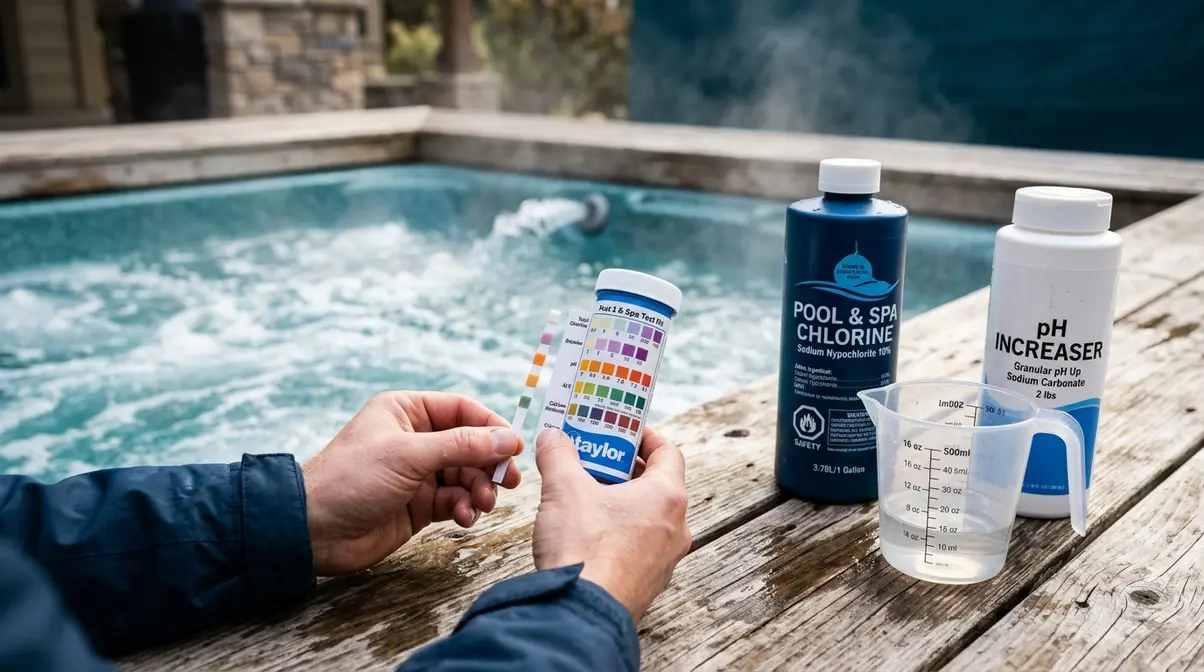
Hyperchlorination (raising chlorine to a very high level to kill pathogens) is the chemical core of The Fecal Incident Protocol. The target level and hold time depend entirely on which track you identified in Step 2. This step cannot be rushed or approximated — use your test kit to verify hot tub chlorine levels, not guesswork.
Solid Stool: 2 ppm for 30 Mins
For a solid stool incident, the CDC recommends raising the free chlorine level to 2 ppm (parts per million) and maintaining that level for at least 30 minutes with the pH between 7.2 and 7.5. If your hot tub is already at 1–2 ppm, you may need only a small addition — test first.
Steps for solid stool hyperchlorination:
- Test your current free chlorine and pH levels with your test kit.
- Adjust pH to the 7.2–7.5 range using pH decreaser or increaser as needed. Correct pH makes chlorine far more effective.
- Add enough chlorine to reach 2 ppm (see dosing table below).
- Run the jets for 30 minutes to circulate the chlorinated water through all plumbing lines.
- Test again to confirm the level held at or above 2 ppm throughout.
- Proceed to Step 5 (filter cleaning).
Diarrhea: 20 ppm for 13 Hours
For a diarrheal incident, you are targeting Cryptosporidium — and standard chlorine levels do not touch it. The CDC’s hyperchlorination protocol requires raising free chlorine to 20 ppm and holding it for 13 hours to achieve inactivation of Cryptosporidium (CDC, Fecal Incident Response Recommendations).
Steps for diarrheal hyperchlorination:
- Test current chlorine and pH. Adjust pH to 7.2–7.5 first.
- Add liquid chlorine (sodium hypochlorite) to reach 20 ppm. Use the dosing table below.
- Run the jets for 30 minutes to fully circulate the chlorinated water.
- Cover the tub and let it sit for the full 13 hours. Do not use the tub during this period.
- After 13 hours, test the water. Free chlorine should still be at or above 20 ppm. If it has dropped significantly, add more chlorine and wait an additional period.
- After the hold time is complete, drain and refill (Step 6 — mandatory for diarrheal incidents).
What Kills Fecal Bacteria?
Chlorine is the primary disinfectant for killing fecal bacteria in a hot tub — but the required concentration depends on the pathogen. Most enteric bacteria (E. coli, Salmonella) are killed within minutes at standard levels of 1–3 ppm. Cryptosporidium — the most dangerous pathogen in diarrheal incidents — requires free chlorine raised to 20 ppm held for 13 hours to achieve inactivation, according to Pool & Hot Tub Alliance standards. UV and ozone supplemental systems help but do not replace the hyperchlorination protocol after a fecal incident.
Calculate Your Chlorine Dose
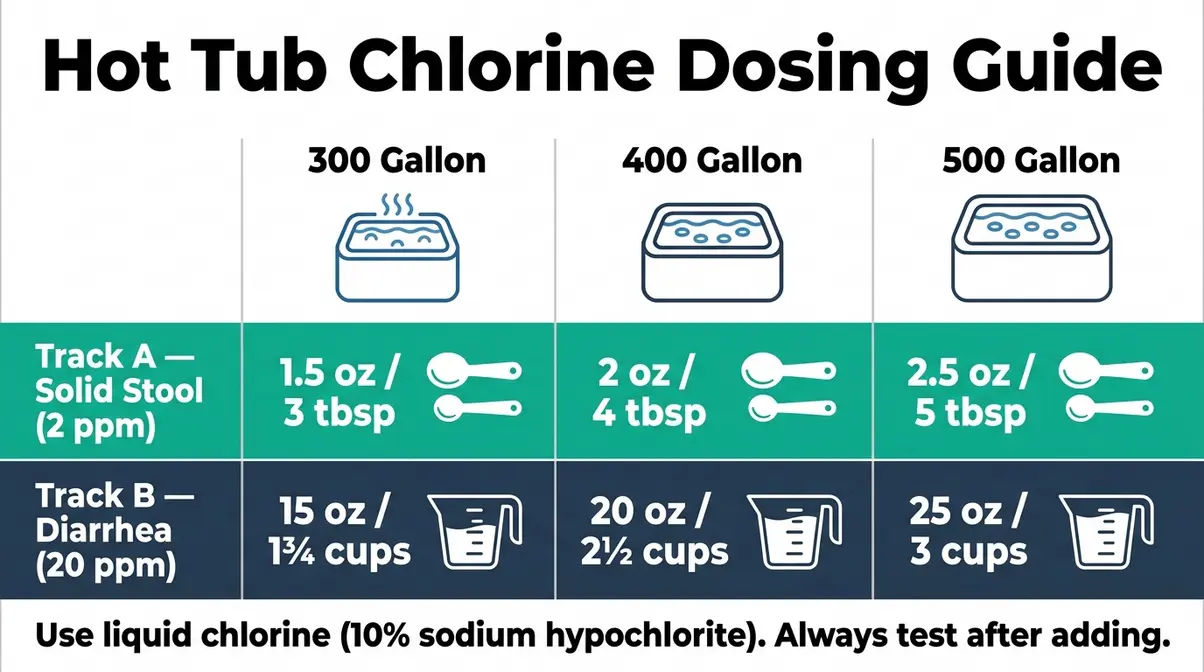
Most hot tubs hold between 300 and 500 gallons. Use this table to calculate how much liquid chlorine (10% sodium hypochlorite) to add to reach your target ppm. These figures are based on standard pool chemistry calculations aligned with CDC dosing guidance.
| Hot Tub Volume | To reach 2 ppm | To reach 20 ppm |
|---|---|---|
| 300 gallons | ~1.5 oz (≈3 tablespoons) | ~15 oz (≈1¾ cups) |
| 400 gallons | ~2 oz (≈4 tablespoons) | ~20 oz (≈2½ cups) |
| 500 gallons | ~2.5 oz (≈5 tablespoons) | ~25 oz (≈3 cups) |
These are approximate starting doses assuming a current chlorine level near 0. Always test after adding and adjust as needed. Use liquid chlorine (sodium hypochlorite, 10%) for fastest dissolution in hot water. Granular shock can be used but dissolve it in a bucket of water first.
Step 5: Clean or Replace Filter
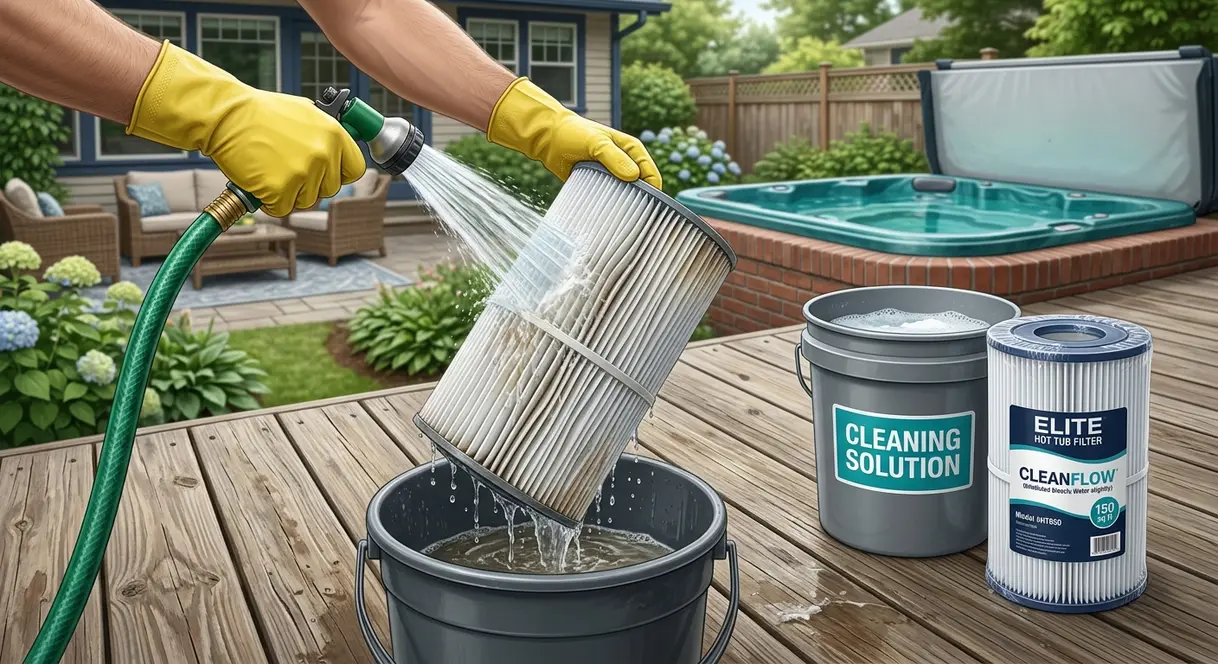
Your hot tub filter traps particles from the water — including fecal matter. After any fecal incident, the filter is contaminated and must be addressed before you refill or resume normal use. Skipping this step means you’re re-introducing pathogens every time the filter runs.
How to Clean Your Filter
Follow these steps to clean a cartridge filter after a solid stool incident:
- Turn off the hot tub pump before removing the filter.
- Remove the filter cartridge according to your manufacturer’s instructions.
- Rinse the filter with a garden hose — use a filter cleaning wand if available. Rinse between all pleats from top to bottom, working out debris.
- Soak the filter in a diluted filter cleaning solution for at least 1 hour (or overnight for thorough cleaning). A solution of 1 part household bleach to 10 parts water is effective for disinfection.
- Rinse thoroughly until no cleaning solution remains — residual bleach can disrupt water chemistry.
- Allow the filter to dry completely before reinstalling, if time permits.
Always wash your hands after handling the filter. The filter is one of the most contaminated components in the system after a fecal incident (aquapoolsonline.com, fecal incident response guidance). The CDC healthy swimming protocols also emphasize that proper filter sanitation is critical to preventing recreational water illnesses.
When to Replace the Filter
In some cases, cleaning is not enough. Replace the filter immediately if:
- The incident involved diarrhea — the filter has almost certainly captured Cryptosporidium oocysts that cannot be reliably removed by cleaning alone
- The filter is visibly damaged, torn, or has collapsed pleats
- The filter is more than 12 months old and has had regular use
- After cleaning, the water still tests positive for contamination or appears cloudy
A replacement cartridge filter typically costs $15–$60 depending on your model. The cost of replacing it is far lower than the cost of illness in your family. When in doubt, replace it.
Step 6: Drain, Clean, and Refill
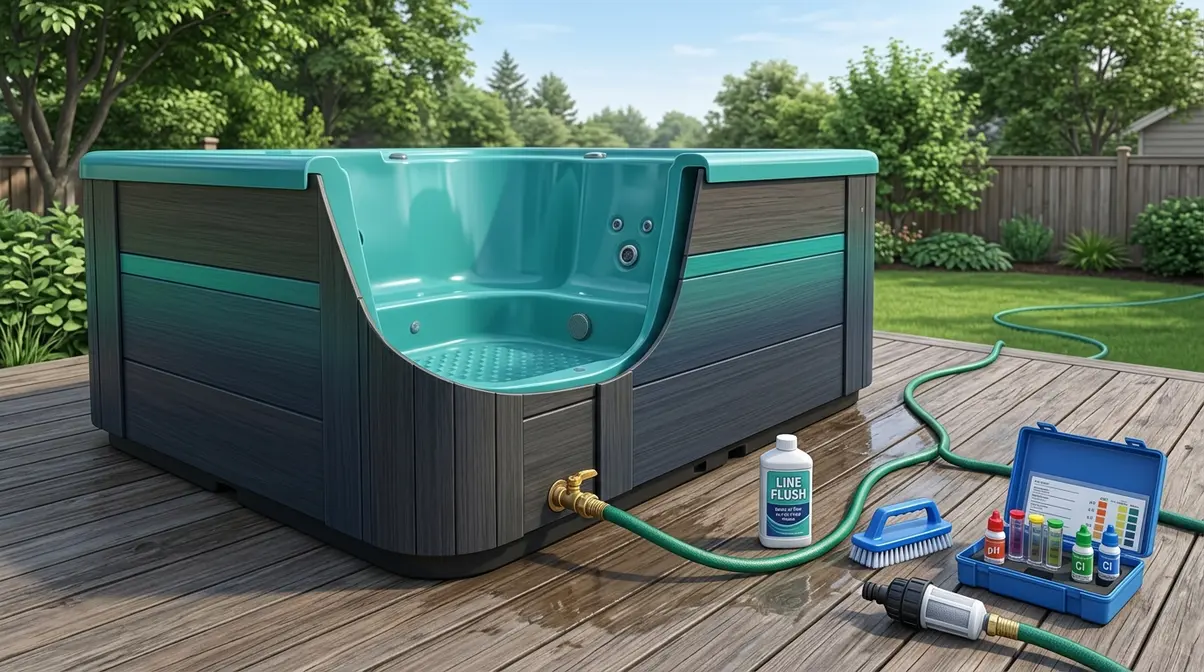
Draining and refilling your hot tub is the gold standard response to any fecal incident — and it is mandatory after a diarrheal incident. Even after successful hyperchlorination, residual contamination can persist in biofilm (a thin layer of bacteria that clings to surfaces) along the shell, jets, and plumbing lines.
How to Drain Completely
- Turn off the heater and jets completely.
- Locate your drain valve — usually at the bottom side of the tub cabinet. Attach a garden hose to direct water away from your lawn or garden (chlorinated water can harm plants). If you need more detailed instructions, review how to empty a hot tub safely.
- Open the drain valve and allow the tub to empty fully. Most hot tubs take 1–2 hours to drain completely.
- Use a submersible pump to remove the last few inches of water if your drain valve doesn’t reach the very bottom.
- Once empty, leave the cover off briefly to allow the shell to air out.
What Can I Wipe the Tub With?
Use a diluted household bleach solution — 1 tablespoon of unscented bleach per quart of water — applied with disposable cloths or a soft scrub brush. Spray the shell, waterline, seat areas, and jet nozzles. Let the solution sit for 5 minutes, then rinse thoroughly with clean water. Avoid abrasive scrubbers that can scratch acrylic surfaces, creating microscopic grooves where bacteria can hide. Commercial hot tub surface cleaners are also effective; look for products labeled as sanitizing or disinfecting, not just cleaning.
Scrub Shell and Purge Lines
This is the step most guides skip entirely — and it’s one of the most important. Hot tub plumbing lines can harbor bacteria in biofilm even after the water is drained, according to CDC biofilm prevention recommendations. Without purging, you’re refilling a clean-looking tub with contaminated pipes.
Plumbing line purge:
- Partially refill the tub with about 6–8 inches of fresh water — just enough to cover the jets.
- Add a pipe and line purge product (such as Oh Yuk or Ahh-Some) according to the manufacturer’s instructions. These products are specifically formulated to break up and flush biofilm from hot tub plumbing.
- Run the jets on high for 30–60 minutes. You will likely see brown or grey foam — this is normal. It’s the biofilm being flushed out of the lines.
- Drain this purge water completely.
- Rinse the shell one more time with fresh water before the final refill.
Purging the lines is the single most important differentiator between a thorough decontamination and a surface-level clean. No competitor protocol includes this step — but without it, you’re leaving a reservoir of potential contamination inside your tub’s plumbing system.
Refill and Rebalance Water
- Refill with fresh water using a garden hose. If your water supply has high mineral content, consider using a hose pre-filter to reduce scale buildup.
- Once filled, test and balance your water chemistry in this order:
- Total Alkalinity: Target 80–120 ppm
- pH: Target 7.2–7.8
- Free Chlorine: Target 1–3 ppm for normal use
- Calcium Hardness: Target 150–250 ppm
- Run the jets for 30 minutes to circulate the balanced water through the newly purged lines. You may also need to shock your hot tub after refilling to establish a proper sanitizer baseline.
- Test again before anyone enters the tub.
Do not rush the rebalancing step. Unbalanced water can irritate skin and eyes, and incorrect pH reduces the effectiveness of chlorine — leaving your newly refilled tub less protected than it should be, a risk highlighted in World Health Organization guidelines.
Health Risks of Contamination
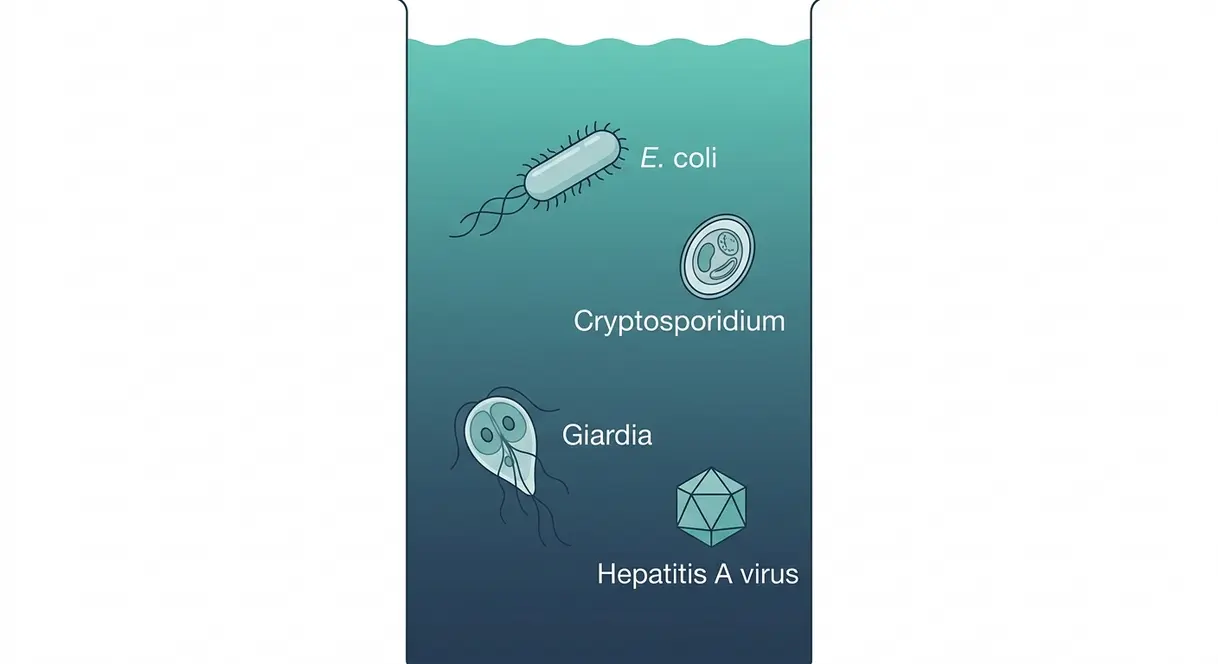
Knowing why each step of The Fecal Incident Protocol matters helps you follow it correctly — even when it feels like a lot of work. The health risks from fecal contamination in a hot tub are real, documented, and preventable.
Bacteria in Fecal Matter
Human fecal matter can contain a range of pathogens capable of causing serious illness. The most concerning in a hot tub context include:
- **Escherichia coli (E. coli):** A bacterial pathogen causing severe gastrointestinal illness. Most strains are killed by standard chlorination within minutes at 1–3 ppm.
- **Cryptosporidium parvum:* A microscopic parasite and the primary reason diarrheal incidents require 20 ppm hyperchlorination. Cryptosporidium* can survive for days in a properly chlorinated hot tub at standard levels due to its resistant oocyst shell. According to the CDC, it is the leading cause of recreational water illness outbreaks in the United States (CDC, Cryptosporidium Guidelines).
- **Giardia lamblia:* Another parasite transmitted via fecal-oral route. More susceptible to chlorine than Cryptosporidium*, but still requires proper disinfection.
- **Hepatitis A virus:** Can be present in fecal matter and transmitted through contaminated water. Standard hyperchlorination protocols are effective against it.
Swallowing even a small amount of contaminated water — as little as a few drops — is sufficient to cause infection from Cryptosporidium or Giardia. Children, elderly individuals, and immunocompromised people are at highest risk of severe illness.
Hot Tub Folliculitis
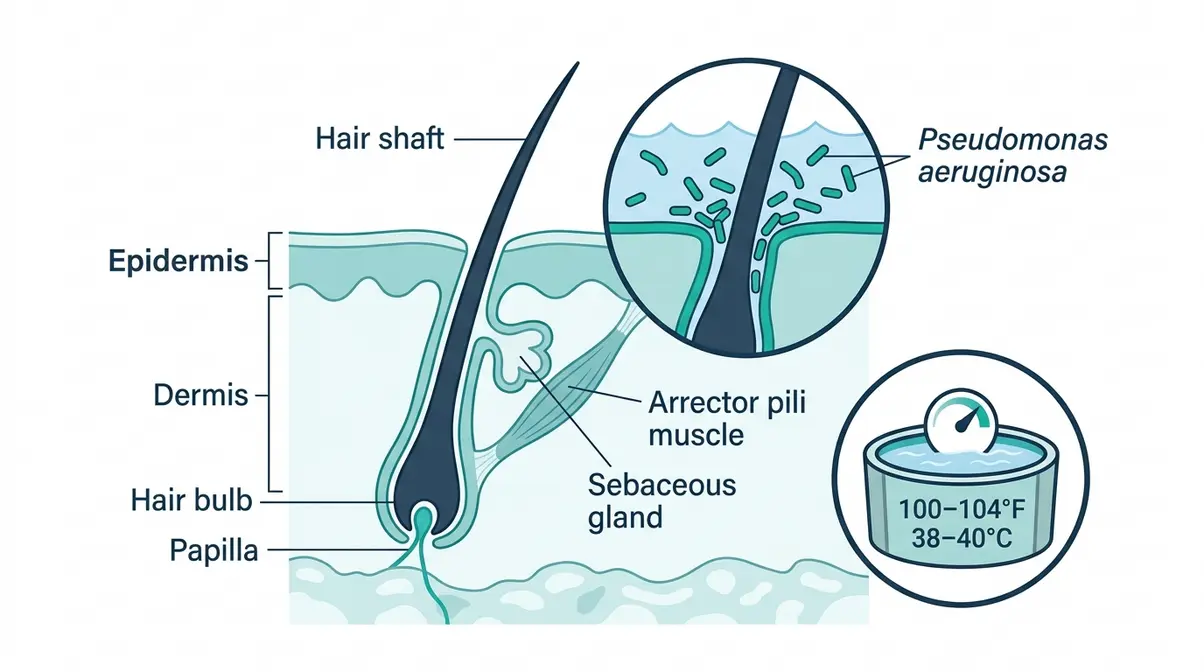
Hot tub folliculitis is a skin infection caused by Pseudomonas aeruginosa, a bacterium that thrives in warm, poorly maintained water. While not directly caused by fecal matter, a fecal incident that disrupts your water chemistry and chlorine levels creates ideal conditions for Pseudomonas to multiply.
Symptoms include red, itchy bumps — typically appearing 12–48 hours after exposure — concentrated on areas covered by a swimsuit. According to the Mayo Clinic, hot tub folliculitis usually resolves on its own within 7–10 days without treatment in healthy individuals, but it can spread across the body and last longer in people with weakened immune systems. For more details on protecting your skin, read our guide on hot tub folliculitis prevention and treatment.
Hot tub folliculitis is not contagious from person to person — it’s contracted through direct contact with contaminated water. Once the tub is properly decontaminated and chemistry is rebalanced, the risk is eliminated.
How Long Do Germs Survive?
Pathogen survival time is the most compelling argument for acting fast and following every step:
| Pathogen | Survival in untreated water | Killed by standard chlorine (1–3 ppm)? |
|---|---|---|
| E. coli O157:H7 | Hours to days | Yes — within minutes |
| Giardia | Days to weeks | Mostly yes — within hours |
| Cryptosporidium | Days to months in cool water | No — requires 20 ppm / 13-hour protocol |
| Hepatitis A | Days to weeks | Yes — with proper hyperchlorination |
The warm temperature of hot tub water (typically 100–104°F / 38–40°C) accelerates bacterial growth. Cryptosporidium, however, is more resilient in warm water than many people assume — its oocyst shell protects it even at elevated temperatures. This is why the 13-hour, 20 ppm protocol exists, and why shortcutting it is genuinely dangerous.
When to Call a Professional
Most fecal incidents in a hot tub can be handled safely by a prepared homeowner following The Fecal Incident Protocol. However, there are situations where you should stop and call a certified pool and spa professional.
Call a professional if:
- The incident involved multiple people with diarrhea or the contamination volume was large
- Anyone has become ill with gastrointestinal symptoms after using the hot tub — this may indicate a broader contamination issue requiring professional testing
- You are unsure whether you have the correct chemicals on hand or cannot verify ppm levels with a test kit
- Your hot tub plumbing system is complex (multiple zones, in-ground installation, or commercial-grade equipment) and you’re not confident in the line purge process
- The water remains cloudy or discolored after completing the full protocol — this can indicate persistent contamination or a failing filtration system
- You are dealing with a commercial or shared hot tub (rental property, hotel, gym) — these situations have additional regulatory and liability requirements
A certified pool and spa professional (look for CPO certification — Certified Pool Operator) can perform water testing, chemical treatment, and system inspections that go beyond what a residential test kit can confirm. The cost of a professional service call is modest compared to the health consequences of inadequate decontamination.
This guide is for informational purposes only. For severe contamination events, always consult a professional.
Frequently Asked Questions
Kid Poops in Hot Tub?
Remove all children from the hot tub immediately and close the cover. Follow The Fecal Incident Protocol: identify whether the incident was solid stool or diarrhea, remove the waste with gloves and a net, then hyperchlorinate to either 2 ppm (solid, 30 minutes) or 20 ppm (diarrhea, 13 hours) as recommended by the CDC. Children are particularly vulnerable to waterborne pathogens like Cryptosporidium and E. coli. Do not allow re-entry until the full protocol is complete and water chemistry is verified with a test kit.
Is Hot Tub Bad for Folliculitis?
Yes — a hot tub with unbalanced or contaminated water is a direct cause of hot tub folliculitis. The condition is caused by Pseudomonas aeruginosa, a bacterium that multiplies rapidly in warm water when chlorine levels drop. After a fecal incident, chlorine is consumed by organic matter, creating ideal conditions for Pseudomonas growth. Properly maintained hot tubs with 1–3 ppm free chlorine and a pH of 7.2–7.8 do not pose this risk. If you already have folliculitis symptoms, avoid the tub and see a doctor if symptoms worsen.
Why the 15-Minute Rule?
The 15-minute rule is a general guideline to limit exposure to heat and chemicals rather than a pathogen-specific safety standard. Soaking in hot water above 100°F raises core body temperature, which can cause dizziness, dehydration, and cardiovascular strain — especially in young children, pregnant women, and older adults. The American Red Cross and most spa manufacturers recommend limiting continuous soaks to 15 minutes and cooling down before re-entering. This rule is unrelated to fecal contamination protocols — after a fecal incident, no one should enter the tub until the full decontamination process is verified complete.
Does Folliculitis Spread?
Hot tub folliculitis does not spread from person to person — it is contracted only through direct contact with Pseudomonas-contaminated water. Symptoms typically appear 12–48 hours after exposure and resolve on their own within 7–10 days in healthy individuals, according to the CDC. The rash can look alarming — red, itchy pustules on areas covered by a swimsuit — but it is generally self-limiting. See a doctor if symptoms persist beyond two weeks, spread significantly, or if you develop fever, which may indicate a deeper skin infection.
How to Disinfect After Poop?
Follow the full Fecal Incident Protocol: remove the waste physically, hyperchlorinate to 2 ppm (solid stool, 30 minutes) or 20 ppm (diarrhea, 13 hours), clean or replace the filter, then drain, scrub the shell, purge the plumbing lines with a line-flush product, and refill with freshly balanced water. Do not skip the filter or line purge steps — they address contamination that chemical shock alone cannot reach. Verify water chemistry with a test kit before allowing anyone back into the tub.
How Long Do Germs Live?
Survival time depends entirely on the pathogen. E. coli survives hours to days in untreated water but is killed within minutes by standard chlorine levels. Giardia can survive days to weeks. Cryptosporidium — the most resistant pathogen — can survive for days to months in water and is not killed by standard chlorine concentrations. Even in a hot tub at 100–104°F, Cryptosporidium oocysts remain viable long enough to cause infection if the 20 ppm / 13-hour hyperchlorination protocol is not followed. This is why identifying the incident type in Step 2 is so critical.
Next Steps After an Incident
A fecal incident in your hot tub is stressful — but it is not a disaster if you act quickly and follow the right protocol. Now that you understand the poop in hot tub how to clean procedure, you can act quickly. The Fecal Incident Protocol gives you a clear, CDC-backed framework: evacuate immediately, identify the incident type, remove the waste, hyperchlorinate to the correct level for the correct duration, clean or replace the filter, and drain and refill. For most homeowners, this process takes one to two days — and at the end of it, your hot tub is genuinely safe, not just surface-clean.
The single most important takeaway from this guide is the distinction between solid stool and diarrhea. Solid stool requires 2 ppm chlorine for 30 minutes. Diarrhea requires 20 ppm for 13 hours. Treating both the same way — either over-reacting to a solid incident or under-reacting to a diarrheal one — is where homeowners go wrong.
Start with Step 1 right now: get everyone out, shut off the jets, and put on your gloves. The rest of the protocol follows in sequence. If you’re uncertain about any step or the contamination was severe, call a certified pool and spa professional — the cost of professional guidance is always worth it when your family’s health is on the line.

David King
Hot tub tester and writer at One Hot Tub.