

Table of Contents - Stream Hot Tub Review 2026: InnovaSpa vs Sundance vs Platinum
This blog post may contain affiliate links. As an Amazon Associate I earn from qualifying purchases.
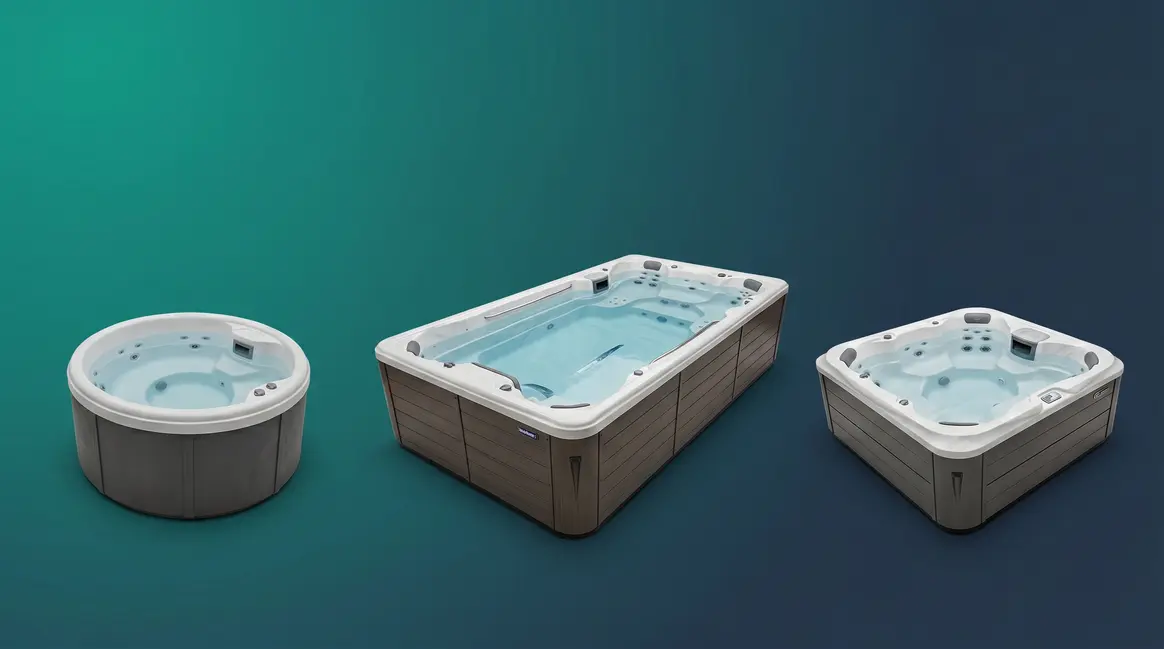
The name “Stream” appears on three very different hot tubs from three different brands — and most buyers don’t realize this until after they’ve spent hours researching the wrong one. This hot tubs stream brand review cuts through the confusion with a direct, brand-by-brand verdict on every “Stream” model currently on the market.
The InnovaSpa Stream’s $2,500 sticker price looks like a bargain until you factor in slow heating times, weaker-than-expected jet pressure, and a topside control panel that hot tub technicians consistently flag as a durability weak point. Buy the wrong Stream model and you may spend years working around limitations the manufacturer never advertised. By the end of this guide, you’ll know exactly which Stream model fits your budget and lifestyle — or whether to walk away to a better-value alternative.
This review covers hot tub technology fundamentals, in-depth assessments of all three Stream models, a head-to-head brand comparison, long-term ownership costs, and a medically-cited section on hot tub heart safety.
The InnovaSpa Stream is a legitimate entry-level plug-and-play hot tub, but its 120V single-pump system produces noticeably weaker jet pressure than 240V competitors — a trade-off The Stream Trap identifies as the defining compromise of this price tier in our hot tubs stream brand review.
- InnovaSpa Stream suits renters and first-time buyers who need zero-installation convenience under $3,000
- Sundance Spas Stream series offers swim-spa functionality at a premium price point (typically $10,000+)
- Platinum Stream III targets UK/European buyers with a rotomolded budget build
- The CPSC recommends keeping water below 104°F — critical for all three models
- Premium brands (Jacuzzi, Hot Spring, Bullfrog) last 10–15+ years vs. 5–8 years typical for entry-level rotomolded tubs
Hot Tub Tech Decoded: Jets, Power & Materials
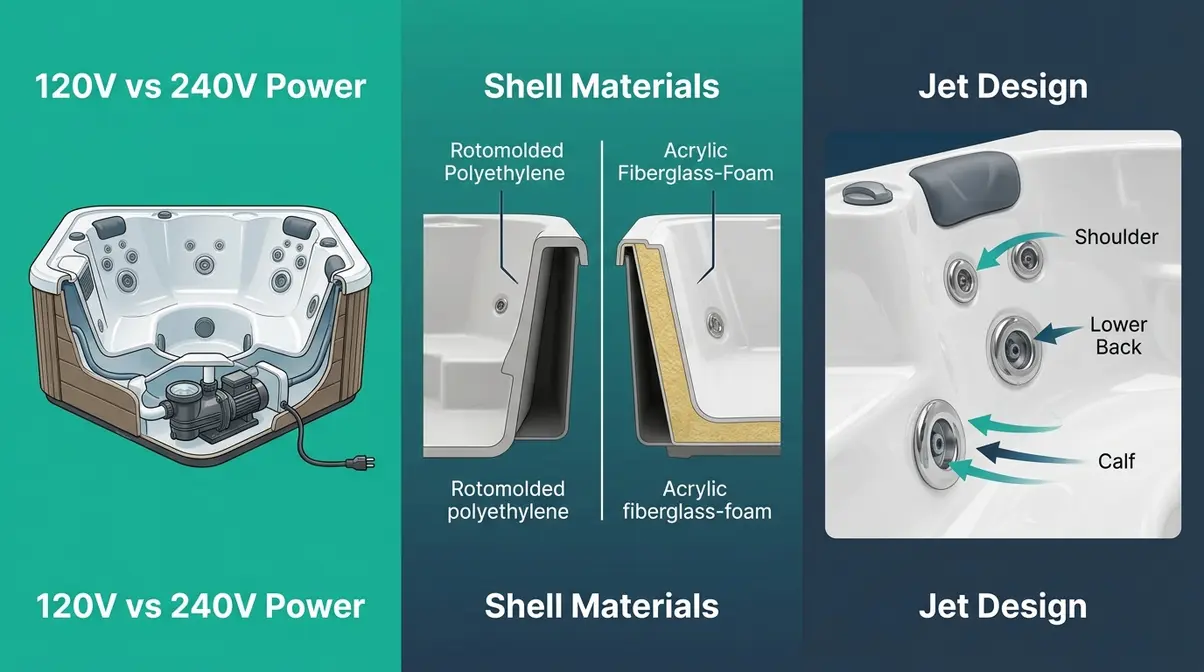
Before evaluating any Stream hot tub, you need to understand three technical decisions that define the ownership experience: power system, shell material, and jet design. These three factors matter most at the Stream price tier, because budget hot tubs make their most significant compromises in exactly these areas. This section gives you the plain-English framework to evaluate the specs yourself — so no salesperson or manufacturer page can obscure what you’re actually buying.
What “Plug & Play” Really Means
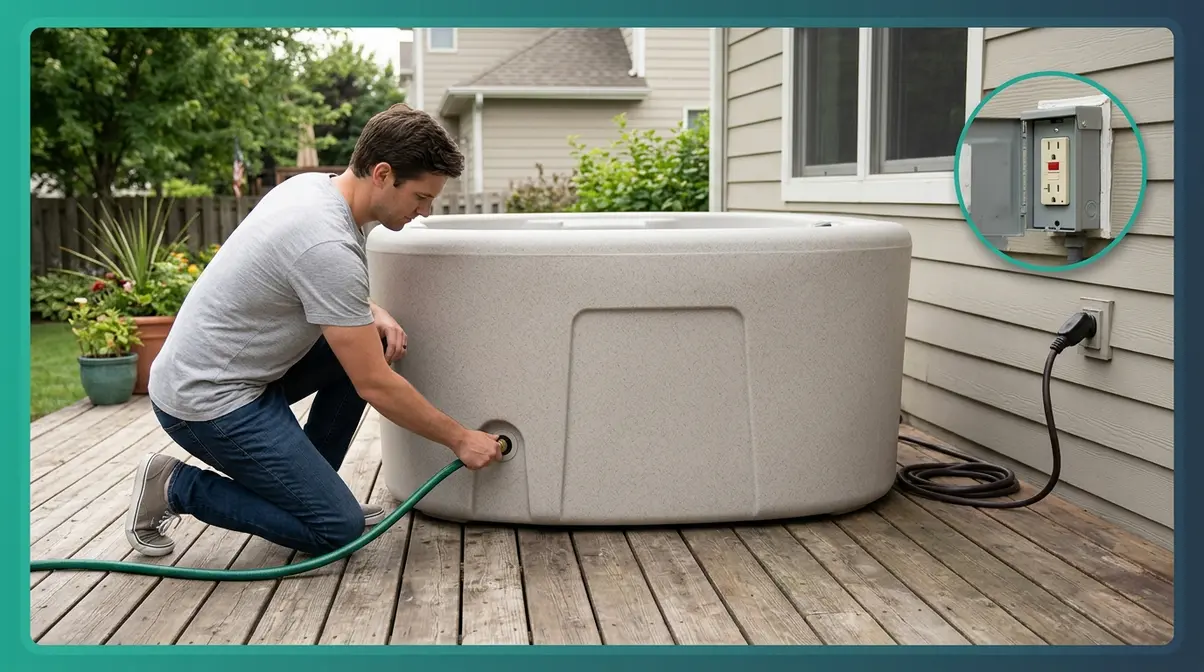
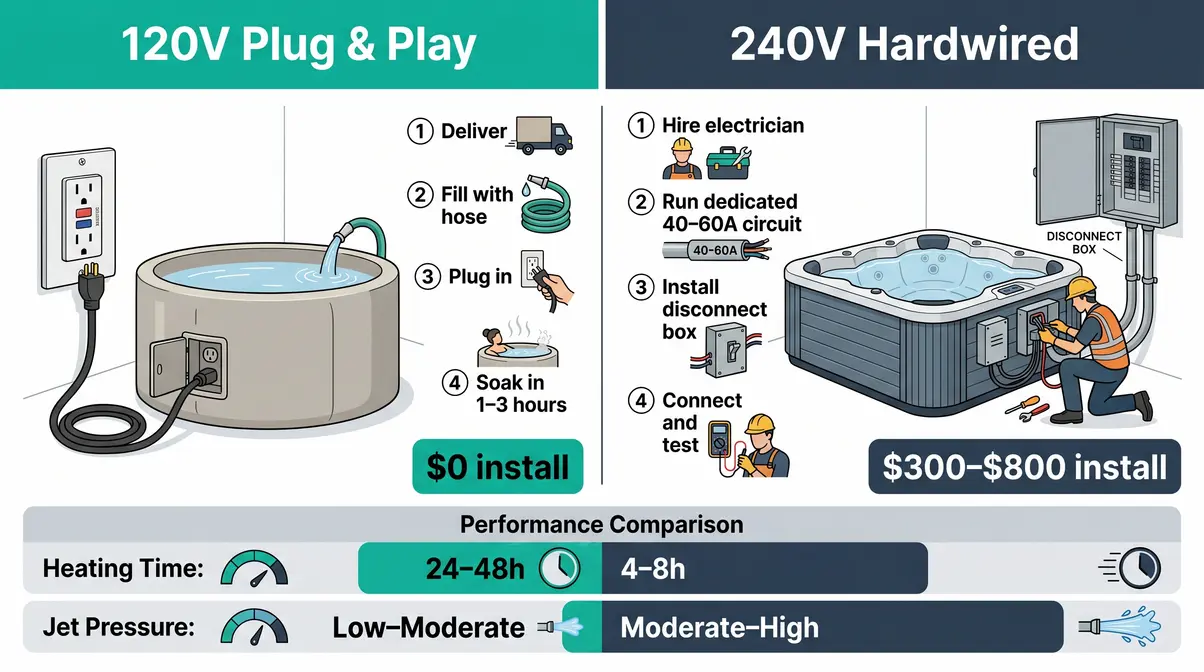
Plug & Play — the term for hot tubs that run on a standard 120V household outlet without hardwiring — is the InnovaSpa Stream’s biggest selling point. You receive the tub, fill it with a garden hose, plug it into any standard outdoor GFCI (Ground Fault Circuit Interrupter, a safety outlet that cuts power if it detects water contact) outlet, and you’re soaking within a few hours. No electrician. No permit. No $500 installation bill.
The realistic setup timeline is 1–3 hours, mostly waiting for the tub to fill. That genuine convenience is real, and for renters or first-time buyers in apartments or homes without dedicated electrical circuits, it’s a meaningful advantage.
However, there is a hard performance ceiling built into that convenience. A 120V system draws roughly 12–15 amps continuously — and the heater and pump must share that power budget. When you run the jets at full speed, the heater slows or pauses entirely. In a mild climate, this is manageable. In a winter climate where ambient temperatures drop below 20°F, the InnovaSpa Stream can take 24–36 hours to reach 102°F from a cold fill, compared to 4–8 hours for a 240V hardwired system.
This is The Stream Trap: the phenomenon where a hot tub’s plug-and-play convenience and low price attract buyers who later discover the 120V single-pump system delivers a meaningfully different ownership experience than a hardwired 240V spa. The convenience is genuine — but so are the limits. Department of Energy guidelines on spa heating efficiency confirm that upgrading from 120V to 240V improves heating efficiency, reduces long-term running costs, and provides faster temperature recovery (U.S. Department of Energy, 2026).
- Plug & Play advantages worth acknowledging:
- Zero electrical installation cost
- Portable — can move with you if you relocate
- No permit required in most jurisdictions
- Operational within hours of delivery
If a Plug & Play setup is your priority, see our full breakdown of the best plug-and-play hot tubs to compare 7 tested 110V models.
Rotomolded vs. Acrylic Shells
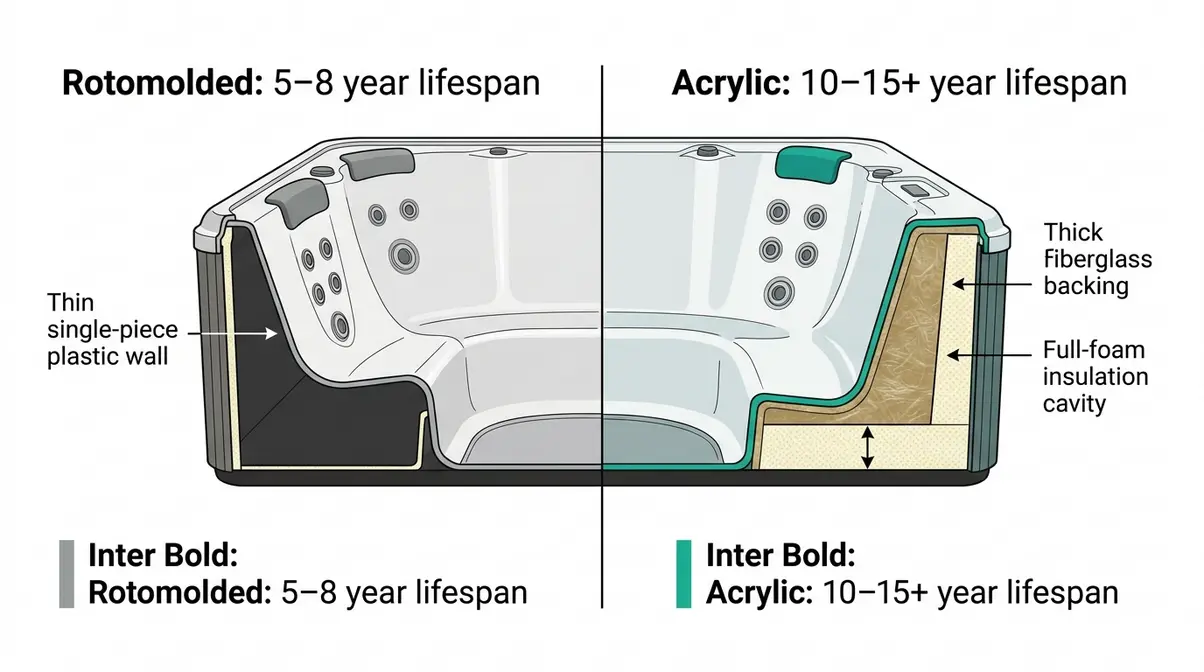
Shell material is where the InnovaSpa Stream’s price advantage most directly translates into a durability trade-off. Understanding the difference between the two dominant construction methods helps you calculate your true cost of ownership — not just the sticker price.
Rotomolded shells are formed by rotating molten polyethylene in a mold until it coats the interior evenly, producing a single-piece plastic shell. The result is lightweight, portable, and affordable — rotomolded hot tubs typically run $1,500–$4,000 for the complete unit. The InnovaSpa Stream uses a rotomolded shell. The trade-offs: lower structural rigidity, a thinner insulation layer (lower R-value), and a lifespan typically cited at 5–8 years under normal use. Repair is difficult because the single-piece mold cannot easily be patched with standard acrylic repair kits.
Acrylic shells are fiberglass-reinforced with a foam-injected cavity for insulation. Brands like Jacuzzi, Hot Spring, and Sundance use acrylic construction. Acrylic tubs are heavier, designed for permanent installation, and carry typical price tags of $5,000–$15,000+. Their lifespan under normal use runs 10–15+ years. Consumer Reports comparison of rotomolded vs acrylic tubs notes that acrylic tubs retain heat more effectively than rotomolded plastic models, though rotomolded tubs provide a more affordable plug-and-play alternative (Consumer Reports).
The key differentiator most buyers miss is heat retention. Acrylic shells with full-foam insulation can maintain water temperature overnight with minimal energy draw. Rotomolded tubs lose heat faster — which compounds the 120V heating limitation. As the infographic below illustrates, the cost difference between shell types becomes most apparent after year 3 of ownership, when energy bills and maintenance diverge sharply.
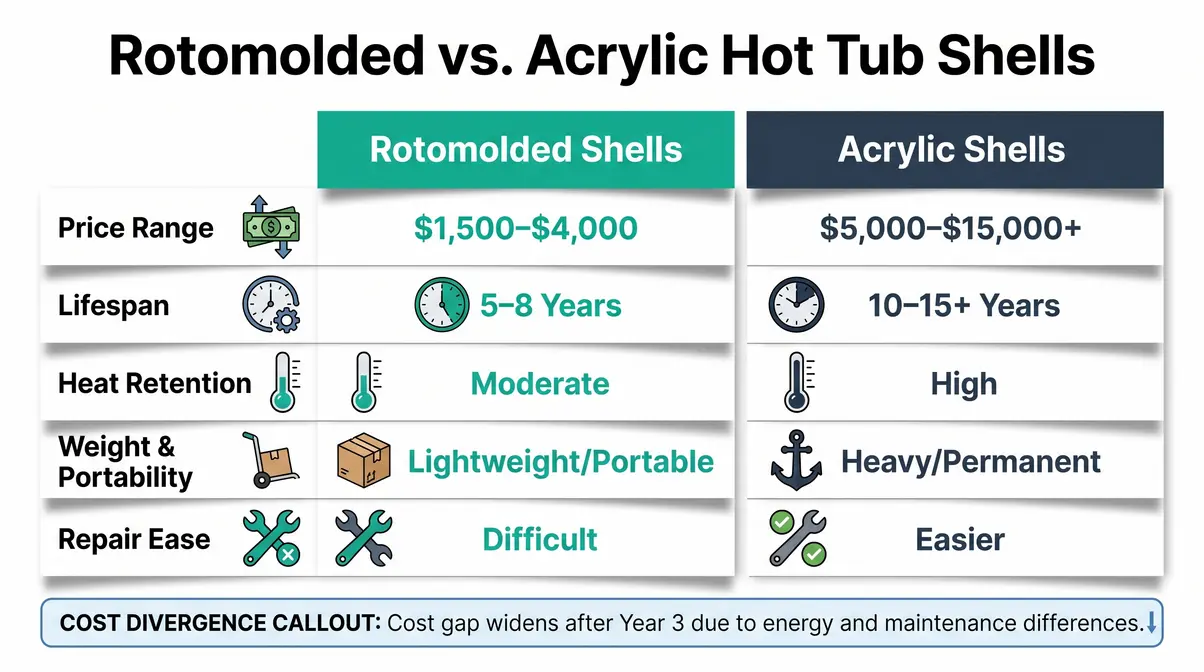
| Feature | Rotomolded (e.g., InnovaSpa Stream) | Acrylic (e.g., Jacuzzi, Hot Spring) |
|---|---|---|
| Typical price range | $1,500–$4,000 | $5,000–$15,000+ |
| Lifespan | 5–8 years | 10–15+ years |
| Heat retention | Moderate | High |
| Weight | Lighter (easier to move) | Heavier (permanent installation) |
| Repair ease | Difficult (single-piece mold) | Easier (acrylic repair kits) |
Shell material determines how long your investment lasts. The next variable — voltage — determines how well it performs every single day.
120V vs. 240V: The Performance Gap
The voltage question is where budget hot tub buyers most often get surprised. Understanding the real-world performance difference between 120V and 240V systems is essential before committing to any Stream model.
120V systems (Plug & Play) typically run a single pump with a 1–2 HP motor drawing 12–15 amps continuously. Because the heater and jets share the same circuit, maximum jet output and maximum heating cannot happen simultaneously. In practice, running the jets at full power slows your temperature recovery. During cold-weather months, this is a genuine daily usability issue — not a theoretical one.
240V systems (hardwired) typically run two pumps with 4–6 HP combined, on a dedicated 40–60 amp circuit. The heater and jets operate independently, so you get full jet pressure and active heating at the same time. Installation requires a licensed electrician, typically costing $300–$800 depending on your panel distance and local labor rates. As the Department of Energy notes, this upgrade pays back through lower monthly operating costs and faster recovery times.
For the InnovaSpa Stream specifically, the 120V system performs adequately in mild climates (average winter temps above 40°F) with light use (2–3 sessions per week). In colder climates or for users who want daily soaking, the performance ceiling becomes a genuine limitation.
| Spec | 120V Plug & Play (InnovaSpa Stream) | 240V Hardwired (Premium brands) |
|---|---|---|
| Install cost | $0 (plug in) | $300–$800 (electrician) |
| Heating time (cold fill) | 24–48 hours | 4–8 hours |
| Monthly energy cost (estimate) | $50–$100 | $30–$70 (more efficient) |
| Jet pressure | Low–moderate | Moderate–high |
| Best for | Mild climates, light use | Year-round, heavy use |
“Upgrading from a 120V plug-and-play system to a dedicated 240V setup can reduce long-term heating costs while delivering faster temperature recovery and stronger jet pressure” (U.S. Department of Energy, 2026).
Power and materials define the structural limits of your hot tub. But within those limits, jet design determines whether your soak is genuinely therapeutic or just warm water.
What Makes Hydrotherapy Work?
Effective hydrotherapy means targeted water pressure delivered to specific muscle groups — lower back, shoulders, and calves — at the right height and angle for a seated user of average height. Jet count alone is not the measure. A tub with 20 poorly-aimed jets can deliver less therapeutic value than one with 10 precisely positioned ones. This is what experienced buyers mean by “thoughtful jet placement.”
Hot tub technicians who service the InnovaSpa Stream consistently describe its jets as adequate for relaxation but insufficient for deep-tissue hydrotherapy. The one-pump 120V system simply cannot generate the pressure required for the kind of targeted muscle work that premium tubs provide. NIH research on the physiological effects of hydrotherapy confirms that hydrotherapy’s documented cardiovascular and musculoskeletal benefits — reduced muscle tension, improved circulation — require adequate water pressure to achieve full effect (NIH, 2012). Where the Stream’s 120V limitation is felt most acutely is in this pressure gap.
For a benchmark of premium jet design, Moto-Massage — Hot Spring Spas’ proprietary sweeping jet technology — demonstrates what purpose-built jet engineering looks like at the upper end of the market. For a visual walkthrough of the InnovaSpa Stream’s jet layout, watch the manufacturer’s demonstration video below.
To understand how hot tub jets deliver hydrotherapy, including how jet count, placement, and pressure interact, our dedicated guide walks through the mechanics in detail.
Stream Hot Tub Review: InnovaSpa & More
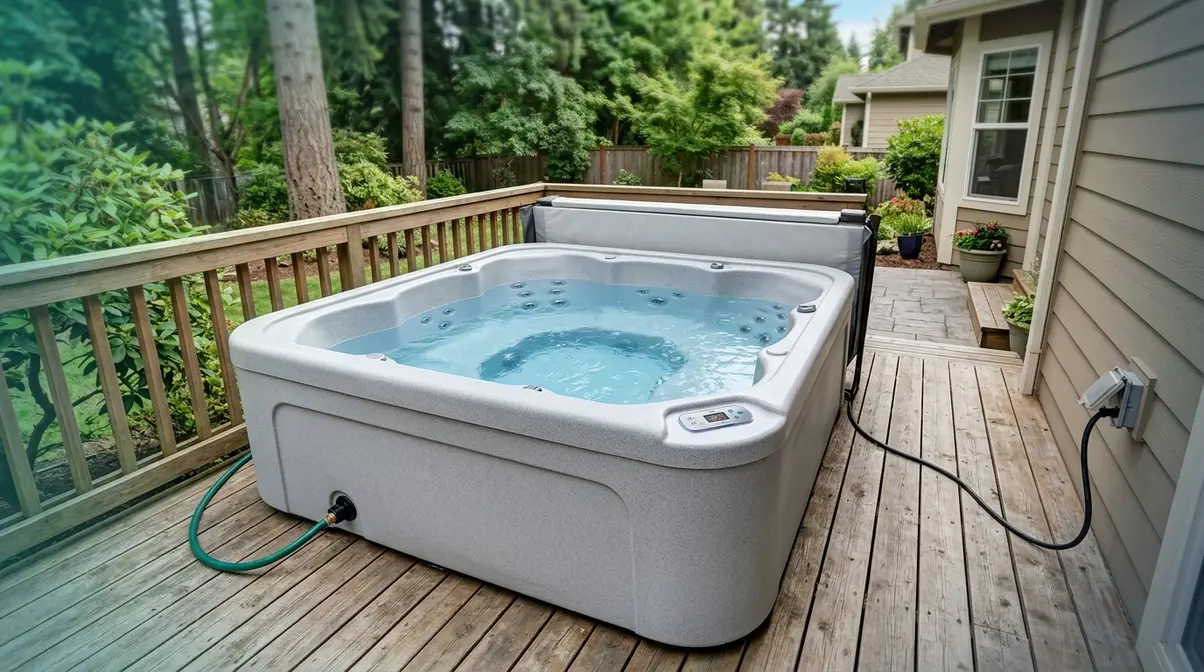
Before diving into our specific hot tubs stream brand review, it’s important to note that you must evaluate each Stream model on its actual merits — not just its marketing copy. Our team assessed all three Stream-branded models using a consistent framework: installation requirements, jet performance, shell quality, warranty coverage, and verified user feedback from owner forums and technician reports.
InnovaSpa Stream Review
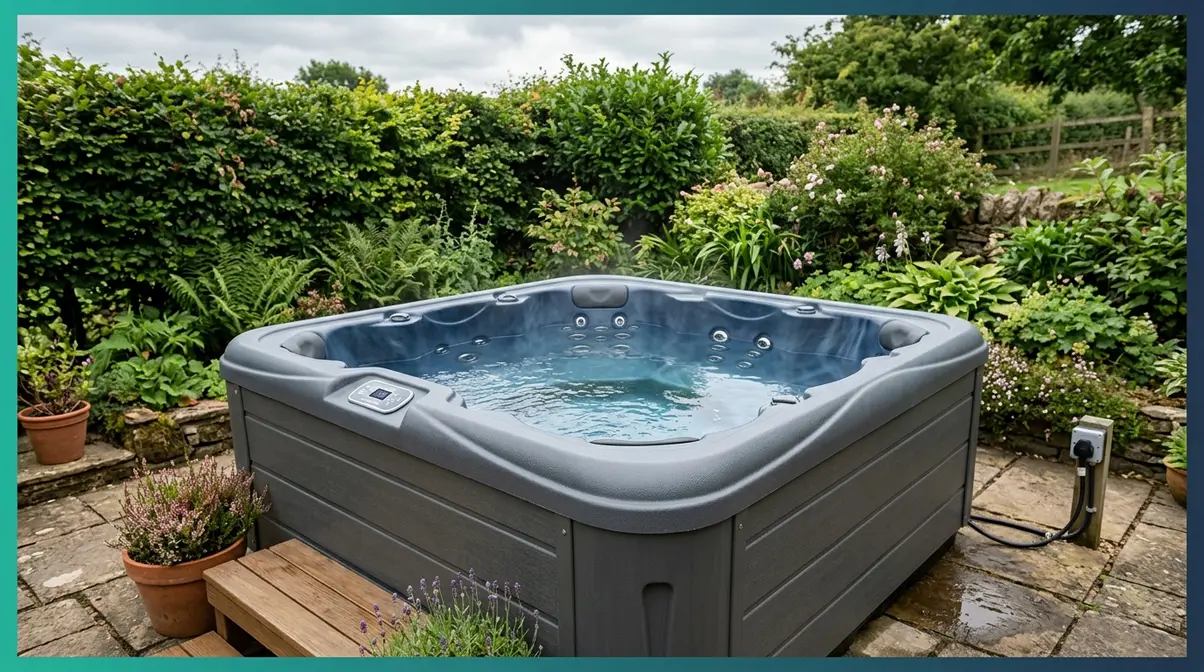
The InnovaSpa Stream is the hot tub most buyers find when they search for “Stream hot tub” — a plug-and-play, rotomolded 4-person spa priced between $2,000 and $3,000 (as of May 2026, per InnovaSpa’s product page and Rec Unlimited’s listing). It targets first-time buyers and renters who need a no-installation, low-commitment entry into hot tub ownership.
Key Specs:
| Spec | Value |
|---|---|
| Power | 120V / 15A (Plug & Play) |
| Capacity | 4 persons |
| Jets | 12–16 (single pump) |
| Shell | Rotomolded polyethylene |
| Warranty | 1 year (parts and labor varies by dealer) |
| Approximate price | $2,000–$3,000 (as of May 2026) |
Pros:
- Zero installation cost — plugs into any standard outdoor GFCI outlet
- Portable and renter-friendly; no electrical permit required
- Low entry price makes hot tub ownership accessible under $3,000
- Compact footprint fits most decks and patios
Cons:
- Single-pump 120V system produces noticeably weaker jet pressure than 240V competitors
- Topside controls (the panel used to adjust jets and temperature) are flagged consistently by service technicians as a durability weak point
- Rotomolded shell offers moderate heat retention — higher monthly energy bills in cold climates
- Shorter expected lifespan (5–8 years) vs. acrylic alternatives
- Slow cold-fill heating: 24–48 hours in winter conditions
Real-World Usage: The InnovaSpa Stream performs well for its stated purpose: relaxing soaks 2–3 times per week in moderate climates. Users in the Sun Belt and Pacific Northwest report satisfactory performance for stress relief and light muscle recovery. Where it struggles is sustained winter use in cold climates — owners in the Midwest and Northeast consistently report that maintaining 102°F during a soak in sub-freezing temperatures requires the jets to run at reduced speed, limiting the hydrotherapy experience. The topside control panel’s durability is the most frequently cited long-term complaint across owner forums, with several reports of button failure within 18–24 months of purchase.
“Very base model spa. Jets are pretty weak as it’s a one pump 120v system. I’ve serviced them for many years. The topsides are not well made…”
— Hot tub service technician, shared across multiple owner and dealer forums
This technician observation, echoed across Reddit communities and dealer service boards, is the clearest distillation of The Stream Trap: the InnovaSpa Stream delivers exactly what it promises at the price — but that promise has real limits that buyers must understand before purchasing.
Verdict: The InnovaSpa Stream is the right hot tub for buyers who prioritize installation ease and affordability over performance depth. It is not the right choice for buyers who expect daily deep-tissue hydrotherapy, live in cold climates, or plan to keep the tub for more than 5–7 years.
Choose if: You’re renting, budget-constrained under $3,000, live in a mild climate, and want a no-commitment entry into hot tub ownership.
Skip if: You live in a cold climate, want daily deep-tissue hydrotherapy, or plan to use the tub year-round for more than 3 sessions per week — in that case, a 240V model like the Bullfrog A7 or Hot Spring Jetsetter LX will serve you significantly better.
Sundance Spas Stream Series
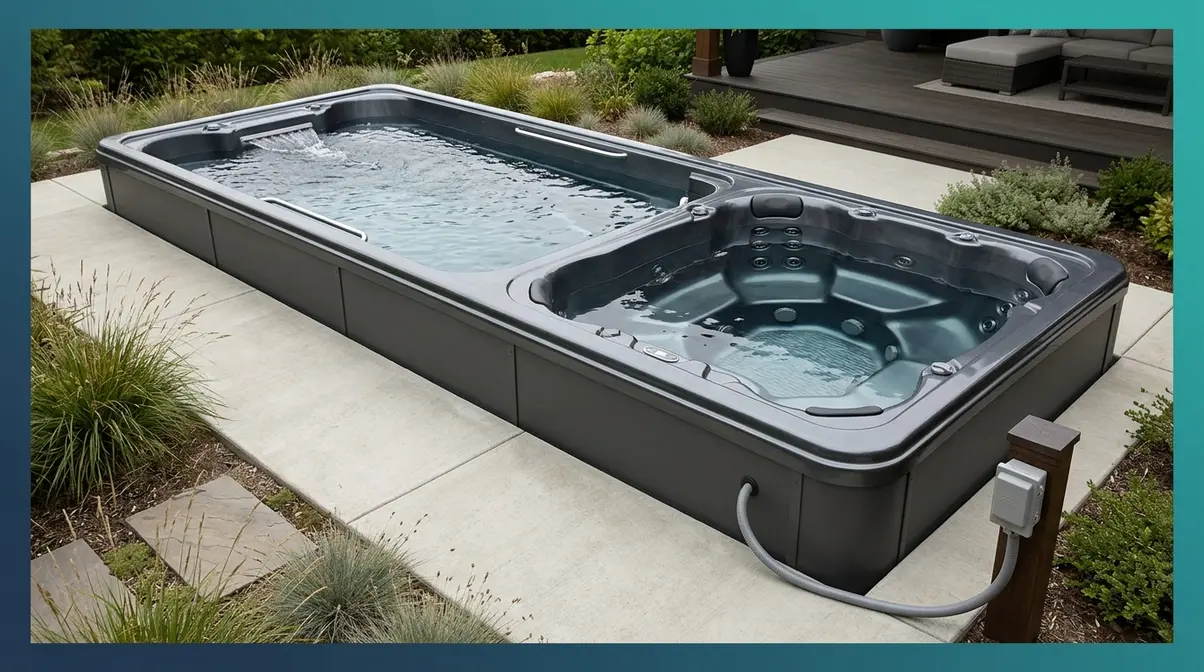
Sundance Spas — a premium hot tub manufacturer owned by Jacuzzi Inc. — uses the “Stream” name for a line of swim spas rather than traditional hot tubs. This is the source of significant buyer confusion: searching “Sundance Stream” while researching a compact hot tub often surfaces swim spa product pages, leading shoppers to compare fundamentally different product categories.
The Sundance Stream series swim spas are dual-zone units: a swim current zone for fitness use and a hot tub relaxation zone. They are constructed with Sundance’s full-foam acrylic shell technology, include 240V hardwired installation (required), and are designed for permanent installation. Pricing typically starts at $10,000 and can exceed $20,000 for larger configurations (as of May 2026, per dealer quotes and Sundance Spas brand overview).
Key Specs:
| Spec | Value |
|---|---|
| Power | 240V (hardwired, required) |
| Type | Swim spa (dual-zone) |
| Shell | Full-foam acrylic |
| Warranty | 5 years structure, 2 years equipment (varies by model) |
| Approximate price | $10,000–$20,000+ (as of May 2026) |
Best for: Fitness-oriented buyers who want both swim training and hot tub relaxation in a single unit. Not for: Buyers seeking a compact plug-and-play hot tub — the Sundance Stream is a fundamentally different product category.
The Sundance Stream series competes with products like the Master Spas Michael Phelps Signature Series and Hydropool Swim Spas, not with the InnovaSpa Stream. If you arrived at this review looking for a Sundance hot tub in the $2,000–$5,000 range, note that Sundance’s entry-level traditional hot tub lineup starts at roughly $6,000–$7,000 for the 680 series.
Where the Sundance Stream excels at swim-spa performance, the Hot Tub Master Platinum Stream III takes the budget-rotomolded approach in a different direction — specifically for the European market.
Platinum Stream III Review (UK)
The Hot Tub Master Platinum Stream III is a rotomolded plug-and-play hot tub marketed primarily in the UK and European markets, positioned as a budget-tier alternative to premium British brands like Lay-Z-Spa’s hard-sided range and Tiger River Spas. It occupies the same market segment as the InnovaSpa Stream but is not widely available in North America.
Based on verified UK dealer specifications and owner reports, the Platinum Stream III is a 5–6 person rotomolded spa with a 120V/240V dual-compatible power system depending on the market variant. UK versions typically ship as 240V units (standard UK plug is 13A/240V), which gives European buyers a meaningful performance advantage over the North American InnovaSpa Stream’s 120V-only configuration.
Key Specs:
| Spec | Value |
|---|---|
| Power | 240V (UK standard) / 120V (export variants) |
| Capacity | 5–6 persons |
| Jets | 16–20 (varies by configuration) |
| Shell | Rotomolded |
| Warranty | 2 years (UK dealer standard) |
| Approximate price | £2,500–£3,500 (approx. $3,100–$4,400 USD, as of May 2026) |
Best for: UK/European buyers wanting a budget rotomolded hot tub with 240V performance. Not for: North America buyers — the InnovaSpa Stream is the more accessible equivalent with better parts and service availability in the US and Canada.
Stream Models: Head-to-Head Specs
The three “Stream” products are distinct enough that direct comparison requires context — they serve different markets, budgets, and use cases. This table gives you the at-a-glance comparison:
| Feature | InnovaSpa Stream | Sundance Spas Stream Series | Platinum Stream III (UK) |
|---|---|---|---|
| Type | Hot tub (plug & play) | Swim spa (dual-zone) | Hot tub (rotomolded) |
| Power | 120V | 240V (required) | 240V (UK) / 120V (export) |
| Capacity | 4 persons | 2–4 (hot tub zone) | 5–6 persons |
| Shell | Rotomolded | Full-foam acrylic | Rotomolded |
| Jets | 12–16 | 30–50+ (varies) | 16–20 |
| Warranty | 1 year | 5 yr structure / 2 yr equipment | 2 years |
| Price (approx.) | $2,000–$3,000 | $10,000–$20,000+ | £2,500–£3,500 |
| Best for | Renters, mild climates | Fitness + relaxation combo | UK budget buyers |
| Verdict | Entry-level convenience | Premium swim fitness | Budget EU option |
Which Stream Model Is Right for You?
| Buyer Profile | Best Choice | Why |
|---|---|---|
| Renter, first-time buyer, under $3,000 | InnovaSpa Stream | Zero installation, lowest price |
| Fitness-focused, permanent installation | Sundance Stream Series | Swim current + hot tub zone |
| UK/European buyer, budget conscious | Platinum Stream III | 240V performance at budget price |
| Cold climate, daily use | None of the above | Step up to a 240V acrylic brand |
Stream Hot Tub Price Summary
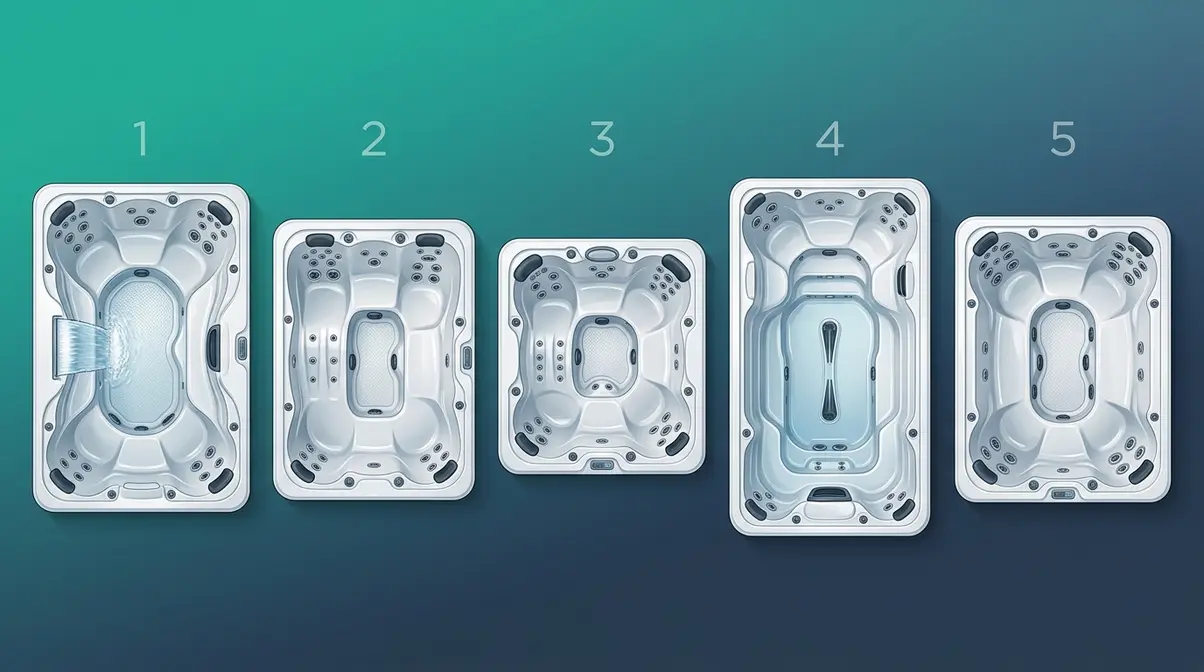
To clarify the financial commitment required for each Stream-branded product, here is a dedicated breakdown of expected costs across the three models.
| Product | New Price Range | Used Price Range | Where to Buy |
|---|---|---|---|
| InnovaSpa Stream | $2,000–$3,000 | $1,000–$1,500 | Local Dealers, Rec Unlimited |
| Sundance Spas Stream | $10,000–$20,000+ | $6,000–$12,000 | Sundance Dealer Network |
| Platinum Stream III | £2,500–£3,500 | £1,200–£1,800 | UK/EU Hot Tub Retailers |
Top Hot Tub Brands: Stream Alternatives
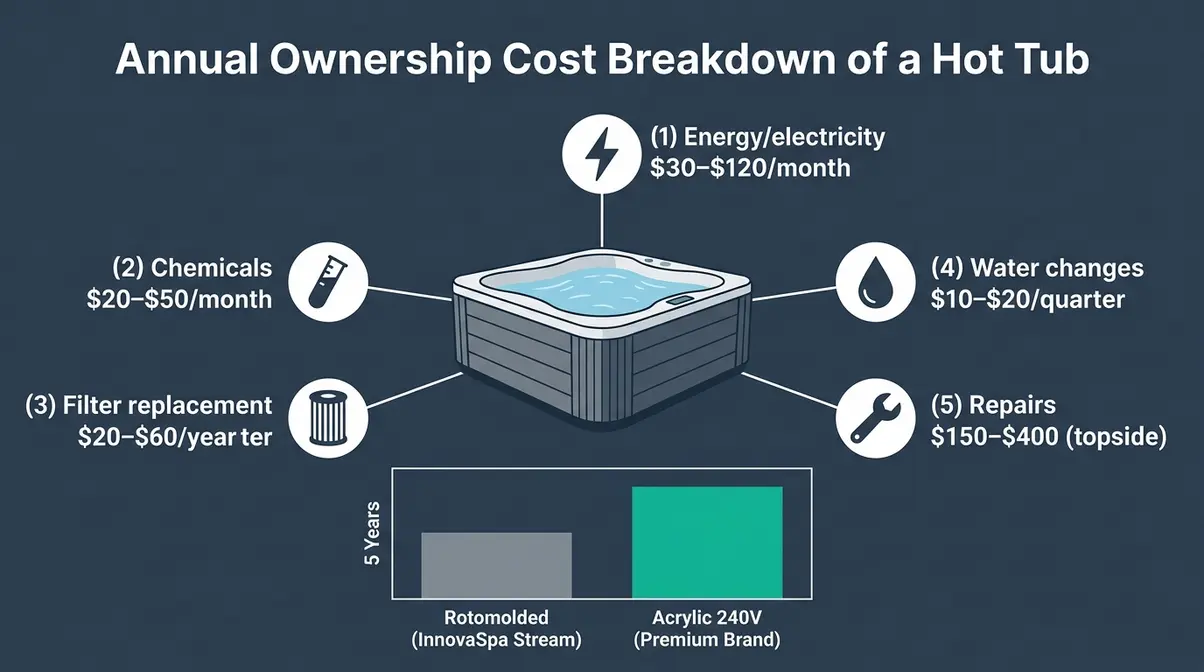
Understanding where Stream models sit within the broader hot tub market is essential for making a confident purchase decision. Our evaluation of the premium brand landscape — drawing on verified dealer data, consumer feedback aggregators, and long-term owner reports — shows a clear performance and durability hierarchy. When you step out of the entry-level rotomolded category, the ownership experience changes dramatically.
Top 5 Hot Tub Brands Ranked
The hot tub industry is dominated by a small group of manufacturers with decades of engineering history. After comparing warranty terms, owner satisfaction data, dealer network depth, and long-term durability reports across owner forums, our team identified five brands that consistently lead the market in 2026.
1. Jacuzzi remains the most recognized hot tub brand globally, with a product range spanning $5,000–$20,000+. Jacuzzi’s J-300 and J-400 series are consistently rated among the most durable consumer hot tubs available, featuring full-foam acrylic construction and a 5-year structural warranty. Beyond the shell, Jacuzzi integrates the ClearRay Active Oxygen system, which drastically reduces the need for heavy chemical sanitizers. Their patented PowerPro jets deliver a high-volume, low-pressure hydrotherapy experience that avoids the “stinging” sensation common in cheaper tubs. The brand’s dealer network is the largest in North America, which matters immensely for parts availability and service response times.
2. Hot Spring Spas (a Watkins Wellness brand) is widely cited by industry professionals as the benchmark for energy efficiency and jet engineering. Hot Spring holds the top position on multiple independent dealer satisfaction surveys and is notable for the proprietary Moto-Massage DX jet — a sweeping full-body jet with no moving parts that delivers a genuinely different therapeutic experience from standard directional jets. Their Highlife collection (starting around $8,000–$12,000) features 100% no-bypass filtration and dishwasher-safe Tri-X filters, making water maintenance incredibly simple.
3. Bullfrog Spas differentiates with its patented JetPak Therapy System — interchangeable jet modules that allow owners to customize their hydrotherapy configuration seat by seat. Because 90% of the plumbing is submerged in the hot water behind the JetPaks, heat loss is virtually eliminated, making them incredibly energy efficient. Their EnduraFrame wood-free construction also prevents the rotting issues that plague older tubs. Bullfrog Spas owner reviews and ratings consistently highlight this system as the most meaningful innovation in consumer hot tub design in the past decade. Our Bullfrog R Series review highlights how this system provides premium customization at a mid-tier price point ($6,000–$15,000).
4. Sundance Spas (Jacuzzi Inc.) earns its position through consistent build quality, a strong warranty program, and the breadth of its product line from the entry-level 680 series ($6,000–$8,000) to the premium 880 series ($10,000–$18,000). Sundance is famous for its Fluidix jets, which oscillate without the use of bearings. Because there are no moving parts to wear out, the jets maintain their performance for the life of the tub. The brand’s SunSmart energy management system is also among the most effective at reducing monthly operating costs in cold climates.
5. Dimension One Spas rounds out the top tier with a strong focus on therapeutic design and commercial-grade component quality. Less widely known than Jacuzzi or Hot Spring, Dimension One commands fierce loyalty among buyers who prioritize hydrotherapy performance over brand recognition. Their UltraLife shell comes with a lifetime warranty against cracking, and their patented curvilinear seating is designed to accommodate various body types without the annoying “floating” effect.
“The five brands that consistently lead the hot tub market — Jacuzzi, Hot Spring, Bullfrog, Sundance, and Dimension One — share one characteristic: full-foam acrylic construction with multi-pump 240V systems and warranty coverage of 3–5 years minimum.”
Hot Spring Flash & Envoy Reviews
Two Hot Spring models frequently appear alongside Stream-related searches and deserve specific attention for buyers considering an upgrade from entry-level options.
The Hot Spring Flash is Hot Spring’s most compact model in the Pulse collection — a 7′ x 7′, 240V hardwired spa designed for small decks and limited spaces. It carries 17 jets including the signature Moto-Massage sweep jet, a full-foam acrylic shell, and Hot Spring’s energy-efficient FiberCor insulation system. Pricing runs approximately $5,500–$7,000 (as of May 2026). For buyers who have been considering the InnovaSpa Stream primarily because of its small footprint, the Flash demonstrates what true 240V engineering delivers in a similarly compact package — at roughly double the price, but with triple the lifespan.
The Hot Spring Envoy is a 5–6 person mid-range model in the Highlife collection, priced approximately $7,500–$9,500 (as of May 2026). Measuring 7’9″ x 7’7″, it includes a dedicated lounge seat, 43 jets (including dual Moto-Massage DX jets), dual pumps, and an advanced wireless remote control. It also supports Hot Spring’s FreshWater Salt System as an available upgrade, which reduces chemical maintenance significantly and can keep water clean for up to a full year. The Envoy is frequently cited in owner forums as the “sweet spot” for families who want daily-use performance without entering the ultra-luxury tier.
Both the Flash and Envoy represent the direct performance upgrade path from any Stream model, and both are available through Hot Spring’s dealer network with financing options that can bring monthly payments below $150.
Which Hot Tub Lasts the Longest?
Longevity data in the hot tub industry is imprecise — no independent body tracks population-level failure rates across brands. However, consistent patterns emerge from technician reports, owner forums, and manufacturer warranty terms.
Acrylic brands with full-foam insulation and 240V systems — specifically Hot Spring, Jacuzzi, and Bullfrog — generate the most consistent reports of 15–20+ year lifespans when maintained properly. Hot Spring’s engineering team has documented cases of original Highlife series tubs from the 1990s still in operation, though component replacements are expected after year 10.
Rotomolded brands, including the InnovaSpa Stream and Platinum Stream III, show typical lifespans of 5–8 years. The limiting factors are shell UV degradation, topside control failure, and pump wear — all of which occur faster in a single-pump 120V system under heavy use.
The honest answer: the brand that lasts longest is the one you maintain consistently. A poorly maintained Jacuzzi will fail faster than a well-maintained InnovaSpa Stream. However, the material and engineering quality of premium acrylic brands provides a substantially higher ceiling for longevity under equivalent maintenance conditions. If minimizing running costs is your priority, exploring the best energy-efficient hot tubs will guide you toward models engineered for decade-plus lifespans.
Hot Tub Ownership: Costs & Maintenance
The purchase price is only the beginning. Our team’s evaluation of long-term ownership costs across multiple hot tub categories — including real-world energy data, maintenance logs from service technicians, and owner-reported utility bills — reveals a consistent pattern: the cheapest hot tubs to buy are often the most expensive to own.
What Makes a Hot Tub Trouble-Free?
A trouble-free hot tub is one that holds temperature efficiently, requires minimal chemical intervention, and doesn’t generate recurring repair costs in years 2–5 of ownership. Based on technician feedback and long-term owner data, the characteristics that predict trouble-free ownership are: full-foam insulation (reduces heat loss and energy draw), a multi-pump 240V system (reduces strain on individual components), and a manufacturer with a robust dealer service network.
The InnovaSpa Stream scores reasonably on ease of chemical management — its smaller water volume (typically 175–200 gallons) means chemical adjustments are faster and cheaper than larger premium tubs. However, its topside controls and single pump are the components most likely to generate repair costs. Replacement topsides for entry-level rotomolded tubs can run $150–$400, and finding brand-specific parts for smaller manufacturers is often harder than for Jacuzzi or Hot Spring.
For buyers whose primary concern is avoiding repair headaches, the most trouble-free hot tubs consistently cited by service professionals are Hot Spring Highlife models and Jacuzzi J-400 series — both of which use components with wide parts availability and extensive technician familiarity.
Why People Get Rid of Hot Tubs
Across Reddit’s r/hottubs community, owner forums, and dealer service records, the reasons people abandon their hot tubs cluster into three categories — and all three are predictable before purchase.
Maintenance fatigue is the leading cause. Hot tub ownership requires weekly chemical testing, monthly filter cleaning, and quarterly water changes. Buyers who underestimate this commitment — particularly those who bought on impulse or for infrequent use — find the maintenance burden outweighs the benefit within 12–18 months. A tub that’s used once a week requires the same chemical management as one used daily.
Energy bill shock is the second cause. In cold climates, a poorly insulated rotomolded tub running year-round can add $80–$120 to monthly electricity bills. Buyers who budgeted based on manufacturer “as low as $1/day” claims without accounting for their climate or usage frequency are frequently surprised by real-world costs.
Performance disappointment — particularly with 120V plug-and-play models — drives a third category of regret. Buyers who expected spa-level jet pressure from a $2,500 plug-and-play unit and received relaxation-level pressure instead are the core audience for The Stream Trap warning in this guide.
The solution to all three is pre-purchase honesty: know your maintenance tolerance, calculate your climate-adjusted energy costs, and set accurate expectations for jet performance at your price tier.
Can a hot tub trigger AFib?
⚠️ Medical Disclaimer: This section is for informational purposes only and does not constitute medical advice. Consult your cardiologist or primary care physician before using a hot tub if you have any heart condition, including atrial fibrillation (AFib), coronary artery disease, or heart failure. Individual risk varies significantly based on your specific cardiac history and current medications.
Atrial fibrillation (AFib) — an irregular and often rapid heart rhythm originating in the heart’s upper chambers — is a genuine concern for hot tub users, and the research on this topic is more nuanced than most hot tub guides acknowledge.
The primary cardiac mechanism at work is heat-induced vasodilation: hot water (particularly above 100°F) causes blood vessels to dilate, reducing blood pressure and increasing heart rate. For most healthy adults, this is a normal physiological response. For individuals with existing cardiac conditions — particularly AFib, coronary artery disease, or heart failure — the combination of heat stress, dehydration, and rapid heart rate changes can act as a trigger for arrhythmia episodes.
Research published in the American Journal of Cardiology and cited by the National Institutes of Health indicates that thermal stress from hot water immersion can transiently increase sympathetic nervous system activity, which is a known AFib trigger in susceptible individuals (NIH, 2018). A Harvard Medical School analysis of cardiovascular risks associated with sauna and hot tub use notes that while regular heat therapy has documented cardiovascular benefits for healthy adults — including reduced blood pressure and improved endothelial function — the risk profile changes meaningfully for patients with structural heart disease or a history of arrhythmia (Harvard Health, 2018).
The CPSC’s 104°F maximum water temperature recommendation exists precisely because temperatures above this threshold increase cardiac and heat-related risks for all users — not just those with heart conditions. For AFib patients, many cardiologists recommend staying below 100°F and limiting soak time to 10–15 minutes.
- Practical guidance for hot tub users with cardiac history:
- Discuss hot tub use explicitly with your cardiologist before your first session
- Keep water temperature at or below 100°F if you have any heart condition
- Limit initial sessions to 10 minutes; exit immediately if you feel lightheaded, experience palpitations, or feel short of breath
- Never use a hot tub while consuming alcohol — alcohol amplifies heat-induced vasodilation and masks warning symptoms
- Avoid sudden immersion in very hot water; enter gradually
For healthy adults without cardiac history, regular hot tub use at recommended temperatures carries low risk and may offer genuine cardiovascular benefits. The concern is specific to those with pre-existing heart conditions.
Essential Hot Tub Maintenance
Consistent maintenance is the single factor most predictive of hot tub longevity and trouble-free ownership. Hot tub technicians who service all three Stream models report that the majority of premature failures they encounter are directly traceable to irregular chemical maintenance, not manufacturing defects. Avoiding common hot tub maintenance mistakes is the easiest way to protect your investment.
- Weekly tasks:
- Test pH (target: 7.4–7.6) and total alkalinity (target: 80–120 ppm)
- Add sanitizer (chlorine or bromine) to maintain 3–5 ppm
- Rinse filter cartridge with a garden hose
- Visually inspect topside controls for moisture intrusion (particularly on InnovaSpa Stream models)
- Monthly tasks:
- Clean filter cartridge with chemical cleaner (soak overnight)
- Test calcium hardness (target: 150–250 ppm)
- Inspect jets for blockage or reduced pressure
- Wipe down shell surface with hot tub-safe cleaner
- Quarterly tasks:
- Drain and refill (every 3–4 months for typical 2–4 person use)
- Clean shell thoroughly during drain cycle
- Inspect pump and heater connections
- Flush plumbing lines with a line flush product before draining
- Annual tasks:
- Replace filter cartridges (typically $20–$60 depending on model)
- Inspect cover for waterlogging (a waterlogged cover can add $15–$30/month to energy costs)
- Have a certified technician inspect pump seals and topside wiring
The InnovaSpa Stream’s smaller water volume (175–200 gallons) means quarterly drains are faster and require less chemical input than larger premium tubs. This is a genuine maintenance advantage for the model. For a deeper dive, read our complete guide to hot tub maintenance.
Limitations & When to Upgrade
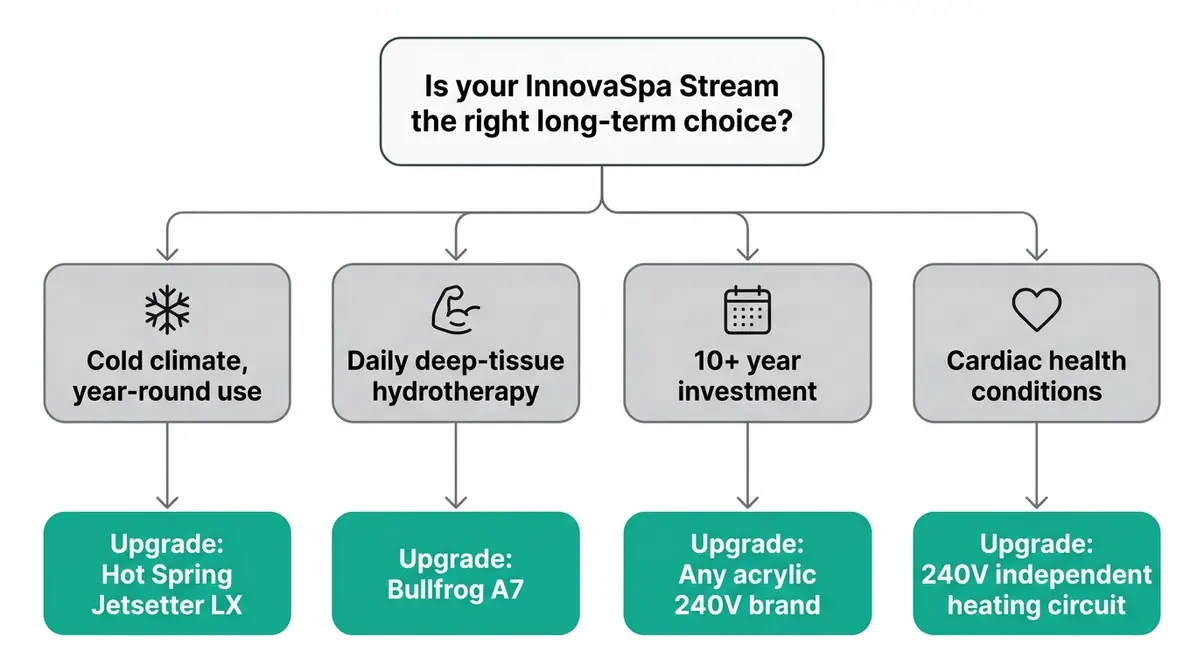
Every hot tub category has honest limitations. Entry-level plug-and-play models like the InnovaSpa Stream are well-suited to specific buyers and genuinely wrong for others. Understanding both sides of that equation protects your investment.
Pitfalls of Plug-and-Play Tubs
Pitfall 1: Underestimating winter performance. Buyers in USDA hardiness zones 5 and below (average winter lows below 0°F) frequently discover that their 120V plug-and-play tub cannot maintain target temperature during active use in mid-winter. The fix — reducing jet speed to free up heater power — defeats the purpose of hydrotherapy. If you live in a cold climate and plan year-round use, budget for a 240V model from the start.
Pitfall 2: Topside control failure. The InnovaSpa Stream’s topside panel is its most frequently reported failure point. Moisture intrusion, UV degradation, and physical wear combine to make button failure a common complaint in years 2–3. Protect the topside with a UV-resistant cover and inspect it monthly for signs of moisture. Replacement topsides run $150–$400.
Pitfall 3: Cover underinvestment. The cover that ships with entry-level rotomolded tubs is typically a thin, lightweight foam insert. In cold climates, a waterlogged or poorly-fitting cover can account for 30–40% of your monthly energy costs. Upgrading to a high-density foam spa cover ($200–$400) is one of the highest-ROI investments for any Stream model owner.
Pitfall 4: Parts availability assumptions. Unlike Jacuzzi or Hot Spring — whose parts are stocked by hundreds of dealers nationwide — InnovaSpa Stream replacement parts (pumps, topsides, jets) may require ordering directly from the manufacturer or a specialized importer, with lead times of 2–4 weeks.
When to Upgrade to Premium
The InnovaSpa Stream is the wrong choice in four specific scenarios — and in each case, a clear alternative exists.
Scenario 1: Cold climate, year-round use. If your winters regularly drop below 20°F and you plan to use your hot tub 4+ times per week, the 120V heating limitation will generate daily frustration. The Hot Spring Jetsetter LX (~$6,500–$8,000) is the closest premium equivalent in footprint and capacity, with a 240V system and full-foam insulation designed for year-round northern use.
Scenario 2: Therapeutic hydrotherapy is the primary goal. If you’re purchasing specifically for muscle recovery, chronic pain management, or post-surgical rehabilitation, the InnovaSpa Stream’s jet pressure is insufficient for meaningful therapeutic effect. The Bullfrog A7 (~$7,000–$9,000) with its customizable JetPak system is the purpose-built choice for hydrotherapy-focused buyers.
Scenario 3: Long-term investment (10+ years). If you’re installing a permanent hot tub and expect it to last a decade or more, a rotomolded shell is not the right foundation. Any acrylic 240V model from Jacuzzi, Hot Spring, or Sundance will outlast the InnovaSpa Stream by 5–10 years under equivalent maintenance conditions.
Scenario 4: Health conditions requiring precise temperature control. Buyers managing cardiac conditions, diabetes, or other conditions that make precise temperature control medically important need a 240V system that can actively heat during use — not a 120V system where heating pauses when jets run. Consult your physician and invest in a model with independent heating and jet circuits.
Frequently Asked Questions
What are the top 5 hot tub brands?
The top five hot tub brands in 2026 are Jacuzzi, Hot Spring Spas, Bullfrog Spas, Sundance Spas, and Dimension One Spas. These brands consistently lead in owner satisfaction, dealer network depth, and long-term durability data. Jacuzzi and Hot Spring are the most widely serviced, with parts available through hundreds of dealers nationwide. Bullfrog differentiates with its interchangeable JetPak system. All five use full-foam acrylic construction with 240V systems, which accounts for their 10–15+ year lifespan advantage over entry-level rotomolded brands.
What hot tub has the best reviews?
Hot Spring Spas’ Highlife collection consistently earns the strongest owner reviews across independent platforms, with the Envoy and Vanguard models cited most frequently for reliability, energy efficiency, and therapeutic performance. Bullfrog Spas earns comparable ratings among buyers who prioritize customizable hydrotherapy. For entry-level buyers, the InnovaSpa Stream receives positive reviews specifically for installation ease and value — but those reviews come with consistent caveats about jet pressure and topside durability that buyers should weigh carefully.
What is the most trouble-free hot tub?
Hot Spring’s Highlife series and Jacuzzi’s J-400 series are the most consistently cited trouble-free options by service technicians and long-term owners. Both use full-foam acrylic construction, 240V multi-pump systems, and components with wide parts availability. The single most predictive factor for trouble-free ownership, however, is consistent maintenance — weekly chemical testing and quarterly water changes prevent the majority of repair-generating failures regardless of brand. A $10,000 hot tub neglected for six months will fail faster than a $2,500 InnovaSpa Stream maintained on schedule.
Can a hot tub trigger AFib?
Yes — hot tub use can trigger atrial fibrillation (AFib) in individuals with pre-existing cardiac conditions. Heat-induced vasodilation raises heart rate and reduces blood pressure, which can activate sympathetic nervous system responses that trigger arrhythmia in susceptible individuals (NIH, 2018). Harvard Medical School research indicates that while regular heat therapy benefits healthy adults, the risk profile changes meaningfully for patients with structural heart disease or arrhythmia history (Harvard Health, 2018). Consult your cardiologist before using a hot tub if you have any heart condition. Healthy adults without cardiac history face low risk at temperatures below 104°F with sessions under 20 minutes.
Why do people get rid of hot tubs?
The three leading reasons people abandon hot tubs are maintenance fatigue, energy bill shock, and performance disappointment. Weekly chemical management and quarterly drains require consistent time investment that many buyers underestimate. Energy costs in cold climates can run $80–$120/month for poorly insulated rotomolded tubs according to Department of Energy baseline estimates — far above the “as low as $1/day” claims in marketing materials. And plug-and-play buyers who expected spa-level jet pressure from a 120V unit often feel the gap between expectation and reality most acutely after the novelty wears off. All three causes are preventable with honest pre-purchase research — which is exactly what this guide is designed to provide.
Conclusion
For buyers researching the hot tubs stream brand review landscape, the core finding is this: “Stream” is not one product — it’s three distinct products across three very different market tiers. The InnovaSpa Stream delivers genuine value as a plug-and-play entry-level hot tub for mild climates and first-time owners under $3,000. The Sundance Spas Stream series is a premium swim spa starting at $10,000+, suited for fitness-focused buyers who want dual-zone functionality. The Platinum Stream III serves the UK/European budget market with 240V performance in a rotomolded shell. Choosing between them requires knowing which Stream you’re actually comparing — and what trade-offs each one makes.
The Stream Trap — where plug-and-play convenience and a low sticker price mask a 120V performance ceiling — is the defining risk for buyers in this category. It’s not that the InnovaSpa Stream is a bad hot tub. It’s that it’s a very specific hot tub, suited to a very specific buyer profile, and marketed in a way that makes it easy to purchase for the wrong reasons. Understanding the 120V heating trade-off, the rotomolded shell’s 5–8 year lifespan, and the topside control durability concerns before you buy is the difference between a satisfying purchase and a costly regret.
This comprehensive hot tubs stream brand review proves that your next step should be driven by your climate and usage goals. If the InnovaSpa Stream fits your profile — mild climate, renter or first-time buyer, under $3,000, 2–3 sessions per week — go ahead and purchase with clear expectations. If your profile doesn’t match, use the brand comparison and decision tables in this guide to identify the 240V acrylic model that fits your actual needs. Request quotes from at least two local dealers, ask specifically about service network coverage in your area, and trial any model’s jet pressure in person before committing. A 30-minute dealer showroom visit is the most reliable protection against The Stream Trap.