

What’s in this guide
- Hot Tub Maintenance Fundamentals for Beginners
- Your Hot Tub Maintenance Schedule
- Mastering Hot Tub Water Chemistry
- Essential Hot Tub Chemicals and Maintenance Kits
- Professional Hot Tub Maintenance
- Hot Tub Health & Safety Concerns
- Advanced Tips, Pro Hacks, and Troubleshooting
- Frequently Asked Questions
- Making Hot Tub Maintenance a Habit That Sticks
Home ›Maintenance And Troubleshooting
You filled your hot tub two weeks ago, and now the water looks like diluted milk. Sound familiar? You’re not alone — and here’s the reassuring truth: this is almost always a fixable chemistry imbalance, not a sign your spa is broken.
“Daily: Keep your spa covered. Weekly and before each use: Test the spa water (and add chemicals accordingly). Monthly: Deep clean your spa’s filter.”
If you can remember those three rules, you already understand the backbone of this hot tub maintenance guide. Most guides bury you in chemistry jargon without explaining why any of it matters. Skip even one step and you invite bacteria buildup, equipment damage, or the scum line creeping up your shell — none of which are fun to deal with. By the end of this guide, you’ll have a simple, repeatable maintenance routine — the same system thousands of hot tub owners use to keep their water crystal clear year-round. You’ll cover fundamentals, a maintenance schedule, water chemistry, essential chemicals, professional service options, health and safety, and pro hacks for when things go sideways.
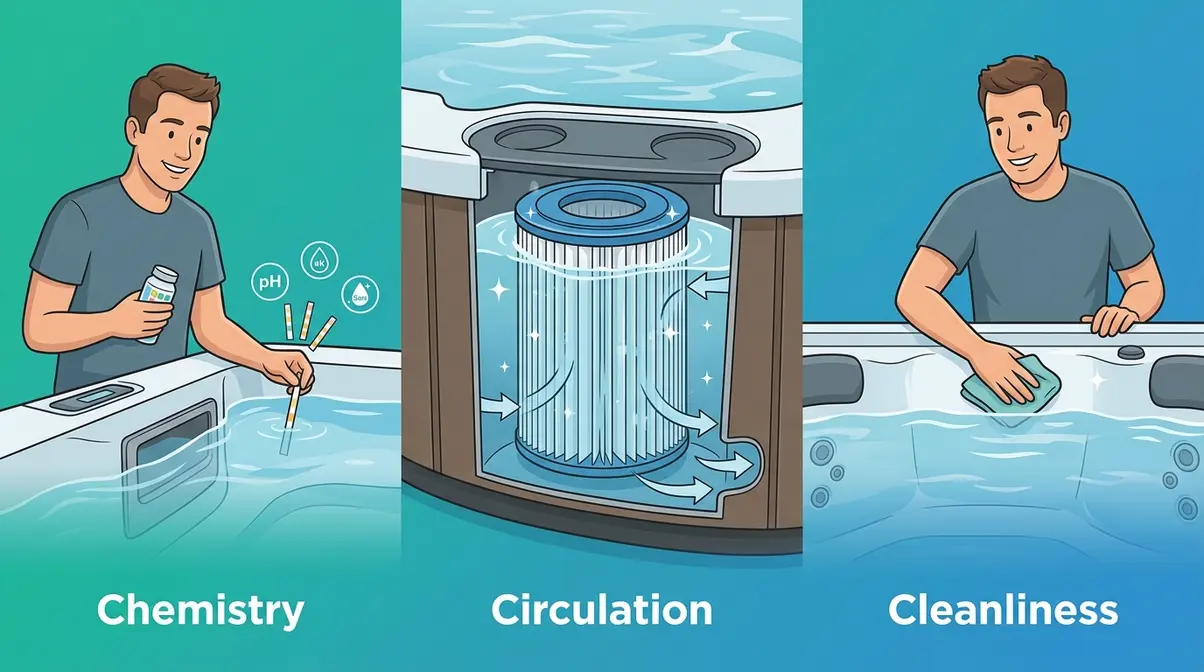
A complete hot tub maintenance guide covers three pillars — Chemistry, Circulation, and Cleanliness — that together keep water safe and crystal clear year-round.
- Test water weekly: Maintain pH 7.2–7.8 and free chlorine 2.0–4.0 ppm (Pool & Hot Tub Alliance, 2026)
- Use the 3C Framework: Every maintenance task falls under Chemistry, Circulation, or Cleanliness
- Clean your filter monthly: Dirty filters are the #1 cause of cloudy water and weak jets
- Drain and refill quarterly: Fresh water every 3–4 months prevents chemical buildup and bacteria
- Cover your spa daily: An insulated cover cuts heating costs to $20–$30/month (U.S. DOE)
Hot Tub Maintenance Fundamentals for Beginners
Hot tub maintenance isn’t complicated once you understand what you’re actually maintaining. Your spa is a small body of warm, churning water that people sit in — which means it accumulates body oils, cosmetics, bacteria, and debris at a faster rate than a backyard pool. The good news: routine maintenance is predictable, and once you’ve done it a few times, a weekly session takes less than 15 minutes. As you navigate this hot tub maintenance guide, remember that consistency is far more important than perfection.
Our team evaluated owner feedback across hot tub communities and manufacturer documentation to identify the most common beginner pain points. The pattern is consistent: new owners feel overwhelmed not because maintenance is hard, but because nobody gives them a clear starting framework. For a deeper dive into overall longevity, check out our complete guide to hot tub maintenance.
What Is Routine Hot Tub Maintenance?
Routine hot tub maintenance is the set of recurring tasks that keep your water safe, your equipment functional, and your spa visually inviting. It covers three time horizons: what you do every week, every month, and every quarter or year.
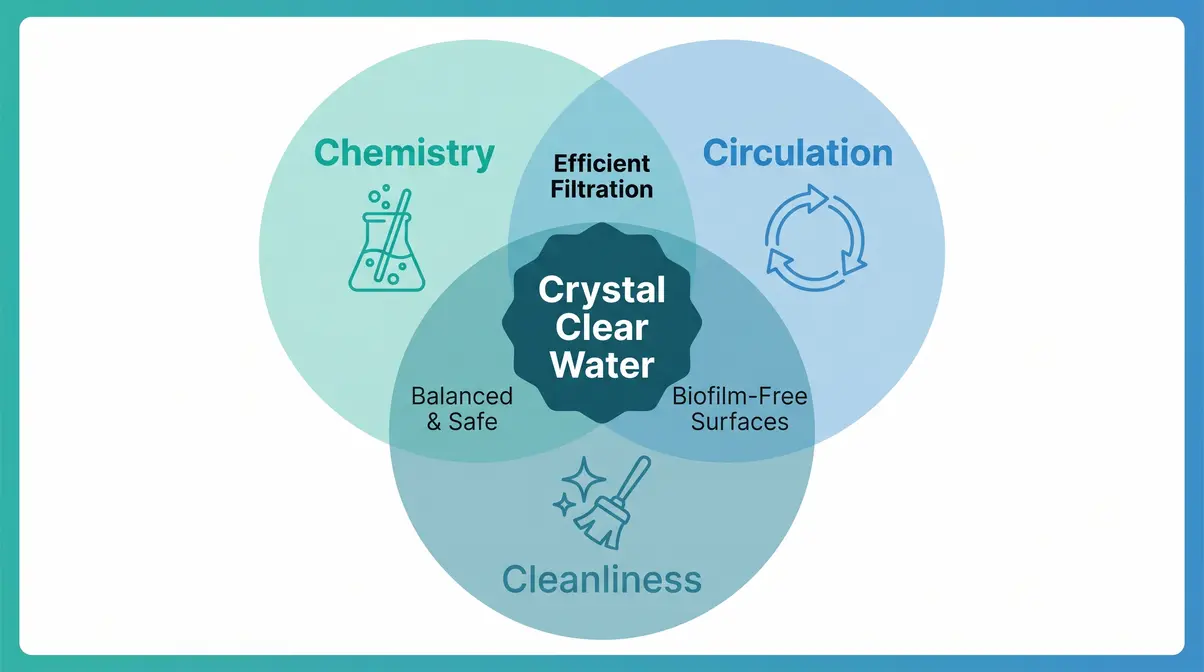
At its core, maintaining your hot tub means keeping three things in balance: the chemistry of the water, the circulation of water through your filtration system, and the cleanliness of all surfaces the water touches. Neglect any one of these and the other two suffer. Cloudy water, for example, is almost never just a chemical problem — it usually signals a dirty filter (circulation failure) allowing contaminants to build up despite adequate sanitizer levels.
Common pain points reported by new owners include not knowing where to start, forgetting which task belongs to which schedule, and feeling paralyzed when the water chemistry doesn’t look right. This guide addresses all three. Swim University’s hot tub maintenance overview is also a solid reference for reinforcing the basics once you’ve established your routine.
The 3C Framework: Chemistry, Circulation, Cleanliness
Every single maintenance task you’ll ever perform on your hot tub falls into one of three categories. This is The 3C Maintenance Framework — a mental model designed to cut through the noise of conflicting advice and make every maintenance decision obvious.
Chemistry means your water is properly balanced — the right pH, the right sanitizer level, and the right mineral content. Balanced water is safe to soak in, protects your equipment, and stays clear.
Circulation means water is moving through your filters consistently, trapping debris, and returning clean. Poor circulation is the silent cause of most water quality problems.
Cleanliness means the physical surfaces of your spa — the shell, the cover, the waterline — are free of biofilm, scale, and the scum line that forms from body oils and lotions. For specific surface techniques, review our dedicated hot tub cleaning guide.
Whenever something goes wrong with your hot tub, ask yourself: is this a Chemistry problem, a Circulation problem, or a Cleanliness problem? That single question will point you toward the right fix 90% of the time. The 3C Maintenance Framework is the organizing principle for every section that follows.
Special Considerations for Inflatable Hot Tubs
Inflatable hot tubs follow the same 3C principles, but with a few important differences. Their filtration systems are less powerful than hard-shell spas, which means water turns over more slowly — so testing frequency matters even more. Most inflatable models recommend testing water every 2–3 days rather than weekly.
The vinyl material is also more sensitive to harsh chemicals. Avoid granular chlorine directly on the surface; always pre-dissolve in a bucket of water first. Drain and refill more frequently — every 6–8 weeks rather than every 3–4 months — because smaller water volumes accumulate total dissolved solids (TDS) faster. Cover use is non-negotiable: inflatable hot tubs lose heat rapidly, and an uncovered spa can cost significantly more to reheat.
Your Hot Tub Maintenance Schedule
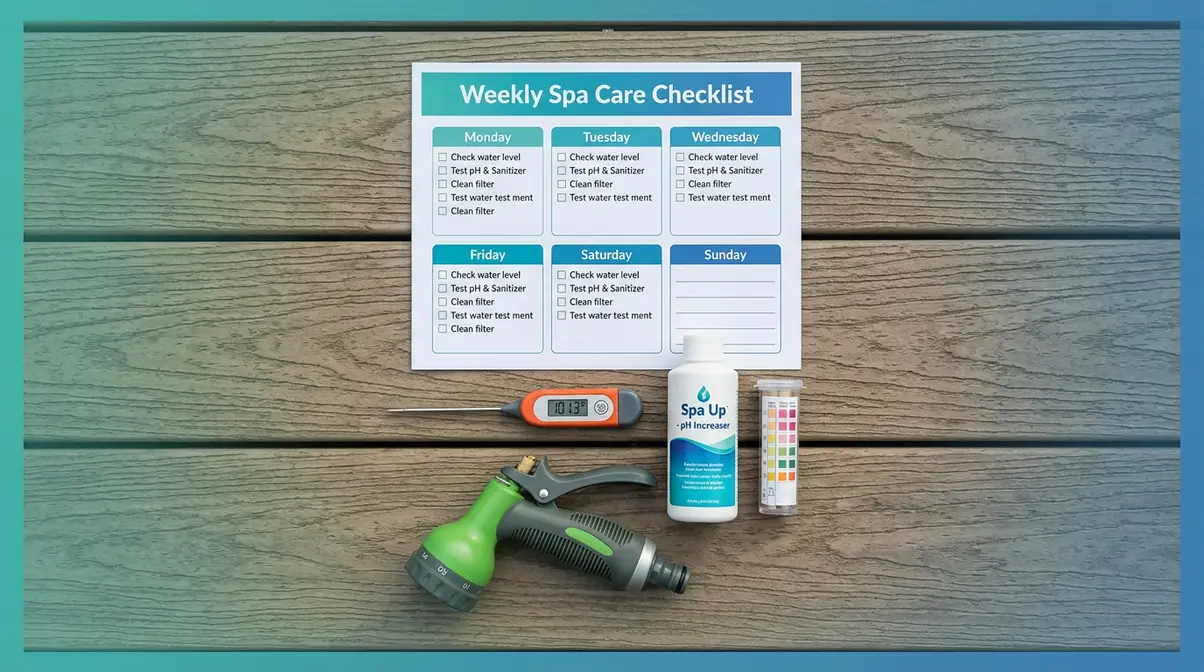
A clear schedule is the difference between a spa you love and one you dread. The goal is to make maintenance feel like brushing your teeth — brief, habitual, and non-negotiable. Below is a complete hot tub care routine broken into weekly, monthly, and quarterly/annual tasks.
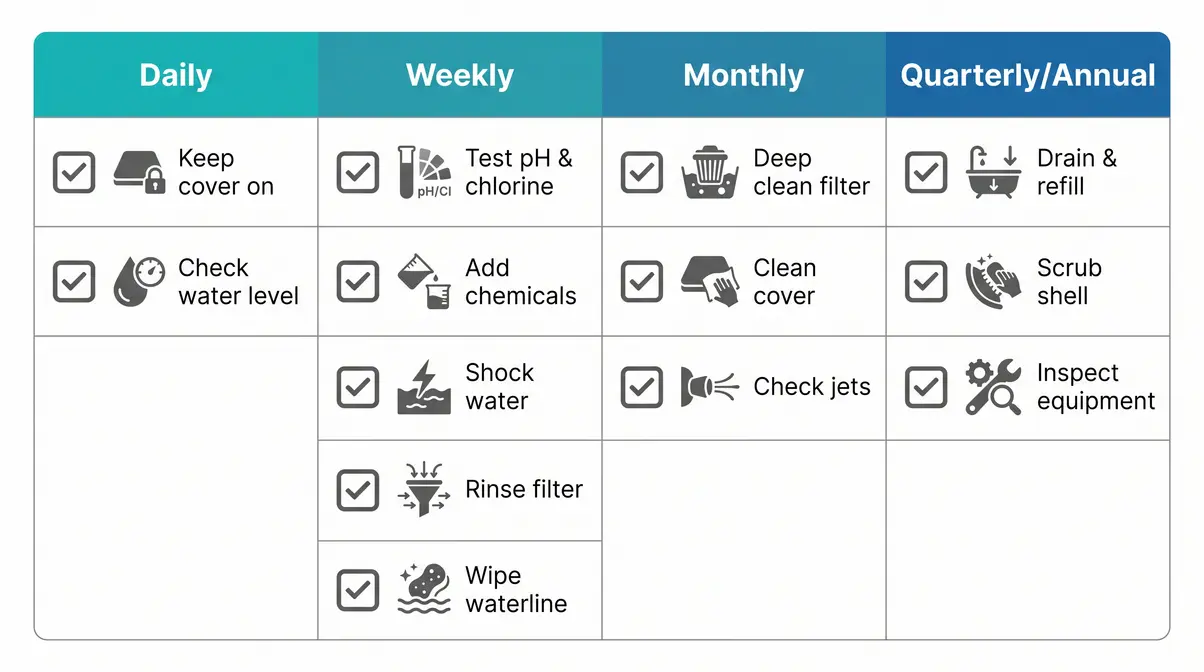
Weekly Hot Tub Maintenance Tasks
Weekly tasks are your primary defense. Perform these before each soak and at least once per week even if you haven’t used the spa.
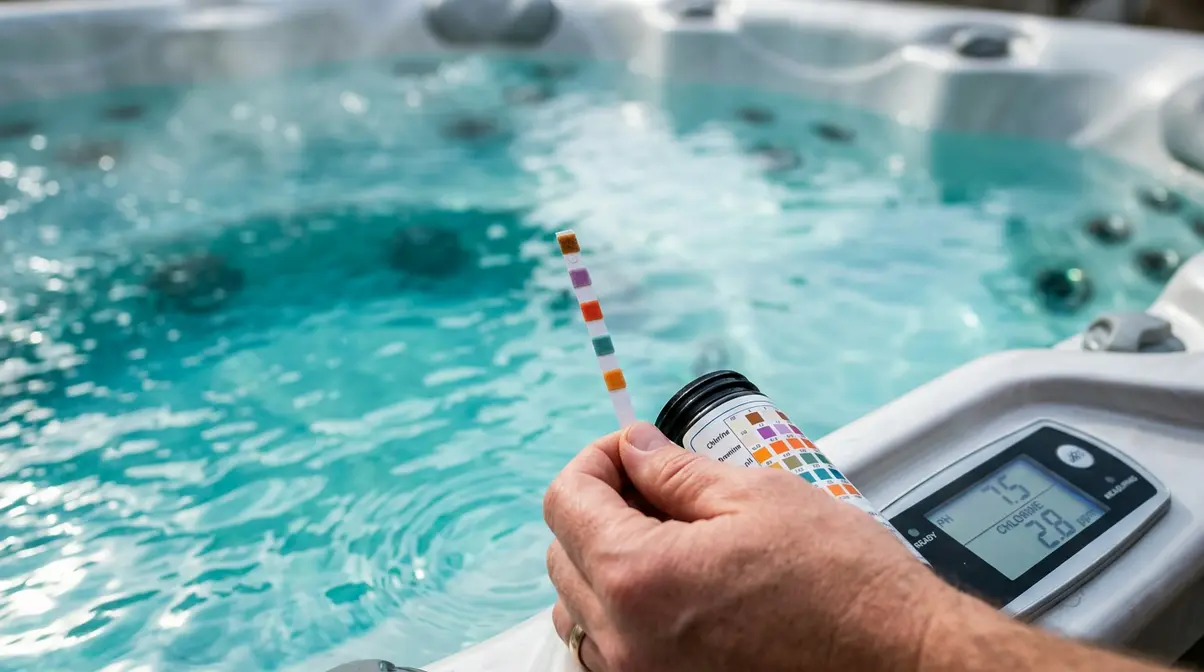
- Test your water. Use test strips or a liquid test kit. Check pH (target: 7.2–7.8), free chlorine or bromine (2.0–4.0 ppm chlorine / 3.0–5.0 ppm bromine), and total alkalinity (80–120 ppm). These ranges are established by the Pool & Hot Tub Alliance (PHTA, 2026).
- Add chemicals accordingly. If pH is low, add a pH increaser (sodium carbonate). If high, add a pH decreaser (sodium bisulfate). Always add one chemical at a time with the jets running.
- Shock your water. Add a weekly shock treatment (non-chlorine oxidizer or chlorine shock) to break down organic waste. Run jets for 20 minutes with the cover off after shocking.
Once your water is balanced and shocked, move on to physical cleaning:
- Rinse your filter cartridge. A quick rinse with a garden hose removes surface debris. This takes about 3 minutes and dramatically extends filter life.
- Wipe the waterline. Use a spa-safe surface cleaner and a soft cloth to remove the scum line before it hardens.
- Check your cover. Look for cracks, waterlogging, or tears that reduce insulation efficiency.
Monthly Maintenance: Deep Clean Your Filter
Your filter is the workhorse of the Circulation pillar. A rinse keeps it functional week-to-week, but a monthly deep clean removes the oils and minerals that rinsing can’t reach.
How to deep clean your filter:
- Remove the filter cartridge from the housing.
- Rinse off loose debris with a garden hose.
- Soak the cartridge in a dedicated filter cleaning solution for at least 1 hour (overnight is better). Do not use dish soap — it creates foam.
- Rinse thoroughly until water runs clear.
- Allow to air dry completely before reinstalling, or rotate in a spare cartridge so you’re never without filtration.
Monthly tasks also include: cleaning the spa cover with a vinyl protectant (prevents UV cracking), checking jets for blockages, and inspecting the waterline for early scale buildup. Leslie’s Pool beginner spa care guide provides additional monthly task guidance for first-time owners.
Quarterly and Annual Tasks
Every 3–4 months, drain your hot tub completely and start fresh. This is non-negotiable. Over time, total dissolved solids (TDS) accumulate from chemicals, minerals, and body waste. No amount of chemistry adjustment can fix water that’s simply exhausted — it must be replaced. If you are unsure about your specific usage, read our breakdown on how often to change hot tub water.
Quarterly drain and refill process:
- Add a line flush product 24 hours before draining to clean the internal plumbing.
- Turn off the power at the breaker.
- Drain using the spa’s drain valve or a submersible pump (faster).
- Scrub the shell with a non-abrasive spa cleaner — pay attention to jet housings and the footwell.
- Rinse thoroughly, then refill with fresh water.
- Balance your fresh water chemistry before the first soak.
Annual tasks include: inspecting the equipment bay for leaks, lubricating the cover’s hinge hardware, and having a certified technician inspect the heater element and pump seals. Hot Spring’s learning center provides a detailed annual maintenance checklist worth bookmarking.
Mastering Hot Tub Water Chemistry
Water chemistry is the Chemistry pillar of the 3C Framework — and it’s the one that intimidates most new owners. Here’s the reassuring reality: hot tub water chemistry comes down to four numbers. Keep those four numbers in their target ranges and your water stays crystal clear and safe. Let everything drift and you’ll be fighting cloudy water, bacteria buildup, and damaged equipment. Mastering these parameters is the core of any hot tub water maintenance guide.
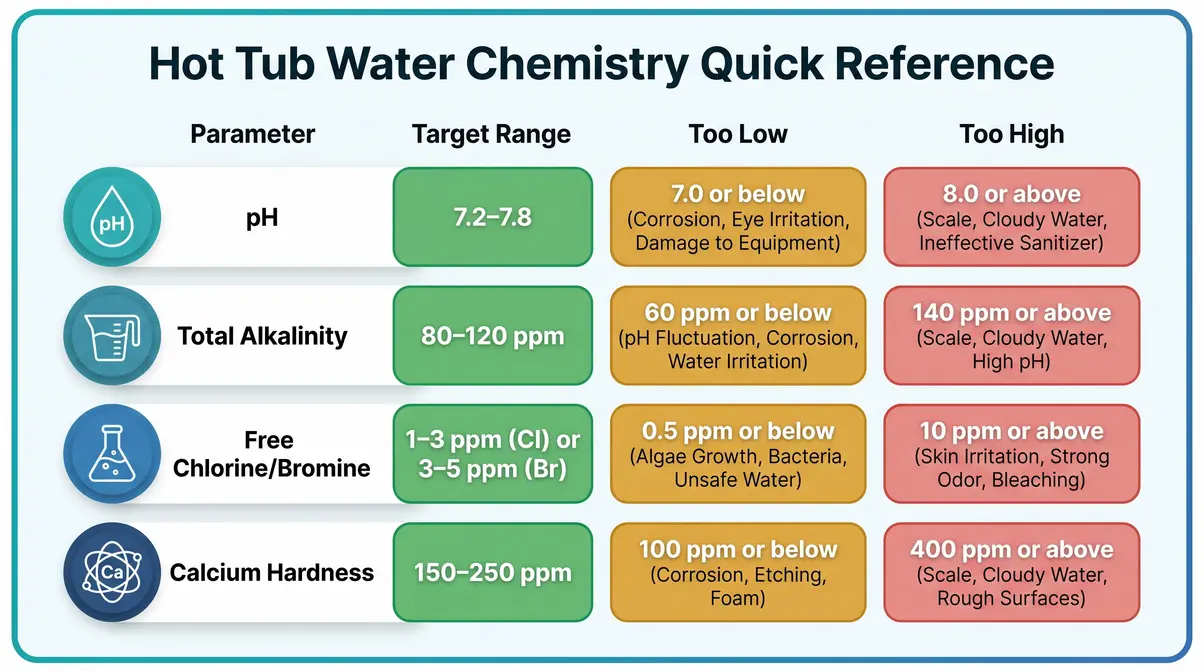
The Four Key Water Parameters (with Target Ranges)
These ranges are sourced from the Pool & Hot Tub Alliance (PHTA, 2026), the industry’s primary standards body:
| Parameter | Target Range | Too Low | Too High |
|---|---|---|---|
| pH | 7.2–7.8 | Corrosive water; eye/skin irritation | Scale buildup; cloudy water; reduced sanitizer effectiveness |
| Total Alkalinity | 80–120 ppm | pH swings wildly; corrosion | Cloudy water; scale; pH hard to adjust |
| Free Chlorine | 2.0–4.0 ppm | Bacteria and algae growth | Skin/eye irritation; bleached surfaces |
| Calcium Hardness | 150–250 ppm | Foamy water; equipment corrosion | Scale on shell and jets; cloudy water |
pH (potential hydrogen) measures how acidic or alkaline your water is on a scale of 0–14. Hot tub water should sit between 7.2 and 7.8 — slightly alkaline. Outside that range, sanitizer stops working efficiently and soakers experience skin and eye irritation.
Total alkalinity (the water’s ability to resist pH swings) should be adjusted before pH. Think of alkalinity as the buffer that keeps pH stable. Without it, pH bounces unpredictably with every splash of chemicals.
Free chlorine is the active sanitizer — the portion of chlorine not yet consumed by contaminants. Bromine is an alternative sanitizer that performs better in high-temperature water and is gentler on skin for some users.
Calcium hardness measures dissolved calcium. Too little and the water becomes corrosive, eating away at your shell and equipment. Too much and you get scale — that white, chalky buildup on jets and the waterline.
How to Test and Adjust Your Water (Step-by-Step)
Testing takes about 3 minutes. Always test before adding any chemicals, and always add chemicals with the jets running.
Order of chemical adjustments (always follow this sequence):
- Adjust total alkalinity first. Use a sodium bicarbonate increaser to raise it; use a pH decreaser (sodium bisulfate) to lower it. Wait 2 hours and retest before moving on.
- Adjust pH second. Once alkalinity is stable, pH becomes much easier to control. Use pH increaser (sodium carbonate) or pH decreaser as needed.
After stabilizing your pH and alkalinity, proceed with sanitization:
- Adjust sanitizer third. Add chlorine or bromine to reach your target range. For chlorine, use either granular dichlor or a floater with trichlor tablets.
- Check calcium hardness last. This changes slowly and usually only needs attention after a drain and refill. Use a calcium hardness increaser if needed.
- Shock weekly. After adjusting other parameters, add your shock treatment to oxidize organic waste. Run jets with cover off for 20–30 minutes, then cover.
Pro tip: Never mix chemicals together before adding them to the spa. Add each chemical separately, wait 15–20 minutes with jets running, then add the next.
How to Get Your Hot Tub Crystal Clear
Cloudy water is the most common complaint among new owners — and almost always a Circulation or Chemistry failure, not a mystery. For persistent issues, follow our advanced steps to clear cloudy hot tub water.
Cloudy water diagnostic checklist:
- Is the filter dirty? A clogged filter is the #1 cause. Deep clean it before doing anything else.
- Is pH out of range? High pH (above 7.8) makes chlorine ineffective, allowing particles to accumulate. Test and adjust.
- Did you recently have heavy use? Body oils and cosmetics overwhelm sanitizer. Shock the water and run jets for 30 minutes.
- Is your water old? If it’s been more than 3 months, drain and refill. No chemistry will fix exhausted water.
- Is calcium hardness too high? Scale particles suspend in the water and create a milky haze. Test and address accordingly.
For water that’s green rather than cloudy, you’re likely dealing with algae — rare in hot tubs but possible when sanitizer drops to zero. Shock aggressively (triple dose), run jets for 30 minutes, and clean the filter immediately after.
Essential Hot Tub Chemicals and Maintenance Kits
Walking into a pool supply store for the first time as a new hot tub owner is genuinely overwhelming. The shelves contain dozens of products with overlapping names and vague descriptions. Here’s exactly what you need — and nothing you don’t. These essential hot tub chemicals form the foundation of your kit.
The Essential Chemical Shopping List
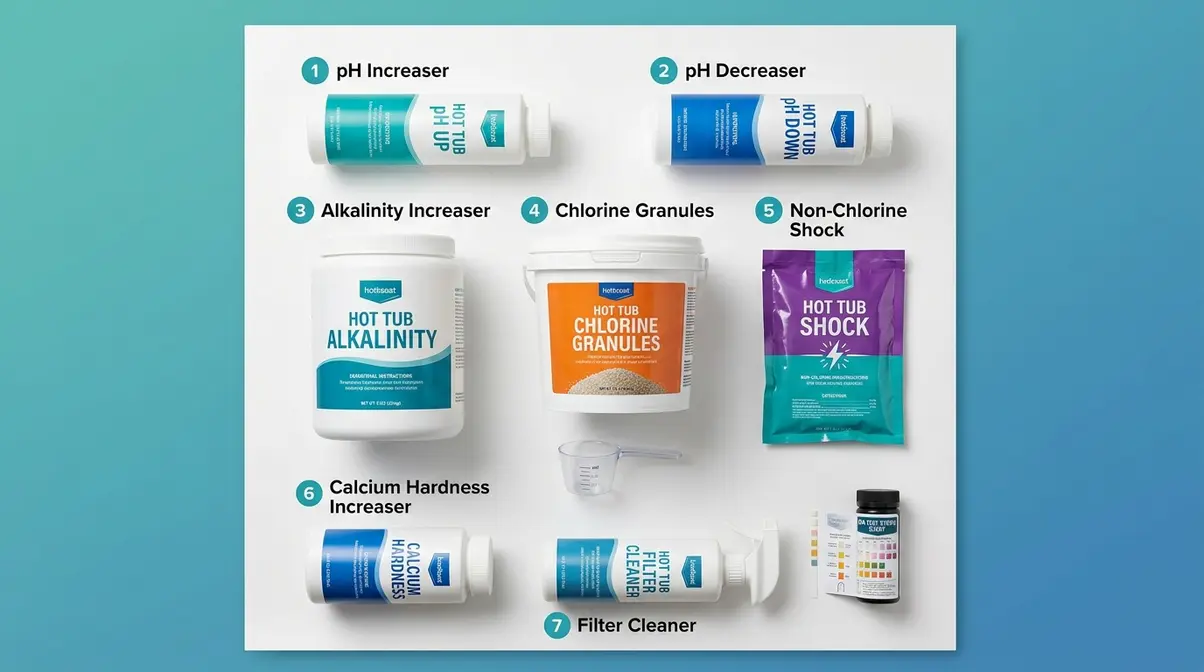
Every hot tub owner needs these seven chemical categories. Everything else is optional or situational:
| Chemical | Purpose | Frequency |
|---|---|---|
| pH Increaser (sodium carbonate) | Raises pH when below 7.2 | As needed |
| pH Decreaser (sodium bisulfate) | Lowers pH when above 7.8 | As needed |
| Total Alkalinity Increaser (sodium bicarbonate) | Stabilizes pH buffer | As needed |
| Chlorine Granules (dichlor) or Bromine Tablets | Primary sanitizer | Weekly |
| Non-Chlorine Shock (potassium monopersulfate) | Oxidizes organic waste | Weekly |
| Calcium Hardness Increaser | Prevents corrosion and foam | After refills |
| Filter Cleaner (cartridge soak solution) | Deep cleans filter media | Monthly |
Avoid buying “all-in-one” chemical combinations for routine use — they make individual adjustments difficult. Purchase each product separately so you can address specific imbalances precisely.
Tools You Also Need (Beyond Chemicals)
Chemicals alone won’t maintain your spa. These physical tools are just as important:
- Test strips or liquid test kit: Test strips are faster; liquid kits are more accurate. Keep both on hand.
- Measuring cup or scoop: Always measure chemicals by weight or volume — never eyeball it.
- Filter cleaning wand: A hose-attachment wand with a comb tip cleans between filter pleats far more effectively than a standard nozzle.
- Spa surface cleaner and soft cloth: For the waterline and shell. Must be non-abrasive and spa-rated.
- Scum sponge or tennis ball: Absorbs oils at the waterline (more on this in the Pro Hacks section).
- Submersible pump: Makes quarterly drains take 20 minutes instead of 2 hours. Worth every dollar.
- Chemical storage container: Store all chemicals separately, in a cool, dry place, away from direct sunlight. Never store oxidizers near chlorine.
You might also consider upgrading to one of the best hot tub chemical monitoring systems for automated tracking. Jacuzzi’s hot tub cleaning guide includes a useful breakdown of surface-safe cleaning products for specific shell materials.
Starter Kit vs. Buying Individually
Pre-made starter kits (typically $40–$80) bundle the essentials and are ideal for brand-new owners who want to avoid decision fatigue. The tradeoff: kit quantities may not match your spa’s actual needs, and some kits include products you won’t use for months.
Buying individually costs slightly more upfront but gives you full control over quantities and brands. For most owners with established routines, buying individually is the better long-term value. Start with a kit, then transition to individual purchases once you understand which chemicals you use fastest.
Professional Hot Tub Maintenance
Even the most diligent DIY maintainer benefits from occasional professional service. A certified technician brings diagnostic equipment and expertise that catches problems before they become expensive failures. The 3C Framework handles your routine — a professional handles what the framework can’t reach.
What a Professional Service Visit Includes
A standard professional spa maintenance visit typically covers:
- Water chemistry analysis using laboratory-grade testing (more precise than test strips)
- Filter inspection and cleaning (or replacement recommendation)
- Jet and plumbing inspection for blockages, leaks, or calcium buildup
- Heater element check for efficiency and signs of scale
- Pump and motor inspection — listening for bearing noise or cavitation
- Cover assessment for waterlogging or structural damage
- Control panel diagnostics — reading error codes and calibrating sensors
Most technicians also flush the plumbing with a line flush product as part of a quarterly service visit. Ask specifically whether this is included before booking.
How to Find and Vet a Reputable Service Provider
When searching for a local technician, look for certifications from the Pool & Hot Tub Alliance (PHTA) or similar recognized industry bodies. Ask potential providers if they include line flushing in their quarterly service and whether they use laboratory-grade water testing rather than basic test strips. Reading local reviews and asking for references from other hot tub owners in your area can also help you avoid unreliable contractors and ensure you get high-quality service.
Hot Tub Maintenance Cost Per Year
Understanding the full cost of hot tub upkeep helps you budget realistically and decide when professional help is worth it. The overall cost of hot tub maintenance varies by region.
| Expense Category | Annual Cost Estimate |
|---|---|
| Chemicals (routine) | $200–$400 |
| Electricity (insulated cover used consistently) | $240–$480 ($20–$40/month) |
| Filter replacement (1–2 cartridges/year) | $30–$80 |
| Professional service (1–2 visits/year) | $100–$300 |
| Miscellaneous (cover treatments, tools) | $50–$100 |
| Total estimated annual cost | $620–$1,360 |
Energy costs vary significantly based on climate, spa size, and insulation quality. This factors heavily into your total hot tub running costs. The U.S. Department of Energy notes that a well-insulated cover is the single most impactful energy-saving measure for hot tub owners, reducing heating costs by up to 50% compared to an uncovered or poorly insulated spa.
Call a professional — rather than attempting DIY repairs — when you notice: water leaking from the equipment bay, error codes that won’t clear after a power cycle, jets with no pressure despite a clean filter, or any burning smell from the equipment area. These are signs of mechanical failure, not chemistry imbalance.
Hot Tub Health & Safety Concerns
This information is educational only. Consult a qualified medical professional for personal health concerns.
Your hot tub should be a place of relaxation, not a source of health anxiety. However, warm water creates conditions where certain bacteria thrive if water chemistry and cleanliness are neglected. The good news: every health risk associated with hot tubs is preventable with consistent maintenance. This section answers the questions new owners most commonly search for — with evidence from the CDC and NIH.
Hot Tub Folliculitis: Causes, Prevention, and When to See a Doctor
Hot tub folliculitis is a skin infection caused by Pseudomonas aeruginosa, a bacterium that thrives in warm, poorly sanitized water. It typically appears as a red, itchy rash — often with small pimple-like bumps — on skin areas covered by a swimsuit, appearing 12–48 hours after exposure.
According to CDC guidelines on preventing hot tub rash, folliculitis outbreaks are directly linked to inadequate sanitizer levels and pH imbalance. Pseudomonas survives and multiplies when free chlorine drops below 1.0 ppm — well below the recommended 2.0–4.0 ppm range. For a deeper medical overview, read our guide on hot tub folliculitis prevention and treatment.
Why do only some people get hot tub folliculitis? Individual susceptibility varies based on skin type, the duration of exposure, and immune response. People with sensitive skin, small cuts or abrasions, or compromised immune systems are more vulnerable. Wearing a swimsuit for extended periods after soaking also increases risk by trapping bacteria against the skin.
- Prevention is straightforward:
- Maintain free chlorine at 2.0–4.0 ppm consistently
- Shower with soap immediately after soaking
- Don’t wear a wet swimsuit for extended periods after leaving the spa
- Test water before every use — not just on your scheduled day
When to see a doctor: If a rash develops within 72 hours of hot tub use, consult a physician. Most cases of folliculitis resolve on their own within 7–10 days, but persistent or spreading rashes, fever, or pus require medical evaluation.
Legionella Risk and Why You Should Never Submerge Your Head
Legionella bacteria cause Legionnaires’ disease, a serious form of pneumonia, and Pontiac fever, a milder flu-like illness. Hot tubs are a recognized transmission environment because the bacteria spread through inhalation of contaminated water droplets (aerosols) — not through swallowing water. Always keep these essential hot tub safety tips in mind.
The CDC’s guidance on Legionella in hot tubs identifies inadequately maintained hot tubs as one of the most common sources of community Legionella outbreaks. The bacteria proliferate when water temperature drops below 131°F (55°C) and sanitizer levels are insufficient.
Why you should never submerge your head in a hot tub: Submerging your head dramatically increases exposure to aerosolized water and any bacteria it contains. It also exposes your ear canals to Pseudomonas and other organisms. Hot tubs are not chlorinated to the same standard as swimming pools, and the warm temperature accelerates bacterial growth between maintenance cycles.
Prevention: Maintain proper sanitizer levels, keep water temperature at or above 100°F (38°C) during use, shock weekly, and never operate the spa without adequate sanitizer present. If you’ve been away for more than a week, shock the water and run jets for 30 minutes before soaking.
Can a Hot Tub Help with Sciatica?
Research suggests that warm water immersion may provide meaningful temporary relief for sciatica and lower back pain. A review published by the National Institutes of Health (NIH, National Library of Medicine) found that hydrotherapy — warm water therapy — can reduce pain perception and muscle spasm in patients with musculoskeletal conditions, including sciatica.
The mechanism involves the combined effects of buoyancy (reducing gravitational load on the spine), heat (increasing blood flow and relaxing muscles), and hydrostatic pressure (reducing inflammation). Hot tub jets can provide targeted hydrotherapy to the lower back, potentially amplifying these benefits.
Important caveat: Hot tub therapy is not a treatment for the underlying cause of sciatica. If you have a herniated disc, spinal stenosis, or nerve compression, consult your doctor before using a hot tub therapeutically. Excessive heat can worsen inflammation in some acute conditions, and soaking for more than 15–20 minutes at high temperatures is not recommended.
Advanced Tips, Pro Hacks, and Troubleshooting
The final piece of our hot tub maintenance guide involves the shortcuts, tricks, and fixes that experienced owners use to make spa maintenance easier — and to recover quickly when things go wrong. Avoiding these common hot tub maintenance mistakes will save you time and money.
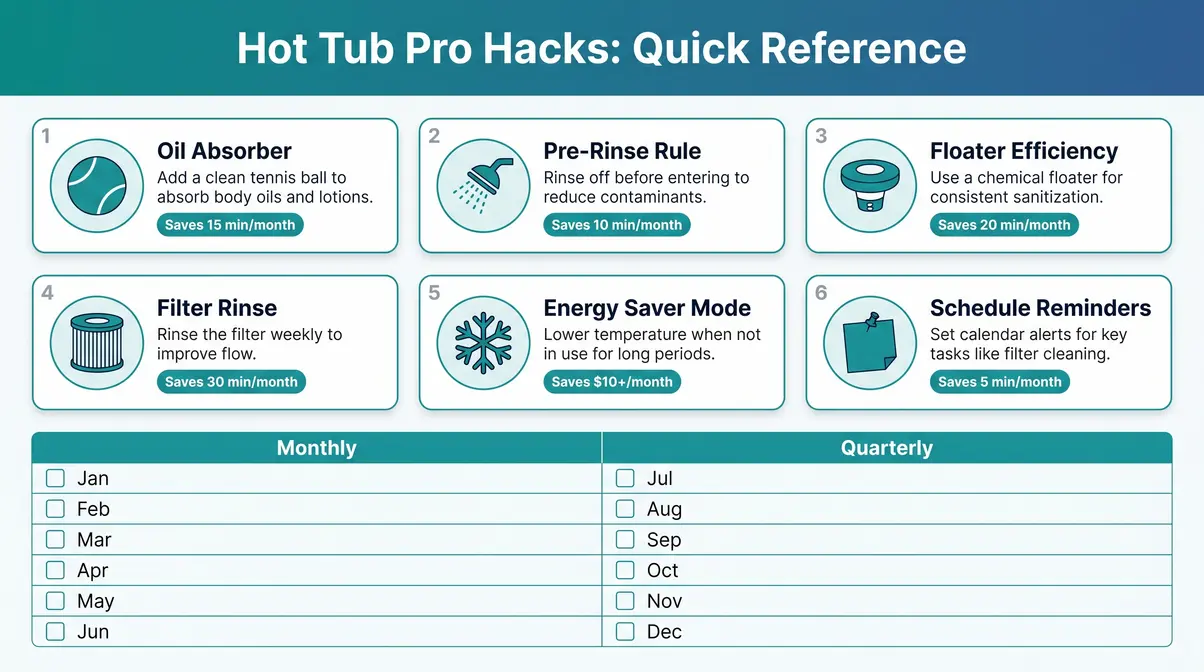
Pro Hacks for Easier Hot Tub Maintenance
These are the practical tips that rarely appear in manufacturer manuals but circulate consistently among experienced owners and spa maintenance communities.
1. The Tennis Ball Trick
Drop 2–3 clean tennis balls into your spa while it’s running. The felt material absorbs body oils, sunscreen, and cosmetics that would otherwise cloud your water or form a scum line. Replace them monthly. HGTV’s home spa tips identifies this as one of the most effective low-cost maintenance hacks for keeping water clear between chemical treatments.
2. Shower Before You Soak
Rinsing off with water (no soap needed) before entering your hot tub removes the majority of body oils, deodorant, and lotion from your skin. This single habit can reduce your chemical consumption by 20–30% and dramatically extend the life of your water between drain cycles.
3. Use a Floating Dispenser for Sanitizer
Instead of adding chlorine or bromine granules directly, use a floating dispenser with tablets. This provides a slow, steady release of sanitizer that maintains levels more consistently than manual dosing — especially during weeks when you’re away from home.
4. Keep a Spare Filter Cartridge
Rotating between two cartridges means one is always soaking in cleaner solution while the other is in service. You’re never without filtration, and both filters get a proper overnight soak rather than a rushed rinse.
5. The Freeze Line Flush Trick
Before winterizing, add a line flush product and run the jets for 30 minutes. This removes biofilm from internal plumbing that would otherwise sit through the off-season and contaminate your fresh fill in spring.
6. Post-It Note Your Drain Date
Write your quarterly drain date on a sticky note inside your equipment bay door. It sounds trivial, but owners who track their drain date visually are far less likely to push past the 4-month mark and end up with exhausted water.
Quick Troubleshooting Guide: Common Hot Tub Problems
The most common hot tub problems are not signs of equipment failure — they’re chemistry or circulation issues with straightforward fixes. If you suspect a mechanical issue, consult our DIY hot tub repair guide.
| Problem | Most Likely Cause | Fix |
|---|---|---|
| Cloudy water | Dirty filter OR high pH OR low sanitizer | Deep clean filter, test chemistry, shock water |
| Foamy water | Body oils, soap residue, or low calcium hardness | Add defoamer; drain if persistent; rinse off before soaking |
| Green water | Sanitizer at zero; algae growth | Triple-dose shock, clean filter, retest within 24 hours |
| Scum line | Body oils and cosmetics on shell | Wipe with spa surface cleaner weekly; use tennis balls |
| Weak jets | Clogged filter OR air lock in pump | Deep clean filter first; check pump prime |
| Water smells like chlorine | Chloramines (combined chlorine), not excess chlorine | Shock with non-chlorine oxidizer; improve ventilation |
| Error code flashing | Varies by brand; usually flow error (FL) or temperature error | Check filter, verify water level, consult your manual |
| Heater not working | Flow restriction from dirty filter OR low water level | Clean filter, check water level, call a tech if persists |
The most common problem with hot tubs — by a wide margin — is cloudy water caused by a dirty filter combined with out-of-range pH. Address those two variables first before reaching for additional chemicals.
Frequently Asked Questions
How often should I change the water in my hot tub?
Drain and refill your hot tub every 3–4 months under normal use. This timeline is based on the accumulation of total dissolved solids (TDS) — chemicals, minerals, and organic waste — that build up faster than you can dilute them. Heavy use or multiple bathers shortens the interval. A simple formula: divide your water volume in gallons by 3, then divide by the average number of daily bathers. The result is your approximate number of days between refills.
What chemicals do I need for a hot tub?
The seven essentials are: pH increaser, pH decreaser, total alkalinity increaser, a sanitizer (chlorine granules or bromine tablets), non-chlorine shock (potassium monopersulfate), calcium hardness increaser, and filter cartridge cleaner. Everything else — clarifiers, defoamers, enzyme products — is situational. Start with these seven and add others only when a specific problem requires it.
How do I know if my hot tub water is safe to use?
Safe hot tub water tests within these ranges: pH 7.2–7.8, free chlorine 2.0–4.0 ppm (or bromine 3.0–5.0 ppm), and total alkalinity 80–120 ppm. Use test strips or a liquid test kit before every soak. Clear water is not necessarily safe — bacteria can thrive in chemically balanced-looking water. Always test; never rely on appearance alone. If in doubt, shock the water, run jets for 20 minutes, and retest before soaking.
Can I use my hot tub every day?
Yes — daily soaking is safe for most healthy adults when water chemistry is properly maintained. However, daily use accelerates chemical consumption and contaminant buildup. If you soak daily, test your water at least 3 times per week rather than once, shock more frequently (every 3–4 days rather than weekly), and consider rinsing off before each entry to reduce the chemical load. Limit sessions to 15–20 minutes at temperatures above 102°F (39°C), particularly in the first few weeks of ownership.
Why does my hot tub water smell like chlorine even though I just added chemicals?
A strong chlorine odor usually means the opposite of what you’d expect — it signals chloramines (combined chlorine), which form when chlorine binds to ammonia from sweat, urine, and body oils. Chloramines are less effective sanitizers and cause the characteristic sharp smell. The fix is to shock the water with a non-chlorine oxidizer, which breaks down chloramines and releases free chlorine back into the water. Improve air circulation by running jets with the cover off for 20–30 minutes after shocking.
Making Hot Tub Maintenance a Habit That Sticks
For new hot tub owners, the biggest challenge isn’t learning the steps — it’s building the consistency to repeat them. Warm water is inviting, and maintenance feels like an obstacle between you and relaxation. The 3C Maintenance Framework exists precisely to solve this: when every task maps to Chemistry, Circulation, or Cleanliness, you always know what to check and why it matters. Research from hot tub owner communities consistently shows that owners who establish a written schedule in the first 30 days are significantly more likely to maintain their spa successfully long-term — and far less likely to face the expensive repairs that come from neglect.
The 3C Maintenance Framework isn’t just a beginner’s tool — it’s the mental model that experienced owners use instinctively. When water goes cloudy, they check the filter (Circulation). When skin feels irritated, they test pH (Chemistry). When the waterline gets grimy, they wipe it down (Cleanliness). Each pillar reinforces the others, and together they create a system that practically runs itself once established.
Using this hot tub maintenance guide as your baseline, your next step is simple: print the maintenance schedule from this guide, pick a consistent day for your weekly check (most owners choose Sunday morning), and complete your first water test today. If your water is already out of range, start with alkalinity, then pH, then sanitizer — in that order. A spa that’s been neglected for months can be fully restored in a single afternoon with the right chemicals and a clean filter. You have everything you need.

David King
Hot tub tester and writer at One Hot Tub.