What’s in this guide
- Before You Begin: Safety and Supplies
- Step 1 — Identify Your Stain Type by Color
- Step 2 — Drain and Empty Your Hot Tub
- Step 3 — Treat the Stain: Targeted Methods That Work
- Step 4 — Deep Clean the Liner, Filter, and Pump
- Step 5 — Fix Foam and Tackle Scum Lines
- When These Methods Won't Work: Mistakes and Limits
- Frequently Asked Questions
- Refill, Rebalance, and Relax
Home ›Maintenance And Troubleshooting
You drained a little water, peeked inside, and there it was — a brown ring, a yellow waterline, or green patches you definitely didn’t put there. That sinking feeling is completely normal. Knowing how to remove stains from an inflatable hot tub without wrecking the vinyl or voiding your warranty is something most beginner owners figure out the hard way.
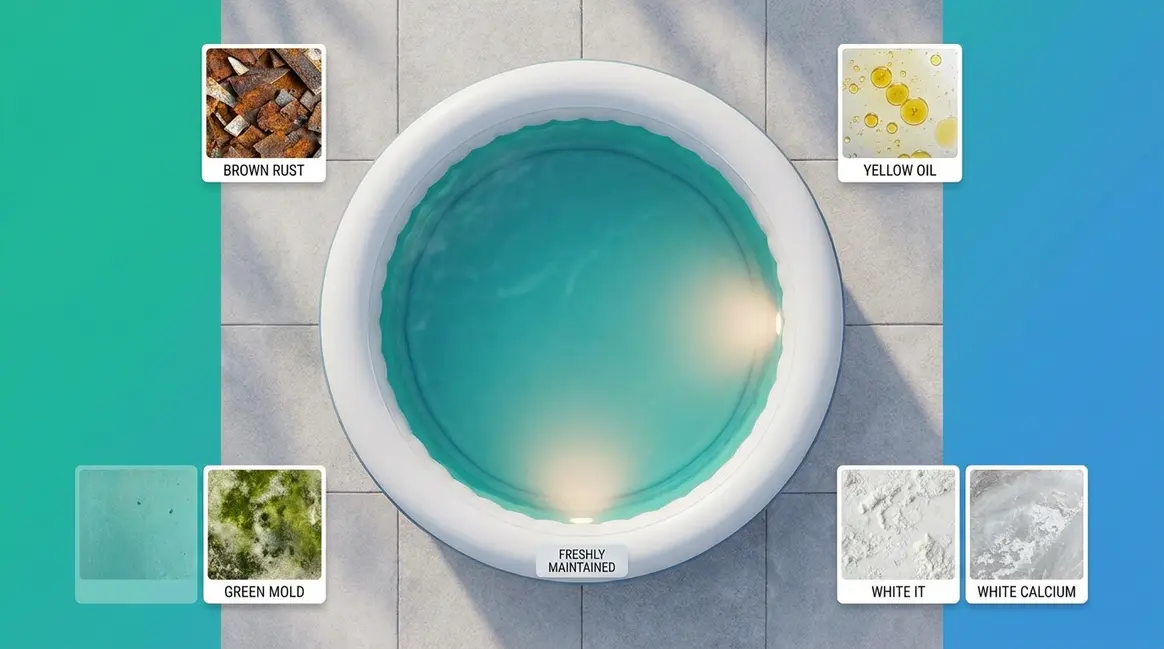
This guide changes that. Instead of generic “clean your tub” advice, you’ll use The Stain Color Code — a simple color-matching system that tells you exactly what caused your stain and the precise treatment that removes it. Brown stains are not the same as green ones. Yellow stains are not the same as white ones. Treating them differently is the entire secret.
Work through these five steps and you’ll have a clean, safe, great-smelling spa — using products you likely already own.
Knowing how to remove stains from an inflatable hot tub starts with matching stain color to cause. The Stain Color Code makes that diagnosis instant.
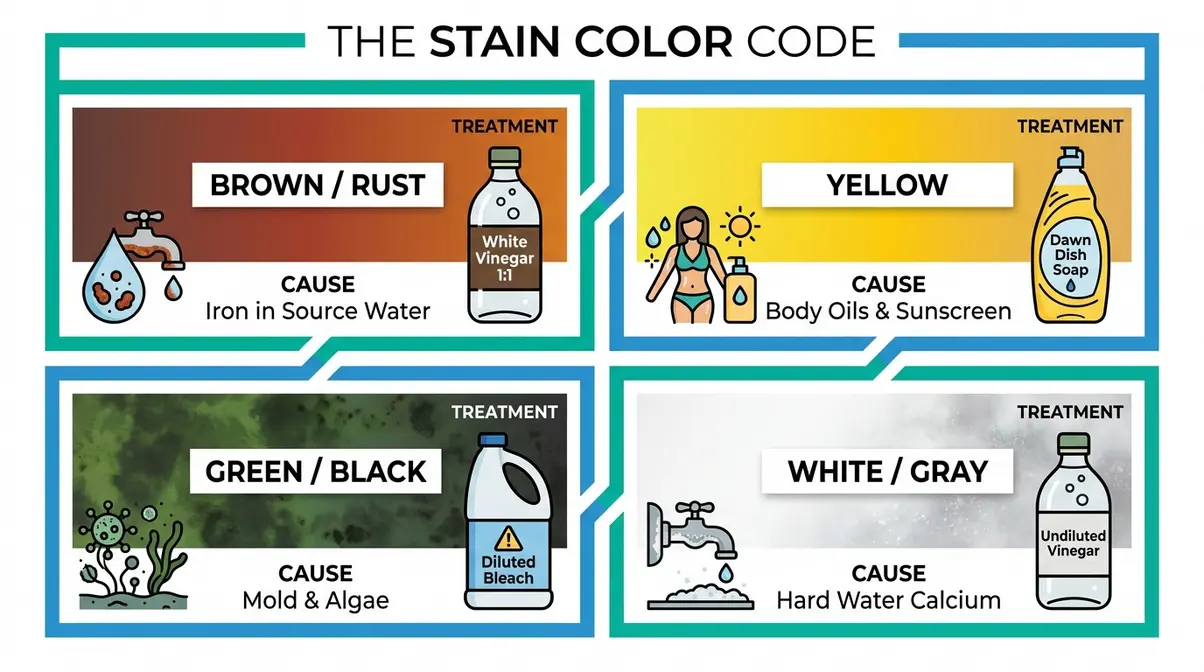
- Brown/rust stains: Caused by iron in your water — treat with a diluted white vinegar soak or a dedicated stain-and-scale remover.
- Yellow stains: Body oils and sunscreen — Dawn dish soap or a scum-absorbing product breaks them down fast.
- Green/black patches: Mold or algae — a diluted bleach solution (1 tablespoon per gallon of water) kills spores on contact.
- White/gray deposits: Hard water calcium — white vinegar dissolves mineral scale without damaging PVC.
- Never use abrasive scrubbers, acetone, or undiluted bleach — all three can crack or discolor your vinyl liner permanently.
Before You Begin: Safety and Supplies
Chemical Safety Warnings
Before you open any bottle, spend two minutes on safety. Inflatable hot tubs use a PVC (polyvinyl chloride) vinyl liner — a flexible plastic that is durable but sensitive to harsh solvents and undiluted chemicals.
Follow these rules every time:
- Wear gloves. Even diluted bleach irritates skin after repeated exposure.
- Ventilate the area. Work outdoors or open windows and doors if cleaning indoors.
- Never mix bleach and vinegar. Combined, they produce chlorine gas — a respiratory irritant.
- Always dilute bleach. The safe ratio for hot tub vinyl is 1 tablespoon of unscented household bleach per 1 gallon of water. Undiluted bleach will yellow and crack PVC over time. (Verify ratio against your specific tub model’s owner’s manual — Bestway and Intex manuals are available at their respective support pages.)
- Rinse thoroughly. Any cleaning residue left on the liner can cause foaming when you refill.
- Abrasive scrubbers void warranties. Bestway and Intex owner’s manuals explicitly state that abrasive pads, steel wool, and solvent-based cleaners will damage the liner and void your coverage. Use only soft cloths or a dedicated vinyl cleaner.
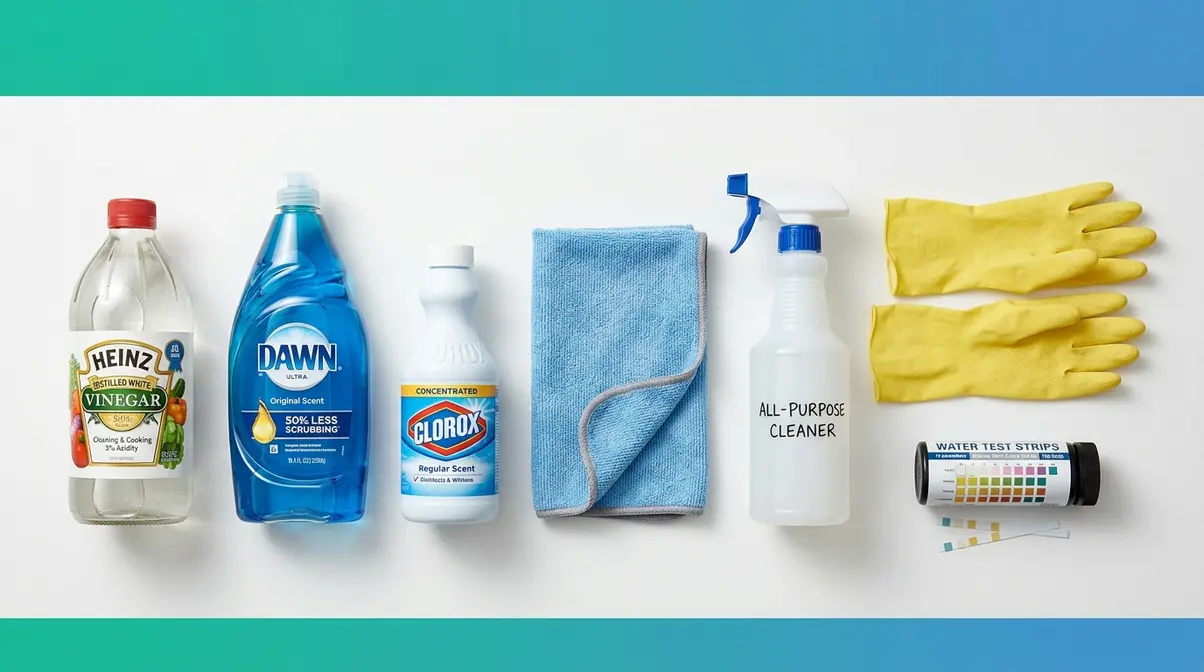
Your Inflatable Hot Tub Cleaning Kit
Hot tub owners consistently report that having the right supplies ready before starting saves at least 30 minutes of frustrated back-and-forth. Gather everything first.
You’ll need:
- White distilled vinegar (undiluted, for mineral deposits; diluted 1:1 with water for general use)
- Dawn Original dish soap (blue formula — widely reported safe for PVC by the hot tub community; no primary manufacturer certification exists, but it is the most commonly recommended household option)
- Unscented household bleach
- A soft microfiber cloth or non-scratch sponge
- A clean spray bottle
- A garden hose or bucket
- A hot tub test strip kit (to check water chemistry after refilling)
- Optional: a dedicated vinyl/spa surface cleaner, a tennis ball, and a scum-absorbing “scum bug” float
Estimated time: 45–90 minutes for a full clean, depending on stain severity.
Step 1 — Identify Your Stain Type by Color
The Stain Color Code is the fastest diagnostic tool you have. Match your stain to one of these four categories before reaching for any product. Using the wrong treatment wastes time — and can set a stain deeper into the vinyl.
Brown or Rust-Colored Stains
Why is there brown stuff in my hot tub? Brown or rust-colored stains almost always mean iron in your source water. When iron-rich water is exposed to air or oxidizing chemicals like chlorine, the dissolved iron precipitates out and stains your liner.
According to Penn State Extension, even low iron concentrations — as little as 0.3 mg/L — can produce visible rust-colored deposits on surfaces and in water. If your water looks slightly orange when you first fill the tub, iron contamination is the likely culprit.
These stains feel slightly rough to the touch and often appear first at the waterline or around the jets.
Yellow Stains
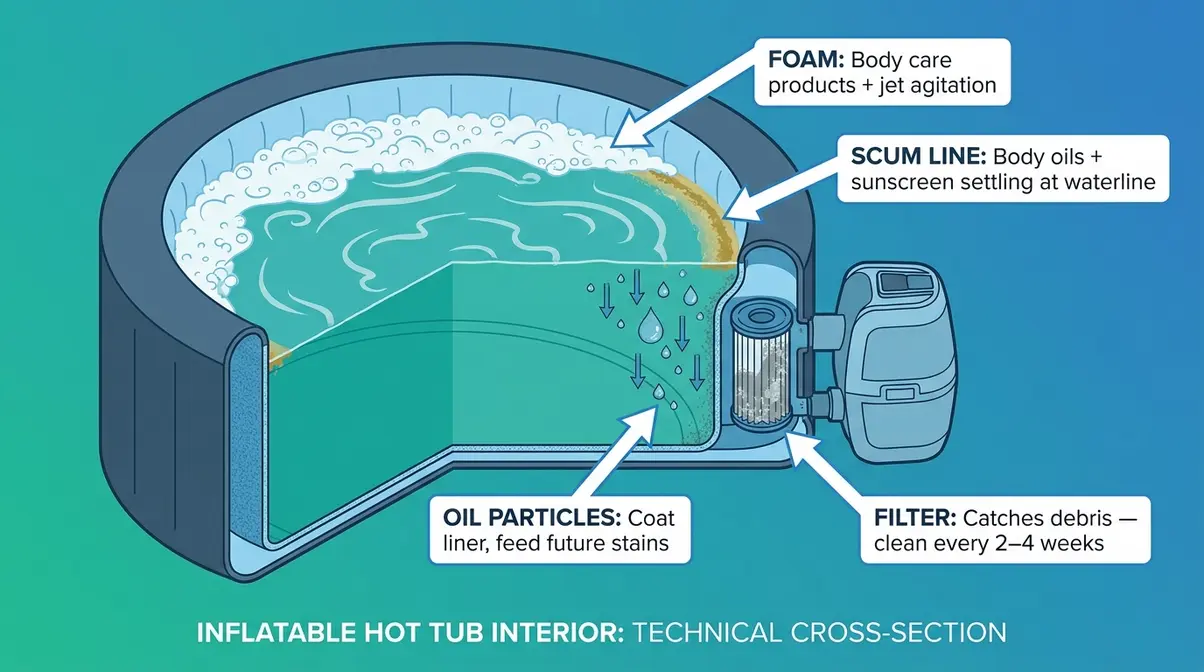
Yellow stains are the body-chemistry stain. They form when a combination of body oils, sunscreen, lotions, and sweat reacts with your spa’s sanitizing chemicals and settles along the waterline. The resulting ring is sometimes called the scum line — and it gets worse the more people use the tub without showering first.
Competitors rarely address yellow stains specifically, but hot tub owners across Reddit and community forums consistently report that standard chlorine tablets alone won’t remove an established scum line. You need a surfactant (a soap that cuts grease) to break it down.
Green or Black Stains
Green or black patches are mold, algae, or biofilm — living organisms that thrive in warm, humid environments. They grow fastest in the folds and crevices of an inflatable tub that has been left with standing water, or in a tub where sanitizer levels dropped too low.
Green stains are algae. Black stains or black-edged patches are typically black mold or a biofilm layer. Both require a disinfecting treatment, not just a surface wipe.
White or Gray Stains (Hard Water)
White or gray crusty deposits are calcium scale — the mineral residue left behind when hard water evaporates. This is the stain type that competitors almost universally ignore, yet it affects any owner whose tap water has a high mineral content. You’ll see it as a chalky white ring, a gray haze on the liner, or a crusty buildup around the jets. It feels gritty, not slippery.
Step 2 — Drain and Empty Your Hot Tub
How to Drain Your Inflatable Hot Tub Safely
You need a clean, dry surface to treat stains properly. Trying to scrub a stain with water still in the tub dilutes your cleaning solution and makes it nearly impossible to apply consistent pressure.
Here’s how to drain safely:
- Turn off the heater and pump. Never drain with the heater running — it can overheat and burn out.
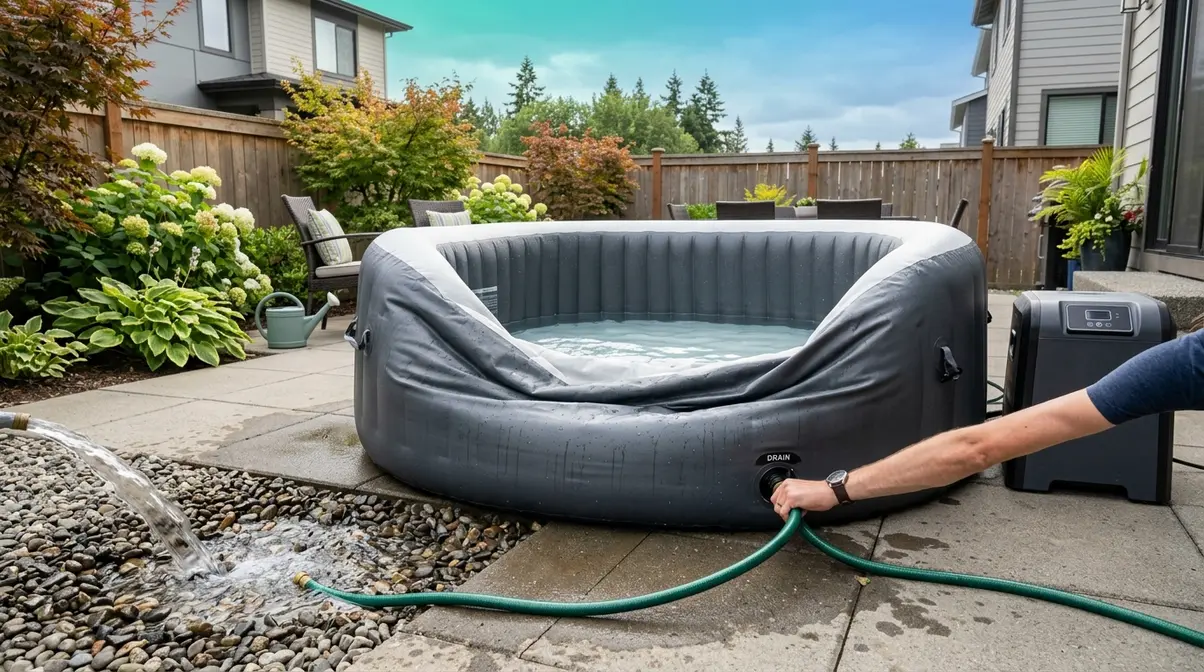
- Locate the drain valve. On most Lay-Z-Spa, Intex, and Bestway models, it is a small cap near the base of the tub. Unscrew the cap and attach a garden hose adapter if available.
- Direct water away from foundations. Chlorinated water can damage lawn grass and nearby plants. Drain onto gravel, a driveway, or a suitable drainage point.
- Let the tub fully empty. This takes 20–45 minutes depending on tub volume. Don’t rush it with a pump unless you own a submersible utility pump.
- Wipe out any remaining puddles with a dry microfiber cloth before you start treating stains.
- Leave the tub in place. Folding a wet liner traps moisture and can encourage mold growth.
For a full video walkthrough of the draining process, see our detailed guide on how to drain an inflatable hot tub step by step. (Internal link placeholder — see internal linking plan.)
According to Bestway USA’s cleaning guidance, always allow the liner to air-dry for at least 10 minutes before applying any cleaning product — this prevents dilution and improves product contact with the stain surface.
Step 3 — Treat the Stain: Targeted Methods That Work
This is where The Stain Color Code pays off. Each treatment below is matched to the stain type you identified in Step 1. Use only the method for your specific stain — applying a rust treatment to a mold stain, for example, will accomplish nothing.
Removing Brown and Rust Stains
What you need: White distilled vinegar, a spray bottle, a soft cloth. Optional: a commercial stain-and-scale remover labeled safe for spa vinyl.
Steps:
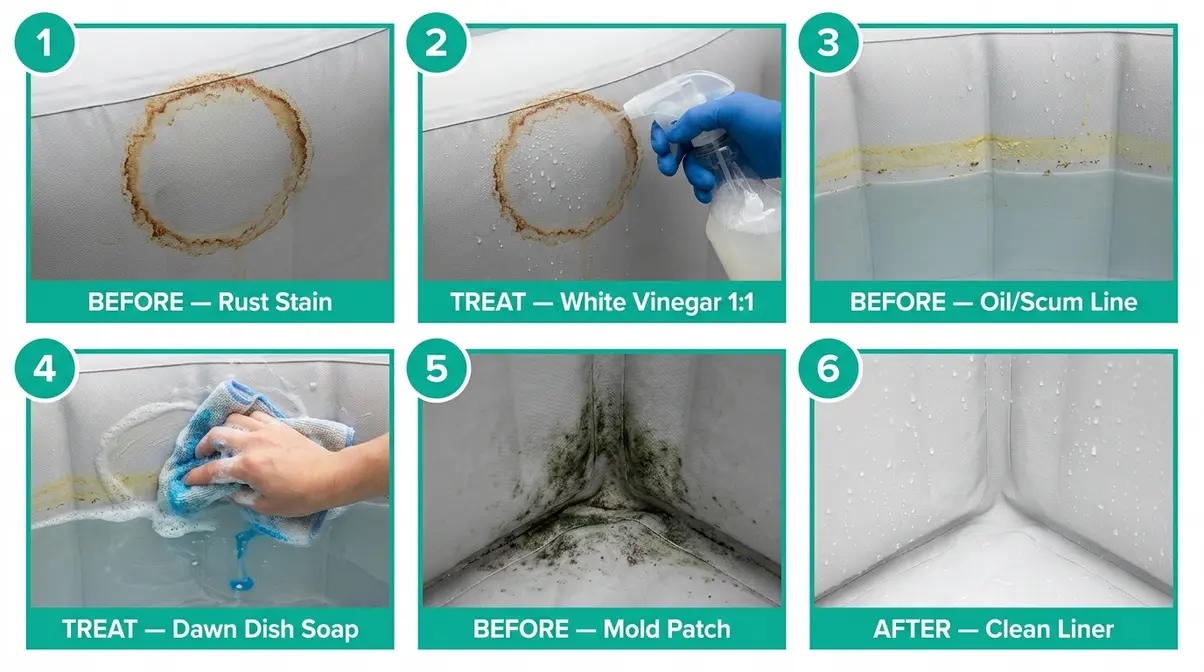
- Mix a 1:1 solution of white vinegar and water in your spray bottle.
- Spray directly onto the brown stain and let it sit for 10–15 minutes. The acetic acid in vinegar reacts with iron oxide (rust) to dissolve the mineral bond.
- Scrub gently with a soft microfiber cloth using circular motions. Avoid abrasive sponges.
- Rinse with clean water. Repeat for stubborn rust stains — a second application often shifts what the first loosened.
- If the stain persists after two applications, apply a dedicated stain-and-scale remover formulated for spa surfaces. Follow the product label for dwell time.
According to Michigan State University Extension, white vinegar’s acetic acid is effective at dissolving calcium and iron mineral deposits from household surfaces, making it a safe and affordable first-line treatment for vinyl liners.
Why it works: Rust stains are iron oxide — an alkaline mineral compound. Acetic acid (vinegar) is mildly acidic, which neutralizes and dissolves the iron bond without attacking the PVC liner beneath it.
Removing Yellow Stains from Oils and Sunscreen
What you need: Dawn Original dish soap (blue), a soft cloth or non-scratch sponge, warm water.
Steps:
- Apply a small amount of Dawn directly to the yellow stain — about the size of a 50-cent piece for a waterline ring.
- Work it into the surface with your cloth using small circular motions for 2–3 minutes.
- Let it sit for 5 minutes to penetrate the oil layer.
- Rinse thoroughly with clean water. This step is critical — any soap residue left behind will cause significant foaming when you refill.
- For heavy scum lines, place a tennis ball in the empty tub and use it to scrub the waterline. The nylon felt on a tennis ball absorbs residual oils and provides gentle friction without scratching vinyl.
“Used liquid shock that I had on hand per suggestion of one of you great and amazing members and I’m still picking my jaw up off the floor.”
— Hot tub owner, r/hottub community
Hot tub owners across Reddit and community forums consistently report that Dawn outperforms dedicated spa surface sprays for fresh oil stains — likely because its surfactant formula is specifically engineered to cut through grease and body fats. The key is rinsing completely.
Dawn dish soap is widely reported as safe for PVC surfaces by the hot tub community and professional spa technicians, though no single manufacturer has published a formal certification. Use it sparingly and rinse well.
Removing Green and Black Mold Stains
What you need: Diluted bleach solution (1 tablespoon unscented bleach per 1 gallon of water), a spray bottle, gloves, a soft cloth.
Steps:
- Put on your gloves before handling bleach — even diluted solutions irritate skin.
- Mix your bleach solution fresh in the spray bottle. Do not pre-mix and store.
- Spray the green or black stain and allow it to dwell for 5–10 minutes. Bleach kills mold spores on contact; the dwell time ensures penetration into any biofilm layer.
- Wipe away with a soft cloth. You should see the color lift immediately.
- Rinse the area thoroughly with clean water — twice if the stain was large.
- For stubborn mold in crevices or inflation valves, use a soft-bristle toothbrush with the same diluted solution.
Alternative (bleach-free option): A 1:1 white vinegar and water spray also kills many mold species and is gentler on the liner. According to Wave Spas UK’s maintenance guidance, vinegar is a recommended first step for light mold before escalating to bleach.
Safety reminder: Never mix bleach and vinegar. Choose one approach, rinse fully, then use the other if needed — with a thorough water rinse in between.
The General Clean: Can I Use Dawn to Clean an Inflatable Hot Tub?
Yes — with one important condition: rinse completely.
Dawn dish soap is widely used by inflatable hot tub owners for general interior cleaning. It cuts through grime, body oils, and light discoloration without the harshness of bleach. Apply a small amount to a damp cloth and wipe down the entire interior surface, then rinse until the water runs clear with no suds.
The risk is residual soap. NSF International research on household detergents notes that even trace amounts of surfactant left in a hot tub can generate significant foam once the jets are running — a harmless but annoying problem that owners often misdiagnose as a chemistry issue.
Practical rule: If you see any suds during your rinse, keep rinsing. The foam problem is almost always caused by incomplete rinsing, not by the Dawn itself.
Step 4 — Deep Clean the Liner, Filter, and Pump
Cleaning the Vinyl Liner Without Voiding Your Warranty
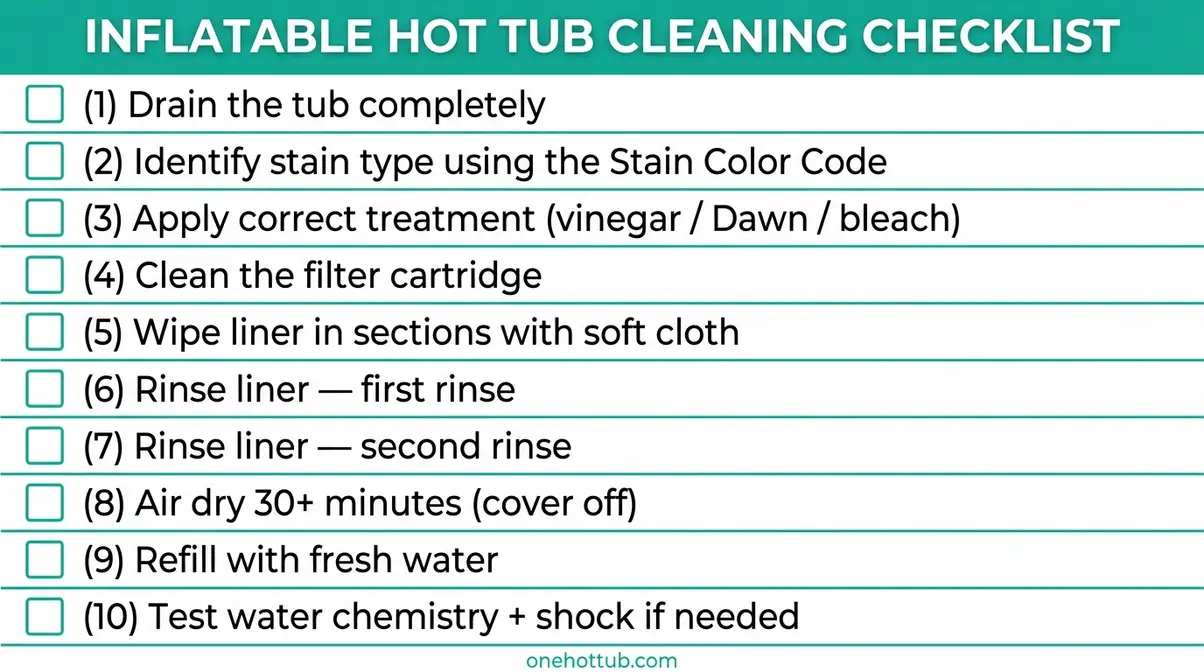
Once stains are treated, a full liner wipe-down protects your investment. Our cleaning checklist, verified against Bestway and Intex manufacturer guidelines, shows that three things void warranties faster than anything else: abrasive pads, acetone-based cleaners, and undiluted bleach.
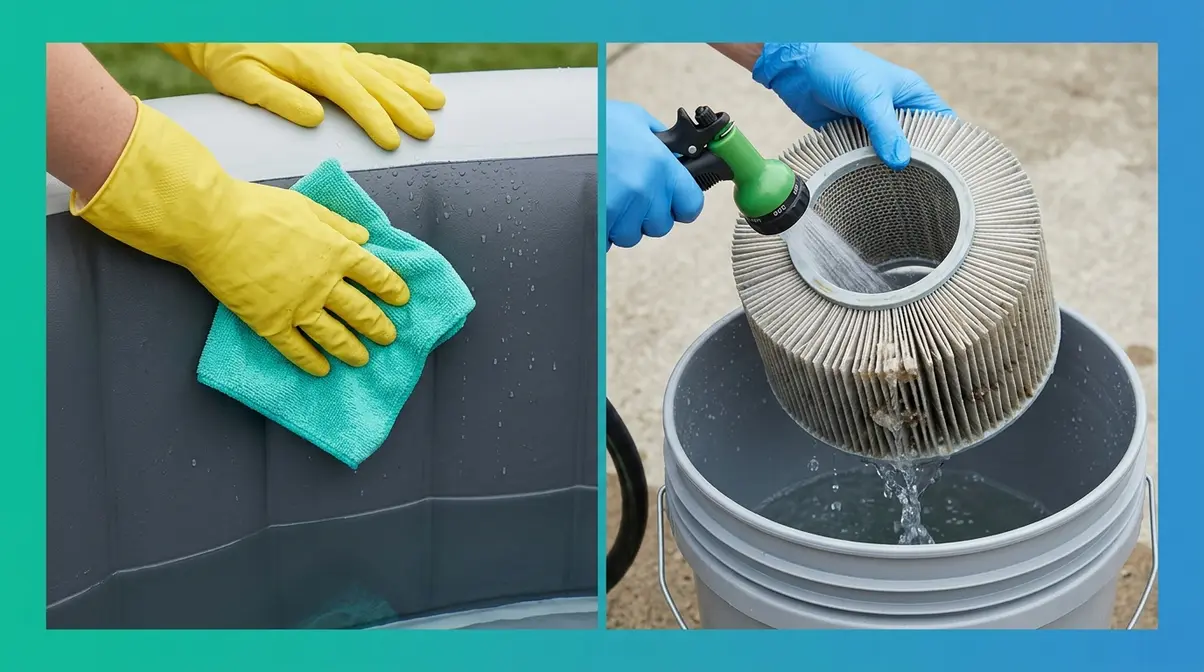
Safe liner cleaning process:
- Mix a gentle solution: 1 teaspoon of Dawn in 1 quart of warm water, or use a dedicated vinyl cleaner labeled for spa use.
- Work in sections around the tub, wiping with a soft microfiber cloth.
- Pay extra attention to the waterline, the area around jets, and any folds or seams where grime accumulates.
- Rinse each section before moving to the next — don’t let soap dry on the liner.
- Wipe dry with a clean towel.
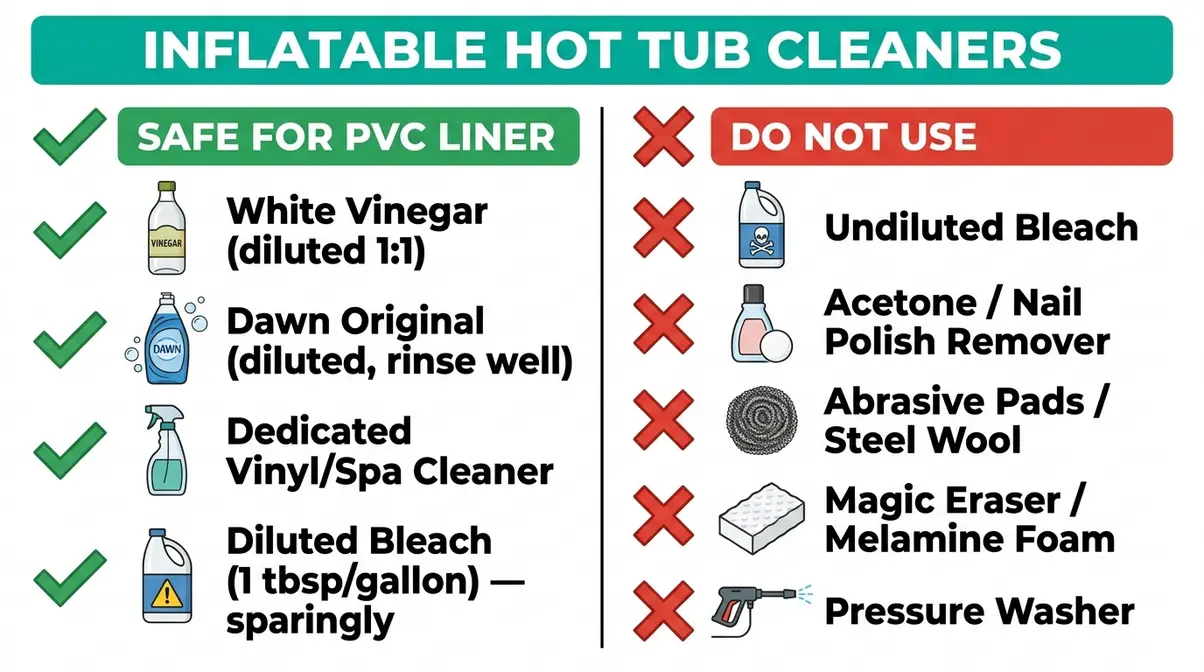
| Cleaner | Safe for PVC Liner? | Notes |
|---|---|---|
| White vinegar (diluted 1:1) | ✅ Yes | Ideal for mineral deposits and light mold |
| Dawn Original dish soap (diluted) | ✅ Yes | Rinse completely — residue causes foam |
| Dedicated vinyl/spa surface cleaner | ✅ Yes | Follow product label |
| Diluted household bleach (1 tbsp/gallon) | ⚠️ Use sparingly | Only for disinfection; rinse thoroughly |
| Undiluted bleach | ❌ No | Cracks and yellows PVC |
| Acetone or solvent-based cleaners | ❌ No | Dissolves PVC — voids warranty immediately |
| Abrasive pads or steel wool | ❌ No | Scratches liner; voids warranty |
| Baking soda paste (concentrated) | ❌ Avoid | Can leave gritty residue in seams |
How to Clean the Filter and Pump
The filter is the most overlooked part of inflatable hot tub maintenance — and a dirty filter is one of the top causes of recurring brown or cloudy water.
Filter cleaning steps:
- Remove the filter cartridge from its housing (usually a twist-and-pull mechanism on the side of the pump unit).
- Rinse under a garden hose to remove loose debris and body oils.
- Soak the cartridge in a solution of 1 part white vinegar to 3 parts water for 1 hour. This dissolves mineral buildup and breaks down oil residue.
- Rinse again thoroughly and allow to air-dry before reinstalling.
- Replace the filter cartridge every 2–4 weeks during regular use, or immediately if it looks grey, torn, or won’t come clean.
Pump care: Wipe the exterior of the pump unit with a damp cloth only. Never submerge the pump unit or spray water directly into its vents. Check the pump’s inlet for debris before every refill.
Preventing Hot Tub Folliculitis
Is hot tub bad for folliculitis? Yes — a poorly maintained hot tub is one of the most common environments for triggering it.
Hot tub folliculitis is a skin infection caused by Pseudomonas aeruginosa (the bacterium behind hot tub rash) — a common microorganism that thrives in warm water when sanitizer levels drop too low. The CDC identifies hot tubs as a primary transmission environment for Pseudomonas aeruginosa, noting that outbreaks are most common in warm-water environments where disinfectant levels are not properly maintained.
Symptoms include itchy, red, pus-filled bumps around hair follicles — typically appearing 12–48 hours after exposure.
What kills folliculitis naturally? Proper water chemistry is the most effective prevention. Maintain chlorine levels at 3–5 ppm (parts per million) or bromine at 4–6 ppm, and test your water before every soak. Showering before entering the tub dramatically reduces the bacterial load from skin and body care products.
For an active rash, the CDC recommends keeping the affected area clean and dry. Most mild cases resolve on their own within 7–10 days. Consult a doctor if the rash spreads, worsens, or is accompanied by fever.
Step 5 — Fix Foam and Tackle Scum Lines
Why Is My Hot Tub Foamy?
Foam is one of the most common complaints among inflatable hot tub owners — and almost always caused by contamination, not a chemistry malfunction.
The main culprits are:
- Body care products: Shampoo, conditioner, lotion, deodorant, and makeup all contain surfactants that foam aggressively in hot, jet-agitated water.
- Detergent residue: Swimsuits washed in laundry detergent release residual soap into the water.
- Low calcium hardness: When the water’s calcium level drops below 150 ppm, the water becomes “soft” and foams more easily.
- Soap residue from cleaning: Incomplete rinsing after a Dawn clean is a frequent cause of first-refill foam.
Quick fix: Shock the water with a dose of liquid shock (non-chlorine oxidizer) to break down the organic material causing the foam. Drain and refill if the foam persists after shocking.
The Tennis Ball Trick and Anti-Foam Solutions
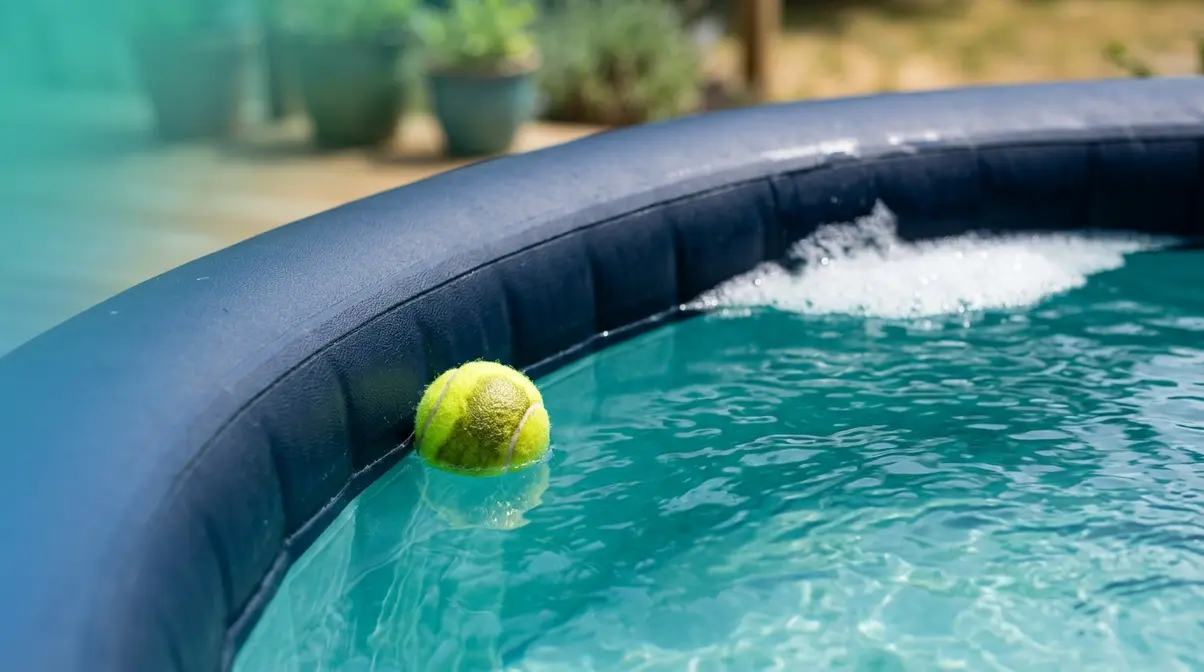
Why do you put a tennis ball in a hot tub? A tennis ball’s nylon-felt exterior acts as a passive oil trap. According to CNET’s home cleaning coverage, the fibrous surface of a tennis ball absorbs body oils, sunscreen, and cosmetic residue from the water surface — the same oils that create scum lines and feed foam.
Drop one or two clean tennis balls into your hot tub while it’s in use or while it sits between sessions. The felt absorbs floating oils before they can settle on the liner or clog the filter. Replace the tennis ball every 2–4 weeks or when it starts to feel greasy.
For persistent foam or scum lines:
- Anti-foam drops: A few drops of a spa-specific anti-foam product knock down surface foam within minutes. Note: anti-foam treats the symptom, not the cause. Find and eliminate the contamination source.
- Enzyme-based spa treatments: Products containing natural enzymes break down body oils and organic waste at the molecular level — a longer-term solution for heavy users or households where multiple people use the tub frequently.
- Scum bug float: A porous float that sits at the waterline and absorbs oils passively, similar to the tennis ball but purpose-built for spas.
When These Methods Won’t Work: Mistakes and Limits
Common Pitfalls
Even with the right products, a few common mistakes can make stains worse or damage your tub:
1. Using the wrong cleaner for the stain type
Applying bleach to a calcium scale deposit (white/gray stain) won’t work — bleach doesn’t dissolve minerals. Applying vinegar to active mold can inhibit some species but won’t reliably disinfect biofilm. Match the treatment to the Stain Color Code every time.
2. Scrubbing too hard, too fast
Inflatable hot tub vinyl is thinner than rigid shell spas. Aggressive scrubbing with a rough sponge creates micro-scratches that trap future stains and bacteria — making the problem worse over time. Always use soft microfiber cloths.
3. Not rinsing the liner after cleaning
Soap residue is invisible when dry. Owners who skip the rinse step almost always report a foamy tub on the next fill. Rinse twice, then rinse again.
4. Ignoring the filter
A stained liner that keeps returning to a brown or yellow tint is almost always a sign of a dirty filter recirculating contaminated water. Treat the filter every time you treat the liner.
5. Letting the tub sit wet and covered
Covering a damp, empty tub traps humidity and accelerates mold growth. After cleaning, leave the cover off or propped open for at least 30 minutes to allow the liner to dry.
Cleaners That Will Damage Your Vinyl Liner
These products are frequently suggested in general cleaning guides but are unsafe for inflatable hot tub PVC:
- Acetone and nail polish remover: Dissolves PVC on contact.
- WD-40 or petroleum-based lubricants: Leaves an oil film that feeds future algae growth and creates stubborn yellow staining.
- Concentrated hydrogen peroxide (above 3%): Can bleach and weaken the liner material.
- Magic Eraser / melamine foam pads: Micro-abrasive — scratches PVC and removes the protective coating.
- Pressure washers: The force tears seams and punctures inflatable walls.
When It’s Time to Replace Your Hot Tub
Sometimes the damage goes beyond what cleaning can fix. Consider replacing your inflatable hot tub when:
- Stains are on the inside of the liner (between the outer shell and inner air chamber) — no surface treatment can reach these.
- The vinyl has permanent yellowing or grey discoloration across large areas — this is UV or chemical degradation, not a stain.
- Seams are cracking or peeling — a sign the PVC has reached the end of its service life.
- Mold keeps returning within 1–2 weeks despite correct chemical treatment — the spores have penetrated the liner material.
Most quality inflatable hot tubs have a service life of 3–5 years with proper care. If yours is approaching that range and showing multiple issues, replacement is a more economical choice than continued chemical treatments.
Frequently Asked Questions
How do I get rid of brown stains in my inflatable hot tub?
Brown stains in an inflatable hot tub are almost always caused by dissolved iron in your source water that oxidizes and deposits on the liner. Spray the stain with a 1:1 white vinegar and water solution, let it sit for 10–15 minutes, then scrub gently with a soft microfiber cloth and rinse. According to Penn State Extension, iron levels as low as 0.3 mg/L can produce visible rust deposits. For persistent stains, use a dedicated stain-and-scale remover formulated for spa vinyl.
Can I use Dawn dish soap to clean my inflatable hot tub?
Yes — Dawn Original dish soap is widely used and reported safe for PVC inflatable hot tub liners, though no formal manufacturer certification exists. Apply a small amount to a damp cloth, work it into the surface, and rinse thoroughly until no suds remain. The critical rule is complete rinsing: any residual Dawn left on the liner will produce heavy foam when you refill and run the jets. Use it sparingly and rinse at least twice.
Why is my hot tub water foamy?
Foam in an inflatable hot tub is almost always caused by organic contamination — body oils, lotions, shampoo, or detergent residue from swimwear. NSF International research confirms that even trace surfactant levels produce significant foam in jet-agitated water. Shock the water with a liquid shock treatment to oxidize the organic material. If foam persists, drain, clean the liner with Dawn (rinsing completely), clean the filter, and refill. Showering before use reduces foam significantly.
What is the best thing to clean the inside of an inflatable hot tub?
The best cleaning approach depends on your stain type, but for a general interior clean, white distilled vinegar (diluted 1:1 with water) handles mineral deposits and light mold, while diluted Dawn dish soap handles body oil and scum lines. For disinfection, a 1-tablespoon-per-gallon bleach solution kills bacteria and mold spores. A dedicated vinyl/spa surface cleaner is the safest all-purpose option if you want a single product. Always follow with a thorough rinse and allow the liner to air dry before refilling.
Refill, Rebalance, and Relax
Stains in an inflatable hot tub are a maintenance issue, not a disaster. The Stain Color Code removes the guesswork: brown means iron, yellow means oils, green means mold, white means minerals. Match the color, apply the right treatment from Step 3, and you’ll clear most stains in a single session with products you already own.
After refilling, test your water chemistry before the first soak. Target chlorine at 3–5 ppm, pH at 7.2–7.8, and calcium hardness at 150–250 ppm. Balanced water is the single most effective long-term stain prevention strategy — it stops the conditions that create stains in the first place.
Your next step is simple: identify your stain color, grab the right supplies from your cleaning kit, and work through the steps above. Most owners complete the full process — drain, treat, deep clean, refill — in under 90 minutes. Your tub will be ready for a soak by this afternoon.

David King
Hot tub tester and writer at One Hot Tub.