What’s in this guide
Home ›Maintenance And Troubleshooting
You twist. Nothing moves. You twist harder. Still nothing. If your hot tub filter feels completely welded in place, you are not alone — and you have not broken anything yet. Hot tub owners consistently report that seized filters are one of the most common and frustrating maintenance headaches, especially after weeks of heavy use or long periods between cleanings.
The good news: you almost certainly do not need a plumber, a new filter housing, or an expensive service call. You need a clear, step-by-step plan that starts gentle and only escalates when necessary. This guide introduces The Escalating Force Method — a safe, logical sequence that takes you from the simplest household fix all the way to specialized tools, so you never accidentally crack your filter housing by jumping straight to brute force. Follow these five methods in order, and you will have your filter out today.
The Escalating Force Method gives you a safe, damage-free sequence for how to remove a stuck hot tub filter — starting with rubber gloves and escalating only when needed.
- Start simple: Rubber gloves and counter-clockwise torque solve most stuck filters without any tools.
- Heat helps: Hot water thermal expansion loosens mineral-seized threads in minutes.
- Use the right tool: A strap wrench provides controlled force without cracking plastic housings.
- Prevent recurrence: Food-grade silicone grease on the O-ring is the single best prevention step.
- Safety first: Always turn off the circuit breaker before touching any filter components.
Why Your Hot Tub Filter Gets Stuck
A stuck filter is almost never random. Understanding the cause helps you choose the right removal method — and avoid making the situation worse.
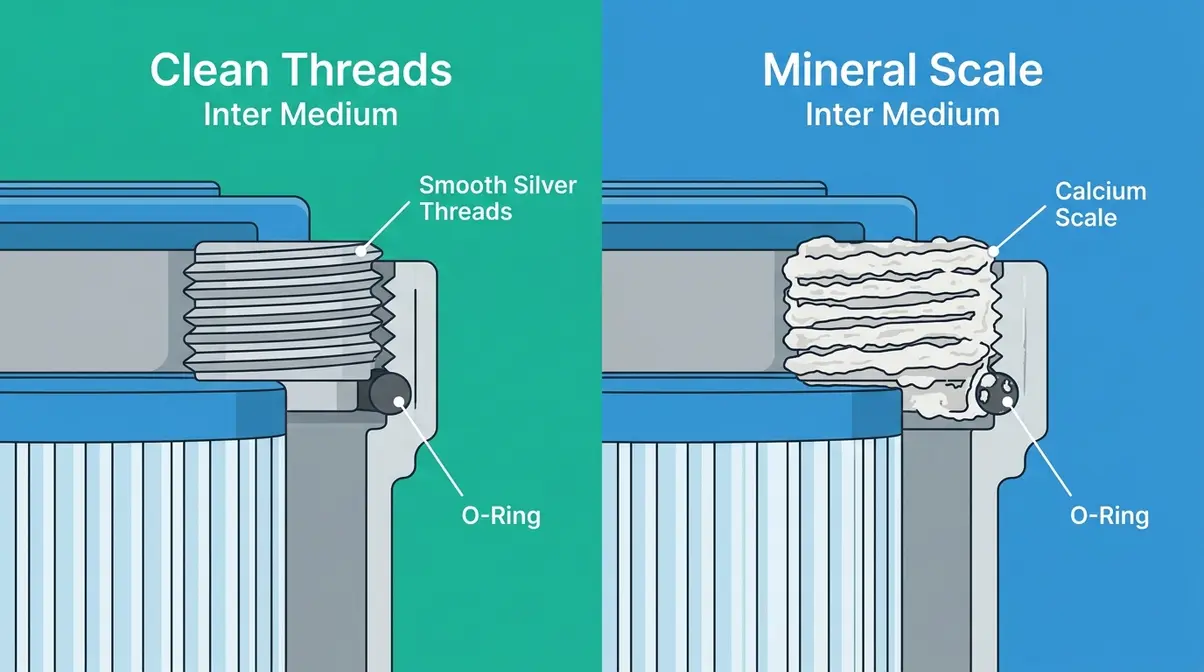
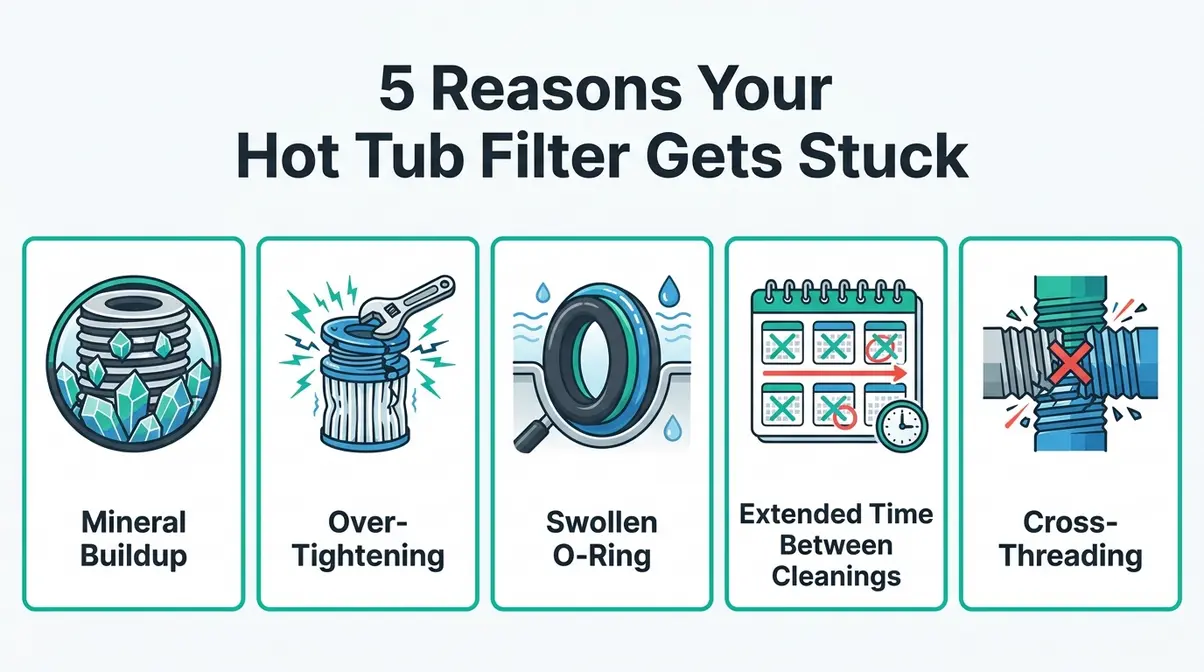
Mineral buildup is the leading culprit. Hot tub owners consistently report that calcium and magnesium deposits (collectively called “scale”) form on the filter threads over time, essentially gluing the filter to its housing. Hard water accelerates this process significantly. According to the Water Quality Association, approximately 85% of U.S. households have hard to very hard water, meaning scale buildup is the norm rather than the exception for most spa owners.
Over-tightening is the second most common cause. Many owners instinctively crank the filter as tight as possible when reinstalling it, not realizing that hand-tight is all that is needed. That extra force compresses the O-ring (the rubber seal at the base of the filter) and makes the next removal dramatically harder.
Swollen or degraded O-rings also contribute. O-rings expand when exposed to heat and certain chemicals. An old or poorly lubricated O-ring can swell into the housing threads, creating a near-airtight seal that resists removal.
Extended time between cleanings compounds all of the above. Filters left in place for six months or longer accumulate layers of scale, biofilm, and compressed debris that bond the filter to its housing. Spa technicians recommend cleaning cartridge filters every four to six weeks and replacing them annually to prevent this level of buildup.
Finally, misaligned threads from a previous installation can cause cross-threading — where the filter is screwed in at a slight angle, making it feel stuck even when minimal force was originally used.
Safety Warning: Do This Before You Touch Anything
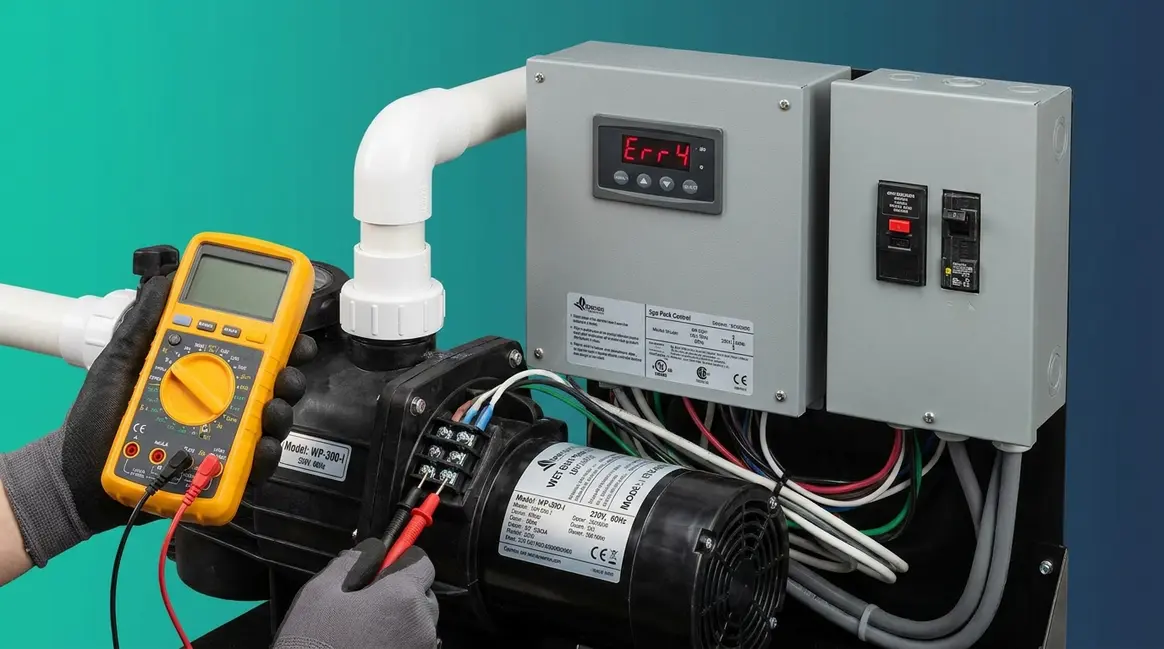
Turn off the circuit breaker that powers your hot tub before you start. This is not optional. Hot tub pumps and jets can activate automatically via timers or temperature cycles, even when the control panel appears off. Contact with running water and electrical components is a serious hazard.
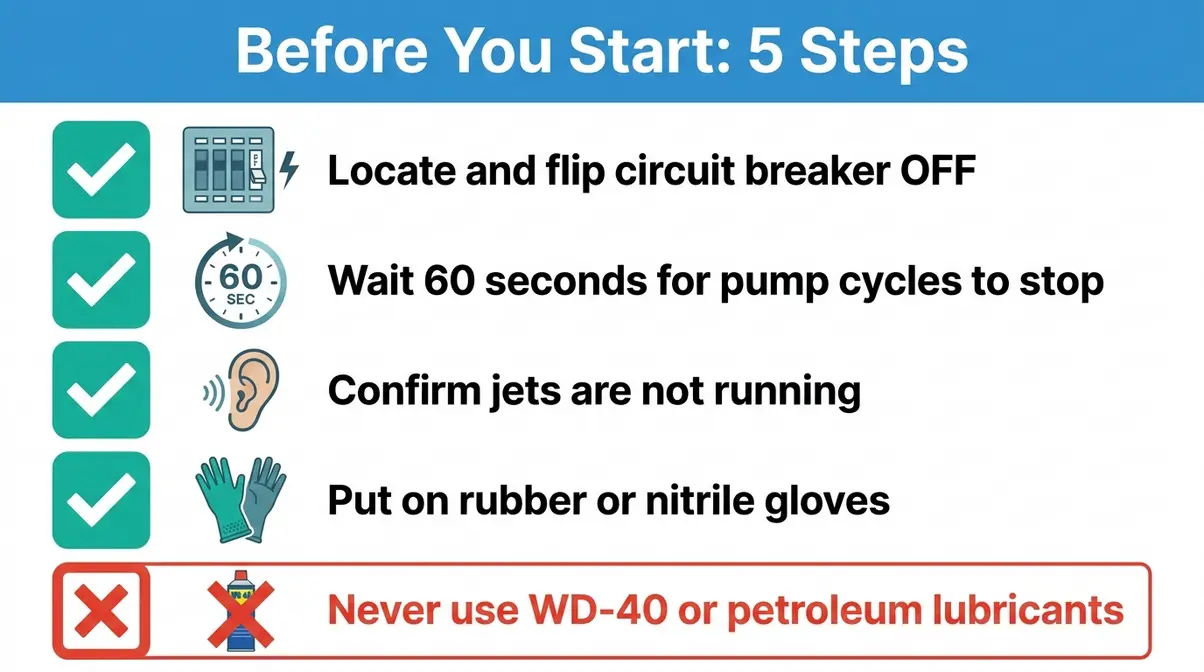
Here is the exact sequence to follow before beginning any removal method:
- Locate your hot tub’s dedicated circuit breaker — typically in your home’s main electrical panel or a disconnect box mounted near the spa.
- Flip the breaker to the OFF position. Do not rely on the spa’s power button alone.
- Wait 60 seconds for any residual pump cycles to fully stop.
- Confirm the jets are not running by listening for pump noise and checking that no water is circulating.
- Put on rubber or nitrile gloves — both for grip and for hand protection from chemical residue on the filter.
Can I Use WD-40 on a Stuck Filter?
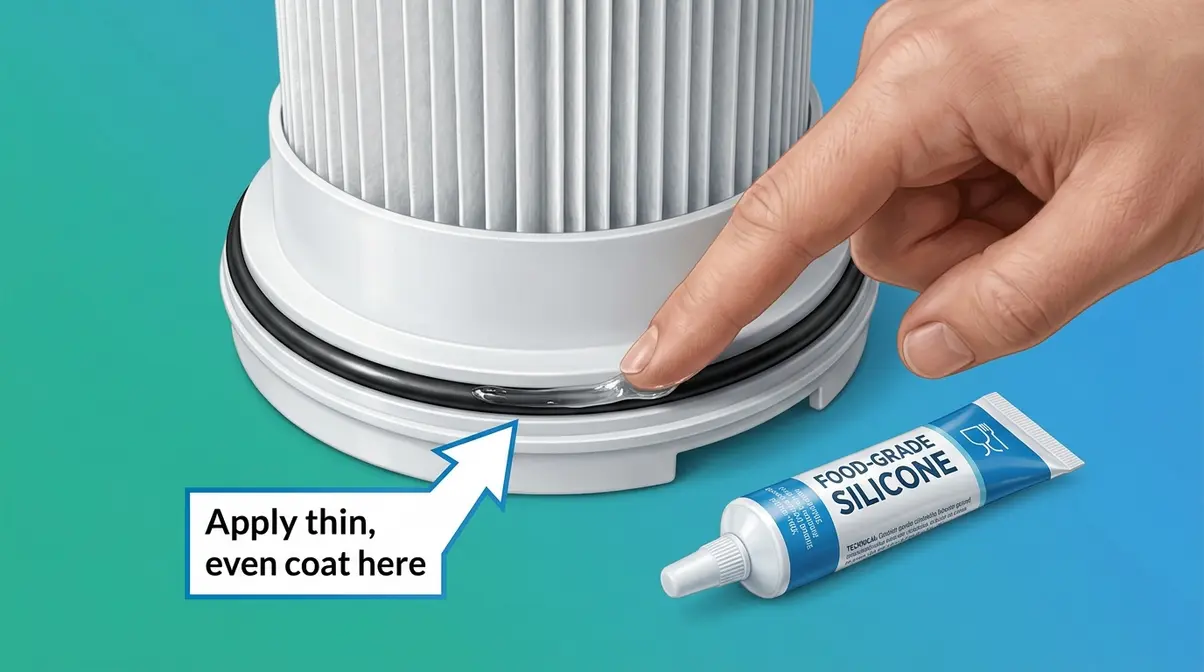
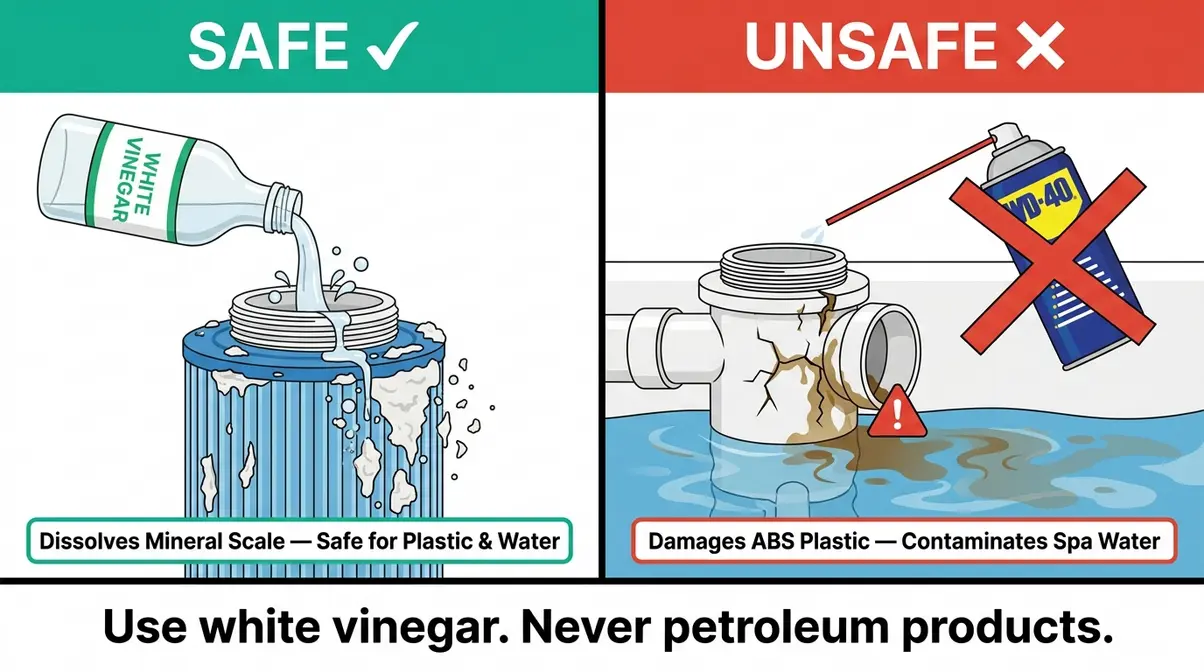
No — never use WD-40 or any petroleum-based lubricant on a hot tub filter or housing. WD-40 degrades ABS plastic (the material in most filter housings), weakens O-rings, and introduces petroleum compounds into your spa water. Removing petroleum contamination from spa water requires a complete drain, clean, and refill — a process that wastes hundreds of gallons and several hours. The safe alternative is white vinegar for dissolving mineral buildup, or food-grade silicone grease for lubrication during reinstallation. The Pool & Hot Tub Alliance specifically prohibits petroleum-based lubricants in spa maintenance guidelines.
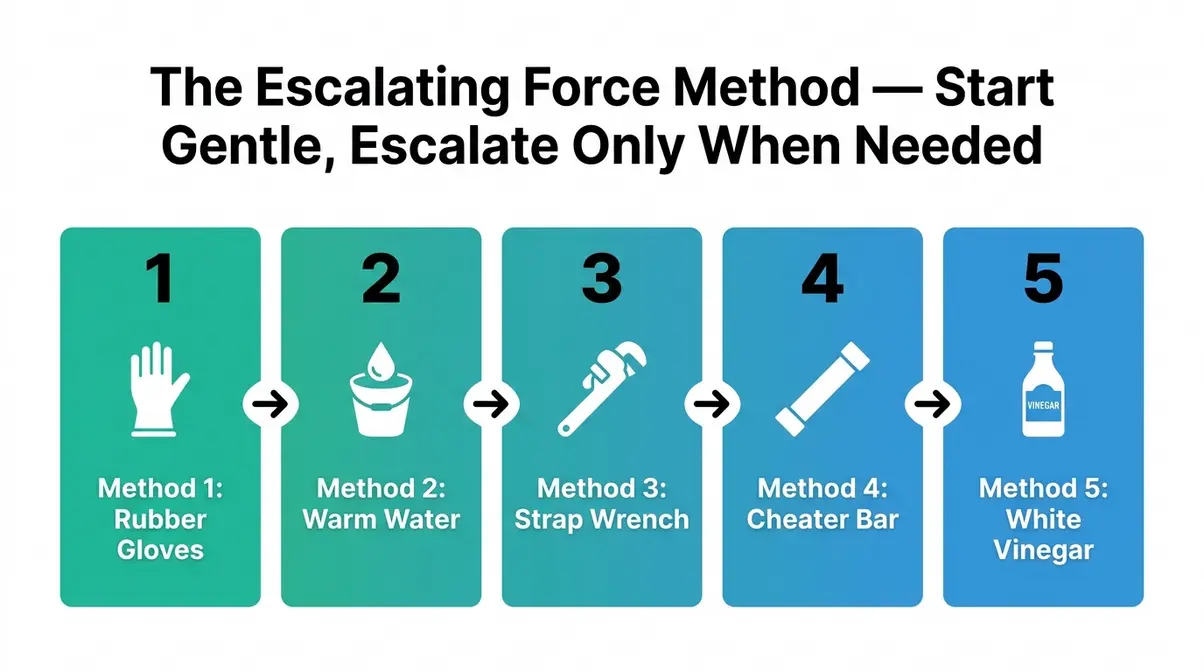
The 5-Step Escalating Force Method
Estimated Time: 15–30 minutes
Tools Needed: Rubber gloves, warm water, strap wrench, PVC pipe, white vinegar.
The Escalating Force Method works because it protects your filter housing at every stage. If you are figuring out how to remove a stuck hot tub filter without causing expensive damage, this sequence is your blueprint. Each method is gentler than the one that follows it. Work through them in sequence — do not skip ahead. Most stuck filters yield at Method 2 or 3, and only truly seized filters require Method 4 or 5.
Method 1: Rubber Gloves & Torque
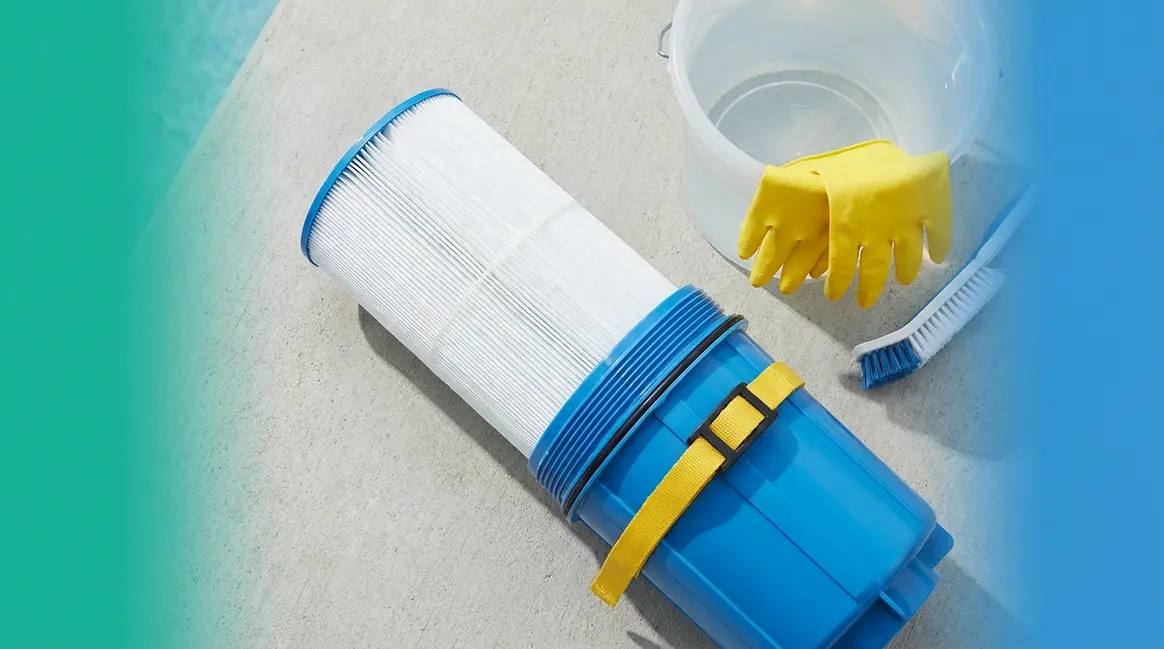
This solves the majority of stuck filters. Dry hands on smooth plastic provide almost no grip. Rubber or latex gloves change everything.
What you need: A pair of rubber, latex, or nitrile gloves (dishwashing gloves work perfectly).
- Steps:
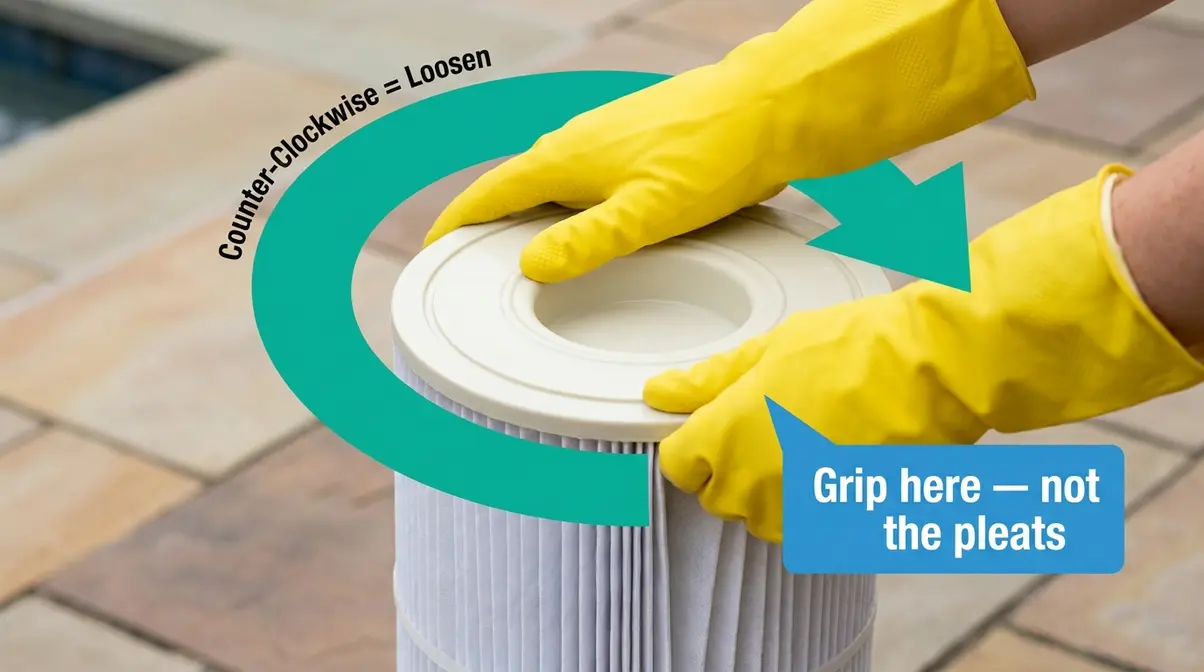
- Put on your rubber gloves and grip the filter body firmly near the top — not the pleated fabric, which can tear.
- Turn the filter counter-clockwise (to the left, as if you are unscrewing a jar lid).
- Apply slow, steady pressure rather than a sharp jerk. Sustained torque breaks mineral bonds more effectively than sudden force.
- If the filter moves even slightly, keep going — gradual progress is still progress.
- If it does not budge after 30 seconds of firm effort, stop and move to Method 2.
Why it works: Rubber gloves increase friction between your hand and the slippery plastic filter body by up to 10 times compared to bare skin, giving you genuine grip without adding any external force to the housing.
Which Direction to Unscrew It?
Unscrew your hot tub filter counter-clockwise — to the left, the same direction as loosening any standard threaded fastener. This applies to virtually all residential hot tub filter designs from major brands including Hayward, Pentair, Pleatco, and Unicel. A helpful memory trick: “Righty-tighty, lefty-loosey.” When facing the top of the filter, turn left (counter-clockwise) to remove and right (clockwise) to install. If your filter seems to resist counter-clockwise turning, do not switch directions — apply the thermal expansion or strap wrench method instead.
Method 2: Warm Water Thermal Expansion
If gloves alone do not work, heat is your next best friend. Thermal expansion (the scientific principle that materials expand slightly when warmed) causes the plastic filter housing to loosen its grip on the filter threads. This method is especially effective when mineral buildup is the cause.
What you need: A bucket or pitcher of warm water (not boiling — aim for 120–130°F, similar to a very hot shower).
- Steps:
- With the circuit breaker still OFF, carefully pour 1–2 gallons of warm water directly around the base of the filter where it meets the housing.
- Wait 3–5 minutes for the heat to penetrate the housing material and slightly expand the plastic.
- Put your rubber gloves back on and attempt counter-clockwise removal again.
- If there is still no movement, repeat the warm water application once more and wait another 3 minutes before trying again.
- Do not use boiling water — temperatures above 140°F can warp ABS plastic housing components.
Why it works: The filter housing and filter body are made of slightly different materials and expand at slightly different rates when heated. This differential expansion creates a tiny but meaningful gap in the threads, breaking the mineral seal without any mechanical force at all.
According to spa technicians surveyed by multiple hot tub maintenance forums, the warm water method successfully frees approximately 60–70% of mineral-seized filters when combined with rubber gloves.
Method 3: The Strap Wrench Method
When heat and grip are not enough, controlled mechanical force is the next safe step. A strap wrench (a tool that uses a flexible rubber or nylon strap to grip round objects) applies even pressure around the entire circumference of the filter, eliminating the risk of cracking or crushing that comes with pliers or pipe wrenches. According to This Old House, a strap wrench can safely apply up to 4,000 pounds of non-marring pressure to a plastic housing.
What you need: A strap wrench (available at any hardware store for $10–$20) or a dedicated filter removal tool sold by hot tub brands like Hayward and Pentair.
- Steps:
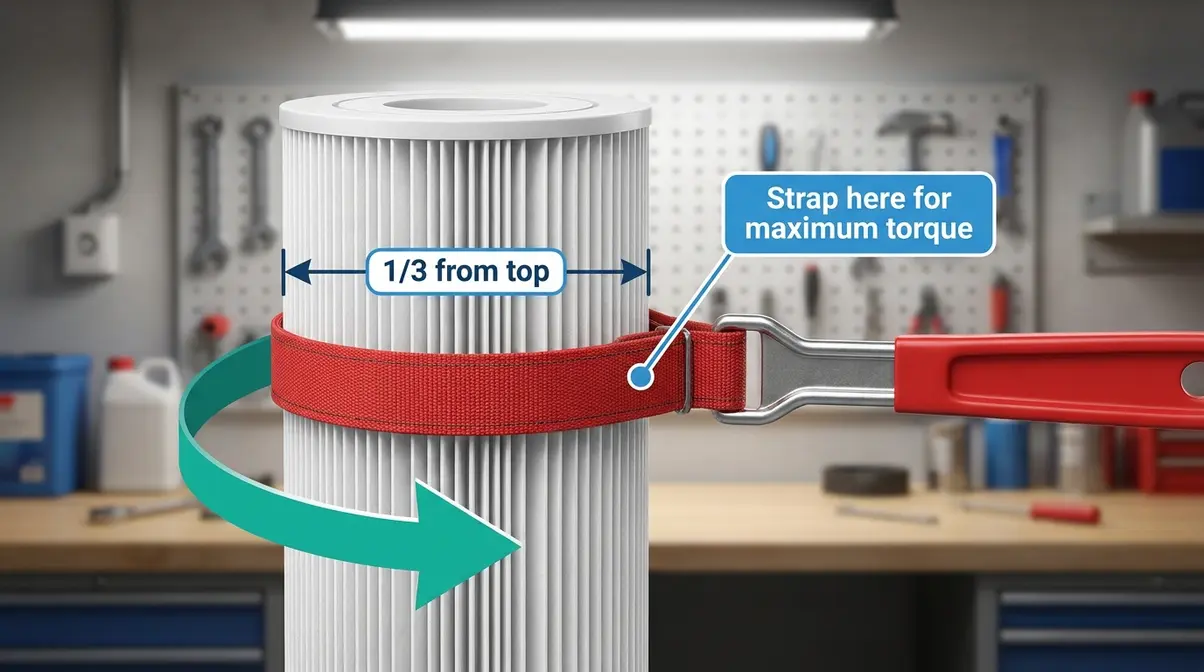
- Loop the strap wrench around the filter body, positioning the strap approximately one-third of the way down from the top.
- Tighten the strap until it grips the filter firmly — you should not be able to slide it up or down.
- Use the strap wrench handle to turn counter-clockwise with smooth, controlled force.
- Apply steady pressure for 5–10 seconds before releasing and re-gripping. Do not jerk the handle sharply.
- Once the filter begins to turn, remove the strap wrench and finish unscrewing by hand.
Why it works: A strap wrench distributes force evenly across the full diameter of the filter. Concentrated force from pliers or your fingers creates pressure points that crack ABS plastic housings — a repair that costs $50–$200 or more.
Method 4: PVC Pipe Leverage
If the strap wrench provides insufficient torque, you can extend your mechanical advantage using a short length of PVC pipe slipped over the strap wrench handle. This is sometimes called a cheater bar — a simple physics trick that multiplies the force you apply without requiring more physical strength.
What you need: A strap wrench, plus a 12–18 inch length of PVC pipe with an inner diameter wide enough to slide over the strap wrench handle.
- Steps:
- Attach the strap wrench to the filter as described in Method 3.
- Slide the PVC pipe over the end of the strap wrench handle, extending its effective length by 12–18 inches.
- Apply counter-clockwise force to the PVC pipe end — the extended lever arm multiplies your input force significantly.
- Use short, controlled bursts of pressure rather than sustained leaning. Check after each burst to see if the filter has moved.
- Once the filter breaks free, remove the pipe and strap wrench and finish by hand.
Important: Use this method with care. The additional leverage it provides is powerful enough to crack a housing if the filter is cross-threaded. If you feel grinding or hear cracking sounds, stop immediately and assess before continuing.
Method 5: Penetrating Solution
For filters that have been in place for many months and are heavily encrusted with calcium scale, a safe penetrating solution can dissolve the mineral bonds before you attempt mechanical removal.
What you need: White vinegar or a dedicated spa filter cleaning solution (such as Leisure Time Filter Clean or Natural Chemistry Filter Perfect). Do not use CLR, rust removers, or any acid-based household cleaner — these damage filter media and contaminate spa water.
- Steps:
- Mix a solution of one part white vinegar to one part water, or prepare your commercial filter cleaner per its instructions.
- Using a small brush or sponge, apply the solution to the threads visible at the base of the filter where it meets the housing.
- Allow the solution to soak for 15–30 minutes. The mild acid in vinegar dissolves calcium carbonate (the primary component of mineral scale) without harming ABS plastic.
- Rinse the area with clean water before attempting removal — you do not want acidic solution entering your spa.
- Apply rubber gloves and attempt counter-clockwise removal. If needed, follow up with the strap wrench (Method 3).
Handling a Broken Filter Base
Sometimes the filter does not just stick — it breaks. The filter body separates from its threaded base, leaving a plastic ring lodged in the housing. This is more common with older filters (over 12 months old) and with filters that were already brittle from chemical exposure.
Do not panic. A broken base is frustrating, but it is almost always removable without replacing the entire filter housing. For a broken threaded base, try these steps:
1. Assess what is left. If a ring of plastic remains in the housing, look for any lip or edge you can grip with needle-nose pliers.
2. Use needle-nose pliers with a rag. Wrap the jaws of your pliers with a thin cloth to avoid scratching the housing interior. Grip the broken ring edge and turn counter-clockwise.
3. Try the rubber band trick. Place a wide rubber band flat against the broken base surface and press your palm against it firmly. The rubber creates enough friction to turn the base fragment counter-clockwise in some cases.
4. Use a broken bolt extractor. Available at hardware stores for under $15, these tools are designed exactly for this situation — they grip inside a broken threaded component and apply counter-clockwise torque.
5. Call a spa technician if the base will not move. Attempting to drill or cut a stuck broken base without experience risks permanent housing damage. A technician visit ($75–$150) is far less expensive than a new filter housing ($100–$400).
Hot tub owners on spa maintenance forums consistently report that patience and the needle-nose plier method successfully extract broken bases in the majority of cases — but forcing it risks the one outcome you cannot fix yourself.
Preventing a Stuck Filter
Once your filter is out, a few simple steps at reinstallation will ensure you never fight this battle again. This is where The Escalating Force Method pays its biggest dividend — because prevention is always easier than removal.
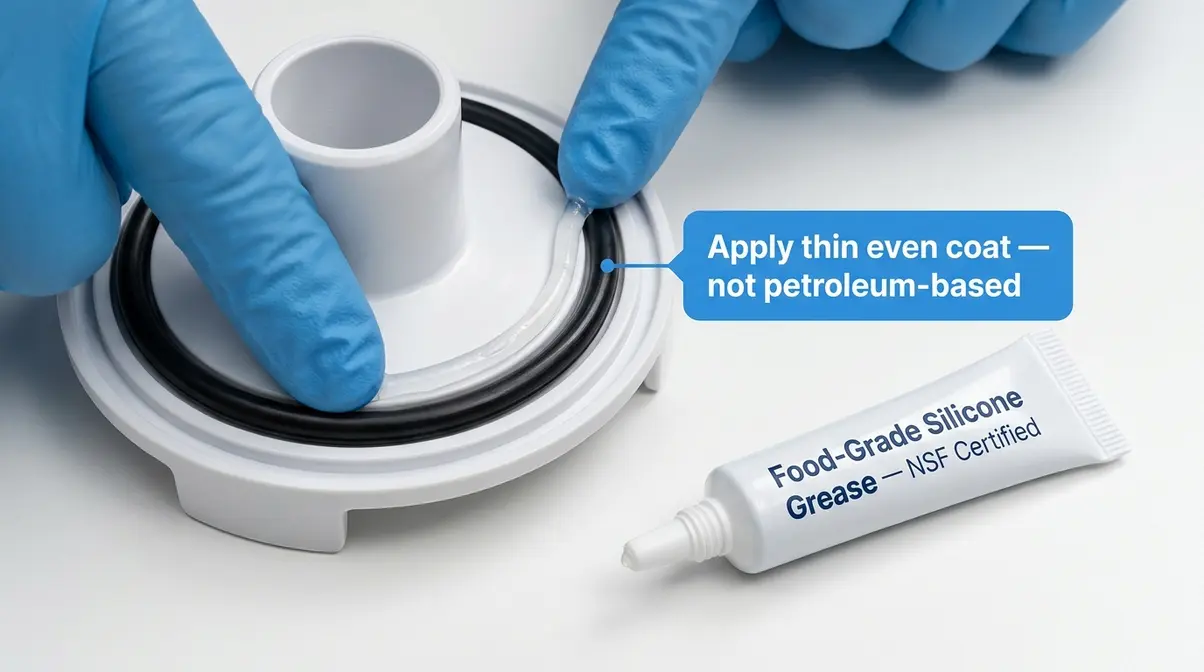
Apply food-grade silicone grease to the O-ring every time you reinstall. This single step is the most effective prevention measure available. Silicone grease keeps the O-ring supple, prevents it from swelling into the threads, and allows easy removal next time. A small tube costs under $5 and lasts years. Guidelines from NSF International suggest that certified spa components require proper lubrication, making food-grade silicone the ideal choice — never petroleum-based products.
Additional prevention steps:
- Hand-tighten only. Once the filter seats and the O-ring compresses, stop turning. No additional tool tightening is needed or safe.
- Clean your filter every 4–6 weeks. Regular cleaning prevents the scale accumulation that causes seized filters. A monthly rinse with a garden hose takes under 10 minutes.
- Soak the filter in a diluted cleaning solution quarterly. A 24-hour soak in a dedicated filter cleaner (or a 1:5 vinegar-to-water solution) dissolves mineral deposits before they harden into scale.
- Replace your filter annually. Filters older than 12 months are significantly more likely to break during removal and less effective at cleaning your water. According to the National Swimming Pool Foundation, replacing filters on schedule also reduces strain on your pump motor.
- Test and balance your water chemistry weekly. High calcium hardness (above 400 ppm) dramatically accelerates scale formation. Keeping calcium hardness between 150–250 ppm is the single most effective long-term prevention measure.
| Prevention Step | Frequency | Difficulty | Impact |
|---|---|---|---|
| Silicone grease on O-ring | Every reinstallation | Very easy | High |
| Rinse filter with hose | Every 4–6 weeks | Easy | High |
| Soak in filter cleaner | Every 3 months | Easy | High |
| Replace filter | Annually | Easy | High |
| Test water chemistry | Weekly | Moderate | Very high |
Frequently Asked Questions
Why won’t my hot tub filter unscrew?
Hot tub filters most commonly refuse to unscrew due to mineral scale buildup on the threads. Calcium and magnesium deposits form over time — especially in hard water areas — and essentially cement the filter to its housing. Over-tightening during the last installation is the second most common cause, as it compresses the O-ring into the housing and creates a near-airtight seal. Starting with rubber gloves and counter-clockwise torque resolves most cases. If scale is the cause, the warm water thermal expansion method (Method 2) or a white vinegar soak (Method 5) will dissolve the mineral bond before you apply mechanical force.
What if my hot tub filter breaks off at the base?
If your filter breaks and leaves a threaded ring stuck in the housing, you can usually remove it with needle-nose pliers wrapped in a cloth. Grip the broken edge of the plastic ring and turn counter-clockwise. If the edge is too smooth to grip, a broken bolt extractor tool (under $15 at any hardware store, according to Home Depot averages) is designed exactly for this situation — it grips inside the broken piece and applies controlled counter-clockwise torque. Avoid drilling or cutting without professional guidance, as this risks permanent housing damage. If the fragment will not move after these methods, a spa technician visit ($75–$150 per HomeAdvisor estimates) is the safest next step.
How do I keep my hot tub filter from getting stuck in the future?
The most effective prevention is applying a thin coat of food-grade silicone grease to the O-ring every time you reinstall the filter. This keeps the seal supple, prevents swelling, and allows easy removal at the next cleaning. Additionally, always hand-tighten only — never use tools to tighten the filter. Clean the filter every 4–6 weeks, soak it in a filter cleaner solution quarterly, and replace it annually. Keeping your water’s calcium hardness between 150–250 ppm (per CDC guidelines) also dramatically slows the mineral scale formation that causes most seized filters.
How to get a water filter off that’s stuck?
If a general water filter is stuck, the same escalating force principles apply. Start by using a rubber strap wrench to gain leverage without cracking the plastic housing. If mineral buildup is suspected, applying a warm, damp cloth around the housing can create thermal expansion to loosen the threads. Always ensure the water supply is turned off and system pressure is relieved before attempting removal.
Does a hot tub lower cortisol?
Yes, soaking in a hot tub can lower cortisol levels and reduce stress. The combination of warm water, buoyancy, and massage jets promotes physical relaxation, which signals the brain to decrease the production of stress hormones like cortisol. Regular use, coupled with proper maintenance like keeping your filter clean and functional, ensures a relaxing environment that consistently supports stress relief.
Getting Your Filter Out — and Keeping It That Way
A seized hot tub filter is one of the most common maintenance problems spa owners face — and one of the most fixable. The Escalating Force Method gives you a reliable, damage-free path: start with rubber gloves, apply heat if needed, reach for a strap wrench when heat is not enough, use a cheater bar for extra leverage, and dissolve extreme mineral buildup with white vinegar. Work through each method in sequence and you will protect your filter housing at every step.
The framework works because it matches the tool to the problem rather than guessing. Most filters come free at Method 1 or 2. The rare stubborn cases yield to Method 3 or 4. And the mineral-encrusted survivors respond to Method 5. You now have the full sequence — no plumber required.
The one step that pays the biggest long-term dividend is the simplest: coat that O-ring with food-grade silicone grease before you put the filter back in. Do that today, and the next time you need to figure out how to remove a stuck hot tub filter, it will twist out by hand in seconds. Start with Method 1 right now — your hot tub will be running again before the end of the afternoon.

David King
Hot tub tester and writer at One Hot Tub.