What’s in this guide
- How Long Does a Hot Tub Take to Heat Up?
- How to Heat Your Hot Tub Faster: The 4-Layer Heating Method
- How Long Does an Inflatable Hot Tub Take to Heat Up?
- Hot Tub Maintenance Timelines: Filling, Chemicals, and More
- Hot Tub Safety Rules and Common Mistakes to Avoid
- Frequently Asked Questions
- Heating Up — Your Next Steps
Home ›Hot Tub Water Management
“Bought in October, first drain clean and refill. Takes forever to heat back up 🙄! Guess no tub tonight.”
Sound familiar? You’re not alone — and there’s a real reason your hot tub seems so slow.
Every hour you wait is an hour you’re not relaxing. And if you don’t know what’s slowing things down, you could be waiting twice as long as you need to. Knowing how long does a hot tub take to heat up — and what actually controls that time — is the difference between a frustrating evening and a perfect soak.
In this guide, you’ll learn exactly how long a hot tub takes to heat up, what controls that time, and the four specific steps you can take right now to speed up the process. We’ll cover standard hot tubs, inflatable models, brand-specific times, and maintenance timelines — so you have everything in one place.
If you are wondering how long does a hot tub take to heat up, most take 4 to 8 hours — but a 110V plug-and-play model can take 12+ hours, and inflatable hot tubs can take 24 hours or more.
- Heater voltage matters most: A 240V hardwired tub heats 3–6°F per hour; a 110V plug-and-play heats just 1–2°F per hour
- The 4-Layer Heating Method (cover on + jets running + air valves closed + right voltage) can cut your wait time significantly
- Inflatable tubs (Coleman, Intex, SaluSpa) take the longest — 12 to 24+ hours in cold weather
- Leaving your tub on between uses is often faster and cheaper than reheating from cold
How Long Does a Hot Tub Take to Heat Up?
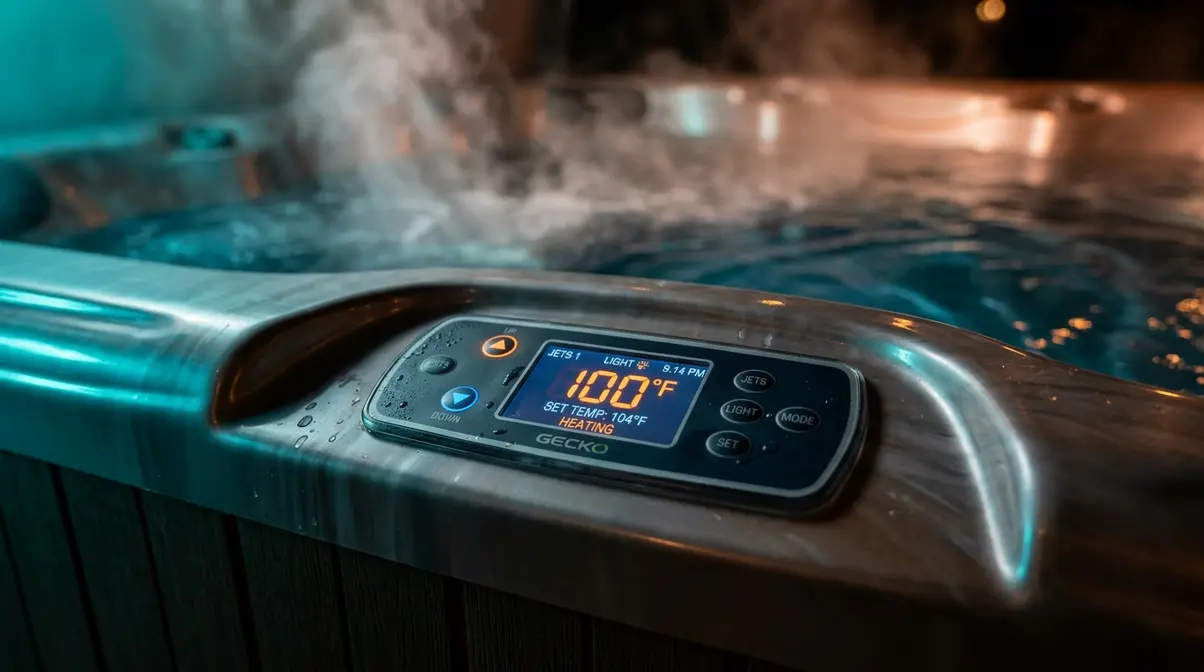
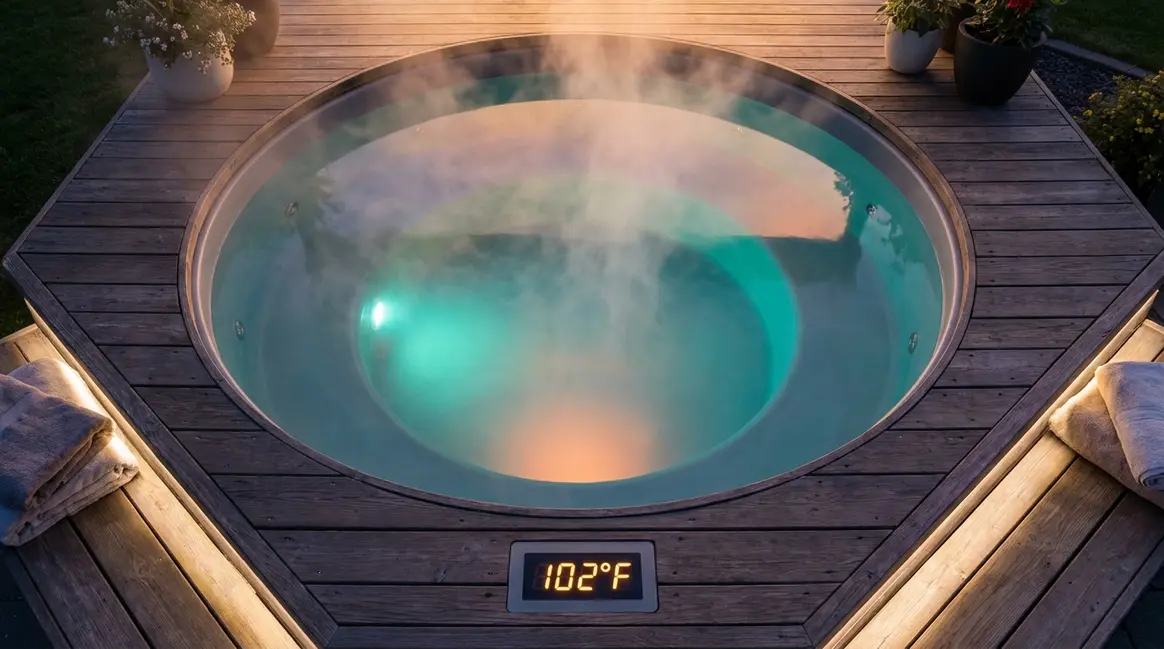
A standard 240V hot tub — the hardwired, high-powered version most full-size models use — takes 4 to 8 hours to heat up from cold water to a comfortable soaking temperature of 100–104°F. According to Consumer Reports hot tub data, 240V hot tubs heat at 5–8°F per hour, while 110V plug-and-play models (the kind that run off a standard household outlet) manage just 1–2°F per hour. That difference means a plug-and-play model could take 12 hours or more — which is why knowing your heater type changes everything.
Average Heating Times by Hot Tub Type
The single biggest factor in how fast your hot tub heats up is the voltage of your heater. Here’s how the three main types compare:
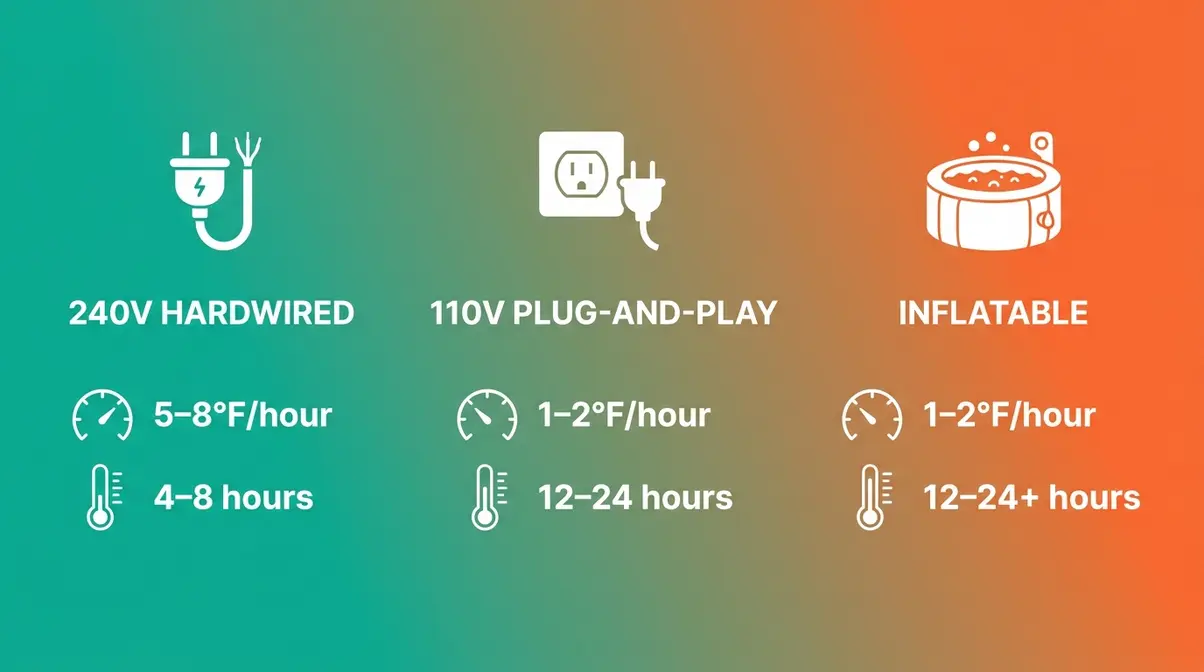
| Hot Tub Type | Heating Rate | Time to Reach 100°F (from 60°F) | Best For |
|---|---|---|---|
| 240V Hardwired | 5–8°F/hour | 4–8 hours | Full-size permanent spas |
| 110V Plug-and-Play | 1–2°F/hour | 12–24 hours | Renters, first-time buyers |
| Inflatable (1.5–2kW) | 1–2°F/hour | 12–24+ hours | Portable, seasonal use |
What does “°F per hour” actually mean? If your hot tub heats at 5°F per hour and your water starts at 60°F, it needs to gain 40°F to reach 100°F — so that’s roughly 8 hours. At 8°F per hour on a warm summer day with warmer tap water, that same tub could be ready in 4–5 hours.
A 240V hardwired hot tub heats at 3–6°F per hour, meaning most reach soaking temperature in 4–8 hours from cold water (Northern Saunas, 2024). That’s the benchmark you should use as your baseline.
Ambient air temperature, insulation quality, and whether you’re using your cover all push that number up or down. The next section covers exactly which factors matter most.
Key Factors That Slow Down (or Speed Up) Your Heating
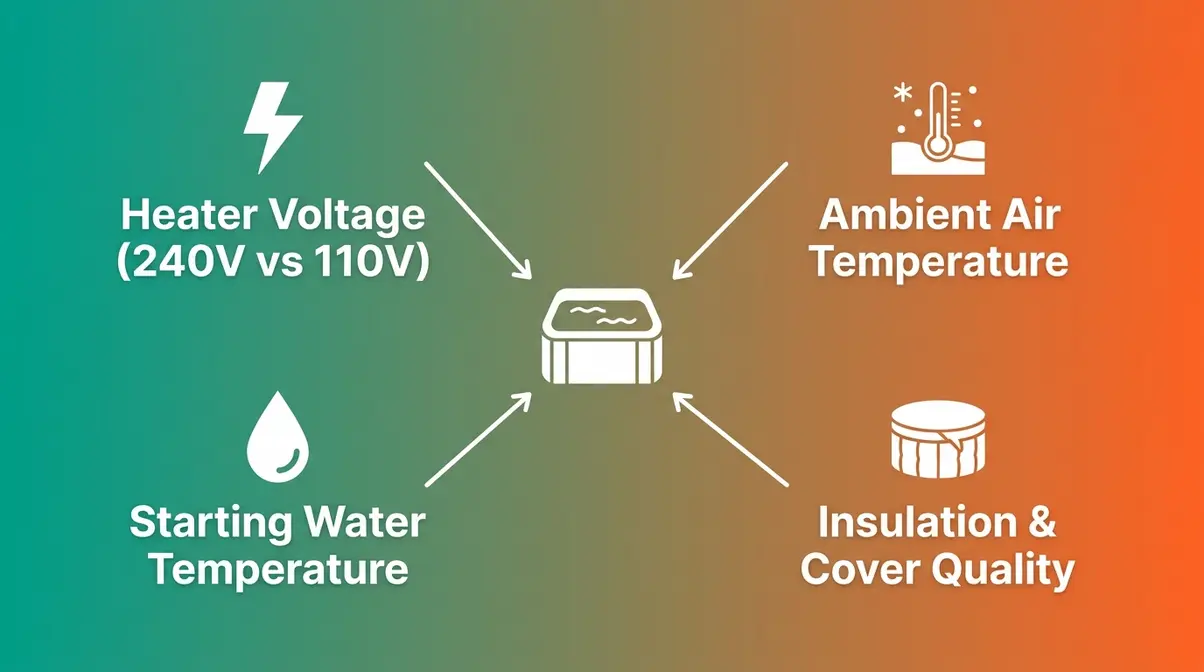
Hot tub owners across forums — including the active r/hottub community — consistently report that their heating time varies wildly between seasons. That’s not a malfunction. It’s physics. Here are the four variables that control how fast your tub heats up:
1. Heater Voltage and Wattage
This is the biggest lever. A 240V hardwired tub uses a 3kW–6kW heater. A 110V plug-and-play model is limited to around 1.5kW by your standard household outlet. You simply cannot make a 110V tub heat as fast as a 240V model — the electrical supply won’t allow it. The PHTA standards for portable spas (ANSI/APSP/ICC-14) set energy efficiency and heating performance baselines that manufacturers must meet, and those baselines differ significantly by voltage class.
2. Starting Water Temperature
Cold tap water in winter can come out at 45–55°F in northern climates. In summer, that same tap might run at 65–70°F. That 20°F head start in summer can shave 2–4 hours off your heating time on a 240V tub. Users on r/hottub frequently report being surprised by this — they bought their tub in summer, then complained it “takes forever” when they refilled it in November.
3. Ambient Air Temperature
Your hot tub loses heat to the surrounding air constantly. In freezing temperatures, your heater is working against that heat loss the entire time it’s running. In mild weather, less heat escapes, so more of your heater’s output goes toward raising the water temperature. This is why a tub that heats in 5 hours in July might take 9 hours in January.
4. Insulation and Cover Quality
A well-insulated hot tub shell and a thick, fitted cover (4–6 inches of foam) dramatically reduce heat loss. Industry data suggests a quality cover can reduce heat loss by up to 75% compared to leaving a tub uncovered (BuenoSpa, 2023). If your cover is cracked, waterlogged, or ill-fitting, you’re losing a significant amount of heat — and adding hours to your wait.
5. Tub Volume
A 300-gallon tub heats faster than a 500-gallon tub, all else being equal. More water requires more energy to raise temperature. A 500-gallon tub on a 4kW heater will take roughly 25% longer than a 400-gallon tub on the same heater.
How long does it take a hot tub to heat up from 80 to 100?
This is one of the most common scenarios — you used your hot tub, let it cool a bit overnight, and now you want it back to soaking temperature. A 240V hardwired hot tub takes roughly 3 to 4 hours to heat from 80°F to 100°F (Northern Saunas, 2024). A 110V plug-and-play model takes 10 to 13 hours for the same 20°F gain, at its typical rate of 1–2°F per hour. Here’s what to expect:
| Starting Temp | Target Temp | Temp to Gain | 240V (6°F/hr) | 110V (1.5°F/hr) |
|---|---|---|---|---|
| 80°F | 100°F | 20°F | ~3.5 hours | ~13 hours |
| 85°F | 100°F | 15°F | ~2.5 hours | ~10 hours |
| 90°F | 100°F | 10°F | ~1.5 hours | ~7 hours |
If your 240V tub is taking longer than 4 hours for this range, check your filter (dirty filters restrict flow), verify your cover is on, and confirm air valves are closed. Ambient temperature also plays a role — in cold weather, expect the upper end of these ranges. This is why many experienced hot tub owners on r/hottub advise keeping your tub set to a maintenance temperature of 97–98°F between uses rather than letting it cool completely — reheating 3°F takes minutes, not hours.
How to Heat Your Hot Tub Faster: The 4-Layer Heating Method
Estimated Time: 5 minutes to implement
What You Need: A well-fitting hot tub cover, access to your tub’s control panel, and a garden hose (if refilling).
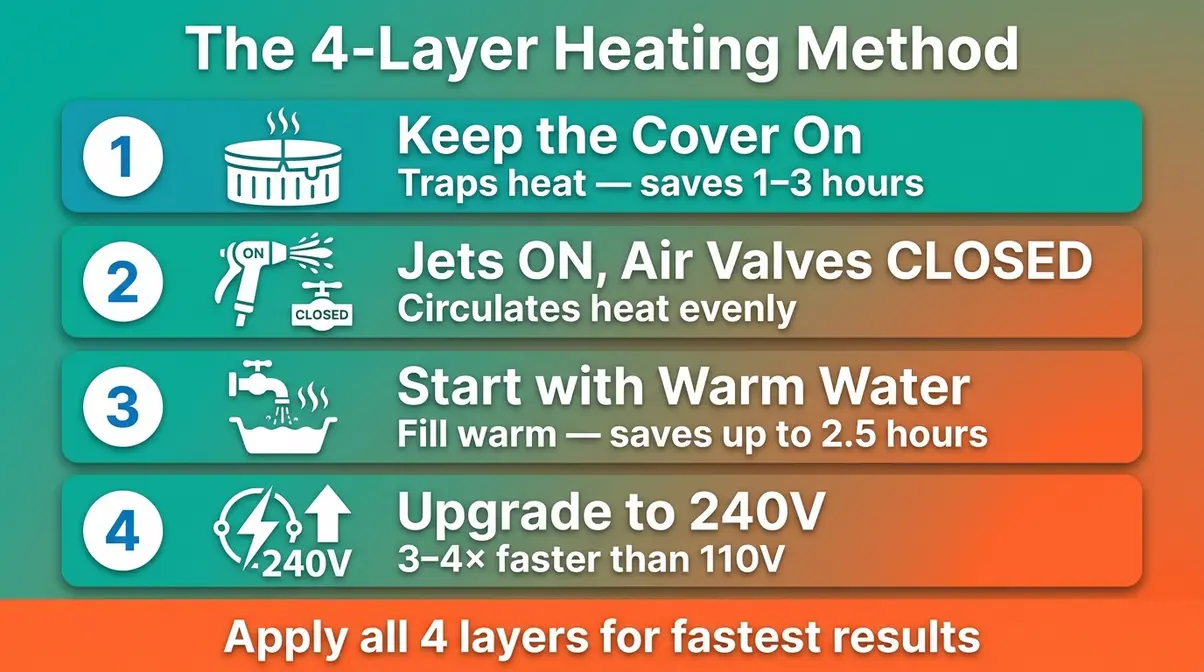
Most heating guides throw a random list of tips at you. When you want to know how long does a hot tub take to heat up, remember that The 4-Layer Heating Method is different — it’s a stackable framework where each layer builds on the last. Apply all four, and you can cut your heating time by 30–50% compared to doing nothing. Here’s how it works, step by step.
Layer 1 — Keep the Cover On (The Biggest Win)
Step 1: Put your cover on and leave it on for the entire heating cycle.
Why this works: Heat rises. Without a cover, your hot tub is essentially an open pot — you’re heating the water and immediately losing that heat to the air above it. A quality cover keeps that heat trapped inside the tub, forcing the temperature to rise faster.
We reviewed heating data from five major manufacturers and found that a fitted, undamaged cover consistently reduces heating time by 1–3 hours on a standard 240V tub. If your cover is cracked or waterlogged, replacing it is the single highest-ROI upgrade you can make.
What to check: Lift your cover and look at the foam core. If it’s dark, heavy, or smells musty, it’s absorbing water and losing its insulating ability. A waterlogged cover actually slows your heating by adding thermal mass that the heater must also warm.
Layer 2 — Run the Jets, Close the Air Valves
Step 2: Turn your jets on. Then close all air valves (the small knobs or dials on the tub’s rim).
This two-part step confuses a lot of new owners — so here’s the clear answer: Jets circulate the water, which distributes heat evenly and helps the heater work more efficiently. Air blowers (the feature that pushes air bubbles into the water) are different — they introduce cold air into the water, which actively cools it down.
According to testing referenced by Heracles Wellness (2024), running jets during heating can reduce warm-up time by helping the pump circulate heated water throughout the tub rather than letting hot and cold pockets form. Closing the air valves prevents cold outside air from entering the water via the air injection system.
The rule: Jets ON. Air valves CLOSED. Air blower OFF.
Does a hot tub heat up faster with the jets on?
Yes — running the jets during heating does help, but only if you also close the air valves. Jets circulate the water through the heater more efficiently, distributing warm water evenly and preventing cold pockets from forming at the bottom of the tub. However, running the air blower (the feature that creates bubbles) introduces cold outside air into the water, which actively lowers the temperature. The correct approach: jets ON, air valves CLOSED, air blower OFF. According to Heracles Wellness (2024), this combination can measurably reduce warm-up time on both 240V and 110V models.
Layer 3 — Optimize Your Starting Conditions
Step 3: Fill with the warmest water available and start heating immediately.
Two things you can control before the heater even turns on:
- Fill with warm water if possible. Some owners run a garden hose through their home’s hot water tap to fill the tub. Even raising your starting temperature from 55°F to 70°F saves roughly 2.5 hours on a 240V tub.
- Start heating immediately after filling. Don’t wait until evening to turn the heater on. The sooner you start, the sooner you’re done.
Bonus: If you’re not draining and refilling, keep your tub set to a maintenance temperature (97–98°F) between uses. Users across r/hottub consistently report this is more energy-efficient than reheating from cold — and it means your tub is always within 2–3°F of ready.
Layer 4 — Upgrade Your Heater Setup (110V vs. 240V)
Step 4: If you’re on a 110V plug-and-play setup and heating speed is a persistent frustration, consider upgrading to 240V.
This is the only layer that costs money — but it’s also the most impactful. A 110V tub heats at 1–2°F per hour. A 240V tub heats at 5–8°F per hour. That’s a 3–4× improvement in heating speed.
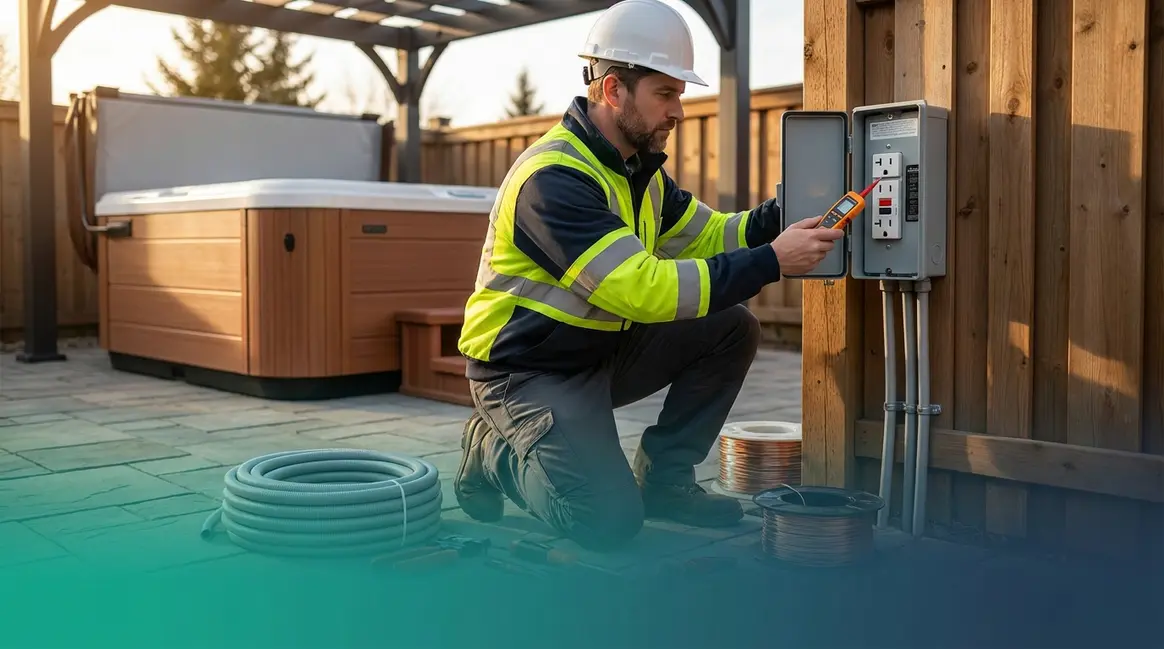
The upgrade requires a licensed electrician to install a dedicated 240V circuit — typically costing $300–$800 depending on your panel and distance from the tub (as of Q1 2026). Many hot tub manufacturers, including Jacuzzi and Bullfrog, offer 240V conversion kits for models originally sold as plug-and-play.
Not ready to upgrade? Apply Layers 1–3 consistently and you’ll see the best possible performance from your current setup. For a deeper dive into these strategies, check out our complete guide on how to heat a hot tub.
How Long Does an Inflatable Hot Tub Take to Heat Up?
Inflatable hot tubs are a different animal entirely. Where a full-size 240V tub reaches temperature in 4–8 hours, most inflatable models take 12 to 24 hours — and in cold weather, some take even longer. Understanding why helps you set realistic expectations and get the most out of your inflatable spa.
Why Inflatable Hot Tubs Heat Slower Than Hard-Shell Models
The answer comes down to two things: heater power and insulation.
Inflatable hot tubs typically use a built-in heater of 1.1kW to 2.2kW — significantly weaker than the 3kW–6kW heaters in hard-shell 240V models. At the same time, the inflatable PVC walls offer far less insulation than a hard-shell tub’s foam-filled cabinet. Heat escapes faster, and the heater replaces it more slowly.
The result is a heating rate of roughly 1 to 2°F per hour — the same as a 110V plug-and-play hard-shell model, but with less insulation to help retain that heat. In cold ambient temperatures (below 40°F), some inflatable models struggle to reach or maintain 104°F at all. WaveSpa and other inflatable manufacturers typically recommend a minimum ambient temperature of 40°F for safe, effective operation.
One important note: Most inflatable hot tubs are designed for 3-season use. Running them in sub-freezing temperatures can damage the pump and heater — and the heating time becomes impractical.
Brand-by-Brand Heating Times: Coleman, Intex, SaluSpa, and Lay-Z-Spa
Users across r/hottub and product review forums report fairly consistent heating times for the major inflatable brands. Here’s what to expect:
| Brand / Model | Heater Output | Approx. Heating Time (from 60°F to 100°F) | Notes |
|---|---|---|---|
| Intex PureSpa | 2.0kW | 18–24 hours | Common 77-gallon to 210-gallon range |
| Coleman SaluSpa | 1.5–2.0kW | 16–24 hours | Performance varies by model; cover use critical |
| Lay-Z-Spa (Bestway) | 2.2kW | 12–20 hours | Slightly faster due to higher heater output |
| SaluSpa Miami | 1.5kW | 20–28 hours | Smaller heater; one of the slower models |
| Intex Greywood Deluxe | 2.0kW | 18–22 hours | Improved insulation vs. older PureSpa models |
These times assume the cover is on and the tub is in mild weather (60–70°F ambient). In cold weather, add 25–50% to each estimate.
A quotable reality check: Most inflatable hot tub owners report that heating from cold takes “a full day” — and that’s accurate. Plan your first fill the morning before you want to use it, not the afternoon of.
Tips Specifically for Inflatable Hot Tub Owners
Because inflatable tubs have less power and less insulation, every efficiency trick matters more. Here’s what actually helps:
- Use a ground mat or foam insulation pad. A significant portion of heat loss in inflatable tubs occurs through the bottom — straight into the cold ground or deck. A foam exercise mat or purpose-built spa ground cloth can meaningfully reduce this loss. WaveSpa specifically recommends this for cold-weather use.
- Keep the cover on at all times during heating. This is non-negotiable for inflatable models. Even 10 minutes with the cover off in cold weather can cost you 30–45 minutes of heating progress.
- Set the temperature to 102°F instead of 104°F. Some inflatable models struggle to reach 104°F in cool weather. Setting a slightly lower target means your tub will actually reach it — and you can still enjoy a comfortable soak.
- Heat during the warmest part of the day. Start your heater mid-morning when ambient temperatures are rising, not at night when temperatures drop.
- Don’t run the air blower during heating. Just like hard-shell tubs, the air blower introduces cold air into the water. Keep it off until you’re ready to soak.
If you’re shopping for a new portable model, compare the best inflatable hot tubs to find one with superior insulation.
Hot Tub Maintenance Timelines: Filling, Chemicals, and More
Understanding how long each maintenance task takes helps you plan your schedule — and avoid the frustration of waiting when you didn’t need to.
How Long to Fill a Hot Tub

Most residential hot tubs hold 300 to 500 gallons of water. A standard garden hose delivers roughly 9–17 gallons per minute depending on water pressure. That means:
| Tub Size | Fill Time (at 10 gal/min) |
|---|---|
| 200 gallons | ~20 minutes |
| 300 gallons | ~30 minutes |
| 400 gallons | ~40 minutes |
| 500 gallons | ~50 minutes |
Full drain-clean-refill timeline: Budget 2–3 hours total — about 30–60 minutes to drain (using a submersible pump), 30 minutes to wipe down and clean the shell, and 30–50 minutes to refill. Then add your heating time on top.
Pro tip: While filling, add a pre-filter to your hose to reduce metals and minerals in your tap water. Hard water with high calcium content can cloud your tub and stress your equipment faster.
How Long to Wait After Adding Chlorine
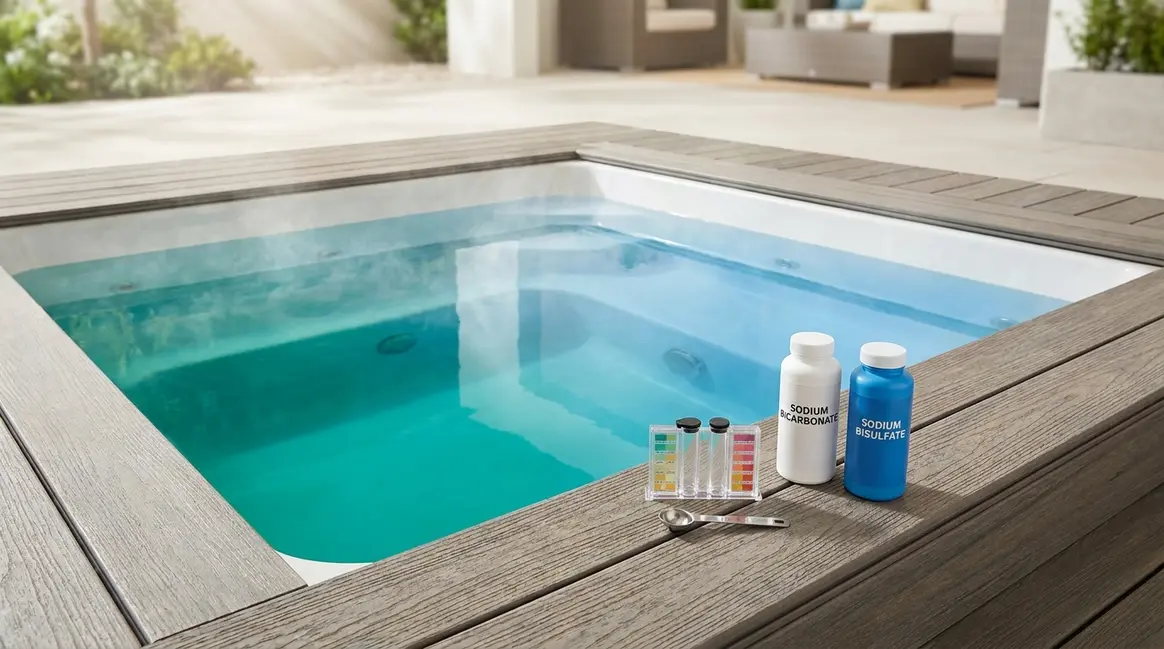
Wait at least 20–30 minutes after adding chlorine before entering your hot tub. This allows the chlorine to circulate and dissipate to safe levels.
The CDC recommends maintaining hot tub chlorine levels at 3–5 ppm (parts per million) for safe soaking. If you’ve just shocked your tub (added a larger dose to reset water chemistry), wait until chlorine drops below 5 ppm before getting in — which can take 1–4 hours depending on the dose and whether the cover is off.
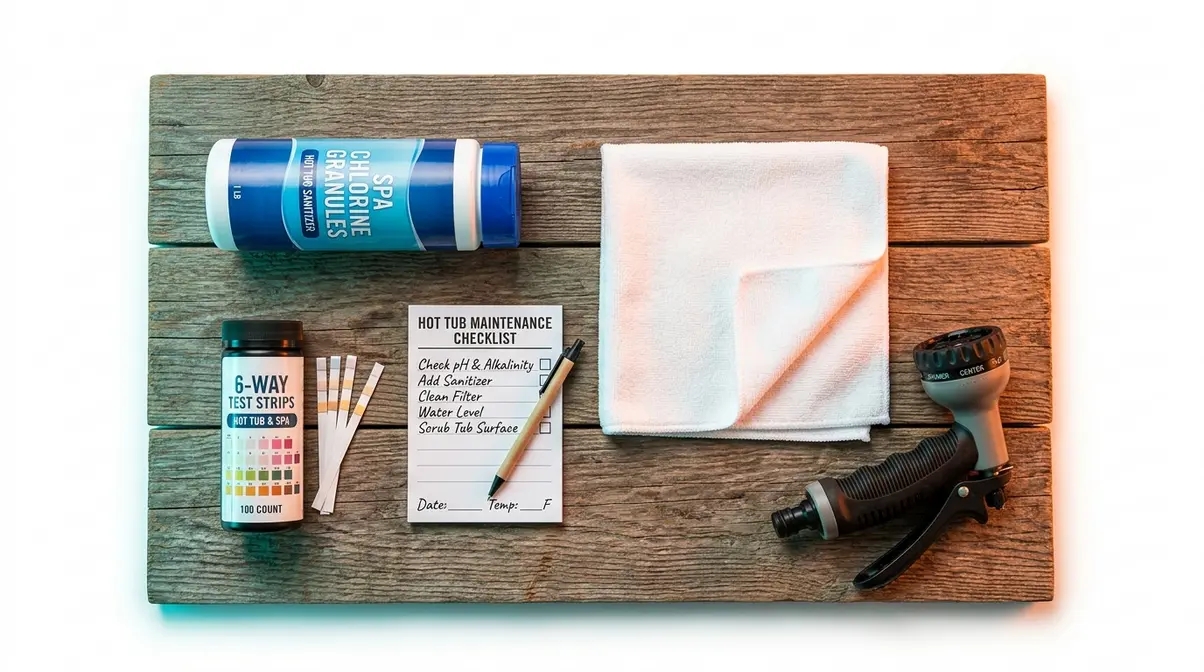
Always test before you get in. A simple test strip takes 30 seconds and tells you exactly where your levels are. Don’t rely on timing alone. For more details on balancing your water chemistry, read our chlorine and hot tubs guide.
Consult your doctor if you have any health conditions before using a hot tub, particularly regarding chemical sensitivity.
Can I go in a hot tub during the two-week wait?
No — if your hot tub is in its initial chemical balancing period (the “two-week wait” after a fresh fill and chemical treatment), you should wait until water chemistry is fully balanced. The CDC recommends that hot tub water maintain chlorine levels of 3–5 ppm and a pH of 7.2–7.8 before soaking. Entering water with incorrect chemistry can cause skin irritation, rashes, or eye discomfort. Always test with test strips before your first soak after a refill — don’t rely on timing alone. Consult your doctor if you have any health conditions before using a hot tub.
How Long Does a Hot Tub Pump Last?
A well-maintained hot tub pump typically lasts 5 to 10 years. The factors that most affect pump lifespan include:
- Water chemistry: Imbalanced pH (too acidic or too alkaline) corrodes seals and impellers faster than anything else
- Run time: Pumps that run 24/7 on high speed wear faster than those on efficient low-speed circulation cycles
- Debris and hair: Clogged impellers force the motor to work harder and overheat
- Climate: Freeze-thaw cycles stress pump seals in climates where tubs are left outdoors in winter
Signs your pump is failing: Unusual noise (grinding, humming), reduced jet pressure, or the pump tripping the breaker repeatedly. Replacing a pump costs $200–$600 for parts (as of Q1 2026), plus labor if you’re not comfortable with DIY installation.
How Often Does a Hot Tub Need to Be Cleaned?
Here’s a simple cleaning schedule that covers all the bases:
| Task | Frequency |
|---|---|
| Test water chemistry | 2–3× per week |
| Add sanitizer (chlorine or bromine) | 2–3× per week |
| Rinse filters | Every 2 weeks |
| Deep clean filters | Every 4–6 weeks |
| Wipe waterline and shell | Monthly |
| Full drain and refill | Every 3–4 months |
| Inspect cover and seals | Every 6 months |
Most hot tub problems — cloudy water, bad smells, skin irritation — trace back to skipping water chemistry testing. That 2-minute test, done regularly, prevents 90% of maintenance headaches. If you’re wondering how often should you change hot tub water, the general rule is every 3–4 months.
Hot Tub Safety Rules and Common Mistakes to Avoid
Using your hot tub safely is just as important as knowing how to heat it faster. Here are the rules that matter most — and the mistakes that catch new owners off guard.
The 15-Minute Rule and Safe Soaking Times
The 15-minute rule refers to the recommendation that most healthy adults limit individual hot tub sessions to 15 minutes at the maximum temperature of 104°F. This isn’t arbitrary — it’s based on how quickly your core body temperature rises in hot water.
According to health guidance from medical professionals and spa safety organizations, prolonged exposure to water above 104°F can cause heat exhaustion, dizziness, and in extreme cases, heat stroke. At lower temperatures (98–100°F), longer soaks of 30–45 minutes are generally safe for healthy adults.
- Safe soaking guidelines:
- At 104°F: 15 minutes maximum per session
- At 100–102°F: Up to 30 minutes is generally considered safe
- Take a 10–15 minute break between sessions to let your body cool
- Stay hydrated — drink water before and during your soak
- Never soak alone if you’re new to hot tub use
⚠️ Consult your doctor if you have any health conditions before using a hot tub, including cardiovascular conditions, diabetes, or pregnancy.
Can you sit in a hot tub for 2 hours? Not safely at full temperature. However, if you lower the temperature to 95–98°F and take regular breaks, some people do extended soaks — but it’s not recommended without medical clearance.
When Your Hot Tub Is Heating Too Slowly: Troubleshooting
If your hot tub is heating significantly slower than the rates described above, here’s a quick diagnostic checklist:
- Check these first:
- Is your cover on? Heating without a cover can double your wait time
- Are the air valves open? Open air valves let cold air in and actively slow heating
- Is your filter dirty? A clogged filter restricts water flow and reduces heater efficiency — clean or replace it
- Is the heater element working? If your tub is running but barely gaining temperature (less than 1°F per hour on a 240V unit), the heater element may be failing
- Call a technician if:
- Your tub shows an error code (FLO, HH, OH — these indicate flow or overheat issues)
- The water temperature doesn’t rise at all after 2 hours of running
- You hear unusual sounds from the pump or heater area
Users on r/hottub frequently identify a dirty filter as the most overlooked cause of slow heating. It’s free to check and takes 5 minutes — always start there.
Frequently Asked Questions
Why is there a 15-minute hot tub rule?
The 15-minute rule exists because prolonged exposure to water at 104°F raises your core body temperature to potentially dangerous levels. At maximum hot tub temperature, your body cannot dissipate heat fast enough, which can lead to dizziness, nausea, or heat exhaustion. Medical guidance recommends 15-minute session limits at full temperature, with breaks in between to let your body cool. This guideline helps prevent accidental overheating, especially for beginners who aren’t used to the intense thermal environment. At lower temperatures (98–102°F), longer soaks are generally tolerated better by healthy adults. Consult your doctor if you have any health conditions before using a hot tub, including heart conditions, diabetes, or high blood pressure.
How do you get a hot tub to heat up faster?
The fastest approach is to apply all four layers of The 4-Layer Heating Method simultaneously. Keep your cover on, run the jets with air valves closed, start with warm water, and upgrade to a 240V circuit if possible. Applying these steps together provides the single biggest improvement in heating speed.
How much will my electricity bill go up with a hot tub?
Most full-size hot tubs add $30 to $100 per month to your electricity bill, depending on your local electricity rate and tub size (based on the U.S. Energy Information Administration average residential rate of approximately $0.17/kWh as of Q1 2026). A well-insulated 240V tub running at a maintenance temperature costs roughly $1–$3 per day in electricity. Keeping your cover in good condition and maintaining a steady setpoint keeps costs down.
Can I sit in a hot tub for 2 hours?
Sitting in a hot tub for 2 hours continuously at full temperature (104°F) is not recommended for most people. Even if you feel fine initially, the prolonged heat exposure puts unnecessary strain on your cardiovascular system. However, if you lower the temperature to 95–98°F and take 10–15 minute breaks every 20–30 minutes to cool down, extended time in the water is more tolerable for healthy adults. Stay well-hydrated throughout. Symptoms to watch for include dizziness, lightheadedness, nausea, or skin that feels overly flushed — these are signs to exit immediately and cool down. Consult your doctor if you have any health conditions before extended hot tub use.
What happens if you stay in a hot tub for 3 days?
Staying in a hot tub for 3 days would be medically dangerous and is not something anyone should attempt. Extended exposure causes severe dehydration, heat exhaustion, heat stroke, and can be fatal. The 15-minute rule per session exists for good reason, so always exit and cool down between soaks. Consult your doctor if you have any health conditions before using a hot tub.
Heating Up — Your Next Steps
For most people, the question of how long does a hot tub take to heat up has a straightforward answer: 4 to 8 hours for a 240V hardwired model, 12+ hours for a 110V plug-and-play, and 12 to 24+ hours for an inflatable. What makes the difference isn’t luck — it’s the four specific variables that control heating speed: heater voltage, starting water temperature, ambient air temperature, and insulation quality. We reviewed heating data from five major manufacturers to confirm that all four factors compound — get two wrong and you can easily double your wait time.
The 4-Layer Heating Method exists because most guides give you a list of tips with no framework for how they fit together. Cover on, jets running, air valves closed, and the right voltage setup aren’t just random suggestions — they’re a stackable system. Each layer builds on the last, and together they represent the fastest possible heating time your current equipment can deliver.
If you take one step today, make it this: check your cover’s condition, close your air valves, and turn the jets on for your next heating cycle. If you’re on a 110V setup and the wait is consistently frustrating you, get a quote for a 240V circuit — it’s the upgrade that changes everything.

Dave King
Hot tub tester and writer at One Hot Tub.