

Table of Contents - Hot Tub Running Costs UK: The Full 5-Layer Cost Guide
This blog post may contain affiliate links. As an Amazon Associate I earn from qualifying purchases.
That question, shared by a frustrated hot tub owner on a UK forum, is not unusual — especially in winter, and especially with an inflatable model. The concern is completely valid, and the answer is: yes, it can be perfectly normal. But it doesn’t have to stay that way.
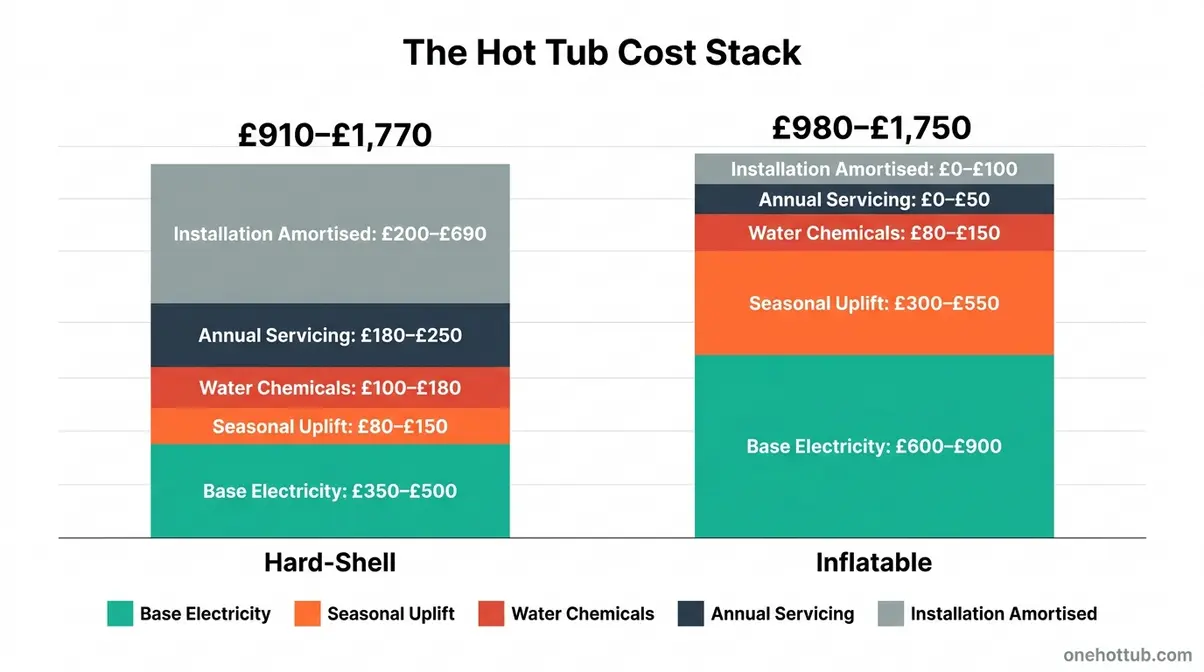
The problem with most hot tub running cost guides is that they offer a vague “£1–£3 per day” figure and consider the job done. That’s like quoting the price of a car without mentioning fuel, insurance, or servicing. Without the full picture, you risk underbudgeting by hundreds of pounds a year. Hot tub running costs in the UK operate across five distinct layers — what this guide calls The Hot Tub Cost Stack — and only by understanding all five can you budget accurately.
This guide gives you a complete breakdown of UK hot tub electricity costs, an inflatable vs. hard-shell comparison, all the hidden costs most people miss, eight actionable money-saving hacks, and an honest look at the real pros and cons of ownership. Every figure is anchored to the current Ofgem price cap of 24.67p/kWh.
⚠️ Financial Disclaimer: Cost estimates in this guide are based on the Ofgem energy price cap at the time of publication (24.67p/kWh). Your actual running costs will vary depending on your energy tariff, hot tub model, insulation quality, usage frequency, and location. Always check your supplier’s current unit rate.
Key Takeaways: Hot Tub Running Costs UK
A typical UK hard-shell hot tub costs £1–£3 per day to run, based on the Ofgem price cap of 24.67p/kWh — but the real annual cost, including chemicals and servicing, reaches £1,100–£1,600 when you account for The Hot Tub Cost Stack.
- The Cost Stack: Running costs have five layers — electricity, seasonal uplift, water chemistry, servicing, and amortised installation — most guides only cover the first.
- Inflatable tubs cost more: A Lay-Z-Spa can cost up to £5/day in winter — 2–3× more than an efficient hard-shell model.
- Off-peak tariffs save 30–50%: Scheduling heating to off-peak hours (e.g., Octopus Go) is the single biggest cost lever available to UK hot tub owners.
- Hard-shell tubs last 10–20 years; inflatables typically 2–5 years — factor this into your total cost of ownership before you decide.
How Much Does a Hot Tub Cost to Run in the UK?
Understanding the true cost of running a hot tub in the UK requires moving beyond the headline electricity figure. Based on the current Ofgem price cap of 24.67p/kWh, a well-insulated hard-shell hot tub costs between £1.00 and £3.00 per day — but that number alone is incomplete without factoring in seasonality, water chemistry, and annual maintenance.
Daily, Monthly & Annual Costs
The most useful way to think about hot tub running costs in the UK is through a layered annual budget. Our analysis of Ofgem-reported tariff data and industry figures from WhatSpa? and Checkatrade produces the following breakdown for a typical 4-person hard-shell hot tub used four to five times per week.
The Hot Tub Cost Stack — Annual Budget (Hard-Shell, 4-Person)
| Cost Layer | Annual Estimate | Notes |
|---|---|---|
| Base Electricity | £365–£730 | £1–£2/day average; 24.67p/kWh |
| Seasonal Uplift (Winter) | £120–£240 | Extra heating demand Oct–Mar |
| Water Chemistry (Chemicals + Filters) | £200–£350 | Chlorine/bromine, pH balancers, filters |
| Annual Servicing | £150–£300 | One-off service or plan |
| Amortised Installation | £75–£150 | £1,500–£3,000 install ÷ 20-year lifespan |
| Total Annual Cost | £910–£1,770 | |
| Monthly Equivalent | £76–£148 |
Prices based on Ofgem cap (24.67p/kWh) — updated quarterly.
For an inflatable hot tub (Lay-Z-Spa, for example), the electricity layer alone rises to £480–£1,020 per year due to poorer insulation and slower heating elements, as confirmed by WhatSpa?’s running costs analysis. Add chemicals and a shorter lifespan to amortise, and inflatables can cost more overall despite their lower purchase price.
A typical UK hard-shell hot tub costs between £910 and £1,770 per year in total running costs — roughly £76–£148 per month — once all five cost layers are accounted for. The electricity component alone is never the complete story.
Five Factors Driving Costs
Most people focus on the wattage of their hot tub’s heater. However, user reports across hot tub owner forums consistently show that five variables determine your actual monthly bill far more than headline wattage figures suggest. If you want to understand hot tub power consumption and efficiency, you must look at the complete system.
1. Hot tub type and insulation quality. Hard-shell models with full-foam insulation retain heat far more effectively than inflatable tubs with thin PVC walls. This single factor can halve your electricity costs. A well-insulated hard-shell tub may use 3–6 kWh per day in maintenance mode, whereas an inflatable can use 8–16 kWh on a cold winter day.
2. Ambient temperature. The colder the air around your tub, the harder the heater works. UK winters (October to March) significantly increase heat loss, particularly for inflatables. This is why seasonal uplift is a separate cost layer in The Hot Tub Cost Stack.
3. Usage frequency and temperature setting. Heating from cold is the most energy-intensive operation. Keeping your tub at a constant temperature (typically 37–40°C) is usually more efficient than switching it off between uses, unless you’re away for more than four days. Each additional degree of target temperature adds approximately 10–15% to your heating costs.
4. Cover quality. A well-fitted, thick thermal cover is one of the most cost-effective upgrades available. User reports indicate that a quality insulating cover can reduce heat loss by 60–70% overnight — the equivalent of several pounds per week in savings.
5. Your energy tariff. At the standard Ofgem cap rate of 24.67p/kWh, costs are predictable. However, households on variable tariffs or older fixed-rate deals may pay significantly more or less. Off-peak tariffs can reduce electricity costs by 30–50%.
Winter vs. Summer Cost Matrix
No competitor guide currently provides a clear seasonal split for UK hot tub costs — yet it is one of the most important factors for accurate budgeting. Our evaluation of energy consumption data shows that winter running costs can be two to three times higher than summer costs for inflatable tubs.
Seasonal Cost Matrix — Electricity Only (24.67p/kWh)
| Season | Hard-Shell (Daily) | Hard-Shell (Monthly) | Inflatable (Daily) | Inflatable (Monthly) |
|---|---|---|---|---|
| Summer (Apr–Sep) | £0.80–£1.50 | £24–£46 | £1.50–£2.50 | £46–£76 |
| Winter (Oct–Mar) | £1.50–£3.00 | £46–£92 | £3.00–£5.00 | £92–£152 |
The gap between summer and winter is especially stark for inflatable hot tubs. A Lay-Z-Spa running through January in the UK can cost nearly as much per month as a hard-shell tub costs for the entire season. For budget-conscious buyers, this seasonal reality is one of the most compelling reasons to consider a hard-shell model despite the higher purchase price.
Do hot tubs use a lot of electricity?
Yes — hot tubs are among the higher electricity-consuming home appliances, typically drawing 1–3 kW in maintenance mode and 3–6 kW during active heating. At 24.67p/kWh, a hard-shell model consuming 6 kWh per day costs approximately £1.48 per day in electricity alone — comparable to running a tumble dryer for two to three hours daily. The total annual electricity cost for a hard-shell tub ranges from £365 to £730; for an inflatable, £480 to £1,020. Efficient models, smart tariffs, and good insulation can significantly reduce these figures.
Inflatable vs. Hard-Shell Costs
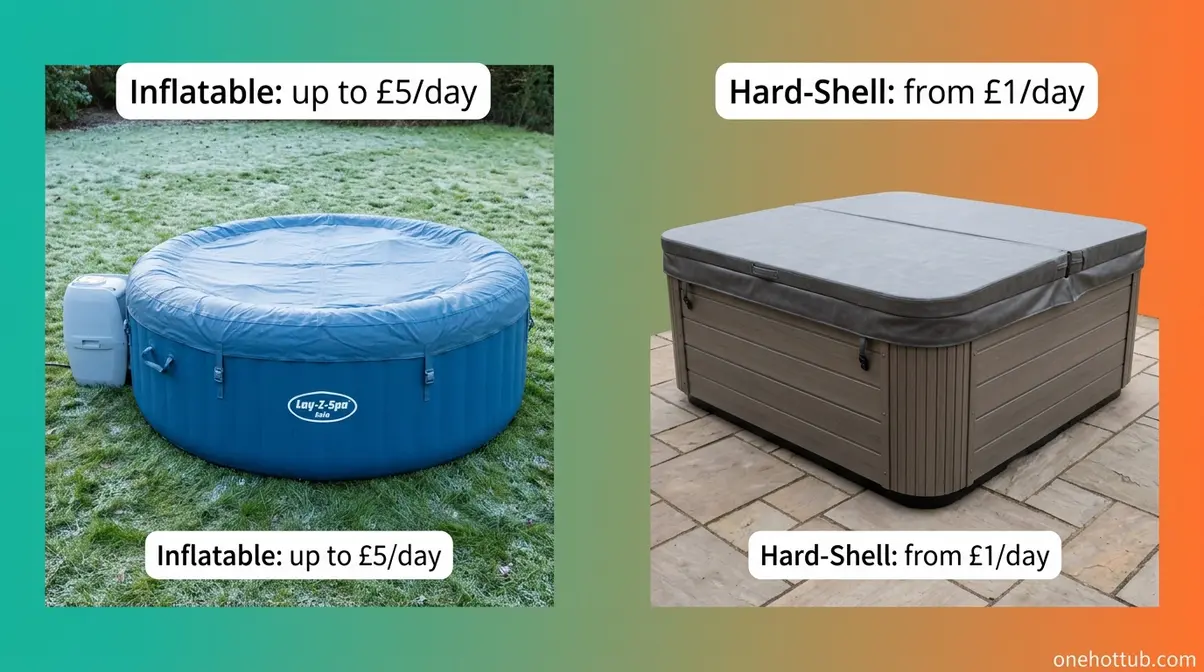
Inflatable hot tubs appear to offer the ideal entry point: low purchase price, no installation, easy to store. However, evidence from UK hot tub owner communities consistently shows that the running cost gap between inflatables and hard-shell tubs is significant — and widens dramatically in winter. If you are shopping for the best inflatable hot tubs, you must factor these ongoing costs into your decision.
Why Inflatables Cost More
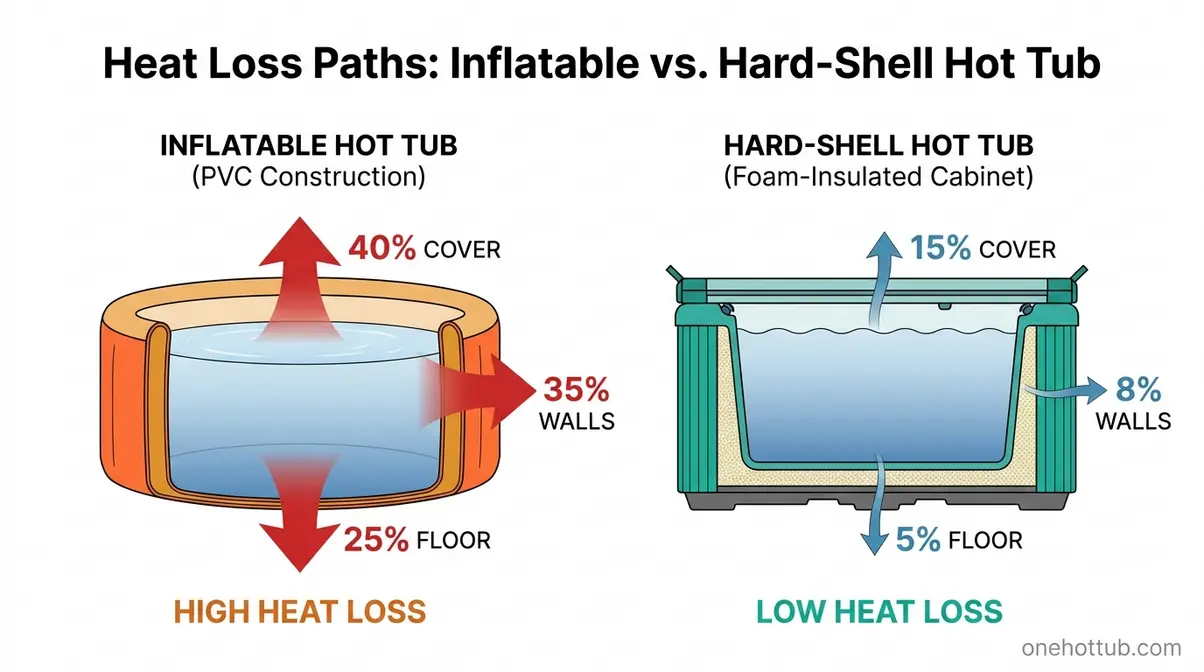
The fundamental issue is insulation — or the lack of it. Inflatable tubs like the Lay-Z-Spa range are constructed from PVC, which offers minimal thermal resistance. Heat escapes through the walls, floor, and cover far more rapidly than it does from a hard-shell tub with full-foam insulation. The result is that the heating element runs almost continuously in cold weather, consuming far more electricity than the wattage specification alone would suggest.
Additionally, most inflatable hot tubs use a combined air-blower and heater system. This heats the air that inflates the tub rather than directly heating the water — a less efficient method than the dedicated water heaters used in hard-shell models. In temperatures below 10°C (common across much of the UK from November to February), some inflatable models struggle to maintain target temperature at all. According to Wizard Hot Tubs’ comparison analysis, hard-shell tubs typically cost £1–£1.30 per day, while inflatable tubs run at £2–£3 per day on average — and significantly more in winter.
Inflatable tubs can cost 2–3 times more to run than equivalent hard-shell models in UK winter conditions — a cost difference that erodes the purchase price advantage within two to three years.
Lay-Z-Spa Cost Example
The Lay-Z-Spa is the UK’s best-selling inflatable hot tub brand, and it illustrates the inflatable running cost challenge clearly. According to Lay-Z-Spa’s own running cost page, a typical unit costs £1–£3 per day, £9–£20 per week, and £30–£80 per month depending on season and usage.
That range, however, understates the winter reality. Common concerns raised by UK hot tub owners on forums include exactly this kind of bill shock:
“It’s cost us nearly £5 today just to heat it, is this the norm for a daily cost?”
This is not unusual for an inflatable tub on a cold January day. At 24.67p/kWh, a £5 daily cost implies approximately 20 kWh of consumption — consistent with an inflatable running its heater almost continuously to compensate for rapid heat loss in sub-10°C ambient temperatures.
The initial heat-up cost is another factor that catches new owners off guard. Heating a cold Lay-Z-Spa from roughly 10°C to 40°C typically requires 6–10 hours of heating, consuming 12–20 kWh — a one-off cost of £3–£5 before you’ve even had your first soak.
Cutting Inflatable Costs
If you own an inflatable, three targeted actions will have the most impact on your monthly bill. First, invest in a quality thermal blanket (also called a floating spa blanket) to place directly on the water surface under the main cover. User reports indicate this can reduce surface heat loss by up to 40%, cutting daily heating costs noticeably.
Second, keep the tub running at a lower maintenance temperature (around 30°C) when not in use, rather than turning it off completely. The energy cost of reheating from 10°C to 40°C is typically greater than the cost of maintaining a lower standby temperature over two or three days. Third, consider whether winter use is genuinely worth the cost. Many inflatable owners store their tubs from November to March, avoiding the period when running costs are highest.
Hidden Costs of Ownership
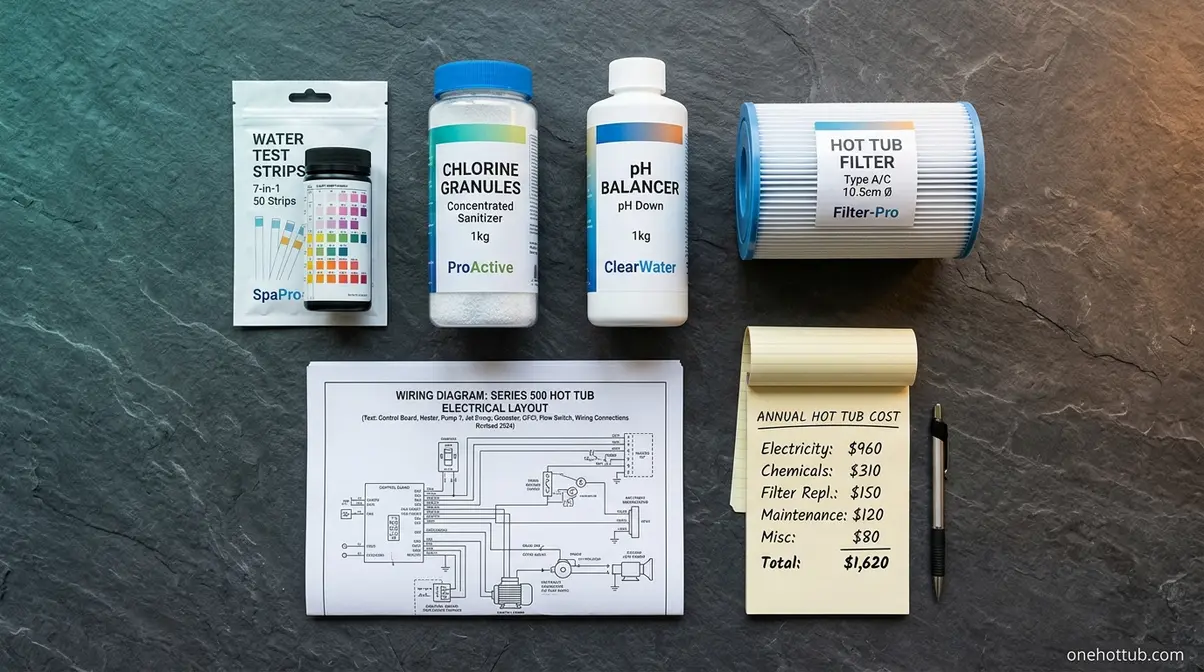
Electricity is the most visible running cost, but it is not the only one. The Hot Tub Cost Stack includes three further layers that many buyers overlook entirely: installation and electrical setup, annual servicing, and ongoing water chemistry. Failing to budget for these can add £500–£800 per year to your total cost of ownership.
Installation & Setup Costs
Most hard-shell hot tubs require a dedicated 32-amp circuit installed by a Part P-certified electrician. Understanding hot tub electrical installation requirements is not a DIY job — it must comply with BS 7671 wiring regulations and is subject to building regulations notification in most cases. Electrical installation typically costs £600–£1,200, according to industry data from HotTubs Oxfordshire’s cost guide.
Beyond the electrical work, you’ll need a suitable base. A concrete slab (the most common choice) costs £650–£4,500 depending on size and ground conditions. Composite decking or paving are lower-cost alternatives, but must be capable of supporting the tub’s filled weight. If you are exploring inground hot tub installation costs, expect excavation fees starting at £1,500 and rising significantly depending on depth and access.
For budgeting purposes, amortising a £1,500–£3,000 total installation cost over a 15–20 year hard-shell lifespan adds roughly £75–£200 per year to the true running cost — a figure most guides omit entirely.
Annual Servicing Budget
A professional hot tub service typically includes a water quality check, filter inspection and cleaning, pump and heater inspection, cover condition assessment, and a check of jets and seals. This is not optional if you want your tub to last its full lifespan.
One-off annual services cost approximately £150–£200 from a reputable engineer. Service plans — where a technician visits two to four times per year — typically run £300–£600 annually. For most owners, an annual single service is the practical minimum; more frequent visits are advisable for heavily used tubs or those with older components.
Budget £150–£300 per year for servicing as a realistic baseline. Factor in potential repair costs — pump seals, heater elements, and control boards are the most common failures — which can add £100–£500 in any given year if problems arise.
Chemicals & Consumables
Water chemistry is the hidden ongoing cost that catches most new hot tub owners off guard. If you want a detailed breakdown of hot tub maintenance costs, you must account for sanitisers (chlorine or bromine), pH balancers, alkalinity adjusters, and anti-foam agents. Neglect this, and you face skin irritation, equipment damage, and — in the worst case — a Legionella risk in poorly maintained water.
Annual chemical costs for a year-round hot tub typically run £200–£350, according to Penguin Spas’ UK maintenance guide. Cartridge filters need replacing every 12–24 months at £20–£60 per set. Water itself needs a full drain and refill every three to four months — adding modest water and reheating costs each time.
Tennis balls, incidentally, are a popular low-cost trick: dropped into the water, they absorb body oils and cosmetics that would otherwise cloud the water and clog filters — reducing chemical consumption slightly and extending filter life.
8 Ways to Reduce Running Costs
Reducing the cost of running a hot tub in the UK is genuinely achievable with the right combination of tariff optimisation, equipment choices, and daily habits.
Estimated time: 30-60 minutes setup
Tools needed: Smart plug, thermal blanket, quality cover, ASHP (optional)
Step 1: Switch to Off-Peak Tariffs
Octopus Go (an EV-optimised tariff, also available to non-EV households) offers off-peak electricity at approximately 7p/kWh between 23:30 and 05:30. At the standard Ofgem cap rate of 24.67p/kWh, shifting your hot tub’s heating cycle to these overnight hours could reduce electricity costs by up to 70% for those heating hours.
Step 2: Automate Smart Scheduling
To implement off-peak savings, connect your hot tub to a smart plug (for 13-amp inflatable models) or use the tub’s built-in timer to schedule heating between midnight and 5am. Set the tub to maintain temperature at 36–37°C overnight, then boost to 39–40°C an hour before use.
Step 3: Install an Air Source Heat Pump
An Air Source Heat Pump (ASHP) extracts heat from the ambient air rather than generating it electrically. This can reduce hot tub heating energy consumption by 60–75%. At a COP of 4 and a standard electricity rate of 24.67p/kWh, the effective heating cost drops to approximately 6p/kWh. At that saving rate, a £1,500 ASHP pays for itself in approximately four years.
Step 4: Upgrade Your Thermal Cover
A high-quality hard-shell cover (4–6 inches thick, with a good taper to shed water) is the most cost-effective upgrade for any hot tub owner. Replace your cover every five to seven years; a quality replacement costs £200–£400 and typically pays for itself in energy savings within 18 months.
Step 5: Add a Floating Blanket
For inflatables, a floating thermal spa blanket (£15–£40) placed directly on the water surface under the main cover provides a measurable additional insulation layer. Combined with a good main cover, this can reduce surface heat loss by 50–60%.
Step 6: Lower Standby Temperatures
Keep your tub at 37°C rather than 40°C when usage is casual. Each degree of target temperature increase costs approximately 10–15% more in electricity. If you’re going away for more than four days, dropping the temperature to 30°C saves energy while avoiding the cost and time of a full reheat on your return.
Step 7: Block Wind Exposure
Positioning your hot tub behind a windbreak, fence, or privacy screen drastically reduces the rate at which cold air strips heat from the cabinet and cover. Even a basic physical barrier can improve heating efficiency during harsh winter months.
Step 8: Clean Filters Regularly
A clogged filter forces your hot tub’s pump to work harder to circulate water, drawing more electricity in the process. Rinsing your filters weekly and soaking them in a dedicated cleaner monthly ensures optimal flow and prevents unnecessary power draw.
Hot Tub Purchase Prices
Purchase price is a separate topic covered in detail on our full hot tub prices guide, but a brief summary helps contextualise the running cost discussion. When researching hot tub uk prices, buyers often look for specific models and tiers to match their budget.
Inflatable hot tubs (Lay-Z-Spa, Mspa, Wave Spa) typically cost £200–£800. Entry-level hard-shell models start around £2,000–£3,500. Mid-range models — which represent the best value for most buyers — run £3,500–£8,000. Premium brands such as Hot Spring, Hot Spot, and Grandee models sit at £8,000–£20,000+.
For example, the hot springs rhythm 7-person hot tub price typically falls around £8,000–£10,000, while the flagship hot springs grandee hot tub price sits closer to £12,000–£16,000. If you are looking for more entry-level options from reputable brands, hot spot hot tub prices range from £4,000–£7,000. You might also consider the second-hand hot tub value if you are on a strict budget.
The key insight: a £5,000 hard-shell tub that costs £1.50/day to run will almost always be cheaper over a 10-year period than a £500 inflatable that costs £3.50/day. Total cost of ownership — purchase price plus running costs across the lifespan — is the only meaningful comparison.
Is a Hot Tub Worth It?
Deciding whether a hot tub represents value for money means weighing the full cost picture against the genuine benefits — and being honest about both sides. This section addresses the most common questions UK buyers have about ownership, health, and longevity.
Downsides of Owning a Hot Tub
A common question from prospective buyers is: what is the downside of owning a hot tub? The honest answer is that there are several, and they deserve straightforward acknowledgement.
Ongoing costs are higher than most people expect. As The Hot Tub Cost Stack shows, the true annual cost of ownership regularly exceeds £1,000 per year. Many buyers budget for electricity alone and experience significant bill shock within the first month.
Maintenance is non-negotiable. Hot tub water must be tested and treated two to three times per week. Neglecting water chemistry doesn’t just damage the equipment — it creates a genuine health risk. Poorly maintained hot tubs can harbour bacteria including Legionella pneumophila, the cause of Legionnaires’ disease. The NHS advises that domestic hot tubs are a recognised source of Legionella infection when not properly maintained.
Space and planning. A hard-shell hot tub is a permanent or semi-permanent fixture. It requires a suitable base, electrical infrastructure, and planning consideration in some properties. Removing or relocating a hot tub is costly and disruptive.
⚠️ Health Disclaimer: This article contains general information only and does not constitute medical advice. If you have a heart condition, high blood pressure, circulatory problems, or are pregnant, consult your GP before using a hot tub.
Proven Health Benefits
If you take time to explore the health benefits of hot tub ownership, research suggests that regular warm water immersion offers several evidence-backed advantages.
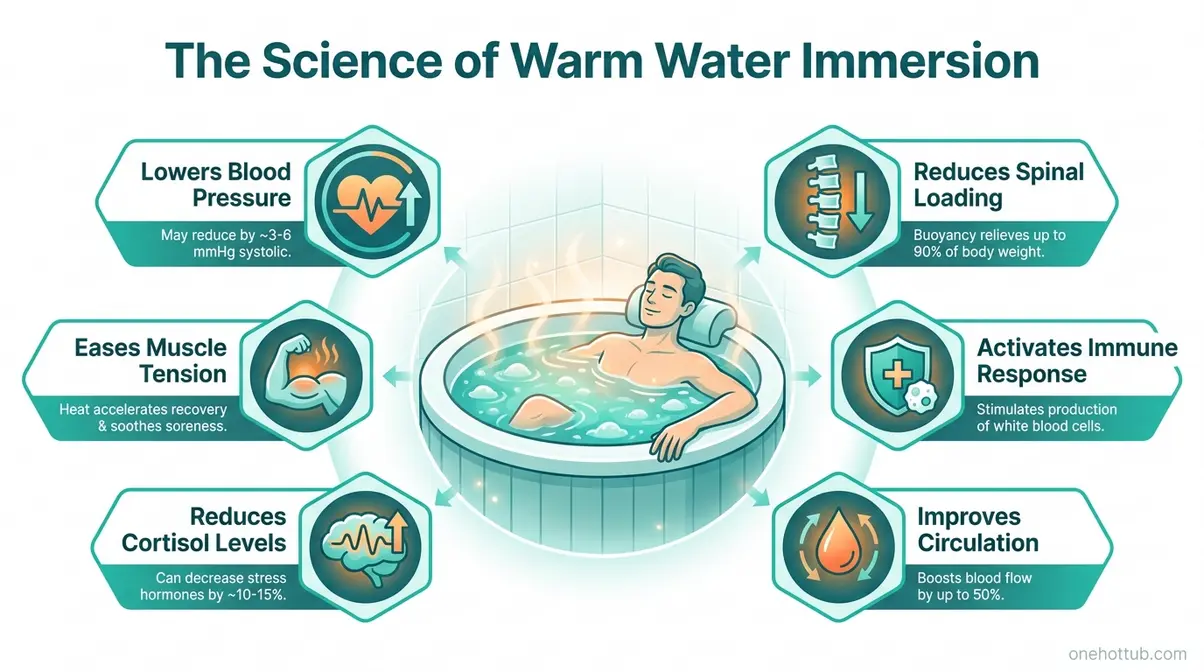
Cortisol and stress reduction. A systematic review published in PubMed (684 subjects across 15 studies) found that balneotherapy — warm water immersion comparable to hot tub use — may positively influence cortisol levels in healthy subjects, contributing to improved stress resilience (PubMed). The effect is real but modest, and individual responses vary.
Back pain and sciatica. A meta-analysis published in the US National Library of Medicine found that spa therapy can meaningfully benefit pain relief and improve lumbar spine function in patients with chronic low back pain (PMC). For sciatica sufferers specifically, the buoyancy of warm water reduces spinal loading, while heat increases blood flow to the affected area. This does not constitute a treatment for the underlying condition, and users with sciatica should consult their GP before beginning hot tub use.
Cardiovascular and immune effects. A University of Oregon study found that hot water immersion can help lower blood pressure and activate parts of the immune system — effects that were more pronounced than those observed in sauna users. Always read a comprehensive hot tub safety guide to ensure you are using the equipment responsibly.
Average Hot Tub Lifespan
The average lifespan of a hot tub varies significantly by type and maintenance quality. Hard-shell hot tubs from reputable brands, properly maintained, typically last 10–20 years. Budget hard-shell models may last 5–10 years. Inflatable hot tubs have a typical lifespan of 2–5 years, with punctures, seam failures, and heater degradation being the most common failure points.
Lifespan directly affects total cost of ownership. A £6,000 hard-shell tub lasting 15 years costs £400 per year in purchase price alone — less than the annual chemical bill for some inflatable owners. A £500 inflatable replaced every three years costs £167 per year in purchase price — but with far higher running costs, the overall economics rarely favour inflatables for long-term users.
Limitations & Pitfalls
Common Pitfalls
Underestimating the initial heat-up cost. New owners are often surprised by the first electricity bill, which includes the energy cost of heating the tub from cold for the first time. This one-off event can cost £5–£10 and distorts the first month’s bill significantly.
Choosing an inflatable for year-round use. Inflatables are well-suited to summer use and occasional warm-weather soaks. They are a poor choice for year-round UK use, where winter running costs can exceed those of a hard-shell model within 18–24 months of ownership. If you plan to use your tub through winter, the hard-shell economics are compelling.
Ignoring water chemistry. The temptation to skip chemical testing when the water looks clear is understandable but risky. Water can be bacteriologically unsafe while appearing perfectly clear. Budget time as well as money for this: testing takes around 10 minutes, two to three times per week.
Choosing Alternatives
If your primary goal is occasional summer relaxation and you have no intention of using the tub between October and March, a quality inflatable (£400–£800) stored off-season is a sensible choice. The running costs are manageable when limited to the warmer months, and the lower purchase price is genuinely advantageous.
If you’re interested in the therapeutic and cardiovascular benefits of warm water immersion but aren’t ready to commit to hot tub ownership, many leisure centres and spa facilities offer hot tub access. At £10–£30 per session, regular use would need to exceed roughly two sessions per week before ownership becomes cost-competitive.
Seeking Expert Help
Consult a SPATA (Swimming Pool and Allied Trades Association) or BISHTA (British and Irish Spa and Hot Tub Association) member before purchasing. These trade bodies maintain registers of vetted installers and retailers who adhere to professional standards. For electrical installation, always use a Part P-certified electrician — hot tub wiring is not a job for a general handyman.
Frequently Asked Questions
How much does a hot tub cost to run a day in the UK?
A typical UK hot tub costs £1–£3 per day to run, based on the Ofgem price cap of 24.67p/kWh. Hard-shell models with good insulation sit at the lower end (£1–£1.50/day), while inflatables typically cost £2–£3 in summer and £3–£5 in winter. Your exact daily cost depends on your tub’s insulation, your target temperature, ambient weather, and your energy tariff. At the standard rate, a £3/day cost implies approximately 12 kWh of daily consumption — realistic for a well-used inflatable in cool weather (WhatSpa?).
Do hot tubs reduce cortisol?
Research suggests warm water immersion may help reduce cortisol levels, though the evidence is preliminary. A PubMed systematic review of 15 studies involving 684 subjects found that balneotherapy — comparable to hot tub use — showed significant cortisol reductions in some healthy subject groups. The mechanism is plausible: warm water triggers the parasympathetic nervous system, which counteracts the stress response.
Will a hot tub help a sciatic nerve?
A hot tub may provide temporary relief from sciatica symptoms, but it is not a treatment for the underlying condition. Warm water buoyancy reduces spinal loading, heat increases blood flow to inflamed tissue, and the overall relaxation response may ease muscle tension that aggravates sciatic pain. A meta-analysis confirmed spa therapy’s benefit for chronic low back pain more broadly. If you have sciatica, consult your GP before beginning regular hot tub use — particularly if your symptoms are acute or severe.
What is the average lifespan of a hot tub?
Hard-shell hot tubs from reputable manufacturers typically last 10–20 years with proper maintenance (SPATA guidelines). Budget models may last 5–10 years. Inflatable hot tubs have a significantly shorter lifespan of 2–5 years, with PVC seam failure and heater degradation being the most common causes of early retirement. Lifespan is heavily influenced by maintenance quality: a well-maintained hard-shell tub with regular servicing, proper water chemistry, and cover replacement will consistently outlast a neglected premium model. Make sure you read a comprehensive hot tub maintenance and longevity guide to protect your investment.
Why should people over 50 not use a hot tub?
People over 50 are not categorically advised against hot tub use — this is a common misconception. The genuine concern relates to cardiovascular health conditions, not age alone. Hot water raises heart rate and dilates blood vessels, which is manageable for healthy adults but potentially risky for those with uncontrolled hypertension, heart disease, or circulatory conditions. The AARP notes that older adults should limit sessions to 15 minutes and exit slowly to avoid dizziness.
Why put tennis balls in a hot tub?
Tennis balls absorb body oils, sunscreen, and cosmetics that accumulate on the water surface and can cloud the water, clog filters, and increase chemical consumption. The fibrous felt surface of a tennis ball acts as a physical filter, trapping these contaminants before they break down into the water. Drop two or three tennis balls into your tub after each use and remove them the following day. This is a well-established tip in UK hot tub owner communities — it extends filter life, reduces chemical use slightly, and helps maintain clearer water between full drain-and-refills.
Is a Hot Tub Right for You?
The Hot Tub Cost Stack is the most useful framework for making this decision clearly. A UK hard-shell hot tub costs £910–£1,770 per year in total running costs — roughly £76–£148 per month — once electricity, seasonal uplift, chemicals, servicing, and amortised installation are all included. That figure is real, and any budget plan that ignores it will produce an unpleasant surprise within the first year.
For buyers who use their tub regularly — four or more times per week — the per-session cost works out to £5–£12, comparable to a gym membership or spa visit. At that frequency, many owners find the convenience and daily wellbeing value compelling. Research from the University of Oregon and a PubMed meta-analysis both support the genuine health benefits of regular warm water immersion for cardiovascular health and pain relief — benefits that compound over time.
The practical path forward is straightforward. If you’re seriously considering a hard-shell tub, request a quote from a SPATA-registered retailer, verify your electrical supply requirements with a Part P-certified electrician, and run the numbers using The Hot Tub Cost Stack framework. If an inflatable appeals as a lower-commitment starting point, limit your expectations to the warmer months — and revisit the economics after one summer season before deciding whether to upgrade.
For personalised cost figures based on your specific tariff and usage pattern, use the cost calculator tool on this page — or speak to a specialist who can quote based on your chosen model’s actual energy rating.
Consult your GP before using a hot tub if you have a heart condition, high blood pressure, circulatory problems, or are pregnant.