


Table of Contents - The Ultimate Guide to Hot Tub Filter Cleaners: Maintenance, Methods, and Best Practices
- Introduction
- The Critical Role of a Clean Filter in Spa Performance
- The Anatomy of Hot Tub Filtration
- The Science Behind Hot Tub Filter Cleaners
- Types of Hot Tub Filter Cleaners
- Step-by-Step Protocol for Deep Cleaning Hot Tub Filters
- Comparing Cleaning Methods: Efficacy and Effort
- Troubleshooting Common Filter Cleaning Issues
- Best Practices for Handling and Disposal
- Buying Guide: Choosing the Right Hot Tub Filter Cleaner
- Expert Tips for Prolonging Filter Life
- Conclusion
- Frequently Asked Questions
- How often should I use a chemical cleaner on my hot tub filter?
- Can I use household bleach to clean my hot tub filter?
- Is vinegar effective for cleaning hot tub filters?
- Can I put my hot tub filter in the dishwasher?
- Why is my hot tub filter still dirty after soaking overnight?
- What happens if I don’t rinse the cleaner off properly?
- How long does a hot tub filter last with proper cleaning?
This blog post may contain affiliate links. As an Amazon Associate I earn from qualifying purchases.
Hot Tub Filter Cleaner: Complete Maintenance Guide
Introduction

Your hot tub filter works tirelessly behind the scenes, trapping everything from body oils and sunscreen residue to microscopic debris that would otherwise cloud your water and compromise your relaxation experience. Yet despite its critical role, the filter remains one of the most neglected components in spa maintenance. The right hot tub filter cleaner, combined with a consistent cleaning routine, can mean the difference between crystal-clear water and a murky, bacteria-prone mess.
This comprehensive guide dives deep into everything you need to know about keeping your hot tub filter in peak condition. Whether you own a spacious family spa or a compact 1 person hot tub, the principles of filter maintenance remain consistent. We will explore the science behind different cleaning solutions, compare commercial products to DIY alternatives, and provide step-by-step protocols that professionals use to maximize filter lifespan.
By the end of this guide, you will understand not just how to clean your filter, but why certain methods work better than others. This knowledge empowers you to make informed decisions that protect your investment, ensure safe soaking conditions, and keep your water looking inviting year-round.
The Critical Role of a Clean Filter in Spa Performance
A clean filter is the foundation of healthy hot tub water. Before discussing cleaners and methods, it is essential to understand exactly what happens when filtration becomes compromised and why regular maintenance is non-negotiable for every spa owner.
How Clogged Filters Impact Water Circulation and Heater Efficiency
When debris accumulates in your filter pleats, water flow decreases significantly. Your circulation pump must work harder to push water through the restricted passages, increasing energy consumption and accelerating wear on motor components. Studies from spa equipment manufacturers indicate that a dirty filter can reduce flow rates by up to 80 percent, forcing pumps to operate at maximum capacity just to maintain basic circulation.
The heater element also suffers when flow becomes restricted. Hot tub heaters require consistent water movement across the heating surface to function safely. Insufficient flow can trigger high-limit safety switches, shutting down the heater entirely or, in poorly maintained systems, causing localized overheating that damages internal components. Replacing a heater element typically costs between 150 and 400 dollars, making regular filter cleaning one of the most cost-effective maintenance habits you can develop.
The Relationship Between Dirty Filters and Cloudy Water Issues

Cloudy water is often the first visible symptom of a struggling filter. When the pleated material becomes saturated with oils and fine particles, it loses the ability to capture new contaminants entering the water. These particles remain suspended, scattering light and giving the water a hazy, uninviting appearance.
Many spa owners respond to cloudy water by adding more sanitizer or clarifier chemicals, unaware that the root cause is mechanical, not chemical. While clarifiers can temporarily clump particles together for easier filtration, they cannot compensate for a clogged filter that lacks the capacity to capture anything more. Addressing filter cleanliness first often resolves water clarity issues without additional chemical expense.
Safety and Hygiene: Your First Line of Defense Against Bacteria
Beyond aesthetics, filtration plays a vital role in maintaining sanitary soaking conditions. Hot tub water provides an ideal environment for bacteria, algae, and other microorganisms to thrive. The filter captures organic matter that would otherwise feed these organisms, while also removing the bacteria themselves as they circulate through the system.
Pseudomonas aeruginosa, the bacteria responsible for hot tub folliculitis, and Legionella, which causes Legionnaires disease, are both effectively removed by properly functioning filters. When filtration fails, even aggressive sanitizer dosing may not keep pace with bacterial growth. The Centers for Disease Control and Prevention emphasizes proper filtration as a key component of recreational water illness prevention, underscoring why clean filters are a health imperative, not merely a cosmetic preference.
The Anatomy of Hot Tub Filtration
Understanding your filter’s construction helps you clean it more effectively and recognize when cleaning can no longer restore performance. Modern cartridge filters are engineered with specific materials and design features that influence which cleaners work best.
How Hot Tub Cartridge Filters Work

The typical spa filter cartridge consists of a cylindrical core wrapped with pleated filtration material, capped on both ends with molded plastic or rubber end caps. Water enters from the outside, passes through the pleated media, and exits through the hollow center before returning to the spa.
The pleated design dramatically increases surface area compared to a flat sheet of the same material. A standard filter with approximately 50 square feet of filtration surface can capture particles as small as 20 microns, though some high-efficiency models rated at 10 microns or below provide even finer filtration.
The Function of Spun-Bonded Polyester Pleats
Most modern hot tub filters use spun-bonded polyester fabric for the pleated media. This material consists of tiny synthetic fibers randomly bonded together to create a dense mat with countless microscopic passages. Particles become trapped within this matrix as water flows through, while the synthetic composition resists degradation from chlorine, bromine, and other common sanitizers.
Polyester pleats require different cleaning approaches than older paper-based filters. The synthetic material is more durable but can also hold onto oils and body fats more tenaciously than natural fibers. Effective cleaning requires breaking the chemical bond between contaminants and the polyester strands, not merely flushing debris from the surface.
Core Structure and End Caps
The rigid plastic core provides structural support, preventing the pleats from collapsing under water pressure. End caps create a seal against the filter housing, ensuring all water passes through the media rather than bypassing it. Damage to either component compromises filtration effectiveness, which is why harsh cleaning methods that stress these parts should be avoided.
Microban vs. Standard Filters: Differences in Cleaning Requirements
Some premium filters incorporate Microban antimicrobial protection, a silver-based additive embedded within the polyester fibers. This technology inhibits bacterial growth on the filter surface between cleanings, reducing odor development and potentially extending service intervals.
Microban filters still require regular cleaning but may tolerate slightly longer intervals between deep cleans. However, the antimicrobial protection does not eliminate cleaning requirements entirely. Body oils and mineral deposits accumulate regardless of bacterial activity, eventually restricting flow and requiring the same chemical treatment as standard filters.
When cleaning Microban filters, avoid extremely acidic solutions that could potentially affect the silver ions. Most commercial hot tub filter cleaners are formulated with appropriate pH levels, but homemade solutions using muriatic acid should be used with caution.
Why Pressure Matters: PSI Readings and Flow Restriction Indicators
Many hot tub systems include pressure gauges or flow indicators that signal when filtration is becoming restricted. A clean filter typically shows a baseline reading that increases as debris accumulates. Manufacturers generally recommend cleaning when pressure rises 8 to 10 PSI above the clean baseline.
Systems without gauges rely on other indicators. Reduced jet power, water bypassing the filter housing, and longer heating times all suggest flow restriction. Developing awareness of these symptoms helps you time cleaning interventions appropriately rather than following rigid schedules that may not match your actual usage patterns.
The Lifecycle of a Filter Cartridge

Even the best cleaning routine cannot make filters last forever. Every cleaning cycle removes some accumulated contamination while also causing microscopic wear to the polyester fibers. Eventually, the media loses its ability to trap particles effectively, regardless of how clean it appears visually.
Signs of Wear and Tear
Fraying or fuzzy edges on the pleats indicate fiber degradation that no cleaner can reverse. Collapsed or flattened pleats suggest the media has lost structural integrity and can no longer maintain proper spacing for water flow. Cracks in the end caps or core allow unfiltered water to bypass the media entirely.
Visual inspection after each cleaning helps track progressive deterioration. A filter that comes out of a deep soak looking nearly new still has significant service life remaining. One that remains discolored or shows physical damage despite thorough cleaning is approaching the end of its usefulness.
Cleaning vs. Replacing: When a Cleaner Can No Longer Save the Filter
The general rule of thumb suggests replacement every 12 to 24 months for filters that receive proper care, though actual lifespan varies based on usage intensity and water chemistry. Filters in heavily used spas or those exposed to particularly challenging water conditions may need replacement sooner.
Cost analysis favors timely replacement over attempting to salvage exhausted filters. A worn filter forces pumps to work harder, increases energy consumption, and potentially allows contaminants through that stress other system components. The 30 to 80 dollar investment in a new cartridge protects equipment worth thousands.
The Science Behind Hot Tub Filter Cleaners
Understanding why specific chemicals work helps you choose the right product for your situation and use it effectively. Filter cleaners are not all created equal, and matching the cleaner to the type of contamination present produces the best results.
Why Water Alone Is Not Enough
A garden hose removes loose debris from filter pleats, but the most problematic contaminants resist water pressure entirely. These persistent deposits require chemical intervention to break their grip on the polyester fibers.
The Difference Between Physical Debris and Chemical Saturation
Physical debris includes leaves, hair, sand, and other visible particles that can be flushed away with water. Chemical saturation refers to oils, dissolved minerals, and organic compounds that have penetrated into the fiber matrix and bonded at a molecular level.
A filter can appear relatively clean after rinsing while remaining heavily saturated with invisible contaminants. These materials progressively fill the microscopic passages within the polyester, reducing filtration capacity in ways that visual inspection cannot detect.
Understanding the Primary Contaminants
Body oils represent the most common filtration challenge. Human skin naturally produces sebum, a complex mixture of fatty acids and other lipids that transfers readily to spa water. Sunscreen, lotions, cosmetics, and deodorants add additional petroleum-based compounds that the filter must capture.
Calcium and magnesium minerals, particularly problematic in hard water regions, precipitate out of solution and deposit as scale within filter pleats. This crusite buildup is chemically bonded to the fibers and requires acidic cleaners to dissolve.
How Biofilm Formation Resists Standard Rinsing
Bacteria colonizing filter surfaces produce sticky polysaccharide films that protect the colony from sanitizers and water flow. This biofilm traps additional debris and creates a resistant layer that water pressure alone cannot penetrate. Specialized cleaners containing surfactants and antimicrobial agents break down biofilm structure, allowing the underlying material to be flushed away.
Chemical Composition of Filter Cleaners

Commercial hot tub filter cleaners combine several active ingredient categories, each targeting specific contaminant types. Understanding these components helps you evaluate products and troubleshoot situations where standard cleaners prove insufficient.
Surfactants and Degreasers
Surfactant molecules have a unique structure with one water-attracting end and one oil-attracting end. This dual nature allows them to penetrate oil deposits, surround individual fat molecules, and suspend them in water for rinsing. The degreasing action removes body oils, sunscreen residue, and petroleum-based cosmetics that water alone cannot touch.
Effective degreasers for filter cleaning use low-foaming surfactant formulations. High-foam household detergents create problems when residue remains on the filter after rinsing, releasing bubbles into the spa water that are difficult to eliminate.
Acids for Dissolving Calcium Scale and Mineral Deposits
Acidic compounds react with calcium carbonate and other mineral scales, converting them to water-soluble salts that rinse away easily. Citric acid, derived from citrus fruits, provides effective descaling with relatively gentle action. Phosphoric acid offers stronger dissolution power for heavy scale buildup.
The acidity level matters significantly. Extremely strong acids dissolve scale quickly but risk damaging plastic components and potentially degrading polyester fibers. Most commercial formulations balance effectiveness against material compatibility, providing descaling power without excessive risk.
Enzymatic Agents
Enzyme-based cleaners use biological catalysts to break down organic matter into simpler compounds. Protease enzymes digest protein-based debris like skin cells and body oils. Lipase enzymes specifically target fatty substances. Amylase breaks down starch-based materials.
Enzymatic cleaners work more slowly than chemical degreasers but often prove gentler on filter materials. They excel at removing biofilm and organic buildup that surfactants alone may not fully address. Some commercial products combine enzymatic and chemical approaches for comprehensive cleaning action.
Safety Note: The Importance of pH Balance
Filter cleaning solutions must maintain appropriate pH levels to avoid damaging filter components or creating hazards during use. Extremely acidic solutions below pH 2 can degrade plastic cores and end caps. Highly alkaline solutions above pH 12 may attack certain adhesives used in filter construction.
Most quality commercial products are formulated within the pH 4 to 10 range, providing active cleaning power while remaining compatible with standard filter materials. When mixing DIY solutions, testing pH with strips helps ensure safety.
Types of Hot Tub Filter Cleaners
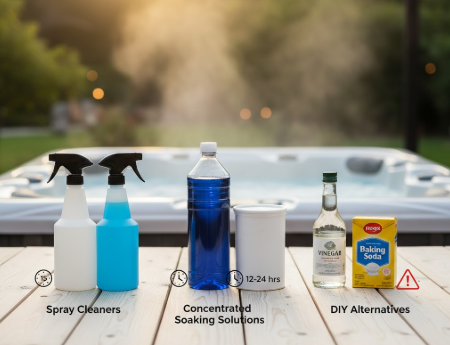
The market offers multiple cleaner formats, each with distinct advantages for different maintenance scenarios. Choosing the right type depends on how dirty your filter has become and how much time you can dedicate to the cleaning process.
Commercial Filter Cleaning Sprays
Spray-on filter cleaners provide convenience for regular maintenance cleaning. These products come in trigger spray bottles or aerosol cans, allowing targeted application directly to filter pleats.
The typical spray cleaner contains concentrated surfactants and degreasers that begin working immediately upon contact. After applying the product to all surfaces and allowing it to penetrate for the recommended time, usually 5 to 15 minutes, you simply rinse thoroughly with a garden hose.
Spray cleaners excel at weekly or biweekly maintenance, preventing heavy contamination from developing in the first place. However, they generally lack the dissolution power for heavy mineral scale or deeply embedded organic matter. Consider spray products your first line of defense rather than a solution for neglected filters that need intensive restoration.
Best Use Cases
Use spray cleaners for routine maintenance between deep cleaning sessions. They work well for lightly soiled filters that have been rinsed regularly and need oil removal without extended soaking time. Spray products also help when you need the filter back in service quickly, as the short contact time gets you operational within an hour.
Concentrated Soaking Solutions
Concentrated filter soaking solutions deliver the most thorough cleaning for quarterly deep maintenance. These products come as liquids or powders that you dilute with water in a bucket or designated cleaning container.
The soaking approach allows extended contact time, giving active ingredients hours to penetrate and dissolve stubborn deposits. A typical overnight soak of 12 to 24 hours enables even heavy buildup to break down completely, restoring filtration capacity that quick spray treatments cannot match.
Cost-Effectiveness Analysis
Concentrated products often provide better value than ready-to-use spray cleaners, particularly for spa owners performing regular maintenance. A single bottle of concentrate may yield 8 to 12 individual soaking treatments, bringing per-cleaning cost below what single-use products require.
The upfront cost of concentrate appears higher, typically 15 to 30 dollars compared to 8 to 15 dollars for spray products. However, the cost per treatment calculation favors concentrates for committed spa maintainers. The resource section at One Hot Tub provides additional guidance on calculating maintenance costs across different product categories.
DIY Household Alternatives
Some spa owners prefer mixing their own filter cleaning solutions using common household products. These approaches offer cost savings but come with important limitations that commercial formulations have already addressed.
White Vinegar and Water
White vinegar, a dilute acetic acid solution, provides mild descaling action for light calcium deposits. A typical DIY vinegar solution uses one part vinegar to four parts water for overnight soaking.
Vinegar solutions work reasonably well for mineral scale in soft water areas where buildup remains modest. However, vinegar lacks the degreasing surfactants needed to remove body oils and provides no action against biofilm. Filters with significant oil saturation require additional treatment that vinegar alone cannot provide.
The realistic efficacy of vinegar limits its usefulness to supplemental descaling rather than comprehensive cleaning. Using vinegar after a commercial degreasing treatment can help remove mineral deposits that the primary cleaner may not fully address.
Tri-Sodium Phosphate for Heavy Grease
TSP, available at hardware stores, provides powerful degreasing for filters with extreme oil contamination. A solution of one cup TSP per gallon of hot water cuts through heavy deposits that lighter surfactants cannot penetrate.
Environmental concerns have reduced TSP availability in some regions due to its potential contribution to algae blooms when it enters waterways. Spa owners using TSP must rinse filters extremely thoroughly and dispose of soaking water responsibly. The phosphate residue that remains after inadequate rinsing can actually promote algae growth in hot tub water.
The Bleach Debate
Bleach appears attractive as a disinfectant and whitening agent, leading some spa owners to include it in their cleaning routine. However, experienced technicians and filter manufacturers generally advise against bleach for several important reasons.
Sodium hypochlorite, the active ingredient in household bleach, is an aggressive oxidizer that degrades polyester fibers with repeated exposure. Filters cleaned regularly with bleach develop premature fraying and may fail months earlier than properly maintained alternatives.
Bleach also creates dangerous chloramine compounds when it contacts organic matter or residual ammonia in the filter. These gases irritate respiratory passages and create health risks during the cleaning process. The sanitizing benefit of bleach is unnecessary since the filter will return to chlorinated or brominated spa water that provides ongoing sanitation.
Why Dishwasher Detergent Is a Major Mistake
The temptation to use dishwasher detergent seems logical since it cleans greasy dishes effectively. However, automatic dishwasher formulations contain high-foaming agents that create severe problems in hot tub applications.
Even thorough rinsing rarely removes all dishwasher detergent residue from polyester pleats. When the filter returns to the spa and jets activate, residual surfactants produce persistent foam that can take days to dissipate. The water chemistry disruption and unsightly foam make dishwasher detergent one of the most problematic DIY alternatives available.
Step-by-Step Protocol for Deep Cleaning Hot Tub Filters
Effective filter cleaning follows a systematic approach that maximizes contaminant removal while protecting filter integrity. These methods, refined through professional spa service experience, provide consistent results across filter types and contamination levels.
Preparation and Safety Measures
Proper preparation prevents complications and ensures you can complete the cleaning process efficiently. Taking a few minutes to set up correctly saves time troubleshooting problems later.
Turning Off Spa Power
Before removing the filter, turn off the hot tub at the breaker or disconnect switch. This prevents the circulation pump from running without a filter installed, which could pull debris directly into the pump and plumbing.
Running the system without a filter also creates potential air lock situations where air enters the plumbing and becomes trapped, preventing proper circulation when the filter returns. The few minutes saved by leaving power on are not worth the risk of system damage.
Removing the Cartridge Without Debris Backflow
Open the filter access compartment carefully, avoiding sudden movements that could dislodge debris sitting on top of the filter. Lift the cartridge straight up, allowing water to drain back into the filter well rather than onto surrounding surfaces.
For filters in skimmer basket locations, skim any floating debris from the water surface before opening the compartment. This prevents material from falling into the filter well during cartridge removal.
Required Tools and Materials
Gather everything you need before starting:
A five-gallon bucket or dedicated filter cleaning container large enough to submerge the cartridge completely serves as your soaking vessel. Food-grade buckets from home improvement stores work well and are inexpensive enough to dedicate permanently to this purpose.
A garden hose with an adjustable spray nozzle provides the water pressure needed for effective rinsing. Nozzles with a focused stream setting work better than wide spray patterns for reaching between pleats.
Safety goggles protect your eyes from splashing cleaner, particularly important when using commercial products containing acids or strong surfactants. Rubber gloves prevent skin irritation and protect your hands during extended contact with cleaning solutions.
The cleaning product itself, whether spray or concentrate, should be on hand before you start. For those learning how to clean hot tub filter cartridges properly, having all materials organized before beginning makes the process smoother.
Method One: The Weekly Rinse
Physical rinsing between chemical cleanings prevents debris accumulation from reaching problematic levels. This quick maintenance step takes only 10 to 15 minutes and dramatically extends the interval between intensive deep cleans.
Opening the Pleats for Maximum Exposure
Hold the filter at a slight angle under running water, using your free hand to gently separate pleats as you work around the cartridge. This opening action exposes debris trapped within the pleat folds that would otherwise hide from the water stream.
Work methodically from one end to the other, ensuring every pleat receives attention. Rushing this process leaves pockets of debris that continue accumulating, eventually requiring more intensive cleaning than a thorough rinse would have prevented.
Proper Hose Angle for Effective Cleaning
Position your spray nozzle at approximately 45 degrees to the pleat surface rather than pointing straight in. This angle helps water flow along the pleat, flushing debris toward the open end rather than driving it deeper into the material.
The 45-degree approach also reduces stress on individual pleats compared to direct perpendicular pressure. High-pressure streams hitting pleats straight-on can cause them to deflect excessively, potentially stretching the polyester at attachment points.
Why Pressure Washers Are Dangerous for Filter Fabric
Never use a pressure washer on hot tub filter cartridges, regardless of how stubborn the contamination appears. The concentrated force of pressure washer output, typically 1,500 to 3,000 PSI, exceeds what polyester filter media can withstand without damage.
Pressure washer damage often appears invisible immediately after cleaning. The fabric develops microscopic tears and stretched areas that allow particles through while appearing intact visually. Filter effectiveness drops dramatically even though the cartridge looks fine, leading to water quality problems that seem unrelated to the recent cleaning.
Method Two: The Monthly Spray Down
Monthly spray treatments address oil accumulation that rinsing alone cannot remove. This intermediate cleaning level maintains filtration capacity between quarterly deep soaks.
Applying Degreasing Spray
After a preliminary rinse to remove loose debris, apply your spray cleaner liberally to all surfaces. Work around the entire cartridge, ensuring the solution contacts every pleat from top to bottom.
For heavily soiled filters, apply a second coat after the first application has absorbed into the material. The goal is thorough saturation that allows surfactants to penetrate oil deposits throughout the pleat structure.
Recommended Wait Times
Allow the spray cleaner to work for the time specified on the product label, typically 5 to 15 minutes depending on formulation. Cutting this time short reduces effectiveness since the chemical reactions breaking down oils need time to complete.
If the manufacturer specifies not to let the product dry on the filter, work in shaded areas or keep the filter damp with occasional light misting. Some surfactant formulations become difficult to rinse once dried.
Rinsing Techniques
Rinse thoroughly with your garden hose, spending at least twice as long rinsing as you did applying the product. Inadequate rinsing leaves surfactant residue that causes foaming when the filter returns to service.
Rotate the cartridge continually during rinsing, checking for suds appearing in the runoff water. Continue rinsing until the runoff runs completely clear with no foam or visible residue.
Method Three: The Quarterly Deep Soak
The overnight soaking method provides the most thorough cleaning possible, dissolving contaminants that spray treatments cannot reach. This intensive process should occur every three to four months for typical residential use, or monthly for heavily used commercial installations.
Mixing the Correct Ratio
Follow the dilution instructions on your concentrate precisely. Using too little product reduces effectiveness, while excessive concentration wastes product without improving results and may increase residue concerns.
Fill your cleaning container with enough water to completely submerge the filter before adding the concentrated cleaner. Adding concentrate to an empty container and then filling with water creates concentrated pockets that may not mix evenly.
Water temperature affects dissolution speed for powder products. Warm water, around 100 to 110 degrees Fahrenheit, dissolves powder cleaners more completely than cold water. For liquid concentrates, room temperature water works adequately.
Submerging Completely and Eliminating Air Pockets
Lower the filter into the solution slowly, allowing trapped air to escape. Rotate the cartridge to ensure solution enters all pleats, then push gently to submerge completely.
Air pockets prevent solution from contacting portions of the filter, leaving those areas uncleaned. Weight the filter down if it tends to float, using a clean plate or jar filled with water placed on top.
Soaking Duration
The twelve to twenty-four hour soaking window allows complete penetration of even heavily saturated filters. Shorter soak times work for lightly soiled cartridges, but the extended duration provides insurance that all deposits have time to dissolve.
Avoid soaking beyond 24 hours unless the product specifically recommends longer times. Extended exposure to acidic solutions can begin affecting plastic components, and there is no additional benefit once dissolution is complete.
The Critical Final Rinse
After soaking, rinse the filter more thoroughly than you would after spray treatment. The extended solution contact means more product has penetrated the fiber structure and requires removal.
Rinse for at least five minutes of continuous water flow, rotating constantly and opening pleats to expose interior surfaces. Some technicians recommend a second brief soak in clean water followed by additional rinsing to ensure complete residue removal.
Comparing Cleaning Methods: Efficacy and Effort
Choosing between cleaning approaches involves balancing thoroughness against time investment. Understanding the tradeoffs helps you develop a routine that matches your usage patterns and maintenance preferences.
Soak vs. Spray: Which Is Better for Filter Longevity?
Spray cleaners offer convenience but cannot match the penetrating action of overnight soaking. Spray applications work primarily on surface contamination, with limited ability to dissolve deeply embedded deposits.
Filters maintained exclusively with spray products tend to accumulate subsurface saturation that gradually reduces effectiveness. The filter may appear clean visually while flow restriction increases from internal buildup that spray treatment never addressed.
Periodic deep soaking clears this internal accumulation, essentially resetting the filter to near-new condition. Filters receiving quarterly soaks typically last the full 12 to 24 month expected lifespan, while spray-only maintenance often results in earlier replacement.
The optimal approach combines weekly rinsing, monthly spray treatment, and quarterly deep soaking. This layered strategy prevents heavy accumulation from developing while ensuring periodic thorough cleaning that reaches all contamination levels.
The Two-Filter Rotation Strategy
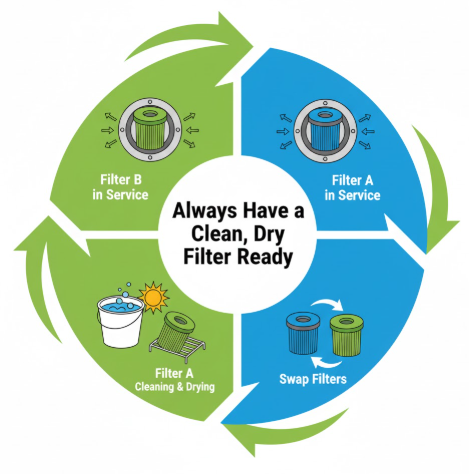
Professional spa maintenance technicians often recommend keeping two filter sets in rotation. This approach provides continuous filtration while allowing proper cleaning and drying time.
Explanation of the Rotation Method
With two filter sets, you always have a clean, dry cartridge ready while the other set undergoes cleaning. When filter cleaning time arrives, you simply swap the dirty filter for the standby, then clean and dry the removed cartridge for future rotation.
This system eliminates the temptation to rush cleaning in order to get the filter back in service quickly. The standby filter handles operation while the other set receives a full overnight soak followed by complete drying.
How Drying Tightens Fibers and Kills Bacteria
Allowing filters to dry completely between service periods provides benefits beyond convenience. As polyester fibers dry, they contract slightly, which helps restore the tight weave that effective filtration requires.
Drying also eliminates residual moisture that bacterial colonies need to survive. A filter installed damp may harbor viable bacteria that rapidly repopulate once back in warm spa water. Complete drying interrupts this cycle, ensuring each installation starts with minimal bacterial presence.
Place cleaned filters in direct sunlight if possible. Ultraviolet exposure provides additional antimicrobial action while accelerating drying time. Two to three days of outdoor drying in warm weather produces optimal results.
Impact of Cleaning Frequency on Equipment Lifespan
The relationship between filter maintenance and equipment longevity extends beyond the filter itself. Clean filters protect pumps, heaters, and control systems by ensuring proper flow and reducing strain.
Circulation pumps designed for specific flow rates suffer accelerated wear when operating against increased restriction. Motor bearings work harder, seals experience higher pressure differentials, and impeller chambers may cavitate. These stress factors accumulate over time, potentially shortening pump life by years.
Heater elements depend on consistent water flow across their surfaces to dissipate heat safely. Restricted flow allows localized overheating that degrades heater components and increases energy consumption. Clean filters maintain the flow rates that heater designs require.
Control systems monitoring pressure and flow may register error codes or enter protective shutdown modes when filtration becomes severely restricted. While these protective features prevent immediate damage, repeated cycling affects control system reliability and creates user frustration.
Troubleshooting Common Filter Cleaning Issues

Even diligent cleaning sometimes produces unexpected results. These troubleshooting guidelines help identify causes and solutions for common problems that arise during or after filter maintenance.
Filter Remains Discolored After Cleaning
Persistent discoloration despite thorough cleaning frustrates many spa owners. Understanding the difference between staining and saturation helps determine whether the filter remains functional.
Iron and Mineral Staining vs. Organic Dirt
Iron and manganese minerals present in some water sources cause rust-colored or black staining that standard cleaners cannot remove. These metallic stains do not necessarily indicate reduced filtration capacity. A stained filter may perform perfectly well despite its unsightly appearance.
Test whether flow rates have actually decreased by observing jet pressure and pump operation. If flow seems normal and water clarity is acceptable, cosmetic staining may not warrant filter replacement.
For iron staining specifically, specialty stain removal products designed for pools and spas can sometimes restore appearance. These products contain reducing agents that convert iron oxides back to soluble forms for rinsing.
When Discoloration Indicates End of Lifespan
If cleaning fails to restore flow rate regardless of appearance, the filter has likely reached the end of its useful life. Deeply embedded contamination that extended soaking cannot dissolve indicates fiber saturation beyond recovery.
The two-year maximum lifespan applies even to filters that appear clean. Internal degradation from chemical exposure and repeated cleaning cycles eventually compromises filtration ability regardless of visual condition.
Excessive Foaming After Reinstalling Filter
Foam billowing from jets when the tub restarts signals cleaner residue that rinsing failed to remove. This frustrating problem typically requires additional steps beyond simply waiting for foam to dissipate.
Causes
Surfactant-based cleaners leave residue when rinsing is inadequate. The warmth and agitation of jet action releases this residue into the water, where it creates persistent foam that can take days to clear naturally.
High-sudsing household cleaners used in place of proper spa products create particularly severe foaming. The surfactant types used in dish soap and laundry detergent foam far more aggressively than low-suds commercial filter cleaners.
Solutions
Remove the filter and perform an extended second rinse, soaking briefly in clean water before rinsing again. This often resolves residual contamination that initial rinsing missed.
For water already affected by foam, commercial defoamer products provide quick relief. These silicone-based additives break surface tension and collapse foam bubbles. However, defoamer addresses the symptom rather than the cause, so identifying and correcting the residue source prevents recurrence.
Severe cases may require partial or complete water change if defoamer alone proves insufficient. Draining 25 to 50 percent of the water removes the contamination source while preserving much of your heating investment.
Calcium Scale That Won’t Budge
Hard water regions produce stubborn scale deposits that standard cleaners sometimes cannot dissolve. Recognizing true calcium scale and applying targeted treatment restores filters that might otherwise require replacement.
Identifying Scale
Calcium scale appears as white, flaky or crystalline deposits concentrated where water flow is highest. The texture is rough and gritty rather than smooth like organic buildup. Scale often forms rings around pleat edges where evaporation concentrates minerals.
Test suspected scale by applying a few drops of white vinegar. Calcium carbonate produces visible fizzing as the acid dissolves it. No reaction suggests the deposits are organic rather than mineral.
Specific Acid-Based Treatments
For heavy scale that standard cleaners cannot address, dedicated descaling products containing stronger acids may be necessary. Pool and spa supply stores carry scale removal products specifically formulated for filter applications.
Follow product directions carefully when using strong descalers. The acids that dissolve scale can also damage filter components if concentrations are too high or contact time is too long. Thorough rinsing after treatment prevents acidic residue from affecting spa water chemistry.
Chemical Odors Persisting on the Filter
Filters that smell strange after cleaning may indicate trapped contamination or product incompatibility. Addressing odor issues before reinstallation prevents the smell from transferring to spa water.
Signs of Bacterial Entrapment
Musty or sulfurous odors suggest bacterial activity within the filter that cleaning did not fully eliminate. Biofilm colonies deep within pleats can survive surface cleaning and quickly repopulate when the filter returns to service.
Extended soaking in fresh cleaning solution, followed by complete drying in direct sunlight, often eliminates bacterial sources. The UV exposure and complete moisture elimination create conditions where bacteria cannot survive.
Chemical Incompatibility
Mixing incompatible cleaning products can create reaction byproducts that leave persistent odors. Never combine different cleaners, and rinse thoroughly between applications if switching products.
Strong chemical smells after using new cleaning products may simply require more complete rinsing. Some formulations are more concentrated than others and need extended rinsing to remove residue fully.
Best Practices for Handling and Disposal
Responsible handling of cleaning products protects your health, your equipment, and the environment. These practices ensure safe and sustainable filter maintenance.
Safe Storage of Chemical Cleaners
Store filter cleaning products in their original containers with labels intact. Transferring chemicals to unlabeled containers creates confusion and potential mixing hazards.
Keeping Products Away From Children and Pets
The cleaning chemicals effective on filters are potentially hazardous if ingested or contacted. Store products in locked cabinets or elevated locations inaccessible to children and pets.
Never store cleaning chemicals near the hot tub itself where curious children might encounter them. A dedicated cleaning supply area separate from the spa location provides safer storage.
Temperature and Shelf-Life Considerations
Extreme temperatures affect cleaning product stability. Freezing can damage liquid formulations, while excessive heat accelerates degradation of active ingredients. Climate-controlled storage areas maintain product effectiveness.
Check expiration dates on cleaning products annually. Expired chemicals may provide reduced effectiveness or produce unexpected reactions. Replace old products rather than risking inconsistent results.
Eco-Friendly Disposal of Soaking Water
Used filter cleaning solution contains suspended contaminants along with cleaning chemicals. Proper disposal prevents environmental harm and may be legally required in many jurisdictions.
Why You Should Not Dump Chemical Water on Lawns or Storm Drains
Storm drains connect directly to local waterways without treatment. Chemicals entering storm systems reach streams, rivers, and ultimately lakes or oceans where they affect aquatic life.
Lawn disposal concentrates chemicals in one location, potentially killing grass and ornamental plants while allowing runoff into storm systems during rain. The oils and greases removed from filters can also leave unsightly stains on concrete or damage plant roots.
Neutralizing Solutions Before Disposal
For acidic soaking solutions, adding baking soda gradually until pH rises to near-neutral allows safer sewer system disposal in most areas. Check local regulations regarding disposal of spa maintenance chemicals, as requirements vary by location.
Small quantities of neutralized solution can usually enter the sanitary sewer system through indoor drains connected to wastewater treatment plants. Never dispose of any spa chemicals through septic systems, where the chemicals can kill beneficial bacteria and compromise treatment.
Buying Guide: Choosing the Right Hot Tub Filter Cleaner
With numerous products available, selecting the best cleaner for your needs requires evaluating formulation, compatibility, and value. These considerations guide purchasing decisions toward products that deliver reliable results.
Reading the Label: Key Ingredients to Look For
Quality filter cleaners list their active ingredients clearly, allowing informed comparison between products. Look for surfactant types, acid types if included, and any enzymatic components.
Low-foam surfactant designations indicate formulations less likely to cause foaming problems after cleaning. Citric acid provides gentler descaling than stronger acids like phosphoric or muriatic.
Avoiding Fillers and High-Foam Surfactants
Inexpensive cleaners sometimes contain diluting agents that reduce per-ounce cost but provide less cleaning action per treatment. Compare price per recommended treatment rather than per bottle to evaluate true value.
Fragrance additives and coloring agents provide no cleaning benefit and may leave residue of their own. Unscented, uncolored products focus formulation budget on active ingredients rather than cosmetic features.
Compatibility Checks
Not all cleaners work with all filter types, and not all are approved for use with every spa brand. Verifying compatibility prevents damage and maintains warranty coverage.
Ensuring Cleaner Matches Your Filter Type
While most residential hot tubs use pleated polyester cartridge filters, some systems employ different technologies. Diatomaceous earth filters, ceramic elements, or specialty media require specific cleaning approaches that standard cartridge cleaners may not address appropriately.
Check your spa documentation to confirm filter type before purchasing cleaners. Using inappropriate products can damage filter media or reduce effectiveness.
Checking Manufacturer Warranty Guidelines
Some spa manufacturers specify approved cleaning products or prohibit certain chemical types from contacting their equipment. Review warranty documentation to ensure your cleaning product choice does not void coverage.
When in doubt, contact your spa manufacturer or authorized dealer for cleaning product recommendations. The small effort to verify compatibility protects your investment in equipment and warranty coverage.
Price vs. Value: Concentrate Yields vs. Single-Use Bottles
Calculate the cost per cleaning treatment when comparing products across different formats. This calculation often reveals that higher-priced concentrates deliver better per-treatment value than cheaper single-use products.
A 32-ounce concentrate yielding 10 treatments at 20 dollars provides 2-dollar-per-treatment cost. A 32-ounce ready-to-use spray at 12 dollars that provides 4 treatments costs 3 dollars per treatment despite the lower purchase price.
Consider your expected usage frequency when evaluating package sizes. Very large containers offer the best per-treatment pricing but may expire before you use them all if your cleaning frequency is low.
Expert Tips for Prolonging Filter Life
Beyond cleaning, several practices reduce the contamination load your filter must handle. These preventive measures extend filter life and reduce cleaning frequency.
Pre-Filtering Source Water
Water quality entering your spa affects filtration demands throughout the fill’s lifespan. Addressing incoming water problems at the source reduces filter strain.
Using Hose Filters to Reduce Calcium Introduction
Hose-end filters attach to your garden hose and remove minerals, chlorine, and sediment from fill water before it enters the spa. These inexpensive devices significantly reduce scale formation and initial filter loading.
Carbon-based hose filters remove chlorine and organic compounds while some mineral-specific versions address calcium and iron. For hard water areas, using a hose filter at each fill prevents cumulative mineral buildup that eventually overwhelms filter cleaning efforts.
Shower Before Soaking
The single most effective filter protection comes from rinsing off before entering the hot tub. A quick shower removes the bulk of body oils, lotions, cosmetics, and deodorants that otherwise transfer directly to spa water.
Studies of commercial spa facilities demonstrate that pre-soak showering reduces chemical consumption by up to 40 percent while dramatically extending filter service intervals. The few minutes spent showering saves hours of maintenance time over the course of a filter’s life.
Providing towels and encouraging guests to shower maintains water quality when entertaining. The reduction in contamination loading benefits everyone’s soaking experience through cleaner water and more effective jet action.
Enzyme Supplements in Spa Water
Adding enzyme products directly to spa water provides ongoing oil digestion that reduces filter burden. These supplements work continuously, breaking down oils before they can accumulate on filter surfaces.
Weekly enzyme dosing creates water conditions where body oils cannot persist long enough to saturate filters. The enzymes remain active between filter cleanings, preventing the buildup that requires intensive chemical treatment to remove.
Enzyme products are compatible with chlorine and bromine sanitizers, though following manufacturer guidance on timing of additions ensures both products work effectively.
Maintaining Water Chemistry
Balanced water chemistry prevents conditions that accelerate filter contamination. pH, alkalinity, and calcium hardness all influence how quickly scale and deposits form on filter media.
How Balanced pH and Alkalinity Prevent Scale Buildup
High pH encourages calcium precipitation from solution onto surfaces including filter pleats. Maintaining pH between 7.2 and 7.8 keeps calcium dissolved in the water rather than depositing as scale.
Proper alkalinity buffers pH against rapid changes that could drive scale formation. The 80 to 120 ppm alkalinity range provides stability without creating conditions favorable to mineral deposition.
Regular testing and adjustment of water chemistry prevents scale formation at the source, reducing the chemical cleaning required to restore filter performance.
Conclusion
Clean filters form the foundation of enjoyable, healthy hot tub ownership. The investment of time and appropriate products in filter maintenance pays dividends through crystal-clear water, reduced equipment strain, and extended component lifespan.
A dedicated cleaning schedule combining weekly rinsing, monthly spray treatment, and quarterly deep soaking addresses all levels of contamination before they compromise performance. The chemical science behind quality cleaners targets oils, minerals, and organic matter that water alone cannot remove.
The two-filter rotation method deserves serious consideration for any spa owner committed to optimal water quality. Having a clean, dry filter always ready eliminates the pressure to rush cleaning and ensures thorough treatment and complete drying between service periods.
Filter maintenance represents one of the most cost-effective spa care investments available. A few hours spent on proper cleaning each month prevents premature filter replacement, protects pumps and heaters from excessive strain, and maintains the inviting water clarity that makes hot tub ownership worthwhile.
Frequently Asked Questions
How often should I use a chemical cleaner on my hot tub filter?
Apply a spray degreaser monthly and perform a deep overnight soak every three to four months. Increase frequency for daily use or heavily used spas where bather loads are higher than typical residential use.
Can I use household bleach to clean my hot tub filter?
Bleach is not recommended. It degrades polyester filter fibers, shortens filter lifespan, and creates hazardous chloramine fumes when it contacts organic matter. Commercial cleaners provide safer, more effective results.
Is vinegar effective for cleaning hot tub filters?
Vinegar offers mild descaling for light calcium deposits but lacks the degreasing power needed for body oils and lotions. Use vinegar as a supplement to commercial degreasers rather than a complete replacement.
Can I put my hot tub filter in the dishwasher?
Never place filters in dishwashers. High heat warps plastic components and melts adhesives, while dishwasher detergent causes severe foaming problems when the filter returns to the spa.
Why is my hot tub filter still dirty after soaking overnight?
Persistent contamination after a 24-hour soak usually indicates permanent mineral staining or fiber saturation beyond recovery. If flow rates have not improved, the filter has reached its end of life and needs replacement.
What happens if I don’t rinse the cleaner off properly?
Inadequate rinsing causes foaming when jets activate and can disrupt water chemistry. Always rinse until runoff is completely clear and foam-free before reinstalling the filter.
How long does a hot tub filter last with proper cleaning?
Well-maintained filters typically last 12 to 24 months before requiring replacement. Filters in heavily used spas or those exposed to challenging water conditions may need replacement sooner despite proper care.