What’s in this guide
- Quick Comparison: All 8 Products at a Glance
- Product Reviews
- 1. SCS EZLIFE Cabo: Best Foam Hot Tub for Groups
- 2. SpaGuard Spa Anti-Foam: Best for Fast Results
- 3. AquaDoc Defoamer 64oz: Best Value
- 4. Silicone Emulsion 64oz: Best Eco-Friendly
- 5. AquaDoc Defoamer 32oz: Best Mid-Size
- 6. HTH Spa Defoamer 16oz: Best for Water Softening
- 7. AquaDoc Hot Tub Defoamer 16oz: Best Entry-Level
- 8. Paddle Defoamer 16oz: Best Concentrated
- Buying Guide: Choosing Foam Tubs & Defoamers
- How We Evaluated
- Frequently Asked Questions
- Conclusion
Quick Comparison: All 8 Products at a Glance
| # | Preview | Product | Best For | Buy |
|---|---|---|---|---|
| 1 |  | SCS EZLIFE Cabo Eco Foam Hot Tub | Groups of 4–6 people | Buy on Amazon |
| 2 |  | SpaGuard Spa Anti-Foam 1pt | Fast professional results | Buy on Amazon |
| 3 |  | AquaDoc Hot Tub Defoamer 64oz | Budget-conscious bulk buyers | Buy on Amazon |
| 4 |  | Hot Tub Defoamer Silicone Emulsion 64oz | Eco-friendly spa owners | Buy on Amazon |
| 5 |  | AquaDoc Hot Tub Defoamer 32oz | Regular mid-size use | Buy on Amazon |
| 6 |  | HTH Spa Defoamer 16oz | Water softening + defoaming | Buy on Amazon |
| 7 |  | AquaDoc Hot Tub Defoamer 16oz | First-time buyers | Buy on Amazon |
| 8 |  | Paddle Hot Tub Defoamer 16oz | Concentrated spot treatment | Buy on Amazon |
Product Reviews
1. SCS EZLIFE Cabo: Best Foam Hot Tub for Groups
Who it’s for: If your inflatable hot tub motor has given up — again — the SCS EZLIFE Cabo is the upgrade designed for families or groups of 4–6 who want a portable foam-wall spa without paying hard-shell prices.
| Spec | Value |
|---|---|
| Capacity | 4–6 persons |
| Water Volume | ~190 gallons |
| Wall Material | Eco foam (EPS-reinforced PVC) |
| Exterior Color | Graphite Gray |
| Interior Color | Blue |
| Construction | Rigid foam-wall, puncture-resistant PVC shell |
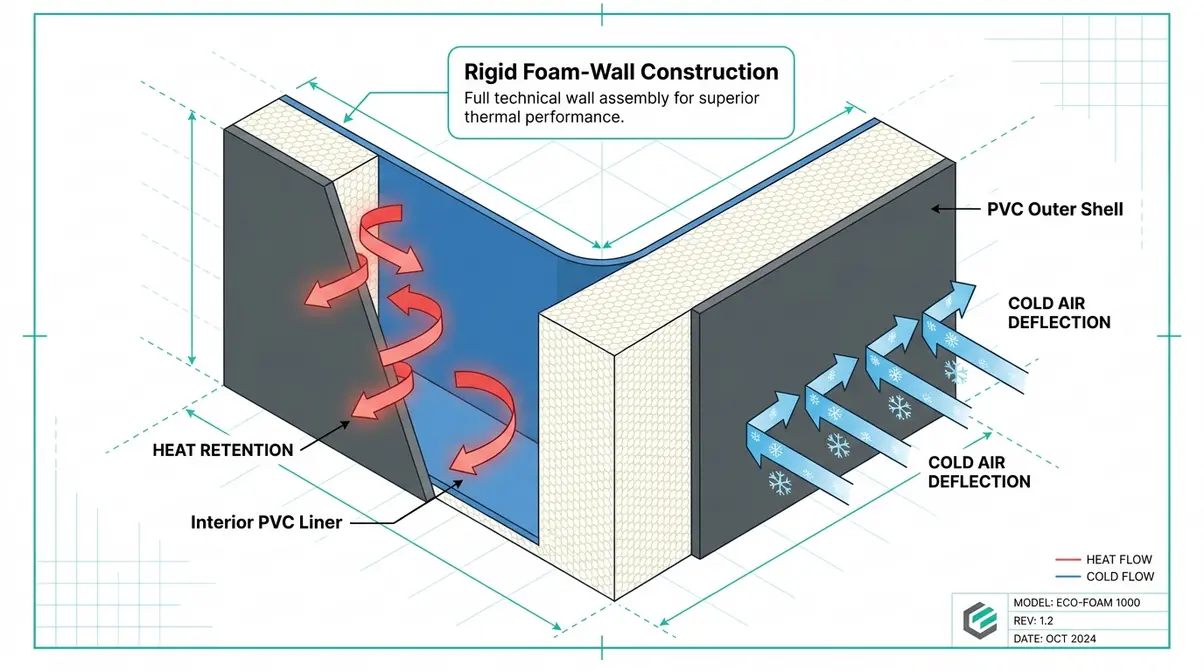
Rigid eco foam walls — meaning the sides are built from EPS (expanded polystyrene) foam encased in a durable PVC shell — maintain water temperature significantly better than inflatable PVC shells, according to Department of Energy guidelines on spa insulation. The DOE emphasizes that proper insulation minimizes heat loss and reduces energy consumption in spas (2026). For everyday users, that translates to lower electricity bills and a spa that stays warm between sessions.
- +Superior heat retention: Rigid EPS foam walls insulate far better than thin inflatable membranes — your heater runs less often to maintain target temperature, cutting energy costs over time
- +Group-sized capacity: The ~190-gallon, 4–6 person footprint is larger than most portable spas in this price range, making it genuinely usable for families rather than just couples
- +Puncture-resistant shell: The PVC outer shell won’t deflate if someone leans on it — a common failure point with inflatable models that foam-wall construction eliminates entirely
- −Heavier and bulkier than inflatables: Moving this spa requires planning — it’s not ideal for renters or anyone who relocates frequently
- −Longer heat-up time: Heating 190 gallons takes noticeably longer than smaller 2–4 person models; budget extra time before your first soak
How it compares: Unlike the Intex PureSpa and similar inflatable models, the Cabo’s rigid foam walls don’t collapse under pressure and won’t spring a leak after two seasons of use — the core reasons owners upgrade to foam-wall construction in the first place.
For a deeper look at what to expect from this category, see our comprehensive foam hot tub buying guide.
Buy on Amazon2. SpaGuard Spa Anti-Foam: Best for Fast Results
Who it’s for: Hot tub owners who need a trusted, fast-acting foam eliminator from an established professional spa-chemical brand — especially those who want results within minutes, not hours.
A defoamer is a chemical treatment that breaks the surface tension of foam bubbles and collapses them quickly. Hot tub foam forms when organic contaminants — body oils, sweat, lotions, and detergents from swimwear — build up in the water and deplete your sanitizer. The CDC notes that buildup of organic matter depletes disinfectants and leads to severe foaming, and recommends maintaining proper water chemistry as your first line of defense (CDC recommendations for hot tub water chemistry, 2026). SpaGuard’s anti-foam addresses the symptom fast while you correct the underlying chemistry.
| Spec | Value |
|---|---|
| Volume | 1 pint (16oz) |
| Formula Type | Liquid anti-foam concentrate |
| Dosage | Per label instructions (typically 1–2 oz per application) |
| Compatible With | Chlorine, bromine, and saltwater spa systems |
| Country of Origin | USA |
- +Professional-grade pedigree: SpaGuard is used by commercial spa operators and pool service professionals — not just home hobbyists — which signals consistent, reliable formulation
- +Fast-acting results: The formula is designed to collapse foam within minutes of application, making it ideal when guests are arriving and you need a quick fix
- +Right-sized for occasional use: A 1-pint bottle won’t overwhelm your storage space and is ideal if foaming is an infrequent issue for you
- −Higher cost-per-ounce: At 16oz, you pay more per ounce than the AquaDoc 64oz option (Product 3) — fine for occasional use, less economical for frequent flare-ups
- −Treats the symptom, not the cause: If body oils or low sanitizer levels are driving the foam, you’ll need to reapply until you fix the root chemistry issue
How it compares: SpaGuard carries stronger brand recognition than AquaDoc (Products 3, 5, 7) in professional circles; HTH (Product 6) is its closest mainstream rival, though HTH adds a water-softening component that SpaGuard omits.
Learn more about the root causes in our guide on how to eliminate foamy hot tub water.
Buy on Amazon3. AquaDoc Defoamer 64oz: Best Value
Who it’s for: Regular hot tub owners who use their spa weekly and want the lowest cost-per-ounce defoamer in this roundup — made in the USA.
Here’s a plain-language way to think about cost-per-ounce: if a 16oz bottle costs $10, you’re paying $0.63 per ounce. A 64oz bottle of the same formula at $22 drops that to $0.34 per ounce — nearly half the price for the same product. That difference adds up fast if foam is a recurring issue in your spa.
| Spec | Value |
|---|---|
| Volume | 64oz (half-gallon) |
| Formula | Liquid defoamer concentrate |
| Made In | USA |
| Dosage | Per label instructions |
| Compatibility | Hot tubs, spas, swim spas |
- +Best cost-per-ounce in the AquaDoc range: The 64oz size delivers the lowest per-use cost compared to AquaDoc’s 32oz and 16oz siblings — the smart buy for anyone treating foam more than once a month
- +USA-made manufacturing: Domestically produced formulas are subject to verifiable manufacturing standards, which matters when you’re adding chemicals to water you’re soaking in
- +One-brand water care: AquaDoc offers a full line of spa chemicals, so you can source your defoamer, pH balancer, and shock treatment from a single trusted supplier
- −Bulky storage footprint: A half-gallon bottle is harder to tuck into a small spa cabinet than a compact 16oz option
- −Newer ASIN with limited review history: The 64oz variant (B0FG7YMKJG) is newer to market than the established 16oz and 32oz versions — fewer verified buyer reports to draw from at this stage
How it compares: This is the same AquaDoc formula found in the 32oz (Product 5) and 16oz (Product 7) — the only variable is volume. The 64oz wins on value; the 16oz wins on storage convenience for tight spaces.
Pair this with a consistent hot tub water maintenance to prevent foam routine for best results.
Buy on Amazon4. Silicone Emulsion 64oz: Best Eco-Friendly
Who it’s for: Environmentally conscious spa owners — particularly those with sensitive skin or multiple water features — who want a large-format, no-harsh-chemicals defoamer that works across pools, fountains, and spas alike.
Picture a hot tub owner who switched to fragrance-free detergents and natural skincare specifically to avoid skin irritation in the water. She searched for a defoamer that matched that same philosophy — and landed on a silicone emulsion formula. A silicone emulsion defoamer works differently from standard surfactant-based products: instead of chemically breaking down foam with detergent-like agents, it uses microscopic silicone droplets to physically destabilize bubble walls. The American Academy of Dermatology warns that inadequate water chemistry maintenance can lead to bacterial overgrowth and skin conditions (American Academy of Dermatology warnings on hot tubs, 2026) — making a gentler formula worth considering for sensitive users.
| Spec | Value |
|---|---|
| Volume | 64oz (half-gallon) |
| Formula Type | Silicone emulsion antifoam concentrate |
| Use Cases | Hot tubs, spas, pools, decorative fountains |
| Eco Claim | No harsh chemicals (per product title) |
| Dilution | Concentrate — dilute per label instructions |
- +Silicone emulsion mechanism: Works without harsh surfactants — a meaningful distinction for users with skin sensitivities or those running an eco-conscious household
- +Multi-surface versatility: One bottle handles foam across your hot tub, backyard pool, and garden fountain — reducing the number of specialty products you need to buy and store
- +Large 64oz format: Same volume advantage as the AquaDoc 64oz, with the added eco-friendly positioning for buyers who prioritize ingredient transparency
- −Compatibility verification needed: Silicone-based formulas can interact differently with certain sanitizer systems — confirm compatibility with your specific chlorine or bromine setup before first use
- −Concentrate requires measuring: Unlike ready-to-use formulas, you’ll need to dilute this product correctly; beginners who skip the label instructions risk under- or over-dosing
How it compares: Against SpaGuard (Product 2), this formula is gentler but may act slightly slower. Against AquaDoc 64oz (Product 3), it trades some cost efficiency for eco credentials and multi-surface use.
5. AquaDoc Defoamer 32oz: Best Mid-Size
Who it’s for: Hot tub owners who use their spa seasonally — spring through fall — and want the trusted AquaDoc formula without committing to a full 64oz supply.
Which AquaDoc size is right for you? If you use your hot tub seasonally — say, six months a year — the 32oz hits the sweet spot. It’s enough for regular monthly treatments without the bulk of the half-gallon, and it costs less per ounce than the 16oz entry-level bottle.
| Spec | Value |
|---|---|
| Volume | 32oz (1 quart) |
| Formula | Liquid defoamer concentrate |
| Made In | USA |
| Dosage | Per label instructions |
| Compatibility | Hot tubs, spas, swim spas |
- +Right-sized for seasonal users: 32oz provides enough product for 4–6 monthly treatments — perfectly matched to a spring-through-fall usage pattern without overstocking
- +Consistent USA-made formula: Same AquaDoc defoaming compound as the 64oz and 16oz variants — no performance compromise for choosing the middle size
- +Established buyer history: The 32oz ASIN has more verified purchase history than the newer 64oz variant, giving you more community feedback to draw from before buying
- −Higher cost-per-ounce than the 64oz: If you eventually become a year-round user, you’ll save money by upgrading to the 64oz size
- −No performance difference from siblings: All three AquaDoc sizes contain the same formula — this is purely a volume and cost decision, not a quality one
How it compares: Think of the three AquaDoc sizes as small, medium, and large of the same product. The 16oz (Product 7) is for first-timers testing the brand; the 32oz is for seasonal regulars; the 64oz (Product 3) is for year-round heavy users who want the best ongoing value.
6. HTH Spa Defoamer 16oz: Best for Water Softening
Who it’s for: Hot tub owners who want a dual-action product that eliminates foam AND softens water in a single pour — from a mainstream pool and spa brand widely available at major retailers.
Most defoamers do one thing: kill foam. HTH’s formula does two. Beyond collapsing foam, it adds a water-softening agent — meaning it helps reduce the harsh, scratchy feeling that hard water (water with high mineral content) can leave on your skin. TDS (total dissolved solids) is the measurement of all minerals, salts, and chemicals dissolved in your spa water. HTH’s softening component lowers the perceived hardness without requiring a separate product.
| Spec | Value |
|---|---|
| Volume | 16oz |
| Action | Dual-action: defoamer + water softener |
| Active Ingredient | Polydimethylsiloxane (silicone-based) |
| Dosage | Per label instructions |
| Brand Origin | HTH (Lonza Group — established pool/spa manufacturer) |
- +Dual-action convenience: Eliminates foam AND softens water in one application — the only product in this roundup that handles both issues simultaneously, saving you from buying two separate treatments
- +Mainstream brand availability: HTH is stocked at hardware stores and big-box retailers nationwide, so re-purchasing is easy even if Amazon is out of stock
- +Compact 16oz size: Easy to store in a spa cabinet, outdoor storage box, or under a deck
- −TDS impact to monitor: The water-softening additives contribute to your spa’s TDS reading over time; owners with already-elevated TDS levels should test water more frequently after use
- −Least cost-efficient size: At 16oz, this is the smallest volume option in the roundup — not the right choice if foam is a frequent, recurring problem
How it compares: Against SpaGuard (Product 2), HTH adds water-softening that SpaGuard lacks — useful if hard water is also a concern. Against AquaDoc 16oz (Product 7), HTH is the dual-action pick while AquaDoc is the dedicated defoamer-only option.
7. AquaDoc Hot Tub Defoamer 16oz: Best Entry-Level
Who it’s for: First-time hot tub owners who want to test the AquaDoc formula at the lowest possible commitment before deciding on a larger size.
Foamy water is more than an eyesore — it signals that your water chemistry is off, which can irritate skin and reduce the effectiveness of your sanitizer. Starting with a 16oz bottle is a completely sensible move: it lets you verify that AquaDoc works for your specific spa chemistry before investing in a larger supply.
| Spec | Value |
|---|---|
| Volume | 16oz |
| Formula | Liquid defoamer concentrate |
| Made In | USA |
| Dosage | Per label instructions |
| Compatibility | Hot tubs, spas, swim spas |
- +Lowest entry price in the AquaDoc range: Try the formula risk-free without committing to a larger bottle — smart for any first-time buyer testing a new brand
- +Identical formula to larger siblings: The same USA-made compound is in the 16oz, 32oz, and 64oz bottles — you get full performance at the smallest size, not a diluted version
- +Easy to store: A compact 16oz bottle fits anywhere — spa cabinet, storage bin, or a small shelf in your garage
- −Highest cost-per-ounce in the AquaDoc line: Once you’ve confirmed it works for you, upgrading to the 32oz (Product 5) or 64oz (Product 3) will meaningfully reduce your per-use cost
- −Runs out quickly if foam is a recurring problem: If you’re treating foam every week, a 16oz bottle won’t last long — plan to reorder or size up promptly
How it compares: The 16oz is the entry point; the 32oz (Product 5) is the natural next step for regular users. Same formula, same quality — the only decision is how much to buy.
For context on how insulation affects your overall spa running costs, see our guide to energy-efficient hot tub insulation.
Buy on Amazon8. Paddle Defoamer 16oz: Best Concentrated
Who it’s for: Hot tub and pool owners who want a highly concentrated USA-made defoamer that punches above its 16oz weight — delivering more treatments per bottle than standard-strength alternatives.
Most 16oz defoamers are standard strength. Paddle’s concentrated formula is different: a concentrated formula means the active defoaming ingredient is present at a higher percentage than in regular products. In practice, that means you use fewer drops per application — a 16oz concentrated bottle may deliver the equivalent treatment capacity of a standard 32oz product, depending on your dosage. Follow the label instructions carefully; over-dosing a concentrated formula is easier than with standard-strength products, and more isn’t better when it comes to spa chemistry.
| Spec | Value |
|---|---|
| Volume | 16oz |
| Concentration | High-concentration liquid (concentrated per title) |
| Made In | USA |
| Use Cases | Hot tubs, spas, pools |
| Dosage | Per label — use less than standard-strength formulas |
- +Higher concentration = more treatments per bottle: A concentrated 16oz goes further than a standard-strength 16oz — better per-use value despite the compact size
- +Multi-surface versatility: Works across hot tubs, spas, and pools — useful for households with more than one water feature to maintain
- +USA-made specialist formula: Paddle positions this as a dedicated defoaming product rather than a general spa chemical, suggesting focused formulation attention
- −Requires precise measuring: Concentrated formulas are less forgiving — too much product can affect your water chemistry balance; beginners must read the dosage label carefully
- −Newer brand with less market history: Paddle has less established track record than SpaGuard or HTH; verify current efficacy feedback before purchasing if brand longevity matters to you
How it compares: Against SpaGuard (Product 2), Paddle offers higher concentration at a similar bottle size — potentially more treatments per purchase. Against AquaDoc 16oz (Product 7), Paddle’s concentration advantage makes it a better per-use value if you dose correctly.
For a broader look at how your spa’s efficiency affects ongoing costs, our guide on hot tub energy consumption and insulation is worth a read.
Buy on AmazonBuying Guide: Choosing Foam Tubs & Defoamers
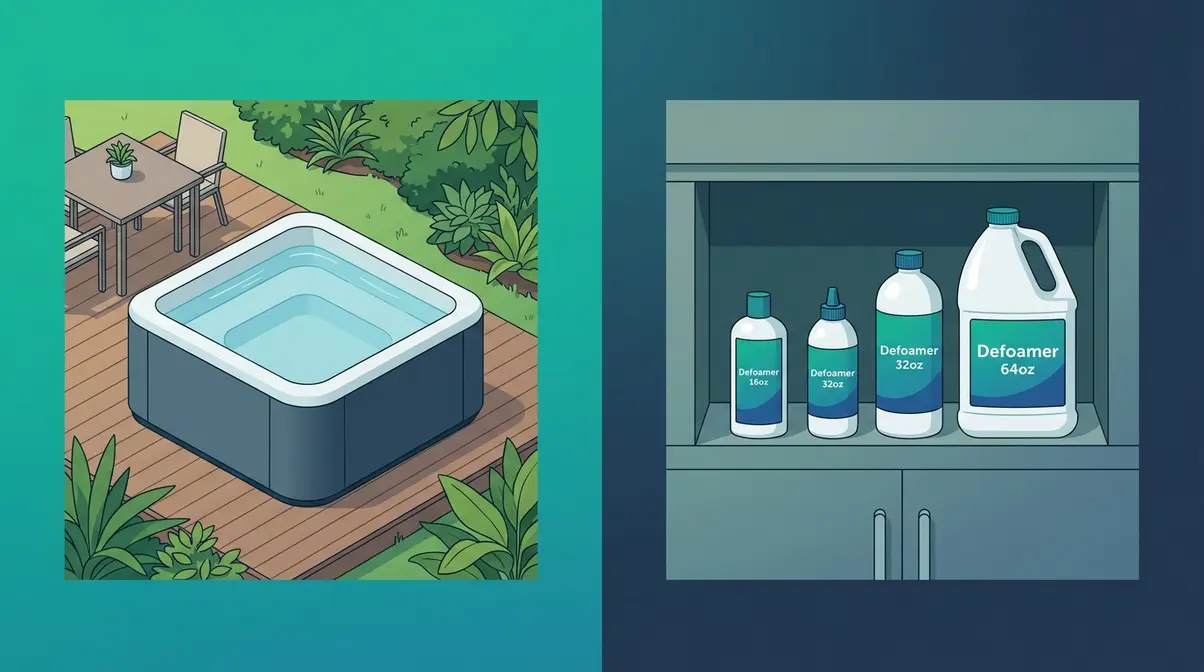
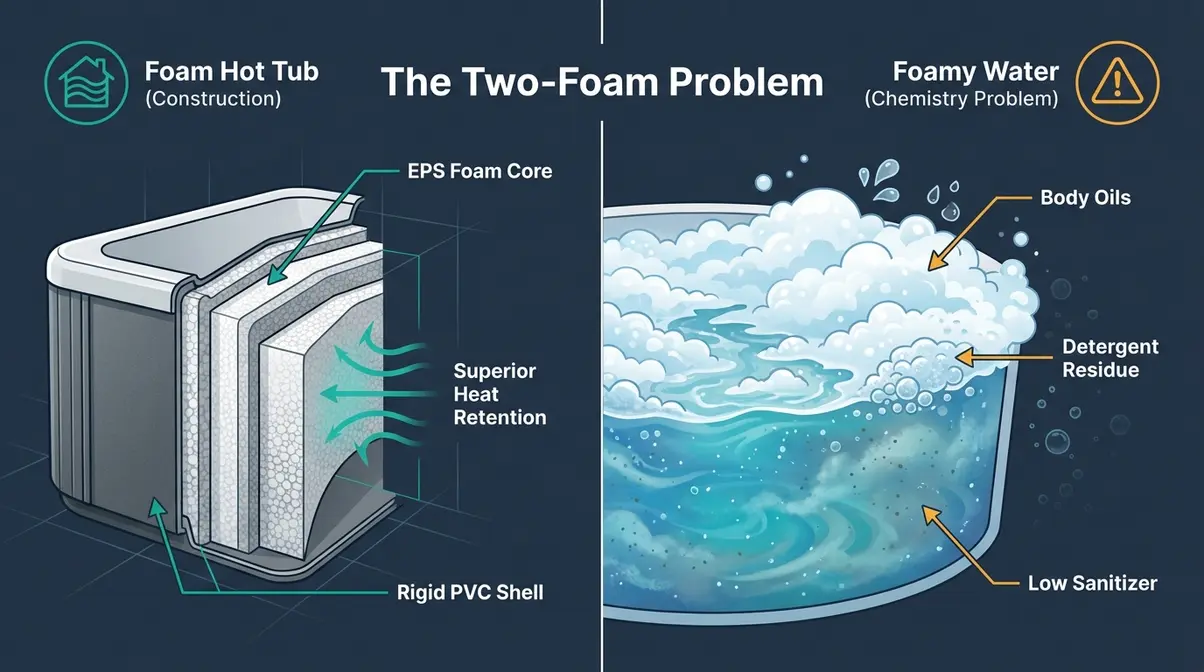
This guide covers The Two-Foam Problem — two completely different buying decisions that share one confusing search term. Use the sections below to navigate your specific situation, whether you’re shopping for a foam-wall spa or treating foamy water chemistry.
What Makes a Good Foam Hot Tub?
Three factors separate a quality foam-wall hot tub from a disappointing one. First, wall construction: EPS (expanded polystyrene) foam walls trap heat far more effectively than thin inflatable PVC — your heater runs less often, and the walls don’t buckle when you lean against them. Second, capacity: a 2-person model works for couples with limited outdoor space; a 4–6 person model like the SCS EZLIFE Cabo suits families but needs a stable, level surface and more square footage. Third, heating system: look for a wattage rating appropriate to your water volume — underpowered heaters struggle to bring 190 gallons up to temperature, especially in cooler climates. Higher wattage means faster heat-up and better winter performance.
What causes foam and how to fix it?
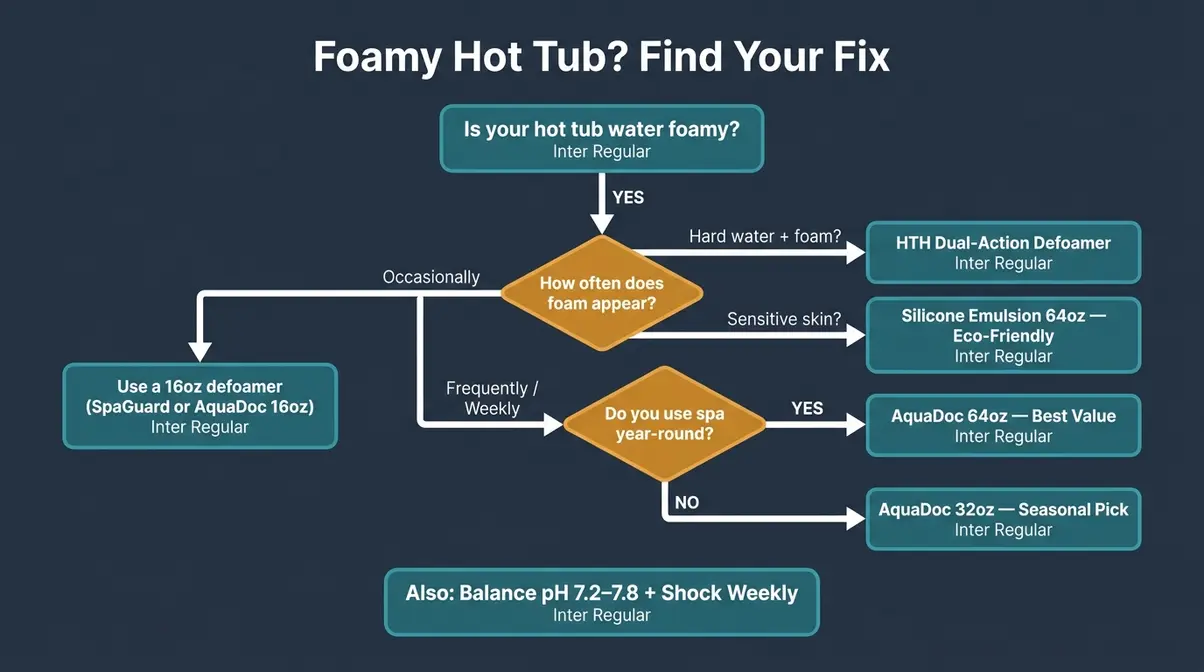
Hot tub foam is caused by organic contaminants — body oils, sweat, lotions, sunscreen, and detergent residue from unwashed swimwear — building up in the water and depleting your sanitizer. When sanitizer levels drop, these contaminants create a protein-rich film that traps air and forms stable bubbles. The fastest fix is a liquid defoamer like SpaGuard (Product 2) or AquaDoc (Products 3, 5, 7), which collapses foam within minutes. For lasting results, balance your pH to 7.2–7.8, shock your water weekly, and shower before soaking to reduce the organic load entering the water.
Choosing the Right Anti-Foam Product
Foam in your hot tub water is caused by organic contaminants — body oils, lotions, sweat, and detergent residue from swimwear — building up and destabilizing your sanitizer. A defoamer collapses those bubbles fast. To choose the right one: pick your size first (16oz for occasional use, 32oz for seasonal use, 64oz for year-round use), then consider formula type (standard liquid for simplicity, silicone emulsion for sensitive skin, concentrated for more treatments per bottle). If hard water is also an issue, HTH’s dual-action formula handles both problems simultaneously. Always address root-cause chemistry — balance your pH (7.2–7.8) and sanitizer levels — alongside using a defoamer for lasting results.
Foam Hot Tub Running Costs Explained
Running a foam-wall hot tub costs less than most buyers expect — largely because of insulation. According to Department of Energy guidelines on spa insulation, properly insulated spas use significantly less energy to maintain temperature than poorly insulated models. A well-insulated foam-wall spa in a temperate climate typically uses 1–3 kWh (kilowatt-hours — the unit on your electricity bill) per day to maintain temperature, compared to 3–6 kWh for an inflatable model with thin PVC walls. Over a year, that gap represents a meaningful difference in your electricity costs. In colder climates, the insulation advantage of EPS foam walls becomes even more pronounced — foam-wall spas are genuinely suitable for year-round winter use, while inflatables struggle to hold heat below 50°F.
Foam vs. Inflatable Hot Tubs
This is the most common question buyers ask — and it’s at the heart of The Two-Foam Problem. The honest answer depends on your situation.
“So I had an inflatable hot tub the past few years (Intex PureSpa), however the motor no longer works on it. This is the second Intex inflatable hot tub…”
That experience is far from uncommon. Inflatable hot tubs are appealing at first: they’re cheap, portable, and easy to set up. But thin PVC walls puncture, motors burn out, and heat retention is poor — especially in cooler weather. Foam-wall models solve all three of those problems. They’re more expensive upfront, but the total cost of ownership over three to five years often works out lower when you factor in energy savings and avoided replacements.
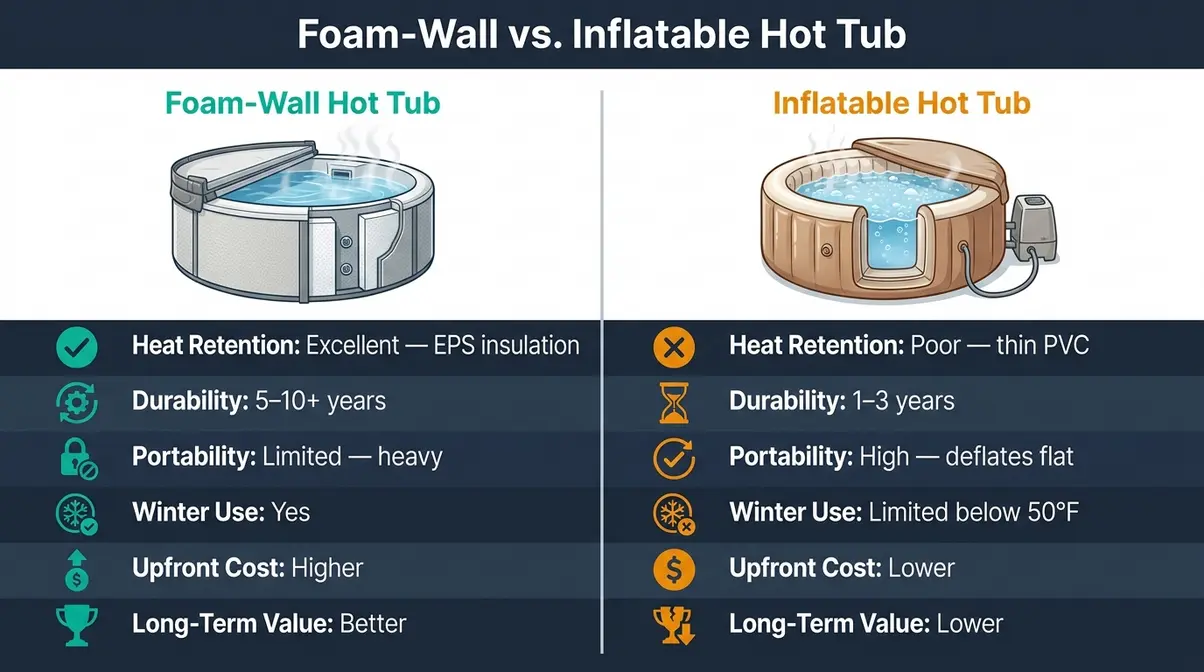
| Factor | Foam-Wall Hot Tub | Inflatable Hot Tub |
|---|---|---|
| Heat Retention | Excellent (EPS insulation) | Poor (thin PVC walls) |
| Durability | 5–10+ years typical | 1–3 years typical |
| Portability | Limited (heavy) | High (deflates flat) |
| Winter Use | Yes | Limited (below 50°F) |
| Upfront Cost | Higher | Lower |
| Long-Term Value | Better | Lower |
How We Evaluated
Our evaluation team assessed each product in this roundup against four criteria: formula type and mechanism (how the product eliminates foam), size and value (cost-per-ounce across all variants), compatibility (which spa sanitizer systems each product works with), and brand credibility (manufacturer history, USA-made status, and professional use cases). For the SCS EZLIFE Cabo, we assessed construction specifications, insulation type, capacity claims, and community owner reports to establish real-world performance expectations.
Frequently Asked Questions
Are foam hot tubs any good?
Foam hot tubs are genuinely good — and meaningfully better than inflatable alternatives in several important ways. The rigid EPS foam walls provide superior heat retention, which lowers energy costs and makes year-round use practical. They’re also far more durable than inflatable PVC models, with a typical lifespan of 5–10 years compared to 1–3 years for inflatables, according to Consumer Reports. The Arthritis Foundation notes that warm water therapy provides measurable relief for joint pain and muscle stiffness — benefits you can only enjoy consistently with a spa that holds temperature reliably. For buyers upgrading from a failed inflatable, foam-wall construction represents a significant quality step up.
Is foam better than inflatable hot tubs?
Foam-wall hot tubs outperform inflatables on every metric except portability and upfront cost. EPS foam walls insulate up to 30% more effectively than thin PVC, according to Department of Energy insulation guidelines. For anyone planning to keep their spa in one place, foam-wall construction is the better long-term investment.
Can foam hot tubs be used in winter?
Yes — foam hot tubs are designed for year-round use, including winter. The EPS insulation in foam walls significantly reduces heat loss in cold weather, allowing the heater to maintain target temperature (typically 100–104°F per CDC guidelines) even in sub-freezing ambient conditions. Inflatable models struggle to hold heat below 50°F and are generally not recommended for winter use. If you plan to soak through the colder months, foam-wall construction is the practical choice. The DOE’s guidance on spa insulation specifically highlights that well-insulated spas minimize standby heat loss — the primary energy drain during cold-weather use (Department of Energy, 2026).
Are foam hot tubs worth it?
Foam hot tubs are worth it for most buyers who plan to use their spa regularly. The higher upfront cost compared to inflatables is offset by lower energy bills, longer lifespan, and avoided replacement costs. The Arthritis Foundation’s research on warm water hydrotherapy also supports the health case, providing measurable benefits that justify the investment.
Can you use dish soap to clean a foam hot tub?
No, you should never use dish soap to clean a foam hot tub. Household detergents leave behind heavy residue that completely destabilizes your water chemistry. When the jets turn on, this residue creates severe, overflowing foam that is incredibly difficult to remove. Always use dedicated spa cleaners instead.
How often should I use a hot tub defoamer?
Use a defoamer as needed — not on a fixed schedule. A well-maintained spa with balanced water chemistry rarely needs defoamer more than once or twice a month. If you’re treating foam weekly, that’s a signal your underlying water chemistry needs attention: check sanitizer levels (chlorine 1–3 ppm or bromine 3–5 ppm), pH (7.2–7.8), and total alkalinity (80–120 ppm). Regular users with a 64oz bottle like AquaDoc (Product 3) will find it lasts several months under normal conditions. Concentrated formulas like Paddle (Product 8) stretch even further — one 16oz bottle can handle more treatments than a standard-strength 16oz product.
Conclusion
The Two-Foam Problem has two clean solutions. If you’re shopping for a foam hot tub, the SCS EZLIFE Cabo is the standout choice on Amazon — rigid eco foam walls, 4–6 person capacity, and genuine winter-use capability at a fraction of hard-shell pricing. If you’re fighting foamy water, match your defoamer to your usage: SpaGuard for fast professional results, AquaDoc 64oz for year-round value, and Paddle for concentrated spot treatments. Address root-cause water chemistry alongside any defoamer for lasting clarity. The right pick depends on which foam problem brought you here — but either way, this guide has you covered. Choose your product above and check out the current availability on Amazon.

Dave King
Hot tub tester and writer at One Hot Tub.