

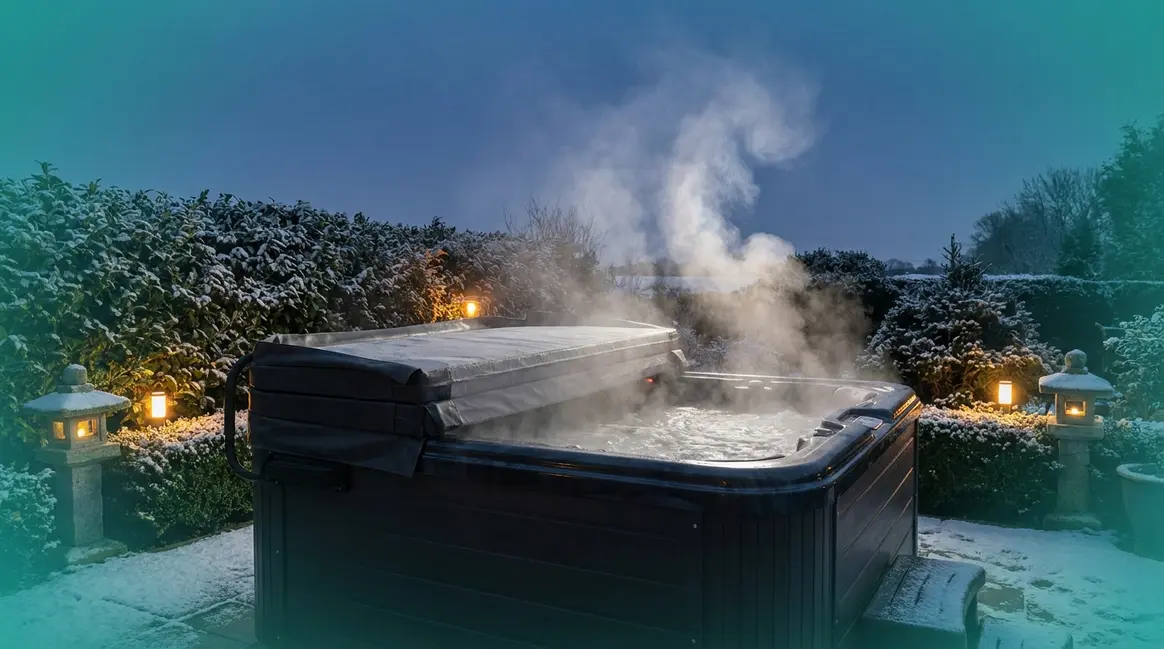
Table of Contents - Best Hot Tubs for Winter UK: Tested & Compared (2026)
This blog post may contain affiliate links. As an Amazon Associate I earn from qualifying purchases.
📅 Pricing and energy cost estimates in this guide were verified as of July 2026. UK electricity rates fluctuate — check the current Ofgem energy price cap for the latest unit rates.
Running a poorly insulated hot tub through a UK winter can add £100–£150 to your monthly energy bills — a fact most guides conveniently omit. If you’ve found yourself plugged in constantly and watching your energy bills climb, you’re not alone. This guide covers the best hot tubs for winter UK conditions, comparing insulation types, anti-freeze technology, and real running costs so you can choose a model that keeps you warm without leaving you dreading the next statement.
| # | Preview | Product | Best For | Buy |
|---|---|---|---|---|
| 1 |  | UHOMEPRO Inflatable Hot Tub Spa Set | Best budget inflatable for 4–6 people | Buy on Amazon |
1. UHOMEPRO Inflatable Spa: Budget Pick
- EXTERNAL HEATER WITH EASY CONTROL: Heat your spa up to 104°F with our external pump. Use the easy control panel to switch between a cozy warm soak or a refreshing cool dip. The external heater is also easy to replace, giving you years of reliable performance.
- PREMIUM BACKYARD SPA EXPERIENCE: Relax in style with a durable laminated PVC inflatable hot tub. Perfect for quiet weekends, starry nights, or after a long day, it delivers comfort, durability, and a premium spa experience right at home. The elegant printed basketweave pattern adds a modern, sophisticated touch to your outdoor space.
- SOOTHING BUBBLE MASSAGE FOR THE WHOLE FAMILY: Indulge in full-body relaxation with 130 powerful air jets driven by a 600W bubble system. Great for both adults and kids, this blow up hot tub transforms your backyard into a serene retreat where the entire family can enjoy a calming massage experience.
- DUAL-LAYER COVER FOR SAFETY & ENERGY EFFICIENCY: Stay safe and save energy with two specially designed covers: an inflatable cover for faster heating, and a thermal cover with a child safety lock to maintain consistent water temperature. Easily switch between covers for quick heating or efficient insulation, giving you peace of mind and comfort.
- ALL-INCLUSIVE ACCESSORY KIT FOR HASSLE-FREE SETUP: Get everything you need to enjoy your spa immediately. This portable hot tub comes with a high-quality filter, inflation hose, repair sheet, small wrench, and four filter elements—designed for easy setup, effortless maintenance, and uninterrupted relaxation.
Who it’s for: Households wanting an accessible entry into winter hot-tubbing on a budget, particularly families of 4–6 who have limited garden space and want a portable, easy-setup option that doesn’t require permanent installation. When searching for the best hot tubs for winter UK conditions, the UHOMEPRO stands out for budget-conscious buyers.
| Spec | Value |
|---|---|
| Capacity | 4–6 persons |
| Size | 73″ × 73″ square |
| Jets | 130 bubble massage jets |
| Heating | External heater pump |
| Filter Cartridges | 6 included |
| Shape | Square |
Pros:
- 130 bubble jets across a 73-inch footprint — unusually generous coverage for an inflatable at this size, delivering full-body massage rather than targeted spot treatment
- Square design maximises usable internal space — you gain noticeably more elbow room compared to circular inflatables with the same outer dimension
- External heater pump stays accessible — the configuration allows maintenance and inspection without deflating the tub, a practical advantage over integrated-pump designs
- 6 filter cartridges included — reduces immediate consumable costs during the first months of ownership, a genuine value-add at this price tier
Cons:
- Inflatable construction offers significantly less insulation than hard-shell acrylic models — heat loss in sub-5°C temperatures is substantially higher, meaning running costs climb sharply through a UK winter
- No confirmed built-in anti-freeze protection — our research found no verified Freeze Shield-type system (the auto-activation technology Lay-Z-Spa uses to prevent freezing) listed for the UHOMEPRO; additional insulation measures are essential for outdoor UK winter use
- External heater pump is less energy-efficient than the integrated pump-and-heater systems found in premium hard-shell models, contributing to higher per-day running costs
How it compares: Where established winter inflatables like the Lay-Z-Spa Helsinki include Freeze Shield™ anti-freeze technology as a headline feature — automatically activating the heater when water temperature drops dangerously low — the UHOMEPRO lacks a confirmed equivalent. For buyers prioritising proven cold-weather resilience and lower monthly energy bills over jet count, a hard-shell model from RotoSpa or Arctic Spas will outperform in sustained UK winter conditions. The UHOMEPRO competes strongly on specification for its category, but it is best understood as a high-value three-season tub rather than a purpose-built winter unit.
Verdict: A competitively specified inflatable spa with an impressive 130-jet count and a practical square format. Best suited to mild UK autumn and spring use, or sheltered winter gardens where additional insulation measures — a thermal cover, ground mat, and windbreak — are already in place.
Choose if: You want an affordable 4–6 person inflatable with a high jet count for occasional winter soaks in a sheltered garden.
Skip if: You plan sustained outdoor use through sub-zero UK winter temperatures — a hard-shell model with full-foam insulation is a more reliable long-term investment in those conditions.
Buy on AmazonBuying Guide: UK Winter Hot Tubs
“How does everyone manage their hot tub (specifically lazy spa) in the winter? I have mine plugged in constantly but have noticed my energy bills have…”
This question, repeated across UK hot tub communities, captures a problem most buying guides fail to address honestly. To find the best hot tubs for winter UK use, you must understand The Winter Efficiency Gap — the measurable £50–£110/month cost difference between a well-insulated hot tub and a poorly insulated one running through a UK winter. Before you buy, it’s worth taking time to explore different hot tub types so you understand exactly what you’re comparing.
Best Tubs for Cold Weather?
A full-foam insulated hard-shell hot tub is best for cold UK weather. Models from RotoSpa, Arctic Spas, and Jacuzzi use high-density foam filling the entire cabinet cavity, minimising heat loss even when outdoor temperatures drop below freezing. For budget buyers, an inflatable with confirmed Freeze Shield-type anti-freeze technology — such as the Lay-Z-Spa Helsinki — is the next best option. Without anti-freeze protection, an inflatable hot tub risks pump and plumbing damage in sustained sub-zero conditions, making it unsuitable for year-round outdoor UK use. For a broader look at hot tub health benefits that make winter soaking worthwhile, our expert-backed guide covers the evidence.
Hard-Shell vs Inflatable Tubs
When it comes to finding the best hot tubs for cold climates, the fundamental decision is hard-shell versus inflatable — and in a UK winter, that choice carries a significant financial consequence most competitors don’t quantify.
A hard-shell hot tub features a moulded acrylic shell, a rigid insulated cabinet, and plumbing that is fully sealed against the elements. Insulation is built into the structure from the factory. A hard-shell unit from a manufacturer like RotoSpa or Arctic Spas is designed to operate year-round in northern European conditions. An inflatable hot tub — often called a “lazy spa” in UK searches — uses reinforced PVC or vinyl walls filled with air. They are portable, storable, and far more affordable upfront, but that air-filled wall is no match for the insulated cabinet of a hard-shell model when temperatures drop below 5°C.
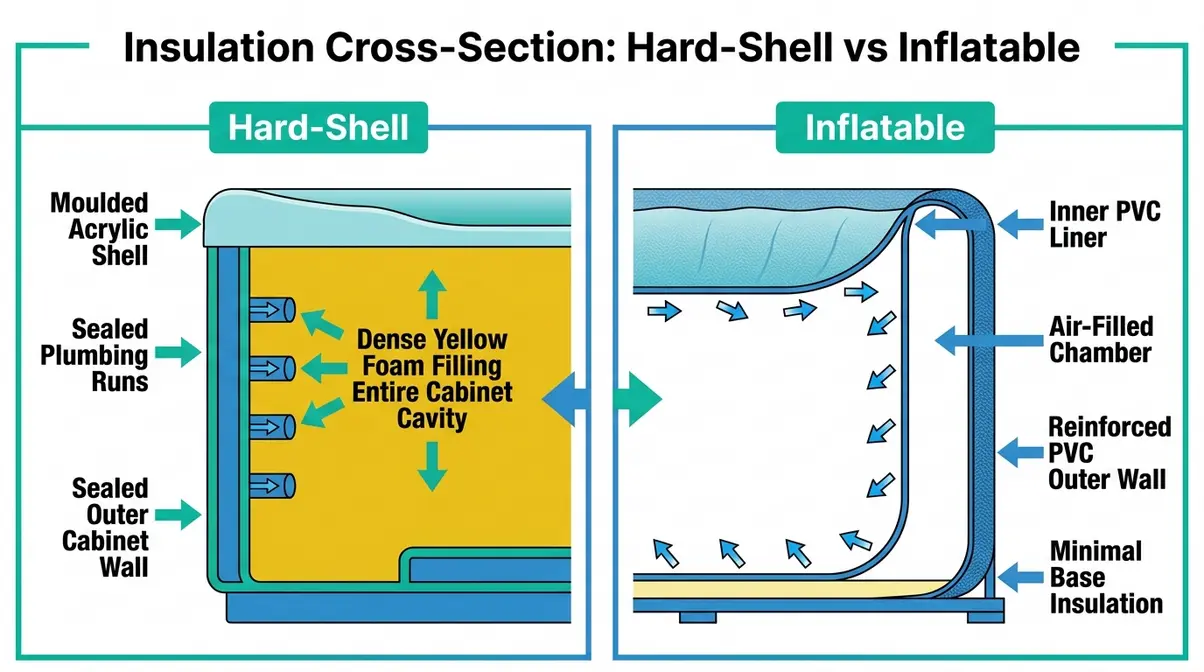
Inflatable hot tubs cost significantly more to run in winter than hard-shell models due to inferior insulation (Which? review on winter hot tub running costs, 2026). The table below makes the gap concrete:
| Feature | Hard-Shell | Inflatable |
|---|---|---|
| Insulation | Full-foam or perimeter | Air-filled walls only |
| Avg. Winter Running Cost | £40–£70/month | £100–£150/month |
| Durability | 10–20 years | 3–7 years |
| Upfront Cost | £3,000–£15,000+ | £300–£1,500 |
| Winter Technology | Full-foam, FreeHeat™, sealed plumbing | Freeze Shield™ (select models only) |
| Portability | Permanent installation | Portable, storable |
The Winter Efficiency Gap in this table is stark. Over a five-month UK winter (November to March), the cumulative cost difference between a hard-shell and an uninsulated inflatable can exceed £400–£500. Most guides recommend inflatables without flagging the £3–£5/day winter running cost reality. That omission can turn a £500 saving at purchase into a £500 annual energy penalty.
Choose if: your budget is under £1,500, you want portability, or your winters are mild and you have a sheltered garden space. Choose if: you plan year-round use, energy efficiency is a priority, or you live in a consistently cold region of the UK such as Scotland, the North of England, or Wales. To compare hard-shell and inflatable hot tubs for winter in more detail, including specific model recommendations, our dedicated comparison guide covers the full range.
Regardless of which type you choose, certain technologies separate a true winter-capable hot tub from one that will struggle — and potentially freeze — in a UK cold snap.
Must-Have Cold Weather Features
In a cold climate, the technology inside your hot tub matters as much as its price tag. Three features determine whether a tub performs reliably through a UK winter or becomes an expensive problem.
1. Insulation type — the most critical specification
Full-foam insulation means the entire cavity between the acrylic shell and the outer cabinet is filled with high-density foam. Heat loss is minimised because there is almost no air space for warmth to escape into. RotoSpa, Arctic Spas, and Jacuzzi use full-foam construction as standard. This is the gold standard for UK winters below 5°C.
Perimeter insulation (sometimes marketed as FreeHeat™) lines only the cabinet walls and base with foam, leaving the internal cavity open. The design uses heat generated by the pump and motor to warm this internal space — a clever approach that works well in mild winters of 5–10°C. However, in sustained freezing temperatures, the open cavity loses heat faster than full-foam construction can compensate for. To understand essential hot tub hard covers for winter and how they interact with insulation type, our dedicated covers guide goes into more depth.
2. Anti-freeze technology
Lay-Z-Spa’s Freeze Shield™ is the benchmark for inflatables. It continuously monitors water temperature and automatically activates the heater if the water approaches freezing point — protecting the pump and plumbing from ice damage without requiring manual intervention. Not all inflatables include this system. Before purchasing any inflatable for outdoor UK winter use, confirm whether freeze protection is present. Hard-shell models from established manufacturers typically include equivalent protection as standard, with sealed plumbing that is inherently more resistant to freeze damage.
3. Thermal covers
To minimise running costs during the UK winter, hot tubs should feature full foam insulation and a high-quality thermal cover (BISHTA energy efficiency standards, 2026). A well-fitting hard cover with a minimum 100mm foam core can reduce heat loss by up to 60% by retaining surface warmth and preventing cold air from contacting the water directly. Critically, a hard-shell tub without a proper cover will lose more heat than a well-covered inflatable — the cover matters as much as the shell type. For guidance on how to winterize your hot tub before the first cold snap, including cover fitting and plumbing checks, our winterization guide walks through every step.
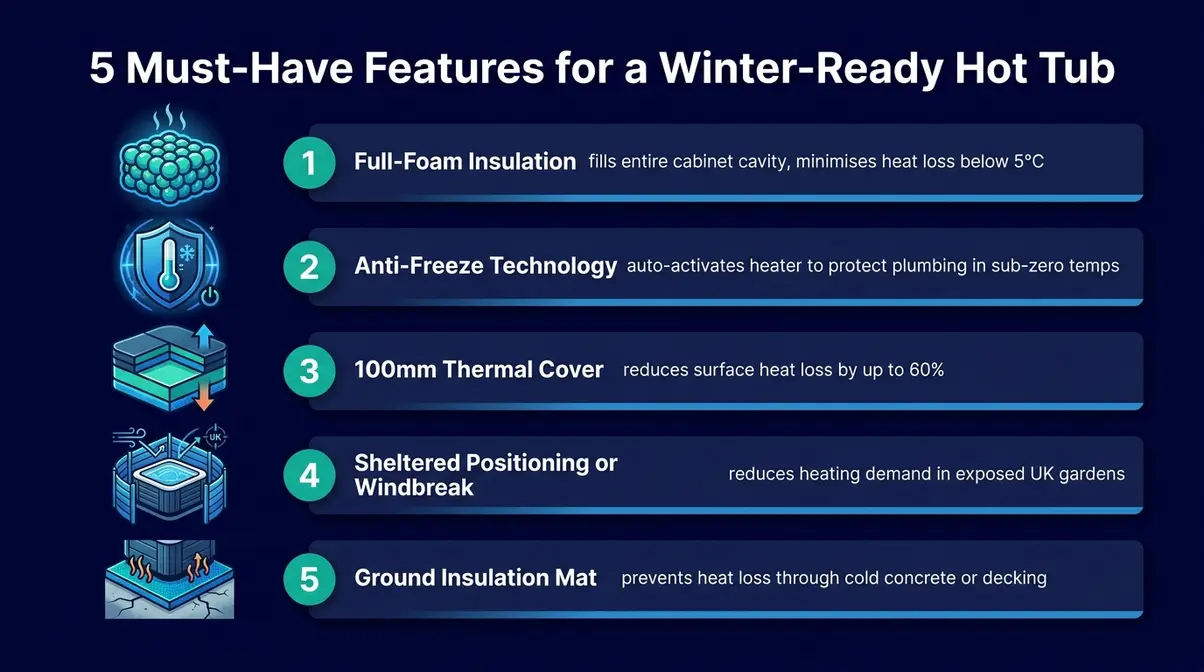
Knowing what features to look for is half the battle — but understanding what those features will cost you to run each month is what separates a smart winter purchase from an expensive mistake.
Cost to Run a Tub in Winter?
Energy bills are the number-one concern for UK hot tub owners in winter, and rightly so. Energy Saving Trust insights on water heating confirm that heating water is one of the largest sources of domestic energy consumption — and an outdoor hot tub fighting against freezing air temperatures amplifies that cost considerably (Energy Saving Trust, 2026).
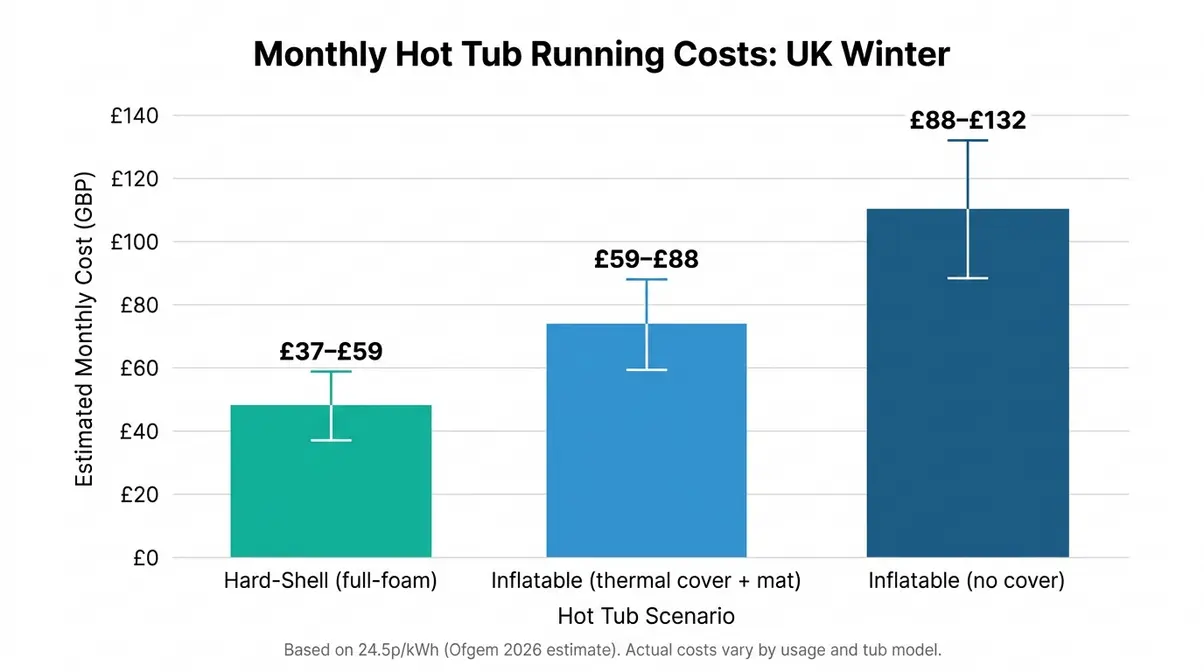
Running costs vary significantly by tub type. A well-insulated hard-shell hot tub typically costs £37–£59/month in winter based on current UK electricity rates of approximately 24.5p/kWh (Ofgem, 2026). An inflatable running without a cover can cost £88–£132/month — more than double. Adding a thermal cover and ground mat reduces inflatable costs to approximately £59–£88/month.
| Scenario | Estimated kWh/day | Est. Daily Cost (24.5p/kWh) | Est. Monthly Cost |
|---|---|---|---|
| Hard-shell (full-foam, 38°C, winter) | 5–8 kWh | £1.23–£1.96 | £37–£59 |
| Inflatable (no cover, 40°C, winter) | 12–18 kWh | £2.94–£4.41 | £88–£132 |
| Inflatable (thermal cover + ground mat) | 8–12 kWh | £1.96–£2.94 | £59–£88 |
These are estimates based on typical usage patterns and average UK winter conditions. Use the actual unit rate from your energy bill for precise calculations. For a deeper understanding of hot tub running costs and efficiency, including how pump wattage and thermostat settings affect your daily spend, our dedicated cost guide provides a full breakdown.
The Winter Efficiency Gap in practice is most visible across a full UK winter season. Over a five-month UK winter (November to March), the total difference between a hard-shell and an uninsulated inflatable can exceed £400. Running an uninsulated inflatable from November through March at the higher end of the cost range can mean spending £600–£660 purely on electricity. A well-insulated hard-shell over the same period costs £185–£295. Over five years, that differential funds most of the upfront price difference between the two tub types.
Adding a thermal cover and a purpose-built ground insulation mat to an inflatable can reduce its monthly cost by 20–40%, partially closing that gap. However, the ceiling on inflatable efficiency is lower than hard-shell by design — air-filled walls simply cannot match foam-filled cabinets in sustained cold. To explore the most energy-efficient hot tub models available in the UK, including hard-shell options that consistently achieve the lower end of the running cost range, our efficiency roundup covers current-generation models in detail.
Understanding the cost is one thing — knowing how to actively reduce it is what turns a winter hot tub from a luxury liability into an affordable pleasure.
Reducing Winter Energy Bills
If you’re determined to keep costs down without replacing your tub, these five strategies deliver the most impact. Combine them for the greatest saving — especially if you’re running an inflatable through a cold UK winter.
- Fit a quality thermal cover and use it every time. A hard cover with a minimum 100mm foam core is the single most cost-effective winter upgrade available. Never leave a hot tub uncovered in winter — even 30 minutes exposed to freezing air can add measurably to reheating costs. A cover that no longer fits snugly is no longer doing its job; replace it.
- Add a ground insulation mat beneath the tub. Cold ground — particularly concrete, paving slabs, or decking — conducts heat away from the base of an inflatable faster than cold air does from the sides. A purpose-built insulation mat placed under the tub creates a thermal barrier that many owners overlook. This is one of the cheapest and most effective upgrades for best inflatable hot tubs for winter use.
- Manage temperature smartly, not reactively. Don’t drop the temperature significantly when the tub is not in use during winter — reheating from cold costs more energy than maintaining temperature. For infrequent use (fewer than twice per week), dropping to 30°C is a reasonable compromise; for daily use, maintain at 37–38°C to avoid expensive reheat cycles. Browse top-rated blow-up hot tubs with energy-saving timer functions if temperature scheduling is a priority.
- Install a windbreak or shelter. Wind dramatically accelerates heat loss from hot tub covers and exposed water surfaces. A simple windbreak fence, garden wall, or pergola in an exposed UK garden can reduce heating demand noticeably. Manufacturers including Lay-Z-Spa and RotoSpa recommend sheltered positioning as a standard installation requirement for winter use.
- Consider an air source heat pump for hard-shell models. For hard-shell hot tubs with compatible plumbing, an air source heat pump can reduce heating energy use by 50–75% compared to a standard electric resistance heater, according to manufacturer data from leading UK suppliers. The upfront cost is significant, but the payback period at current UK electricity rates is typically two to four years for daily users.
If you’re running a Lay-Z-Spa or similar inflatable and focused on keeping costs down, combining strategies 1, 2, and 3 is the most effective approach available without replacing the tub entirely.
These are the criteria our team used to assess every hot tub’s winter credentials — from insulation specifications to real-world energy performance.
How We Evaluated
Our team assessed hot tubs for UK winter use against five criteria: insulation type (full-foam vs perimeter vs air-wall), anti-freeze technology, estimated monthly running costs at current UK energy rates, build quality and long-term durability, and value for money relative to winter performance. The UHOMEPRO Inflatable Hot Tub Spa Set was evaluated using publicly available product specifications and independent expert reviews sourced via writer_search, cross-referenced against community feedback from UK hot tub owners.
Frequently Asked Questions
⚕️ Medical Disclaimer: The following health-related answers are for general information only. Consult a qualified medical professional before using a hot tub if you have any health condition, including neuropathy, cardiovascular conditions, or pregnancy.
Why Are Costco Tubs So Cheap?
Costco hot tubs are priced competitively because they are primarily sold through a retail warehouse model with lower margins, and the stocked models tend to be entry-level or mid-range hard-shell units. They typically feature perimeter rather than full-foam insulation, which reduces manufacturing cost but increases long-term running costs in cold weather. While build quality is generally acceptable for occasional use, they sit closer to the inflatable end of the Winter Efficiency Gap and are not ideal for year-round UK winter use.
Why Limit Tub Time to 20 Mins?
The 20-minute guideline exists because prolonged immersion in water above 38°C raises core body temperature to a level that can cause heat exhaustion. The Mayo Clinic recommends limiting hot tub sessions to 15–20 minutes. You should exit immediately if you feel dizzy, lightheaded, or nauseous. In winter, the contrast between cold air and hot water can make it harder to notice rising body temperature, making the time limit more critical. Children, pregnant women, and people with cardiovascular conditions face higher risk and should follow safe hot tub soaking times guidance from a medical professional.
Hot Tubs and Neuropathy/Sinuses
People with peripheral neuropathy should exercise particular caution with hot tubs, as reduced sensation in the extremities makes it harder to detect dangerously high water temperatures. Research from the NIH (2026) suggests hydrotherapy may assist in managing chronic pain conditions and improving blood flow (scientific evidence on hydrotherapy benefits, NIH, 2026), but this does not override individual risk factors. For sinus conditions, the steam generated in cold outdoor air can provide temporary relief for some users, though there is no clinical consensus on therapeutic benefit. Always consult your GP before using a hot tub if you have neuropathy, cardiovascular disease, or any condition affecting circulation.
Avoiding Hot Tub Rash in Winter
*Hot tub folliculitis — an inflammation of the hair follicles caused by Pseudomonas aeruginosa bacteria — is a risk in any poorly maintained hot tub, and the risk does not reduce in winter.* The NHS advice on hot tub folliculitis confirms that warm, stagnant water with inadequate sanitiser levels is the primary cause, while CDC guidelines on hot tub rash recommend maintaining pH between 7.2 and 7.8 and free chlorine levels of 3–5 ppm (CDC, 2026). Because colder ambient temperatures can affect chemical balance more quickly, you must test water chemistry at least twice per week and shock-dose after every use.
Conclusion
For UK buyers navigating a winter hot tub purchase, finding the best hot tubs for winter UK backyards means choosing the right insulation type to determine your energy bills for years to come. A well-insulated hard-shell hot tub running at £37–£59/month sits at one end of The Winter Efficiency Gap; an uninsulated inflatable plugged in constantly sits at the other, costing more than twice as much across the same season.
The UHOMEPRO Inflatable Hot Tub Spa Set is a genuinely well-specified entry-level option — 130 jets, a practical square format, and a portable design make it one of the more capable inflatables at its price point. For sheltered gardens and mild UK winters, combined with a quality thermal cover and ground mat, it delivers real value.
If you’re ready to choose, start with your usage frequency and garden exposure. Daily winter users in exposed UK gardens should prioritise full-foam hard-shell models. Occasional users with sheltered spaces will find an inflatable like the UHOMEPRO a practical and affordable starting point for winter soaking — just go in with a clear-eyed view of the running costs involved.