


Table of Contents - Can You Get STDs From a Hot Tub? The Science Explained
This blog post may contain affiliate links. As an Amazon Associate I earn from qualifying purchases.
Medical Disclaimer: This article is for informational purposes only and does not constitute medical advice, diagnosis, or treatment. Always consult a qualified healthcare professional with any questions you may have regarding a medical condition or concern. If you believe you have been exposed to a sexually transmitted infection, contact your doctor or a sexual health clinic immediately.
No — you cannot get an STD from hot tub water. The science behind why is both reassuring and genuinely worth understanding. That said, the question, “can you get STDs from a hot tub,” is one of the most-searched health questions online, and the anxiety behind it is completely valid.
Mistaking a common hot tub rash for an STD symptom, or not understanding the real risks of sex in a hot tub, can lead to either unnecessary panic or misplaced confidence — both with real consequences. Searches for this topic have grown roughly 24% year over year, which tells you that millions of people share exactly this concern.
In this medically reviewed guide, you’ll learn exactly why hot tub water cannot transmit STDs, what can actually make you sick, and how to use any hot tub safely. We cover hot tubs, pools, natural hot springs, toilet seats, and a handful of other persistent myths — all in one place.
If you are wondering, can you get STDs from a hot tub, the answer is definitively no — STD-causing pathogens are too fragile to survive outside the body, especially in chlorinated water. This is called The Pathogen Fragility Principle.
- STD transmission requires direct mucous membrane or skin-to-skin sexual contact — not water exposure
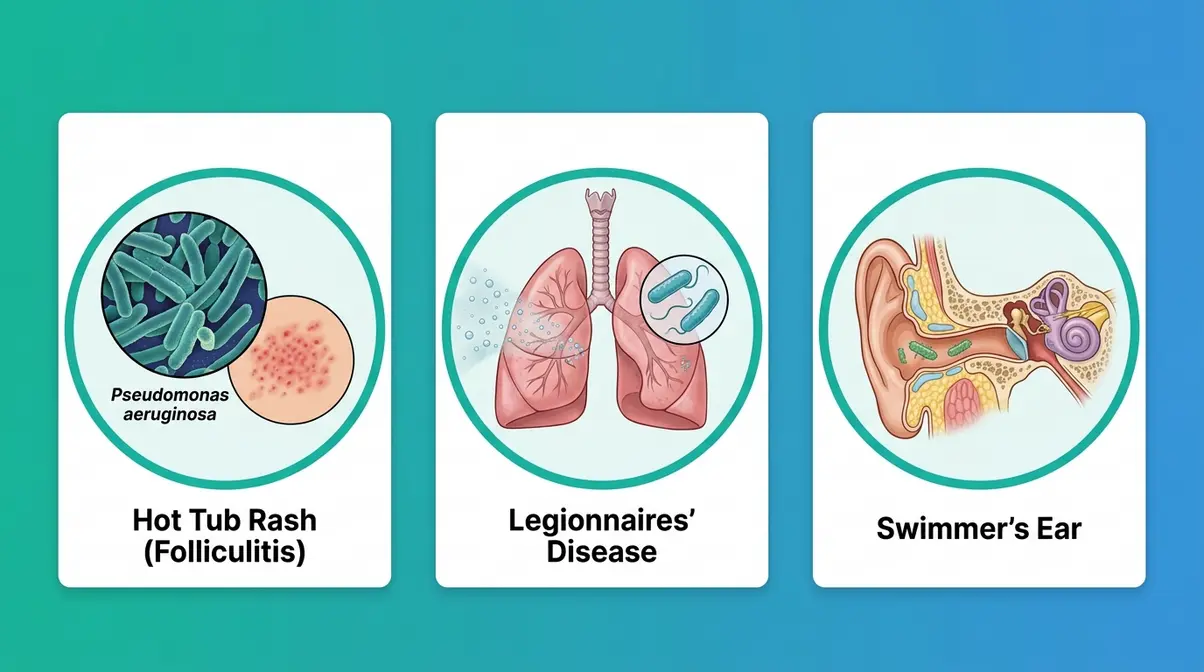
- The real hot tub risk is bacterial infections like hot tub rash (Pseudomonas folliculitis) and Legionnaires’ disease
- Sex in a hot tub carries full STD risk — chlorinated water washes away lubrication, causing micro-tears
- Toilet seats, mosquitoes, and sweat cannot transmit STDs — the same Pathogen Fragility Principle applies
- Natural hot springs carry different and more serious risks than chlorinated hot tubs
Can You Get an STD From a Hot Tub or Pool?
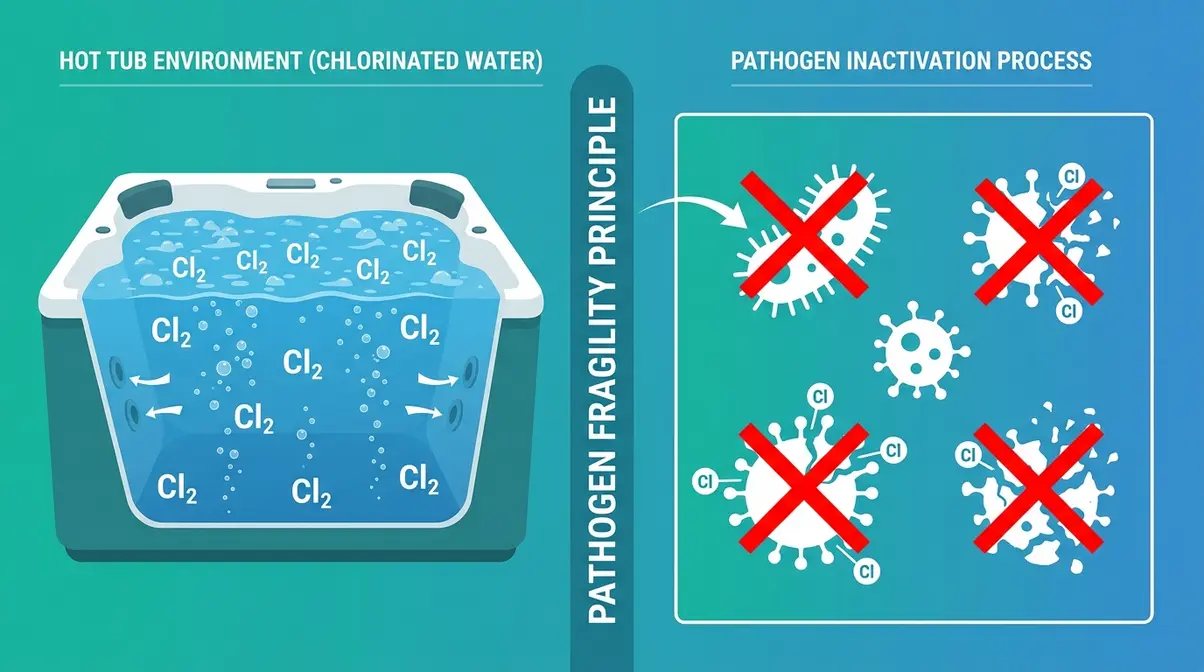
No — you cannot get a sexually transmitted infection from hot tub or pool water. Sexually transmitted infections, or STIs, require direct mucous membrane contact or skin-to-skin sexual contact to transmit. Hot tub water, even if shared with many people, does not provide the conditions any STD-causing pathogen needs to survive, let alone infect a new host. The same principle applies if you’re wondering whether you can get an STD from a pool.
“Not only will they survive, but the high temperatures present in hot tubs and jacuzzis make the perfect breeding grounds for STDs and STIs to…”
This belief is understandable — and completely wrong. The science inverts the assumption entirely. High temperatures in hot tubs, combined with chlorine or bromine disinfectants, actually accelerate pathogen death rather than support pathogen survival. Understanding why requires a brief look at what STD-causing organisms actually need to live.
Why STD Pathogens Can’t Survive in Hot Tub Water
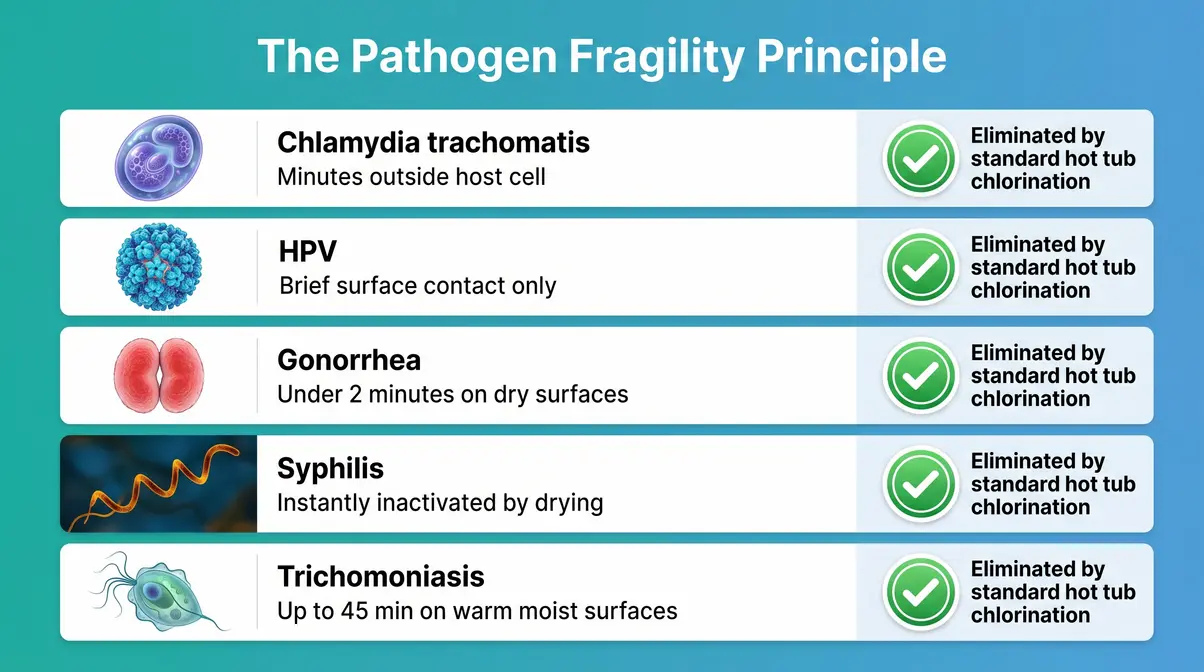
This brings us to a core concept that explains every hot tub and toilet seat myth at once: The Pathogen Fragility Principle. STD-causing pathogens are biologically fragile organisms that require a very narrow set of conditions to survive and transmit — specifically, direct mucous membrane contact, sustained body temperature (around 37°C/98.6°F), and a protected, moist host environment. Remove any one of these conditions and transmission becomes biologically impossible.
When asking, can you get STDs from a hot tub, it helps to look at the specific organisms involved. If you are specifically wondering if you can you get herpes from a hot tub, the exact same biological rules apply:
- Chlamydia trachomatis, the bacterium that causes chlamydia, cannot survive outside living human cells. It is an obligate intracellular pathogen, meaning it requires a host cell to replicate. Exposure to chlorinated water destroys its cellular envelope almost immediately.
- Human papillomavirus, or HPV, requires direct epithelial cell contact to establish infection. While HPV is more environmentally resilient than most STI pathogens, the CDC notes that transmission via water has not been documented in any peer-reviewed study.
- Trichomoniasis, an STI caused by the parasite Trichomonas vaginalis, can survive briefly on moist surfaces — but chlorine concentrations in a properly maintained hot tub eliminate it within seconds. The CDC’s healthy swimming guidance confirms that standard disinfection levels are effective against this and similar organisms.
- Neisseria gonorrhoeae, the bacterium behind gonorrhea, is exceptionally fragile outside the body. It dies rapidly when exposed to air, temperature fluctuations, or any chemical disinfectant.
- Treponema pallidum, which causes syphilis, is so environmentally sensitive that it cannot survive even brief exposure to drying or mild temperature change — let alone a hot tub maintained at 38–40°C with active chemical treatment.
According to the World Health Organization), STIs are transmitted through sexual contact involving the exchange of bodily fluids or direct genital, anal, or oral contact. Waterborne transmission is not a documented route for any classical STI.
STD-causing pathogens cannot survive in properly chlorinated hot tub water — most die within seconds of exposure to standard disinfection levels. The Pathogen Fragility Principle is not a reassuring simplification; it is the mechanistic reality of how these organisms function.
What About Having Sex in a Hot Tub?
Here is where the answer changes, and this distinction matters enormously. While the water itself cannot transmit STIs, having sex in a hot tub carries the full range of standard STI transmission risks — and may actually increase them compared to sex outside the water.
The mechanism is straightforward: chlorinated water strips away the body’s natural vaginal and anal lubrication far more aggressively than air does. Without adequate lubrication, sexual activity causes microscopic skin tears (micro-abrasions in the mucosal tissue) that create entry points for pathogens. If one partner is already infected, those micro-tears significantly increase the likelihood of transmission.
There is also a condom failure dimension. Hot tub water degrades latex condoms at an accelerated rate — heat and chemical exposure weaken the material, increasing the risk of breakage during use. Non-latex polyurethane condoms are somewhat more resistant, but no condom is tested for performance in hot tub conditions.
In practical terms: if you have sex in a hot tub with a partner who has an STI, you are not protected by the water. You face the same — and potentially elevated — transmission risk as sex anywhere else. According to Harvard Health Publishing, the chemical and thermal environment of a hot tub is incompatible with reliable contraceptive protection.
The Damp Towel Loophole
This is a transmission vector that virtually every competitor article misses entirely, and it deserves direct attention.
While STI pathogens cannot survive in hot tub water, Trichomonas vaginalis — the parasite responsible for trichomoniasis — has demonstrated a limited ability to survive on moist, warm surfaces for up to 45 minutes under certain conditions (studies published in Sexually Transmitted Infections journal have documented this). Similarly, some strains of HPV have shown brief surface survival on warm, damp material.
A damp towel shared immediately after hot tub use — while still warm and wet — represents a theoretical, low-probability transmission vector for these two specific pathogens. This is not a reason for significant alarm, but it is a reason to follow a simple rule: never share towels in a hot tub environment, particularly if you or another user has a known infection. The risk is small but non-zero, and it costs nothing to avoid.
This is one of the edge-case scenarios that distinguishes informed sexual health awareness from blanket reassurance. The Pathogen Fragility Principle holds — but “fragile” does not always mean “instantly destroyed.”
Can You Get HPV in a Hot Tub?
HPV (human papillomavirus) cannot be transmitted through hot tub or pool water. HPV requires direct skin-to-skin or mucosal contact to transmit — typically during sexual activity. While HPV is more environmentally resilient than some other STI pathogens, no peer-reviewed study has documented waterborne HPV transmission. The one nuance: sharing damp towels immediately after hot tub use represents a theoretical (very low probability) surface transmission scenario for HPV, which is why towel-sharing in shared spa environments is best avoided.
What Does “STD” Mean on a Hot Tub?
“STD” on a hot tub typically stands for “standard” — a product specification label, not a health reference. It appears on equipment ratings, pump specifications, or temperature control settings, indicating that a component meets standard manufacturing specifications. It has no connection to sexually transmitted diseases. If you saw this on a hot tub panel or product listing and were confused, that is the explanation.
Hot Tubs vs. Pools: Is There a Difference?
From an STI transmission standpoint, no meaningful difference exists between hot tubs and swimming pools. The same Pathogen Fragility Principle applies: properly chlorinated pool water cannot sustain any STI-causing pathogen long enough to infect a new host. If you’ve been wondering whether you can get an STD from swimming in a pool or lake, the answer for chlorinated pools mirrors the hot tub answer.
The differences that do matter are in bacterial and non-STI infection risk. Hot tubs operate at higher temperatures (37–40°C), which accelerates the breakdown of chlorine, meaning disinfectant levels can drop more quickly than in a cool pool. A hot tub with inadequate chlorine maintenance is therefore more likely to harbor Pseudomonas aeruginosa (the bacterium behind hot tub rash) than a well-maintained pool. Temperature-sensitive organisms like Legionella also thrive specifically in the warm water range of hot tubs and spas — not in cooler pools.
For open water like lakes and rivers, the calculus is different again. Natural bodies of water carry their own microbial ecosystems and are not disinfected. While STI transmission via lake water remains undocumented, exposure to bacteria like E. coli, intestinal parasites, and other waterborne pathogens is a genuine risk in unregulated natural water — a topic explored further in the natural hot springs section below.
The Real Infections You Can Catch From a Hot Tub
Hot tubs are not risk-free environments — they just don’t carry the risks most people fear. The genuine health threats from shared hot tubs are bacterial and respiratory, not sexually transmitted. Understanding these real risks helps you make informed decisions rather than avoiding hot tubs out of misplaced concern.
Medical professionals consistently advise that properly maintained hot tubs are safe for healthy adults. The key phrase is “properly maintained.” When chemical levels drift out of range, hot tubs become effective incubators for specific, well-documented pathogens.
Hot Tub Rash vs. STD Symptoms: How to Tell the Difference
One of the most common post-hot-tub anxieties is noticing a rash or skin irritation and fearing it signals an STD. Across sexual health communities, this confusion between hot tub folliculitis and STD-related skin symptoms is consistently one of the top reported concerns.
Hot tub rash — clinically called Pseudomonas folliculitis — is caused by Pseudomonas aeruginosa, a bacterium that thrives in warm water when chlorine levels fall below the CDC-recommended range of 3–5 ppm for hot tubs. It is not an STI, cannot be sexually transmitted, and is entirely unrelated to sexual activity.
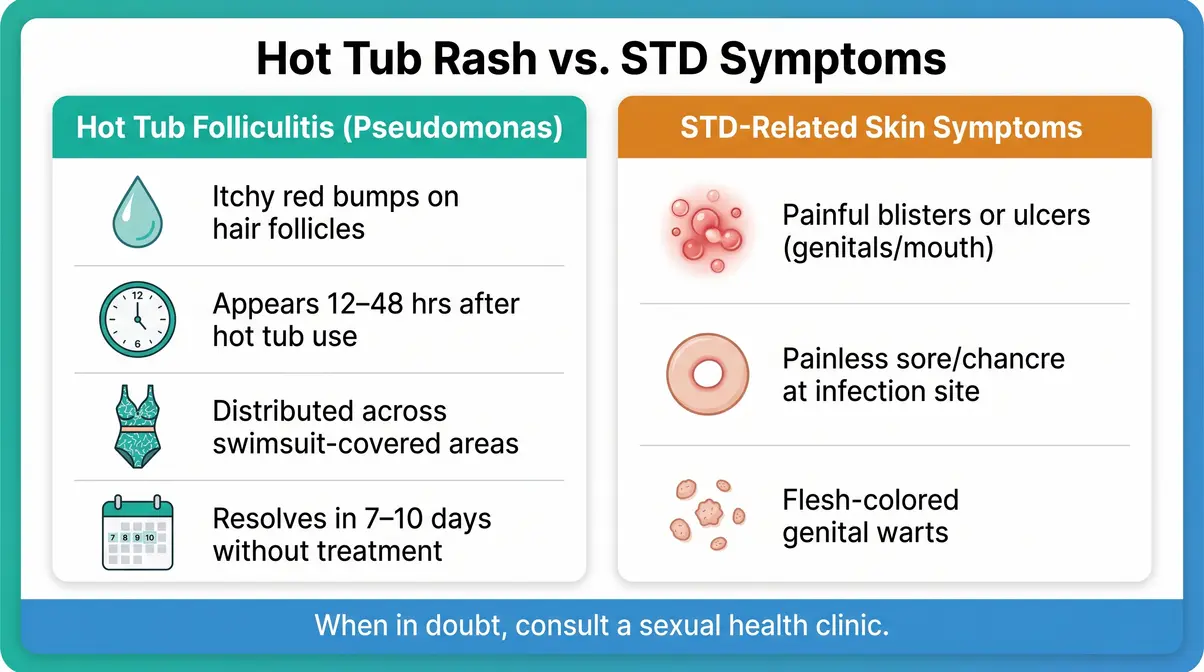
The key distinguishing features:
| Feature | Hot Tub Folliculitis | STD Skin Symptoms |
|---|---|---|
| Timing | 12–48 hours after hot tub use | Days to weeks after sexual exposure |
| Location | Where swimsuit covered skin | Genital, anal, or oral areas primarily |
| Appearance | Red, itchy bumps around hair follicles | Blisters, sores, ulcers, or warts |
| Pain level | Itchy, mild discomfort | Often painful or painless ulcers (syphilis) |
| Self-resolution | Usually clears in 7–10 days | Does not self-resolve; requires treatment |
If your symptoms appeared 12–48 hours after hot tub use, are distributed across swimsuit-covered areas, and consist of itchy red follicular bumps, hot tub rash is the almost certain explanation. If symptoms appear on genitals, persist, or include painful sores or blisters, consult a sexual health clinic promptly.
Legionnaires’ Disease: The Respiratory Risk You Need to Know
Legionnaires’ disease is a severe form of pneumonia caused by Legionella pneumophila, a bacterium that colonizes warm water systems — including hot tubs, cooling towers, and decorative fountains. Unlike Pseudomonas folliculitis, Legionnaires’ disease is not a skin condition; it is a serious respiratory illness contracted by inhaling aerosolized water droplets containing the bacteria.
Hot tubs generate significant aerosol mist, making them one of the most commonly identified sources of Legionella outbreaks. The CDC reports that hot tubs and spas are implicated in a substantial proportion of Legionella outbreaks associated with recreational water each year in the United States. Symptoms — high fever, cough, shortness of breath, muscle aches — typically appear 2–10 days after exposure.
Legionella thrives specifically in water temperatures between 25°C and 45°C (77–113°F), which overlaps almost exactly with standard hot tub operating temperatures. Proper maintenance — including regular water changes, adequate biocide levels, and correct pH balance — is the primary defense. The CDC’s healthy swimming resources provide current maintenance standards for residential and commercial hot tub operators.
Individuals with weakened immune systems, chronic lung conditions, or those over age 50 face elevated risk and should exercise particular caution around poorly maintained spa facilities.
Other Hot Tub Infections
Beyond folliculitis and Legionnaires’ disease, hot tubs can harbor a small number of other opportunistic pathogens when maintenance lapses:
- Swimmer’s ear (otitis externa): Pseudomonas or Staphylococcus bacteria enter the ear canal during submersion, causing pain, itching, and discharge. Tilting your head to drain water after use reduces risk significantly.
- Urinary tract infections (UTIs): Prolonged soaking in improperly treated water can introduce bacteria near the urethra, particularly in individuals with anatomical susceptibility. Showering after hot tub use helps reduce this risk.
- Cryptosporidiosis: The parasite Cryptosporidium is highly chlorine-resistant and can survive in properly treated water for days. It spreads via fecal-oral contamination — a risk in any shared water environment if hygiene standards are poor.
How to Spot a Poorly Maintained Hot Tub
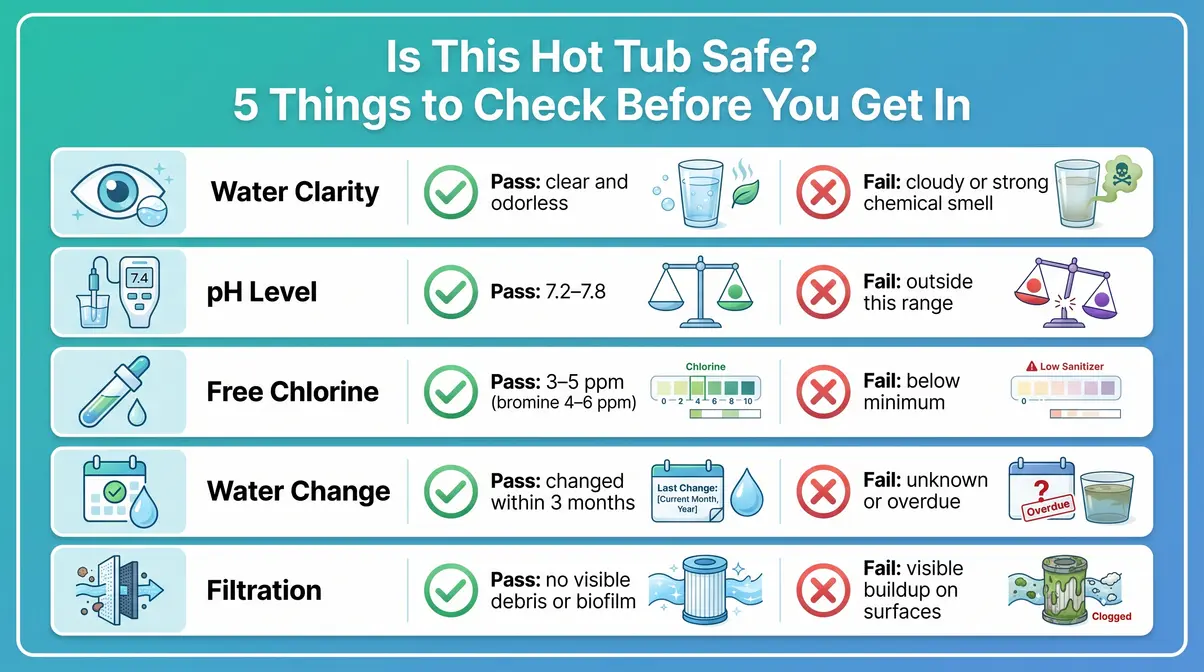
The single most effective way to reduce your hot tub infection risk is to assess water quality before you get in. A well-maintained hot tub should have:
- Clear, odorless water: Cloudy water or a strong chemical smell (paradoxically, strong chlorine odor often indicates insufficient free chlorine — the smell comes from chloramines, a byproduct of chlorine reacting with contaminants)
- pH between 7.2 and 7.8: Outside this range, disinfectants become significantly less effective
- Free chlorine of 3–5 ppm (or bromine of 4–6 ppm): Use a test strip if you manage a private tub; for commercial facilities, ask staff when the water was last tested
- Recent water change: Commercial facilities should change hot tub water at least every 3 months; high-use spas more frequently
- Functioning filtration: Visible debris or biofilm on surfaces is a red flag
Can You Get an STD From a Toilet Seat?
The toilet seat question is arguably the most persistent STI myth in public health — and the answer is the same principle at work. No, you cannot get chlamydia, gonorrhea, syphilis, or any classical STI from a toilet seat. The Pathogen Fragility Principle applies here just as it does to hot tub water, and the mechanism of impossibility is even clearer.
Toilet seats are hard, dry, non-mucosal surfaces. STI-causing pathogens require direct mucous membrane contact or skin-to-skin contact to transmit. Much like the concern over getting herpes from toilet seats or towels, the transmission of chlamydia, gonorrhea, or syphilis via these surfaces is biologically implausible. Even if a pathogen were deposited on a toilet seat surface — which is biologically unlikely given their rapid die-off outside the body — it would need to survive long enough on a dry surface and then make direct contact with a susceptible mucous membrane in the next user. This chain of events does not occur in reality.
Why Chlamydia, Gonorrhea, and Syphilis Can’t Spread This Way
Each of the three most commonly referenced STIs in this context has specific biological characteristics that make toilet seat transmission essentially impossible:
Chlamydia (Chlamydia trachomatis) is an obligate intracellular bacterium — it cannot replicate outside a living host cell. It begins to lose viability within minutes of leaving the body and cannot survive the dry, ambient-temperature environment of a toilet seat. Mayo Clinic confirms that chlamydia transmission requires direct sexual contact.
Gonorrhea (Neisseria gonorrhoeae) is among the most environmentally fragile of all bacterial pathogens. Research has consistently found that it survives fewer than two minutes on hard, dry surfaces at room temperature. The bacterium requires a warm, moist mucosal environment to maintain viability — conditions a toilet seat simply does not provide.
Syphilis (Treponema pallidum) is so sensitive to environmental conditions that it was historically described as unable to survive outside the human body at all. It is inactivated almost instantly by drying, mild temperature changes, or soap. Johns Hopkins Medicine notes that syphilis transmission requires direct contact with an active sore (chancre), typically during sexual activity.
According to the WHO’s STI fact sheet), the primary transmission routes for all major STIs are sexual contact, blood-to-blood contact (for HIV and hepatitis), and mother-to-child during birth — not environmental surfaces.
The One Scenario Where Risk Is Theoretically Possible
Intellectual honesty requires acknowledging the narrow edge case. Trichomonas vaginalis — the parasite behind trichomoniasis — has been shown in laboratory conditions to survive briefly on warm, moist surfaces. If a toilet seat were warm, wet, and used in immediate succession, a theoretical (though practically negligible) transmission pathway exists for this specific pathogen.
This scenario requires conditions that almost never align in the real world: the surface must be warm and wet, the exposure must happen within minutes, and the next user must have direct genital contact with the contaminated area. Public health researchers consistently classify this risk as negligible for practical purposes.
The important takeaway is not that toilet seats are dangerous, but that trichomoniasis is somewhat less fragile than other STI pathogens — a nuance worth knowing. If you have concerns about a specific exposure, a sexual health clinic can provide a simple, accurate test.
Are Natural Hot Springs Safe?
Natural hot springs occupy a fundamentally different risk category than chlorinated hot tubs. While the question of whether can you get STDs from a hot tub resolves quickly in favor of reassurance, natural hot springs demand a more cautious assessment — because they are untreated, geologically variable, and home to organisms that have no equivalent in a backyard spa.
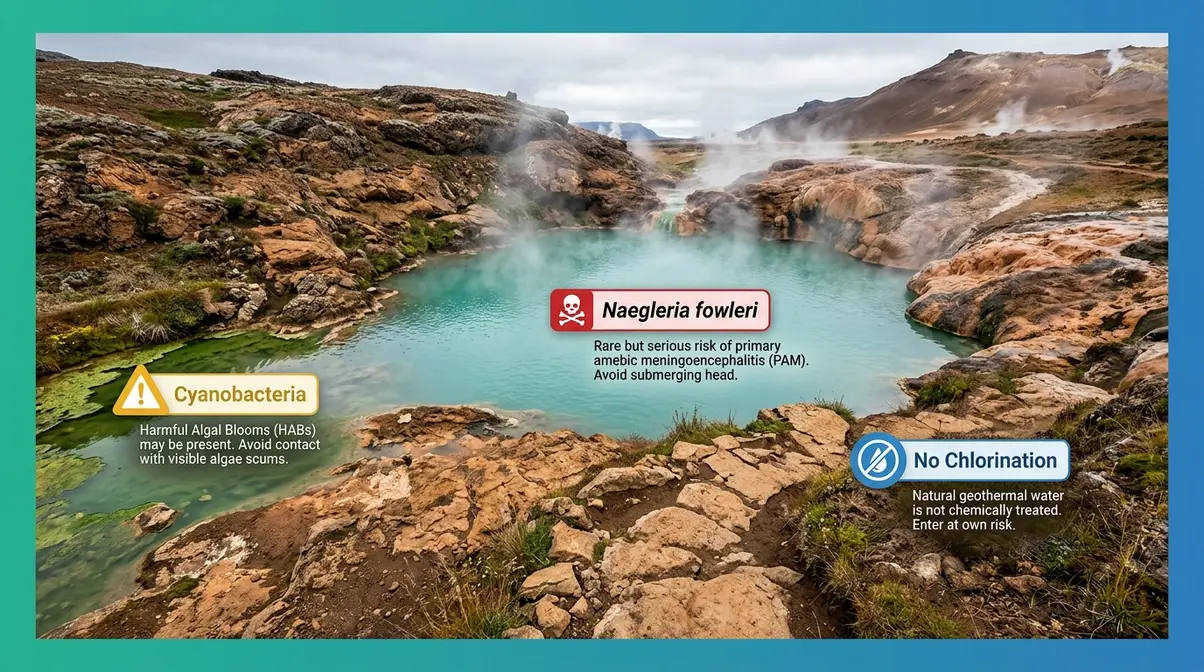
The absence of chemical disinfection is the defining factor. Without chlorine or bromine, natural hot springs cannot neutralize the microbial populations they naturally harbor. Some of those populations are harmless. Others are not.
The Unique Dangers of Untreated Hot Spring Water
The most serious risk associated with natural hot springs is Naegleria fowleri — colloquially known as the “brain-eating amoeba.” This single-celled organism thrives in warm freshwater environments, including natural hot springs, rivers, and lakes, at temperatures between 25°C and 46°C. According to the CDC, Naegleria fowleri causes primary amebic meningoencephalitis (PAM), a rare but almost uniformly fatal brain infection.
Infection occurs when water containing the amoeba enters the nose — typically during activities involving head submersion or forceful water entry. It cannot be contracted by drinking contaminated water or through skin contact. PAM is extremely rare (the CDC records an average of 3 cases per year in the United States), but the case fatality rate exceeds 97%.
Beyond Naegleria, natural hot springs may also contain:
- Geothermal bacteria specific to high-temperature, high-mineral environments. While some are harmless thermophiles, others are not fully characterized and can cause opportunistic infections in open wounds.
- Cyanobacteria (blue-green algae) in springs where temperature and mineral content support their growth. When these algal blooms occur, they produce cyanotoxins that are highly harmful to the liver, skin, and nervous system. Swallowing this water or even inhaling the aerosolized mist can lead to severe gastrointestinal illness, skin rashes, and neurological symptoms. Unlike a chlorinated hot tub where chemical balancers actively destroy these blooms, a natural hot spring has no such defenses.
- Elevated mineral concentrations (arsenic, mercury, sulfur compounds) in geothermally active areas that can cause chemical irritation or, with heavy exposure, systemic toxicity.
The critical safety rule for natural hot springs: do not submerge your head, particularly in warm freshwater springs in regions where Naegleria fowleri has been documented.
Hot Springs vs. Hot Tubs: Side-by-Side Risk Comparison
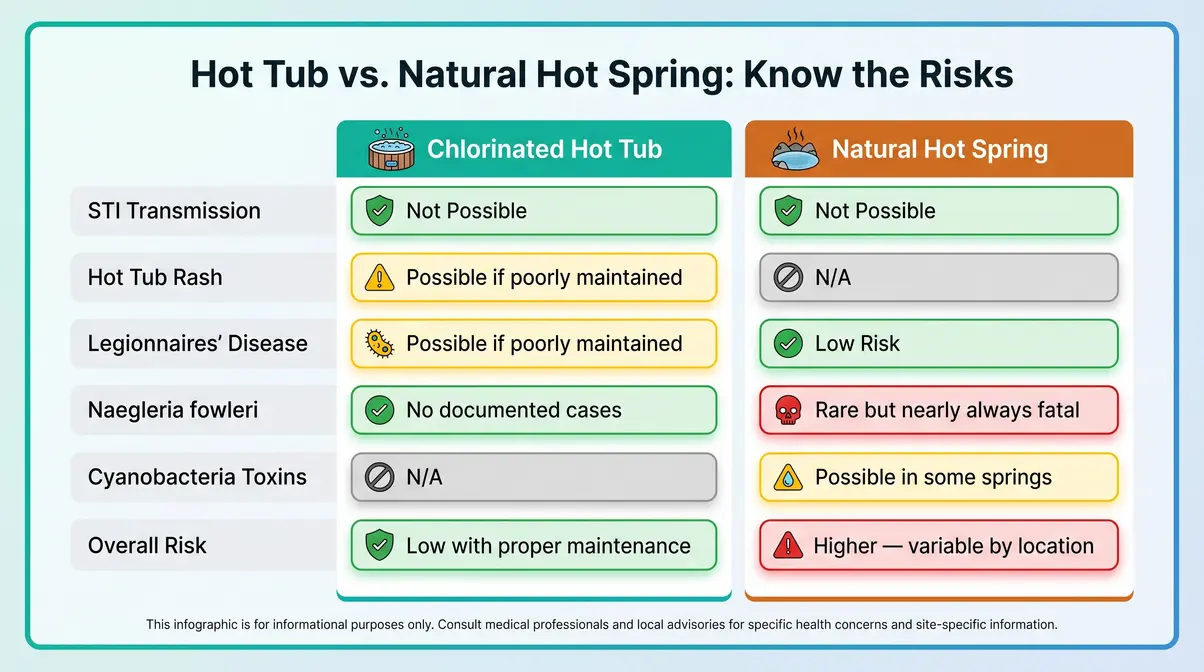
| Risk Factor | Chlorinated Hot Tub | Natural Hot Spring |
|---|---|---|
| STI transmission | Not possible (treated water) | Not possible (same pathogen biology) |
| Hot tub rash (Pseudomonas) | Possible if poorly maintained | Not applicable (different ecosystem) |
| Legionnaires’ disease | Possible if poorly maintained | Low risk (natural aeration) |
| Naegleria fowleri | No documented cases | Rare but documented; nearly always fatal |
| Cyanobacteria toxins | Not applicable | Possible in some springs |
| Chemical/mineral exposure | Controlled (chlorine, pH tested) | Variable; some springs have elevated arsenic/sulfur |
| Overall risk profile | Low with proper maintenance | Higher; variable by location |
Other STD Myths Debunked
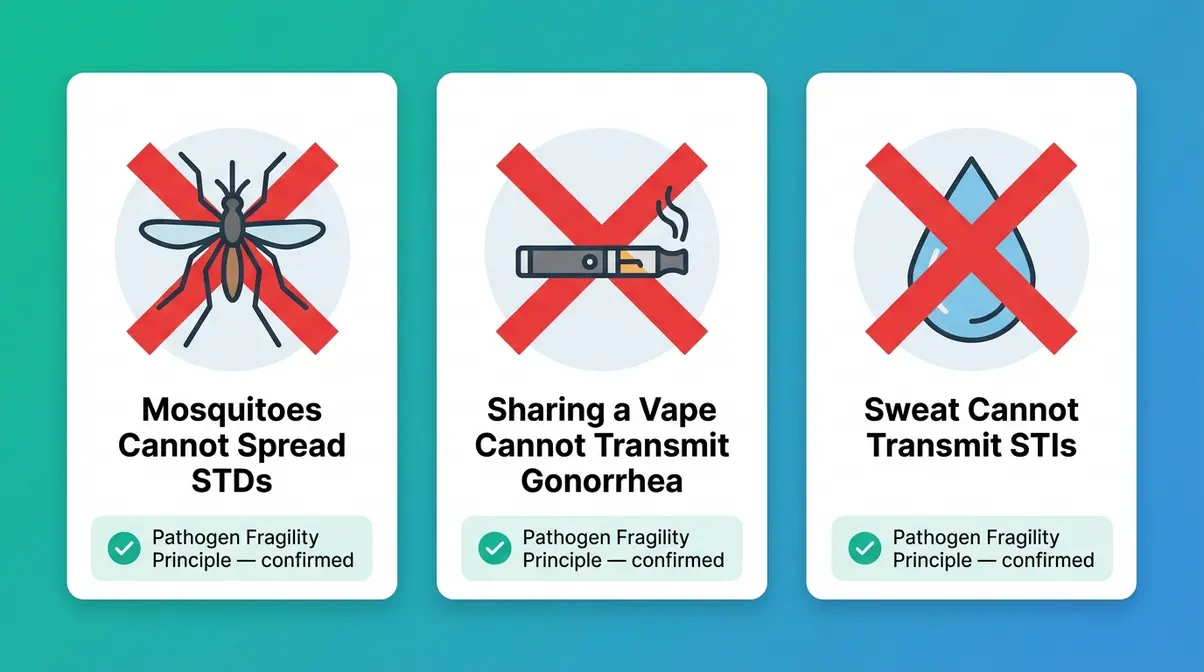
The Pathogen Fragility Principle extends well beyond hot tubs. A cluster of persistent myths suggests that STIs can spread through environmental or incidental contact — sharing a vape, being bitten by a mosquito, or sweating with an infected person. None of these transmission routes are scientifically supported, and understanding why reinforces the same core biology.
Can You Get Gonorrhea From Sharing a Vape?
Gonorrhea (Neisseria gonorrhoeae) is transmitted through mucosal contact with infected secretions — typically via vaginal, anal, or oral sex. The question of vape-sharing typically arises because oral gonorrhea (pharyngeal gonorrhea) is a real and increasingly common presentation.
Sharing a vape device does involve contact with saliva, but the transmission risk for gonorrhea via shared vaping devices is considered negligible by sexual health clinicians. N. gonorrhoeae requires direct mucosal contact and survives poorly on surfaces or in saliva alone. This is similar to anxieties about getting herpes from kissing or sharing items, where the virus requires specific conditions to spread. There are no documented cases of gonorrhea transmission via a shared vape or similar device. That said, other infections — including oral herpes (HSV-1) and respiratory illnesses — can theoretically spread via shared mouthpieces, so hygiene still matters.
Can Mosquitoes Spread STDs?
No. Mosquitoes cannot transmit HIV, syphilis, gonorrhea, chlamydia, herpes, or HPV. This question arises most often in relation to HIV, and the answer has been definitively established by decades of epidemiological research.
When a mosquito bites an infected person, it does not inject blood — it injects saliva. HIV and other STI pathogens are not transmitted through mosquito saliva and do not replicate within mosquito biology. The WHO and CDC both confirm that there is no evidence of mosquito-borne transmission for any classical STI. Mosquitoes do transmit other serious pathogens (malaria, dengue, Zika), but STIs are not among them.
Can You Get an STD From Sweat?
No. STI-causing pathogens are not present in sweat in concentrations sufficient for transmission, and sweat does not provide the mucosal environment required for pathogen viability. HIV, for instance, is present in sweat only at concentrations far below any known infectious threshold. Herpes simplex virus (HSV) requires direct contact with an active sore or mucosal surface — casual skin contact involving sweat does not constitute a transmission pathway.
The consistent thread across all three of these myths is the Pathogen Fragility Principle: STI pathogens require specific biological conditions to survive and infect. Environmental exposure — whether via water, insects, or sweat — does not replicate those conditions.
Should You Use a Hot Tub When You’re Sick?
The short answer is no — and the reasons are both personal and communal. Using a hot tub while unwell can worsen your own condition and expose other users to whatever you’re carrying. People with chronic conditions often wonder if can type 1 diabetics go in hot tubs safely; always consult a physician regarding pre-existing health concerns before using a spa.
Hot Tub Use With a Fever
Using a hot tub when you have a fever is medically inadvisable. A fever is already your body raising its core temperature to fight infection; adding external heat stress from hot tub immersion (typically 38–40°C) can push core body temperature to dangerous levels, causing dehydration, dizziness, and cardiovascular strain.
The CDC’s healthy swimming guidelines recommend that anyone with a fever, gastrointestinal illness, or open wounds avoid shared water facilities entirely. Beyond your own safety, a fever often signals an active infection — bacterial or viral — that can be shed into shared water, increasing risk to other users. If you have a fever, rest and hydration are far better choices than spa time.
For a comprehensive guide to fever-specific hot tub safety, including temperature thresholds and recovery timelines, see our detailed resource on whether you should go in a hot tub with a fever.
Hot Tub Use With Pneumonia or Respiratory Illness
Respiratory illness and hot tub use are a particularly poor combination. The warm, humid aerosol environment of a hot tub actively stresses the respiratory system — the opposite of what recovering lung tissue needs. For anyone recovering from pneumonia, bronchitis, or a severe respiratory virus, hot tub mist can irritate inflamed airways and prolong recovery.
There is also the Legionella dimension: immunocompromised individuals and those with existing lung conditions face significantly elevated risk of Legionnaires’ disease from hot tub aerosol exposure. Medical professionals advise waiting until you are fully recovered from any respiratory illness — including COVID-19 — before returning to shared hot tub environments.
When to See a Doctor
This guide provides general health information grounded in current medical evidence. It does not replace a clinical assessment, and there are specific situations where contacting a doctor or sexual health clinic is the right next step — not tomorrow, but promptly.
Common Pitfalls to Avoid
- Self-diagnosing a hot tub rash as an STI (or vice versa): The symptom comparison table in this guide is a starting point, not a diagnostic tool. If you are genuinely uncertain whether a skin symptom is folliculitis or something else, a clinician can provide a definitive answer quickly and without judgment.
- Assuming you’re protected during sex in a hot tub: The water provides no barrier to STI transmission. If you’re having sex in a hot tub with a new partner, the same safer-sex practices that apply anywhere else apply here — with the added awareness that condom reliability is reduced in hot water.
- Dismissing respiratory symptoms after a spa visit: Mild cough and fatigue 2–10 days after using a hotel or spa hot tub should prompt a conversation with your doctor, particularly if you are over 50 or immunocompromised. Legionnaires’ disease is treatable when caught early.
When to Choose a Sexual Health Clinic
You should contact a sexual health clinic or your doctor if:
- You notice new genital sores, blisters, ulcers, or unusual discharge within days to weeks of sexual activity (in or out of a hot tub)
- A skin rash appears in the genital area and does not match the folliculitis pattern (swimsuit-covered areas, 12–48 hours post-hot-tub, follicular appearance)
- You have had unprotected sex with a new partner and have concerns about STI exposure
- You develop high fever, severe cough, or shortness of breath within 10 days of using a spa or hot tub facility
When to Seek Expert Help
Sexual health testing is confidential, fast, and widely available. Most STIs are either curable or highly manageable with early treatment. The anxiety of not knowing is almost always worse than the process of finding out. If you are in the United Kingdom, your sexual health service can provide free testing and advice. In the United States, the CDC’s GetTested tool locates nearby clinics by zip code.
Frequently Asked Questions
What infections can you actually catch from a hot tub?
The most common hot tub infections are bacterial, not sexually transmitted. Hot tub folliculitis (caused by Pseudomonas aeruginosa) produces an itchy rash on skin covered by a swimsuit, appearing 12–48 hours after use. Legionnaires’ disease — a serious pneumonia caused by Legionella bacteria — can be contracted by inhaling hot tub mist. Swimmer’s ear and urinary tract infections are also possible in poorly maintained water. None of these are sexually transmitted infections (STIs).
Can chlamydia spread in pool water?
No — chlamydia cannot spread in pool or hot tub water. Chlamydia trachomatis is an obligate intracellular pathogen, meaning it cannot survive outside a living host cell. Exposure to chlorinated water destroys it almost instantly. The CDC confirms that standard pool and hot tub disinfection is effective against this bacterium. Chlamydia transmission requires direct sexual contact — vaginal, anal, or oral.
Can an STI spread in a swimming pool?
No STI has been documented to spread via swimming pool water. The same Pathogen Fragility Principle that applies to hot tubs applies to pools: STI-causing pathogens cannot survive in properly chlorinated water. The WHO confirms that sexually transmitted infections require sexual contact — direct exchange of bodily fluids or mucosal contact — to transmit. Swimming pools carry their own health considerations (cryptosporidiosis, E. coli from poor hygiene), but STI transmission is not among them.
Can you go in a hot tub with a fever?
No — using a hot tub with a fever is medically inadvisable. A fever already raises your core body temperature; adding external heat from a hot tub (typically 38–40°C) risks dangerous overheating, dehydration, and cardiovascular strain. The CDC recommends that anyone with a fever avoid shared water facilities. There is also a public health consideration: a fever often signals an active infection that can be shed into shared water, posing risk to other users.
What are 5 signs of chlamydia?
Chlamydia is often called a “silent” infection because most people have no symptoms at all. When symptoms do appear, the five most common are: (1) unusual discharge from the penis or vagina; (2) burning or pain during urination; (3) pain or swelling in one or both testicles (in men); (4) rectal pain or discharge (if infection is anal); and (5) pain during sex (in women). Because chlamydia is frequently asymptomatic, regular STI testing is the only reliable way to know your status — contact a sexual health clinic for a simple, accurate test.
Conclusion
For anyone who has spent anxious minutes Googling, “can you get STDs from a hot tub,” the answer is clear and grounded in solid biology: hot tub water cannot transmit sexually transmitted infections. The Pathogen Fragility Principle explains why — STI-causing pathogens require direct mucous membrane contact, body temperature, and a protected host environment to survive. Chlorinated water, ambient air, toilet seats, mosquitoes, and sweat all fail to provide those conditions. According to the WHO, STI transmission requires sexual contact, and that biological reality does not change based on the setting.
What the Pathogen Fragility Principle also teaches is precision: knowing exactly what can and cannot transmit an infection is more useful than general anxiety. The real hot tub risks — Pseudomonas folliculitis, Legionnaires’ disease, and the elevated STI transmission risk during actual sex in a hot tub — are specific, understandable, and largely preventable with simple precautions.
If you have concerns about a specific exposure, a symptom you cannot explain, or simply want peace of mind, the most practical next step is a visit to a sexual health clinic. Testing is fast, confidential, and far more reliable than any symptom-matching exercise. Take the step — informed confidence is always better than unresolved anxiety.