What’s in this guide
- What Is Hot Tub Alkalinity - and Why It Matters
- What You'll Need Before You Start
- How to Lower Alkalinity: Step-by-Step
- Choosing the Right Chemical & Dosage
- Fixing pH After the Alkalinity Drop
- Lowering Alkalinity With Vinegar
- The Baking Soda Mistake & Pitfalls
- When Alkalinity Becomes a Health Risk
- Frequently Asked Questions
- Balancing Your Hot Tub Water for the Long Term
Home ›Maintenance And Troubleshooting
If you’ve been adding pH minus dose after dose and watching your readings bounce right back, you’re not alone — and you’re not doing it wrong. You’re caught in a loop that most guides never explain.
“Feel like its never ending. Just done another dose of ph minus. When the TA is good, how do i lower Ph?”
— Hot tub owner, r/hottub
That frustration has a name: The pH-Alkalinity Seesaw. When your Total Alkalinity is too high, it resists every pH adjustment you make — pulling readings back toward where they started no matter how much chemical you add. Most guides tell you to add pH Down and retest. They skip the reason it keeps failing.
This guide shows you exactly how to lower alkalinity in your hot tub — with the correct chemical, a precise dosing formula, and the aeration trick that brings your pH back up without restarting the seesaw. Follow these steps once, and you’ll have a repeatable system for balanced water going forward.
If you are wondering how to lower alkalinity in hot tub water, add sodium bisulfate (pH Down) in small doses with the jets off, then retest after 4–6 hours. The Pool & Hot Tub Alliance (PHTA) recommends a target range of 80–120 ppm for hot tubs.
- Always balance alkalinity first — it stabilizes pH and prevents the pH-Alkalinity Seesaw effect
- Sodium bisulfate is safer than muriatic acid for most hot tub owners
- The aeration trick raises your pH back up after the drop — no chemicals needed
- Baking soda raises alkalinity — never add it when trying to lower levels
- High alkalinity reduces sanitizer effectiveness, increasing hot tub folliculitis risk
What Is Hot Tub Alkalinity – and Why It Matters
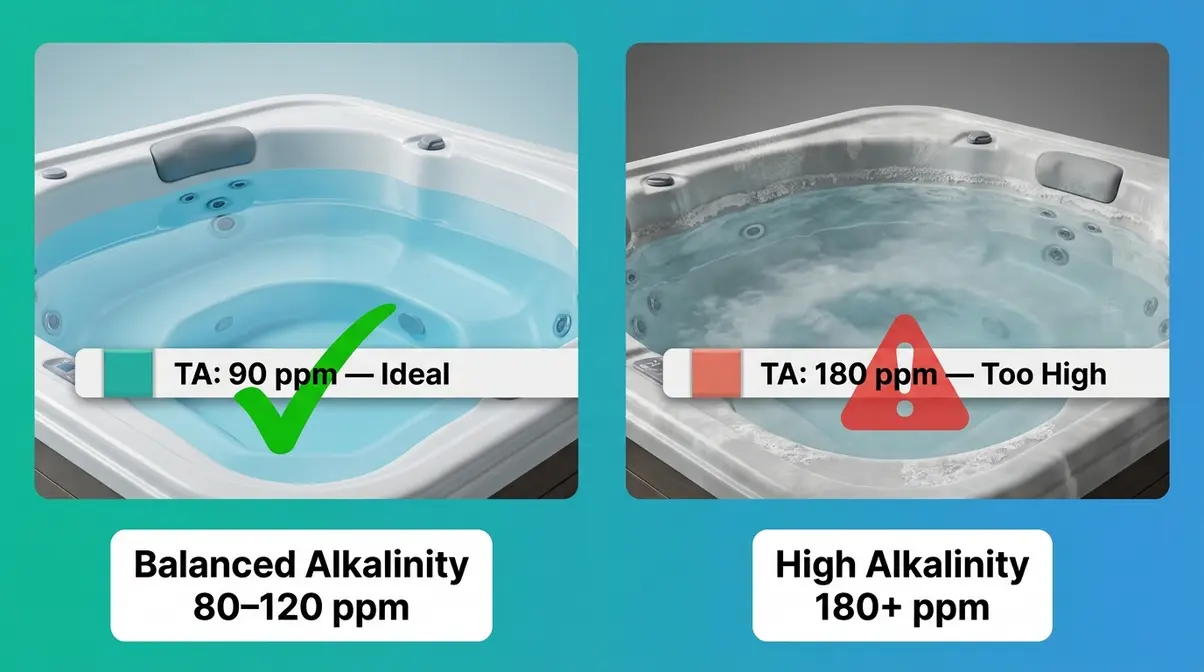
Total Alkalinity (TA) is the single most misunderstood number on your test strip — and the most important one to fix first. Get this right, and every other reading becomes far easier to manage.
Ideal Alkalinity Range & “High” Levels
Total Alkalinity (TA) is the measure of your water’s ability to resist sudden pH swings. Think of it as a shock absorber for your pH: when TA is in range, pH stays stable even after you add sanitizer, sweat, or rain dilution. When TA is out of range, pH becomes erratic and nearly impossible to hold.
The Pool & Hot Tub Alliance (PHTA), the industry standards body for residential spas, recommends a TA range of 80–120 ppm for hot tubs (PHTA Water Quality Standards, 2026). Most certified pool/spa operators target the tighter range of 80–100 ppm for spas, since hot tubs run at higher temperatures than pools — and heat accelerates chemical reactions, making a tight buffer even more valuable.
“High” alkalinity means your reading is above 120 ppm. Readings between 120–150 ppm are mildly elevated and usually respond to one or two treatments. Readings above 180 ppm are significantly high and may require multiple treatment rounds or, in severe cases, a partial drain and refill.
The chemistry behind TA involves the carbonate/bicarbonate buffering system in your water. Sodium bicarbonate (the same compound as baking soda, which naturally occurs in tap water and raises TA) acts as a chemical buffer — it absorbs acid you add, neutralizing it before it can actually lower your pH. This is precisely why adding pH minus to a high-TA tub feels pointless: the bicarbonate ions are consuming the acid before it changes your pH reading. You’re not adding too little chemical. Your water is simply fighting back.
| TA Level | Status | Action Needed |
|---|---|---|
| Below 60 ppm | Too low | Add sodium bicarbonate (baking soda) |
| 60–80 ppm | Slightly low | Minor adjustment or monitor |
| 80–120 ppm | Ideal range | Maintain; no action needed |
| 120–150 ppm | Mildly high | One treatment round |
| 150–180 ppm | High | Two treatment rounds |
| Above 180 ppm | Very high | Multiple treatments or partial drain |
Does High Alkalinity Cause Cloudy Water?
Yes, cloudy or milky water is the most visible sign that your alkalinity is too high. When TA is elevated, calcium carbonate precipitates out of solution, creating a white haze that no amount of clarifier will fully clear until the underlying chemistry is fixed.
Signs Your Alkalinity Is Too High
High alkalinity announces itself in several ways before you even pick up a test strip. Recognizing these signals early saves you from compounding the problem with unnecessary chemical additions.
Scale buildup on your jets, shell, and waterline follows the same chemistry as cloudy water — mineral deposits that clog equipment and dull your tub’s finish over time.
Sanitizer inefficiency is the subtler, more dangerous symptom. High alkalinity creates an environment where chlorine or bromine becomes chemically bound and less available as a free sanitizer — even when your test strip shows an adequate level. You may be adding sanitizer regularly and still have water that isn’t truly clean. Common reports from hot tub owners indicate that persistent cloudy water despite correct sanitizer dosing is almost always a TA issue, not a sanitizer dosing error.
Skin and eye irritation after soaking — a burning or itchy sensation — is another reliable indicator. High-TA water tends to push pH upward, and a pH above 7.8 noticeably reduces chlorine’s effectiveness while also irritating skin and eyes (Frog Products Hot Tub School, 2026).
Why High Alkalinity Damages Tub & Skin
High TA doesn’t just make your water look bad — it causes progressive, cumulative damage to both your equipment and your body.
On the equipment side, elevated alkalinity accelerates calcium scaling on your heater element, which is the most expensive component in your tub. Scale acts as an insulator, forcing the heater to work harder to maintain temperature — shortening its lifespan and raising energy costs. Jet nozzles and plumbing lines accumulate deposits that restrict flow, reducing the hydrotherapy benefit you paid for. Aquatica’s spa maintenance guidelines note that persistent high alkalinity is one of the leading causes of premature heater failure in residential spas (Aquatica Spa Care Guide, 2026).
On the health side — and this is what most guides completely skip — high alkalinity neutralizes your sanitizer’s killing power. A sanitizer that isn’t working is an open invitation for Pseudomonas aeruginosa, the bacteria responsible for hot tub folliculitis. This connection is explored in detail in the health section below, but it’s worth flagging here: the stakes of unbalanced alkalinity go beyond cloudy water.
This is the core of The pH-Alkalinity Seesaw: high TA keeps pH elevated, elevated pH weakens your sanitizer, and weak sanitizer creates a health risk. Every part of the problem feeds the next. Fixing alkalinity first is the only way to break the cycle.
What You’ll Need Before You Start
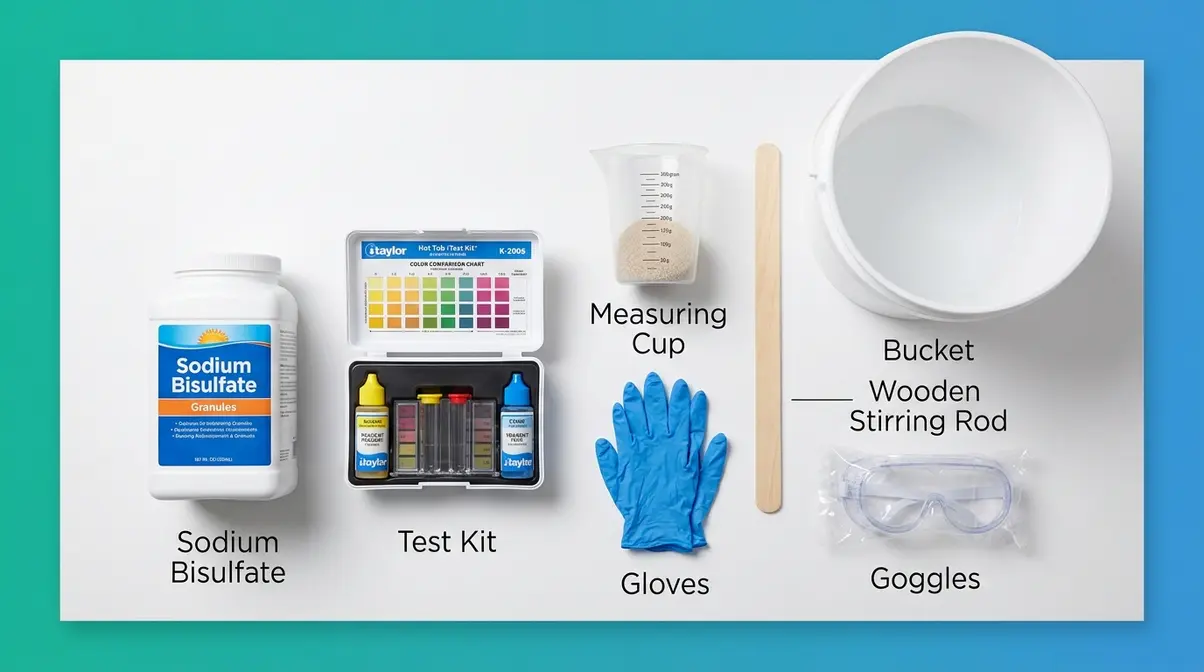
Gathering everything before you begin prevents mid-process scrambling — which is when chemical handling mistakes happen. This section also establishes the safety baseline that certified pool/spa operators require before any chemical addition. According to CDC guidelines for hot tub water chemistry, maintaining proper chemical levels requires the right tools and safety precautions.
Estimated time: 30-45 minutes
Essential Supplies Checklist
You’ll need the following before starting any alkalinity treatment:
- Test strips or a liquid test kit — strips are fast; a liquid kit (like Taylor K-2006) is more accurate for problem-solving situations
- Sodium bisulfate (pH Down / Alkalinity Down) — the standard choice for hot tubs; more on this in H2 4
- Muriatic acid (optional) — a faster-acting alternative for experienced owners only
- A measuring cup or kitchen scale — eyeballing chemical doses is a leading cause of over-treatment
- A clean plastic bucket — for pre-dissolving sodium bisulfate before adding to the tub
- A stirring rod or wooden dowel — to dissolve chemical before pouring
- Your hot tub’s manual — for manufacturer-specific guidance on your shell material and jet system
To ensure accuracy, always use fresh test strips or a liquid test kit that hasn’t expired.
Certified pool/spa operators recommend recording your current readings (TA, pH, and calcium hardness) before adding anything. This baseline gives you a reference point for each treatment round and prevents the common mistake of adding chemicals to a tub whose starting numbers you’ve lost track of.
Safety Gear You Must Wear
⚠️ Chemical Safety Warning — Read Before Proceeding
Sodium bisulfate and muriatic acid are corrosive chemicals. Both can cause serious burns to skin, eyes, and respiratory tissue if handled without protection. These are not optional precautions.
Required before handling any alkalinity-reducing chemical:
- Chemical-resistant gloves (nitrile or neoprene — not standard latex)
- Safety goggles (not sunglasses — sealed goggles that protect from splash)
- Long sleeves and closed-toe shoes — protect skin from accidental contact
- Work in a ventilated area — muriatic acid in particular releases fumes
- Critical rules that apply to every treatment:
- Never pre-mix chemicals — always add chemical to water, never water to chemical
- Never mix sodium bisulfate and muriatic acid — combining acids can produce dangerous fumes
- Follow your specific product’s label instructions — formulations vary by brand and concentration
- Keep children and pets away from the treatment area during dosing
If any chemical contacts your skin or eyes, flush immediately with large amounts of water for at least 15 minutes and seek medical attention.
How to Lower Alkalinity: Step-by-Step
When learning how to lower alkalinity in hot tub environments, this is the core process. Follow each step in sequence — skipping steps is the most common reason treatments fail. Each round of treatment typically lowers TA by 10–30 ppm, depending on your tub’s volume and starting level. As noted in the Consumer Reports guide on hot tub chemistry, adjusting alkalinity first is paramount.
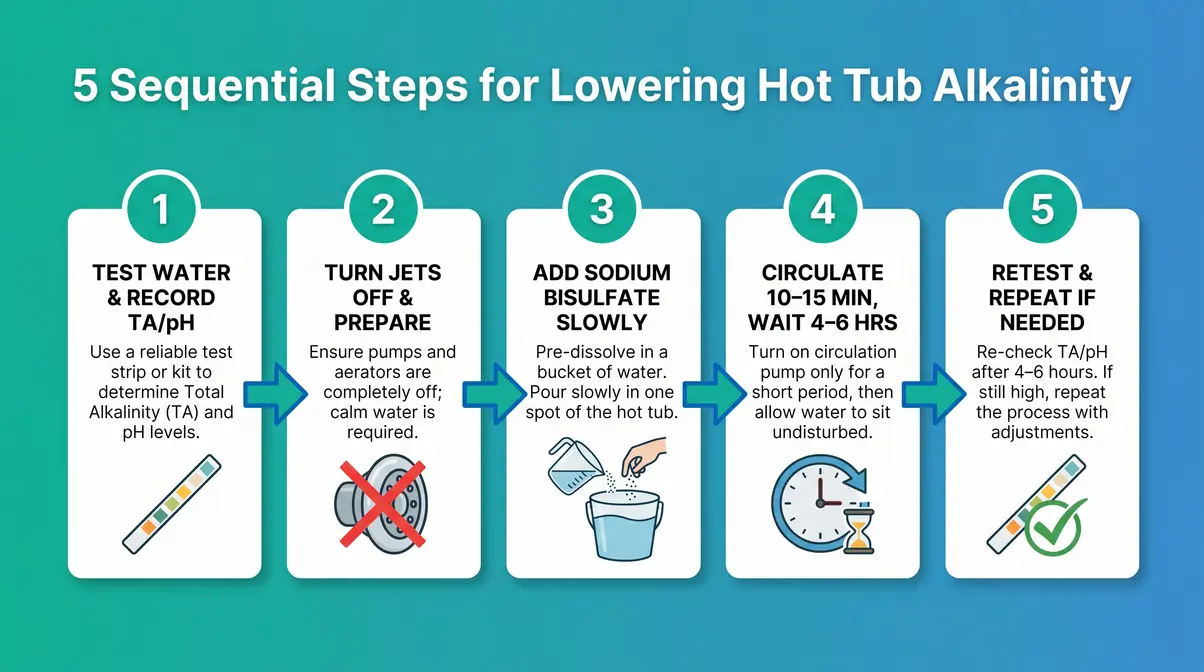
Step 1: Test Water and Record Reading
Test your water using test strips or a liquid test kit before adding anything. Dip the strip for the time specified on your kit’s instructions — usually 2–3 seconds — then hold it flat (not vertical) while it develops.
Record three numbers: Total Alkalinity (TA), pH, and calcium hardness. You need all three because the treatment you choose depends on where each value sits. If your TA is 160 ppm and your pH is already at 7.2, for example, you’ll use a lighter acid dose and rely more on aeration to avoid crashing pH further.
Write the numbers down. Don’t trust your memory across multiple treatment rounds — small dosing errors compound quickly in a 300–500 gallon tub.
Step 2: Turn Off Jets & Prepare Water
Turn off your jets completely. This is a step many owners skip, and it’s why their chemical additions produce uneven results. Jets create turbulence that disperses the chemical before it can act on the water in a controlled way — you want the acid to work through the water gradually, not splash around the surface.
Let the water sit still for 10–15 minutes after turning off the jets before you add anything. This settling period ensures a more even distribution when you do add the chemical.
Remove the cover and let the tub breathe. Good ventilation above the water surface reduces fume concentration during the addition step.
Step 3: Add Alkalinity Reducer Slowly
⚠️ Safety reminder: Wear gloves and goggles before opening any chemical container.
Pre-dissolve your measured dose of sodium bisulfate in a bucket of hot tub water (about one gallon) before adding it to the tub. Pour the bucket’s contents slowly into the deep end of the tub — not near the jets or skimmer.
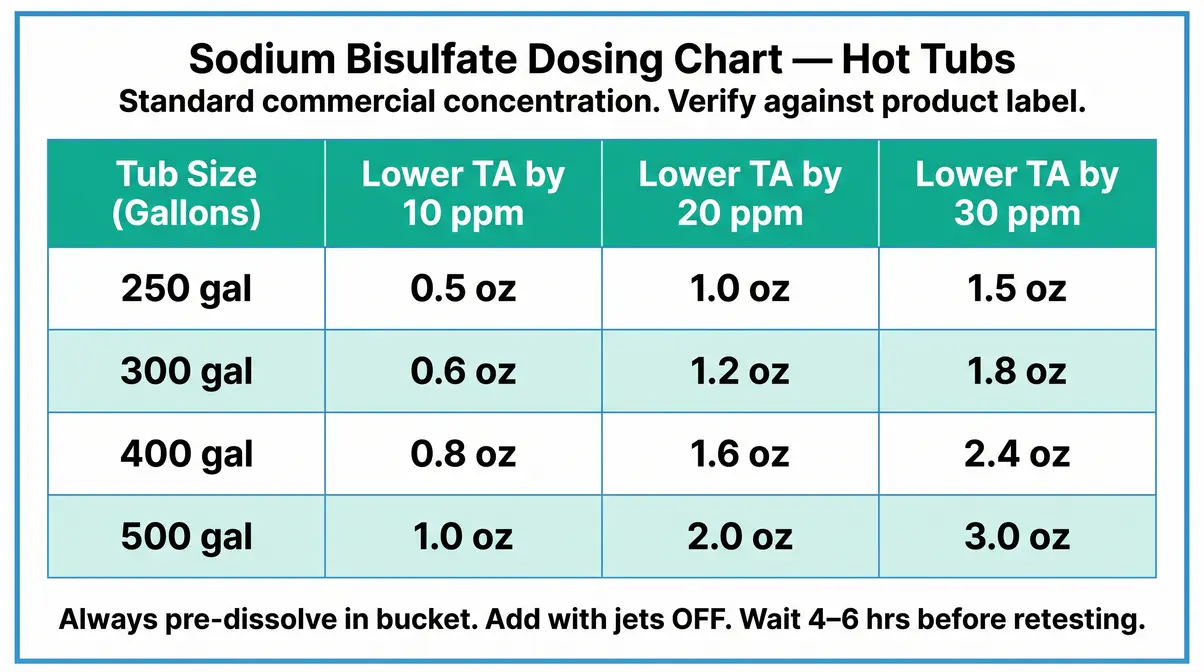
- Dosing formula for sodium bisulfate:
- To lower TA by 10 ppm in a 300-gallon tub: add approximately 0.75 oz (21 g)
- To lower TA by 10 ppm in a 400-gallon tub: add approximately 1.0 oz (28 g)
- To lower TA by 10 ppm in a 500-gallon tub: add approximately 1.25 oz (35 g)
Never add more than enough to lower TA by 30–40 ppm in a single dose. Over-dosing crashes both TA and pH simultaneously, creating a corrosive water condition that can damage your shell, seals, and heater. Multiple smaller treatments are always safer than one large dose.
Step 4 – Circulate, Wait, and Retest
After adding the chemical, turn your jets back on for 10–15 minutes to circulate the treated water evenly through the entire tub volume. Then turn the jets off again and let the water rest.
Wait at least 4–6 hours before retesting — ideally overnight for the most accurate reading. Testing too soon (within 30–60 minutes) gives you a misleading low reading because the chemical is still actively reacting. Many owners misread this as success, stop treatment, and find their TA has rebounded the next day.
After the waiting period, retest TA, pH, and calcium hardness. Record the new numbers alongside your starting readings so you can calculate how much the TA dropped per dose.
How Long After Adding pH Down Can I Use It?
You should wait at least 4 to 6 hours after adding pH Down before using the hot tub. This gives the acid enough time to fully react with the bicarbonate buffer and allows the water chemistry to stabilize safely.
Step 5: Repeat Until in Target Range
If your TA is still above 120 ppm after the first treatment round, repeat Steps 3 and 4. Do not attempt more than one treatment round per day — your water chemistry needs time to stabilize between additions.
Most tubs with TA in the 150–180 ppm range need two to three treatment rounds spaced 24 hours apart. Very high readings above 200 ppm may require four or more rounds, at which point a partial drain and refill (replacing 25–50% of the water) often becomes the faster and more economical option.
Once your TA reads 80–120 ppm, move to H2 5 to address the pH drop that almost certainly accompanied your alkalinity reduction.
Choosing the Right Chemical & Dosage
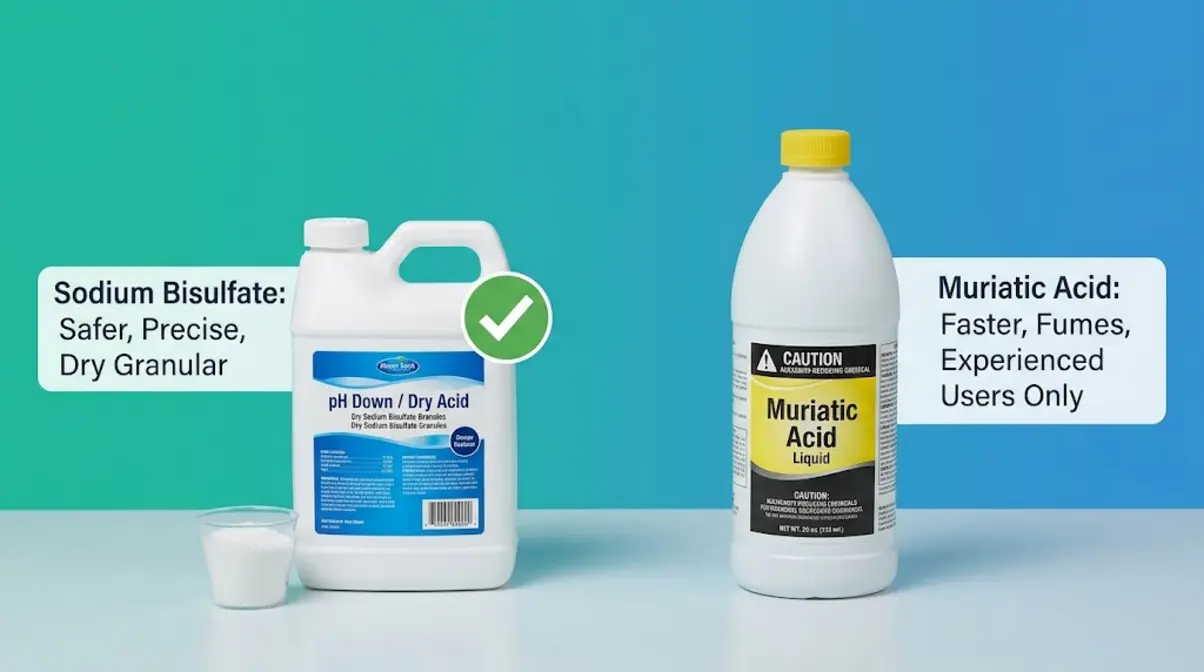
Part of knowing how to lower alkalinity in hot tub maintenance is selecting the proper acid. The chemical you choose affects both safety and how precisely you can control the drop. Certified pool/spa operators recommend understanding both options before defaulting to whatever is on the shelf at your local store. According to Penn State Extension advice on lowering alkalinity, handling these chemicals properly is crucial for safety.
Sodium Bisulfate vs. Muriatic Acid
Both chemicals lower TA through the same mechanism — they add hydrogen ions (acid) to the water, which react with and neutralize bicarbonate ions. The difference is in concentration, handling risk, and precision.
Sodium bisulfate (sold as pH Down, pH Minus, or Dry Acid) is a dry granular chemical with a pH of roughly 1.0 in concentrated form. It’s slower-acting than muriatic acid, which is actually an advantage for hot tub use — the slower reaction gives you more control. It’s also safer to store, less likely to produce dangerous fumes, and easier to measure accurately. For most residential hot tub owners, sodium bisulfate is the correct choice.
Muriatic acid (hydrochloric acid, typically sold at 31.45% concentration) is faster-acting and less expensive per dose. However, it releases hydrogen chloride fumes that irritate the respiratory tract, requires more careful dilution, and is significantly harder to dose accurately in small tubs. Sundance Spas’ maintenance guidelines recommend muriatic acid only for owners comfortable with acid handling who have larger spas or swim spas where the faster action is beneficial (Sundance Spas Care Guide, 2026).
| Factor | Sodium Bisulfate | Muriatic Acid |
|---|---|---|
| Form | Dry granular | Liquid |
| Fumes | Minimal | Significant |
| Precision | High (easy to measure) | Lower (liquid pours vary) |
| Speed | Moderate | Fast |
| Storage safety | Easy | Requires ventilation |
| Best for | Most hot tub owners | Experienced users, large spas |
| Relative cost | Slightly higher | Lower per dose |
Follow your specific product’s label instructions — concentration varies by brand, and the dosing formulas above assume standard commercial concentrations.
Exact Dosing Guide: Chemical Amounts
The most common question certified pool/spa operators receive is: “How much do I actually add?” The answer depends on three variables: your tub’s volume in gallons, your current TA reading, and your target TA reading.
Universal formula: Multiply your tub’s volume (in gallons) by the ppm drop needed, then divide by 10,000. That gives you the approximate ounces of sodium bisulfate required.
Example: 400-gallon tub, current TA = 160 ppm, target TA = 100 ppm. Drop needed = 60 ppm. 400 × 60 ÷ 10,000 = 2.4 oz total — split into two 1.2 oz doses, 24 hours apart.
| Tub Size | Lower TA by 20 ppm | Lower TA by 40 ppm | Lower TA by 60 ppm |
|---|---|---|---|
| 250 gallons | 0.5 oz | 1.0 oz | 1.5 oz |
| 300 gallons | 0.6 oz | 1.2 oz | 1.8 oz |
| 400 gallons | 0.8 oz | 1.6 oz | 2.4 oz |
| 500 gallons | 1.0 oz | 2.0 oz | 3.0 oz |
Doses reflect standard sodium bisulfate at commercial concentration. Always verify against your product label. Hard water with elevated calcium hardness may require slightly higher doses.
One important note on hard water: If you’re on a well or in a hard water region, your source water naturally carries higher levels of sodium bicarbonate. This means your TA can creep back up faster after treatment, and you may need to treat more frequently. Monitoring TA monthly — or weekly during heavy use — is the most effective prevention strategy.
Does pH Down Lower Alkalinity Too?
Yes — pH Down (sodium bisulfate) lowers both pH and Total Alkalinity simultaneously. This is the source of the seesaw problem many owners experience. When you add pH Down to fix an elevated pH reading, you’re also chipping away at TA. Conversely, when you add it to lower TA, your pH will drop too.
This dual action isn’t a flaw — it’s simply the chemistry of how acids work in buffered water. The key is understanding which value to prioritize and in what order. According to the Pool & Hot Tub Alliance’s water chemistry guidelines, you must adjust Total Alkalinity before pH (PHTA, 2026). TA is the foundation; once it’s stable, pH becomes far easier to manage and hold.
Fixing pH After the Alkalinity Drop
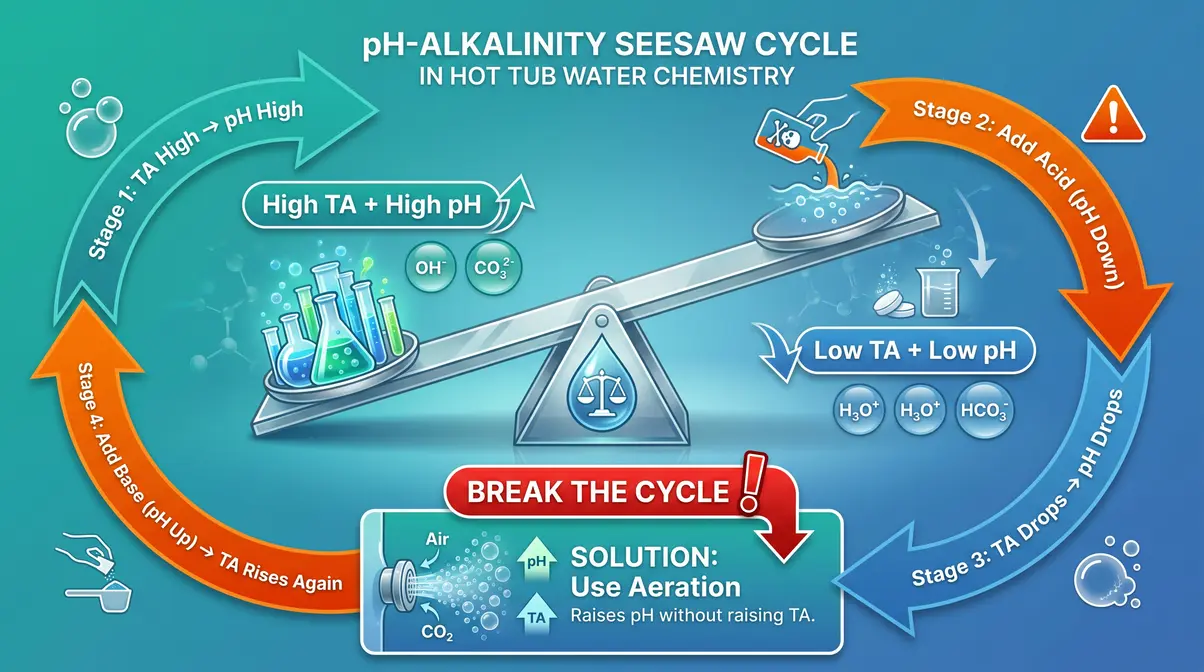
Lowering alkalinity almost always pulls your pH down with it. This is the second half of the seesaw — and where most guides leave you stranded. Here’s how to bring pH back up without restarting the whole cycle.
Why Lowering Alkalinity Crashes pH
When you add sodium bisulfate or muriatic acid to lower TA, you’re adding acid to the entire water column — and acid lowers pH as well as alkalinity. The two values are chemically linked through the carbonate buffering system. There’s no acid that selectively targets one without affecting the other.
This is The pH-Alkalinity Seesaw in full operation. You add acid to lower TA → pH drops too low → you add a pH increaser to raise pH → the increaser (typically sodium carbonate or sodium bicarbonate) raises TA again → TA is high again → you add acid. The cycle repeats indefinitely unless you interrupt it with a technique that raises pH without adding alkalinity-boosting chemicals.
After a successful TA reduction treatment, your pH will typically read between 6.8 and 7.2 — below the ideal range of 7.4–7.6. You need to bring it back up without touching your freshly corrected TA. The aeration method is the cleanest way to do this.
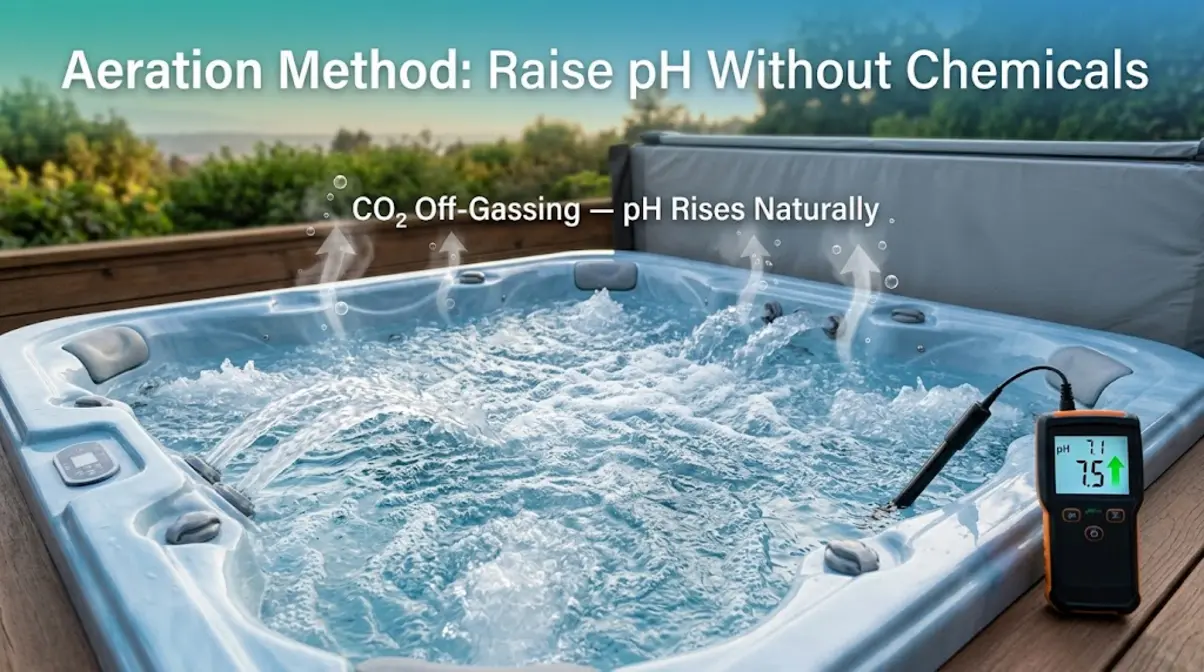
Aeration Method: Raise pH Naturally
Aeration is the most underused technique in residential hot tub maintenance — and the most elegant solution to the seesaw problem. By agitating the water surface, you drive off dissolved carbon dioxide (CO₂). As CO₂ escapes, the water’s carbonic acid concentration drops, which allows pH to rise naturally — without adding any base chemical that would also raise your TA.
How to aerate your hot tub:
- Turn your jets to the highest setting, angled upward toward the water surface
- Open any air venturi valves fully — these are the small knobs on your jet controls
- Remove the cover completely to allow maximum CO₂ off-gassing
- Run the jets continuously for 30–60 minutes, then test pH
- Repeat in 30-minute intervals until pH reaches 7.4–7.6
Most tubs with a pH of 7.0–7.2 after treatment reach the target range within 1–2 hours of aeration. The process is slower for tubs with lower starting pH (below 7.0) — allow up to 4 hours and test every 30–60 minutes.
Why this works without raising TA: The carbonate/bicarbonate equilibrium in your water shifts as CO₂ is removed. pH rises because carbonic acid (H₂CO₃) is converted back to bicarbonate — but the total bicarbonate concentration (your TA reading) doesn’t increase, because you’re not adding bicarbonate ions, just redistributing what’s already present. The net result: pH up, TA unchanged.
According to the (Jacuzzi Hot Tub Care Guide, 2026), aeration is a recommended technique for raising pH after acid treatment specifically because it avoids re-elevating alkalinity. This is the step that breaks the seesaw cycle.
When to Use a pH Increaser
Aeration works well when pH has dropped to 7.0–7.2 after TA treatment. However, if your pH has crashed below 7.0 — or if your tub lacks strong jet action (some older models or entry-level swim spas have weaker aeration capacity) — you may need a small dose of pH increaser (sodium carbonate, sold as pH Up or pH Plus).
Use pH increaser sparingly. Sodium carbonate raises pH efficiently, but it also contains carbonate ions that can nudge TA upward. Add no more than the minimum dose needed to reach 7.4, then switch to aeration for any remaining adjustment. This hybrid approach — a small pH increaser dose followed by aeration — minimizes the TA impact while still correcting pH quickly.
If your pH reads 7.3 or higher after TA treatment, skip the pH increaser entirely and rely on aeration alone. The pH will continue to drift upward naturally over 12–24 hours as residual CO₂ off-gasses, often reaching the target range without any intervention.
Lowering Alkalinity With Vinegar
White vinegar comes up regularly in hot tub forums as a “natural” alternative to commercial chemicals. It does contain acetic acid, which can lower both pH and TA. The honest answer is: it works in theory, but the practical limitations are significant.
How Much Vinegar to Add and How It Works
White vinegar is typically 5% acetic acid by volume. Acetic acid is a weak acid — it reacts with bicarbonate ions in the same way sodium bisulfate does, just far less efficiently per ounce. To achieve a meaningful TA reduction, you need to add a large volume of vinegar relative to your tub size. Based on the chemical properties of acetic acid, the volume required is substantial.
A rough estimate from standard water chemistry calculations: to lower TA by 10 ppm in a 400-gallon hot tub, you would need approximately 1–2 cups (8–16 oz) of standard 5% white vinegar. For a 40 ppm drop — a typical treatment need — that’s roughly 4–8 cups (32–64 oz) of vinegar added in multiple doses.
- To use vinegar:
- Measure your dose carefully
- Turn jets off
- Pour vinegar slowly near a return jet inlet (not directly on the shell)
- Turn jets on for 15 minutes to distribute
- Wait 4–6 hours, then retest
Vinegar vs. Commercial Chemicals
Vinegar can work for minor adjustments (TA in the 120–130 ppm range), but it has real limitations that commercial products don’t:
Volume problem: The sheer amount of vinegar needed for significant TA reductions adds substantial liquid volume to your tub, potentially diluting sanitizer and other chemicals in ways that are difficult to account for.
Acetate residue: Unlike sodium bisulfate, which breaks down into sulfate ions that don’t accumulate meaningfully, acetic acid leaves acetate in the water. Over repeated treatments, acetate buildup can contribute to organic loading — the same problem that causes cloudy water and sanitizer demand.
Inconsistent results: Standard grocery store vinegar varies slightly in acidity between brands and batches. Commercial pH Down is manufactured to a precise concentration, making dosing formulas reliable. Vinegar dosing is approximate at best.
The verdict from certified pool/spa operators: vinegar is acceptable for a one-time minor trim (5–10 ppm reduction) if you’re out of commercial product and need a quick fix. For any TA reading above 130 ppm or repeated treatments, sodium bisulfate is the correct tool. The cost difference is minimal; the precision difference is significant.
The Baking Soda Mistake & Pitfalls
Understanding what not to do is just as important as knowing the correct treatment steps. Several common errors keep hot tub owners stuck in the alkalinity loop for weeks or months longer than necessary.
Why Baking Soda Makes Alkalinity Worse
This is the single most common chemical mistake in hot tub maintenance: adding baking soda to a tub that already has high alkalinity. Baking soda is sodium bicarbonate — the same compound that makes up the majority of your water’s Total Alkalinity reading. Adding it when TA is already elevated is chemically equivalent to pouring fuel on a fire.
The confusion arises because baking soda is legitimately used to raise TA when levels are too low. It’s a standard, inexpensive, and effective TA increaser. But when owners see cloudy water or irritated skin — symptoms that can indicate low TA — and reach for baking soda without testing first, they often make an already high TA situation dramatically worse.
Rule: Never add any chemical to your hot tub without testing first. Symptoms of high TA and low TA can look similar (cloudy water, skin irritation). The test result — not the symptom — tells you what to add.
Three Mistakes Keeping Alkalinity High
Mistake 1: Testing too soon after treatment. Retesting within 30–60 minutes of adding an acid gives you an artificially low TA reading. The chemical is still reacting. Many owners see a “good” number, stop treatment, and find the reading has rebounded the next morning. Always wait the full 4–6 hours, ideally overnight.
Mistake 2: Adding chemicals with the jets running. Jets disperse the chemical unevenly and push it toward the surface where it off-gasses instead of reacting with the water. Always add alkalinity-reducing chemicals with jets off, then circulate afterward.
Mistake 3: Ignoring source water alkalinity. If your tap water or well water has a naturally high TA (common in hard water regions where calcium hardness is also elevated), your tub will keep returning to high alkalinity after every treatment — not because the treatment failed, but because you’re refilling with high-TA water. Test your source water once. If it’s above 100 ppm, consider using a pre-fill hose filter to reduce TA before the water enters the tub. This is especially important after a drain and refill.
When Alkalinity Becomes a Health Risk
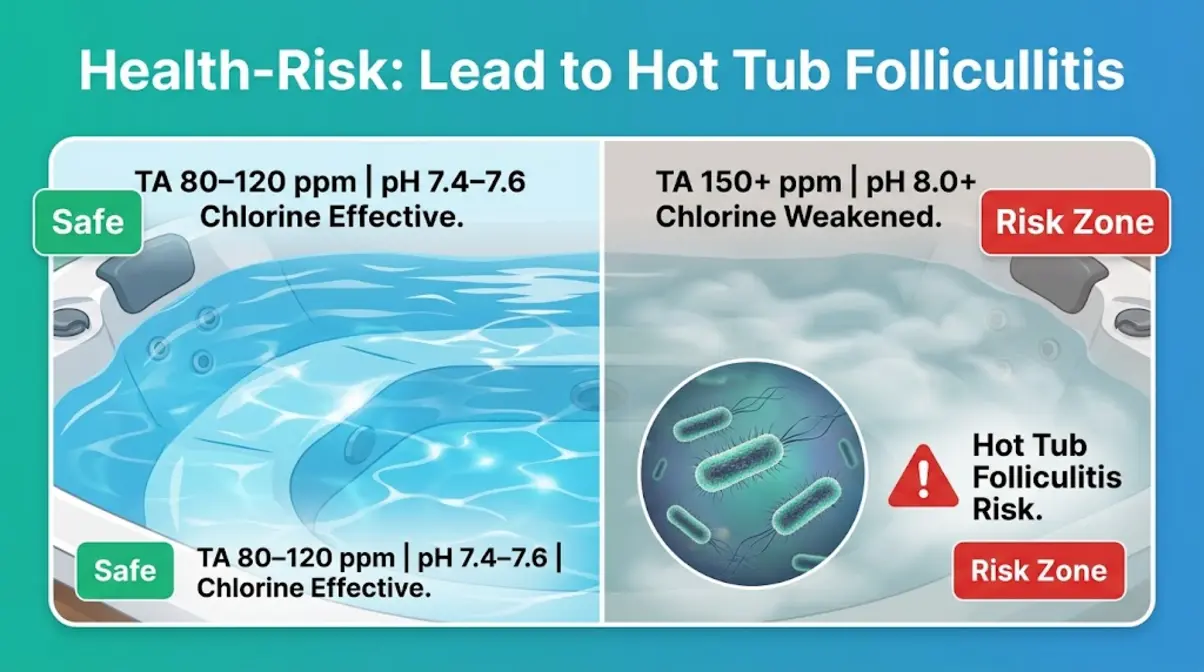
Most alkalinity guides focus exclusively on equipment and water clarity. This section addresses what they all skip: the direct connection between unbalanced water chemistry and human health outcomes.
Hot Tub Folliculitis: The Real Danger
Hot tub folliculitis is a skin infection caused by Pseudomonas aeruginosa, a bacterium that thrives in warm water environments where sanitizer levels are compromised. It presents as an itchy, red, bumpy rash — typically appearing 12–48 hours after hot tub use — that follows the distribution of hair follicles on the torso, buttocks, and legs.
The connection to high alkalinity is direct and well-documented. According to the Centers for Disease Control and Prevention (CDC), P. aeruginosa outbreaks in recreational water facilities are strongly associated with inadequate disinfection — and high pH/alkalinity is a primary reason disinfection fails even when sanitizer is present (CDC Healthy Swimming, 2026). Research published in the National Library of Medicine confirms that chlorine’s germicidal effectiveness drops sharply as pH rises above 7.8: at pH 8.0, chlorine is approximately 20–25% as effective as it is at pH 7.4 (NCBI research on hot tub folliculitis, 2026). High alkalinity drives pH up, high pH neutralizes your sanitizer, and neutralized sanitizer leaves P. aeruginosa free to colonize your water.
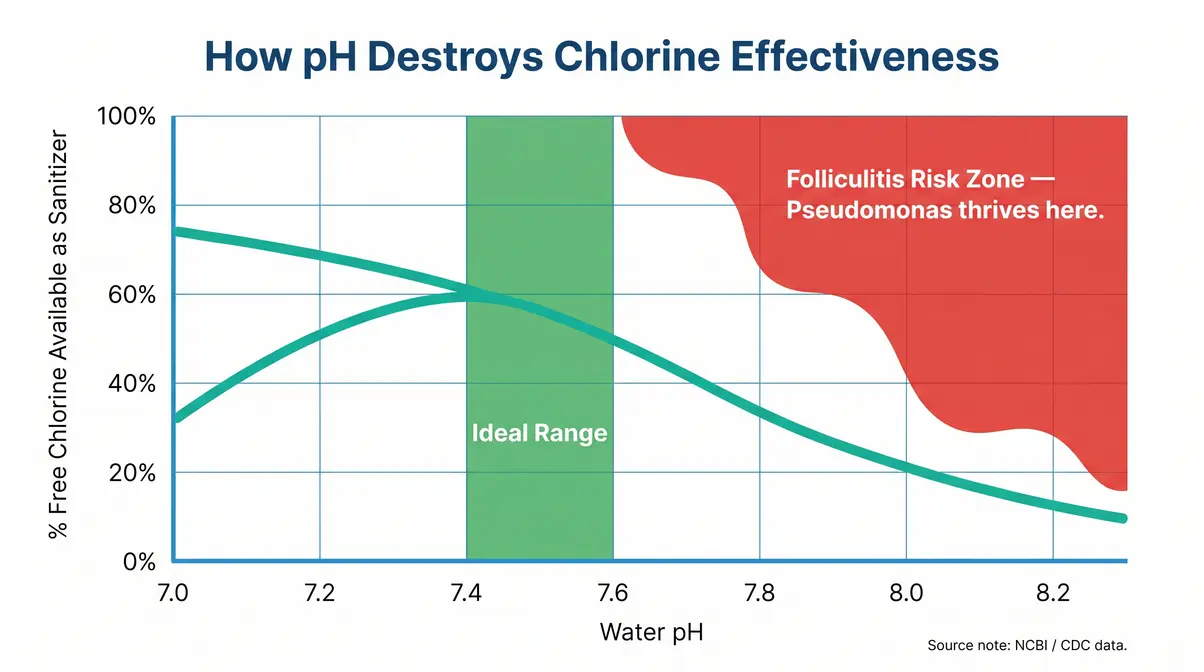
Most cases of hot tub folliculitis resolve on their own within 7–10 days. However, if the rash spreads, is accompanied by fever, or doesn’t improve after 2 weeks, consult a physician. Immunocompromised individuals should seek medical attention sooner.
- If you or a household member develops folliculitis after hot tub use:
- Drain and disinfect the tub completely before anyone uses it again
- Shock the tub with a double dose of sanitizer after refilling
- Rebalance all chemistry — TA first, then pH, then sanitizer — before resuming use
- Consult a doctor if symptoms persist beyond 10 days or worsen
When to Drain and Refill the Tub
Chemical treatment can correct elevated alkalinity in most situations — but there are specific scenarios where draining and refilling is the faster, more economical, and healthier choice.
- Drain and refill when:
- TA is above 200 ppm and has required more than three treatment rounds without reaching target
- Total Dissolved Solids (TDS) exceed 1,500 ppm above your source water baseline — at this point, the water is so saturated with dissolved minerals and chemicals that new additions become unpredictable
- You’ve experienced a confirmed bacterial contamination (folliculitis outbreak, visible biofilm, or persistent foul odor despite correct sanitizer levels)
- Your tub water is more than 12–18 months old — most certified operators recommend a complete water change every 3–4 months for heavily used tubs, or every 6 months for light use
Draining 25–50% of the water (a partial drain and refill) is often sufficient for TDS issues and can bring TA down proportionally without a full drain. If your TA is 180 ppm and you replace half the water with source water at 80 ppm, your resulting TA will be approximately 130 ppm — a much more manageable starting point for chemical treatment.
When to Call a Spa Professional
Some situations exceed what a DIY chemical treatment can reliably fix — and recognizing them saves time, money, and potential health risk.
- Contact a certified pool/spa professional if:
- TA and pH readings are consistently erratic despite correct treatment — this can indicate a damaged or malfunctioning heater, air injector, or circulation pump affecting chemistry
- You’re seeing persistent scale buildup on the heater element or jets that doesn’t respond to normal descaling products
- You’ve had a confirmed Pseudomonas infection and want a professional decontamination before resuming use
- Your tub is a large swim spa (500+ gallons) and you’re unsure whether your dosing calculations are scaling correctly
The Pool & Hot Tub Alliance maintains a directory of certified service professionals at phta.org. Look for technicians holding the Certified Pool/Spa Operator (CPO) credential, which requires demonstrated competency in water chemistry and equipment maintenance.
Frequently Asked Questions
Can I get in a hot tub if alkalinity is high?
Getting in a hot tub with high alkalinity is generally not recommended, especially if your TA is above 150 ppm. Elevated TA raises pH, which significantly reduces your sanitizer’s effectiveness — meaning the water may not be properly disinfected even if your chlorine or bromine reading appears adequate. Short exposure with a mildly elevated TA (120–130 ppm) carries low risk for healthy adults, but repeated use creates conditions favorable to Pseudomonas aeruginosa, the bacteria responsible for hot tub folliculitis (CDC, 2026). Treat the alkalinity before your next soak.
Should you fix pH or alkalinity first?
Always fix Total Alkalinity before adjusting pH. The Pool & Hot Tub Alliance (PHTA) and certified pool/spa operators consistently recommend this sequence because TA is the chemical foundation of your water — it controls how stable your pH will be after adjustment. Fixing pH in a high-TA tub is pointless: the alkalinity buffer will pull pH back toward its original reading within hours. Correct TA first, then use aeration (or a minimal dose of pH increaser) to bring pH into the 7.4–7.6 range (PHTA Water Quality Standards, 2026).
How do you fix too much alkalinity in a hot tub?
To fix too much alkalinity, add sodium bisulfate (pH Down) in measured doses with the jets off, then retest after 4–6 hours. Start with a dose calibrated to drop TA by 20–30 ppm — roughly 0.8–1.0 oz per 400 gallons for a 20 ppm reduction. Repeat every 24 hours until TA reads 80–120 ppm. After each treatment round, use the aeration method (running jets with the cover off for 1–2 hours) to restore pH without re-raising alkalinity. Most tubs need two to three treatment rounds for readings between 150–180 ppm.
How do you bring alkalinity down?
Bring alkalinity down by adding an acid — sodium bisulfate or muriatic acid — in small, measured doses. Sodium bisulfate is safer and easier to control for most hot tub owners. Add the chemical to a bucket of tub water first, then pour slowly into the deep end with jets off. Wait 4–6 hours before retesting. Avoid the common mistake of testing too soon — early readings appear lower than the stable final value, leading owners to over-treat. Target the 80–120 ppm range; anything in that window is correctly balanced.
Why do people put tennis balls in a hot tub?
Tennis balls are used to absorb body oils, cosmetics, and lotions from hot tub water. The felt on the ball acts as a passive filter, soaking up organic contaminants that would otherwise increase your sanitizer demand and contribute to cloudy water. They don’t affect alkalinity or pH directly. However, reducing organic loading does help your sanitizer work more efficiently — which is indirectly beneficial when you’re also managing high alkalinity. Replace tennis balls every few weeks as they become saturated with oils.
How do you treat a hot tub after folliculitis?
After a hot tub folliculitis outbreak, drain the tub completely, clean the shell and jets with a diluted bleach solution, and refill with fresh water before rebalancing chemistry. Do not simply shock the existing water — Pseudomonas aeruginosa can form biofilms in plumbing lines that resist normal sanitizer levels. After refilling, shock with a double dose of sanitizer, balance TA to 80–120 ppm, adjust pH to 7.4–7.6, and run the jets for 30 minutes before using. If symptoms persist beyond 10 days or worsen, consult a physician (CDC, 2026).
Why keep your head above water?
*You should not submerge your head in a hot tub because the warm, aerated water creates an environment where bacteria — including Pseudomonas aeruginosa and Legionella — can reach the ears, sinuses, and respiratory tract. Hot tub-related Legionella (the cause of Legionnaires’ disease) is transmitted through inhaling contaminated water droplets, and ear canal infections from Pseudomonas* are significantly more likely when the head is submerged. The risk increases substantially when pH or TA is out of range and sanitizer effectiveness is compromised (CDC, 2026). This is a universal precaution regardless of water chemistry.
Why bring tennis balls on a trip?
This is a popular hot tub hack for travel and hotel stays. Two tennis balls absorb body oils and cosmetics from shared hot tub water, reducing the organic load that degrades sanitizer. The sock is used as a makeshift filter over a jet inlet to catch debris. Neither item addresses alkalinity or chemistry directly, but both reduce the environmental factors that deplete sanitizer — making them useful in public hot tubs where you can’t control water chemistry yourself. For your home tub, a properly maintained skimmer basket and regular water testing are more reliable than the tennis ball method.
Balancing Your Hot Tub Water for the Long Term
Breaking the pH-Alkalinity Seesaw isn’t a one-time fix — it’s a system. For hot tubs, the PHTA recommends testing TA and pH at least twice per week during regular use, and after every heavy use session or significant rainfall that dilutes the water.
- The repeatable maintenance sequence that certified pool/spa operators recommend:
- Test TA, pH, and sanitizer levels
- Correct TA first if outside 80–120 ppm
- Use aeration to restore pH after any acid treatment
- Adjust sanitizer last, once chemistry is stable
- Record every reading and every addition in a simple log
This sequence prevents the seesaw from restarting. When you correct TA before touching pH, and use aeration instead of base chemicals to bring pH up, you stop adding alkalinity-raising compounds to a tub that doesn’t need them. The cycle breaks.
Mastering how to lower alkalinity in hot tub care is one of the most fixable problems in ownership — but only once you understand the mechanism behind it. The pH-Alkalinity Seesaw explains why the “add pH Down and retest” loop never ends: you’re treating the symptom (pH) while the cause (TA) keeps pulling it back. Treat the cause first, use the aeration method to restore pH without chemicals, and you’ll spend far less time chasing numbers and far more time actually using your tub.
Your next step: grab your test kit, record your current TA and pH readings, and use the dosing chart in Step 3 to calculate your first treatment dose. Most owners see stable, balanced water within 48–72 hours of starting this process.

David King
Hot tub tester and writer at One Hot Tub.