What’s in this guide
- Before You Start: Safety Gear and Supplies
- Why Hot Tub Mold Is a Serious Health Risk
- Stage 1: Removing Visible Surface Mold
- Stage 2: Clearing Hidden Internal Biofilm
- Stage 3 - Filter Care and Refill
- Natural Alternative: Using Vinegar Safely
- Troubleshooting: Foam, Stains, and Discoloration
- Preventing Mold from Coming Back
- Chemical Safety Warnings and Common Mistakes
- Frequently Asked Questions
- Limitations and When to Seek Help
Home ›Maintenance And Troubleshooting
You pull your inflatable hot tub out of the garage after months in storage — and there it is. Black marks crawling up the inner wall, a white fuzzy patch on the inflatable lid, and water that smells like something you don’t want to soak in. It’s a deeply frustrating moment, and you’re probably wondering whether bleach will fix it, whether vinegar is safer, and whether your tub is even salvageable.
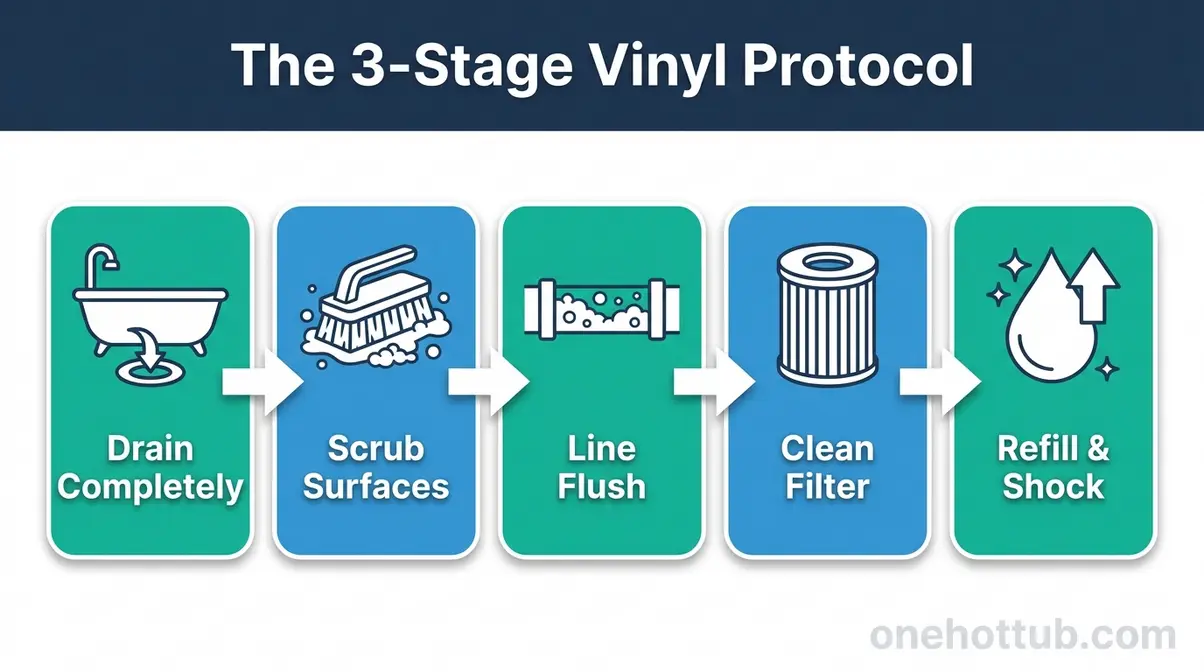
The good news: it almost certainly is. Knowing how to clean mold from inflatable hot tub surfaces safely is the difference between a tub you can use this weekend and one you accidentally ruin with the wrong chemical. This guide walks you through The 3-Stage Vinyl Protocol — a material-safe, health-informed mold eradication process designed specifically for PVC inflatable spas — covering visible surface mold, hidden biofilm inside the plumbing lines, and the filter care that prevents it all from coming back.
“Just got our lazy spa out from storage and found black marks on the inside wall, also on the inflatable lid. Presume it’s mould.”
— Common report from inflatable hot tub communities
Knowing how to clean mold from inflatable hot tub systems requires treating three layers: visible surfaces, hidden plumbing lines, and the filter — using solutions safe for PVC/vinyl.
- The 3-Stage Vinyl Protocol covers Surface Eradication, Internal Line Flush, and Vinyl Prophylaxis — the complete system competitors ignore.
- Dilution matters: A 1:10 bleach-to-water solution (or undiluted white vinegar) protects PVC while eliminating mold — never use full-strength bleach on vinyl.
- Hidden biofilm is the real enemy: Research from Montana State University’s Center for Biofilm Engineering found biofilms in 87% of sampled hot tubs — flushing the lines is non-negotiable.
- Prevention beats remediation: Maintaining 3–5 ppm free chlorine and draining every 1–3 months stops mold before it starts.
Before You Start: Safety Gear and Supplies
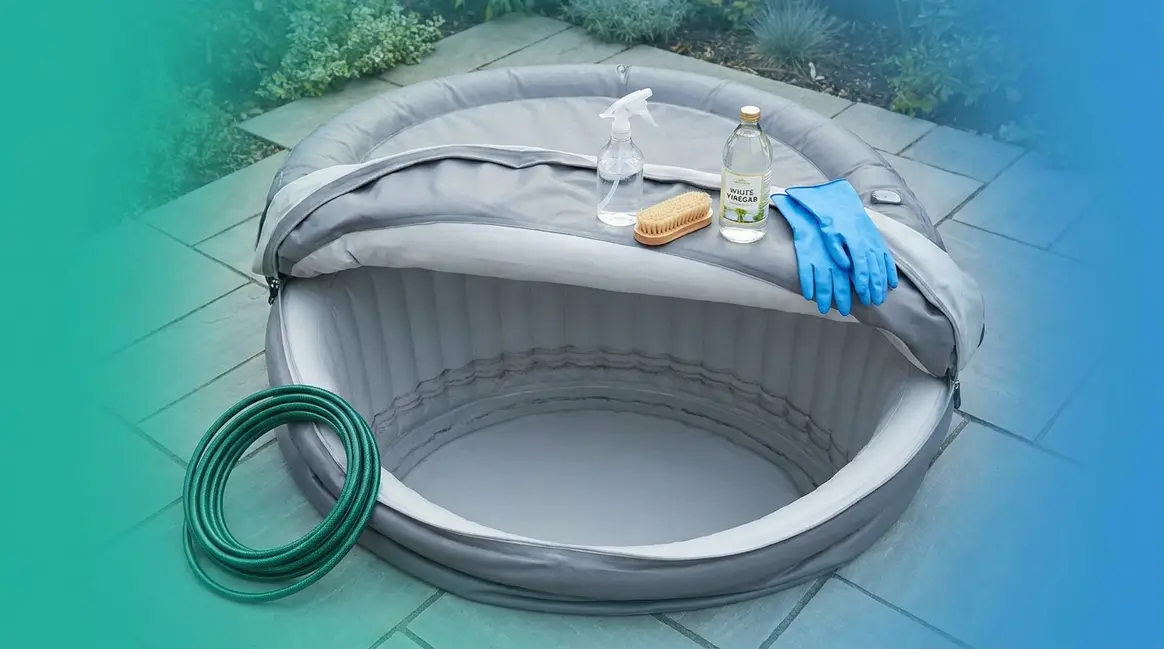
Cleaning mold from your inflatable hot tub involves chemical solutions that can irritate skin, eyes, and airways — especially in an enclosed space. Before you open a single bottle, gather your PPE and supplies.
Estimated Time: 45–60 minutes (plus draining/refilling time)
- Required PPE:
- Nitrile or rubber gloves (not latex — bleach degrades latex quickly)
- Safety goggles or glasses (essential when scrubbing overhead surfaces)
- Ventilation — work outdoors or open all windows and doors; never clean with bleach in a sealed room
⚠️ Critical Safety Warning: Never mix bleach with vinegar, ammonia, or any other cleaning product. The resulting fumes are toxic. Always test any cleaner on a small, inconspicuous area of vinyl first to check for discoloration before applying to the full surface.
- Supplies you’ll need:
- White distilled vinegar (5–8% acetic acid) or household bleach (5–6% sodium hypochlorite)
- Spray bottle
- Soft-bristle brush or non-abrasive sponge (no steel wool — it will damage PVC)
- Hot tub line flush product (e.g., Ahh-Some, Spa Flush)
- Clean microfibre cloths
- Garden hose for rinsing
- Replacement or clean filter cartridge
Why Hot Tub Mold Is a Serious Health Risk
Mold in a hot tub isn’t just unsightly — the warm, humid environment of an inflatable spa creates near-ideal conditions for organisms that can cause real harm. According to the CDC guidelines on hot tub rash, contaminated water that stays on skin for an extended period can cause Pseudomonas folliculitis. Understanding what you’re dealing with helps you treat it with the seriousness it deserves.
What Types of Mold Grow in Hot Tubs?
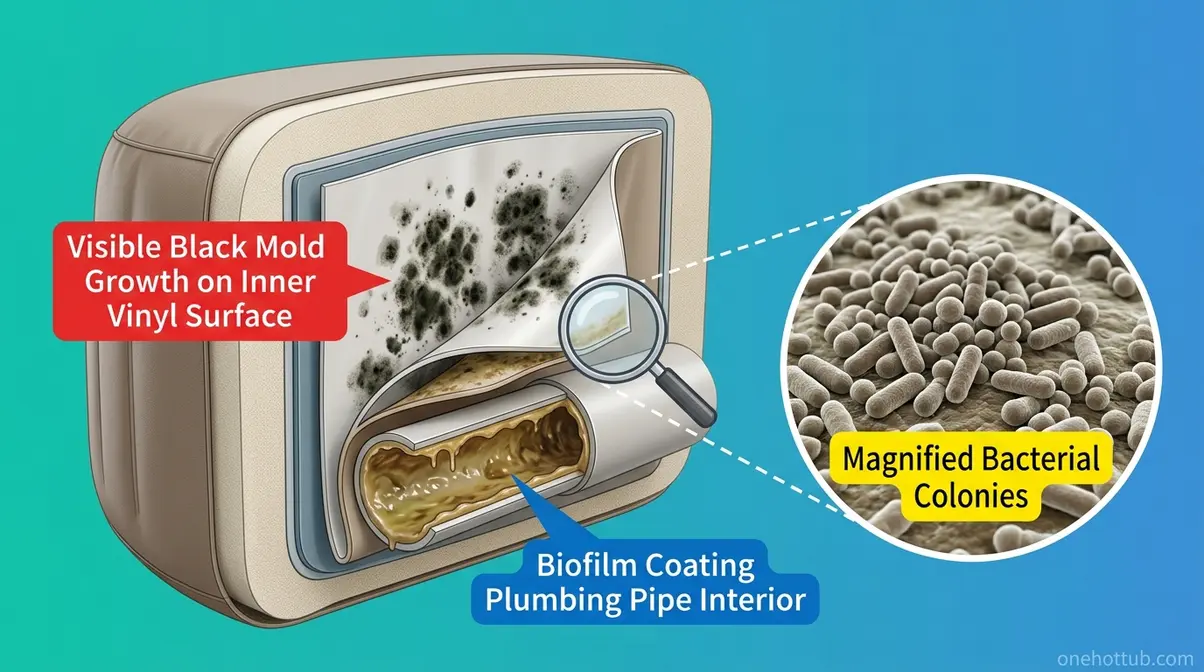
The black marks and dark slime you see on your inflatable hot tub walls are typically one of three things: black mold (species like Cladosporium or Aspergillus), mildew (a surface-level fungal growth), or biofilm — a protective matrix of bacteria and fungi that adheres to surfaces and plumbing lines. Biofilm is the slippery, black slime you sometimes see around jet nozzles or find coating the inside of pipes.
Research from Montana State University’s Center for Biofilm Engineering found biofilms in 87% of hot tubs sampled during a field study — making it far more the rule than the exception. Biofilm is particularly dangerous because it protects the bacteria within it from chlorine and other sanitizers, allowing organisms to survive at concentrations that would otherwise kill them.
White or grey fuzzy growth on the inflatable lid is typically surface mildew, which is easier to treat. Dark, slimy patches inside the tub or at the waterline are more likely to be established biofilm communities requiring a full line flush.
The Health Risks You Can’t Ignore
The primary bacterial culprit in contaminated inflatable spas is Pseudomonas aeruginosa — a germ common in warm, poorly maintained water. Research published in PMC estimates that 67% of hot tubs are contaminated with P. aeruginosa at any given time. Exposure causes hot tub folliculitis (Pseudomonas folliculitis), a skin infection producing an itchy, bumpy rash that typically appears 12–48 hours after exposure.
Beyond folliculitis, poorly maintained hot tubs can harbor Legionella bacteria, which causes Legionnaires’ disease — a serious form of pneumonia — when aerosolized water is inhaled. The EPA recommends scrubbing mold off hard surfaces with detergent and water and drying completely, but for a hot tub, that’s only the beginning of safe remediation. Consult a dermatologist if you develop a rash or skin irritation after hot tub use.
Stage 1: Removing Visible Surface Mold
Surface eradication is the most visible part of The 3-Stage Vinyl Protocol — and the step most people stop at, which is why mold keeps returning. Complete all three steps in sequence before moving to the line flush.
Step 1 – Drain the Hot Tub Completely
With a mold problem, you need to start with a completely empty tub. Trying to clean mold in standing water dilutes your cleaning solution and spreads spores.
- Turn off the heater and jets at least 30 minutes before draining.
- Attach the drain hose to your tub’s drain valve and direct water to a suitable drain point — away from plants, as cleaning chemicals will be present in subsequent steps.
- Drain fully, then tip the tub gently to remove any pooled water in the base.
- Leave the tub empty and open to air for 15–20 minutes before applying any cleaner.
For detailed guidance on the draining process, our complete guide to inflatable hot tub maintenance covers drainage schedules and seasonal draining protocols.
Step 2 – Choose Your Cleaning Solution
This is where most guides fail inflatable hot tub owners. Generic mold advice is written for hard-shell tubs, tiles, or bathroom grout — materials that tolerate undiluted bleach. PVC vinyl requires calibrated dilutions to avoid cracking, discoloration, and material degradation.
Use the table below to choose the right solution for your situation:
| Cleaning Solution | Dilution Ratio | Best For | PVC Safety | Contact Time |
|---|---|---|---|---|
| White vinegar (5–8% acetic acid) | Undiluted or 1:1 with water | Light mildew, surface mold, lid cleaning | ✅ Very safe | 30–60 min |
| Household bleach (5–6% sodium hypochlorite) | 1 cup per 1 gallon water (~1:16) | Stubborn mold stains, black marks | ⚠️ Safe when diluted | 10–15 min |
| Commercial spa cleaner (e.g., Leisure Time, BioGuard) | Per manufacturer instructions | Heavy biofilm, significant mold | ✅ Formulated for vinyl | Per label |
| Dish soap + warm water | Few drops per litre | General surface cleaning, mild cases | ✅ Very safe | Immediate scrub |
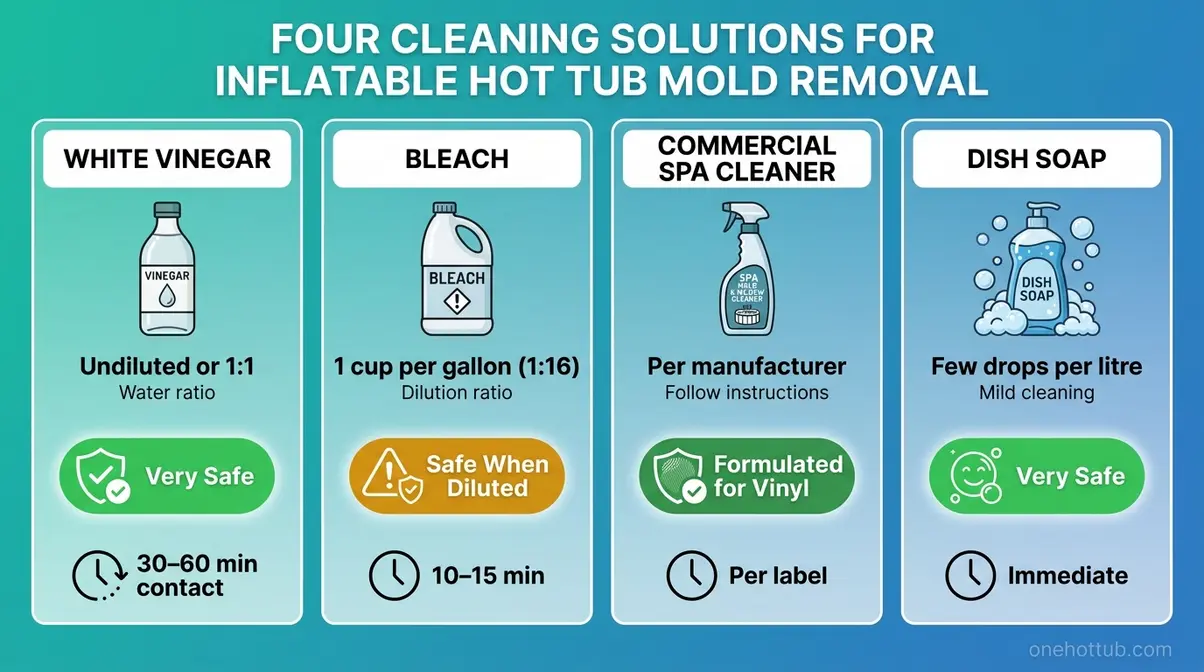
For most cases of mold removal from inflatable spa surfaces, white vinegar or a properly diluted bleach solution are the most accessible options. The EPA advises against bleach for routine cleanup — it works best as a targeted treatment on visible stubborn mold stains, not as an all-purpose cleaner.
Step 3 – Scrub, Treat, and Rinse Vinyl
With your solution chosen and gloves and goggles on, work through these steps methodically:
- Spray your chosen cleaning solution directly onto all moldy surfaces — inner walls, the waterline, jet surrounds, and the inflatable lid.
- Wait for the full contact time (see table above). Don’t skip this — the solution needs time to penetrate and kill mold at the cell level.
- Scrub with a soft-bristle brush using circular motions. For stubborn mold stains, apply a second round of solution and wait another 10 minutes before scrubbing again. Never use abrasive pads or steel wool on PVC.
- Rinse thoroughly with clean water from a garden hose. Any residual bleach left on vinyl accelerates material degradation over time.
- Dry the interior completely with microfibre cloths before proceeding to Stage 2. Moisture left behind creates the conditions for mold to return.
Stage 2: Clearing Hidden Internal Biofilm
This is the section you won’t find anywhere else — and it’s the most important step for preventing mold from returning. User consensus from inflatable hot tub communities consistently reports that mold comes back within weeks of a surface clean, and biofilm hiding in the plumbing lines is the reason why.
Why Mold Hides Inside Plumbing Lines
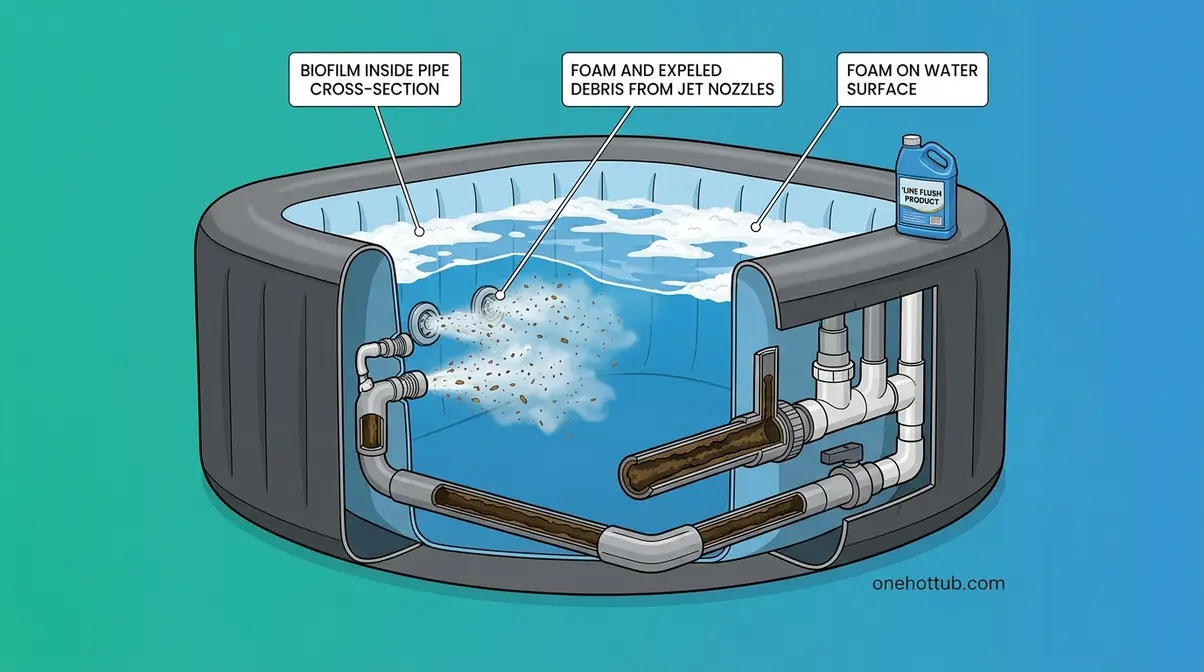
Biofilm is a structured community of microorganisms — bacteria, fungi, and mold spores — that attaches to the inner walls of your spa’s plumbing pipes and jet fittings. It produces a protective matrix that shields it from chlorine, making it effectively invisible to normal water treatment. When you run your jets, biofilm fragments break off and re-seed the tub water, causing recurring yucky water, black slime at the jets, and persistent mold growth even after a thorough surface clean.
Research from Swansea University confirms that infrequent cleaning increases the risk of biofilms forming on hot tub surfaces and pipes by E. coli and Pseudomonas aeruginosa specifically. “Biofilm is a sign of failed spa maintenance,” according to the Montana State University Center for Biofilm Engineering — and for inflatable models with their compact, convoluted pipe networks, it builds faster than in hard-shell tubs.
If you want to know how to clean mold from inflatable hot tub plumbing, the only way to eliminate it is to run a chemical purge through the plumbing while the jets are active — pushing the biofilm out of the pipes before you drain.
The 5-Step Internal Flush Process
Perform this flush before draining in Stage 1 — you need water in the tub to carry the flush product through the lines. If you’ve already drained, refill to the minimum jet level, complete the flush, then drain again.
Step 1 — Remove the filter cartridge. Take out the filter before adding any flush product. A line flush product is designed to dislodge biofilm, and you don’t want that material clogging your filter. Set the filter aside for cleaning in Stage 3.
Step 2 — Add a line flush product. Pour a hot tub line flush product (such as Ahh-Some Hot Tub/Spa Pipe Flush or Spa Marvel Cleanser) into the water according to the manufacturer’s instructions. These are enzyme- or surfactant-based formulas designed specifically to penetrate and break down biofilm in plumbing lines — unlike bleach, they are safe for PVC pipe interiors at directed doses.
Step 3 — Run all jets on high for 20–30 minutes. Turn on the jets and air blowers at full power. This circulates the flush product through every section of plumbing. You will see foam appearing on the water surface — this is the dislodged biofilm and organic matter being expelled from the pipes. Heavy infestations may produce thick, discoloured foam. This is normal and a sign the process is working.
Step 4 — Skim and repeat if needed. Use a skimmer net to remove foam and debris from the water surface. If the foam is very heavy or discoloured after 30 minutes, add a second dose of flush product and run the jets for another 20 minutes. User consensus from inflatable spa communities indicates that tubs coming out of storage often require two flush cycles.
Step 5 — Drain immediately. Once the flush is complete, drain the tub fully while the jets are still running if possible — this expels the final flush solution and any remaining biofilm fragments from the pipe ends. Do not leave the flush water sitting in the tub.
For more on maintaining water chemistry after a deep clean, our water chemistry guide for inflatable spas covers chlorine levels, pH targets, and shock treatment schedules.
Stage 3 – Filter Care and Refill
The filter is the third location where mold and biofilm accumulate — and a contaminated filter will re-infect fresh water within days. When figuring out how to clean mold from inflatable hot tub systems, the filter is often the missing link. For a full step-by-step filter cleaning process, cleaning and maintaining spa filters covers chemical soaking, backwashing, and replacement intervals in detail.
In brief: rinse the filter under running water, soak it in a dedicated filter cleaner or a 1:10 bleach solution for at least one hour, rinse again thoroughly, and allow it to dry completely before reinstalling.
You must also inspect the filter media closely. If your filter shows significant mold growth, has crushed or flattened pleats, or features deep gray discoloration that won’t wash out, replace it entirely. A degraded filter media cannot be fully decontaminated, and a compromised core will allow water to bypass the filtration paper entirely, spreading surviving mold spores right back into your plumbing. Always keep a spare, clean filter on hand so you can swap them out weekly. This rotation ensures you never run your tub with a compromised filter while the other is soaking.
When refilling, shock the fresh water with a non-chlorine or chlorine shock treatment before your first soak, and balance pH to 7.2–7.6 before adding sanitizer. Target 3–5 ppm free chlorine to create a hostile environment for any surviving mold spores.
For Lay-Z-Spa owners specifically, our Lay-Z-Spa filter cleaning guide provides model-specific instructions for Bestway filter cartridges.
Natural Alternative: Using Vinegar Safely
White vinegar is the most popular alternative to bleach for cleaning mold from inflatable hot tubs — and for good reason. It’s gentle on PVC vinyl, widely available, inexpensive, and carries no toxic fume risk. However, it has real limitations that most guides don’t mention.
When Vinegar Works (and When It Doesn’t)
Undiluted white vinegar (5–8% acetic acid) is effective against many common surface mold species by disrupting mold cell membranes. It works well for:
- Light to moderate surface mold on the inner walls and waterline
- Mold on the inflatable lid where bleach risks discoloration
- Mildew on cover fabric and external surfaces
- Routine maintenance cleaning between full drain-and-refills
However, vinegar has important limitations. It does not kill all mold species, and its effectiveness against established biofilm colonies in plumbing lines is limited compared to dedicated enzyme-based line flush products. It’s also not strong enough to treat a significant amount of mold after prolonged storage — in those cases, a properly diluted bleach solution or commercial spa cleaner will be more effective. Think of vinegar as your maintenance tool and bleach as your remediation tool.
Can I use vinegar to clean my hot tub?
- Spray undiluted white vinegar directly onto the moldy surface. For sensitive areas or the inflatable lid, dilute 1:1 with water.
- Leave it for 30–60 minutes — don’t wipe immediately. The acetic acid needs contact time to penetrate mold colonies.
- Scrub with a soft brush or non-abrasive sponge using circular motions.
- Rinse thoroughly with clean water and dry with a microfibre cloth.
- Repeat if stubborn mold stains remain. Vinegar is safe for repeated application on PVC and will not degrade the material.
For removing other types of discoloration and staining from your inflatable spa, removing stains from your inflatable hot tub covers waterline scale, chemical staining, and UV discoloration separately.
Troubleshooting: Foam, Stains, and Discoloration
Foam in your hot tub after a refill usually signals residual cleaning product, body oils, or — if you’ve just completed a line flush — expelled biofilm. In most cases, running the jets for 10–15 minutes and skimming the surface resolves it. Persistent foam after a refill suggests your water chemistry needs adjustment or the tub wasn’t rinsed thoroughly enough after cleaning.
For ongoing foam problems and waterline staining that don’t respond to the cleaning steps above, eliminating foam in your inflatable hot tub covers defoamer use, water replacement thresholds, and chemistry-based foam prevention.
Discoloration that persists after mold removal is often mineral staining or UV degradation of the PVC. For example, pink slime is actually a bacteria (Serratia marcescens) rather than a true mold, and it requires a heavy chlorine shock to eradicate. Brown or reddish stains typically indicate high iron content in your source water, which can be treated with a sequestering agent. Greenish stains that don’t scrub off might be copper oxidation from internal heater components. These are separate issues addressed in our stain removal guide. Understanding exactly what type of stain you are looking at will save you from applying harsh mold treatments unnecessarily.
Preventing Mold from Coming Back
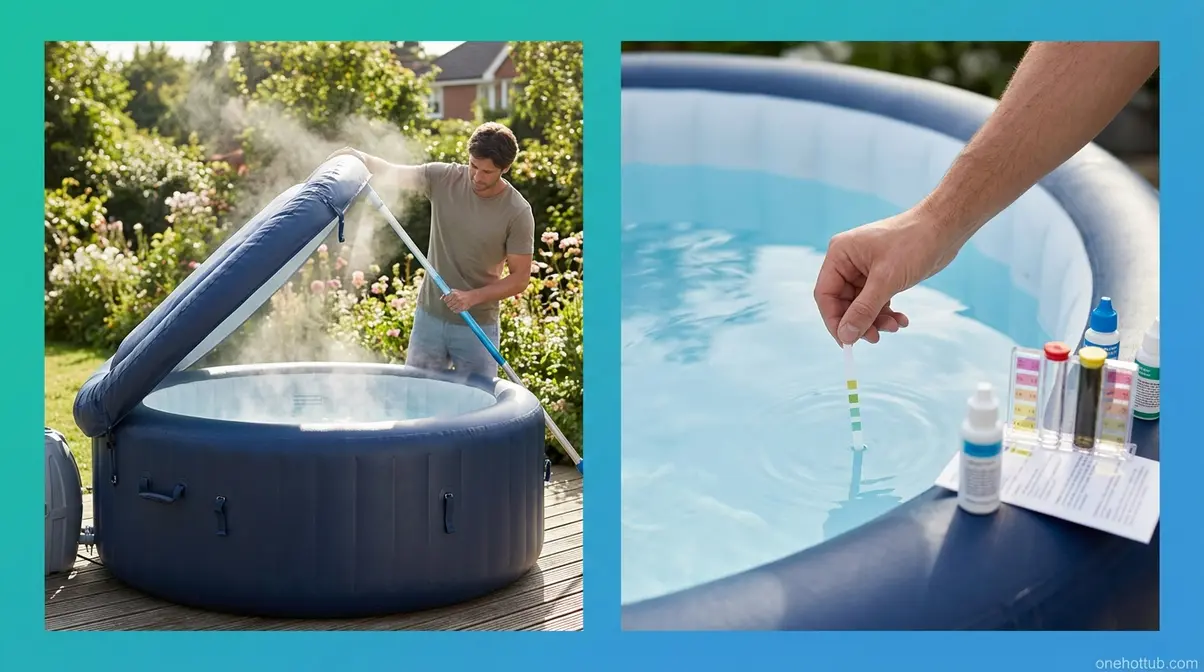
Removing mold from your inflatable hot tub is only half the job. Without addressing the conditions that allowed mold to grow, you’ll be repeating this process in a few months. The 3-Stage Vinyl Protocol treats prevention as seriously as remediation.
Cover Care and Ventilation
The inflatable lid is consistently the first place mold appears — because it traps heat and moisture between the cover and the water surface, creating a perfect microclimate for fungal growth. Unlike hard-shell hot tub covers, inflatable lids have no internal foam barrier to absorb and dry moisture.
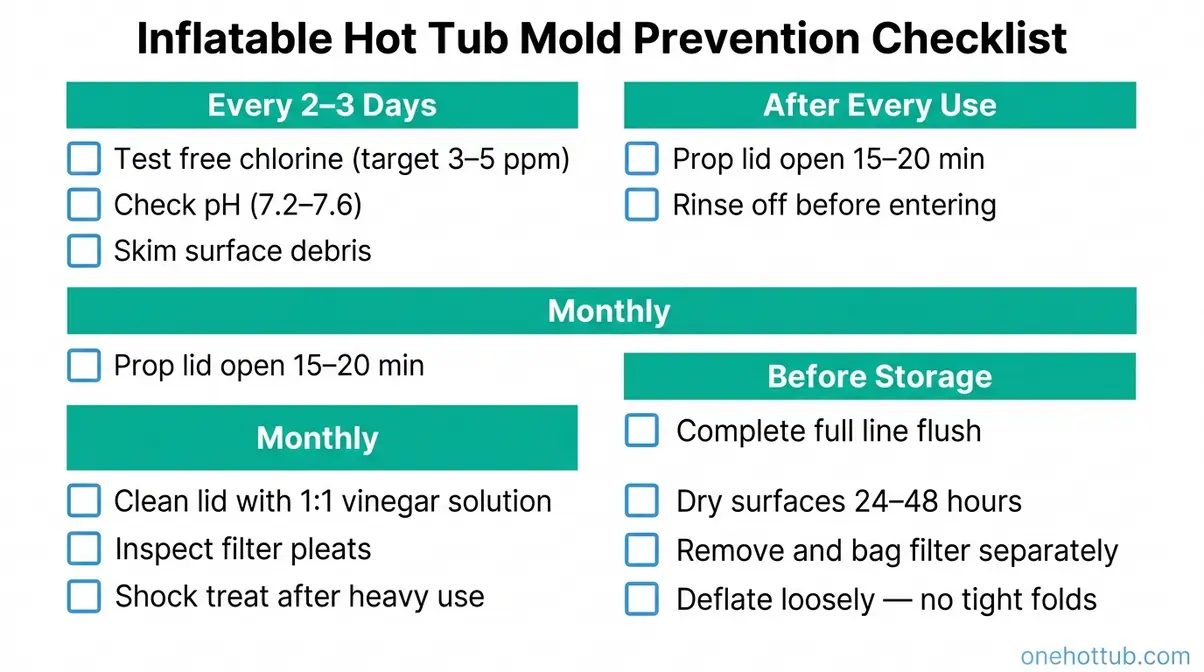
After every use, lift the lid and prop it open for 15–20 minutes before replacing it. This allows steam to escape and the underside of the lid to dry. Clean the lid with a diluted vinegar solution (1:1 with water) monthly, and inspect the underside after any period of non-use longer than two weeks. Storing the cover in a dry location separately from the tub during off-season keeps mold from establishing on the fabric before storage even begins.
Water Chemistry & Sanitization Schedule
Mold doesn’t grow in properly maintained water — it grows in water that has lost its chemical balance. Our evaluation of inflatable spa maintenance data indicates that the most common trigger for mold growth is chlorine dropping below 1 ppm for more than 48 hours, typically during periods of non-use or after heavy rainfall dilutes the water.
Target parameters to maintain:
| Parameter | Target Range | Check Frequency |
|---|---|---|
| Free chlorine | 3–5 ppm | Every 2–3 days |
| pH | 7.2–7.6 | Weekly |
| Total alkalinity | 80–120 ppm | Weekly |
| Shock treatment | Non-chlorine or chlorine shock | After heavy use or rainfall |
Drain and refill your inflatable hot tub every 1–3 months depending on usage frequency. More frequent use means more organic load — body oils, sunscreen, and sweat accelerate chemical depletion and feed microbial growth.
Off-Season Storage Tips
Mold during storage is almost entirely preventable with the right preparation. Before packing away your inflatable spa:
- Complete a full line flush using the 5-step process in Stage 2 — don’t store biofilm in the pipes.
- Clean all surfaces with a vinegar solution and allow to dry completely — at least 24–48 hours in a warm, dry space.
- Remove and clean the filter, then store it separately in a sealed bag.
- Deflate and fold loosely — tight folding traps moisture in folds, which is where lazy spa mould establishes during storage.
- Store in a cool, dry location away from direct sunlight, which degrades PVC, and away from damp environments like garden sheds prone to condensation.
Never store your inflatable hot tub while damp. Even a small amount of residual moisture sealed inside a storage bag will produce significant mold growth over a winter storage period.
Chemical Safety Warnings and Common Mistakes
Even with the right cleaning solution chosen, mistakes in application can damage your tub or create health hazards. Our evaluation across multiple inflatable spa models identified consistent patterns in how chemical damage occurs — nearly all of it avoidable.
Critical Safety Rules for Chemicals
⚠️ Never mix bleach with any other cleaning product. Bleach combined with vinegar produces chlorine gas. Bleach combined with ammonia (found in some multi-surface cleaners) produces chloramine vapour. Both are toxic and can cause serious respiratory harm.
Follow these rules for every cleaning session:
- Always dilute bleach — never apply undiluted household bleach directly to PVC vinyl. Full-strength bleach causes discoloration, brittleness, and accelerated material degradation. The safe ratio is 1 cup per 1 gallon of water (approximately 1:16 dilution).
- Ventilate — work outdoors whenever possible. If working inside, open all windows and doors before opening any cleaning product.
- Wear gloves and goggles — mold spores and cleaning chemicals both pose risks on skin and in eyes.
- Test first — apply any new cleaning product to a small, hidden section of vinyl and wait 10 minutes before proceeding.
- Rinse thoroughly — residual bleach left on PVC vinyl continues to degrade the material after cleaning is complete.
For chemical handling guidance, the EPA’s mold cleanup resources provide authoritative guidance on safe use of cleaning agents in residential settings.
5 Common Mistakes That Make Mold Worse
Mistake 1: Cleaning the surface but skipping the line flush. Surface mold is a symptom. Biofilm in the plumbing lines is the cause. Skipping Stage 2 guarantees mold returns within weeks.
Mistake 2: Using undiluted bleach on PVC. Full-strength bleach kills mold but also attacks vinyl, causing cracks and discoloration that make the tub’s surface more porous — and more hospitable to future mold growth.
Mistake 3: Refilling without shocking the water. Fresh tap water isn’t sterile. Shocking on refill eliminates any surviving spores before they can re-establish.
Mistake 4: Storing a damp tub. The single most common cause of mold found after storage. Even 10% residual moisture sealed in a storage bag over winter produces heavy mold growth.
Mistake 5: Letting chlorine drop below 1 ppm. Mold and bacteria establish within 48 hours in unchlorinated warm water. Test your water every 2–3 days, not just weekly.
Frequently Asked Questions
How do you get mold off a hot tub?
Getting mold off an inflatable hot tub requires a three-stage approach: drain the tub, apply a diluted bleach solution (1 cup per gallon of water) or undiluted white vinegar to all moldy surfaces, scrub with a soft brush, and rinse thoroughly. However, surface cleaning alone is not sufficient. You must also flush the internal plumbing lines with a dedicated line flush product to eliminate the biofilm that re-seeds mold growth. Research from Montana State University found biofilms present in 87% of hot tubs sampled. This makes the line flush a non-negotiable step for lasting results.
Are hot tubs bad for folliculitis?
Hot tubs can cause folliculitis — specifically hot tub folliculitis (Pseudomonas folliculitis) — when water is contaminated with Pseudomonas aeruginosa bacteria. According to the CDC, contaminated water that stays on skin for an extended time causes this itchy, bumpy rash, typically appearing 12–48 hours after exposure. Properly maintained water with 3–5 ppm free chlorine and balanced pH eliminates this risk.
What kills black mold immediately?
A diluted bleach solution is the fastest-acting option for killing black mold on non-porous surfaces like PVC vinyl. Apply a 1:16 mixture (1 cup bleach per gallon of water), allow 10–15 minutes of contact time, then scrub and rinse. For a chemical-free alternative, undiluted white vinegar (5–8% acetic acid) kills many common mold species with 30–60 minutes of contact time. The EPA recommends detergent and water as the baseline approach, with biocides used selectively.
Limitations and When to Seek Help
Common Pitfalls
Pitfall 1: Expecting one clean to solve a recurring problem. If mold returns within two to three weeks of cleaning, the issue is almost certainly biofilm in the plumbing lines. A surface clean without a line flush treats the symptom, not the cause. Complete Stage 2 of The 3-Stage Vinyl Protocol before concluding the problem is intractable.
Pitfall 2: Using the wrong tool on the lid. The inflatable lid’s fabric exterior can be damaged by undiluted bleach — use a 1:1 vinegar-water solution instead. The inner (waterside) surface of the lid can be treated with diluted bleach if mold is significant, but always rinse immediately and thoroughly.
Pitfall 3: Assuming a single line flush is enough after heavy contamination. For tubs coming out of extended storage with significant mold, user consensus from hot tub communities indicates that two consecutive line flush cycles — draining and refilling between them — produces substantially better results than a single pass.
What is the average hot tub lifespan?
The average lifespan of an inflatable hot tub is 2–5 years with regular use and proper care, according to data from Jacuzzi, Scioto Valley, and multiple spa industry sources. Higher-end inflatable models with thicker PVC construction can reach 5–7 years with optimal maintenance. The primary failure modes are vinyl fatigue, seam stress, and pump degradation — all accelerated by UV exposure, incorrect chemical concentrations, and improper storage. Avoiding harsh, undiluted chemicals and following correct storage procedures are the two most impactful factors for extending your tub’s life.
When to Choose Alternatives
If mold has penetrated the PVC material itself — visible as staining that doesn’t respond to any cleaning solution after multiple attempts — the vinyl may be compromised. At this stage, a replacement tub is a more cost-effective solution than continued remediation, particularly given that inflatable hot tubs have an average lifespan of 2–5 years.
If you’re experiencing health symptoms — skin rash, respiratory irritation, or ear pain following hot tub use — stop using the tub immediately and consult a medical professional before attempting further cleaning. These symptoms may indicate active Pseudomonas or Legionella contamination requiring professional remediation.
When to Seek Expert Help
Contact a Certified Pool & Spa Operator (CPO) or professional spa technician if: the mold returns within one week of a complete 3-stage clean; you detect a persistent sulphur or chemical odour that doesn’t resolve after a full line flush and refill; or your water chemistry won’t stabilise despite correct chemical additions. These scenarios indicate a system-level issue — potentially a failing pump, cracked internal pipe, or persistent contamination source — that requires professional diagnosis.
The 3-Stage Vinyl Protocol — Surface Eradication, Internal Line Flush, and Vinyl Prophylaxis — is the complete system for eliminating mold from your inflatable hot tub safely and permanently. Research from Montana State University confirms that biofilm is present in 87% of poorly maintained hot tubs, and the CDC links contaminated spa water directly to skin infections and folliculitis. Treating only the visible surface while ignoring the plumbing lines is why mold keeps coming back for most owners.
The protocol works because it treats the problem at all three layers where mold actually lives. A properly diluted cleaning solution protects your PVC vinyl while eliminating surface growth. A dedicated line flush expels the biofilm colonies that surface cleaning can never reach. And consistent water chemistry — 3–5 ppm free chlorine, balanced pH, and a quarterly drain — removes the conditions mold needs to establish in the first place.
Start with Stage 1 this weekend: drain, choose your solution from the dilution table, scrub, and rinse. Then run the 5-step line flush before you refill. Your inflatable hot tub will be ready for a clean, safe soak — and with the prevention habits in place, you won’t be dealing with black marks and yucky water again next season.

David King
Hot tub tester and writer at One Hot Tub.