What’s in this guide
Home ›Hot Tub Water Management
“My hot tub was green so I shocked it. I got in a day later for an hour (it was totally clear). My leg hair disappeared afterwards. Wtf?!?!?!”
— Real hot tub owner, r/hottub
You lifted the cover, saw green water, and now you’re stuck dealing with it — unsure if it’s safe, unsure what went wrong, and overwhelmed by conflicting advice online. That feeling is completely normal, and you’re not alone.
Here’s the problem: green hot tub water has two very different causes — algae growth and copper oxidation — and the fix for one can make the other worse. Dumping in shock chemicals without diagnosing the root cause wastes money and can trigger skin reactions like the one described above. This guide walks you through the “Diagnose Before You Dose” approach: identify the cause first, then follow a clear 5-step hot tub water green fix process to restore crystal-clear water safely. You’ll also learn when it’s safe to get back in, and how to stop green water from coming back.
Green hot tub water requires diagnosing the root cause — algae or copper oxidation — before any hot tub water green fix will work reliably.
- Diagnose first: Algae turns water murky green-brown; copper oxidation produces a clear teal-green tint.
- Fix sequence matters: Always balance pH and alkalinity before shocking — wrong order = wasted chemicals.
- Safe re-entry: Wait until chlorine drops to 2–4 ppm (or bromine to 4–6 ppm) before getting back in.
- Prevention is simple: Test water weekly, clean filters monthly, and drain every 3–4 months.
Why Is Your Hot Tub Water Green?
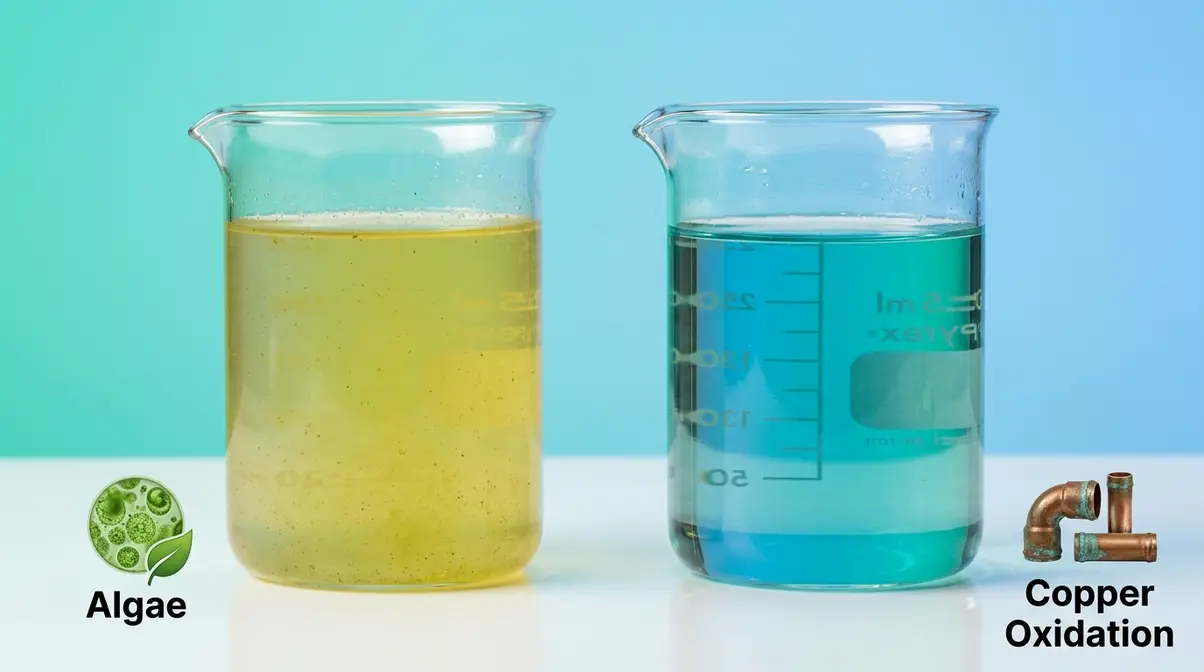
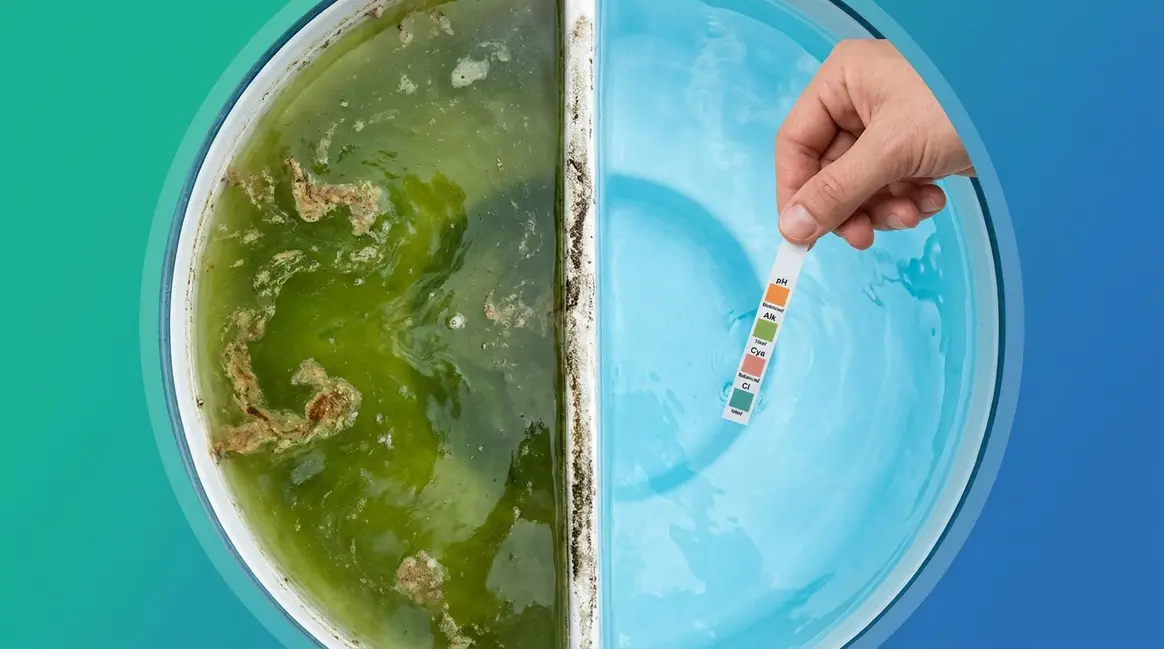
Green water is one of the most common hot tub problems owners encounter, but the cause isn’t always the same. When searching for a reliable hot tub water green fix, your first step is visual inspection. Before reaching for any chemicals, you need to know which problem you’re actually dealing with. Pool and spa professionals consistently point to two primary culprits: algae growth and copper oxidation. Treating algae with a copper-chelating agent does nothing; treating copper with algaecide makes things worse. Getting this right first is the entire point of the “Diagnose Before You Dose” method.
Visual Checker: Algae or Copper?
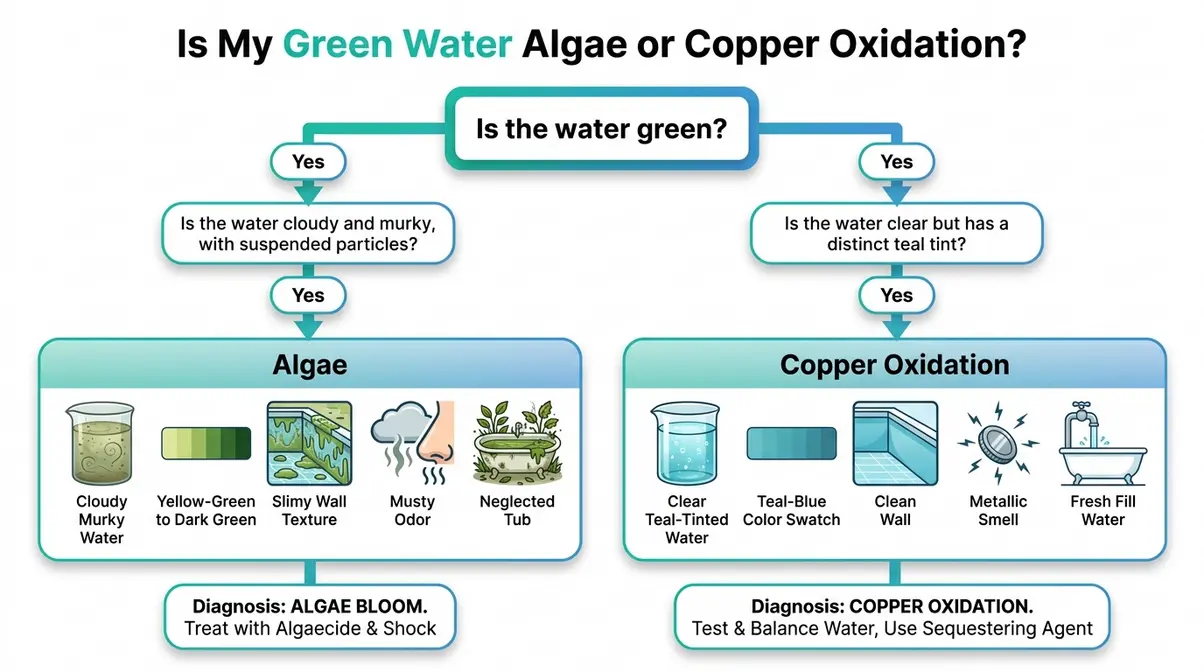
Look at your water carefully before doing anything else. These two problems look similar at a glance but have distinct visual signatures:
| Symptom | Algae | Copper Oxidation |
|---|---|---|
| Water clarity | Cloudy, murky | Clear but tinted |
| Color | Yellow-green to dark green | Teal or blue-green |
| Shell/wall texture | Slippery or slimy | Normal |
| Odor | Musty, earthy | Metallic or none |
| Likely trigger | Neglect, uncovered tub, warm weather | New fill water, copper pipes, copper-based algaecide |
Algae forms when sanitizer (chlorine or bromine) levels drop too low, allowing microscopic organisms to multiply rapidly. Copper oxidation happens when dissolved copper in the water — from pipes, heater elements, or copper-based algaecides — reacts with pH imbalances and turns the water green. According to FROG Products, copper oxidation is frequently misdiagnosed as algae, leading owners to add unnecessary shock treatments that don’t address the real problem.
What Causes Each Problem
Algae thrives when three conditions align: warm water, sunlight exposure (even indirect), and low sanitizer levels. Leaving your hot tub uncovered during summer, skipping weekly chemical checks, or letting chlorine drop below 1 ppm (parts per million — a measure of chemical concentration) creates ideal conditions for a bloom. Algae can turn a tub visibly green within 24–48 hours under the right conditions.
Copper oxidation is trickier. Copper enters your water from corroded heater elements, copper pipes, or copper-based algaecides. When your pH (a measure of water acidity, on a scale of 0–14) drops below 7.2, the acidic water aggressively dissolves metal components, releasing copper ions into the water. These ions then oxidize — essentially rust — and create that distinctive teal tint. Across hot tub owner communities, the consistent experience is that copper oxidation spikes after a fresh fill using well water, which often carries naturally higher mineral content.
How to Test Your Water Chemistry
Testing is non-negotiable. You cannot guess your way to balanced water. You’ll need either test strips (fast, inexpensive, less precise) or a liquid test kit (slower, more accurate). For a green water situation, a liquid test kit or a digital tester is strongly recommended.
What to test for:
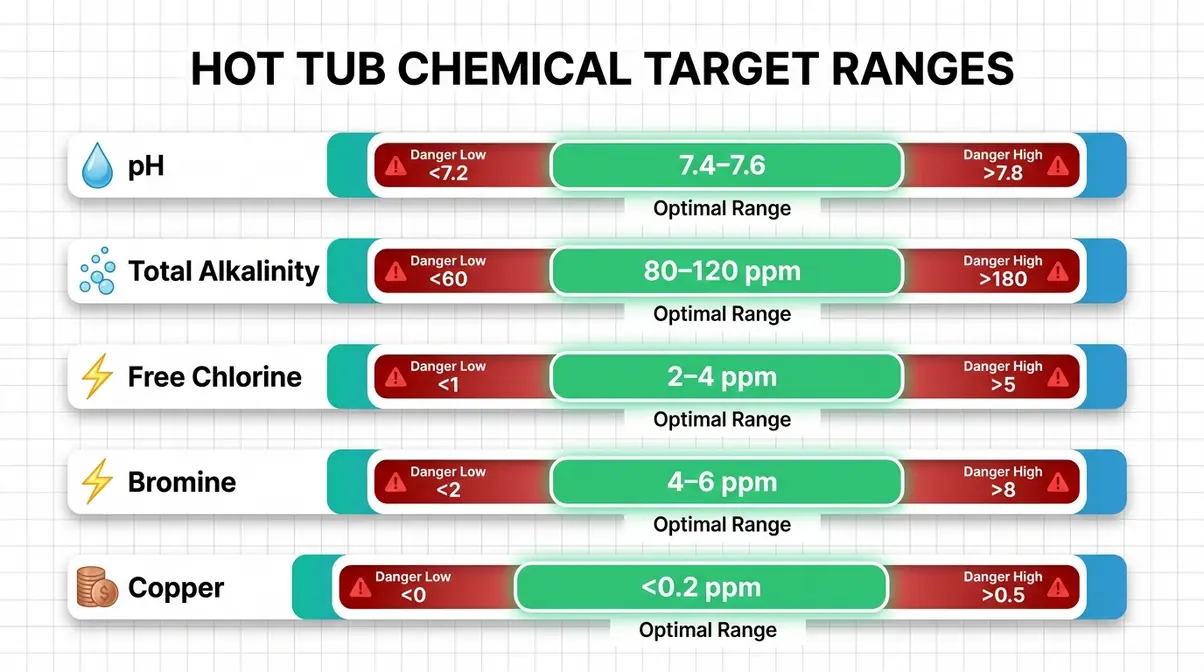
- pH: Target range 7.4–7.6
- Total Alkalinity (TA): Target range 80–120 ppm
- Free Chlorine: Target range 2–4 ppm (or bromine 4–6 ppm)
- Copper levels: Use a metals test strip if you suspect copper oxidation
Dip your strip or draw your sample from elbow depth — not the surface — for an accurate reading. If your test shows copper above 0.2 ppm alongside that teal color, copper oxidation is your diagnosis. If copper is normal but chlorine has crashed below 1 ppm with murky green water, you’re dealing with algae. Note your results before moving to the fix.
How to Fix Green Hot Tub Water: The 5-Step Process
Once you’ve diagnosed the cause, this sequenced 5-step hot tub water green fix process will clear your water. Do not skip steps or change the order. Each step builds on the last — balancing chemistry before shocking, for example, is essential because shock is far less effective in unbalanced water. Hydropool Hot Tubs notes that applying shock to water with incorrect pH is one of the most common reasons DIY fixes fail.
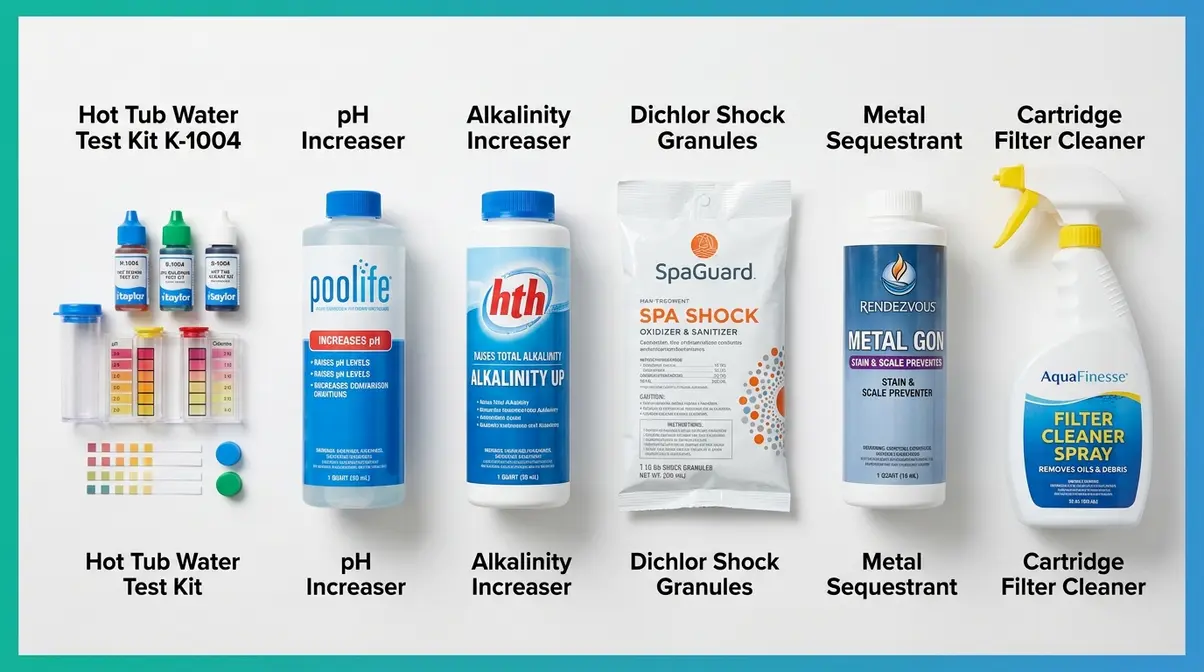
Before You Start — What You’ll Need:
- Water test kit or test strips (liquid kit preferred)
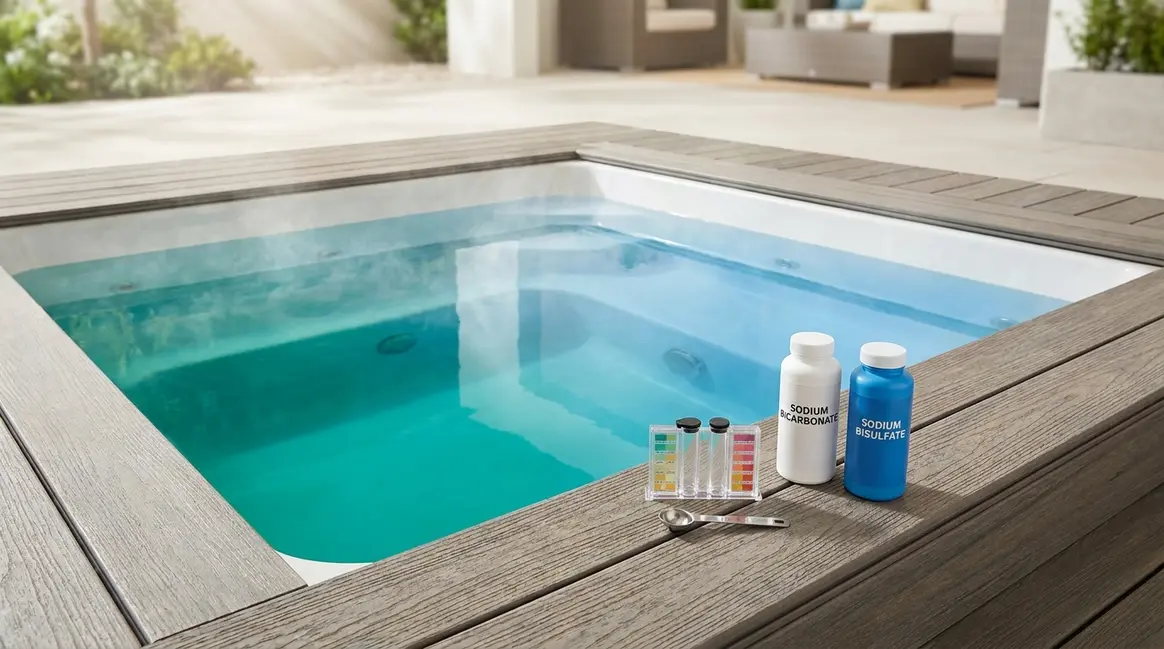
- pH increaser or decreaser (sodium carbonate / sodium bisulfate)
- Alkalinity increaser (sodium bicarbonate)
- Non-chlorine or chlorine shock (dichlor granules)
- Cartridge filter cleaner spray or soak solution
- Metal sequestrant (if copper oxidation is confirmed)
- A garden hose for filter rinsing
- Estimated total time: 2–4 hours active work + 12–24 hours circulation
Step 1: Balance pH and Alkalinity
Initial Action: Test, then adjust.
Start with alkalinity before touching pH — alkalinity acts as a buffer that stabilizes pH, so fixing it first makes pH adjustment easier and more stable.
- Test your water using your kit. Record pH and alkalinity readings.
- If alkalinity is below 80 ppm, add alkalinity increaser (sodium bicarbonate) at the rate specified on your product label. Run jets for 20 minutes, then retest.
- Once alkalinity is in the 80–120 ppm range, adjust pH. If pH is below 7.4, add pH increaser. If above 7.6, add pH decreaser.
- Retest after 30 minutes of jet circulation. Target: pH 7.4–7.6, alkalinity 80–120 ppm.
Why this step comes first: Shock and algaecides are significantly less effective outside this pH window. The NSF International and CPSC both identify proper pH balance as the foundation of safe, effective spa sanitation. Skipping this step is the #1 reason green water treatments fail.
If you have copper oxidation: Add a metal sequestrant (a product that binds dissolved metals so they can be filtered out) at this stage, before shocking. Shocking without sequestering copper first can cause the copper to plate onto your shell — a much harder problem to fix.
Step 2: Shock the Hot Tub
!(https://pub-8ce7ac24839649d585b239b4a6127843.r2.dev/images/hot-tub-water-green-fix__2840__en/green-hot-tub-health-risks-warning.webp)
Green hot tub water carries real health risks — folliculitis from Pseudomonas bacteria and chemical burns from improperly shocked water — both preventable with correct chemistry.
Primary Task: Shock the water.
Shocking means adding a large dose of oxidizer to kill bacteria, break down organic waste, and destroy algae. For green water, use dichlor granules (a fast-dissolving chlorine shock) unless you have a bromine system, in which case use non-chlorine shock followed by a bromine booster.
- Remove the cover completely. Leave it off for at least 20 minutes after shocking — gases released during oxidation need to escape.
- With jets running, add shock at double the normal maintenance dose (check your product label — typical green water dose is 2× standard). Broadcast it across the water surface while walking around the tub.
- Run jets on high for at least 30 minutes.
- Leave the cover off or cracked for 1–2 hours.
Do not get in the water at this stage. Chlorine levels immediately after shocking can spike to 10 ppm or higher — far above the safe re-entry threshold of 2–4 ppm. Across hot tub owner communities, the consistent report is that re-entering too soon after shocking is the cause of skin irritation, eye redness, and — as the quote above illustrates — more alarming reactions.
Step 3: Deep-Clean the Filter
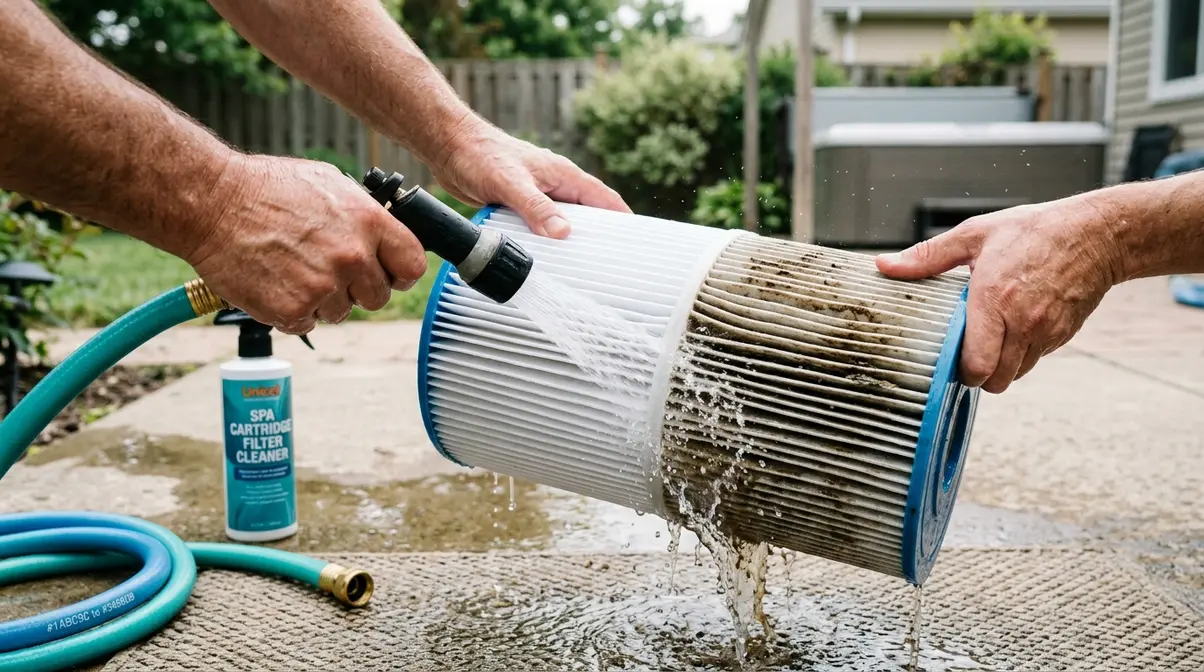
Required Maintenance: Remove, rinse, soak.
Your filter is almost certainly clogged with the same debris — dead algae cells, oxidized metals, organic matter — that turned your water green. Running clean water through a dirty filter just reintroduces contaminants. This step is where many DIY fixes fail.
- Remove the filter cartridge(s) from the housing.
- Rinse thoroughly with a garden hose, working from top to bottom between each pleat (the accordion-like folds of the filter material).
- Spray with a dedicated cartridge filter cleaner. Let it soak for 15 minutes (or overnight for heavily soiled filters — they’ll feel stiff and discolored when clogged).
- Rinse again thoroughly until water runs clear.
- Reinstall the filter.
If your filter is more than 12 months old, or if it’s visibly cracked or permanently discolored, replace it rather than cleaning it. A compromised filter cannot remove fine particles and will extend your clearing time significantly.
Step 4: Run the Jets and Circulate
System Process: Circulate.
Now let the chemistry and filtration do their work. Run your jets on high for a full circulation cycle — most hot tubs cycle the full water volume every 15–30 minutes, so run them for at least 2 hours continuously.
Keep the cover on (but cracked slightly if chlorine is still very high) to maintain water temperature, which helps the chemicals work faster. Check the water visually every few hours. Cloudy green water typically begins to lighten within 4–8 hours of this step if the diagnosis and treatment are correct.
Step 5: Re-test and Decide
Final Evaluation: Retest, then decide.
After 12–24 hours of circulation, retest your water. Compare results to your targets:
| Parameter | Target | Action if Off |
|---|---|---|
| pH | 7.4–7.6 | Adjust and retest |
| Alkalinity | 80–120 ppm | Add increaser if low |
| Free Chlorine | 2–4 ppm | Shock again if still green |
| Copper | <0.2 ppm | Add more sequestrant |
| Clarity | Clear | ✓ Ready |
If water is clearing: Continue circulating until chlorine reaches 2–4 ppm, then it’s safe to re-enter.
If water is still green after 24 hours: You likely have one of two situations — a misdiagnosis (go back and retest for copper), or a contamination level too severe for chemical treatment. At this point, the most cost-effective and reliable fix is a full drain and refill. According to Tribull Frog Spas, severely contaminated water that doesn’t respond to double-shock treatment within 24 hours almost always requires draining.
- Common Mistakes to Avoid:
- Adding shock before balancing pH (reduces effectiveness by up to 50%)
- Reinstalling a dirty filter after shocking (reintroduces contaminants immediately)
- Getting in before chlorine drops to safe levels (causes skin and eye irritation)
- Using a copper-based algaecide when copper is already the problem (amplifies oxidation)
Health Risks: Is It Safe to Use a Green Hot Tub?
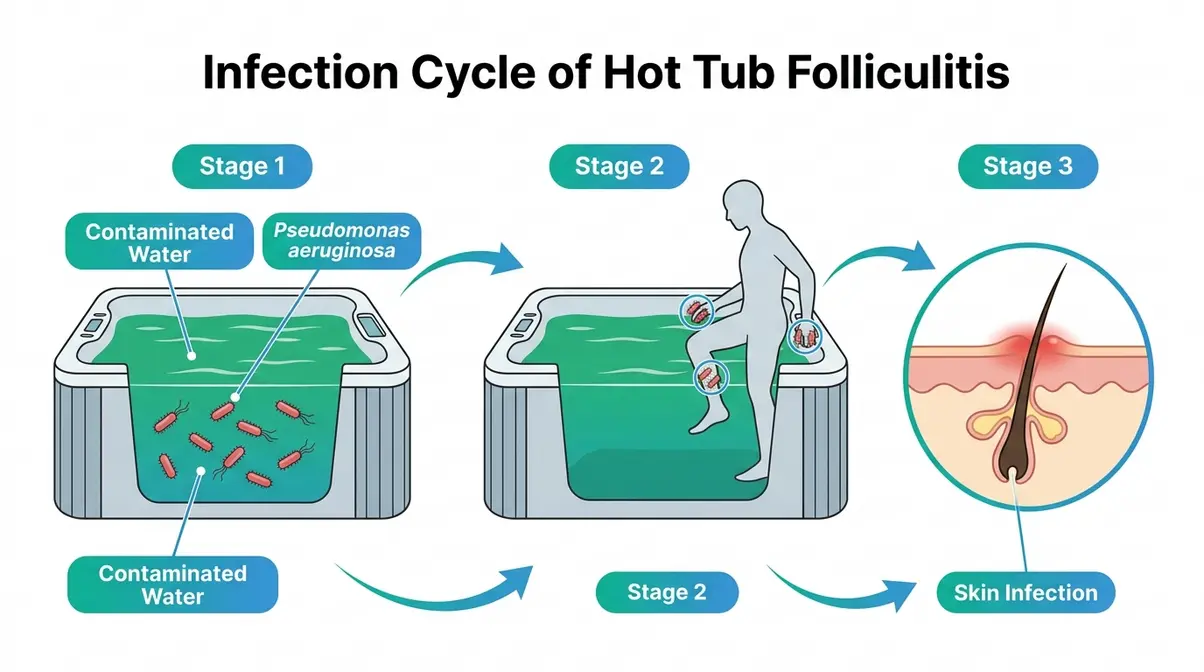
The short answer is no — not until the water is clear and chemistry is balanced. Green water is a visible signal that something is biologically or chemically wrong. Using a green hot tub isn’t just unpleasant; it carries real health risks that 75% of online guides fail to mention at all.
Hot Tub Folliculitis Explained
Hot tub folliculitis is a skin infection caused by Pseudomonas aeruginosa, a bacteria that thrives in warm, under-sanitized water. It appears as red, itchy bumps — often resembling a rash or pimples — typically on skin covered by a swimsuit. The infection develops within 12–48 hours of exposure to contaminated water.
The CDC identifies hot tub folliculitis as one of the most common recreational water illnesses (RWIs) linked to hot tubs and spas. Pseudomonas aeruginosa is particularly resilient — it survives in biofilm (the slippery coating that forms on tub walls and pipes) and resists normal chlorine levels when pH is out of range. Research published by the NCBI confirms that inadequate disinfectant levels are the primary driver of Pseudomonas outbreaks in recreational water.
The user quote at the top of this guide — leg hair disappearing after soaking in recently shocked water — describes a chemical burn consistent with extremely high chlorine exposure (likely above 10 ppm). This is a separate risk from folliculitis but equally serious. Both are preventable with proper chemistry management.
Can a Hot Tub Trigger AFib?
While not directly related to green water, another common health question is whether hot tubs can trigger atrial fibrillation (AFib). The sudden temperature change and heat stress can increase heart rate, which may be a consideration for those with preexisting cardiovascular conditions. Always consult a physician before using a hot tub if you have a history of heart issues.
⚠️ Medical Disclaimer: If you develop a persistent rash, fever, or signs of infection after hot tub use, consult a healthcare provider. This article does not constitute medical advice. People with heart conditions should consult their physician before using a hot tub — some research suggests that the heat and cardiovascular stress of hot tub use may be a consideration for those with certain cardiac conditions, including arrhythmias.
When Is It Safe to Re-Enter?
Re-entry is safe when all three of these conditions are met:
- Water is visually clear — no green tint, no cloudiness
- Free chlorine is between 2–4 ppm (or bromine 4–6 ppm) — confirmed by a fresh test, not estimated
- pH is in the 7.4–7.6 range — ensures the sanitizer is actually active
Do not rely on smell or appearance alone after shocking. Chlorine at 8–10 ppm can smell faint while still being chemically aggressive. Always test before re-entry after any treatment.
Preventing Green Water: Simple Maintenance Habits
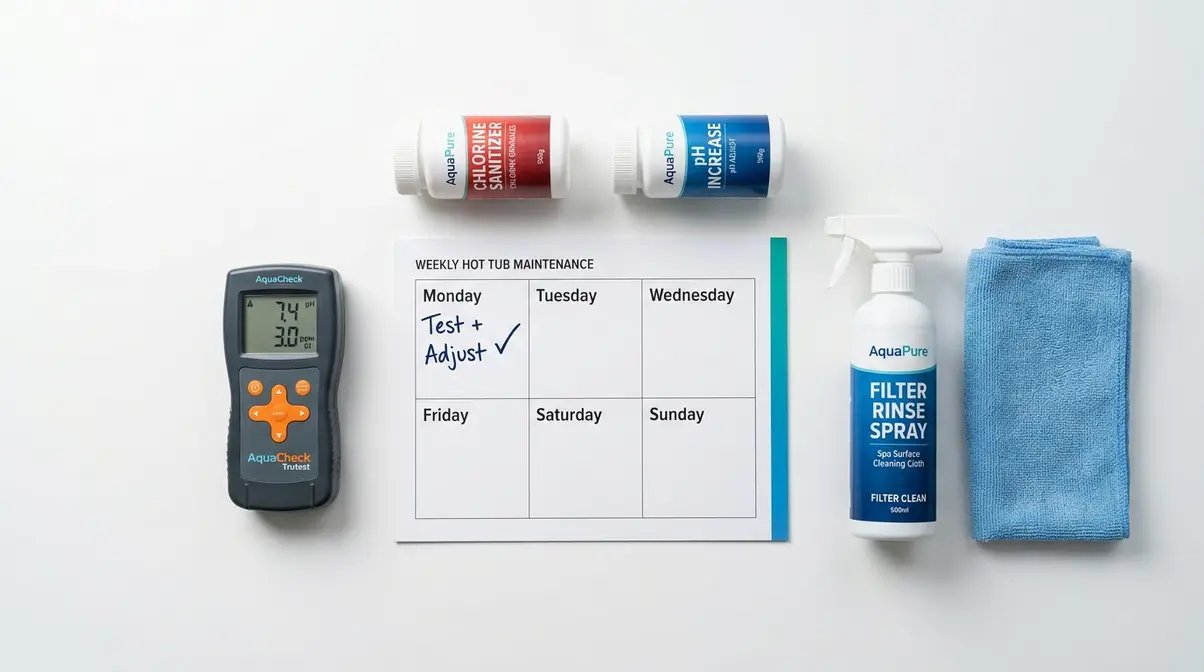
Fixing green hot tub water takes hours. Preventing it takes minutes per week. Our team evaluated the maintenance routines most consistently recommended by pool and spa professionals, and the pattern is clear: owners who follow a simple weekly schedule almost never deal with green water.
Your Weekly Maintenance Routine
Tools needed: Test strips or liquid kit, sanitizer, pH adjuster, filter rinse spray
Time required: 10–15 minutes per week
- Test water chemistry (Monday or your chosen day) — check pH, alkalinity, and sanitizer levels. Adjust anything outside target range immediately.
- Add sanitizer as needed to maintain chlorine at 2–4 ppm or bromine at 4–6 ppm.
- Rinse filter with a garden hose every 2–4 weeks (quick spray between pleats, no soaking required for routine maintenance).
- Wipe the waterline with a spa-safe surface cleaner to prevent biofilm buildup.
- Check the cover for damage — a cracked or waterlogged cover allows debris in and loses heat, both of which accelerate chemistry imbalances.
Check our hot tub maintenance schedule for a complete breakdown of daily and monthly tasks.
A consistent testing schedule is your most powerful prevention tool. The CPSC recommends testing spa water at least twice per week during heavy use periods. For most households, once per week is sufficient during light-to-moderate use.
When to Drain and Refill
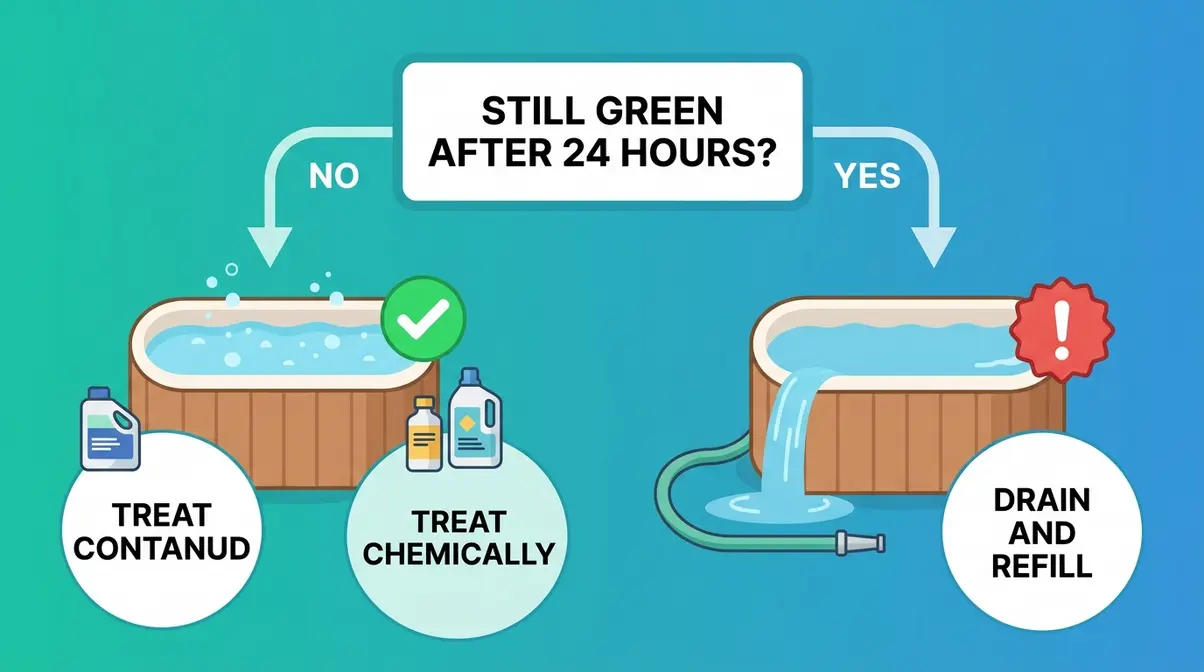
Even perfect chemistry can’t prevent total dissolved solids (TDS — the accumulated minerals, chemicals, and organic matter that build up over time) from making your water harder to balance. Once TDS gets too high, chemicals stop working effectively and green water becomes more likely.
Drain and refill every 3–4 months for a household of 2–4 people using the tub 3–4 times per week. More frequent use = more frequent draining.
How to drain:
- Turn off power to the hot tub at the breaker.
- Connect a submersible pump or use the drain valve to empty the tub.
- Wipe down the shell with a spa-safe surface cleaner while empty.
- Rinse the shell thoroughly and clean or replace the filter.
- Refill with fresh water, then balance chemistry before the first use.
If you need detailed instructions, review how to drain a hot tub properly. If you’re on well water, test your fill water for metals before adding it to the tub — high copper or iron content in source water is a leading cause of copper oxidation in newly filled tubs. Understanding well water hot tub chemistry can save you from immediate oxidation issues.
Other Common Hot Tub Water Problems
Green water is the most alarming issue, but it’s rarely the only one. Two other problems come up repeatedly across hot tub owner communities: foamy water and dropping water levels. Both have straightforward causes and fixes.
Foamy Water: Causes and Quick Fixes
Foam forms when surfactants (soap-like substances) accumulate in the water. The most common sources are body lotion, shampoo residue, detergent left in swimsuits, and cosmetic products. Low calcium hardness (the concentration of dissolved calcium, which affects water’s tendency to foam) also contributes.
- Quick fixes:
- Add a spa defoamer for immediate relief (temporary fix only)
- Shower before entering the tub — this single habit eliminates the majority of foam causes
- Wash swimsuits without detergent or with a spa-safe rinse
- Test and raise calcium hardness to 150–250 ppm if it’s low
Persistent foam that doesn’t respond to defoamer usually signals high TDS — time to drain and refill. If you’re still wondering why is my hot tub foamy, check your calcium levels.
Water Levels: Evaporation vs. Leak
A gradual drop in water level is normal — evaporation from a heated tub can account for 1–2 inches per week, especially in dry climates or during winter. However, a faster drop signals a potential leak.
How to tell the difference:
- Evaporation: Slow, consistent loss of ½–1 inch per week. Accelerates in hot, dry, or windy conditions. No wet spots around the tub.
- Leak: Loss of more than 1 inch per week, wet spots under or around the cabinet, water pooling near jets or equipment.
If you suspect a leak, turn off the jets and monitor the water level for 24 hours. If the level drops the same amount with jets off as on, the leak is likely in the shell or plumbing fittings — not the jet seals. If you notice your hot tub losing water rapidly, you may need a hot tub leak repair specialist.
Limitations: When to Drain Instead of Treat
This 5-step process works for the majority of green water situations. However, there are scenarios where chemical treatment is not the right path — and recognizing them early saves time and money.
Common Pitfalls
- Misidentifying the cause: Treating copper oxidation as algae (or vice versa) will not clear the water, no matter how much chemical you add. If your water doesn’t improve after 24 hours of treatment, go back and retest specifically for copper.
- Using old or degraded chemicals: Chlorine shock loses potency over time. If your shock has been stored for over a year or has clumped, it may not deliver an effective dose.
- Ignoring the filter: A clogged filter will reintroduce contaminants continuously. If you skip Step 3, expect the fix to take 2–3× longer or fail entirely.
When to Choose the Drain Option
- Water has been green for more than 72 hours without improvement after treatment
- Strong sulfur or sewage smell (indicates bacterial overgrowth beyond standard treatment)
- Visible slime or biofilm inside the shell or on the jets
- Water is more than 4 months old and TDS is likely elevated
Draining and refilling is not a failure — it’s often the fastest and cheapest solution when contamination is severe.
When to Seek Expert Help
If you’ve drained, refilled, balanced chemistry correctly, and still experience recurring green water within a week, contact a certified spa technician. Recurring issues typically point to a failing heater element leaching copper, a cracked filter housing, or a biofilm colony in the plumbing that requires a system flush with a dedicated line cleaner. You can find a hot tub technician to assess deep plumbing issues.
Frequently Asked Questions
Fixing Green Water Fast
The fastest fix for green hot tub water is a sequenced 3-step approach: balance pH first, then shock, then clean the filter. With pH at 7.4–7.6 and alkalinity at 80–120 ppm, a double-dose shock treatment will typically clear algae-caused green water within 12–24 hours, according to standard CPSC guidelines. Copper oxidation clears more slowly, requiring a metal sequestrant before shocking and 24–48 hours of circulation.
Green Water With No Algae?
Green water without algae almost always indicates copper oxidation, where dissolved copper has oxidized and turned the water teal or blue-green. This happens when pH drops below 7.2, causing acidic water to corrode copper pipes, heater elements, or copper-based algaecides. The key diagnostic sign is water clarity: copper oxidation produces clear green water, while algae produces cloudy green water. Treat this with a metal sequestrant and raise pH to the 7.4–7.6 range.
What To Do If Water Is Green
Stop using the tub immediately and diagnose the cause before adding any chemicals. First, test your water for pH, alkalinity, chlorine, and copper. If the water is cloudy and green with low chlorine, treat for algae using the 5-step process above. If the water is clear but tinted teal with copper above 0.2 ppm, treat for copper oxidation with a metal sequestrant.
Is Slightly Green Water Safe?
No — even slightly green water should be treated before use because a green tint indicates either active algae growth or chemical imbalance. These imbalances create conditions for Pseudomonas aeruginosa bacteria to thrive, which causes painful skin rashes. The fix typically takes 12–24 hours once you’ve followed the correct steps, so the wait is short relative to the health risk.
Conclusion
Finding a reliable hot tub water green fix doesn’t have to be a guessing game. For frustrated hot tub owners dealing with green water, the “Diagnose Before You Dose” framework makes the difference between a 12-hour fix and a 3-day chemical experiment. Green hot tub water is almost always caused by one of two problems — algae or copper oxidation — and each requires a different treatment approach. The 5-step process (test → balance → shock → filter → circulate) works reliably when the diagnosis is correct and the steps are followed in order.
Most owners who follow this process see clear water within 24 hours. The key insight is that pH balance comes before everything else — it determines whether your shock treatment actually works. Once your water is clear and chlorine is back in the 2–4 ppm range, you’re safe to get back in.
Start with a fresh water test right now. Note your pH, alkalinity, and chlorine readings, check for copper if you suspect it, and follow the steps above. With a simple weekly testing habit going forward, green water becomes a one-time problem — not a recurring one.

Dave King
Hot tub tester and writer at One Hot Tub.