What’s in this guide
- Why Hot Tubs Are Capped at 104°F (The Safety Science)
- Can You Make a Hot Tub Hotter Than 104°F? (Technical Methods)
- Safer Ways to Make Your Hot Tub Feel Hotter
- Hot Tub Health Benefits You Can Maximize at Safe Temperatures
- When the 104°F Limit Isn't the Problem — Limitations and Alternatives
- Frequently Asked Questions
- The Bottom Line on Hot Tub Temperature
⚠️ SAFETY & MEDICAL DISCLAIMER
The information in this article is for educational purposes only and does not constitute medical or professional spa advice. Attempting to override your hot tub’s factory temperature limit can result in serious injury or death from hyperthermia, void your manufacturer warranty, and may violate your homeowner’s insurance policy. Always consult a certified spa technician before modifying any hot tub component. If you have a health condition, consult your doctor before using a hot tub at any temperature.
You’ve pushed that “up” arrow on the control panel more times than you can count — and every time, it stops cold at 104°F. It feels arbitrary, like an overprotective manufacturer playing it safe at your expense.
“I wouldn’t mind a 106-107 option if possible for short periods of time.”
— Hot tub owner, r/hottub
That frustration is completely understandable. The internet doesn’t help much either: brand websites refuse to explain the technical mechanics (liability concerns), while forum posts cheerfully tell you to solder resistors to a circuit board with zero safety context. Neither answer is good enough. In this guide, you’ll learn exactly why the 104°F limit exists, how the technical overrides actually work, and — most importantly — what the medical evidence says about whether going higher is worth the risk. We cover the safety science first, then the technical methods, then safer alternatives that genuinely work, and finally the health benefits you can actually maximize at the temperatures your hot tub was designed for.
Yes, it is technically possible to make a hot tub hotter than 104°F by manipulating the temperature sensor — but the CPSC set this limit in 1979 because temperatures above 104°F trigger hyperthermia within 15–20 minutes.
- The Heat Paradox: Temperatures above 104°F spike cortisol and worsen inflammation, reversing the hydrotherapy benefits you’re seeking
- Technical override exists: The resistor hack manipulates the thermistor to trick the control board — but voids your warranty and risks equipment damage
- 15-minute rule: Even at 104°F, healthy adults should limit soaking to 15–20 minutes per session to avoid core temperature rise
- Better path: Safe alternatives like cover optimization and jet adjustment can make 104°F feel significantly hotter without the health risk
Why Hot Tubs Are Capped at 104°F (The Safety Science)
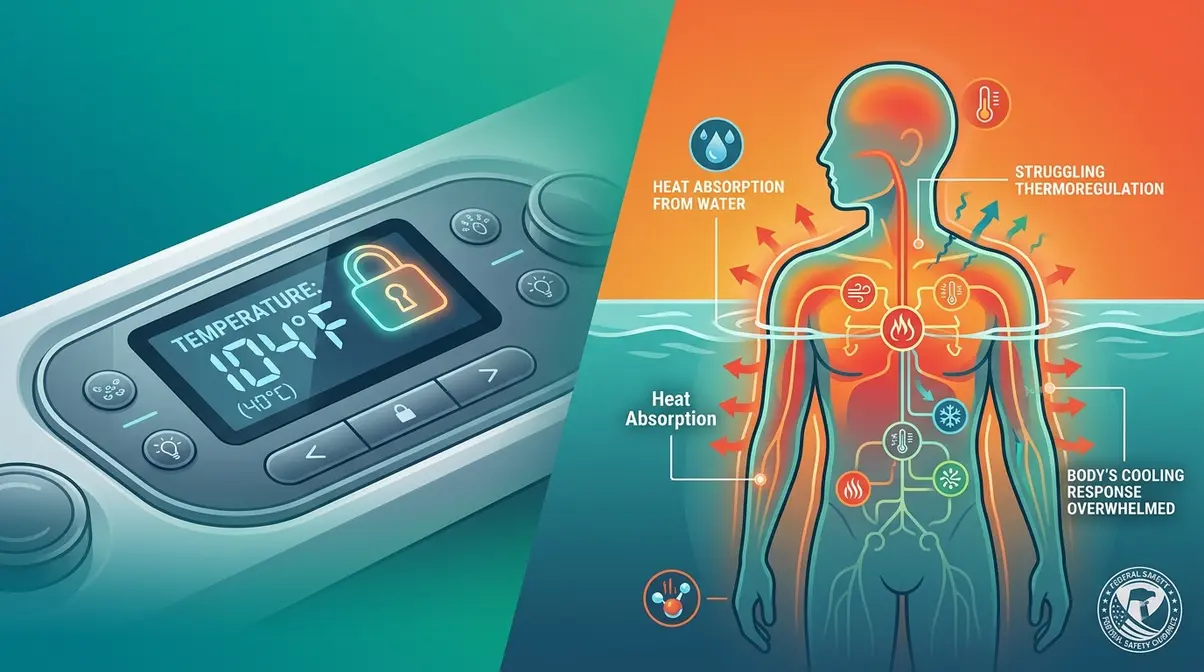
The 104°F maximum hot tub temperature is not a manufacturer’s preference or a cautious factory default — it is a legally mandated safety standard rooted in federal regulation. The U.S. Consumer Product Safety Commission (CPSC), the federal agency that regulates consumer product safety, established this ceiling in 1979 after linking higher temperatures to documented cases of hyperthermia-related injury and death. For every certified electric spa sold in the United States today, this limit is enforceable by law under the UL 1563 standard. Ignoring it carries documented medical risk — and this guide explains exactly what that risk looks like, minute by minute.
It’s a reasonable question — 104°F can feel like an arbitrary ceiling, especially in cold weather. But the science behind that number is anything but arbitrary.
The 1979 CPSC Ruling That Set the 104°F Standard
In 1979, the U.S. Consumer Product Safety Commission issued a formal public warning directly linking hot tub temperatures above 104°F to hyperthermia — a dangerous condition where your body’s core temperature rises faster than it can cool itself — as well as drowning, and fetal damage in pregnant women. The ruling came in response to a wave of hospitalizations and deaths throughout the 1970s as residential hot tubs surged in popularity without any federal safety framework in place.
The CPSC’s position was clear: water temperatures exceeding 104°F (40°C) posed an unacceptable risk to the general public. This wasn’t a conservative guess — it was grounded in physiological data showing that the human body’s thermoregulatory system (your internal cooling mechanism) begins losing the battle against heat absorption at water temperatures above that threshold. The CPSC warnings on hot tub temperatures remain active guidance to this day (CPSC, 1979).
“The CPSC established the 104°F maximum hot tub temperature in 1979 after linking higher temperatures to hyperthermia-related deaths — a standard that UL 1563 now legally requires all certified electric spas to enforce.” (CPSC, 1979; UL Solutions, 2024)
This historical context matters. The limit wasn’t invented by a risk-averse legal team. It was written in response to real tragedies — which is exactly why it has endured for nearly five decades.
What Happens to Your Body Above 104°F
Hyperthermia is a medical emergency in which your core body temperature rises to dangerous levels because heat input from the environment exceeds your body’s ability to shed it. At 104°F water temperature, a healthy adult’s core body temperature begins creeping upward within about 10 to 15 minutes of immersion. At 106°F water temperature, that process accelerates significantly — your body reaches a dangerous core temperature of 104°F (internal) in roughly half the time.
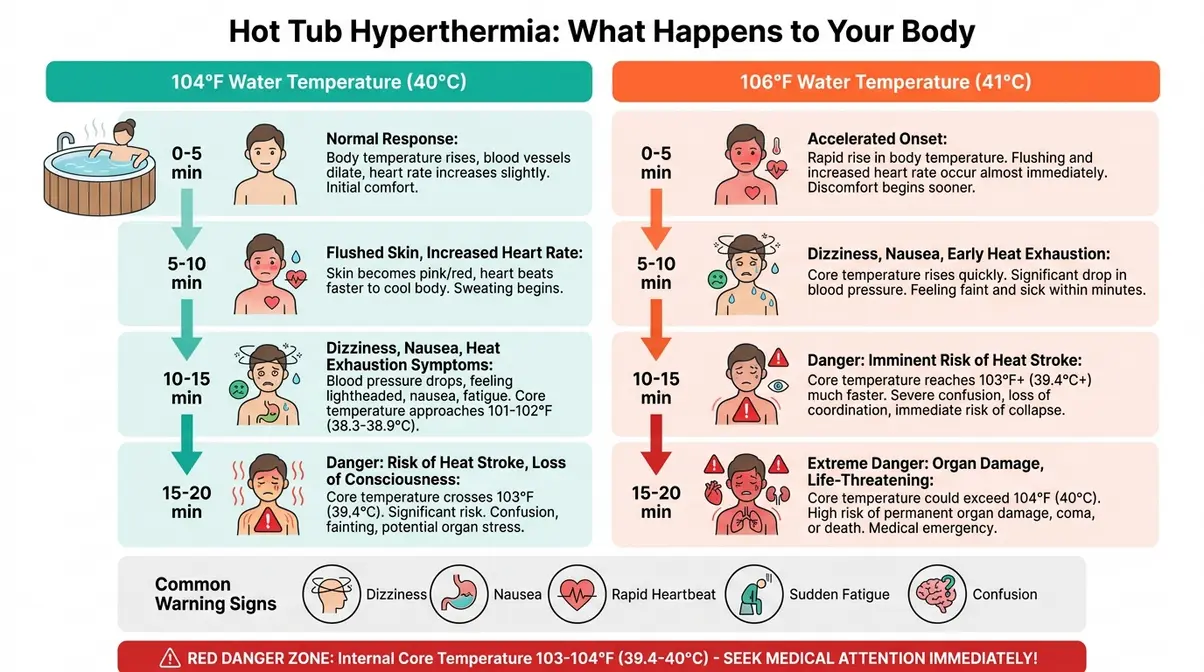
Here is what happens to your body in a hot tub set above 104°F, in sequence:
| Time in Water (at >104°F) | What’s Happening in Your Body |
|---|---|
| 0–5 minutes | Peripheral blood vessels dilate; heart rate increases to compensate |
| 5–10 minutes | Sweating begins but is ineffective — you’re immersed in hot water |
| 10–15 minutes | Core body temperature crosses 101°F; dizziness and nausea may begin |
| 15–20 minutes | Core temperature approaches 103–104°F internally; confusion, weakness |
| 20+ minutes | Risk of loss of consciousness, cardiac stress, and drowning increases sharply |
Early warning signs of hyperthermia include dizziness, nausea, sudden fatigue, and a rapid heartbeat. At this stage, the danger is compounded by impaired judgment — you may feel too weak or confused to exit the water safely. NIH-published research on heat stress confirms that immersion in hot water accelerates core temperature rise significantly faster than ambient heat exposure because water conducts heat roughly 25 times more efficiently than air (National Institutes of Health, 2023).
How Long Is It Safe to Stay in a Hot Tub at 104°F?
Even at the maximum legal temperature of 104°F, the CPSC recommends that healthy adults limit continuous soaking sessions to 15 minutes at a time, followed by a rest period outside the water. This is the origin of the widely cited “15-minute rule.” After 15 minutes at 104°F, you should exit, cool down for at least 5 minutes, and rehydrate before re-entering.
| Water Temperature | Recommended Max Session | Notes |
|---|---|---|
| 98–100°F | 30–40 minutes | Comfortable for most adults |
| 101–102°F | 20–30 minutes | Monitor for dizziness |
| 103–104°F | 15–20 minutes | CPSC-recommended maximum session |
| Above 104°F | Not recommended | Hyperthermia risk increases rapidly |
Certain groups face elevated risk even at 104°F and should soak for shorter periods or avoid hot tubs altogether. These include pregnant women, young children, elderly adults, and anyone with cardiovascular conditions, diabetes, or low blood pressure. Always consult a physician if you fall into any of these categories before entering a hot tub at any temperature.
Want a complete checklist for safe hot tub use? See our essential hot tub safety tips.
What the UL 1563 Certification Means for Your Hot Tub
UL 1563 is the industry safety standard for electric spas, developed by UL Solutions (formerly Underwriters Laboratories). Any hot tub sold in the United States with a UL rating — the safety certification that signals the product has been independently tested and meets minimum safety requirements — must comply with UL 1563. One of the core requirements of UL 1563 is that the spa’s control system must prevent water temperature from exceeding 104°F under normal operating conditions.
This standard is why your hot tub’s control board, thermistor (the small temperature sensor inside your hot tub), and heating element are all engineered as an integrated safety system — not as independent components you can swap out casually. When manufacturers design these systems to UL 1563, they are certifying that the entire heating chain has been tested to fail safely at the 104°F threshold. Overriding any part of that chain removes the safety certification from the equation — and the warranty along with it.
This is the foundation of what we call The Heat Paradox — the counterintuitive truth that chasing higher temperatures actually works against the therapeutic benefits you want from your hot tub. Understanding it changes everything about how you approach your hot tub. Now that you understand why the limit exists, here’s exactly how the temperature control system works — and what happens when people try to override it.
Can You Make a Hot Tub Hotter Than 104°F? (Technical Methods)
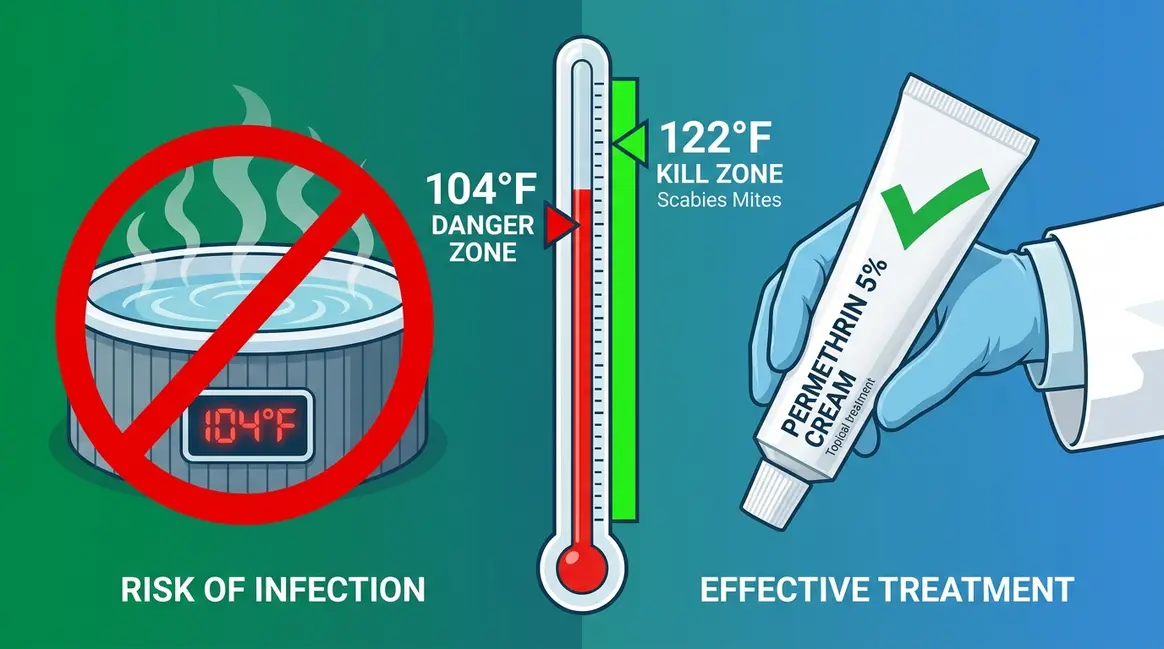
So — can you make a hot tub hotter than 104°F? The honest technical answer is yes, it is physically possible to override the 104°F limit on many residential hot tubs. The methods involve manipulating the temperature sensor so the control board receives a false reading and continues heating beyond the factory ceiling. However, doing so voids your warranty, creates serious equipment damage risk, and — as the previous section established — puts your health at genuine risk. This section explains how the override technically works so you understand what you’re dealing with, not as an instruction manual.
“I wouldn’t mind a 106-107 option if possible for short periods of time.”
That sentiment is common. And understanding the technical reality behind it is the first step to making an informed decision.
How the Temperature Sensor (Thermistor) Controls Your Hot Tub
Your hot tub’s heating system is controlled by a feedback loop. At the center of that loop is the thermistor — the small temperature sensor inside your hot tub, typically recessed into the molded fitting of the plumbing near the heater assembly. Think of the thermistor like a car’s fuel gauge: it continuously reports the current water temperature to the control board, which uses that reading to decide whether to keep the heater on or shut it off.
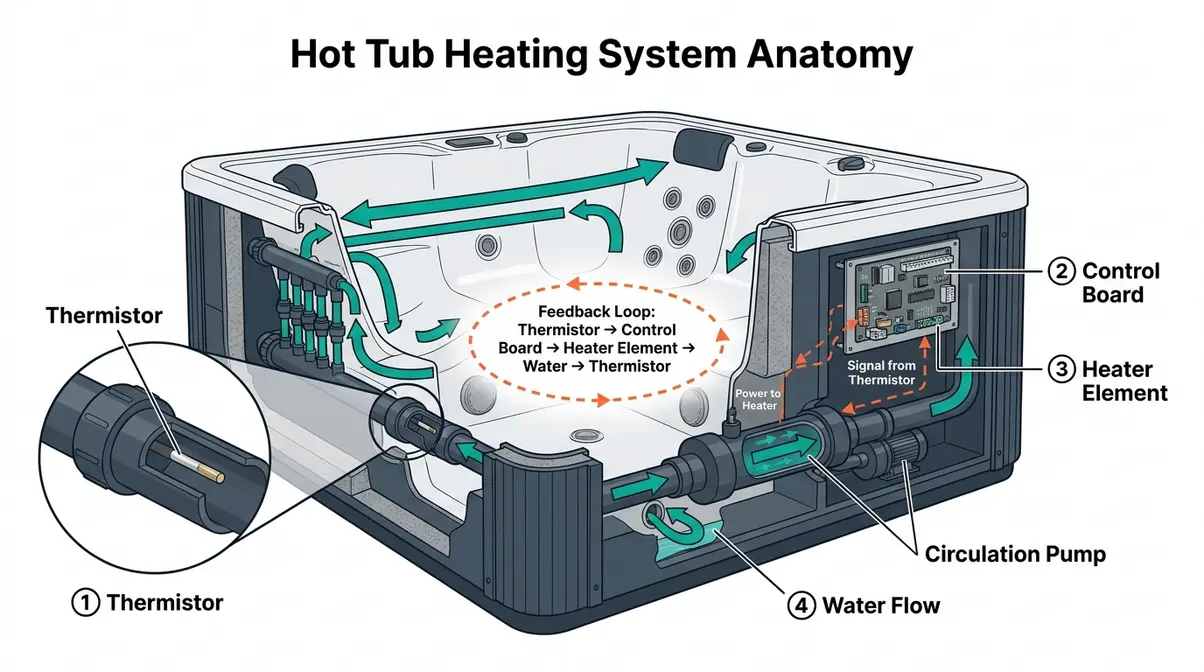
Thermistors are NTC (Negative Temperature Coefficient) sensors, meaning their electrical resistance decreases as temperature increases. As the water heats up, the thermistor’s resistance drops. When the resistance reading corresponds to 104°F, the control board cuts power to the heater. The override methods below all work by manipulating this resistance signal — tricking the board into thinking the water is cooler than it actually is.
The Resistor Hack: How People Try to Override the Limit
The most commonly discussed method for bypassing the 104°F limit is the resistor hack — placing an additional fixed resistor in parallel with the thermistor to artificially raise the resistance value the control board receives. Because the board interprets higher resistance as lower temperature, it continues heating past the factory cutoff.
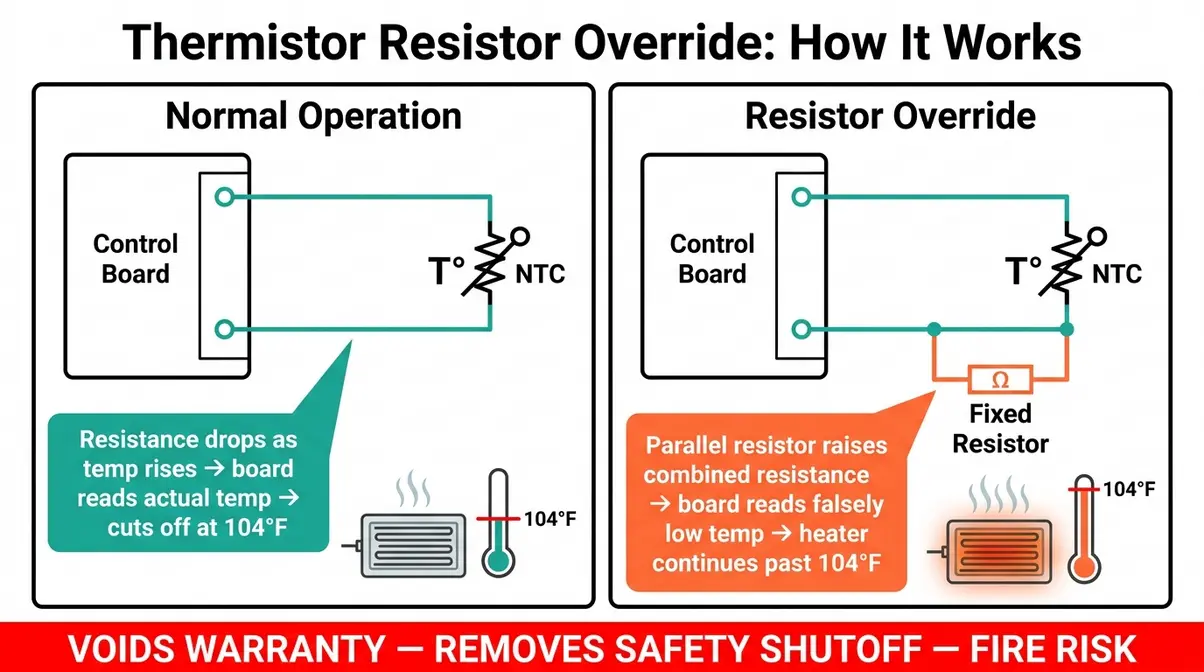
Here is how the method is typically described in spa technician forums, presented here for educational understanding only:
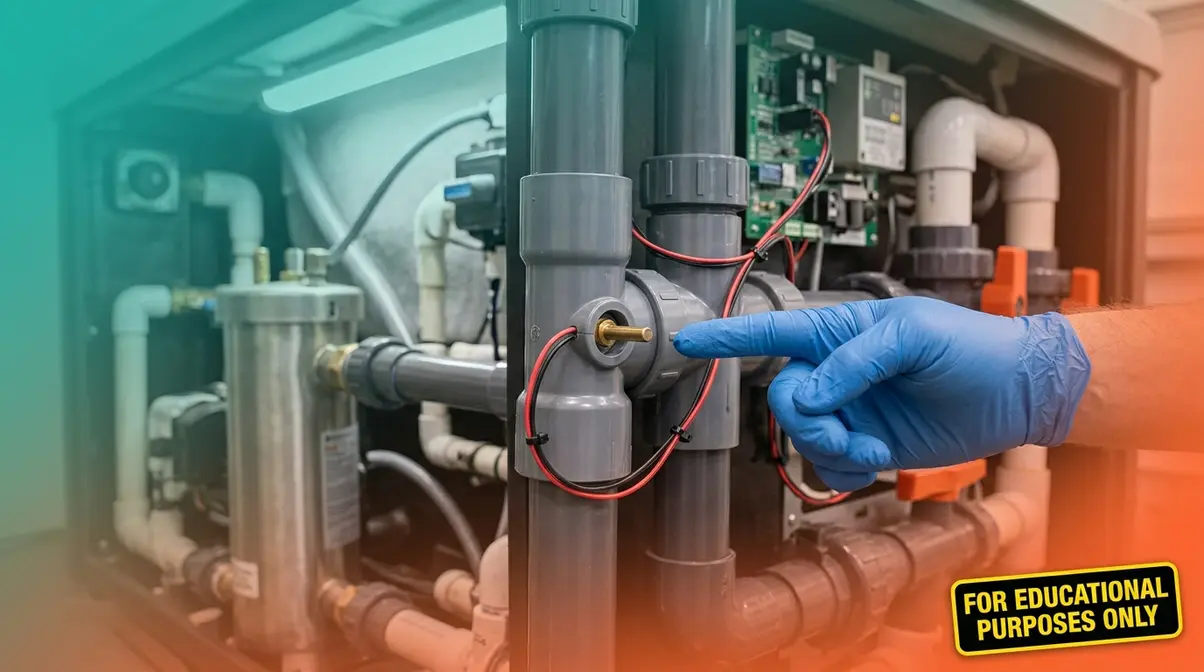
- Locate the thermistor — it is typically a two-wire probe recessed into the molded fitting in your plumbing manifold, near the heater canister
- Identify the resistance value — at 104°F, most residential hot tub thermistors read approximately 5,000–6,000 ohms (Ω); your specific model’s datasheet will confirm the exact value
- Calculate the parallel resistor — to shift the reading by 3–5°F, a resistor of approximately 50,000–100,000 ohms is placed in parallel; this lowers the combined resistance, simulating a lower water temperature
- Connect in parallel — the resistor is spliced across the thermistor’s two wires at the control board connector
Why this is dangerous beyond the obvious heat risk: This modification bypasses the control board’s overheat protection. If the thermistor itself fails while the resistor is in place, the heater has no remaining cutoff signal and can run indefinitely — damaging the heater element, the plumbing, and potentially causing a fire. Certified spa technicians report that heater element failures from unmonitored overheating are among the most expensive repairs they encounter, often running $400–$800 or more (Pool & Spa Forum, 2023).
Other Sensor Manipulation Methods (Balboa Boards and Bulb Sensors)
Balboa is the most common control board manufacturer in residential hot tubs, and their boards use the same NTC thermistor principle. Some older Balboa-equipped spas and certain legacy models use a bulb style temp sensor — a larger, liquid-filled probe recessed into the molded fitting rather than a wire-type thermistor. The bulb sensor works on a different physical principle (thermal expansion of liquid rather than electrical resistance), but the override goal is the same: make the board read a lower temperature.
For bulb sensors, some users attempt to cool the sensor externally — wrapping it in a damp cloth or redirecting cooler water flow around the probe housing — rather than modifying the electrical circuit. This is less precise and harder to control than the resistor method, and carries the same risks: no reliable upper temperature ceiling, no safety shutoff, and full warranty voiding.
Some newer digital control systems, including certain Balboa VS and BP series boards, include secondary high-limit sensors that cannot be bypassed through thermistor manipulation alone. On these systems, the high-limit sensor (a separate probe positioned at the heater outlet) will trigger a safety lockout regardless of what the primary thermistor reads — making the resistor hack ineffective and potentially triggering error codes that require a technician reset.
What You Risk by Overriding the Limit
Overriding the 104°F limit carries four distinct categories of risk:
| Risk Category | Specific Consequence |
|---|---|
| Health | Hyperthermia, cardiac stress, loss of consciousness, drowning |
| Equipment | Heater element burnout, plumbing damage, control board failure |
| Financial | Voided manufacturer warranty; homeowner’s insurance may deny claims |
| Legal | Local building codes may prohibit modified spa operation |
Certified spa technicians consistently report that DIY temperature overrides account for a disproportionate share of catastrophic heater failures — the kind that require full heater assembly replacement rather than a simple component swap. Beyond equipment damage, any injury occurring in a hot tub operating outside its certified parameters may be excluded from your homeowner’s insurance coverage. That’s a significant financial exposure that forum posts rarely mention.
Safer Ways to Make Your Hot Tub Feel Hotter
Here’s what most hot tub owners discover once they understand the physiology: the sensation of heat in a hot tub is heavily influenced by factors other than raw water temperature. Optimizing those factors can make 104°F feel noticeably more intense — without any of the risks associated with overriding the limit.
Optimize Your Cover and Insulation to Retain Heat
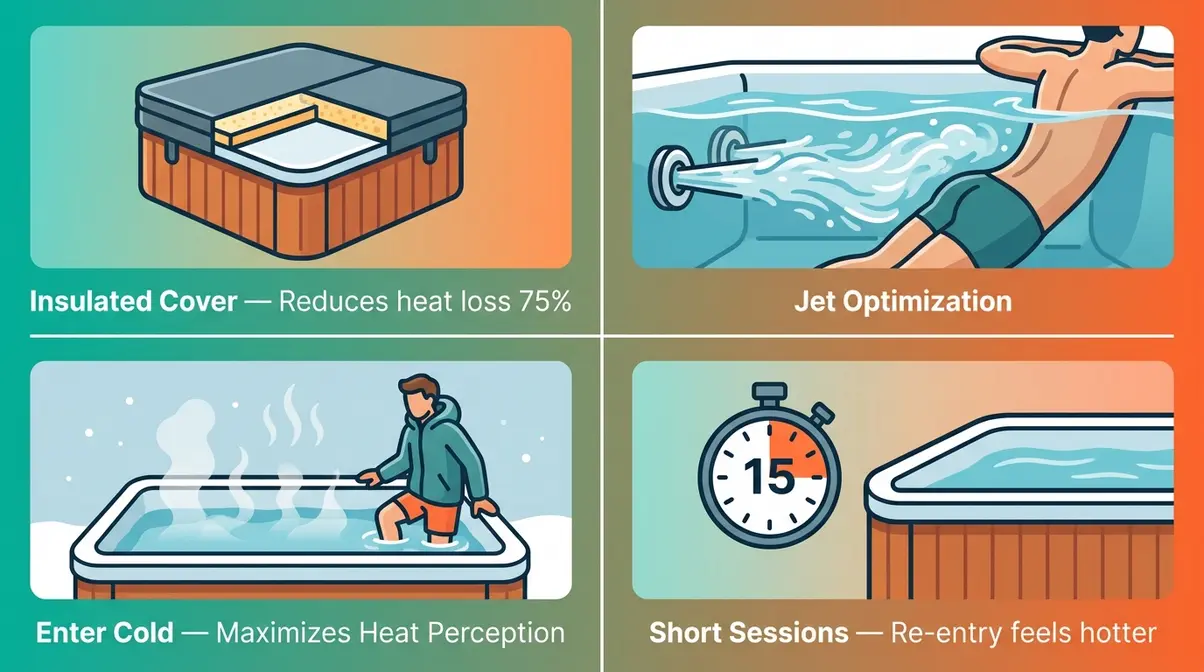
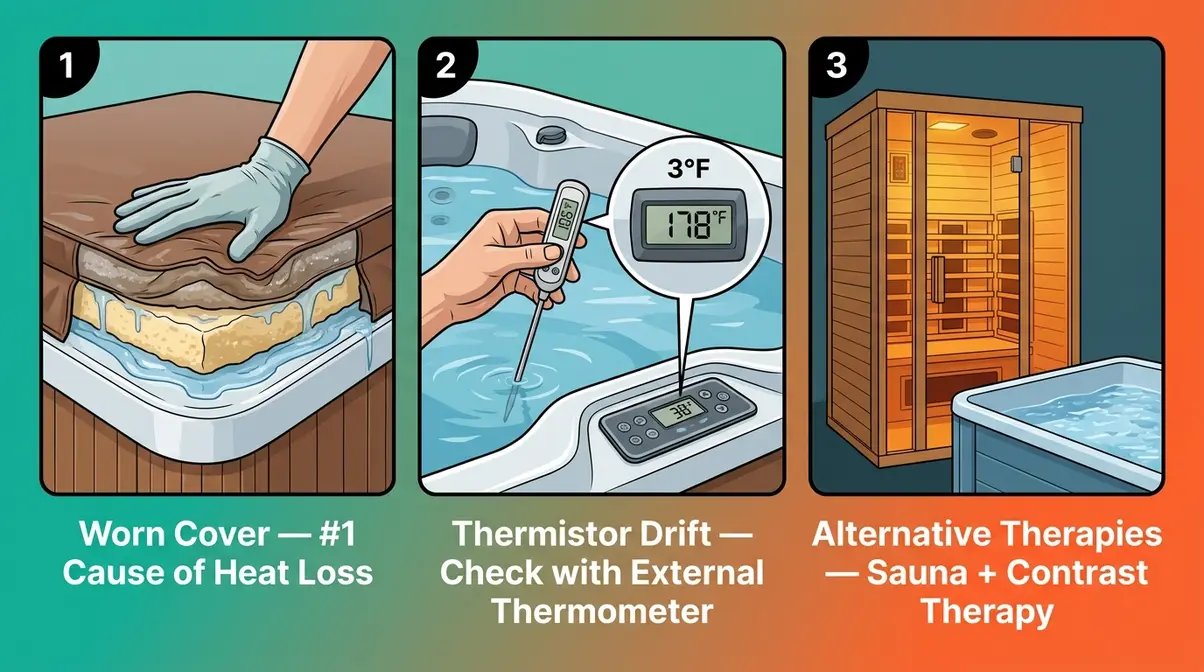
Heat loss is the hidden enemy of hot tub performance, especially in winter. A worn or poorly fitted cover can lose 30–40% of your tub’s heat to the ambient air — meaning your heater works harder to maintain 104°F, and the water surface feels cooler than it should (Energy.gov, 2024). Before assuming you need higher temperatures, check your cover’s condition: press down on the foam core panels. If they feel soft, waterlogged, or have visible cracks in the vinyl, the insulation value has degraded significantly.
- Practical steps to maximize heat retention:
- Replace a worn cover — a new, properly fitted cover with 4–6 inch tapered foam core can reduce heat loss by up to 75%
- Add a floating thermal blanket (also called a “solar blanket”) directly on the water surface beneath the cover for an additional insulation layer
- Insulate the cabinet — check that the spa cabinet panels are intact and that the equipment bay insulation hasn’t shifted or compressed
- Position strategically — if possible, place the tub in a location sheltered from prevailing winds, which dramatically accelerate surface heat loss
Adjust Jet Placement and Soaking Position
The perceived intensity of heat in a hot tub is also a function of how water contacts your skin. Jets create turbulence that disrupts the thin layer of cooler water that naturally forms around your body during immersion — so increasing jet output makes the same 104°F water feel more intense. Experiment with:
- Directing jets toward large muscle groups (lower back, thighs, shoulders) rather than away from your body
- Sitting closer to the jet manifold rather than across the tub
- Adjusting the air-to-water ratio on jets that have an air bleed valve — reducing air increases water pressure and heat transfer
- Using the hot tub at lower ambient temperatures — a 104°F soak feels dramatically more intense at 30°F outside than at 70°F, because the temperature differential between water and air is greater
Pre-Soak Preparation That Makes 104°F Feel Hotter
Your body’s baseline temperature before entering the tub dramatically affects how hot the water feels. Cold skin perceives 104°F as intensely hot; warm skin (from a shower or indoor environment) perceives the same temperature as merely warm. Four actionable preparation steps:
- Enter the tub cold — skip the pre-shower and go directly from cool indoor air to the water for maximum perceived heat intensity
- Hydrate before soaking — dehydration reduces your body’s ability to regulate temperature through sweating, which paradoxically makes hyperthermia more likely even at normal temperatures; drink 16 oz of water before entering
- Heat the tub fully before entering — don’t enter while the tub is still climbing to temperature; let it reach 104°F and stabilize for 10 minutes first
- Limit the soak session — counterintuitively, shorter sessions (12–15 minutes) followed by cool-down periods make re-entry feel dramatically hotter than one long session where your body has fully acclimated
Hot Tub Health Benefits You Can Maximize at Safe Temperatures
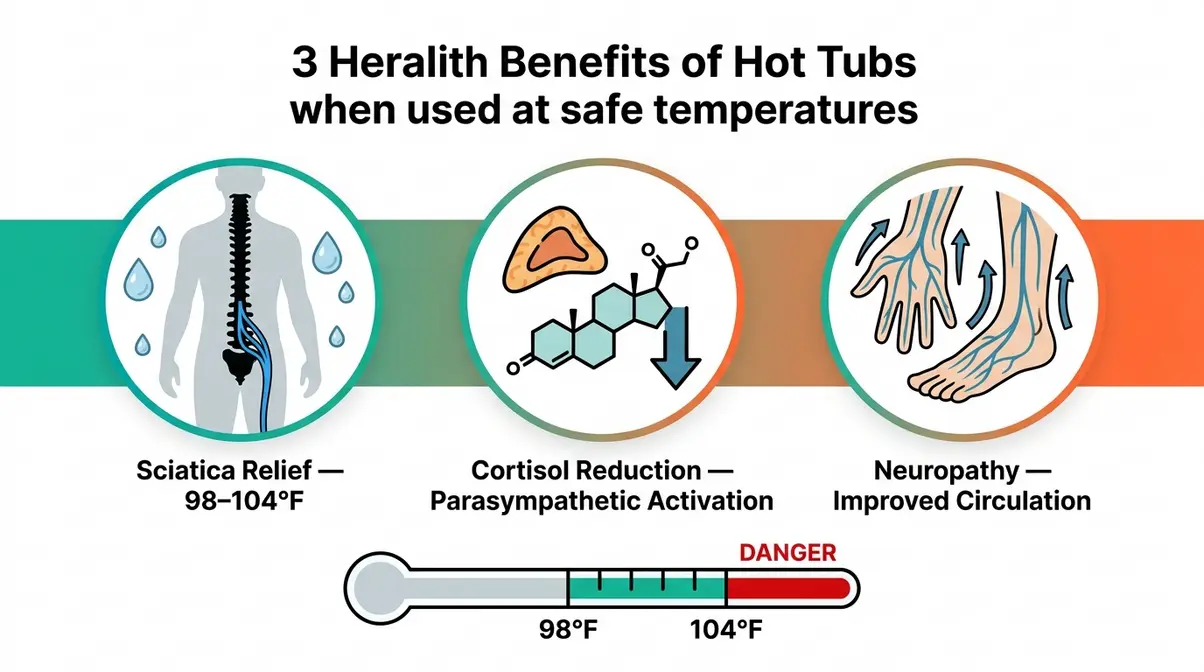
This is where The Heat Paradox becomes most important to understand. Many hot tub owners want higher temperatures specifically because they’re chasing therapeutic outcomes — relief from sciatica, muscle tension, nerve pain, or chronic stress. The medical evidence shows clearly that those benefits are optimized at temperatures within the safe range, not above it. Exceeding 104°F doesn’t amplify the therapy — it reverses it.
Does a Hot Tub Help Sciatica and Nerve Pain?
Sciatica is pain that radiates along the sciatic nerve — from the lower back through the hip and down the leg — typically caused by nerve compression or inflammation. Warm water hydrotherapy at 98–104°F has genuine, research-supported benefits for sciatic pain. The mechanism involves two pathways: first, heat increases blood flow to compressed tissues, which reduces localized inflammation; second, buoyancy reduces gravitational compression on the lumbar spine, providing temporary decompression of the nerve root.
NIH-published research on hydrotherapy for musculoskeletal pain confirms that water temperatures in the 98–104°F range produce measurable reductions in pain scores and muscle tension in patients with lower back and sciatic symptoms (National Institutes of Health, 2022). However, temperatures above 104°F produce the opposite effect on inflammation — heat stress triggers a systemic inflammatory response that can worsen nerve sensitivity rather than reduce it. For sciatica sufferers, this makes the case against overriding the limit particularly clear. The therapeutic window is specifically within the certified safe range.
Do Hot Tubs Reduce Cortisol?
Cortisol is your body’s primary stress hormone, produced by the adrenal glands in response to physical and psychological stress. Hot water immersion at therapeutic temperatures (98–104°F) has been shown to reduce cortisol levels through a combination of mechanisms: parasympathetic nervous system activation (your body’s “rest and digest” mode), reduced muscle tension, and the sensory relaxation response associated with warm water.
A peer-reviewed study published in the International Journal of Stress Management found that regular warm water immersion sessions produced statistically significant reductions in salivary cortisol levels compared to control groups (Goto et al., 2018). However — and this is central to The Heat Paradox — temperatures above 104°F trigger the HPA axis (the hormonal stress response system) rather than suppressing it. Your body interprets extreme heat as a physiological stressor and increases cortisol production. If cortisol reduction is your goal, 104°F is not too cool. It is precisely the right temperature.
Does a Hot Tub Help Neuropathy?
Neuropathy (nerve damage causing pain, tingling, or numbness, often in the hands and feet) is a condition where heat therapy requires particular caution. For mild peripheral neuropathy, warm water immersion at 98–102°F can improve circulation to affected extremities and temporarily reduce pain signaling — effects documented in NIH-published research on thermal therapy for diabetic peripheral neuropathy (NIH, 2021).
The critical caveat: neuropathy often impairs the ability to accurately sense temperature. This means a person with neuropathy may not feel the warning signs of hyperthermia or even recognize that water is dangerously hot until tissue damage has already occurred. For this reason, anyone with neuropathy should consult their physician before using a hot tub, use a reliable external thermometer to verify water temperature independently, and limit sessions to 10–12 minutes at temperatures no higher than 102°F.
Who Should Consult a Doctor Before Using a Hot Tub
The following groups face elevated risk from hot tub use at any temperature and should receive medical clearance before soaking:
| Group | Specific Risk | Recommended Action |
|---|---|---|
| Pregnant women | Risk of fetal neural tube defects from core temperature elevation | Avoid hot tubs, especially in first trimester |
| Cardiovascular disease | Heat stress increases heart rate and blood pressure | Consult cardiologist; limit to 98–100°F if cleared |
| Diabetes | Impaired temperature sensation + circulation issues | Limit to 10 minutes; check feet after each session |
| Low blood pressure (hypotension) | Rapid vasodilation can cause fainting upon exit | Exit slowly; have someone nearby |
| Children under 5 | Core temperature rises faster; cannot reliably communicate distress | Keep out of adult hot tubs |
| Anyone on medications | Many medications (diuretics, blood thinners, sedatives) interact dangerously with heat | Consult prescribing physician |
When the 104°F Limit Isn’t the Problem — Limitations and Alternatives
Sometimes the frustration with the 104°F limit is actually a symptom of a different problem entirely. Before assuming you need higher temperatures, it’s worth ruling out the most common causes of a hot tub that feels less hot than it should.
Common Mistakes When Trying to Get More Heat
Certified spa technicians report that the following issues account for the majority of “my hot tub doesn’t feel hot enough” service calls — none of which require overriding the temperature limit:
- Worn or waterlogged cover: As noted above, a degraded cover is the single most common cause of perceived heat loss. Water-saturated foam panels have near-zero insulation value.
- Incorrect thermostat calibration: The control board’s displayed temperature may not match actual water temperature if the thermistor has drifted out of calibration. A $15 digital probe thermometer will tell you immediately whether your tub is actually reaching 104°F or stopping short.
- Scale buildup on the heater element: Calcium scale (white mineral deposits) on the heater element insulates the element from the water, reducing heating efficiency significantly. A professional descaling treatment restores normal heating performance.
- Air lock in the plumbing: After draining and refilling, air trapped in the plumbing can prevent full water circulation, creating cold spots that make the tub feel cooler than the thermostat reading suggests.
When to Call a Spa Technician Instead of DIY
If your hot tub consistently fails to reach 104°F despite a functional cover and correct thermostat settings, the issue is almost certainly a component failure — not the factory limit. A certified spa technician should evaluate the situation when:
- The displayed temperature and measured water temperature differ by more than 2°F (thermistor calibration or failure)
- The heater runs continuously without reaching setpoint (heater element degradation or scale buildup)
- The control board displays error codes related to temperature or high-limit sensors
- You’re considering any modification to the heating system or control board
DIY modifications to electrical spa components carry shock, fire, and equipment damage risk beyond the heat-related risks already discussed. The cost of a professional service call ($75–$150 for most technicians) is a fraction of the cost of a heater replacement triggered by an unsupervised modification.
Alternative Heat Therapies Worth Considering
If your goal is heat therapy beyond what a hot tub provides, several evidence-based alternatives are worth considering — and some have specific applications for sciatica, neuropathy, and muscle recovery that hot tubs don’t cover as effectively:
- Far-infrared saunas: Operate at 120–150°F air temperature but produce a lower physiological core temperature rise than hot water immersion because air conducts heat far less efficiently than water. Many users find 20–30 minute sessions more comfortable and therapeutically effective than hot tub soaking.
- Traditional Chinese medicine (TCM) approaches to sciatica: TCM practitioners commonly use moxibustion (targeted heat therapy applied to acupuncture points along the bladder and gallbladder meridians) and cupping as complementary treatments for sciatic nerve pain — approaches with a growing body of peer-reviewed support for short-term pain reduction.
- Contrast therapy (hot/cold alternation): Alternating between a 104°F hot tub and a cold plunge (50–60°F) activates the body’s vasodilation/vasoconstriction cycle more powerfully than sustained heat alone — producing stronger circulation benefits and a more pronounced cortisol reduction effect post-session.
Frequently Asked Questions
How can I get my hot tub hotter than 104°F?
Technically, you can override the 104°F limit by manipulating the thermistor (temperature sensor) using the resistor hack — adding a fixed resistor in parallel with the sensor to make the control board read a falsely low temperature. However, this voids your warranty, eliminates your heater’s safety shutoff, and creates a serious hyperthermia risk. Certified spa technicians strongly advise against this modification. A better approach is optimizing your cover, jet placement, and pre-soak routine to make 104°F feel significantly more intense without any of the risks.
Will a hot tub help a sciatic nerve?
Yes — warm water hydrotherapy at 98–104°F has documented benefits for sciatic nerve pain. Heat increases blood flow to compressed lumbar tissues and reduces localized inflammation, while buoyancy decompresses the spine. NIH-published research confirms measurable pain score reductions in patients with sciatic symptoms using hydrotherapy in this temperature range (NIH, 2022). Sessions of 15–20 minutes at 102–104°F are most commonly recommended. Temperatures above 104°F trigger systemic inflammation rather than reducing it, which can worsen nerve sensitivity — making the case against overriding the limit especially strong for sciatica sufferers.
Do hot tubs reduce cortisol?
Yes — hot tub soaking at therapeutic temperatures reduces cortisol through parasympathetic nervous system activation. A peer-reviewed study found statistically significant reductions in salivary cortisol following regular warm water immersion sessions (Goto et al., 2018). The key qualifier: this effect only occurs at temperatures within the safe range (98–104°F). Above 104°F, your body interprets extreme heat as a physiological stressor and increases cortisol production — the opposite of the intended effect. Soaking at exactly 104°F is the cortisol-reduction sweet spot, not a compromise.
Is 105°F too hot for a hot tub?
Yes — 105°F exceeds the CPSC-mandated maximum and accelerates hyperthermia risk. At 105°F, your core body temperature begins rising faster than at 104°F, shortening the safe soaking window from 15–20 minutes to potentially 10 minutes or less for healthy adults. The one-degree difference may seem trivial, but the physiological acceleration is not linear — heat stress compounds quickly above the 104°F threshold. For vulnerable groups (elderly, pregnant, cardiovascular conditions), even a brief exposure to 105°F water can trigger a medical emergency.
How long is it safe to stay in a hot tub at 104°F?
The CPSC recommends a maximum of 15–20 continuous minutes at 104°F for healthy adults. After that window, exit the water, cool down for at least 5 minutes, and rehydrate before re-entering. This is the origin of the widely cited 15-minute rule. Soaking longer without breaks allows core body temperature to climb steadily — and by the time you feel genuinely unwell (dizziness, nausea, sudden weakness), you may already be in the early stages of hyperthermia. Set a timer every time you enter at maximum temperature.
Why is there a 15-minute hot tub rule?
The 15-minute rule exists because the human body cannot effectively cool itself while immersed in 104°F water. Normally, your body sheds excess heat through sweating — but sweating is ineffective when your skin is already surrounded by hot water. Core temperature therefore rises steadily during immersion, and 15 minutes at 104°F represents the point at which that rise becomes clinically significant for most healthy adults, according to CPSC guidance (CPSC, 1979). The rule is not arbitrary — it reflects the physiological timeline of heat accumulation in a closed water environment.
How do Chinese treat sciatica?
Traditional Chinese medicine (TCM) addresses sciatica primarily through acupuncture, moxibustion, and cupping therapy. Moxibustion involves applying targeted heat to specific acupuncture points along the bladder and gallbladder meridians, which TCM associates with the sciatic nerve pathway. A growing number of peer-reviewed studies support moxibustion and acupuncture for short-term sciatic pain reduction, with a 2020 meta-analysis finding significant pain score improvements compared to conventional treatment alone. These therapies are often used alongside warm water hydrotherapy — not as a replacement — for a complementary approach to nerve pain management.
Does a hot tub help neuropathy?
Warm water hydrotherapy at 98–102°F can improve circulation to affected extremities and temporarily reduce pain signaling in mild peripheral neuropathy. NIH-published research on thermal therapy for diabetic peripheral neuropathy documents these circulation benefits (NIH, 2021). However, neuropathy often impairs temperature sensation — meaning affected individuals may not feel the warning signs of hyperthermia. Anyone with neuropathy should verify water temperature with an external thermometer, limit sessions to 10–12 minutes, keep temperatures at or below 102°F, and consult their physician before starting a hydrotherapy routine.
The Bottom Line on Hot Tub Temperature
For hot tub owners frustrated by the 104°F ceiling, the complete answer is this: yes, you can make a hot tub hotter than 104°F through thermistor manipulation, and now you understand exactly how that works. But the medical evidence is unambiguous — temperatures above 104°F accelerate hyperthermia, spike cortisol, worsen inflammation, and eliminate the therapeutic benefits that most owners are chasing in the first place. That is The Heat Paradox in practice: the pursuit of more heat actively destroys the value of the heat you already have.
The better path is to optimize what 104°F can deliver. A properly insulated cover, strategic jet use, and smart soaking habits can transform the same water temperature into a genuinely therapeutic experience — without voiding your warranty, triggering a heater failure, or putting yourself at medical risk.
Start with the basics: check your cover’s condition today, set a 15-minute timer for your next soak, and experiment with jet positioning before assuming the factory limit is your obstacle. If your tub consistently fails to reach 104°F, that’s a technician call — not a DIY modification. For deeper guidance on getting the most from your spa safely, explore our essential hot tub safety tips and put The Heat Paradox to work for you.

David King
Hot tub tester and writer at One Hot Tub.