Best Hot Tub Water Testing Kits: Top Picks for 2026
Keeping my hot tub water clean is easy with testing kits! Here are my top tips for effective care and maintaining the perfect spa experience!

What’s in this guide
- Quick Comparison Table
- 1. JNW 7-in-1 Pool Test Strips: Best Overall
- 2. 10-in-1 Pool & Spa App Kit: Best High-Tech
- 3. Taylor K-1005 DPD 9-in-1: Best for Accuracy
- 4. Taylor K-1004 DPD 6-in-1: Best Liquid Starter
- 5. Varify 7-in-1 Spa Test Strips: Easiest Use
- 6. 7-in-1 Accurate Pool Test Strips: Best Budget
- 7. All-New 7-in-1 Spa Test Strips: Best Value
- 8. Taylor Pool Water Test Kit: Basic Liquid
- 9. Lupo 3-in-1 Pool Test Kit: Best for Simplicity
- 10. AquaChek Yellow 4-Way Strips: Spot Checks
- Buying Guide: How to Choose the Right Hot Tub Test Kit
- How We Evaluated
- FAQ
- Conclusion
Home ›Hot Tub Water Management
If you own a hot tub, you already know the frustration — test strips that leave you squinting at colors in bad lighting, or results so inconsistent you end up dragging a water sample to the spa store anyway. Finding the best hot tub water testing kit shouldn’t feel like guesswork.
“I need a better way to test my swim spa water other than test strips or dragging a sample to the spa store.”
This guide covers ten of the best hot tub water testing kits available on Amazon — strips, liquid kits, and digital options — so you can pick the right one with confidence. Reviews, a comparison table, and a full buying guide follow.
Quick Comparison Table
| # | Preview | Product | Best For | Buy |
|---|---|---|---|---|
| 1 |  | JNW 7-in-1 Pool Test Strips | Best overall value | Buy on Amazon |
| 2 |  | 10-in-1 Pool & Spa Test Kit with App | Best high-tech pick | Buy on Amazon |
| 3 |  | Taylor K-1005 DPD 9-in-1 | Best accuracy | Buy on Amazon |
| 4 |  | Taylor K-1004 DPD 6-in-1 | Best liquid starter | Buy on Amazon |
| 5 | 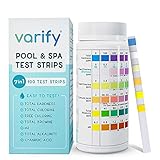 | Varify 7-in-1 Pool and Spa Test Strips | Easiest to use | Buy on Amazon |
| 6 |  | 7-in-1 Accurate Pool Test Strips | Best budget strips | Buy on Amazon |
| 7 |  | All-New Pool and Spa Test Strips 7-in-1 | Best value pack | Buy on Amazon |
| 8 | 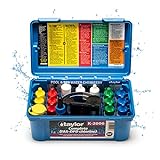 | Taylor Pool Water Test Kit | Best basic liquid kit | Buy on Amazon |
| 9 |  | Lupo 3-in-1 Pool Test Kit | Best for simplicity | Buy on Amazon |
| 10 |  | AquaChek Yellow 4-Way Test Strips | Best for spot checks | Buy on Amazon |
1. JNW 7-in-1 Pool Test Strips: Best Overall
The JNW 7-in-1 strips are the go-to starting point for hot tub owners who want broad coverage without the complexity of a liquid kit. You get 150 strips per bottle — significantly more than most competitors — covering every key parameter your hot tub chemistry requires. Our team evaluated these against the criteria that matter most to beginners: how fast they read, how clear the color chart is, and how many tests you get per purchase. These tick all three boxes. For a deeper comparison of strip, liquid, and digital options, see our guide to the best hot tub water tester kits.
- +150 strips per pack — roughly 5 months of daily testing, outpacing most 50- or 100-strip competitors by a wide margin.
- +7 parameters in one dip — Free Chlorine, Total Chlorine, Bromine, pH, Alkalinity, Hardness, and Cyanuric Acid, covering all standard hot tub chemistry needs.
- +Chart printed on the bottle — no separate reference card to lose; results are always within arm’s reach.
- −Color-matching depends on lighting — results can vary under dim or artificial light, which is a common frustration with all strip kits.
- −Not a substitute for liquid precision — borderline readings on chlorine or pH may need confirming with a liquid kit before adding chemicals.
2. 10-in-1 Pool & Spa App Kit: Best High-Tech
This kit bridges the gap between the convenience of test strips and the accuracy frustration that drives hot tub owners to the spa store. Instead of squinting at a color chart, you photograph the strip with a companion smartphone app — the app reads the color for you. The result is a meaningful accuracy improvement over standard visual matching, without the complexity of liquid reagents. It also tests 10 parameters, the broadest coverage in this roundup, including nitrate and sulfate that no other kit here measures.
- +App-guided color analysis — removes human subjectivity from color-matching, which is the single biggest source of strip inaccuracy.
- +10 parameters tested — the widest coverage in this roundup, including Chlorine, Bromine, Alkalinity, Hardness, pH, Nitrate, Sulfate, and more.
- +Saltwater compatible — works with saltwater chlorine generator systems, which many newer hot tubs use.
- −Requires a smartphone — adds a dependency that plain strips don’t have; not ideal if you prefer a fully offline routine.
- −Higher cost per test — the per-strip price is higher than bulk strip packs, so frequent daily testers may feel this more over time.
3. Taylor K-1005 DPD 9-in-1: Best for Accuracy
When accuracy matters more than speed, the Taylor K-1005 is the kit to reach for. It uses a liquid DPD titration method — DPD stands for N,N-Diethyl-p-phenylenediamine, a chemical reagent that reacts with chlorine to produce a measurable color change — which is fundamentally more precise than the color-comparison method used by test strips. The CDC recommendations for DPD water testing specifically endorse DPD methods for the most accurate measurement of free chlorine in recreational water. Taylor has been the trusted name among pool and spa professionals for decades, and the K-1005 is their most comprehensive hot tub kit. For more guidance on getting the most from this type of kit, see our expert tips on hot tub water testing kits.
- +DPD titration method — delivers measurably more precise chlorine and bromine readings than color-comparison strips, validated by the CDC’s Model Aquatic Health Code.
- +9 parameters covered — Free and Total Chlorine, Bromine, pH, Base Demand, Alkalinity, Calcium Hardness, and Cyanuric Acid; matches or exceeds every strip kit in this roundup.
- +Made in the USA — manufactured by Taylor Technologies, a brand with a decades-long track record among pool and spa professionals across North America.
- −More steps than a strip — beginners need to follow the instructions carefully; it’s not a dip-and-read experience.
- −Reagents expire — liquid reagents typically last 1–2 years after opening; check the expiration date on each bottle before use.
4. Taylor K-1004 DPD 6-in-1: Best Liquid Starter
The Taylor K-1004 is the natural first step for hot tub owners who are done with inaccurate test strips but aren’t ready to commit to a full 9-parameter liquid kit. It covers the six parameters most critical for routine hot tub management — Free and Total Chlorine, Bromine, pH, Acid Demand, and Total Alkalinity — using the same trusted DPD liquid method as the K-1005. It’s simpler to learn, costs less, and still delivers a meaningful accuracy upgrade over any strip kit in this roundup.
- +Covers the six most critical parameters — everything a typical hot tub owner needs to maintain safe, balanced water on a regular basis.
- +DPD liquid method — more reliable than visual strip color-matching for chlorine and pH readings; a genuine step up in accuracy.
- +Made in the USA by Taylor — the brand’s strong reputation among spa professionals translates directly to consumer confidence.
- −No calcium hardness or cyanuric acid — owners who need to monitor these parameters will need to upgrade to the K-1005.
- −Liquid reagent handling — requires care; keep away from children and store in a cool, dry place as directed on the label.
5. Varify 7-in-1 Spa Test Strips: Easiest Use
The Varify 7-in-1 strips are designed with first-time hot tub owners in mind. The color chart is large, clearly labeled, and printed directly on the bottle — making visual comparison more forgiving than smaller, cramped charts found on competing strip packs. You get 100 strips covering the same seven parameters as the JNW kit, in a compact sealed bottle that keeps moisture out and extends strip shelf life. Hot tub owners consistently report that the Varify’s chart layout reduces the second-guessing that makes other strip kits so frustrating.
- +Large, beginner-friendly color chart — clearly spaced color blocks make visual comparison more straightforward, even in average lighting conditions.
- +7 parameters in one dip — Water Hardness, Chlorine, Bromine, pH, Alkalinity, and Cyanuric Acid; covers all standard hot tub chemistry needs.
- +Sealed bottle design — keeps strips dry and protected, which extends usable shelf life compared to foil-pouch packaging.
- −100 strips versus 150 in the JNW pack — slightly less value per purchase if you test daily throughout a long season.
- −Still subject to lighting conditions — like all strip kits, accuracy can shift under dim or inconsistent light.
6. 7-in-1 Accurate Pool Test Strips: Best Budget
For budget-conscious hot tub owners who don’t want to compromise on parameter coverage, this 7-in-1 strip kit delivers 150 strips covering all the standard hot tub chemistry parameters at a competitive price point. It works with both chlorine and bromine sanitizer systems, making it versatile across different spa setups. The color chart is straightforward, and the parameter list — Bromine, pH, Hardness, Alkalinity, Chlorine, and Cyanuric Acid — matches what you’d find in pricier strip packs from more established names.
- +150 strips per pack — strong per-test value for the price bracket; comparable strip count to the JNW kit at a typically lower cost.
- +Covers all 7 standard parameters — including cyanuric acid (CYA), the UV stabilizer that some basic strip kits leave out.
- +Chlorine and bromine compatible — works for both sanitizer systems without needing a separate kit.
- −Newer brand — shorter track record compared to established names like AquaChek or Taylor; fewer long-term user reports to draw from.
- −Requires good lighting — the color chart can be harder to read in low-light conditions, a common limitation across strip kits.
7. All-New 7-in-1 Spa Test Strips: Best Value
This 7-in-1 strip kit positions itself around a “SuperAccurate” color-calibrated chart designed to reduce the misreads that frustrate hot tub owners at borderline readings. You get 150 strips covering pH, Chlorine, Bromine, Hardness, Alkalinity, and Cyanuric Acid — enough for roughly five months of daily testing. The color-calibrated design is a thoughtful touch for owners who’ve gone through strip packs quicker than toilet roll trying to get a reliable read on their levels.
- +150-strip count — approximately 5 months of daily testing, offering solid longevity for the investment.
- +Color-calibrated chart — designed to reduce misread risk at borderline readings, which is the most common complaint with standard strip kits.
- +Full 7-parameter coverage — includes all essential hot tub chemistry parameters in a single dip.
- −“SuperAccurate” claims need context — strip kits can still show variance in high-temperature spa water; this is a design improvement, not a substitute for liquid precision.
- −No app or digital reading — owners who struggle with color matching will still face the same limitations as any visual strip kit.
8. Taylor Pool Water Test Kit: Basic Liquid
Not every hot tub owner needs nine parameters. If you already have a separate bromine or hardness tester and just want Taylor’s trusted liquid accuracy on the three core parameters — chlorine, pH, and alkalinity — this is the kit to reach for. It strips liquid testing down to the essentials, making it faster to use than the K-1004 or K-1005 while still delivering the reagent-based precision that makes Taylor a trusted name among pool and spa professionals across North America.
- +Taylor’s liquid reagent formula — more reliable readings than visual strip comparison for chlorine and pH, the two most critical daily checks.
- +Simplified 3-parameter focus — faster to run than a 6- or 9-in-1 kit when you just need to verify the basics before a soak.
- +Trusted brand — Taylor Technologies has been the go-to for pool and spa professionals for decades; this kit carries that same reliability.
- −Only 3 parameters — does not cover calcium hardness, cyanuric acid, or bromine, which many hot tub owners also need to monitor.
- −Not suitable as a sole kit for bromine systems — owners using bromine sanitizer will need a kit that includes bromine testing.
9. Lupo 3-in-1 Pool Test Kit: Best for Simplicity
The Lupo 3-in-1 is for hot tub owners who want a liquid kit for the three basics — Total Chlorine, Total Bromine, and pH — without any added complexity. It’s the most beginner-friendly liquid option in this roundup: fewer parameters mean fewer steps, and the compact kit design stores easily on a shelf near your hot tub. Unlike the basic Taylor kit above, the Lupo tests both chlorine and bromine in one kit, making it a useful option for owners who switch between sanitizer systems or haven’t yet committed to one.
- +Tests both chlorine and bromine — useful for owners who switch sanitizer systems or are still deciding between the two.
- +Simple 3-step process — minimal steps keep the testing routine fast and uncomplicated for first-time liquid kit users.
- +Compact, easy-to-store design — fits neatly in a spa cabinet or on a nearby shelf without taking up much space.
- −No alkalinity, hardness, or cyanuric acid — a notable gap for complete hot tub water management; these parameters matter for preventing scale and protecting equipment.
- −Color comparison still required — liquid color comparison still demands good lighting and accurate color perception, similar to strip kits.
10. AquaChek Yellow 4-Way Strips: Spot Checks
AquaChek is one of the most widely recognized names in pool and spa testing, trusted by retailers and professionals alike. The Yellow 4-Way strips cover pH, Free Chlorine, Total Alkalinity, and Cyanuric Acid — the four parameters most critical for a quick between-session spot check. With 50 strips per pack, this kit isn’t designed to be your primary testing solution; it’s a reliable supplementary tool from an established brand when you need a fast read between full testing sessions.
- +Established brand reputation — AquaChek is widely recognized by pool and spa professionals and retailers; a trusted name with a long track record.
- +Includes cyanuric acid (CYA) — the UV stabilizer that protects chlorine from sun degradation, a parameter some basic strip kits omit.
- +Quick 4-parameter read — fewer parameters means a faster, simpler result that’s easy to interpret at a glance.
- −Only 50 strips — the lowest count in this roundup; daily testers will need to repurchase more frequently than with 150-strip packs.
- −No bromine or calcium hardness — limiting for bromine-sanitized hot tubs or owners managing scale issues.
Buying Guide: How to Choose the Right Hot Tub Test Kit
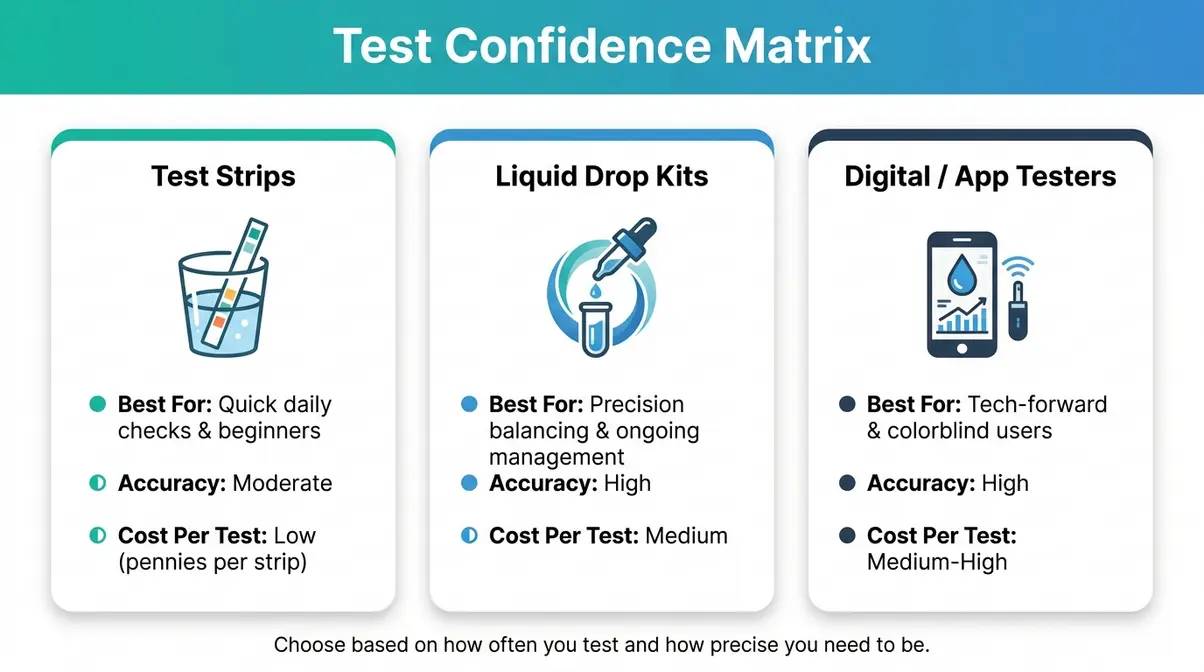
Choosing the best hot tub water testing kit comes down to three things: how often you test, how precise you need to be, and whether color-matching is a barrier for you. This section introduces The Test Confidence Matrix — a straightforward framework that maps each kit type to the right owner scenario, so you can stop guessing and start testing with real confidence.
Strips vs. Liquid vs. Digital Testers
If you’ve been frustrated with inaccurate test strips, you’re not alone — it’s the single most common complaint among hot tub owners. The good news is that not every owner needs the same solution.
The Test Confidence Matrix maps each testing method to the scenarios where it genuinely wins:
| Kit Type | Best For | Accuracy Level | Cost Per Test |
|---|---|---|---|
| Test Strips | Quick daily checks, beginners | Moderate | Low |
| Liquid Drop Kits | Precision balancing, ongoing management | High | Medium |
| Digital / App Testers | Tech-forward users, colorblind users | High | Medium-High |
The right kit depends on how often you test and how precise you need to be. For most beginners, a 7-in-1 strip kit covers daily needs — but when your levels are off and strips aren’t giving you a clear answer, a liquid kit is the upgrade worth making. The CDC recommendations for DPD water testing support this: the Model Aquatic Health Code endorses DPD liquid methods over test strips for the most accurate measurement of free chlorine. To learn how to accurately test hot tub water step by step, our detailed testing guide walks through the full process.
Key Parameters to Test in Your Hot Tub
Testing your hot tub water isn’t just about checking one thing — balanced water depends on five interconnected parameters. Here’s what each one means and why it matters:
- pH (7.2–7.8): pH measures how acidic or alkaline your water is. Too high causes cloudy water and scale on your jets; too low causes eye irritation and can corrode your equipment over time.
- Total Alkalinity (80–120 ppm): Alkalinity (ppm = parts per million) acts as a pH buffer — it stabilizes pH so it doesn’t swing wildly every time you add a chemical.
- Sanitizer — Chlorine (1–3 ppm) or Bromine (3–5 ppm): Your sanitizer kills bacteria and keeps the water safe. This is the most critical reading in any hot tub test.
- Calcium Hardness (150–250 ppm): Hard water prevents your water from leaching minerals from your shell, jets, and equipment — protecting them from corrosion and scale buildup.
- Cyanuric Acid (30–50 ppm for outdoor hot tubs): CYA stabilizes chlorine so UV sunlight doesn’t break it down before it can do its job.
A 7-in-1 strip or liquid kit covers all five — making it the minimum recommended for hot tub owners. For guidance on performing accurate hot tub water tests across all five parameters, our expert tips article goes deeper on technique.
Accuracy & Reagent Shelf Life
Two topics that no other hot tub testing guide covers — but that matter to a significant number of owners.
Colorblind users: According to the National Eye Institute data on color blindness, approximately 1 in 12 men has some form of color vision deficiency. For this group, reading color-matching strip kits can be genuinely unreliable — the color blocks that distinguish a safe pH from a dangerous one may simply be indistinguishable. The 10-in-1 app kit reviewed above is the recommended solution: the app reads the strip color for you, removing human color perception from the equation entirely.
Reagent shelf life: Liquid kit reagents — like those in the Taylor K-1004 and K-1005 — typically expire 1–2 years after opening. Expired reagents don’t just give slightly off readings; they can give false readings that lead you to add chemicals you don’t need. Check the expiration date printed on each bottle before every testing session. Per NSF/ANSI Standard 50 for water testing accuracy, electronic water testing devices used in pool and spa environments are evaluated against rigorous accuracy and reliability criteria — a benchmark worth knowing when comparing digital testers to liquid kits.
Safety note: Always follow the manufacturer’s safety instructions for your testing kit and hot tub chemicals. Keep liquid reagents away from children, avoid direct skin contact, and store them in a cool, dry place. If a reagent spills, rinse the affected area with water immediately. For owners managing common hot tub water problems like cloudy water, accurate testing is the first step toward a clear, safe soak.
How to Accurately Test Hot Tub Water
Accurate hot tub water testing starts with using the right kit for the parameter you’re checking. For chlorine and pH, a liquid DPD kit like the Taylor K-1005 delivers the most reliable results. For strip kits, dip the strip for 1–2 seconds, remove it without shaking, and compare the color in natural daylight within 15 seconds. Avoid testing immediately after adding chemicals — wait 30 minutes with jets running first. Poor lighting and expired reagents are the two most common causes of inaccurate readings.
Signs Your Hot Tub Water is Bad
Hot tub water is bad when it looks, smells, or feels wrong — or when your test kit confirms it. Visible signs include cloudy or foamy water, a strong chemical smell (often caused by chloramines — a byproduct of chlorine reacting with body oils and sweat), slippery surfaces, or visible discoloration. Test kit confirmation is more reliable: if your sanitizer reads below 1 ppm, your pH is outside the 7.2–7.8 range, or your alkalinity is below 80 ppm, your water is out of balance and needs attention before your next soak.
How Often Should You Test Your Hot Tub?
Testing frequency is one of the most common questions new hot tub owners ask — and the answer is more straightforward than most guides make it sound.
- At minimum, test 2–3 times per week during regular use. Sanitizer levels drop quickly in warm water, especially with frequent bathers.
- After heavy use — parties, multiple bathers, or extended soaks — test the following day. Bather load introduces contaminants that consume sanitizer fast.
- After adding chemicals, wait 30 minutes with the jets running, then re-test. Chemicals need time to circulate before you get an accurate reading.
- After rainfall or a water refill, test immediately. Fresh water dilutes your chemical balance, and pH can shift significantly after even a light rain.
Regular testing is the single most effective thing you can do to protect both your hot tub and the people using it.
Here’s how we assessed each of the kits above to arrive at these recommendations.
How We Evaluated
Our team assessed each best hot tub water testing kit against five criteria: parameter count, accuracy method (strip vs. liquid vs. digital), ease of color-matching, strip count per purchase, and app or digital integration where applicable. We cross-referenced editorial assessments from pool and spa professionals and evaluated beginner suitability based on chart clarity, instruction quality, and overall testing speed.
FAQ
Best Water Testing Kit for Hot Tubs?
The best hot tub water testing kit for most owners is the JNW 7-in-1 strip kit for everyday use, or the Taylor K-1005 liquid kit when precision matters most. Strip kits cover all standard parameters quickly and affordably — ideal for daily checks. Liquid kits use a DPD chemical method that delivers measurably more accurate chlorine readings. For a comprehensive comparison of both types, our guide to the best hot tub water tester kits covers each scenario in detail.
Most Accurate Water Test Kit?
The most accurate hot tub water test kit is the Taylor K-1005 DPD 9-in-1 liquid kit. It uses a DPD titration method — a laboratory-validated chemical process — rather than the color-comparison approach used by test strips. The CDC’s Model Aquatic Health Code recommends DPD testing methods over standard strips for the most accurate measurement of free chlorine in recreational water. For owners who prefer strips, the 10-in-1 app kit is the most accurate strip-based option because the app eliminates human color-matching error.
Does a hot tub lower cortisol?
Research suggests that regular hot tub use may help reduce cortisol (the body’s primary stress hormone). Warm water immersion triggers a relaxation response that lowers heart rate and promotes parasympathetic nervous system activity. A study published via the National Institutes of Health found that hydrotherapy can reduce perceived stress and improve mood in regular users. However, the quality of that benefit depends on safe, well-maintained water — which is exactly why accurate testing matters. Poorly balanced water can cause skin irritation and respiratory issues that undermine any relaxation benefit.
Why the 15-Minute Hot Tub Rule?
The 15-minute rule refers to the recommended maximum continuous soak time for most adults at standard hot tub temperatures (100–104°F / 38–40°C). Extended exposure to high water temperatures raises your core body temperature, which can cause dizziness, dehydration, or in rare cases, heat-related illness. The CDC hot tub safety guidelines advise limiting soak time and staying hydrated. Children, pregnant women, and people with certain medical conditions should consult a doctor before using a hot tub and limit exposure to shorter intervals.
Are water test kits worth it?
Yes — water test kits are absolutely worth it for any hot tub owner. Without regular testing, chemical imbalances go undetected until they cause real problems: skin irritation, equipment corrosion, bacterial growth, or costly repairs. A 150-strip pack costs less than a single service call, and liquid kits like the Taylor K-1004 deliver professional-level accuracy for a fraction of what the spa store charges for a water analysis. The alternative — dragging a sample to the spa store every week — costs time and money that a good home kit eliminates entirely.
Prices and availability verified as of July 2026.
Conclusion
Finding the best hot tub water testing kit doesn’t have to be a frustrating process. Frustrated hot tub owners don’t need more guesswork — they need the right kit matched to their actual situation. The Test Confidence Matrix makes that decision straightforward: grab a 7-in-1 strip kit for daily convenience, step up to a Taylor liquid kit when precision matters, or choose the 10-in-1 app kit if color-matching has ever let you down.
For most beginners, the JNW 7-in-1 strips are the right starting point — 150 tests, 7 parameters, no measuring required. When your levels are off and strips aren’t giving you a clear answer, the Taylor K-1005 is the upgrade that delivers the accuracy you need.
Pick your kit, test consistently — 2–3 times per week at minimum — and your hot tub water will stay safe, clear, and ready every time you want to use it.
David King
Hot tub tester and writer at One Hot Tub.