
What’s in this guide
- Is It Safe to Use a Hot Tub on Your Period?
- 5 Benefits of Hot Tubs During Your Period
- Which Menstrual Products Work in a Hot Tub?
- The Leak-Free Soak Protocol
- Do Hot Tubs Affect Your Menstrual Cycle?
- When to Skip the Hot Tub During Your Period
- Frequently Asked Questions
- Limitations and When to Seek Further Guidance
- The Bottom Line on Hot Tubs and Your Period
Medical Disclaimer: This article is for informational purposes only and does not constitute medical advice, diagnosis, or treatment. Always consult a qualified healthcare professional — such as a gynecologist or OB-GYN — before making decisions about your health. Individual circumstances vary; the guidance in this article is general in nature.
Expert Reviewed by: | Medically Reviewed as of:
Your hot tub is ready, the jets are on — and then your period arrives. If your first thought is “Can I still get in?”, you are not alone. Millions of people ask the same question every month, and the uncertainty can feel genuinely stressful.
Skipping a relaxing soak because of worry means missing out on one of the best natural remedies for menstrual cramps. The fear of leaking, the concern about hygiene, the awkwardness of a shared hot tub — these are all real and completely understandable. But the good news is that with the right product choices and a simple hygiene approach, you can soak comfortably and confidently.
In this guide, you’ll learn exactly whether it’s safe to go in a hot tub on your period, which menstrual products actually work in water, and a simple step-by-step hygiene protocol so you can soak without worry. We’ll cover the science behind water pressure and flow, the real infection risks, product comparisons, and bust the biggest myths — all backed by medical sources.
Yes, you can go in a hot tub on your period — water pressure temporarily reduces (but does not stop) your flow, making internal protection essential.
- Use internal products: Tampons, menstrual cups, or discs are safe; pads are not
- The Leak-Free Soak Protocol guides you through hygiene steps before, during, and after
- Hot tubs can help: Heat relieves menstrual cramps and muscle tension
- Modern alternatives: Period swimwear works for lighter days without a tampon
- Skip if: You have an active infection, open wounds, or your flow is very heavy
Is It Safe to Use a Hot Tub on Your Period?
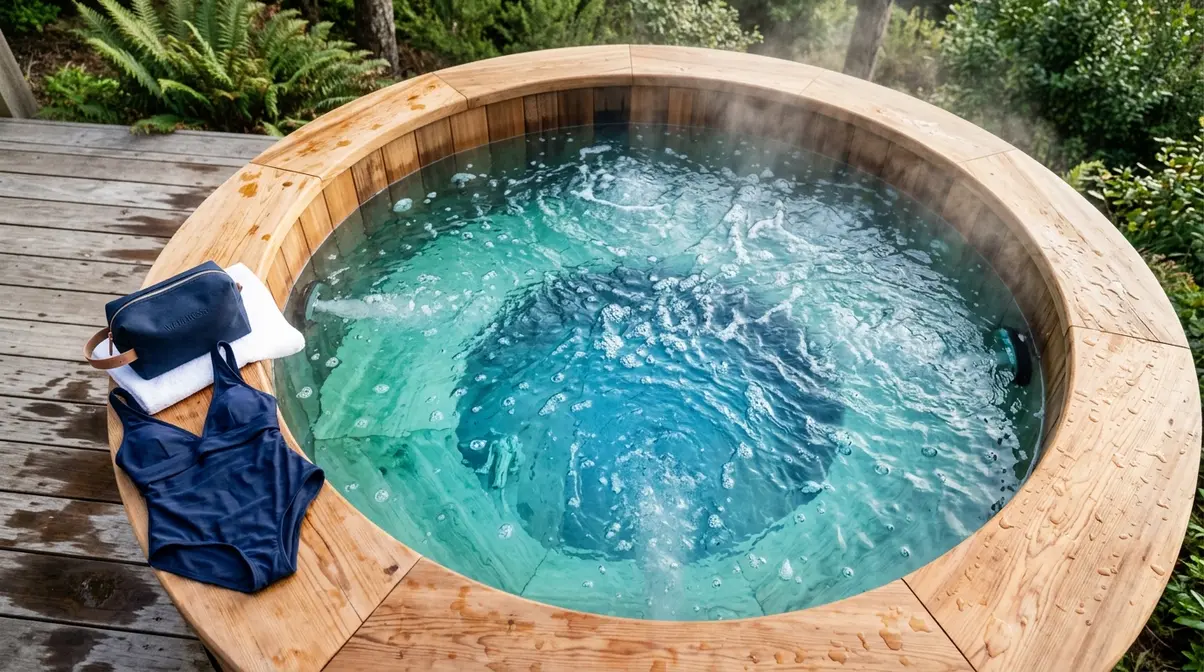
Yes, you can go in a hot tub on your period — it is generally safe for most people. Water pressure temporarily reduces your flow while you’re submerged, but it does not stop it entirely. Without internal menstrual protection, there is a real risk of leakage. Similarly, you can take a bath on your period with the same basic rule: use internal protection when sharing water with others. Understanding the two key factors — what happens to your flow and what happens with bacteria in hot water — gives you everything you need to soak with confidence.
Will Your Period Flow Into the Hot Tub?
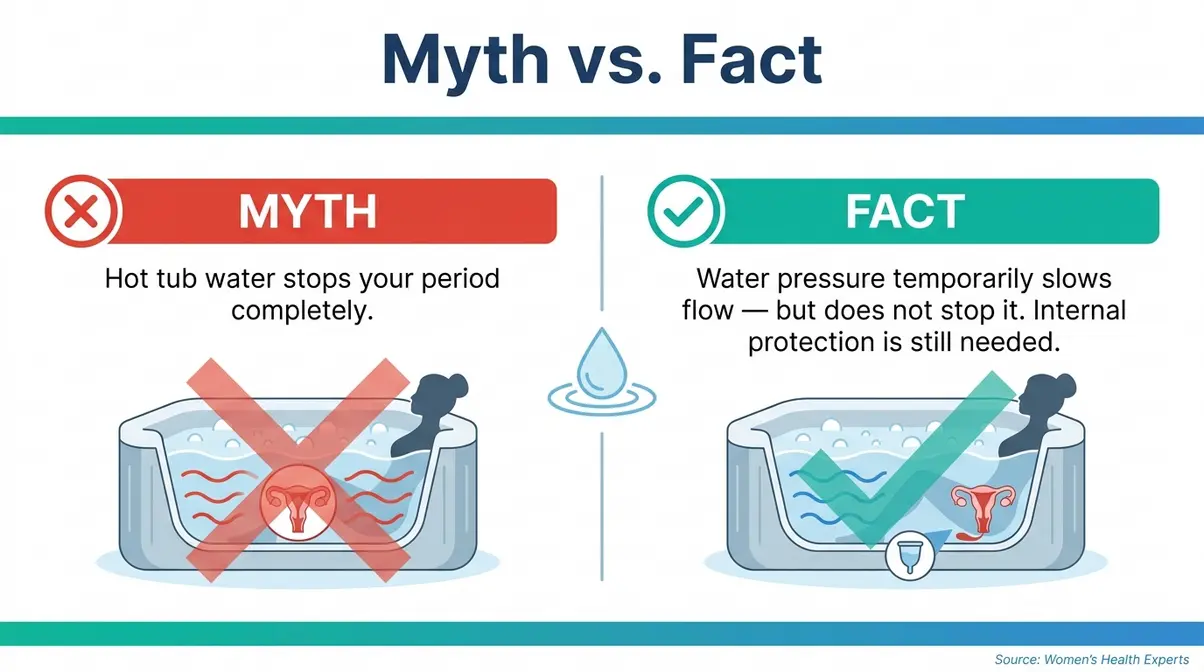
This is the question most people are really asking — and the honest answer is reassuring. Water pressure (the force of water surrounding your body) creates a counterforce that temporarily slows menstrual flow while you’re submerged. Think of it like squeezing a sponge: the surrounding pressure pushes back, slowing the release. According to Cleveland Clinic guidance on menstruation and water activity, this effect is real but not absolute — it reduces flow, it does not eliminate it.
The moment you stand up or step out of the water, your flow resumes at its normal rate. This is exactly why protection matters before you get in, not after. With proper internal protection — a tampon, menstrual cup, or disc — the risk of visible blood entering the water is very low. The water pressure effect simply buys you a small margin; your product does the real work.
Does Hot Tub Water Stop Your Period?
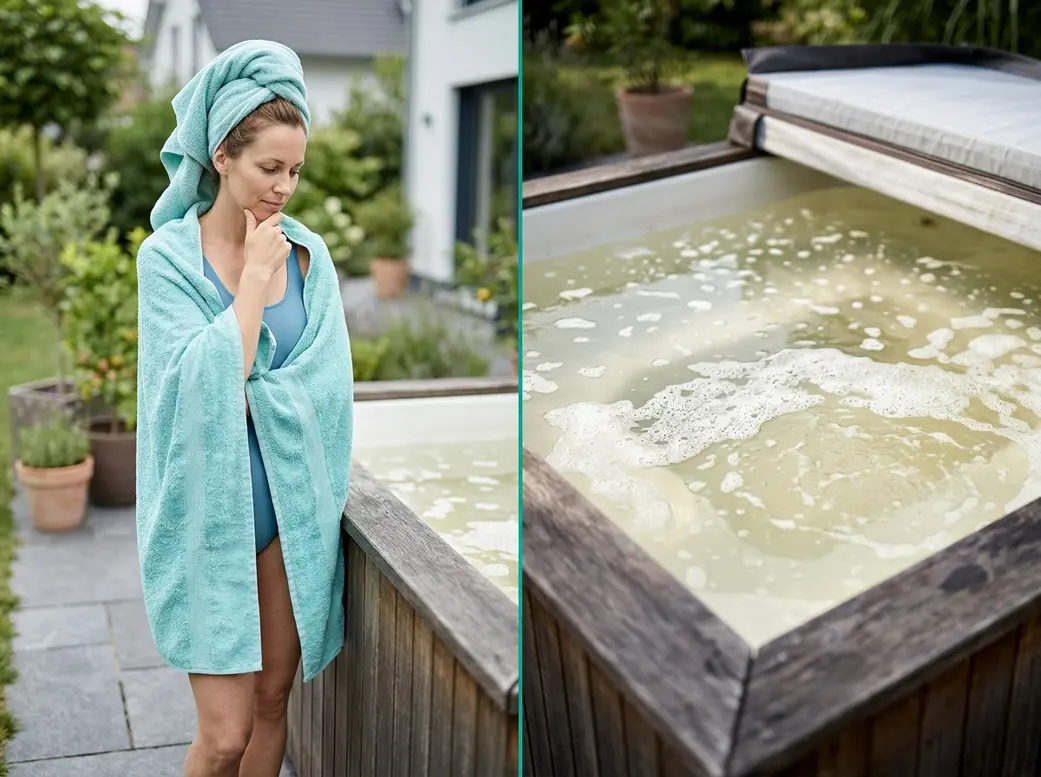
Hot tub water does not stop your period — water pressure only temporarily reduces flow, making internal menstrual protection essential for hygiene (Cleveland Clinic, 2026). This is one of the most persistent myths around periods and water, and it matters because believing it can lead people to skip protection entirely.
Here’s the simple physics: your uterus contracts and releases menstrual fluid through your cervix and vaginal canal. Water pressure acts on the outside of your body, creating a mild counterforce at the vaginal opening. This external pressure reduces — but does not seal — the flow. The internal process that drives menstruation continues unaffected. Your uterus doesn’t know you’re in a hot tub.
The ACOG confirms swimming is safe during menstruation when using a tampon or menstrual cup. This is the medical consensus: safe to soak, but protection is non-negotiable. The Leak-Free Soak Protocol — covered in full in H2 4 below — gives you a practical, step-by-step framework built around this science.
Infection Risks: What to Watch Out For
Hot tubs carry a specific bacterial risk that standard pools do not. Because hot tub water is warm (typically 100–104°F / 38–40°C), bacteria multiply faster than in cooler water, and chlorine breaks down more quickly. The CDC guidelines on hot tub infection risks note that improperly maintained hot tubs can harbor Pseudomonas aeruginosa — the bacteria most commonly responsible for hot tub rash, also called folliculitis (a bacterial skin infection that causes red, itchy bumps on the skin, usually appearing 12–48 hours after exposure) (CDC, 2026).
During your period, your cervix may be slightly more open, which some healthcare providers note could marginally increase the pathway for bacteria. This does not mean you should avoid hot tubs — it means you should choose well-maintained, properly chlorinated tubs and follow basic pre-soak hygiene. Check the water clarity before entering: cloudy or foamy water is a warning sign. Showering before entry removes surface bacteria and reduces contamination. The risk is manageable; it just requires awareness.
For more information on maintaining safe water, refer to our hot tub safety and hygiene guidelines.
5 Benefits of Hot Tubs During Your Period
Hot tub use during menstruation isn’t just safe — for many people, it’s actively helpful. The combination of heat, buoyancy, and jet massage addresses several of the most common period symptoms at once. Medical consensus indicates that heat therapy is one of the most effective non-pharmacological approaches to menstrual discomfort, and a hot tub delivers it more effectively than a heating pad. Here are the three key benefits worth knowing.
Relief from Menstrual Cramps
Those “death cramps” that make you want to curl up in bed? Heat is one of the most clinically supported remedies for them. Warm water causes blood vessels to dilate (widen), which increases blood flow to the uterine muscles and reduces the intensity of cramps. Research published via Jacuzzi’s overview of hot tub therapy for menstrual cramps shows that hydrotherapy — using water for therapeutic purposes — can reduce the severity of dysmenorrhea (painful menstruation) significantly.
The jets in a hot tub add a targeted massage effect on the lower back and abdomen, which further eases muscle tension. Even a 15–20 minute soak can provide meaningful relief that lasts well after you exit the water. For many people, a hot tub session on day one or two of their period is more effective than over-the-counter pain medication alone.
Muscle Relaxation and Reduced Bloating
Period-related bloating and full-body muscle aching are caused partly by prostaglandins (hormone-like chemicals your body releases to trigger uterine contractions). Warm water immersion helps relax skeletal muscles throughout the body, reducing that heavy, achy feeling that often accompanies menstruation. The buoyancy of water also temporarily offloads pressure from joints and the lower spine, which can feel particularly tender during your period.
According to Heavenly Heat’s wellness overview of soaking benefits during menstruation, the combination of heat and hydrostatic pressure (the gentle, even pressure water exerts on your body) may help reduce the sensation of bloating by encouraging lymphatic circulation. While this isn’t a cure, many people report noticeably less discomfort after a 20-minute soak.
Stress Reduction and Better Sleep
The total exhaustion that comes with menstruation is real — and it’s not just physical. Hormonal shifts during your period can heighten anxiety and disrupt sleep. Hot tub immersion triggers the release of endorphins (your body’s natural mood-elevating chemicals) and lowers cortisol (the primary stress hormone). The result is a calmer nervous system, which directly supports better sleep quality.
A warm soak one to two hours before bed can also encourage the natural drop in core body temperature that signals to your brain it’s time to sleep. For people who experience mood dips, irritability, or sleep disruption during their period, a short hot tub session in the evening is a genuinely practical tool — not just a luxury.
Which Menstrual Products Work in a Hot Tub?
Choosing the right product before getting into a hot tub is the single most important decision you’ll make. Not all menstrual products are designed for water immersion — some are actively unsafe in a hot tub environment. This section breaks down every option, starting with the most commonly used and ending with the most modern alternatives.
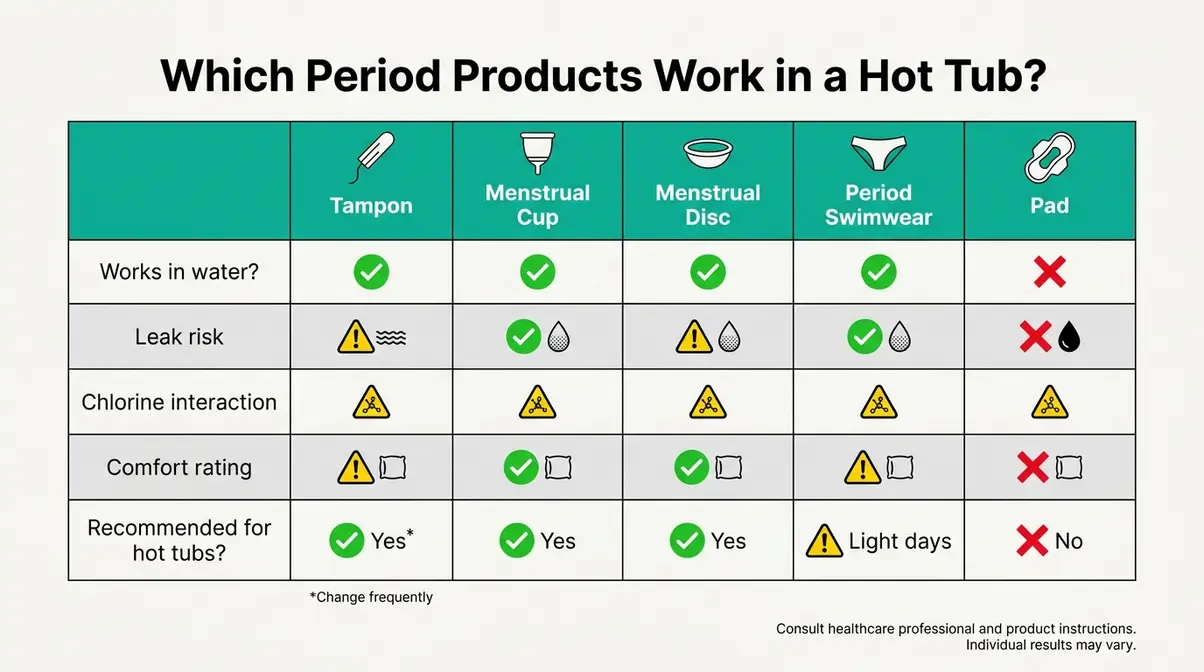
Tampons: Effective But With Caveats
Tampons are the most widely used internal product for water activities, and they work in a hot tub — with one important caveat. Tampons are made of absorbent cotton, which means they absorb not only menstrual fluid but also the surrounding water. In a hot tub, this means a tampon can become saturated with chlorinated water faster than in a cool pool, reducing its effective absorption capacity and potentially causing it to swell uncomfortably.
OB-GYNs recommend changing your tampon immediately after exiting the water — not waiting. A saturated tampon is less effective and can increase irritation risk. Use the highest absorbency appropriate for your flow on that day, and plan your soak time accordingly. If you’re in the hot tub for 20 minutes or more, factor in a fresh tampon as part of your exit routine. Tampons remain a reliable, widely accessible option when used correctly.
Cups and Discs: The Safest Option
Menstrual cups (small, reusable silicone devices that collect flow internally, rather than absorbing it) and menstrual discs (thin, flexible discs that sit at the base of the cervix and collect flow) are widely considered the safest options for hot tub use. Because they collect rather than absorb, they don’t soak up chlorinated water or lose effectiveness when submerged. Silicone is non-reactive with pool and hot tub chemicals, making it an ideal material for water activities.
The Flo Health overview of bathing and menstruation notes that menstrual cups provide a reliable seal that reduces leakage risk during water immersion. ACOG recognizes silicone menstrual cups as safe for internal use. A properly inserted cup or disc can typically be worn for up to 12 hours, meaning you don’t need to remove it before a soak.
“I do NOT like tampons and I don’t have access to getting a cup or disc. How can I still go?”
This is a completely valid concern — and you still have options. Period swimwear (covered in the next section) is the most accessible tampon-free alternative for lighter flow days. For heavier days without access to internal products, the honest guidance is to wait until your flow is lighter, or to limit your soak to a private hot tub where any minor leakage carries lower social risk. Your comfort and confidence matter most.
Period Swimwear: Tampon-Free Alternative
Period swimwear is one of the most significant product innovations in menstrual health in recent years — and it’s almost entirely absent from competitor guides on this topic. Period swimwear uses multiple layers of moisture-wicking, leak-resistant fabric built directly into the swimsuit brief or shorts. The inner layers absorb menstrual fluid while the outer layer acts as a water barrier, preventing pool or tub water from soaking in and preventing menstrual fluid from leaking out.
Period swimwear works best on lighter flow days or at the tail end of your period. On heavy flow days, it provides a useful backup layer alongside a cup or disc, but should not be relied on as the sole protection. Brands like Modibodi and Ruby Love offer swimwear specifically designed for this purpose. It’s a genuinely practical option for anyone who dislikes tampons or wants a more comfortable, product-free experience in the water.
You can learn more about enhancing your soaking experience with our guide to hot tub accessories and comfort gear.
Why You Should Never Wear a Pad
Wearing a pad in a hot tub is not a viable option — and it’s worth understanding exactly why, so you’re not caught off guard. Pads are designed to absorb menstrual fluid by sitting against your skin in your underwear. The moment you enter water, a pad immediately absorbs the surrounding water, becomes completely saturated, and loses all absorptive capacity. It will also swell significantly, become heavy, and almost certainly detach or shift.
As Nemours KidsHealth guidance on period protection explains, pads simply don’t work in water — they absorb water rather than blocking it, leaving you with zero protection and a soggy, uncomfortable mess. There is no workaround here. If a pad is your only current option, the right choice is to wait until you have access to an internal product or period swimwear before getting into any body of water.
The Leak-Free Soak Protocol
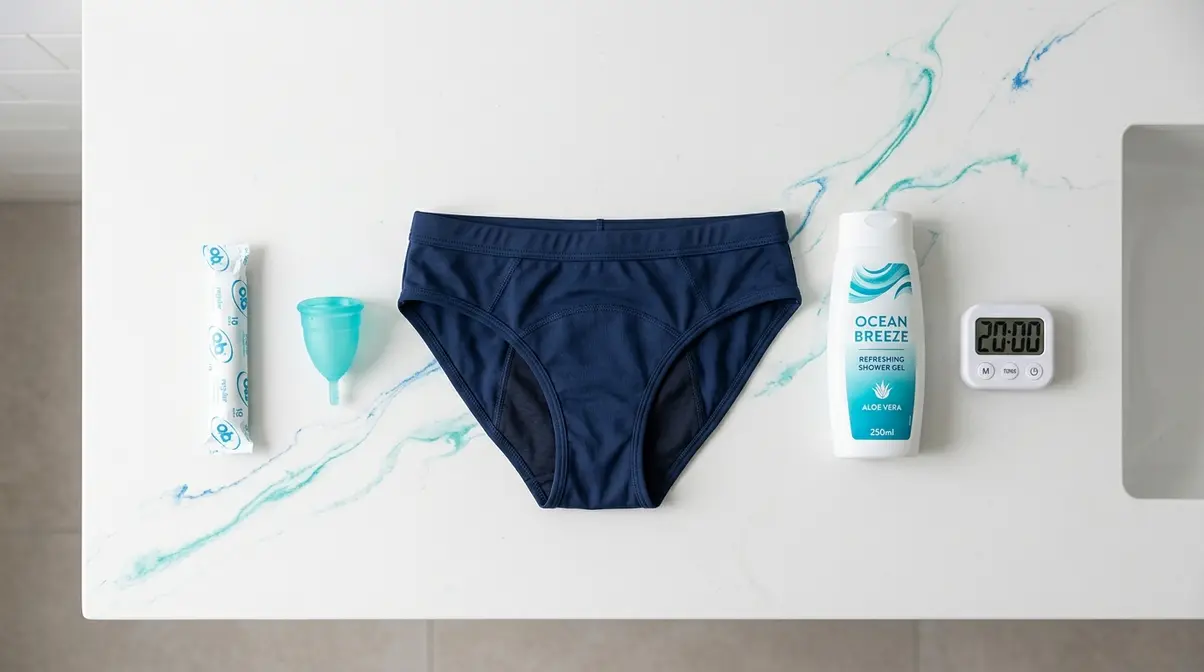
When figuring out how can you go in a hot tub on your period safely, the answer comes down to hygiene. The Leak-Free Soak Protocol is a named, step-by-step hygiene framework designed specifically for hot tub use during menstruation. It covers three phases — before you get in, while you’re soaking, and after you get out — so every stage of your soak is handled with confidence. Medical consensus indicates that most hygiene concerns around period hot tub use come down to product choice and basic cleanliness, both of which this protocol addresses directly.
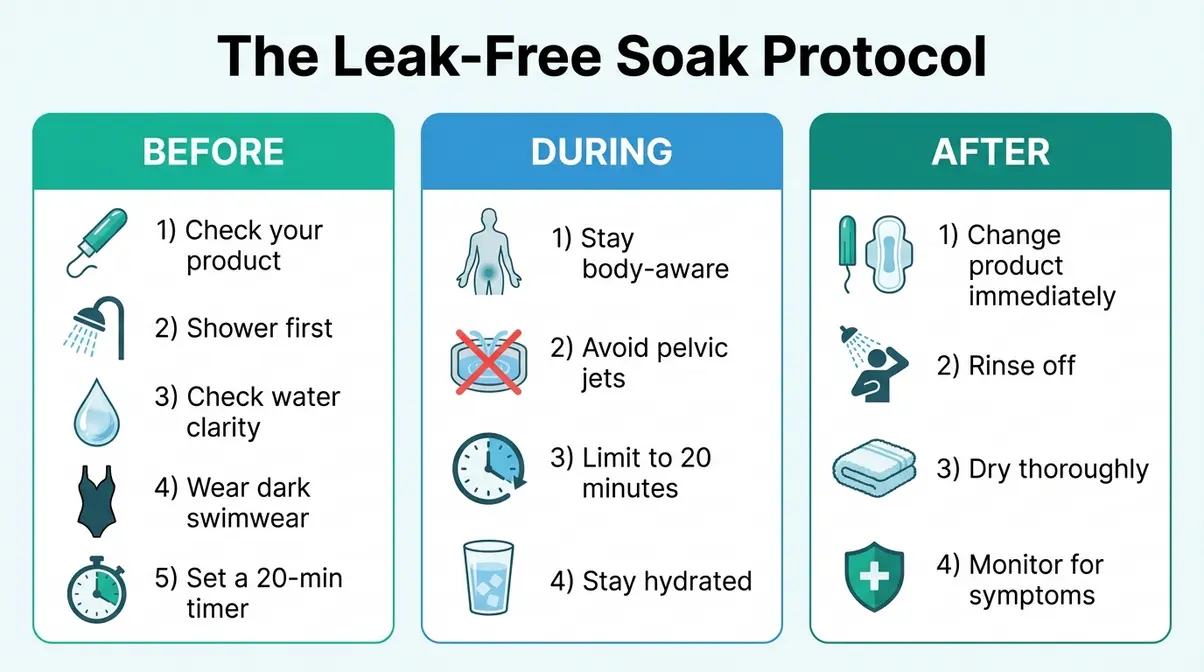
Before You Get In
Preparation takes five minutes and eliminates most of the anxiety around leaking or hygiene.
- Check your product. Insert a fresh tampon, or verify your menstrual cup or disc is properly seated and not close to its capacity. Do this no more than 30 minutes before entering the water.
- Shower first. Rinse your body with soap and water before entering the hot tub. This removes surface bacteria and reduces the amount of external contaminants you introduce to the water — a basic courtesy that also protects you.
- Check the water. Look at the hot tub water before entering. It should be clear, not cloudy or foamy. Cloudy water can indicate low sanitizer levels or high bacterial load — a risk to anyone, and especially to you during menstruation.
- Wear dark-colored swimwear. This is a simple, practical confidence measure. Dark fabric makes any minor surface-level discharge invisible, reducing anxiety throughout your soak.
- Set a time limit. Plan to soak for 15–20 minutes maximum. This keeps your product within its effective window and reduces heat exposure, which can be intense during menstruation.
While You’re Soaking
Once you’re in, a few simple habits keep everything comfortable and safe.
- Stay aware of your body. You know your flow. If you feel any unusual sensation or suspect your product has reached capacity, exit calmly and change it before returning.
- Avoid aggressive jet positioning. Direct jet pressure against the pelvic area can dislodge a tampon string or shift a disc. Position yourself so jets target the lower back and legs instead.
- Limit soak time to 20 minutes. Hot water raises your core body temperature, which can amplify fatigue during menstruation. Shorter, focused sessions are more beneficial than extended soaking.
- Stay hydrated. Keep a glass of water nearby. Hot tub heat causes dehydration, which can worsen headaches and fatigue — both already common during your period.
Troubleshooting — What to Do If a Leak Occurs: If you notice any discharge in the water, exit the hot tub calmly. There is no need for alarm — the volume is typically very small, and properly maintained hot tub water with correct chlorine levels (2–4 ppm) will neutralize it. Excuse yourself, change your product, and rinse off before deciding whether to return. If you’re in a private hot tub, simply drain and refill after your session.
After You Get Out
The post-soak routine is brief but important.
- Change your product immediately. A tampon saturated with hot tub water should be removed and replaced right away. Even if it hasn’t reached its absorption limit for menstrual fluid, the absorbed water reduces its effectiveness. Menstrual cups and discs can be emptied and reinserted if they’re not at capacity.
- Rinse off with fresh water. Shower or rinse your body after exiting the hot tub. This removes residual chlorine and any surface bacteria from the water, reducing skin and vaginal irritation risk.
- Dry thoroughly. Damp skin and swimwear create conditions where bacteria and yeast thrive. Change out of your wet swimwear as soon as possible and pat dry.
- Monitor for symptoms. In the 24–48 hours after your soak, watch for any signs of irritation, unusual discharge, or itching. These can be early signs of folliculitis or a yeast imbalance. If symptoms develop, consult your doctor promptly.
For guidance on maintaining proper water balance, read our guide to hot tub cleaning and water maintenance.
Do Hot Tubs Affect Your Menstrual Cycle?
A common worry beyond the immediate soak is whether regular hot tub use might somehow change your menstrual cycle — delay it, trigger it early, or affect future periods. The short answer is: for most healthy adults, occasional hot tub use does not meaningfully affect your menstrual cycle. However, there are two specific scenarios worth understanding clearly: the question of cycle timing and the critically important question of hot tub safety during pregnancy.
Can a Hot Tub Delay Your Period?
There is no strong clinical evidence that a single hot tub session will delay or accelerate your period. Your menstrual cycle is governed by a hormonal feedback loop involving the hypothalamus, pituitary gland, and ovaries — a system that a 20-minute soak in warm water does not meaningfully disrupt. Heat stress from extreme or prolonged exposure can theoretically affect hormonal balance, but this requires sustained, intense heat exposure well beyond a typical hot tub session.
What hot tubs can do is temporarily increase your core body temperature, which may cause you to feel warmer and more fatigued. If your period is already due within a day or two, some people report that the relaxation and warmth seem to “bring it on” slightly — but this is likely coincidental timing rather than a physiological trigger. If you notice consistent cycle irregularities, the cause is almost certainly unrelated to hot tub use, and a conversation with your gynecologist is the right next step.
Learn more about the general advantages in our hot tub health benefits and wellness guide.
Is It Safe While Pregnant?
This is a critically different question — and the answer is much more cautious. Mayo Clinic’s guidance on hot tub safety during pregnancy advises that pregnant people should avoid hot tubs, particularly in the first trimester. Raising core body temperature above 102°F (38.9°C) during early pregnancy has been associated with an increased risk of neural tube defects (birth defects affecting the brain and spinal cord) (Mayo Clinic, 2026).
Hot tubs typically operate at 100–104°F, meaning it takes only a few minutes to reach a core temperature elevation that may be harmful. If you are pregnant — or think you might be — skip the hot tub entirely and consult your OB-GYN before resuming use. This is one of the clearest and most important safety boundaries in this entire guide.
Always ensure you are soaking at safe hot tub temperature ranges.
When to Skip the Hot Tub During Your Period
Hot tub use during menstruation is safe for most people most of the time — but “most” is doing real work in that sentence. There are specific circumstances where soaking during your period is genuinely not a good idea, and knowing them helps you make an informed decision rather than a fearful one.
Signs You Should Wait
Skip your hot tub session if any of the following apply:
- You have an active vaginal infection. Bacterial vaginosis (BV) or a yeast infection makes the vaginal environment more vulnerable. Hot tub chemicals can further disrupt your vaginal pH (the natural acid-base balance that protects against infection), worsening symptoms.
- You have open wounds or skin irritation in the genital area. Hot tub water introduces bacteria to broken skin.
- Your flow is unusually heavy. On very heavy flow days (soaking a tampon in under an hour), even internal protection may not provide adequate coverage for a comfortable soak.
- You feel feverish or unwell. Menstruation-related fever can signal an underlying issue. Hot tub heat will mask or worsen it.
- The hot tub water looks or smells off. Cloudy water, strong chemical smell, or foam that doesn’t dissipate quickly are signs of poor water quality. No one should enter this water — period or not.
When to Talk to Your Doctor
Some situations go beyond a simple “wait a few days.” Contact your gynecologist or OB-GYN if:
- You experience persistent pelvic pain that worsens after hot tub use
- You notice unusual discharge — particularly if it’s discolored, has an unusual odor, or is accompanied by itching — within 48 hours of a soak
- You have a history of recurrent UTIs or vaginal infections and want personalized guidance on water activity during your period
- You are pregnant or trying to conceive — hot tub safety changes significantly in these circumstances
- You have endometriosis, fibroids, or another diagnosed condition affecting your menstrual cycle — your doctor can give specific guidance tailored to your situation
The guidance in this article is general. Your gynecologist knows your individual health history, and their advice takes priority over any general guide.
For additional precautions, review our guide on when to avoid hot tub use.
Frequently Asked Questions
Will your period come out in a hot tub?
A small amount of menstrual fluid can enter the water if you are not wearing internal protection, because water pressure only slows — not stops — your flow. With a properly inserted tampon, menstrual cup, or disc, the risk of visible blood entering the water is very low. Properly chlorinated hot tub water (2–4 ppm) is designed to neutralize small amounts of bodily fluid. Using internal protection before you enter is the key safeguard (CDC, 2026).
Can you go in without a tampon?
Yes — if you use period swimwear or a menstrual disc as an alternative. You do not need a tampon specifically. Menstrual cups and discs provide equivalent or better protection without the chlorinated-water absorption issue that tampons have. Period swimwear is the most accessible tampon-free option for lighter flow days. On very heavy days, some internal protection is strongly recommended regardless of swimwear. The most important thing is that some form of protection is in place before you enter the water.
Will my period leak in the pool?
With proper internal protection, leaking in a pool or hot tub is highly unlikely. Water pressure creates a mild counterforce that temporarily slows flow, and a correctly inserted tampon, cup, or disc handles the rest. Dark-colored swimwear provides an additional layer of confidence.
Can I wear a pad in the hot tub?
No — pads do not work in water and should never be worn in a hot tub or pool. A pad absorbs water immediately upon submersion, becomes saturated within seconds, and provides zero menstrual protection. It will also swell, shift, and likely detach. Nemours KidsHealth explains that pads are designed for external absorption only and are not suitable for any water activity. Your only effective options in water are internal products (tampon, cup, or disc) or purpose-built period swimwear.
Will my period blood leak in the pool?
Blood leakage in a pool is very unlikely with the right protection in place. The combination of water pressure slowing your flow and an internal product collecting it means visible blood in pool or hot tub water is rare when protection is worn correctly. If no protection is used, small amounts of fluid may enter the water — but the volume is typically minimal and quickly diluted and neutralized by properly maintained water chemistry. Always use internal protection for shared water environments.
Can you wear a period pad in a hot tub?
A period pad cannot be worn in a hot tub. Pads are designed to absorb fluid from the surface of the skin in dry environments. Submerged in water, they absorb the surrounding water instead, losing all protective function immediately.
Will period blood show in a hot tub?
Period blood is very unlikely to visibly show in a hot tub when you use internal protection. The small volume of menstrual fluid that might enter the water is rapidly diluted in the tub’s total water volume and neutralized by chlorine. Without any protection, a small amount of fluid may be visible momentarily near the body, but it disperses quickly. The scenario most people fear — a visible cloud of blood — is not realistic when protection is worn correctly. Use a tampon, cup, or disc, and this concern effectively disappears.
Can it delay or bring on your period?
A single hot tub session is very unlikely to delay or bring on your period. Your menstrual cycle is controlled by a hormonal system that is not meaningfully disrupted by a short session in warm water. Some people notice their period seems to arrive shortly after a relaxing soak — this is most likely coincidental timing, not a physiological effect. Extreme, prolonged heat exposure could theoretically affect hormonal balance, but normal hot tub use (15–20 minutes at standard temperatures) does not meet this threshold. If your cycle is irregular, consult your gynecologist.
Limitations and When to Seek Further Guidance
Common Pitfalls
Relying on water pressure alone as protection. The most common mistake is assuming that because water slows your flow, you don’t need a product. Water pressure is a helpful side effect — not a protection strategy. Always insert your product before entering.
Staying in too long. A 20-minute session is the practical sweet spot. Longer soaks in hot water raise your core body temperature, which can amplify menstrual fatigue and dehydration. Set a timer before you get in.
Not changing your tampon after exiting. A tampon saturated with chlorinated hot tub water is less effective and can cause irritation. Exiting the tub and immediately changing your tampon is a non-negotiable step — not optional.
Entering poorly maintained water. Hot tub water quality varies significantly. Cloudy water, foamy surfaces, or a strong chemical odor are all warning signs. The infection risks covered in this guide assume a properly maintained hot tub. Improperly maintained water is a risk for everyone.
When to Choose Alternatives
If you have a current vaginal infection: Skip the hot tub entirely until it has resolved. The disruption to vaginal pH from hot tub chemicals can worsen both bacterial vaginosis and yeast infections significantly. A warm bath at home is a gentler alternative.
If you are pregnant: Avoid hot tubs, particularly in the first trimester, as Mayo Clinic advises. A warm shower provides similar comfort without the core temperature risk.
If you are on a very heavy flow day: Consider waiting 24–48 hours for a lighter flow day, or use a menstrual disc (which provides a more complete seal than a tampon) if you want to soak on a heavy day.
When to Seek Expert Help
Talk to your gynecologist or OB-GYN if you experience recurring infections after water activities, unusual post-soak symptoms, or have an underlying condition affecting your menstrual health. This guide provides general guidance — your doctor provides personalized guidance. That distinction matters, especially for YMYL health topics.
The Bottom Line on Hot Tubs and Your Period
If you’ve been wondering, “can you go in a hot tub on your period,” the answer is a resounding yes. For most people, using a hot tub during your period is safe, manageable, and genuinely beneficial. The heat eases cramps, the jets relax tight muscles, and the buoyancy reduces the physical heaviness of menstruation. The key is preparation: choose the right product, follow The Leak-Free Soak Protocol, and respect the few scenarios where waiting is the wiser choice.
The Leak-Free Soak Protocol — check your product, shower first, verify water quality, limit your soak to 20 minutes, and change your product immediately after — removes the guesswork and the anxiety. It transforms a “maybe” into a confident “yes.” The science is clear, the products are better than ever, and the barriers are smaller than most people think.
Your next step is simple: identify which product option works best for your body and your access. If you already use a tampon, you’re ready. If you want to explore menstrual cups, discs, or period swimwear, the options are more accessible than ever. Check your hot tub’s water quality before your next soak, keep this protocol handy, and enjoy the relief you deserve.

David King
Hot tub tester and writer at One Hot Tub.