

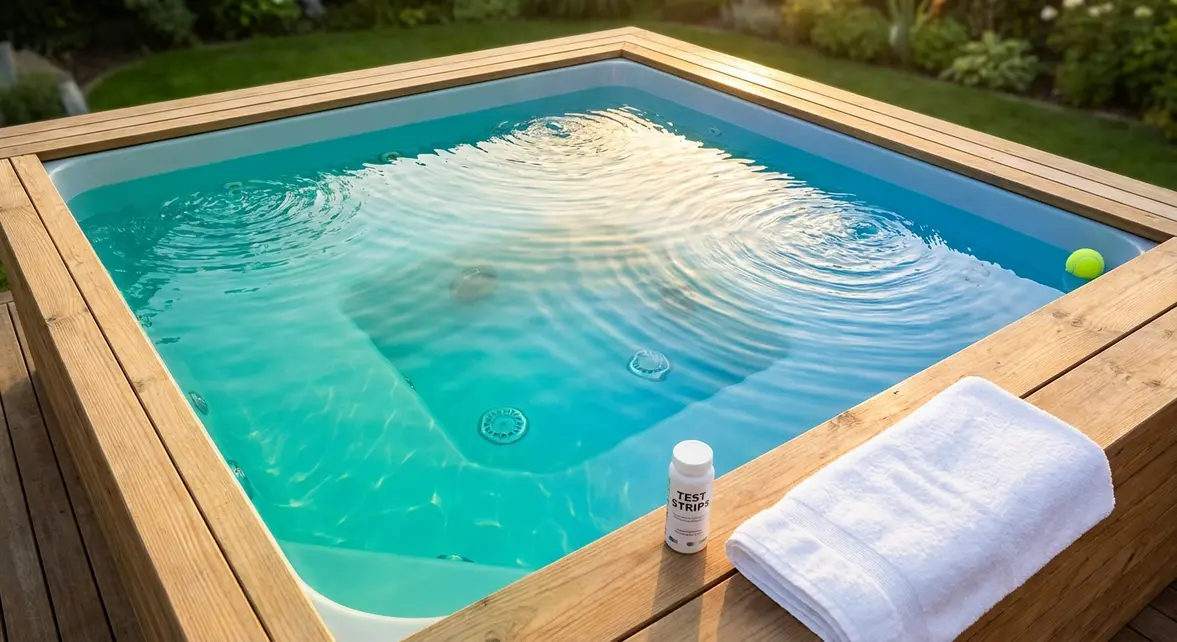
Table of Contents - How to Keep Hot Tub Water Clear: 6-Step Guide
This blog post may contain affiliate links. As an Amazon Associate I earn from qualifying purchases.
“We are a few weeks into spa ownership and I am so tired of playing the ‘guess what color the water will be today’ game!”
— Real hot tub owner, Reddit r/hottub
If that sounds familiar, you are not alone. Cloudy, milky, or “scummy” water is the most common frustration for new hot tub owners — and it almost always comes down to three things working (or not working) together.
The good news: once you understand how to keep hot tub water clear, you won’t need to guess anymore. The bad news: most guides only tell you half the story. They tell you to “add more chlorine” but never explain that your pH has to be right first, or that a clogged filter quietly undoes every chemical you add.
By the end of this guide, you’ll have a simple weekly routine, a step-by-step troubleshooting plan, and the health safety knowledge to keep your water crystal clear — every single time. We’ll cover your weekly maintenance routine, how to diagnose and fix cloudy water fast, what health risks to watch for, and the pro tips most owners never discover.

- AFFORDABLE 150 STRIPS: This water chemical testing kit contains 150 test strips. Enough balanced for your swimming pool, hot tub, spa and other water testing. At least testing twice a week is recommended to keep your pool sparkling clean and safe.
- ACCURATE AND FAST TESTING: Just soak in water for 1 seconds; Then take it out,no need to shake excess water off and hold the test strip horizontally for 15 seconds; Compare with the color chart on the bottle to obtain clear and accurate water quality results.
- 7 IN 1 POOL TEST KIT: Test all necessary parameters for your swimming pool at 1 time, such as Bromine, Total Alkalinity, pH, Free Chlorine, Total Hardness, Cyanuric Acid, and Total Chlorine. Check water quality at any time you want.
- HIGH ACCURACY POOL TESTING STRIPS: High-quality fiber paper and no-bleeding pads selected after repeated trials by R&D personnel. No need to shake off excess water and follow the instructions easily, you will to get the accurate results.
- TIPS FOR ACCURATE RESULTS: Keep wet fingers away from the strips. Read under natural daylight for best results.Store in a cool dry place.The expiration is 3 years from manufacture. Once opened, use up in 90 days.

- BENEFITS: Destroys organic contaminants to maintain clean, clear, sanitized water
- USE: Specifically formulated for spa and hot tubs
- COMPATIBILITY: Chlorine sanitizing systems
- FEATURES: Quick dissolving, EPA approved formula, helps control algae growth, maintains water clean, clear, and sanitized
- ACTIVE INGREDIENTS: Sodium Dichloro-s-Triazinetrione Dihydrate

- Organic Brominating Compound (BCDMH): SpaGuard Brominating Tablets provide spa owners with an organic brominating compound in time-release tablet form to provide continuous spa sanitation, while simplifying maintenance.
- Dissolve Slowly, Protect Continuously: Experience continuous protection with SpaGuard Brominating Tablets. It has a slow-dissolving formula that provides reliable sanitation, keeping your spa water free of microorganisms and other contaminants for a clean and healthy hot tub experience.
- Trustworthy Spa Maintenanance: Trust SpaGuard's proven formula for effective and reliable hot tub maintenance, so you can relax and enjoy your spa with peace of mind. It is effective in killing and controlling algae and other microorganisms in the water to maintain a clean spa environment.
- Compatibility: Regular and routine application of SpaGuard Bromine Tablets is essential to maintain consistent and effective sanitation in the spa. Compatible with most spa water balancing products and chemicals.
- Tested and Proven Effective: SpaGuard products are known for delivering reliable results and making spa care less complex. SpaGuard carries an extensive line of spa solutions that match your unique needs.
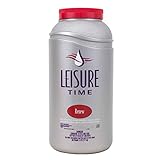
- BENEFITS: Non-chlorine shock oxidizer clears cloudy water and eliminates odors and contaminants
- USE: Buffered to prevent pH fluctuations; use weekly for spa water maintenance
- COMPATIBILITY: Works with chlorine, bromine, ozone and mineral purification systems
- FEATURES: Can use spa 15 minutes after use; Destroys microorganisms, soaps, deodorants and oils
- INCLUDES: Economical bulk-sized 5-pound container of Leisure Time Renew Shock Treatment

- Fast & Effective Cleaning: Skip the overnight soaking! Ultimate Spa Filter Cleaner works in just 5 minutes, saving you time and effort.
- Enhances Filter Performance: Improves efficiency and extends the lifespan of your spa or pool filter, ensuring crystal-clear water every time.
- Safe for All Filters: Safely cleans all types of pleated spa and pool filter cartridges without damaging them.
- Removes Tough Build-Up: Quickly eliminates body oils, suntan lotion, grease, and other organic material, leaving your filter spotless.
- Residue-Free Formula: Rinses off easily with no slimy residue, preventing foam and ensuring smooth operation of your spa or hot tub.

- Convenient, includes everything required for 3-5 months of spa maintenance
- Gives you Clean, Soft, Crystal Clear Water
- Includes two 2 liter bottles of AquaFinesse solution, measuring cup, Tri-Chlor mini tabs and instruction manual
- Takes the guesswork out of water care
- One minute, one time per week is all it takes!

- Hot Tub Sanitizing System: FROG @ease Floating System floats when working, flips when empty; its perfect for hot tubs up to 600 gallons; replace the Mineral Cartridge only once every four months and the SmartChlor Cartridge every 3 to 4 weeks
- Innovative Technology for Clean Water: FROG @ease combines our patented mineral formula with SmartChlor Technology to create clean, silky soft Fresh Mineral Water in your hot tub
- Easy Hot Tub Maintenance: FROG @ease self-regulates for continuous crystal clear water and eliminates the peaks and valleys of traditional sanitizing methods; easily check when a SmartChlor Cartridge replacement is needed with the one color match on the included FROG @ease Test Strips
- Hot Tub Sanitization: With FROG @ease, you use up to 75%* less chlorine, making the water easier on skin, swimsuits and your hot tub’s surfaces; patented Mineral Technology sanitizes water and helps keep pH balanced
- Water Care Expertise: FROG has more than 25 years of experience making water care easier & keeping pool, hot tub and swim spa water sanitized; FROG’s patented Mineral Technology and prefilled cartridges create cleaner, clearer, softer water

- scum balls for spas hot tub:Our hot tub oil scum absorber is approximately 3 inches in size and is made of industrial grade environmentally friendly materials that effectively absorb oil and remove debris.
- reusable scum balls for pool:High quality and high elasticity industrial grade sponge, a reusable scum absorbent. After each use, squeeze out the water from the absorber and clean it with detergent for the next use.
- Widely used:The hot tub scum ball are widely used in swimming pools/hot tubs, spas, bathtubs to effectively clean water and absorb all dirt, such as sunscreen, body oils, cosmetics, etc
- hot tub oil scum absorber:Our pool scum absorber is vacuum packed, and you can knead the sponge ball appropriately to accelerate its return to its original state.
- Discount package: 12pcs oil absorbing sponge for hot tub, which meet your daily needs or can be kept as a backup.
Key Takeaways: How to Keep Hot Tub Water Clear
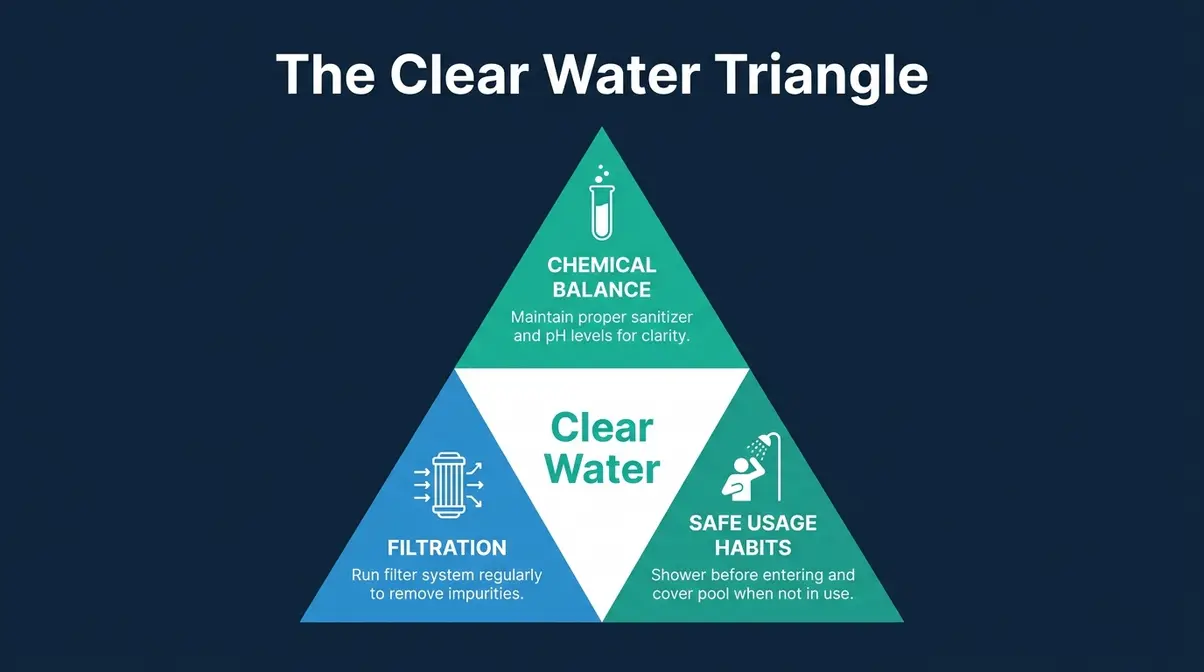
If you are wondering how to keep hot tub water clear, crystal clear hot tub water comes from balancing three pillars simultaneously — what we call The Clear Water Triangle: Chemical Balance, Filtration, and Safe Usage Habits.
- Test weekly: Use test strips or a kit to check pH (7.2–7.8) and sanitizer levels
- Shock after every use: A weekly oxidising shock resets the water and prevents cloudiness
- Clean filters monthly: Clogged filters are the hidden cause of most cloudy water
- Shower first: Body oils and lotions are the #1 source of water contamination
- Know the health signs: Cloudy water can harbour Pseudomonas aeruginosa bacteria — the cause of hot tub folliculitis
Your Weekly Hot Tub Maintenance Routine
Knowing how to keep hot tub water clear starts with one insight that most beginner guides skip: you cannot fix one thing in isolation. This is the foundation of The Clear Water Triangle — a framework built on three pillars that must all be maintained at the same time: (1) Chemical Balance, (2) Filtration, and (3) Safe Usage Habits. Neglect any single corner, and the other two can’t compensate. Fix all three consistently, and clear water becomes automatic.
Here is what you need to do each week — and why each step actually matters.
- Quick Answer: How to keep hot tub water clean and clear:
- Test pH, alkalinity, and sanitizer every week
- Adjust alkalinity first, then pH, then sanitizer
- Shock the water weekly with an oxidising treatment
- Rinse your filter every 2 weeks; deep-clean monthly
- Drain and refill completely every 3–4 months
- Shower before you soak to reduce contamination
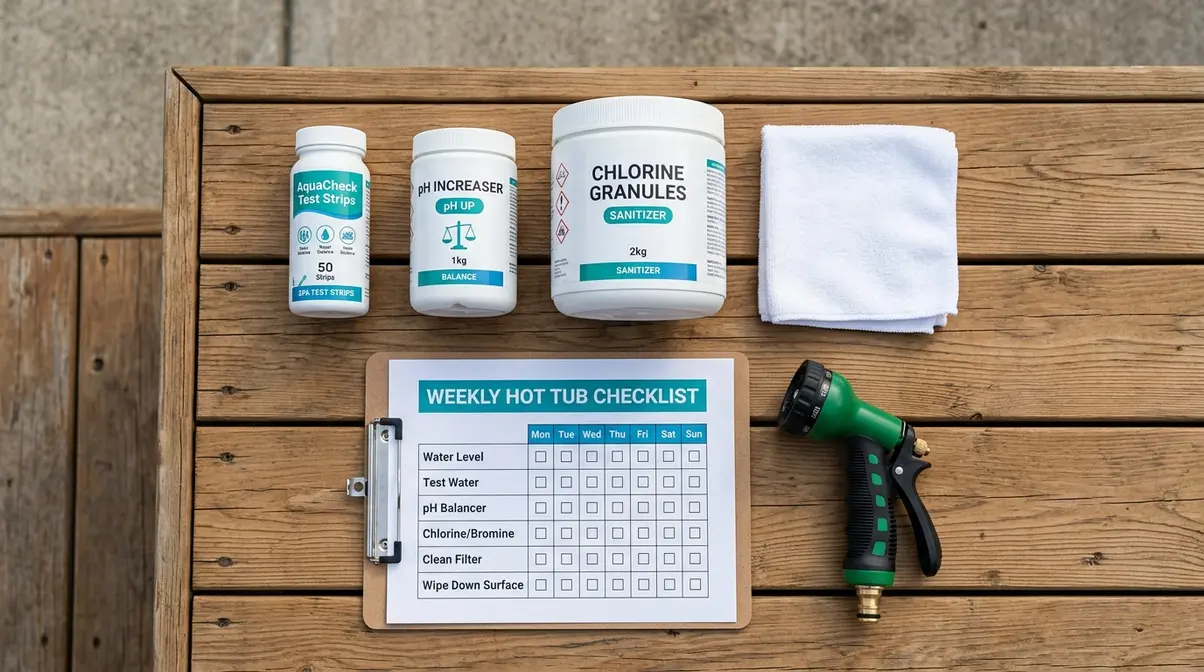
What You’ll Need Before You Start
Estimated Time: 30 minutes
Before you follow any step in this guide, gather these supplies. Running out mid-routine is one of the most common reasons new owners end up with chemicals thrown way off.
- Testing supplies:
- Test strips (the “dip stick” method) — quick and affordable; choose strips that test pH, alkalinity, and chlorine or bromine simultaneously
- Alternatively, a liquid test kit for more precise readings
- Balancing chemicals:
- pH increaser (sodium carbonate) and pH decreaser (sodium bisulphate)
- Total alkalinity increaser (sodium bicarbonate)
- Calcium hardness increaser (calcium chloride) — for soft water areas
- Sanitizers and shock:
- Chlorine granules or bromine tablets (your primary sanitiser — the chemical that kills bacteria)
- Oxidising shock (non-chlorine or chlorine-based) for weekly reset treatments
- Maintenance tools:
- A clean bucket for dissolving chemicals before adding to water
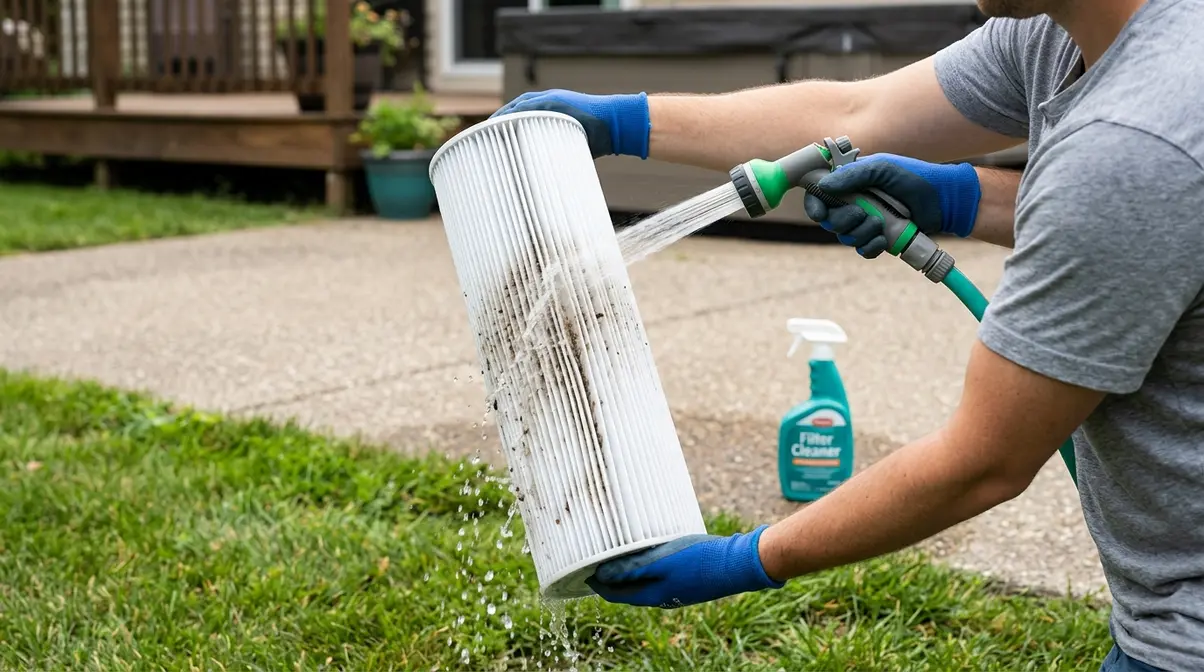
- Garden hose for filter rinsing
- Filter cleaning spray or chemical soak solution
Industry standard practice recommends keeping a dedicated “hot tub kit” box nearby so nothing gets missed during your weekly routine (Swim University, 2026).
Step 1 — Test Your Water with Test Strips or a Kit
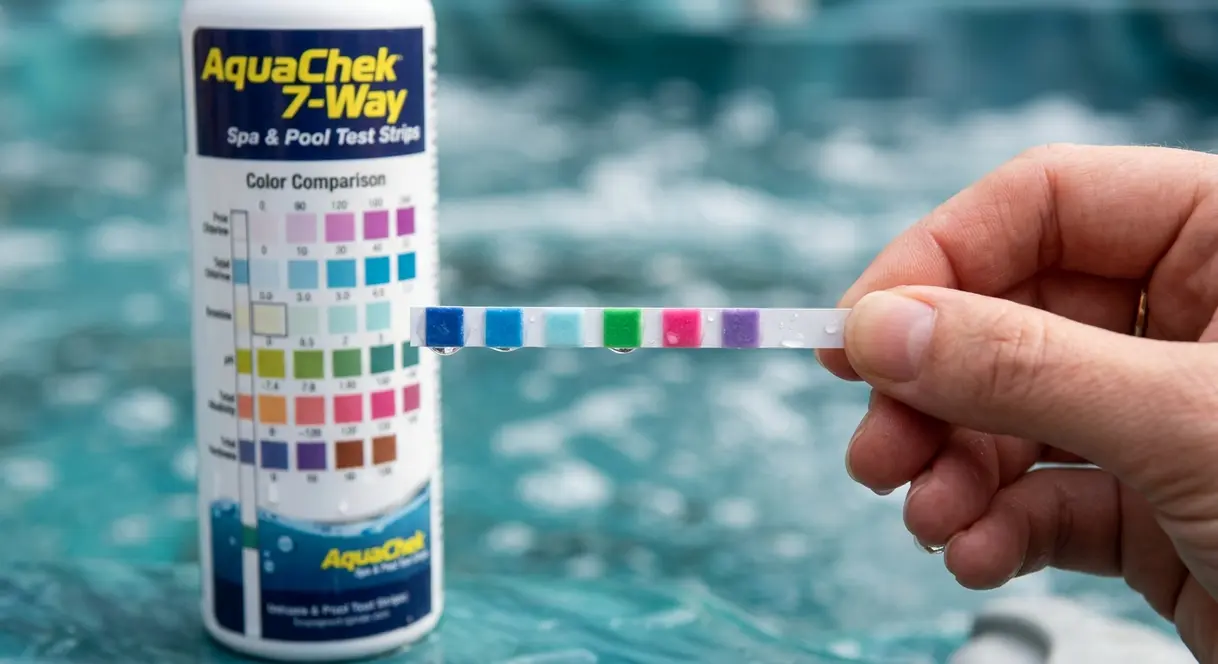
Why this matters: You cannot balance what you cannot measure. Testing first tells you exactly what needs adjusting — so you’re not just guessing and adding chemicals blind.
- Remove the hot tub cover and run the jets for 30 seconds to circulate the water.
- Dip a test strip (your “dip stick”) about 15 cm below the surface for 2–3 seconds.
- Hold the strip flat — do not shake it — and compare the colour pads to the chart on the bottle after 15 seconds.
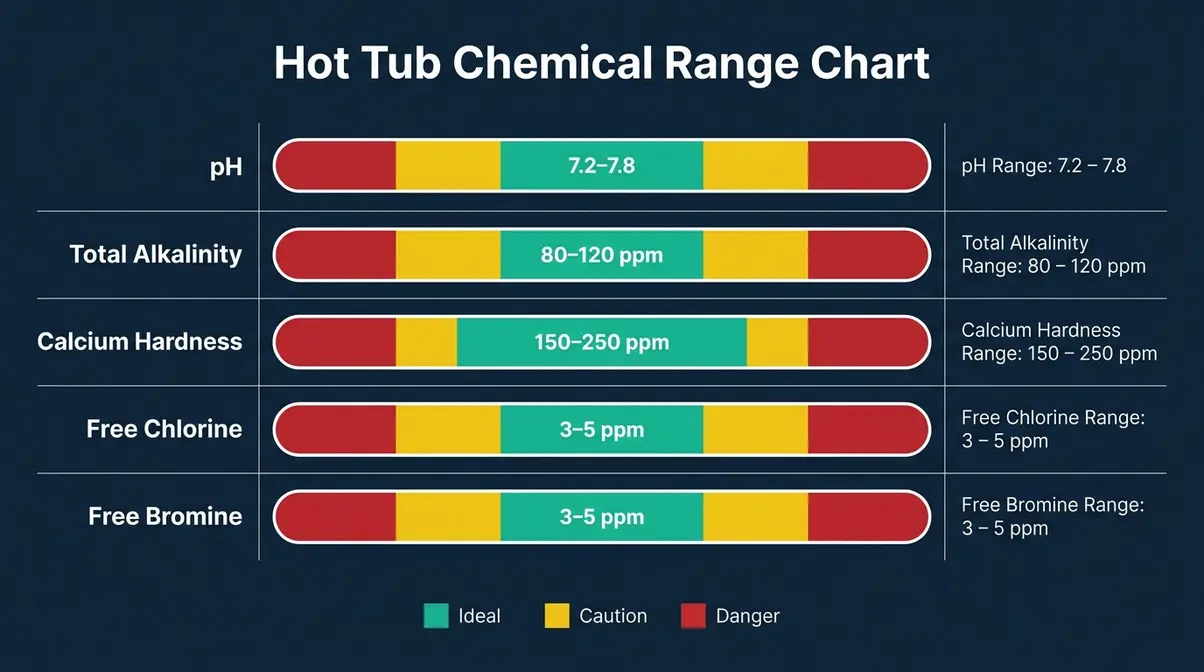
- Record your readings. You’re checking for:
| Parameter | Ideal Range | What Happens if Off |
|---|---|---|
| pH | 7.2–7.8 | Low pH = eye irritation, corrosion; high pH = cloudiness, scale |
| Total Alkalinity | 80–120 ppm | Low = pH swings wildly; high = cloudy water, scale |
| Calcium Hardness | 150–250 ppm | Low = foamy water; high = white scale on shell |
| Free Chlorine | 3–5 ppm | Low = bacteria growth; high = skin and eye irritation |
| Free Bromine | 3–5 ppm | Same as chlorine — bromine is simply more stable at heat |
According to Leslie’s Pool Supplies (2026), these ranges represent the industry consensus for residential spa water safety.
Step 2 — Balance pH and Alkalinity
Why this matters: Total alkalinity (TA) is the “buffer” that holds your pH steady. If you adjust pH before alkalinity, the pH will drift right back within hours. Order matters here — and no competitor explains this.
⚠️ Chemical Safety: Always follow the manufacturer’s instructions on chemical packaging. Wear gloves when handling chemicals. Keep all chemicals out of reach of children. Never mix chemicals together — add each one separately with jets running.
- Check your total alkalinity reading first. If it’s below 80 ppm, add an alkalinity increaser (sodium bicarbonate). If it’s above 120 ppm, add a pH decreaser in small doses.
- Add chemicals with the jets running and the cover off. This helps them dissolve and circulate evenly.
- Wait 30 minutes, then re-test alkalinity before touching pH.
- Now adjust pH. If pH is below 7.2, add pH increaser. If above 7.8, add pH decreaser.
- Wait another 30 minutes and re-test. Repeat in small doses until both readings are in range.
Common feedback from hot tub owners indicates that over-adding pH chemicals in one large dose is the most frequent cause of “chemicals thrown way off” — always add in small amounts and re-test (Master Spas, 2026).
If symptoms persist after multiple adjustments, contact your hot tub dealer or a water chemistry professional.
Step 3 — Add Your Sanitizer
Why this matters: Sanitiser (the chemical that kills bacteria and viruses) only works efficiently when your pH is already in range. Adding chlorine to unbalanced water is like trying to sweep a wet floor — it just won’t stick.
⚠️ Chemical Safety: Always follow the manufacturer’s instructions on chemical packaging. Wear gloves when handling chemicals. Keep chemicals out of reach of children.
Chlorine vs. Bromine — which should you use?
- Chlorine — the sanitiser that kills bacteria and keeps water safe. Works quickly and is less expensive. Target: 3–5 ppm (parts per million). Best for hot tubs used infrequently.
- Bromine — an alternative sanitiser that is gentler on skin and more stable at high temperatures. Stays active longer in hot water. Target: 3–5 ppm. Best for daily-use hot tubs or bathers with sensitive skin.
Add your chosen sanitiser with the jets running. Re-test after 30 minutes. Do not soak until levels are within the safe range.
Step 4 — Shock Your Hot Tub Weekly
Why this matters: Over time, chlorine or bromine binds to body oils, sweat, and cosmetics to form “combined chlorine” (also called chloramines) — a compound that smells bad, irritates eyes, and no longer kills bacteria effectively. A weekly shock treatment (a large dose of oxidiser that resets the water) breaks those bonds and restores your sanitiser’s killing power.
- Choose your shock type: non-chlorine shock (potassium monopersulphate) for weekly maintenance; chlorine shock for heavy contamination or after a large party.
- Add shock directly to the water with jets running and the cover off.
- Leave the cover off for 20–30 minutes to allow off-gassing.
- Wait at least 30 minutes (or until chlorine drops below 5 ppm) before soaking.
Industry standard practice, cited by Swim University, recommends shocking once per week as a baseline — and after every heavy bather load.
Step 5 — Clean and Rinse Your Filter
Why this matters: Your filter is the Filtration pillar of The Clear Water Triangle. A dirty filter cannot trap particles — so even perfectly balanced water will turn cloudy if the filter is clogged. This is the hidden cause of most persistent cloudiness that beginners mistake for a chemical problem.
- Filter cleaning schedule:
- Every 2 weeks: Rinse the filter cartridge with a garden hose, working top to bottom between the pleats.
- Monthly: Soak the filter in a dedicated filter cleaning solution for at least 1 hour (overnight is better), then rinse thoroughly and allow to dry before re-installing.
- Every 12–18 months: Replace the filter cartridge entirely. A worn filter cannot be cleaned back to full effectiveness.
Do NOT use a dishwasher or pressure washer on your filter — both damage the filter media and reduce its lifespan significantly.
Step 6 — Drain, Purge Biofilm, and Refill
Why this matters: This is the step most guides skip entirely. Even with perfect chemistry, your hot tub water accumulates total dissolved solids (TDS) — invisible residue from chemicals, minerals, body oils, and cosmetics — that builds up over time until no amount of chemical adjustment can restore clarity. Additionally, biofilm (a slimy bacterial colony that hides inside your pipes and jets) can re-contaminate fresh water within days if not purged first.
Drain and refill every 3–4 months. Before draining, add a dedicated biofilm purge product (also called a “line flush” or “pipe purge”) to the water and run the jets for 30–60 minutes. You may see foam, flakes, or discoloured water — that’s the biofilm being expelled. This step is unique to thorough spa care and is the difference between a “full system flush” and a simple water change.
After refilling, start your chemical balancing routine from Step 1 before anyone soaks.
For a deeper overview of all the basics, see our beginner’s guide to hot tub water care to revisit any foundational steps.
How to Fix Cloudy Hot Tub Water Fast
When water goes cloudy, one corner of The Clear Water Triangle has failed. The key to fixing it quickly is diagnosing which corner before you start adding chemicals — because the wrong fix makes things worse, not better. Common feedback from hot tub owners who tried “just adding more chlorine” confirms that guessing without diagnosing is the most common reason for a second (or third) failed attempt. According to Consumer Reports, maintaining proper water chemistry and filtration are the most effective ways to prevent cloudy water. A chemical imbalance causes roughly 80% of cloudy water cases, making testing your first line of defense.
Diagnosing the Cause: Use This Decision Tree
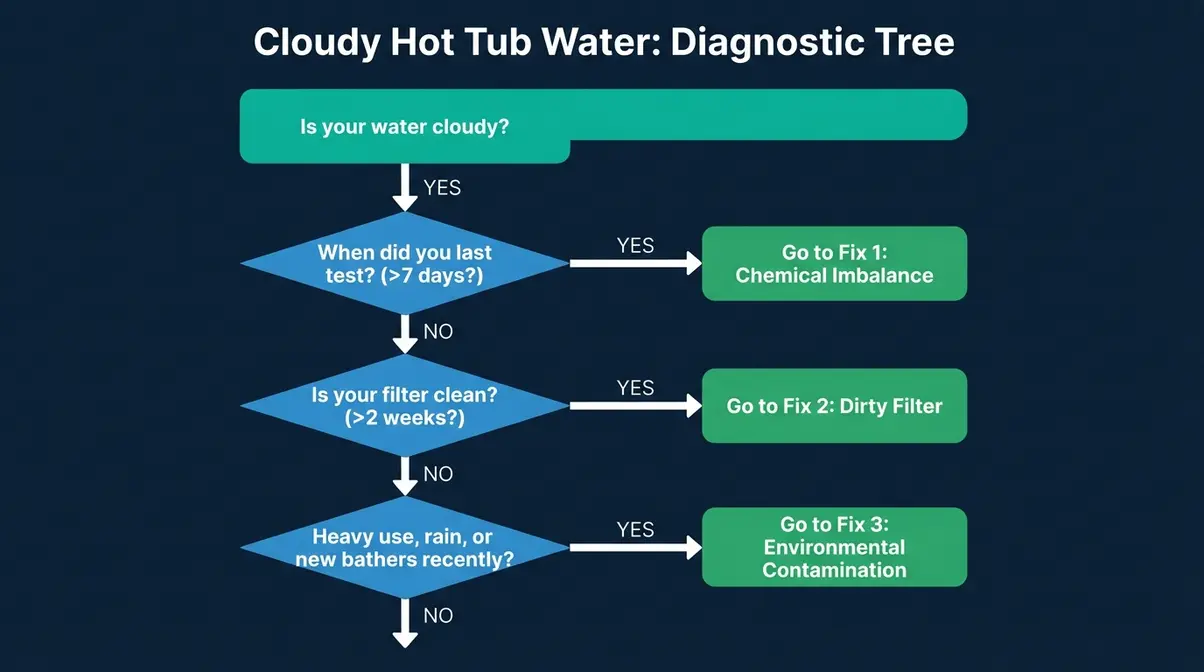
Before reaching for any chemical, ask yourself these three questions in order:
- When did you last test? If it’s been more than 7 days, test now. A chemical imbalance is the cause of roughly 80% of cloudy water cases (Leslie’s Pool Supplies, 2026). → Go to Fix 1.
- When did you last clean your filter? If it’s been more than 2 weeks, your filter may be clogged. → Go to Fix 2.
- Has there been heavy use, rain, or new bathers recently? Environmental contamination can overwhelm even a well-balanced hot tub. → Go to Fix 3.
Fix 1 — Chemical Imbalance (Most Common Cause)
High pH is the single most common cause of cloudy hot tub water — it causes dissolved minerals to precipitate out of solution and turn the water white or milky (Master Spas, 2026). High alkalinity compounds the problem.
- Fix it in four steps:
- Test pH, alkalinity, and sanitiser levels.
- Adjust alkalinity first (target: 80–120 ppm), then pH (target: 7.2–7.8).
- Shock the water to break down combined chlorine and organic waste.
- Run the jets for 30 minutes, then re-test. Repeat if necessary.
If water is milky specifically when jets are on, the likely cause is air bubbles combined with high TDS — a sign it may be time for a full drain and refill (see Step 6 above).
Fix 2 — Dirty or Clogged Filter
A filter that looks “fine” to the eye can still be biologically clogged with oils and biofilm that water can no longer pass through efficiently. This reduces circulation and allows particles to stay suspended in the water — making it look permanently hazy.
- Fix it:
- Remove the filter and rinse thoroughly with a garden hose.
- If rinsing doesn’t restore water clarity within 24 hours, soak the filter overnight in a chemical cleaner.
- If the filter is more than 18 months old, replace it. You cannot clean an expired filter back to effectiveness.
Check out our guide on dealing with cloudy hot tub water for more detailed troubleshooting steps.
Fix 3 — Environmental Contamination
Rain, wind, leaves, sunscreen, body lotions, and even airborne pollen can overwhelm your sanitiser and cloud the water within hours. This is especially common after outdoor parties or in areas with heavy tree coverage.
- Fix it:
- Skim any visible debris with a net.
- Shock the water with a chlorine shock treatment (stronger than non-chlorine shock for heavy contamination).
- Run the jets for 1 hour with the cover off.
- Re-test and balance chemicals before soaking.
A well-fitted hot tub cover is your best defence against environmental contamination — keep it on whenever the tub is not in use.
Hot Tub Health Risks: What You Need to Know
Water clarity is not just about aesthetics. Cloudy or under-sanitised hot tub water can harbour bacteria that cause real health problems. This section covers what you need to know to keep your family safe — information that, remarkably, 100% of competitor guides fail to include.
Can hot tubs cause folliculitis?
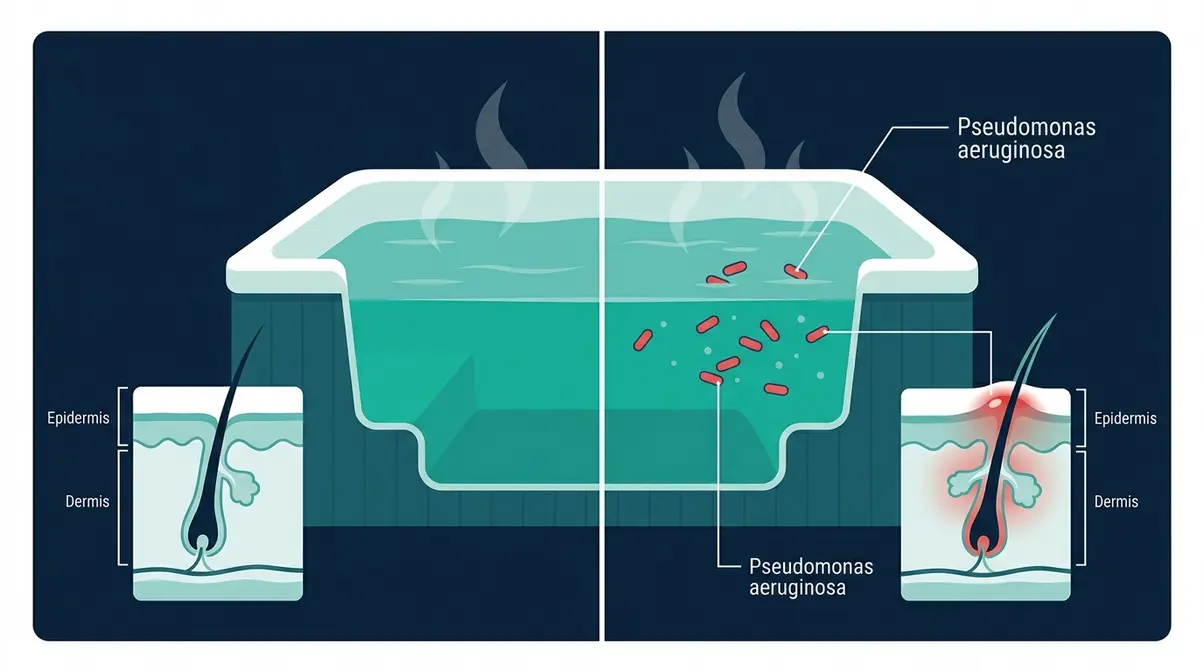
Hot tub folliculitis is a bacterial skin infection caused by Pseudomonas aeruginosa, a microorganism that thrives in warm, under-chlorinated water. According to the CDC, Pseudomonas aeruginosa is one of the most common causes of recreational water illness linked to hot tubs and spas. The bacteria infect hair follicles, causing a red, itchy, pimple-like rash — typically appearing 12–48 hours after soaking. Read our complete guide on hot tub folliculitis for more details.
What bug causes hot tub folliculitis? The culprit is Pseudomonas aeruginosa — a bacterium that survives in warm water when chlorine or bromine levels fall below the safe threshold of 3 ppm.
- Prevention is straightforward:
- Maintain free chlorine or bromine at 3–5 ppm at all times
- Shock weekly to eliminate bacterial buildup
- Never soak in water that looks cloudy or has an unusual odour
- Shower immediately after soaking to rinse bacteria from skin
According to MedlinePlus (NIH), most cases of hot tub folliculitis resolve without treatment in 7–10 days. However, people with weakened immune systems can develop more serious complications.
⚠️ Medical Disclaimer: This information is educational only. Consult a healthcare professional for diagnosis or treatment of any skin condition. If you develop a rash, fever, or swelling after hot tub use, seek medical advice promptly.
What kills folliculitis naturally? While warm compresses can reduce discomfort, the NIH StatPearls database notes that mild cases often clear independently once the source of contamination is removed. Preventing re-exposure — by fixing your water chemistry — is the most effective intervention.
Why is there a 15-minute hot tub rule?
Why is there a 15-minute hot tub rule? The U.S. Consumer Product Safety Commission (CPSC) recommends limiting hot tub sessions to 15 minutes at the maximum safe temperature of 40°C (104°F) to reduce the risk of hyperthermia (dangerous overheating). At this temperature, your body cannot shed heat fast enough to keep your core temperature stable during extended soaks.
The CPSC specifically advises that children, pregnant women, and people with cardiovascular conditions should limit sessions to 5 minutes or avoid hot tubs entirely at maximum temperatures. Lowering the temperature to 36–38°C (97–100°F) allows for longer, safer soaks.
This rule also has a direct impact on water quality: longer sessions mean more sweat, body oils, and cosmetics enter the water — accelerating the breakdown of your sanitiser and contributing to the cloudiness you’re trying to prevent.
Safer Soaking Habits That Also Keep Water Cleaner
The Safe Usage Habits pillar of The Clear Water Triangle is the one most owners ignore — yet it has an enormous impact on how quickly your water degrades between treatments.
- Habits that protect both your health and your water:
- Shower before soaking. Body oils, lotions, deodorant, and sweat are the #1 source of organic contamination in hot tub water. A quick rinse removes most of it before it ever reaches your spa.
- Remove swimwear detergent. Laundry detergent residue in swimwear causes foam and disrupts sanitiser levels. Rinse swimsuits in clean water before use.
- No food or drink in the tub. Spillage adds organic material that feeds bacteria and depletes chlorine.
- Keep the cover on. UV light, airborne debris, and temperature fluctuations all degrade water quality when the cover is off unnecessarily.
For additional safe soaking guidance, visit our page on our hot tub safety guide.
Pro Tips for Crystal Clear Hot Tub Water
Once your routine is solid, these four upgrades can make maintaining clear water even easier — and solve the stubborn problems that a basic routine sometimes can’t.
Why Put a Tennis Ball in a Hot Tub?
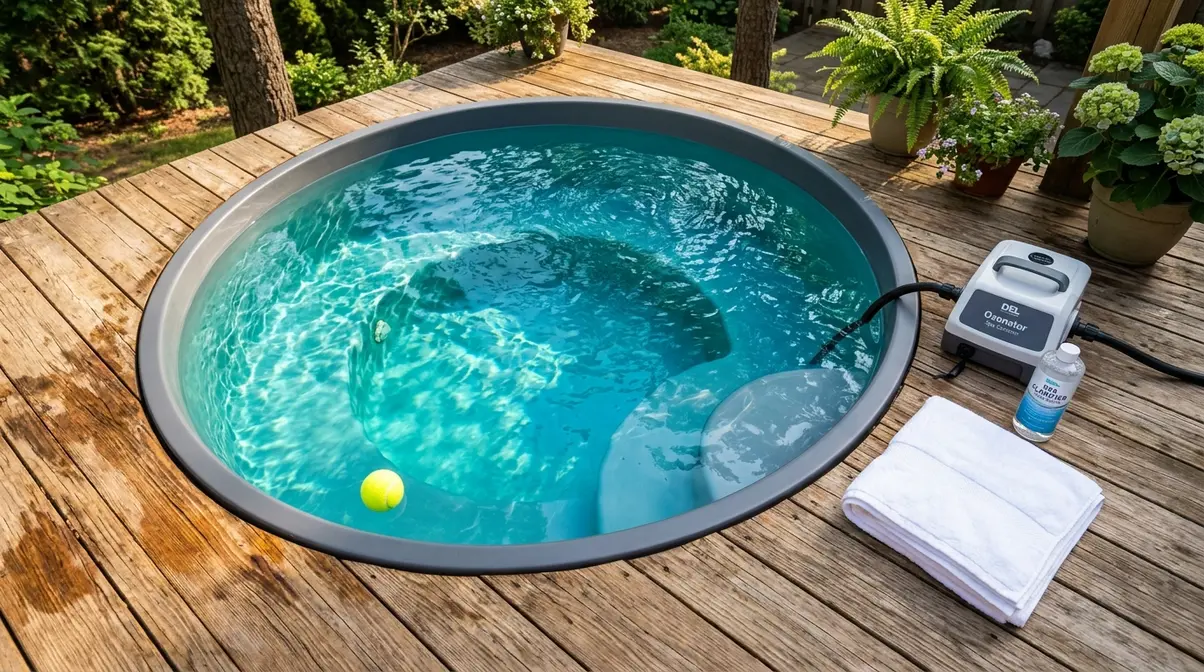
Drop a clean tennis ball into your hot tub and leave it floating for a few hours. It sounds odd, but the felt fibres on the ball’s surface absorb body oils, sunscreen residue, and cosmetics that have accumulated on the water’s surface. Consumer Reports has noted that the fibrous surface of a tennis ball acts similarly to an oil-absorbing filter medium — pulling surface oils away from the water before they break down your sanitiser.
Use a fresh tennis ball (not one used for sport — it may carry dirt or dye). Rinse the ball under clean water every few uses and replace it every 2–3 months. It’s a low-cost hack that meaningfully extends the life of your sanitiser between treatments.
When to Use a Water Clarifier
A water clarifier is a chemical that works by binding tiny suspended particles together (a process called coagulation) into larger clumps that your filter can then trap. It does not fix a chemical imbalance — it clears the water after your chemistry is balanced but small particles remain.
- Use a clarifier when:
- Your chemistry is in range but the water still looks slightly hazy
- You’ve just shocked the water and need to clear residual cloudiness quickly
- You’ve recently had heavy bather use and want to speed up recovery
Do not use a clarifier as a substitute for balancing chemicals. It will not work on water with incorrect pH or inadequate sanitiser — and adding it to imbalanced water can make cloudiness worse.
Upgrade Your Filtration for Effortless Clarity
If you find yourself fighting cloudiness week after week despite following every step above, your standard filter may simply not be powerful enough. Two upgrades are worth considering:
Ozonator: An ozone generator (ozonator) injects ozone gas — a powerful natural oxidiser — directly into your water, destroying bacteria, viruses, and organic waste before they can cloud the water. An ozonator can reduce your chlorine demand by up to 50%, according to the NSF International public health standards body. Most modern hot tubs have an ozonator port — ask your dealer about retrofitting one. See our full breakdown of what an ozonator does in a hot tub for a detailed comparison.
UV-C Sanitiser System: UV-C light systems destroy bacteria and algae at the DNA level as water passes through the unit. Like ozone, they work alongside (not instead of) your primary sanitiser.
Both upgrades reduce the chemical load on your water and extend the time between treatments — making the Filtration pillar of The Clear Water Triangle significantly more robust.
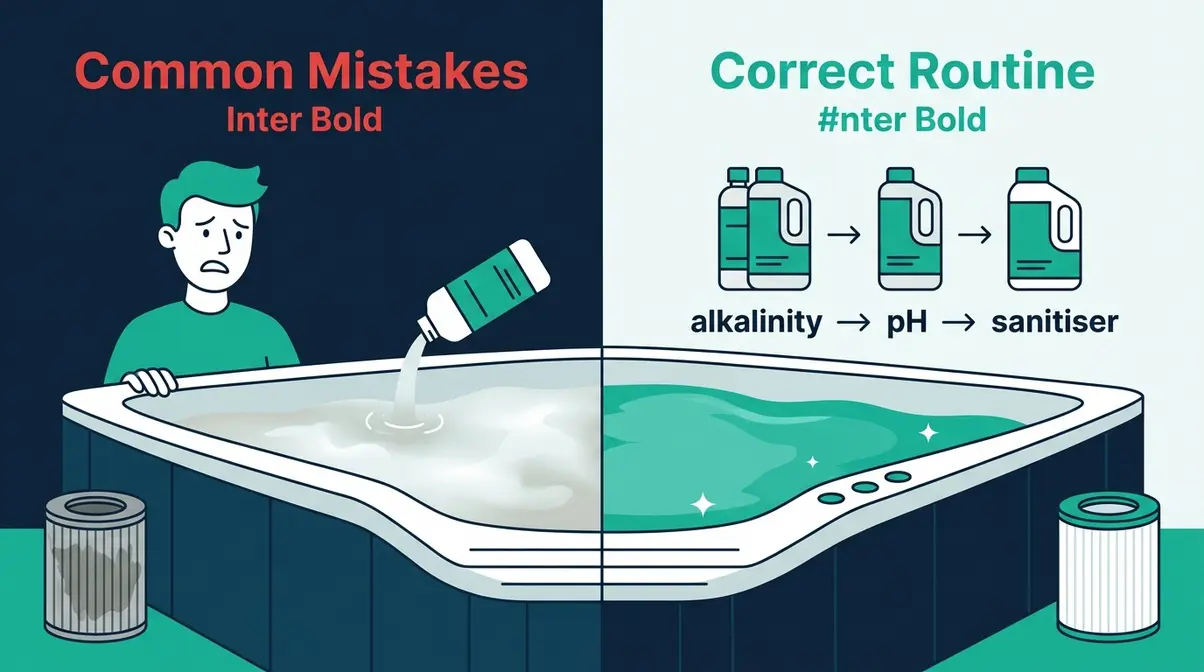
Common Mistakes New Hot Tub Owners Make
Even with the best intentions, most new hot tub owners make a handful of predictable mistakes that undo their maintenance efforts. Recognising these patterns is half the battle.
Common Pitfalls
1. Adding chemicals in the wrong order. Adding sanitiser before balancing pH is the single most common beginner mistake. Chlorine and bromine are dramatically less effective outside the 7.2–7.8 pH range — so the sanitiser you add essentially gets wasted. Always: alkalinity first → pH second → sanitiser third.
2. Over-shocking without testing first. Dumping extra shock into the water when it goes cloudy is a reflex for many frustrated owners. But if cloudiness is caused by a dirty filter or high pH — not low sanitiser — shocking does nothing except waste product and potentially push chlorine levels dangerously high (above 10 ppm), making the tub unusable for 24+ hours.
3. Neglecting the filter. A filter that looks clean may still be biologically clogged. Industry standard practice recommends rinsing every 2 weeks and deep-cleaning monthly — but surveys from hot tub communities suggest most owners clean their filter “when they remember,” which averages once every 2–3 months.
4. Waiting too long to drain and refill. High total dissolved solids (TDS) make chemical balancing increasingly ineffective. Once TDS climbs above 1,500 ppm, even perfect dosing cannot maintain clear water. At that point, a full drain and refill is the only fix.
5. Ignoring usage habits. Soaking after applying lotions, sunscreen, or heavy cosmetics is equivalent to pouring those products directly into your water. One heavily contaminated bather can deplete a well-balanced hot tub’s sanitiser within a single session.
When to Choose Alternatives
If you have followed every step in this guide and water clarity remains a persistent problem after 2–3 full drain-and-refill cycles, consider these alternatives:
- Switch sanitiser systems. If chlorine irritates your skin or is difficult to maintain at temperature, bromine or a salt water system may be more appropriate for your usage pattern.
- Consult a water chemistry professional. Some water supply areas have high iron, copper, or manganese levels that cause chronic discolouration regardless of chemical balance. A professional water test (beyond standard test strips) can identify these issues. Read more in our guide to expert tips on hot tub water testing kits.
- Contact your hot tub manufacturer. Persistent foaming, scaling, or discolouration can sometimes indicate a hardware issue (jet seal failure, heater element corrosion) rather than a chemistry problem.
When to Seek Expert Help
If you notice any of the following, contact a certified hot tub technician rather than attempting further DIY adjustments:
- Persistent green or black discolouration (may indicate copper or algae contamination)
- Strong chemical odour that does not clear after shocking and aeration
- Recurring skin rashes among multiple bathers despite correct chemistry
Frequently Asked Questions
How do I make my hot tub water crystal clear?
Crystal clear hot tub water requires all three pillars of The Clear Water Triangle working together: balanced chemistry (pH 7.2–7.8, chlorine 3–5 ppm), a clean filter, and good soaking habits like showering before use. Test your water weekly with test strips, shock weekly, and rinse your filter every two weeks. If water remains hazy after balancing chemicals, add a water clarifier to bind suspended particles for your filter to remove (Leslie’s Pool Supplies, 2026).
What can I put in my hot tub to keep the water clear?
The most effective products for clear hot tub water are a sanitiser (chlorine or bromine), an oxidising shock, and a water clarifier. Chlorine or bromine kills bacteria; shock breaks down organic waste; clarifier coagulates fine particles your filter can’t catch alone. For an extra edge, add a floating tennis ball to absorb surface oils between treatments. NSF International recommends maintaining free chlorine at 3–5 ppm as the baseline for safe, clear water.
Can hot tubs cause folliculitis?
Yes — hot tubs can cause folliculitis, a bacterial skin infection caused by Pseudomonas aeruginosa that thrives in warm, under-chlorinated water. According to the CDC, hot tub folliculitis is one of the most common recreational water illnesses. Symptoms include a red, itchy, pimple-like rash appearing 12–48 hours after soaking. Maintaining free chlorine above 3 ppm and shocking weekly prevents the bacterial growth that causes it (MedlinePlus, NIH).
Why is there a 15-minute hot tub rule?
The 15-minute rule exists because soaking at maximum temperature (40°C/104°F) for longer raises your core body temperature to dangerous levels — a condition called hyperthermia. The U.S. Consumer Product Safety Commission (CPSC) recommends limiting sessions to 15 minutes at maximum heat. Children, pregnant women, and people with heart conditions face higher risk and should limit sessions further or soak at lower temperatures (36–38°C). Shorter sessions also reduce the volume of body oils entering the water, which directly helps maintain water clarity.
Why do you put a tennis ball in a hot tub?
A tennis ball’s felt fibres absorb body oils, sunscreen, and cosmetic residue that float on the water’s surface and degrade your sanitiser. Consumer Reports notes that the fibrous surface acts as a passive oil trap — collecting contaminants before they break down chlorine or bromine. Drop a clean, unused tennis ball into the water after each soak. Rinse it every few uses and replace it every 2–3 months. It’s one of the simplest and most cost-effective pro tips for reducing chemical consumption.
Keeping Your Hot Tub Water Clear Starts Tonight
For new and frustrated hot tub owners, clear water is not a mystery once you understand the system. The Clear Water Triangle — Chemical Balance, Filtration, and Safe Usage Habits — explains why simply “adding more chlorine” rarely works on its own. Research from Leslie’s Pool Supplies and the CDC confirms that roughly 80% of cloudy water problems trace back to one broken pillar, not a general chemical shortage. Fix the right corner, maintain all three consistently, and crystal clear water becomes the norm rather than the exception.
The Clear Water Triangle is not just a framework — it’s a diagnostic tool. When something goes wrong, you now know to ask: is it chemistry, filtration, or habits? That question alone will save you hours of frustrated guessing and wasted chemicals.
Start tonight. Grab your test strips, check your pH and alkalinity, and run through the six-step routine above. If your filter hasn’t been cleaned in the last two weeks, rinse it before you do anything else. Most owners who follow this system consistently report noticeably clearer water within 48 hours. For everything else — from tips for maintaining clear water in your hot tub to how to make cloudy hot tub water clear — our full library of spa care guides has you covered. Now you know exactly how to keep hot tub water clear without the guesswork.