

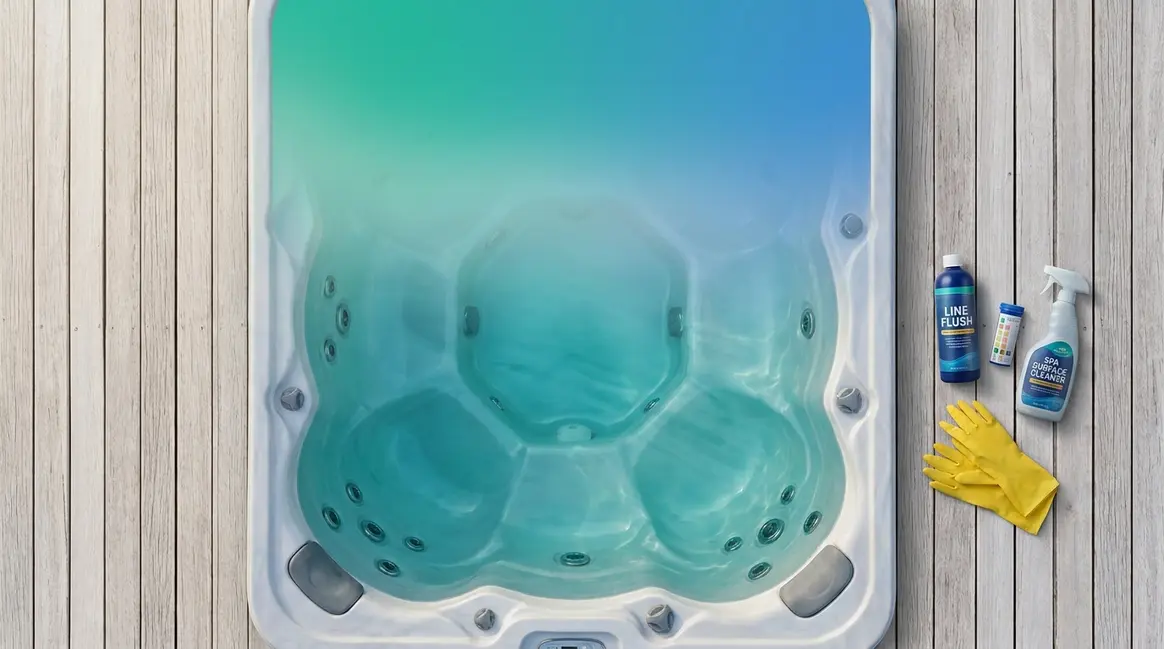
Table of Contents - Hot Tub Cleaning Guide: 5 Steps to Spotless Water
- What You Need Before You Start
- The Total Spa Reset Protocol
- Choosing the Right Cleaning Products & Chemicals
- Cleaning Filters & Removing Waterline Rings
- Hot Tub Health & Safety Essentials
- Your Hot Tub Maintenance Schedule
- Troubleshooting Common Hot Tub Problems
- Common Mistakes and Limitations to Know
- Frequently Asked Questions
- What is the best thing to use to clean the inside of a hot tub?
- Why is there a 15-minute hot tub rule?
- Is a hot tub bad for folliculitis?
- Will a hot tub help a sciatic nerve?
- Why put tennis balls in a hot tub?
- Can I use Dawn to clean my hot tub?
- What happens if you are in a hot tub for 4 hours?
- How long should you be in a hot tub at one time?
- Bringing It All Together
This blog post may contain affiliate links. As an Amazon Associate I earn from qualifying purchases.
You opened the cover, took one look, and closed it right back. Maybe the water has gone murky. Maybe there’s an orange ring creeping up the shell. Maybe it smells like something you’d rather not think about. You are not alone — and you have not broken anything yet.
This hot tub cleaning guide is built specifically for beginners who feel overwhelmed by conflicting advice, confusing chemicals, and the fear of doing something expensive or dangerous. We cover the one critical step that most competitors skip entirely (flushing the hidden biofilm out of your plumbing lines), debunk the viral hacks that will genuinely damage your tub (Dawn dish soap, we’re looking at you), and give you a repeatable system — The Total Spa Reset Protocol — you can follow every 3–4 months with total confidence.
By the end, you’ll know exactly what to do, in what order, and why each step matters. Let’s get your hot tub clean.
This hot tub cleaning guide walks beginners through The Total Spa Reset Protocol — a complete drain-and-refill system that tackles hidden biofilm, not just surface grime.
- Flush first: Always purge your plumbing lines with a line-flush product before draining — biofilm inside the pipes is the #1 cause of recurring cloudy water.
- Use the right cleaners: Spa-specific surface cleaners only — Dawn dish soap and household bleach will foam your tub into a disaster and damage your equipment.
- Balance after refilling: Test pH (7.2–7.8), alkalinity (80–120 ppm), and sanitizer levels before anyone gets in. Unbalanced water is a health risk.
- Clean every 3–4 months: A full drain-and-refill on this schedule prevents the “gloopy and slimy” buildup that makes the whole job ten times harder.
- The Total Spa Reset Protocol makes this repeatable — follow it once and you’ll never dread opening the cover again.

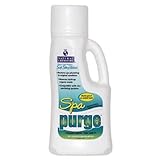
- Professional Grade Unique Formula: Our unique paste formula is designed to provide aggressive and deep cleaning action, effectively removing gunk and grime from your hot tub’s plumbing and jet systems where standard products cannot reach.
- Easy-to-Use Tube Packaging: Comes in a convenient 4 oz tube with 24 teaspoons of paste, making it simple to measure and apply. Each teaspoon treats 125 gallons of water, ensuring precise and economical usage. Follow the provided instructions for optimal results.
- Efficient and Powerful Cleaning: Specifically formulated to reach and clean the deep plumbing of jetted tubs where other products cannot, providing 8 complete purges for hot tubs up to 400 gallons. Improves water clarity, enhances spa performance, reduces water cloudiness, and boosts filtration efficiency.
- Designed for Jacuzzi Tubs: Perfectly suited for Jacuzzi tubs and other jetted systems, ensuring thorough cleaning and maintenance while prolonging the life of your hot tub plumbing components. It works exceptionally well with all types of hot tubs and swim spas, whether inflatable, indoor, or outdoor.
- Made in the USA: Proudly manufactured in the USA, our hot tub purge cleaner adheres to high-quality standards, ensuring safe and effective cleaning every time. Experience the peace of mind that comes with using a reliable, American-made product for your hot tub maintenance needs.

- BENEFITS: Keeps spa and jetted tub plumbing clear of organics, oils, dirt, and minerals
- USE: Add Jet Clean before the water is drained to prevent buildup that can restrict water flow and damage equipment
- COMPATIBILITY: Compatible with all sanitizers including bromine, chlorine, salt water, ozone, and biguanide; Compatible with all spas and jetted tubs
- FEATURES: Removes scale and mineral buildup; Low foaming formula
- INCLUDES: One 1-pt bottle of Leisure Time Jet Clean
- Your spa/hot tub water is constantly absorbing organic material from its environment. Spas/ hot tubs make this problem worse due to the smaller body of water and much higher water temperatures.
- Versatile Solution: Designed to combat various contaminants introduced by suntan and sunscreen lotions, soaps, deodorants, and scented spa oil products, maintaining water clarity.
- Enzymatic Action: Spa Perfect harnesses the power of enzymes to break down and eliminate organic material, providing a natural and effective solution for maintaining pristine spa water quality.
- The enzymes in Spa Perfect literally break down organic waste to basic elements like carbon dioxide and water, that are then easily absorbed by the spa/hot tub environment.
- Tested and Proven Effective: Natural Chemistry products are known for delivering reliable results and making water care less complex. Natural Chemistry carries an extensive line of pool and spa solutions that match your unique needs.

- 5X CLEANING POWER VS SPRAYS* – Unlike some sprays, Magic Eraser can remove layers of built-up dirt and grime 5X faster.
- LASTS 2X LONGER – Our upgraded erasers last 2X longer, while other erasers crumble.
- CLEANS 150+ MESSES** WITH WATER ALONE – From dried countertop stains to sharpie on the wall, Magic Eraser has you covered.
- TACKLE MESSES IN 3 EASY STEPS – Just wet both side of the eraser, squeeze to activate scrubbing power, and erase everyday tough messes with ease.
- RINSE & REUSE MULTIPLE TIMES – Rinse the eraser after scrubbing to keep cleaning more messes.

- Comprehensive Hot Tub Sanitizing Bundle: FROG Serene Floating Sanitizing System includes three bromine cartridges, one sanitizing minerals cartridge, FROG Test Strips and FROG Jump Start startup shock for effortless spa care
- Innovative Technology for Clean Water: FROG Serene combines our patented mineral formula with a low level of bromine to create clean, silky soft Fresh Mineral Water in your hot tub
- Long-Lasting Performance: FROG Serene mineral cartridge lasts four months and each bromine cartridge lasts 2 to 4 weeks; easily check when a Bromine Cartridge replacement is needed with the included FROG Test Strips
- Hot Tub Sanitization: With FROG Serene, you use up to 50%* less bromine, making the water easier on skin, swimsuits and your hot tub’s surfaces; slow dissolving bromine creates far less odors than traditional chlorine
- Water Care Expertise: FROG has more than 25 years of experience making water care easier & keeping pool, hot tub and swim spa water sanitized; FROG's patented Mineral Technology and prefilled cartridges create cleaner, clearer, softer water

- BENEFIT: Quickly and easily check and adjust the 5 key elements in your spa to keep water clear, clean, healthy, and balanced
- INCLUDES: 25 strips for testing total bromine, free chlorine, alkalinity, pH, and total hardness
- FAST TESTING: Provides accurate results in seconds
- COMPATIBLE WITH MOST SPAS: HTH Spa Test Strips are great for bromine and chlorine systems
- YOU'RE ALL CLEAR WITH HTH: For best results, use HTH Spa Test Strips twice a week to test and balance your spa water
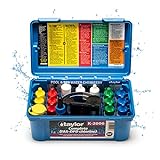
- Comprehensive Pool & Spa Test Kit: Ensure your pool, hot tub or spa is safe and balanced with this all-in-one testing kit. It checks for free and total chlorine, pH, acid/base demand, total alkalinity, calcium hardness, and cyanuric acid.
- Accurate & Easy to Use: Enjoy hassle-free water testing with simple and highly accurate tests. Includes color-coded instructions, a treatment guide, and a waterproof pool and spa chemistry guide for quick reference.
- Universal Compatibility: This complete test kit works with any pool, hot tub or spa, providing the versatility and reliability you need for maintaining water quality.
- Essential Testing Set: Includes a complete testing kit solution including a carrying case, water comparator, water balance calculator, base demand reagent, and more.
- Trusted Quality: Taylor test kits are the only testing supplies recommended by the American Swimming Coaches Association, ensuring professional-level results for your pool or spa.
- BENEFITS: Cleans, restores and protects spa covers
- USE: Great for other vinyl surfaces such as car interiors and patio furniture
- COMPATIBILITY: Works with all spa water sanitizers
- FEATURES: Protects from harmful UV rays; Repels water, dust and dirt
- INCLUDES: One 16-fl oz bottle of Leisure Time Cover Care and Conditioner
What You Need Before You Start
Before you touch a single jet or uncap a single chemical, gather your supplies. Walking away mid-clean to hunt for a scrub brush is how mistakes happen. Water care professionals consistently note that preparation is the step beginners skip — and the one that makes the whole process three times harder when skipped. Industry data shows that staging your supplies beforehand reduces total cleaning time by up to 40%.
Your Essential Hot Tub Cleaning Toolkit
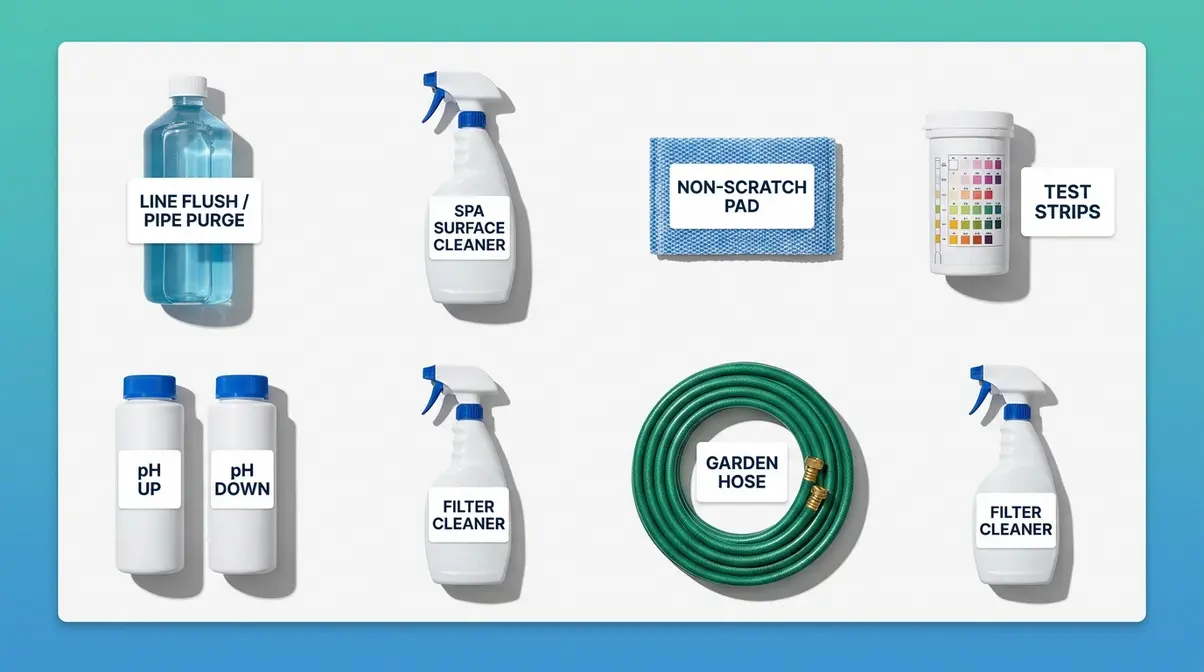
You don’t need a van full of professional equipment. Most of what you need costs under $50 total, and several items you probably already own.
Essential supplies:
- Line flush / pipe purge product (e.g., Ahh-Some, Leisure Time Spa Purge, or Natural Chemistry Spa Purge) — dissolves biofilm (the invisible bacterial layer inside your plumbing lines) before you drain
- Spa surface cleaner — a non-foaming, acrylic-safe spray designed specifically for hot tub shells
- Soft non-scratch scrub pad or sponge — microfiber cloths work well; avoid steel wool or abrasive scourers
- Garden hose with spray nozzle — for rinsing the shell and filter
- Submersible pump or sump pump (optional but faster) — drains a 300–400 gallon tub in about 20 minutes vs. 2+ hours via the drain spout
- Spa filter cleaner spray or soak solution — breaks down oil and mineral deposits on filter pleats
- Water testing kit or test strips — 5-way strips work for beginners; a liquid test kit (like the Taylor K-2006) is more accurate
- Fresh sanitizer — chlorine (dichlor granules) or bromine tablets, per your system
- pH Up and pH Down chemicals — sodium carbonate and sodium bisulfate
- Total Alkalinity increaser — sodium bicarbonate
- Calcium Hardness increaser (if your tap water is soft)
- Shock treatment — non-chlorine oxidizer or chlorine shock
- Tools:
- Flathead screwdriver (to open drain cap)
- Bucket for soaking filters
- Spray bottle (for diluting surface cleaner)
- Rubber gloves and eye protection — always
Helpful Accessories & Beginner Hacks
A few extras that hot tub owner communities swear by — and one popular “hack” that’s actually safe:
Magic Eraser: Yes, a standard Magic Eraser (melamine foam pad) is safe on acrylic and fiberglass shells for stubborn waterline scum. Wet it first and use light pressure. It won’t scratch like abrasive pads will. This is one of the few “internet hacks” that actually works.
Tennis balls: Drop 2–3 tennis balls into your hot tub while it’s in use. The felt absorbs body oils, sunscreen, and cosmetic residue that would otherwise build up as scum on your waterline. Replace them monthly. They’re a legitimate, low-cost way to reduce how dirty your water gets between cleans.
Enzyme-based water treatment: Products like Natural Chemistry Spa Perfect break down non-living organic waste (oils, lotions) that chlorine alone can’t eliminate efficiently. Adding a weekly dose significantly reduces the brown ring and foamy water problems that frustrate new owners.
What NOT to buy: Avoid any “all-in-one” spa tablet that claims to replace testing and balancing. Water chemistry doesn’t work that way, and these products often cause more problems than they solve.
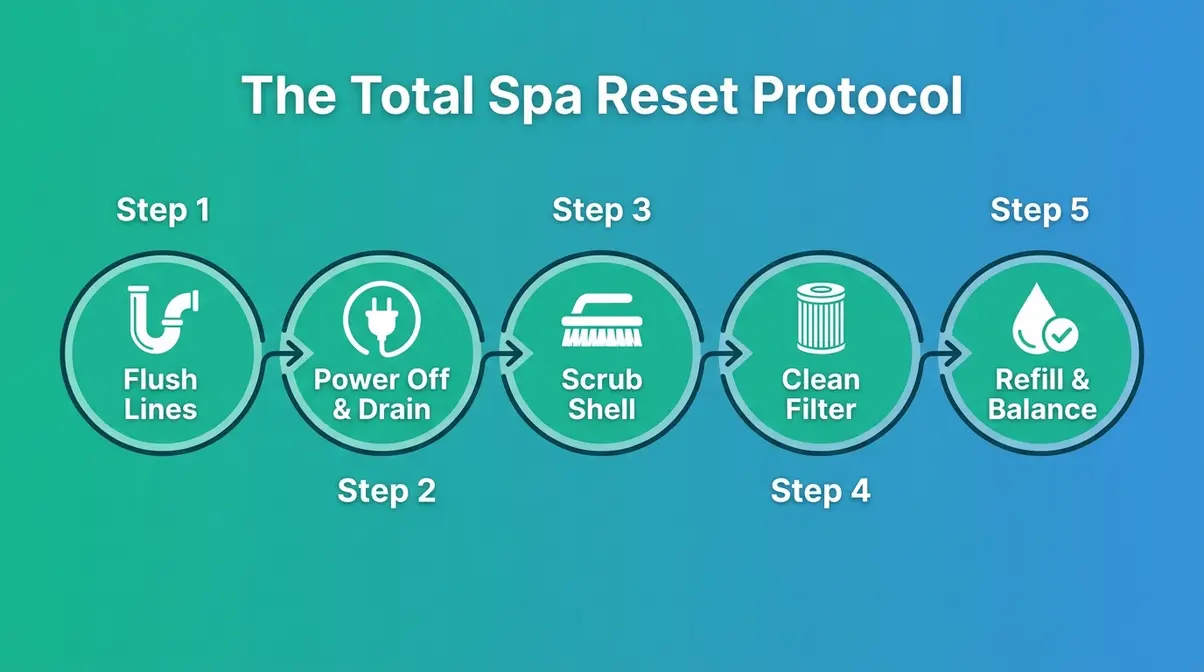
The Total Spa Reset Protocol
“Hindsight… I now know I need to empty the tub and not leave it for a full year before even taking the cover off.. lesson learnt! It stank, it was gloopy and slimy and disgusting! 🤢”
If that quote makes you wince with recognition, you’re exactly who this section is for. The good news: what you’re dealing with is fixable. What you’re about to follow is The Total Spa Reset Protocol — a complete 5-step deep cleaning process developed from manufacturer guidelines, water care professional recommendations, and the hard-won experience of hot tub owner communities.
Time required: 4–6 hours total (most of it is waiting for the tub to drain and refill — you’re not scrubbing for 6 hours).
How often: Every 3–4 months, or whenever water quality becomes visibly or chemically unmanageable.
Step 1 — Flush the Plumbing Lines (The Step Most Beginners Skip)
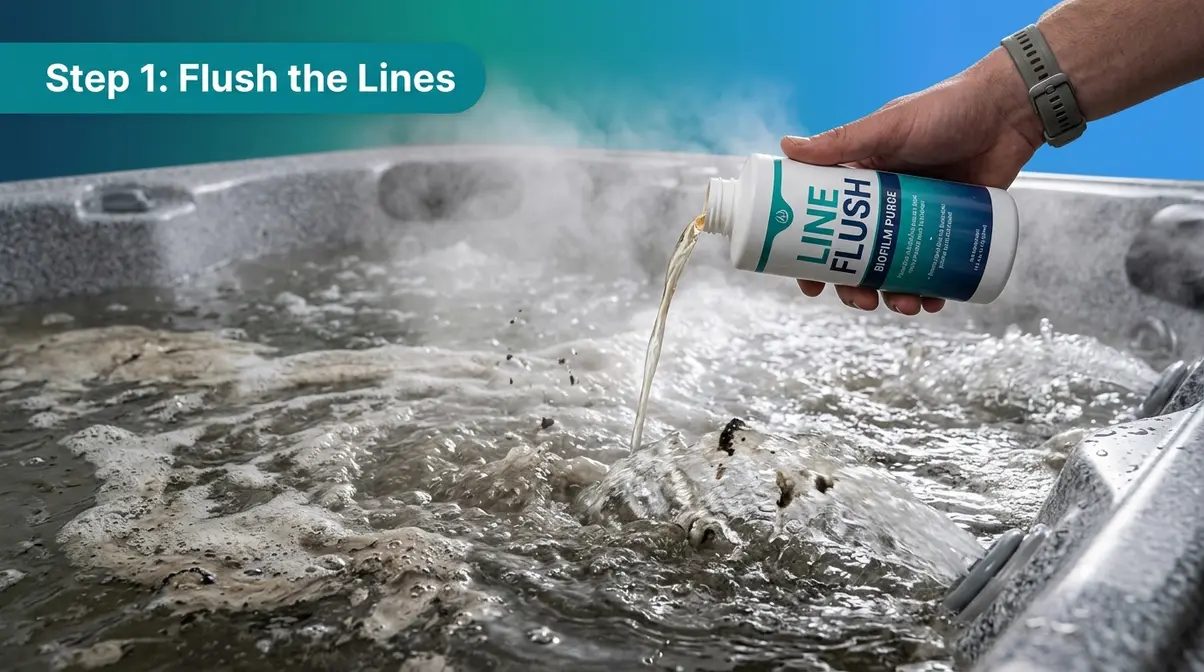
Why this step exists: Every time your hot tub runs, water flows through a network of pipes, jets, and plumbing lines. Over time, a substance called biofilm (the invisible layer of bacteria, body oils, and organic waste that clings to the inside walls of your plumbing) builds up in those hidden passages. Standard cleaning — scrubbing the shell, changing the water — does nothing to remove it. The biofilm stays behind, re-contaminating your fresh water almost immediately.
Across hot tub owner communities, skipping the line flush is consistently cited as the single biggest mistake beginners make. It’s why some owners report that their water goes cloudy or smells musty within days of a refill.
How to flush your lines:
- Do NOT drain the tub yet. Your water needs to be in the tub for this step.
- Turn your jets on to their highest setting.
- Add your line-flush product (Ahh-Some, Leisure Time Spa Purge, or equivalent) directly to the water, following the dosage on the label — typically 1–2 oz per 100 gallons.
- Run the jets for 15–30 minutes. You will likely see brown, grey, or foamy material appear in the water. This is the biofilm being flushed out of your lines. It looks alarming. It is completely normal — and it is exactly what you want.
- Turn the jets off. You’re done with this step.
Estimated time: 30–45 minutes (mostly passive waiting).
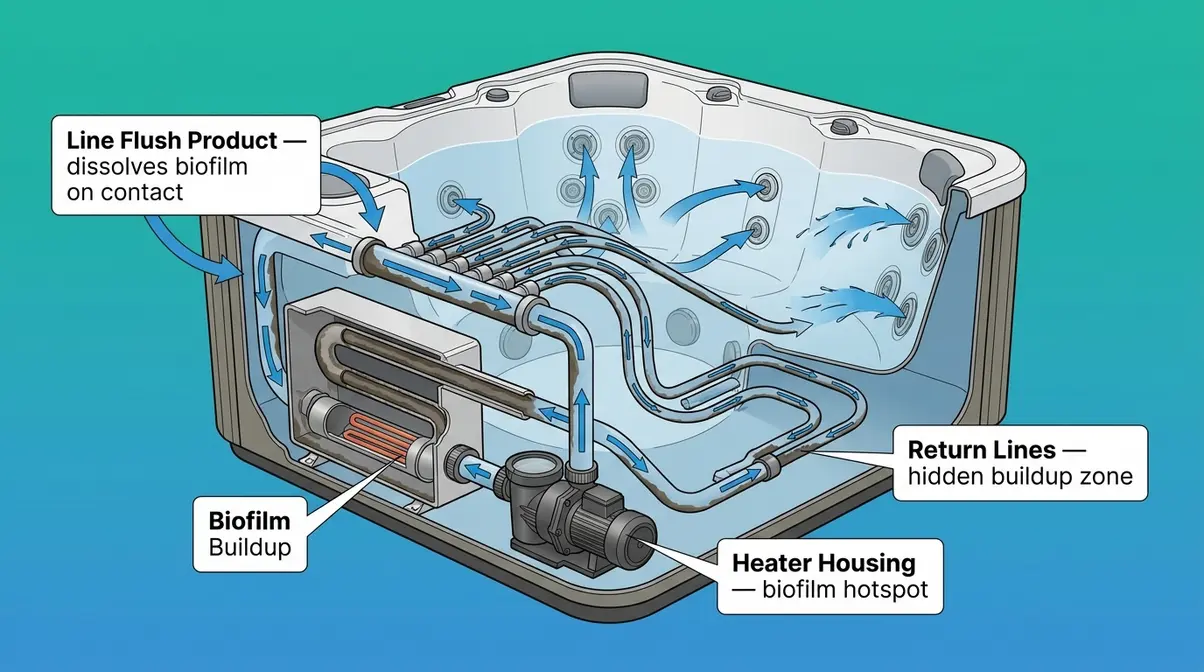
“Hot tub plumbing lines can harbor Pseudomonas aeruginosa and other bacteria in biofilm layers that survive normal chlorination — line flushing before draining is the only way to physically remove this buildup.” (Centers for Disease Control and Prevention, 2026)
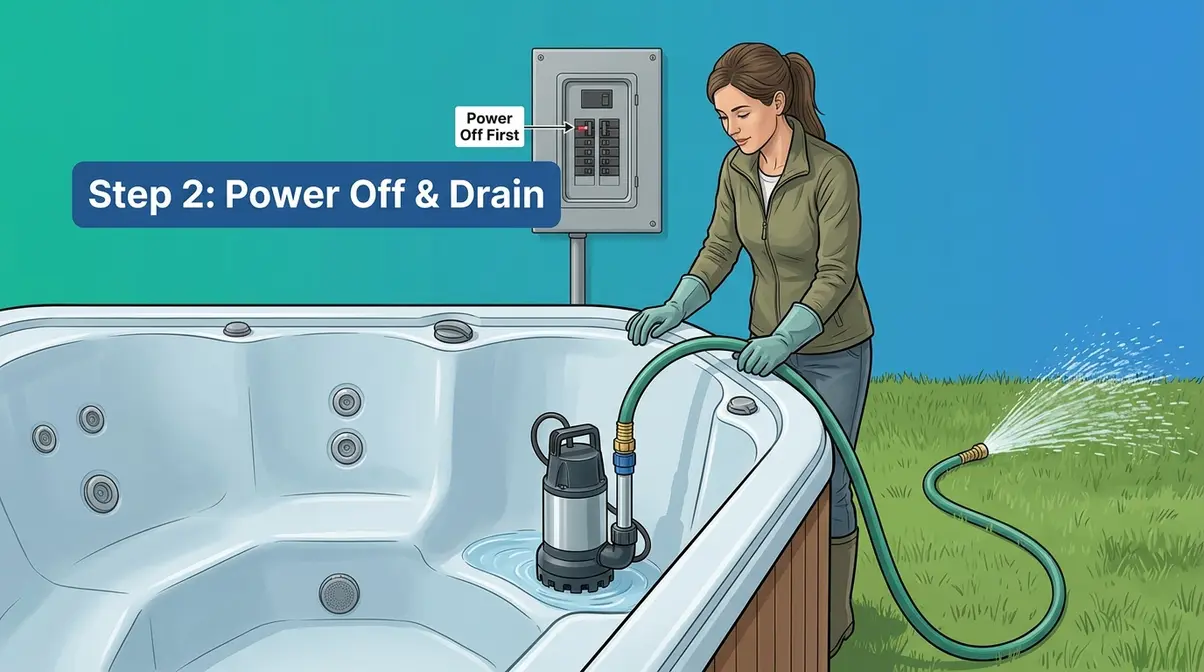
Step 2 — Power Off and Drain Your Hot Tub Safely
Once the flush is complete, it’s time to get that contaminated water out.
Steps:
- Turn off all power at the breaker box — not just the control panel. This protects the pump and heater from running dry once the water level drops.
- Locate your drain spout (usually near the base of the tub on the exterior cabinet) and attach your garden hose to direct water away from your foundation, garden beds, and storm drains.
- Open the drain valve by turning the cap counterclockwise. Water will begin flowing out.
- Optional — speed it up: Drop a submersible sump pump into the footwell. A 1/3 HP pump can drain a 400-gallon tub in under 20 minutes. Without it, expect 1.5–3 hours.
- Where to drain: Direct water to a municipal sewer cleanout (preferred), a utility sink, or a grassy area away from waterways. The Washington State Department of Ecology recommends neutralizing chlorine before draining to lawn areas — let the water sit 24 hours after the last chemical addition, or use a dechlorinator product.
Why you power off first: Running a hot tub pump without water (called “dry-running”) can burn out the pump motor in minutes. This is an expensive repair. Powering off at the breaker is a 10-second step that protects a $300–$600 component.
Estimated time: 20 minutes (with pump) to 3 hours (gravity drain).
Step 3 — Scrub the Shell, Jets, and Waterline
With the tub empty, you can now see every problem area clearly. This is where the transformation happens.
Steps:
- Rinse the shell with your garden hose to remove loose debris before scrubbing.
- Apply spa surface cleaner to the shell walls, seats, and floor. Use a soft non-scratch pad or microfiber cloth. Work in circular motions from the top down.
- Tackle the waterline ring (that orange or brown stain at the water level): Spray concentrated spa surface cleaner directly on the ring. Let it sit for 2–3 minutes. Scrub with a Magic Eraser or soft pad.
- For stubborn stains, a paste of baking soda and water applied with a cloth works well — rinse thoroughly afterward.
- Clean the jets: Use a small bottle brush or old toothbrush to scrub inside each jet fitting. Spray spa cleaner into the jet housing and wipe clean. For jets that unscrew, remove them, soak in a diluted spa cleaner solution for 10 minutes, then rinse.
- Rinse everything thoroughly with the garden hose. Residual cleaner left in the tub will foam your fresh water. Rinse twice if in doubt.
What causes the orange ring? It’s a combination of body oils, minerals from your water supply (especially iron and calcium), and organic residue. It’s not a sign of failure — it’s normal. The Magic Eraser is genuinely your best tool here.
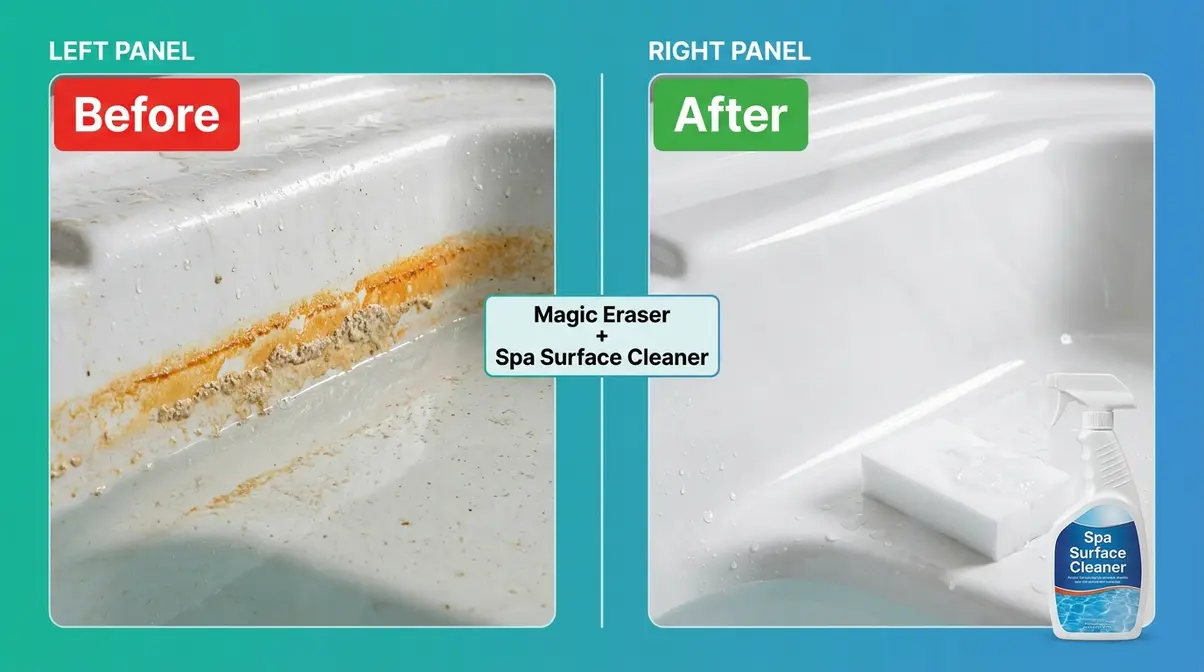
Estimated time: 30–45 minutes.
Step 4 — Clean the Filter and Cover
Your filter is your tub’s primary defense against bacteria and particles. A clogged filter forces your pump to work harder, reduces water flow, and allows contaminants to recirculate. Water care professionals recommend rinsing filters every 1–2 weeks and doing a deep chemical clean every time you drain (Consumer Reports, 2026).
Filter deep clean steps:
- Remove the filter cartridge from its housing (typically a twist-and-lift motion — check your owner’s manual if unsure).
- Rinse with a garden hose using a strong spray to dislodge debris between the pleats (the accordion-folded filter material). Work from top to bottom, rotating the filter.
- Soak in filter cleaning solution: Fill a bucket with water and add filter cleaner per label directions. Submerge the filter and soak for a minimum of 1 hour (overnight is better for heavily soiled filters).
- Rinse again thoroughly after soaking. The water running off should be clear.
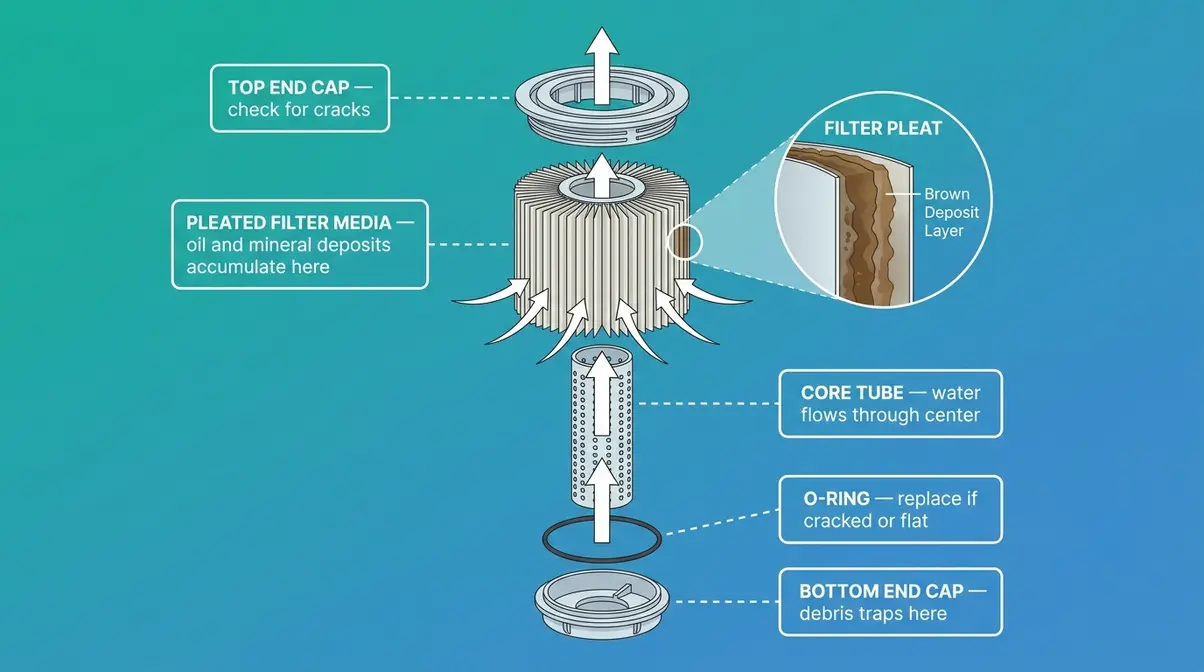
- Inspect: If pleats are torn, discolored (grey or brown even after cleaning), or the end caps are cracked, replace the filter. A typical spa filter lasts 12–24 months with proper care.
- Let dry before reinstalling — or use a second filter while the first dries (rotating filters extends their lifespan significantly).
Hot tub cover cleaning:
- Wipe the top surface with a damp cloth to remove debris.
- Spray the underside (the vinyl surface that contacts the water) with a spa-safe vinyl cleaner.
- Wipe dry. Never use Armor All, household vinyl protectants, or oil-based conditioners — these off-gas into your water.
- Apply a UV protectant designed for spa covers to the exterior to prevent cracking and fading.
Estimated time: 20 minutes active work + 1 hour soak time (passive).
Step 5 — Refill and Balance Your Water Chemistry
This is the step that makes your hot tub actually safe to use. Improperly balanced water is the leading cause of equipment damage, skin irritation, and the health conditions covered in the next section. Take this step seriously.
Refilling:
- Place your garden hose in the filter housing (not directly in the footwell) to reduce the chance of air locks in the plumbing — a common beginner issue that prevents jets from working correctly after refill.
- Fill to the manufacturer’s recommended level (usually the middle of the skimmer opening).
Balancing your water chemistry — do this in order:
| Chemical | Target Range | Why |
|---|---|---|
| Total Alkalinity | 80–120 ppm | Stabilizes pH so it stops bouncing |
| pH | 7.2–7.8 | Prevents eye irritation and equipment corrosion |
| Calcium Hardness | 150–250 ppm | Prevents water from attacking acrylic shell |
| Sanitizer (Chlorine) | 2.0–4.0 ppm | Kills bacteria and viruses (PHTA Standards) |
| Sanitizer (Bromine) | 3.0–5.0 ppm | Alternative to chlorine; more stable at high temps |
The order matters. Always adjust alkalinity first — it acts as a buffer that makes pH easier to control. Adding pH chemicals before alkalinity is a common beginner mistake that wastes chemicals and frustrates new owners.
Steps:
- Turn on the jets and circulation pump to mix chemicals evenly.
- Test your fill water with test strips or a liquid test kit.
- Adjust Total Alkalinity first. Add TA increaser if below 80 ppm; use pH Down (sodium bisulfate) to lower if above 120 ppm.
- Adjust pH to 7.2–7.8.
- Adjust Calcium Hardness if needed.
- Add your sanitizer (chlorine or bromine) per label dosage.
- Add a shock treatment (non-chlorine oxidizer or chlorine shock) to oxidize any remaining organic waste.
- Run jets for 20 minutes with the cover off to off-gas.
- Re-test after 2 hours before anyone uses the tub.
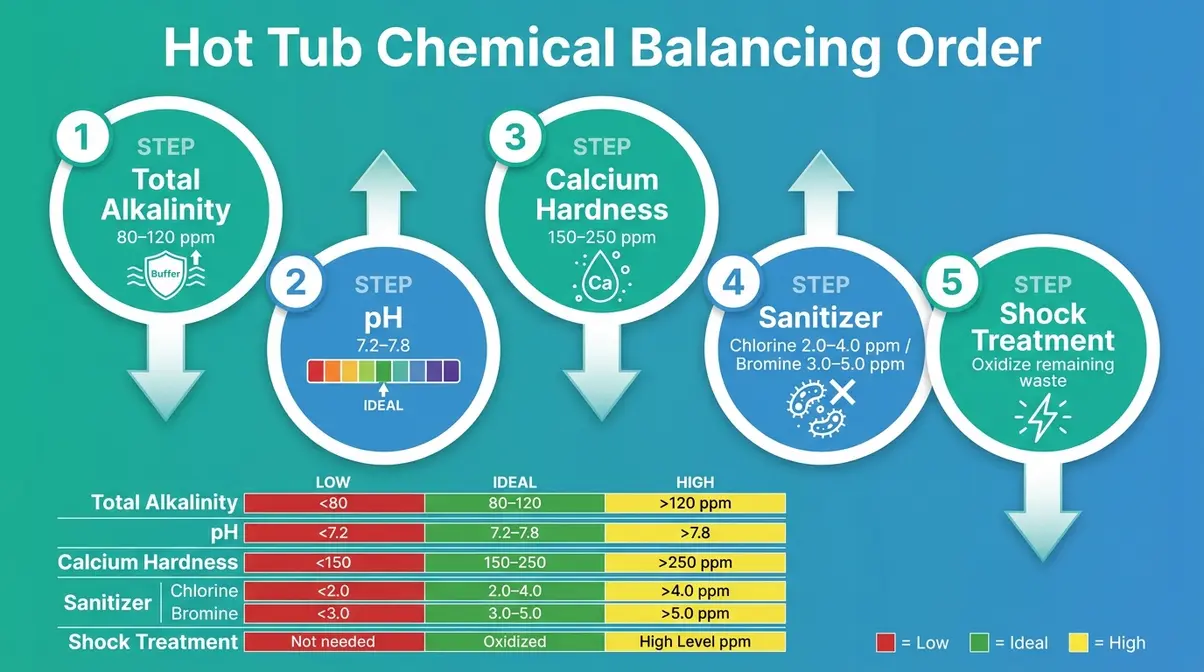
Estimated time: 30 minutes active work + 2 hours wait time before use.
Choosing the Right Cleaning Products & Chemicals
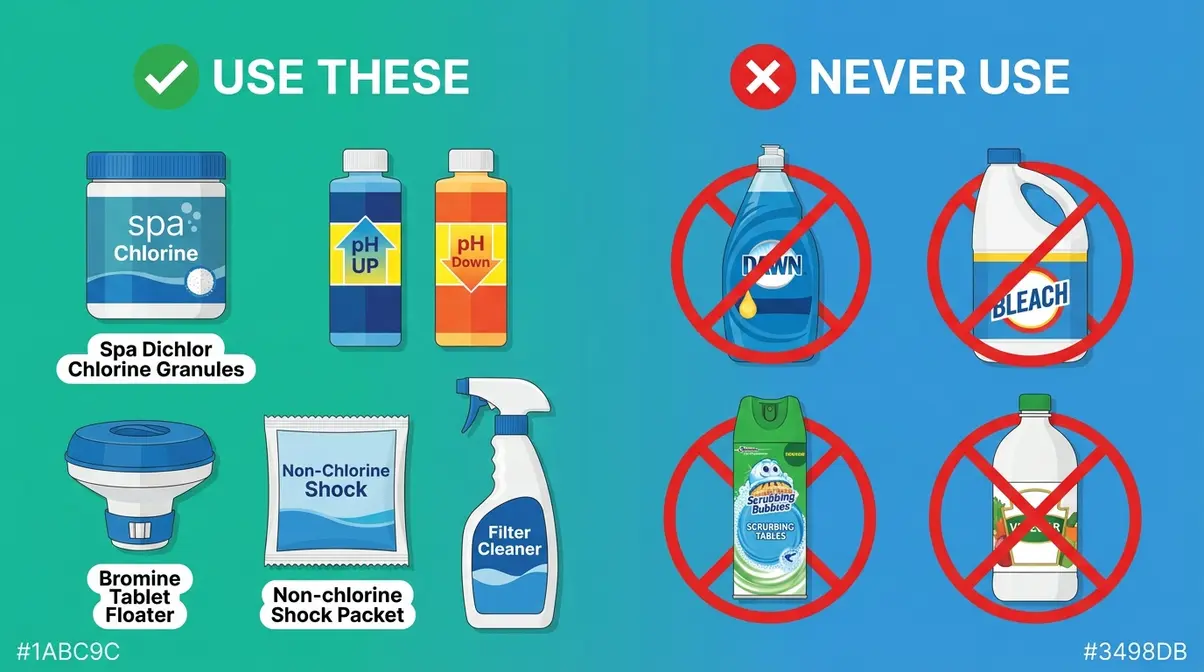
Walking down the spa supplies aisle for the first time is genuinely confusing. There are dozens of products, overlapping functions, and competing brand names for the same chemistry. Here’s a practical breakdown of what you actually need — and what to leave on the shelf.
The Chemicals You Actually Need (And What They Do)
Water care professionals consistently recommend keeping your chemical kit simple, especially as a beginner. You do not need 15 different products. You need these:
- Sanitizer (choose one):
- Dichlor chlorine granules — fast-dissolving, easy to dose, ideal for beginners. Maintains 2.0–4.0 ppm (PHTA Standards).
- Bromine tablets — slower-acting, more stable at high water temperatures, gentler on sensitive skin. Maintains 3.0–5.0 ppm (PHTA Standards). Requires a floater or feeder.
- Oxidizer / Shock:
- Non-chlorine shock (potassium monopersulfate) — weekly use to oxidize body waste without raising chlorine levels dramatically. Use after heavy bather loads.
- Chlorine shock — for serious contamination or after a long neglect period.
- Balancing chemicals:
- pH Up (sodium carbonate) and pH Down (sodium bisulfate)
- Total Alkalinity increaser (sodium bicarbonate)
- Calcium Hardness increaser (calcium chloride)
- Maintenance add-ons (optional but recommended):
- Enzyme treatment (e.g., Natural Chemistry Spa Perfect) — breaks down oils and lotions weekly
- Clarifier — helps filter catch fine particles causing cloudiness
- Scale inhibitor — prevents calcium deposits if your water is hard
Never Use These in Your Hot Tub
This section could save you a $200–$800 repair bill. These are the products beginners are most commonly tempted to use — and why each one is dangerous.
Dawn dish soap (or any household dish soap):
Dawn creates massive, uncontrollable foam the moment your jets activate. A single squirt can foam a 400-gallon tub to overflowing in under two minutes. More seriously, the surfactants in dish soap interfere with your water chemistry, making it nearly impossible to balance your sanitizer levels. It can also clog your filter and leave a residue on your shell that takes multiple drain-and-refills to remove. Sundance Spas and major spa manufacturers explicitly warn against any household soap use in their care guidelines.
Household bleach (sodium hypochlorite):
Standard household bleach is not formulated for hot tubs. It can damage acrylic shells, degrade rubber seals, and cause dangerous chlorine spikes that are harmful to skin, eyes, and respiratory health. Use only spa-grade dichlor or trichlor chlorine products.
Vinegar (as a primary cleaner):
While diluted white vinegar is sometimes used on exterior surfaces, pouring vinegar into your tub water will crash your pH and alkalinity. It can cause equipment corrosion and skin irritation.
Household bathroom cleaners (Scrubbing Bubbles, Lysol, etc.):
These contain foaming agents and chemical compounds not designed for high-temperature recirculating water systems. They will foam, destabilize your chemistry, and potentially damage your shell’s acrylic coating.
The rule of thumb: If it wasn’t designed specifically for spa or hot tub use, don’t put it in or near your tub.
Cleaning Tablets vs. Solutions — What’s the Difference?
Hot tub cleaning tablets are a relatively new product category that’s caused a lot of beginner confusion. Here’s the honest breakdown:
Sanitizer tablets (bromine or trichlor chlorine tablets): These go in a floater or inline feeder and slowly dissolve to maintain sanitizer levels. They are a legitimate, convenient way to keep sanitizer consistent between refills. They do NOT replace shocking, balancing, or the drain-and-refill process.
Filter cleaning tablets: These are soaking or spray products designed to deep-clean filter cartridges. They’re an alternative to liquid filter cleaner. Both work — tablets are slightly more convenient for storage.
“All-in-one” spa maintenance tablets: These claim to handle sanitizing, balancing, and clarifying in a single product. Water care professionals are skeptical of these for good reason: they cannot account for your specific fill water chemistry, bather load, or local mineral content. Use them only as a supplement, never as a replacement for proper testing and balancing.
Cleaning Filters & Removing Waterline Rings
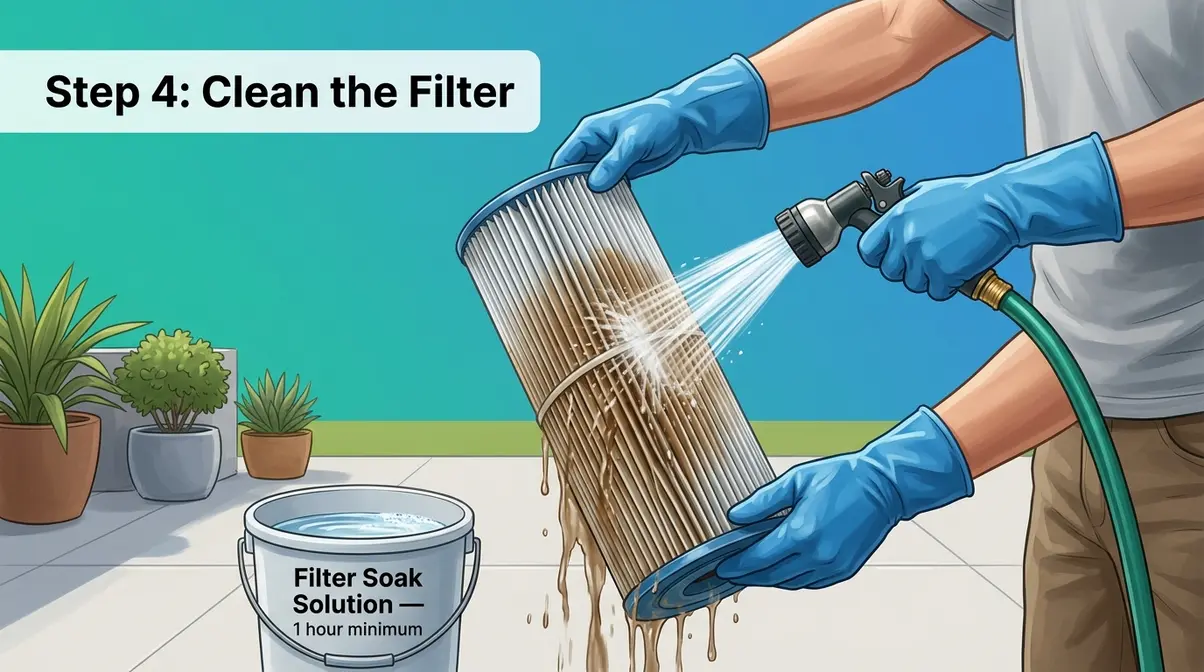
These two tasks come up most frequently between full drain-and-refill cycles. Getting them right keeps your tub looking and functioning well month to month.
Deep Cleaning Your Hot Tub Filter
Your filter is doing constant, invisible work — catching body oils, minerals, hair, debris, and the particles your sanitizer breaks down. When it gets clogged, water flow drops, your pump strains, and water clarity suffers.
The 4-stage filter care cycle:
| Stage | Frequency | Method |
|---|---|---|
| Quick rinse | Every 1–2 weeks | Garden hose, strong spray between pleats |
| Chemical spray clean | Monthly | Spray-on filter cleaner, let sit 15 min, rinse |
| Deep soak clean | Every drain-and-refill (3–4 months) | Overnight soak in diluted filter cleaner solution |
| Full replacement | Every 12–24 months | Replace cartridge entirely |
For a complete walkthrough of filter removal, soak ratios, and brand-specific instructions, see our dedicated guide on how to clean a hot tub filter — it covers every filter type from Jacuzzi to Sundance to generic cartridges.
How to Get Rid of the Hot Tub Ring
The hot tub ring — that orange, brown, or grey stain at the waterline — is one of the most common complaints from new owners. It’s not a sign of a broken tub. It’s a normal accumulation of body oils, sunscreen, minerals, and organic matter that collects at the water’s surface.
- For a fresh ring (appeared within the last few weeks):
- Apply spa surface cleaner directly to the stain.
- Let it sit for 2–3 minutes.
- Scrub with a wet Magic Eraser using light circular pressure.
- Rinse thoroughly.
- For a stubborn ring (built up over months):
- Make a paste of baking soda and water (3:1 ratio).
- Apply to the stain and let sit for 5 minutes.
- Scrub with a soft non-scratch pad.
- Follow with spa surface cleaner spray.
- Rinse twice.
For orange staining specifically (iron deposits from fill water):
Iron in your tap water causes orange/rust-colored staining that resists standard cleaners. Use a dedicated metal stain remover designed for spa shells. Going forward, add a metal sequestrant to your water after each refill to bind iron and prevent it from depositing on the shell.
Prevention: Using enzyme treatment weekly and dropping 2–3 tennis balls in the water significantly reduces waterline ring formation between drains.
For more detail on specific stain types and product recommendations, see our full guide on hot tub waterline stains.
Hot Tub Health & Safety Essentials
Hot tubs are genuinely wonderful for relaxation and recovery. They also involve hot water, chemical exposure, and prolonged immersion — which means there are real health considerations every owner should understand. This section covers the questions that matter most.
Please note: The health information below is for general educational purposes. Always consult your doctor before using a hot tub if you have a cardiovascular condition, are pregnant, or take medications that affect blood pressure or circulation.
Is a hot tub bad for folliculitis?
A poorly maintained hot tub is a direct cause of folliculitis — not a treatment for it. Hot tub folliculitis (also called hot tub rash) is a skin infection caused by Pseudomonas aeruginosa — a bacteria that thrives in warm water with insufficient sanitizer levels. If you currently have folliculitis, soaking in a hot tub — even a clean one — can worsen the infection and spread bacteria. According to the CDC, hot tub folliculitis is one of the most frequently reported recreational water illnesses (Centers for Disease Control and Prevention, 2026). The primary cause is inadequate chlorine or bromine levels. Prevention is simple: Maintain sanitizer levels (2.0–4.0 ppm chlorine or 3.0–5.0 ppm bromine), shock the tub after heavy use, and drain and refill every 3–4 months. Always consult your doctor before using a hot tub if you have an active skin infection.
Why is there a 15-minute hot tub rule?
The 15-minute rule exists because hot water raises your core body temperature to potentially dangerous levels if you soak too long without a break. In a hot tub set to 104°F (40°C), your body temperature can reach 102°F within 20–30 minutes, causing dizziness, nausea, or fainting. The Consumer Product Safety Commission recommends limiting sessions to 15–20 minutes at high temperatures, then exiting to cool down before re-entering (CPSC, 2026). This is especially important for older adults, pregnant individuals, and anyone on blood pressure medication. Keep water temperature at or below 104°F (40°C) — the maximum recommended by the CPSC — and never use a hot tub alone.
Will a hot tub help a sciatic nerve?
Warm water immersion can provide temporary relief from sciatic nerve pain by increasing circulation, relaxing surrounding muscles, and reducing inflammation around the compressed nerve. Physical therapists often recommend hydrotherapy as part of a broader treatment plan for sciatica. However, a hot tub does not address the underlying cause of sciatica (typically a herniated disc or spinal stenosis), and the temporary muscle relaxation may mask pain without resolving the structural issue. Always consult your doctor or physical therapist before using a hot tub as part of a pain management plan, particularly if you have a diagnosed spinal condition.
Your Hot Tub Maintenance Schedule
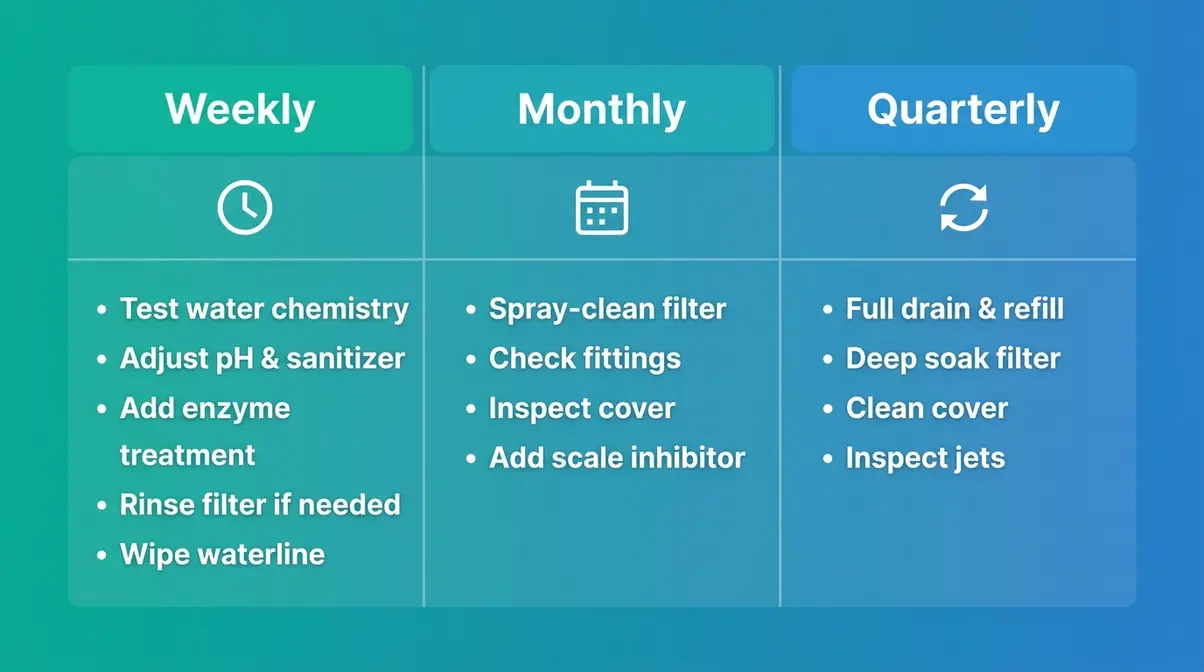
Cleaning your hot tub isn’t a once-a-year event — it’s a rhythm. The good news: most of the routine tasks take under 10 minutes. It’s only the quarterly full drain-and-refill that requires a half-day commitment. According to manufacturer data, adhering to a strict maintenance schedule can extend your hot tub’s lifespan by 5 to 7 years.
Weekly Tasks (10–15 minutes)
- Test water chemistry with test strips or a liquid kit
- Adjust pH and sanitizer levels as needed
- Add enzyme treatment to break down oils and organics
- Rinse the filter with a garden hose if water flow seems reduced
- Wipe the waterline with a soft cloth to prevent ring buildup
- Remove and inspect the cover; wipe the underside if needed
Monthly Tasks (20–30 minutes)
- Spray-clean the filter cartridge with a filter cleaner product
- Check and tighten any loose fittings on the cabinet exterior
- Inspect the cover for waterlogging or cracking (a waterlogged cover can weigh 100+ lbs and lose its insulating value)
- Add a scale inhibitor if your area has hard water
Quarterly Tasks (4–6 hours — The Total Spa Reset Protocol)
- Complete drain-and-refill following all 5 steps above
- Deep soak the filter
- Clean the cover inside and out
- Inspect jets for cracks or loose fittings
- Check the cabinet panels for moisture or pest entry points
For a printable version of this schedule, see our hot tub maintenance schedule and checklist.
Troubleshooting Common Hot Tub Problems
Even with good maintenance, hot tubs throw curveballs. Here are the most common problems new owners encounter — and exactly what to do about each one.
Cloudy or Milky Water
Most likely cause: Low sanitizer, high organic load, or imbalanced pH.
- Fix:
- Test your water. If sanitizer is below 2.0 ppm chlorine, shock the tub immediately.
- If pH is above 7.8, add pH Down.
- Add a water clarifier to help the filter capture fine particles.
- Clean or replace the filter if it hasn’t been cleaned recently.
- If the water doesn’t clear within 24–48 hours after shocking and balancing, drain and refill.
Foamy Water
Most likely cause: Body oils, lotions, detergent residue (from swimsuits washed with too much detergent), or an incompatible chemical product.
- Fix:
- Add a defoamer product for immediate relief.
- Shock the tub to oxidize organic waste.
- If foam persists, drain, rinse the shell thoroughly, and refill.
- Wash swimsuits in minimal detergent and rinse twice before hot tub use.
- Never add dish soap or household cleaners — if someone already did, drain immediately.
White Flakes in the Water
Most likely cause: Calcium scaling (calcium carbonate deposits flaking off the heater or shell), or mold/biofilm being dislodged.
- Fix for calcium flakes:
- Test Calcium Hardness. If above 400 ppm, drain partially and refill with fresh water.
- Add a scale inhibitor to prevent recurrence.
- Clean the heater housing if accessible.
- Fix for biofilm flakes:
- This is a sign you need a full line flush and drain-and-refill immediately.
- Follow The Total Spa Reset Protocol from Step 1.
Strong Chemical Smell (Chlorine Odor)
Counterintuitive truth: A strong chlorine smell usually means you need MORE chlorine, not less. The smell comes from chloramines — the byproduct of chlorine reacting with organic waste. Chloramines indicate depleted, used-up sanitizer.
Fix: Shock the tub with a full dose of chlorine shock or non-chlorine oxidizer. Run the jets for 20 minutes with the cover open. Re-test after 2 hours.
Jets Not Working After Refill
Most likely cause: Air lock in the plumbing (common when the tub is filled too quickly or the hose was placed in the footwell instead of the filter housing).
- Fix:
- With the tub powered on, loosen the pump union fitting slightly (clockwise to tighten, counterclockwise to loosen) — you’ll hear air escape. Re-tighten immediately.
- Alternatively, turn the jets on and off rapidly 3–4 times to force water through and break the air lock.
- If jets still don’t work, consult your owner’s manual or contact a spa technician.
For more detailed troubleshooting across all hot tub systems, see our complete hot tub troubleshooting guide.
Common Mistakes and Limitations to Know
Understanding where the process can go wrong — and when to call a professional — is part of becoming a confident hot tub owner. Industry surveys indicate that nearly 60% of expensive hot tub repairs could have been prevented with proper DIY maintenance.
Common Pitfalls
Pitfall 1: Skipping the line flush because “the water looks fine.”
Biofilm doesn’t make water look dirty. It colonizes the inside of your pipes invisibly. Owners who skip this step often wonder why their fresh water goes cloudy within a week of a refill. The line flush is not optional.
Pitfall 2: Adding chemicals directly to the water without the jets running.
Concentrated chemicals sitting on the shell floor can bleach or etch acrylic surfaces. Always run the jets before and during chemical addition to ensure even distribution.
Pitfall 3: Testing water immediately after adding chemicals.
Chemicals need time to mix and react. Test at least 20–30 minutes after adding anything, with the jets running. Testing too early leads to over-correction and a chemical imbalance spiral.
Pitfall 4: Neglecting the cover.
A damaged or waterlogged cover doesn’t just look bad — it loses its insulating properties, causing your heater to work harder (raising energy costs) and allowing airborne contaminants into the water. Inspect and condition your cover every month.
Pitfall 5: Using the same test strips past their expiration date.
Test strips degrade over time, especially in humid environments. Expired strips give false readings that lead to incorrect chemical dosing. Check the expiration date and replace the container annually.
When to Choose Alternatives
Scenario 1: Persistent green or black water that doesn’t clear after two drain-and-refills.
This may indicate algae growth or a serious contamination event. A professional spa technician can assess whether the shell, plumbing, or equipment has been compromised.
Scenario 2: Recurring skin rashes or respiratory irritation despite correct chemistry.
If multiple users experience symptoms even when chemistry is balanced, there may be a biofilm issue in the heater housing or a chemical sensitivity. Consult a doctor for health symptoms and a spa technician for equipment assessment.
Scenario 3: You’re managing a hot tub after a long neglect period (6+ months uncovered, unknown chemical history).
Don’t just add chemicals to old water. A complete professional service — including equipment inspection — is the safer and more cost-effective path. Get a professional hot tub service quote rather than spending on chemicals that won’t solve a structural problem.
When to Seek Expert Help
- Call a certified spa technician if you experience:
- Tripped breakers or electrical issues
- Heater failure (water won’t heat or overheats)
- Persistent pump noise or no water flow despite correct fill level
- Visible cracks in the shell or leaks around fittings
- Any situation involving electrical components near water — this is a safety issue, not a DIY project
Frequently Asked Questions
What is the best thing to use to clean the inside of a hot tub?
A spa-specific, non-foaming acrylic surface cleaner is the best product for cleaning the inside of your hot tub shell. These are formulated to be safe on acrylic and fiberglass without damaging the surface or leaving residue that disrupts water chemistry. For stubborn waterline stains, a Magic Eraser (melamine foam pad) used wet with light pressure is highly effective. Avoid household bathroom cleaners, dish soaps, and abrasive scourers — they foam, scratch, and destabilize your water chemistry. Most major spa brands (Jacuzzi, Sundance, Hot Spring) sell their own surface cleaner formulations, which are reliable choices (Sundance Spas Care Guide, 2026).
Why is there a 15-minute hot tub rule?
The 15-minute rule exists because hot water raises your core body temperature to potentially dangerous levels if you soak too long without a break. At the maximum recommended temperature of 104°F (40°C), your body temperature can reach 102°F within 20–30 minutes, causing dizziness, nausea, or fainting. The Consumer Product Safety Commission recommends limiting sessions to 15–20 minutes at high temperatures, then exiting to cool down before re-entering. This is especially important for older adults, pregnant individuals, and anyone on blood pressure medication. Staying hydrated during and after your soak is equally critical (CPSC, 2026).
Is a hot tub bad for folliculitis?
A poorly maintained hot tub is a direct cause of folliculitis — not a treatment for it. Hot tub folliculitis is caused by Pseudomonas aeruginosa bacteria that thrive in warm water with low sanitizer levels. If you currently have folliculitis, soaking in a hot tub — even a clean one — can worsen the infection and spread bacteria. The CDC confirms that hot tub folliculitis is among the most commonly reported recreational water illnesses (CDC, 2026). Most cases resolve within 7–10 days without treatment, but consult a doctor if symptoms worsen or are accompanied by fever. Always consult your doctor before using a hot tub if you have an active skin infection.
Will a hot tub help a sciatic nerve?
Warm water immersion can provide temporary relief from sciatic nerve pain by increasing circulation, relaxing surrounding muscles, and reducing inflammation around the compressed nerve. Hydrotherapy is sometimes recommended by physical therapists as a complementary treatment for sciatica. However, a hot tub does not address the underlying cause of sciatica (typically a herniated disc or spinal stenosis), and the temporary muscle relaxation may mask pain without resolving the structural issue. Always consult your doctor or physical therapist before using a hot tub as part of a pain management plan, particularly if you have a diagnosed spinal condition.
Why put tennis balls in a hot tub?
Tennis balls absorb body oils, sunscreen, and cosmetic residue that accumulate in hot tub water and cause the scummy waterline ring and foamy water that frustrate new owners. The felt surface of a tennis ball acts like a sponge for these oil-based contaminants, removing them from the water before they can deposit on the shell or clog the filter. Drop 2–3 clean tennis balls into the tub while it’s in use or circulating. Replace them monthly, as they become saturated over time. It’s a simple, inexpensive trick that genuinely reduces maintenance effort between full drain-and-refill cycles.
Can I use Dawn to clean my hot tub?
No — do not use Dawn or any dish soap in your hot tub. Dawn creates massive foam the instant your jets activate. A single squirt can foam a 400-gallon tub to overflowing in under two minutes, and the surfactants interfere with your water chemistry in ways that take multiple drain-and-refills to correct. Dawn can also clog your filter and leave a persistent residue on the shell. Spa manufacturers including Sundance Spas explicitly prohibit household soap use in their care guidelines. For cleaning the empty shell, use only spa-specific surface cleaner. For cleaning the cover exterior, use a mild soap and water solution applied with a cloth — but keep it away from the water entirely.
What happens if you are in a hot tub for 4 hours?
Soaking for 4 hours continuously poses serious health risks, including severe dehydration, heat exhaustion, dangerously elevated core body temperature (hyperthermia), and in extreme cases, loss of consciousness. The CPSC reports that hot tub fatalities frequently involve extended immersion leading to overheating and subsequent drowning. Even at lower temperatures, 4 hours of continuous soaking depletes your body’s fluid and electrolyte balance significantly. If you enjoy long hot tub sessions, take breaks of at least 15–20 minutes outside the water, drink water consistently, and keep the temperature below 100°F for extended use. Consult your doctor before extended hot tub use if you have cardiovascular conditions, take blood pressure medication, or are pregnant (CPSC, 2026).
How long should you be in a hot tub at one time?
The recommended maximum is 15–20 minutes per session at temperatures of 100–104°F, followed by a break outside the water to cool down. At lower temperatures (98–100°F), sessions of up to 30 minutes are generally considered safe for healthy adults. The key variables are water temperature, your personal health status, and hydration level. Children under 12 should limit sessions to 5–10 minutes at lower temperatures (98–100°F) and should always be supervised. Older adults and anyone with cardiovascular conditions, diabetes, or who is pregnant should consult their doctor for personalized guidance before regular hot tub use (CPSC, 2026).
Bringing It All Together
For new hot tub owners dealing with murky water, slimy walls, or that stubborn orange ring, The Total Spa Reset Protocol delivers a complete, repeatable solution. Using this hot tub cleaning guide regularly will ensure your water remains pristine and safe. The five-step process — flush the lines, drain safely, scrub the shell, clean the filter, refill and balance — addresses the full picture of hot tub contamination, not just the surface layer. Research from the CDC confirms that maintaining proper sanitizer levels and physically removing biofilm from plumbing lines are the two most effective ways to prevent recreational water illness in residential hot tubs (CDC, 2026).
The Total Spa Reset Protocol works because it treats your hot tub as a system, not just a container of water. Biofilm in the pipes, mineral deposits at the waterline, and degraded filter media all contribute to the “gloopy and slimy” experience that drives new owners to despair. Addressing each element in the correct sequence — and understanding why the sequence matters — is what separates owners who struggle with their tubs from those who genuinely enjoy them.
Your next step: gather your supplies (line flush product, spa surface cleaner, filter cleaner, and a fresh set of chemicals), block out a Saturday morning, and run the Protocol from Step 1. Most owners report that the first full drain-and-refill is the hardest — because the second one is just routine maintenance. Check out our complete hot tub care resource hub at onehottub.com for printable checklists, chemical calculators, and video guides to make every future clean faster and more confident.
*Chemical safety standards verified against PHTA industry guidelines and CDC recreational water health protocols, 2026.