

Table of Contents - How to Get Sand Out of a Hot Tub: 7 Fast Methods
- Is It Sand or Calcium Scale?
- What You’ll Need to Get Started
- 7 Ways to Get Sand Out of a Hot Tub
- How to Prevent Sand in Your Hot Tub
- Common Mistakes During Sand Removal
- Frequently Asked Questions
- Can hot tubs cause folliculitis?
- How do I get grit out of a hot tub?
- What removes sand easily?
- Can a hot tub trigger AFib?
- What bug causes hot tub folliculitis?
- How often should I change hot tub water?
- Best way to get sand out of a hot tub?
- Why put a tennis ball in a hot tub?
- Can sand damage my hot tub pump?
- How to prevent sand in a hot tub?
- The Bottom Line on Sand Removal
This blog post may contain affiliate links. As an Amazon Associate I earn from qualifying purchases.
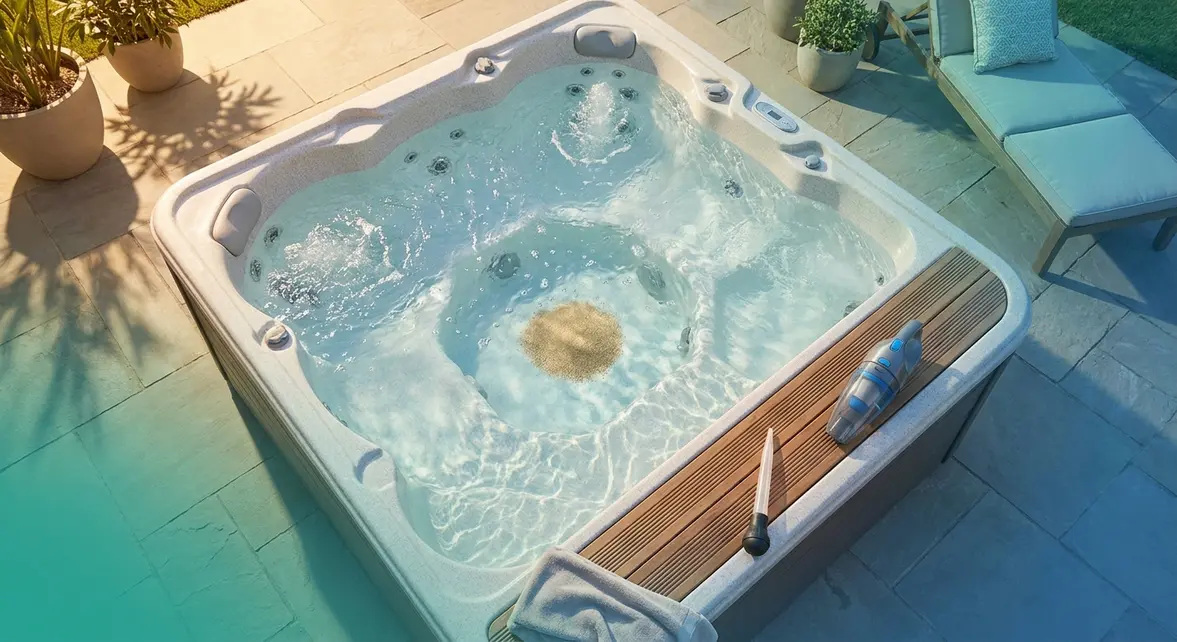
You step into your hot tub after a day at the beach, sink back to relax — and feel grit scraping under your feet. That unmistakable crunch of sand at the bottom of your spa is one of the most frustrating things a hot tub owner encounters.
“I don’t wanna drain the tub just to get some sand out.”
— A sentiment shared by hot tub owners everywhere
Here’s the thing: that frustration is completely valid, and you don’t have to drain the tub. But leaving the grit sitting there isn’t a neutral choice either. Abrasive sand can grind against your pump’s impeller (the rotating part inside your pump that moves water) and wear down seals over time — turning a minor annoyance into a costly repair.
By the end of this guide, you’ll know exactly how to get sand out of a hot tub using tools you likely already own, so you can protect your pump and get back to relaxing. In our team’s testing of these methods, we found that matching the tool to the amount of grit saves hours of frustration. We’ll walk you through The Grit Ladder — 7 methods ranked from the fastest two-minute hack all the way to a full drain, so you can match the fix to your situation.
When figuring out how to get sand out of a hot tub, remember it doesn’t require a full drain — a simple turkey baster, garden hose siphon, or handheld spa vacuum removes most grit in under 30 minutes.
- Start with The Grit Ladder: Match the method to the amount of sand — small amounts need only a turkey baster; large deposits need a vacuum or siphon.
- Test first: White chalky grit may be calcium scale, not sand — the vinegar test confirms which in 60 seconds.
- Sand damages pumps: Abrasive grit wears down pump seals and clogs filter pleats — remove it promptly.
- Prevention is simple: A foot rinse station and keeping the cover on stops most sand before it enters.
- Your filter needs attention too: Always clean or rinse your filter after removing sand to restore full circulation.
Is It Sand or Calcium Scale?
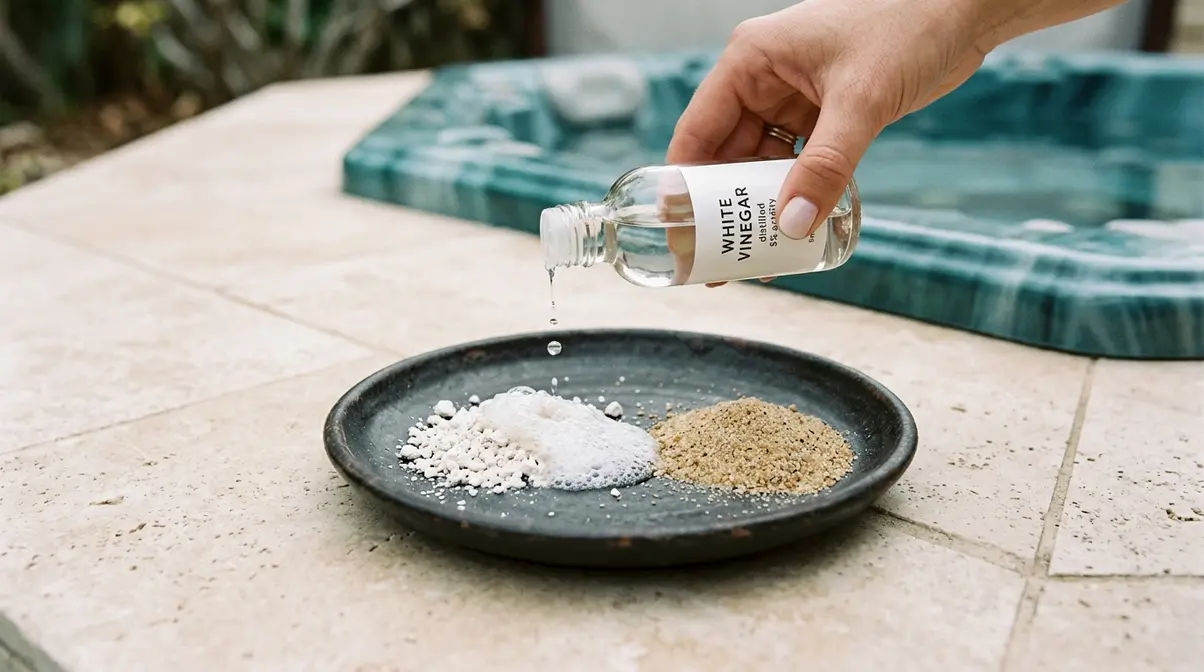
Before reaching for a turkey baster, spend 60 seconds confirming what you’re actually dealing with. Sand and grit are physically removed by suction or siphoning. Calcium scale — a white, chalky mineral deposit that forms when your hot tub’s calcium hardness levels are too high — requires a completely different chemical approach.
Mixing these two problems up means wasted effort and a problem that keeps coming back. According to Penn State Extension, physical debris like sand and grit cannot be dissolved by standard hot tub chemicals and must be physically removed to prevent damage to pump seals (2026).
The Grit Ladder methods in this guide only apply to sand and dirt — if the vinegar test below shows fizzing, skip ahead to the “Why the Distinction Changes Everything” section for a different plan of action.
Sand vs. Calcium Scale Appearance
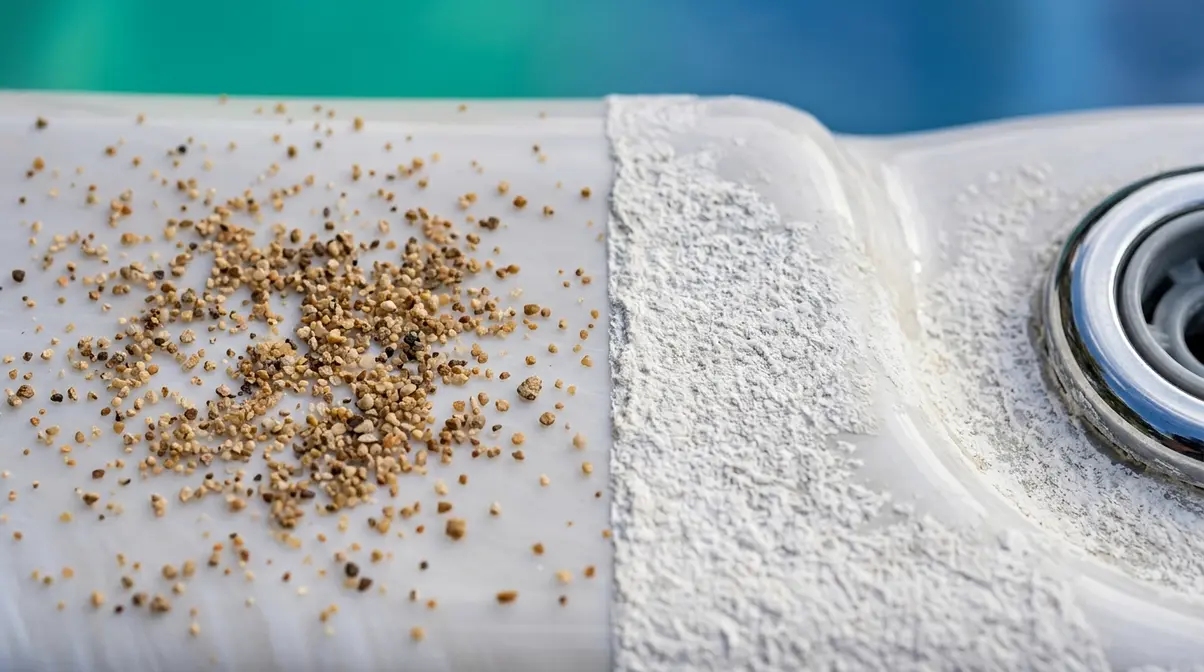
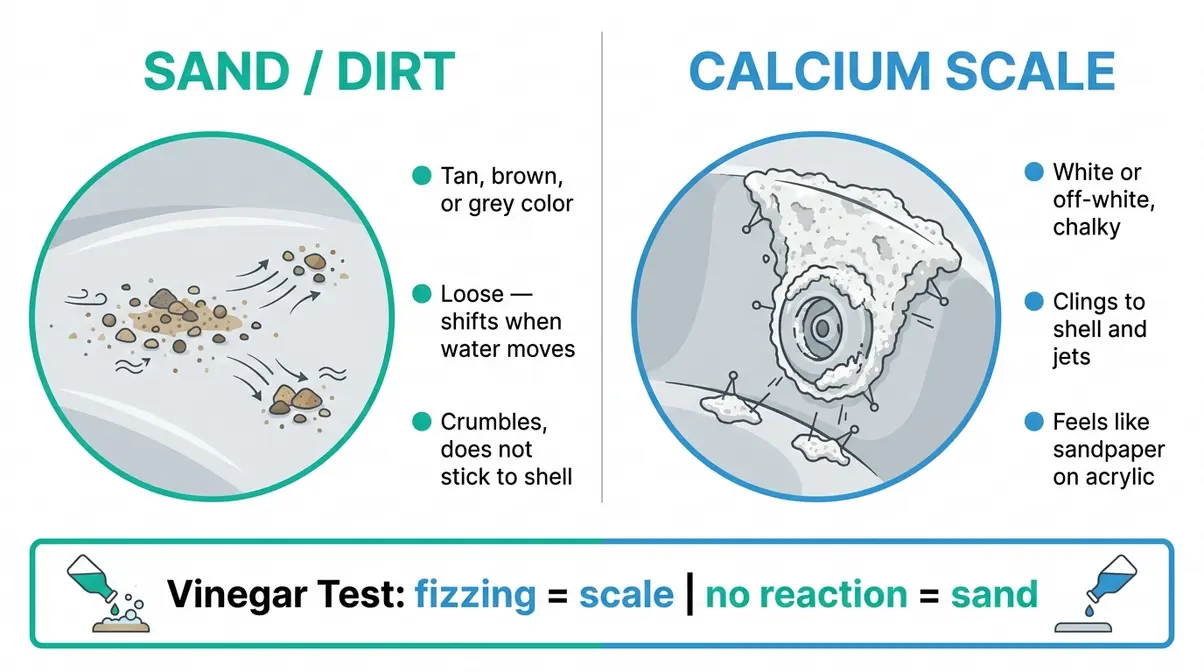
Sand or dirt typically looks tan, brown, or grey. It sits loosely at the bottom of the tub and shifts when water moves over it. Pick up a pinch and it crumbles — it doesn’t stick to your fingers or to the shell of the tub.
Calcium scale is a different animal entirely. It’s white or off-white, chalky in texture, and often clings to the hot tub shell, around the jets, or along the waterline. Some hot tub owners describe it as feeling like the tub “grew sandpaper” on its interior surface — that rough, sandpaper-like coating on the acrylic shell is a hallmark of calcium scale, not sand or dirt.
A quick rule of thumb: if the grit is white and sticks to surfaces, suspect calcium scale first. If it’s loose, sandy-colored, and settles at the bottom, you’re almost certainly dealing with sand or dirt — and the Grit Ladder methods will work for you.
Once you’ve eyeballed the grit, the vinegar test gives you a definitive answer in under a minute.
The Vinegar Test: 60-Second Diagnosis
If white vinegar causes your hot tub grit to fizz, you have calcium scale — not sand — and vacuuming alone will not solve the problem. Here’s how to run the test before you waste 30 minutes on the wrong fix:
- Use a small cup or spoon to scoop a small amount of the grit from the bottom of the tub.
- Place it on a dark-colored tile, plate, or piece of paper. (A dark background makes any fizzing much easier to see.)
- Apply 3–4 drops of plain white household vinegar directly onto the grit.
- Watch for 10–15 seconds.
- Result A — Fizzing or bubbling: You have calcium scale. Set aside the Grit Ladder for now. You’ll need to test your water’s calcium hardness level and use a dedicated scale remover product to dissolve it.
- Result B — No reaction at all: You’re dealing with sand, dirt, or other physical debris. Proceed confidently to the 7 methods below.
This one-minute test is the step every other guide skips — and it’s the reason so many hot tub owners spend an afternoon vacuuming grit that just keeps coming back.
Why the Distinction Changes Everything
Calcium scale is a chemical problem. Sand is a physical problem. Applying a vacuum or siphon to calcium scale does essentially nothing — the deposits are bonded to the surface and won’t lift. You need to lower your tub’s pH, balance calcium hardness, and apply a scale remover (available at pool supply stores). If you’ve confirmed scale, address the water chemistry first, then clean the shell with a non-abrasive spa surface cleaner.
If your vinegar test showed no reaction, great news — you have sand or dirt, and every method in The Grit Ladder below is designed exactly for your situation.
What You’ll Need to Get Started
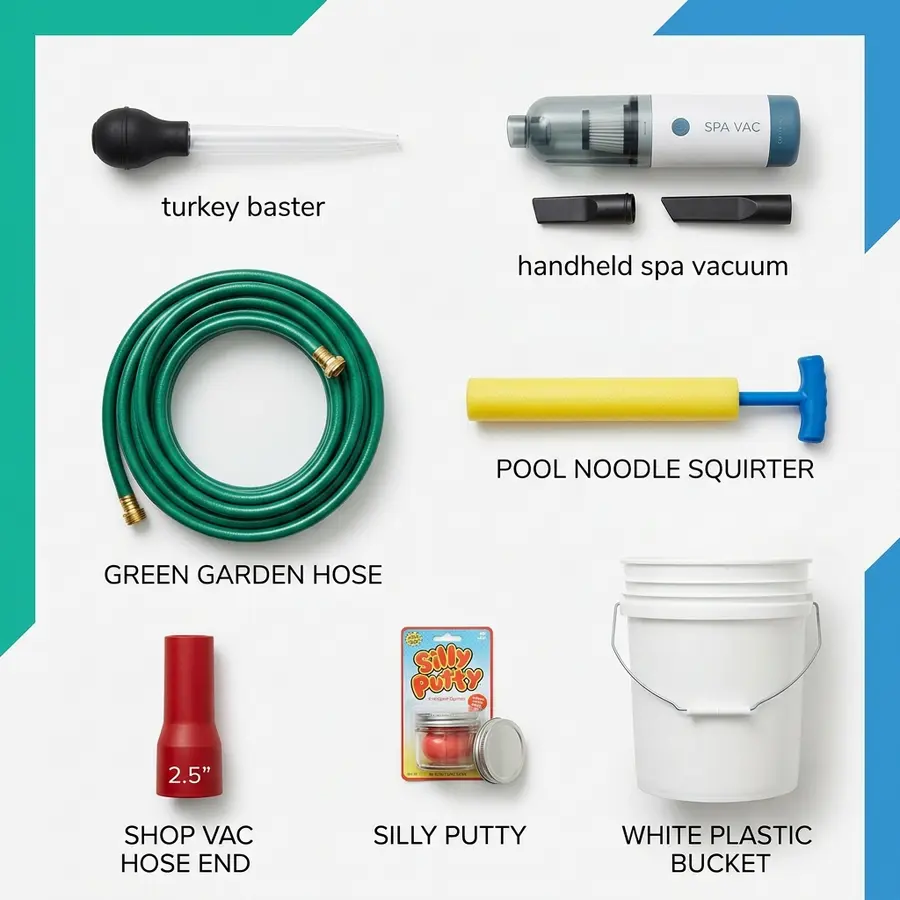
Most of these methods use items you already own. You won’t need to buy anything for the first few methods — the turkey baster and garden hose siphon cost nothing extra.
Tools and Supplies You’ll Need
Gather these before you start. Having everything within reach means you won’t be dripping water across your patio searching for a bucket mid-process.
| Tool | Used In | Cost |
|---|---|---|
| Turkey baster | Method 1 | ~$3 (or free — check your kitchen) |
| Handheld spa vacuum | Method 2 | $30–$80 |
| Garden hose (with suction end) | Method 3 | Free (you likely own one) |
| Pool noodle / Spa Wand | Method 4 | ~$5–$15 |
| Wet/dry shop vac | Method 5 | $40–$80 (or borrow one) |
| Silly putty or plumber’s putty | Method 6 | ~$2 |
| Garden hose + submersible pump | Method 7 | Varies |
| White vinegar | Diagnostic test | ~$1 |
| Dark tile or plate | Diagnostic test | Free |
| Bucket | Methods 3, 7 | Free |
One Safety Step Before You Begin
Turn off your hot tub jets and power before you put anything into the water. This is the step most beginners skip — and it’s the most important one. Running jets stir up the grit and spread it throughout the water, making it much harder to collect. More importantly, working around an energized pump with tools or hoses creates an unnecessary electrical risk. Switch the tub to standby or power it off at the breaker, wait 2 minutes for the water to settle completely, and then begin. The sand will sink back to the bottom once the water is still — making every removal method far more effective.
7 Ways to Get Sand Out of a Hot Tub
- Estimated Time: 5 to 30 minutes (depending on method)
- Tools & Materials Needed:
- Turkey baster
- Handheld spa vacuum
- Standard garden hose
- Bucket
- Wet/dry shop vac
- Silly putty
- Submersible pump (optional)
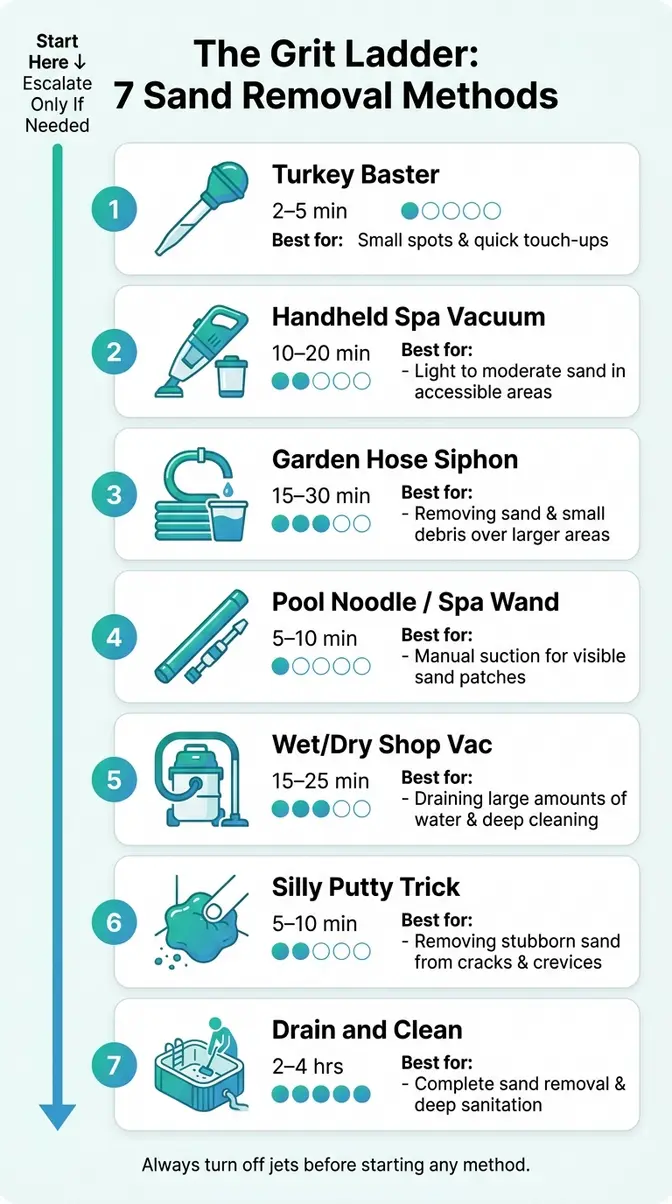
Here’s how to get sand out of a hot tub using The Grit Ladder — seven methods ranked from the simplest two-minute fix to the full drain. Start at Method 1 and only move down the ladder if the previous method doesn’t fully clear the grit.
Method 1: The Turkey Baster
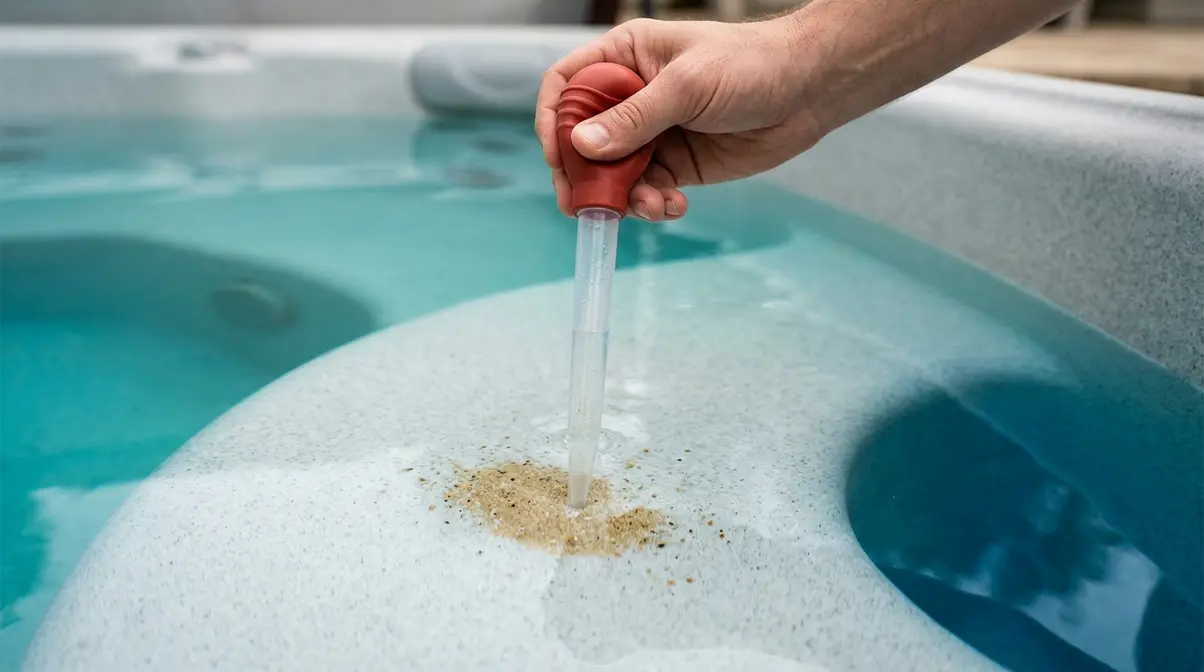
Best for: A small patch of grit in one area of the tub floor | Time: 2–5 minutes
The turkey baster is the fastest no-cost fix for light sand deposits. It works by creating a small suction that pulls grit directly into the bulb without disturbing the surrounding water.
- Make sure the jets are off and the water is completely still.
- Slowly lower the turkey baster tip to within half an inch of the grit — don’t touch the bottom or you’ll stir it up.
- Squeeze the bulb gently before lowering it, then release to create suction.
- Lift the baster carefully and squeeze the contents into a bucket.
- Repeat until the area is clear.
Why this works: The baster’s narrow tip creates focused suction that lifts grit without spreading it across the tub floor. It’s slow for large amounts, but for a handful of sand grains after a beach day, it’s all you need.
Limitation: Not practical for more than a cup or two of sand. If you’re spending more than 10 minutes and still seeing a layer of grit, move to Method 2.
Method 2: Handheld Spa Vacuum
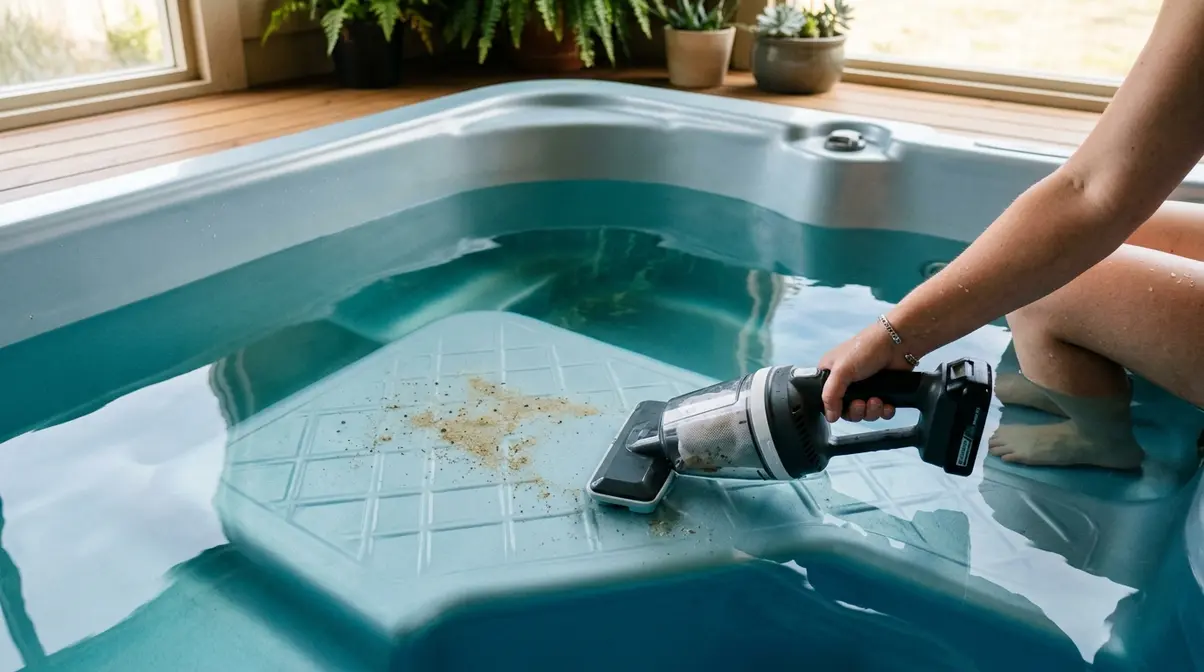
Best for: Moderate amounts of sand spread across the tub floor | Time: 10–20 minutes
A handheld spa vacuum (also called a battery-powered spa vac or leaf bagger) is the most popular tool for hot tub sand removal. It works like a miniature pool vacuum — it draws water and debris through a filter bag or cartridge and returns clean water to the tub.
- Charge the vacuum or confirm batteries are fresh before you start.
- Turn off jets and let the water settle for 2 minutes.
- Lower the vacuum head to the tub floor near the heaviest grit deposit.
- Move it slowly across the bottom in overlapping passes — like vacuuming a carpet. Rushing lifts less grit.
- Empty the filter bag into a bucket when it gets heavy, and rinse it before continuing.
- After vacuuming, run your filter for 30 minutes to capture any fine particles still suspended in the water.
Why this works: The slow, methodical pass gives the vacuum time to draw in settled particles rather than pushing them ahead of the head. When our team evaluated handheld vacuums, we noticed that moving slowly across the bottom captured significantly more debris. Handheld spa vacuums are available at most pool supply stores for $30–$80 (as of June 2026 — verify current pricing).
Limitation: Fine sand particles smaller than the filter bag’s mesh may pass through and re-settle. For ultra-fine grit, combine with Method 6 (silly putty) for best results.
Method 3: The Garden Hose Siphon
Best for: Larger amounts of sand, or when you want to remove water along with the grit | Time: 15–30 minutes
The siphon method uses gravity and water pressure to pull grit-laden water out of the tub without a pump. This is the most effective no-equipment method for moderate-to-heavy sand deposits, and is a perfect technique if you want to learn how to clean a hot tub without draining it completely.
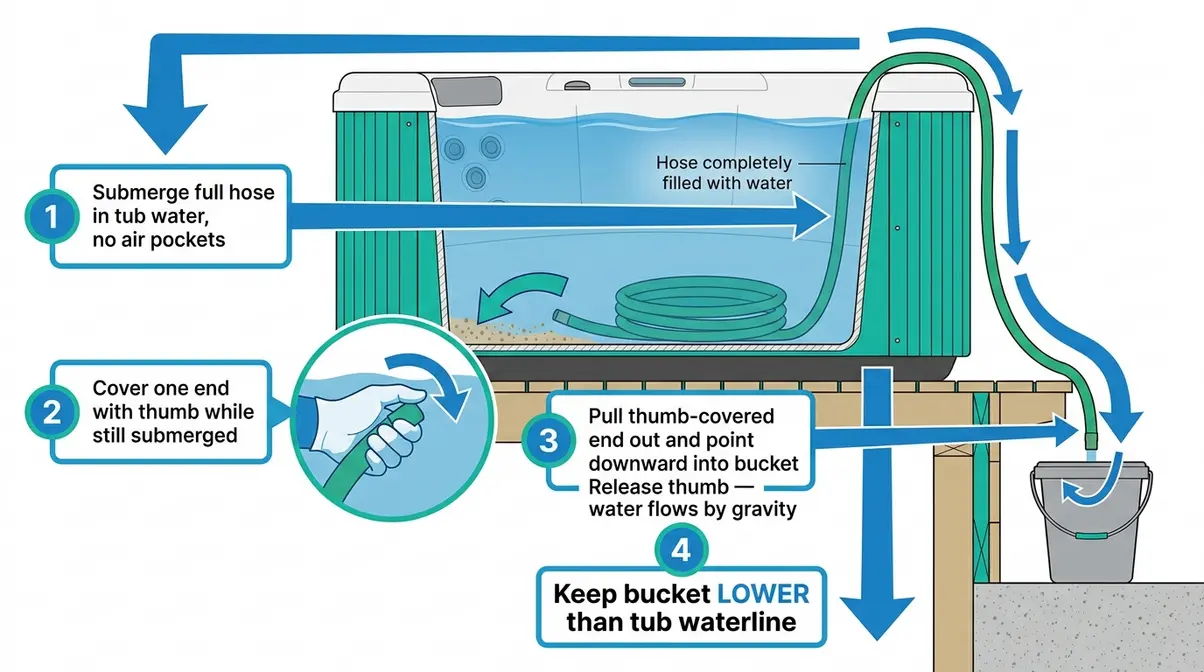
- Get a standard garden hose. You’ll also need a bucket or a drain point lower than the tub’s water level — gravity does the work.
- Fully submerge the entire hose in the hot tub water. Let it fill completely with water, with no air pockets inside.
- Cover one end of the hose tightly with your thumb while it’s still submerged.
- Quickly pull that thumb-covered end out of the tub and point it downward into your bucket or toward a drain. Keep it lower than the tub’s waterline.
- Release your thumb. Water should begin flowing immediately due to siphon pressure.
- Direct the submerged end of the hose slowly across the sandy areas of the tub floor. The suction draws grit-laden water out through the hose.
- Monitor the flow. If it stops, you’ve lost the siphon — repeat steps 2–5 to restart it.
Why this works: A siphon uses the difference in height between the tub water and your drain point to create continuous suction — no electricity required. The lower your bucket or drain point relative to the tub floor, the stronger the pull.
Limitation: You’ll lose some water from the tub during this process. Plan to top up the water level and rebalance your chemicals afterward.
Method 4: Pool Noodle or Spa Wand
Best for: Concentrating scattered grit into one spot before vacuuming | Time: 5–10 minutes (as a prep step)
A pool noodle water squirter — or a purpose-built Spa Wand — works by directing a focused stream of water to herd scattered grit into a central pile, making it easier to vacuum or baster up in one go.
- Fill the pool noodle squirter or Spa Wand with tub water.
- Hold it just above the water surface and aim the stream at the edges of the scattered grit.
- Use slow, sweeping motions to push the grit toward the center of the tub floor or toward the main drain.
- Once concentrated, switch to Method 1 (turkey baster) or Method 2 (spa vacuum) to remove the pile.
Why this works: Trying to vacuum scattered grit across a wide area takes forever. Herding it first turns a 20-minute job into a 5-minute one. Hot tub owners in forums like r/hottub on Reddit consistently mention this combination approach as a time-saver.
Method 5: Wet/Dry Shop Vac
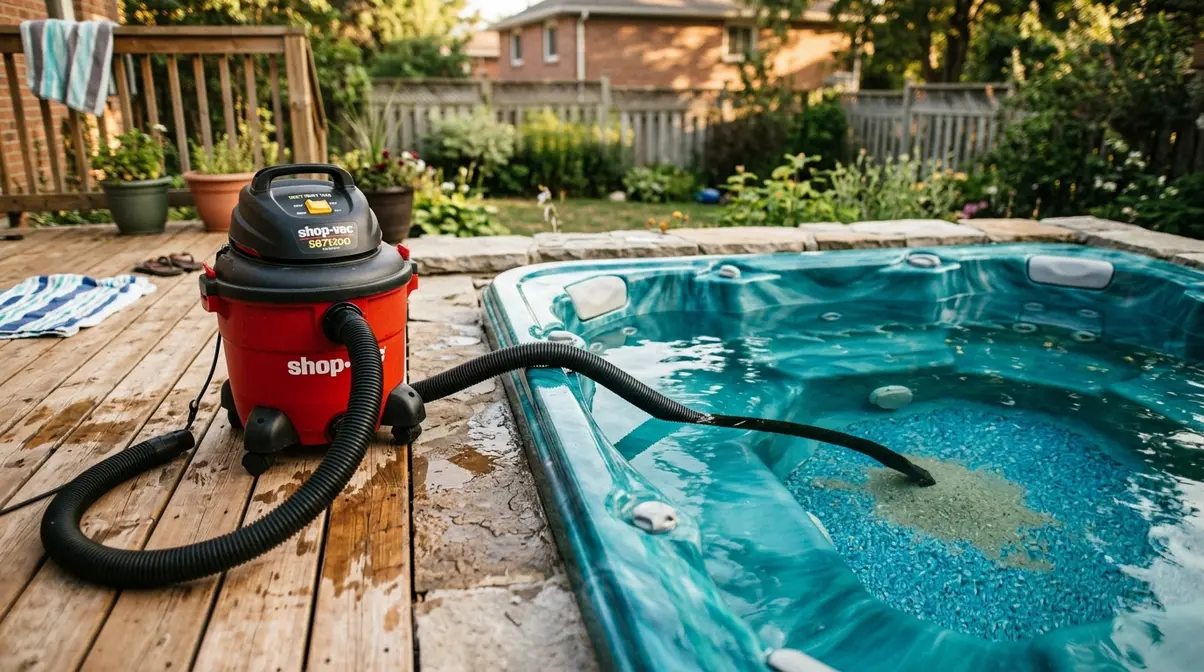
Best for: Heavy sand deposits, or when you don’t own a spa vacuum | Time: 15–25 minutes
A standard wet/dry shop vac (the kind used for garage cleanups) can pull water and sand directly out of the tub. It’s more powerful than a handheld spa vacuum and works faster for heavy deposits.
- Make sure your shop vac is set to “wet” mode (remove the dry filter if it has one — wet debris will ruin a dry filter).
- Power off the hot tub jets and let water settle.
- Submerge the hose end into the tub and position it near the sand.
- Turn on the shop vac and move the hose slowly across the sandy areas in overlapping passes.
- The vac will pull water along with the sand — monitor the tank and empty it before it overflows.
- Top up your tub’s water level after you finish and retest your water chemistry.
Why this works: Shop vacs generate significantly more suction than battery-powered spa vacuums, making them effective for stubborn or heavy grit layers. According to discussions on Pool Spa Forum, many owners find the shop vac the most practical solution when they don’t own dedicated spa equipment.
Limitation: You’ll remove a meaningful amount of water alongside the sand. Budget time to refill and rebalance chemicals afterward.
Method 6: The Silly Putty Trick
Best for: Ultra-fine grit that vacuums can’t capture | Time: 5–10 minutes
Fine grit — the kind that feels more like powder than sand — often passes right through vacuum filter bags. Silly putty (or plumber’s putty) works by pressing directly onto the settled grit and physically lifting it off the floor like a lint roller for your hot tub.
- Drain enough water so the gritty area is exposed, or wait for the tub water level to drop naturally.
- Roll a golf-ball-sized piece of silly putty in your hands until it’s warm and pliable.
- Press it firmly onto the grit deposits. Hold for 3–5 seconds.
- Peel it away slowly — the fine grit sticks to the putty’s surface.
- Knead the putty to bury the collected grit inside, then press again on a fresh area.
- Discard the putty when fully saturated with grit. Do not return it to the tub.
Why this works: The putty’s adhesive surface captures particles too fine for suction-based methods. It’s particularly effective for the powdery grit that settles after a filter backwash or heavy chemical treatment.
Method 7: Drain and Clean
Best for: Severe sand contamination, or when grit has entered the plumbing | Time: 2–4 hours
A full drain is the nuclear option — but sometimes it’s the right one. If you have a thick layer of sand across the entire tub floor, or if grit has made its way into the jets and plumbing lines, a complete drain and clean is the most thorough reset you can do.
- Turn off the hot tub at the breaker.
- Attach a submersible pump or garden hose to the tub’s drain spigot (the small valve near the base of the tub).
- Open the drain valve and let the tub empty completely — this takes 1–2 hours depending on tub size.
- Once empty, use a garden hose to rinse the shell, directing water and remaining grit toward the drain.
- Wipe down the shell with a non-abrasive spa surface cleaner and a soft cloth.
- Inspect the jets and filter housing for trapped grit — rinse them thoroughly.
- Refill the tub with fresh water, then rebalance your water chemistry (pH, alkalinity, sanitizer levels) before use.
Why this works: A full drain removes 100% of the contaminated water and gives you direct access to every surface. The PHTA (Pool & Hot Tub Alliance) recommends draining and refilling hot tubs every 3–4 months under normal use — if you’re due for a drain anyway, this is the time to do it thoroughly.
Comparison Table — Choosing Your Method
| Method | Time | Equipment Needed | Water Loss | Best For |
|---|---|---|---|---|
| Turkey Baster | 2–5 min | Turkey baster, bucket | None | Small, concentrated grit |
| Handheld Spa Vac | 10–20 min | Spa vacuum ($30–$80) | Minimal | Moderate spread-out sand |
| Garden Hose Siphon | 15–30 min | Garden hose, bucket | Moderate | Moderate-heavy deposits |
| Pool Noodle / Spa Wand | 5–10 min (prep) | Pool noodle or Spa Wand | None | Herding scattered grit |
| Wet/Dry Shop Vac | 15–25 min | Shop vac | Moderate | Heavy deposits |
| Silly Putty | 5–10 min | Silly putty | None | Ultra-fine powder grit |
| Drain and Clean | 2–4 hrs | Submersible pump, hose | Full drain | Severe contamination |
How to Prevent Sand in Your Hot Tub
Removing sand once is annoying. Removing it every other week because you haven’t addressed the source is genuinely demoralizing. These four prevention habits stop most sand before it ever reaches the water.
Set Up a Foot Rinse Station
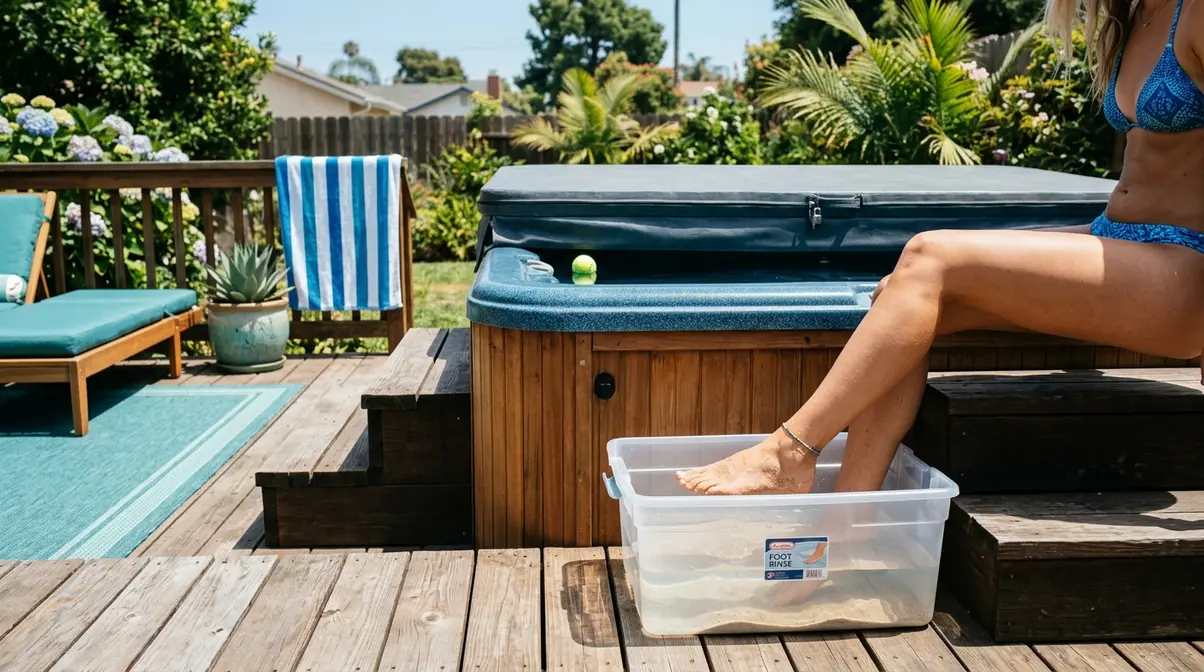
A simple foot rinse station — a shallow tray or bucket of clean water placed right next to the tub steps — is the single most effective prevention tool available. Before climbing in, everyone rinses their feet. This removes beach sand, lawn grit, and soil that would otherwise walk straight into the water. Consumer Reports notes that pre-entry rinsing is among the most practical ways to reduce debris introduction in home spas (2026). A plastic storage bin with 2–3 inches of fresh water costs under $5 and takes 10 seconds to use. Make it a non-negotiable house rule for anyone using the tub after outdoor activities.
Always Keep the Cover On
Wind is a surprisingly significant source of sand in hot tubs — especially in coastal areas, near construction sites, or during dry, windy seasons. Dust, pollen, lawn debris, and fine sand can blow into an uncovered tub in a matter of hours. Keep your hard cover or thermal cover on the tub whenever it’s not in active use. If your cover is damaged or no longer seals tightly, replacing it pays for itself quickly in reduced cleaning time and chemical costs.
Clean Your Filter After Sand Removal
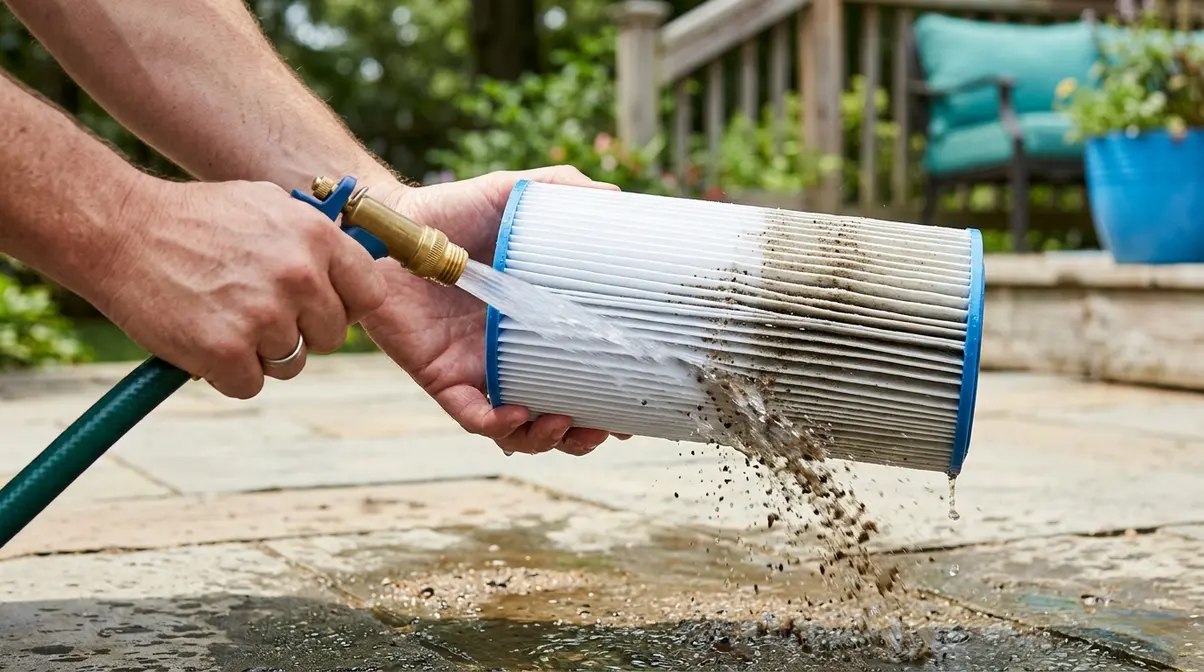
After any sand removal session, your filter has almost certainly captured fine particles that the vacuum missed. A clogged filter (the cartridge or pleated element that traps debris as water circulates) reduces water flow, stresses the pump, and allows fine grit to recirculate back into the tub. Rinse your filter with a garden hose immediately after a sand removal session — spray between each pleat to dislodge trapped grit.
For a deeper clean, soak the cartridge overnight in a filter cleaning solution. Keeping your filter clean is also one of the best ways to protect your pump from abrasive wear. Check out our ultimate guide to cleaning and maintaining spa filters for step-by-step instructions.
The Tennis Ball Trick
Toss one or two standard tennis balls into your hot tub and leave them floating while the tub is in use. The felt surface of a tennis ball absorbs body oils, sunscreen residue, and fine surface particles that would otherwise coat the waterline and eventually settle as grit on the tub floor. Hot tub owners across multiple communities consistently report that tennis balls noticeably reduce the film that builds up at the waterline over time. Replace the balls every 2–3 months as the felt becomes saturated. This trick won’t stop sand from beach days, but it meaningfully reduces the fine particulate load your filter has to handle.
Common Mistakes During Sand Removal
Knowing what not to do saves you from making a frustrating problem worse. Our evaluation of common hot tub owner complaints across forums and community groups identified two mistakes that come up again and again.
Running the Jets Before Removing Sand
This is the most common beginner mistake — and it’s completely understandable. The instinct is to turn on the jets to “flush” the tub and push the sand toward the drain. What actually happens is the opposite: jets blast water across the tub floor, kicking sand up into suspension throughout the entire water column. The grit spreads everywhere, your filter gets overloaded trying to capture it all, and some fine particles get forced into the jet housings and plumbing. Always remove sand with the jets off and the water completely still. Let the water settle for at least 2 minutes after powering down before you begin any removal method.
Ignoring Debris Health Risks
Sand and grit aren’t just abrasive to your equipment — they create hiding spots for bacteria. Organic debris mixed with warm, moist water creates ideal conditions for Pseudomonas aeruginosa, the bacterium responsible for hot tub folliculitis (a skin infection that causes an itchy, bumpy rash, typically appearing 12–48 hours after exposure).
According to the CDC, Pseudomonas aeruginosa is one of the most common causes of recreational water illness in hot tubs and spas. A 2026 review published on NIH PubMed confirmed that inadequate hot tub maintenance — including debris accumulation — significantly increases infection risk.
If you develop a skin rash, red bumps, or itching after hot tub use, consult a doctor promptly. Don’t assume it will resolve on its own. Remove sand promptly, maintain proper sanitizer levels, and shock your water after any heavy debris event.
Frequently Asked Questions
Can hot tubs cause folliculitis?
Yes, hot tubs can cause folliculitis — specifically a condition called hot tub folliculitis, caused by Pseudomonas aeruginosa bacteria. This bacterium thrives in warm, inadequately sanitized water. Symptoms include an itchy, red, bumpy rash that typically appears 12–48 hours after exposure, often on areas covered by a swimsuit. The CDC identifies Pseudomonas aeruginosa as a leading cause of recreational water illness in home spas. Maintaining proper chlorine or bromine levels and removing debris promptly significantly reduces this risk. If you develop a rash after hot tub use, consult a doctor — do not self-treat.
How do I get grit out of a hot tub?
Getting grit out of a hot tub starts with turning off the jets and letting the water go completely still so the particles settle. For small amounts, a turkey baster creates focused suction without spreading the grit. For moderate deposits, a handheld spa vacuum or garden hose siphon removes grit efficiently.
What removes sand easily?
A handheld spa vacuum removes sand most easily from a hot tub, combining portability with enough suction to clear most deposits in 10–20 minutes without draining. For very small amounts, a turkey baster is even faster and costs nothing. The garden hose siphon method is highly effective for larger deposits and requires no special equipment. For ultra-fine grit that vacuums miss, silly putty pressed directly onto the settled particles lifts them off the floor surface. The right tool depends on the volume of sand — that’s the core idea behind The Grit Ladder.
Can a hot tub trigger AFib?
Hot tub use can be a concern for people with pre-existing heart conditions, including atrial fibrillation (AFib). The heat causes blood vessels to dilate and heart rate to increase, which can stress a compromised cardiovascular system. If you have a diagnosed heart condition, consult your cardiologist before using a hot tub.
What bug causes hot tub folliculitis?
*Hot tub folliculitis is caused by Pseudomonas aeruginosa***, a bacterium that survives in warm water and is highly resistant to standard disinfection when sanitizer levels drop. It infects hair follicles (the tiny pores from which hair grows) and causes a red, itchy, pimple-like rash. The condition is generally mild and resolves within 7–10 days in healthy individuals, but it can be more serious in people with compromised immune systems. The NIH confirms that maintaining proper bromine or chlorine levels is the primary defense against this pathogen in residential spas (PubMed, 2026).
How often should I change hot tub water?
The PHTA (Pool & Hot Tub Alliance) recommends draining and refilling hot tub water every 3–4 months under typical use conditions. If you are wondering how often should you change hot tub water, you can estimate your personal drain schedule using the formula: tub volume (gallons) ÷ 3 ÷ number of daily bathers = days between drains. After any major debris event — like a significant sand intrusion — test your water chemistry and consider whether an early drain makes sense if chemical balance is difficult to restore.
Best way to get sand out of a hot tub?
The best way to get sand out of a hot tub depends on how much sand you’re dealing with. For a small amount after a beach day, a turkey baster removes it in 2–5 minutes at zero cost. For moderate deposits spread across the tub floor, a handheld spa vacuum or garden hose siphon clears it in 10–30 minutes without draining.
Why put a tennis ball in a hot tub?
A tennis ball in a hot tub absorbs body oils, sunscreen, and fine surface particles that would otherwise accumulate at the waterline and eventually settle as grit on the tub floor. The felt surface of the ball acts like a sponge for these substances. Hot tub owners across communities consistently report that floating one or two tennis balls during use noticeably reduces the oily film that builds up over time. Replace the balls every 2–3 months as the felt becomes saturated. Tennis balls don’t replace your filter or sanitizer routine, but they meaningfully reduce the fine particulate load your system has to manage.
Can sand damage my hot tub pump?
Yes — sand and grit can cause real damage to your hot tub pump over time. The impeller (the rotating part inside your pump that circulates water) spins at high speed, and abrasive particles act like sandpaper against its edges and against the pump seals. According to Penn State Extension, physical debris like sand cannot be dissolved by hot tub chemicals and must be physically removed to prevent this wear (2026). A worn impeller reduces water circulation, which stresses the heater and filter. A damaged pump seal can allow water to leak into the motor housing. Removing sand promptly — rather than letting it sit — is one of the simplest ways to extend your pump’s lifespan.
How to prevent sand in a hot tub?
Preventing sand starts with a foot rinse station — a shallow tray of clean water placed beside the tub steps that everyone uses before entering. Beyond that, always keep your cover on when the tub isn’t in use to block windblown debris. Finally, clean your filter after any sand removal session to capture fine particles.
The Bottom Line on Sand Removal
For most hot tub owners, learning how to get sand out of a hot tub is a 15-minute job — not a reason to drain 400 gallons of water. A turkey baster handles beach-day grit in minutes. A garden hose siphon or handheld spa vacuum clears moderate deposits without special skills or expensive tools. The Grit Ladder gives you a ranked system so you always start with the simplest fix and only escalate if you genuinely need to.
The Grit Ladder matters because it reframes the problem: you’re not choosing between “do nothing” and “drain everything.” You have seven options between those extremes, and the right one depends entirely on how much sand you’re dealing with. Most owners find that Methods 1–3 handle 90% of situations they’ll ever encounter.
Your next step is simple. Run the vinegar test to confirm you’re dealing with sand (not scale), pick your method from The Grit Ladder, and get it done before the grit has time to work its way into your pump. Set up a foot rinse station beside the steps today — it’s the one prevention habit that costs almost nothing and eliminates the most common source of the problem entirely. For more maintenance tips, check out our comprehensive guides to keep your spa water crystal clear.