


Table of Contents - Do You Sweat in a Hot Tub? Science, Risks & Safety
This blog post may contain affiliate links. As an Amazon Associate I earn from qualifying purchases.
⚕️ Medical Disclaimer: The information in this article is for educational purposes only and does not constitute medical advice. Always consult a qualified healthcare professional before using a hot tub if you have cardiovascular conditions, low blood pressure, diabetes, or are pregnant.
Reviewed by a licensed registered nurse with expertise in cardiovascular health and thermal physiology. Last reviewed: May 2026.
Yes, you absolutely sweat in a hot tub — and you’re probably losing far more fluid than you realize. The water around you hides it completely, which is precisely why so many soakers step out feeling drained, dizzy, or headachy without knowing why.
This “sneaky dehydration” is the most overlooked hot tub health risk, and most guides online either miss it entirely or bury it under vague wellness advice. So if you’ve ever wondered whether the fatigue you feel after a long soak is normal — it is, but it’s also preventable.
By the end of this guide, you’ll understand exactly how and why your body sweats underwater, what that means for your health, and how to follow a simple science-backed protocol to soak safely every time. We’ll cover the physiology, the real risks, how hot tubs compare to saunas and baths, which popular health claims are myths, and what your sweat actually does to your water.
If you are wondering, do you sweat in a hot tub, the answer is absolutely yes — your body can release up to a liter of fluid per hour at 104°F. Yet the surrounding water masks the sensation entirely, creating what we call “The Invisible Sweat Trap.”
- You sweat without feeling it: Water prevents evaporation, hiding the cooling process from your senses entirely
- Dehydration risk is real: You can lose significant fluid before thirst signals kick in
- Detox claims are a myth: Your kidneys and liver handle detoxification — sweat plays a negligible role
- 15 minutes is the CPSC-recommended limit at maximum temperature (104°F/40°C) (CPSC)
- Maintenance matters: Every soaker introduces sweat and body oils that deplete sanitizer faster than you’d expect
Why You Sweat in a Hot Tub (And How Much)
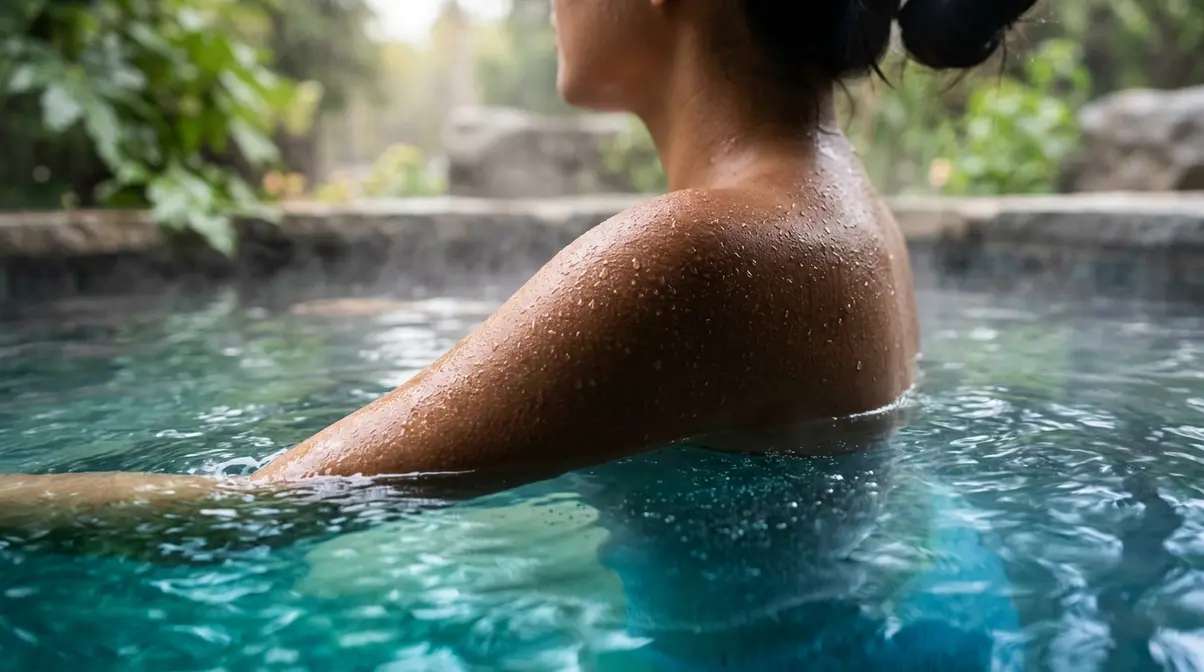
When people ask, do you sweat in a hot tub, they are often surprised by the volume and the biology behind it. If you want to dive deeper into the science behind sweating in a hot tub, it’s important to understand that your sweat glands activate within minutes of immersion. Your hypothalamus, the brain region responsible for body temperature control, detects rising core temperature and triggers your eccrine sweat glands as a cooling response. The water around you then absorbs that sweat invisibly, creating fluid loss you cannot see, feel, or easily track until it’s already affecting you.
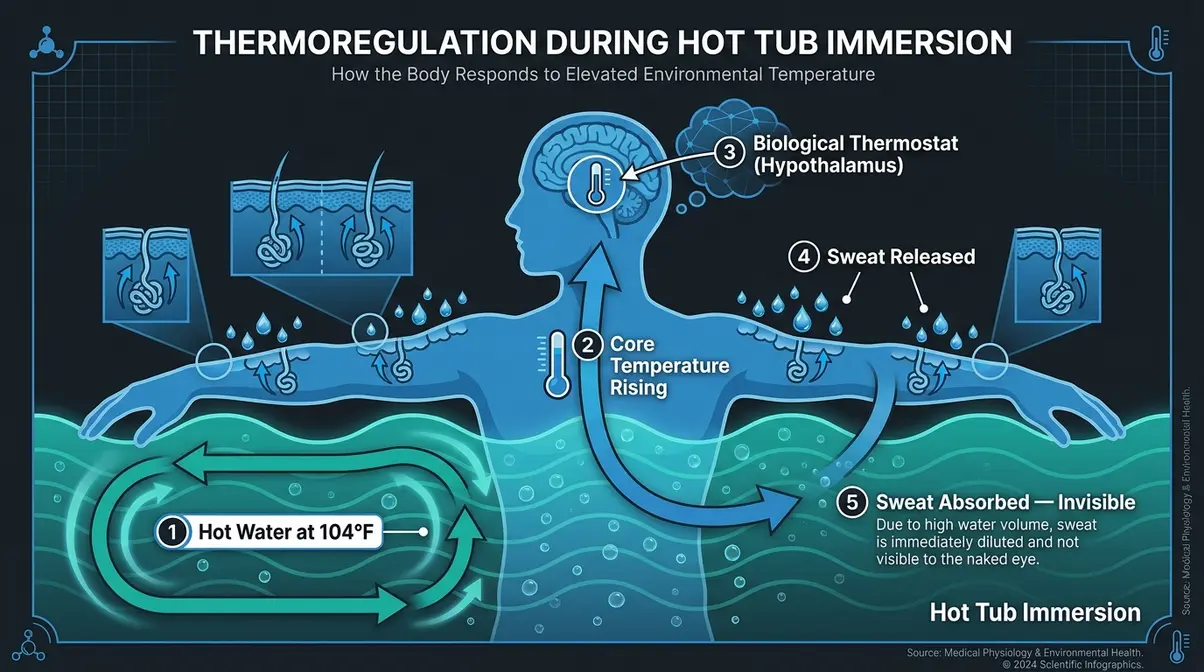
How Thermoregulation Works Underwater
Thermoregulation is your body’s internal temperature regulation system — the continuous process of keeping your core temperature within a safe range. At the center of this system is the hypothalamus, which monitors your blood temperature like a biological thermostat. When your blood warms above its baseline of approximately 98.6°F (37°C), the hypothalamus sends signals to your eccrine sweat glands to begin secreting fluid onto the skin’s surface.
This process happens regardless of whether you’re in open air or submerged in water. Hot tub water at 100–104°F is significantly warmer than your body’s baseline, so immersion raises your core temperature relatively quickly. Your hypothalamus responds within minutes, activating the same cooling mechanism it would trigger during moderate exercise.
Research published in the International Journal of Environmental Research and Public Health confirms that passive heating — sitting in hot water — produces cardiovascular responses comparable to moderate-intensity aerobic exercise, including elevated heart rate, increased skin blood flow, and active sweating (Brunt et al., 2021). In other words, your body is working hard even when you’re doing nothing at all.
How Much Fluid Do You Actually Lose?
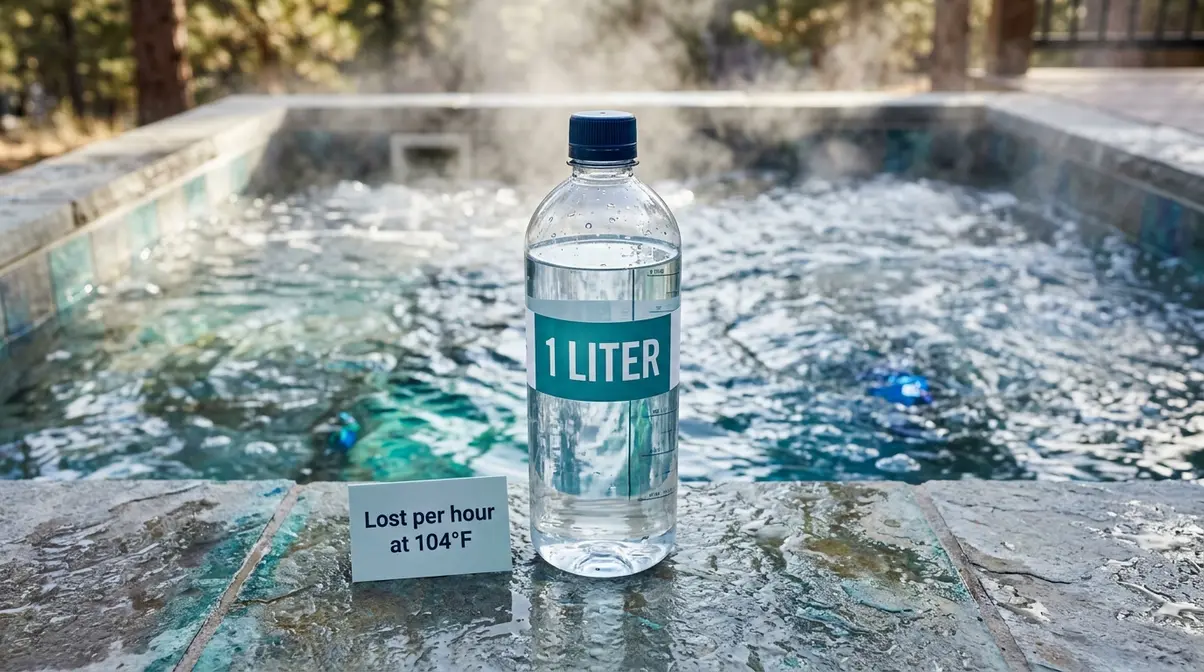
How much do you sweat in a hot tub? The numbers are more significant than most people expect. Under typical hot tub conditions (100–104°F water temperature, 15–30 minute soak), the body can lose between 0.5 and 1 liter of fluid per hour through sweating alone — a rate comparable to light jogging in warm weather (American College of Sports Medicine, 2007).
How much sweat you lose in a hot tub depends on several variables: water temperature, soak duration, air temperature, your individual sweat rate, and your pre-soak hydration status. Someone soaking at 104°F for 30 minutes in a warm outdoor environment could easily lose 500–750 ml of fluid — approaching a full standard water bottle — without ever feeling the sensation of sweating.
This quantification is what most competitor articles skip entirely. Knowing the approximate volume matters because it directly informs how much you need to drink before and after your soak to stay safely hydrated.
Why You Don’t Feel Yourself Sweating
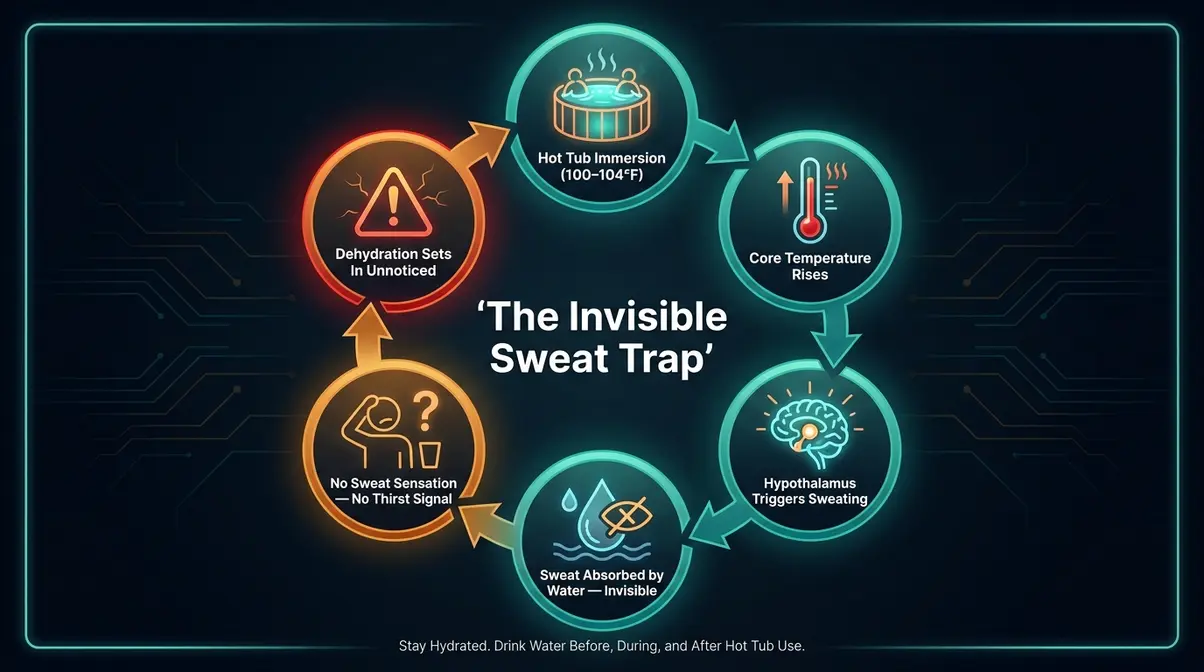
Here’s the core of what we call “The Invisible Sweat Trap”: the surrounding water completely suppresses your ability to perceive that you’re sweating.
Under normal circumstances, sweat evaporates from your skin surface, producing a cooling sensation and a tangible cue that your body is losing fluid. In a hot tub, that evaporation cannot occur — the water immediately absorbs any sweat your glands produce, preventing the evaporative feedback loop that would ordinarily signal to your brain that cooling is happening. You also can’t feel the fluid loss the way you would during exercise, because there’s no visible sweat on your skin, no sensation of dampness, and no physical exertion to associate with fatigue.
It’s worth noting that you do sweat in a hot shower, but to a lesser degree — shower water is typically cooler and exposure is shorter, so core temperature rises less dramatically. The hot tub’s sustained immersion at higher temperatures over longer durations is what amplifies the fluid loss significantly.
This perceptual blind spot is why The Invisible Sweat Trap is genuinely dangerous for casual soakers: by the time you feel thirsty or lightheaded, mild dehydration has already set in.
Health Risks: Dehydration & Safety

“Heat makes you sweat (even underwater), leading to sneaky dehydration. Want to avoid the hot tub hangover? Stick around for simple tips to stay hydrated and safe.”
The health risks of hot tub sweating are real but entirely manageable — provided you understand them and are following essential hot tub safety guidelines. Our team reviewed the available clinical literature and found that the three primary concerns are dehydration, hyperthermia, and cardiovascular stress, all of which compound when soakers ignore time and temperature limits.
Sneaky Dehydration: The Hidden Risk
Sneaky dehydration is the term hot tub communities have landed on for a very real phenomenon: significant fluid loss that occurs without the usual warning signals. Because The Invisible Sweat Trap suppresses the sensation of sweating, your body’s thirst mechanism — which already lags behind actual fluid deficit by about 1–2% of body weight — becomes even less reliable as a guide.
Mild dehydration (1–2% body weight fluid loss) impairs concentration, causes headaches, and produces the fatigue and brain fog many soakers describe as a “hot tub hangover.” At 2–3% fluid loss, dizziness and muscle cramping can occur. Research from the European Journal of Clinical Nutrition confirms that even mild dehydration measurably impairs cognitive and physical performance — and that hot, humid environments accelerate fluid loss beyond what most people anticipate.
Practical implication: Drink 16–20 oz (500–600 ml) of water before entering a hot tub, and keep a water bottle accessible during your soak. Alcohol and caffeinated beverages accelerate dehydration and should be avoided before or during soaking. Consult your doctor if you experience persistent post-soak dizziness or headaches, as these may indicate a more significant hydration or cardiovascular concern.
Overheating and Hyperthermia
Hyperthermia — an abnormally elevated body temperature — is the more serious risk that escalates when dehydration goes unaddressed. When your body can no longer cool itself effectively, core temperature climbs beyond safe thresholds. Symptoms begin around 100.4°F (38°C) core temperature and include nausea, confusion, rapid heartbeat, and flushing.
The U.S. Consumer Product Safety Commission (CPSC) recommends a maximum water temperature of 104°F (40°C) and advises limiting individual soaks to 15 minutes at that temperature before exiting to cool down. The CPSC has linked prolonged hot tub use at high temperatures to dozens of hyperthermia-related fatalities annually, with alcohol use identified as a compounding factor in a significant proportion of cases (CPSC Hot Tub Safety Guidelines).
Healthline’s review of hot tub safety notes that even at 100°F, core temperature can rise meaningfully within 20 minutes of immersion — reinforcing why timed soaks matter, not just temperature limits.
Who Needs to Take Extra Precautions
Certain groups face elevated risk and should consult a physician before regular hot tub use. Taking proper precautions can also help prevent skin issues like hot tub folliculitis and other complications:
- Pregnant individuals: Hot tub use in the first trimester is associated with increased risk of neural tube defects. The American College of Obstetricians and Gynecologists advises avoiding hot tubs during pregnancy.
- Cardiovascular conditions: Passive heating raises heart rate and dilates blood vessels, which can stress a compromised cardiovascular system. Anyone with heart disease, arrhythmia, or hypertension should get medical clearance first.
- Low blood pressure: Hot water causes peripheral vasodilation, which can cause blood pressure to drop sharply upon standing — a common cause of post-soak fainting.
- Diabetes: Peripheral neuropathy can impair the ability to accurately sense water temperature, increasing burn and hyperthermia risk.
- Children: Children’s thermoregulatory systems are less efficient. The CPSC recommends children use lower-temperature settings and soak for significantly shorter durations than adults.
Your 5-Step Hot Tub Safety Protocol
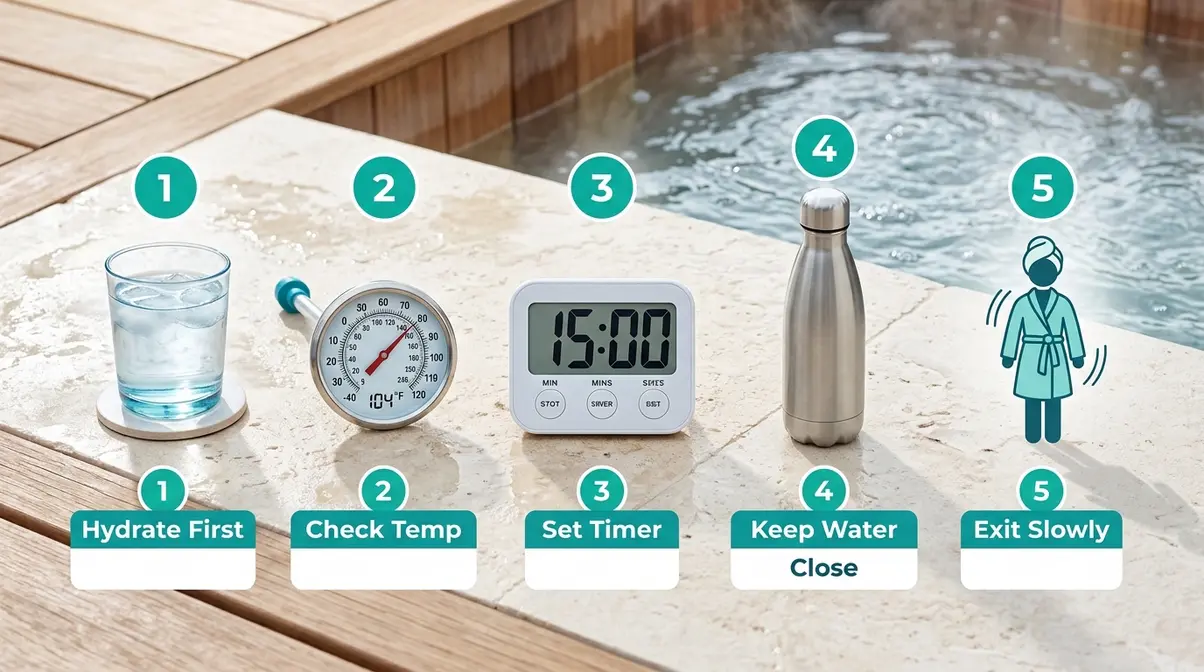
Follow this protocol every time you soak to prevent dehydration, overheating, and the dreaded hot tub hangover:
Step 1: Hydrate Before Entry
Drink 16–20 oz of water at least 15–30 minutes before getting in. Avoid alcohol for at least one hour prior.
Step 2: Set the Temperature Correctly
Keep water at or below 104°F (40°C). For longer, more frequent soaks, 98–102°F reduces thermal stress significantly.
Step 3: Limit Your Soak Time
Use 15-minute intervals as your guide at maximum temperature. Exit, cool down for 5 minutes, then re-enter if desired.
Step 4: Keep Water Accessible
Place a water bottle at the tub’s edge. Take small sips every 5–10 minutes — don’t wait until you’re thirsty.
Step 5: Exit and Cool Gradually
Stand slowly to prevent blood pressure drops. Cool down in a shaded area before showering, and drink another 8–16 oz of water after your soak.
Common mistake to avoid: Many soakers extend their soak because they feel comfortable — precisely because The Invisible Sweat Trap suppresses discomfort signals. Comfort is not a reliable gauge of safety. Use a timer.
Hot Tub vs. Sauna vs. Steam Room vs. Bath
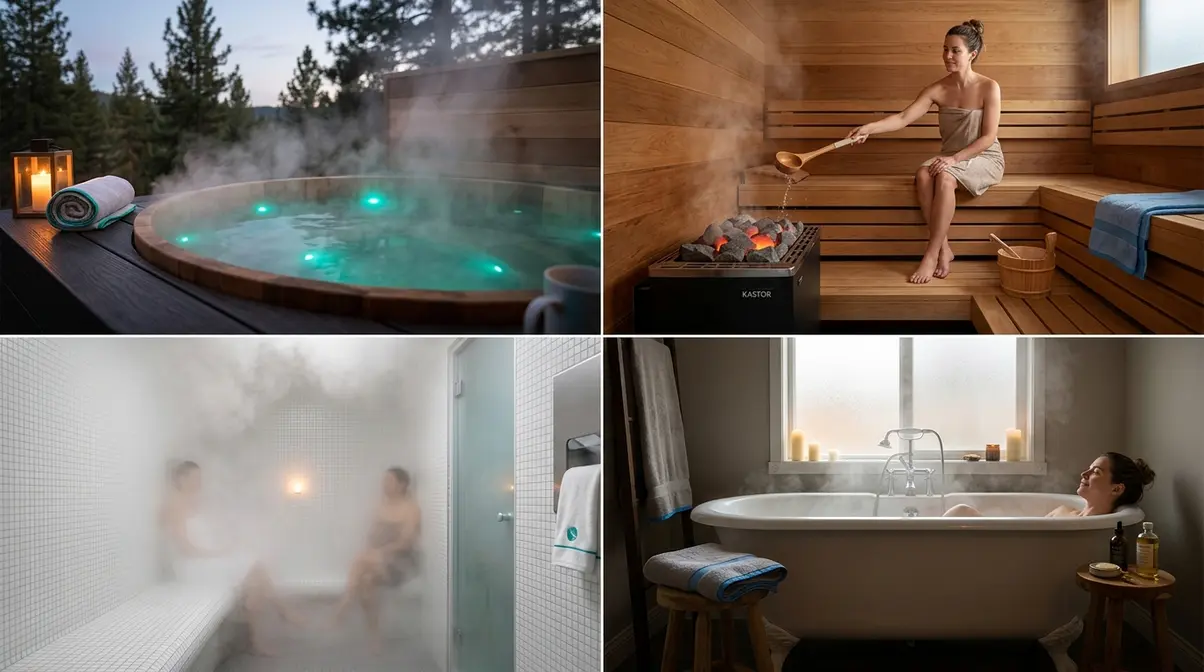
Understanding how hot tubs compare to other heat therapies helps you choose the right option for your goals — and calibrate your hydration strategy accordingly. Our team evaluated the clinical literature on passive heating modalities and found meaningful differences in both sweat rate and physiological stress across each environment.
Dry Heat vs. Wet Heat: The Key Difference
The fundamental distinction between a sauna and a hot tub is the medium through which heat is transferred to your body. In a sauna, dry air at 160–200°F heats your skin, and sweat evaporates freely — you can see it, feel it, and your body gets real-time cooling feedback. In a hot tub, water conducts heat approximately 25 times more efficiently than air, meaning your core temperature rises faster per minute of exposure, even though the absolute temperature is much lower.
This efficiency difference has a direct consequence for sweat: your body sweats in both environments, but the sauna’s evaporative freedom allows sweat to cool you more effectively. In a hot tub, sweat cannot evaporate — it’s immediately absorbed by the surrounding water. This is why the do you sweat more in a sauna or steam room question has a nuanced answer: saunas typically produce higher absolute sweat volumes because the environment allows continuous evaporation, driving the body to produce more sweat. A steam room, with its near-100% humidity, falls between the two — sweat occurs but evaporation is partially suppressed.
Which Therapy Makes You Sweat the Most?
Research indicates saunas generate the highest sweat rates, averaging 0.5–1.0 kg of fluid loss per 20-minute session in traditional Finnish sauna conditions (Leppäluoto et al., 2008, Annals of Clinical Research). Hot tubs produce lower but still significant fluid loss (0.5–1.0 L/hour), while steam rooms sit in a similar range to hot tubs. A hot bath at 104°F produces modest sweating — less than a hot tub, primarily because bath duration is typically shorter and the body is not fully immersed at sustained high temperatures.
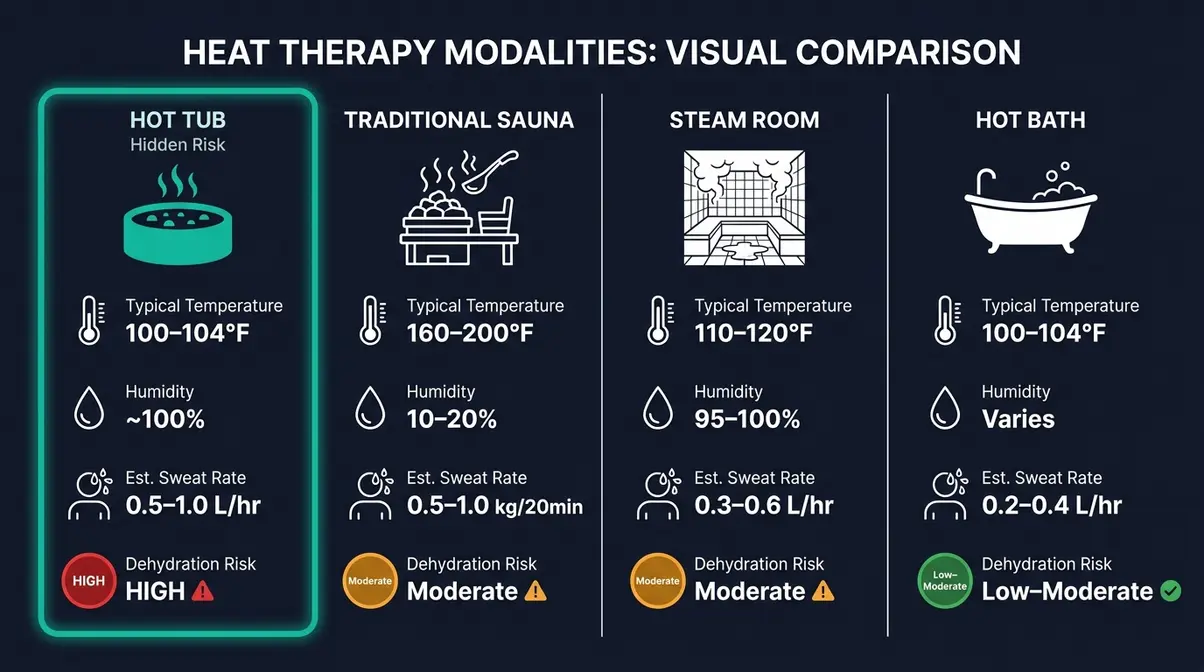
| Heat Therapy | Typical Temp | Humidity | Est. Sweat Rate | Evaporation | Dehydration Risk |
|---|---|---|---|---|---|
| Hot Tub | 100–104°F | ~100% (water) | 0.5–1.0 L/hr | None — absorbed by water | High (hidden) |
| Traditional Sauna | 160–200°F | 10–20% | 0.5–1.0 kg/20 min | Full | Moderate (felt) |
| Steam Room | 110–120°F | 95–100% | 0.3–0.6 L/hr | Minimal | Moderate |
| Hot Bath | 100–104°F | Varies | 0.2–0.4 L/hr | Minimal | Low–Moderate |
Choosing the Right Heat Therapy
Your choice of heat therapy should match your goal:
- Relaxation and muscle recovery: Hot tubs excel here. Hydrotherapy jets add therapeutic pressure massage that saunas and baths cannot replicate.
- Maximum cardiovascular benefit: Research from AARP’s health coverage and multiple clinical studies suggests both saunas and hot tubs confer cardiovascular benefits through passive heating — improved endothelial function, reduced blood pressure, and better circulation.
- Highest sweat volume: Traditional sauna, particularly Finnish-style with periodic water poured on heated stones (löyly), produces the most intense sweating per session.
- Lowest dehydration risk: A hot bath, due to shorter duration and lower sustained temperature, carries the least dehydration risk — though it also delivers less cardiovascular benefit.
For most users, the hot tub offers the best balance of accessibility, comfort, and therapeutic benefit — provided the safety protocol above is followed consistently.
Debunking Hot Tub Health Myths
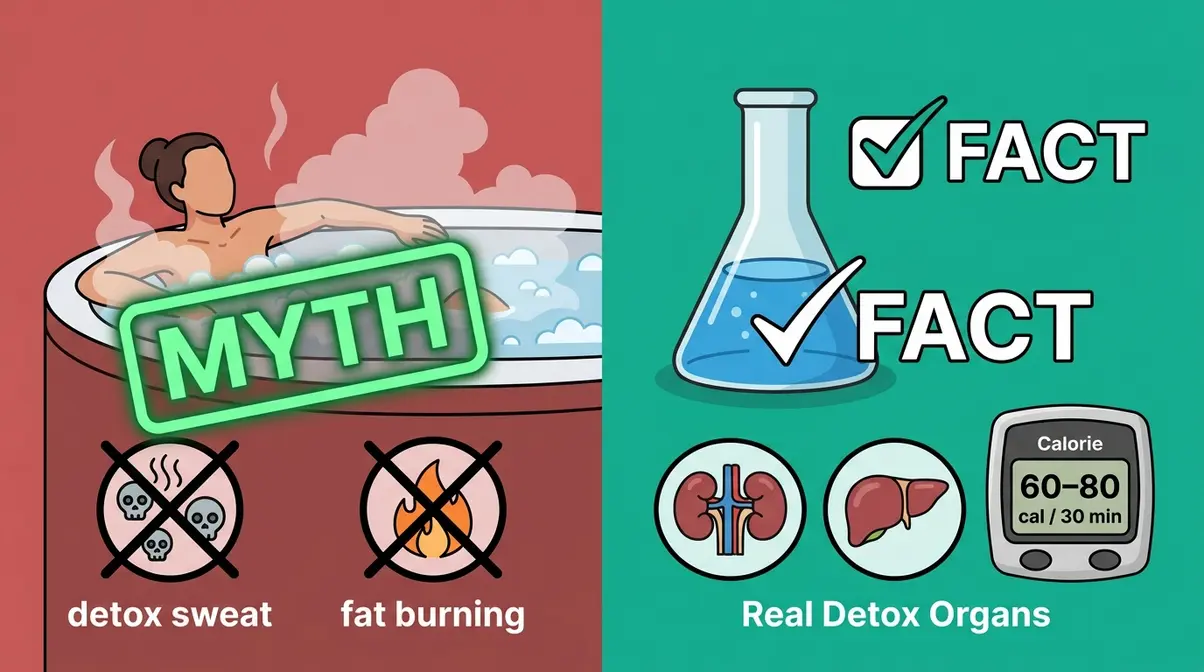
Several popular claims about hot tub sweating are either misleading or outright false. While there are many legitimate hot tub health benefits, detoxing and rapid weight loss are not among them. Because this is a YMYL topic, getting the science right matters — misinformation can lead people to make genuinely harmful decisions.
Do you sweat out toxins in a hot tub?
No — you do not meaningfully sweat out toxins in a hot tub. The idea that you sweat out impurities is one of the most persistent wellness myths. Human sweat is approximately 99% water, with trace amounts of sodium, potassium, and a small number of other compounds. Your kidneys filter roughly 180 liters of blood per day and excrete waste through urine; your liver metabolizes fat-soluble toxins continuously. These organs handle the body’s detoxification — sweat contributes negligibly.
A 2022 review published in the Journal of Occupational and Environmental Medicine confirmed that while sweat contains trace levels of some heavy metals, the amounts are clinically insignificant compared to renal excretion (Sears & Genuis, 2022). The claim that you can “flush any toxins” through hot tub sweating has no credible physiological basis. When you see “detox” language in hot tub marketing, treat it as a red flag, not a benefit.
How many calories do 30 minutes in a hot tub burn?
A 30-minute hot tub soak burns approximately 60–80 calories for an average adult. When discussing calories burned in a hot tub, it is essential to look at the data. A 2016 study from Loughborough University found that an hour of passive immersion in a 40°C (104°F) bath burned approximately 140 calories, roughly equivalent to a 30-minute walk (Faulkner et al., 2017, Temperature).
That’s a real metabolic effect, but it’s modest, and it comes with an important caveat: the calorie burn is driven primarily by the cardiovascular work of thermoregulation, not by fat metabolism. Critically, much of the apparent “weight loss” after a soak is water weight — fluid lost through sweating that returns the moment you rehydrate. GQ’s analysis of hot tub vs. sauna benefits correctly distinguishes between temporary water weight reduction and actual caloric expenditure.
Does sweating mean you’re burning fat?
No — sweating is a cooling response, not a fat-burning signal. Fat metabolism (lipolysis) is driven by caloric deficit and exercise intensity, not temperature. You can sweat heavily without burning significant fat, and burn significant fat without sweating much.
The association between sweating and fat loss is a cultural myth reinforced by the temporary scale drop after any sweat-heavy activity. That number goes back up with your next glass of water — the fat does not. Actual fat loss requires a sustained caloric deficit over time, and sweating alone does not create it.
How Your Sweat Affects Hot Tub Water Quality
Every time you soak, your body introduces sweat, body oils, lotions, and organic compounds into the water. Incorporating regular hot tub water maintenance tips is a chemistry reality that directly affects your tub’s sanitizer efficiency and the clarity of your water.
What Sweat Does to Your Water Chemistry
When sweat enters hot tub water, it introduces nitrogen-containing compounds — primarily urea and ammonia — that react with chlorine or bromine to form combined chlorine (chloramines). Chloramines are the compounds responsible for the sharp chemical smell some people associate with “too much chlorine” — ironically, that smell indicates insufficient free chlorine, not excess. The sanitizer has been consumed reacting with organic waste rather than remaining active against pathogens.
This process is sometimes called sanitizer demand: the more bathers, the more sweat and body oils enter the water, and the faster your free chlorine or bromine is depleted. The CDC recommends maintaining free chlorine levels at 1–3 ppm in hot tubs (higher than pools due to warmer temperatures that accelerate chemical reactions and bacterial growth) to ensure effective pathogen control (CDC Healthy Swimming Guidelines, 2026).
Why put tennis balls in a hot tub?
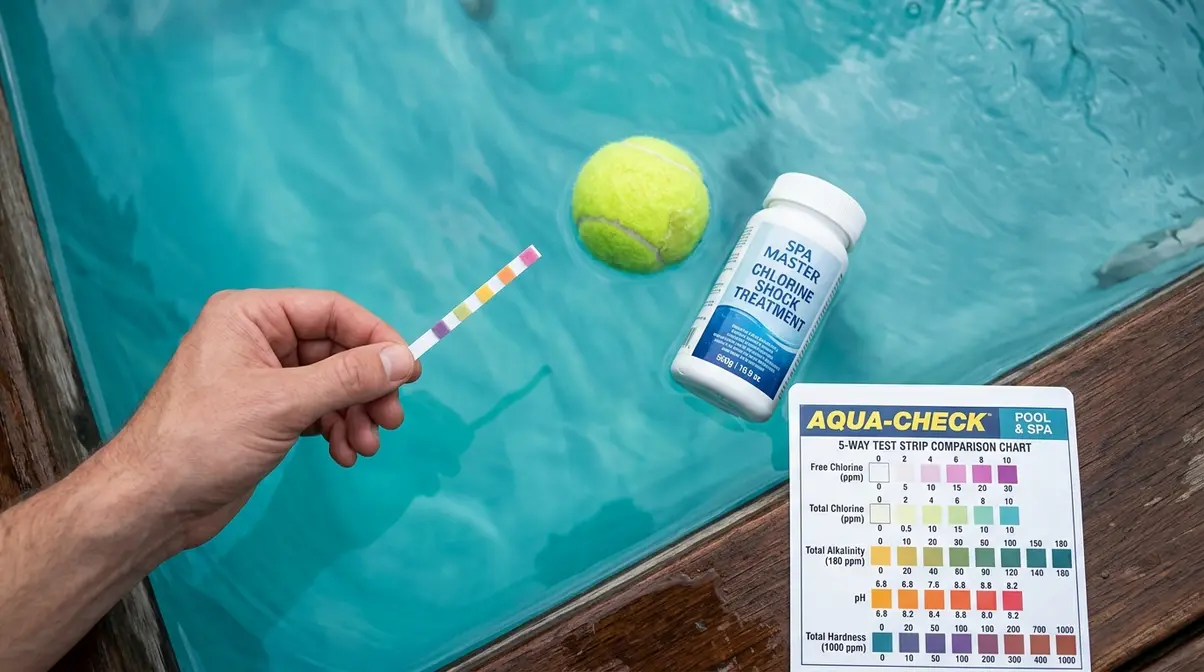
Tennis balls are placed in a hot tub to absorb body oils, sweat residue, and lotions from the water surface. The felt fabric on a tennis ball acts as a mechanical oil trap, reducing the organic load that contributes to foam, cloudy water, and accelerated sanitizer depletion. If you are wondering how to eliminate hot tub foam, this is a widely used low-cost maintenance hack in the hot tub owner community. Use clean, unused tennis balls and replace them every few weeks, as they become saturated with absorbed oils over time.
Simple Maintenance Habits to Counteract Sweat
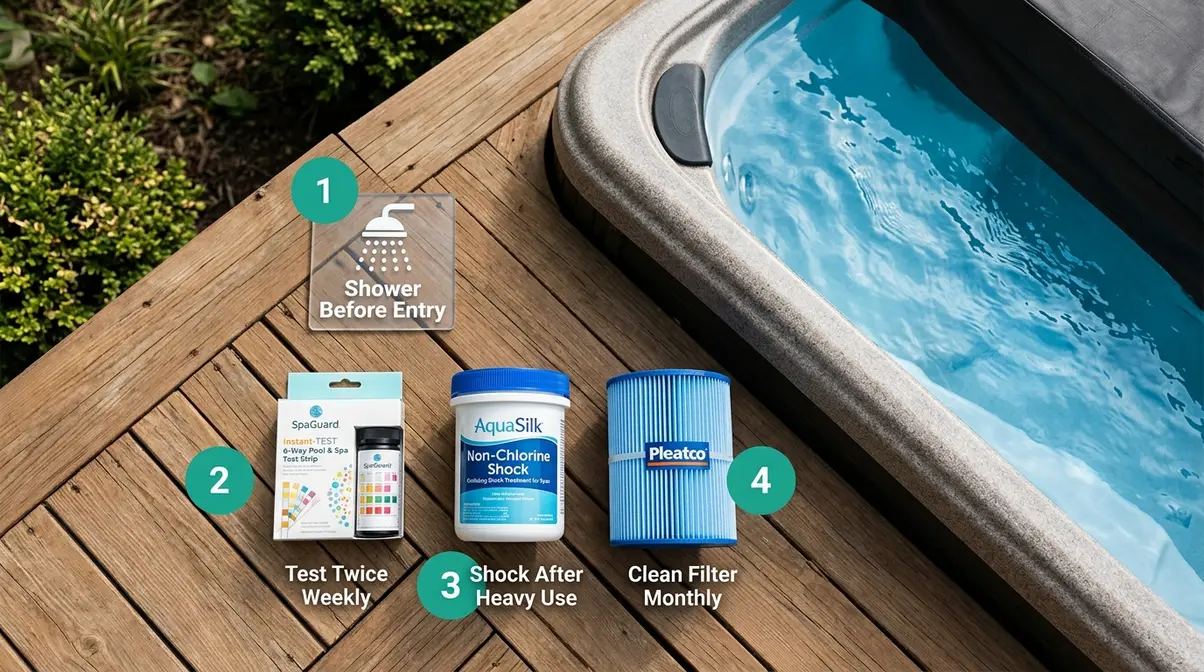
Across hot tub owner communities, the consistent feedback is that a few simple habits dramatically reduce sweat-related water quality issues:
1. Shower Before Soaking
Rinsing off body oils, lotions, and sweat before entering reduces the organic load your sanitizer must handle. This single step can meaningfully extend the interval between chemical adjustments.
2. Test Your Water Twice Weekly
Sweat and body oils deplete sanitizer faster than most owners expect — especially after heavy use or multiple bathers. Use a reliable test kit or strips to monitor free chlorine/bromine, pH, and alkalinity.
3. Shock Your Tub After Heavy Use
A non-chlorine oxidizing shock treatment after multiple-bather sessions breaks down organic compounds (including sweat byproducts) that routine sanitizer levels can’t fully address.
4. Clean Your Filter Regularly
Sweat compounds and body oils clog filter media faster than debris alone. Rinse your filter every 2–4 weeks and perform a deep chemical soak monthly.
For a deeper look at balancing water chemistry and choosing the right sanitizer system, our complete guide to hot tub water care walks through each parameter in detail.
Frequently Asked Questions
Can norovirus survive in a hot tub?
Norovirus can survive in a hot tub if sanitizer levels are inadequate. The CDC notes that norovirus is relatively resistant to chlorine compared to other pathogens — it requires maintained free chlorine levels of at least 1–3 ppm to be effectively inactivated in warm water environments (CDC, 2026). Hot tub water, which is warmer than pool water, depletes chlorine faster, making consistent chemical testing critical. If you or another user has recently had a gastrointestinal illness, the CDC recommends a hyperchlorination shock treatment before anyone else uses the tub to ensure total safety.
Are hot tubs bad for inflammation?
Hot tubs can reduce inflammation when used appropriately. Passive heating promotes vasodilation and increased blood flow, which research associates with reduced markers of systemic inflammation and improved endothelial function. However, for acute injuries like sprains or fresh muscle tears, heat can worsen localized inflammation, making cold therapy more appropriate.
What exercise burns the most belly fat in the pool?
High-intensity aquatic interval training — alternating sprint swimming with active recovery — is the most effective pool exercise for overall fat loss, including abdominal fat. No single exercise targets belly fat exclusively; fat loss is systemic and driven by caloric deficit. Pool-based HIIT burns 400–600 calories per hour according to Harvard Medical School, while protecting joints from impact stress. Simply soaking in a hot tub burns far fewer calories and should not be considered a fat-loss strategy.
What is the laziest way to burn calories?
Passive hot tub immersion is one of the most accessible low-effort ways to burn modest additional calories — approximately 60–80 per 30 minutes, according to Loughborough University data. Other options include cold exposure (activates brown fat thermogenesis), standing versus sitting, and light walking. None of these replace structured exercise for meaningful caloric expenditure. For context, a single 30-minute brisk walk burns roughly 150–200 calories based on CDC physical activity data — two to three times more than a hot tub soak of equivalent duration.
Final Thoughts on Hot Tub Sweating
So, do you sweat in a hot tub? Absolutely, and understanding this transforms a passive pleasure into a genuinely health-conscious habit. Hot tub sweating is real, significant, and completely invisible — your body can lose up to a liter of fluid per hour at 104°F, and the surrounding water ensures you’ll never feel it happening. That’s the core of The Invisible Sweat Trap, and it’s the reason a post-soak headache or wave of fatigue isn’t a coincidence.
The science here is well-established. Passive heating at hot tub temperatures produces cardiovascular effects comparable to moderate exercise, delivers measurable (if modest) caloric expenditure, and genuinely supports circulation and muscle recovery. What it does not do is flush toxins, burn significant fat, or replace active exercise — those claims don’t hold up to clinical scrutiny.
Your action plan is straightforward: hydrate before you soak, limit sessions to 15-minute intervals at maximum temperature, keep a water bottle at the tub’s edge, and test your water chemistry twice weekly to counteract the sanitizer demand that every soaker creates. Start with one of these habits this week — pre-soak hydration takes 30 seconds and makes the single biggest difference in how you feel afterward.