What’s in this guide
Home ›Maintenance And Troubleshooting
Your walk-in tub — a sealed bathing unit designed for barrier-free entry and exit — is very likely not malfunctioning as badly as you fear. In most cases, a walk-in tub that turns on by itself is doing exactly what it was engineered to do. The two most common reasons behind this are a scheduled self-cleaning cycle and a worn pneumatic air switch, both of which you can diagnose in under five minutes with the right information.
If you are searching for a walk-in tub turns on by itself fix, the good news is that most cases resolve without professional help — and without spending more than $40 on parts. Left undiagnosed, either issue can escalate. A stuck air switch draws continuous power to the jet motor, shortening its lifespan, while a running faucet can waste over 3,000 gallons of water per year — more than 250 gallons per month — according to EPA WaterSense data. Our team reviewed reports from licensed plumbers and manufacturer documentation from Kohler and Ella’s Bubbles to compile these steps.
By the end of this guide, you will know exactly which problem you have, how to fix it safely at home, and when the repair warrants a licensed professional. We cover immediate safety steps, the purge cycle vs. malfunction diagnostic, jet and faucet fixes, and a cost breakdown if replacement becomes necessary.
A walk-in tub that turns on by itself is usually running an automatic purge cycle — a built-in bacteria-prevention feature that activates roughly 20 minutes after each bath to clear residual water from jet lines (Ella’s Bubbles, 2024).
- Purge cycle: Normal self-cleaning behavior — jets run briefly (about 2 minutes), then stop on their own
- Faulty air switch: The most common genuine malfunction — causes jets to activate randomly at unpredictable times
- Running faucet: Usually a worn valve cartridge — fix with a $10–$40 replacement part
- Use “The Purge-or-Problem Test” (below) to identify your issue in under 60 seconds
Step 1: Cut the Power — Safety Protocol
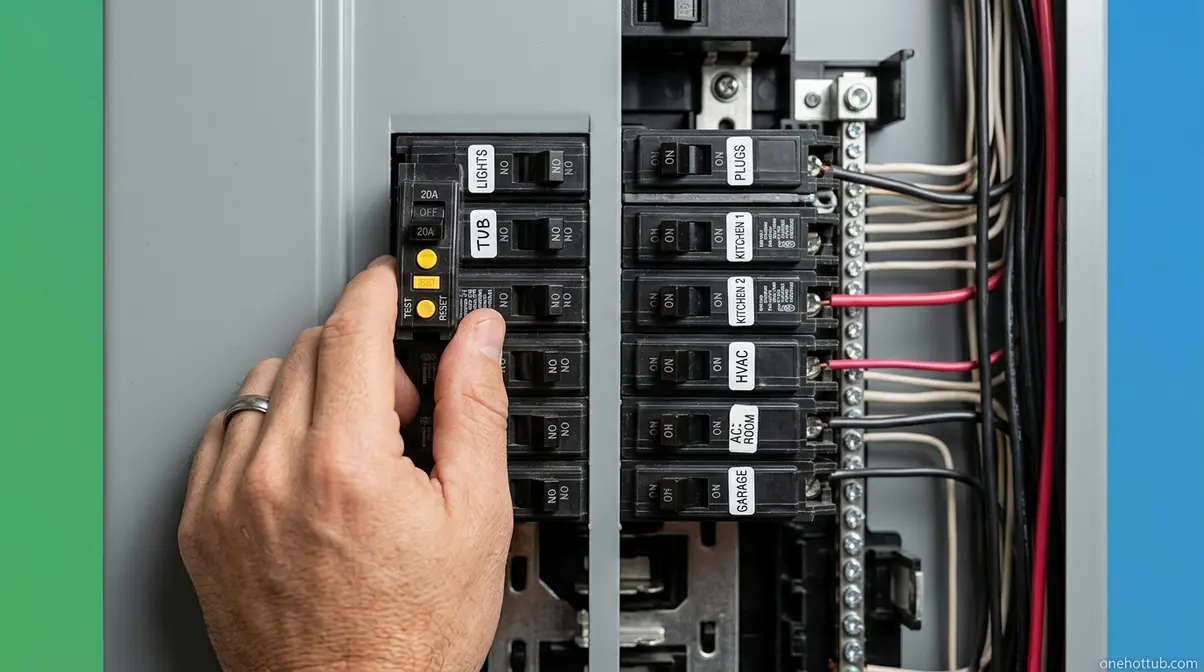
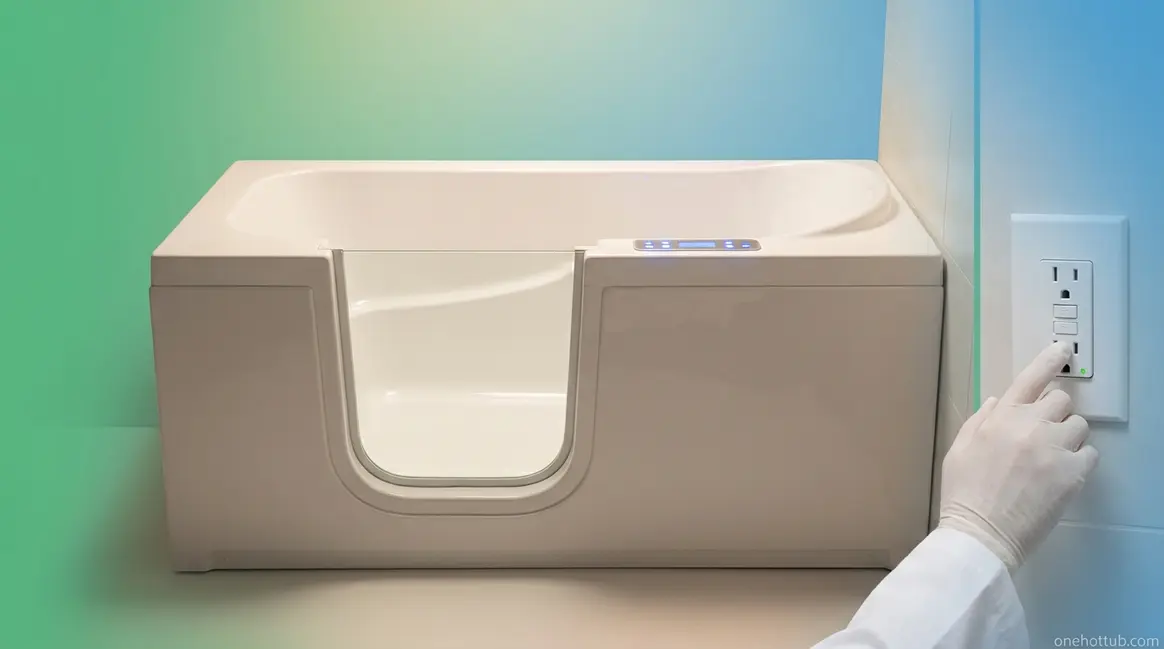
Walk-in tub owners who discover their tub running unexpectedly should immediately locate the Ground Fault Circuit Interrupter (GFCI) breaker — the dedicated safety circuit required by NEC electrical code for all tub installations. Cutting this breaker stops all power to the tub within seconds and is the only guaranteed immediate stop mechanism available to a homeowner. A CPSC recall for walk-in tub electrical hazards confirmed that walk-in tub electrical components can become stuck in the “on” position — meaning this is not hypothetical risk, but a documented hazard (CPSC, 2015). Cut power first. Diagnose second.
When your walk-in tub spontaneously starts up without warning, the best first move is the one a frustrated homeowner on a plumbing forum put perfectly:
“Go to basement. Find the breaker box. Kill the breakers until you shut off the demon. Then go to Sleep and find out how to use the tub tomorrow.”
That instinct is exactly right. Before diagnosing anything, cutting power to your walk-in tub is the only guaranteed way to stop it safely.
⚠️ Safety Warning: Before attempting any repair, cut all power to your walk-in tub at the GFCI breaker AND shut off your main water supply. Do not touch any electrical components with wet hands or while standing in water. If you are unsure about any step, stop immediately and call a licensed electrician or plumber. This article is for informational purposes only. Results may vary based on tub brand, model, and installation.
- Tools You’ll Need:
- Flashlight
- Dry towel (stand on this — do NOT stand on a wet floor near the tub)
- Your home’s electrical panel location
- Multimeter (optional — useful for later diagnostic steps)
Before any numbered steps: locate your main water supply shutoff valve — typically near the water meter in a basement, crawl space, or utility room. Turn it clockwise to close. This stops any faucet-related water flow immediately, independent of the electrical issue.
How to Locate and Trip Your GFCI Breaker
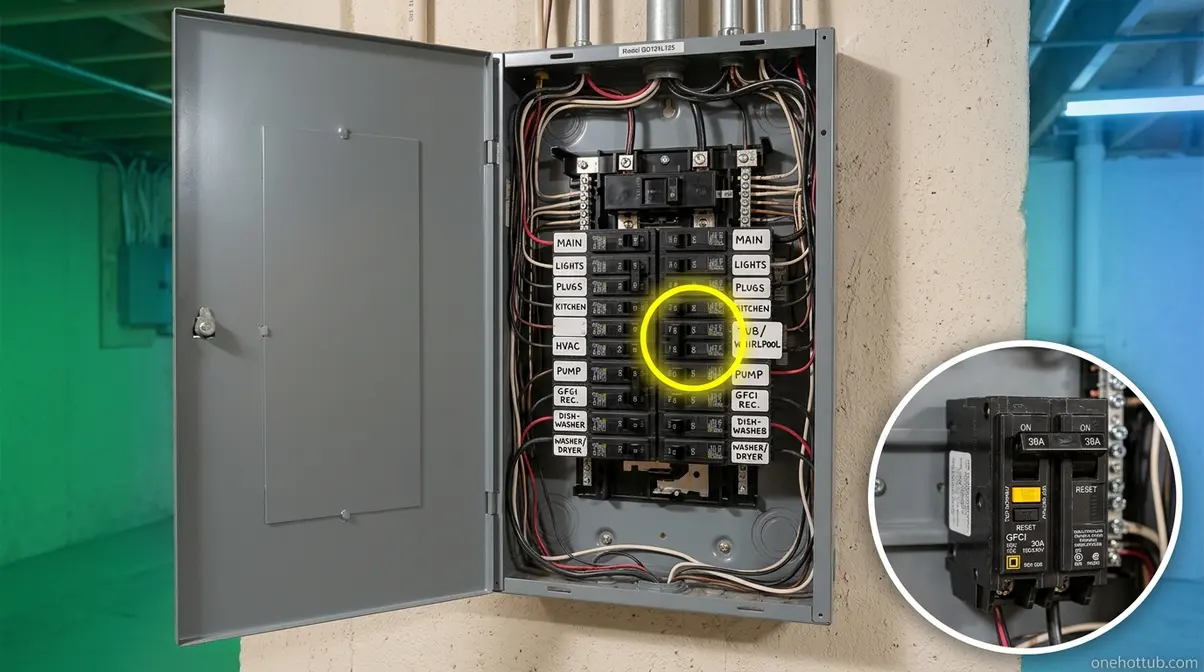
The Ground Fault Circuit Interrupter (GFCI) breaker is the dedicated safety circuit that powers your tub — required by NEC electrical code because water and electricity are a lethal combination. Here is how to safely disconnect power to your walk-in tub:
- Open your main electrical panel. It is usually a gray metal box mounted on a wall in the basement, garage, or utility room.
- Locate the GFCI breaker for the tub circuit. Look for a breaker labeled “TUB,” “BATH,” or “WHIRLPOOL” — or one with a TEST/RESET button on its face. GFCI breakers are also sometimes located within 5–10 feet of the tub itself (a code-compliant alternative placement).
- Flip it firmly to OFF.
- Wait 60 seconds. This allows capacitors in the control board to fully discharge.
- Verify the tub has stopped.
If your panel is unlabeled, flip breakers one at a time and listen for the tub to stop. Once identified, label that breaker for the future. If you cannot identify the correct breaker at all, flip the main breaker — this cuts power to the entire home but guarantees the tub stops. Treat this as a last resort.
Once the tub is powered down, a quick control panel reset often resolves minor glitches — here’s how to do it correctly.
Where Is the Reset Button on a Walk-In Tub?
After the 60-second wait, flip the GFCI breaker back to ON. The tub’s control panel will reboot automatically — most models flash lights, beep, or briefly display “888” as a startup test pattern. This is normal behavior, not a new problem.
Most walk-in tubs do not have a dedicated reset button. The GFCI breaker IS the reset mechanism. If someone online told you to find a reset button on the tub itself, they are likely referring to the breaker — and the steps above are all you need.
- Interpreting the outcome:
- Tub does NOT restart on its own after reset: The issue was likely a one-time power surge or phantom voltage event. Monitor for 24 hours before further action.
- Tub DOES restart spontaneously within minutes: Proceed to the next section for a full diagnosis using “The Purge-or-Problem Test.”
- An “Sn” or “SN” error code appears on the display: This indicates a flow sensor or temperature sensor fault — the tub’s electronics are detecting unexpected water movement. This is covered in detail in the faucet section below. Note this terminology if you have been searching for answers about “throwing an Sn code.”
For Kohler and American Standard walk-in tubs specifically, hold the jet button for 3 seconds after power is restored to clear any stored error state. Consult your model’s manual if a different startup sequence is described.
With the tub reset and stable, you are ready to run “The Purge-or-Problem Test” — a 4-question diagnostic that tells you in under 60 seconds whether your tub is malfunctioning or just cleaning itself.
Purge Cycle vs. Malfunction: The Most Common Cause
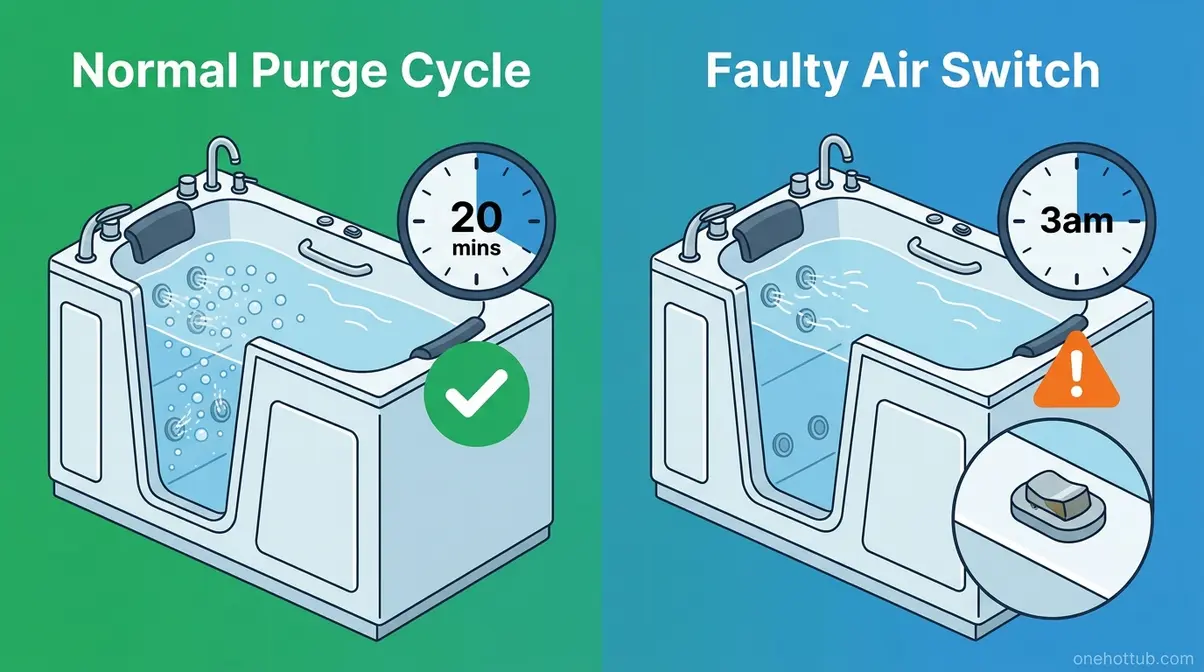
If your walk-in tub spontaneously starts up, the fix depends entirely on which of two causes you are dealing with: a normal automatic purge cycle, or a genuinely malfunctioning pneumatic air switch. Ella’s Bubbles documents that its auto-purge feature engages 20 minutes after the pump is turned off and runs for approximately 2 minutes (Ella’s Bubbles, 2024) — a feature that the vast majority of alarmed homeowners have never been told about. Knowing which situation you are in determines whether you need to do absolutely nothing, or replace a $15–$40 part.
What the Automatic Purge Cycle Is
The automatic purge cycle is a built-in self-cleaning function that runs the blower motor after each bath to push residual water out of the air jet lines before bacteria can colonize the warm, stagnant water. Ella’s Bubbles documents that the feature engages 20 minutes after the pump is turned off and runs for approximately 2 minutes to clearing residual water from jet lines (Ella’s Bubbles, 2024). Kohler’s technical documentation confirms a similar automatic purge mode that activates when the water level falls below the tub’s level sensors, with the blower running at low speed until the lines are clear (Kohler, 2024).
The reason this feature exists is not trivial. The CDC confirms that hot tub and spa water temperatures are highly favorable for Legionella bacteria growth — the same nasty bacteria responsible for Legionnaires’ disease — making purge cycle maintenance a genuine public health imperative, not an engineering quirk (CDC, 2023). The purge cycle blows residual water out of the lines before it can stagnate and become a health risk.
As the infographic below illustrates, the purge cycle follows a predictable timeline after every bath.
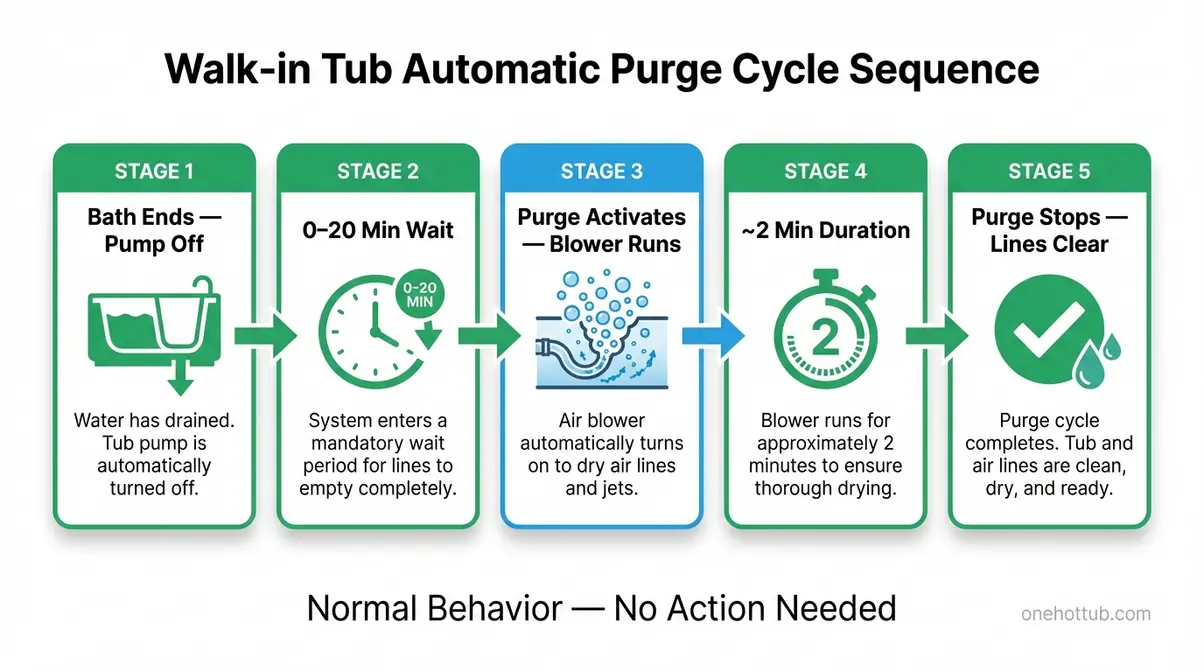
Caption: The automatic purge cycle activates roughly 20 minutes after draining, runs the blower motor for about 2 minutes, then stops — no water fills the tub.
What does it sound and look like? The blower runs briefly, the jets may bubble with air, and then it stops on its own. No water enters the tub. If your tub turned on approximately 20 minutes after your last bath, ran for a minute or two, and then stopped — you do not have a problem. You have a properly functioning tub. Learn more about why hot tub jets activate automatically if you want the full technical background.
But what if your tub turns on at completely random times — not just 20 minutes after a bath? That is when you need “The Purge-or-Problem Test.”
The Purge-or-Problem Test: 4 Questions
“The Purge-or-Problem Test” is a 4-question diagnostic framework that tells you in under 60 seconds whether your walk-in tub is self-cleaning or genuinely malfunctioning. Across homeowner forums and professional plumbing communities, the consistent finding is that most panicked homeowners land on Question 1 — meaning their tub is perfectly fine. Answer each question in order and follow the indicated path.
Use the diagnostic flowchart below to quickly identify your tub’s specific issue.
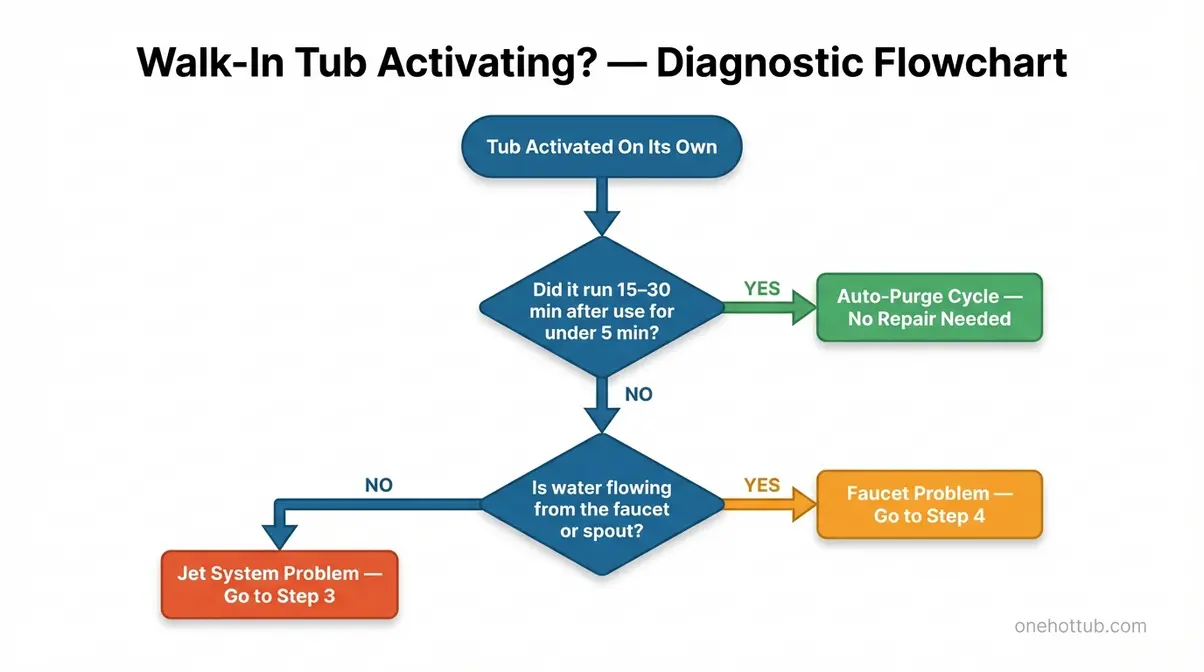
Caption: This troubleshooting flowchart maps all four diagnostic paths — from normal purge cycle to air switch failure, valve cartridge wear, and electrical surge events.
- Did the tub turn on approximately 20 minutes after your last bath, run briefly (1–2 minutes), then stop on its own?
- → YES: Normal purge cycle. No action needed. Your tub is self-cleaning.
- → NO: Proceed to Question 2.
- Did the jets activate with NO water in the tub, at a completely random time of day unrelated to recent bathing?
- → YES: Likely a faulty pneumatic air switch. See the next section.
- → NO: Proceed to Question 3.
- Is it the faucet running continuously — water actually filling the tub — rather than the jets?
- → YES: Likely a worn valve cartridge. Skip to the faucet section below.
- → NO: Proceed to Question 4.
- Did the tub activate shortly after a storm, power outage, or electrical surge?
- → YES: Likely phantom voltage or a control board reset event. Repeat the GFCI reset from Step 1 and monitor for 24 hours. If activation recurs, call a licensed electrician.
- → NO: Contact your manufacturer’s service line with your model number.
Note that “The Purge-or-Problem Test” is a diagnostic starting point, not a guarantee. Tubs with multiple simultaneous issues may require professional diagnosis. However, for the overwhelming majority of cases reported by walk-in tub owners, Questions 1 and 2 resolve the mystery.
If “The Purge-or-Problem Test” points to a faulty air switch — the most common genuine malfunction — here is how to inspect and replace it.
Inspect and Replace a Faulty Air Switch
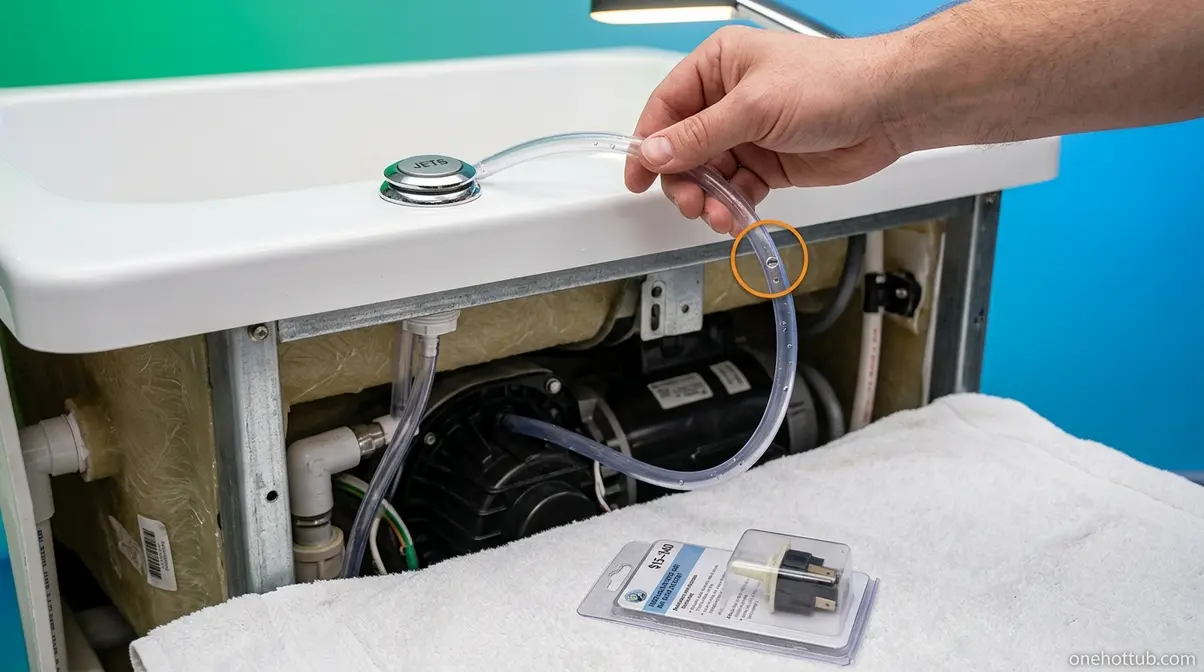
PresAir, a leading spa air switch manufacturer, identifies a malfunctioning air switch as the primary culprit when jets fail to shut off or activate unexpectedly — and their troubleshooting a faulty air switch guide confirms two specific failure modes (PresAir, 2024). The pneumatic air switch — a pressure-sensitive button that controls the jet motor without direct electrical contact — can fail when: (a) moisture infiltrates the clear tubing and triggers a false activation signal, or (b) the button mechanism sticks in the “on” position.
The diagram below shows the air switch components and where moisture typically accumulates.
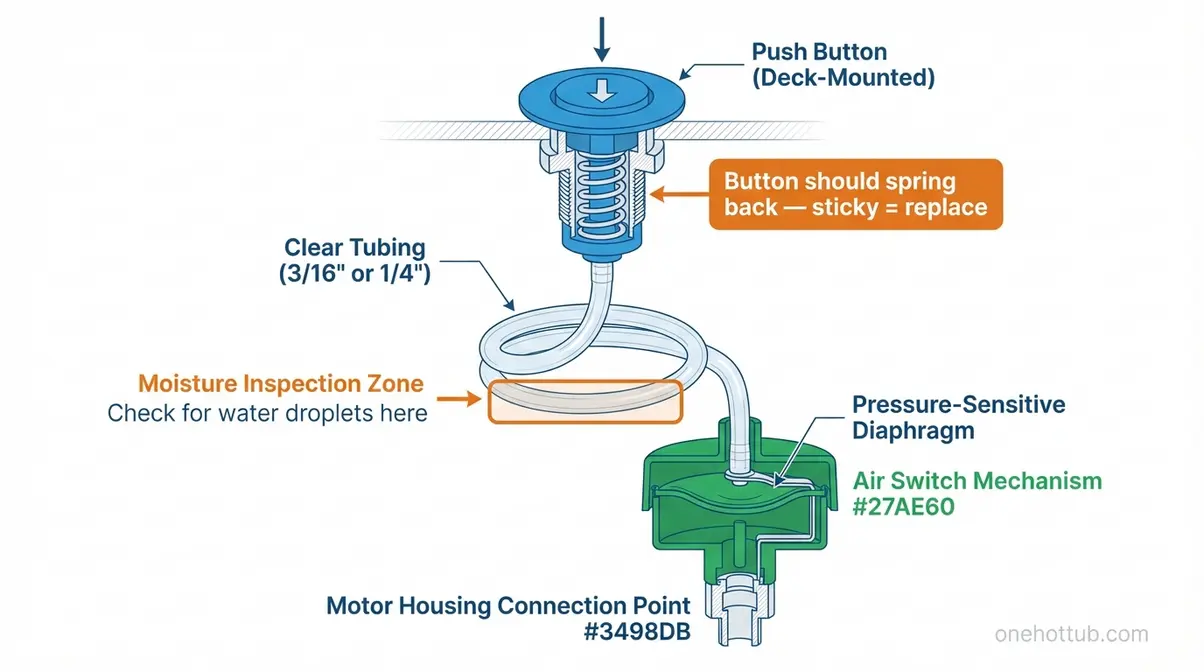
Caption: Moisture in the clear tubing connecting the air switch button to the motor is the most common cause of random jet activation in walk-in tubs.
Inspection steps (GFCI breaker must be OFF before starting):
- Locate the air switch — it is the push-button on the tub’s deck or wall panel, often labeled “JETS.”
- Trace the clear tubing running from the button to the motor housing.
- Inspect for water droplets, kinks, or cracks in the tubing.
- If moisture is present, disconnect the tubing, blow it out with compressed air or a hand pump, and reconnect. Restore power and test.
- If the button feels sticky or fails to spring back after pressing, the switch mechanism itself is faulty and requires replacement.
Replacing the air switch: Replacements are widely available online for $15–$40. Match by tubing diameter — the most common sizes are 3/16″ and 1/4″. Replacement requires no electrical work because the switch is pneumatic (air-powered), not wired directly to the motor circuit. Difficulty level: moderate, as it requires accessing the underside of the tub deck. For American Standard Liberation walk-in tubs specifically, moisture in the air button tubing is the most frequently cited cause of spontaneous jet activation, per licensed plumber reports reviewed on JustAnswer.
If your tub is a whirlpool model (water jets) rather than an air-jet model, the relevant component is the pump motor relay rather than an air switch. You can troubleshoot a cycling pump using the same diagnostic logic.
If “The Purge-or-Problem Test” pointed you to Question 3 — a faucet running continuously — the fix is a mechanical plumbing issue, not an electrical one.
Faucet Won’t Shut Off: Cartridge and Valve Fixes
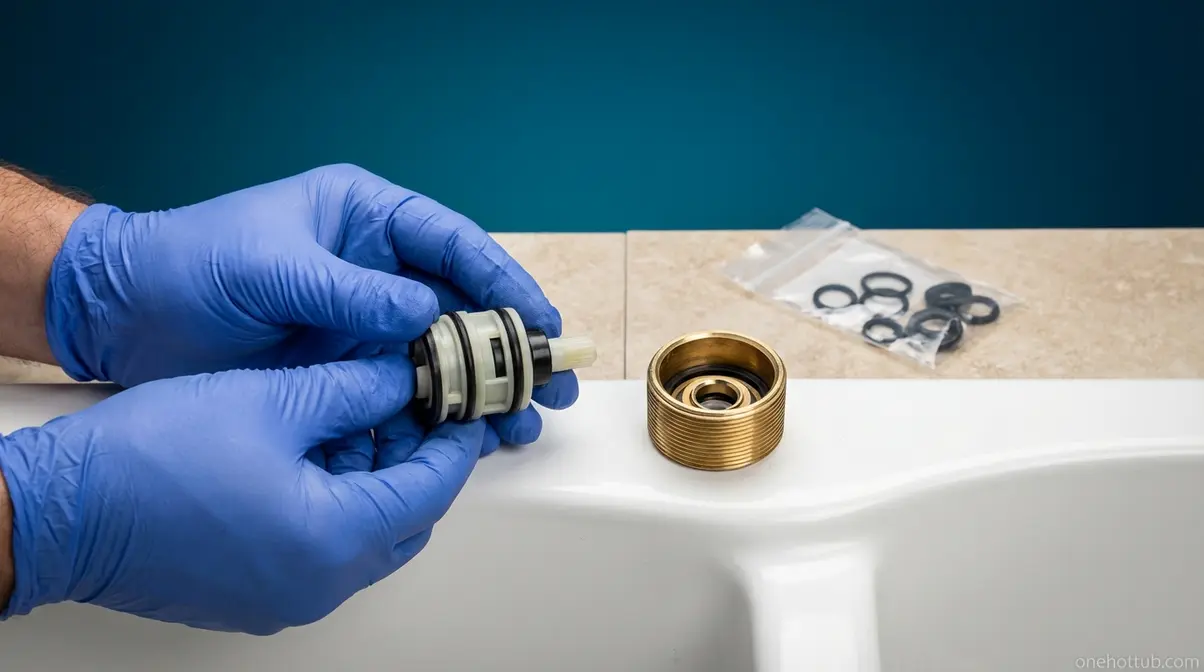
A continuously running walk-in tub faucet is a mechanical plumbing issue, not an electrical one — and it is almost always caused by a worn valve cartridge or degraded O-rings inside the faucet handle. Unlike the jet activation issue above, this problem involves water actively entering the tub, which means time matters: a dripping faucet running at one drip per second wastes over 3,000 gallons of water per year, according to EPA WaterSense data. The fix requires shutting off your main water supply (covered in Step 1), removing the faucet handle, and installing a matching replacement cartridge.
Cartridge, O-Ring, or Error Code?
A bathtub faucet that will not shut off almost always traces back to one of three specific components. Identifying the right one before ordering parts saves both time and money:
- Worn Valve Cartridge: The valve cartridge — the internal mechanism that controls water flow through your faucet handle — wears out from mineral buildup and repeated use over time. Signs: the faucet drips even when the handle is fully closed, or the handle feels loose and no longer stops water flow cleanly.
- Degraded O-Rings: The rubber O-rings that seal the cartridge dry out and crack with age. Signs: water seeping around the base of the handle rather than dripping from the spout.
- Sn/SN Error Code: An “Sn” or “SN” error code on the digital control display indicates a flow sensor or temperature sensor fault — the tub’s electronics are detecting water movement when none should be present. This is a control board or sensor issue, not a cartridge problem, and requires manufacturer service or a licensed plumber.
In rare cases, NEMA definition of phantom voltage — an unexpected, capacitively coupled voltage on a non-electrically connected conductor — can cause false flow sensor readings that trigger an Sn code without any genuine plumbing fault (NEMA, 2020). A simple GFCI reset from Step 1 resolves this scenario.
For Kohler walk-in tubs specifically, the faucet cartridge part number is typically found on a sticker inside the access panel — photograph it before ordering a replacement to ensure exact compatibility.
Once you have confirmed a worn cartridge or O-ring is the culprit, replacement is a straightforward DIY repair — here is how to do it step by step.
Step-by-Step Valve Cartridge Replacement
Tools needed: Adjustable wrench, Phillips screwdriver, flathead screwdriver, replacement cartridge (Moen, Delta, and Kohler each use proprietary cartridges — match brand and model number), plumber’s grease, dry towel.
Estimated time: 30–60 minutes for a DIY intermediate.
- Shut off the main water supply (reminder from Step 1 — clockwise to close).
- Remove the decorative cap on the faucet handle by prying gently with a flathead screwdriver.
- Unscrew the handle screw and pull the handle straight off.
- Remove the cartridge retaining nut using an adjustable wrench.
- Pull the old cartridge straight out. Note its orientation and photograph it before removing — correct re-insertion direction matters.
- Insert the new cartridge in the same orientation. Apply a thin coat of plumber’s grease to the O-rings before seating it.
- Reassemble in reverse order. Restore the water supply and test.
You can diagnose control panel error codes in greater detail if the cartridge swap does not resolve the running water.
| Part | Typical Cost | Where to Buy |
|---|---|---|
| Replacement cartridge | $10–$40 | Hardware store or manufacturer website |
| O-ring kit | $5–$15 | Hardware store |
| Plumber’s grease | $5–$8 | Hardware store |
After reassembly: Turn the supply on only halfway before fully opening. This prevents water hammer from damaging the new cartridge. If the cartridge body or valve seat shows visible corrosion, the entire faucet valve assembly may need replacement — at that point, the repair warrants a licensed plumber.
This same cartridge replacement process applies to shower-tub combo valves. If you are searching “how to fix a shower that won’t turn off,” the steps are identical.
With the tub reset and the faucet fixed, most walk-in tub self-activation issues are resolved. But if the problem persists — or if you are uncomfortable with any of these steps — here is how to decide between calling a professional and replacing the unit entirely.
When to Call a Pro or Replace the Tub
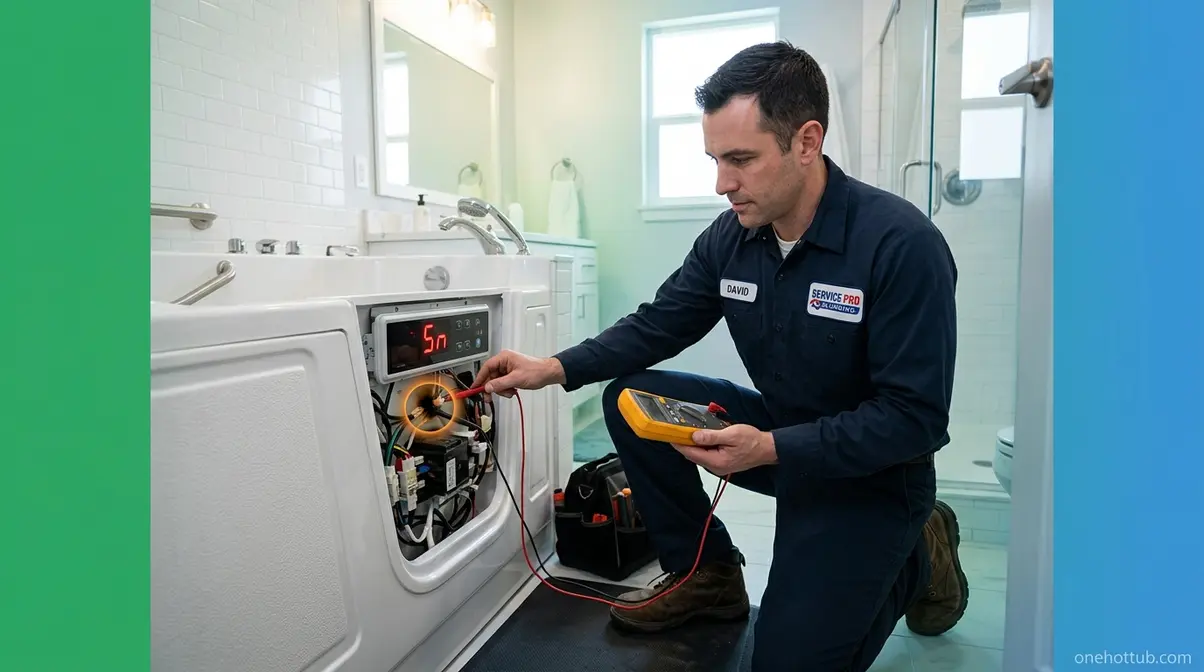
Walk-in tub repairs fall into two categories: DIY-safe and professionally required. Some problems fall outside the scope of safe DIY repair, and recognizing the line between “I can handle this” and “I need professional help” is itself a form of expertise. Our team evaluated reports from licensed plumbers and manufacturer documentation to identify the four scenarios where calling a professional is the correct move — and the cost data that determines whether repair or full replacement makes more financial sense.
Signs You Need a Licensed Professional
If any of the following apply to your situation, stop DIY troubleshooting and contact a licensed professional:
- The tub activates repeatedly after GFCI reset. This indicates a control board fault or wiring short. A licensed electrician is required — do not attempt further diagnosis.
- You see burn marks, smell burning plastic, or hear unusual buzzing. These are signs of active electrical fire risk. Stop immediately and call an electrician before touching anything else.
- The Sn error code persists after cartridge replacement. The flow sensor or temperature sensor may be physically faulty. Sensor replacement requires manufacturer parts and typically a certified service technician.
- Water is leaking from beneath the tub or along the door seal. A structural seal failure is beyond DIY scope and can cause floor damage if left unaddressed.
If you are unsure about handling electrical components at any point, stop and call a licensed electrician.
And if the repair costs are approaching the price of a new unit, the math may favor replacement instead.
Repair vs. Replace: Walk-In Tub Costs
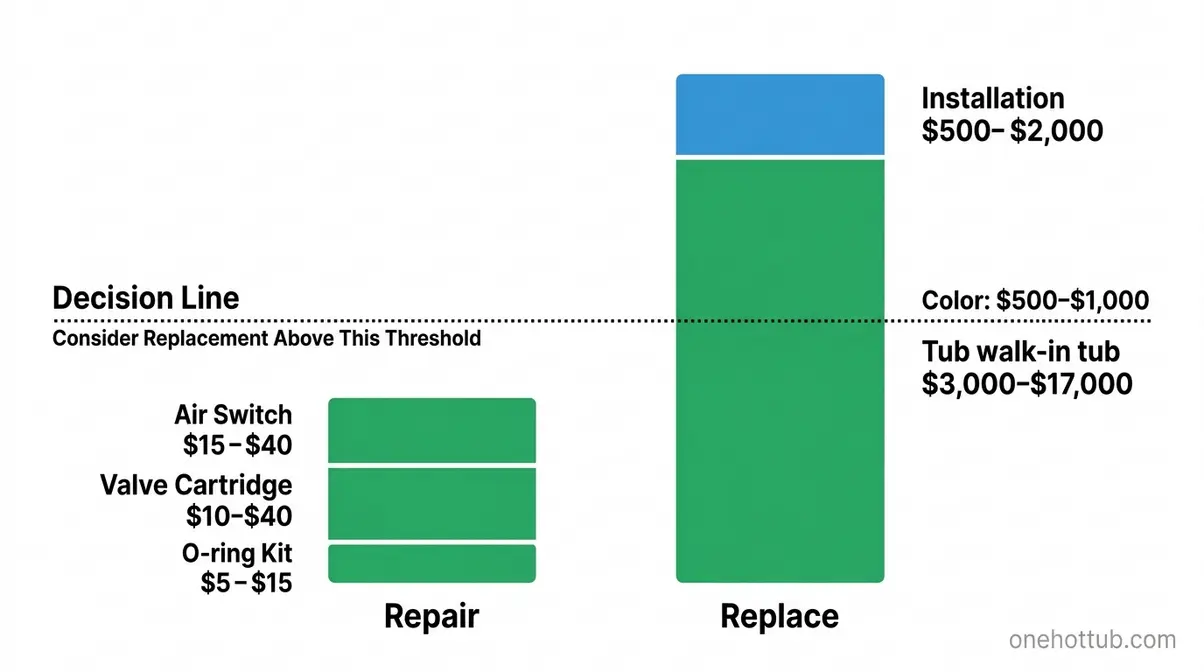
According to the National Council on Aging, average walk-in tub replacement costs range from $3,000 to over $17,000 depending on brand, jet type, and installation complexity (NCOA, 2024). Installation labor alone typically adds $500–$2,000 to that total — meaning a tub with multiple simultaneous failures can quickly approach five figures in total repair and replacement expense.
Before authorizing any paid repair or replacement, check your warranty first — many walk-in tub manufacturers offer 1–5 year limited warranties on electrical and mechanical components. A covered repair costs nothing out of pocket.
- Decision framework:
- Repair wins: Single air switch replacement ($15–$40 part + 1 hour labor) or valve cartridge swap ($10–$40 part) — clear financial wins at any tub age.
- Replacement wins: Multiple simultaneous failures (control board + air switch + door seal) in a tub more than 10 years old. If a repair estimate exceeds $500–$1,000 on an aging unit, replacement often offers better long-term value.
Frequently Asked Questions
Why does my Jacuzzi turn on by itself?
Most Jacuzzi and air-jet tubs activate automatically roughly 20 minutes after each bath as part of a built-in purge cycle designed to blow residual water out of the jet lines and prevent mold and bacteria growth. This is a normal, intentional feature — not a malfunction. If the jets turn on at completely random times unrelated to recent bathing, you likely have a faulty air switch or moisture in the control tubing. Drying out or replacing the pneumatic air switch ($15–$40) resolves most random activation cases. Results may vary by brand and model — consult your manufacturer’s manual for model-specific purge cycle timing.
Why is my bathtub not shutting off?
A bathtub faucet that won’t shut off is almost always caused by a worn valve cartridge or degraded rubber O-rings inside the faucet handle. To fix it, shut off your main water supply, remove the faucet handle, and install a replacement cartridge that matches your tub’s brand. Cartridge replacements cost $10–$40 and require only basic tools. If water seeps from the base of the handle rather than the spout, degraded O-rings are the more likely culprit. If a digital “Sn” error code appears on your control panel, the issue is a sensor fault — consult a licensed plumber.
Where is the reset button on a hot tub?
Most walk-in tubs do not have a dedicated reset button — the GFCI breaker in your home’s electrical panel serves as the reset mechanism. Locate the breaker labeled “TUB,” “BATH,” or “WHIRLPOOL” in your main panel, or look for a breaker with a TEST/RESET button on its face. Flip it OFF, wait 60 seconds, then turn it back ON. The tub’s control panel will reboot automatically — lights may flash briefly as part of the startup sequence. If the GFCI breaker trips repeatedly, an underlying electrical fault requires a licensed electrician.
What are common walk-in tub problems?
The most common walk-in tub problems are jets activating automatically (usually a normal purge cycle or faulty air switch), faucets that won’t shut off (worn valve cartridge), and slow drainage after bathing. Electrical issues — including random activation and control panel errors — are often resolved with a simple GFCI breaker reset. Plumbing issues typically require a $10–$40 replacement part. Door seal degradation and water leaking beneath the tub are less common but require professional service. Regular maintenance — including cleaning jet lines and inspecting the door gasket annually — prevents most of these issues.
How much does it cost to replace a walk-in tub?
Replacing a walk-in tub typically costs $3,000 to over $17,000 (NCOA, 2024), depending on brand, jet type (air vs. water), and installation complexity. Before committing to replacement, confirm whether a simpler repair resolves the issue — an air switch replacement costs $15–$40, while a valve cartridge costs $10–$40. Many manufacturers offer 1–5 year limited warranties that cover these components at no cost. Installation labor alone can add $500–$2,000 to the total. Consult your manufacturer’s warranty documentation before authorizing any paid repair or replacement.
The Fix Is Almost Always Simpler Than You Think
For homeowners whose walk-in tub turns on by itself, the solution is almost always one of three things: a normal purge cycle that needs no intervention, a $15–$40 air switch replacement, or a $10–$40 valve cartridge swap. In most cases — particularly when the tub activates roughly 20 minutes after a bath and stops on its own — the automatic purge cycle (Ella’s Bubbles, 2024; Kohler, 2024) is doing exactly what it was designed to do. Use “The Purge-or-Problem Test” to confirm before spending a dollar on repairs.
“The Purge-or-Problem Test” exists because anxious homeowners deserve a clear answer in 60 seconds, not a forum thread full of speculation. Once you know which of the four diagnostic paths applies to your tub, the repair is either non-existent or straightforward. That shift — from panic to clarity — is the entire point of this guide.
If the issue persists after following these steps, contact your tub’s manufacturer service line with your model number — many repairs are covered under warranty and cost nothing. For repeated GFCI trips, burn smells, or persistent Sn error codes, consult a licensed electrician before attempting further DIY work. You have the information; now you have the confidence to act on it.

David King
Hot tub tester and writer at One Hot Tub.