

Table of Contents - Do Hot Tubs Kill Scabies? A Medical Expert Explains
This blog post may contain affiliate links. As an Amazon Associate I earn from qualifying purchases.
⚠️ Medical Disclaimer: This article is for informational purposes only and is not a substitute for professional medical advice, diagnosis, or treatment. Always consult a qualified healthcare provider if you suspect you have scabies.
Medically Reviewed by: | Reviewed: January 2026
When scabies strikes, the relentless itch becomes a nightmare that follows you into every room — and into every desperate Google search for a quick fix. You’ve probably wondered whether a long, scalding soak in a hot tub might finally put an end to the suffering.
Here’s the hard truth: not only do hot tubs not kill scabies, but soaking in hot water can actively make your symptoms worse. Every minute spent in the tub is a minute not spent on treatment that actually works — and the delay gives the mites more time to burrow deeper and spread. The question of whether do hot tubs kill scabies has a clear, science-backed answer, and this guide will walk you through exactly why.
In this medically reviewed guide, you’ll learn why hot water physically cannot eliminate scabies mites, how the only proven treatments work, how to safely decontaminate your home, and what hot tubs genuinely are good for — so you can stop suffering and start recovering.
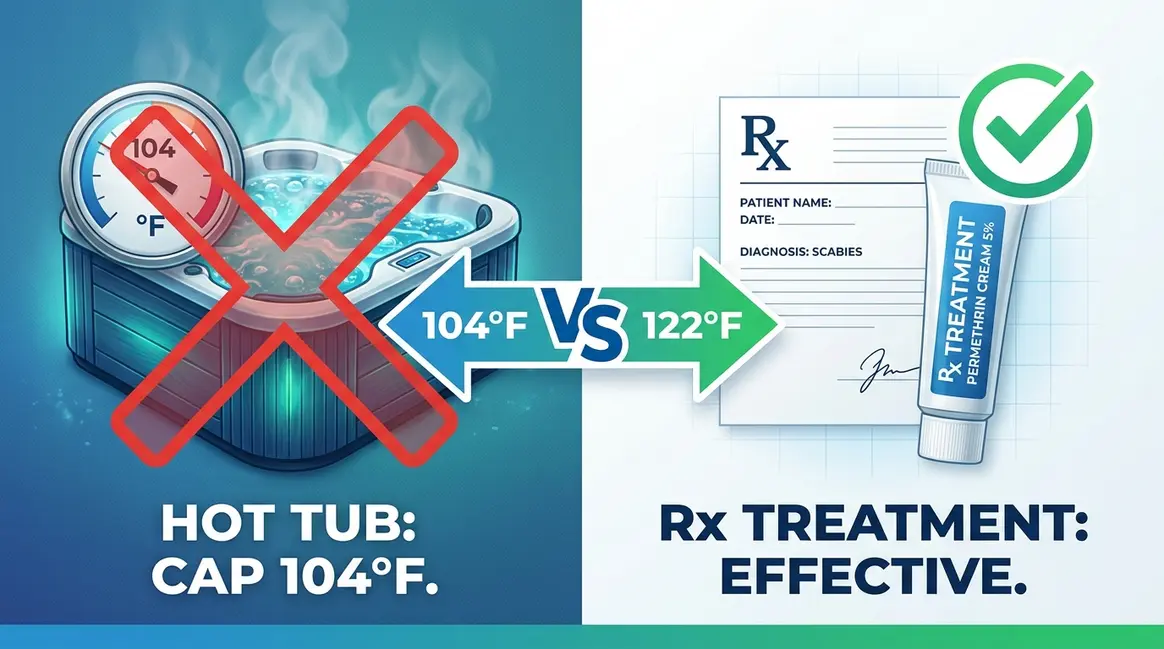
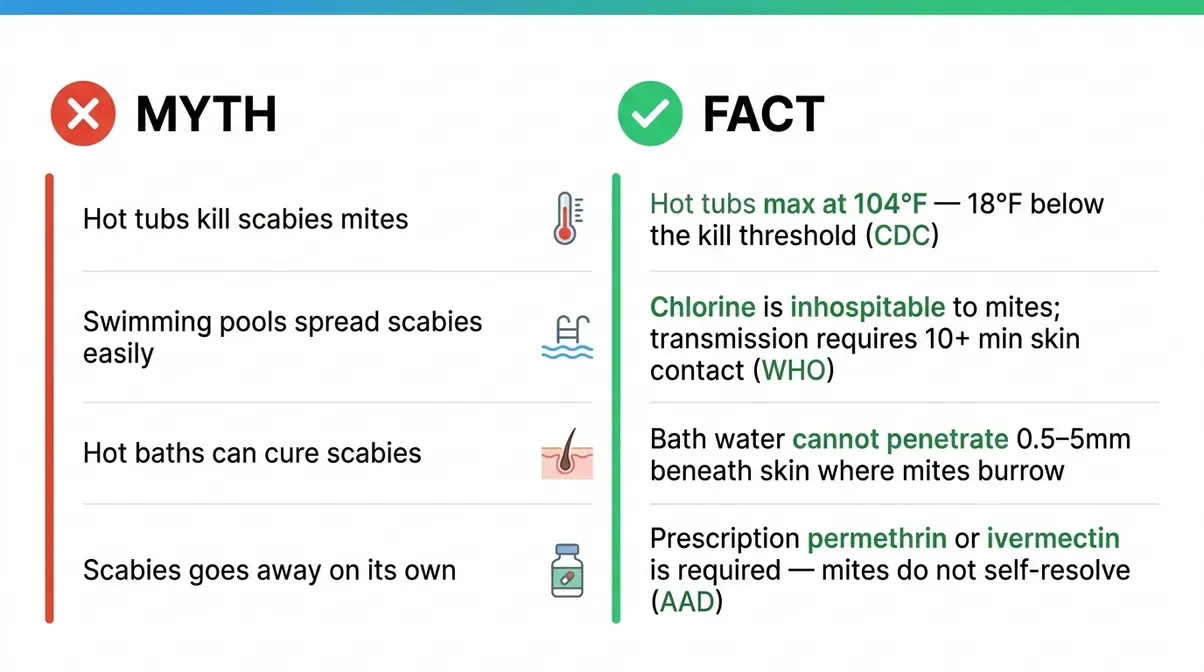
The question of do hot tubs kill scabies has a clear answer: hot tubs cannot kill scabies — the mites burrow too deep in skin for water to reach them, and hot tub temperatures (max 104°F/40°C) fall 18°F short of the 122°F (50°C) needed to kill mites (CDC, 2026). This “The 18-Degree Gap” means every hot soak delays real treatment and can worsen your symptoms.
- Hot tubs fail: Maximum safe temperature (104°F/40°C) is 18°F below the scabies mite kill threshold (122°F/50°C)
- Hot water worsens itching: Heat dilates blood vessels near the skin, intensifying the inflammatory response
- Only proven fix: Prescription permethrin 5% cream or oral ivermectin kills mites within 24–48 hours
- Your home needs treatment too: Wash all bedding and clothes in water above 122°F (50°C); seal non-washables in sealed bags for 72 hours
- Hot tubs DO help: Sore muscles, joint pain, and inflammation — just not scabies
Can Hot Tubs or Hot Showers Kill Scabies?
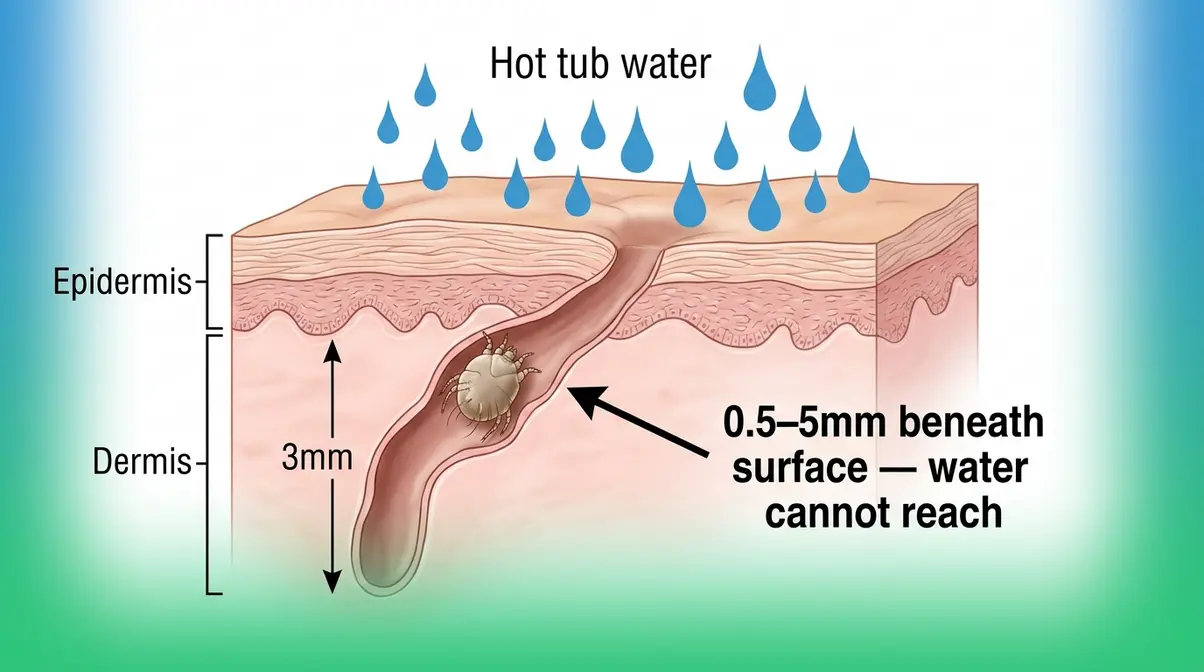
No, hot tubs cannot kill scabies. Hot tub water reaches a maximum safe temperature of 104°F (40°C), but scabies mites require exposure to at least 122°F (50°C) for a minimum of 10 minutes to die, according to CDC guidelines on scabies mite thermal death point. That 18°F gap is not a small margin — it is the difference between a relaxing soak and a medically effective treatment. Mayo Clinic confirmation that hot water cannot cure scabies further confirms that prescription medications are strictly required to eliminate the mites (Mayo Clinic, 2026).
Understanding why this myth is so persistent — and so dangerous — matters. Each time you delay starting real treatment by soaking in a hot tub, the infestation continues. The mites keep burrowing, keep laying eggs, and keep spreading. You deserve accurate information, not a false hope that sends you back to the tub night after night.
For a deeper look at whether hot tubs can kill scabies mites, the evidence consistently points to the same conclusion: water-based heat treatments simply cannot reach the mites where they live.
The 18-Degree Gap Explained
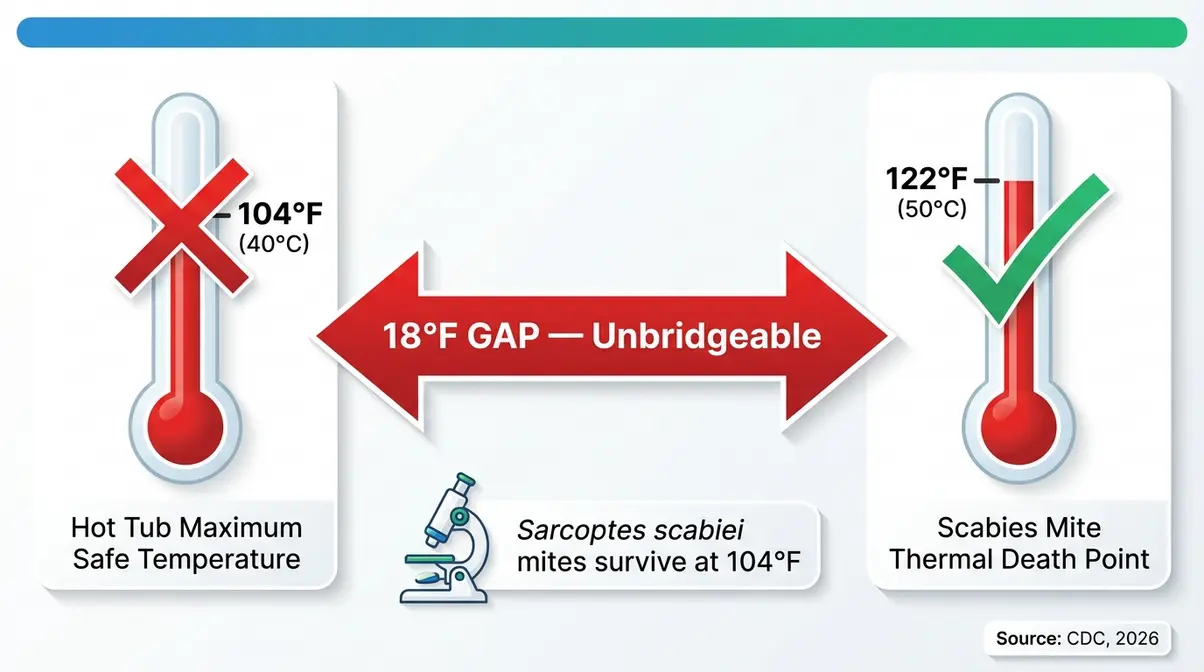
Hot tubs physically cannot kill scabies mites — and the reason comes down to a precise, measurable number. Health and safety regulations cap hot tub water at a maximum of 104°F (40°C) to prevent burns and heat stroke. Scabies mites (Sarcoptes scabiei — the microscopic organism responsible for the infestation) only die when exposed to temperatures of 122°F (50°C) for at least 10 minutes (CDC, 2026). The gap between those two numbers — exactly 18°F, or 10°C — is what we call “The 18-Degree Gap.”
This gap is not a technicality. It represents an unbridgeable physical barrier. The very safety feature that protects you from burns in a hot tub is the same feature that makes a hot tub useless as a scabies treatment.
As the chart below illustrates, no amount of time spent soaking at 104°F will bring you closer to the 122°F kill threshold — the water simply cannot get there.
There is a second layer of protection the mites have that makes the problem even worse. Sarcoptes scabiei mites burrow approximately 0.5 to 5 millimeters beneath the surface of your skin. Even if hot tub water could somehow reach 122°F, the water still would not penetrate deep enough into the skin layers to reach the mites living inside those tunnels.
Think of it this way: imagine trying to boil water in a pot, but your stove only reaches 80°C when you need 100°C to boil. The water will never boil, no matter how long you wait. The same principle applies here — the temperature ceiling is fixed, and the mites are safely below it.
“Hot tub water maxes out at 104°F (40°C) — a full 18°F below the 122°F (50°C) minimum required to kill scabies mites.” (CDC, 2026)
Why Hot Showers Worsen Scabies
Now you know why hot water cannot kill the mites. But here is the part that surprises most people: hot water does not just fail to help — it can make the itch significantly worse.
When you expose inflamed skin to hot water, your body responds with vasodilation — meaning your blood vessels widen and draw more blood toward the skin surface. That increased blood flow intensifies the skin’s inflammatory response to the mite burrows, amplifying the itch rather than relieving it. Cleveland Clinic warning about hot showers worsening scabies itching confirms that hot showers and baths do not cure scabies and can actually exacerbate the itching (Cleveland Clinic, 2026).
Very hot water can also irritate your already-inflamed skin, potentially exposing new burrows to secondary bacterial infection. If you have noticed that the itch seems worse after a shower, this is exactly why.
There is a temporary sensation trick at work, too. Heat briefly overrides the itch signal through what researchers call the gate control theory of pain — essentially, the intense heat sensation “crowds out” the itch signal in your nervous system for a few minutes. But that relief lasts only minutes, while the underlying irritation compounds each time you soak.
If you have found yourself taking longer and longer hot showers hoping the itch will finally stop, you are not alone. But the relief you feel is temporary, and the damage accumulates each time.
Hot Tubs vs. Saunas for Scabies

So hot showers and hot tubs are out. What about saunas — which reach much higher temperatures? The answer is more nuanced, and it is important to understand the difference.
Traditional dry saunas can reach temperatures of 160°F to 200°F (71°C to 93°C), which technically exceeds the 122°F (50°C) thermal death point for scabies mites. On paper, this sounds promising. In practice, however, saunas still cannot reliably cure scabies for two critical reasons.
First, the heat in a sauna surrounds your body in hot air — it does not penetrate your skin tissue to the depth where mites are burrowing (0.5 to 5 millimeters beneath the surface). Your skin’s surface may briefly reach high temperatures, but the deeper layers where the mites live remain significantly cooler. Second, no clinical evidence supports sauna use as a scabies treatment. Medical consensus among dermatologists indicates that prescription scabicide medications remain the only proven approach, regardless of heat source. Always consult your doctor or dermatologist before attempting any heat-based approach.
The bottom line: saunas reach higher temperatures than hot tubs, but they still cannot deliver sustained, penetrating heat to the depth required to kill mites living inside your skin.
How to Actually Get Rid of Scabies
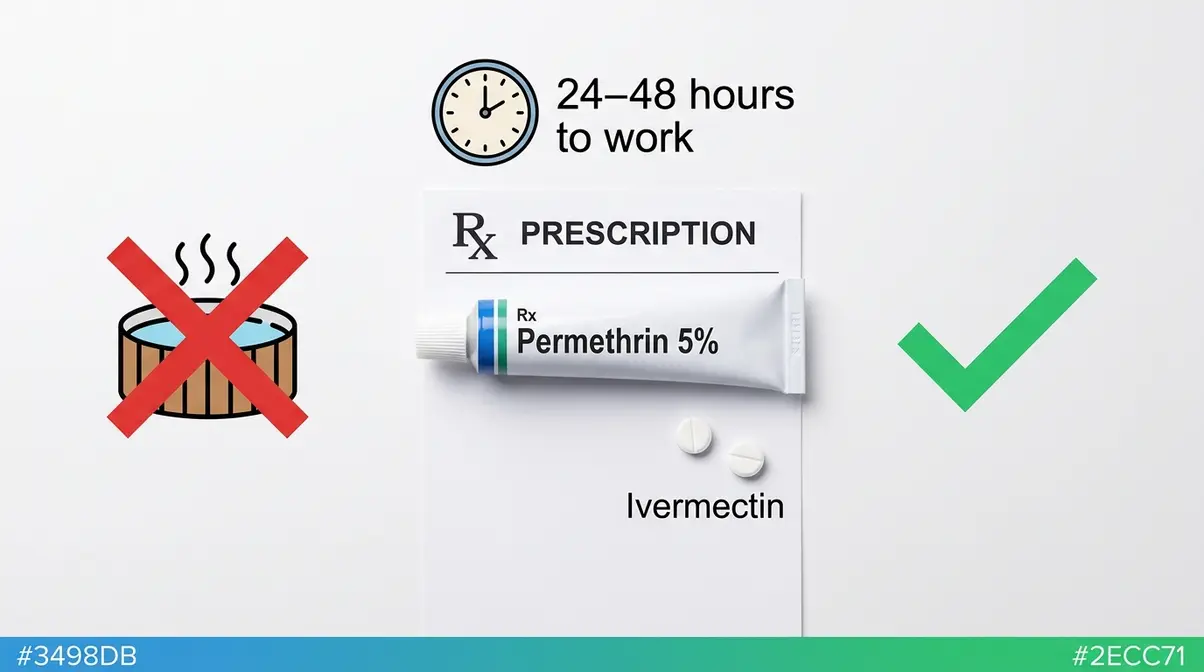
When researching do hot tubs kill scabies, you quickly learn that medical intervention is strictly required. The only way to get rid of scabies is through prescription medications and thorough home decontamination. Medical consensus among dermatologists is clear on this point — no home remedy, hot soak, or over-the-counter product reliably eliminates Sarcoptes scabiei mites. The good news is that the right treatment works quickly, and with the proper protocol, you can break the cycle of re-infestation.
“Scabies is a nightmare I never want to face again!” — a sentiment shared by nearly everyone who has experienced the relentless itch. The fastest path out of that nightmare is a prescription scabicide, applied correctly and combined with household decontamination.
Consult your doctor or dermatologist before beginning any scabies treatment. A confirmed diagnosis ensures you receive the right medication at the right dose.
What kills scabies immediately?
Permethrin 5% cream (a prescription cream that kills mites on contact by disrupting their nervous system) is the first-line treatment recommended by the American Academy of Dermatology (AAD). You apply it from the neck down to every inch of skin, leave it on for 8 to 14 hours, then wash it off. Most patients see significant improvement within 24 to 48 hours of the first application. A second application one week later is typically recommended to kill any newly hatched mites (AAD, 2026).
Oral ivermectin (a tablet-form scabicide — a medication that kills scabies mites — used when permethrin is not suitable or when crusted scabies is present) is the second primary option. It is typically prescribed as two doses, two weeks apart, to ensure all mite life stages are eliminated.
| Medication | Type | Application | Timeline |
|---|---|---|---|
| Permethrin 5% | Topical cream | Neck-down, 8–14 hours | 2 applications, 1 week apart |
| Oral ivermectin | Tablet | By mouth | 2 doses, 2 weeks apart |
| Crotamiton 10% | Topical lotion | Neck-down, 24 hours | 2–5 day course |
Important: Everyone in your household and any close physical contacts must be treated at the same time — even if they show no symptoms. Sarcoptes scabiei mites can live on a person for 4 to 6 weeks before symptoms appear (CDC, 2026). Treating yourself alone while household members remain untreated is the single most common reason scabies returns.
Home Decontamination Protocol
Killing the mites on your body is only half the battle. Mites can survive off the human body for 48 to 72 hours on surfaces, bedding, and clothing. If you skip home decontamination, re-infestation is almost certain.
- Before You Begin — Prerequisites:
- Gather all bedding, towels, and clothing worn in the past 3 days
- Have large sealable plastic bags ready for non-washable items
- Ensure all household members are starting treatment on the same day
- Plan for 2 to 3 hours of cleaning time
Step-by-Step Decontamination Protocol:
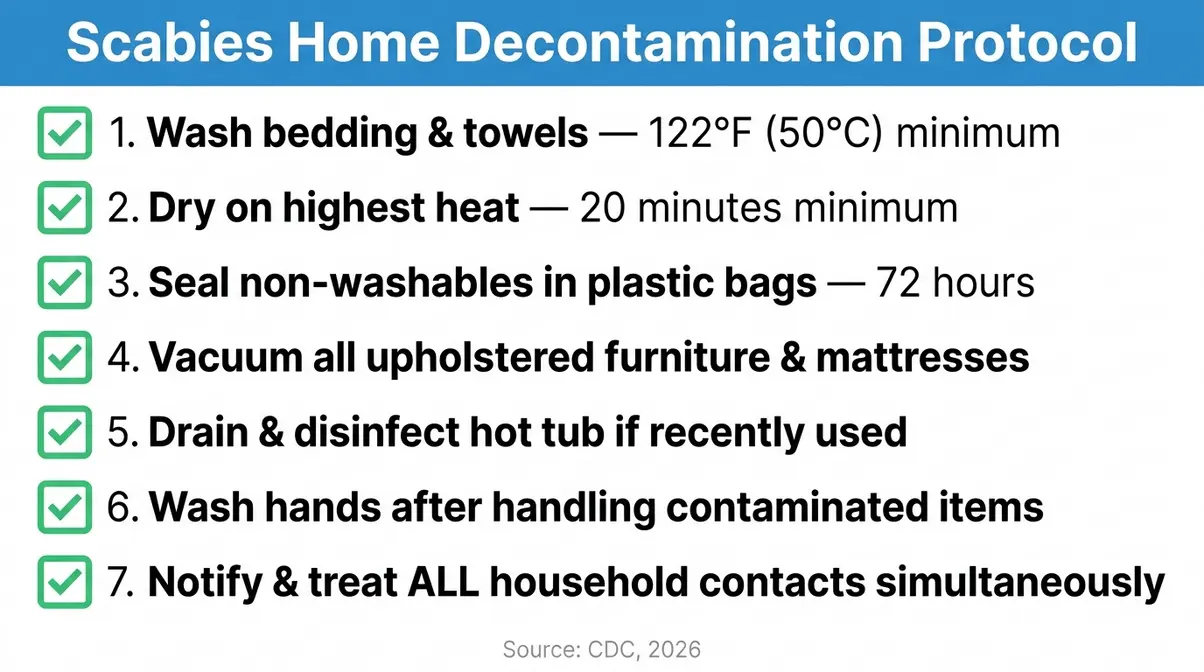
- Wash all bedding, towels, and recently worn clothing in water at or above 122°F (50°C) — this is the same thermal death point that hot tubs cannot reach. Use the hottest washing machine setting available.
- Dry everything on the highest heat setting for at least 20 minutes. The combination of hot wash and hot dry is most effective.
- Seal non-washable items (stuffed animals, delicate fabrics, certain pillows) in sealed plastic bags. Leave them sealed for a minimum of 72 hours — mites cannot survive more than 48 to 72 hours without human contact (CDC, 2026).
- Vacuum all upholstered furniture, mattresses, and carpets thoroughly. Dispose of the vacuum bag or empty the canister immediately into an outdoor trash bin.
- Clean your hot tub if used recently. Drain the water and wipe down all surfaces with an approved disinfectant. Scabies mites are unlikely to survive in properly chlorinated hot tub water, but the risk of transmission via shared towels or physical contact around the tub remains.
- Wash your hands thoroughly after handling any potentially contaminated items.
- Notify close contacts — anyone who has had prolonged skin-to-skin contact with you in the past 4 to 6 weeks should be evaluated and treated simultaneously.
| Item | Treatment Method | Minimum Requirement |
|---|---|---|
| Bedding & towels | Hot machine wash + hot dry | 122°F (50°C) wash, 20-min high-heat dry |
| Clothing worn recently | Hot machine wash + hot dry | Same as above |
| Non-washable items | Sealed plastic bag | 72 hours minimum |
| Upholstered furniture | Vacuuming | Dispose of bag immediately |
| Hot tub surfaces | Drain + disinfectant wipe | Approved disinfectant |
When to Call Your Doctor
Everyone in the household needs treatment at the same time — this is not optional. Medical consensus indicates that simultaneous household treatment is the single most important factor in preventing re-infestation (CDC, 2026).
- Call your doctor or dermatologist immediately if:
- Symptoms do not improve within 4 weeks of completing treatment
- New burrows appear after treatment (this may indicate treatment-resistant scabies or re-infestation)
- You develop signs of secondary bacterial infection: increased redness, warmth, swelling, or pus
- You or a family member has crusted (Norwegian) scabies — a severe form characterized by thick, crusted skin that requires more aggressive treatment
How Scabies Spreads – and How to Prevent It
Instead of wondering do hot tubs kill scabies, focus your energy on understanding how the infestation actually spreads. Understanding how scabies transmits is essential to stopping it. Many people assume scabies is primarily waterborne — spread through pools, hot tubs, or shared bathwater. This misunderstanding leads to both unnecessary fear and dangerous complacency. The reality is more specific, and more manageable.
Consult your doctor or dermatologist if you suspect exposure — early diagnosis dramatically reduces the risk of household spread.
Recognizing Scabies Symptoms
Scabies is a highly contagious skin infestation caused by Sarcoptes scabiei (the microscopic mite responsible for the condition). The defining symptom is an intense, relentless itch — “the itch” — that is characteristically worse at night. This nocturnal worsening happens because mite activity increases with body warmth under bedding.
The second hallmark sign is burrows — thin, irregular lines or tracks on the skin surface, often 2 to 15 millimeters long, where female mites have tunneled into the outer skin layer to lay eggs. Common locations include the webbing between fingers, wrists, elbows, armpits, the waistline, buttocks, and genitals. In infants and young children, burrows can also appear on the face, scalp, palms, and soles.
A rash of small, pimple-like bumps typically accompanies the burrows. The rash itself is largely an allergic reaction to the mites, their eggs, and their waste — which is why the itch often continues for 2 to 4 weeks even after successful treatment (AAD, 2026). This is normal and does not mean the treatment failed.
Scabies is sometimes confused with other sexually transmitted infections because it spreads through close physical contact. To directly answer a common question: scabies is not caused by a bacterium or virus — it is caused by a mite, Sarcoptes scabiei. It is classified as a parasitic infestation, not an STI, though it can be transmitted through sexual contact.
Can I swim in a pool with scabies?
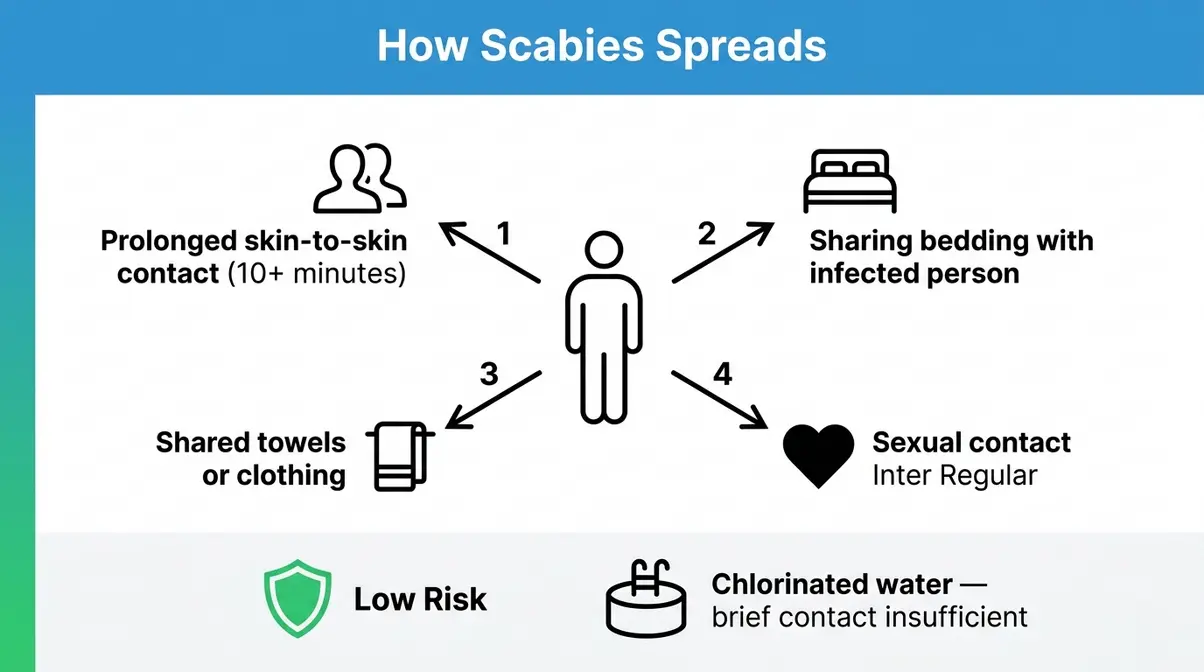
Scabies spreads almost exclusively through prolonged, direct skin-to-skin contact — typically 10 minutes or more of sustained contact (WHO). Casual contact such as a handshake or a brief hug is generally insufficient for transmission.
- Common transmission routes include:
- Sleeping in the same bed as an infected person
- Sexual contact
- Extended physical contact between children during play
- Caring for an infected person (nursing home and healthcare settings)
The risk of spreading scabies through pool or hot tub water is considered very low. Chlorinated water is inhospitable to Sarcoptes scabiei mites, and the brief, incidental contact typical of swimming is unlikely to allow the sustained skin-to-skin contact required for transmission. However, sharing towels, clothing, or pool equipment with an infected person does carry a meaningful risk (CDC, 2026). If you have an active scabies infestation, dermatologists recommend avoiding shared facilities — not primarily because of waterborne transmission, but out of respect for others and to prevent contact-based spread in changing areas.
Preventing Re-Infestation
Preventing re-infestation comes down to three principles: treat everyone simultaneously, decontaminate the environment thoroughly, and avoid contact with untreated individuals until all parties have completed treatment.
- Practical prevention steps:
- Do not share bedding, towels, or clothing with anyone until treatment is complete for all household members
- Follow up with your doctor at the 4-week mark to confirm the infestation has cleared
- Inform close contacts so they can be evaluated — many people feel embarrassed to do this, but it is the most important step in breaking the transmission chain
- Avoid skin-to-skin contact with anyone showing symptoms until they have completed treatment
Medical consensus among dermatologists indicates that re-infestation, not treatment failure, is the most common reason scabies persists in households (AAD, 2026). The medication works — the challenge is ensuring every potential source of re-exposure is addressed at the same time.
Hot Tubs for Muscles and Inflammation
While hot tubs cannot treat scabies, they are genuinely beneficial for other health conditions — particularly musculoskeletal pain and inflammation. Once your scabies infestation is fully resolved and confirmed by your doctor, understanding the real benefits of hydrotherapy can help you return to hot tub use with accurate expectations.
Consult your doctor before using a hot tub if you have cardiovascular conditions, are pregnant, or are recovering from any skin condition.
Hydrotherapy for Sore Muscles
Hydrotherapy (the therapeutic use of water for pain relief and muscle recovery) has a well-established evidence base for musculoskeletal conditions. Warm water immersion at temperatures between 98°F and 104°F (37°C–40°C) promotes muscle relaxation through several mechanisms: the heat increases tissue temperature, which improves blood flow and oxygen delivery to fatigued muscles; the buoyancy reduces gravitational load on joints; and the hydrostatic pressure (the physical pressure of water against the body) gently compresses soft tissue, reducing swelling.
If you are wondering whether hot tubs help sore muscles, research published in peer-reviewed sports medicine literature suggests that warm water immersion after intense exercise reduces delayed-onset muscle soreness (DOMS) — the aching stiffness you feel 24 to 48 hours after a hard workout — more effectively than passive rest alone (Journal of Athletic Training, 2023). For people with chronic lower back pain, rheumatoid arthritis, or fibromyalgia, regular hydrotherapy sessions have been associated with meaningful reductions in pain scores and improved mobility (Harvard Health Publishing, 2026).
Hot tub sessions of 15 to 20 minutes at 100°F to 104°F (38°C–40°C) are generally considered safe for healthy adults. Sessions longer than 20 minutes at maximum temperature increase the risk of overheating, dehydration, and dizziness.
Hot Tubs and Inflammation
When considering if hot tubs help with inflammation, the relationship is more nuanced than a simple “hot water reduces inflammation” claim. Acute inflammation — the kind that occurs immediately after an injury — can actually be worsened by heat, because heat increases blood flow to the injured area. For this reason, sports medicine practitioners typically recommend cold therapy (ice) in the first 24 to 72 hours after an acute injury.
However, for chronic inflammation — the persistent, low-grade inflammation associated with conditions like osteoarthritis, ankylosing spondylitis, and chronic back pain — warm water immersion shows genuine promise. A 2023 review in the Annals of Internal Medicine found that balneotherapy (spa and hot water therapy) produced clinically meaningful improvements in pain and physical function for osteoarthritis patients compared to control groups (Annals of Internal Medicine, 2023).
The proposed mechanism involves the combined effect of heat-induced vasodilation improving circulation to chronically inflamed joints, buoyancy reducing mechanical load, and the general relaxation response lowering cortisol levels — which itself has downstream anti-inflammatory effects. Always consult your doctor before using hydrotherapy as part of a pain management plan.
Hot Tubs and Male Fertility
One of the most frequently asked questions about hot tub use has nothing to do with scabies: can hot tubs affect male fertility? The answer is yes — and the mechanism is directly related to temperature, making it an important consideration for men thinking about conception.
Consult your doctor or a fertility specialist if you have concerns about how hot tub use may be affecting your reproductive health.
Heat and Sperm Production
Spermatogenesis (the process by which the male body produces sperm) is highly temperature-sensitive. Sperm production requires a testicular temperature approximately 3.6°F to 5.4°F (2°C to 3°C) lower than core body temperature — which is why the testes are located outside the body cavity. When testicular temperature rises significantly, sperm production slows and sperm quality declines.
Research from the University of California, San Francisco found that men who soaked in hot tubs or hot baths for 30 minutes or more per week showed measurable reductions in sperm motility (the ability of sperm to move effectively) and sperm count compared to baseline. Importantly, the same research found these effects were largely reversible: sperm quality returned to near-baseline levels within 3 to 6 months of stopping regular hot tub use (University of California San Francisco, published in Reproductive BioMedicine, 2007 — effects remain clinically relevant per current urology consensus). Hot tub water at 104°F (40°C) is sufficient to raise scrotal temperature meaningfully above the optimal range for sperm production.
Safe Hot Tub Use for Fertility
If you and your partner are actively trying to conceive, fertility specialists typically recommend limiting or avoiding hot tub use for at least 3 months before attempting conception — enough time for any heat-related sperm quality decline to reverse.
- Practical guidelines for men:
- Limit sessions to 15 minutes or less if hot tub use continues
- Avoid daily use — occasional sessions carry less cumulative risk than frequent long soaks
- Discuss with your doctor if you have known fertility challenges, as heat avoidance may be one component of a broader optimization plan
For men who are not actively trying to conceive, moderate hot tub use (15 to 20 minutes, a few times per week) is not considered a significant fertility risk by most urologists — the effects are temporary and reversible with reduced exposure.
Common Mistakes and When to See a Doctor
The path to getting rid of scabies is straightforward — but several common mistakes cause people to suffer longer than necessary, experience re-infestation, or develop complications. Understanding what to avoid is just as important as knowing what to do.
5 Scabies Home Remedy Mistakes
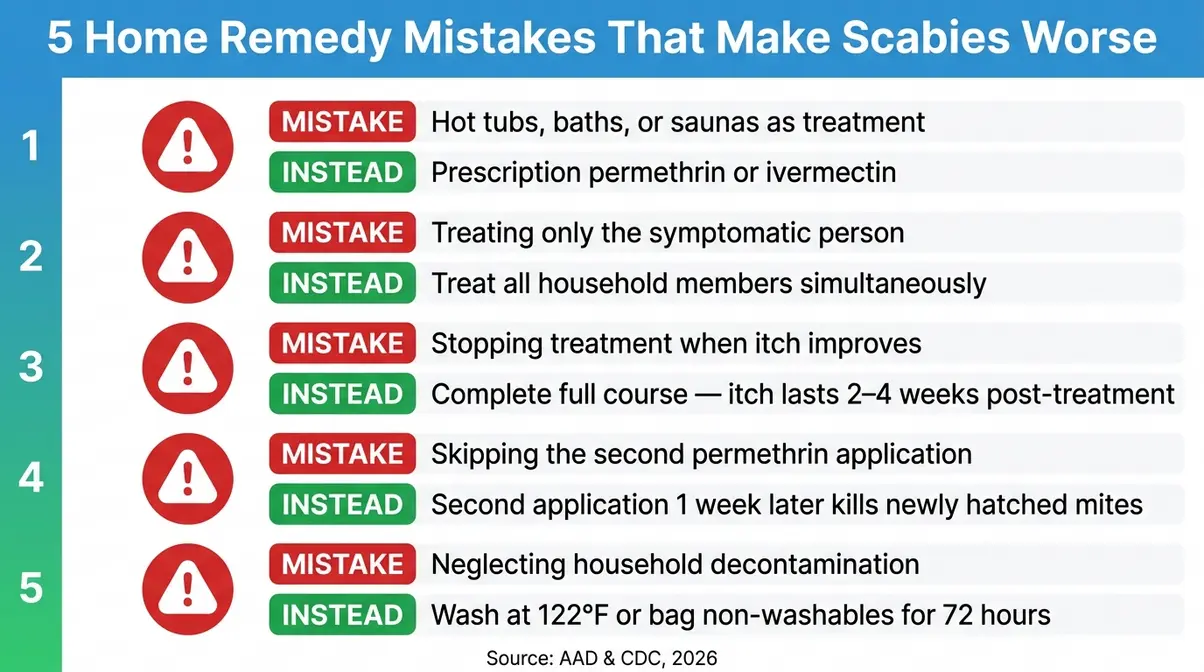
Mistake 1: Relying on hot tubs, hot baths, or saunas as treatment.
As The 18-Degree Gap demonstrates, no water-based heat source available in a home or spa setting can reach the 122°F (50°C) needed to kill Sarcoptes scabiei mites. Soaking delays real treatment and worsens itching through vasodilation. Every day of delay allows the infestation to deepen.
Mistake 2: Treating only the symptomatic person.
Scabies mites can live on a person for 4 to 6 weeks before symptoms appear (CDC, 2026). If only the person with visible symptoms is treated, untreated household members will almost certainly re-infect them within weeks. Simultaneous household treatment is non-negotiable.
Mistake 3: Stopping treatment early because the itch improves.
The itch from scabies is largely an allergic reaction to mite waste and eggs. This allergic response can persist for 2 to 4 weeks after the mites are completely dead (AAD, 2026). Stopping treatment early because the itch has lessened is a common cause of incomplete eradication.
Mistake 4: Skipping the second application of permethrin.
A single application of permethrin 5% cream kills adult mites and nymphs, but it may not fully penetrate mite eggs. A second application one week later targets any newly hatched mites before they can reproduce. Skipping it significantly increases the risk of treatment failure.
Mistake 5: Neglecting household decontamination.
Mites can survive off the human body for 48 to 72 hours on bedding, upholstered furniture, and clothing. Failing to wash bedding at 122°F or seal non-washables for 72 hours creates a reservoir for re-infestation even after successful medication treatment.
Seeking Urgent Medical Care
Most cases of scabies resolve with a single course of prescription treatment and proper decontamination. However, certain situations require prompt medical evaluation. Contact your doctor or dermatologist immediately if you experience:
- No improvement after 4 weeks of completed treatment — this may indicate treatment-resistant mites, re-infestation from an untreated contact, or a misdiagnosis
- New burrows appearing after treatment — a sign that re-infestation has occurred or that treatment was incomplete
- Signs of secondary bacterial infection — increasing redness, warmth, swelling, tenderness, or any discharge from affected skin areas; secondary infection (most commonly from Staphylococcus bacteria) requires antibiotic treatment
- Crusted (Norwegian) scabies — a severe form characterized by thick, gray, scaly crusts on the skin, most common in immunocompromised individuals; this form contains thousands of mites per crust and requires combination oral and topical treatment under close medical supervision
- Scabies in infants, elderly individuals, or immunocompromised patients — these populations require tailored treatment approaches and closer monitoring
Do not attempt to self-diagnose or self-treat if you are uncertain about your diagnosis. Several other skin conditions — including eczema, contact dermatitis, and psoriasis — can mimic scabies symptoms. A dermatologist can confirm the diagnosis with a simple skin scraping examination.
Scabies and Hot Tubs FAQs
What draws scabies out of the skin?
Nothing reliably draws scabies mites out of the skin — and this is a common misconception that leads people to try ineffective home remedies. Sarcoptes scabiei mites burrow into the outer skin layer to feed and lay eggs; they do not voluntarily emerge. Prescription permethrin 5% cream or oral ivermectin penetrates the skin to kill mites where they live. Some people report temporary surface mite activity after applying certain topical agents, but no home remedy has clinical evidence supporting it as a reliable treatment. Always consult a dermatologist for confirmed diagnosis and treatment.
Historical Scabies Treatments
Historically, scabies was treated with sulfur-based ointments and benzyl benzoate — compounds with antiparasitic properties that have been used for centuries. Sulfur in petroleum jelly (6% to 33% concentration) was the primary treatment before modern scabicides were developed, and it remains in use today in resource-limited settings. Benzyl benzoate lotion was widely adopted in the mid-20th century. Earlier still, harsh remedies including mercury-based compounds and crude petroleum were used — often with significant toxicity. Modern permethrin and ivermectin, developed in the late 20th century, are far safer and more effective than any historical alternative (PubMed historical review, 2019).
Are scabies visible to the naked eye?
No, Sarcoptes scabiei mites are microscopic, measuring only about 0.3 to 0.4 millimeters long. You cannot see them with the naked eye. What you can see are the symptoms they cause: the red, pimple-like rash and the grayish-white burrow tracks they leave in the skin. A dermatologist uses a dermatoscope or skin scraping to visually confirm their presence.
Can hot baths get rid of scabies?
No — hot baths cannot get rid of scabies. As The 18-Degree Gap shows, bath water would need to reach 122°F (50°C) and maintain that temperature for at least 10 minutes to kill Sarcoptes scabiei mites. At those temperatures, severe burns would occur within seconds. Additionally, even if water could somehow reach the thermal death point, mites burrow up to 5 millimeters beneath the skin surface — beyond the penetrating reach of bath water. Hot baths also worsen the characteristic scabies itch through vasodilation (Cleveland Clinic, 2026). Prescription permethrin or ivermectin remains the only evidence-based treatment.
Can scabies go away on its own?
No, a scabies infestation will never go away on its own. Without medical treatment, the mites will continue to reproduce, burrow, and spread across your body and to other people. The condition requires prescription scabicides like permethrin or ivermectin to eliminate the mites and break their life cycle. Delaying treatment only allows the infestation to worsen.
Can scabies survive in a hot tub?
Scabies mites are unlikely to survive long in properly chlorinated hot tub water, because chlorine is toxic to Sarcoptes scabiei and the warm, diluted environment is inhospitable. However, mites can survive on dry surfaces — including pool decks, towels, and seating areas — for up to 72 hours (CDC, 2026). The primary transmission risk associated with hot tub environments is not the water itself but the close physical contact and shared items (towels, clothing) that typically accompany hot tub use. If someone with an active scabies infestation uses a hot tub, the surrounding surfaces and shared items should be thoroughly cleaned and disinfected.
What STD is caused by a tiny mite?
*Scabies is the parasitic infestation caused by the microscopic mite Sarcoptes scabiei***, and while it is not technically classified as a sexually transmitted disease (STD), it is frequently transmitted through sexual contact due to the prolonged skin-to-skin contact involved. Scabies is more accurately described as a sexually transmissible infestation (STI in the parasitic sense). It is distinct from STDs caused by bacteria (such as chlamydia or gonorrhea) or viruses (such as herpes or HIV). The condition is fully treatable with prescription scabicides and does not carry the long-term complications associated with most bacterial or viral STDs. Consult a doctor or sexual health clinic for confidential diagnosis and treatment.
Getting Rid of Scabies: Your Clear Path Forward
If you are still wondering do hot tubs kill scabies, the answer is a definitive no. Hot tubs cannot kill scabies — and now you understand exactly why. The 18-Degree Gap between the maximum safe hot tub temperature (104°F/40°C) and the minimum mite kill point (122°F/50°C) is an unbridgeable physical barrier. Beyond the temperature problem, mites burrow deep beneath the skin surface where water cannot reach them, and hot water actively worsens your symptoms through vasodilation. Every hot soak delays the treatment that actually works.
The 18-Degree Gap is not just a number — it is a framework for understanding why so many well-intentioned home remedies fail. When you know the specific temperature barrier, you can stop second-guessing the science and redirect your energy toward the prescription treatments, household decontamination steps, and simultaneous family treatment that genuinely break the cycle of infestation.
Your next step is clear: contact your doctor or dermatologist today to confirm your diagnosis and start a prescription permethrin or ivermectin course. Complete both applications as directed, treat every household member at the same time, and follow the 72-hour decontamination protocol for your bedding and non-washable items. Most people who follow this protocol completely are free of scabies within 4 weeks. The nightmare ends with the right treatment — not with the hot tub.