

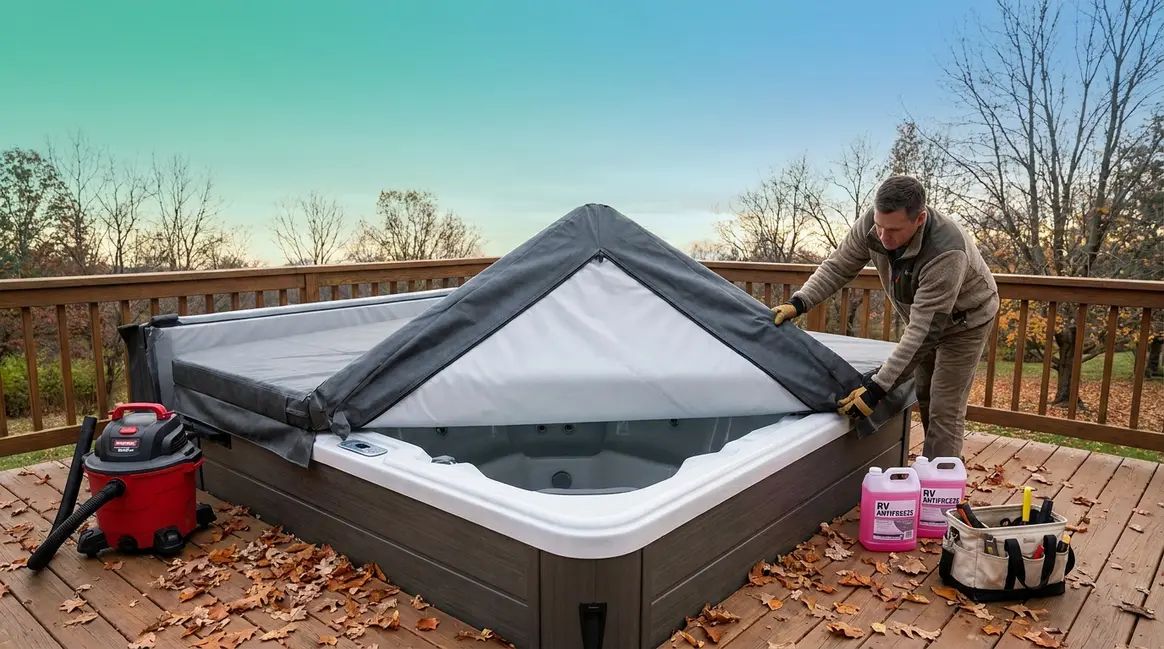
Table of Contents - How to Winterize a Hot Tub: The Failsafe Freeze Protocol
- Why You Need to Winterize Your Hot Tub
- Tools and Materials Checklist
- Complete Step-by-Step Process
- How to Use Antifreeze for Winterizing
- Brand-Specific Winterizing Tips
- Winterizing Without Draining
- De-Winterizing Your Hot Tub in Spring
- Common Mistakes That Cause Repairs
- Frequently Asked Questions
- Protect Your Investment Before the Freeze
This blog post may contain affiliate links. As an Amazon Associate I earn from qualifying purchases.
A single winter freeze can crack your hot tub’s plumbing pipes in a matter of hours — and most manufacturer warranties do not cover freeze damage. Repair bills for split pipes, cracked shell fittings, and damaged pump housings routinely run into the thousands of dollars, according to Forbes Home’s analysis of spa repair costs.
The problem isn’t that winterizing is difficult. It’s that most guides leave out the critical details: which antifreeze is safe to use, exactly how to clear the lines using a shop vac, and what extra steps to take if temperatures drop below -20°F (-29°C). Miss one step and you’re looking at a costly spring surprise.
By the end of this guide, you’ll know exactly how to winterize a hot tub — from draining to antifreeze application — so your spa survives winter damage-free and starts up smoothly in spring. We cover the tools you need, a complete 15-step process, antifreeze guidance, brand-specific tips, the no-drain alternative method, and how to de-winterize when the season turns.
Knowing how to winterize a hot tub correctly — using The Failsafe Freeze Protocol — is the single most important thing you can do to prevent thousands of dollars in freeze damage.
- Complete water removal first: Drain the tub fully and use a shop vac to clear every plumbing line before temperatures drop.
- Use only RV/Marine antifreeze: Propylene Glycol antifreeze is non-toxic and safe for hot tub plumbing — automotive antifreeze is toxic and will contaminate your system.
- Three layers of protection: Water removal + antifreeze application + cover securing work together. Skipping any layer leaves your tub vulnerable.
- Extreme cold needs extra steps: Climates below -20°F (-29°C) require additional insulation around the equipment bay before closing up for winter.
Why You Need to Winterize Your Hot Tub
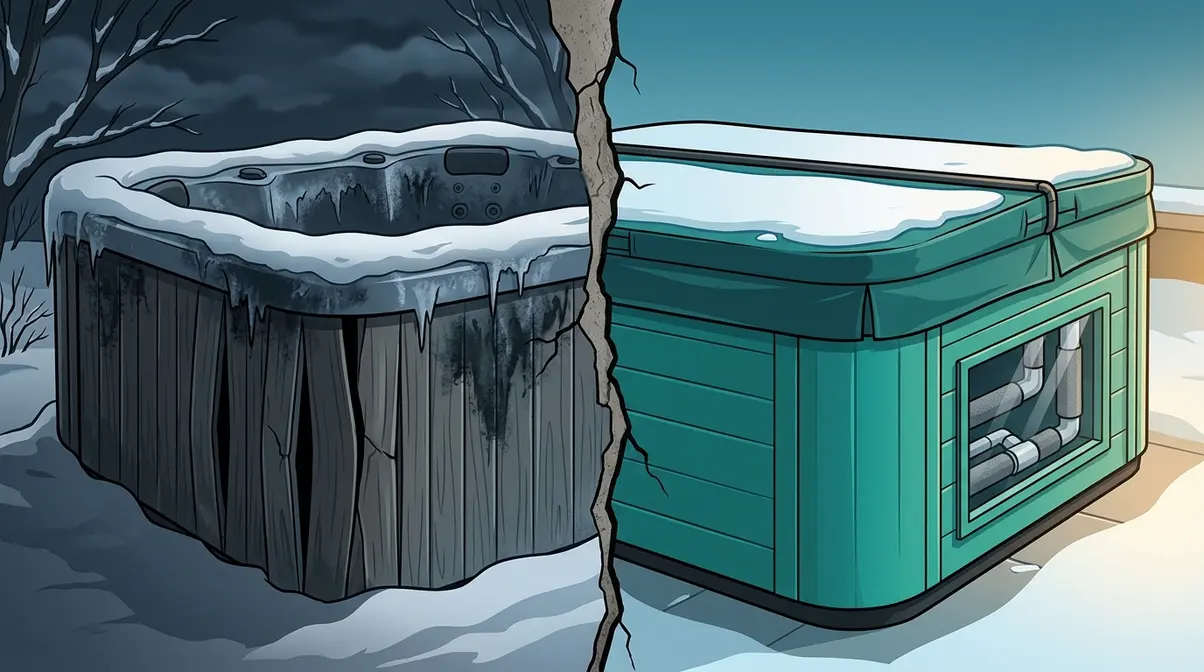
Winterizing your hot tub protects the plumbing, pumps, and shell from freeze damage that most warranties explicitly exclude. Water expands by roughly 9% when it freezes — and that expansion has nowhere to go inside sealed PVC pipes, pump housings, and heater manifolds. The result is cracked fittings, burst pipes, and damaged equipment that can sideline your tub for an entire season.
Understanding the real cost of skipping this process — and whether winterizing or keeping the tub running makes more sense for your situation — is the foundation of the entire decision.
What Happens If You Don’t Winterize
When water left in your hot tub’s plumbing system freezes, the consequences are predictable and expensive. The most common failures are split PVC pipes at 90-degree elbow fittings (where water pools), cracked pump volutes (the housing that surrounds the pump impeller), and fractured heater manifolds — the component that circulates water past the heating element.
Common mistakes reported by first-time winterizers include assuming the tub’s built-in freeze protection is sufficient. Most hot tubs do have a freeze sensor that runs the pumps when temperatures approach freezing — but this protection fails immediately if power is cut, if the sensor malfunctions, or if a power outage occurs during a storm. Freeze sensors are a backup system, not a substitute for proper winterization.
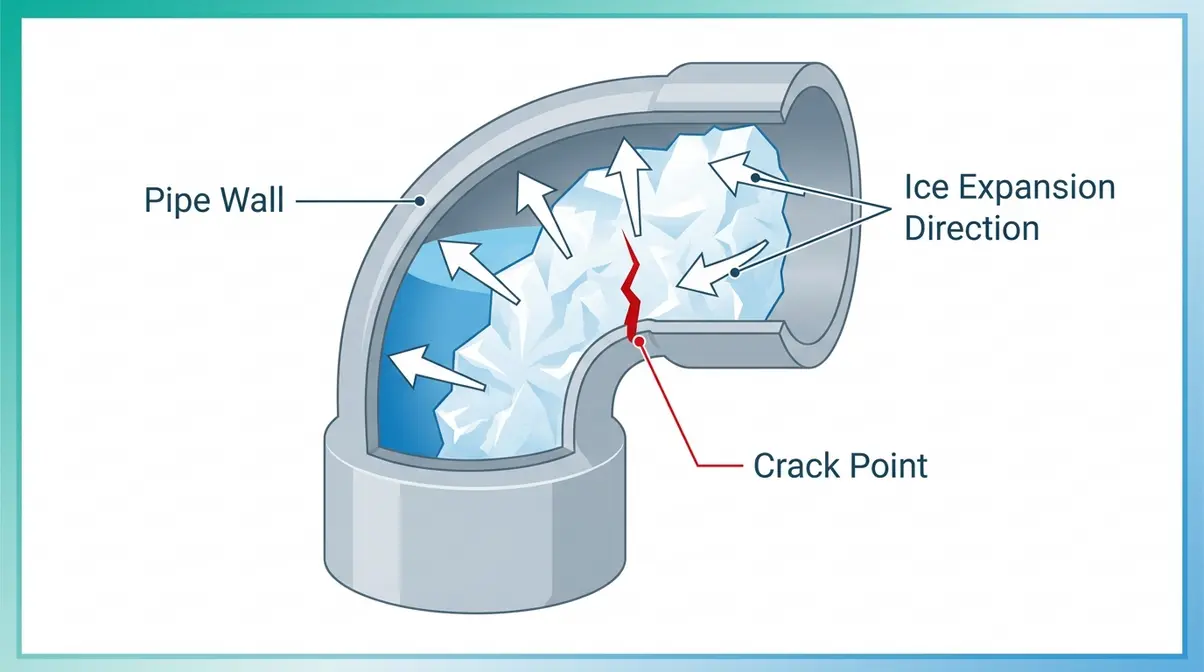
Across hot tub owner communities, the consistent advice is clear: freeze damage is the most preventable — and most expensive — form of hot tub repair. Forbes Home research on spa repair costs confirms that freeze-related plumbing repairs are among the top reasons owners face unexpected out-of-pocket expenses, often costing thousands of dollars because accessing buried or cabinet-enclosed pipes requires dismantling the equipment bay entirely.
Winterize or Keep It Running?
Many owners don’t realize they have a genuine choice here. If you live in a climate where temperatures rarely drop below 20°F (-7°C) and you use your hot tub regularly, keeping it running through winter is often the smarter option. A properly maintained, continuously running hot tub is self-protecting — the circulating warm water and freeze sensor work together to prevent ice formation.
The math matters, though. Running a hot tub through winter costs roughly $50–$100 per month in electricity depending on your climate, insulation quality, and local rates. If you’re away for extended periods or live in a region with sustained sub-freezing temperatures, winterizing saves money and eliminates risk.
- Choose if:
- You won’t use the tub for more than 4–6 consecutive weeks
- Temperatures in your area regularly drop below 0°F (-18°C)
- You’re traveling or leaving the property unattended in winter
- Your power supply is unreliable during winter storms
- Choose if:
- You use it regularly (even once a week) through winter
- Your climate is mild (rarely below 20°F / -7°C)
- You can monitor it daily for equipment issues
How Much Does It Cost to Winterize?
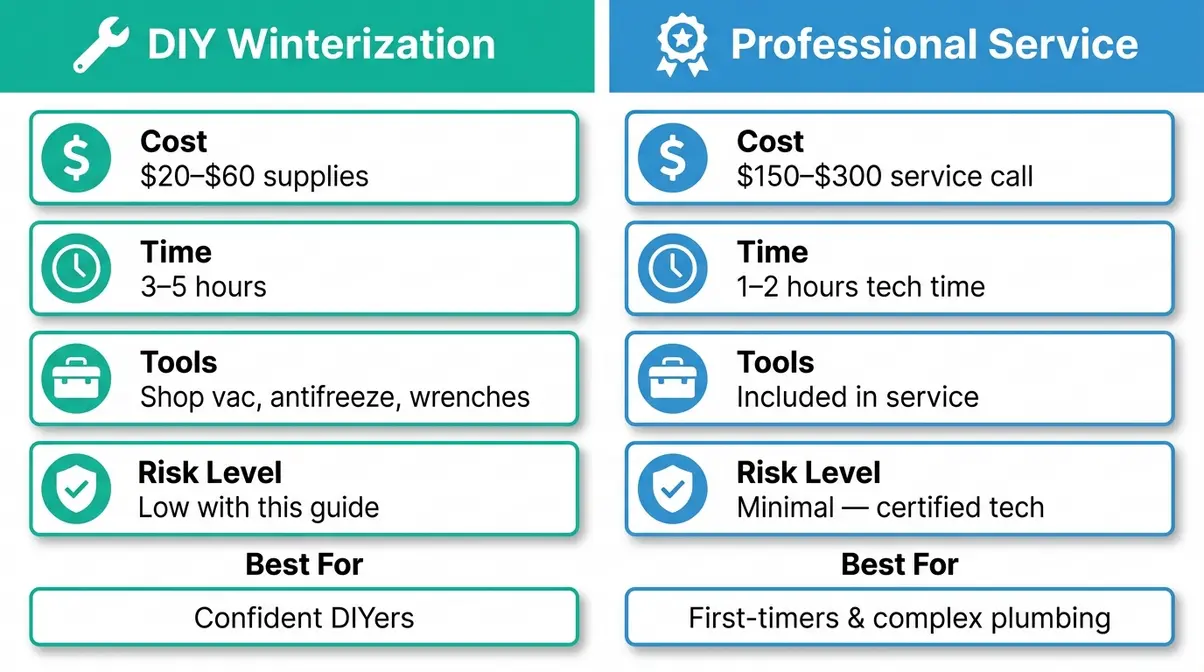
Knowing the cost upfront helps you decide whether DIY or professional winterization makes more sense for your situation.
| Approach | Typical Cost | Time Required | Best For |
|---|---|---|---|
| DIY Winterization | $20–$60 (supplies only) | 3–5 hours | Owners comfortable with basic maintenance |
| Professional Service | $150–$300 | 1–2 hours (tech time) | First-timers, complex plumbing, warranty requirements |
| DIY with Pro Consult | $50–$100 | 2–3 hours | Owners wanting guidance without full service cost |
The DIY cost covers RV antifreeze ($15–$30 for 1–2 gallons), a shop vac rental if you don’t own one ($30–$50/day), and any chemical flush products. Professional winterization through a certified spa technician typically runs $150–$300 depending on your region and tub complexity. According to the Better Business Bureau, getting at least two quotes from BBB-accredited spa service companies helps ensure fair pricing and protects you from service providers who cut corners.
Tools and Materials Checklist
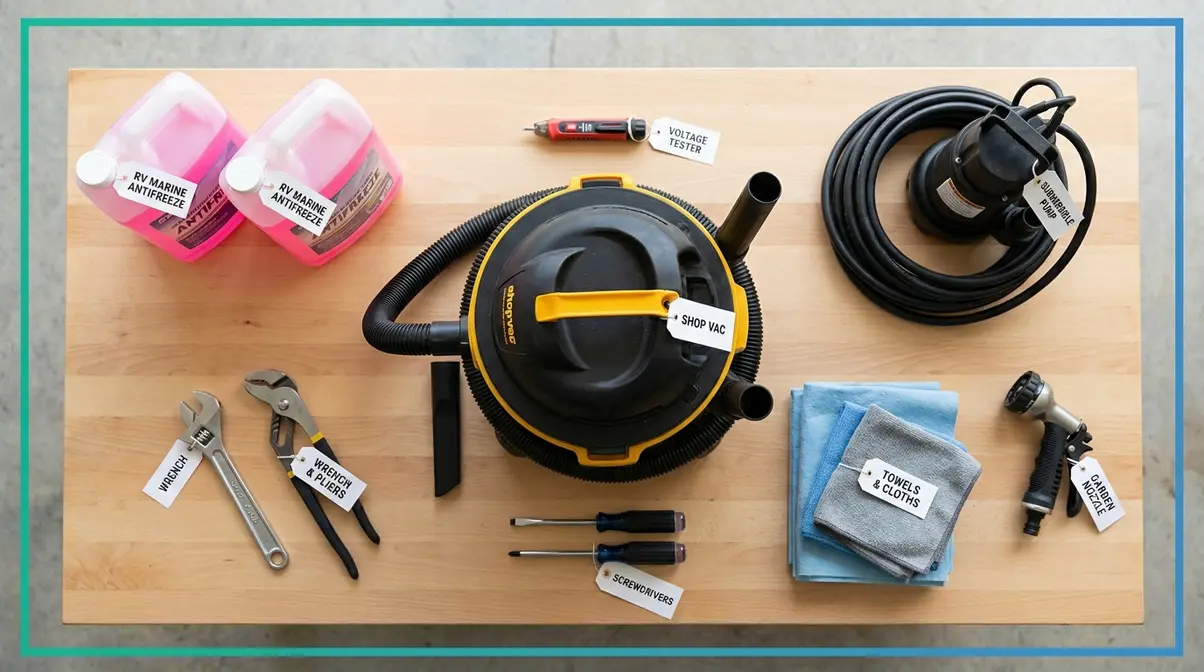
Gather everything before you start — stopping mid-process to find a tool is how mistakes happen. Most of these items are available at hardware stores, and some you likely already own. Budget 30 minutes for tool assembly before beginning the winterization process.
What tools are essential for winterizing?
Our team evaluated the standard tool recommendations from major spa manufacturers and cross-referenced them against the practical experience shared across hot tub owner communities. This list reflects what actually works — not just what’s theoretically required.
- Shop vac (wet/dry vacuum, minimum 5-gallon capacity): The single most important tool in the process. You’ll use it to blow water out of plumbing lines AND to suck residual water from low points. A shop vac operating at 80–100 CFM (cubic feet per minute) provides safe, effective pressure without risking seal damage. Do NOT use a high-PSI air compressor — compressors operating above 30 PSI can blow out O-ring seals in pump unions and jet fittings, causing leaks that won’t show up until spring.
- Submersible pump (optional but recommended): Speeds up the initial drain from 4–6 hours to 30–45 minutes. A 1/6 HP submersible pump handles most residential hot tubs.
- Garden hose: For directing drain water away from the foundation.
- Flathead and Phillips screwdrivers: For removing equipment bay panels and drain plug covers.
- Adjustable wrench or channel-lock pliers: For loosening pump unions (the threaded fittings that connect pipes to the pump body).
- Wet/dry shop towels or microfiber cloths: For wiping down interior surfaces and jet fittings.
- Non-contact voltage tester: For confirming power is off before touching any electrical components. Safety first, always.
Materials and Chemicals
For a complete breakdown, consult our hot tub chemicals guide.
- RV/Marine antifreeze (Propylene Glycol formula): 1–2 gallons depending on tub size. This is non-toxic and specifically designed for potable water systems. Never use automotive antifreeze — it contains Ethylene Glycol, which is highly toxic to humans and animals and will contaminate your plumbing system.
- Hot tub flush/line cleaner product: One treatment dose per manufacturer instructions. Flushes biofilm from plumbing lines before draining.
- Bromine or chlorine shock: For a final chemical balance before shutdown.
- pH increaser/decreaser: To balance water chemistry before flushing.
- Filter cleaning solution: For soaking and storing your filter cartridge.
- Foam backer rod or pipe insulation foam: For wrapping exposed plumbing in the equipment bay in extreme cold climates.
- Waterproof cover locks or tie-down straps (2–4): For securing the cover against winter wind and snow load.
- Plastic bags or zip-lock bags: For storing drain plugs and small hardware so nothing gets lost over winter.
Complete Step-by-Step Process
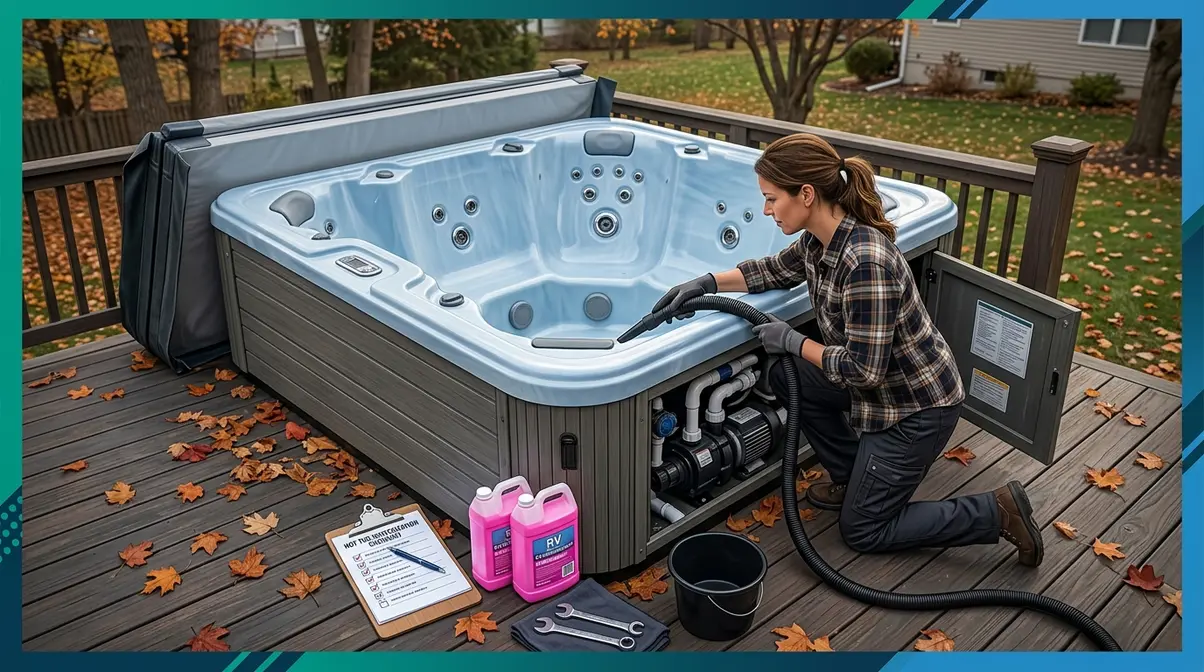
The complete hot tub winterization process takes 3–5 hours and follows six sequential phases. Skipping phases or changing the order creates protection gaps — especially between the line-clearing and antifreeze steps. Follow each phase in sequence.
“Unhook pump hose. Dump antifreeze in the hose and use compressor again to blow antifreeze through the system. Also drain the pump, there is a…”
— Experienced hot tub owner, describing the core of the Failsafe Freeze Protocol in a community forum
This is exactly the sequence The Failsafe Freeze Protocol follows — and this guide fills in every detail that quote leaves hanging.
Phase 1: Balance and Flush System
Why this phase matters: Draining without flushing leaves biofilm — a thin layer of bacteria and organic residue — coating the inside of your plumbing lines. That biofilm breeds bacteria over winter and creates a contamination problem when you refill in spring. The CDC Healthy Water program recommends flushing hot tub plumbing systems regularly to prevent biofilm accumulation and the health risks associated with it.
Step 1: Test your water chemistry with test strips or a liquid test kit. Your target before shutdown: pH 7.2–7.6, alkalinity 80–120 ppm (parts per million), sanitizer at normal operating levels.
Step 2: Adjust pH and alkalinity as needed using pH increaser or decreaser. Add chemicals with jets running to distribute evenly. Wait 15 minutes.
Step 3: Add your hot tub flush/line cleaner product according to package directions. Run the jets on high for 30 minutes. This circulates the cleaner through every plumbing line, jet body, and pump housing — loosening biofilm so it drains out with the water rather than sitting in your pipes all winter.
Step 4: Add a final dose of bromine or chlorine shock. Run jets for 10 more minutes. This kills any remaining bacteria before you drain.
Estimated time for Phase 1: 60–90 minutes (mostly waiting for chemicals to circulate).
Phase 2: Turn Off Power and Drain
Why this phase matters: Working around water and electricity is dangerous. Always kill power at the breaker before touching any component — not just at the control panel. The control panel switch does not disconnect power to the pump motors and heater.
Step 5: Turn off the hot tub at the GFCI breaker (ground fault circuit interrupter — the safety breaker in your electrical panel or sub-panel dedicated to the hot tub). Verify it’s off with your non-contact voltage tester before proceeding.
Step 6: Locate your primary drain valve. On most hot tubs, this is a spigot (a small threaded valve) at the base of the cabinet, accessible by removing a bottom panel. Attach your garden hose and direct water away from your home’s foundation. Open the valve.
Step 7 (Optional — highly recommended): While the drain valve is open, drop your submersible pump into the tub to accelerate drainage. Position it at the lowest point of the tub floor. A submersible pump reduces drain time from 4–6 hours to under an hour.
Step 8: Once the main water level is low, use your shop vac in suction mode to remove water pooling around the foot well and any low points the drain valve can’t reach. The goal is to get the shell as dry as possible before moving to line clearing.
Estimated time for Phase 2: 45 minutes–5 hours (depending on whether you use a submersible pump).
Phase 3: Remove and Clean Filters
Why this phase matters: Leaving a wet filter in a closed hot tub over winter creates a perfect environment for mold and bacteria growth. Clean, dry, properly stored filters also last longer — replacing a filter cartridge costs $30–$80, so proper storage protects that investment.
Step 9: Remove the filter cartridge (or cartridges — some tubs have 2–4 filters) from the filter canister (the cylindrical housing, usually near the top of the tub or in a dedicated filter compartment). Twist counterclockwise or lift straight up depending on your model.
Step 10: Rinse the filter thoroughly with a garden hose, working from the inside out between the pleats. For a deeper clean, soak the filter overnight in a filter cleaning solution diluted per package instructions. This removes oils, minerals, and organic debris that plain water can’t dislodge.
Step 11: Allow the filter to dry completely — at least 24 hours — before storing. Store in a dry location indoors, away from freezing temperatures. A clean, dry plastic bag or storage tote works well.
Step 12: Leave the filter canister open and empty for winter. This prevents moisture from being trapped inside the housing.
Estimated time for Phase 3: 20 minutes active time + overnight soak (optional).
Phase 4: Clear Lines with Shop Vac
This is the most critical phase of the entire process — and the one most guides explain poorly. Residual water left in plumbing lines is what causes freeze damage. The shop vac “blow-and-suck” method removes water from lines that gravity draining cannot reach. Consumer Reports recommends wet/dry shop vacuums as the safest tool for this application because they generate sufficient airflow to clear water without the pressure risks associated with air compressors.
⚠️ Critical Warning: Do NOT use a high-PSI air compressor for this step. Compressors operating above 30 PSI can blow out O-ring seals inside pump unions and jet fittings. Seal replacement requires disassembling plumbing connections — a much bigger repair job than the freeze damage you were trying to prevent.
Step 13 — The Blow-and-Suck Method:
- Part A — Blow mode (clearing jets):
- Set your shop vac to BLOW mode (reverse the hose to the exhaust port).
- Hold the shop vac hose tightly over each jet fitting in the tub shell, one at a time.
- Apply the hose firmly and blow for 10–15 seconds per jet. You’ll hear water gurgling and see it draining out through the equipment bay.
- Work systematically around the tub — every jet, every air injection port, every diverter valve opening.
- Repeat each jet twice to ensure clearance.
- Part B — Suck mode (removing residual water):
- Switch the shop vac back to SUCTION mode.
- Apply the hose to each jet fitting again and suck for 10 seconds. This pulls any water that blowing pushed to a low point back out through the jet.
- Pay special attention to bottom jets — water pools at the lowest jet in each plumbing loop.
- Part C — Pump union blow-out:
- Locate the pump unions in the equipment bay — these are the large threaded fittings (typically 2–3 inches in diameter) connecting the plumbing pipes to each pump.
- Use your wrench to loosen (not fully remove) each union fitting by 1–2 turns. This creates a gap that allows trapped water to escape when you blow.
- Hold the shop vac hose over each open union port and blow for 15 seconds. Water will drain from the gap you created.
- Re-tighten unions finger-tight — snug, not torqued. They’ll be fully tightened at spring startup.
Estimated time for Phase 4: 45–60 minutes.
Phase 5: Protect Pumps and Heater
Why this phase matters: Even after blowing out the lines, small amounts of water can remain pooled inside pump housings and the heater manifold. These components are the most expensive to replace — a new pump runs $200–$600, and a heater assembly can cost $300–$800 — so extra protection here is worth the 15 minutes it takes.
Step 14:
- With unions loosened from Phase 4, tilt each pump slightly (if your plumbing allows) to encourage any remaining water to drain out through the union opening. Use a shop towel to absorb pooled water at the bottom of each pump housing.
- Locate the drain plug on each pump — most pumps have a small threaded plug at the lowest point of the pump body (check your pump’s manual for exact location). Remove it with a screwdriver or wrench. Allow any remaining water to drain. Leave the plug out over winter, storing it in a labeled bag.
- Locate the heater manifold drain plug (usually a small brass or plastic plug at the bottom of the heater tube assembly). Remove it and allow it to drain completely. Store the plug with the pump plugs.
- For extreme cold climates (temperatures regularly below -20°F / -29°C): Wrap exposed PVC plumbing in the equipment bay with foam pipe insulation. Pay particular attention to any pipes that run along the outer cabinet wall — these are most exposed to cold air infiltration. Secure insulation with waterproof tape.
Estimated time for Phase 5: 15–20 minutes.
Phase 6: Secure Cover for Winter
Why this phase matters: A hot tub cover does more than keep debris out — it’s the final layer of insulation protecting the shell and any residual warmth in the equipment bay. A cover that blows off in a December windstorm or collapses under snow load leaves your tub exposed to the very conditions you just spent hours protecting against.
Step 15:
- Clean the top and underside of your cover with a mild vinyl cleaner and UV protectant. Winter UV exposure and cold crack vinyl covers faster than summer sun.
- Confirm the cover is fully seated on all four sides with no gaps. Even a 1-inch gap allows cold air infiltration that can freeze any residual moisture in the shell.
- Attach cover locks or tie-down straps — minimum two, preferably four, one per side. Wind lifts hot tub covers with surprising force; a 50 mph gust can send an unsecured cover across your yard.
- For climates with heavy snow loads (over 12 inches of expected accumulation): Place a rigid foam board panel (1–2 inch thickness) on top of the cover before closing. This distributes snow weight and prevents the cover foam core from compressing permanently under load.
- If your tub is in an exposed location, consider adding a windbreak — a temporary tarp or privacy screen on the prevailing wind side reduces heat loss and cover stress significantly.
Estimated time for Phase 6: 20–30 minutes.
How to Use Antifreeze for Winterizing
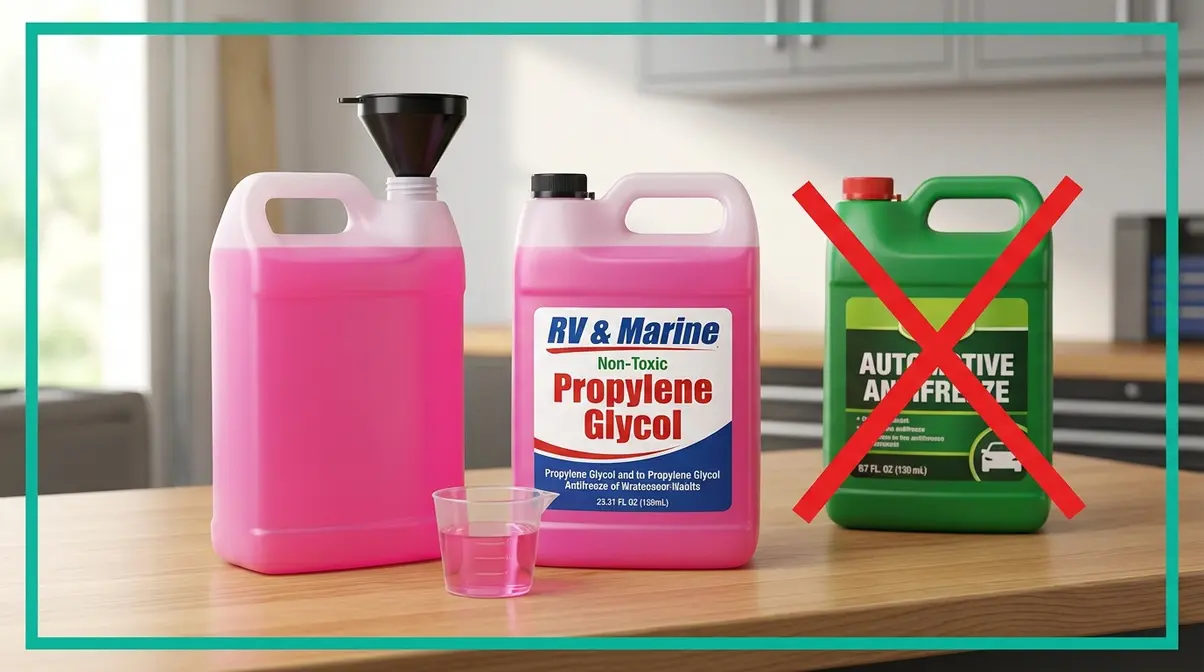
Antifreeze is the insurance layer of the Failsafe Freeze Protocol — it protects the small amounts of water that a shop vac cannot physically remove from low-point plumbing traps. Even after a thorough blow-out, physics guarantees that trace water remains in some fittings. Antifreeze prevents that trace water from freezing and expanding.
Do I need antifreeze to winterize?
In most climates, yes — antifreeze is strongly recommended even after a thorough shop vac blow-out. The exception is climates where temperatures never drop below 35°F (2°C), where the risk of residual water freezing is minimal.
If you live in a region with sustained freezing temperatures — anything regularly below 32°F (0°C) for more than a few days — antifreeze provides critical protection for the water that gravity and air pressure cannot remove. Think of it as the backup layer: your shop vac does 95% of the work, and antifreeze covers the remaining 5% that could cause the most damage.
Which Type of Antifreeze to Use
Use only RV/Marine antifreeze — specifically the Propylene Glycol formula. This is non-negotiable. The CDC Agency for Toxic Substances classifies propylene glycol as generally recognized as safe (GRAS) for food contact applications, which is why it’s used in RV water systems, marine applications, and food processing equipment.
Never use automotive antifreeze. Standard automotive antifreeze contains Ethylene Glycol — a substance the CDC classifies as toxic to humans and animals. It has a sweet taste that attracts pets and children. Using automotive antifreeze in your hot tub plumbing will contaminate the entire system, requiring professional flushing and potentially replacement of components that absorbed the chemical.
| Antifreeze Type | Chemical | Safe for Hot Tubs? | Color |
|---|---|---|---|
| RV/Marine (Potable) | Propylene Glycol | ✅ YES | Pink/Red |
| Automotive (Radiator) | Ethylene Glycol | ❌ NEVER | Green/Orange/Yellow |
| Swimming Pool | Propylene Glycol | ✅ YES | Pink |
Look for labels that say “non-toxic,” “RV and marine,” or “potable water safe.” Brands like Star Brite, Camco, and Splash sell the correct type at most hardware and RV supply stores.
How Much Antifreeze You Need
Most residential hot tubs require 1–2 gallons of RV/Marine antifreeze. The exact amount depends on your tub’s plumbing complexity and size.
- Small hot tubs (2–4 person, under 300 gallons): 1 gallon is typically sufficient
- Medium hot tubs (5–6 person, 300–450 gallons): 1.5 gallons recommended
- Large hot tubs (7+ person, over 450 gallons) or tubs with multiple pump systems: 2 gallons recommended
Buy 2 gallons regardless of your tub size. It’s better to have a half-gallon leftover than to run short mid-process. Unopened antifreeze stores indefinitely. Check our hot tub size guide if you are unsure of your capacity.
Where to Pour Antifreeze
This is where many first-timers get confused — you’re not pouring antifreeze into the main tub shell. You’re introducing it directly into the plumbing system through specific access points.
- Method 1 — Via the pump union (most effective):
- With the pump union loosened from Phase 4, pour antifreeze directly into the open union fitting using a small funnel.
- Reconnect the union hand-tight.
- Briefly blow through the union port with the shop vac to distribute the antifreeze through the connected plumbing loop.
- Repeat for each pump union.
- Method 2 — Via the jet fittings (secondary distribution):
- Pour approximately ¼ cup of antifreeze directly into each jet opening in the tub shell.
- The antifreeze will settle into the jet body and the plumbing immediately behind it, protecting the fitting and the nearest pipe section.
- Focus on bottom jets — gravity pulls antifreeze down and into the lowest points of each plumbing loop, exactly where residual water pools.
- Method 3 — Via the filter canister port:
- Pour ½ gallon of antifreeze into the empty filter canister housing.
- This protects the filter canister plumbing connections and the primary circulation loop.
Brand-Specific Winterizing Tips
General winterization steps work across all hot tub brands, but specific drain plug locations, union configurations, and access panel layouts vary significantly by manufacturer. Our team reviewed manufacturer winterization documentation from the five most common brands to surface the brand-specific details that trip up first-timers.
Jacuzzi Hot Tubs
Jacuzzi hot tubs typically feature a primary drain spigot at the front lower cabinet panel and a secondary drain plug located inside the filter canister compartment. On J-300 and J-400 series models, there are two pump unions per pump — a suction union (water in) and a discharge union (water out). Loosen both when performing the pump union blow-out in Phase 4. Jacuzzi’s official winterization guidance recommends running the jets for 30 seconds after adding antifreeze to distribute it through the plumbing loops — a useful brand-specific step. Sundance Spas and Jacuzzi share similar plumbing architectures, so Sundance owners can reference Jacuzzi guidance as a secondary resource.
Hot Spring Spas
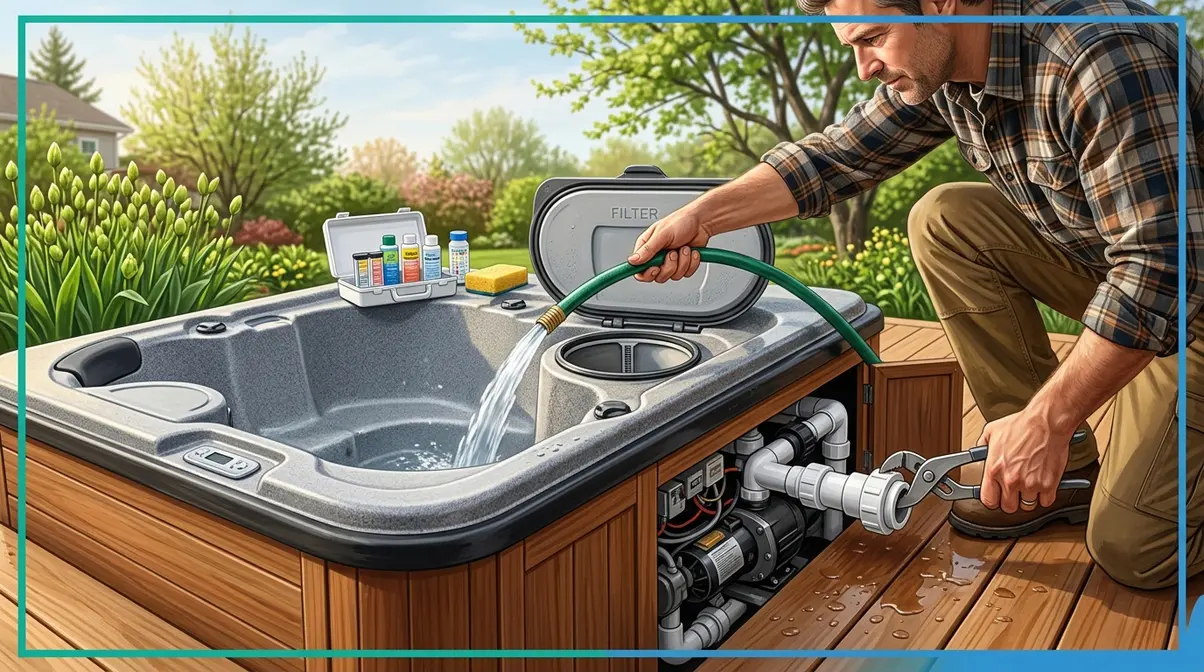
Hot Spring models (manufactured by Watkins Wellness) feature a unique “no-bypass” filtration system that routes 100% of water through the filter. This means the filter canister connections carry more water volume than competing brands — pour a full ½ gallon of antifreeze into the filter canister housing during your antifreeze application step. Hot Spring’s FreshWater Salt System models require an additional step: remove the salt cell cartridge from the housing and store it indoors over winter. Salt cells can crack in freezing temperatures.
Bullfrog Spas
Bullfrog’s JetPak system — removable jet modules that snap into the tub shell — creates additional winterization points. Each JetPak has its own plumbing connections that can trap water. Remove each JetPak from the tub shell during Phase 3 (after filter removal), rinse with clean water, and store indoors. This eliminates freeze risk at the JetPak connection points entirely. Bullfrog’s equipment bay is typically accessed via a front panel on the long side of the tub.
Sundance Spas
Sundance models use a two-speed pump system with clearly labeled union fittings — suction unions are typically marked with an “S” or blue collar, discharge unions with a “D” or red collar. Loosen all four union fittings (two per pump) during Phase 4. Sundance’s MicroClean filtration system uses a large-diameter filter canister that holds more water than standard canisters — use the shop vac in suction mode on the canister port after removing the filter to clear residual water before adding antifreeze.
Other Brands (Cal Spa, Master Spa)
Cal Spa and Master Spa models generally follow standard winterization procedures with drain spigots at the lower front panel. Arctic Spa deserves special mention: designed specifically for extreme cold climates, Arctic Spa models include a factory-installed full-foam insulation system that retains heat significantly better than standard tubs. However, this insulation also makes locating drain plugs more challenging — consult your Arctic Spa owner’s manual for the exact drain plug location specific to your model, as it varies by series. Arctic Spa owners in climates below -20°F (-29°C) should add a dedicated equipment bay heater (a small 100-watt space heater on a thermostat) as an additional protection layer.
Winterizing Without Draining
Winterizing without draining is possible, but it carries real risks that most guides don’t acknowledge honestly. This method is appropriate for mild climates or short-term closures — not for extended shutdowns in freezing conditions.
Risks of Skipping the Drain
The no-drain method relies entirely on antifreeze to protect standing water throughout the entire plumbing system. That requires significantly more antifreeze (4–6 gallons versus 1–2 gallons for the drained method) and provides protection only down to the antifreeze’s rated freeze point — typically -50°F (-46°C) for full-strength RV antifreeze, but much warmer when diluted by the water already in your tub.
Here’s the critical problem: you cannot mix enough antifreeze into a full tub of water to achieve meaningful freeze protection without draining first. A 400-gallon hot tub would require approximately 80 gallons of antifreeze to achieve a -20°F freeze point — that’s neither practical nor economical.
The no-drain method is only appropriate when: temperatures will stay above 25°F (-4°C), the closure is under 3 weeks, and you add sufficient antifreeze to the plumbing system (not the main tub water) to protect the lines.
No-Drain Winterizing Steps
If your situation genuinely calls for this method — mild climate, short closure, or you simply cannot drain — follow these steps:
- Balance water chemistry exactly as in Phase 1 of the full process. Add a winterizing algaecide to prevent algae growth during the closure period.
- Turn off power at the breaker. Do not leave the heater running with the tub unmonitored.
- Remove and store the filter as in Phase 3. Do not leave a wet filter in a closed tub.
- Add RV/Marine antifreeze to the plumbing access points — pump unions, jet fittings, and filter canister port — using the same Method 1, 2, and 3 procedure described in the antifreeze section. Use 2 full gallons for this application since the plumbing lines still contain water.
- Secure the cover with locks or tie-down straps as in Phase 6.
- Check the tub every 3–5 days if temperatures approach freezing. A no-drain closure is not a set-and-forget solution.
For ongoing care, review our hot tub maintenance tips.
De-Winterizing Your Hot Tub in Spring
De-winterizing — getting your hot tub running again after winter — typically takes 2–4 hours and is considerably simpler than the winterization process. The key is patience: don’t rush the fill and startup sequence, and test water chemistry before anyone gets in.
Check for Winter Damage First
Before refilling, do a visual inspection of everything you winterized. Look for:
- Cracked or discolored PVC fittings in the equipment bay (white stress marks or visible splits)
- Pump union O-rings that appear flattened, cracked, or missing
- Cover damage — torn vinyl, compressed foam core, or broken hinge hardware
- Any signs of moisture intrusion in the equipment bay (water stains, rust on metal components)
If you find cracked fittings or damaged seals, repair them before refilling. Filling a tub with a compromised plumbing connection means water in your equipment bay.
Refill and Restart Steps
Step 1: Reinstall all drain plugs — pump drain plugs, heater manifold plug, and any others you removed during winterization. Tighten finger-tight plus ¼ turn with a wrench. Don’t overtighten plastic plugs.
Step 2: Tighten all pump unions fully. Hand-tight plus ¼ turn with channel-lock pliers is sufficient. Overtightening cracks union bodies.
Step 3: Reinstall the clean, dry filter cartridge in the filter canister.
Step 4: Fill the tub with a garden hose directed through the filter canister (not the main tub opening). Filling through the filter canister purges air from the plumbing system and prevents air locks — a condition where trapped air prevents pump priming.
Step 5: Restore power at the GFCI breaker. Allow the control system to run its startup sequence (typically 2–5 minutes).
Step 6: Check for leaks at all union fittings and drain plugs. A slow drip at a union just needs a ¼-turn tightening. A steady leak requires draining and inspecting the O-ring.
Step 7: Run the jets for 15 minutes to purge any residual antifreeze from the plumbing lines. The antifreeze is non-toxic, but you want it diluted and filtered before using the tub.
Test and Balance Water Chemistry
Before your first soak of the season, test and balance your water:
| Parameter | Target Range | Test Frequency |
|---|---|---|
| pH | 7.2–7.6 | Before first use |
| Total Alkalinity | 80–120 ppm | Before first use |
| Calcium Hardness | 150–250 ppm | Before first use |
| Sanitizer (Bromine) | 3–5 ppm | Before first use |
| Sanitizer (Chlorine) | 1–3 ppm | Before first use |
Add chemicals with jets running, wait 30 minutes, retest, and adjust. Your tub is ready for use when all parameters are in range.
Common Mistakes That Cause Repairs
The most expensive hot tub repairs in spring are almost always traced back to one of five preventable winterization mistakes. Our team reviewed service call data shared by spa technicians across owner communities and identified the patterns that repeat most often.
5 Mistakes to Avoid
Mistake 1: Using the wrong antifreeze.
The most dangerous mistake. Automotive antifreeze (Ethylene Glycol) contaminates your entire plumbing system and is toxic to people and pets. Always check the label before purchasing — it must say “RV and Marine,” “non-toxic,” or “propylene glycol.” The pink color is a reliable visual indicator of the correct product, but always read the label.
Mistake 2: Relying on the freeze sensor instead of winterizing.
Hot tub freeze sensors are designed as a safety backup during brief cold snaps, not as a substitute for winterization during extended closures. They require continuous power to function. A power outage during a winter storm — exactly when you need protection most — disables freeze protection entirely.
Mistake 3: Skipping the shop vac line-clearing step.
Draining the tub removes water from the shell but leaves water sitting in every plumbing line, jet body, and pump housing. Gravity alone cannot drain horizontal runs or upward-sloping pipe sections. Skipping Phase 4 is the single most common cause of cracked plumbing discovered in spring.
Mistake 4: Using a high-PSI air compressor instead of a shop vac.
This mistake is specifically noted by Leslie’s Pool Supplies in their winterization guidance. Compressors operating above 30 PSI can blow out O-ring seals in pump unions and jet fittings. The repair cost to replace blown seals — often requiring plumbing disassembly — frequently exceeds the cost of a shop vac rental.
Mistake 5: Leaving a wet filter in the tub.
A wet filter sealed in a closed hot tub over winter becomes a perfect incubator for mold, mildew, and bacteria. Come spring, you’ll have contaminated water from the first fill — and potentially a filter that needs replacing rather than just cleaning. Remove it, clean it, dry it, and store it indoors.
When to Hire a Professional
Some situations genuinely call for a certified spa technician rather than a DIY approach. Hire a professional if:
- Your tub is under manufacturer warranty and the warranty terms require professional winterization (check your documentation — some manufacturers void warranties for DIY winterization).
- Your tub has a complex multi-pump system (3+ pumps) with plumbing you’re not comfortable working with.
- You discover cracked fittings or damaged unions during the winterization process — these require repair before completing winterization.
- Your tub is a swim spa or exercise spa — these have significantly more plumbing complexity than standard hot tubs.
- This is your first time and you’re genuinely uncertain — a one-time professional service where you watch and ask questions is worth the $150–$300 cost as a learning experience.
When hiring, use BBB-accredited spa service companies to verify credentials and check for complaint history before booking. Get at least two quotes, and ask specifically whether the technician is PHTA (Pool and Hot Tub Alliance) certified.
Frequently Asked Questions
How many gallons of antifreeze?
Most hot tubs require 1–2 gallons of RV/Marine antifreeze for a properly drained winterization, according to industry guidelines. Small tubs (2–4 person) typically need 1 gallon; medium tubs (5–6 person) need approximately 1.5 gallons; large tubs (7+ person) or tubs with multiple pump systems need 2 gallons. Always buy 2 gallons regardless of tub size — having extra on hand costs under $15 and prevents running short mid-process. If you’re using the no-drain method, increase to 4–6 gallons, though that approach is only recommended for mild climates and short closures.
Where do you pour antifreeze?
Antifreeze goes into the plumbing system — not the main tub shell. Pour it through three access points: (1) directly into each loosened pump union fitting using a small funnel, then blow briefly with a shop vac to distribute it through the pump plumbing loop; (2) pour approximately ¼ cup into each jet opening in the tub shell, focusing on bottom jets where water pools; and (3) pour ½ gallon into the empty filter canister housing to protect the main circulation line. This three-point method ensures antifreeze reaches every section of plumbing where residual water can freeze.
Can I leave my hot tub empty?
Leaving your hot tub completely empty over winter without proper winterization is highly risky. Even after draining, residual water remains in the plumbing lines and pump housings. If this hidden water freezes, it expands and causes severe pipe cracking. You must use a shop vac to clear the lines and add RV antifreeze to protect the internal components.
At what temperature to winterize?
You should winterize your hot tub before ambient temperatures consistently drop below 32°F (0°C). Ideally, perform the winterization process on a mild autumn day when temperatures are between 40°F and 50°F. Waiting until the first hard freeze significantly increases the risk of plumbing damage while you are trying to drain the system.
Protect Your Investment Before the Freeze
The Failsafe Freeze Protocol works because it’s sequential and complete. Water removal, antifreeze application, and cover securing each address a different failure point — and together, they close every gap that results in costly spring repairs. Hot tub freeze damage is almost entirely preventable when winterization follows the right steps in the right order.
The protocol’s three layers are designed to work together. Even if your shop vac blow-out leaves trace water in a low-point fitting, the antifreeze layer catches it. Even if antifreeze settles unevenly through one loop, the secured, insulated cover keeps the equipment bay warm enough to reduce freeze risk. Redundancy is the point.
Your next step is practical: gather your tools and supplies this week — before temperatures drop. A shop vac, 2 gallons of RV/Marine antifreeze, and 3–4 hours on a mild afternoon is all it takes to protect a hot tub that likely cost $5,000–$15,000. Work through the six phases in sequence, don’t skip the shop vac line-clearing step, and use only the pink propylene glycol antifreeze. Come spring, your tub will start up exactly as it should.