

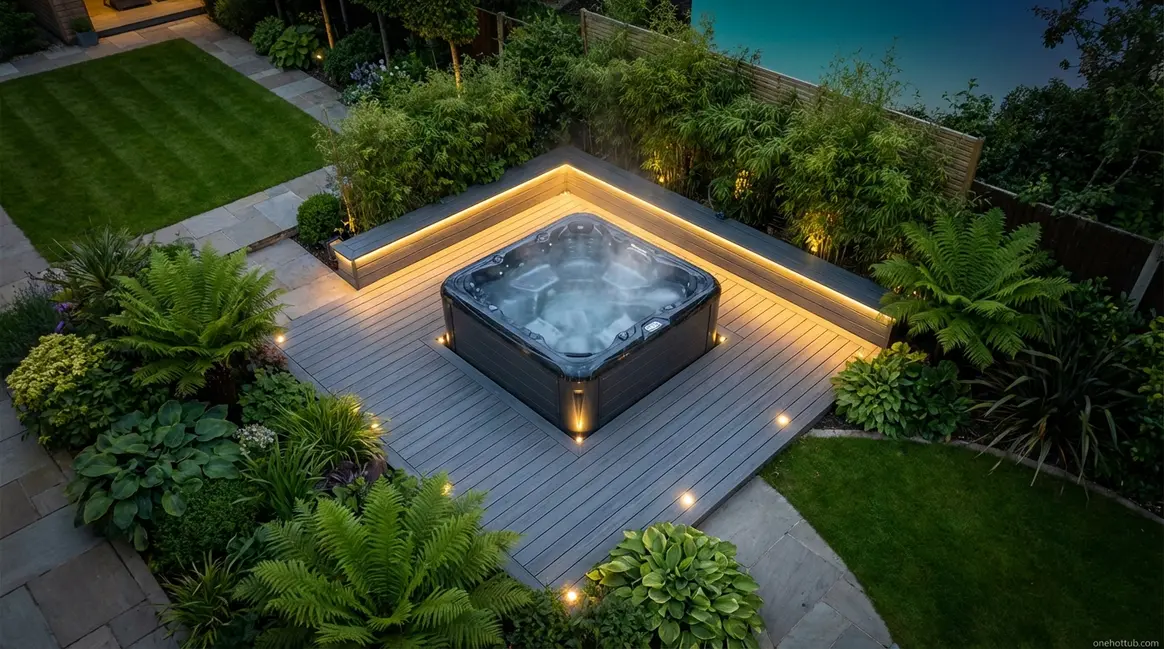
Table of Contents - Best Garden Hot Tubs 2026: Prices, Types & Hidden Costs
- Inflatable vs. Hard-Shell: How to Choose
- Top Garden Hot Tub Brands at a Glance
- Garden Hot Tub Design Ideas
- Hot Tub Enclosures, Gazebos & Garden Rooms
- Installing and Maintaining Your Garden Hot Tub
- Health Benefits and Safety Guidelines
- Limitations & Risks of Garden Hot Tubs
- Frequently Asked Questions
- Conclusion
This blog post may contain affiliate links. As an Amazon Associate I earn from qualifying purchases.
Getting a garden hot tub right means knowing two things before you spend a penny: what it will actually cost to run, and what your garden needs before delivery day. Most buyers find this out too late.
Manufacturers show you the sticker price. What they don’t mention is the £50–£100 per month in electricity, the concrete base you may need to pour, or the dedicated electrical circuit a hard-wired spa requires. The result is that thousands of buyers are blindsided by costs they simply didn’t see coming.
This guide covers every type of garden hot tub — inflatables, hard-shell spas, plug-and-play models, and wood-fired tubs — alongside the real installation requirements, total 5-year ownership costs, design ideas, enclosure options, and health and safety guidance that most buying guides skip entirely.
A garden hot tub can cost anywhere from £400 to over £10,000 — but the purchase price is only part of the story.
- Inflatables suit tight budgets (£400–£1,500) but last 2–5 years; hard-shell spas cost more upfront but last 10–20 years
- The True Cost Matrix shows 5-year ownership costs diverge sharply once you factor in electricity, maintenance, and likely replacement
- Plug-and-play models run from a standard 13–20 amp GFCI-protected socket; hard-wired spas need a dedicated 240V/50A circuit installed by a qualified electrician
- No plumbing is required — fill with a garden hose, drain with a submersible pump or via the built-in drain valve
- Health benefits are evidence-backed for relaxation and muscle relief, but consult your doctor if you have cardiovascular conditions or a pre-existing medical concern
Inflatable vs. Hard-Shell: How to Choose
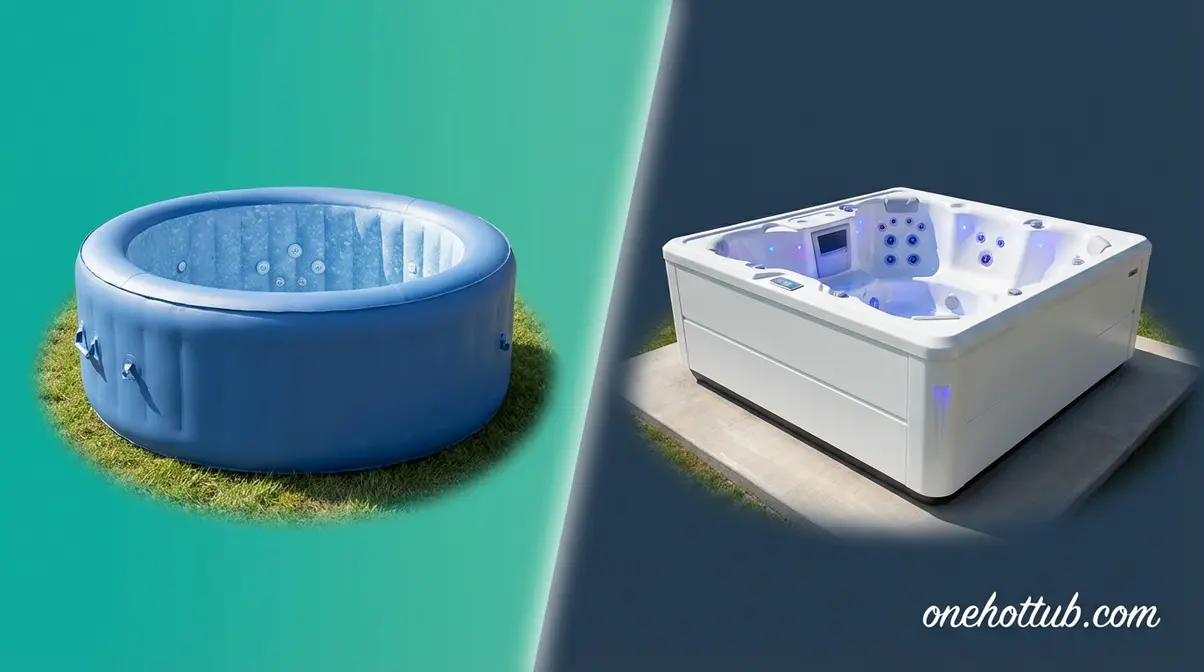
The two dominant types in the garden hot tub market sit at opposite ends of the commitment spectrum. Inflatable hot tubs offer low-cost entry and genuine portability, while hard-shell spas deliver better performance, stronger jets, and a lifespan measured in decades rather than years. According to iopool’s spa comparison guide, inflatable hot tubs typically last 2–5 years while hard-shell models endure 10–20 years — a gap that matters enormously when calculating true ownership value.
To compare these options, our team evaluated key specs from leading manufacturers, aggregated user-reported ownership experiences from community forums like Reddit’s r/hottub, and cross-referenced pricing data from major retailers (verified March 2026). We assessed five criteria: upfront cost, installation complexity, long-term durability, running costs, and performance.
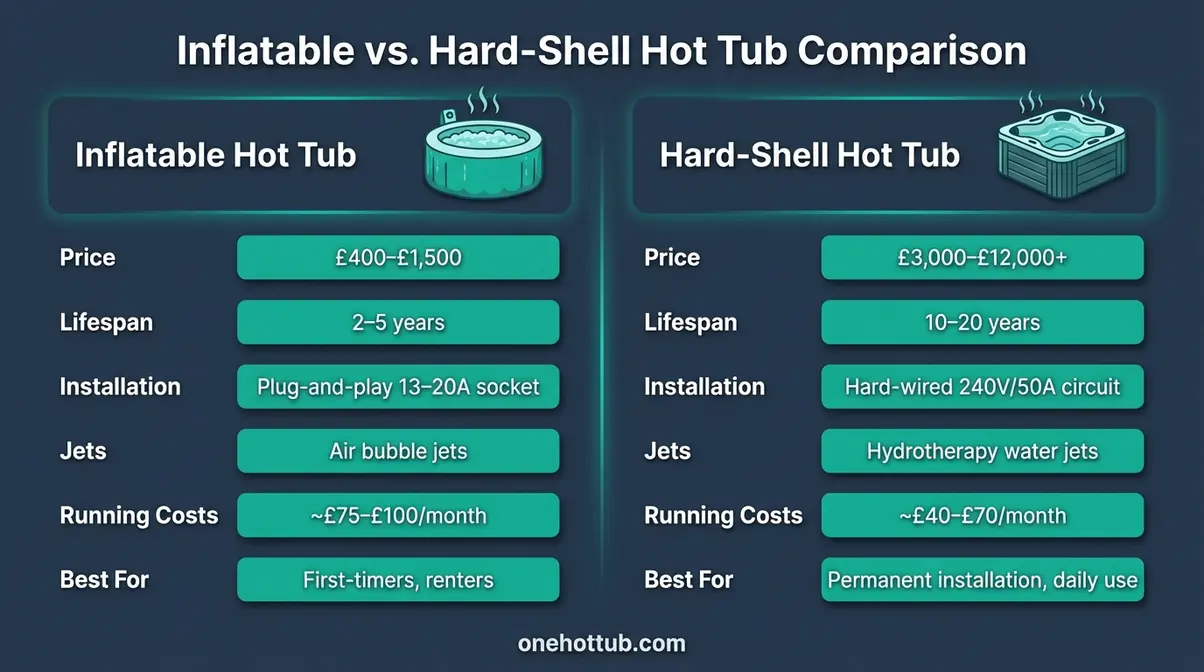
Caption: A side-by-side breakdown of the key ownership differences between inflatable and hard-shell garden hot tubs.
The Full Comparison at a Glance
| Criteria | Inflatable Hot Tub | Hard-Shell Hot Tub |
|---|---|---|
| Purchase Price | £400–£1,500 | £3,000–£12,000+ |
| Lifespan | 2–5 years | 10–20 years |
| Installation | Plug-and-play (13–20 amp GFCI socket) | Often hard-wired (240V / 50A circuit) |
| Jet Type | Air jets (bubble effect) | Hydrotherapy water jets (targeted) |
| Running Costs | Higher (~£75–£100/month) | Lower (~£40–£70/month) |
| Best For | First-timers, renters, seasonal use | Permanent installation, daily use |
The Budget Case for Inflatable Hot Tubs
An inflatable hot tub is the lowest-risk entry point into ownership. Models like the Coleman SaluSpa and Intex PureSpa typically retail between £350 and £700. Portability is a genuine advantage; renters or those testing ownership can deflate and store the tub easily. However, the limitations are real. Air jets deliver a bubble massage, not the targeted hydrotherapy of water jets. The PVC liner is vulnerable to punctures, making the 2–5 year lifespan realistic. For seasonal use or a first-time experience, inflatables offer good value.
For a full breakdown of top-rated portables, see our complete guide to inflatable hot tubs — or for compact models, see the best 2-person garden hot tubs.
Hard-Shell Tubs: When Quality Pays Off
A hard-shell hot tub (acrylic or rotomoulded thermoplastic) costs more upfront but delivers superior performance and durability. The key difference is jet technology; hard-shell hydrotherapy jets deliver directional pressure to specific muscle groups. Better insulation also means lower running costs over time, as confirmed by Sundance Spas’ buying checklist. With models ranging from compact 2-person units to large 8-person spas, this category is ideal for a permanent garden feature.
Plug-and-Play vs. Hard-Wired Installs
The electrical setup is a critical, often misunderstood factor. A plug-and-play model runs from a standard GFCI-protected household socket, requiring no electrician. Most inflatables and some entry-level hard-shells fall into this category. The trade-off is slower heating and weaker jets.
Hard-wired models require a dedicated 240V/50A circuit installed by a qualified electrician, adding £300–£1,000 to the cost. The payoff is substantial: faster heating, full jet power, and better energy efficiency. The Home Depot spa pre-delivery guide provides detailed electrical requirements for both types.
The True Cost Matrix: 5-Year Ownership
Our True Cost Matrix calculates the real 5-year cost of ownership: purchase price + installation + electricity + chemicals. It reveals a surprising picture that goes beyond the sticker price.
| Cost Component | Budget Inflatable | Mid-Range Hard-Shell |
|---|---|---|
| Purchase Price | ~£600 | ~£5,000 |
| Installation | £0 | ~£800 |
| 5-Year Electricity | ~£3,000 | ~£2,000 |
| 5-Year Chemicals | ~£750 | ~£1,000 |
| Likely Replacement | +£600 (in year 3-4) | £0 |
| 5-Year Total | ~£4,950 | ~£8,800 |
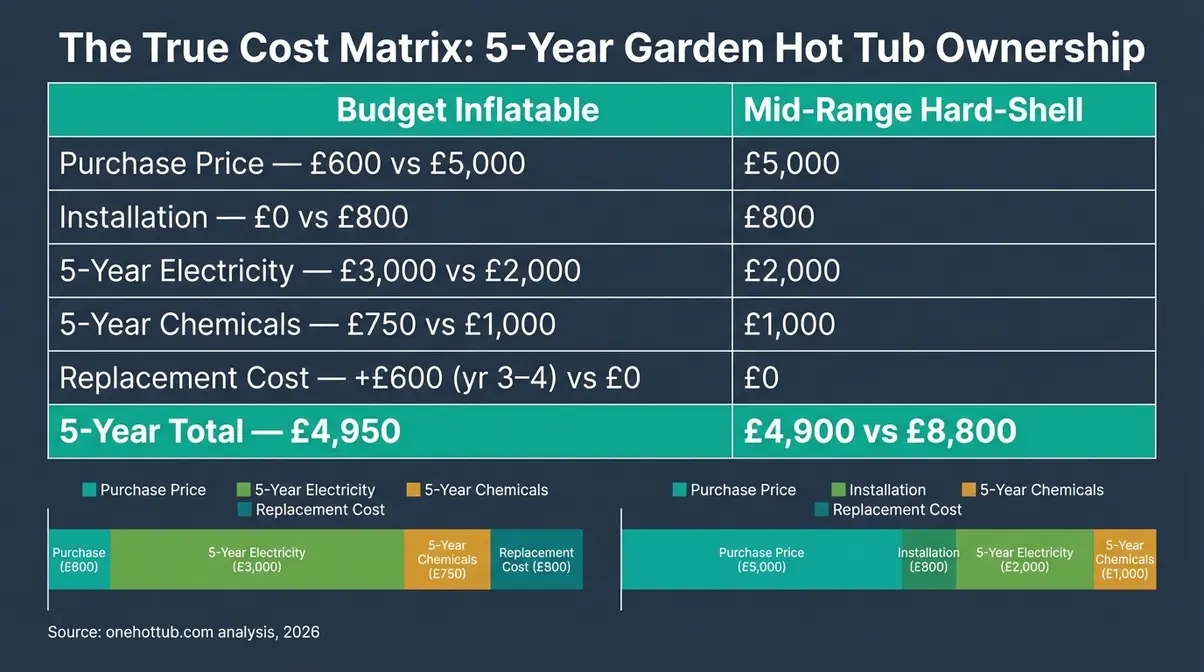
The insight is clear: when you factor in the near-certain inflatable replacement, the 5-year cost gap narrows significantly. For daily users, a hard-shell is often the more cost-effective choice.
A quality hard-shell garden hot tub lasts 10–20 years compared to 2–5 years for an inflatable — making it the more cost-effective choice for most homeowners over a 5-year horizon (iopool, 2026).
Top Garden Hot Tub Brands at a Glance
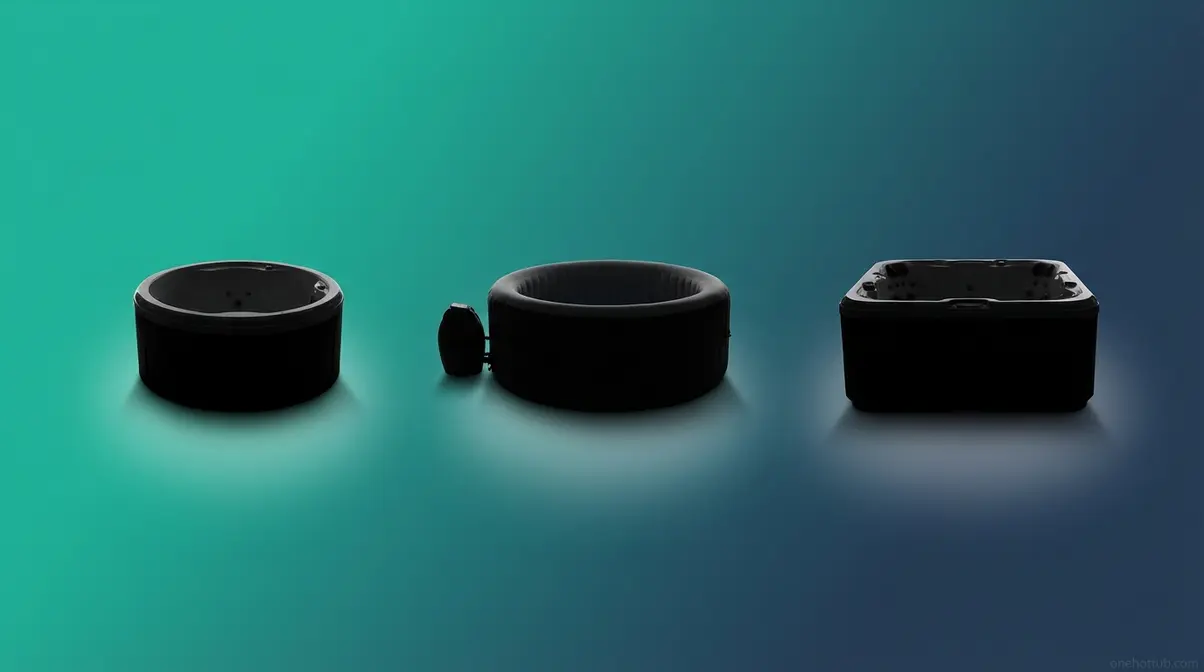
The hot tub market is vast. Rather than focusing on a single brand, it’s better to match a brand’s specialty to your needs. The profiles below are an orientation tool, not a definitive ranking. For full model reviews, see the dedicated pages linked throughout.
Artesian Garden Series Spas
Artesian Spas’ Garden Series offers compact, plug-and-play acrylic spas ideal for small gardens. Ranging from 2-person to 6-person models, they run on a standard 120V socket, eliminating the need for an electrician. Community feedback on forums like Reddit’s r/hottub community is largely positive, highlighting better jet performance and build quality compared to inflatables. While premium-priced for the category (£3,000–£6,000), they offer an accessible entry into hard-shell ownership.
Coleman SaluSpa & Budget Leaders
The Coleman SaluSpa is the benchmark entry-level inflatable hot tub. A typical 4-person model features 140 bubble jets, heats to 40°C, and runs from a standard outlet. At £350–£700, it’s a popular choice for first-time buyers. However, user reports consistently note the liner’s vulnerability to punctures and slow heating times (8-12 hours). For a detailed analysis, see our full Coleman SaluSpa review.
Other Brands Worth Comparing
- Garden Leisure Spas: A UK-focused mid-range brand known for durability in colder climates.
- Lifesmart: A solid stepping stone brand offering plug-and-play hard-shell tubs with true water jets at an accessible price.
- Intex PureSpa: SaluSpa’s closest competitor, offering comparable price and capacity.
Garden Hot Tub Design Ideas
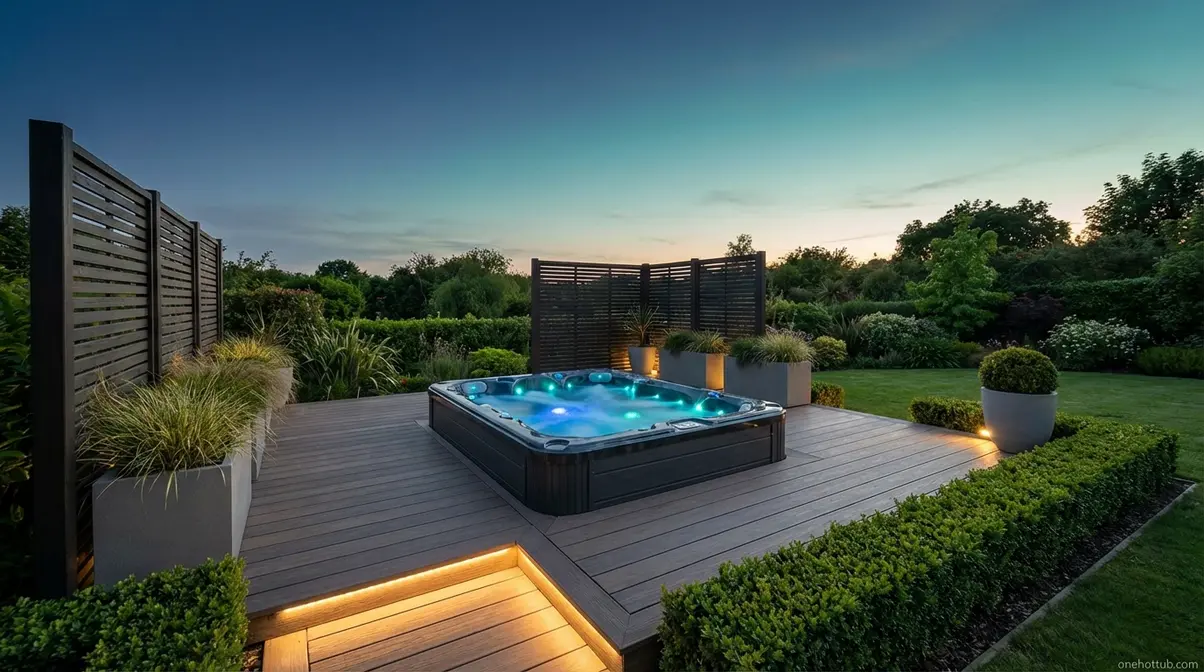
The best hot tub installations feel like a destination, not an afterthought. Whether you have a compact urban garden or a sprawling plot, the right design makes all the difference.
“This is my first hot tub. I decided to put it inside a solarium. It’s a work in progress, but I’m pretty happy with it so far.”
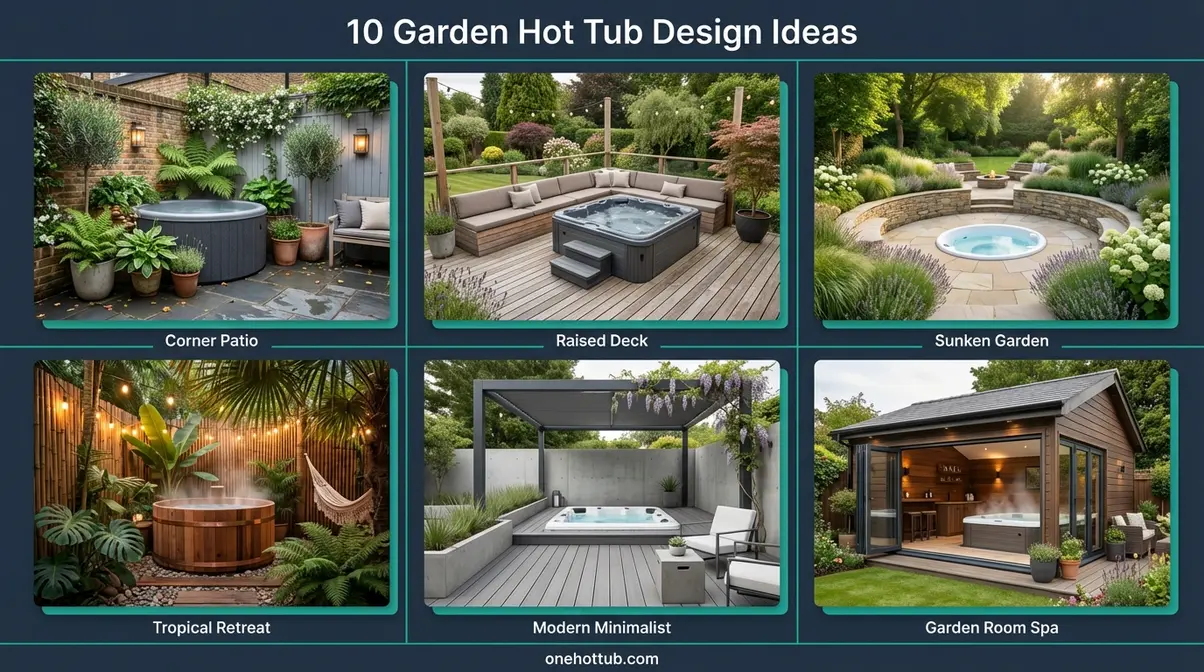
Caption: Real garden hot tub installations ranging from compact corner setups to full spa retreats.
Small Garden Hot Tub Ideas
Most gardens can accommodate a hot tub with smart planning. A 2-person garden hot tub requires as little as 4m² of level, load-bearing surface — viable for most UK gardens (H2O Hot Tubs, 2026).
- Three layouts work well in smaller spaces:
- Corner Placement: On a reinforced patio, this layout maximises remaining garden space.
- Raised Deck: An integrated deck creates a defined “zone” and can add storage underneath.
- Sunken Installation: Visually elegant, this option reduces the spa’s visual mass but requires professional excavation.
For privacy, bamboo screening panels or a planted trellis are effective and often fall within Permitted Development rights. For more inspiration, see these beautiful hot tub landscaping ideas for small gardens.
Modern & Tropical Aesthetics
Two design aesthetics currently dominate. A modern approach uses clean lines, a minimalist palette (grey composite decking, steel pergola), and recessed LED lighting to make the tub a focal point.
A tropical aesthetic prioritises immersion with lush planting like banana plants and bamboo. A wood-fired cedar hot tub and warm-toned string lights complete this organic look, creating the feel of a private retreat.
Privacy, Landscaping, and Atmosphere
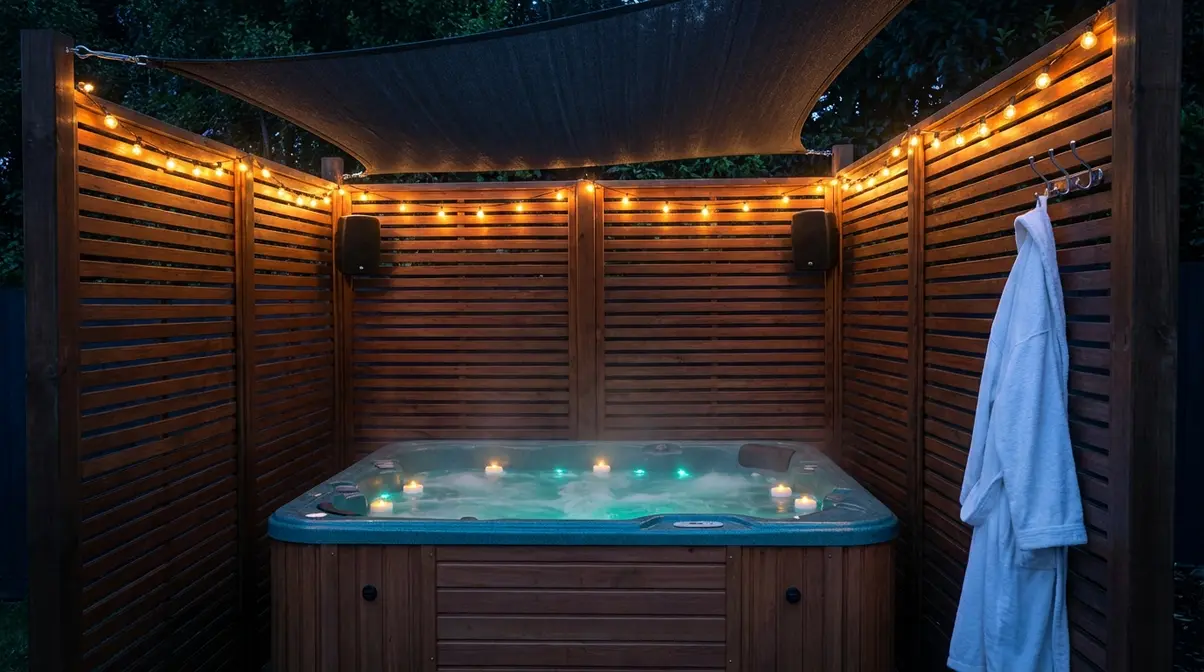
- A few targeted additions can transform your space:
- Lighting: LED floating lights create an ambient glow for evening sessions.
- Audio: Waterproof outdoor speakers (rated IP65+) add music safely.
- Storage: A wall-mounted hook unit keeps towels and robes tidy.
- Screening: Slatted privacy screens offer targeted screening without a full fence.
- Cover: A waterproof sail shade is a cost-effective overhead cover that extends usability.
Hot Tub Enclosures, Gazebos & Garden Rooms
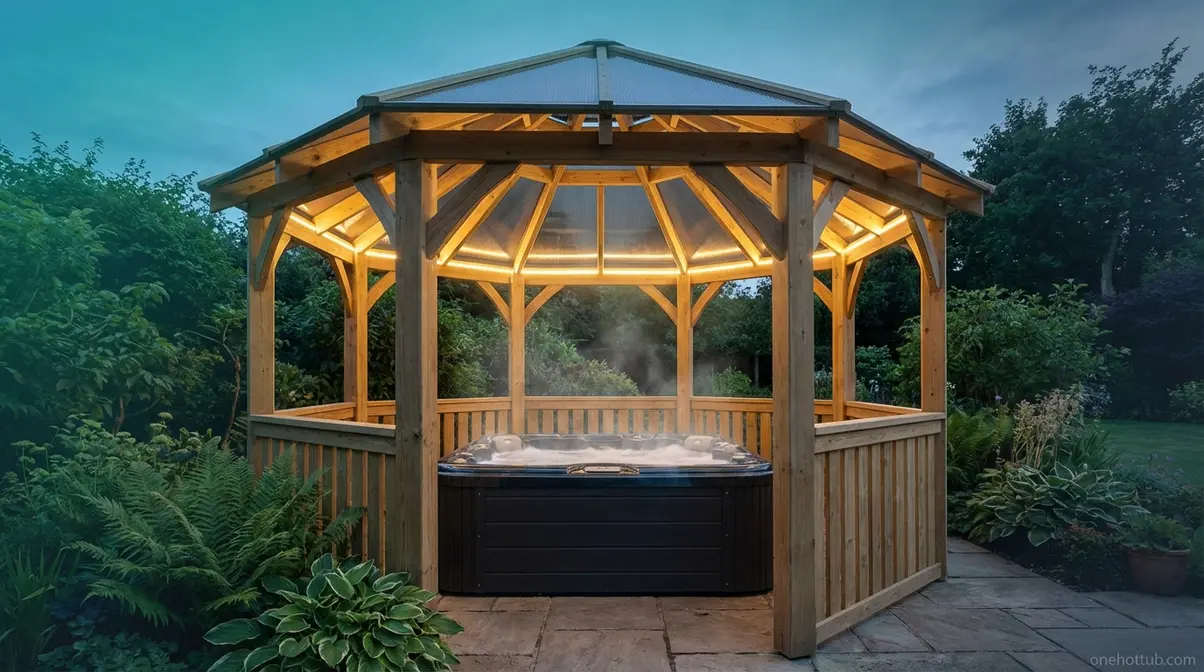
For year-round use in a northern climate, some form of overhead cover is a practical necessity. Options range from simple DIY structures to permanent, insulated garden rooms.
Shelters, Pergolas, and Gazebos
A pergola is an open-sided structure providing shade and a sense of enclosure. A quality timber version costs £500–£2,500. Add a polycarbonate roof panel for genuine weather protection.
A hot tub gazebo is a purpose-built structure with a roof and open sides. Key features for spa use include a load-bearing base and a ventilation gap at the roofline to prevent condensation damage. Prices typically run £1,500–£5,000. In the UK, most gazebos under 2.5m high fall under Permitted Development, but always check with your local authority. For more details, see our complete hot tub gazebo guide or explore creative hot tub enclosure ideas.
Garden Rooms: Year-Round Solution
A garden room is an insulated, weatherproof outbuilding that houses a hot tub, allowing comfortable use even in winter. It’s the premium option, effectively creating a private spa at home. According to specialist installers, a dedicated garden room suitable for a hot tub typically costs £20,000–£40,000, a significant investment that adds long-term value (Cabin Master, 2026). Essential features include mechanical ventilation to manage steam, non-slip flooring, and a structurally engineered floor to bear the tub’s weight.
Installing and Maintaining Your Garden Hot Tub
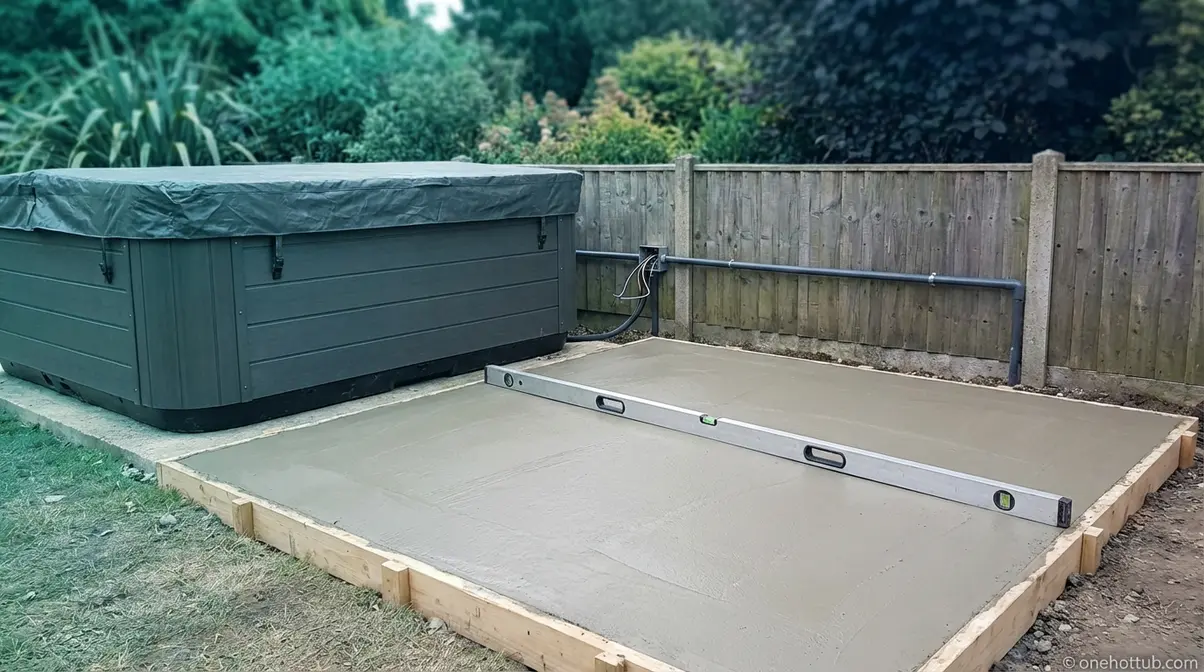
This section covers the three practical questions every buyer needs answered before delivery day: foundation, electrical, and maintenance.
Foundation and Placement
- A filled hot tub can weigh over 2,000kg (WhatSpa, 2026). The foundation must be able to support this weight permanently. There are three proven options:
- Concrete Spa Pad: A 100-150mm thick reinforced concrete slab is the gold standard for permanent installations.
- Reinforced Deck: A deck can support a hot tub, but it must be specifically engineered by a professional for the load.
- Plastic Spa Pad: Interlocking grid panels are suitable for lighter inflatable models on firm, level ground.
Before delivery, confirm the access route is wide enough, leave at least 0.6m of clearance around the tub for maintenance, and ensure the ground is level.
Electrical Requirements
Outdoor hot tubs are self-contained units; no permanent plumbing is required. You fill them with a garden hose.
- The electrical setup, however, is crucial.
- Plug-and-play (120V) models require a dedicated, GFCI-protected 15-20 amp outlet. No electrician is typically needed.
- Hard-wired (240V) models need a dedicated 30-60 amp circuit with a GFCI breaker, installed by a qualified electrician.
For UK buyers, the equivalent of a GFCI is an RCCB (Residual Current Circuit Breaker).
Routine Maintenance & Draining
- Regular maintenance is simpler than its reputation suggests.
- Weekly: Test and adjust water chemistry (pH, alkalinity, sanitiser).
- Monthly: Rinse the filter cartridge and shock-treat the water.
- Every 3-4 months: Drain and refill the tub.
To drain the tub, switch off the power, attach a garden hose to the drain valve, and let it empty by gravity. For faster draining, use a submersible pump. See our complete hot tub maintenance guide and how to drain your hot tub for more details.
Health Benefits and Safety Guidelines

The conversation around hot tubs has moved from vague wellness claims toward evidence. This section reflects current research and safety standards; it is not medical advice. Consult a healthcare professional before use if you have a pre-existing condition.
Evidence-Based Hydrotherapy Benefits
- Research published in 2026 found that hot water immersion can trigger immune system responses that support cardiovascular health. The Cleveland Clinic (2026) also identifies several evidence-backed benefits:
- Muscle Relaxation: Buoyancy reduces joint load, and warm water eases muscle tension.
- Stress Reduction & Sleep Improvement: The drop in core body temperature after a soak is linked to improved sleep onset.
- Cardiovascular Benefits: For healthy adults, warm water dilates blood vessels, temporarily lowering blood pressure.
For those with chronic minor pain, consistent use (3-4 times a week) may produce more measurable outcomes.
Critical Safety Rules for Hot Tub Use
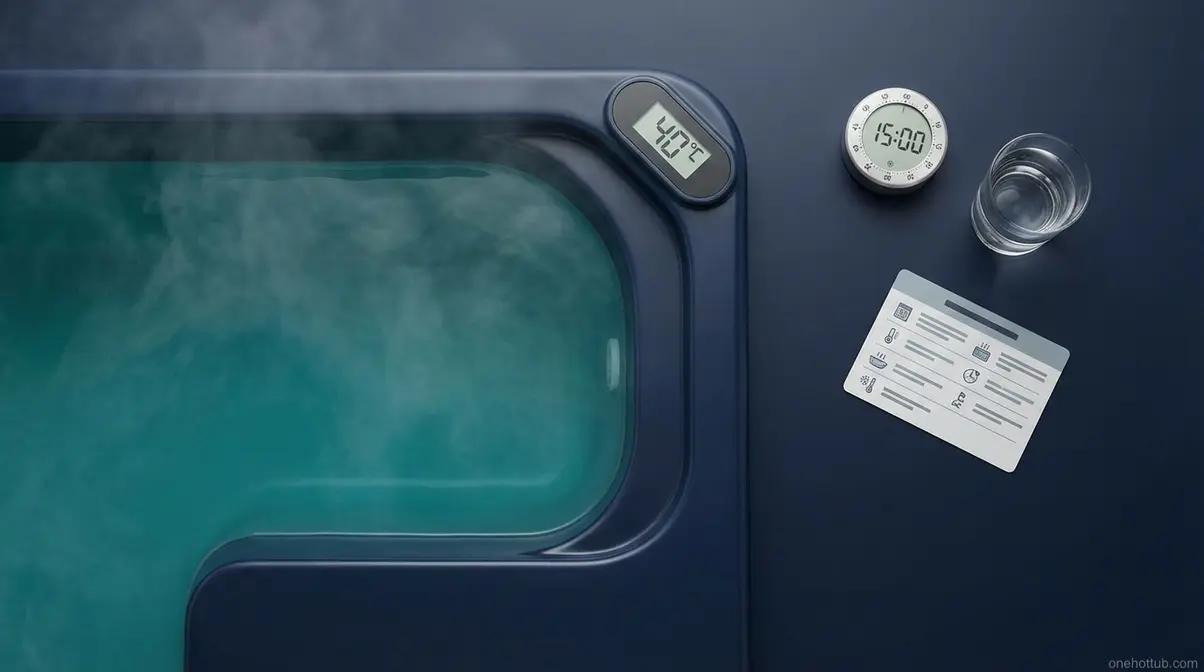
⚠️ Medical Disclaimer: This section provides general safety information and does not constitute medical advice. Consult a healthcare professional before use if you have any pre-existing health condition — particularly cardiovascular disease, hypertension, diabetes, or if you are pregnant.
The 15-minute rule at maximum temperature (40°C) is critical. Staying in longer risks dangerous overheating because the body cannot cool itself effectively in hot water. According to Ajax Pool and Spa, this can lead to heat exhaustion.
| Rule | Specification | Why It Matters |
|---|---|---|
| Max Temperature | 40°C (104°F) | Prevents dangerous core temperature rise |
| Session Duration | 15–20 minutes max | Prevents overheating |
| Alcohol | Avoid before or during use | Impairs heat perception |
| Children under 5 | Not recommended | Cannot regulate body temperature safely |
| Pregnancy | Avoid — consult doctor | Heat can pose risks |
Limitations & Risks of Garden Hot Tubs
An honest guide should also cover when a hot tub might be the wrong choice.
Common Mistakes When Buying
- Ignoring the Base Requirement: Ordering a hard-shell spa without a proper foundation leads to expensive delays.
- Underestimating Running Costs: A poorly insulated tub can add £100–£150 to a winter electricity bill.
- Skipping the Access Check: Measure the delivery path to your garden before ordering; hot tubs cannot be dismantled.
When a Hot Tub Isn’t Right
A hot tub may not be the right choice if your garden lacks privacy, if you are renting without landlord permission for groundwork, or if your home’s electrical system is already at capacity. Adding a 50-amp circuit can sometimes require a consumer unit upgrade, which according to UK trade estimators can cost between £450-£750 for a standard home (MyJobQuote, 2026), pushing total costs higher.
Frequently Asked Questions
Can I have a hot tub in my garden?
Yes, most UK and US gardens can accommodate a hot tub. A typical 4-person model needs a 2.4m × 2.4m level, load-bearing surface like a concrete pad or reinforced patio. No plumbing is needed. Plug-and-play models use a standard socket, while hard-wired spas need a dedicated circuit installed by an electrician.
Why is there a 15-minute hot tub rule?
The 15-minute rule at maximum temperature (40°C) prevents overheating (hyperthermia). Your body’s core temperature rises in the hot water, and its ability to cool itself by sweating is impaired. Exceeding this time limit increases the risk of heat exhaustion. You can always exit, cool down, and re-enter later.
Does an outdoor hot tub need plumbing?
No, outdoor hot tubs are self-contained and require no permanent plumbing. You fill them with a garden hose and drain them every 3-4 months using a built-in drain valve or a submersible pump. This makes installation far simpler and less costly than an in-ground swimming pool.
Monthly Cost to Run a Hot Tub?
Running costs in the UK are typically £40-£60 per month for a well-insulated hard-shell model and can be higher for inflatables. According to consumer guide WhatSpa?, average costs are between £65 and £90 per month (WhatSpa?, 2026). Factors like insulation quality, usage, climate, and your electricity tariff will affect the final cost. A good thermal cover is essential to minimize heat loss and reduce bills.
How to Empty a Hot Tub with a Hose?
First, switch off all power to the spa at the breaker. Next, attach a standard garden hose to the drain valve, which is usually located on a lower panel. Run the other end of the hose to a suitable drainage area. The tub will empty via gravity in about 1-2 hours. A submersible pump can speed this up to 20-30 minutes.
Conclusion
For most homeowners, the garden hot tub decision comes down to a single question: how often will you actually use it? If the answer is year-round, several times a week, for 5+ years, a mid-range hard-shell spa almost always wins the True Cost Matrix calculation and delivers superior hydrotherapy performance. Research from 2026 confirms that regular hot water immersion can produce genuine health benefits, making this a wellness investment as much as a garden feature.
The True Cost Matrix reframes this purchase from an impulse buy into an evidence-based commitment. Buyers who regret their hot tub are almost always those who focused on sticker price alone. The ones who feel good about their decision years later are those who calculated the 5-year total, checked the foundation requirement, and chose the model that matched their actual usage pattern.
Your next step is practical: measure your access route, check your consumer unit capacity, and get an electrician’s quote before you shortlist models. That single step will save you more stress than any amount of specification-reading.