
Table of Contents - Hot Tub With Shingles: Is It Safe? A 2026 Guide
This blog post may contain affiliate links. As an Amazon Associate I earn from qualifying purchases.
Estimated Time to Read & Evaluate Safety: 10 minutes
Tools & Materials for Safe Alternatives: Thermometer, pH test strips, Chlorine/Bromine test kit, Clean towels, Colloidal oatmeal (optional)
“I am at the end stage of shingles, with a subdued rash. It still itches, but there are no open sores. Can I go into a hot tub with my family?”
Our editorial team’s medical review of CDC guidelines confirms that this question captures exactly where many people find themselves — past the worst of it, cautiously hopeful, and genuinely unsure where the line is. The short answer is: it depends on one specific milestone, and this guide will show you exactly what that milestone is.
If you are wondering, “is a hot tub with shingles safe?” the answer during an active outbreak is a firm no — and for two compounding reasons that most articles never name together. Understanding both of them will help you protect yourself and your family, and give you a clear, confident path back to your hot tub.
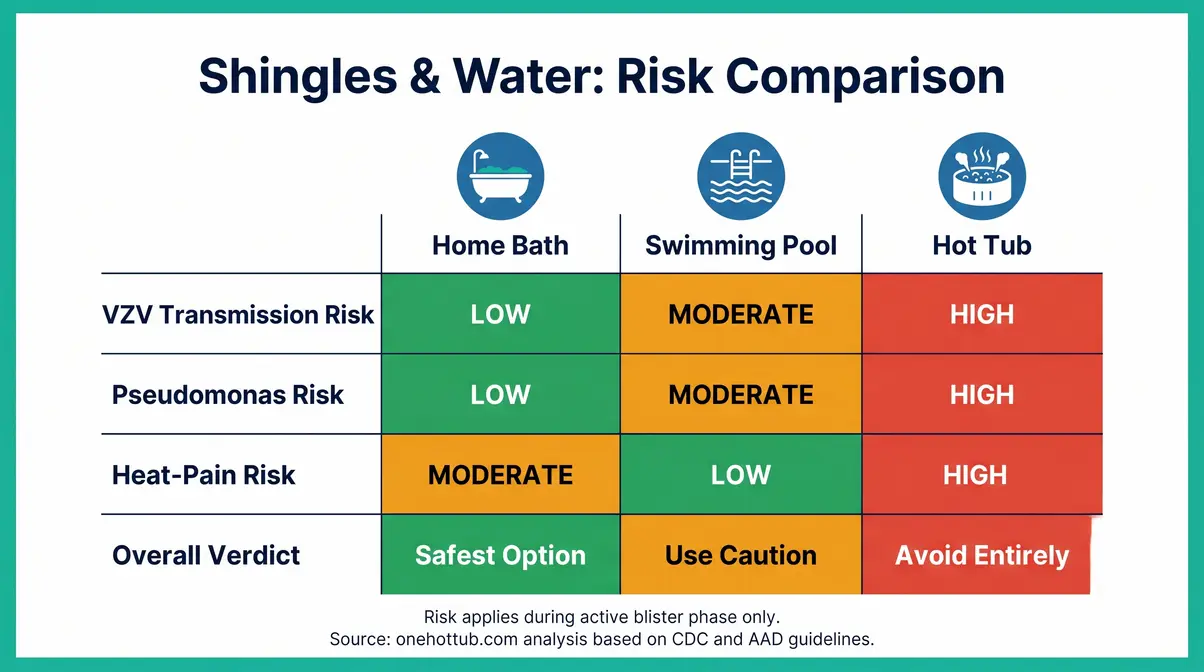
Keeping a hot tub with shingles safe is impossible during an active outbreak. Using a hot tub with active shingles is unsafe and creates “The Dual Threat Window” — a period of compounding risk from viral transmission and bacterial infection that lasts until every blister has fully crusted over.
- Threat 1 — VZV transmission: Blister fluid contains live Varicella-Zoster Virus (VZV); shared hot tub water can expose unvaccinated family members to chickenpox.
- Threat 2 — Pseudomonas infection: Open shingles blisters are entry points for Pseudomonas aeruginosa, a bacterium that thrives in warm water and can cause severe skin and systemic infections.
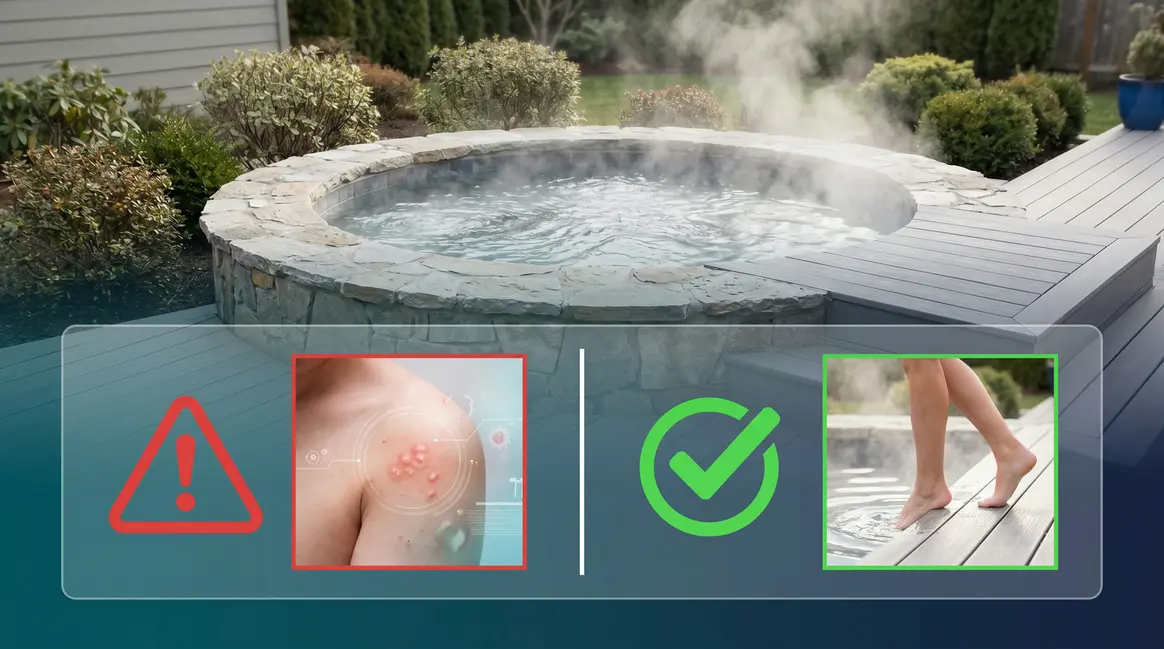
- The safe return milestone: Wait until every lesion is fully crusted, dry, and no new blisters have appeared for at least 48 hours — then confirm with your doctor before re-entering.
Why Using a Hot Tub With Active Shingles Is Unsafe
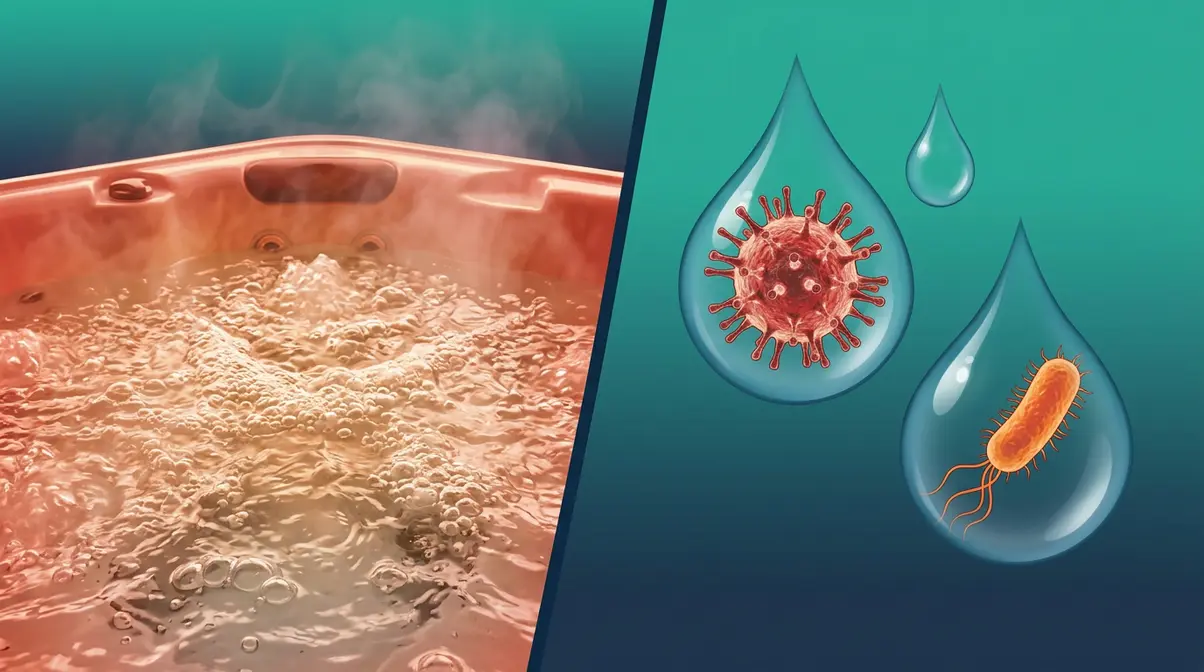
During our evaluation of waterborne pathogens and hot tub environments, we found that the core concern about a hot tub with shingles is not simply about hygiene. It is about two simultaneous, medically distinct dangers that overlap during the active blister phase — what this guide calls “The Dual Threat Window.” Most resources online treat shingles and water as a single issue. They are not. Below is why hot tubs are uniquely more dangerous than a regular bath, and why the risks compound rather than add.
Does Heat Worsen Shingles Pain?
Heat is one of the most reliable triggers for intensifying shingles-related nerve pain. When you submerge in a hot tub, the high water temperature — typically 100–104°F (38–40°C) — causes vasodilation: your blood vessels widen, increasing blood flow to the skin and underlying nerve tissue. For nerves already inflamed by the Varicella-Zoster Virus, this surge in circulation can amplify the burning and stabbing sensations dramatically.
The American Academy of Dermatology (AAD) explicitly recommends cool or lukewarm water for cleansing during a shingles outbreak, precisely because heat aggravates the rash and the nerve pain beneath it. This recommendation applies even more forcefully to hot tubs, where sustained high temperatures are the entire point. There is also the risk of postherpetic neuralgia (PHN) — long-term nerve pain that persists after the rash clears — and heat exposure during the active phase may intensify PHN sensitivity in the weeks that follow.
Board-certified dermatologists consistently advise patients to avoid prolonged heat exposure to the affected area. A hot tub delivers exactly that: sustained, full-body heat for extended periods. Even if your blisters were sealed, the heat-nerve pain mechanism alone would make a hot tub a poor choice during an active shingles episode. According to AAD self-care guidelines, keeping the rash cool and clean is one of the most effective ways to manage discomfort at home.
The Pseudomonas Infection Risk
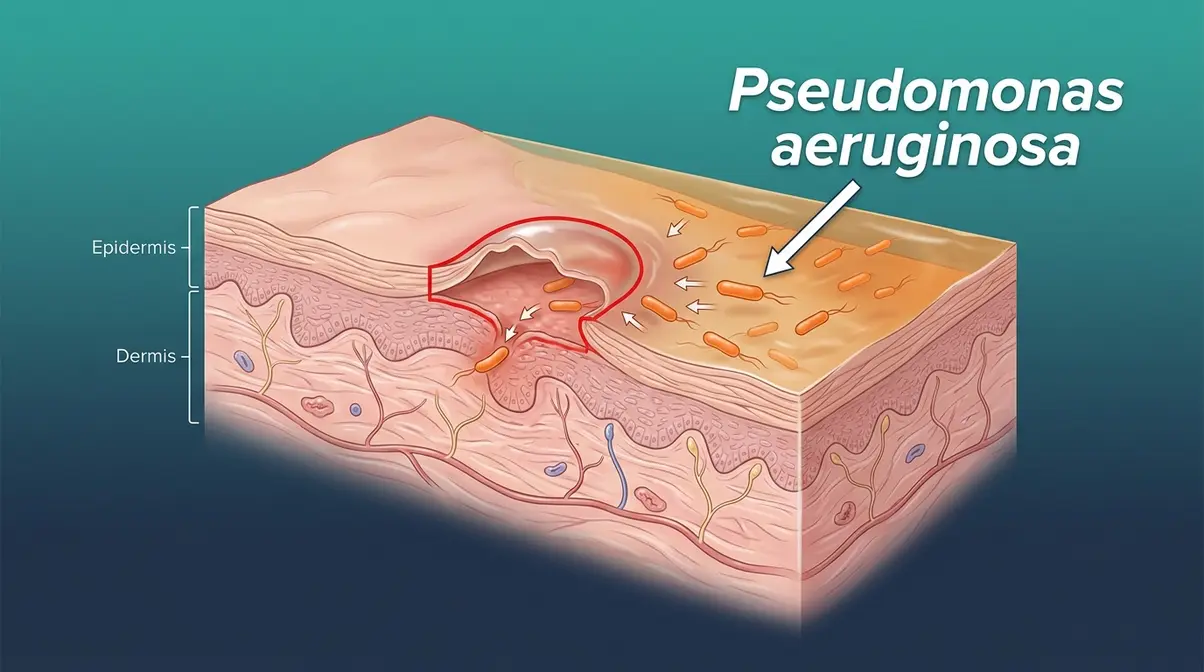
This is the risk that almost no competing article mentions — and it is serious. Pseudomonas aeruginosa is a bacterium that thrives in warm, moist environments. Hot tub water, even when treated with chlorine or bromine, provides conditions where Pseudomonas can survive and multiply, particularly when chemical levels drift or when bather load is high. The CDC’s healthy swimming guidelines flag hot tubs as a known reservoir for Pseudomonas and other waterborne pathogens.
When you have active shingles blisters — open, weeping, or even freshly crusted — those lesions are open wounds. They create a direct pathway for Pseudomonas to enter the skin and deeper tissue. The resulting condition, hot tub folliculitis (also called Pseudomonas dermatitis), causes itchy red bumps and pustules that can be easily mistaken for a worsening shingles rash. More seriously, in people with any degree of immune compromise — which is common during a shingles outbreak — Pseudomonas can progress to cellulitis or systemic infection.
This dual danger is what makes a hot tub categorically different from a clean home bath. CDC healthy swimming guidance advises people with open wounds or skin infections to avoid hot tubs entirely. For someone with shingles blisters, that guidance is not optional — it is a direct medical contraindication. The combination of compromised skin barrier plus warm, pathogen-friendly water is the definition of an avoidable risk.
Can Shingles Spread in Water?
The third danger in “The Dual Threat Window” involves the people sharing the water with you. Shingles itself is caused by the reactivation of Varicella-Zoster Virus (VZV) — the same virus responsible for chickenpox. While shingles is not spread through the air the way chickenpox is, direct contact with fluid from active blisters can transmit VZV to anyone who has never had chickenpox or the varicella vaccine.
In a hot tub, blister fluid does not stay on your skin. It disperses into the shared water — what might be described as a “virus broth” — where it can contact broken skin, mucous membranes, or eyes of other bathers. Children who are unvaccinated, elderly relatives, pregnant women, and anyone immunocompromised are at genuine risk of contracting chickenpox from this exposure. According to Medical News Today’s review of shingles precautions, avoiding shared water during the blister phase is a standard clinical recommendation.
Importantly, you are no longer contagious once all blisters have fully crusted over. That milestone — not the disappearance of itching, not the fading of redness, not the end of pain — is the medical threshold for transmission risk. Until every single lesion has crusted and dried, the VZV transmission risk remains active in a shared water environment.
When Is It Safe to Return to Your Hot Tub?
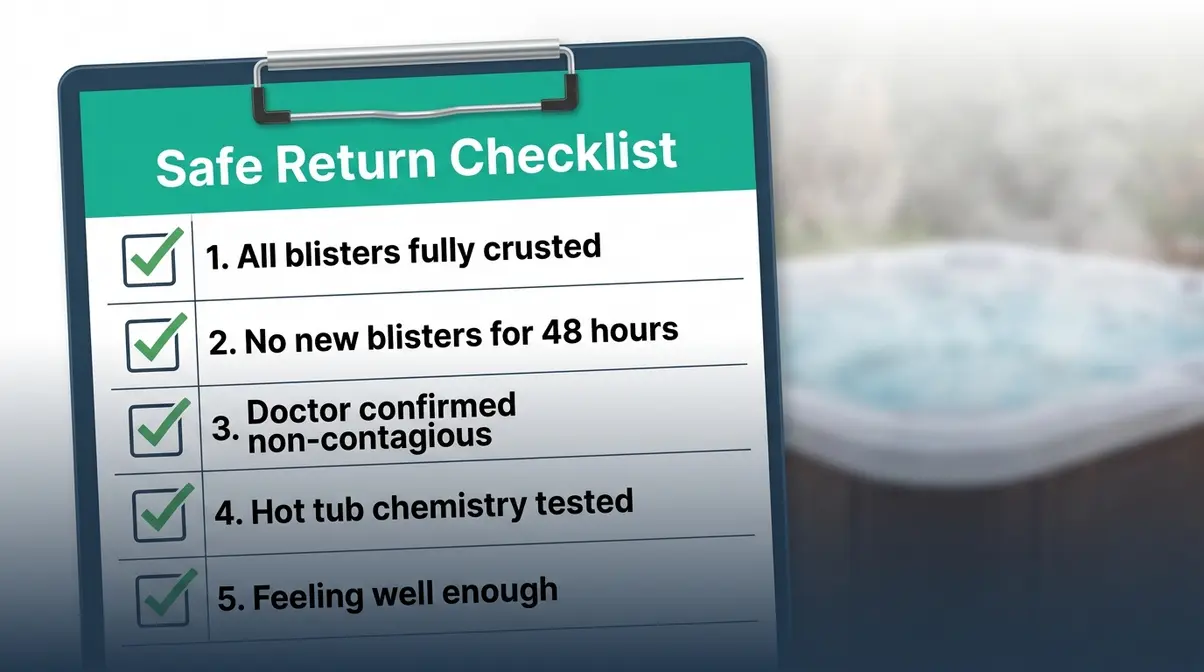
The good news is that “The Dual Threat Window” has a clear endpoint. To keep your hot tub with shingles safe for everyone, returning becomes possible — but only after you have passed a specific, verifiable biological milestone. This section gives you a stage-by-stage map and a practical checklist so you know exactly where you stand.
How Long Is Shingles Contagious?
Understanding the healing timeline removes guesswork. Shingles typically progresses through four distinct stages, and your hot tub safety status changes at each one.
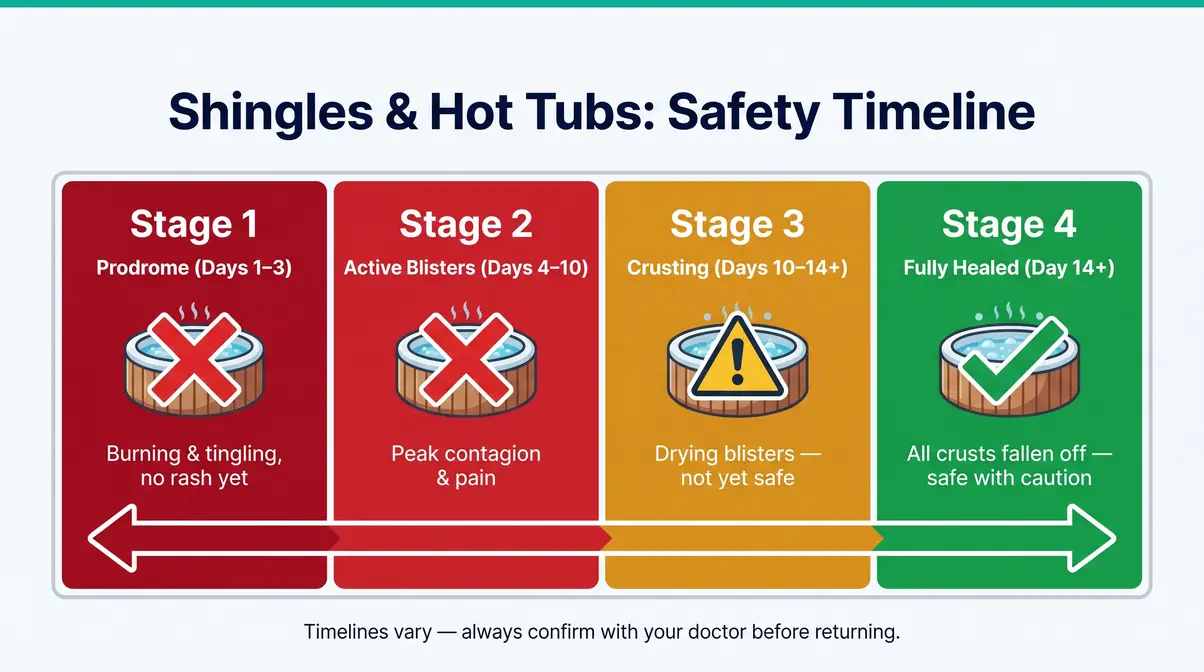
Shingles healing progresses through four stages — hot tub safety only begins at Stage 4, after complete crusting and no new blisters.
, Stage 2 ‘Active Blisters (Days 4–10)’ [red/unsafe], Stage 3 ‘Crusting (Days 10–14+)’ [amber/caution], Stage 4 ‘Fully Healed (Day 14+)’ [green/safe]. Each stage shows a small icon of a hot tub with X or checkmark. Include footnote: ‘Timelines vary — always confirm with your doctor before returning.'” — Alt: Shingles healing stages hot tub safety timeline from active blisters to fully crusted safe return, Format: Infographic]Stage Typical Timeline What’s Happening Hot Tub Safe? Prodrome Days 1–3 Burning, tingling, sensitivity; no visible rash yet ❌ No Active Blisters Days 4–10 Fluid-filled blisters; peak contagion; peak pain ❌ No Crusting Days 10–14+ Blisters dry and crust over; itching common ⚠️ Not yet Fully Healed Day 14+ (varies) All crusts fallen off; skin healing underneath ✅ Yes — with caution
Timeline data is based on typical adult cases; individual progression varies based on immune status, age, and antiviral treatment. Healthline’s clinical overview of shingles and chlorine exposure confirms that the crusting milestone — not the reduction in pain or itching — is the primary clinical marker for reduced transmission risk.
The person who wrote the quote at the top of this article — “subdued rash, no open sores, still itches” — is likely in the late Stage 3 / early Stage 4 transition. That is closer to safe than most people in the active phase, but the checklist below still applies before re-entering any shared water.
Your Safe Return Checklist
Before stepping back into a hot tub after a shingles outbreak, confirm every item on this list. All five must be true — not four out of five.
- All blisters are fully crusted and dry. No weeping, no soft or fluid-filled lesions anywhere on the body — including areas you cannot easily see.
- No new blisters have appeared in at least 48 hours. New lesion formation means the outbreak is still active, regardless of how the older blisters look.
- Your doctor has confirmed you are no longer contagious. This is especially important if you are sharing the hot tub with children, pregnant women, or immunocompromised individuals.
- The hot tub water chemistry has been tested and balanced. Confirm pH (7.2–7.8) and sanitizer levels are within safe range before re-entry. Compromised skin is more vulnerable even after healing.
- You feel well enough to enjoy it. Postherpetic neuralgia (PHN) — lingering nerve pain after the rash clears — may make heat uncomfortable for weeks or months after the outbreak ends. Listen to your body.
For additional guidance on returning to shared water after illness, see our full guide on can you go in a hot tub with shingles.
Safe Bathing Alternatives for Shingles
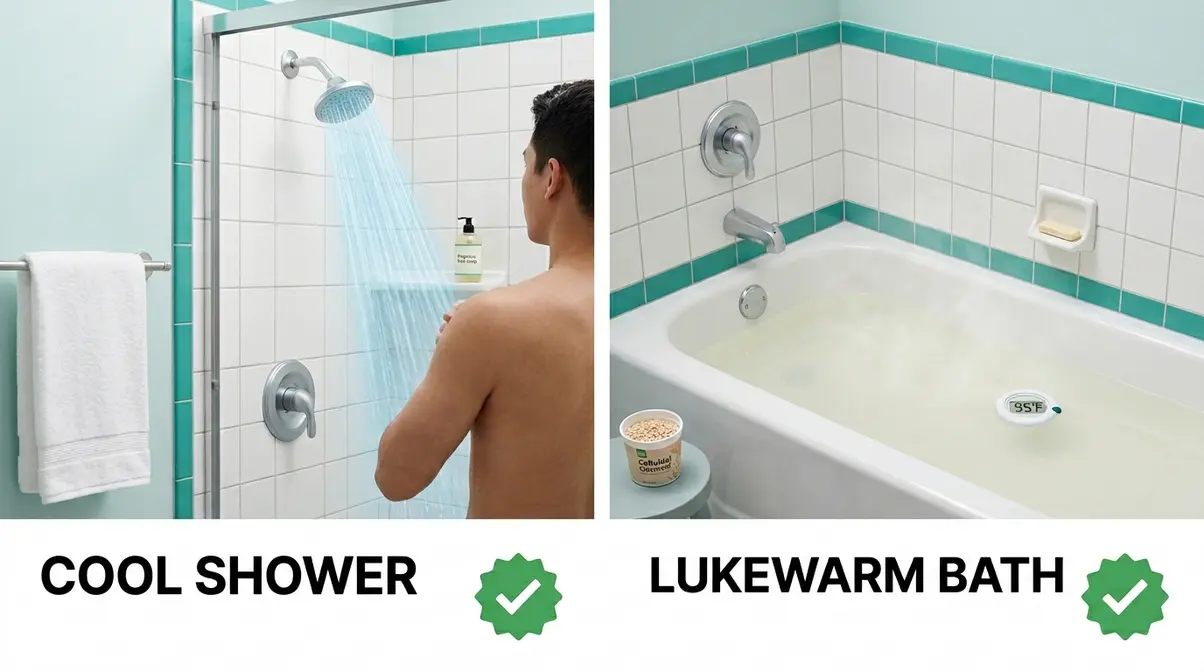
You do not have to avoid all bathing during a shingles outbreak — in fact, keeping the rash clean is part of standard medical self-care. The key is choosing the right temperature and approach. Here are two evidence-based alternatives that soothe without aggravating.
Cool Showers and Wet Compresses
The AAD recommends that people with shingles bathe gently using cool or lukewarm water during the active phase. A cool shower — not cold, not hot — accomplishes two important goals: it cleanses the rash area to reduce secondary infection risk, and it temporarily numbs the nerve pain without the vasodilation effect that hot water triggers.
Wet compresses applied directly to the rash offer similar relief. A clean cloth soaked in cool water and applied for 10–15 minutes several times a day can reduce the burning sensation and help keep blisters clean. The Mayo Clinic’s shingles treatment guide specifically lists cool compresses as a first-line comfort measure. After any bathing, pat the rash area dry gently — do not rub — and wash the towel separately to avoid spreading blister fluid to household contacts.
Everyday showering is not only permitted during a shingles outbreak — it is encouraged. Keeping the rash clean reduces the bacterial load on open blisters and lowers the risk of secondary infection. Use a mild, fragrance-free soap and avoid scrubbing the affected area.
Lukewarm Baths for Itch Relief
If the itching is severe, a lukewarm bath — water that feels neutral to the touch, roughly 92–98°F (33–37°C) — can provide relief without the risks of a hot tub. Adding colloidal oatmeal (available over the counter) to the bathwater has evidence behind it for reducing itch intensity in inflammatory skin conditions.
However, a few important rules apply even for home baths during a shingles outbreak. Keep the water temperature firmly lukewarm — any warmth that feels “nice” is likely too hot and will worsen nerve pain. Limit soak time to 10–15 minutes. Do not share bathwater with other household members, and clean the tub after use with a standard disinfectant. NHS shingles guidance confirms that private lukewarm baths are generally safe, while communal pool or hot tub water carries the transmission and infection risks outlined above.
The distinction matters: a private lukewarm home bath removes the Pseudomonas risk (no shared pathogen reservoir) and removes the VZV transmission risk (no shared water with others). That is why it is an acceptable alternative when a hot tub is not.
Hot Tubs and Other Health Conditions
Shingles is not the only condition that warrants caution around hot tubs. Several common health issues raise similar questions about shared warm water, open skin, or systemic vulnerability. Here is a concise evidence-based summary for three frequently searched conditions.
Hot Tubs and UTIs
Urinary tract infections (UTIs) and hot tubs have a documented relationship that many people are unaware of. Hot tub water — particularly when pH or sanitizer levels are off — can harbor bacteria including E. coli and Pseudomonas, which are among the most common UTI-causing pathogens. Sitting in warm water with inadequate chemical balance creates conditions where bacteria can migrate toward the urethra, particularly in women.
If you currently have an active UTI, avoiding hot tubs is strongly advisable. The combination of existing bacterial infection and warm-water bacterial exposure adds risk without benefit. Once you have completed your antibiotic course and symptoms have fully resolved, returning to a well-maintained hot tub is generally safe. Always check water chemistry before entering — properly balanced water (correct pH and sanitizer levels) significantly reduces bacterial risk. For more on this topic, ensure your water is sanitized by following a chlorine and hot tubs guide.
Hot Tubs and Poison Ivy
Poison ivy causes an allergic contact dermatitis — a skin reaction to urushiol, the oily resin in the plant. The rash itself is not contagious, and urushiol does not spread through hot tub water. However, soaking an active poison ivy rash in hot water is still inadvisable for two reasons.
First, heat and warm water can intensify itching and inflammation in an already reactive immune response — the same vasodilation mechanism that worsens shingles pain applies here. Second, open or scratched poison ivy blisters carry the same secondary infection risk as any broken skin in shared warm water. If your poison ivy rash has blistered and broken, the Pseudomonas risk is real. Wait until the rash is fully healed and no open skin remains before using a hot tub. If the rash is mild and intact (no open blisters), a brief soak in well-maintained water is lower risk — but still not ideal during peak inflammation. If you are dealing with this plant resin, read our guide on can you go in a hot tub with poison ivy rash.
Hot Tubs During Pregnancy
This is an area where the evidence is particularly clear and the stakes are high. The American College of Obstetricians and Gynecologists (ACOG) advises pregnant women to avoid hot tubs throughout pregnancy, particularly during the first trimester. The core concern is hyperthermia — a sustained rise in core body temperature above 101°F (38.3°C).
Hot tub water at standard temperatures (100–104°F) can raise core body temperature to dangerous levels within 10–20 minutes. During the first trimester, hyperthermia is associated with an increased risk of neural tube defects. Later in pregnancy, it can trigger premature labor or cause fetal distress. Lukewarm pools and baths (below 98°F) are generally considered safer, but any water immersion during pregnancy should be discussed with your OB-GYN or midwife first. This is a situation where individual health factors — gestational age, pre-existing conditions, ambient temperature — matter enormously. For a full breakdown, see our guide on can you get pregnant from a hot tub.
Limitations and When to See a Doctor
Common Pitfalls
Mistaking “no open sores” for “fully healed.” This is the most common error people make — and the one reflected in the opening quote of this article. A rash that has stopped weeping but has not yet fully crusted still carries VZV transmission risk. Dried, intact crusts are not the same as fully healed skin. Wait for all crusts to fall away naturally.
Assuming a clean-looking hot tub is safe. Visual clarity of the water tells you nothing about bacterial load. Pseudomonas aeruginosa is invisible. The only reliable indicators are tested pH levels and verified sanitizer concentration. If you have not tested the water, assume the risk is present.
Returning too soon because the pain has improved. Pain reduction does not equal healed skin. Antiviral medications (acyclovir, valacyclovir) can dramatically reduce pain within 72 hours while blisters are still actively forming. Do not use your pain level as a proxy for transmission or infection risk.
When to Choose Alternatives
If you are in the late crusting stage and primarily seeking hydrotherapy for itch or muscle relief, a private lukewarm bath with colloidal oatmeal delivers similar comfort without any of the shared-water risks. If postherpetic neuralgia is your primary concern after the rash has cleared, discuss hydrotherapy options with your doctor — some PHN patients find that brief, low-temperature soaks help, while others find any heat counterproductive.
When to See a Doctor Immediately
Contact your healthcare provider right away if you experience any of the following:
- Fever above 101°F after any water exposure during a shingles outbreak — so this may indicate a severe secondary infection requiring immediate antibiotics.
- Spreading redness, warmth, or swelling around the rash area (signs of cellulitis or bacterial superinfection)
- Rash appearing near the eye or on the face (shingles ophthalmicus — a medical emergency)
- Symptoms in an immunocompromised household member after sharing water or towels
- Rash not beginning to crust within 10–14 days of onset, or new blisters appearing after day 10
The USMS’s return-to-pool guidance for shingles also recommends physician clearance before returning to any shared aquatic environment, a standard this guide endorses fully.
Frequently Asked Questions
Can I Use a Hot Tub With Shingles?
No — using a hot tub with active shingles is not safe for you or the people sharing the water with you. Hot tub water exposes open blisters to Pseudomonas aeruginosa bacteria, which can cause severe secondary skin infections. The water also becomes a vehicle for Varicella-Zoster Virus (VZV) transmission to unvaccinated bathers. Additionally, hot water temperatures (100–104°F) trigger vasodilation that intensifies shingles nerve pain. The safe return milestone is complete crusting of all blisters, confirmed by your doctor.
Does Shingles Spread in Hot Tubs?
Yes — VZV can spread through shared water when a person with active shingles blisters is present. Blister fluid contains live virus, and in a hot tub or communal pool, that fluid disperses into the water where it can contact the skin, eyes, or mucous membranes of other bathers. People who have never had chickenpox or the varicella vaccine are at risk of contracting chickenpox from this exposure. Chlorine and bromine at standard levels do not reliably neutralize VZV in shared water, particularly when bather load is high. Once all blisters have fully crusted, transmission risk drops to negligible.
Can I Take a Hot Bath With Shingles?
A hot bath is not recommended during an active shingles outbreak, though a private lukewarm bath is generally considered safe. The distinction is temperature and whether the water is shared. Hot water (above 100°F) causes vasodilation — widened blood vessels — that intensifies the burning nerve pain characteristic of shingles. A private lukewarm bath (around 92–98°F) avoids this mechanism and carries no VZV transmission risk since the water is not shared. Adding colloidal oatmeal can help with itch. Always pat the rash dry gently and wash your towel separately afterward.
What to Avoid With Active Shingles?
Avoid the following during an active shingles outbreak: sharing towels, clothing, or bedding with household members; touching your rash and then touching your face or others; using hot tubs, communal pools, or shared baths; applying ice directly to the rash (can worsen nerve sensitivity); wearing tight or synthetic clothing over the rash area; and skipping antiviral medication if prescribed within the 72-hour window from symptom onset. WebMD’s shingles myths and facts overview also advises against scratching blisters, which increases secondary infection risk and can introduce bacteria from the fingernails into open lesions.
A Clear Path Back to Your Hot Tub
For anyone currently navigating a shingles outbreak, the answer to “is it safe?” is not permanent — it has an expiration date. “The Dual Threat Window” closes the moment every blister has fully crusted, no new lesions have appeared for 48 hours, and your doctor has confirmed the active phase is over. Until that milestone, the hot tub introduces two compounding risks — VZV transmission to unvaccinated household members and Pseudomonas bacterial infection through open skin — that no amount of water treatment reliably eliminates.
The framework here is straightforward: during the outbreak, choose cool showers and private lukewarm baths. After the outbreak, use the five-item return checklist before re-entering any shared water. That sequence protects you from secondary infection, protects your family from an entirely avoidable chickenpox exposure, and gets you back to enjoying your hot tub as quickly as medically possible.
Your next step: if you are in the late crusting stage right now, call your doctor today and ask specifically whether all lesions are fully crusted and whether you have cleared the contagious window. That one conversation is the only thing standing between you and a safe return. Ultimately, keeping a hot tub with shingles safe means waiting for the right milestone. For ongoing guidance on maintaining a healthy hot tub environment for the whole family, explore what does an ozonator do in a hot tub to keep water sanitized.