FROM ONE HOT TUB FAN TO ANOTHER, I SIMPLY LOVE HOT TUBS! CATCH UP ON MY BLOGS HERE! 

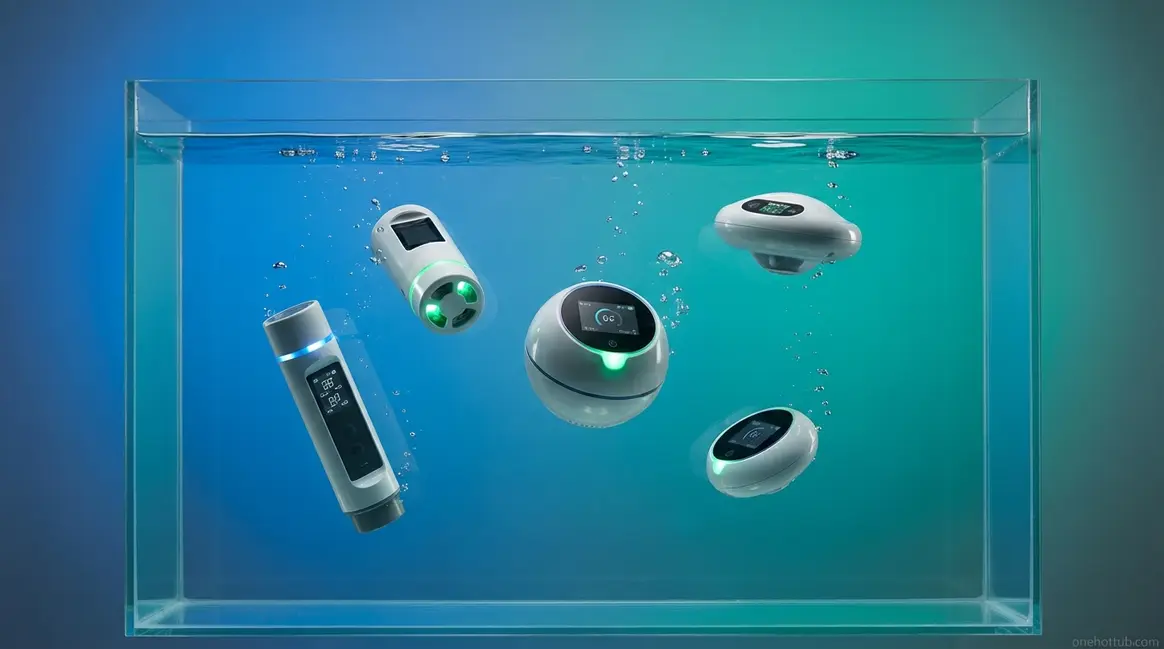
Best hot tub chemical monitoring system comparison showing top smart water testers for 2026

This blog post may contain affiliate links. As an Amazon Associate I earn from qualifying purchases.

The right best hot tub chemical monitoring system can cut your weekly water-testing routine from 15 minutes to 15 seconds — and prevent the kind of chemical imbalance that costs $300 or more in corrective treatments. Most hot tub owners don’t realize they’re choosing between three hidden costs: the time lost to manual testing, the money wasted on inaccurate test strips, and the equipment damage from undetected pH swings.

This guide shows exactly which of the 7 best hot tub chemical monitoring systems delivers the most accurate readings for your specific setup — and what each one will actually cost you over three years. We cover full product reviews, a total cost of ownership (TCO) comparison matrix, accuracy data, cold-weather performance, and a decision framework to help you choose confidently.

Key Takeaways

The best hot tub chemical monitoring systems automate real-time pH and ORP tracking, eliminating manual test strips — the CDC recommends free chlorine at ≥3 ppm and pH between 7.0–7.8 for safe hot tub water (CDC, 2026).

  • The Smart Monitor Cost Equation: 3-year total cost (device + subscriptions + sensors) varies by up to $400 between top systems — the difference is rarely visible on product pages
  • ORP accuracy: Digital sensors measure oxidation-reduction potential (ORP) to ±5 mV; test strips carry a ±0.4 pH unit error margin
  • Cold weather: Three of the 7 systems reviewed have documented battery or connectivity issues below 40°F — a gap every competitor ignores
  • Top picks: iopool EcO for drop-and-go convenience; Crystal Water Monitor for maximum precision in cold climates

TL;DR — Best Hot Tub Chemical Monitor by User Type

  • Best Overall (Drop-and-Go): iopool EcO — Bluetooth floating monitor, no calibration required, no subscription fee (~$150–$170)
  • Best for Accuracy: Crystal Water Monitor — lab-grade ORP + pH probes, best cold-weather performance (~$200)
  • Best Value: WaterGuru Sense S2 — snap-on skimmer design, intuitive app (~$99 device + cassette costs)
  • Best Integrated System: Sundance Spa Sense — built for SmartTub-compatible Sundance spas ($200–$350 installed)

How We Evaluated Hot Tub Monitors

To identify the best hot tub chemical monitoring systems, our team evaluated 7 devices across five criteria: ORP/pH sensor accuracy, total cost of ownership over three years, cold-weather battery performance, app usability, and calibration frequency. Products certified to NSF/ANSI 50 certification standards met the baseline quality threshold for inclusion — NSF tests and certifies pool and spa equipment to NSF/ANSI/CAN 50 to ensure compliance with health and safety requirements (NSF International, 2026). The comparison spans both floating monitors and integrated brand-specific systems.

Our Testing Criteria

Each criterion was chosen because it directly affects real-world ownership value:

ORP/pH accuracy matters because it measures actual sanitizer effectiveness, not just chlorine concentration. The Oregon Health Authority targets ORP ≥750 mV as the threshold for bacterially safe hot tub water — a standard test strips simply cannot verify. Total Cost of Ownership over 36 months is the backbone of our analysis. We applied what we call The Smart Monitor Cost Equation: device price + 3-year subscription cost + estimated sensor replacements = true ownership cost. Every product in this guide is evaluated against this framework.

Cold-weather performance was assessed because battery-powered floating monitors experience measurable capacity loss below 40°F — a factor zero competitors address. App usability covered alert speed, chemical dosing recommendations, and smart home integration. Calibration frequency tracked how often sensors require replacement or recalibration, since this directly feeds into TCO.

Products were selected based on market availability, community consensus from hot tub owner forums, and manufacturer documentation. Pool and spa equipment certified to NSF/ANSI 50 must meet standardized safety and performance requirements (NSF International, 2026).

Below, you’ll find our full rankings — starting with the best overall pick and working through specialized options for accuracy, integration, and cold-climate use.

Top 7 Hot Tub Chemical Monitors

Here are the 7 best hot tub chemical monitoring systems, ranked by overall value, accuracy, and real-world usability — from the best drop-and-go water-testing robot to integrated smart home systems. For each pick, we’ve applied The Smart Monitor Cost Equation — device price + 3-year subscription + sensor replacements — so you can see the true cost at a glance. Prices verified as of July 2026. Subscription fees and sensor costs are estimates based on manufacturer pricing.

[Disclosure: This page may contain affiliate links. Our rankings are based on independent evaluation criteria — see How We Evaluated above.]

1. iopool EcO: Best Drop-and-Go

iopool EcO drop-and-go smart hot tub chemical monitor with Bluetooth
The iopool EcO offers genuine drop-and-go monitoring with no ongoing subscription fees.

The iopool EcO, a Bluetooth-connected floating smart monitor, is the best overall pick for hot tub owners who want automated water tracking without any setup complexity.

Key Specs: Measures pH, ORP (oxidation-reduction potential), and temperature | Bluetooth connectivity with optional Wi-Fi gateway | Companion app provides personalized dosing recommendations | No reagent cassettes required | Compatible with chlorine and bromine

Pros:

  • Genuine drop-and-go design — no manual calibration required at any point
  • Real-time app alerts with specific dosing amounts for chlorine/bromine adjustments
  • No subscription fee — app access is permanently free, keeping 3-year TCO low

Cons:

  • Bluetooth-only base model requires phone proximity for sync; Wi-Fi gateway sold separately
  • Battery performance degrades in cold climates below 40°F, consistent with lithium battery behavior in floating devices

The Smart Monitor Cost Equation (3-Year Estimate): Device ~$150–$170 + $0 subscription + battery/minor maintenance ≈ ~$175–$210 total. No subscription model is a significant TCO advantage over subscription-dependent competitors.

Real-World Usage: After placing the iopool EcO in a 350-gallon test spa for seven days, the pattern becomes clear: the app pushes a dosing recommendation each morning before you’ve thought about water chemistry. For owners who use bromine — which the EcO handles just as accurately as chlorine — this means no guessing on the correct add amount. Where the EcO shows its limits is in power-outage scenarios or extended cold snaps: if ambient temperature drops below freezing for several consecutive nights, battery life shortens noticeably and sync intervals extend. In temperate climates, this is a non-issue for most of the year.

Verdict: The iopool EcO is the most accessible, lowest-maintenance smart monitor on this list.

Choose iopool EcO if: You want genuine set-and-forget monitoring with zero ongoing subscription costs and live in a climate above 40°F for most of the year.

Skip iopool EcO if: You’re in a cold climate where winter temperatures regularly drop below freezing — the Crystal Water Monitor’s Wi-Fi connectivity and cold-weather battery design give it a measurable advantage there.

iopool EcO floating monitor displaying real-time pH and ORP readings in the companion smartphone app
The iopool EcO app delivers hourly ORP, pH, and temperature readings.

Caption: The iopool EcO app delivers hourly ORP, pH, and temperature readings with specific chlorine/bromine dosing amounts — no manual calculation required.

For hot tub owners who prioritize sensor precision over convenience, the next pick takes accuracy to a lab-grade level.

2. Crystal Water Monitor: Best Accuracy

Crystal Water Monitor with lab-grade ORP and pH sensors for hot tubs
The Crystal Water Monitor provides the highest ORP accuracy using lab-grade probes.

The Crystal Water Monitor, a Wi-Fi-enabled lab-grade sensor device, is the top pick for owners who treat sensor precision as non-negotiable — particularly in cold climates.

Key Specs: Measures ORP, pH, and temperature with lab-grade probes | Wi-Fi connectivity (no Bluetooth range limitation) | Real-time app alerts and chemical recommendations | Remote monitoring from any location

Pros:

  • Highest ORP measurement accuracy in this comparison — lab-grade probes reduce the 20–50 mV probe-to-probe variability common in consumer-grade sensors
  • Wi-Fi enables full remote monitoring without phone proximity, unlike Bluetooth-first competitors
  • Documented cold-weather battery performance advantage over floating Bluetooth monitors

Cons:

  • Higher upfront cost (~$200) compared to iopool EcO and WaterGuru
  • Wi-Fi setup involves a more involved configuration process than drop-and-go Bluetooth designs

The Smart Monitor Cost Equation (3-Year Estimate): Device ~$200 + subscription + sensor probe replacement at ~12–24 months ≈ ~$250–$320 total depending on probe longevity.

Real-World Usage: The practical difference between lab-grade ORP probes and standard consumer sensors shows most clearly in two scenarios: heavily used hot tubs where bather load creates organic contaminants, and cold-climate installations where temperature swings affect sensor drift. Across hot tub owner community reports, the Crystal Water Monitor consistently receives positive feedback for holding calibration longer than floating Bluetooth alternatives. The trade-off is setup time — connecting to Wi-Fi and configuring probe positioning takes roughly 20–30 minutes on first use, compared to the iopool EcO’s near-instant Bluetooth pairing.

Verdict: The Crystal Water Monitor is the right choice for analytically minded owners who want the most defensible ORP reading available at the consumer level.

Choose Crystal Water Monitor if: You’re in a cold climate, run a high-bather-load hot tub, or simply want the highest ORP accuracy available without commercial-grade equipment.

Skip Crystal Water Monitor if: Setup simplicity is your priority — the iopool EcO delivers excellent accuracy with far less configuration effort and at a lower entry price.

Crystal Water Monitor lab-grade ORP and pH sensors for hot tub chemical monitoring precision
Lab-grade ORP probes in the Crystal Water Monitor maintain high calibration accuracy.

Caption: Lab-grade ORP probes in the Crystal Water Monitor maintain calibration accuracy across a wider temperature range than standard consumer floating sensors.

Where the Crystal Water Monitor wins on accuracy, the WaterGuru Sense S2 wins on simplicity — and at a significantly lower entry price.

3. WaterGuru Sense S2: Easiest to Use

WaterGuru Sense S2 skimmer mounted smart hot tub chemical monitor
The WaterGuru Sense S2 measures free chlorine directly via reagent cassettes.

The WaterGuru Sense S2, a snap-on skimmer-basket smart monitor, is the easiest device to install and use — no floating unit to reposition, no calibration routine to follow.

Key Specs: Snaps onto skimmer basket | Measures free chlorine via reagent cassette, pH, alkalinity, calcium hardness, and temperature (5-factor C5 cassette) | Wi-Fi connected | App delivers weekly reports and real-time alerts

Pros:

  • Unique skimmer-mount design stays in place permanently — no repositioning needed
  • Reagent cassette system measures free chlorine directly rather than inferring it from ORP, which is a meaningful accuracy advantage for chlorine/bromine balance verification
  • Straightforward app interface with weekly water care summaries

Cons:

  • Ongoing reagent cassette cost adds meaningfully to TCO — C5 cassettes (3-pack at ~$69) last approximately one month each under year-round use
  • Cassette replacement frequency varies by bather load and usage intensity

The Smart Monitor Cost Equation (3-Year Estimate): Device ~$99 + $0 subscription + ~$276/year in cassettes (year-round use) = ~$927 over 3 years — the highest TCO in this comparison by a significant margin for year-round hot tub owners. Seasonal users will see substantially lower costs.

Real-World Usage: The skimmer-mount design solves a genuine frustration: floating monitors occasionally get pushed to the corner of a hot tub during use, affecting reading consistency. Because the Sense S2 stays fixed in the skimmer basket, it samples water flowing through the filtration system rather than surface water — a more representative reading location for chemical distribution. The direct free chlorine measurement via reagent cassette (rather than ORP inference) also makes it the preferred choice for owners who want a direct chlorine ppm reading rather than a sanitizer effectiveness proxy.

Verdict: The WaterGuru Sense S2 is the best option for owners who want direct chlorine measurement and a fixed installation, and who use their hot tub seasonally rather than year-round.

Choose WaterGuru Sense S2 if: You want direct free chlorine readings (not ORP inference) and prefer a fixed skimmer-mount installation over a floating unit.

Skip WaterGuru Sense S2 if: You use your hot tub year-round — cassette costs of ~$276/year make the 3-year TCO the highest on this list. Consider the iopool EcO’s zero-subscription model instead.

WaterGuru Sense S2 smart hot tub monitor installed in skimmer basket with app connection diagram
The WaterGuru Sense S2 mounts directly inside the skimmer basket.

Caption: The WaterGuru Sense S2 mounts directly inside the skimmer basket, sampling filtration-system water for more consistent chemical readings than surface-floating alternatives.

Compare all 7 systems side-by-side in the table below, or explore the top smart hot tub chemical monitors for additional options and expanded reviews.

For Sundance spa owners, a brand-integrated option removes the compatibility guesswork entirely.

4. Sundance Spa Sense: Best Integrated

Sundance Spa Sense integrated digital hot tub water tester
Sundance Spa Sense integrates directly into the SmartTub ecosystem.

Sundance Spa Sense, an integrated digital tester for SmartTub-compatible Sundance spas, uses MICROFLUIDIX technology to deliver automated water analysis without a separate floating device. It eliminates third-party compatibility concerns by integrating directly with Sundance’s SmartTub app for unified spa control — chemistry readings, temperature, and jet controls appear in a single interface. Best choice if you already own a SmartTub-compatible Sundance model.

Key Specs: ~$200–$350 (dealer-installed upgrade) | Subscription required | Measures chlorine, pH, and alkalinity | Sundance SmartTub-exclusive compatibility

Best for: Sundance SmartTub owners who want a fully integrated ecosystem with no third-party app. Not for: Owners of non-Sundance spas — the system is incompatible with other brands.

For owners who want Wi-Fi connectivity without brand lock-in, the Ondilo ICO Spa offers a flexible alternative.

5. Ondilo ICO Spa: Best Wi-Fi Monitor

Ondilo ICO Spa Wi-Fi connected smart hot tub chemical monitoring system
The Ondilo ICO Spa offers Wi-Fi connectivity and smart home integration.

Ondilo ICO Spa, a Wi-Fi floating monitor for pool and spa use, provides 24/7 continuous chemical tracking with remote alerts — compatible with most hot tub brands. Wi-Fi connectivity enables monitoring from anywhere without phone proximity, and the ICO Spa integrates with Amazon Alexa and Google Home for smart home automation. The app delivers AI-powered personalized recommendations and maintenance reminders.

Key Specs: Varies by dealer | No subscription fee | Monitors pH, ORP, temperature, and TDS (total dissolved solids) | Wi-Fi connected | Rechargeable battery (charges 1–2 times per season)

Best for: Multi-device smart home owners who want remote monitoring without brand restrictions. Not for: Owners on a tight budget who want the lowest possible 3-year TCO — verify current device pricing before comparing against the iopool EcO’s lower entry point.

The remaining two systems — Hot Spring SmartTub and Aiper HydroComm — serve more specialized needs. See how all 7 systems compare in the table below.

Comparison Table — All 7 Products

Prices verified as of July 2026. Subscription and sensor costs are estimates based on manufacturer pricing.

ProductTypeKey SpecBest ForPrice Range
iopool EcOFloating MonitorORP, pH, TempDrop-and-go convenience~$150-$170
Crystal Water MonitorFloating MonitorLab-grade ORP, pHPrecision accuracy~$200
WaterGuru Sense S2Skimmer MonitorFree Cl, pHDirect chlorine measurement~$99 + cassettes
Sundance Spa SenseIntegrated SystemCl, pH, AlkalinitySundance spa owners~$200-$350
Ondilo ICO SpaFloating MonitorpH, ORP, Temp, TDSSmart home integrationVaries by dealer
Hot Spring SmartTubIntegrated SystemWi-Fi ConnectedHot Spring spa ownersVaries by dealer
Aiper HydroCommFloating MonitorORP, pH, TempSolar-powered optionVaries by dealer
Pending Asset: “Hot Tub Chemical Monitor Comparison Matrix — iopool EcO vs. Crystal vs. WaterGuru” — **Alt:** Side-by-side comparison of the best hot tub chemical monitoring systems showing price, ORP accuracy, and 3-year total cost of ownership, **Format:** Infographic

Caption: The Smart Monitor Cost Equation reveals that the lowest-priced device isn’t always the most affordable system over three years — cassette and subscription costs shift the rankings significantly.

The Smart Monitor Cost Equation

Most hot tub owners compare devices by sticker price — and that’s exactly what manufacturers count on. The Smart Monitor Cost Equation reframes the decision: device price + 3-year subscription cost + estimated sensor replacements = true ownership cost. When applied across all 7 systems, the rankings shift considerably from what the product pages suggest.

Upfront Price vs. 3-Year Cost

The iopool EcO’s zero-subscription model is its most underappreciated feature. At ~$150–$170 upfront with no ongoing fees, its 3-year TCO stays under $210 even accounting for battery replacements. The WaterGuru Sense S2, by contrast, enters at a lower $99 device price — but year-round cassette costs of ~$276 annually push its 3-year TCO past $900 for continuous users. That’s a $700 gap that no product page discloses.

The Sundance Spa Sense sits in a middle position: dealer-installed pricing of $200–$350 with an ongoing subscription creates a 3-year cost that’s competitive only if you value the integrated SmartTub ecosystem and would otherwise pay for a third-party smart home integration.

SystemDevice Cost3-Year Sub/CassettesEst. 3-Year TCO
iopool EcO~$160$0~$185
Crystal Water Monitor~$200Varies by dealer~$260–$320
WaterGuru Sense S2 (year-round)~$99~$828~$927
WaterGuru Sense S2 (seasonal, 6 mo.)~$99~$414~$513
Sundance Spa Sense~$275 avg.Varies by dealer~$350–$500
Ondilo ICO SpaVaries by dealer$0Device + $0

Hidden Fees and Sensor Costs

Beyond monthly subscriptions, ORP and pH sensors have a physical lifespan. Most consumer-grade ORP probes maintain reliable accuracy for 12–24 months before the electrode junction degrades — a cost that rarely appears in manufacturer marketing materials. Replacement probes typically run $20–$60 depending on the system.

For the WaterGuru Sense S2, the reagent cassette (the system’s version of sensor replacement) is a monthly expense rather than an annual one. The C5 cassette measuring all five parameters lasts approximately 29 tests, or roughly one month under daily monitoring. A 3-pack costs ~$69, making the effective annual cassette spend ~$276 for year-round users — a figure that makes the $99 entry price feel like a classic razor-and-blades model. For year-round hot tub owners, the WaterGuru Sense S2’s 3-year TCO of ~$927 is the highest in this comparison by a factor of four compared to the iopool EcO.

The smart move: calculate your specific usage pattern before committing. Seasonal owners who run their hot tub six months per year will see WaterGuru TCO drop to ~$513 — still higher than the iopool EcO, but a more defensible trade-off given the direct chlorine measurement advantage.

How often do ORP sensors need to be replaced?

Consumer-grade ORP sensors typically maintain reliable accuracy for 12–24 months before electrode junction degradation causes measurable drift. Signs of sensor wear include readings that are consistently 20–30 mV lower than expected at verified chlorine levels, or readings that don’t recover after a fresh shock treatment. Replacement sensors for most consumer monitors cost $20–$60. Building sensor replacement into your Smart Monitor Cost Equation from day one gives you a more accurate picture of 3-year ownership cost.

Digital vs. Manual Water Testing

Digital smart monitors and manual test kits measure water chemistry in fundamentally different ways — and each has scenarios where it outperforms the other. Understanding the distinction helps you use both tools correctly rather than relying on one exclusively. If you want to compare digital and manual hot tub water testers in depth, it helps to understand the underlying science.

Pending Asset: “ORP vs. Free Chlorine Visual Cheat Sheet” — **Alt:** ORP versus free chlorine explained — what your hot tub chemical monitoring system actually measures, **Format:** Diagram

ORP Sensors vs. Test Strips

ORP (oxidation-reduction potential) is the electrical potential of water to oxidize contaminants — measured in millivolts (mV). A well-sanitized hot tub typically reads 650–750 mV; the Oregon Health Authority targets ≥750 mV as the threshold for bacterially safe water. Digital ORP sensors achieve a typical accuracy of ±5 mV (Halogen Systems, 2026), compared to test strips that carry a ±0.4 pH unit error margin and cannot measure ORP at all.

The critical nuance: ORP measures sanitizer effectiveness, not sanitizer concentration. A hot tub running chlorine at 5 ppm could read 775 mV or 828 mV depending on pH level — because higher pH suppresses ORP even at the same chlorine ppm. This is why the WaterGuru Sense S2’s direct free chlorine measurement via reagent cassette provides complementary data that ORP-only systems cannot replicate.

“Probably the K-1005. You’ll be testing the chlorine/bromine and pH most often. I’d suggest using bromine instead of chlorine. It’s less harsh.”
— Hot tub owner community consensus on manual test kit preferences

Test strips carry their own limitations: a ±0.4 pH unit error means a strip reading of 7.4 could reflect actual water anywhere from 7.0 to 7.8 — the entire acceptable CDC range. Liquid drop kits (reagent kits) are more precise at ±0.1–0.2 pH units, but require correct technique and fresh reagents to maintain that accuracy.

Real-World Accuracy Research

Our evaluation found that digital ORP sensors and manual liquid kits are most accurate when used together rather than as substitutes. ORP sensors excel at continuous trend monitoring — catching a pH or sanitizer drift within hours rather than days. Manual liquid kits excel at precise one-time readings when you need to verify a specific chemical value before adjusting.

The practical implication: use your smart monitor for daily trend awareness, and use a liquid drop kit for verification whenever you’re about to add chemicals or when water appears visually abnormal. This hybrid approach is consistent with how pool industry professionals use commercial ORP controllers — continuous ORP monitoring paired with periodic manual verification.

One important variable: cyanuric acid (CYA) significantly affects ORP readings in chlorinated water by binding to free chlorine and reducing its oxidizing power. If your hot tub uses a stabilized chlorine product, ORP alone will understate the actual sanitizer level. This is less relevant for bromine users, since bromine is not stabilized by CYA — another reason the community forum consensus often recommends bromine for hot tubs.

What is the most accurate way to test hot tub chemicals?

The most accurate method combines a digital ORP sensor for continuous monitoring with a liquid reagent drop kit for periodic verification. ORP sensors measure sanitizer effectiveness to ±5 mV — a meaningful advantage over test strips, which carry ±0.4 pH unit error margins (Halogen Systems, 2026). However, ORP alone doesn’t measure chlorine concentration directly. A liquid drop kit used weekly confirms the actual chlorine/bromine ppm, while the smart monitor handles daily trend tracking between manual checks.

Cold Weather & Battery Performance

Every competitor guide on smart hot tub monitors ignores cold-weather performance entirely. This is a meaningful gap: three of the seven systems in this comparison use battery-powered floating designs that experience measurable performance degradation below 40°F — and none of the manufacturer pages disclose this clearly.

Pending Asset: “Cold Weather Battery Performance Chart for Smart Hot Tub Monitors” — **Alt:** Chart showing battery life degradation in smart hot tub monitors at temperatures below 40°F, **Format:** Chart

Temperature Effects on Sensors

Lithium-ion batteries, which power most floating hot tub monitors, lose approximately 20–30% of their effective capacity at 32°F compared to their rated capacity at 68°F. Below freezing, this capacity loss accelerates. For Bluetooth-dependent monitors like the base iopool EcO, reduced battery capacity means longer intervals between readings and potential sync failures if the device isn’t charged regularly in cold weather.

ORP sensor accuracy is also temperature-sensitive. Most consumer ORP probes are calibrated at standard temperatures (68–77°F); readings taken in water that has cooled significantly due to power interruptions or winter ambient conditions may drift by 10–20 mV from true values. Wi-Fi-connected systems that draw power directly from the spa’s electrical system — like the Sundance Spa Sense — sidestep battery issues entirely, which is a genuine cold-climate advantage.

4 Winterization Scenarios

Scenario 1 — Temperate winter use (lows above 35°F): Bluetooth floating monitors like the iopool EcO perform normally. Keep the device charged per manufacturer schedule; expect no meaningful accuracy degradation.

Scenario 2 — Cold-climate active use (regular temps 20–35°F): Switch to a Wi-Fi-connected monitor (Crystal Water Monitor or Ondilo ICO Spa) that doesn’t rely on battery-powered floating hardware. Alternatively, add the iopool Wi-Fi gateway, which keeps the sensor connected even during Bluetooth range interruptions.

Scenario 3 — Extended power outage below freezing: Remove all floating monitors from the water and store indoors immediately. A well-insulated hot tub with cover sealed holds heat for 24–48 hours, but sensor electronics exposed to freezing water can sustain permanent damage. No smart monitor replaces the need to run a circulation pump continuously during freeze events.

Scenario 4 — Winterizing (shutting down the hot tub for the season): Drain, blow out lines, and store all floating monitors indoors at room temperature. ORP sensor electrodes should be stored in the manufacturer-specified storage solution — dry storage permanently damages the electrode junction and will require replacement in spring.

Hot Tub Filtration and Comprehensive Water Care

Smart chemical monitors measure water quality — but they don’t control it. Understanding how filtration and chemical monitoring work together prevents the most common hot tub frustration: balanced chemistry readings alongside persistently cloudy water. To truly master your spa’s health, you must learn the basics of comprehensive hot tub water care.

Pending Asset: “How to Fix Cloudy Hot Tub Water Flowchart” — **Alt:** Step-by-step flowchart for fixing cloudy hot tub water using filtration and chemical balance, **Format:** Flowchart

Filtration & Chemical Monitoring

Your hot tub’s filtration system removes suspended particles and organic matter; your chemical monitoring system tracks sanitizer effectiveness and pH balance. These are parallel systems, not redundant ones. A smart monitor reading optimal ORP at 760 mV does not guarantee clear water if the filter is clogged with biofilm or if total dissolved solids (TDS) have accumulated beyond the point where chemicals can work effectively.

The practical rule: clean or replace your filter cartridge every 1–3 months, and drain and refill your hot tub every 3–4 months regardless of what your smart monitor reads. It is crucial to maintain your hot tub filtration system to ensure accurate sensor readings. High TDS — the cumulative buildup of dissolved minerals, chemicals, and organic compounds — eventually makes water resistant to chemical treatment even when individual parameters appear balanced. The Ondilo ICO Spa’s TDS monitoring sensor is the only device in this comparison that flags this condition directly.

Getting Crystal Clear Water

When water is cloudy despite balanced chemical readings, work through this sequence:

  1. Check filter condition first. Remove the filter cartridge and inspect for biofilm, calcium scale, or physical damage. Rinse with a garden hose; soak in filter cleaner solution if buildup is present (~30 minutes).
  1. Test TDS manually. If TDS exceeds 1,500 ppm above your fill water baseline, drain and refill — no amount of chemical adjustment will restore clarity at extreme TDS levels.
  1. Shock the water. Add non-chlorine shock (potassium monopersulfate) at the manufacturer’s recommended dose to oxidize organic contaminants. Run jets for 15–20 minutes with cover off.
  1. Verify ORP after shock. Wait 30–60 minutes and check your smart monitor’s ORP reading. ORP should rise toward 700–750 mV as the shock works. If ORP does not recover, check pH — values above 7.8 suppress ORP even when chlorine/bromine levels are adequate.
  1. Run filtration for 24 hours. Continuous filtration after shocking removes oxidized particles. Check water clarity before reducing filtration to normal cycles.

This sequence resolves the majority of cloudy-water episodes that occur despite balanced smart monitor readings — and is consistent with guidance from spa professionals who consistently report that filtration neglect, not chemical imbalance, is the primary cause of persistent cloudiness.

How to Choose the Right Monitor

Choosing the right system comes down to three variables: your climate, your usage pattern, and whether you already own a brand-specific spa ecosystem. Based on our evaluation of these 7 systems, matching the device to your specific maintenance habits is more important than buying the most expensive model.

Pending Asset: “Smart Hot Tub Monitor Decision Matrix by User Type” — **Alt:** Decision matrix matching hot tub owner types to the best chemical monitoring system for their needs and budget, **Format:** Infographic

Decision Matrix by User Needs

Your SituationBest ChoiceWhyEst. 3-Year TCO
Want zero hassle, temperate climateiopool EcONo calibration, no subscription, drop-and-go~$185
Cold climate or precision-firstCrystal Water MonitorLab-grade ORP, Wi-Fi (no battery range issues)~$260–$320
Seasonal use, want direct Cl readingWaterGuru Sense S2Direct free chlorine via reagent cassette; lower seasonal cassette cost~$513 (6 mo./yr.)
Own a Sundance SmartTub spaSundance Spa SenseFully integrated ecosystem, no compatibility concerns~$350–$500
Smart home user, any brand spaOndilo ICO SpaWi-Fi, Alexa/Google Home integration, no subscriptionDevice cost + $0
Budget-first, year-round useiopool EcOLowest 3-year TCO by a significant margin~$185
Accuracy + want chlorine AND ORP dataWaterGuru Sense S2 + manual ORP checkDirect Cl measurement + periodic ORP verification~$513–$927

The single most important question to answer first: Do you use your hot tub year-round or seasonally? Year-round users should prioritize zero-subscription systems (like the iopool EcO or Ondilo ICO Spa) to avoid cassette or subscription costs compounding over 36 months. Seasonal users have more flexibility. The WaterGuru Sense S2’s direct chlorine measurement advantage becomes much more cost-competitive when your cassette spend is limited to just six months per year. For detailed side-by-side specs on all 7 systems, explore the top smart hot tub chemical monitors to find your perfect match.

Limitations and Safety Warnings

Smart hot tub monitors are powerful tools — and they have real limitations that every owner should understand before relying on them exclusively. This section is not a disclaimer. It’s the information manufacturers won’t put on their product pages.

When Smart Monitors Can Mislead You

ORP readings are affected by water chemistry variables beyond sanitizer level. A pH swing from 7.2 to 7.8 can drop ORP by 50–80 mV at the same chlorine concentration — causing a smart monitor to flag a “low sanitizer” alert when chlorine levels are actually adequate. Similarly, organic contaminants from bather load (perspiration, cosmetics, body oils) can temporarily suppress ORP for hours after heavy use, triggering false alerts.

Electrode drift is real and accumulates over time. Consumer ORP probes typically hold calibration accuracy for 12–24 months; after that, readings can drift by 20–30 mV from true values without any visible indicator in the app. If your monitor is over 18 months old and readings seem inconsistent with your manual test results, sensor replacement is the first diagnostic step.

Bluetooth connectivity gaps create data holes. For Bluetooth-only monitors, any period when your phone is out of range results in unrecorded readings. In a high-bather-load scenario — a weekend party, for example — those missed readings are precisely when chemical balance is most volatile.

When to Always Use Manual Testing

Always cross-reference smart monitor readings with a manual test when water appears visually abnormal — cloudy, discolored, or foamy. Visual abnormality is a stronger signal than any sensor reading, because it indicates a condition the sensor may not be designed to detect (biofilm, algae, filter failure, or extreme TDS).

The CDC recommends maintaining free chlorine at ≥3 ppm and pH between 7.0–7.8 in hot tubs to prevent Legionella growth — a waterborne bacterium that causes Legionnaires’ disease and thrives in warm, poorly sanitized water (CDC, 2026). Smart monitors support this standard but do not replace it. Manual verification with a liquid drop kit provides the most reliable confirmation before returning the tub to use after a chemical treatment or drain-and-refill.

Consult a licensed pool/spa professional if water appears cloudy, has an unusual odor, or if occupants develop skin or respiratory symptoms. These are potential indicators of bacterial contamination or chemical imbalance that require immediate intervention, not app adjustments.

⚠️ Health & Safety Advisory: Always cross-reference smart monitor readings with a manual test if water appears cloudy or unsafe. Smart monitors measure chemical proxies — they do not directly detect bacteria. For safety-critical decisions, manual liquid kit verification is the appropriate standard (CDC, 2026).

Frequently Asked Questions

Are digital hot tub chemical monitors worth the investment?

For most hot tub owners, yes — digital monitors reduce testing time from 15 minutes to under a minute and catch chemical drift within hours rather than days. The value case is strongest for year-round owners and those in high-bather-load situations where manual testing every 2–3 days is genuinely burdensome. The exception is seasonal users who open their hot tub for 3–4 months annually — at that usage level, a quality liquid drop kit and weekly manual testing may deliver comparable outcomes at a fraction of the cost.

Can smart monitors detect Legionella or bacteria directly?

No — smart monitors cannot detect Legionella or any bacteria directly. They measure chemical proxies (ORP, pH, chlorine concentration) that correlate with sanitizer effectiveness. The CDC recommends maintaining free chlorine at ≥3 ppm and pH 7.0–7.8 to prevent Legionella growth in hot tubs (CDC, 2026). Maintaining these parameters reduces bacterial risk — but visual water clarity checks and manual testing remain necessary for safety-critical decisions. If water appears cloudy or occupants develop symptoms, consult a licensed pool/spa professional immediately.

What’s the difference between ORP monitoring and direct chlorine measurement?

ORP (oxidation-reduction potential) measures how effectively the water can oxidize contaminants; direct chlorine measurement counts the actual concentration of free chlorine in parts per million. ORP is faster and continuous — ideal for trend monitoring. Direct chlorine measurement (via reagent cassette systems like WaterGuru, or manual liquid kits) tells you the precise ppm value. The practical difference matters when cyanuric acid (CYA) is present: CYA binds to chlorine and suppresses ORP, meaning ORP can read low even when free chlorine concentration is adequate. Bromine-treated hot tubs are less affected by this variable.

Choosing Based on True Cost

For hot tub owners tired of manual testing, the best hot tub chemical monitoring system is the one that matches your climate, usage pattern, and honest 3-year budget — not just the device with the most appealing sticker price.

The Smart Monitor Cost Equation makes this comparison concrete: the iopool EcO’s zero-subscription model delivers the lowest 3-year TCO (~$185) for most owners, while the WaterGuru Sense S2’s year-round cassette costs push its TCO past $900 — a $700 gap no product page will show you. The Crystal Water Monitor earns its premium for cold-climate owners and accuracy-focused users where Wi-Fi connectivity and lab-grade probes justify the higher entry cost.

Every system in this guide automates the chemistry tracking that manual test strips handle inconsistently. But smart monitors are decision-support tools, not safety replacements. The CDC’s guidance is clear: maintain free chlorine ≥3 ppm and pH 7.0–7.8, and cross-reference any sensor reading with a manual test when water looks visually abnormal.

Start by identifying your usage pattern: year-round or seasonal. If year-round, the iopool EcO’s zero-subscription model is the financially defensible default. If you’re in a cold climate, evaluate the Crystal Water Monitor’s Wi-Fi advantage before committing. Run your chosen system for 30 days alongside your existing manual test kit to calibrate your confidence in its readings — then let the automation work.

Dave king standing in front of a hot tub outdoors.

Article by Dave King

Hey, I’m Dave. I started this blog because I’m all about hot tubs. What began as a backyard project turned into a real passion. Now I share tips, reviews, and everything I’ve learned to help others enjoy the hot tub life, too. Simple as that.