

Table of Contents - Can You Get Pregnant from a Hot Tub? The Medical Facts
This blog post may contain affiliate links. As an Amazon Associate I earn from qualifying purchases.
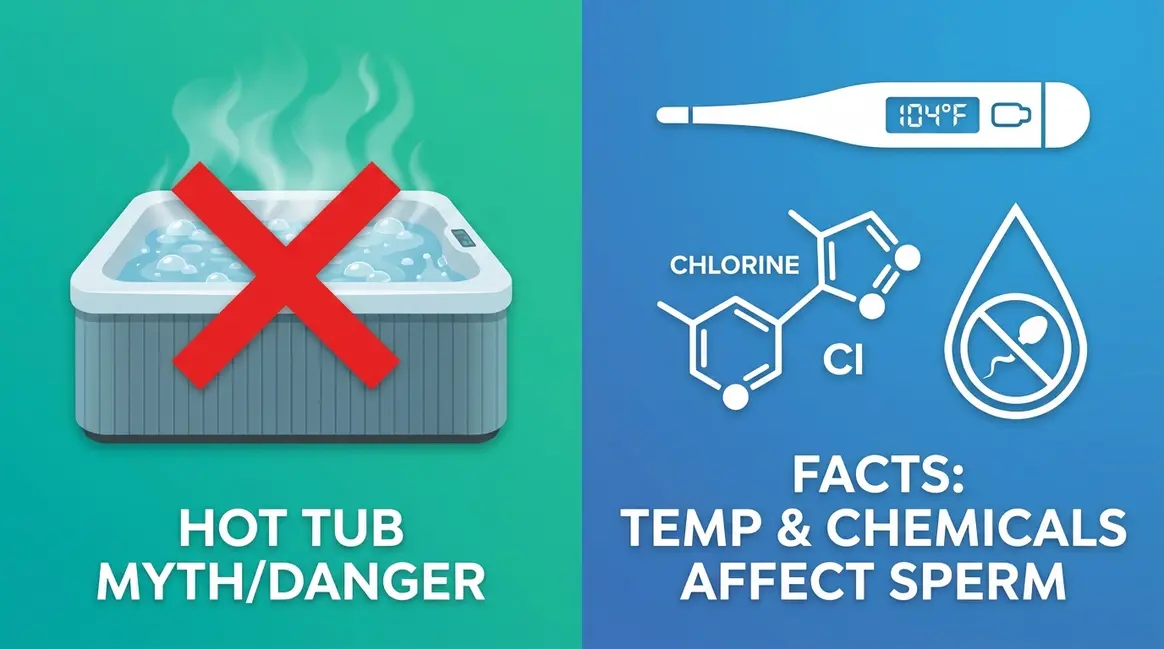
If you’ve ever wondered whether you can get pregnant from a hot tub — perhaps after a shared soak during a fertile period, or after unprotected sex in the water — you’re far from alone. It’s one of the most searched reproductive health questions online, and the anxiety it triggers is completely understandable. The short answer: no, you cannot get pregnant from free-floating sperm in hot tub water. The biology simply doesn’t allow it. But here’s what makes this topic genuinely worth understanding — hot tubs do pose real, documented risks to fertility and to existing pregnancies. That’s the heart of what we call The Hot Tub Pregnancy Paradox: the myth is false, yet the real dangers are consistently underestimated.
This guide covers all four dimensions of that paradox. You’ll learn exactly why sperm cannot survive in hot tub water, what heat does to male and female fertility, how to stay safe if you’re already pregnant, and whether pools or bathwater carry any risk at all.
The Hot Tub Pregnancy Paradox: If you are wondering, can you get pregnant from a hot tub, the answer is no via floating sperm — heat, chemicals, and dilution destroy sperm almost instantly. However, hot tubs pose real fertility and pregnancy risks that deserve serious attention.
- The myth is false: Free-floating sperm cannot survive in hot tub water long enough to cause pregnancy — not even close.
- The real risk for men: Regular hot tub use raises scrotal temperature above the 95–96°F threshold that sperm require, reducing sperm count and motility — with recovery taking up to 3–6 months.
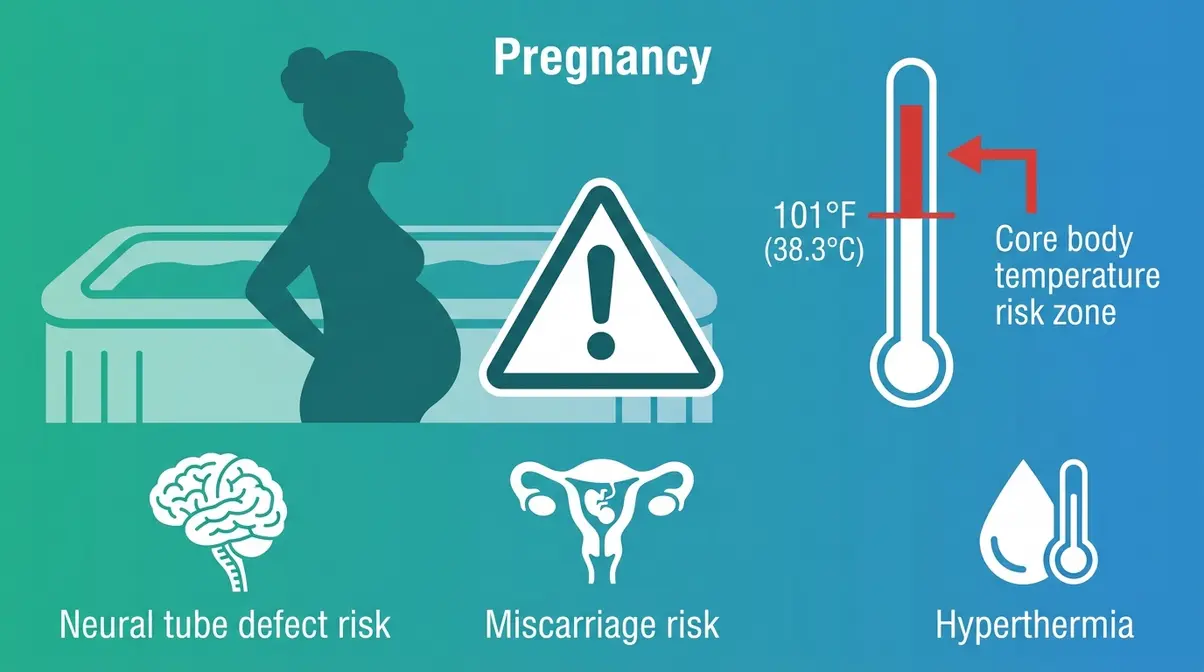
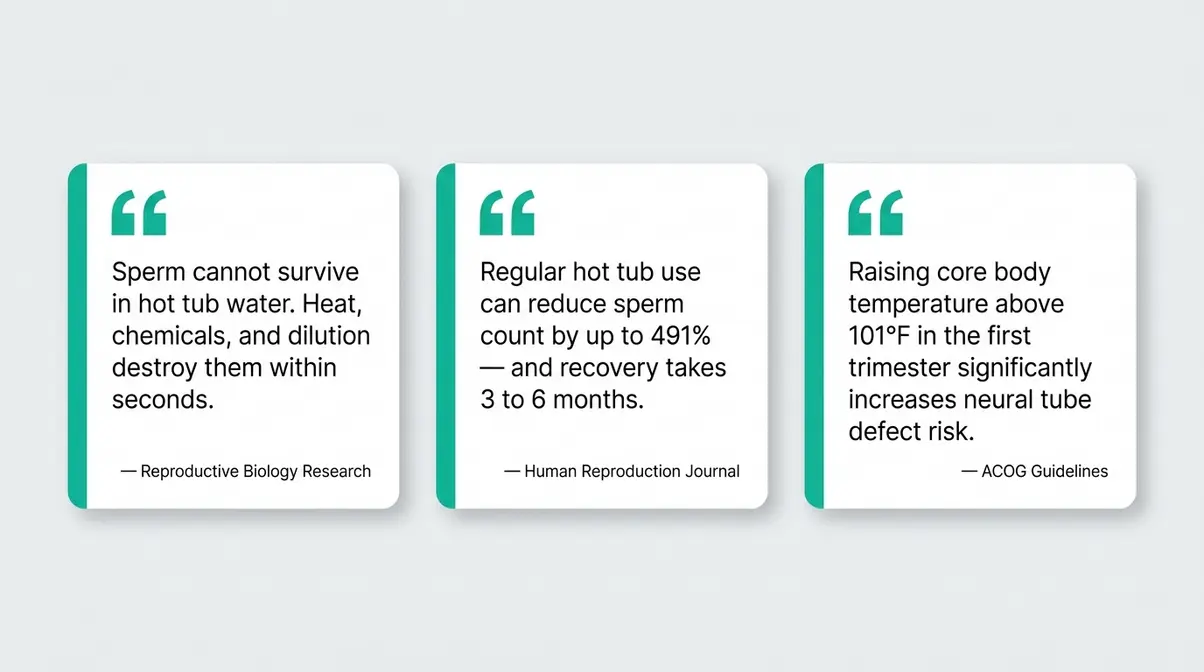
- The real risk for pregnant women: Raising core body temperature above 101°F (38.3°C) during the first trimester significantly increases the risk of neural tube defects and miscarriage, per ACOG guidelines.
- Consult your OB/GYN if you’re trying to conceive or are in early pregnancy before using any hot tub or spa.
⚠️ Medical Disclaimer: This article is for informational purposes only and does not constitute medical advice. The information provided is not a substitute for professional medical guidance, diagnosis, or treatment. Always consult a qualified healthcare professional — such as your OB/GYN or primary care physician — before making decisions about hot tub use during pregnancy or while trying to conceive.
Pregnancy Risks Without Intercourse
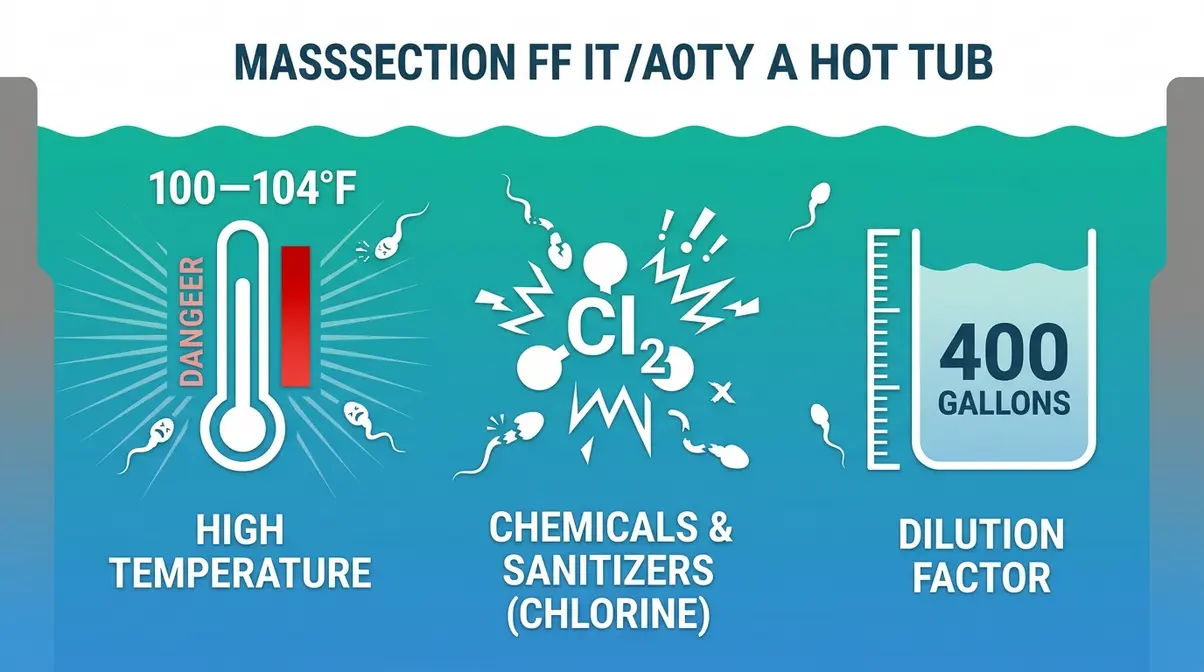
So, can you get pregnant from a hot tub without having sex? No — getting pregnant from a hot tub without penetrative sex is not biologically possible. When understanding pregnancy risk from hot tubs, it is important to know that for pregnancy to occur, a live sperm cell must reach and fertilize a mature egg inside the fallopian tube. Hot tub water — with its high temperature, chemical treatments, and massive dilution — creates an environment so hostile to sperm that survival is measured in seconds, not minutes. The concept of “splash pregnancy” via shared water is a persistent myth, not a medical reality.
The Floating Sperm Myth Explained
The fear behind this myth is understandable: sperm are microscopic, water is shared, and the mechanics of reproduction feel uncertain. But the biology is unambiguous.
“Even if someone ejaculates while you’re having outercourse, sperm can’t survive in a hot tub, pool, or other body of water so you’re not at risk…”
— Planned Parenthood
For a “splash pregnancy” to occur via hot tub water, sperm would need to: (1) survive the thermal and chemical environment of the water, (2) travel through the water in sufficient concentration, (3) enter the vaginal canal, and (4) navigate the cervix, uterus, and fallopian tube to reach a mature egg. Every single one of these steps fails in a hot tub environment. No verified medical case of pregnancy from free-floating sperm in shared water exists in the peer-reviewed literature. This concern, while common and emotionally valid, is not supported by reproductive biology.
The Hot Tub Pregnancy Paradox begins here: the myth generates enormous anxiety, yet the actual mechanism is physiologically impossible. The real hot tub risks — discussed throughout this guide — are the ones most people aren’t worried about.
Why Sperm Die in Hot Tubs
Three independent factors — working simultaneously — make sperm survival in a hot tub essentially impossible.
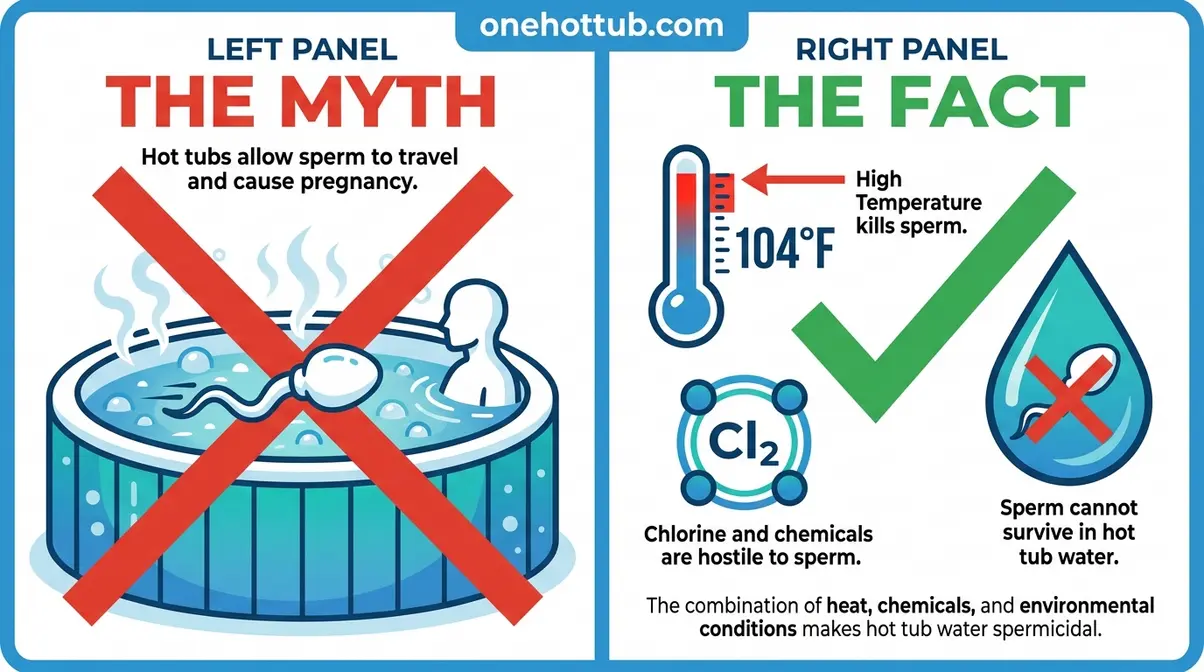
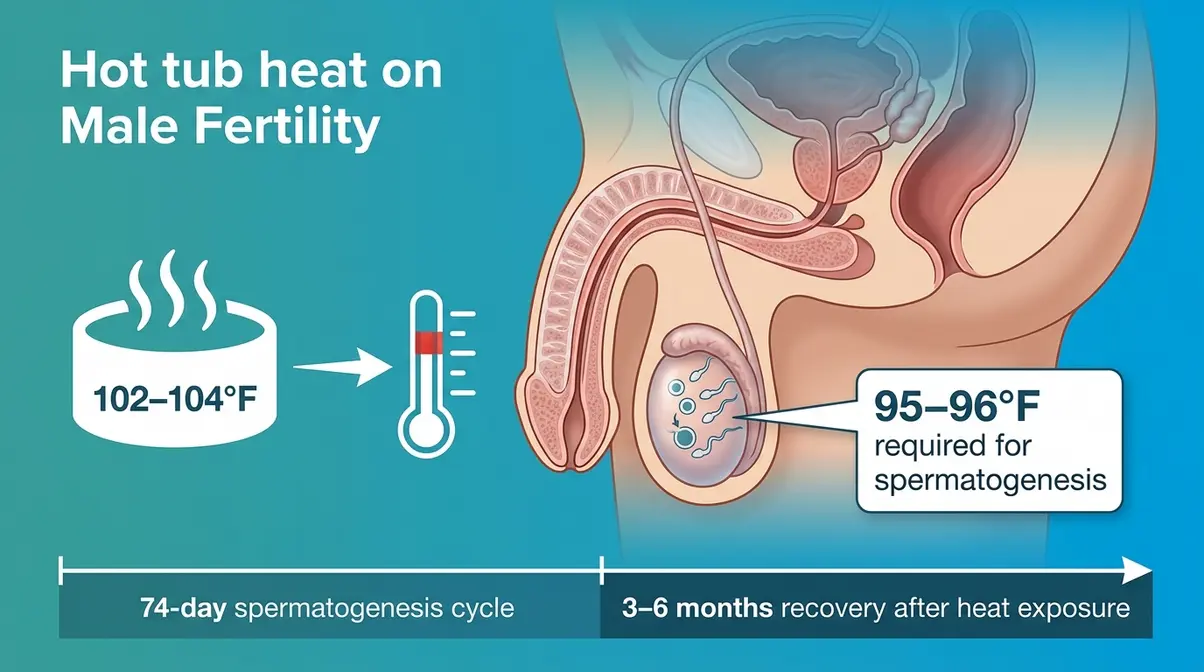
1. Temperature: Sperm production (spermatogenesis) requires a scrotal temperature of approximately 95–96°F (35–35.6°C) — roughly 3.6°F below core body temperature. Standard hot tubs are set between 100°F and 104°F (37.8–40°C). At these temperatures, sperm cells experience rapid protein denaturation and lose motility within seconds of exposure. Research published in Human Reproduction confirms that even modest elevations in testicular temperature — as little as 1–2°C above optimal — significantly impair sperm function (NIH/PubMed, 2023).
2. Chemical exposure: Most hot tubs are treated with chlorine, bromine, or similar biocides specifically designed to kill microorganisms. Sperm cells, which have no cell wall protection against these agents, are destroyed rapidly upon contact. The same chemistry that prevents bacterial infections in shared water eliminates any viable sperm within moments.
3. Dilution: A standard hot tub holds approximately 400–500 gallons of water. Even a full ejaculate (containing roughly 15–200 million sperm per milliliter) becomes so diluted as to render any meaningful sperm concentration physiologically irrelevant — long before the temperature and chemicals have their effect.
| Threat to Sperm | Hot Tub Level | Sperm Survival Impact |
|---|---|---|
| Water temperature | 100–104°F (37.8–40°C) | Rapid motility loss within seconds |
| Chlorine/bromine | Sanitizing concentration | Cell membrane destruction |
| Dilution factor | 400–500 gallons | Concentration drops to near zero |
| Optimal sperm temp | 95–96°F (35–35.6°C) | Not achievable in hot tub water |
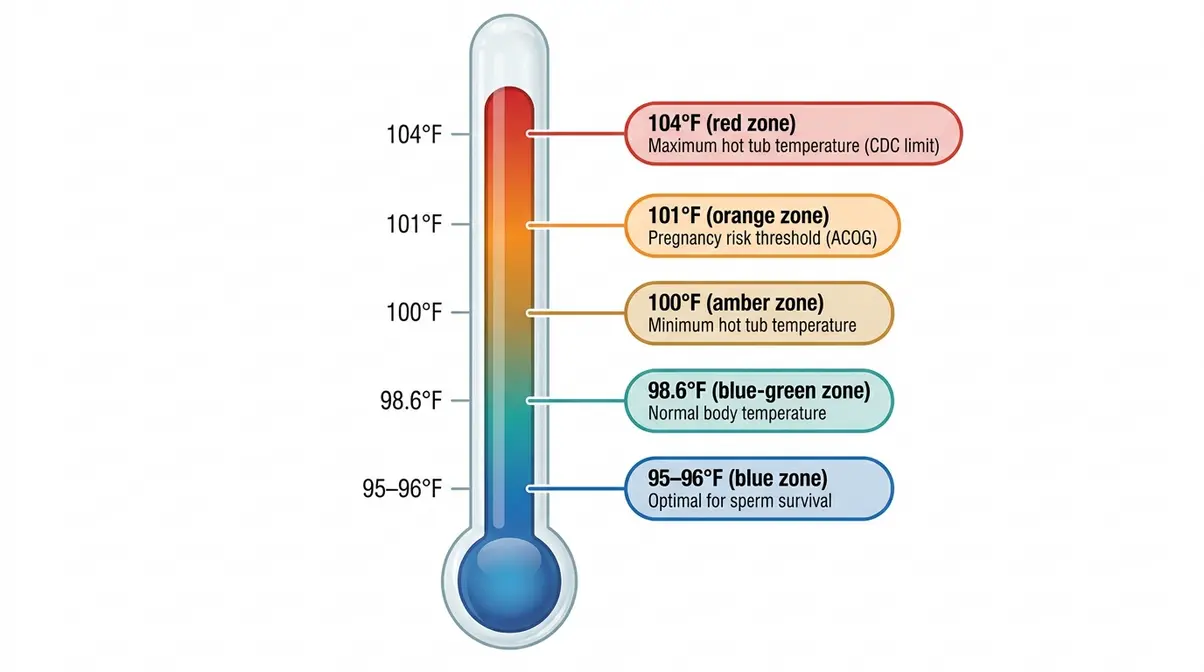
According to UT Southwestern Medical Center, sperm are extraordinarily fragile outside the body and depend on precisely controlled conditions — conditions that hot tub water categorically cannot provide. The notion of “free-floating sperm” surviving long enough to cause pregnancy is not a close call; it contradicts fundamental reproductive biology.
Having Sex IN a Hot Tub
This is where the picture changes — and where many readers are surprised. Having penetrative sex inside a hot tub carries a genuine pregnancy risk. If ejaculation occurs during intercourse, sperm are deposited directly into the vaginal canal, not into the surrounding water. At that point, the hostile hot tub environment is irrelevant: the sperm are already inside the body, where conditions are warm, pH-balanced, and protected.
The water itself does not prevent pregnancy. In fact, hot tub sex may introduce additional complications: the water can wash away natural lubrication, and some research suggests that chemical exposure from hot tub water entering the vaginal canal may disrupt the vaginal microbiome — though this is a secondary concern compared to the pregnancy risk of unprotected sex in any setting.
If you are in your fertile period and not trying to conceive, treat sex in a hot tub exactly as you would sex anywhere else: use appropriate contraception. The location does not provide protection.
Hot Tubs and Male Fertility
Here is one of the most underappreciated facts in reproductive health: regular hot tub use is a documented risk factor for reduced male fertility. A landmark study published in Human Reproduction (Shefi et al., 2007, replicated in subsequent PubMed research) found that men who stopped wet heat exposure — including hot tubs and hot baths — saw sperm concentration improve by an average of 491% after discontinuation. That is not a rounding error.
The mechanism is straightforward. The testes are located outside the body precisely because spermatogenesis requires temperatures 3–4°F below core body temperature. Submerging in 102–104°F water elevates scrotal temperature well above this threshold, impairing both sperm production and motility. Scrotal hyperthermia (abnormal heat exposure to the testes) from regular hot tub use can suppress sperm count significantly — and the effects are cumulative with repeated exposure.
The recovery timeline matters: because the full spermatogenesis cycle takes approximately 74 days (roughly 2.5 months), men who stop hot tub use typically need 3 to 6 months before sperm parameters return to baseline. This is critical information for couples trying to conceive — stopping hot tub use one week before a fertility appointment is not sufficient.
- Practical guidance for men trying to conceive:
- Limit or eliminate hot tub use at least 3 months before actively trying to conceive
- Keep bath water temperature below 98°F (37°C) during this period
- Avoid prolonged laptop use on the lap, heated car seats, and tight underwear for the same reason (all elevate scrotal temperature)
- Speak with a urologist or fertility specialist if sperm parameters remain low after discontinuation
According to Healthline’s medical review team, even occasional hot tub use may temporarily affect sperm quality in men who are already at the lower end of normal sperm parameters. This makes The Hot Tub Pregnancy Paradox particularly striking: the hot tub cannot cause pregnancy via floating sperm, yet it actively reduces the chances of pregnancy for men who use it regularly.
Are Hot Tubs Safe for Sperm?
No — regular hot tub use is a documented risk factor for reduced sperm count and motility. Healthy spermatogenesis requires scrotal temperatures of approximately 95–96°F (35–35.6°C). Hot tub water at 100–104°F raises scrotal temperature well above this threshold, impairing sperm production. Research in Human Reproduction found that men who stopped wet heat exposure saw sperm concentration improve by an average of 491% (NIH/PubMed). If you are trying to conceive, most fertility specialists recommend avoiding hot tubs for at least 3 months before attempting conception, as full sperm parameter recovery takes 3–6 months.
Hot Tub Safety During Pregnancy
For women who are already pregnant, hot tub safety is a serious medical concern — not a myth. The core issue is hyperthermia (overheating of the body): raising your core body temperature too high, for too long, during early pregnancy has been associated with an increased risk of neural tube defects, miscarriage, and other complications. This section addresses the specific risks, the guidelines, and what to do if you’ve already been exposed.
Consult your OB/GYN before using any hot tub, sauna, or heated bath during pregnancy — especially during the first trimester.
First Trimester Hyperthermia
The first trimester (weeks 1–12) is the most vulnerable period for fetal development. During this window, the neural tube — the precursor to the brain and spinal cord — forms and closes, typically by week 6–7. Raising core body temperature above 101°F (38.3°C) during this critical period has been associated with neural tube defects including spina bifida and anencephaly, according to research cited by both ACOG and the NHS.
A standard hot tub set to 104°F can raise a person’s core body temperature to dangerous levels within 10–20 minutes. Unlike a fever (which is driven by infection-fighting physiology), externally induced hyperthermia from hot water provides no protective benefit — only risk. The fetus cannot regulate its own temperature and relies entirely on the mother’s thermoregulation, which is itself compromised when the body is immersed in very hot water.
Research published in Birth Defects Research and cited by MotherToBaby confirms that hyperthermia is a known teratogen (an agent that disrupts fetal development) when core temperature exceeds 38.9°C (102°F) for a sustained period. The risk is highest in the first 4–6 weeks of neural tube development — often before a person even knows they are pregnant.
- Additionally, hot tub use during pregnancy carries secondary risks:
- Dizziness and fainting from vasodilation (blood vessels widening) and blood pressure changes
- Dehydration, which can trigger uterine contractions
- Reduced blood flow to the placenta during periods of intense heat exposure
Safe Temps and Duration Rules
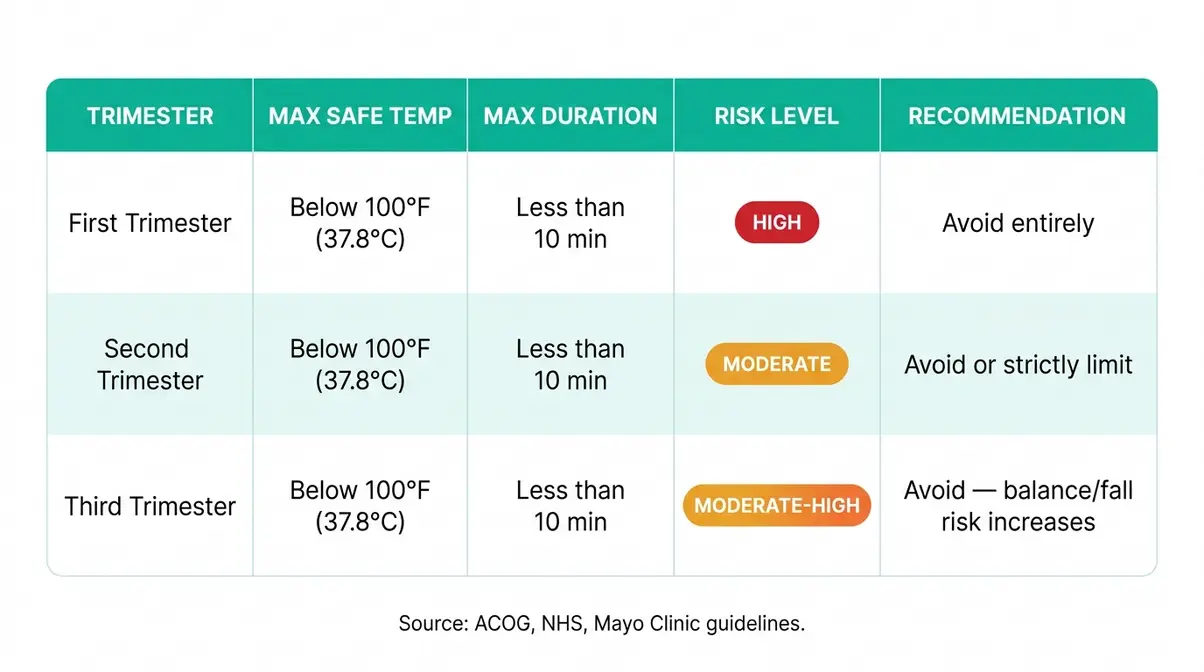
Major medical organizations have established clear, consistent guidance on this topic. The following table summarizes current recommendations:
Key guidelines from ACOG, NHS, and Mayo Clinic (Part 1):
- Temperature limit: Keep water temperature below 100°F (37.8°C) during pregnancy — significantly below the standard hot tub setting of 100–104°F
- Duration limit: Limit any exposure to less than 10 minutes, even at lower temperatures
- First trimester: Most medical organizations recommend avoiding hot tubs entirely during the first trimester, when neural tube development is occurring
- Warning signs: Exit immediately if you feel flushed, dizzy, overheated, or short of breath — these signal that core body temperature is rising
Additional safety measures (Part 2):
- Positioning: If you do enter a hot tub after the first trimester at a lower temperature, keep your upper body and arms out of the water to reduce heat absorption
- Hydration: Drink cool water before and during any warm water exposure to support thermoregulation
- Avoid alone: Never use a hot tub alone during pregnancy — dizziness and fainting risk is elevated
A straightforward rule: If a hot tub is set above 100°F — which most are — it is not safe for use during pregnancy at any trimester. The American Pregnancy Association and ACOG agree that the risk-benefit calculation strongly favors avoidance.
Accidental Hot Tub Exposure
This is one of the most anxiety-provoking scenarios — and one of the most common questions OB/GYNs receive. If you used a hot tub before knowing you were pregnant, or briefly before understanding the risks, here is a measured, evidence-based perspective:
The risk is real but context-dependent. A single brief exposure — particularly if the water was not excessively hot (below 101°F) and the duration was short (under 10 minutes) — carries a much lower risk than repeated or prolonged exposure. The neural tube defect risk is associated with sustained hyperthermia, not a momentary warmth.
- What to do:
- Don’t panic — a single brief exposure is not the same as prolonged or repeated exposure
- Note the details: How long were you in? What was the water temperature? Did you feel overheated or flushed?
- Contact your OB/GYN or midwife — share the specifics so they can assess your individual risk profile
- Attend your scheduled prenatal appointments — your provider may recommend additional ultrasound monitoring depending on timing and exposure level
- Avoid further hot tub use for the remainder of your pregnancy
According to UT Southwestern Medical Center, the first step is always honest communication with your healthcare provider — not self-diagnosis based on internet research. Most accidental brief exposures do not result in harm, but only your OB/GYN can assess your specific circumstances.
How Hot is Too Hot for Pregnant Women?
Any water temperature above 100°F (37.8°C) is considered too hot for pregnant women, according to ACOG and NHS guidelines. Standard hot tubs are typically set between 100°F and 104°F — meaning most hot tubs exceed the safe threshold before you even get in. Even at or just below 100°F, ACOG recommends limiting exposure to under 10 minutes and avoiding hot tubs entirely during the first trimester. For regular baths at home, keeping water at or below 98°F (37°C) is the safest approach. If you feel flushed, dizzy, or uncomfortably warm, exit the water immediately regardless of the thermometer reading.
Sperm in Pools and Bathwater
Just as people ask if can you get pregnant from a hot tub, many wonder about swimming pools. The same anxieties that surround hot tubs extend to swimming pools and shared baths. The biological answer is the same in each case — but the specific reasons differ slightly, and it’s worth understanding why. Getting pregnant from sperm in a pool or bathwater follows the same impossible pathway as the hot tub scenario: no verified medical case exists, and the biological barriers are overwhelming.
Pools and Pregnancy Risk
Can you get pregnant from sperm in a pool? No — for overlapping but distinct reasons from the hot tub scenario.
Chlorine and pH: Swimming pools maintain chlorine levels between 1–3 parts per million and a pH of 7.2–7.8. These conditions are actively hostile to sperm cell membrane integrity. The same disinfectant chemistry that makes pools safe to swim in destroys sperm on contact. Research cited by Planned Parenthood confirms that sperm cannot survive in chlorinated pool water.
Dilution: A standard residential pool holds 10,000–20,000 gallons of water — 25 to 50 times the volume of a hot tub. Even in the wildly implausible scenario where sperm somehow survived the chlorine, the dilution factor would reduce any meaningful concentration to essentially zero.
Temperature: Most outdoor pools are cooler than body temperature, which might seem to favor sperm survival — but the chemical destruction happens far faster than temperature concerns become relevant. Indoor pools maintained at 83–86°F are warmer but still heavily chlorinated.
The bottom line on pool pregnancy: The “splash pregnancy” concern in a swimming pool is not supported by any peer-reviewed evidence. If you are swimming in a public or private pool, you are not at risk of pregnancy from the water itself — regardless of who else is in the pool.
If you have penetrative sex in a pool, however, the same rule applies as in a hot tub: the water does not prevent pregnancy. Use appropriate contraception.
Shared Baths and Bathwater
Shared bath scenarios generate similar anxiety — particularly among teenagers. Can you get pregnant from sperm in bathwater? Again, the answer is no, but the mechanism here involves a different set of factors.
Temperature shock: Sperm are adapted to survive in the highly specific environment of the male reproductive tract and the female reproductive system. Bathwater — even at a comfortable 98–104°F — creates an immediate osmotic and thermal shock that rapidly impairs sperm motility.
No chlorine, but other barriers remain: Unlike pools, bathwater typically lacks disinfectant chemicals. However, sperm still face: rapid temperature-induced motility loss, dilution across a full bathtub (roughly 40–50 gallons), soap and bath product exposure (which disrupts sperm cell membranes), and the physical impossibility of navigating from open water into the vaginal canal in sufficient numbers.
The vaginal barrier: Even if a small number of sperm somehow survived bathwater exposure, they would need to enter the vaginal canal against the flow of bathwater, navigate through cervical mucus, travel through the uterus, and reach a fallopian tube containing a mature egg. Each step is a near-insurmountable barrier for sperm that have already been compromised by environmental exposure.
Medically, no documented case of pregnancy from shared bathwater exists. This is confirmed by Healthline’s medical review and aligns with the consensus position of reproductive medicine specialists.
Common Hot Tub Pregnancy Myths
Understanding the real biology behind these myths helps replace anxiety with clarity. This section addresses the most persistent misconceptions — and the factual corrections that follow each one.
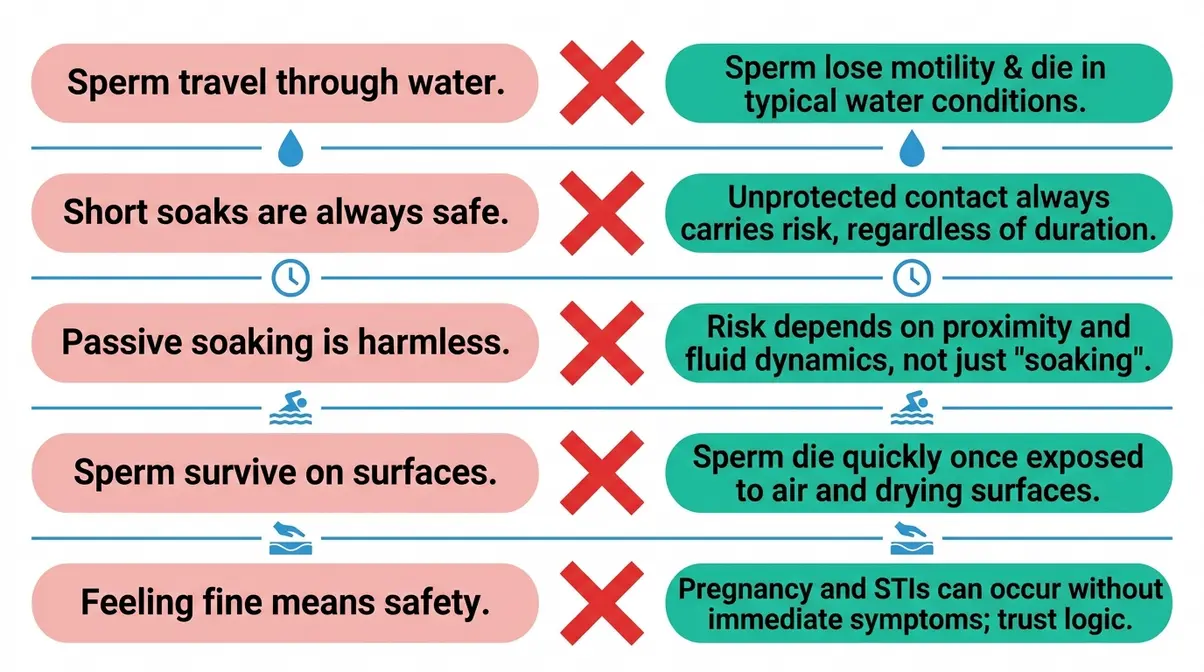
Myth 1: Sperm Travel Through Water
The reality: Outside the body, sperm survival is measured in minutes even under ideal conditions (warm, pH-neutral, non-chlorinated fluid). In hot tub water at 100–104°F, survival time drops to seconds. The idea that sperm could survive long enough to travel through gallons of water, enter the vaginal canal, and navigate the reproductive tract is not physiologically plausible. Planned Parenthood and reproductive medicine specialists agree: this is not a risk worth worrying about.
Myth 2: Short Soaks Are Always Safe
The reality: Duration matters, but so does temperature — and most hot tubs are set at temperatures that are unsafe for pregnancy at any duration. A hot tub at 104°F can raise core body temperature above the 101°F danger threshold within 10–20 minutes. ACOG recommends keeping water below 100°F and limiting exposure to under 10 minutes — conditions that most standard hot tubs cannot meet. The safest recommendation for the first trimester is to avoid hot tubs entirely, per NHS and ACOG guidance.
Myth 3: Passive Soaking is Harmless
The reality: Even passive soaking — without any sexual activity — raises scrotal temperature above the threshold required for healthy spermatogenesis. Research in Human Reproduction found that men who discontinued wet heat exposure (including hot tubs) experienced dramatic improvements in sperm concentration. This effect is cumulative: regular hot tub use over weeks and months can meaningfully suppress sperm count and motility, with full recovery taking 3–6 months after discontinuation.
Myth 4: Sperm Survive on Surfaces
The reality: Sperm require a warm, moist environment to remain viable. On dry surfaces — including toilet seats, towels, and clothing — sperm lose motility within minutes as they desiccate (dry out). The Cleveland Clinic and other medical authorities confirm that pregnancy from contact with sperm on dry surfaces is not a documented medical possibility. Sperm on a dry surface are not viable sperm.
Myth 5: Feeling Fine Means Safety
The reality: Hyperthermia risk does not always come with obvious warning signs. By the time you feel uncomfortably hot, your core temperature may already be elevated. The fetus has no independent thermoregulation and cannot signal distress the way you can perceive discomfort. This is precisely why medical organizations recommend proactive avoidance rather than relying on how you feel in the moment. If you are pregnant, “I feel okay” is not a reliable safety indicator for hot tub use.
Frequently Asked Questions
Has anyone got pregnant in a hot tub?
No verified medical case of pregnancy from free-floating sperm in a hot tub exists in peer-reviewed literature. The biological barriers — extreme heat, chemical disinfection, and massive dilution — make sperm survival essentially impossible in hot tub water. However, pregnancy from penetrative sex inside a hot tub is entirely possible, since ejaculation occurs directly into the vaginal canal where water conditions are irrelevant. If you had unprotected intercourse in a hot tub during your fertile period, that carries the same pregnancy risk as unprotected sex anywhere else.
How rare is splash pregnancy?
“Splash pregnancy” — pregnancy caused by sperm floating freely in shared water — is not just rare; it is not a documented medical phenomenon. No peer-reviewed case has ever confirmed this mechanism. For pregnancy to occur, a live sperm must fertilize an egg inside the fallopian tube. Sperm in open water are destroyed by heat, chemicals, and dilution before they could plausibly enter the reproductive tract. The term “splash pregnancy” circulates online, but reproductive medicine specialists do not recognize it as a real risk category.
Is it okay for a pregnant woman to get in a hot tub?
Most major medical organizations recommend that pregnant women avoid hot tubs entirely, particularly in the first trimester. ACOG, the NHS, and Mayo Clinic all caution against hot tub use during pregnancy due to the risk of hyperthermia — raising core body temperature above 101°F (38.3°C), which is associated with neural tube defects and miscarriage. If you choose to use a hot tub after the first trimester, keep water below 100°F and limit exposure to under 10 minutes. Always consult your OB/GYN before making this decision.
What is the #1 cause of infertility?
Ovulatory disorders are the most common single cause of female infertility, accounting for approximately 25–30% of cases (ACOG). For male infertility, abnormal sperm parameters — including low count, poor motility, and abnormal morphology — are the leading cause, present in roughly 40–50% of infertile couples. Hot tub-related scrotal hyperthermia is one modifiable contributor to male infertility. Infertility overall affects approximately 1 in 6 couples worldwide, per the World Health Organization. If you’ve been trying to conceive for 12 months without success (or 6 months if over 35), consult a reproductive endocrinologist.
What is a 2 finger test in pregnancy?
A “two-finger test” in pregnancy context typically refers to a cervical examination where a provider assesses cervical dilation and effacement using two fingers. This is a standard clinical assessment performed during labor and late pregnancy to determine how far the cervix has opened in preparation for delivery. It is not a diagnostic test for pregnancy itself. In some contexts, the term has been misused in non-consensual forensic examinations — a practice condemned by WHO and medical ethics bodies worldwide. If your provider recommends a cervical check, ask them to explain the purpose and what they expect to find.
What if I accidentally went in a hot tub during early pregnancy?
A single, brief accidental exposure is unlikely to cause harm, but you should contact your OB/GYN to discuss the specifics. The key factors are: how long you were in the water, the water temperature, and whether you felt overheated or flushed. Sustained hyperthermia — not momentary warmth — is the primary risk mechanism. Note the details (temperature, duration, how you felt) and share them with your provider at your next appointment or by phone. Most accidental brief exposures at moderate temperatures do not result in complications, but only your healthcare provider can assess your individual situation accurately.
Real Problems and Alternatives
Understanding the limitations of hot tub use — and when to seek professional guidance — is the practical takeaway from everything covered above.
Common Pitfalls
Pitfall 1: Assuming “natural” hot springs or non-chlorinated tubs are safer during pregnancy. Natural hot springs and un-chlorinated private tubs are often hotter than standard hot tubs and may harbor bacteria like Legionella and Pseudomonas that pose additional pregnancy risks. The hyperthermia risk is temperature-driven, not chemistry-driven — a natural spring at 104°F is just as dangerous as a chlorinated tub at 104°F.
Pitfall 2: Men stopping hot tub use one week before a fertility appointment. The spermatogenesis cycle takes approximately 74 days. A one-week break will not restore sperm parameters. If you’re preparing for a semen analysis or trying to conceive, commit to a minimum 3-month break from hot tub use, hot baths, and other scrotal heat sources.
Pitfall 3: Relying on “I feel fine” as a pregnancy safety indicator. Core body temperature can rise to dangerous levels before you feel overtly uncomfortable, especially in warm, humid environments. Pregnant women should not use subjective comfort as their guide for hot tub safety.
When to Choose Alternatives
If you want relaxation during pregnancy: Warm (not hot) baths at or below 98°F are generally considered safe in moderation during pregnancy. A 10–15 minute warm bath at home is a reasonable alternative to hot tub soaking — consult your OB/GYN for personalized guidance.
If you’re trying to conceive (male partner): Replace hot tub soaking with other recovery and relaxation practices — sauna alternatives with cool-down protocols, massage, or swimming in a temperature-appropriate pool. The goal is keeping scrotal temperature below 96°F during the active conception window.
If you’re anxious about a past exposure: Rather than self-diagnosing via internet research, schedule a call with your OB/GYN or midwife. Provide specific details (temperature, duration, trimester) so they can give you personalized, accurate guidance.
When to Seek Expert Help
Reach out to a healthcare provider — not just online resources — in these specific scenarios:
- You used a hot tub repeatedly during the first trimester before knowing you were pregnant
- Your male partner has been diagnosed with low sperm count and uses hot tubs regularly
- You are trying to conceive and have been unsuccessful for 12 months (6 months if over 35)
- You experienced dizziness, fainting, or overheating during hot tub use while pregnant
- You are considering hot tub use during a high-risk pregnancy (multiples, prior miscarriage, known fetal anomaly)
The Bottom Line on Hot Tubs
For anyone worried and asking, can you get pregnant from a hot tub via floating sperm — the answer is a clear, medically grounded no. The heat, chemical treatment, and dilution of hot tub water create an environment where sperm survival is measured in seconds. No peer-reviewed case of “splash pregnancy” from shared water exists, and reproductive biology provides no plausible pathway for it to occur. That specific fear can be set aside with confidence.
The Hot Tub Pregnancy Paradox, however, reminds us that the real risks run in the opposite direction: hot tubs actively work against reproduction and early pregnancy in ways most people don’t anticipate. Regular hot tub use suppresses male sperm count and motility — with full recovery taking 3–6 months after stopping. For pregnant women, even brief exposure to water above 100°F carries documented risks of neural tube defects and miscarriage, with the first trimester being the most vulnerable window.
The clearest next step is a direct conversation with your OB/GYN or reproductive specialist — not because these questions are embarrassing, but because your specific circumstances (trimester, fertility history, frequency of exposure) determine your individual risk profile in ways no general guide can fully address. If you’re trying to conceive, start the hot tub break now — 3 months earlier than you think you need to. If you’re pregnant, the safest soak is a warm bath at home, well below the hot tub threshold. Your provider can help you find the balance between relaxation and safety that’s right for your situation.