

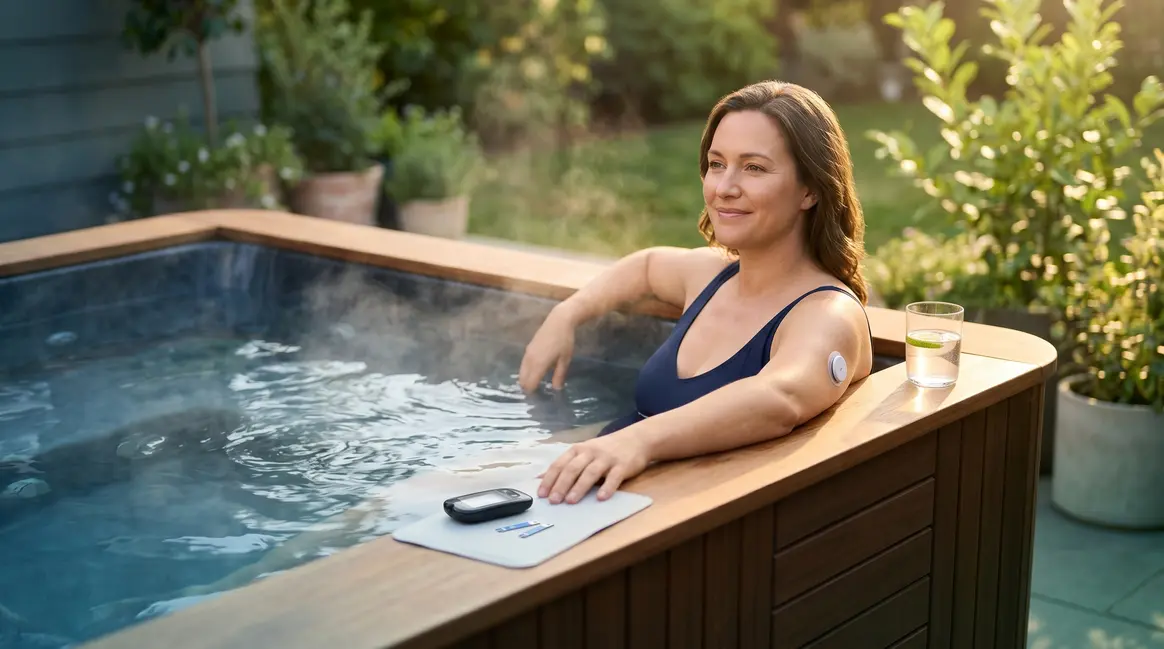
Table of Contents - Hot Tub with Type 1 Diabetes: Complete Safety Guide
This blog post may contain affiliate links. As an Amazon Associate I earn from qualifying purchases.
⚠️ Medical Disclaimer: This article is for informational purposes only and does not constitute medical advice. Always consult your endocrinologist, physician, or Certified Diabetes Educator (CDE) before using a hot tub. Individual health conditions vary significantly, and what is safe for one person with Type 1 Diabetes may not be appropriate for another.
Expert Review: This article should carry a byline such as: “Medically reviewed by , M.D. / CDE — .” This is a YMYL (Your Money Your Life) health article — expert review is non-negotiable for E-E-A-T compliance.
You have probably seen that warning label on the side of every hot tub — the one that mentions diabetes. And if you have Type 1 Diabetes (T1D), an autoimmune condition where the body produces no insulin on its own, that label can feel like a door slamming shut on something you genuinely want to enjoy.
“Hot water can increase insulin sensitivity, which may cause hypoglycemia (low blood sugar), especially in those taking insulin or glucose-lowering medications.”
That warning is real. But it is not the whole story. Without a clear, device-specific protocol, you are left guessing — and guessing with T1D is never a good strategy.
If you are wondering, “is keeping a hot tub with type 1 diabetes safe?” the answer is yes, with the right preparation. By the end of this guide, you will have a step-by-step safety framework — The T1D Hot Tub Protocol — so you can soak with confidence, not anxiety. We cover what heat does to your blood sugar, how to protect your Dexcom, Libre, or insulin pump, and exactly how to follow a safe three-phase protocol before your next soak.
Key Takeaways: Hot Tub Safety with Type 1 Diabetes
Yes, making a hot tub with type 1 diabetes safe is entirely possible — but heat accelerates insulin absorption, raising hypoglycemia risk within minutes of entering the water.
- Follow The T1D Hot Tub Protocol: Check blood sugar, manage Insulin on Board (IOB), and limit sessions to 15–20 minutes.
- Protect your devices: The Dexcom G6/G7 and most pumps must not exceed 104°F (40°C) water temperature.
- Never soak alone: A companion can respond quickly if you experience sudden low blood sugar symptoms.
- Neuropathy caution: If you have nerve damage, always test water temperature with a thermometer — never with your foot.
What Happens to Your Blood Sugar in a Hot Tub
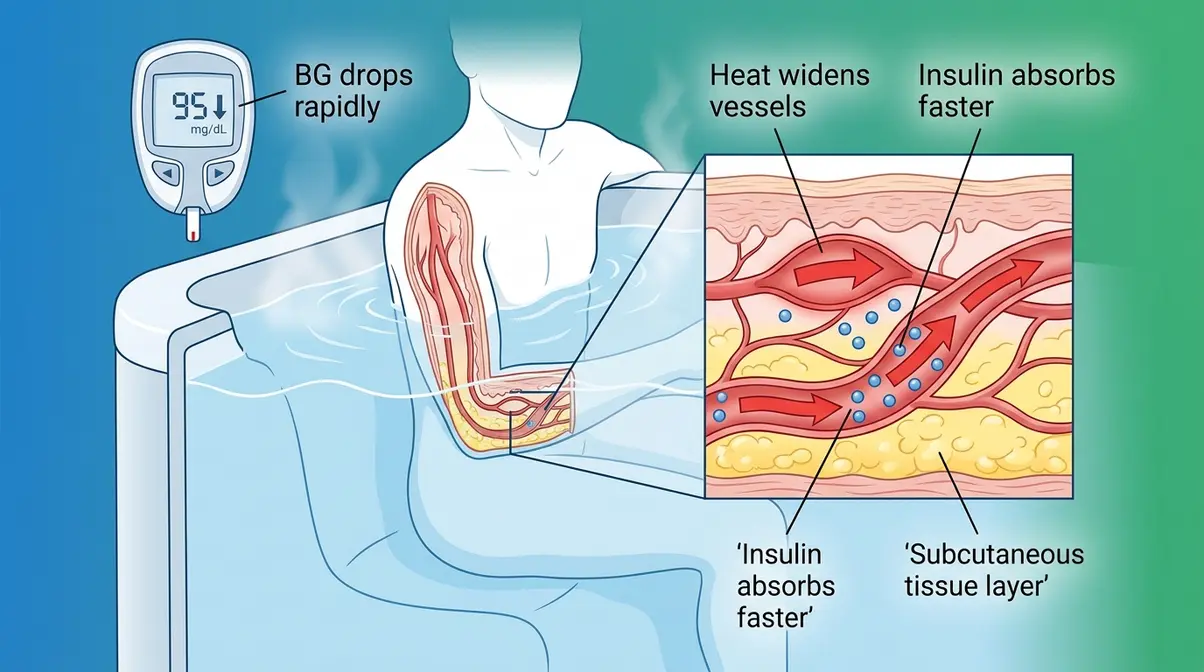
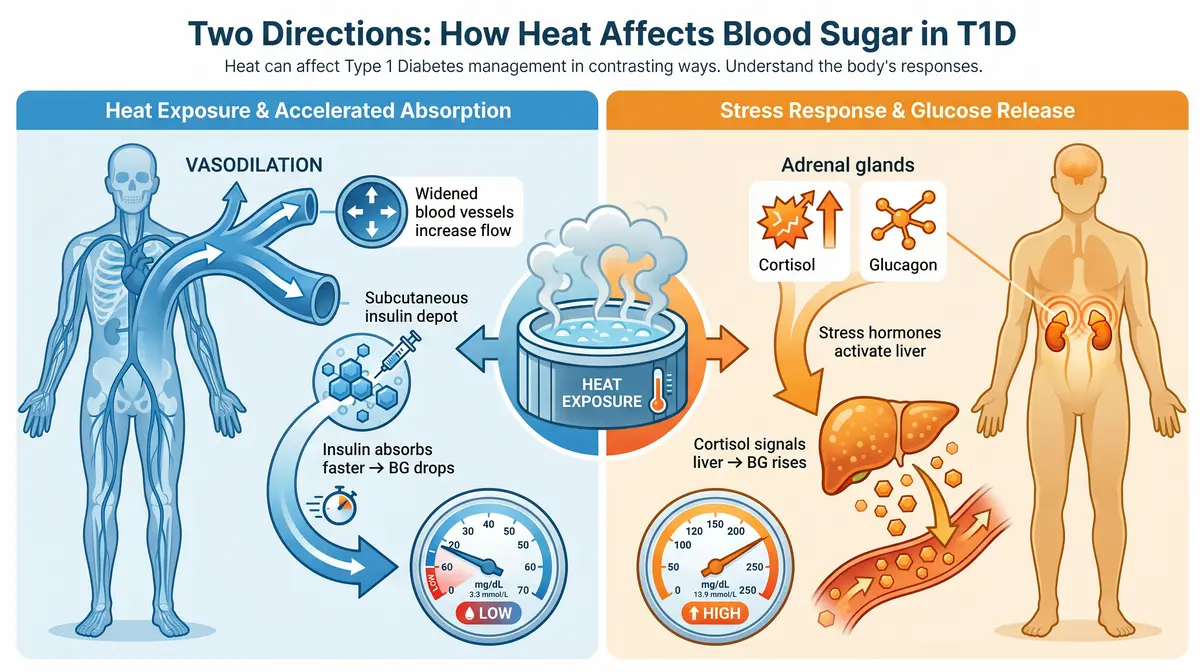
Most people with T1D are warned that hot tubs are risky — but few understand that the same heat can push blood sugar in two completely opposite directions. Heat triggers vasodilation — the widening of your blood vessels — which accelerates how quickly injected insulin enters your bloodstream. At the same time, your body’s own stress response can release hormones that push glucose higher. Understanding these hot tub effects on blood sugar levels is the foundation of safe soaking.
Will a Hot Tub Lower Blood Sugar?
Hypoglycemia (low blood sugar) is the most immediate risk when you step into a hot tub with T1D. Here is the mechanism in plain terms.
When your body heats up, your blood vessels widen — this is called vasodilation — to help you cool down by moving warm blood closer to the skin’s surface. If you have insulin sitting in subcutaneous tissue (just beneath the skin, where most T1D injections and pump infusion sites deliver it), that increased blood flow carries the insulin into your bloodstream faster than your body expected.
The NIDDK insights on rapid insulin absorption confirm that heat causes blood vessels to dilate, which can accelerate insulin absorption and lead to unexpected hypoglycemia (NIDDK, 2026). Research published in PMC suggests that hot water immersion can increase peripheral blood flow significantly — and with it, the rate at which subcutaneous insulin absorbs (PMC/NCBI, 2026).
Why this matters for you: If you took a dose of insulin two hours ago and then step into a 102°F hot tub, the heat may cause that insulin to absorb faster than your correction factor accounted for. The result can be a rapid blood sugar drop — sometimes within 10 to 15 minutes of entering the water.
Hypoglycemia symptoms (shakiness, confusion, rapid heartbeat, sweating) can look a lot like normal heat exhaustion (heavy sweating, weakness, nausea). The critical difference: hypoglycemia will not improve by simply getting out of the water — it requires fast-acting glucose. This is exactly why The T1D Hot Tub Protocol begins with a blood sugar check — not a temperature check.
Do Hot Tubs Raise Blood Sugar?
Here is what surprises many T1D users: a hot tub can also push blood sugar in the opposite direction.
When your body experiences heat as a physical stressor, it activates a counter-regulatory hormone response. Your adrenal glands release cortisol (a stress hormone your body secretes in response to heat, pain, or perceived danger) and your pancreas releases glucagon — a hormone that signals the liver to dump stored glucose into the bloodstream. In a person without diabetes, insulin would automatically counterbalance this glucose release. In T1D, that automatic correction does not happen.
According to the Cleveland Clinic’s explanation of heat and insulin, extreme heat increases blood flow to the skin, which can also stress the body’s regulatory systems, contributing to unpredictable glucose swings (Cleveland Clinic, 2026). Dehydration — which hot tub sessions accelerate through sweating — compounds this effect by concentrating glucose in the bloodstream and reducing the kidneys’ ability to clear it efficiently.
Why this matters for you: You may enter a hot tub with a blood sugar of 120 mg/dL and exit 20 minutes later at 160 mg/dL or higher. This is not a failure of your management — it is a predictable physiological response. Knowing it can happen lets you plan for it rather than panic.
Why CGM Readings May Be Unreliable
Even if you are monitoring carefully, your Continuous Glucose Monitor (CGM) — a small sensor that tracks glucose levels in real time through interstitial fluid beneath the skin — may give you inaccurate readings during and immediately after hot tub use.
Heat affects interstitial fluid dynamics. Rapid vasodilation changes how glucose moves between blood and tissue, which can create a lag — or an outright false reading — on your CGM display. Some T1D users report false highs immediately after exiting a hot tub, while others see readings that lag significantly behind actual blood glucose. Additionally, hot water and prolonged moisture can weaken the adhesive holding your CGM sensor in place, increasing the risk of partial detachment that causes sensor errors.
Why this matters for you: Do not make aggressive insulin correction decisions based solely on a CGM reading taken within 30 minutes of hot tub use. Always confirm with a fingerstick blood glucose test if your reading seems inconsistent with how you feel. This single habit can prevent a dangerous overcorrection.
Your Step-by-Step Hot Tub Safety Protocol for T1D
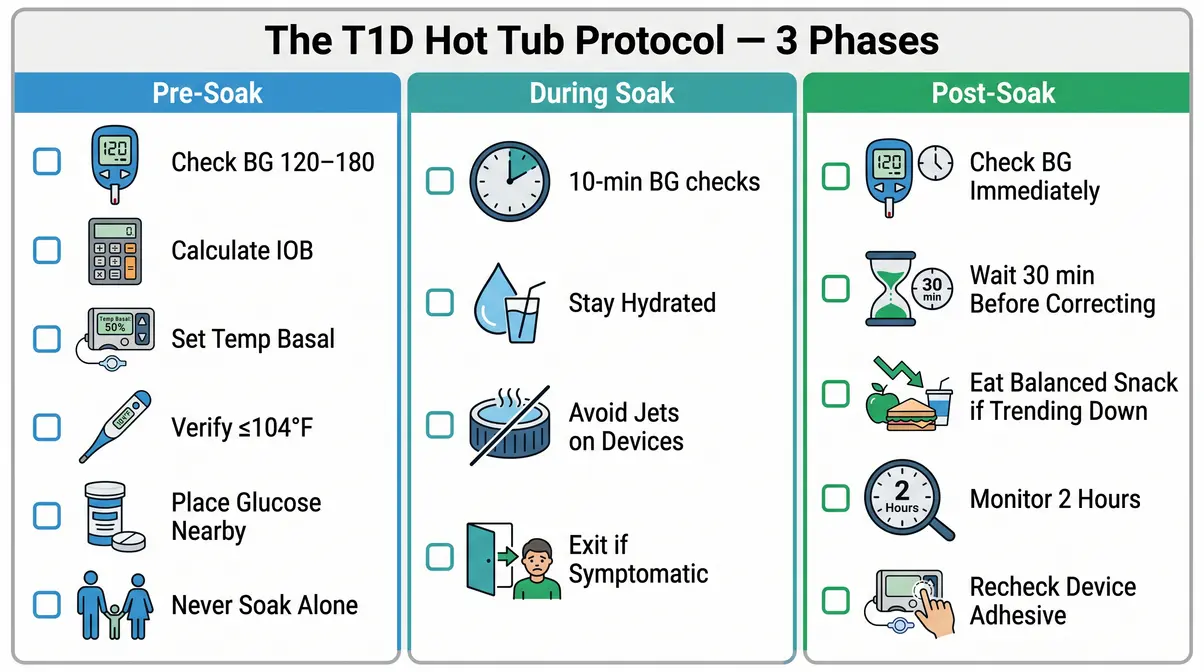
Yes, people with Type 1 Diabetes can get in hot tubs — and this section gives you the exact framework to do it safely. The T1D Hot Tub Protocol is a three-phase checklist built from manufacturer specifications and peer-reviewed medical literature. It gives you a clear action for every stage: before, during, and after your soak.
Step 1: Pre-Soak Checklist
Prerequisites: Before you even touch the water, complete all six steps below. Skipping any one of them increases your risk of a hypoglycemic episode while you are in the tub — where getting out quickly may not be easy.
Tools you will need: Your blood glucose meter or CGM, fast-acting glucose (juice, glucose tabs), a thermometer to verify water temperature, and a companion or person within earshot.
Estimated time: 10–15 minutes before entering.
- Check your blood sugar. Your glucose should be between 120 and 180 mg/dL before entering. If you are below 120 mg/dL, eat a small carbohydrate snack and recheck before getting in. If you are above 250 mg/dL, wait and correct first — heat can make high blood sugar harder to manage. Consult your CDE for your personal target range.
- Calculate your Insulin on Board (IOB). IOB refers to the amount of active insulin still working in your body from a recent dose. A high IOB combined with heat-accelerated absorption is the most common trigger for hot tub hypoglycemia. Check your pump or CGM app for your current IOB figure before entering.
- Consider setting a temporary basal rate (pump users only). If you use an insulin pump, talk to your endocrinologist in advance about reducing your basal rate by 20–50% for the duration of your soak. This is a proactive buffer against heat-accelerated absorption. Do not adjust your basal rate without prior guidance from your care team.
- Verify the water temperature. Use a floating thermometer. The American Diabetes Association recommends that people with diabetes keep hot tub water at or below 104°F (40°C) — and many endocrinologists suggest starting closer to 98–100°F (37–38°C) if you are new to hot tub use with T1D. Higher temperatures accelerate vasodilation and insulin absorption more dramatically.
- Place fast-acting glucose within reach. Set glucose tablets, juice, or another fast-acting carbohydrate source on the edge of the tub or on a nearby surface — somewhere you can reach it without getting out. This is non-negotiable. Hypoglycemia in warm water can impair your coordination faster than it would on dry land.
- Never soak alone. Tell another person where you are and what to watch for. Symptoms of hypoglycemia — shakiness, confusion, slurred speech, pale skin — can come on quickly in a hot tub environment. A companion who knows to call for help or hand you glucose can make a critical difference. For more comprehensive hot tub safety tips, always ensure your companion knows what to do in an emergency.
Why each step matters: The protocol is sequential by design. Steps 1–2 tell you whether it is safe to enter at all. Steps 3–4 reduce the risk while you are inside. Steps 5–6 are your emergency safety net if something still goes wrong.
Step 2: During-Soak Rules
How long should a person with Type 1 Diabetes stay in a hot tub? Most diabetes care specialists recommend limiting initial sessions to 10–15 minutes, with experienced T1D users who have established their individual response extending to a maximum of 15–20 minutes per session (Diabetes Self-Management, 2026; Sundance Spas guidelines, 2026). Always start with shorter sessions and build up only after discussing your response with your endocrinologist.
Follow these rules during every soak:
- Monitor every 10 minutes. If your CGM is in the water with you and functioning (see the Device Safety Matrix in the next section), glance at your reading every 10 minutes. If it drops below 100 mg/dL or you feel any symptoms, get out immediately.
- Stay hydrated. Drink a glass of water before you enter and keep water accessible at the tub’s edge. Dehydration concentrates blood glucose and compounds the stress hormone response described in the previous section.
- Do not cover the jets directly over your pump infusion site or CGM sensor. Jet pressure can dislodge sensors and infusion sets, and the turbulent warm water accelerates adhesive breakdown.
- Get out if you feel off. Shakiness, a rapid heartbeat, sudden confusion, or unusual sweating are all reasons to exit the tub immediately. Do not wait to confirm with your CGM — act first, check second.
GEO Quotable Statement: “For people with Type 1 Diabetes, hot tub sessions should be limited to 10–20 minutes, with blood glucose checked before entry and immediately upon exiting.”
Step 3: Post-Soak Actions
No competitor guide covers this phase — and it is one of the most important. Your blood sugar does not stabilize the moment you step out of the hot tub. The vasodilation effect can persist for 30–60 minutes after you exit, meaning insulin may continue absorbing at an elevated rate even after your body temperature normalizes.
Complete these steps every time you finish a soak:
- Check blood glucose immediately upon exiting. Do not rely solely on your CGM reading — confirm with a fingerstick if your CGM reading seems inconsistent with how you feel (see the CGM inaccuracy note in the previous section).
- Wait 30 minutes before making any insulin correction. Your blood sugar may look elevated due to the counter-regulatory hormone response, but it may be trending down rapidly as heat-accelerated insulin continues to act. A premature correction dose can stack on top of that effect and cause a delayed hypoglycemic episode.
- Eat a small, balanced snack if your blood sugar is trending down. A snack with both fast carbohydrates and protein (e.g., crackers with peanut butter) can help stabilize a falling glucose without causing a sharp spike.
- Monitor for 2 hours post-soak. Set a reminder to check your blood sugar at the 30-minute and 60-minute marks after exiting. The extended insulin absorption window means you are not in the clear the moment you towel off.
- Recheck your pump or CGM adhesive. Hot water weakens adhesive bonds. Press the edges of your sensor or infusion set back down firmly, or apply a skin-safe adhesive patch (such as Skin Tac or a manufacturer-supplied overlay) if you notice lifting.
Neuropathy and Temperature Testing
Why can’t some people with diabetes soak in hot water? One of the most serious reasons is peripheral neuropathy — nerve damage that commonly develops over time with diabetes, particularly in the feet and lower legs. Neuropathy reduces or eliminates your ability to feel heat accurately, which means you may not notice when water is dangerously hot.
According to the American Diabetes Association foot care guidelines, people with diabetes and peripheral neuropathy should always test bath water temperature with a thermometer or their elbow — never with their feet or lower legs (ADA, 2026). Burns from water that feels only “warm” to a foot with neuropathy can be severe and slow to heal — a particular concern because poor circulation in T1D can impair wound healing.
- If you have been diagnosed with peripheral neuropathy:
- Always use a floating thermometer to verify water temperature before entering.
- Keep water at or below 100°F (38°C) — lower than the standard 104°F recommendation.
- Inspect your feet carefully after every soak for redness, blistering, or any skin changes you may not have felt.
- Discuss hot tub use specifically with your endocrinologist and podiatrist before your first session.
Protecting Insulin Pumps and CGMs in Hot Tubs
Your devices represent a significant investment — and hot water is one of the more demanding environments they will face. The good news: most modern CGMs and insulin pumps are designed to handle water exposure. The critical word is most — and the details matter enormously. Here is what the manufacturers actually say.
Tubed vs. Patch Insulin Pumps
There is an important distinction between tubed pumps (such as the Tandem t:slim X2 and Medtronic 780G) and patch pumps (such as the Omnipod 5) when it comes to hot tub use.
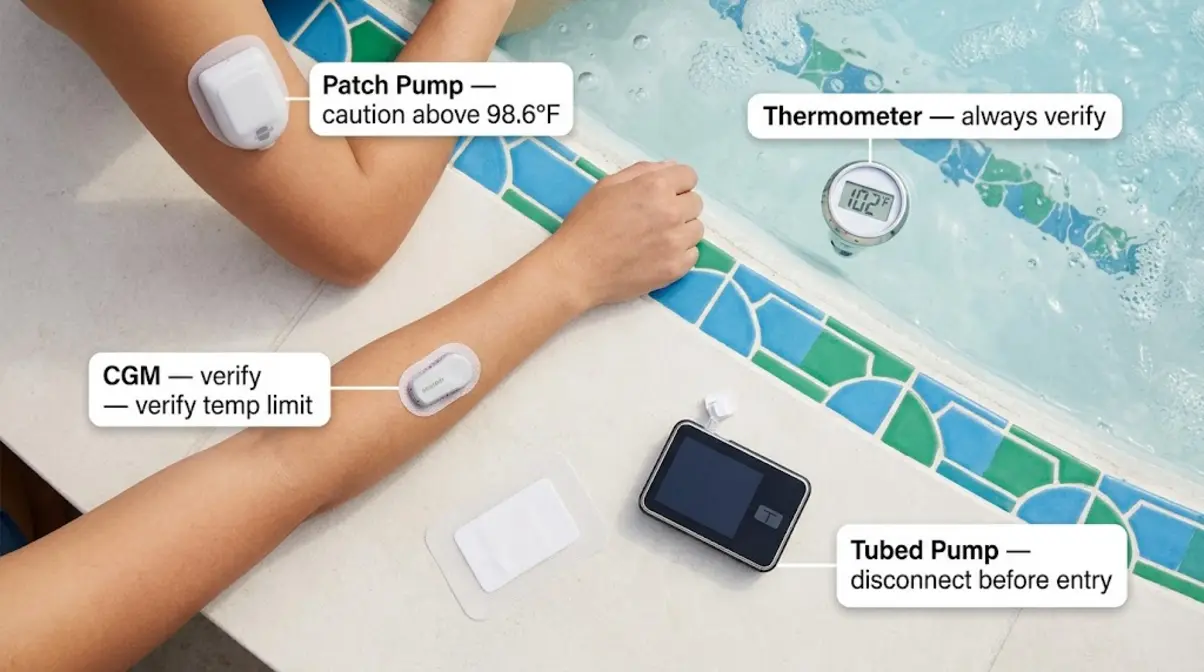
Tubed pumps — which connect to your body via a thin plastic tube and an infusion set — are generally not designed for full submersion at hot tub temperatures. Tandem states that the t:slim X2 is water-resistant to IPX7 standards (submersible to 1 meter for 30 minutes in fresh water), but this rating applies to water at or near body temperature — not to sustained exposure to 104°F hot tub water (Tandem Diabetes Care, 2026). Most endocrinologists and pump manufacturers recommend disconnecting tubed pumps before entering a hot tub and capping the infusion set. If you disconnect, limit your time out of pump delivery to no more than 60 minutes and bolus appropriately upon reconnection per your care team’s guidance.
Patch pumps like the Omnipod 5 are waterproof to IPX8 standards (submersible to 25 feet for 60 minutes), but again, this rating is for water at normal temperatures. Insulet’s official guidance states that the Omnipod should not be exposed to water above 104°F (40°C) for extended periods, as sustained heat can affect insulin potency and pod function (Insulet Corporation, 2026).
Key rule for all pump users: Heat does not just affect your body — it affects the insulin inside your pump. Insulin degrades at temperatures above 98.6°F (37°C) with prolonged exposure. If your pump or its reservoir becomes warm to the touch during a soak, the insulin inside may be less effective — which can lead to unexpected high blood sugar hours later.
CGM Guidelines and Accuracy
Both the Dexcom G6 and G7 and the Abbott FreeStyle Libre 2 and Libre 3 are rated for water resistance — but their ratings come with temperature caveats that most users never read.
Dexcom G6/G7: Both are waterproof to IPX8 standards (submersible to 8 feet for 24 hours), but Dexcom’s official specifications state that the sensor should not be exposed to water above 107.6°F (42°C) (Dexcom, 2026). If you are using a Dexcom in a hot tub, standard hot tub temperature of 104°F falls just below this limit — but many hot tubs run hotter than their dial suggests. Always verify with a thermometer.
Abbott FreeStyle Libre 2 and Libre 3: Abbott rates both sensors as water-resistant to IP27 standards (splashproof, not fully submersible for prolonged periods). Abbott’s guidance recommends not submerging the Libre sensor in water above 104°F (40°C) and limiting water exposure sessions to 30 minutes (Abbott Diabetes Care, 2026).
- Adhesive failure is a real risk. Hot water, chlorine, and prolonged moisture all weaken the adhesive that holds your CGM sensor in place. To protect your sensor:
- Apply a waterproof adhesive overlay (such as Skin Tac, Simpatch, or manufacturer-supplied patches) before entering the water.
- Do not aim hot tub jets directly at the sensor site.
- After exiting, pat the sensor area dry and press the edges down firmly.
Device Safety Matrix Limits
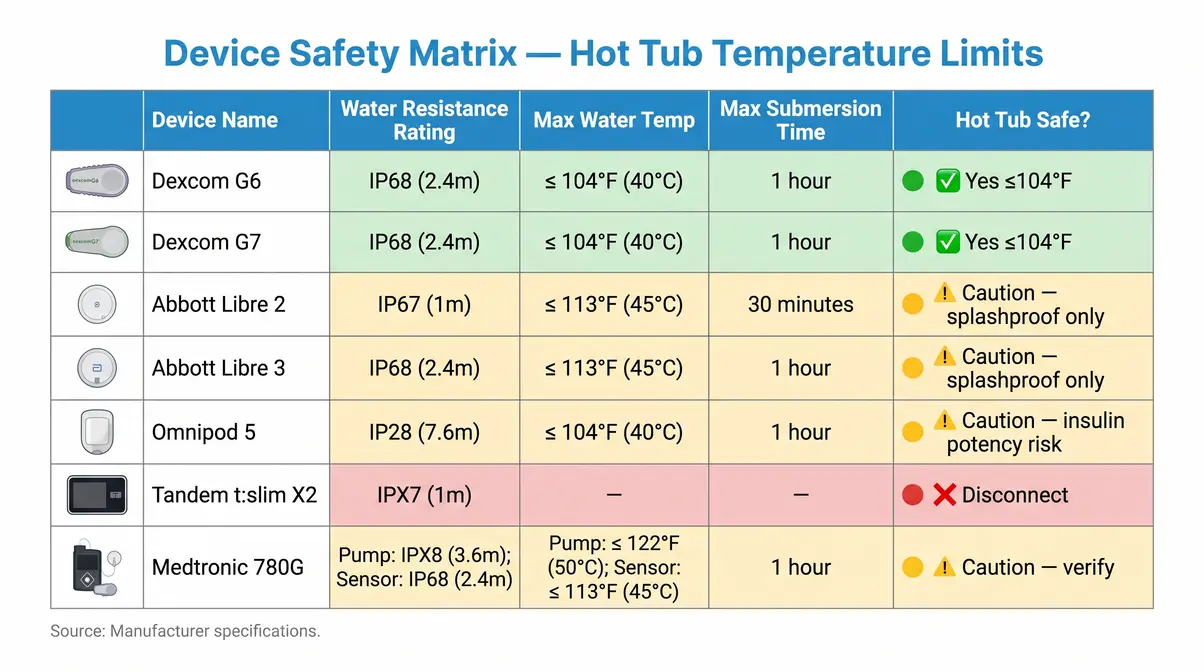
Use this table as a quick reference before every hot tub session. All limits are sourced from manufacturer documentation as of 2026.
| Device | Water Resistance Rating | Max Water Temp | Max Submersion Time | Hot Tub Safe? |
|---|---|---|---|---|
| Dexcom G6 | IPX8 (8 ft / 24 hr) | 107.6°F (42°C) | 24 hours | ✅ Yes — if tub ≤104°F; verify with thermometer |
| Dexcom G7 | IPX8 (8 ft / 24 hr) | 107.6°F (42°C) | 24 hours | ✅ Yes — if tub ≤104°F; verify with thermometer |
| Abbott Libre 2 | IP27 (splashproof) | 104°F (40°C) | 30 min | ⚠️ Caution — splashproof only; limit exposure |
| Abbott Libre 3 | IP27 (splashproof) | 104°F (40°C) | 30 min | ⚠️ Caution — splashproof only; limit exposure |
| Omnipod 5 | IPX8 (25 ft / 60 min) | 104°F (40°C) | 60 min | ⚠️ Caution — insulin potency risk above 98.6°F |
| Tandem t:slim X2 | IPX7 (3 ft / 30 min) | Body temp (98.6°F / 37°C) | 30 min | ❌ Disconnect — not rated for hot tub temps |
| Medtronic 780G | IPX8 (12 ft / 24 hr) | 104°F (40°C) | 24 hours | ⚠️ Caution — disconnect or verify with Medtronic |
When to Skip the Hot Tub: Limitations and Cautions
Hot tub use with T1D is manageable for most people — but there are specific situations where the risks outweigh the benefits. Being honest about these scenarios is part of responsible self-care.
Common Pitfalls to Avoid
Pitfall 1: Entering with a high IOB. The most common trigger for hot tub hypoglycemia is stepping in with significant active insulin still working in your body. If you bolused for a meal within the last 90 minutes, your IOB is likely still elevated. Wait until your IOB is low before entering — or reduce your session length significantly.
Pitfall 2: Ignoring the CGM lag. Trusting a CGM reading taken immediately after exiting a hot tub and making an aggressive insulin correction based on it is a leading cause of post-soak hypoglycemia. Always confirm with a fingerstick before correcting.
Pitfall 3: Assuming water-resistant means hot-tub-proof. As the Device Safety Matrix shows, water resistance ratings are tested at body temperature — not at 104°F. Assuming your device is safe because it survived a shower is a different calculation than hot tub exposure.
When to Choose Alternatives
If you have active ketones (DKA risk): Do not use a hot tub. Heat stress and dehydration can accelerate diabetic ketoacidosis (DKA — a dangerous buildup of acids in the blood). If your blood sugar is above 250 mg/dL and you have ketones, skip the soak entirely and contact your care team.
If you have significant peripheral neuropathy: A warm bath at home (water temperature verified by thermometer, kept at or below 98°F) may be a safer alternative. Discuss with your podiatrist before using a public or shared hot tub.
If you are unwell or have a fever: According to CDC guidelines on managing sick days, illness already disrupts blood sugar control and raises cortisol levels. Adding heat stress during illness is not recommended.
When to Seek Expert Help
Before your first hot tub session with T1D, schedule a conversation with your endocrinologist or CDE specifically about: your personal blood sugar target range for safe entry, whether a temporary basal rate reduction is appropriate for you, and whether any of your current complications (neuropathy, cardiovascular conditions, autonomic neuropathy) warrant additional precautions or outright avoidance. This is a YMYL health decision — professional guidance is not optional.
Frequently Asked Questions
Can type 1 diabetics go in hot tubs?
Yes, people with Type 1 Diabetes can use hot tubs — but specific precautions are essential before every session. Heat accelerates insulin absorption through vasodilation, raising the risk of hypoglycemia within minutes of entering. Following a structured pre-soak protocol — checking blood glucose, calculating Insulin on Board, and verifying water temperature — significantly reduces this risk. Most endocrinologists support hot tub use for well-controlled T1D patients who do not have significant complications such as severe peripheral neuropathy (ADA, 2026). Always consult your own care team before your first session.
How long to stay in a hot tub?
People with diabetes should limit hot tub sessions to 10–15 minutes initially, extending to a maximum of 15–20 minutes only after establishing how their body responds. Longer sessions increase the risk of dehydration, blood sugar swings, and heat-related complications. Start with shorter durations and monitor blood glucose before and immediately after each session. If you notice your blood sugar dropping or rising significantly, shorten subsequent sessions and discuss the pattern with your endocrinologist (Diabetes Self-Management, 2026).
Why can’t diabetics soak in hot water?
The concern is not that diabetics cannot soak in hot water — it is that hot water carries specific, manageable risks that require preparation. The three main risks are: accelerated insulin absorption leading to hypoglycemia, the counter-regulatory hormone response that can cause blood sugar to rise, and peripheral neuropathy that prevents accurate heat sensation, increasing burn risk. People with well-controlled T1D who follow a structured protocol and have no significant complications can generally enjoy hot tubs safely. Those with severe neuropathy, active ketones, or cardiovascular complications should consult their physician before any hot water exposure (ADA, 2026; CDC Diabetes Foot Care, 2026).
Can heat damage my CGM?
Yes, excessive heat can damage your continuous glucose monitor (CGM) or cause it to give false readings. Devices like the Dexcom G6 and G7 have a maximum temperature rating of 107.6°F (42°C), while others max out at 104°F (40°C). Prolonged exposure to hot water can also weaken the adhesive holding the sensor to your skin. Always verify your hot tub’s temperature with a thermometer before entering. If you suspect a false reading after soaking, confirm with a fingerstick test.
Putting It All Together: Safe Soaking with T1D
For adults with Type 1 Diabetes, hot tub use is not off-limits — it simply requires the same systematic thinking you already apply to exercise, travel, and meal planning. Keeping a hot tub with type 1 diabetes safe simply requires the same systematic thinking you already apply to exercise, travel, and meal planning. Heat accelerates insulin absorption and can trigger glucose swings in both directions, but a structured three-phase approach manages those risks effectively. The American Diabetes Association foot care guidelines and NIDDK insights on rapid insulin absorption both affirm that informed preparation — not avoidance — is the right response to heat exposure with T1D.
The T1D Hot Tub Protocol exists precisely because vague warnings are not enough. Knowing your device’s temperature limits, calculating your IOB before you enter, and monitoring for 60 minutes after you exit transforms a stressful unknown into a manageable routine. The Device Safety Matrix in this guide gives you the manufacturer-sourced specifics that no other guide has compiled in one place.
Your next step is simple: before your first hot tub session, schedule 15 minutes with your endocrinologist or CDE to walk through the Pre-Soak Checklist together. Bring this guide. Ask specifically about your IOB targets, whether a temporary basal adjustment is right for you, and whether any current complications warrant extra caution. That single conversation — combined with the protocol above — is what separates a confident, enjoyable soak from an avoidable emergency. You have the framework. Now make it yours.